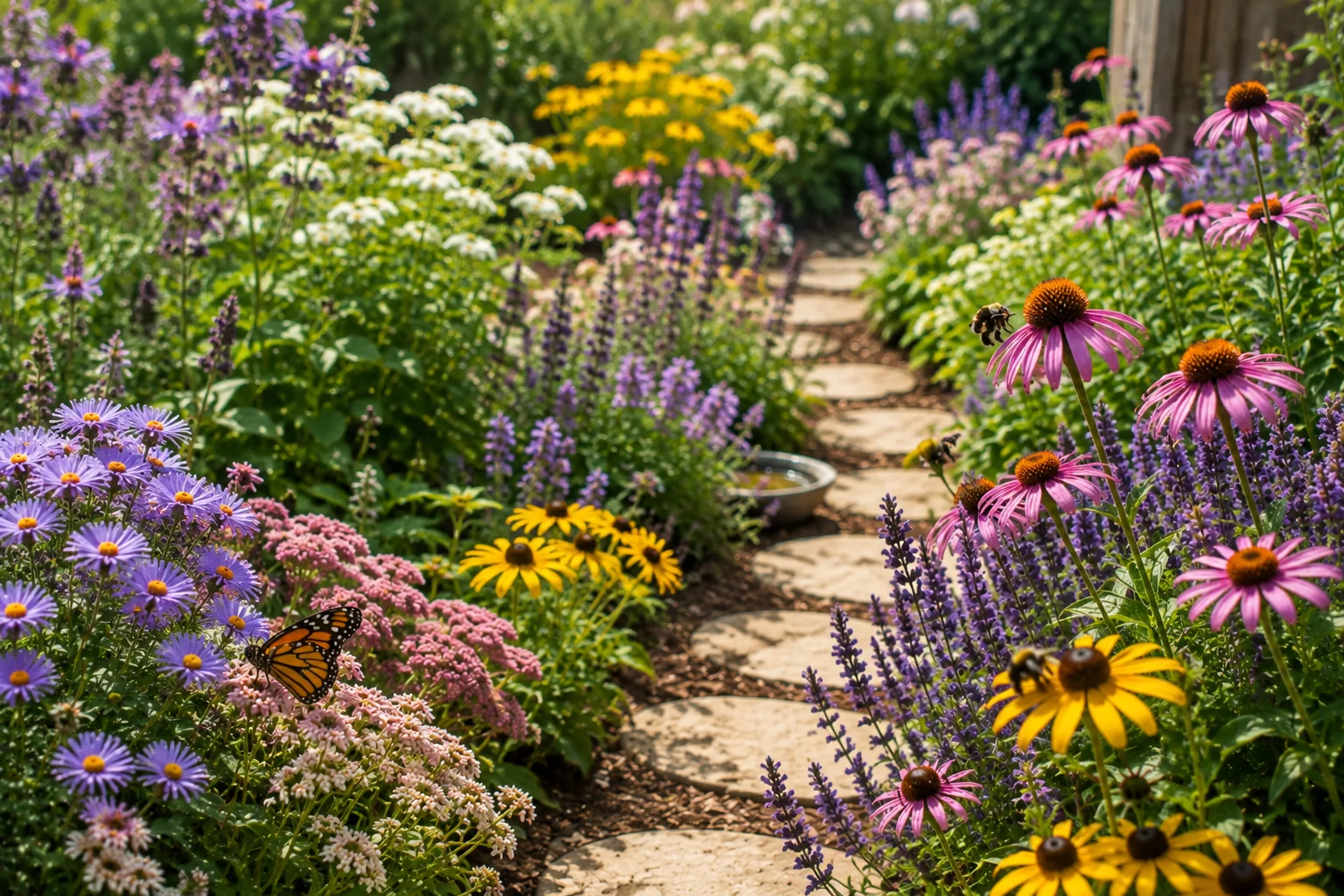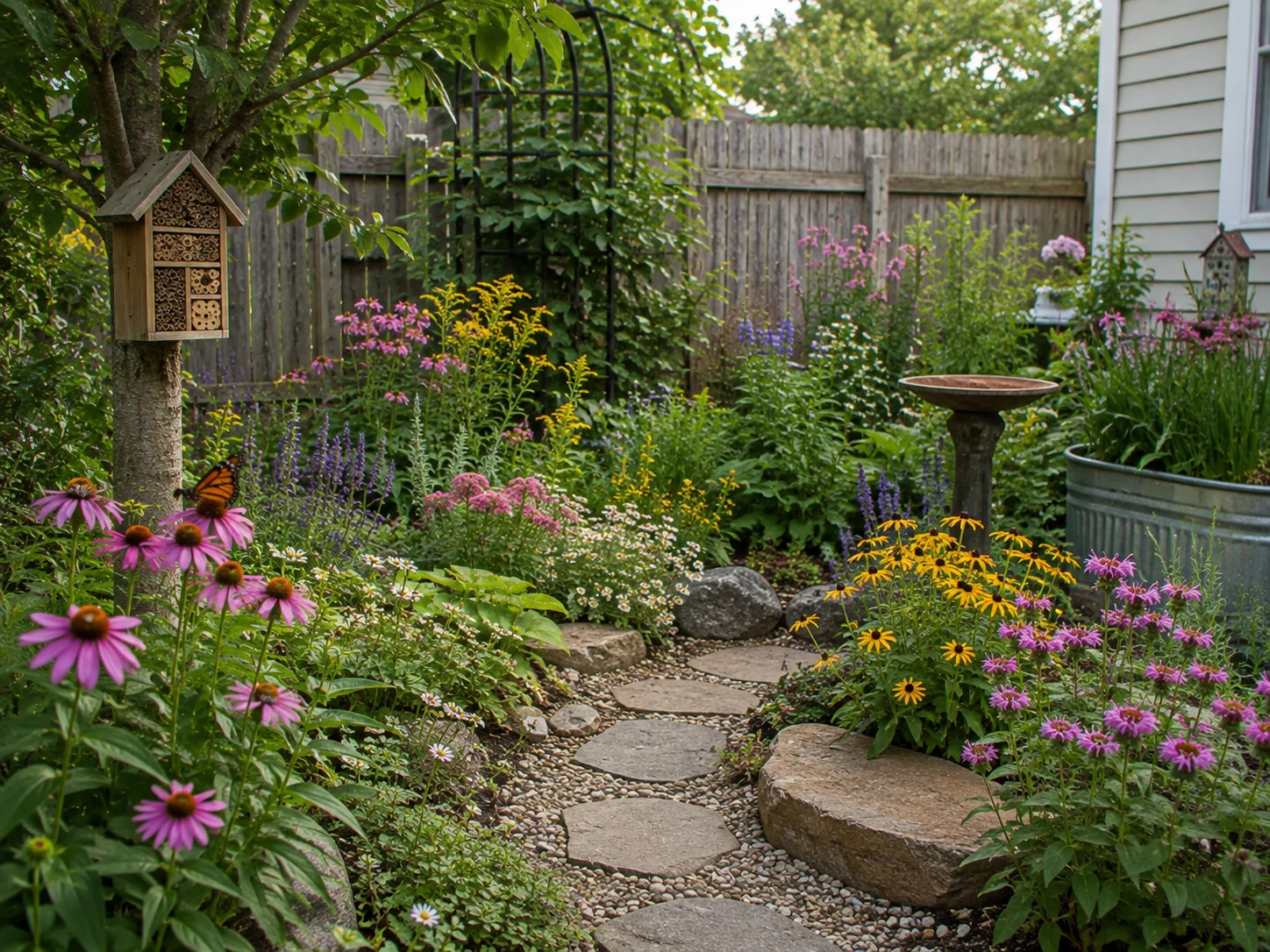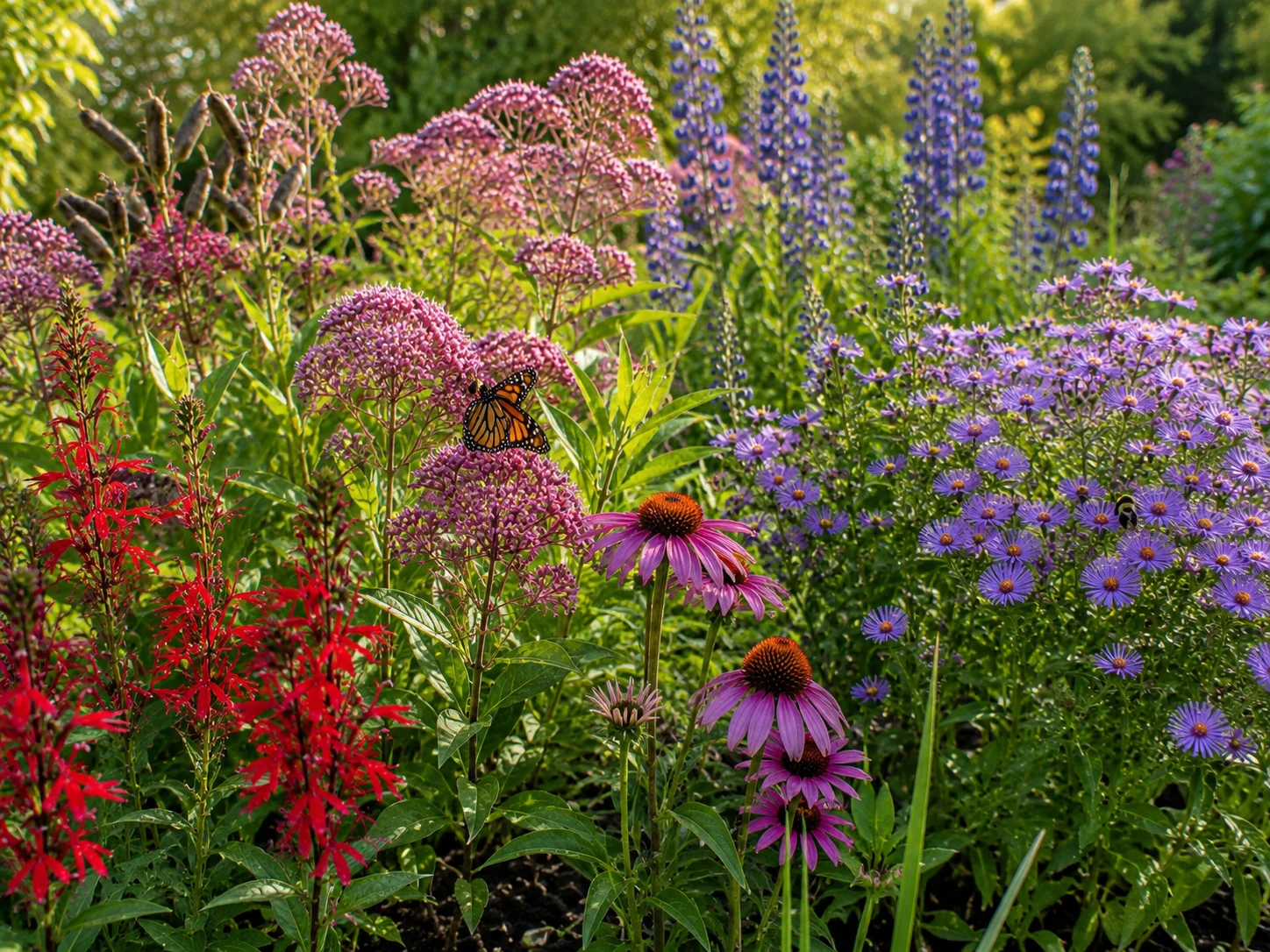

A native pollinator garden does not need to look like an abandoned field. With the right plants, it can have clean edges, layered colour, strong structure, and flowers from early spring into autumn.
The weak approach is buying a random “wildflower” packet and scattering it over existing grass. Native plants still need the right soil, light, moisture, and space. A chalk-grasslaqnd flower may fail in wet clay, while a woodland plant can struggle in an exposed sunny border.
This guide covers 12 dependable UK pollinator plants, when they flower, and where they work best for bees, butterflies, moths, and hoverflies.
Why Grow Native Pollinator Plants?
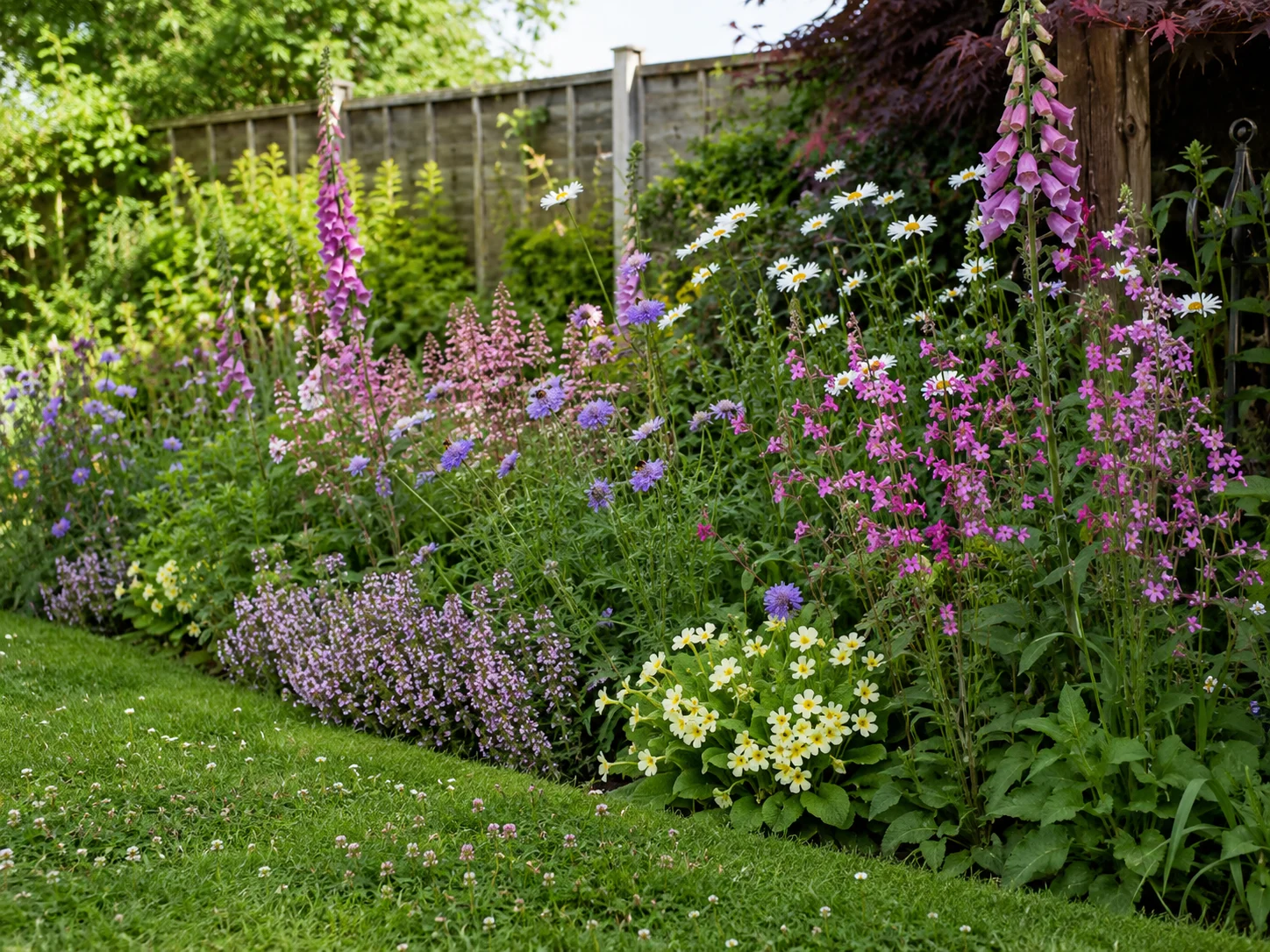
Native plants have developed alongside British wildlife. Their flowers feed adult insects, while their leaves, stems, seeds, and growth habits may support caterpillars, nesting insects, birds, and other parts of the food web.
That does not make every non-native flower useless. The Royal Horticultural Society explains that a mixture of native and non-native plants can support pollinators, particularly when flowers are available throughout the year. A native-focused border simply creates a strong local foundation.
Buy nursery-grown plants or seed from reputable suppliers. Never remove wild plants from roadsides, woods, meadows, or nature reserves.
1. Primrose
Native primrose, Primula vulgaris, provides pale yellow flowers in late winter and spring, when forage can still be limited.
Plant it in partial shade beneath deciduous shrubs, along hedge bottoms, or at the front of a woodland-style border. Choose the native pale-yellow species rather than assuming brightly coloured bedding primroses are equivalent.
2. Cowslip
Cowslip, Primula veris, produces clusters of yellow bell-shaped flowers in spring.
It prefers a sunny, open position and relatively lean, well-drained soil. Use it in meadow-style lawns, gravel gardens, or the front of a sunny border. Plant several together rather than scattering isolated specimens.
3. Bugle
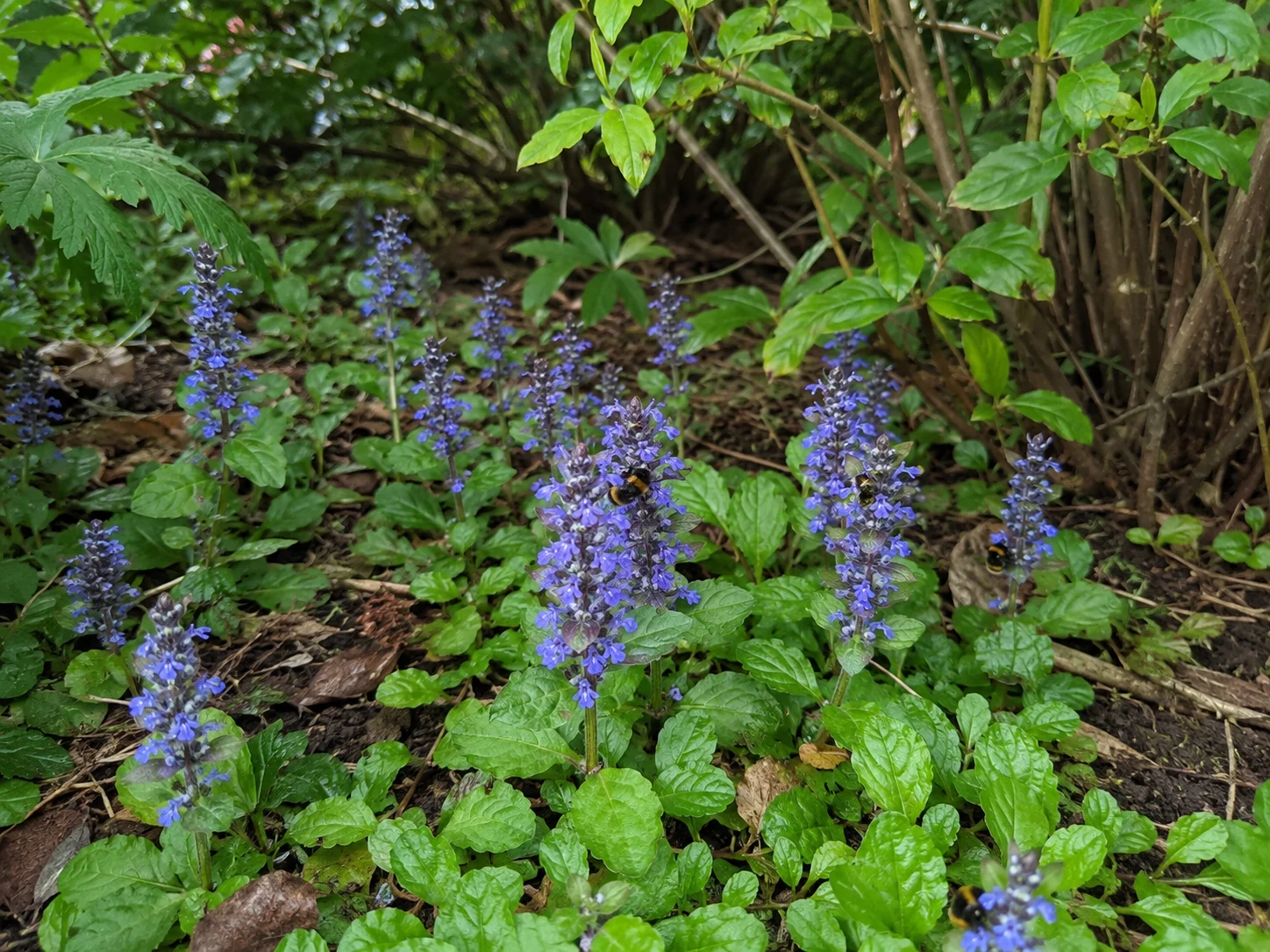
Bugle, Ajuga reptans, is a low native groundcover with blue-purple spring flower spikes.
It works in sun or partial shade and is useful beneath shrubs, along border edges, or between taller perennials. It spreads steadily, so place it where a living carpet is welcome.
4. Red Campion
Red campion, Silene dioica, carries pink flowers from spring into summer.
It suits partial shade, hedge edges, informal borders, and woodland-style planting. It may self-seed, creating a relaxed colony. Remove some faded stems if it spreads farther than intended.
5. Foxglove
Native foxglove, Digitalis purpurea, adds strong vertical flower spikes to shady and partially shaded borders.
Its tubular flowers are well suited to long-tongued bumblebees. Foxgloves are usually biennial or short-lived, so allow some seed to fall. All parts are toxic if eaten, which matters in gardens used by young children or pets.
6. Bird’s-Foot Trefoil
Bird’s-foot trefoil, Lotus corniculatus, is a low perennial with yellow and orange flowers.
It suits sunny lawns, banks, gravel areas, and poor soil. It also acts as a caterpillar food plant for several butterflies, giving it value beyond nectar. Avoid rich compost and aggressive surrounding grass.
Kew’s Grow Wild project includes bird’s-foot trefoil, foxglove, oxeye daisy, knapweed, selfheal, and other natives among its wildlife-friendly plant recommendations.
7. Oxeye Daisy
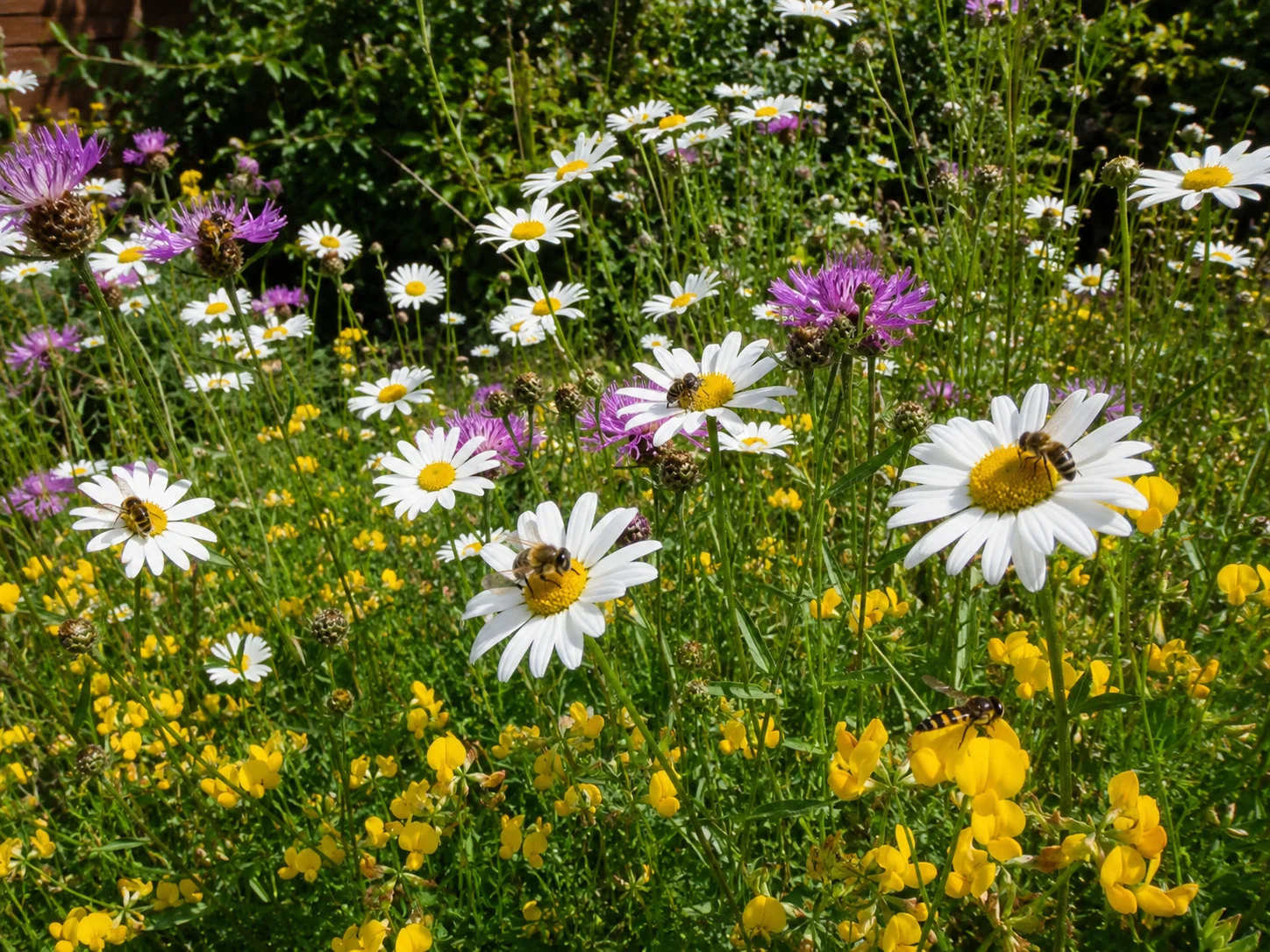
Oxeye daisy, Leucanthemum vulgare, produces open white flowers with yellow centres from late spring into summer.
Its simple flower form makes pollen and nectar accessible to many insects. Use it in sunny borders, wild patches, or meadow-style lawns. It can spread, so control seedlings and expanding clumps in smaller gardens.
8. Wild Marjoram
Wild marjoram, Origanum vulgare, is an excellent native plant for a sunny, well-drained border.
Its pink flower clusters attract bees, butterflies, and hoverflies during summer. The aromatic foliage also works well near seating areas or in herb gardens. Avoid heavy, constantly wet soil.
9. Common Knapweed
Common knapweed, Centaurea nigra, produces purple, thistle-like flowers through summer and often into early autumn.
Give it space in a sunny border or meadow area. It is not a neat little edging plant. Deadhead some flowers to control seeding, but leave others for structure and wildlife.
10. Devil’s-Bit Scabious
Devil’s-bit scabious, Succisa pratensis, produces rounded blue-purple flowers in late summer and early autumn.
That timing is valuable because many native gardens are overloaded with spring flowers and become quiet by August. It prefers moist but not permanently waterlogged soil.
fix seasonal gaps when a pollinator garden is not attracting bees.
11. Honeysuckle
Native honeysuckle, Lonicera periclymenum, adds height, scent, and tubular summer flowers.
Grow it through a hedge, arch, or sturdy trellis. Its evening fragrance and long flower tubes are particularly useful to moths, while bees also visit. Give it proper support rather than a weak decorative panel.
12. Ivy
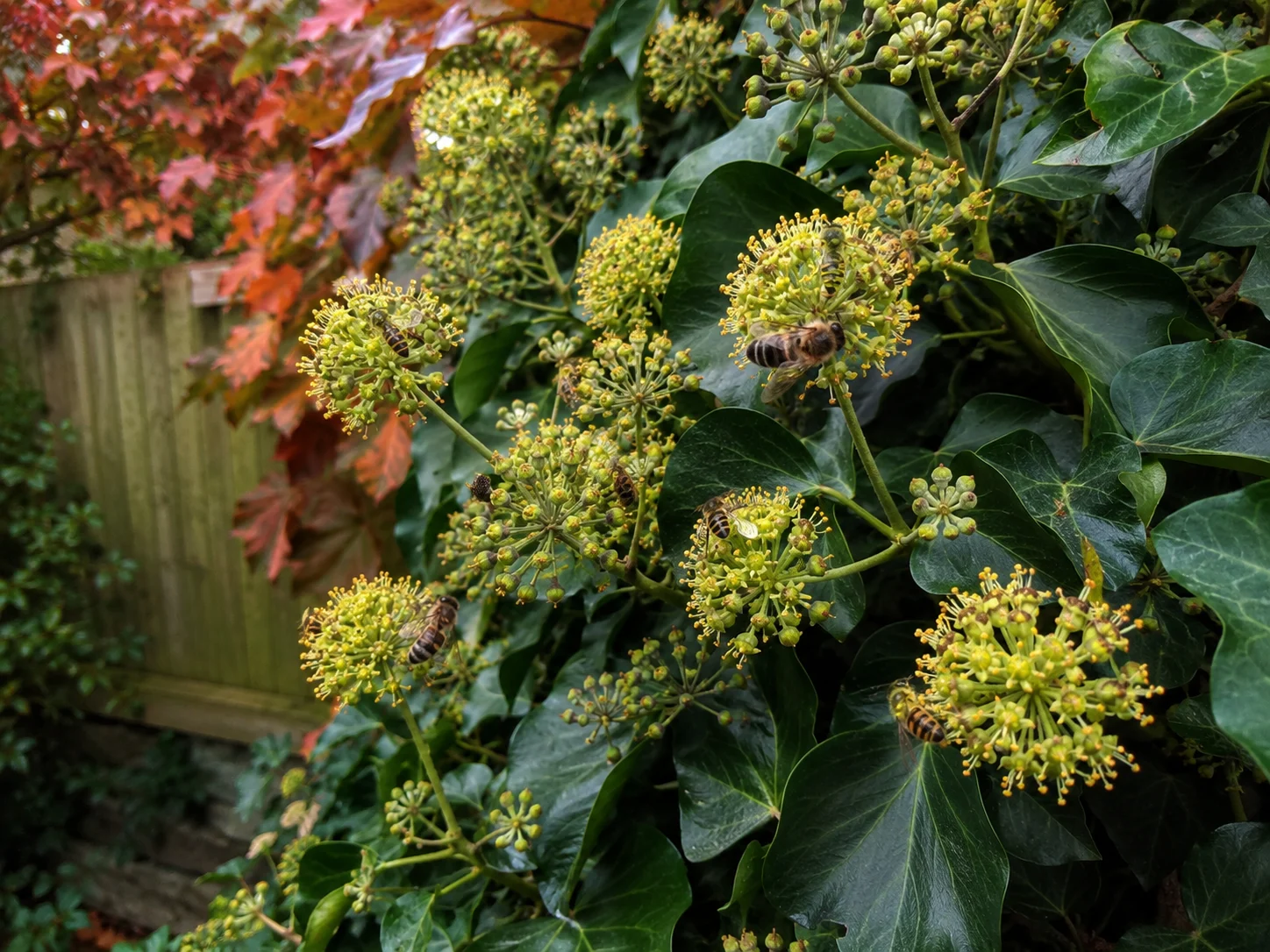
Common ivy, Hedera helix, is one of the most valuable late-flowering native plants.
Mature ivy flowers in autumn, attracting bees, hoverflies, butterflies, and wasps when fewer alternatives remain. Its later berries also feed birds. Control ivy around roofs, gutters, young trees, and damaged structures, but do not remove every mature flowering section.
Add Native Flowers to the Lawn
You do not need to replace the entire lawn with a full meadow. Plantlife’s pollinator-friendly garden guidance highlights white clover, dandelion, and daisy as valuable lawn flowers, while selfheal can also bloom in shorter grass.
Try one manageable change:
- Leave a flowering strip along one lawn edge.
- Mow a path through a longer patch.
- Raise the cutting height in selected areas.
- Allow clover, daisies, and selfheal to flower.
- Remove cuttings from meadow sections.
Wildflower meadows usually establish better on lower-fertility soil. Throwing seed over thick, vigorous grass without reducing competition is likely to fail. The Wildlife Trusts recommends checking soil type and fertility before creating a wild patch or mini meadow.
How to Design With UK Pollinator Plants
Native planting still needs design. Randomness is not wildlife value.
Repeat Plants in Groups
Plant visible groups rather than one of everything. Repetition creates stronger colour, helps pollinators locate flowers, and prevents the border from looking chaotic.
Create a Flowering Sequence
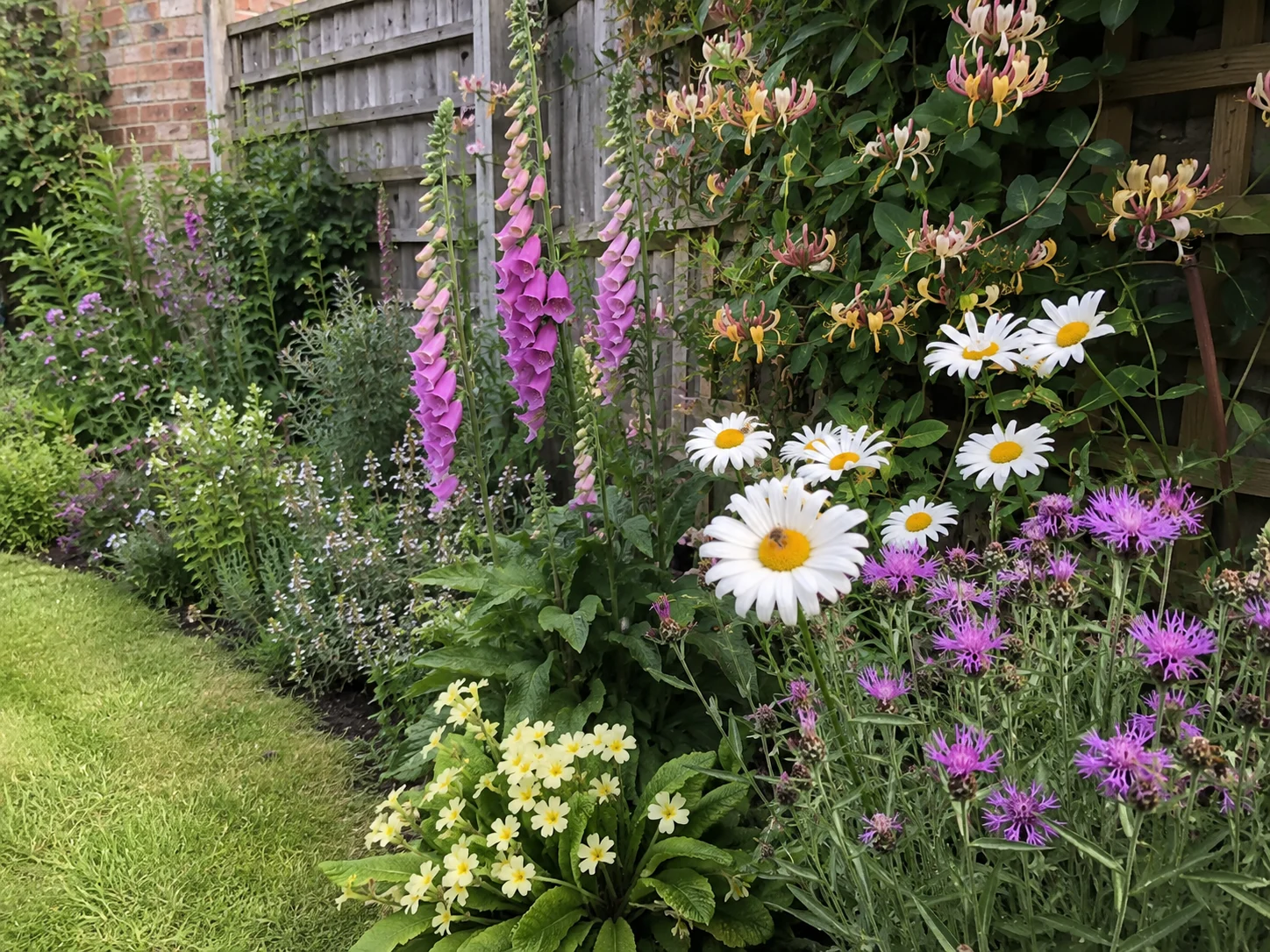
Combine early primrose and cowslip with spring bugle, summer foxglove and marjoram, then late knapweed, devil’s-bit scabious, and ivy.
The RHS recommends prioritising continuous flowers, especially early and late in the season.
Match Plants to the Site
For partial shade, use primrose, bugle, red campion, foxglove, and honeysuckle.
For a sunny, drier border, try cowslip, bird’s-foot trefoil, oxeye daisy, wild marjoram, and knapweed.
For moister soil, use devil’s-bit scabious and other locally appropriate damp-ground natives.
create a four-season sequence instead of one short burst of flowers.
Mistakes to Avoid
Do not:
- Buy seed without checking the soil requirements
- Scatter seed over thick existing grass
- Choose only spring-flowering plants
- Put vigorous meadow species in tiny formal beds
- Remove every ivy flower or autumn seedhead
- Spray flowering plants routinely with pesticides
- Collect plants or seed from the wild
A native label is not a guarantee of success. The plant still needs the right conditions and enough room.
build a backyard garden that looks designed while supporting bees.
Conclusion
The best UK pollinator plants are those that match your site and provide a dependable sequence of food and habitat.
Use primrose, bugle, red campion, and foxglove in partial shade. Plant cowslip, trefoil, oxeye daisy, wild marjoram, and knapweed in sunny areas. Add devil’s-bit scabious and flowering ivy so the garden does not run out of nectar late in the year.
Choose fewer species, repeat them clearly, and preserve some lawn flowers, stems, and mature ivy. The result can look intentional while doing far more for local pollinators than a random packet of flowers ever will.