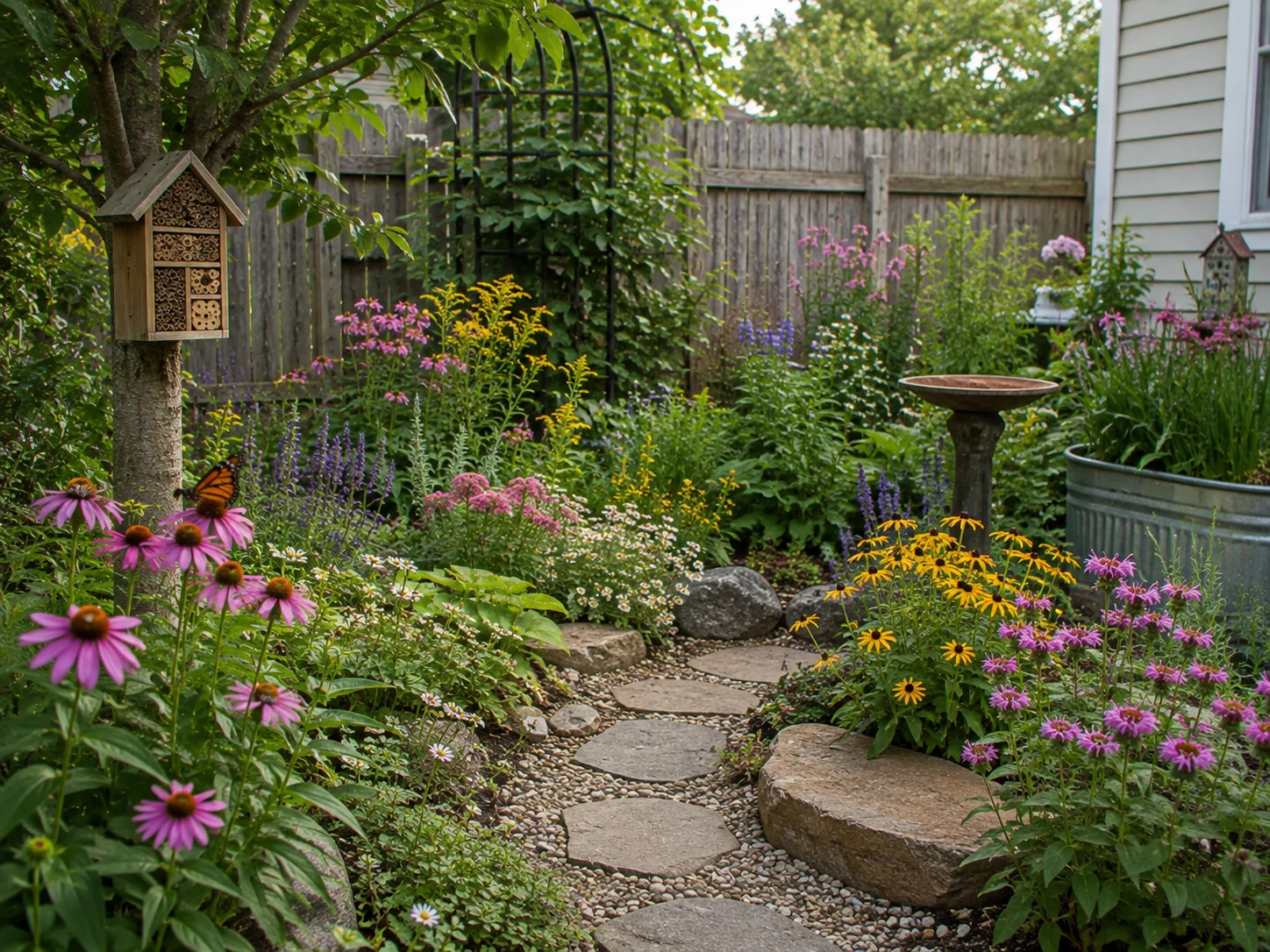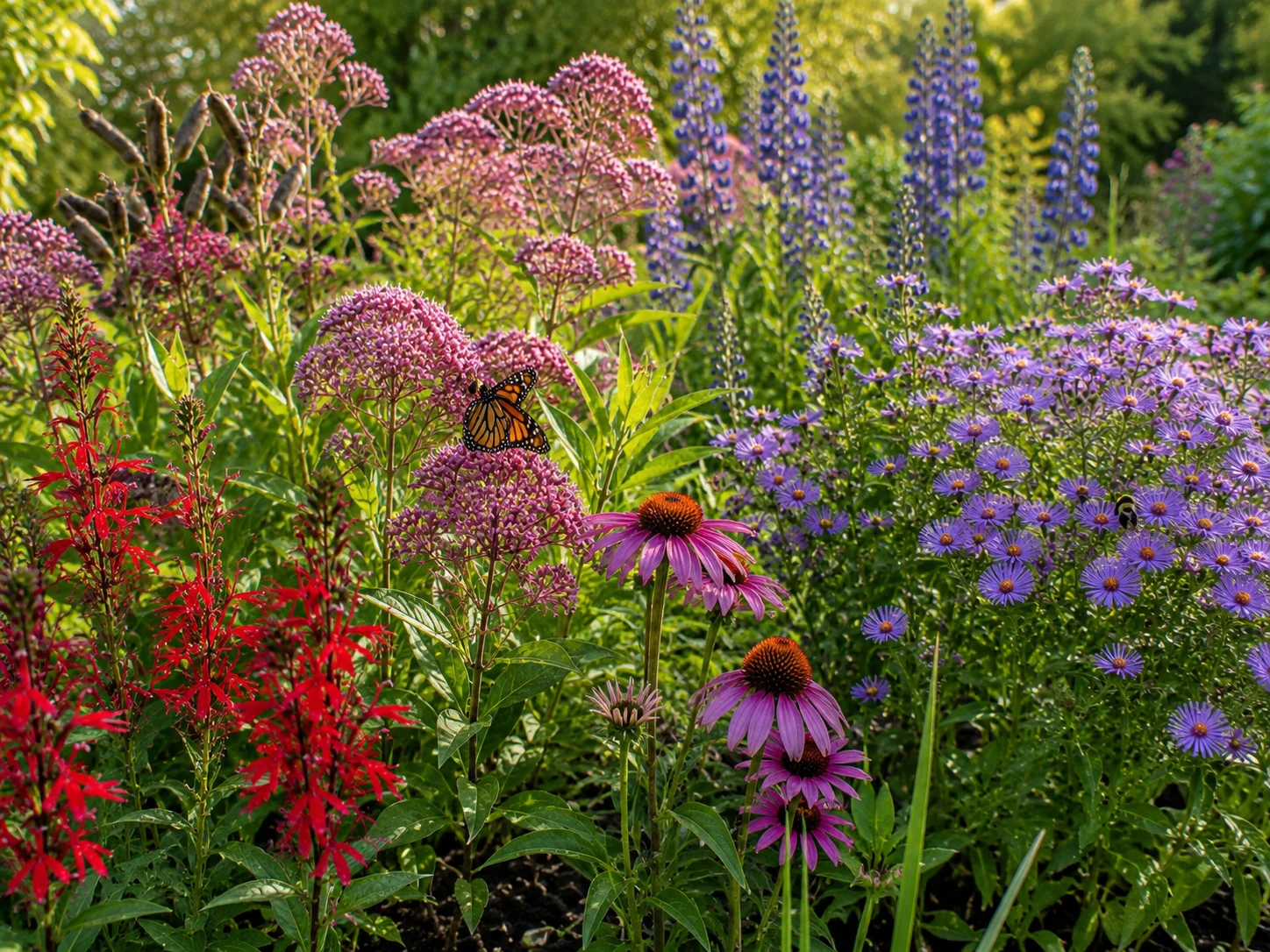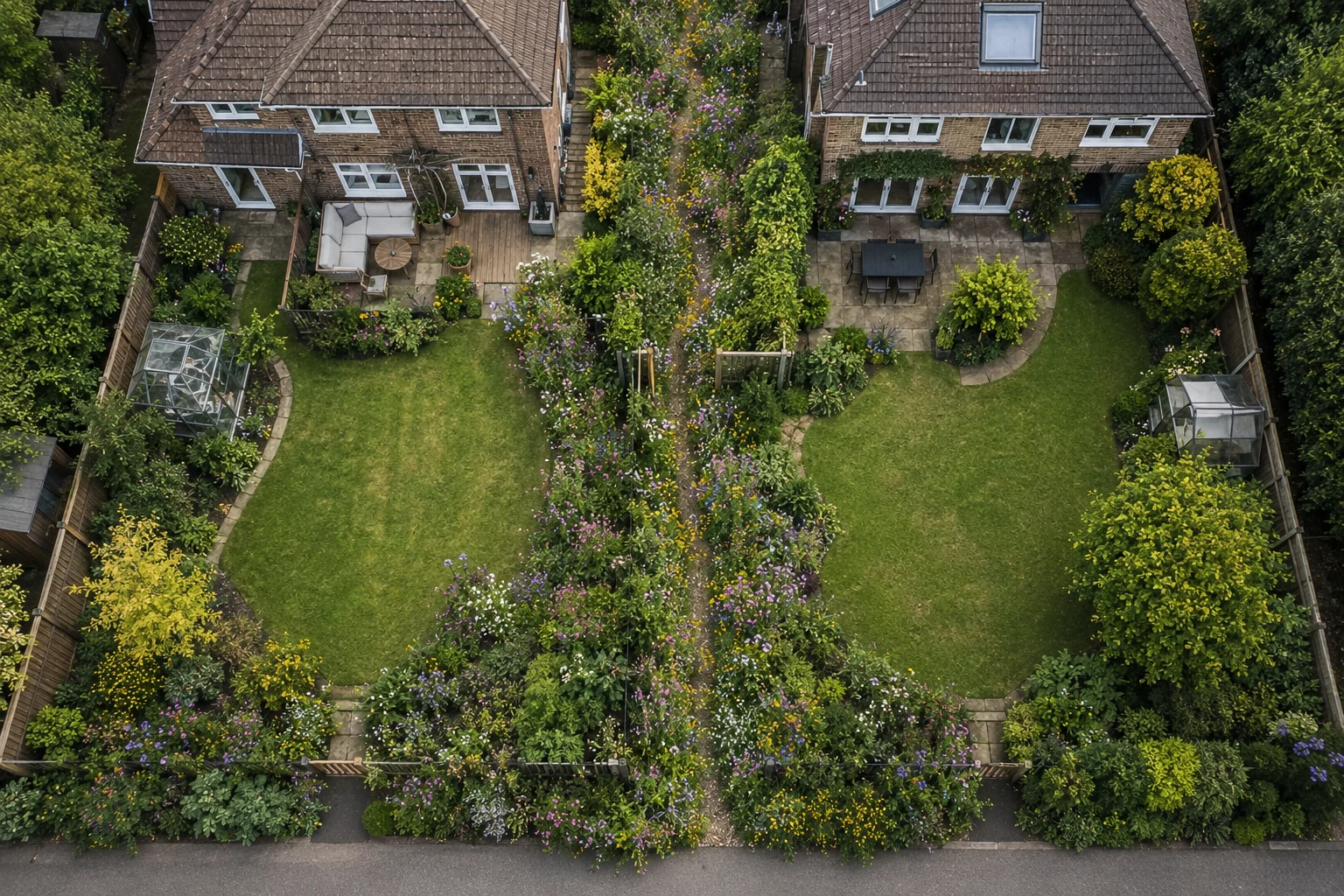

Most “pollinator gardens” aren’t actually feeding pollinators year-round — they’re feeding them for about six loud, colorful weeks in early summer, then going quiet. Meanwhile, bees, butterflies, and hoverflies are left scrambling for forage in the gaps: the hungry stretch after spring bulbs fade, the notorious June nectar dearth, and the long slide into autumn when most gardens have already been “put to bed.”
A garden that genuinely supports pollinators isn’t about planting a few flowers and hoping for the best — it’s about designing continuity. In this guide, you’ll learn the exact framework experienced gardeners and beekeepers use to build a garden with something blooming in every single month of the growing season, plus the specific plant categories, layout tricks, and common mistakes that determine whether your garden actually gets used by pollinators or just looks pretty and empty.
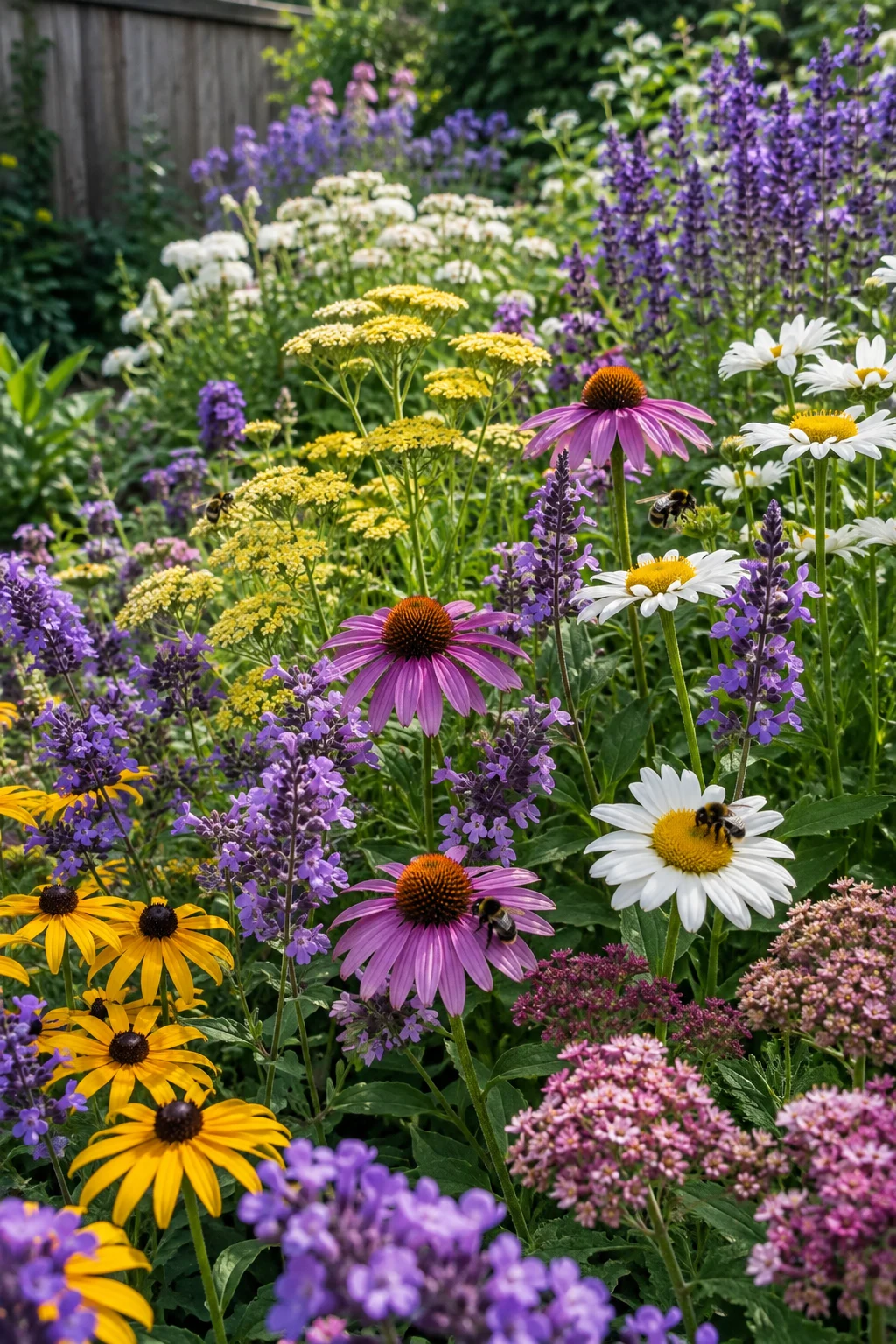
Why Most Pollinator Gardens Fail at Continuity
The single biggest mistake gardeners make is buying plants because they’re beautiful right now at the garden center — which means most home gardens are accidentally clustered around one or two peak bloom windows, usually late spring and midsummer. The result is a feast-or-famine cycle: pollinators gorge for a few weeks, then find nothing.
Bees in particular need a continuous, overlapping nectar and pollen supply because colonies build up population based on incoming forage. A gap of even two to three weeks with no bloom can stall colony growth or force foraging bees to travel much further for food, burning more energy than they bring home.
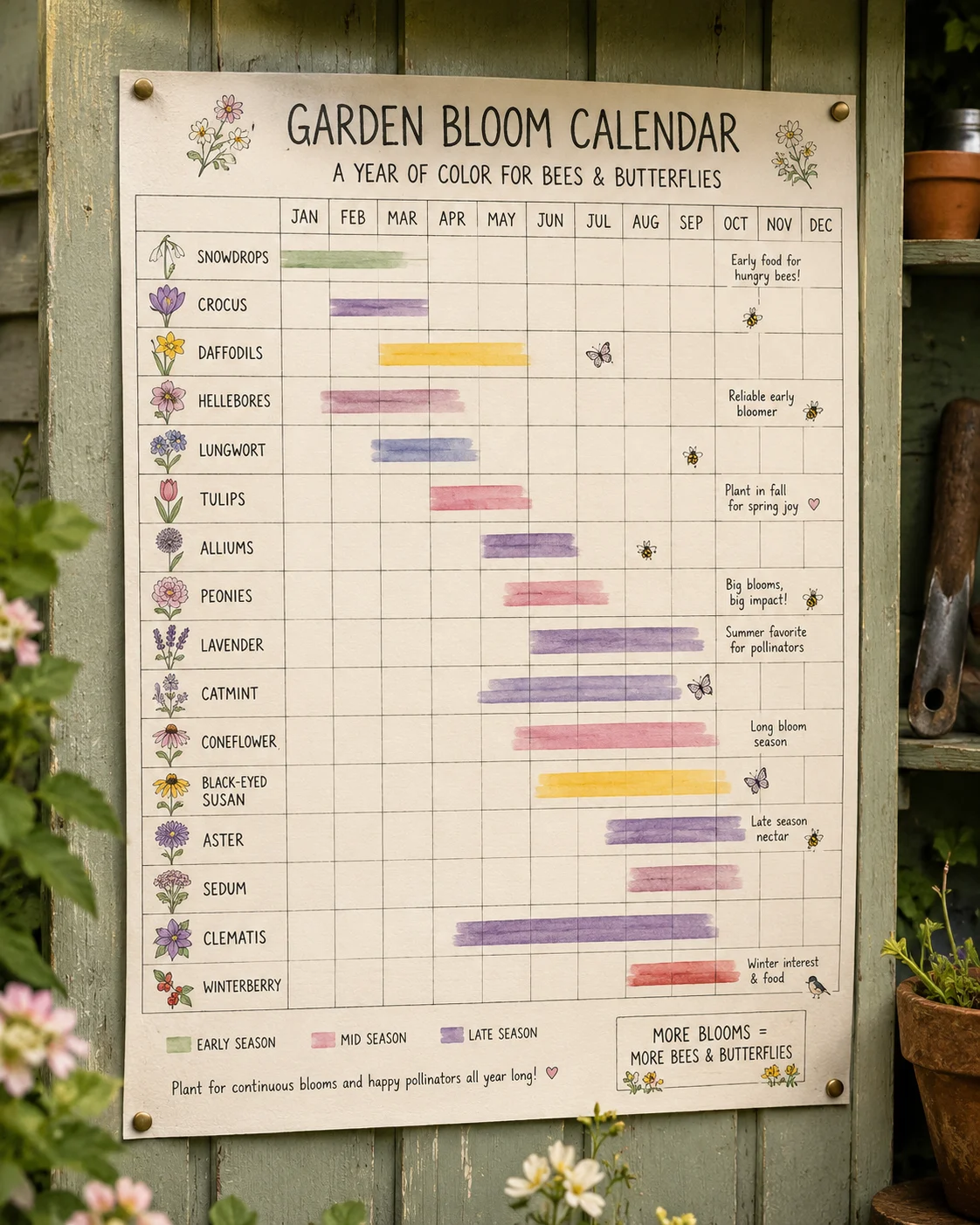
Step 1: Map Your Garden’s Bloom Calendar Before You Buy Anything
Before you plant a single thing, get a piece of paper and sketch out four columns: early spring, late spring to early summer, midsummer, and autumn. For every plant you already have (or are considering), write down its bloom window.
This single exercise reveals your garden’s real weak points immediately. Most gardeners discover the same two gaps:
- The June Gap — the lull between spring flowers finishing and summer perennials kicking in
- The Autumn Cliff — when annuals fade and gardens get “tidied” just as bees need the most fuel to build winter stores
If you want a deeper breakdown of that early-summer gap specifically, our guide on fast-growing flowers for the June nectar dearth covers exactly what to plant to bridge it.
Step 2: Choose a Core Plant Palette for Each Season
Rather than planting randomly, build your garden around a small, reliable core for each season — then fill in around it. Here’s a proven starting structure:
Early Spring (March–April)
- Crocus — one of the very first pollen sources after winter
- Flowering currant — an early shrub bees rely on heavily
- Grape hyacinth — reliable, low-maintenance bulb bloomer
Late Spring to Early Summer (May–June)
- Foxglove
- Alliums
- Catmint (Nepeta) — an exceptional, long-blooming bee magnet
Midsummer (July–August)
- Lavender
- Echinacea (coneflower)
- Verbena bonariensis — tall, airy, and beloved by butterflies
Autumn (September–October)
- Sedum (Autumn Joy)
- Asters
- Goldenrod — often unfairly blamed for allergies, but a critical late-season lifeline
For a full autumn-specific plant list, see our guide to 12 late-season flowers bees need before winter.
Step 3: Layer Your Planting for Structural Diversity
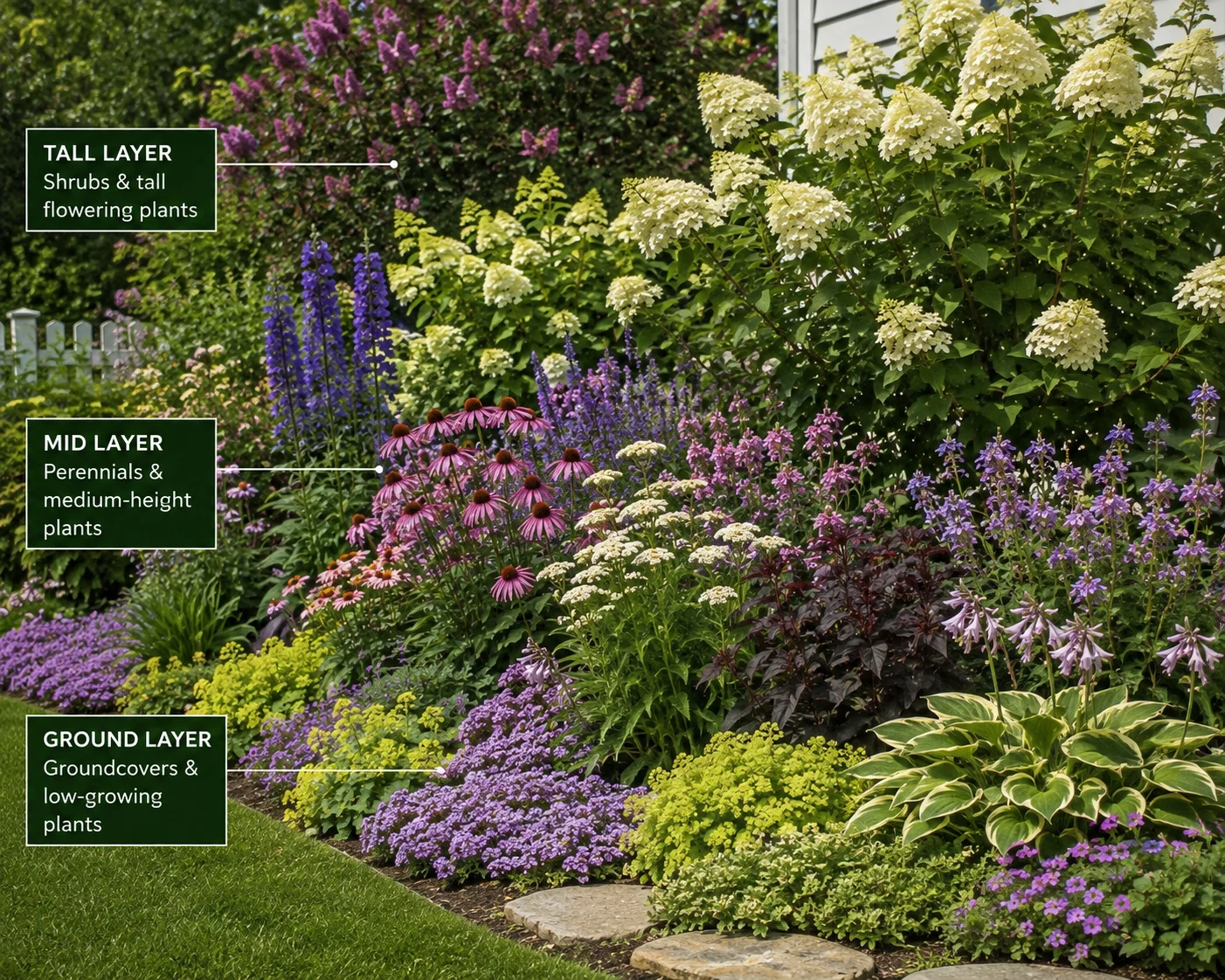
A flat, single-height border limits which pollinators can actually use it. Build in layers, the same way a woodland edge naturally does:
- Ground cover — low, spreading flowers that fill bare soil and suppress weeds
- Mid-height perennials — the workhorse layer most bees forage from
- Tall architectural plants — verbena, foxglove, or ornamental grasses for structure and height variation
- Shrubs and small trees — extend bloom into early spring and provide shelter
This layering doesn’t just look better — it multiplies the number of pollinator species your garden can support, since different species forage at different heights and prefer different flower shapes.
Step 4: Prioritize Native and Regionally Adapted Plants
Native plants have co-evolved with local pollinator species for thousands of years, which means their bloom timing, flower shape, and nectar chemistry are often a better match than ornamental cultivars. The Xerces Society has found that native plants are four times more attractive to pollinators than non-natives, making regional natives one of the single most effective additions a home gardener can make (Xerces Society, Picking Plants for Pollinators).
That doesn’t mean you need an entirely native garden — a mix works well — but aim to make natives the backbone, especially for the plants doing the heavy lifting in each seasonal gap.
Step 5: Avoid the Common Mistakes That Undo Good Planting
Even a well-planned garden can fail pollinators through a handful of avoidable habits:
- Deadheading too aggressively — removing spent blooms too early can cut off a plant’s second flush and eliminate seed heads pollinators and birds rely on
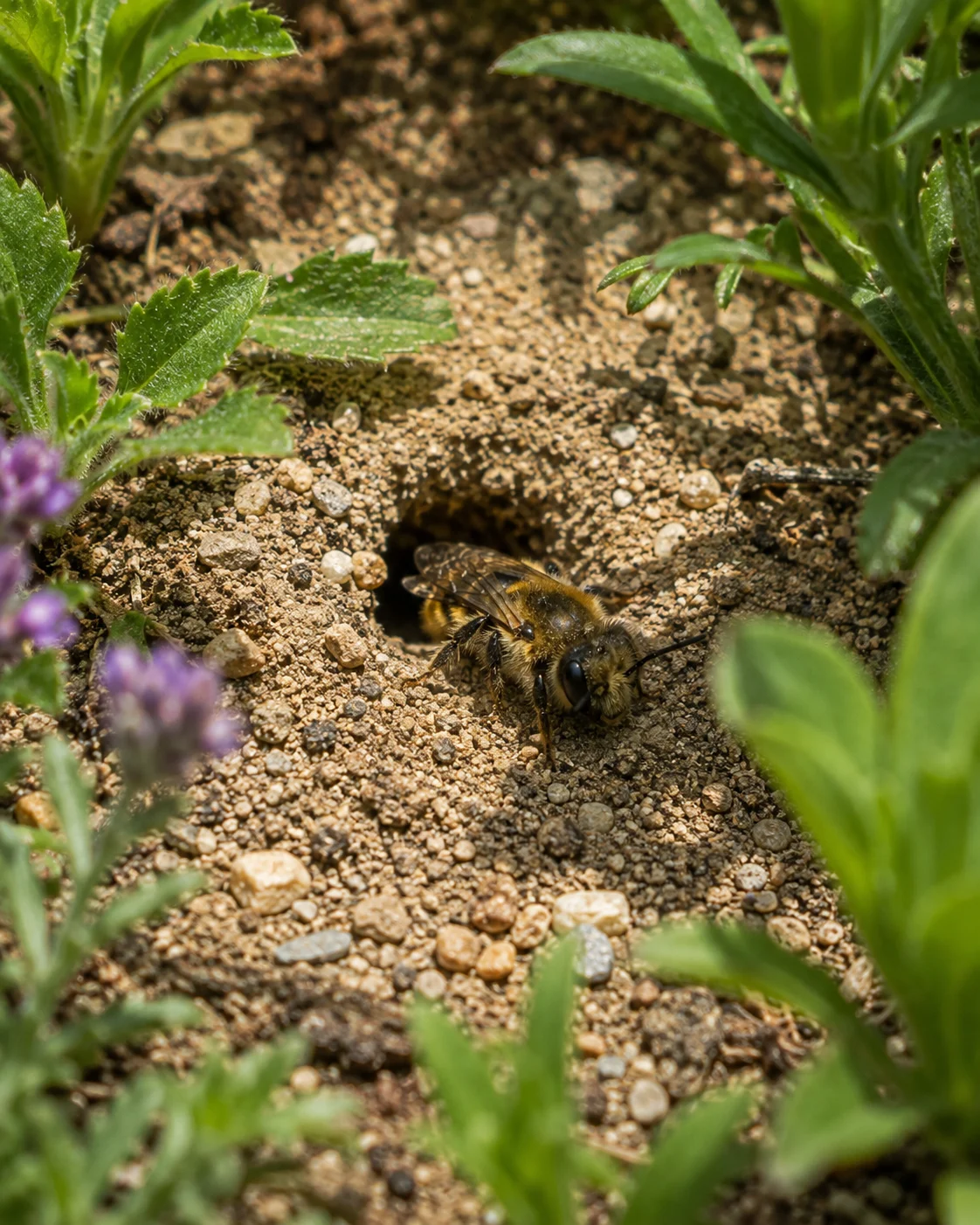
- Over-mulching bare soil — roughly 70% of native bee species nest underground in bare soil, so thick mulch spread everywhere removes nesting habitat entirely (Colorado State University Extension, Attracting Native Bees)
- Using pesticides on “pollinator” plants — even organic-labeled sprays can harm bees; always check timing and application method
- Planting only annuals — annuals look great fast but don’t build the deep root systems and long bloom windows perennials and shrubs provide
- Clearing everything in autumn — many pollinators overwinter in hollow stems and leaf litter, so a full autumn cleanup can remove next year’s population before it even starts
If you want a full breakdown of these traps and how to fix them, our guide on pollinator garden mistakes beginners make walks through each one in detail.
[Image: | Alt text: native solitary bee nesting habitat bare soil pollinator garden]
Step 6: Plan for Water and Shelter, Not Just Flowers
Flowers get all the attention, but a genuinely pollinator-friendly garden also needs:
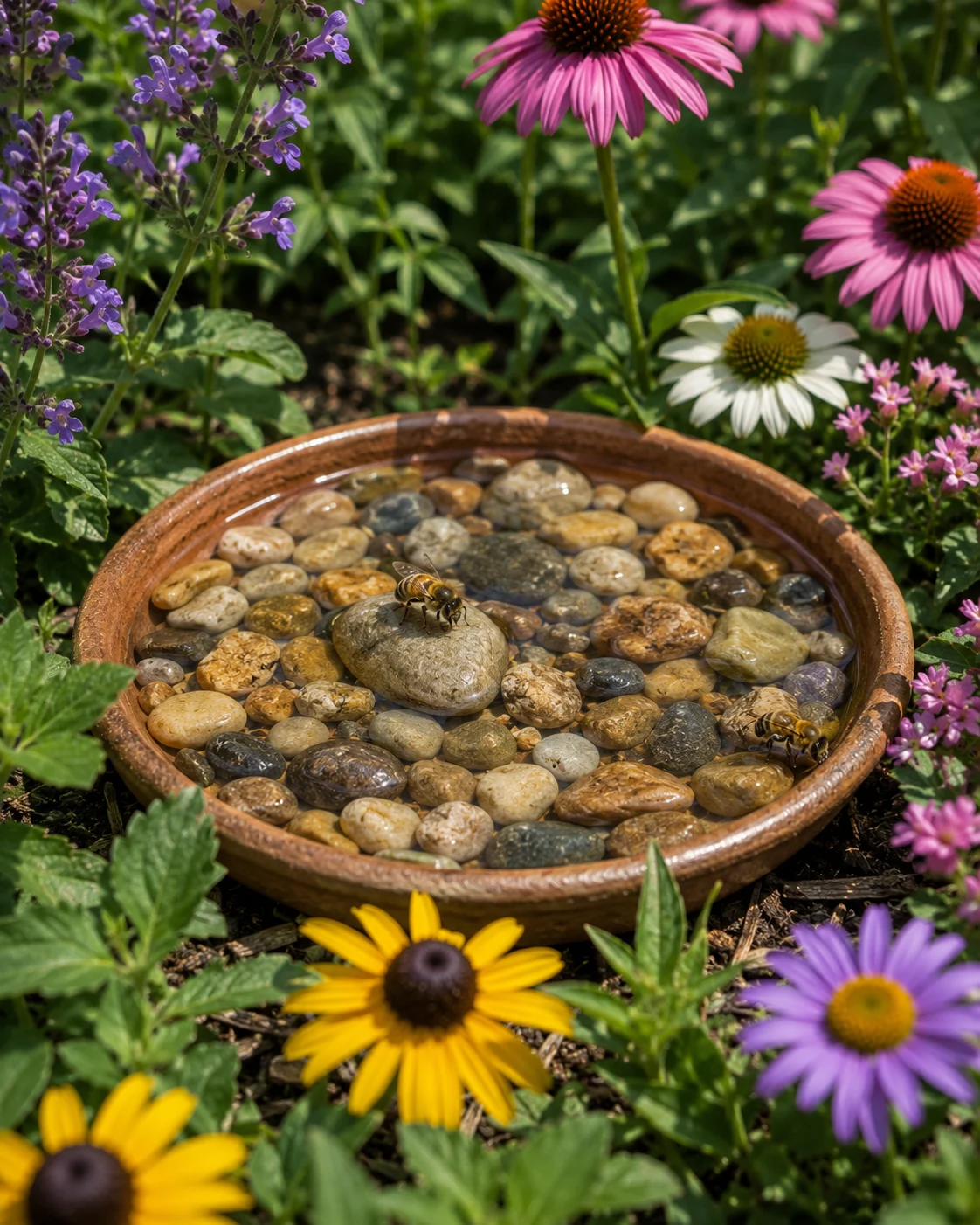
- A shallow water source — a dish with pebbles or a shallow bird bath gives bees a safe place to drink without drowning
- Wind shelter — hedges, fences, or dense shrub borders help pollinators forage efficiently on breezy days
- Undisturbed corners — a deliberately “messy” patch of leaf litter, log piles, or long grass provides nesting and overwintering habitat
These elements cost little and take up minimal space, but they’re often the difference between a garden pollinators visit occasionally and one they actually depend on.
Putting It All Together: A Simple Planning Checklist
Before you plant this season, run through this quick list:
- Chart your current bloom calendar and identify your biggest seasonal gap
- Pick 2–3 core plants per season from the palette above (or regional natives equivalent)
- Layer your planting by height rather than clustering everything at one level
- Weight your choices toward native species, especially for gap-filling plants
- Audit your habits — deadheading, mulching, and autumn cleanup timing
- Add water and shelter, not just flowers
For gardeners who want an even more detailed month-by-month framework, our companion piece on the four-season pollinator garden blueprint goes deeper into exact bloom sequencing.
Final Thoughts: Design for the Whole Year, Not Just the Highlight Reel
A garden that truly feeds pollinators isn’t the one with the most flowers in June — it’s the one with something blooming in every season, structured in layers, backed by natives, and free of the habits that quietly undo good intentions.
Key Takeaways
- Map your bloom calendar first — most gardens have a hidden gap in June and another in autumn
- Build a seasonal core palette so something is always in bloom, not just clustered in early summer
- Layer by height to support a wider range of pollinator species
- Prioritize native plants, especially for filling seasonal gaps
- Fix common habits like early deadheading, over-mulching, and aggressive autumn cleanup
- Don’t forget water and shelter — flowers alone aren’t a complete pollinator garden
Design with the full season in mind, and your garden stops being a pretty backdrop and becomes what it’s meant to be: a genuine, dependable food source pollinators can count on from the first crocus to the last aster.