
Most pollinator gardens fail for the same reason: they look incredible in June and then go silent for the rest of the year. A single burst of color feels like a win, but to a hive, it’s a boom-and-bust cycle — plenty of nectar one month, nothing the next. If you’ve ever watched your bees hammer a patch of flowers in early summer only to disappear into a hungry lull a few weeks later, you’ve seen this problem firsthand.
A four-season pollinator garden solves that by design. Instead of planting for a single peak bloom, you build a relay — one plant handing off to the next — so there’s always something flowering from the first spring thaw to the last warm days of fall, with structure left standing through winter. In this guide, you’ll learn how to map bloom times, which plants to use in each season, how to lay the garden out, and the most common mistakes that leave gaps right when bees need forage most.
Why Continuous Bloom Matters More Than Total Flower Count
Beekeepers often assume more flowers automatically means a better-fed hive. In reality, timing matters more than volume. A colony needs a steady, overlapping supply of pollen and nectar to support brood rearing, build winter stores, and avoid the stress that comes with sudden forage gaps — the same stress behind problems like the midsummer nectar dearth and the early-summer lull covered in our guide to June gap plants.
Research from pollinator conservation groups consistently emphasizes planting in succession blocks rather than single specimens, since a mass of one species is far easier for foraging bees to find and use efficiently than scattered individual plants. The Xerces Society’s pollinator plant guidance is a good starting reference point if you want region-specific species lists (xerces.org).
Mapping Your Garden Onto the Bee Calendar
Before buying a single plant, sketch a rough calendar of your local bloom seasons. Most temperate gardens break down into four working windows:
- Early spring (first bloom to late May) — willow, crocus, hellebore, flowering fruit trees
- Early-to-mid summer (June nectar gap) — borage, phacelia, catmint, early perennials
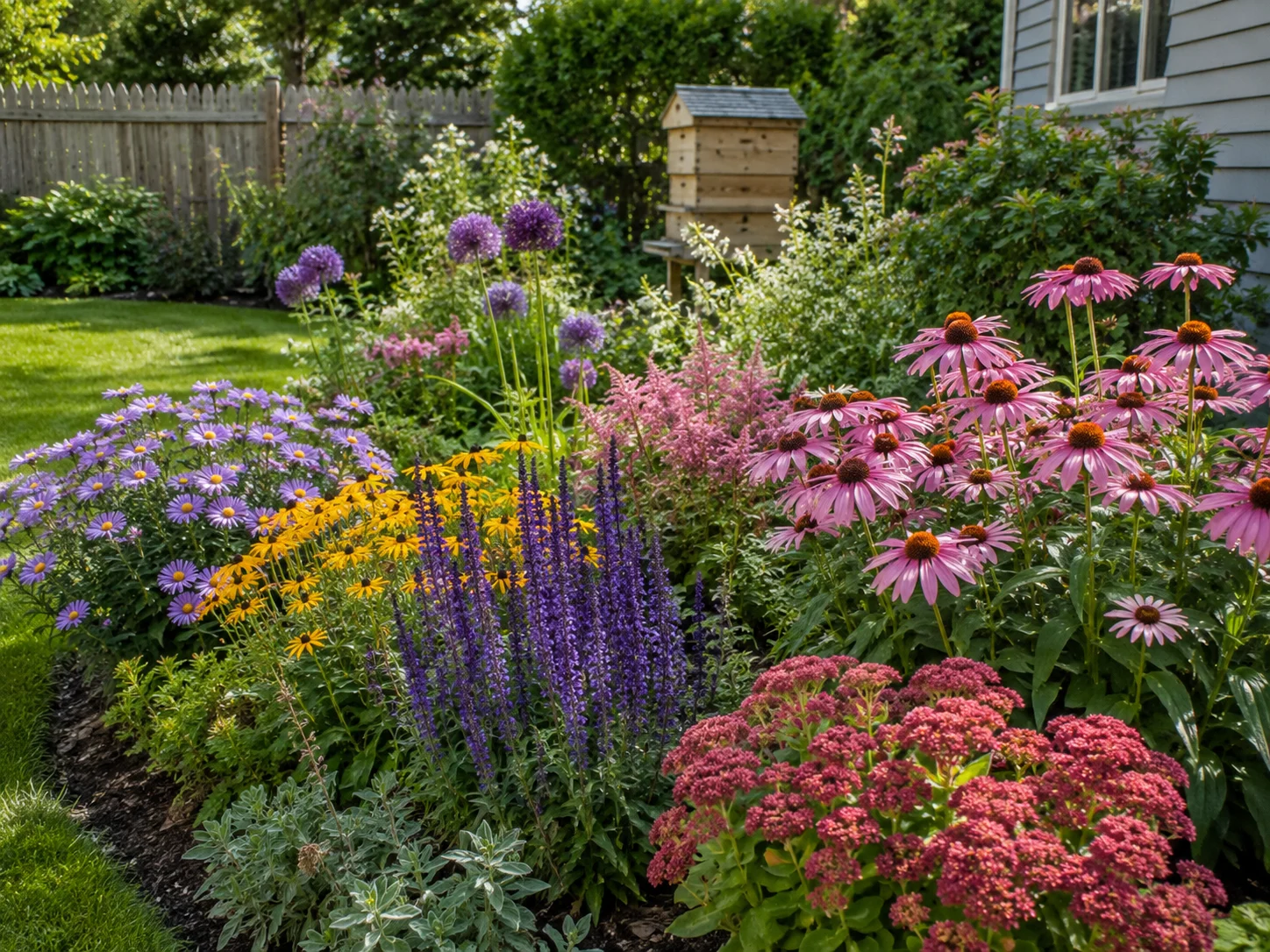
- Midsummer dearth (July–August) — mountain mint, bee balm, agastache, native asters starting
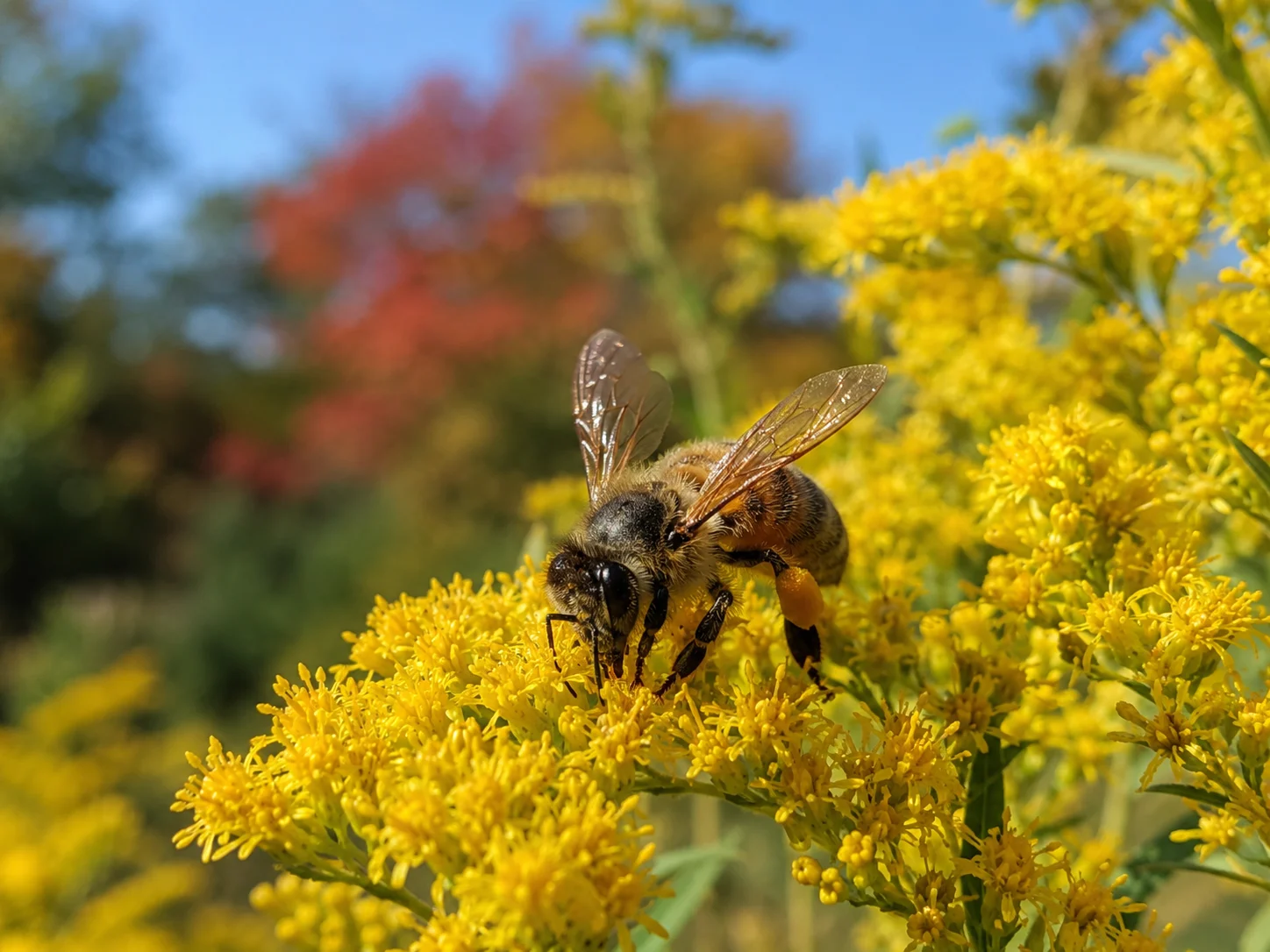
- Fall (September to first frost) — goldenrod, sedum, asters, ivy
The goal isn’t to plant equally in all four — it’s to make sure no window is empty. Most backyard gardens already do spring and early summer reasonably well; the real value is filling the July dearth and extending bloom deep into autumn.
Season-by-Season Plant Strategy
Spring: Build the Foundation
Spring bloom is about volume and reliability. Flowering trees and shrubs like serviceberry and native willow provide an enormous amount of early pollen with a single plant, which matters when few other flowers are available yet. If you’re starting a garden from nothing, our beginner pollinator garden framework walks through exactly which five plants create the strongest early backbone before you add anything else.
Early Summer: Bridge the June Gap
This is the window most gardens accidentally skip. Fast annuals like borage, phacelia, and calendula grow quickly enough to fill nectar shortfalls in their very first season, which is why they’re a staple recommendation for closing the June gap specifically.
Midsummer: Plan for the Dearth
By July, many landscapes have burned through their spring flush and haven’t reached fall bloom yet. This is the point where established hives can show real food stress even though the colony looks active. Long-blooming perennials — mountain mint, agastache, Russian sage, and repeat-blooming natives — carry the garden through this stretch.
Fall: Extend the Season as Long as Possible
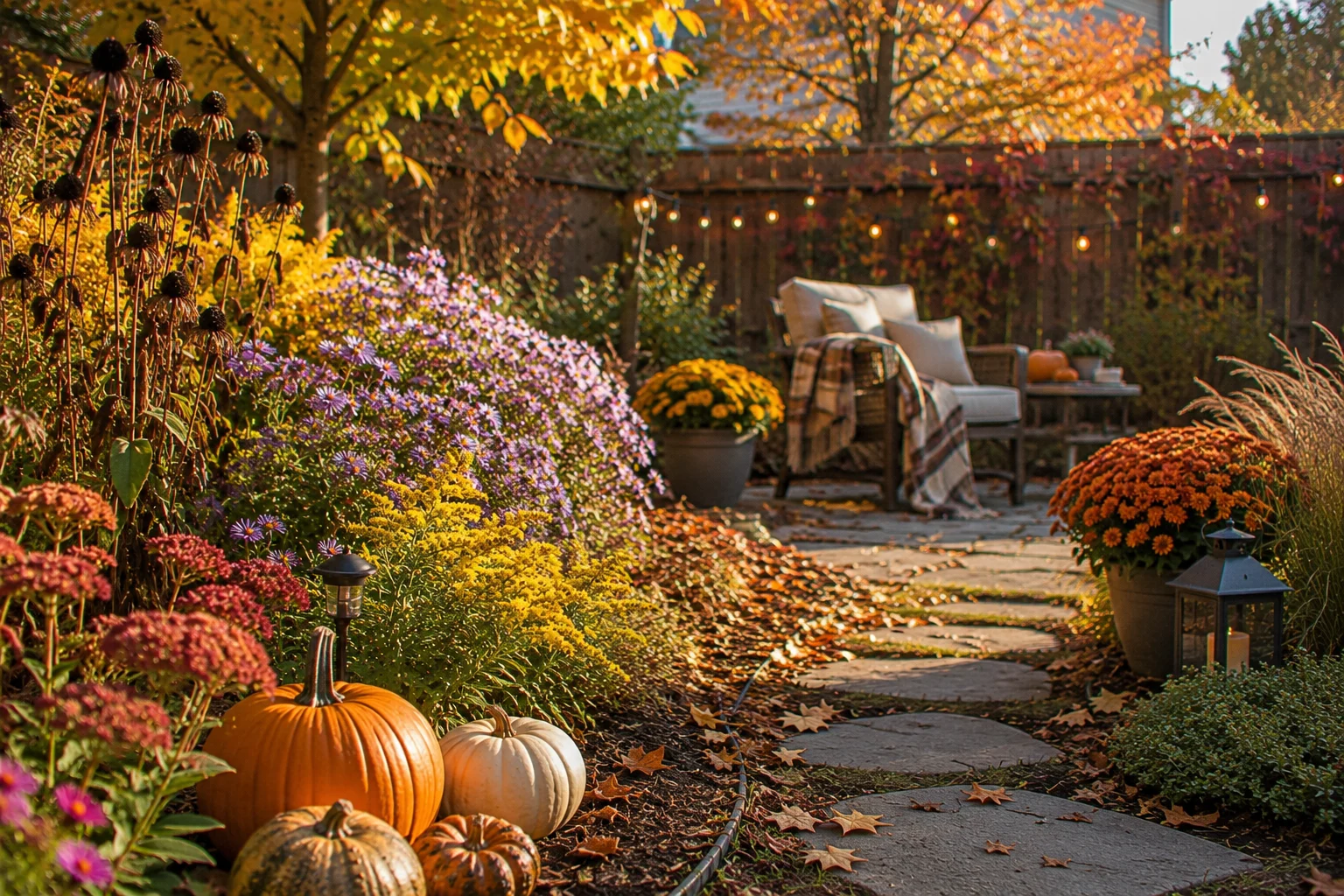
Fall bloom is arguably the most overlooked and most valuable, since it directly affects a colony’s ability to build winter stores. Asters, sedum, goldenrod, and late-flowering salvias should anchor this section of the garden.
Layout: Design in Layers, Not Rows
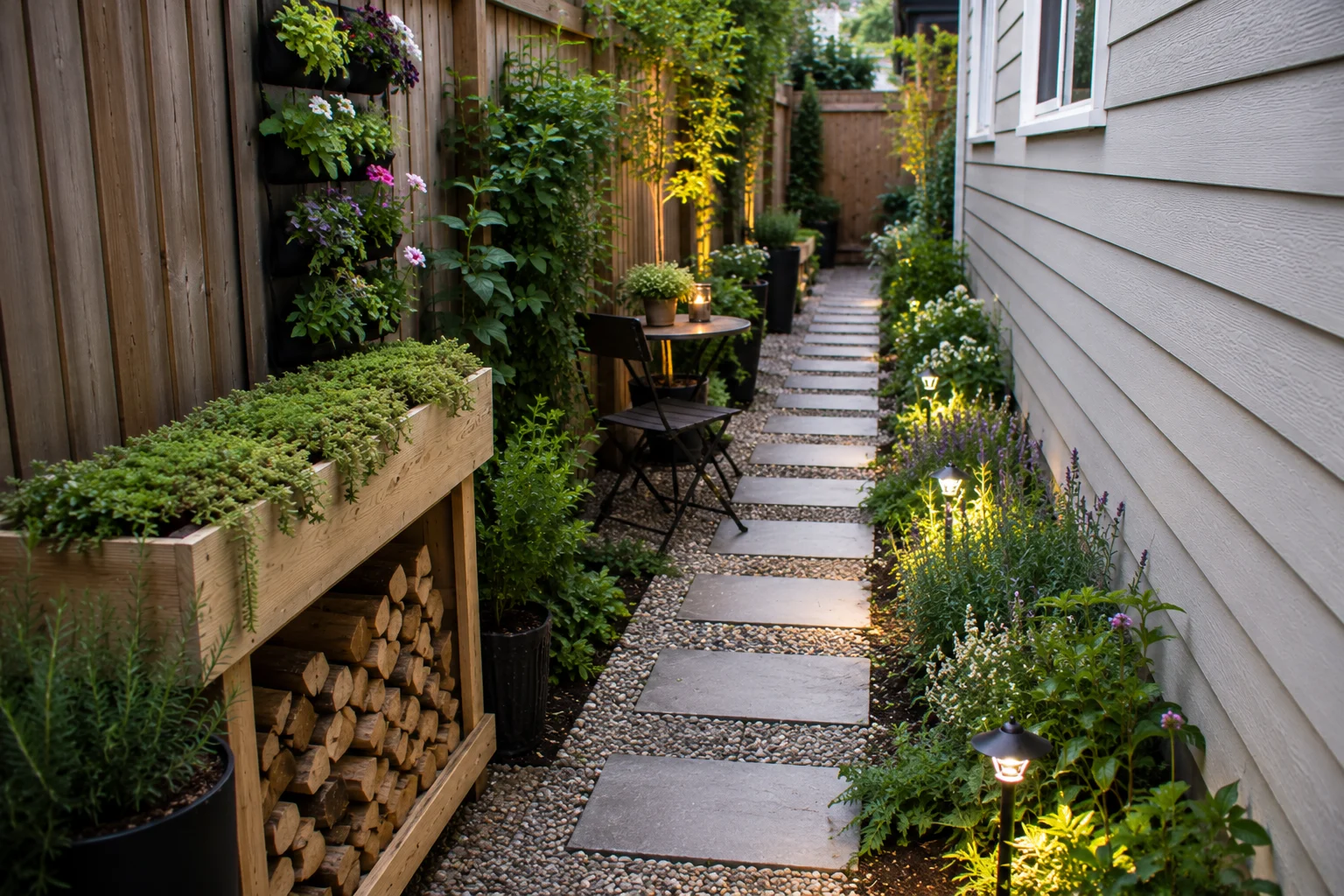
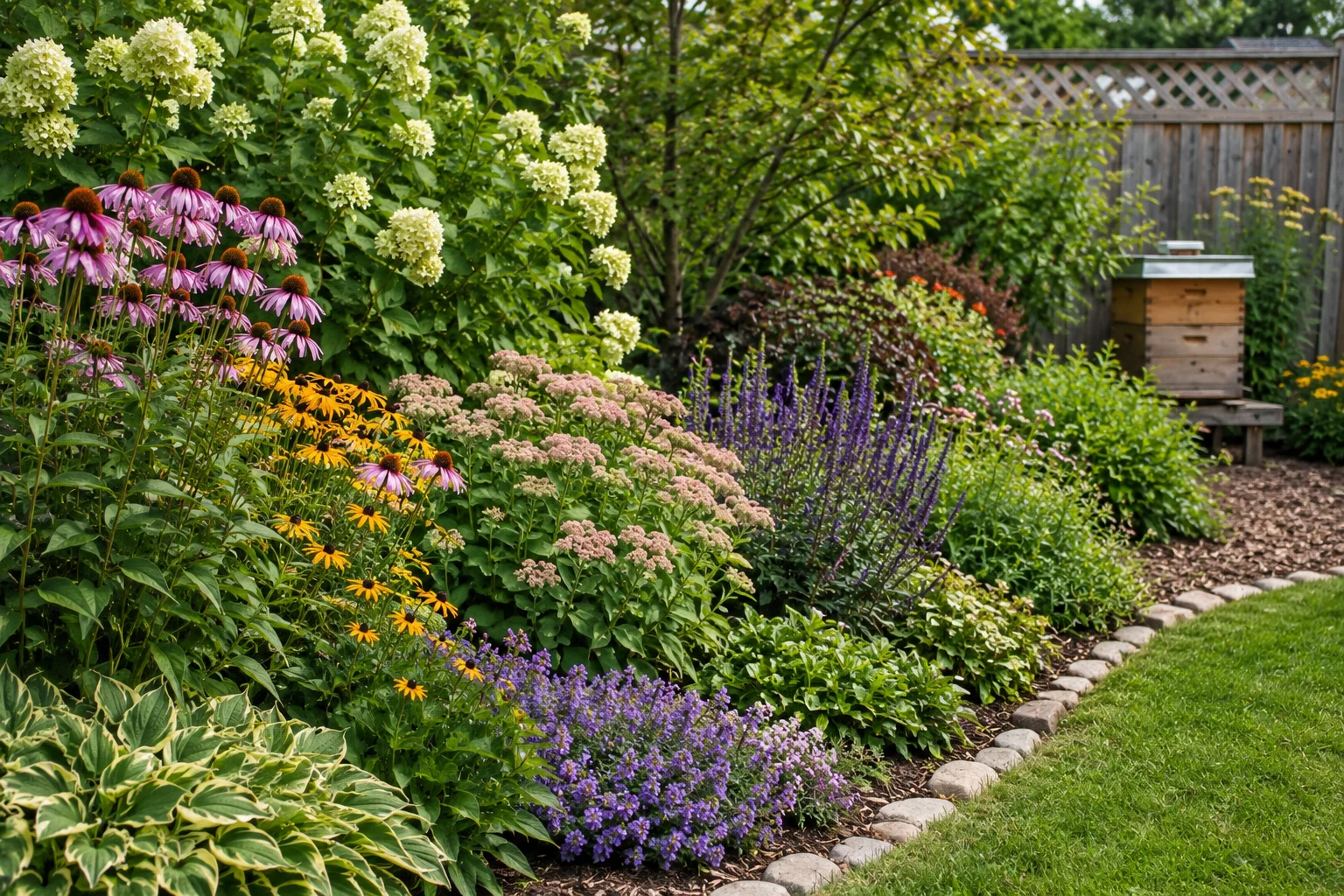
A four-season garden works best when it’s designed vertically as well as seasonally. Combining small trees, structural shrubs, mid-height perennials, and low groundcover in the same bed lets you stack multiple bloom windows into a compact footprint — the same layered approach used in our multi-layered hedgerow design. This layering also does double duty as a windbreak for backyard hives, which matters if your apiary sits close to the garden.
A few practical layout rules:
- Plant in blocks of 3–5, not single specimens — bees forage more efficiently on clustered color
- Repeat key species across the bed so bloom feels continuous rather than scattered
- Leave structure standing through winter — hollow stems and seed heads support overwintering insects, a principle covered in more depth in our fall garden cleanup guide
- Group by water needs, not just bloom time, to keep maintenance simple
Site Prep: Getting the Foundation Right Before You Plant
A four-season garden asks more of your soil than a one-season flower bed, simply because something is actively growing and blooming almost year-round. A little upfront prep pays off for years.
- Test your soil first. Most pollinator perennials tolerate average soil, but heavy clay or fast-draining sand will change which species thrive. A basic soil test through your local extension office is inexpensive and tells you pH and drainage before you commit to a layout.
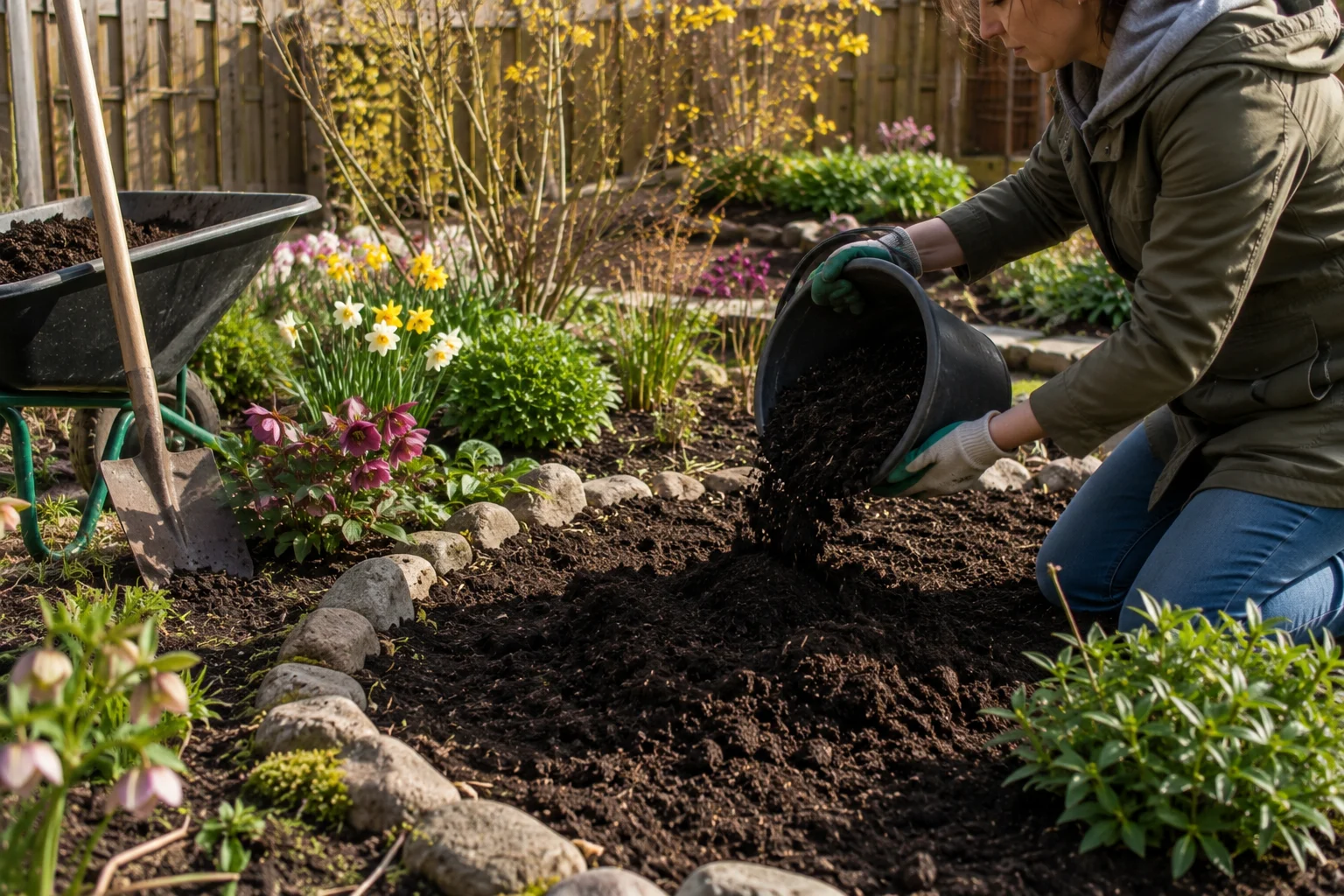
- Work in compost, not fertilizer. Rich, well-structured soil supports deep root systems that carry perennials through both drought and winter. Heavy synthetic fertilizer tends to push leafy growth at the expense of blooms.
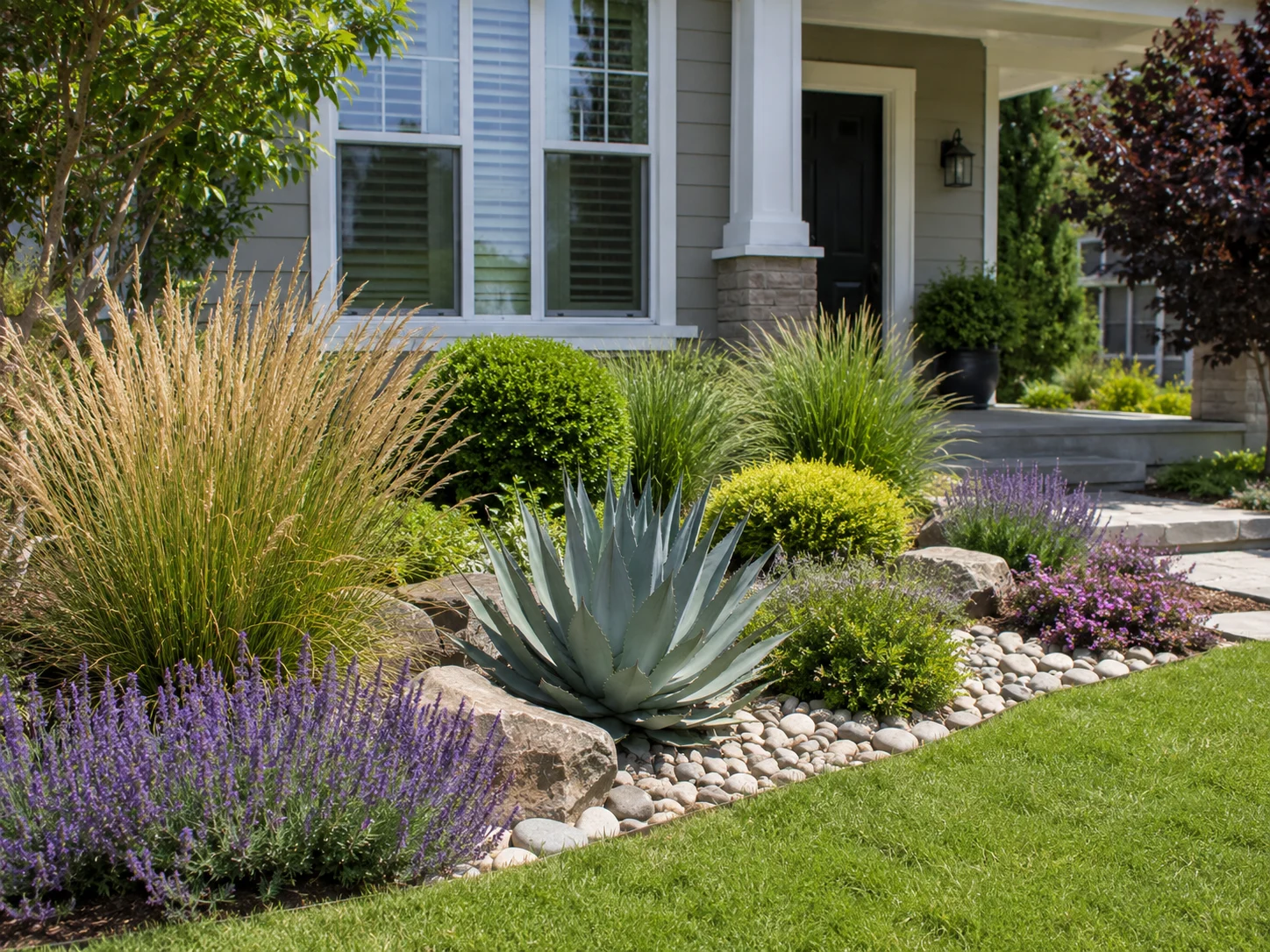
- Group plants by water needs. Drought-tolerant natives like agastache and Russian sage struggle if planted next to thirsty perennials that need constant moisture. Zoning the bed by water requirement keeps maintenance simple and prevents root rot in the drier-adapted species.
- Mulch, but leave bare patches. A thin layer of mulch conserves moisture and suppresses weeds, but many native bees nest in bare or lightly vegetated ground. Leaving a few unmulched corners supports ground-nesting species alongside your honeybees.
Regional Adjustments: Adapting the Calendar to Your Climate
The four-season framework holds everywhere, but the specific plants and exact timing shift depending on where you garden.
Warmer climates (Zones 8–10) often see the “midsummer dearth” stretch longer and earlier, sometimes starting in June rather than July. Heat-tolerant bloomers like salvia, lantana, and vitex can carry a garden through extended dry heat when cooler-climate perennials would stall.
Cooler climates (Zones 3–5) compress the growing season, so early spring bloom becomes even more valuable — every week of forage matters when the active season is short. Willow, crocus, and early minor bulbs are worth prioritizing, and fall bloom may need to lean on truly cold-hardy asters and sedum that can flower right up to the first hard frost.
UK and maritime climates tend to have a gentler summer dearth but a very real June gap, which is why fast annual fillers like borage and phacelia are such a consistent recommendation in cooler, wetter growing regions.
Whatever your zone, the principle stays the same: identify your local dearth windows first, then plant specifically to fill them, rather than copying a plant list built for a different climate.
A Simple Year-Round Maintenance Rhythm
A four-season garden doesn’t require constant work, but it does ask for small, consistent attention rather than one big seasonal push.
- Late winter: Cut back only what’s fully broken down; leave hollow stems standing where possible for overwintering insects.
- Early spring: Top-dress with compost, divide overcrowded perennials, and fill in any bare patches with new plugs.
- Late spring: Deadhead early bloomers to extend flowering, and watch for the June gap approaching so bridge annuals go in on time.
- Midsummer: Water deeply during dry stretches, especially for first-year plantings, and resist the urge to tidy too aggressively — a slightly wild midsummer bed is doing its job.
- Fall: Let late bloomers run as long as pollinators are actively using them before cutting back, and avoid removing leaf litter from beds wholesale.
This rhythm keeps the garden productive without turning it into a full-time project.
Frequently Asked Questions
How big does a four-season pollinator garden need to be? There’s no minimum size. The same succession principle — overlapping bloom windows instead of one big flush — works in a 400-square-foot border or a handful of containers on a patio.
Can I do this in an existing garden, or does it need to be built from scratch? Most established gardens already have a spring and early-summer backbone. The highest-impact move is usually auditing what blooms in July and September specifically, then adding plants to fill whichever window is thinnest.
Will a four-season garden actually change hive health, or is this mostly cosmetic? Continuous forage reduces the stress spikes that come with sudden dearths — periods that are strongly associated with increased robbing behavior, slower brood production, and colonies drawing down stores faster than they can rebuild them. A well-timed garden won’t replace supplemental feeding when it’s genuinely needed, but it meaningfully reduces how often that feeding becomes necessary.
Do I need native plants only, or can ornamentals work too? A mix works well in most gardens. Natives tend to support the widest range of pollinator species and are well-adapted to local conditions, but many non-invasive ornamentals — as long as they’re open-faced rather than heavily double-flowered — contribute real forage value too.
Common Mistakes That Create Forage Gaps
- Front-loading spring color and running out of anything by July
- Over-relying on double-flowered ornamentals, which often lack accessible nectar and pollen for bees
- Cutting the garden back too early in fall, removing late-season forage before bees are done using it
- Ignoring container and edge space — even a few pots of late-blooming herbs can bridge a gap in a small yard
Final Thoughts
A four-season pollinator garden isn’t about planting more — it’s about planting on purpose, so bloom overlaps instead of clustering into one dramatic but short-lived peak. Start with a strong spring backbone, deliberately plug the June and July gaps, and push bloom as late into fall as your climate allows. Do that, and your hives — and every other pollinator sharing the yard — will have something to forage on nearly every week of the growing season.
For deeper detail on any single season, the University of Minnesota Bee Lab publishes excellent, research-backed seasonal forage guidance worth cross-referencing as you plan (University of Minnesota Bee Lab).