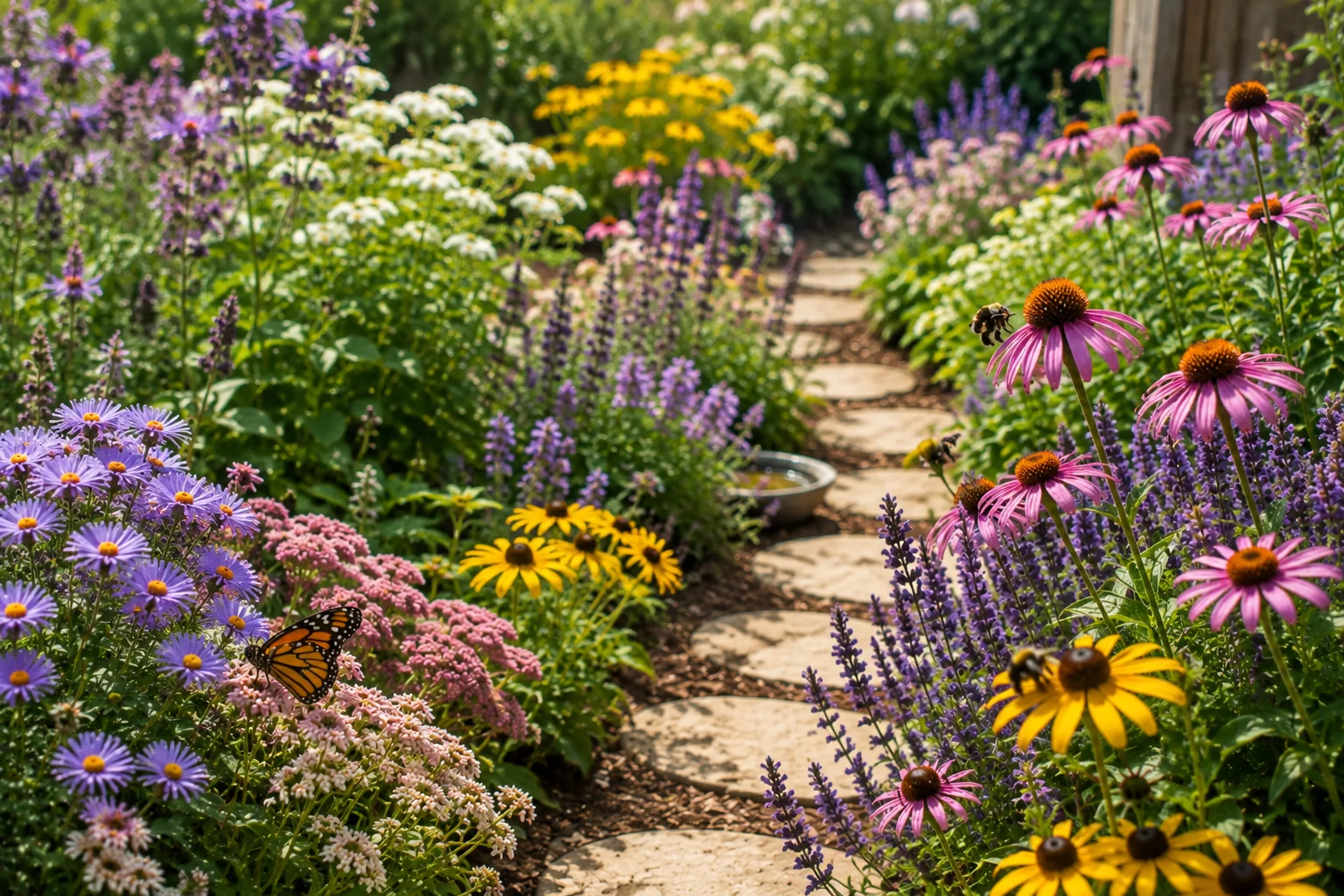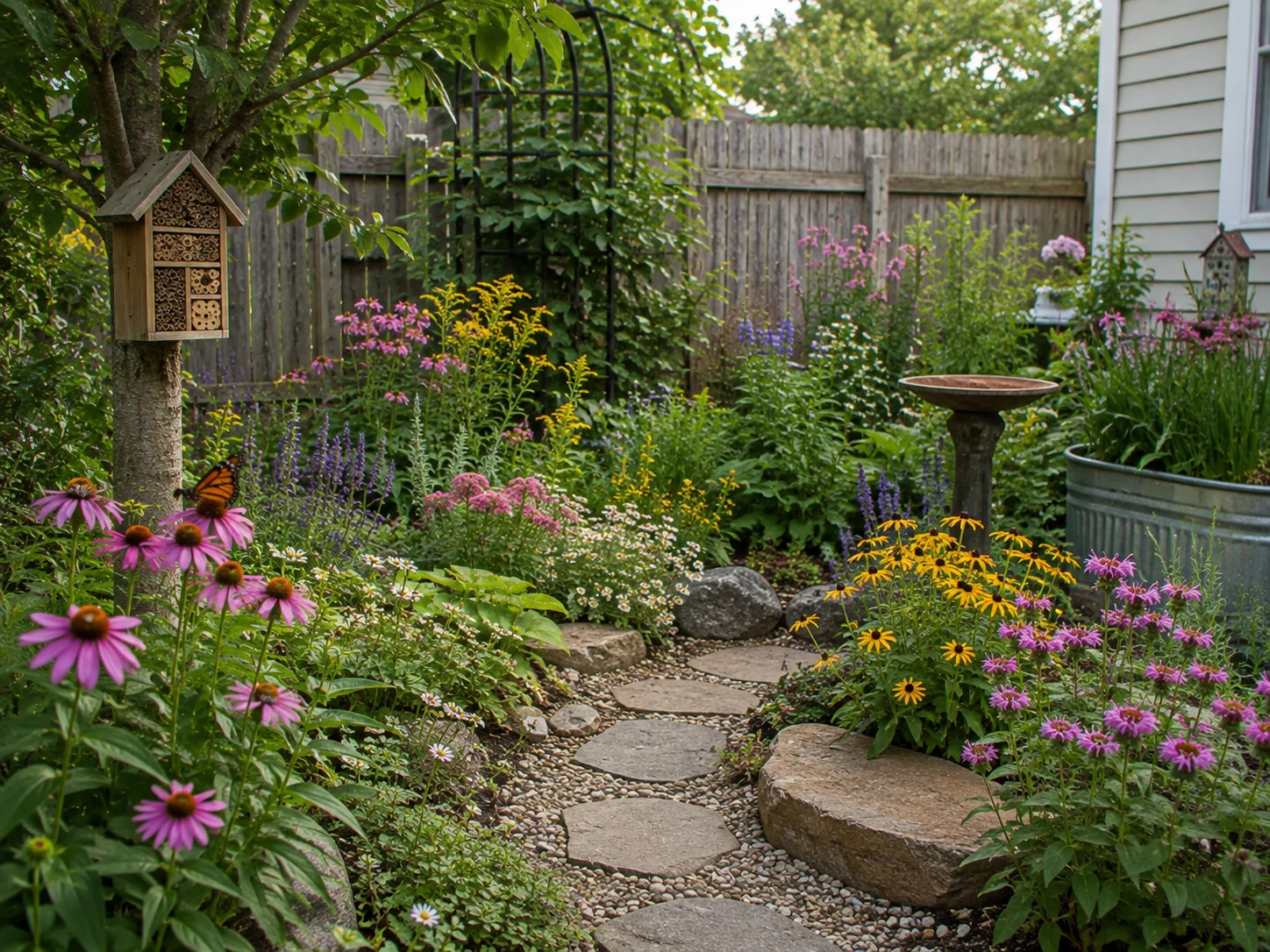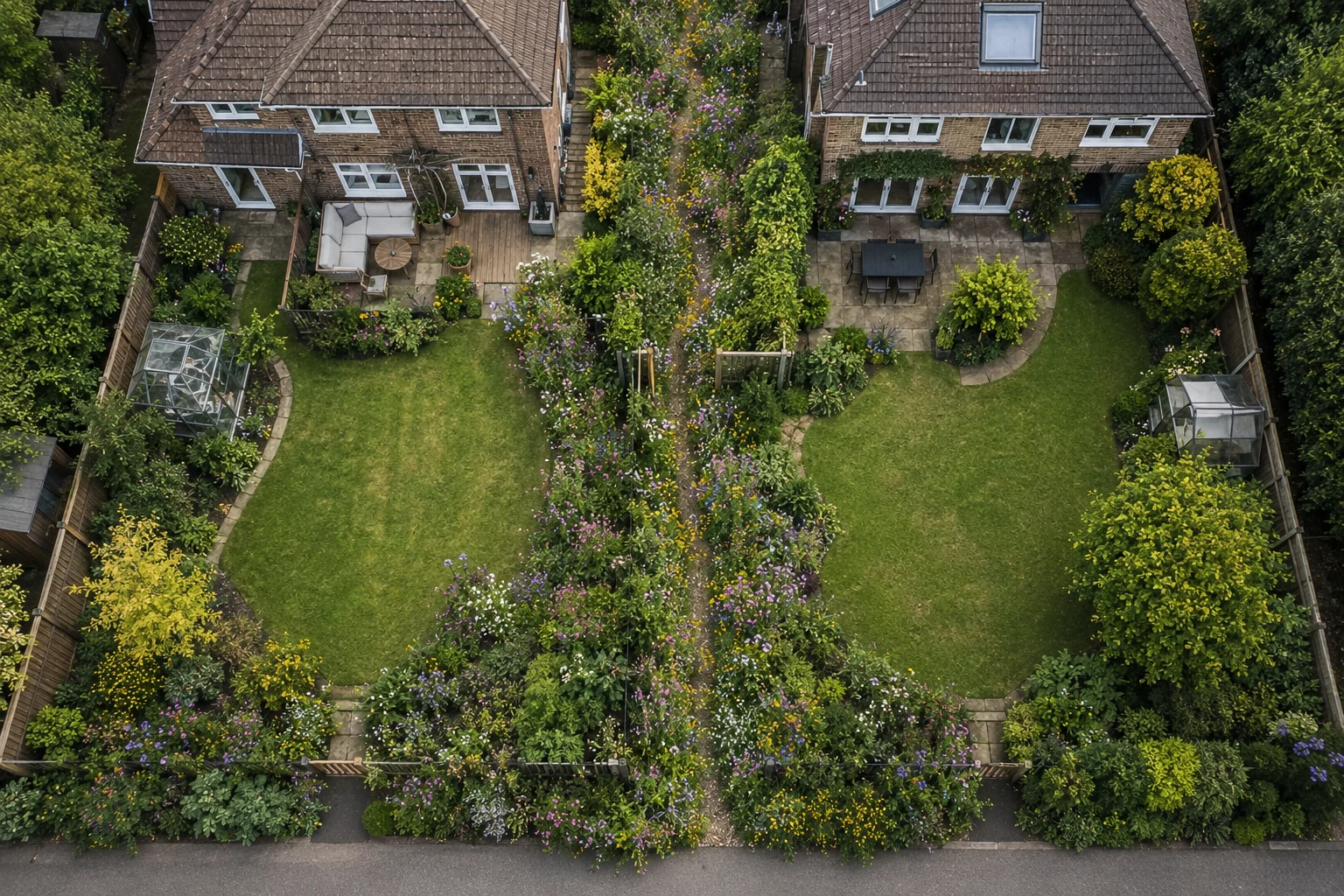

Clay soil has a reputation that is partly deserved and partly overblown. It is heavy, slow to drain, prone to compaction, and genuinely difficult to work when wet. But it is also nutrient-rich, moisture-retentive through summer drought, and capable of supporting some of the most productive pollinator plants available to US gardeners — provided you stop trying to grow plants that need conditions clay cannot provide and start working with what clay actually offers.
The mistake most gardeners make with clay is attempting to improve it into something it is not: digging in endless grit and compost in an attempt to create a free-draining loam. This rarely succeeds at garden scale and exhausts the gardener before it transforms the soil. The more effective approach is to select plants that genuinely perform in clay — plants with robust root systems that tolerate waterlogging through winter, that establish without constant intervention, and that provide genuine nectar and pollen value to pollinators from spring through autumn.
Every plant on this list meets three criteria: it is reliably documented to handle heavy clay soil in the US, it provides meaningful pollinator forage, and it does not require ongoing soil amendment to perform well.
One Thing Worth Knowing Before You Plant
Clay soil is mineral-rich — its problems are drainage, aeration, and workability, not fertility. Roots in waterlogged clay cannot access oxygen and can rot. The surface compacts easily and resists water penetration.
The practical implication: avoid plants requiring sharp drainage (Mediterranean herbs, most lavender, many alliums). Choose plants native to wet meadows, woodland edges, and prairie margins — habitats that exist on clay-heavy soils across North America. These plants evolved for exactly these conditions.
One worthwhile intervention: add a 3–4 inch layer of composted bark or compost to the surface as mulch, not dug in. Earthworms incorporate it naturally over time, improving structure without disruption.
The Plants
Joe-Pye Weed (Eutrochium purpureum or E. maculatum)
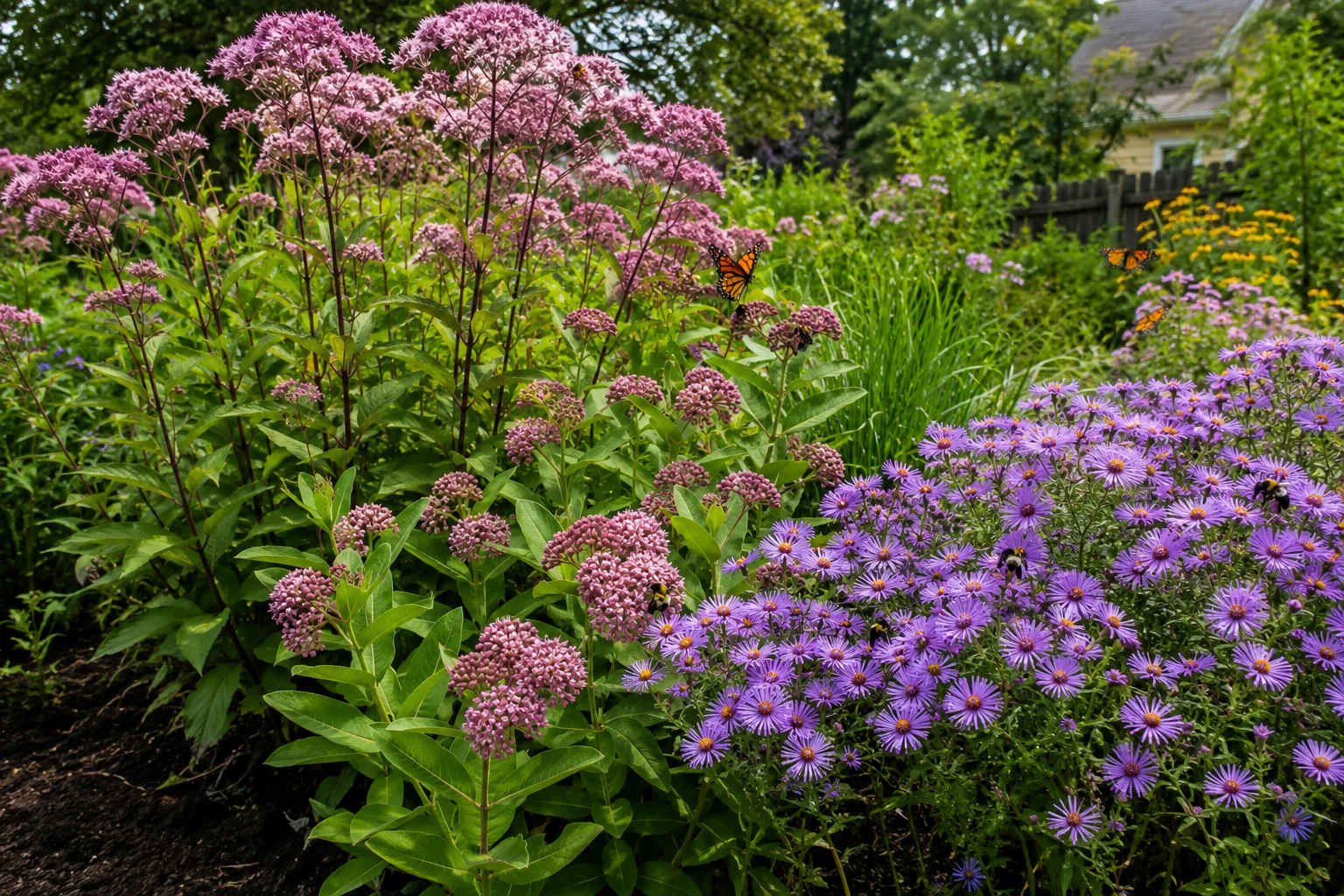
Few plants perform as reliably on clay as Joe-Pye weed. It reaches 4–7 feet, tolerates wet clay through winter and spring, and produces large domed flower heads of dusty pink-purple from July to September — precisely during the midsummer dearth when most other plants have finished and colonies need resources most urgently. Every pollinator species visits it: honeybees, bumblebees, monarch butterflies, fritillaries, and dozens of native bee species work it simultaneously throughout its long bloom period. Plant in full sun to part shade at the back of a border or along a low-lying boundary where clay soil is heaviest. Space at 3 feet and expect it to self-seed modestly into surrounding areas.
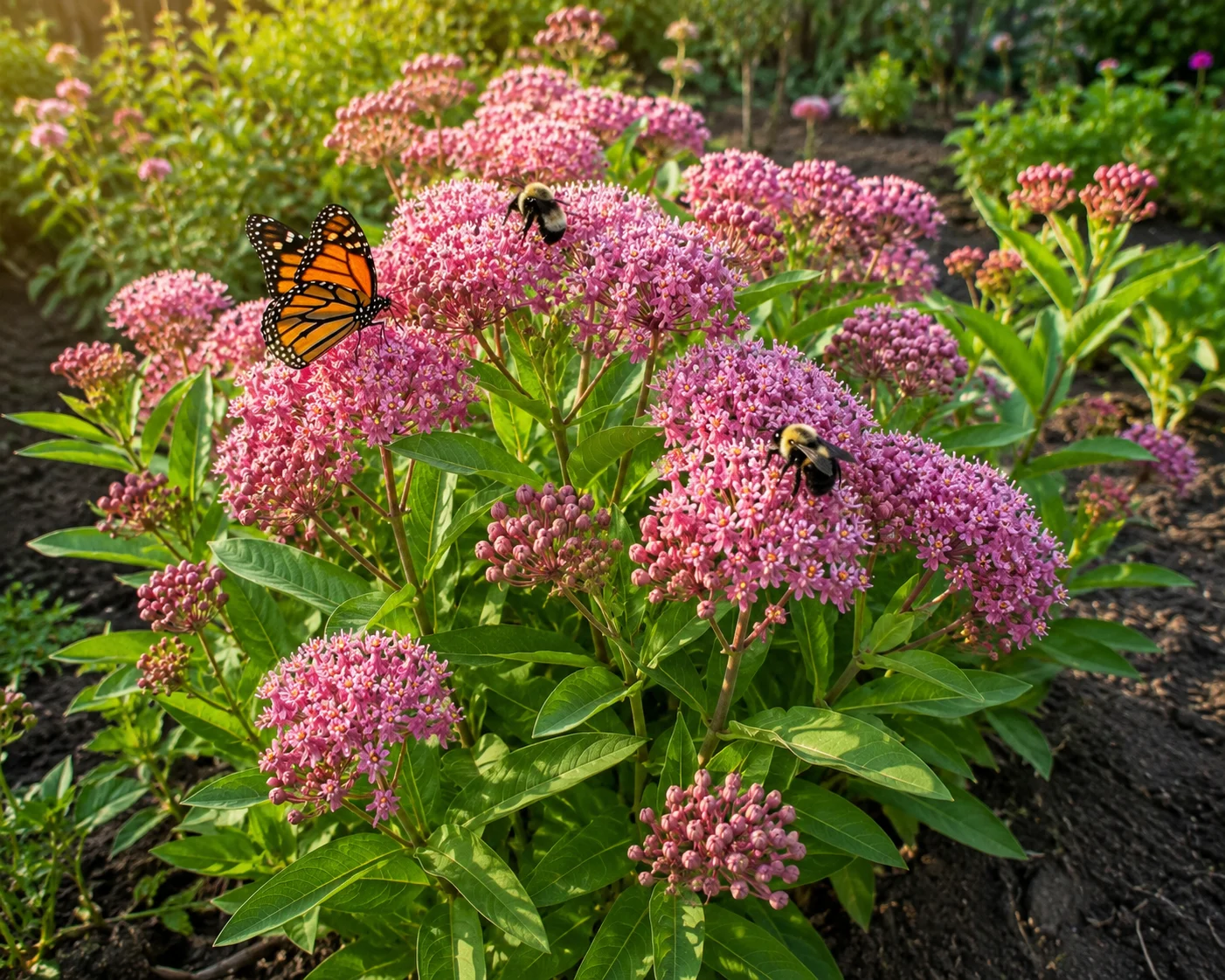
Swamp Milkweed (Asclepias incarnata)
The milkweed that genuinely thrives in clay and wet conditions rather than merely tolerating them. Asclepias incarnata grows 3–4 feet, produces clusters of deep pink flowers from June to August, and supports both specialist milkweed bees and monarch butterfly larvae. Unlike common milkweed (Asclepias syriaca), it spreads by clump rather than rhizome and is manageable in a formal border context. It establishes more slowly than some perennials — give it two full seasons before judging its performance. The Xerces Society documents swamp milkweed as one of the highest-value native plants for pollinator support in wet and clay-heavy US gardens.
New England Aster (Symphyotrichum novae-angliae)
One of the most important late-season pollinator plants in eastern North America, and one that handles clay soil better than most of its relatives. It blooms from September into November, providing critical forage as colonies build final reserves before winter and as migrating monarchs need fuel for their journey south. Reaches 3–5 feet in full sun, performs adequately in part shade. Can flop in rich clay — cut back by one-third in late June to produce a more compact, self-supporting plant. Native across the eastern US and reliably perennial in zones 4–8.
Wild Bergamot (Monarda fistulosa)
The clay-tolerant member of the bee balm genus, significantly more reliable in heavy soils than the showier hybrid cultivars. Wild bergamot reaches 2–4 feet, blooms from June to August in lavender-pink whorled flowers that are highly attractive to long-tongued bumblebees, hummingbirds, and native bee species. It spreads by rhizome and can be aggressive in loose loam — clay naturally limits this spread, making heavy soil an advantage for managing its growth. Choose the straight species over named cultivars for the best mildew resistance and pollinator value.
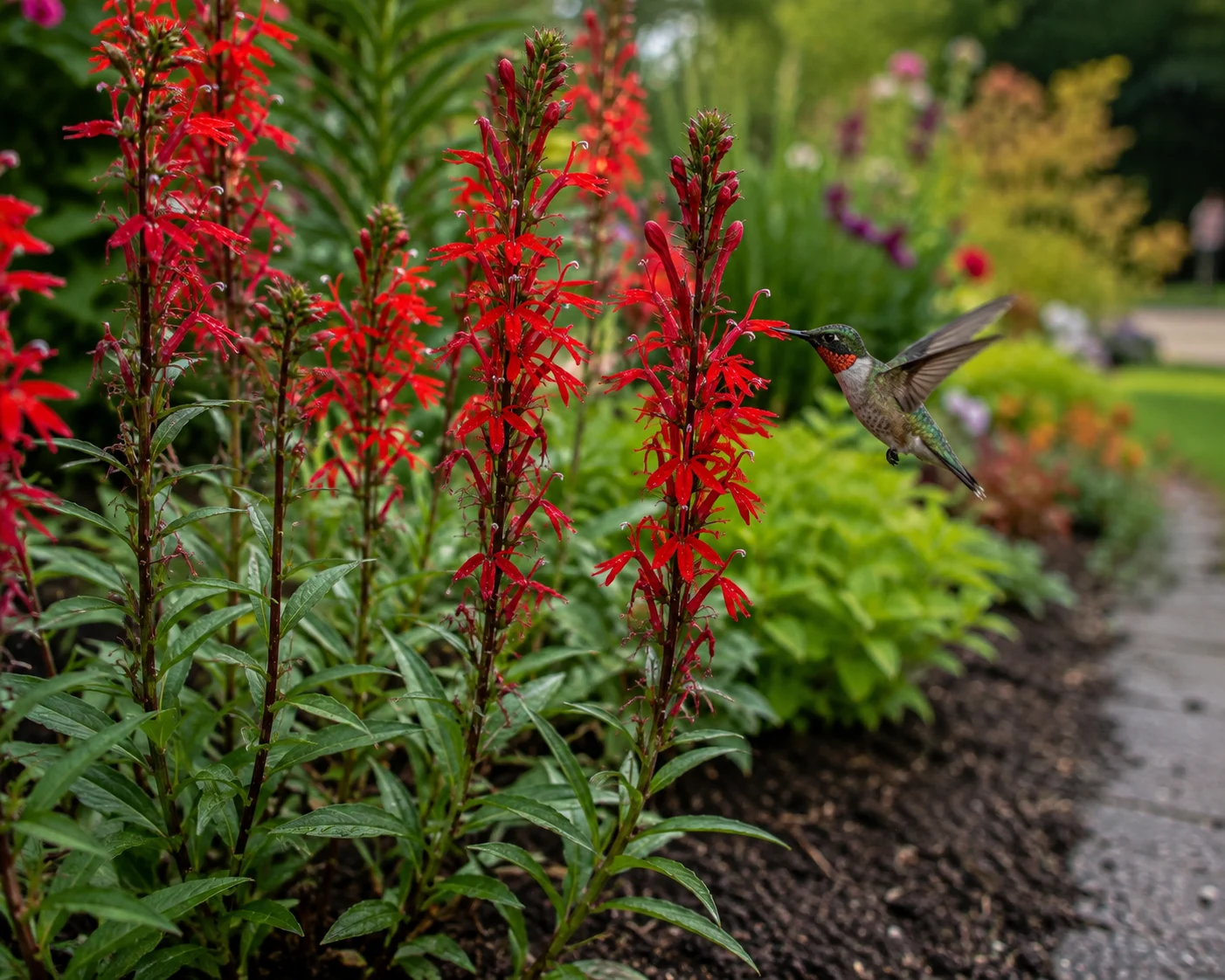
Cardinal Flower (Lobelia cardinalis)
A short-lived perennial — typically two to three years — that self-seeds readily in moist clay soils along stream margins, pond edges, and low-lying borders. The intense scarlet tubular flowers bloom from July to September and are primarily worked by hummingbirds and long-tongued bumblebee species. Lobelia cardinalis needs reliably moist soil and partial shade in the hottest regions — clay’s moisture retention is an asset here, particularly in gardens where summer drought would otherwise stress shallow-rooted plants. Plant in groups of five or more; individual plants are relatively small and the ecological and visual impact requires mass.
Ironweed (Vernonia species)
Ironweed is one of the most underplanted native perennials in American gardens and one of the best choices for clay soil in full sun. Vernonia fasciculata (prairie ironweed) and Vernonia noveboracensis (New York ironweed) both reach 4–6 feet, produce intensely purple flower clusters from August to October, and are worked heavily by bumblebees, honeybees, and many specialist native bee species during the critical late-summer and autumn forage window. The name “ironweed” refers to the toughness of the stem — these are robust, drought-tolerant once established, clay-tolerant plants that require almost no management once they are in the ground.
Swamp Rose Mallow (Hibiscus moscheutos)
For dramatic late-summer impact in wet clay, nothing matches Hibiscus moscheutos. Its dinner-plate-sized flowers — in white, pink, and deep crimson depending on the variety — bloom from July to September and are one of the most striking single-flower displays possible in a garden context. It is primarily worked by specialist large carpenter bees and bumblebees. Cut to the ground in late autumn; it regrows reliably from the root crown each spring, often not appearing until late May — mark its position so it is not accidentally removed during early season tidying.
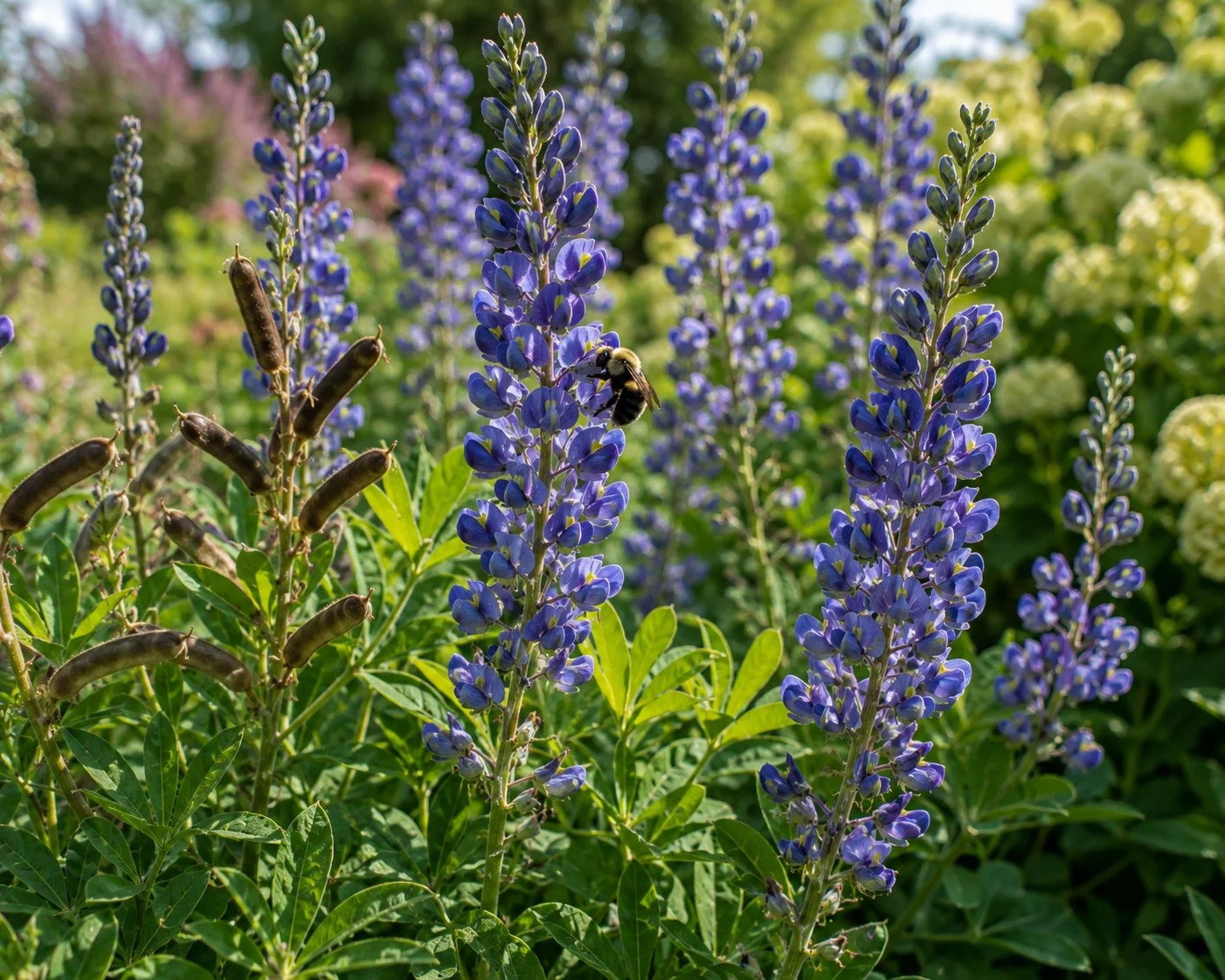
Blue Wild Indigo (Baptisia australis)
A deep-rooted native prairie perennial with a taproot that breaks up heavy clay over time, improving soil structure passively while the plant itself provides forage. Blue wild indigo blooms in May and June with spikes of blue-purple flowers that resemble lupins and are worked intensively by bumblebee queens during colony build-up. The plant produces ornamental seed pods through summer and autumn that provide winter structure and habitat for overwintering insects. Slow to establish — do not expect full performance until year three — but essentially permanent once the taproot is established. Deeply drought tolerant once settled and completely unbothered by clay. Plant in full sun and do not disturb once established.
Goldenrod (Solidago species — compact clump-forming varieties)
Most goldenrod species tolerate clay adequately. For a managed border context, choose compact clump-forming species such as Solidago sphacelata ‘Golden Fleece’, Solidago rugosa ‘Fireworks’, or Solidago nemoralis rather than the aggressive spreading species that colonize roadsides. All produce the characteristic yellow flower plumes from August to October that constitute one of the most important late-season nectar flows in North America. Combined with native asters in the same border, goldenrod provides the visual pairing and ecological continuity that takes a pollinator garden from summer-focused to genuinely year-round.
Purple Coneflower (Echinacea purpurea)
One of the most reliably clay-tolerant garden perennials available and the standard against which other prairie natives are often measured for adaptability. Echinacea purpurea tolerates heavy, moist, slow-draining clay far better than most of its drought-adapted prairie relatives. It blooms from June to September, self-seeds into surrounding soil, and supports a wide range of bee species through its long accessible open-faced flower. Leave seedheads standing through winter — goldfinches feed on the seed through December, and the architectural dried flower heads provide winter structure. The complete framework for using plants like coneflower as part of a layered seasonal sequence is in The Four-Season Pollinator Garden.
A Simple Clay Soil Border Plan
For a 10-foot sunny border in heavy clay, this combination covers the full season without amendment:
Back (tall): Joe-Pye weed × 1, ironweed × 1
Middle: Wild bergamot × 3, swamp milkweed × 2, purple coneflower × 3
Front: Blue wild indigo × 1, New England aster × 3
Self-seeding filler for year one: Cardinal flower seeds direct-sown into any remaining gaps
This gives you bloom from May (blue wild indigo) through November (New England aster) with no month unrepresented.
What to Avoid in Clay Soil
A short list of commonly recommended pollinator plants that consistently underperform or fail in heavy clay:
Lavender — requires sharp drainage; rots in wet clay winters. Most allium species — similar drainage requirement. Catmint (Nepeta) — tolerates moderate clay but struggles in poorly drained positions. Agastache — the crown rots in saturated clay through winter. Phacelia — annual that handles clay better than most of this list but performs poorly in waterlogged conditions.
None of these are replaceable with clay-tolerant alternatives for the loss of diversity they represent. The plants listed above cover every bloom period, every height category, and every bee species group that the excluded plants would have supported. You are not compromising by working with clay. You are selecting differently. The outcome — a productive, self-sustaining pollinator garden that requires almost no amendment or intervention — is arguably better than one built on perpetually improved soil that returns to its natural state the moment maintenance lapses.
For guidance on connecting this border into a wider garden-level pollinator strategy, How to Build a Pollinator Corridor Through Your Suburban Garden applies these same plant principles at a landscape scale. 🌿🐝