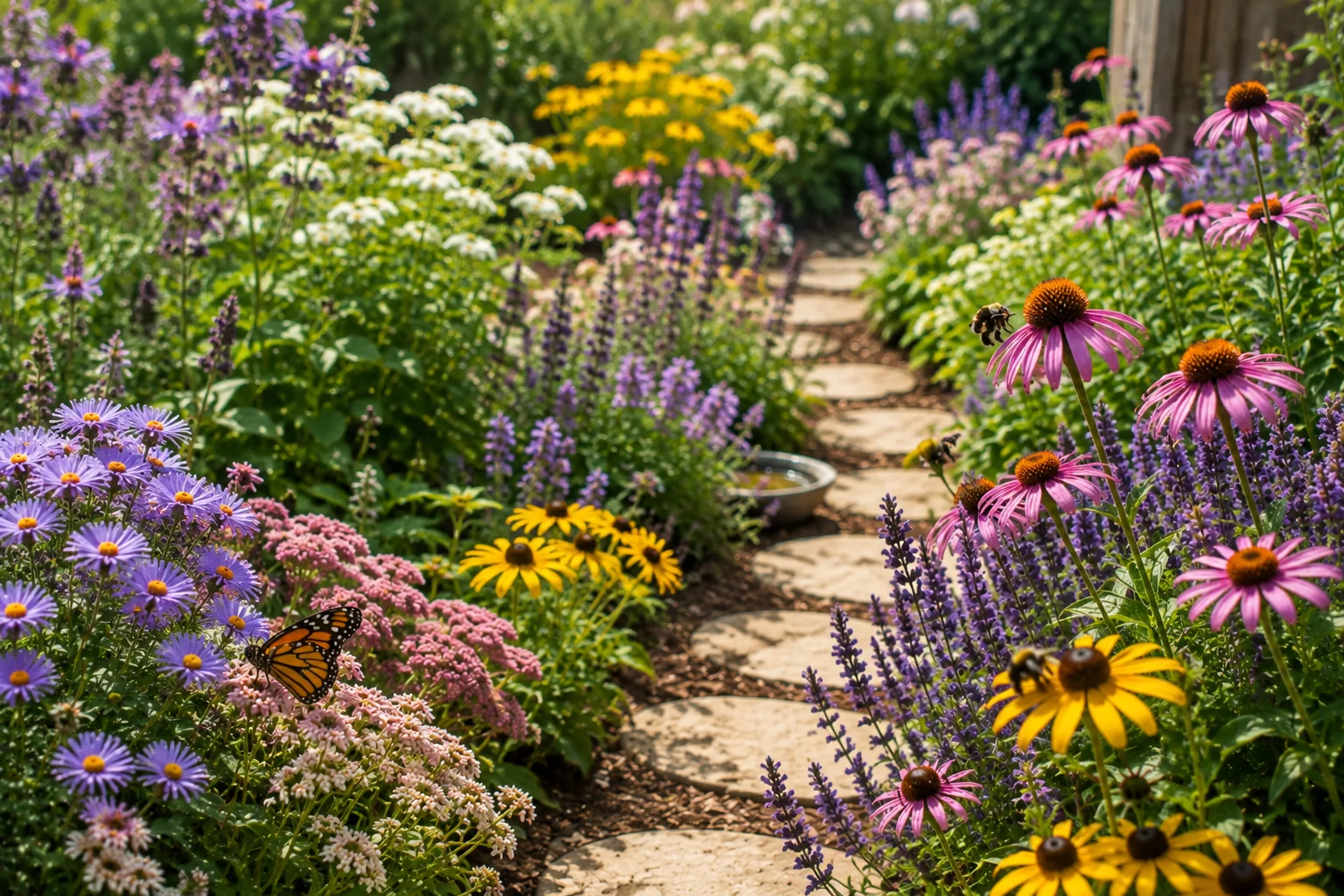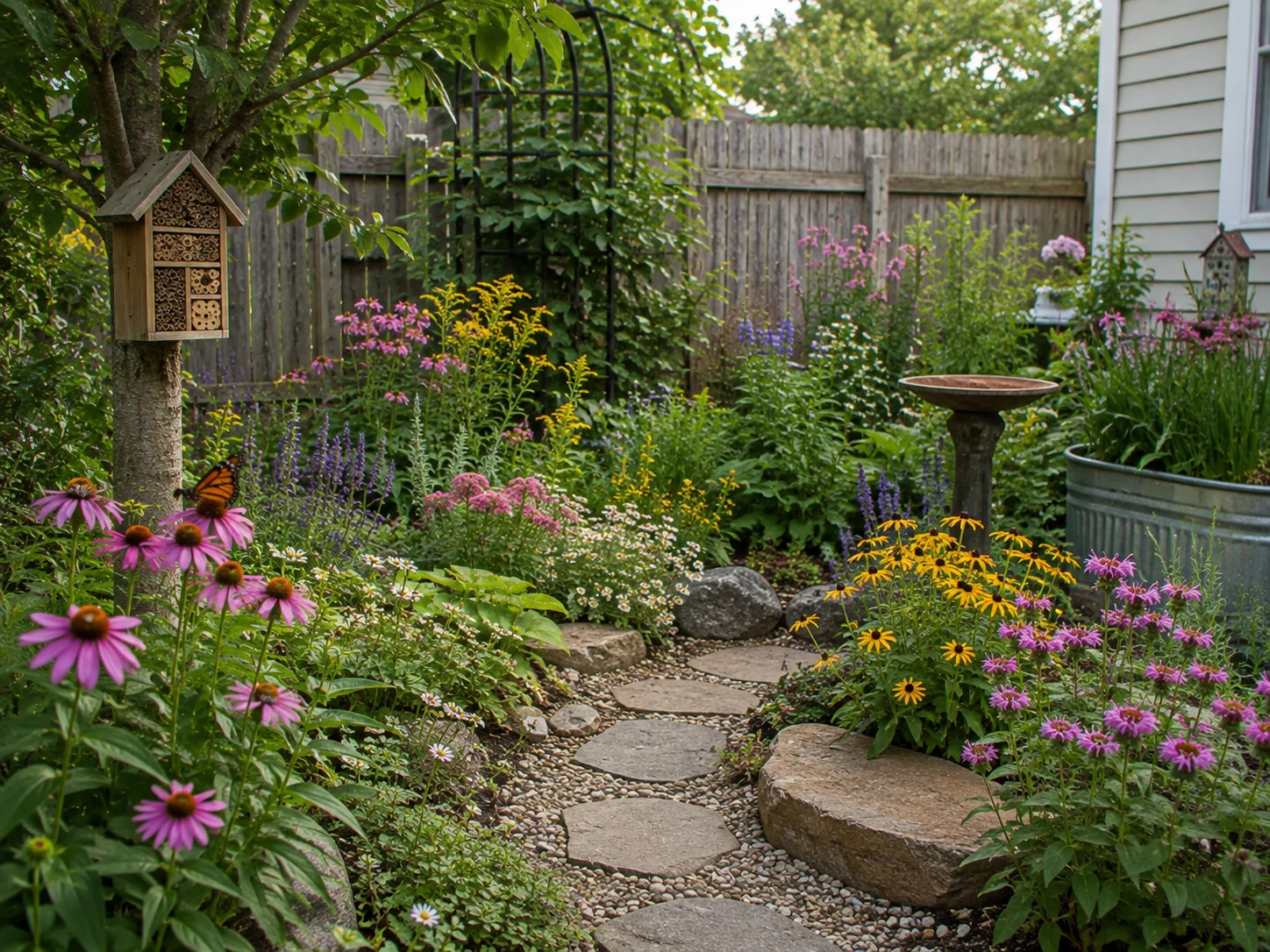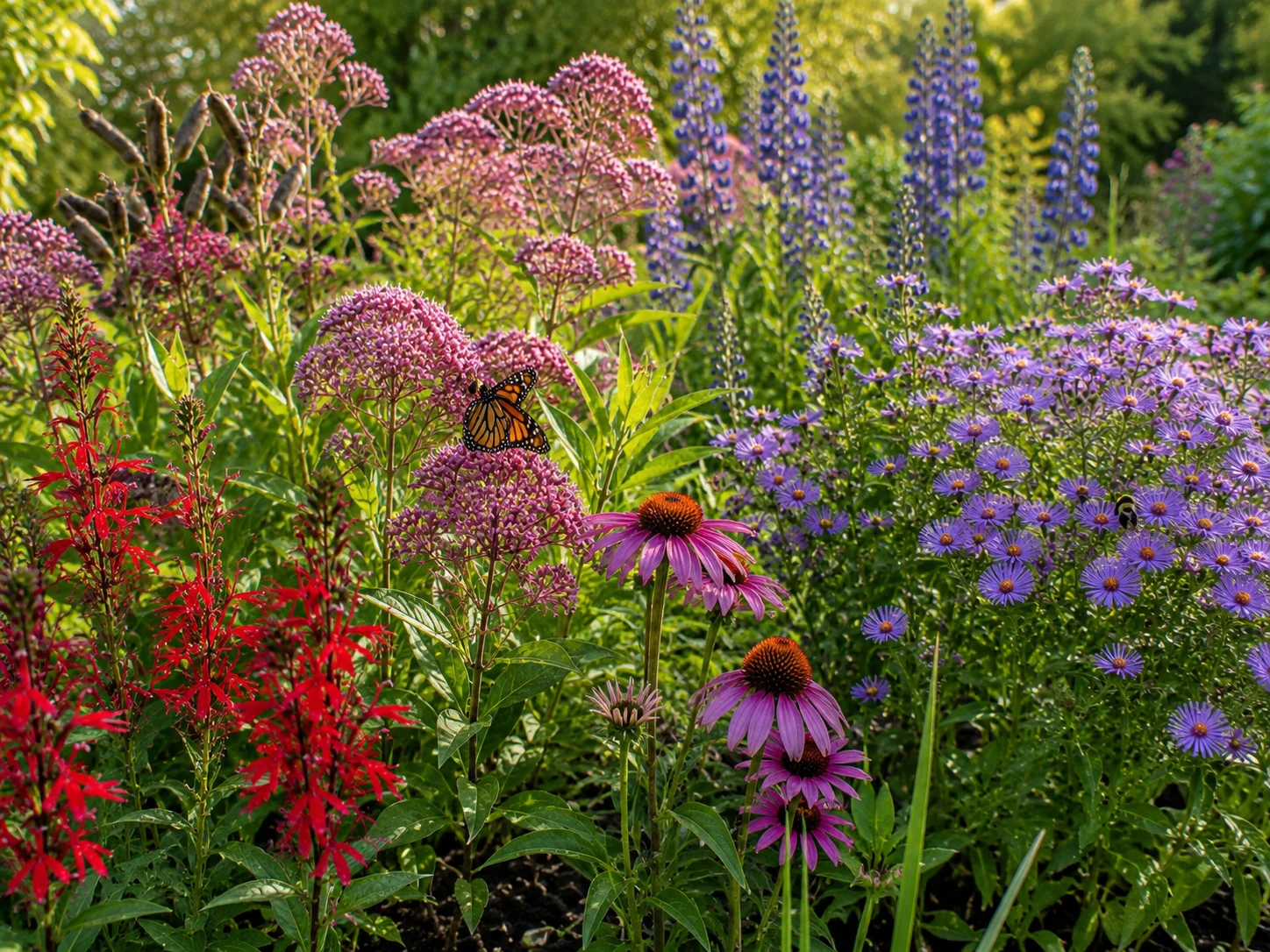

Every beekeeper and pollinator advocate knows that a thriving ecosystem starts from the ground up—literally. When planning a pollinator garden or setting up a backyard apiary, it is incredibly easy to focus solely on the towering sunflowers, the sprawling bushes, or the fruit trees. However, leaving the ground beneath these taller plants bare is a missed opportunity.
Bare soil invites aggressive weeds, dries out rapidly under the summer sun, and provides absolutely zero nutritional value to your foraging bees. By introducing low-growing, flowering ground covers, you can transform empty dirt, patchy lawns, and the spaces between stepping stones into a continuous buffet of nectar and pollen.
Whether you are managing a few hives in a small residential space or simply want to support local wild bees, selecting the right creeping plants is a game-changer. This guide will walk you through the absolute best ground cover plants for pollinators, broken down by season, so you can keep your bees fed and your garden looking spectacular all year long.
Why Choose Flowering Ground Covers for Your Apiary?
Before diving into the specific plant recommendations, it is crucial to understand why ground covers are such a vital component of creating a useful bee-support zone around a backyard apiary.
- Weed Suppression: Dense, creeping plants form a living mulch that shades out aggressive, non-beneficial weeds, saving you hours of back-breaking garden maintenance.
- Moisture Retention: By shielding the soil from direct sunlight, ground covers dramatically slow evaporation. This keeps the soil cooler and reduces the need for constant watering during peak summer heat.
- Microclimate Creation: Low-growing foliage provides essential shelter for solitary bees, beneficial beetles, and other garden allies that help manage pests naturally.
- Maximized Forage Space: In small suburban yards, every square inch counts. Ground covers allow you to layer your garden, growing flowers horizontally beneath your vertical shrubs and trees.
According to research from Penn State Extension on pollinator-friendly landscapes, integrating low-flowering perennials into turf grass or bare beds can significantly increase both the abundance and diversity of visiting bee species.
Spring-Blooming Ground Covers to Kickstart the Season
Spring is a critical time for bees. Overwintered honeybee colonies are rapidly expanding their brood nests, and solitary native bees are emerging hungry from hibernation. These low-growing spring bloomers offer vital early nutrition.
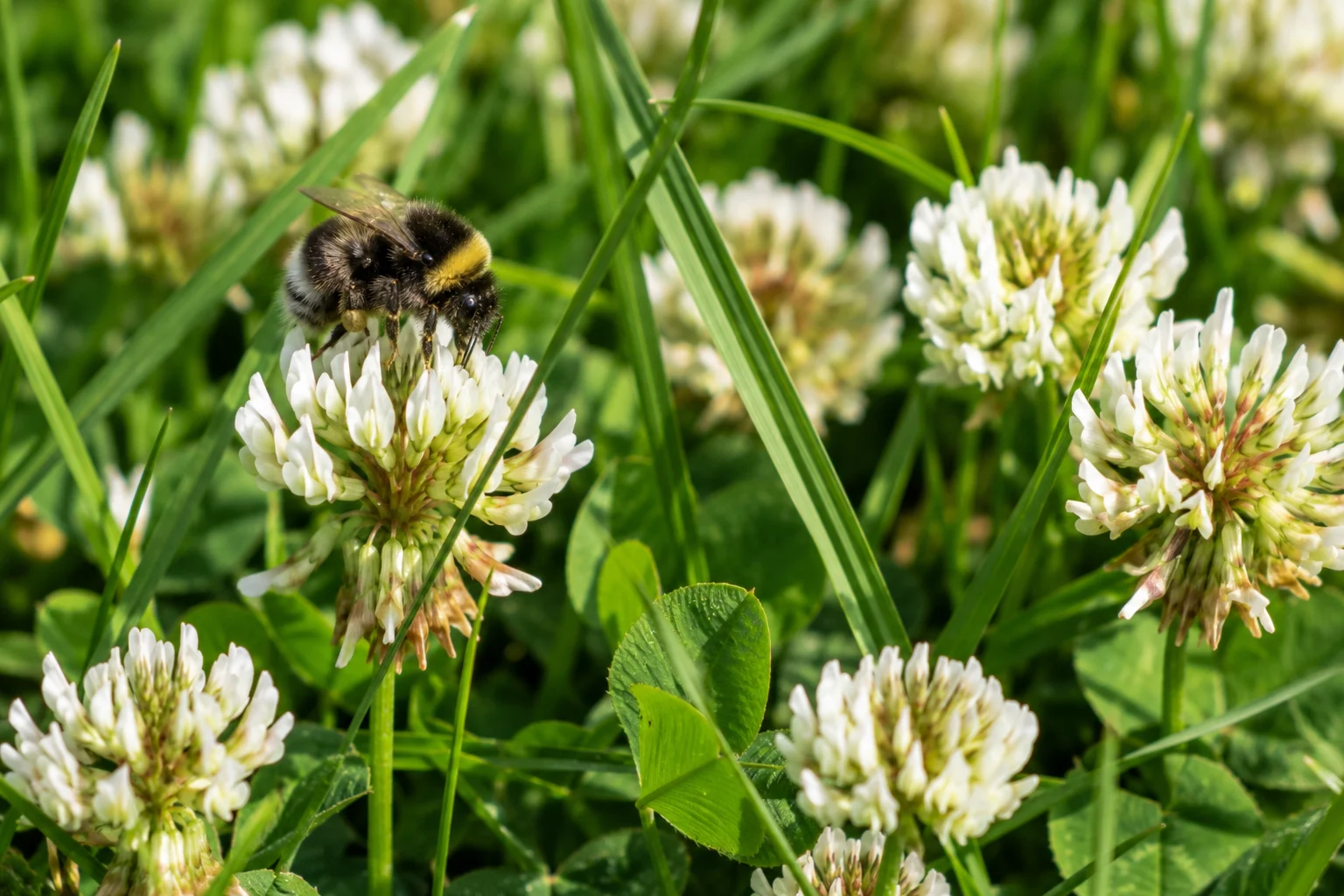
1. White Dutch Clover (Trifolium repens)
If there is one reigning champion of the pollinator ground cover world, it is White Dutch Clover. Historically included in standard lawn seed mixes before the invention of broadleaf herbicides, clover is a powerhouse nitrogen-fixer that enriches poor soil.
- Why Bees Love It: The shallow, clustered florets are easily accessible to both short-tongued and long-tongued bees. The nectar flow is notoriously rich, often producing a light, mild honey.
- Growing Tips: Clover handles foot traffic beautifully. If you are participating in early-season conservation efforts, leaving useful flowering lawn plants like clover is the easiest way to start. It thrives in full sun to partial shade and stays under 6 inches tall.
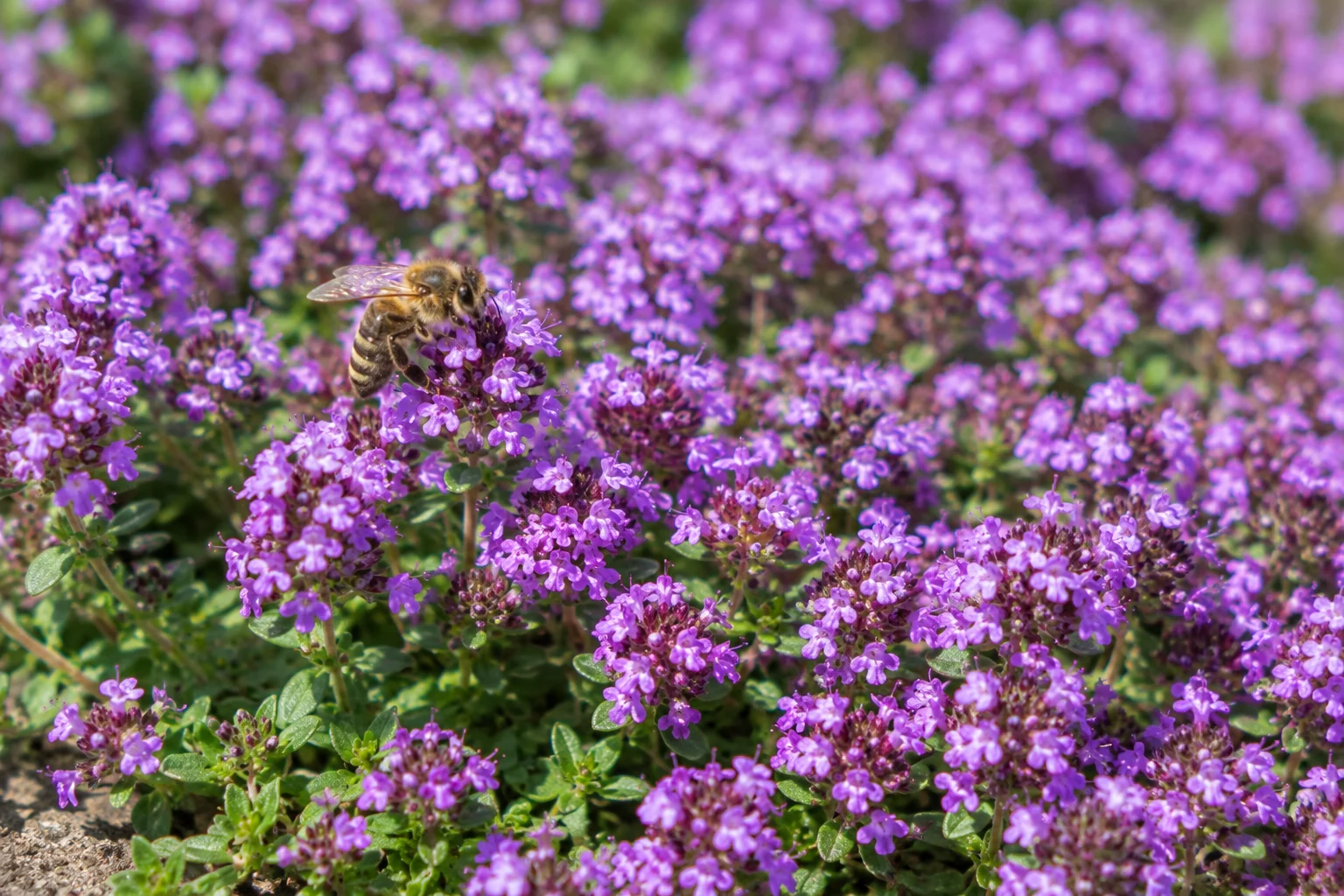
2. Creeping Thyme (Thymus serpyllum)
Creeping thyme is an evergreen, drought-tolerant perennial that transforms into a carpet of brilliant pink, purple, or white flowers by late spring.
- Why Bees Love It: Thyme is highly aromatic and produces high-sugar nectar. Because the flowers are so densely packed, bees can efficiently walk from bloom to bloom, gathering resources with minimal energy expenditure.
- Growing Tips: Thyme demands well-drained soil. It rots in soggy, poorly draining areas, so plant it along rocky borders, slopes, or sandy pathways where it gets full sun.
3. Bugleweed (Ajuga reptans)
For those tricky, shaded areas beneath large trees where grass simply refuses to grow, Ajuga is a lifesaver. It spreads via runners (stolons) to form a dense mat of dark green, bronze, or purple foliage.
- Why Bees Love It: In mid-to-late spring, Ajuga sends up striking spikes of blue or violet flowers. These tubular blooms are highly attractive to bumblebees and mason bees.
- Growing Tips: Ajuga is aggressive. Keep it away from delicate lawn edges where it might take over, and instead use it to fill large, shaded understory beds where other flowering plants struggle.
Summer Ground Cover Plants to Beat the Heat
As summer rolls in, temperatures rise and many early-blooming plants go to seed. Finding low-growing flowers that can help bees through the nectar dearth is essential for keeping colonies strong.
4. Self-Heal (Prunella vulgaris)
Often mistaken for a weed, Self-Heal is a robust member of the mint family that thrives in lawns and garden borders.
- Why Bees Love It: It produces small, tubular purple flowers from June through August. It is particularly valuable because it continues to bloom even if mowed on a high blade setting.
- Growing Tips: Self-Heal is highly adaptable, tolerating both damp and dry soils. It will naturally spread to fill in bare patches of turf, making it an excellent addition to a mixed-species eco-lawn.
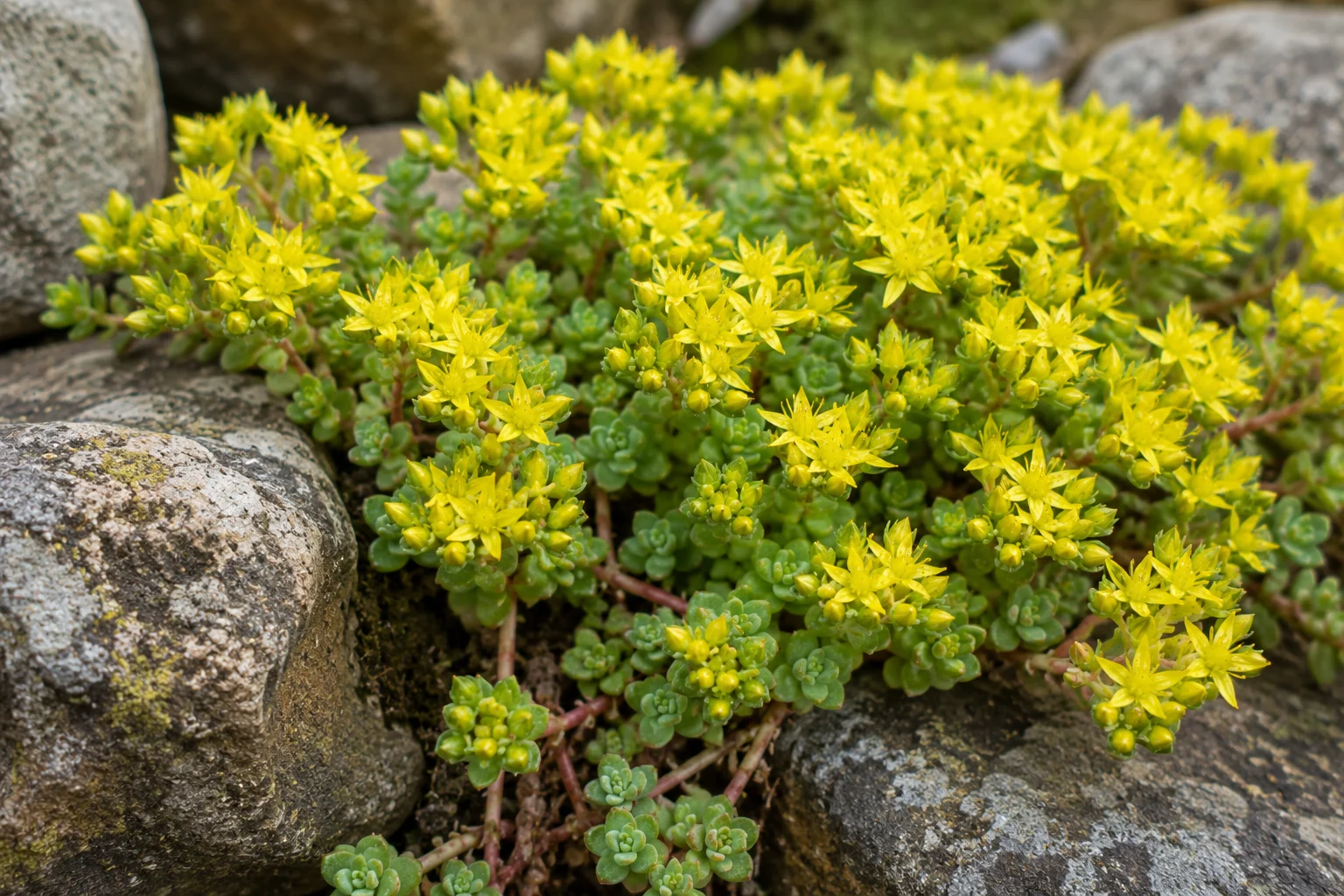
5. Creeping Sedum (Sedum acre or Sedum spurium)
Also known as Stonecrop, creeping sedums are succulent ground covers designed to survive the harshest, driest summer conditions.
- Why Bees Love It: When summer heat dries up the nectar in deeper-rooted plants, sedums burst into star-shaped yellow, pink, or white flowers. They are a magnet for honeybees and tiny solitary sweat bees.
- Growing Tips: Plant sedum in the hottest, driest, and most neglected parts of your yard. They require almost zero supplemental watering once established and thrive in poor, rocky soils.
6. Sweet Alyssum (Lobularia maritima)
Though technically grown as an annual in cooler climates, Sweet Alyssum self-seeds so prolifically that it functions as a permanent ground cover.
- Why Bees Love It: Alyssum produces a honey-scented cloud of tiny white or purple flowers. Because the blooms are incredibly shallow, they are the perfect food source for tiny native bees and parasitic wasps that control garden pests.
- Growing Tips: It blooms profusely from early summer until the first hard frost. Use it to underplant tall vegetables in your garden or to soften the edges of your apiary walkways.
Late-Season Low Growers for Fall Forage
As summer fades, bees frantically search for the last available nectar and pollen to store for winter. Providing late-season ground covers ensures they do not go into the colder months empty-handed.
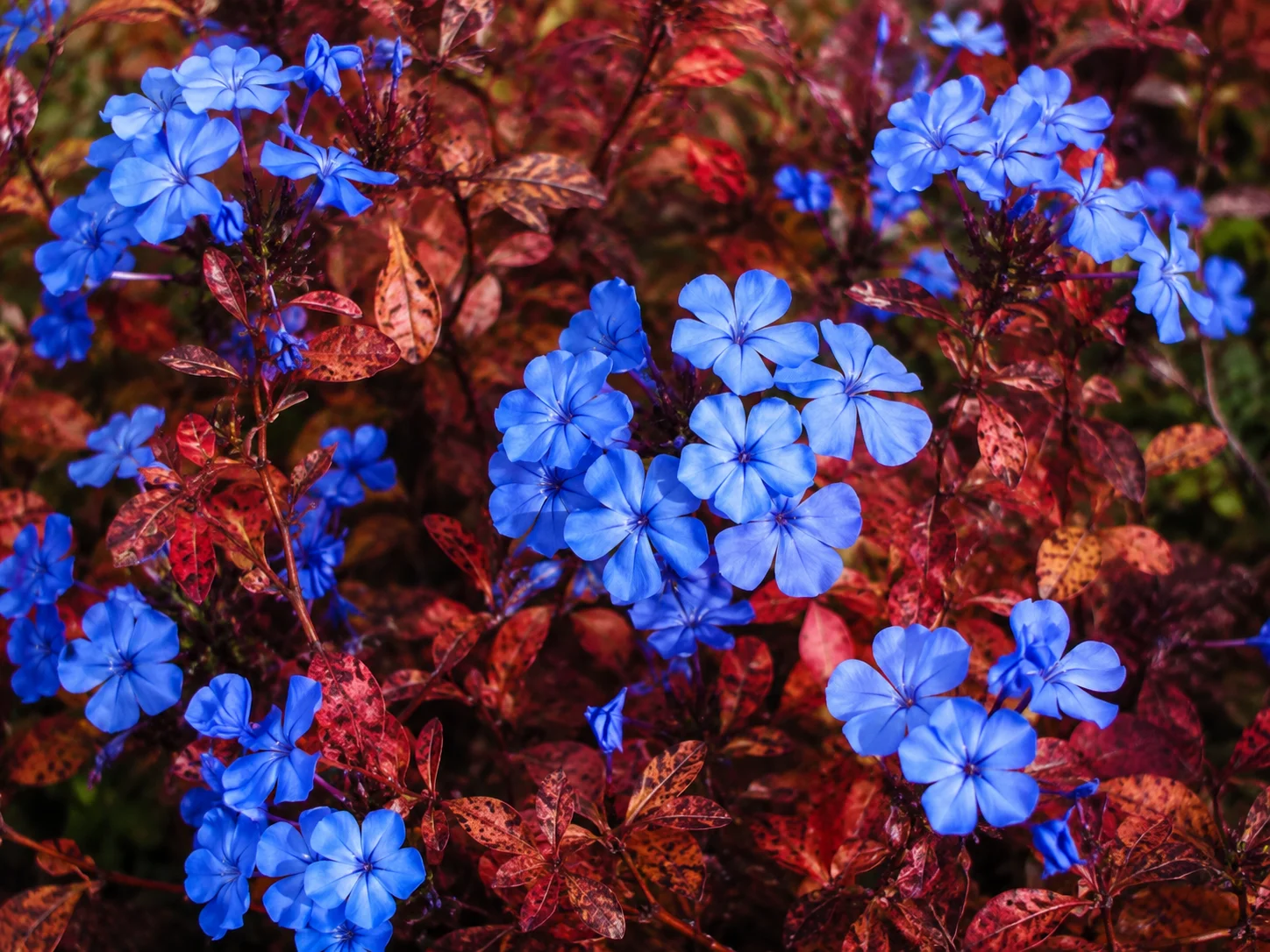
7. Hardy Plumbago (Ceratostigma plumbaginoides)
Hardy Plumbago is an exceptional, underutilized ground cover that offers brilliant late-season color.
- Why Bees Love It: From late August through October, it produces vibrant, electric-blue flowers at a time when most other garden plants are shutting down.
- Growing Tips: As a bonus, the green foliage turns a stunning mahogany-red in the fall. It prefers well-drained soil and partial sun, spreading steadily via underground rhizomes.
8. Creeping Asters (Aster spp.)
While most beekeepers know that tall asters are essential autumn forage, there are several low-growing, creeping varieties—such as the ‘Snow Flurry’ heath aster—that provide the exact same benefits on a horizontal scale.
- Why Bees Love It: Asters are one of the most critical sources of late-season pollen, which bees need to rear the “winter bees” that will survive until spring.
- Growing Tips: The Xerces Society highly recommends native asters for pollinator gardens. Plant creeping asters in full sun, and give them room to sprawl over retaining walls or garden edges.
Practical Tips for Establishing Ground Cover Without Chemicals
Preparing an area for a new pollinator-friendly ground cover requires a bit of strategy. You want to eliminate competing weeds without resorting to harmful herbicides that could linger in the soil and affect your local bee populations.
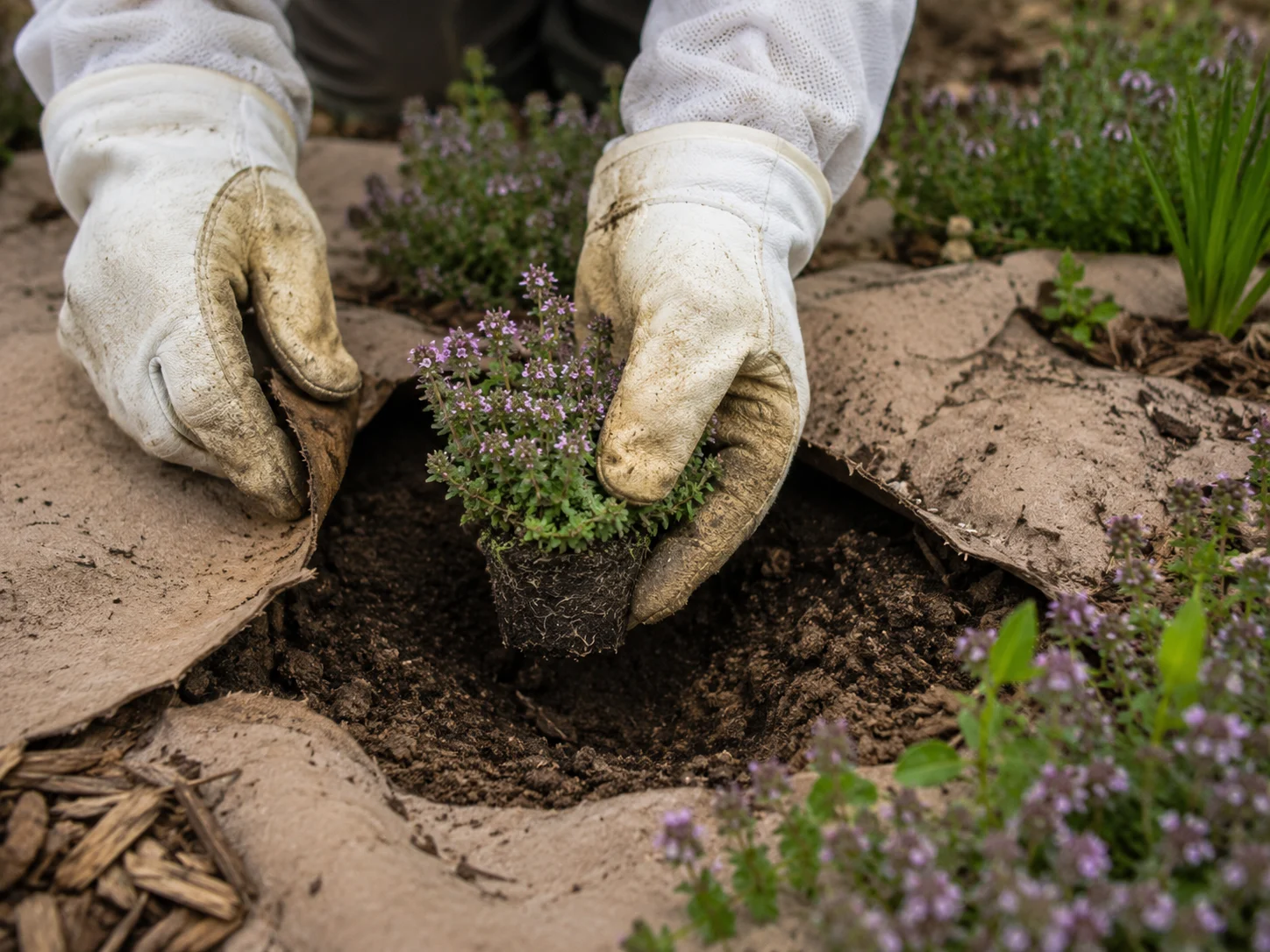
- Use Sheet Mulching: Instead of digging up grass and disturbing the soil microbiome, smother the area. Lay down untreated cardboard, cover it with 3-4 inches of compost and organic mulch, and wait a few months for the grass beneath to die off.
- Respect the Spacing: Ground covers spread. If you plant them too closely, they will compete for nutrients and water. Follow the spacing guidelines for each specific plant, and use a temporary layer of natural mulch between them to suppress weeds while they fill in.
- Water Deeply, Not Frequently: To encourage ground covers to develop deep, drought-resistant root systems, water them heavily once a week rather than giving them a light sprinkle every day.
- Remember the Rule of Perennials: The first year they sleep, the second year they creep, the third year they leap. Be patient. Establishing a dense, weed-suppressing carpet of flowers takes a few seasons of careful weeding and monitoring.
Conclusion
Building a pollinator-friendly landscape doesn’t just mean planting tall sunflowers and flowering trees. By utilizing the empty spaces at your feet, you can dramatically increase the amount of forage available to your hives and local wild bees. From the early spring blooms of White Dutch Clover to the heat-resilient flowers of Creeping Sedum, incorporating low-growing ground covers reduces your yard maintenance while providing critical nutrition for your winged workers.
Take a walk around your yard or apiary this weekend. Look for those bare patches of dirt, the struggling areas of your lawn, or the empty spaces beneath your shrubs. With a little planning and the right plants, those empty spots can become a thriving, buzzing carpet of life.