
Planting near a backyard beehive sounds simple: add flowers, help the bees, enjoy the garden.
But that version is too shallow. A few pretty flowers beside the hive will not magically feed a colony. Honey bees can forage far beyond your yard — Mississippi State Extension says bees prefer to forage within about a 2-mile radius and can travel up to 5 miles when necessary — so your backyard planting is not the whole food supply. But it can still matter, especially when it provides reliable water, seasonal bloom gaps, wind protection, and clean forage close to the hive. (MSU Extension Service)
The real goal is not to decorate the hive.
The goal is to build a small but useful bee-support zone around your backyard apiary: flowers for nectar and pollen, shrubs for structure, herbs for long bloom, summer plants for the dearth, fall plants for winter preparation, and a layout that does not send bees straight through your patio.
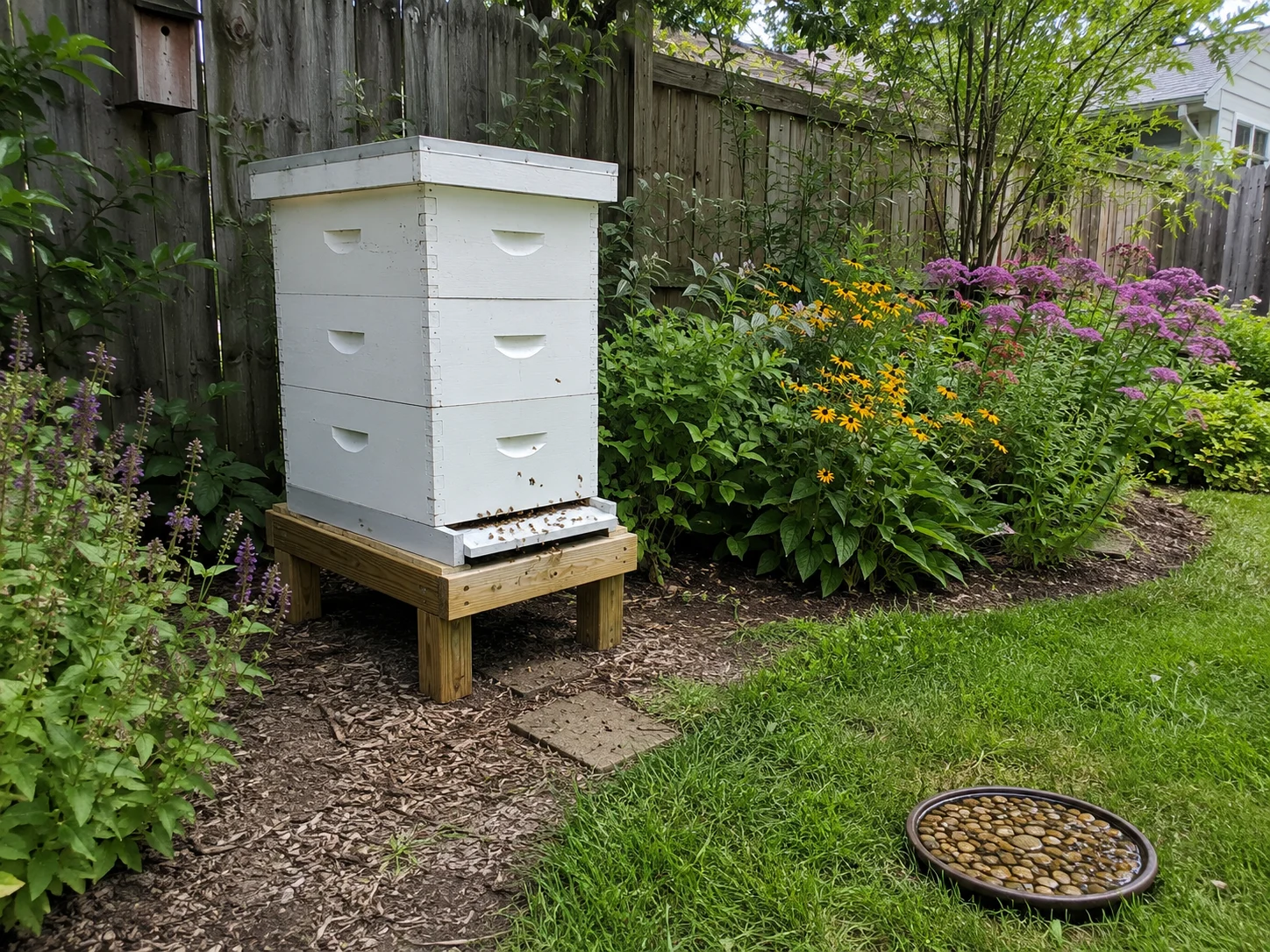
What “Near the Hive” Actually Means
Do not cram flowers directly against the hive entrance. That is a beginner mistake.
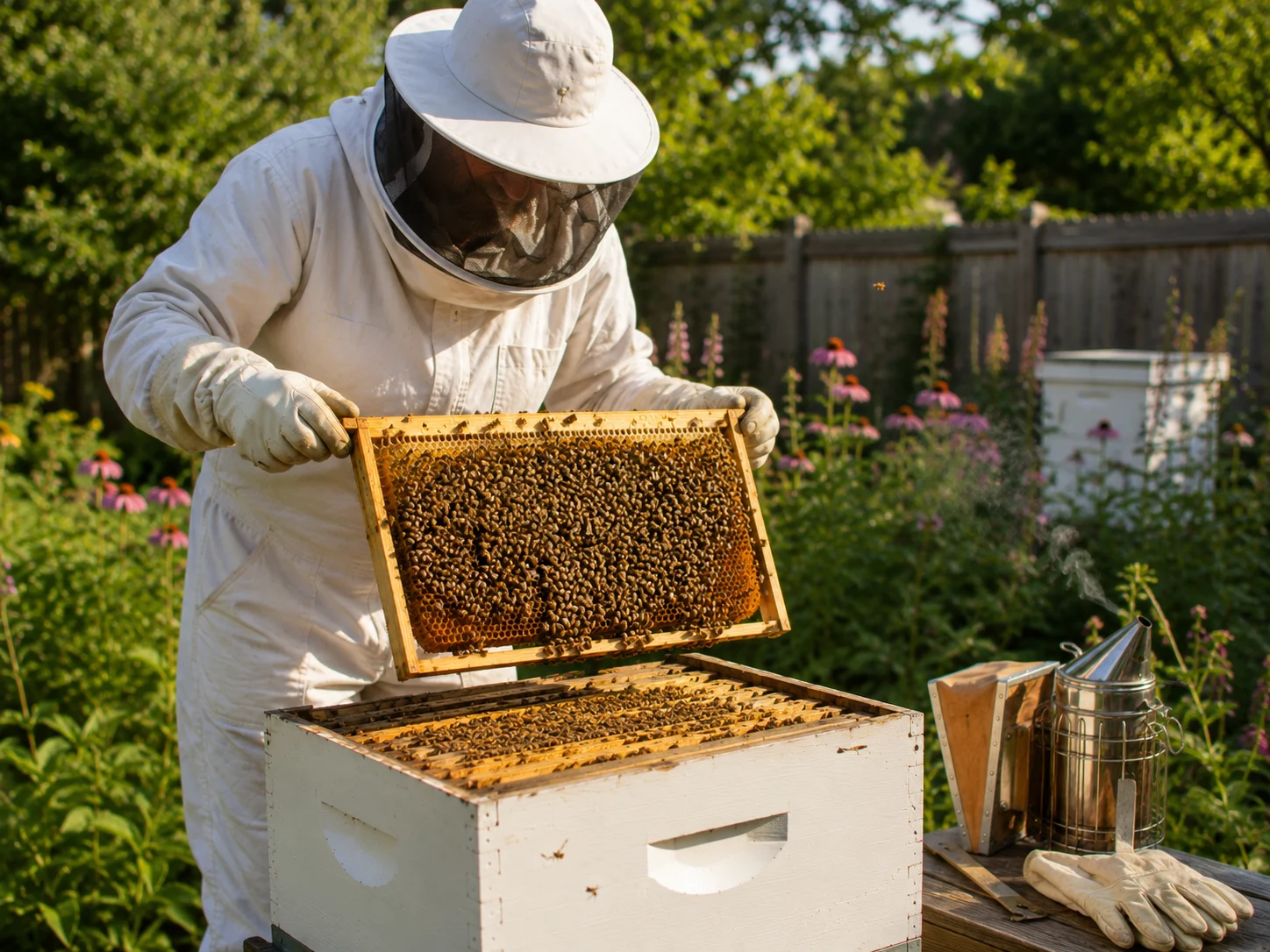
You need space to inspect, lift boxes, set down frames, use your smoker, and move calmly. You also do not want tall floppy flowers blocking the landing board or forcing bees through a messy wall of stems every time they fly.
A better layout is:
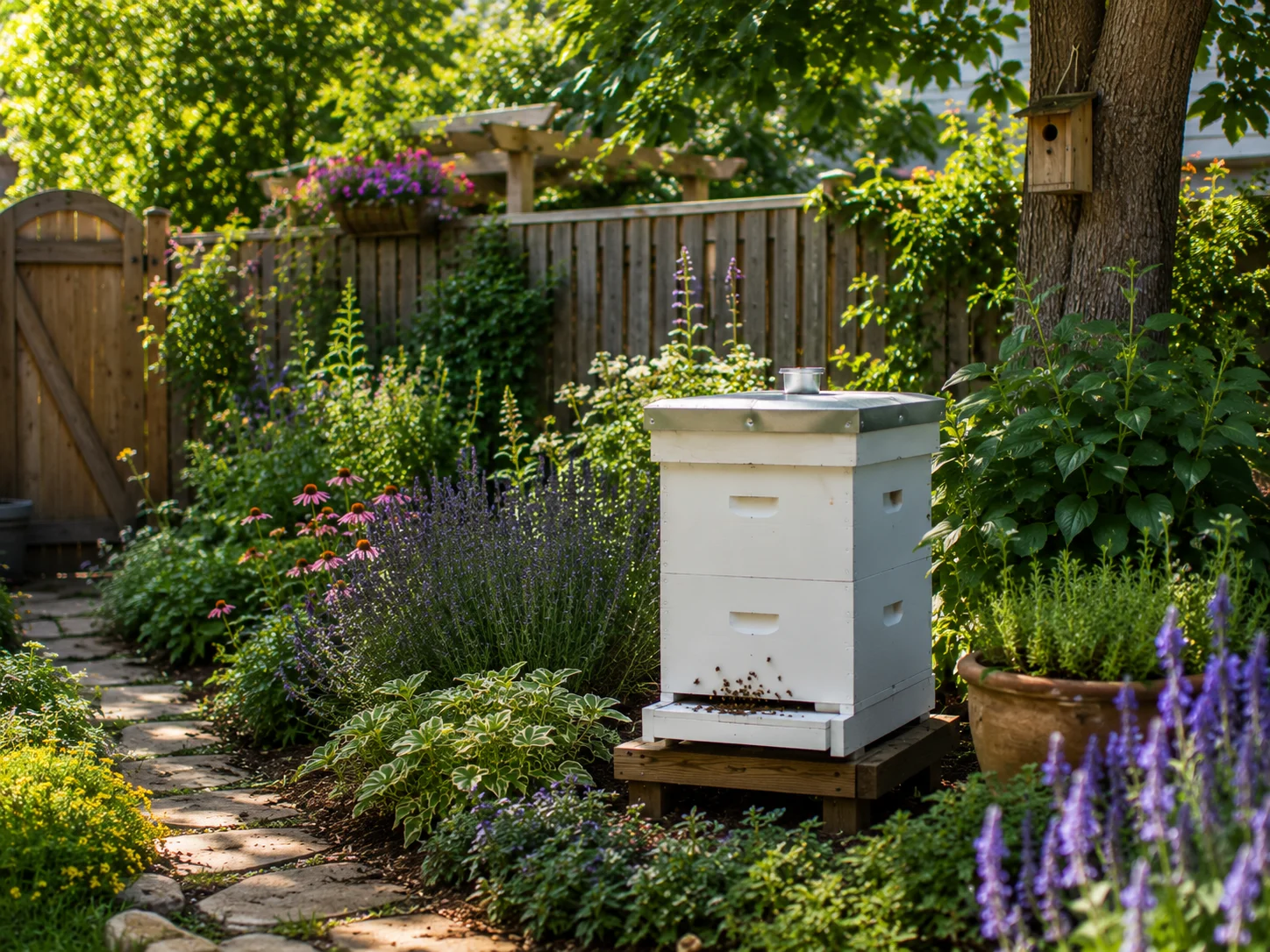
- 0–3 feet from the hive: keep this area mostly clear for access.
- 3–10 feet from the hive: place water, low herbs, clover patches, or tidy perennials.
- 10–30 feet from the hive: plant larger bee beds, shrubs, and living fence sections.
- Along property boundaries: use flowering hedges as windbreaks and fly-up barriers.
Mississippi State Extension recommends avoiding high-traffic human or animal areas and notes that a 6-foot barrier a few feet in front of the hive entrance can encourage bees to fly up and over pedestrians. That matters in a backyard, where neighbors, patios, pets, and paths are usually close. (MSU Extension Service)
The Best Planting Strategy: Bloom From Spring to Fall
The strongest bee garden is not the one with the most flowers in June. It is the one that never completely goes quiet.
Rutgers Extension explains that honey bee colony health depends on access to nectar and pollen from a varied sequence of flowers through the growing season, plus clean water and habitat. Rutgers also warns that gaps in food availability during active periods can weaken colonies. (njaes.rutgers.edu)
So your planting plan should cover four windows:
- Early spring: colony buildup begins.
- Late spring: nectar flow and brood expansion accelerate.
- Midsummer: dearth pressure can hit.
- Late summer and fall: colonies prepare winter stores.
If your garden explodes in May and then becomes a green desert by July, it is not a good bee garden. It is a pretty spring show with bad timing.
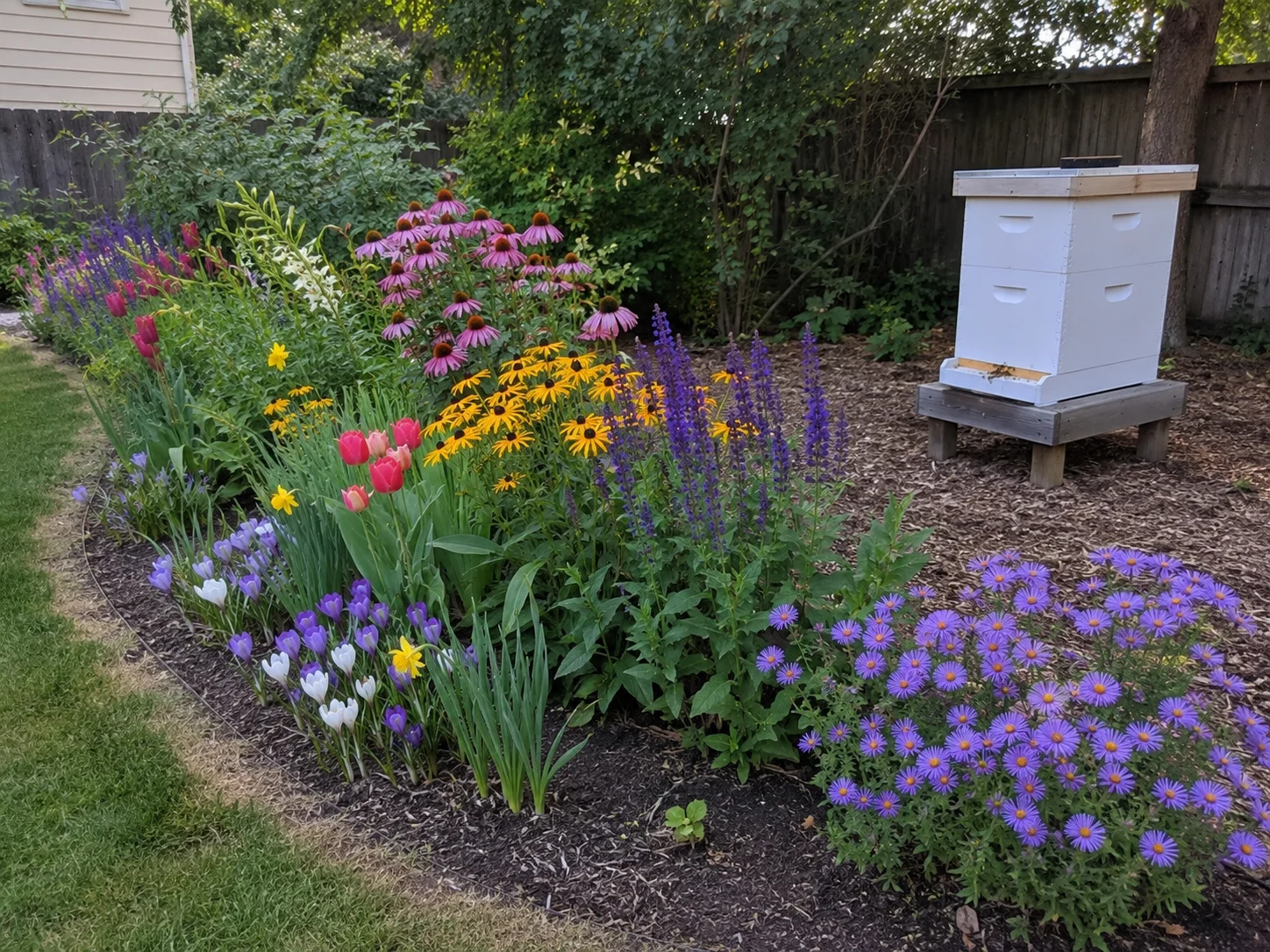
Best Early Spring Plants Near a Backyard Beehive
Early spring plants matter because colonies are building brood when the weather is still unstable. On warm days, bees may fly out looking for pollen and nectar before the landscape has fully woken up.
Good early plants include:
Willow
Willows are excellent early forage plants where space and moisture allow. They are especially useful near damp edges, drainage areas, or low spots — not directly beside the hive, but within the broader backyard landscape.
Redbud
Eastern redbud is a strong small-tree choice for many US yards. It offers early spring bloom, looks good in a residential garden, and gives pollinators food before most summer perennials are active.
Serviceberry
Serviceberry is one of the better small trees/shrubs for a bee-friendly backyard because it gives spring flowers, edible berries, and a tidy form that fits smaller gardens.
Dandelion and Clover
Do not be stupidly tidy here. A lawn with some clover and dandelions is more useful than a chemical-perfect green carpet. Rutgers lists dandelion among plants that may already be growing and can be protected as food sources, and UGA specifically notes clover as useful “instead of grass.” (njaes.rutgers.edu) (bees.caes.uga.edu)
This does not mean your yard has to look abandoned. It means stop destroying every useful bloom because you were trained to worship sterile lawn.
Best Spring and Early Summer Shrubs
Shrubs are underrated. They give more bloom per square foot than scattered annuals, they return every year, and they help build structure around the apiary.
Elderberry
Elderberry is one of the best backyard shrubs for a bee-support planting. It produces large flower clusters, grows fast, and can be part of a living fence or privacy screen.
Viburnum
Arrowwood and blackhaw viburnum are especially useful for boundary planting. UGA lists arrowwood and blackhaw viburnum among shrubs for bee forage, and Rutgers includes several shrubs and trees as important parts of a sequential bloom plan. (bees.caes.uga.edu) (njaes.rutgers.edu)
Blueberry
Highbush blueberry is useful if your soil is acidic enough. It gives spring flowers for bees and fruit for you. But do not force blueberries into alkaline soil and then wonder why they look miserable. Match the plant to the site.
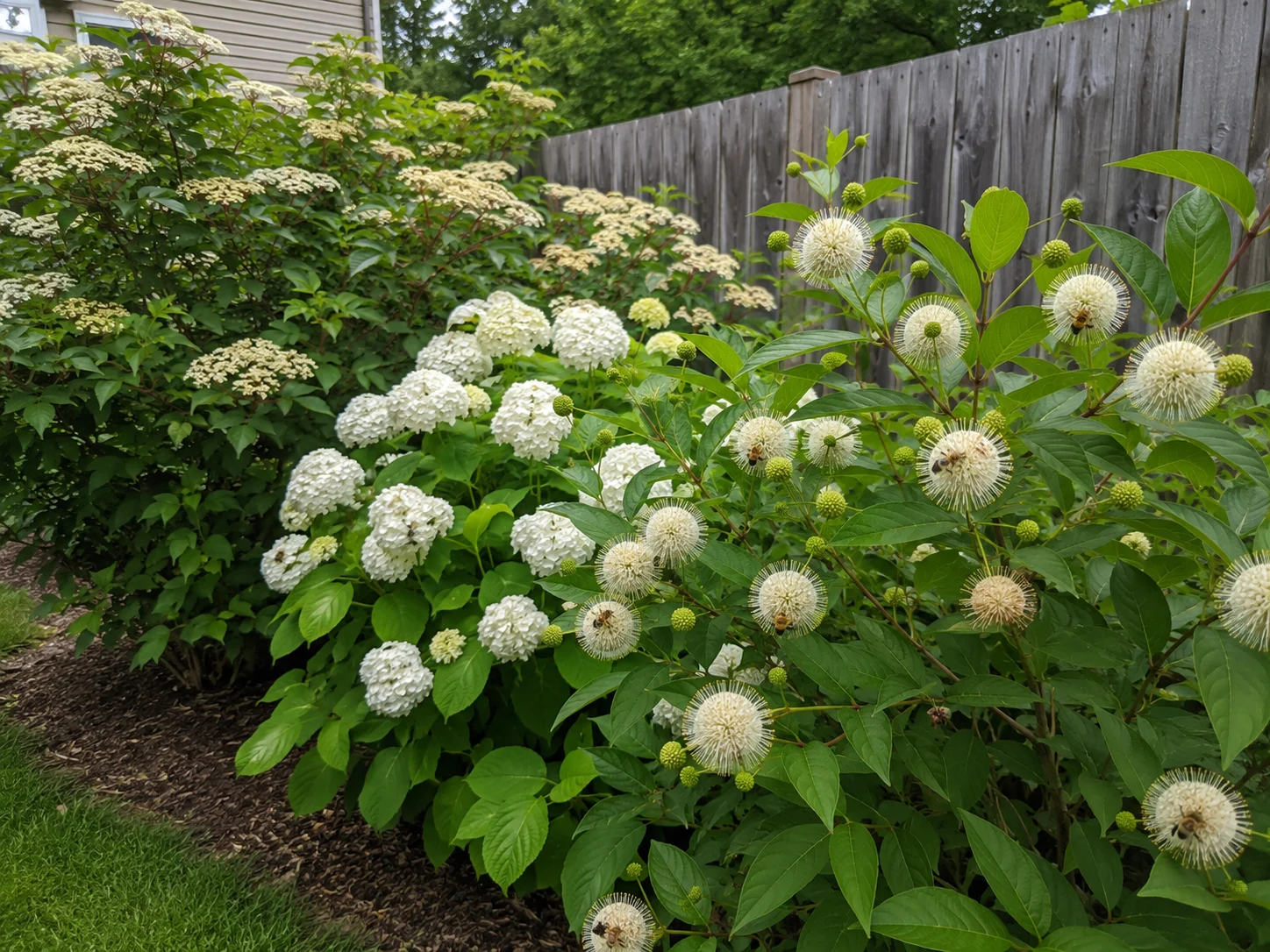
Buttonbush
Buttonbush deserves special treatment because it blooms during the dangerous summer gap when many spring shrubs are finished. UGA lists buttonbush as a shrub for pollinators, and it is especially valuable in moist or rain-garden conditions. (bees.caes.uga.edu)
Best Summer Plants for the July Nectar Gap
This is where most backyard bee gardens fail.
Spring looks great. June looks great. Then July arrives, the lawn dries out, many shrubs stop blooming, and the hive is still huge. That is the summer dearth problem.
Mississippi State Extension notes that many areas experience a hot-summer food dearth around July to August, though local conditions vary. (MSU Extension Service)
For summer, prioritize plants that bloom hard when everything else is slowing down.
Mountain Mint
Mountain mint is one of the best midsummer pollinator plants. It attracts honey bees, native bees, wasps, flies, and butterflies. It is not glamorous in the fake Pinterest way, but it works. UGA lists multiple Pycnanthemum species as summer-to-fall plants loved by bees and flower flies. (bees.caes.uga.edu)
Bee Balm
Bee balm is useful, visible, and easy to turn into a strong pin or blog image. It blooms in summer to fall and supports bees, butterflies, and hummingbirds according to UGA’s year-round forage list. (bees.caes.uga.edu)
Anise Hyssop
Anise hyssop is a strong backyard plant because it blooms for a long time, fits nicely into garden beds, and draws consistent pollinator traffic.
Coneflower
Coneflower is common for a reason. It handles heat, looks good in mixed beds, and helps carry the garden through summer.
Black-Eyed Susan
Black-eyed Susan is another practical summer-to-fall plant. UGA lists Rudbeckia as summer-to-fall and useful for native bees. (bees.caes.uga.edu)
Borage
Borage is an excellent annual for quick bee forage. It self-seeds in many gardens, so plant it where you can tolerate a little looseness.
Zinnias and Cosmos
For fast annual color, zinnias and cosmos are useful. UGA lists zinnias as great for all pollinators and cosmos as early bloomers. (bees.caes.uga.edu)
Best Late Summer and Fall Plants
Fall forage is not optional. It helps colonies build resources before winter.
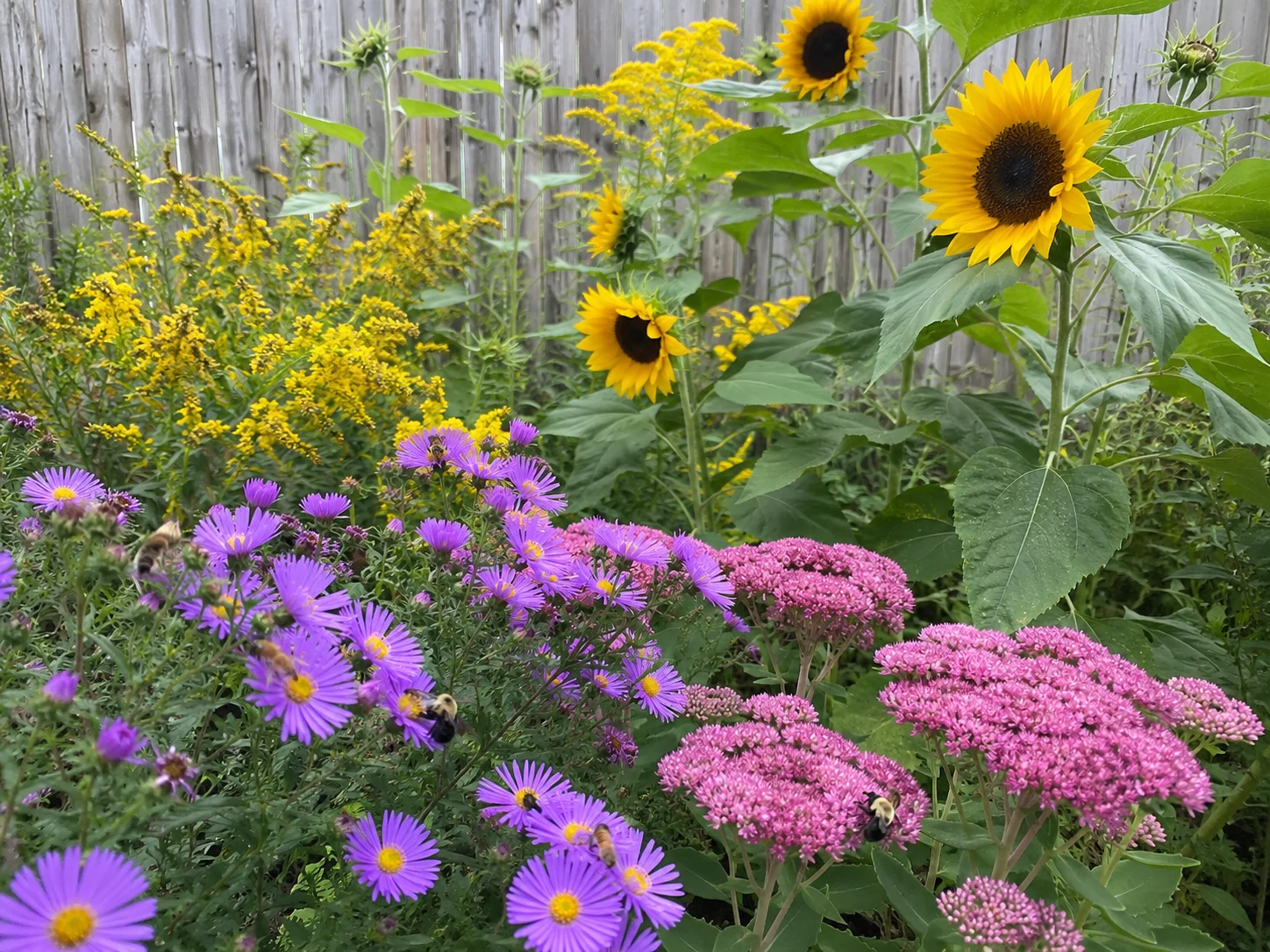
Goldenrod
Goldenrod is one of the most important late-season plants. UGA describes goldenrod as beneficial late in the season and notes that Solidago provides fall pollen. (bees.caes.uga.edu)
Do not blame goldenrod for allergies like everyone else who refuses to learn basic plant biology. Ragweed is usually the real airborne pollen problem. Goldenrod pollen is heavier and insect-carried.
Asters
Asters are another fall powerhouse. UGA lists Symphyotrichum asters as late summer to winter bloomers, with climbing aster as a fall late bloomer for bees. (bees.caes.uga.edu)
Sedum
Sedum is useful because it blooms late, is drought-tolerant, and works in tidy backyard beds. It is not enough by itself, but it is a solid late-season contributor.
Joe-Pye Weed
Joe-Pye weed is a strong summer-to-fall native plant for larger gardens. It gets tall, so place it toward the back of a border or along a fence line.
Sunflowers
Sunflowers are useful, visual, and easy for readers to understand. Choose pollen-producing varieties, not sterile decorative types.
Herbs Bees Actually Use
Herbs are excellent near backyard hives because they fit small spaces, tolerate containers, and can be placed close to patios without looking wild.
Good options:
- Thyme
- Oregano
- Sage
- Rosemary
- Lavender
- Catmint
- Mint — but keep it in containers unless you want a takeover
- Basil — let some plants flower
The trick is simple: stop harvesting every herb before it blooms. A perfectly clipped herb garden gives you flavor, but no flowers. Let part of the patch flower and you get both.
Plants to Avoid Near a Backyard Beehive
Avoiding bad choices matters as much as choosing good ones.
Avoid pesticide-treated nursery plants
This is non-negotiable. Xerces warns that creating pollinator habitat with contaminated plants defeats the point, and recommends asking nurseries about growing practices and choosing bee-safe plants. (Xerces Society)
Avoid double flowers with poor access
Some double flowers look impressive but offer little accessible nectar or pollen. They are garden decoration, not bee support. Use more single, open flowers.
Avoid aggressive spreaders in small beds
Mint, some goldenrods, and certain vigorous natives can be excellent in the right place and obnoxious in the wrong one. Put aggressive plants where they can spread or contain them.
Avoid planting the hive into a jungle
Tall plants right against the hive make inspections harder, hold humidity, hide ants, and create a messy flight zone. Beautiful but unworkable is still a bad design.
A Simple Planting Plan for a Backyard Hive
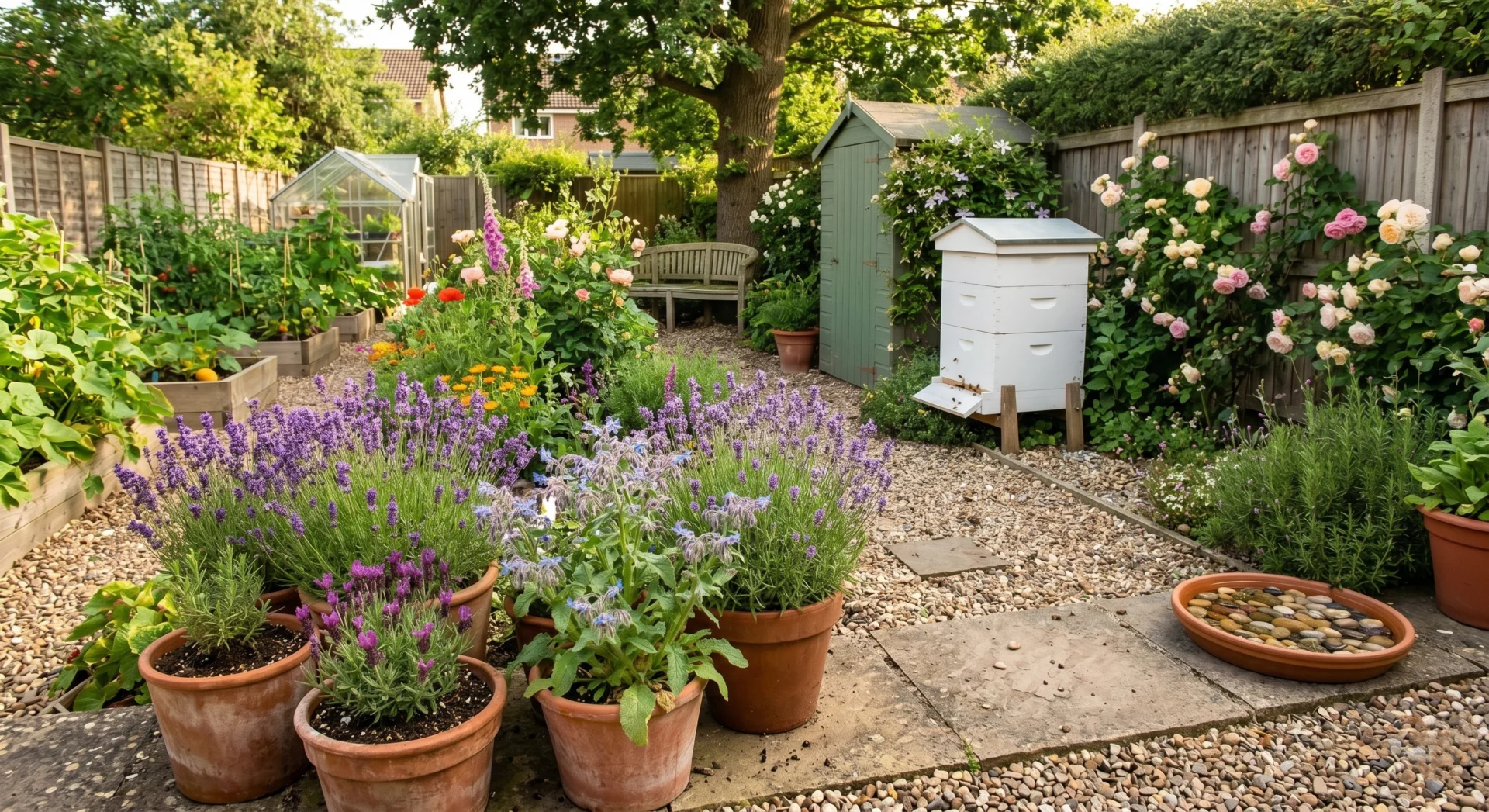
Here is a practical layout.
Near the hive stand
Use:
- Clover patches
- Thyme
- Catmint
- Low oregano
- Shallow bee water station with stones
Keep it low and manageable.
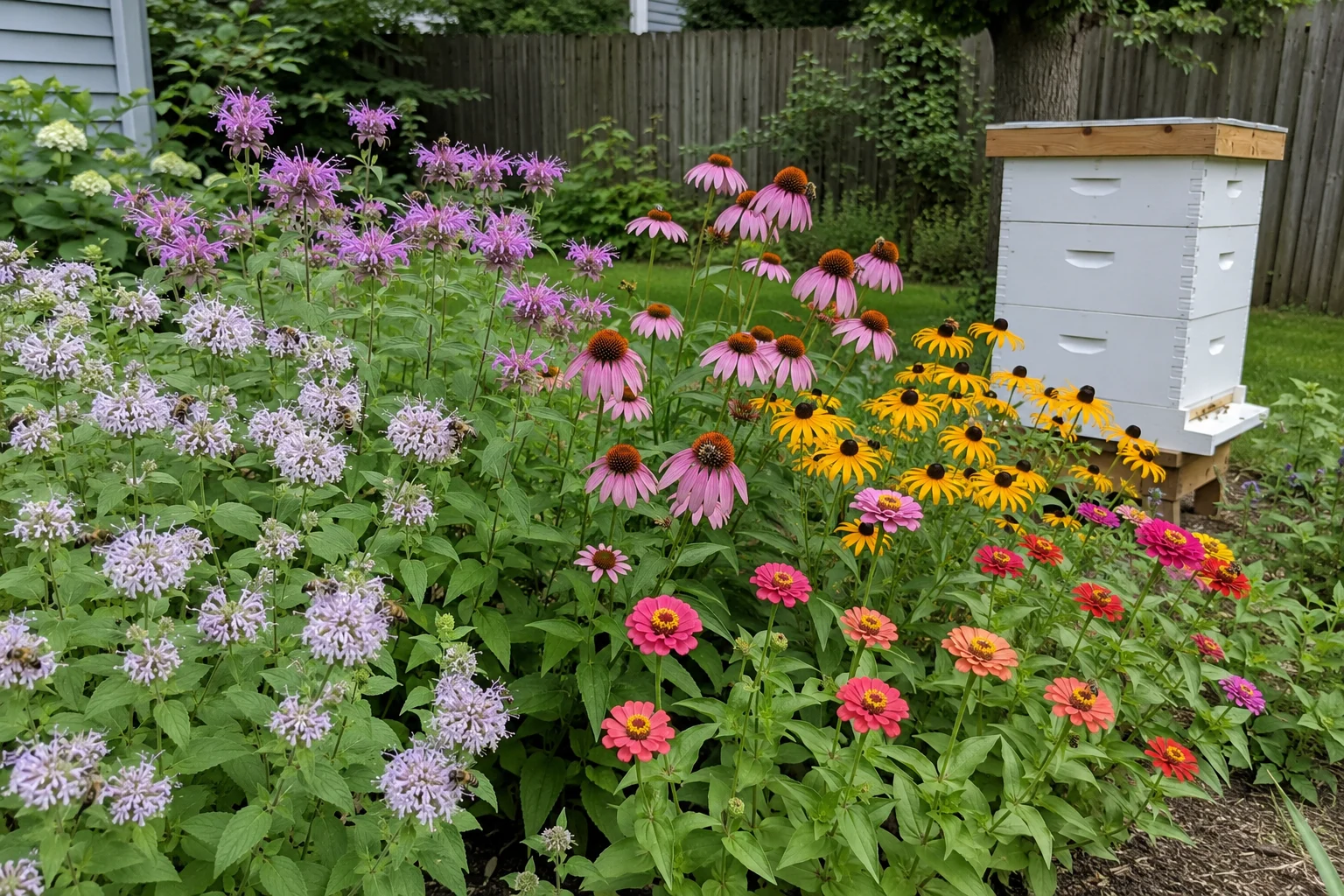
Along the side of the apiary
Use:
- Coneflower
- Bee balm
- Mountain mint
- Black-eyed Susan
- Zinnias
- Borage
This becomes the midsummer support bed.
Along the fence or boundary
Use:
- Elderberry
- Viburnum
- Buttonbush if moisture allows
- Beautyberry in warmer regions
- Goldenrod
- Asters
- Native honeysuckle on support
This connects perfectly to The Living Fence: How to Build a Bee-Friendly Boundary That Doubles as Forage.
For fall support
Use:
- Goldenrod
- Asters
- Sedum
- Joe-Pye weed
- Sunflowers
This links naturally to The July Nectar Crash: Why Your Hive Can Struggle in Midsummer.
Best Plants by Season
| Season | Best Choices | Why They Help |
|---|---|---|
| Early Spring | Willow, redbud, serviceberry, dandelion, clover | Early pollen and nectar during colony buildup |
| Spring to Early Summer | Elderberry, viburnum, blueberry, herbs | Strong bloom during expansion |
| Midsummer | Mountain mint, bee balm, buttonbush, borage, coneflower, zinnia | Helps bridge summer dearth |
| Late Summer/Fall | Goldenrod, asters, sedum, Joe-Pye weed, sunflowers | Supports late-season stores and winter prep |
The Water Source Matters Too
Plants are not the only thing bees need near a backyard hive.
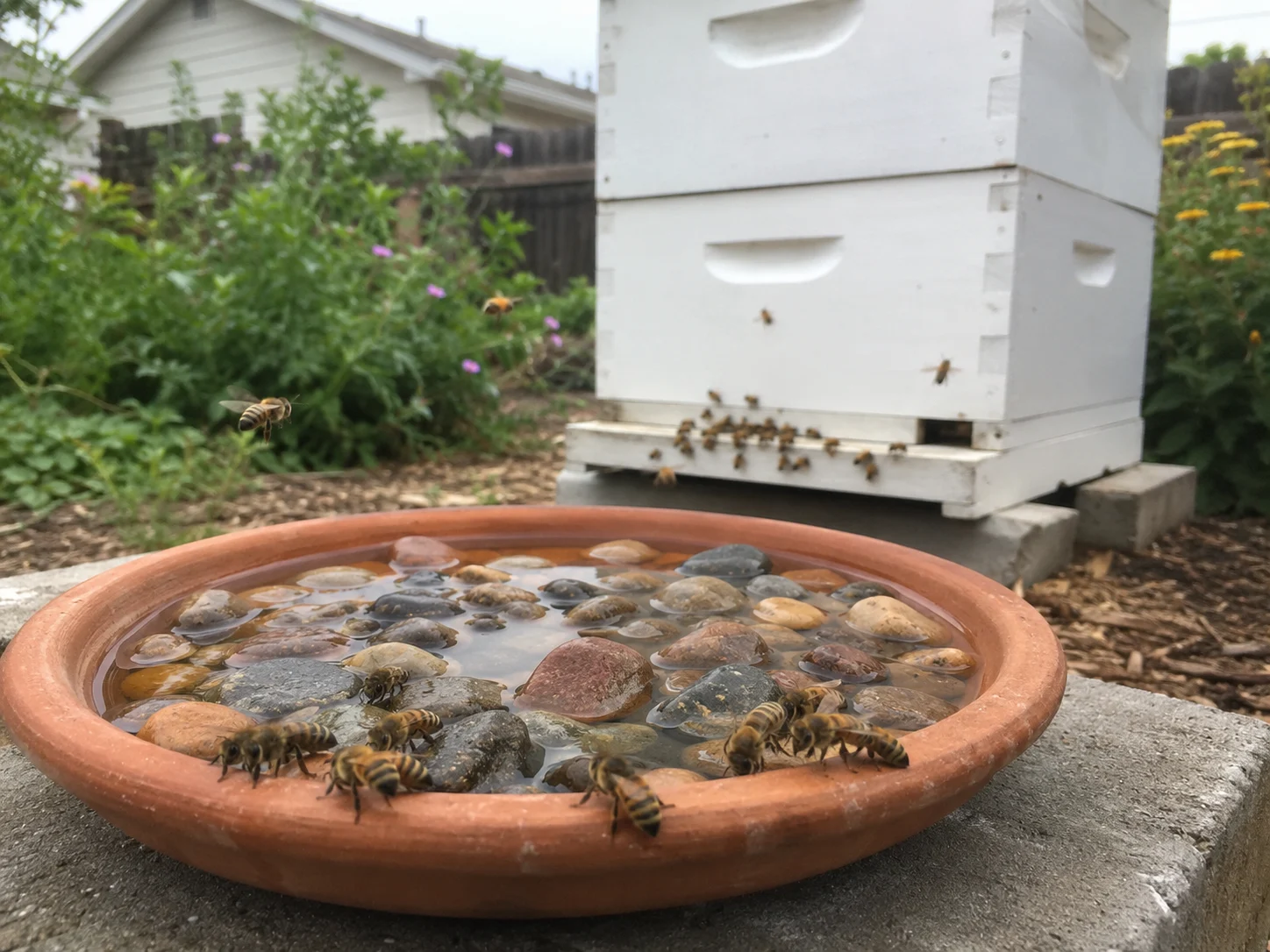
Water matters, especially in summer. Mississippi State Extension says hives should have water available year-round and warns that bees may choose a neighbor’s swimming pool; once they fixate on a pool, they can be very difficult to redirect. (MSU Extension Service)
Set up a water source before the heat gets serious:
- Shallow dish or birdbath
- Pebbles, corks, or sticks for landing
- Consistent refill schedule
- Slightly mineralized water to make it attractive
- Placed away from foot traffic
- Available before bees find the neighbor’s pool
Conclusion: Plant for Timing, Not Decoration
The best plants near a backyard beehive are not just the prettiest ones.
They are the plants that solve real colony problems:
- Early spring food
- Midsummer nectar gaps
- Fall pollen and nectar
- Safe water
- Wind protection
- Better flight paths
- Reduced neighbor conflict
A few random flowers near the hive is not a plan. It is decoration.
A real bee-support garden uses layers: low herbs near the hive, summer perennials to bridge the dearth, shrubs along the boundary, and fall flowers that keep feeding bees after the easy spring bloom is gone.
Plant for the whole season. Plant in clumps. Use native species where possible. Avoid pesticide-treated plants. Keep the working space clear. Give your bees water before they find someone else’s pool.
That is how you turn a backyard hive area into something useful — not just pretty.
Keep Reading 🐝
- The July Nectar Crash: Why Your Hive Can Struggle in Midsummer — understand the summer gap your planting plan should solve.
- Backyard Beehive Water Setup: Stop Bees From Finding the Pool — protect your bees and your neighbor relationships.
- The Living Fence: How to Build a Bee-Friendly Boundary That Doubles as Forage — turn your property line into forage, privacy, and wind protection.
- How to Keep a Backyard Beehive Cool in Summer Without Stressing Your Bees — combine shade, water, airflow, and planting for summer hive support.