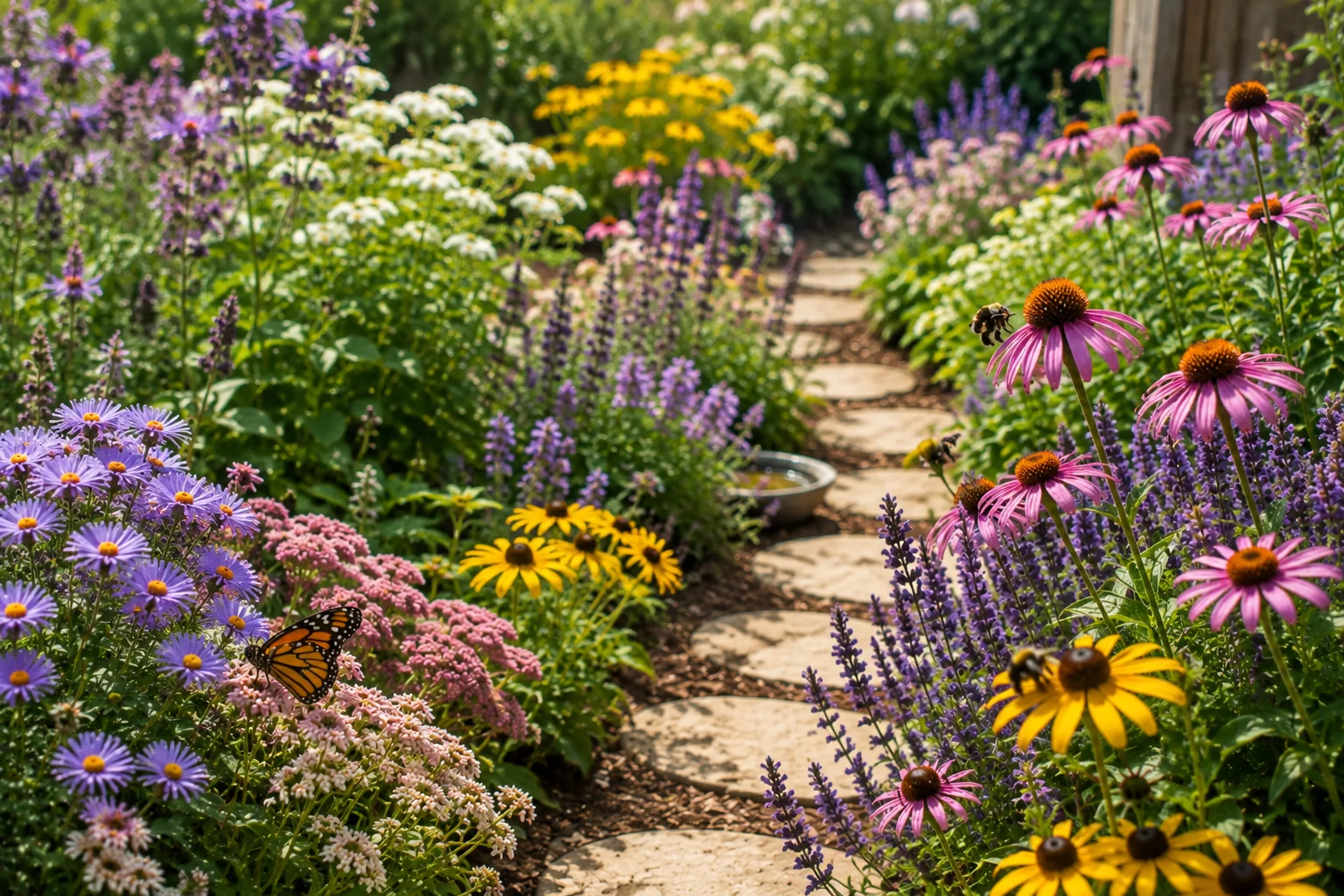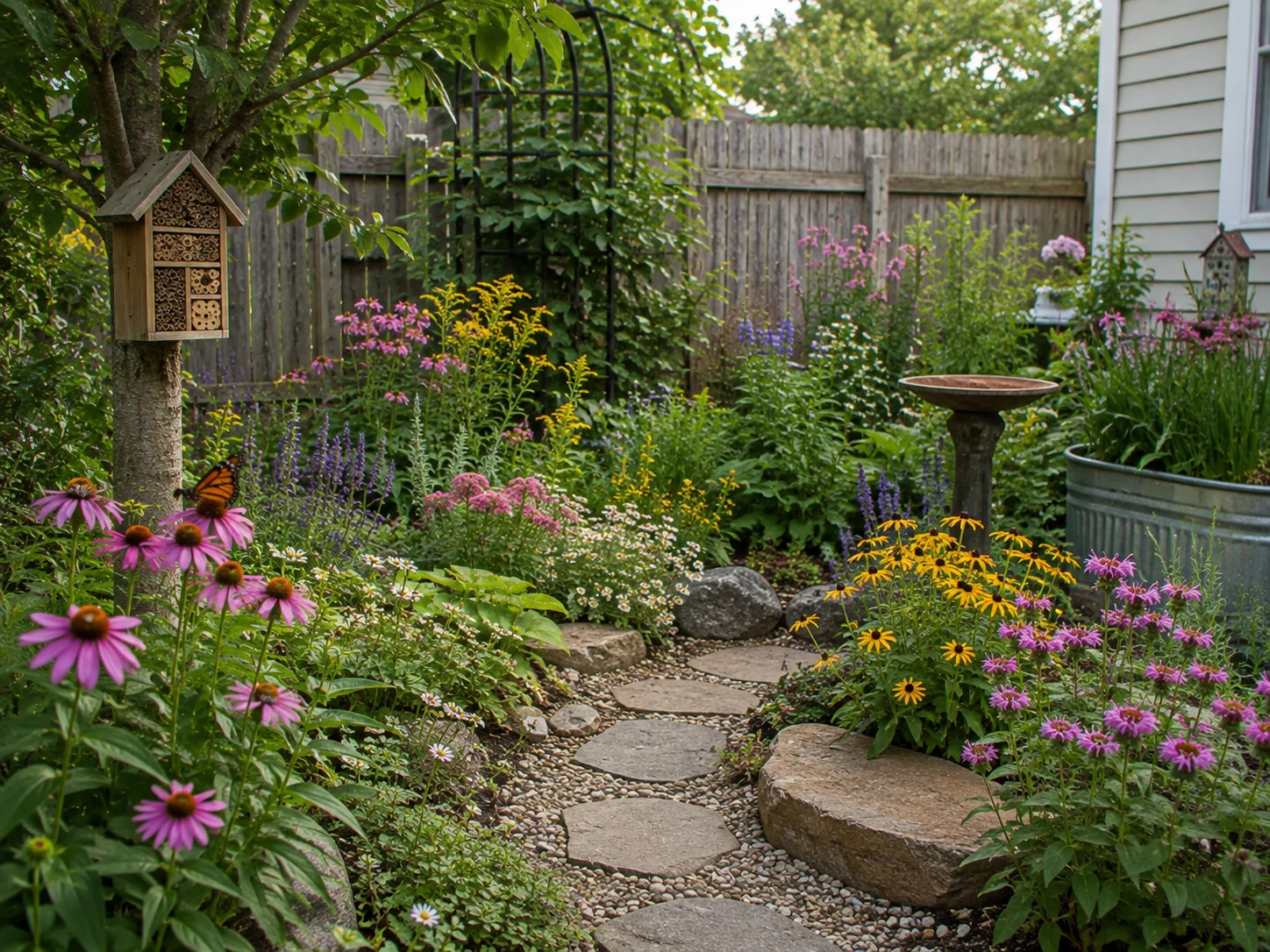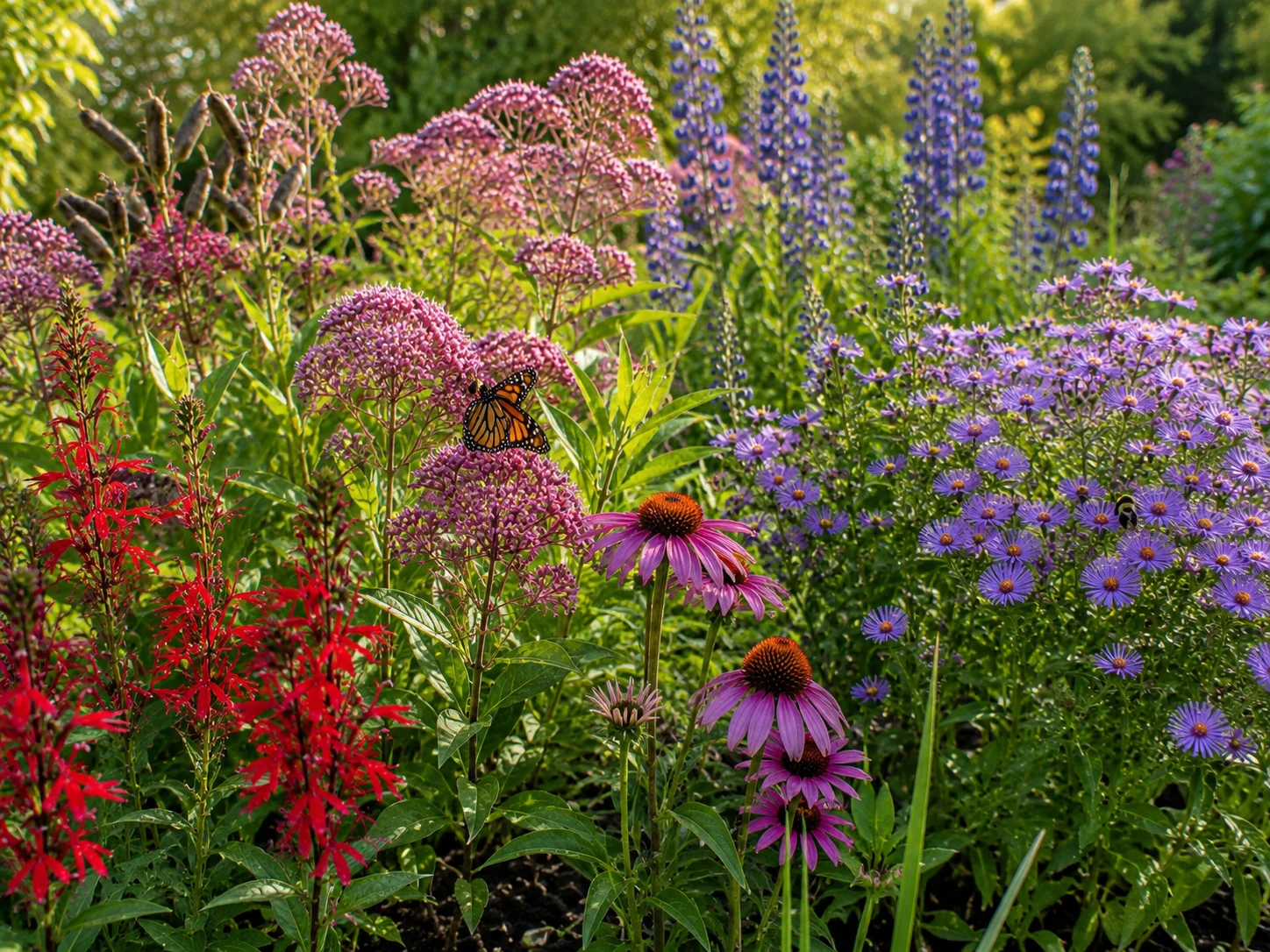

By autumn, most gardens start shutting down.
The summer flowers fade. Borders look tired. Gardeners start cutting everything back. And just when bees need the last reliable nectar and pollen before winter, the garden buffet disappears.
That is a mistake.
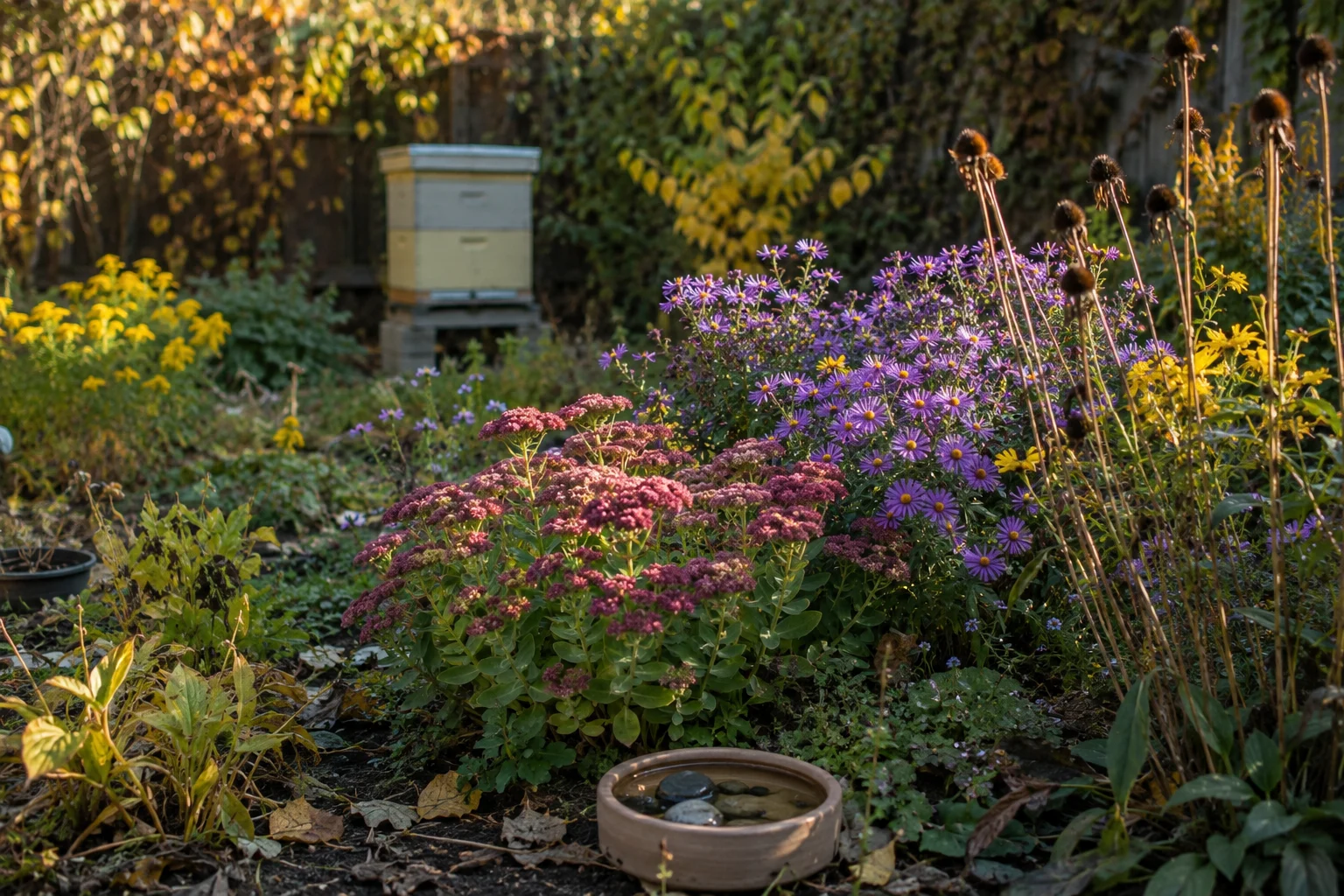
An autumn bee garden is not just about making the yard look pretty in September and October. It gives late-flying bees, hoverflies, moths, butterflies, and other pollinators food when natural forage can become scarce.
The Royal Horticultural Society’s guide to top plants for autumn pollinators explains that autumn garden flowers can provide valuable nectar and pollen when hedgerows and verges shift from flowering to fruiting.
For beekeepers, autumn flowers will not replace proper hive management. If a colony is light, you still need to inspect and feed correctly. But a strong late-season garden can reduce forage gaps, support wild pollinators, and make your backyard apiary more resilient year after year.
Why Bees Need Autumn Flowers
Autumn is a transition season. Honey bee colonies are preparing for colder weather, while many wild bees and other insects are trying to gather the last food they can before hibernation, nesting, migration, or the end of their adult life cycle.
Good autumn flowers provide:
- Nectar for energy
- Pollen for protein
- Late forage during seasonal gaps
- Food for bumblebees, solitary bees, hoverflies, moths, and butterflies
- A bridge between summer bloom and winter dormancy
For broader pollinator planting guidance, the RHS Plants for Pollinators programme recommends choosing plants that provide accessible nectar and pollen for bees and other pollinating insects.
The brutal truth: if your garden looks “clean” in autumn because everything has been cut back, it may be useless to pollinators.
How to Build an Autumn Bee Garden That Actually Helps
Do not plant one lonely aster and pretend you have solved the problem.
Bees respond better to patches. A decent autumn bee garden should include:
- Repeated clumps of the same flower
- Several bloom shapes, not just one plant type
- Sunny planting areas
- A mix of perennials, shrubs, climbers, and containers
- Flowers that bloom from late summer into frost
- No pesticide use on or near flowering plants
If you are planning around a hive, pair this article with your guide to the best plants to grow near a backyard beehive, because that piece already covers spring, summer, and fall forage, herbs, shrubs, water, and safe hive spacing.
12 Late-Season Flowers for an Autumn Bee Garden
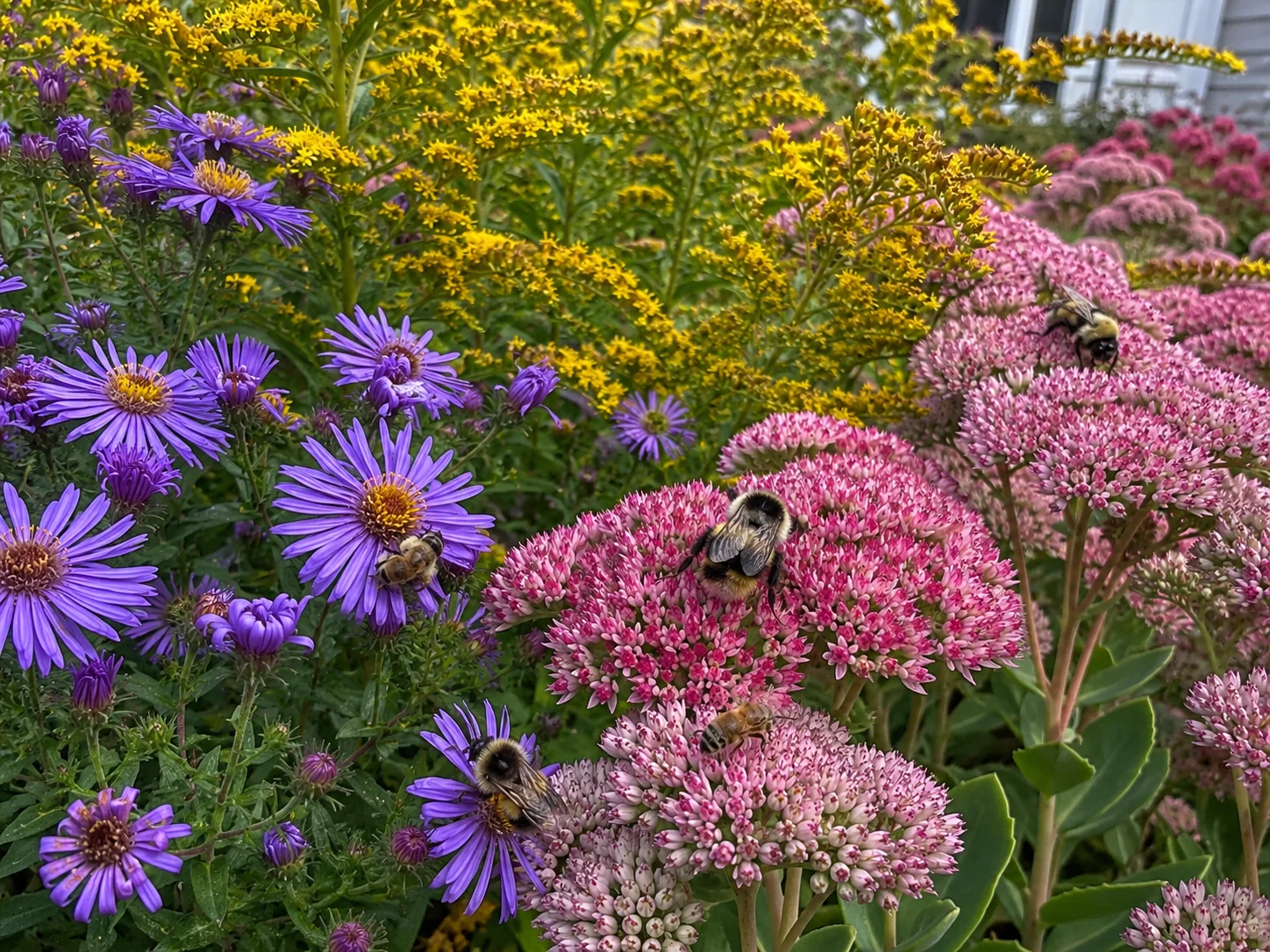
1. Asters / Michaelmas Daisies
Best for: September and October colour, open flowers, bee activity
Plant type: Perennial
Where to plant: Full sun or part shade
Asters are one of the backbone plants of an autumn bee garden. Their open daisy-like flowers are easy for many pollinators to access, especially short-tongued bees and hoverflies.
The RHS includes Michaelmas daisies among its top autumn pollinator plants and notes that fewer layers of petals usually means better nectar access.
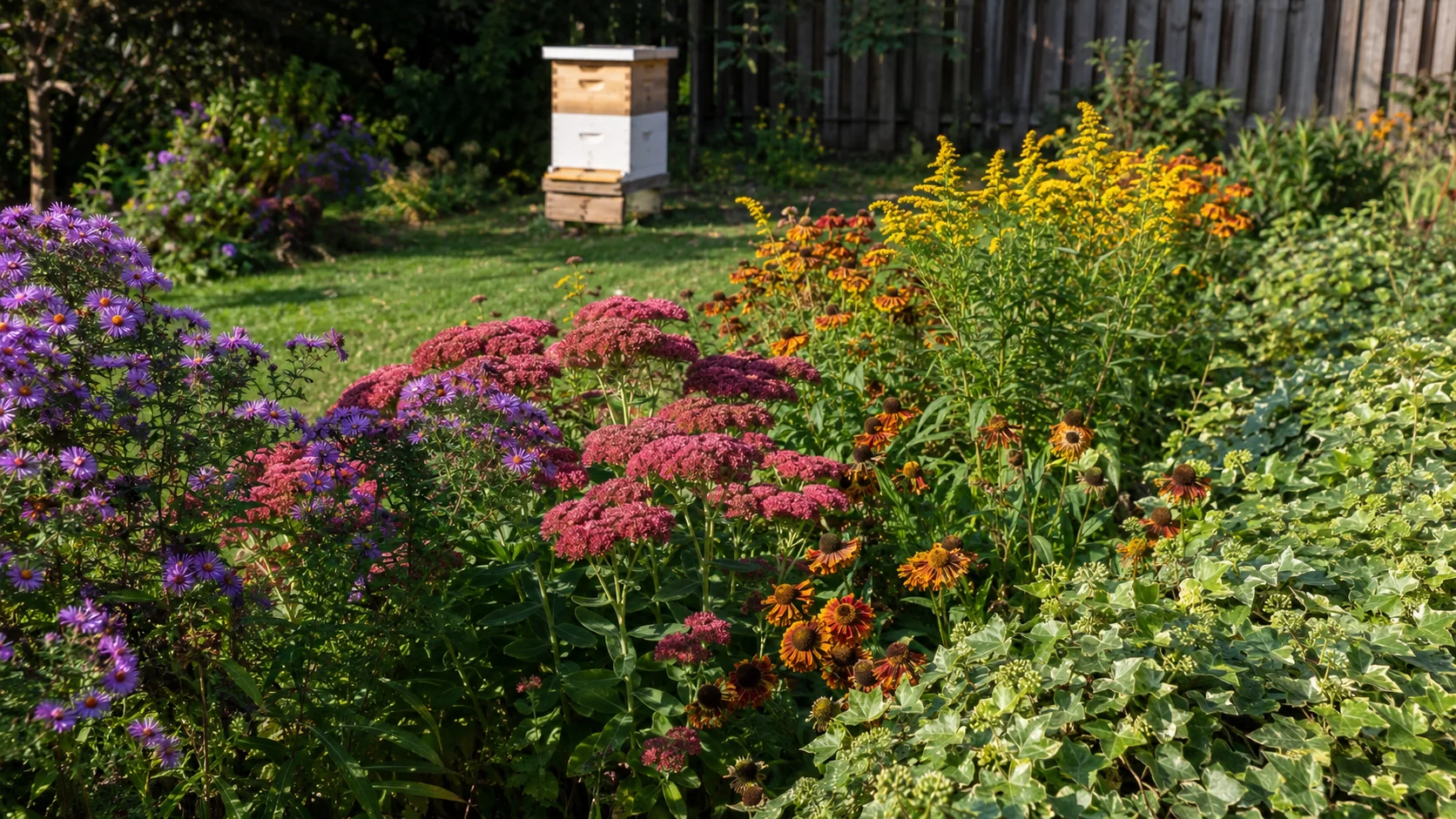
Use them well: Plant several clumps instead of one isolated plant. Combine purple asters with yellow goldenrod or orange helenium for a strong late-season patch.
2. Sedum / Hylotelephium
Best for: Low-maintenance autumn nectar
Plant type: Perennial
Where to plant: Sunny, well-drained soil
Sedum, now often listed as Hylotelephium, is one of the easiest autumn bee plants. Its flat flower heads are made of many tiny star-shaped blooms, creating a landing pad that bees can work efficiently.
The RHS describes autumn stonecrops as low-maintenance, drought-resistant perennials that become “an absolute magnet for bees” at the end of summer and into autumn.
Best varieties: ‘Autumn Joy’ is the classic, but compact types also work well in pots.
3. Goldenrod
Best for: Late nectar and pollen
Plant type: Perennial
Where to plant: Sunny borders, wildlife areas, larger beds
Goldenrod is unfairly blamed for hay fever. The real culprit is usually ragweed, not goldenrod. Goldenrod flowers are bright, insect-pollinated, and extremely useful when many summer flowers are finished.
Plant it with restraint. Some goldenrods can spread hard, so choose garden-friendly varieties and divide clumps when needed.
Best use: Pair with asters for a classic autumn pollinator combination.
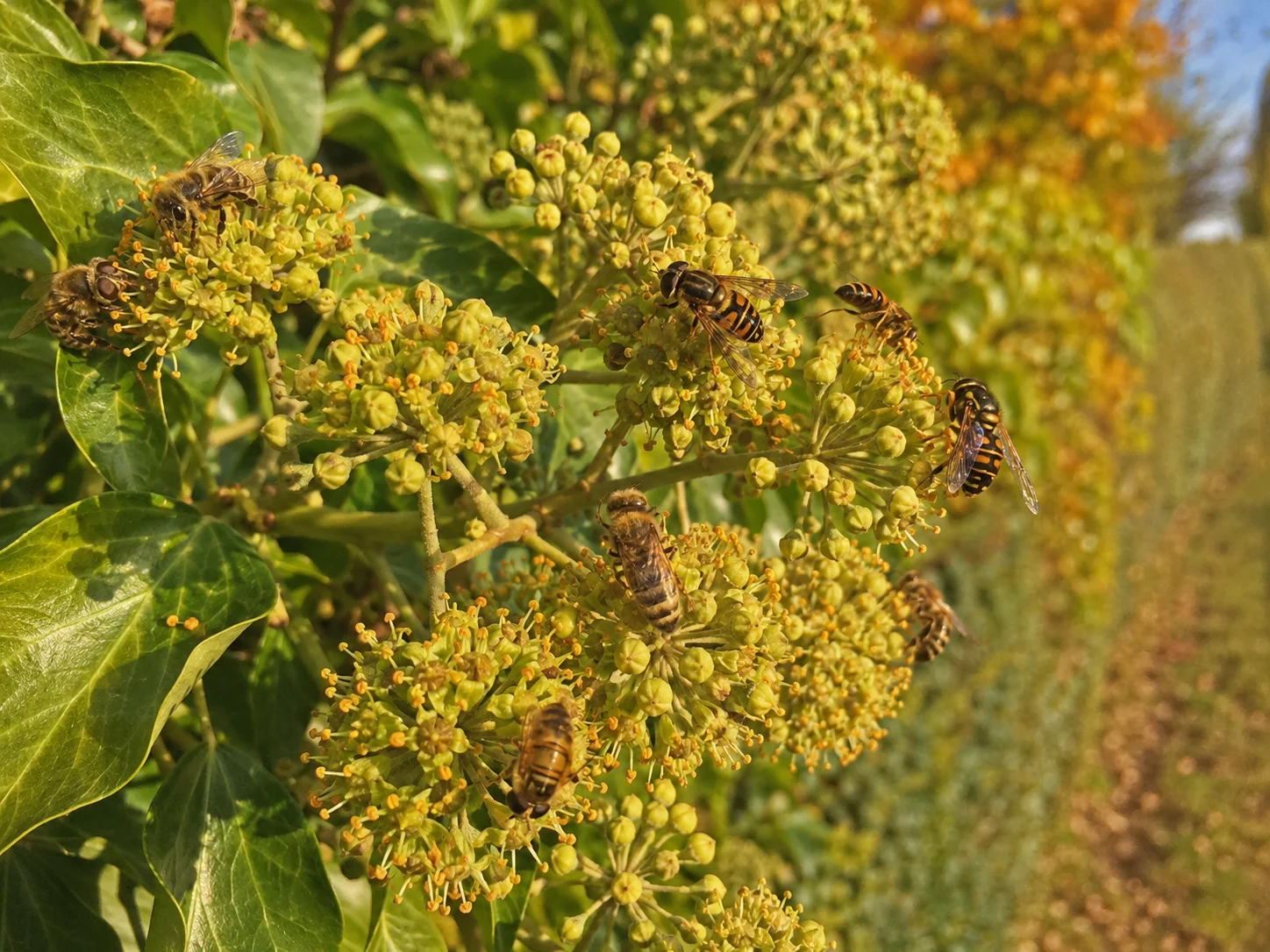
4. Ivy
Best for: Very late autumn nectar
Plant type: Evergreen climber
Where to plant: Boundaries, walls, fences, wildlife corners
Ivy is not glamorous, but for late-season pollinators it is powerful.
The RHS highlights ivy as enormously valuable to wildlife and notes that its flowers can be in huge demand at the end of the season, attracting bees, flies, wasps, and butterflies.
Important: Ivy only flowers when mature, so constantly cutting it back can stop it from providing autumn bloom. Let a controlled patch mature where it will not damage structures.
5. Helenium
Best for: Warm autumn colour and open flowers
Plant type: Perennial
Where to plant: Full sun, moisture-retentive soil
Helenium gives orange, copper, red, and yellow flowers when many borders are fading. Its open daisy shape is accessible to a wide range of pollinators.
The RHS notes that open daisy-like flowers are especially valuable because not every pollinator can reach nectar inside tubular flowers.
Use it well: Deadhead through late summer to keep flowers coming into autumn.
6. Devil’s-Bit Scabious
Best for: Wildlife gardens and meadow-style planting
Plant type: Perennial wildflower
Where to plant: Informal borders, meadow patches, wildlife areas
Devil’s-bit scabious is a soft, airy autumn flower with rounded lilac-blue blooms. It works beautifully in naturalistic gardens and is a better fit than stiff bedding plants if you want a relaxed bee-friendly look.
The RHS includes devil’s-bit scabious in its autumn pollinator recommendations and describes many scabious plants as bee magnets.
Best use: Plant it through a meadow edge or mixed perennial border.
7. Salvia
Best for: Long flowering season and container colour
Plant type: Perennial or tender perennial, depending on variety
Where to plant: Sunny, sheltered, well-drained soil
Many salvias flower deep into autumn, especially in mild areas. Their tubular flowers are especially useful for longer-tongued bees.
The RHS lists Salvia greggii and Salvia microphylla among top autumn nectar plants and notes that salvias are bee magnets when in bloom.
Warning: Some varieties need winter protection. If your winters are harsh, grow them in pots and move them to a sheltered spot.
8. Fuchsia
Best for: Shade tolerance and long autumn bloom
Plant type: Hardy shrub or container plant
Where to plant: Sun to shade, borders or large pots
Hardy fuchsias are underrated for autumn bees. They bloom for a long time and can fit into smaller gardens where big perennial borders are unrealistic.
RHS notes that Fuchsia magellanica and its cultivars are loaded with pollen and nectar, with long tubular flowers that can support long-tongued bees, moths, and butterflies into autumn.
Best use: Plant in a sheltered border or large container.
9. Dahlia — Open-Flowered Types Only
Best for: Big colour and pollinator access
Plant type: Tender perennial tuber
Where to plant: Sunny border or large container
Not all dahlias are useful to bees. Tight pompom and cactus dahlias may look impressive, but many hide the pollen and nectar behind too many petals.
Choose single, semi-double, or open-centred dahlias. The RHS specifically praises open varieties such as ‘Bishop of Llandaff’ because their pollen is accessible to bees.
Rule: If you cannot see the centre of the flower, it is probably not your best bee plant.
10. Honeysuckle
Best for: Climbing cover and evening scent
Plant type: Climber
Where to plant: Fence, arch, pergola, hedge
Honeysuckle is useful because it adds vertical forage. In small gardens, that matters. You can feed pollinators without sacrificing ground space.
The RHS notes that honeysuckles can remain important into autumn, with fragrant tubular blooms that attract moths and other pollinators.
For a strong boundary planting strategy, visit this link: build a bee-friendly living fence that doubles as forage
11. Oleaster / Elaeagnus
Best for: Late-flowering evergreen structure
Plant type: Evergreen shrub
Where to plant: Hedge, boundary, exposed garden, coastal-style planting
Oleaster is not the first plant beginners think of, but it can be excellent for late autumn. Its small creamy flowers are easy to miss, but bees do not miss them.
The RHS highlights Elaeagnus x submacrophylla as a late-flowering shrub that can bloom in October and November, providing a valuable nectar source for honey bees and queen bumblebees preparing for winter or hibernation.
Best use: Plant as part of a mixed hedge, not a lonely shrub dumped in a corner.
12. Hardy Plumbago
Best for: Front of border and groundcover
Plant type: Perennial groundcover
Where to plant: Full sun to part shade, well-drained soil
Hardy plumbago, or Ceratostigma plumbaginoides, brings vivid blue flowers and autumn-red foliage. It is useful where you need lower planting at the front of a border.
The RHS describes hardy plumbago as an autumn-blooming perennial that works well for groundcover and attracts butterflies and day-flying moths.
Best use: Use it as a low layer beneath taller autumn plants.
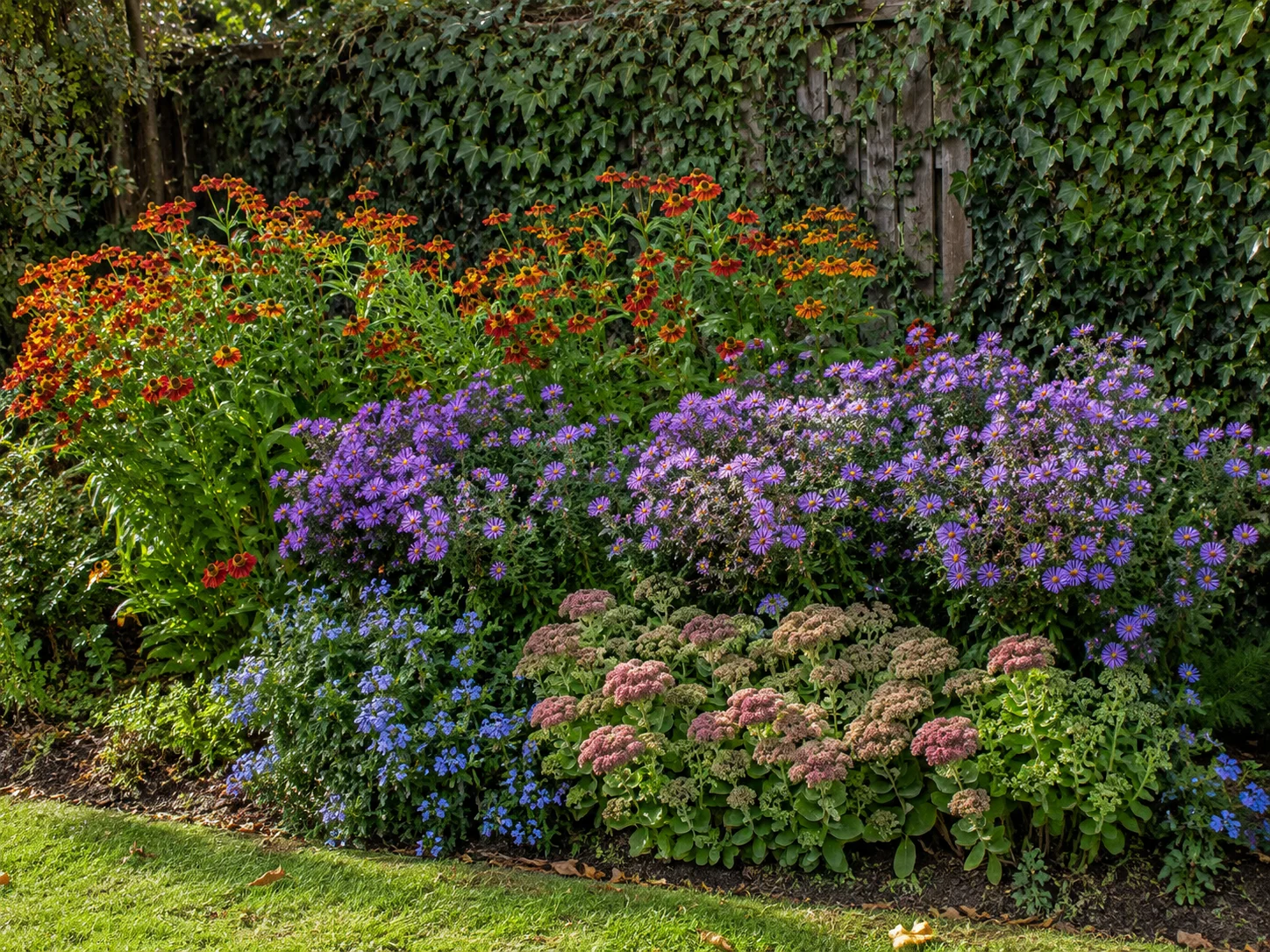
Autumn Bee Garden Layout for a Small Backyard
A useful autumn bee garden does not need to be huge.
Try this simple layout:
Sunny Border
Plant:
- 3 sedums
- 3 asters
- 3 heleniums
- 1 clump of goldenrod
- 1 open-flowered dahlia
Fence or Boundary
Add:
- Ivy in a controlled patch
- Honeysuckle on a trellis
- Oleaster as part of a mixed hedge
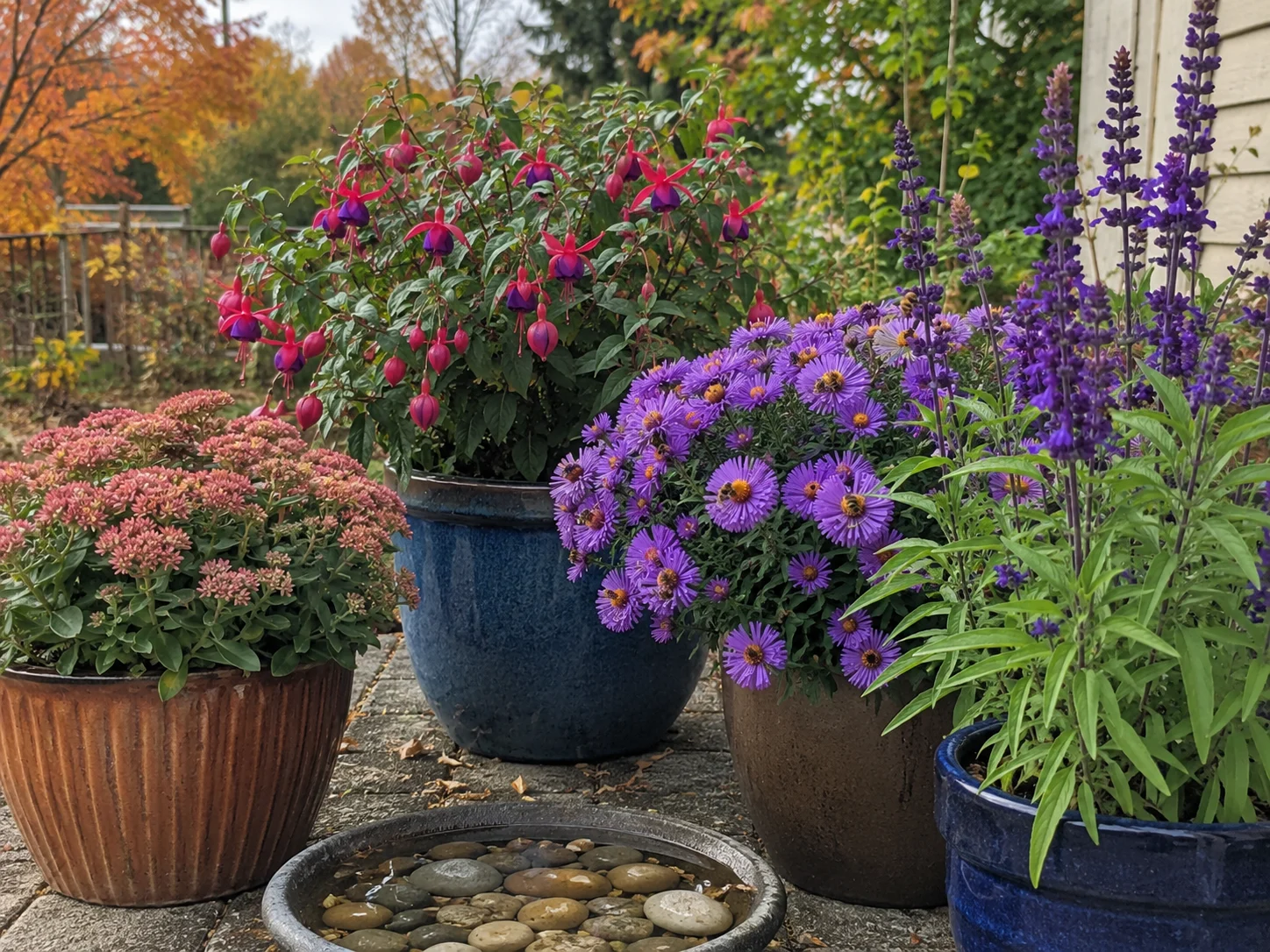
Pots and Patio
Use:
- Compact sedum
- Salvia
- Fuchsia
- Small asters
- Open dahlias
This connects well with your small-space content, especially the container pollinator garden guide: how to feed bees from a balcony or patio.
Autumn Garden Mistakes That Hurt Bees
Avoid these if you actually want the garden to help:
- Cutting every perennial down too early
- Removing ivy before it flowers
- Buying double flowers with no visible centre
- Spraying pesticides on late blooms
- Planting one of everything instead of useful clumps
- Forgetting water during dry autumn weather
- Leaving all autumn forage to the wider landscape
- Ignoring containers because the garden is small
The worst mistake is making the garden look tidy at exactly the moment pollinators need food.
Quick Autumn Bee Garden Checklist
Use this before buying plants:
- Choose at least 5 late-season plants
- Prioritise open flowers
- Plant in repeated groups
- Include one climber or shrub
- Add container plants if space is tight
- Avoid pesticide-treated plants when possible
- Keep a shallow water source available
- Leave some stems and seedheads standing
- Do not cut everything back before winter
Final Takeaway
An autumn bee garden is not optional decoration. It is the final feeding station before the cold months.
Start with the heavy hitters: asters, sedum, goldenrod, ivy, helenium, salvia, fuchsia, open dahlias, honeysuckle, oleaster, devil’s-bit scabious, and hardy plumbago.
Plant them in clumps. Keep the flowers simple and accessible. Avoid pesticides. Let some structure stand through winter.
That is how you build a garden that does more than look nice in summer. It keeps feeding bees when the season starts getting hard.