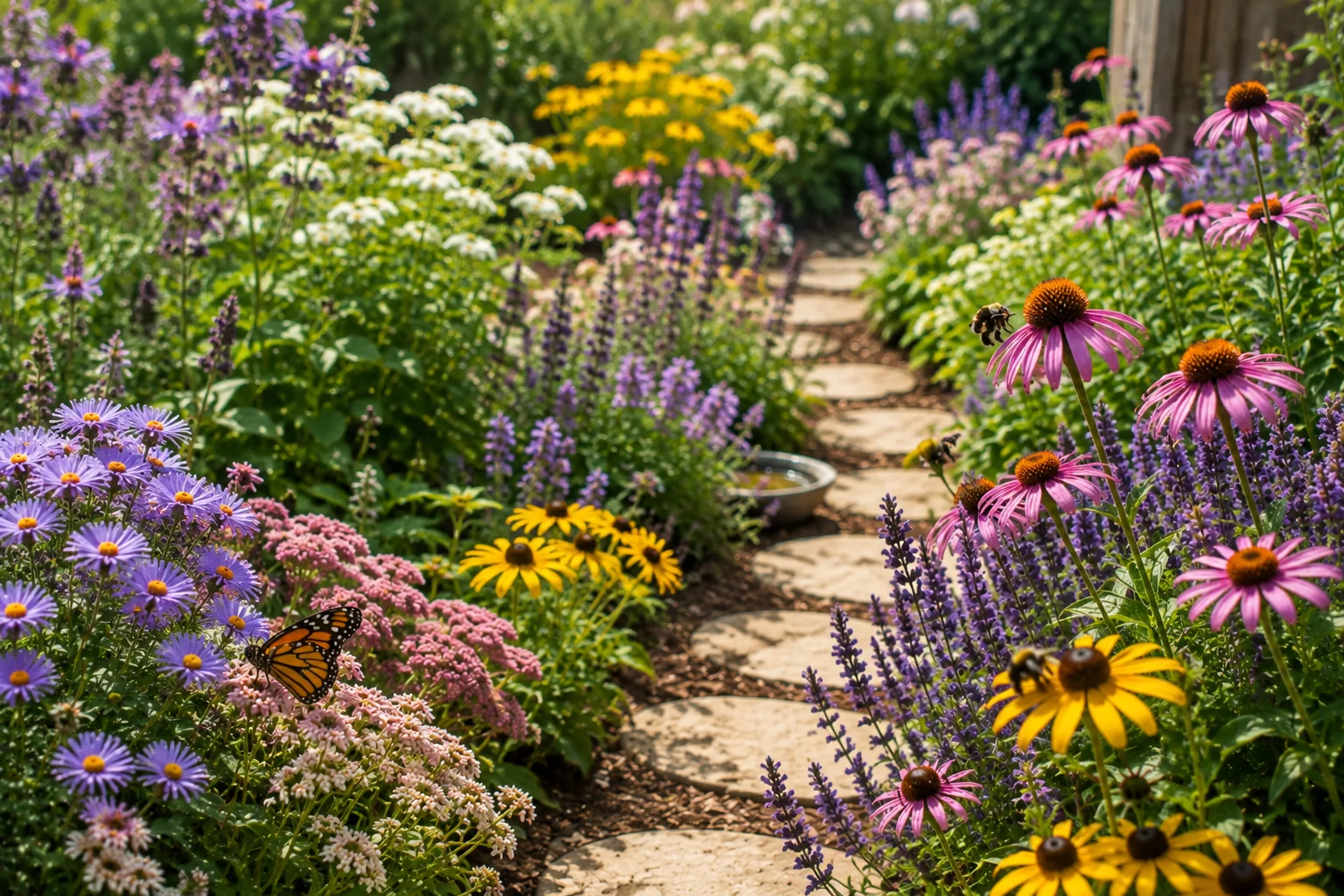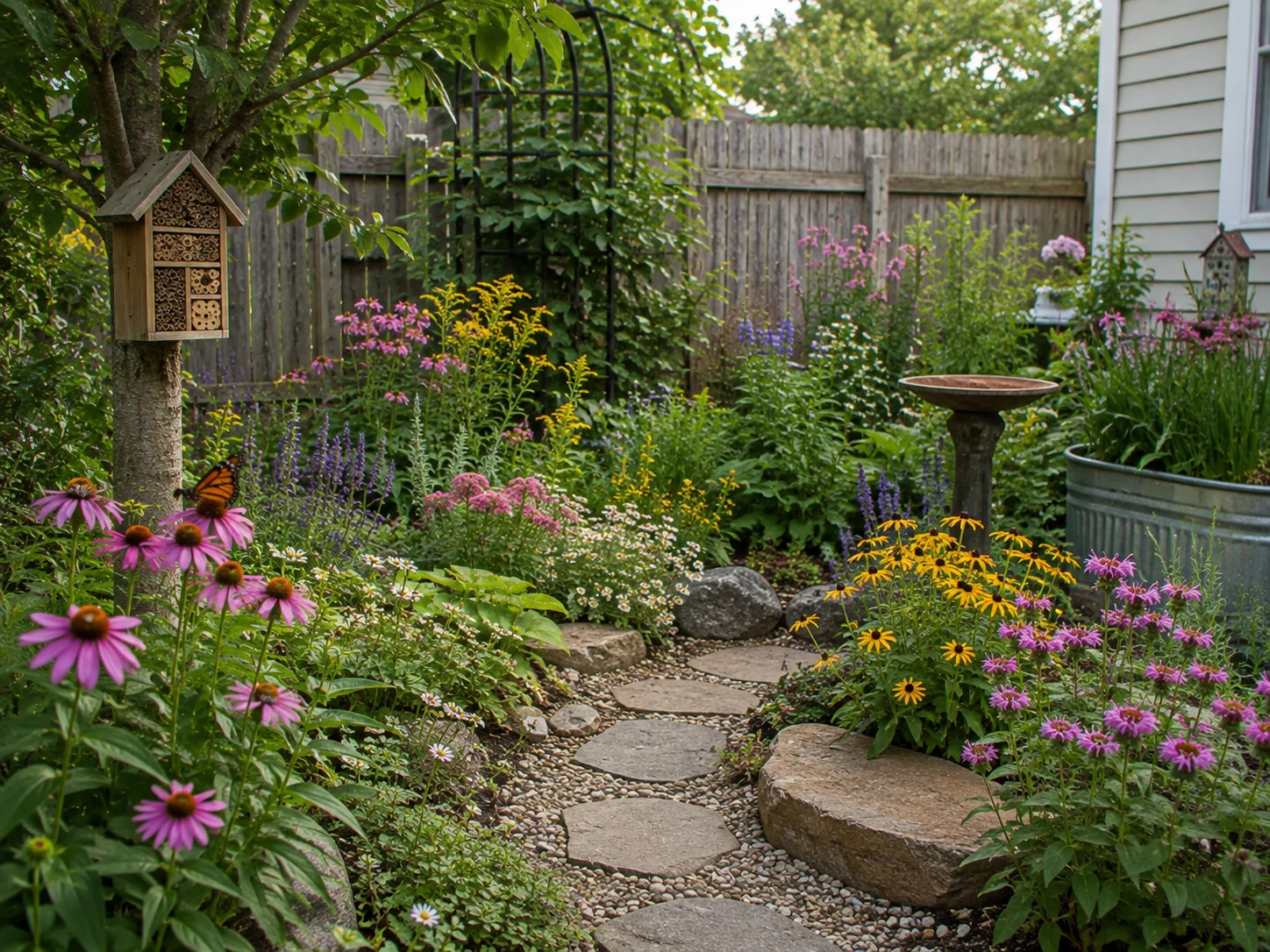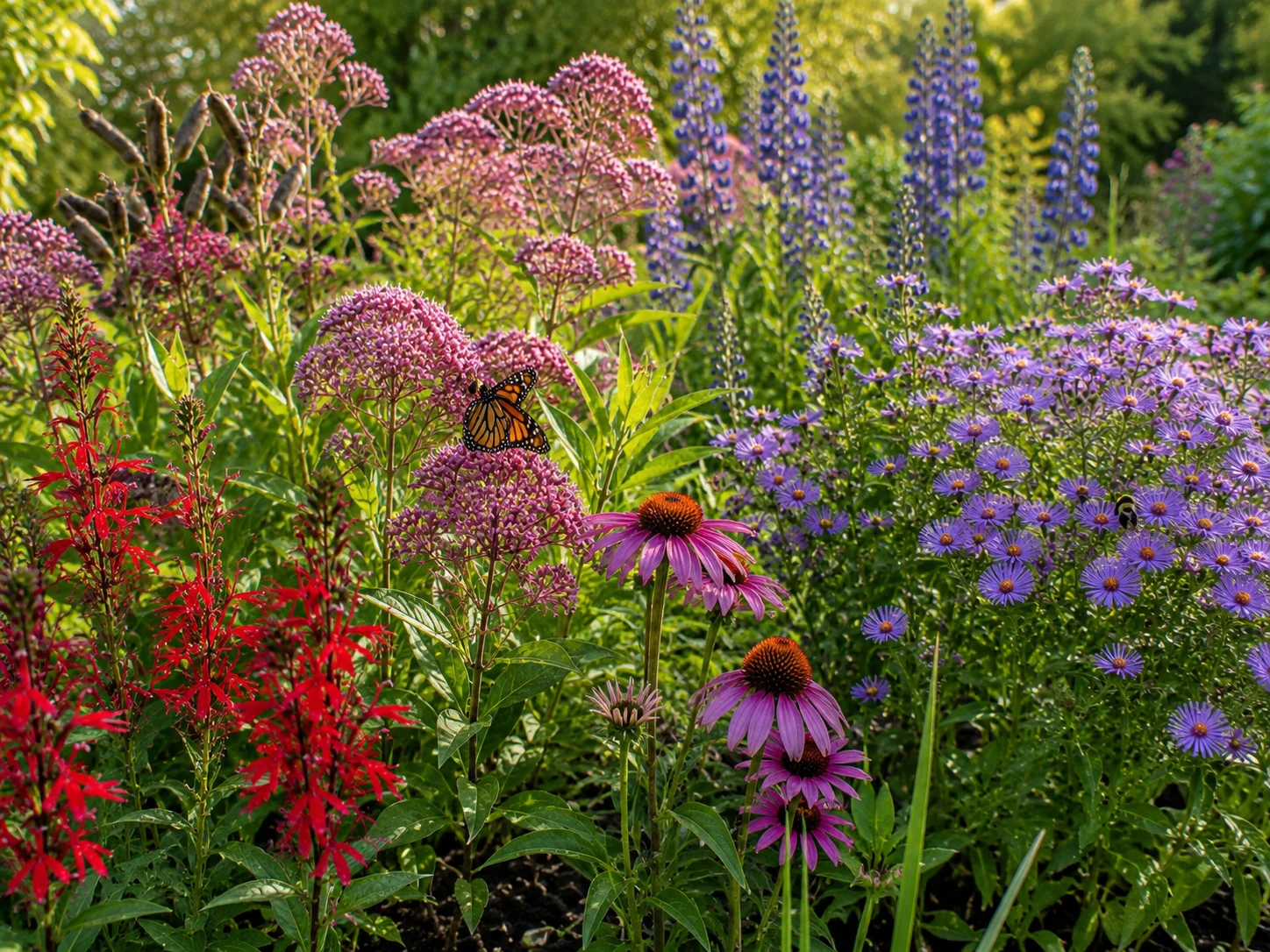

Search “plants for pollinators” and you’ll mostly get the same dozen names repeated in a different order, with no sense of when they bloom or which pollinator actually benefits most. That’s a problem, because bees, butterflies, and hummingbirds don’t all want the same thing at the same time. A plant that’s perfect for early-spring bees might do nothing for a hummingbird that doesn’t arrive until June, and a fall-blooming aster is useless to a garden that’s already been cut back by September.
This list solves that by organizing 23 of the best pollinator plants by season and by the pollinator they serve best, so you’re not just buying plants — you’re building a garden that actually works across the whole year. Whether you’re starting from scratch or filling gaps in an established bed, use this as a shopping list you can pull from section by section.
How to Use This List
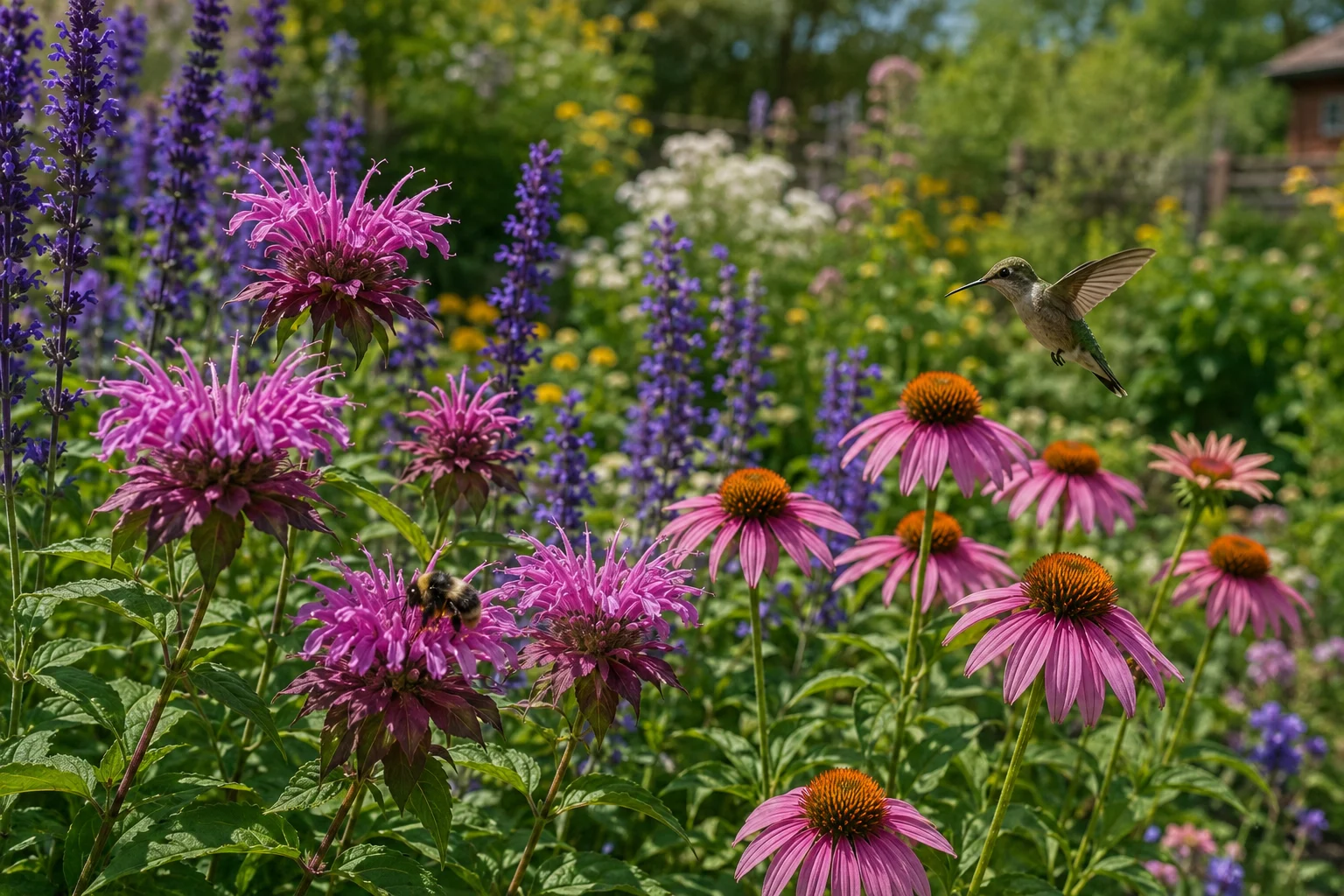
Before diving in, a quick note on structure: plants below are grouped into spring anchors, summer workhorses, butterfly favorites, hummingbird favorites, and fall finishers. Several plants do double or triple duty — bee balm, for example, shows up as both a butterfly and hummingbird favorite — so don’t feel like you need one plant from every category. A well-designed bed with 8–10 of these, chosen to overlap bloom times, will outperform a scattered collection of all 23.
Spring Anchors: The First Forage of the Year
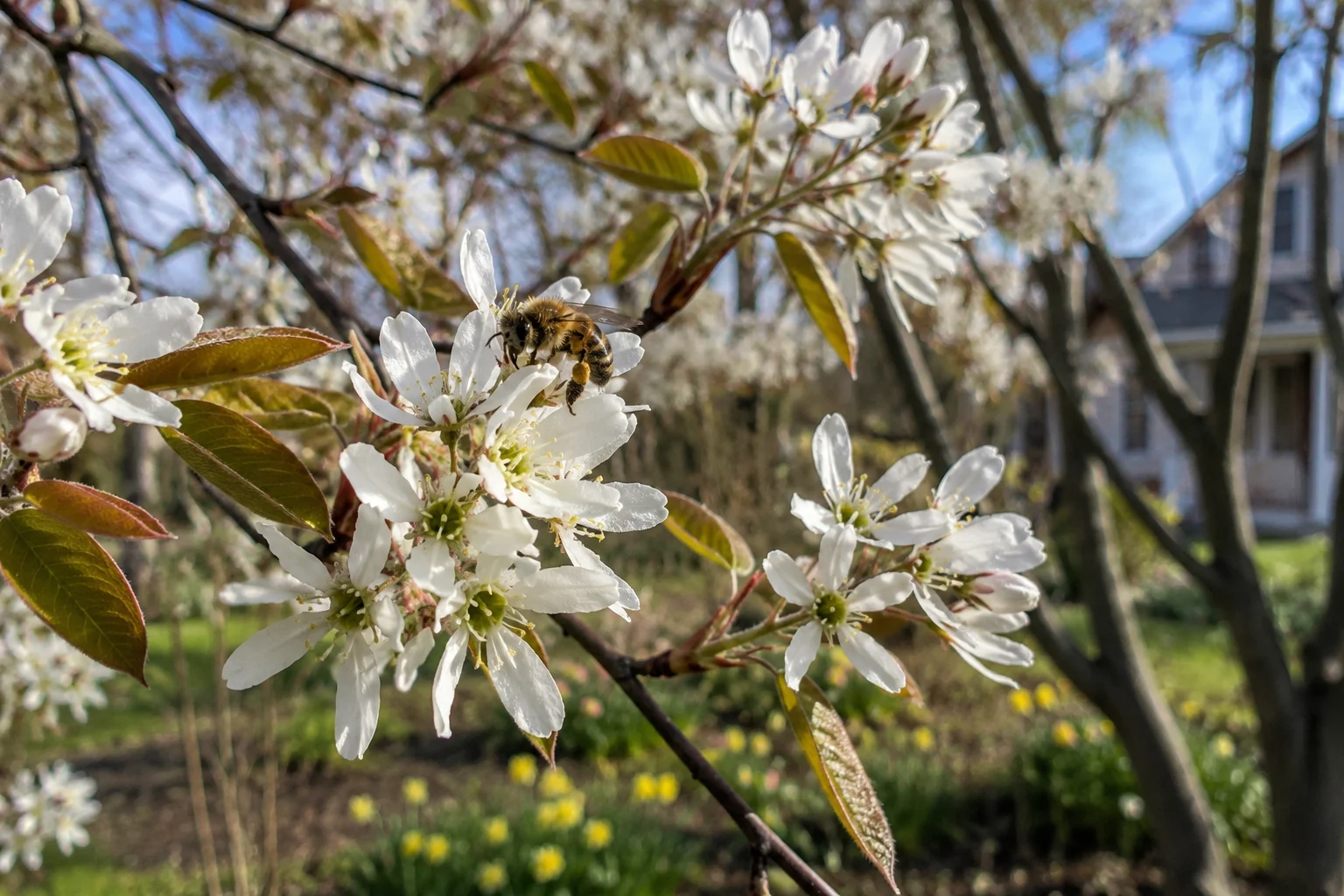
These bloom earliest and give pollinators their first real food source after winter, which matters more than almost anything else on this list.
- Serviceberry (Amelanchier) — A small flowering tree that blooms in early spring before most perennials wake up. Strong early bee forage, and birds eat the summer berries.
- Native willow (Salix species) — Among the very first pollen sources of the year for emerging bees; often blooms before leaves appear.
- Redbud (Cercis canadensis) — Clusters of small pink-purple flowers directly on bare branches in early spring, popular with native bees and honeybees alike.
- Arrowwood viburnum (Viburnum dentatum) — A dense flowering shrub that bridges the gap between the earliest bloomers and the summer perennial flush.
If you’re planning a whole-season layout around plants like these, our four-season pollinator garden guide walks through exactly how to sequence spring anchors into a full bloom calendar.
Summer Workhorses: The Backbone of the Border
These bloom for weeks rather than days, tolerate heat, and carry most of the garden’s pollinator traffic through the peak growing season.
- Bee balm (Monarda) — A genuine triple-purpose plant: bees, butterflies, and hummingbirds all use it heavily. Long bloom window through mid-to-late summer.
- Purple coneflower (Echinacea purpurea) — Reliable, drought-tolerant, and long-blooming; also feeds goldfinches once seed heads form in fall.
- Anise hyssop (Agastache foeniculum) — One of the most efficient bloomers on this list, attracting bees, butterflies, and hummingbirds simultaneously over a long summer window.
- Catmint (Nepeta) — Extremely long-blooming and easy to grow; a strong bee magnet that also looks tidy enough for a front-of-border planting.
- Garden phlox (Phlox paniculata) — Fragrant, upright summer bloomer that draws both butterflies and hummingbirds.
- Mountain mint (Pycnanthemum muticum) — Consistently ranks among the most bee-visited plants in pollinator research trials; especially valuable for bridging the midsummer nectar dearth.
Butterfly Favorites
These plants specifically prioritize butterfly nectar sources or, in the case of milkweed, host caterpillar development.
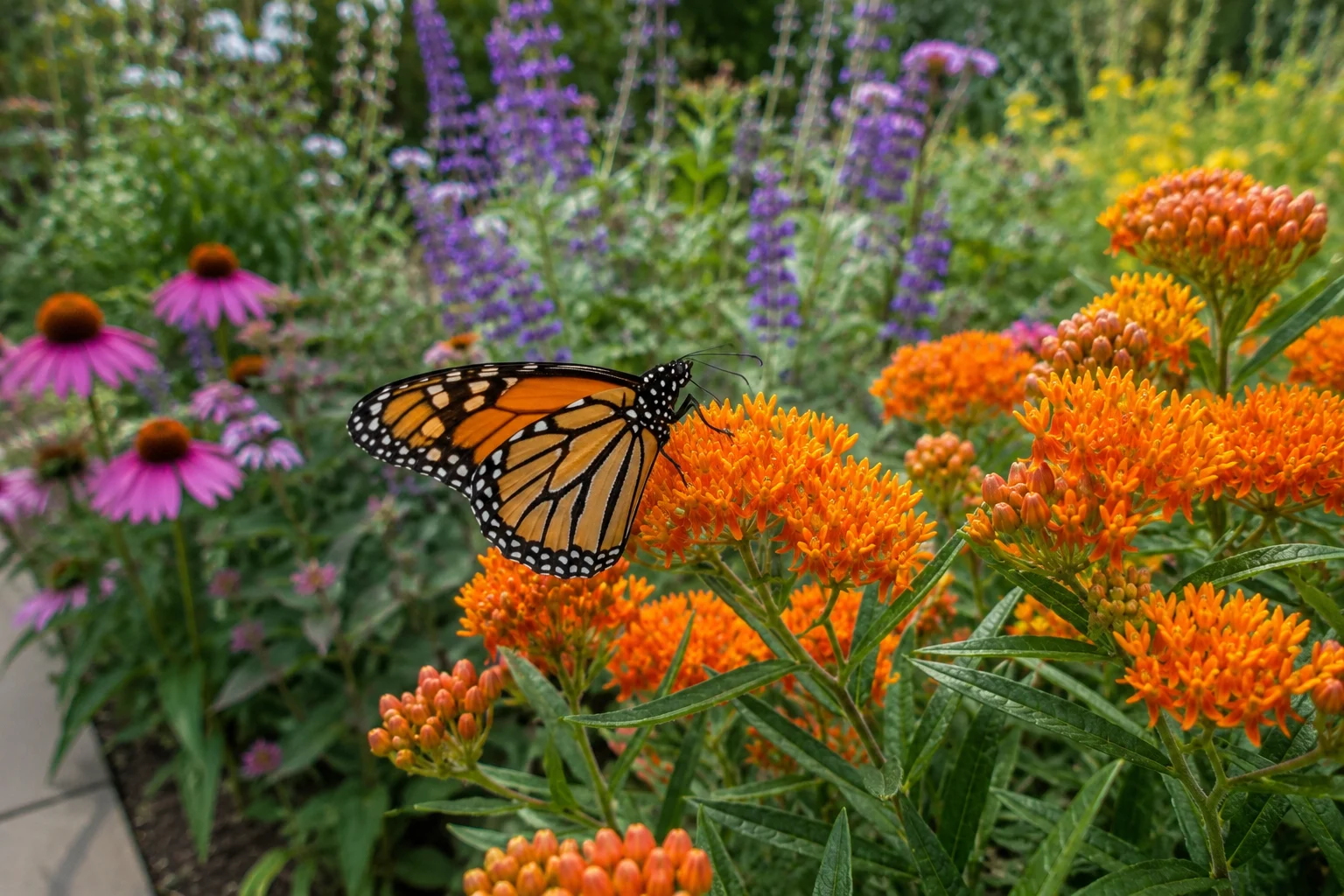
- Milkweed (Asclepias species) — The only host plant monarch caterpillars can feed on, making it essential rather than optional if monarchs are a goal.
- Zinnia — An easy annual with a long bloom season and flat, open flowers that make nectar highly accessible to butterflies.
- Verbena bonariensis — Tall, airy purple blooms that butterflies use heavily from midsummer into fall.
- Cosmos — Fast-growing, self-seeding annual that fills gaps quickly and draws steady butterfly traffic.
- Joe-Pye weed (Eutrochium) — A tall native perennial that draws large numbers of butterflies in late summer, alongside bees.
According to pollinator research summarized by the Xerces Society, native plant species tend to support a broader range of butterfly and native bee species than exotic ornamentals, even when the ornamental version blooms just as heavily (xerces.org).
Hummingbird Favorites
Hummingbirds favor tubular, often red or orange flowers they can hover-feed from, and they need a nectar source through their full active season, not just a midsummer peak.
- Trumpet honeysuckle (Lonicera sempervirens) — A well-behaved, non-invasive climbing vine with tubular red-orange blooms hummingbirds seek out repeatedly.
- Cardinal flower (Lobelia cardinalis) — Vivid red spikes in late summer, one of the most reliable hummingbird draws in a partly shaded, moist bed.
- Trumpet vine (Campsis radicans) — Vigorous and fast-growing, with large tubular flowers hummingbirds favor — best given a sturdy structure since it spreads aggressively.
- Fuchsia — Excellent in hanging baskets or containers, with pendant flowers built almost perfectly for hummingbird feeding.
- Salvia (Salvia species) — Certain salvias, especially red and tubular varieties, are among the most consistent hummingbird plants across a long bloom season.
Fall Finishers: Keeping the Garden Going
Fall bloom is often the most neglected part of a pollinator plan, even though it directly affects how well bees can build stores before winter.
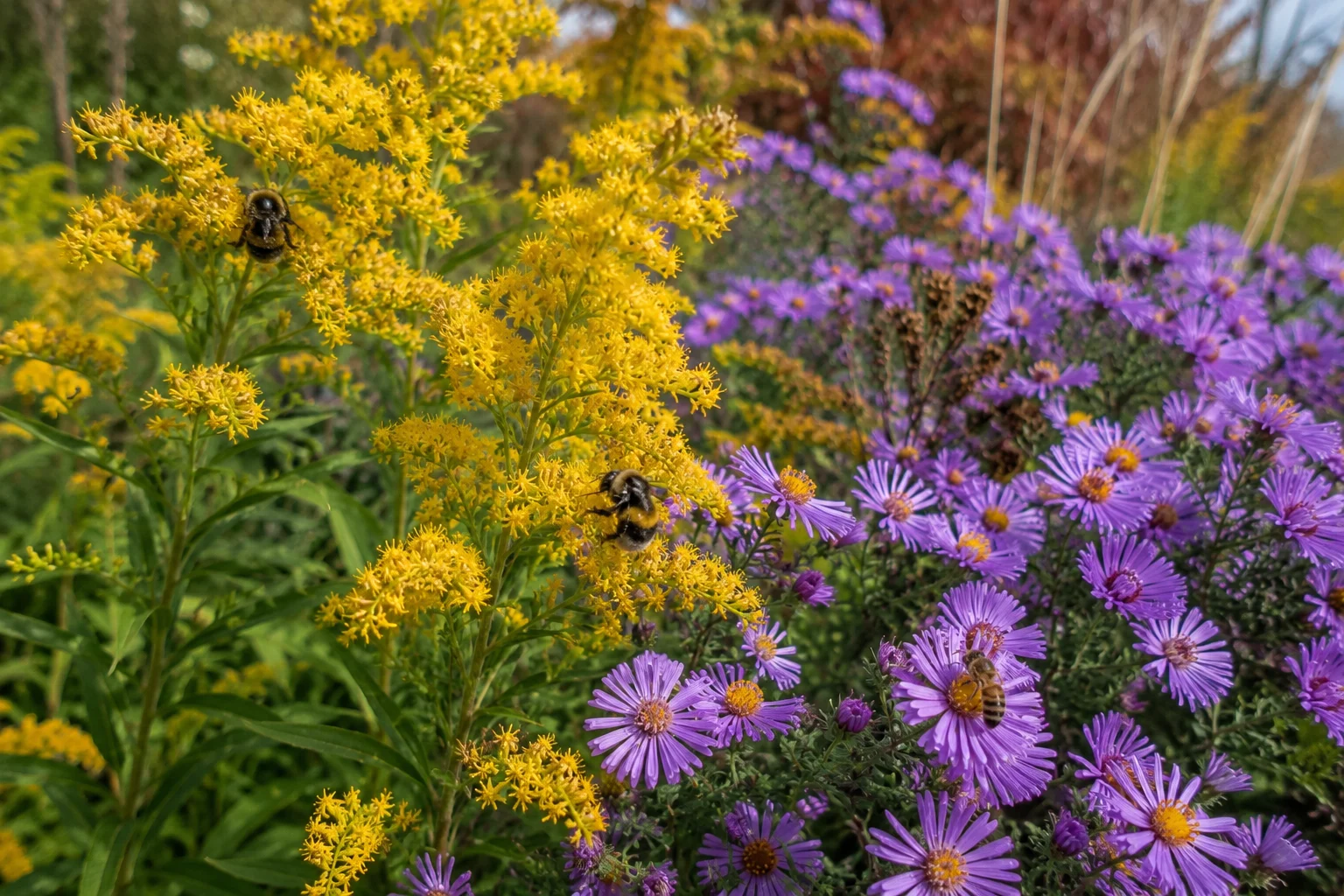
- Goldenrod (Solidago) — A major late-season pollen and nectar source for bees, despite an undeserved reputation for causing allergies (that’s actually ragweed, which blooms at the same time).
- New England aster (Symphyotrichum novae-angliae) — One of the last strong nectar sources of the year for bees and late-migrating butterflies.
- Sedum (‘Autumn Joy’ and similar) — Extremely reliable, drought-tolerant, and blooms right up to the first frost, drawing bees and butterflies alike.
For a deeper dive into extending bloom this late in the year, our autumn bee garden plant guide covers additional fall species beyond this list.
How to Turn This List Into an Actual Garden
A list of 23 plants is only useful if it turns into a workable layout rather than a scattered shopping cart. A few rules make the difference:
- Plant in groups of three to five, not single specimens — this is true regardless of which pollinator you’re targeting, since concentrated bloom is easier to find and forage efficiently.
- Pick at least one plant from each seasonal category (spring, summer, fall) before adding extras within a single season, so you’re not accidentally building another one-season garden.
- Layer by height, putting taller plants like Joe-Pye weed and trumpet vine toward the back or on a trellis, with lower plants like catmint and sedum toward the front.
- Group by sun and water needs, since drought-tolerant natives like coneflower and sedum don’t pair well with consistently moist-loving plants like cardinal flower.
If you’re designing the layout itself, not just picking plants, our backyard garden design guide covers the layout principles — curves, drifts, focal points — that make a bed like this look intentional rather than accidental.
A Few Plants to Use With Caution
Not everything marketed as a “pollinator plant” is a clean recommendation:
- Butterfly bush (Buddleia) feeds adult butterflies well but offers nothing for caterpillars and is classified as invasive in several regions — native alternatives like Joe-Pye weed or milkweed are a better long-term choice.
- Trumpet vine is genuinely excellent for hummingbirds but spreads aggressively by runners; give it firm boundaries or a large structure to climb.
- Highly double-flowered cultivars of otherwise good plants (double coneflowers, double zinnias) often trade away nectar and pollen accessibility for visual density — when buying, look for single-flowered varieties where possible.
Final Thoughts
The strongest pollinator gardens aren’t built from a random assortment of “bee-friendly” tags on plant labels — they’re built by matching the right plants to the right season and the right pollinator, then layering them so bloom overlaps rather than clusters into one short burst. Start with a spring anchor, build the body of the border with summer workhorses, add a few butterfly and hummingbird specialists based on what you most want to attract, and don’t skip fall. Do that with even eight or ten plants from this list, and you’ll have a garden doing far more work than one with all 23 planted without a plan.