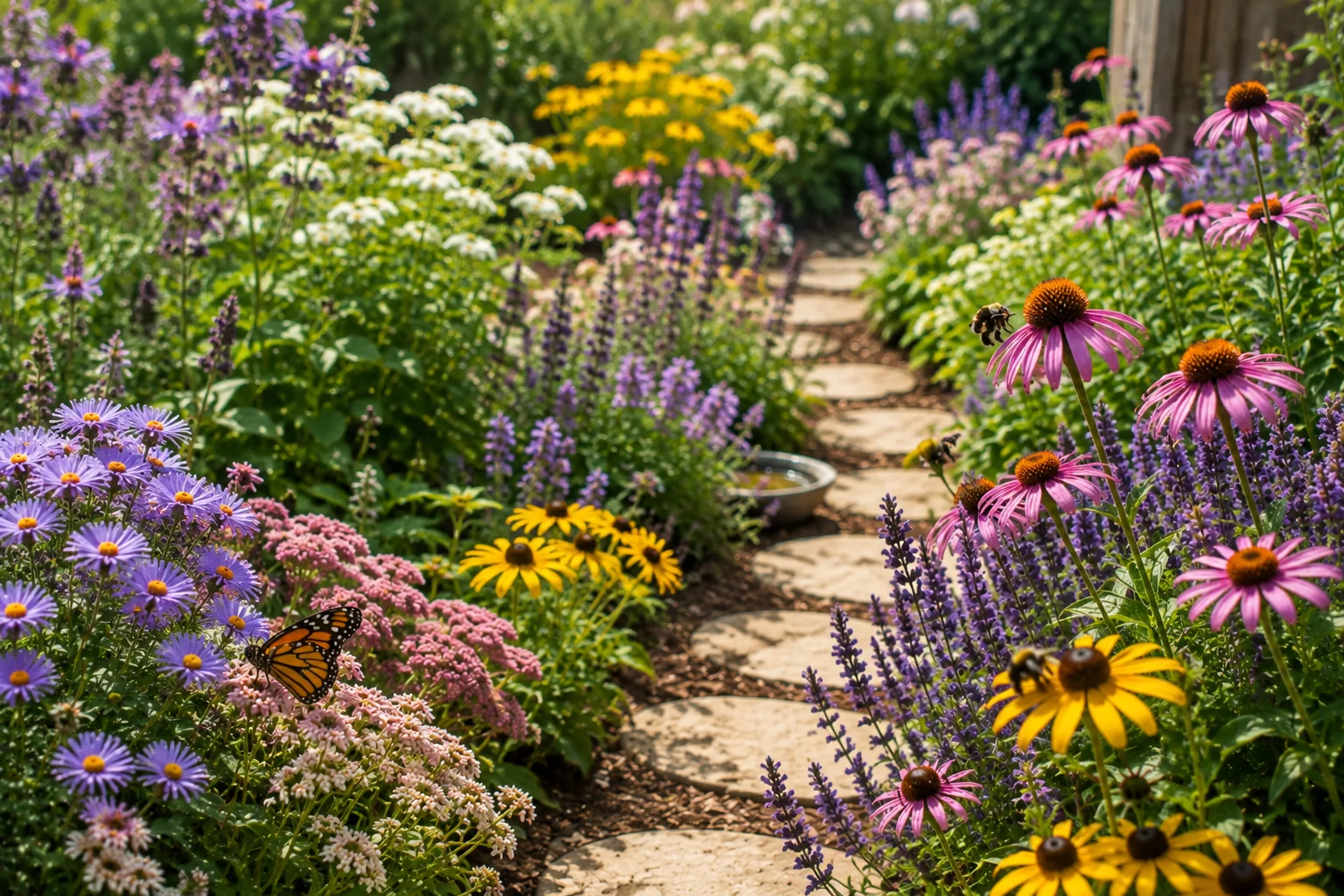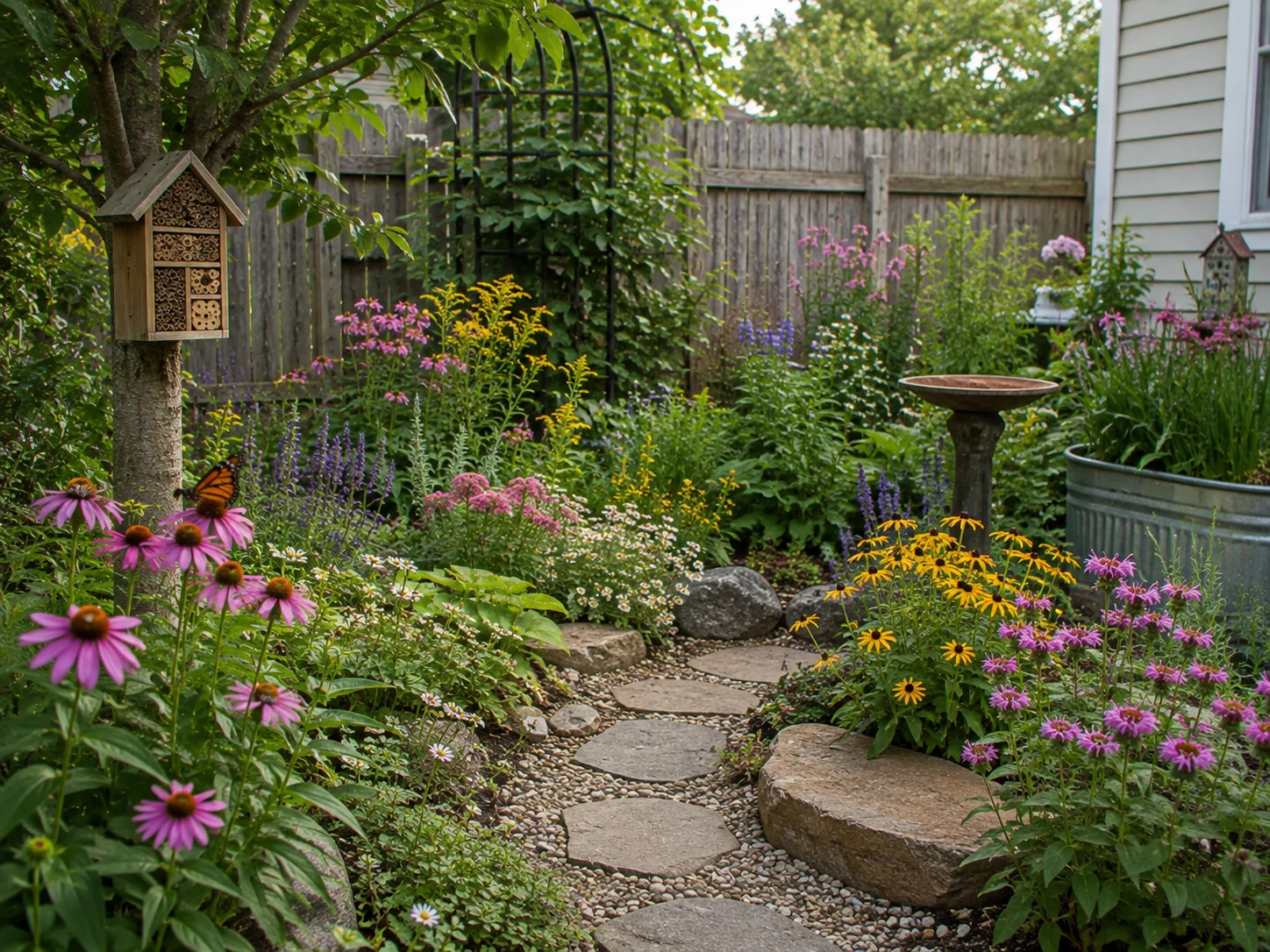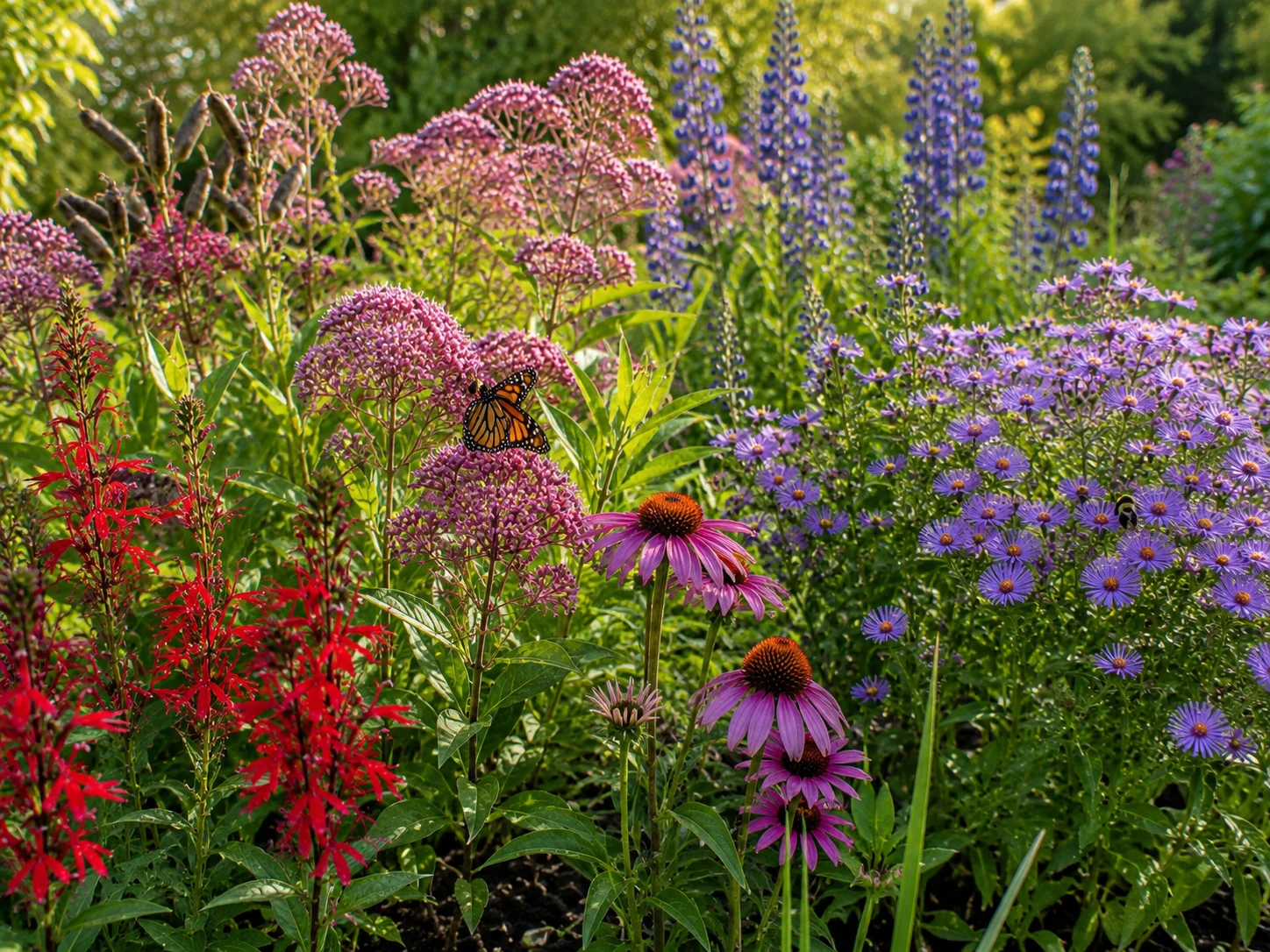

By late summer, many gardens look tired. Spring bulbs are long gone, early perennials have stopped blooming, and heat has left empty gaps across the border.
The fix is not more random planting. It is choosing flowers that naturally peak when the rest of the garden begins to fade.
The best late summer flowers bring fresh color, stronger structure, and valuable nectar for bees, butterflies, and hoverflies. This guide covers the most dependable choices, how to combine them, and how to keep them blooming longer.
Why Gardens Fade Too Early
Most late-summer problems begin in spring. Garden centers promote whatever is flowering, so people fill their beds with plants that peak in May and June. By August, almost everything finishes at once.
Other common mistakes include:
- Choosing too many plants with the same bloom period
- Scattering single plants instead of planting in groups
- Ignoring flower height and mature size
- Depending only on short-flowering perennials
- Forgetting annuals that bloom until frost
A strong garden should not deliver one brief explosion of color. It should move through a sequence, with one group taking over as another finishes.
The University of Minnesota Extension recommends planting nectar-rich flowers throughout the growing season and grouping them so pollinators can find them more easily.
15 Late Summer Flowers Worth Planting
1. Asters
Asters are among the best plants for carrying a border into autumn. Their daisy-like flowers appear in purple, blue, pink, and white when little else is blooming.
Plant tall varieties at the back and compact types near paths or containers. Most prefer sun, well-drained soil, and moisture during dry weather.
2. Goldenrod
Goldenrod adds bright yellow color and valuable late-season nectar.
It is often blamed for hay fever, but ragweed is usually the real source of airborne pollen. Goldenrod pollen is heavier and mainly carried by insects.
Choose a garden cultivar or locally suitable species because some forms spread aggressively.
learn why goldenrod is one of the most valuable autumn flowers.
3. Upright Sedum
Upright sedum is hard to beat for low-maintenance structure.
Its broad flower heads begin pale green or pink, then deepen into rose and brown. Even after flowering, the seedheads remain attractive through frost.
Sedum prefers sun, good drainage, and relatively lean soil. Too much fertilizer or shade can make it flop.
4. Black-Eyed Susan
Black-eyed Susans bring strong yellow color that remains visible from across the yard.
Use them in repeating clumps along a fence, path, or mixed border rather than planting one isolated specimen. Check the label because different Rudbeckia types may be annual, biennial, or perennial.
5. Helenium
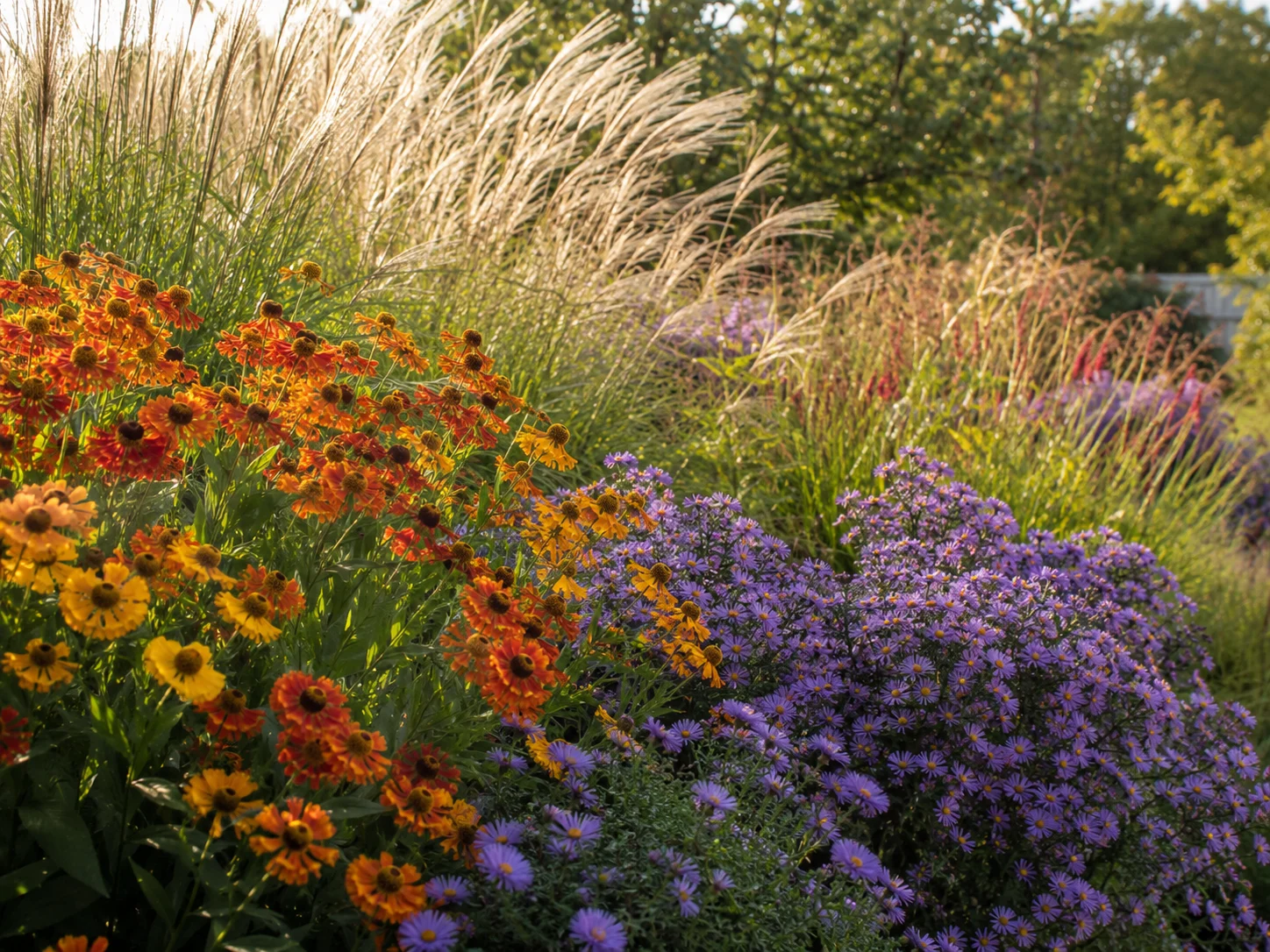
Helenium produces warm shades of yellow, orange, copper, and red. It is ideal for gardeners who want a richer late-summer palette.
It performs best in full sun and soil that does not dry out completely. Pair it with grasses, purple asters, and dark sedum.
6. Japanese Anemone
Japanese anemones are useful for borders with partial shade.
Their pink or white flowers rise above the foliage on elegant stems. They can spread once established, so give them room near shrubs, walls, or woodland-style planting.
7. Joe-Pye Weed
Joe-Pye weed is a bold choice for larger gardens.
Its tall stems carry large mauve-pink flower clusters. Plant it at the back of a border, near a pond, or along a fence. Compact cultivars are available for smaller spaces.
8. Verbena Bonariensis
Verbena bonariensis adds height without hiding the plants behind it.
Its thin stems and small purple flower clusters create a light, airy effect. It looks best woven through a border rather than planted in one solid block.
9. Perennial Salvia
Many salvias flower earlier, but cutting back faded stems can trigger a second flush.
Their upright spikes contrast beautifully with flat sedum heads and daisy-shaped asters. The Royal Horticultural Society recommends mixing flower shapes and bloom times to support more pollinators.
10. Agastache
Agastache produces upright flower spikes and aromatic foliage.
It performs well in sunny, well-drained borders and handles heat once established. Avoid heavy, wet soil, especially in winter.
11. Single-Flowered Dahlias
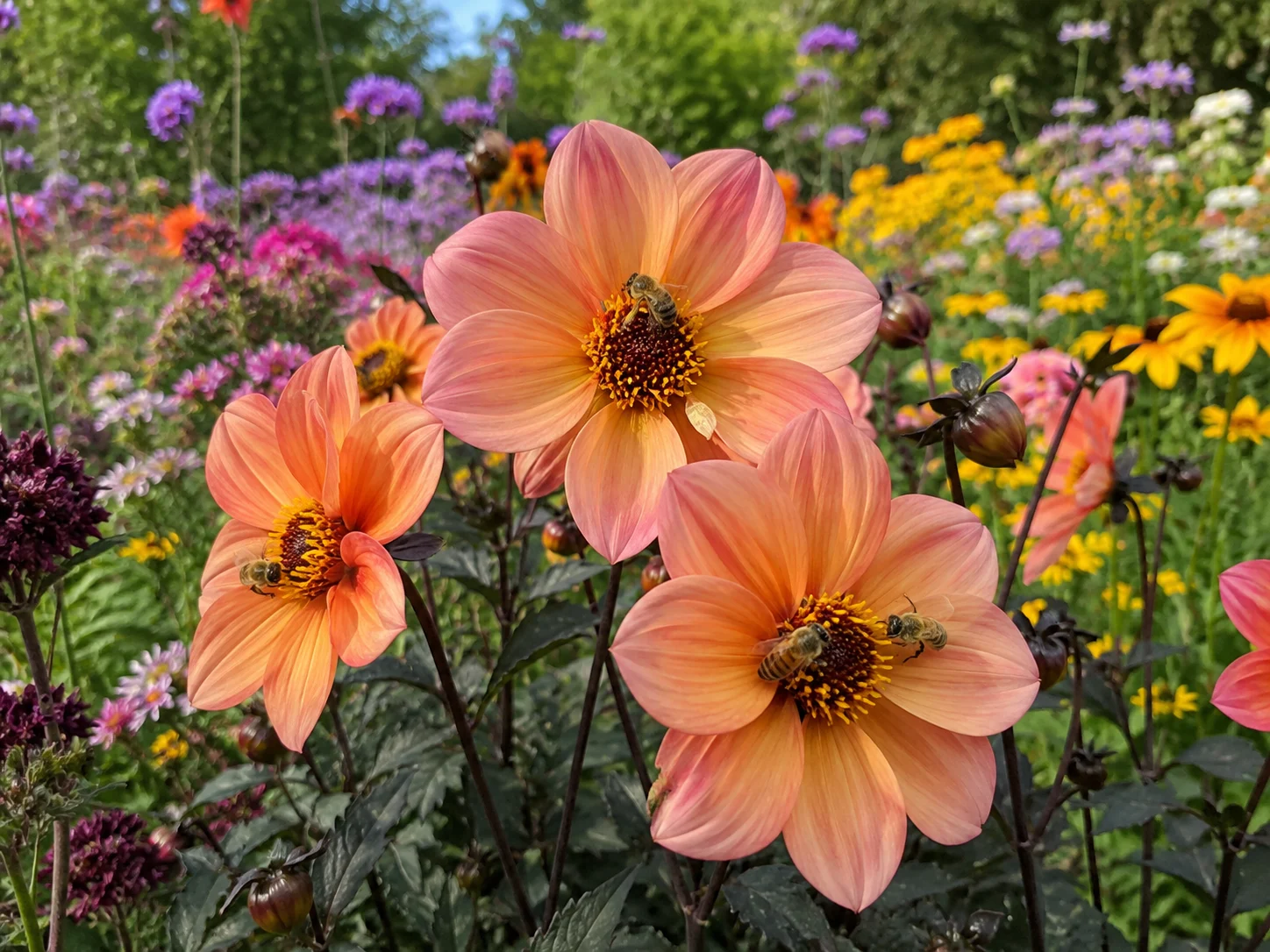
Dahlias can bloom from midsummer until frost when deadheaded regularly.
Single and open-centered types are more accessible to bees than heavily doubled forms. They need sun, rich soil, regular water, and more care than sedum or goldenrod.
12. Zinnias
Zinnias are one of the fastest ways to fill late-summer gaps.
They grow easily from seed, tolerate heat, and continue blooming when cut or deadheaded. Use them in sunny borders, raised beds, vegetable gardens, or large containers.
13. Cosmos
Cosmos adds movement and height without making the garden feel crowded.
Its open flowers rise above soft foliage and keep blooming when deadheaded. Avoid overfeeding, because rich soil can produce leaves instead of flowers.
14. Branching Sunflowers
Branching sunflowers produce multiple flowers over a longer period than single-stem varieties.
Use them to hide a plain fence, add temporary height, or fill the back of a new border. Leave some seedheads standing for texture and bird food.
15. Hardy Chrysanthemums
Hardy chrysanthemums provide reliable late color, but many cheap store-bought pots are treated like disposable decorations.
Choose plants with unopened buds and check whether the variety is hardy in your climate. Plant them early enough to establish roots before winter.
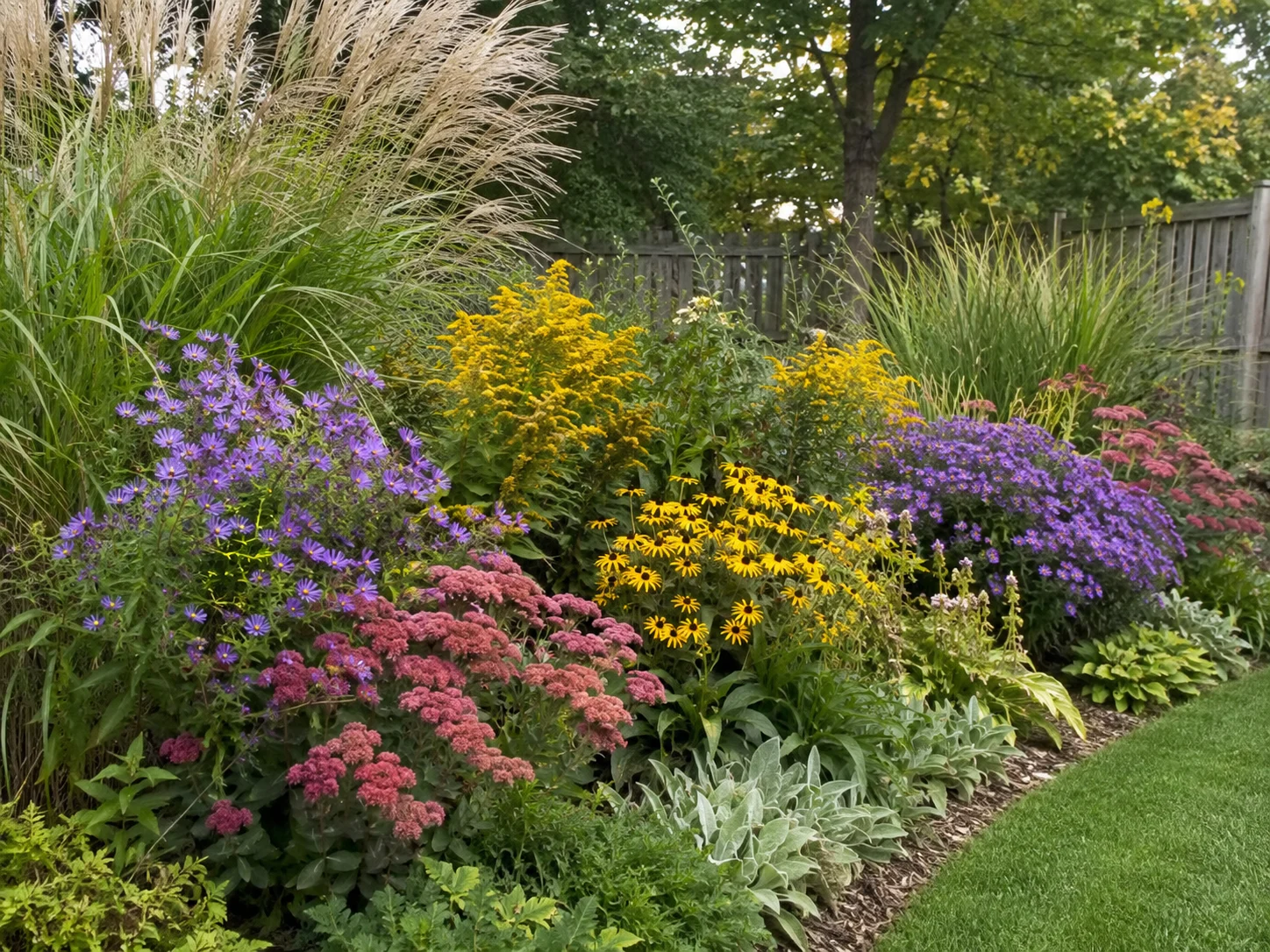
How to Design a Late Summer Border
Buying one of everything is not design. It usually creates a messy border with no clear structure.
Use a simple three-layer plan:
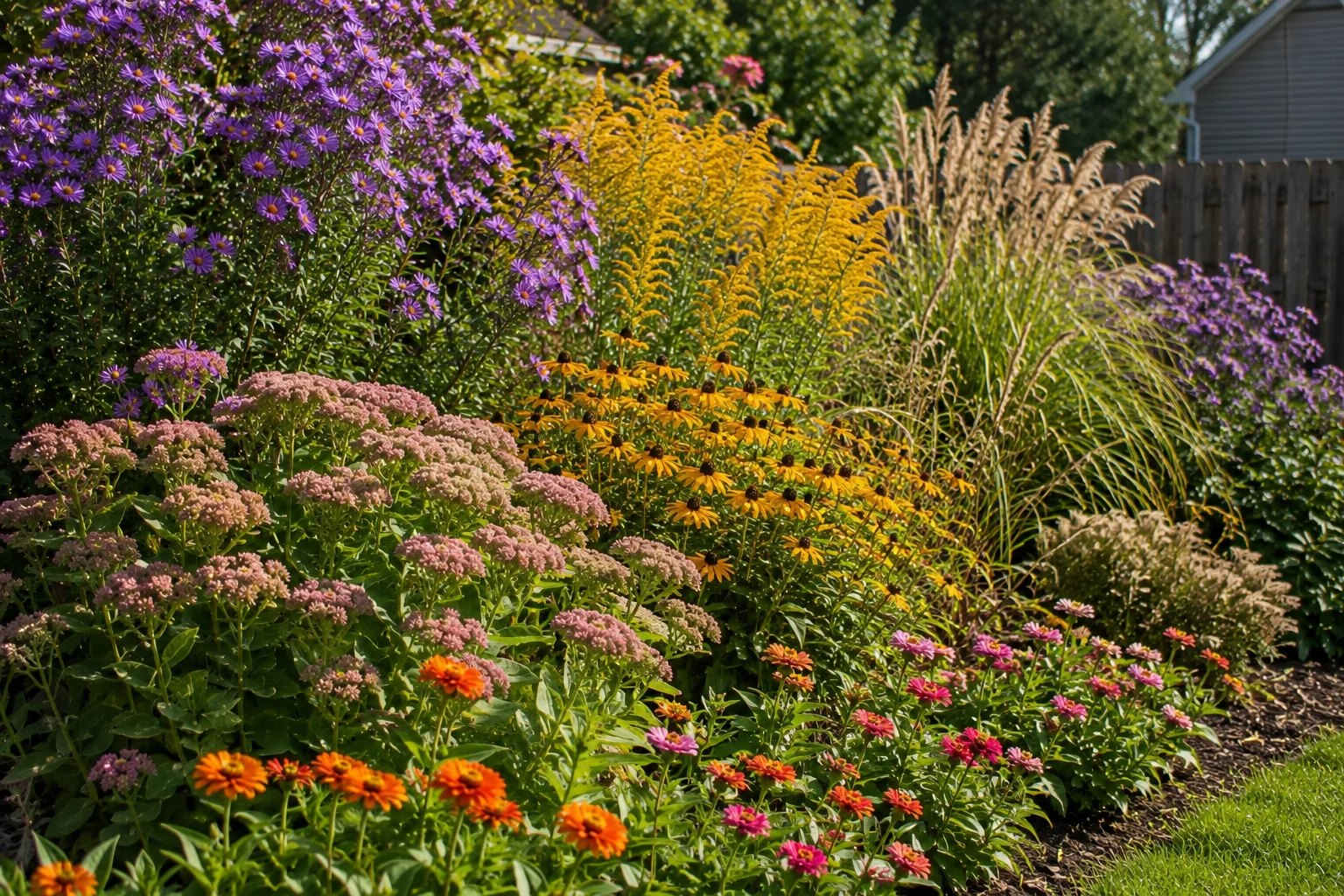
- Back: Tall asters, Joe-Pye weed, sunflowers, or verbena
- Middle: Goldenrod, helenium, rudbeckia, or dahlias
- Front: Sedum, compact salvia, dwarf asters, or zinnias
Repeat the same plants or colors along the border. Repetition makes a garden look intentional and helps pollinators locate flowers.
A reliable beginner combination is:
- Purple asters
- Yellow goldenrod
- Pink sedum
- One ornamental grass
- A few zinnias
That is enough. Stuffing fifteen different plants into one small bed will look chaotic.
plan flowers that bloom from spring through autumn.
How to Keep Late Summer Flowers Blooming Longer
Deadhead Selectively
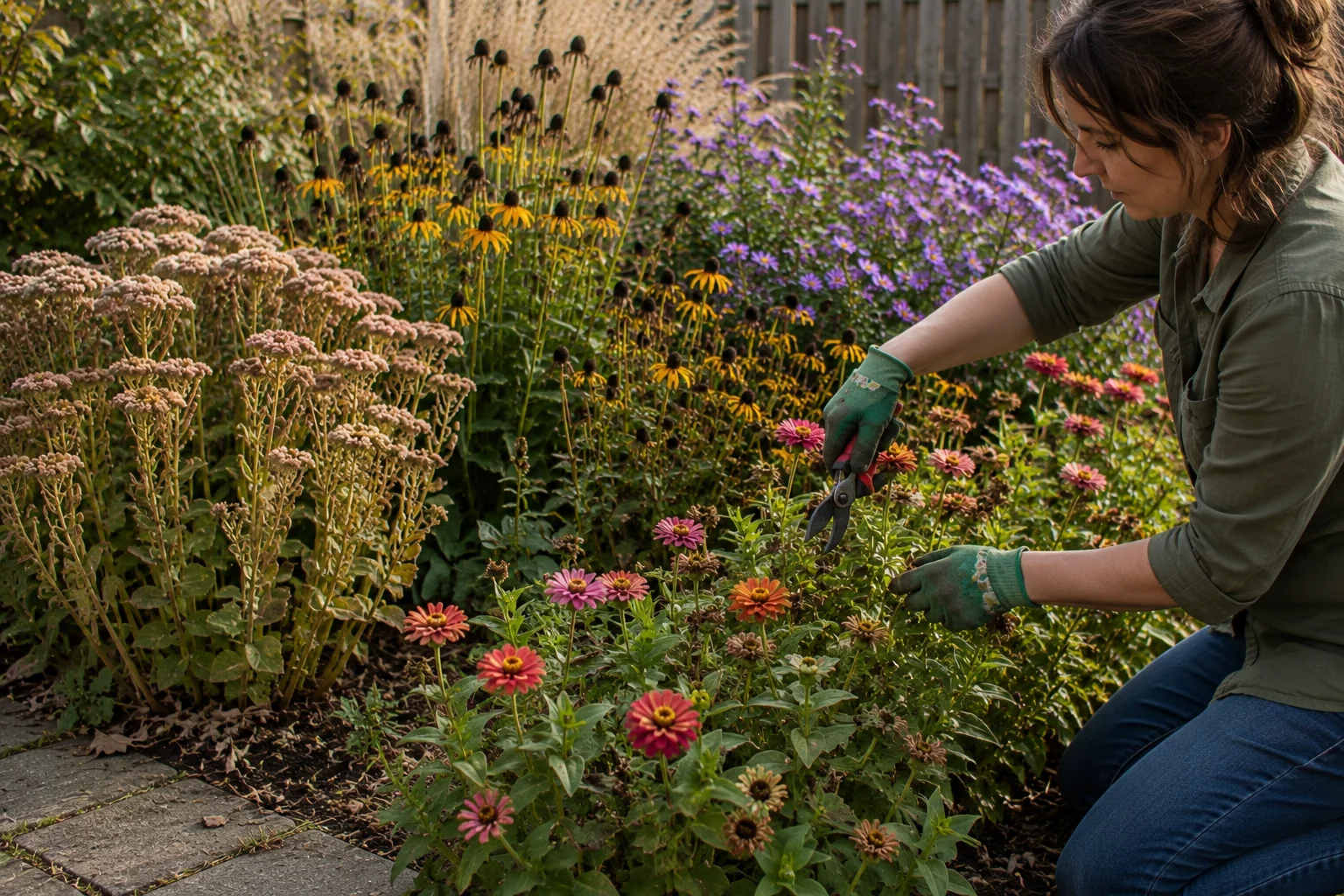
Remove faded flowers from dahlias, zinnias, cosmos, salvias, and some rudbeckias. However, leave strong sedum, aster, sunflower, and rudbeckia seedheads for autumn structure.
Water Deeply
Deep watering encourages stronger roots. Frequent shallow watering leaves roots near the surface, where they dry quickly. Containers need more attention because they lose moisture faster.
Avoid Too Much Fertilizer
Excess nitrogen creates lush leaves and weak stems instead of more flowers. Use compost and feed only when needed.
Mulch Carefully
Mulch helps retain moisture and suppress weeds, but piling it against stems and crowns can encourage rot.
Reduce Broad-Spectrum Sprays
Do not spray an entire border because a few leaves have holes. Identify the pest first and use the most targeted treatment possible.
Best Choices for Different Conditions
Hot, Dry, Sunny Borders
Choose sedum, agastache, goldenrod, rudbeckia, zinnias, and Verbena bonariensis.
Partial Shade
Try Japanese anemone, shade-tolerant asters, late-flowering phlox, and turtlehead.
Containers and Small Patios
Use dwarf asters, compact sedum, salvia, dwarf dahlias, zinnias, and hardy chrysanthemums.
Choose fewer large pots rather than many tiny containers. Bigger pots hold moisture longer and create a stronger visual impact.
build a pollinator-friendly display in pots and small spaces.
Conclusion
A garden that fades in August is not finished. It is simply missing the next wave of flowers.
Asters, goldenrod, sedum, rudbeckia, helenium, salvias, zinnias, and dahlias can keep borders colorful into autumn. The key is to choose a limited palette, repeat plants in groups, and combine different heights and flower shapes.
Start with three dependable plants rather than fifteen random ones. That simple change will create a garden that looks fuller, lasts longer, and remains useful after the main summer display has disappeared.