
Most gardeners think fall cleanup is simple.
Cut everything down. Rake every leaf. Bag the mess. Make the garden look “finished” before winter.
That looks tidy, but it can be a disaster for bees.
The biggest fall garden cleanup mistake that hurts bees is removing every dead stem, seedhead, leaf pile, and messy corner before winter. What looks like waste to you can be shelter, nesting material, insulation, or future food for pollinators.
This does not mean your garden has to look abandoned. That is lazy advice. The smarter move is selective cleanup: clear the places that need clearing, but leave enough structure for insects and wildlife to survive the cold months.
The Royal Horticultural Society’s Plants for Pollinators guidance recommends avoiding pesticides, providing water, leaving nesting sites such as bare soil for solitary bees, and choosing open flowers with accessible pollen and nectar.
Fall cleanup should follow the same idea: do the useful work, not the destructive work.
Why Fall Cleanup Matters for Bees
When people talk about helping bees, they usually think about flowers.
That matters, but it is only half the story.
Bees also need:
- Shelter
- Nesting sites
- Overwintering habitat
- Bare soil
- Hollow or pithy stems
- Leaf litter
- Undisturbed garden edges
- Late-season flowers
- Clean water
Honey bees live through winter as a colony inside the hive, but many wild bees do not. Solitary bees, bumblebee queens, moths, butterflies, beetles, and other beneficial insects may use leaves, soil, stems, logs, or quiet corners to survive.
If you strip the whole garden bare in autumn, you are not “putting the garden to bed.” You are removing the blanket.
Better Homes & Gardens’ guide on why you should delay yard cleanup explains that dried leaves and stems can be essential habitat for beneficial insects, including native bees, butterflies, fireflies, and lady beetles.
The Big Mistake: Cutting Everything Back Too Early
The worst fall cleanup habit is cutting every perennial down to the ground as soon as it turns brown.
That includes plants like:
- Asters
- Goldenrod
- Coneflowers
- Rudbeckia
- Sedum
- Joe-Pye weed
- Sunflowers
- Ornamental grasses
- Hollow-stemmed perennials
- Native wildflowers
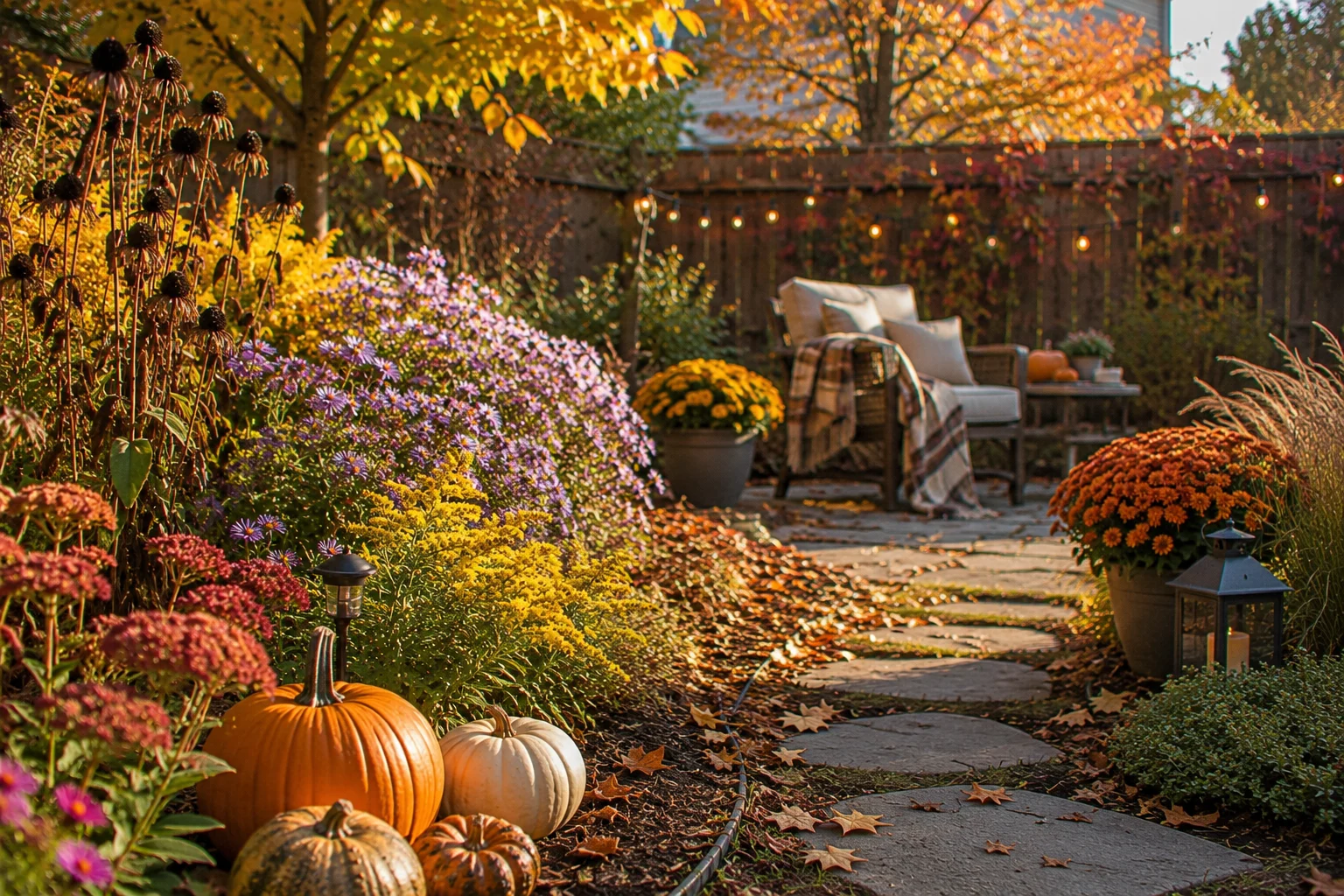
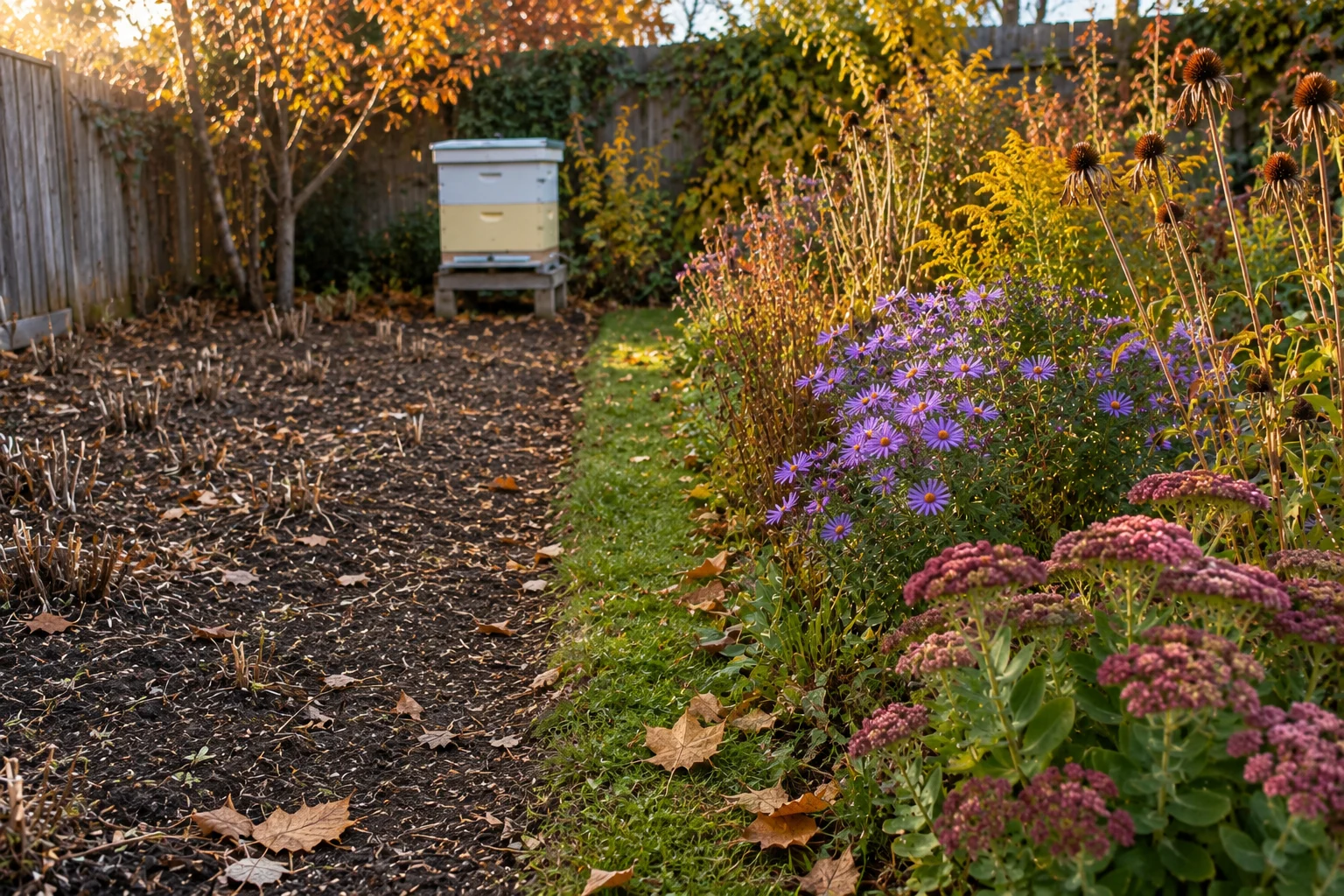
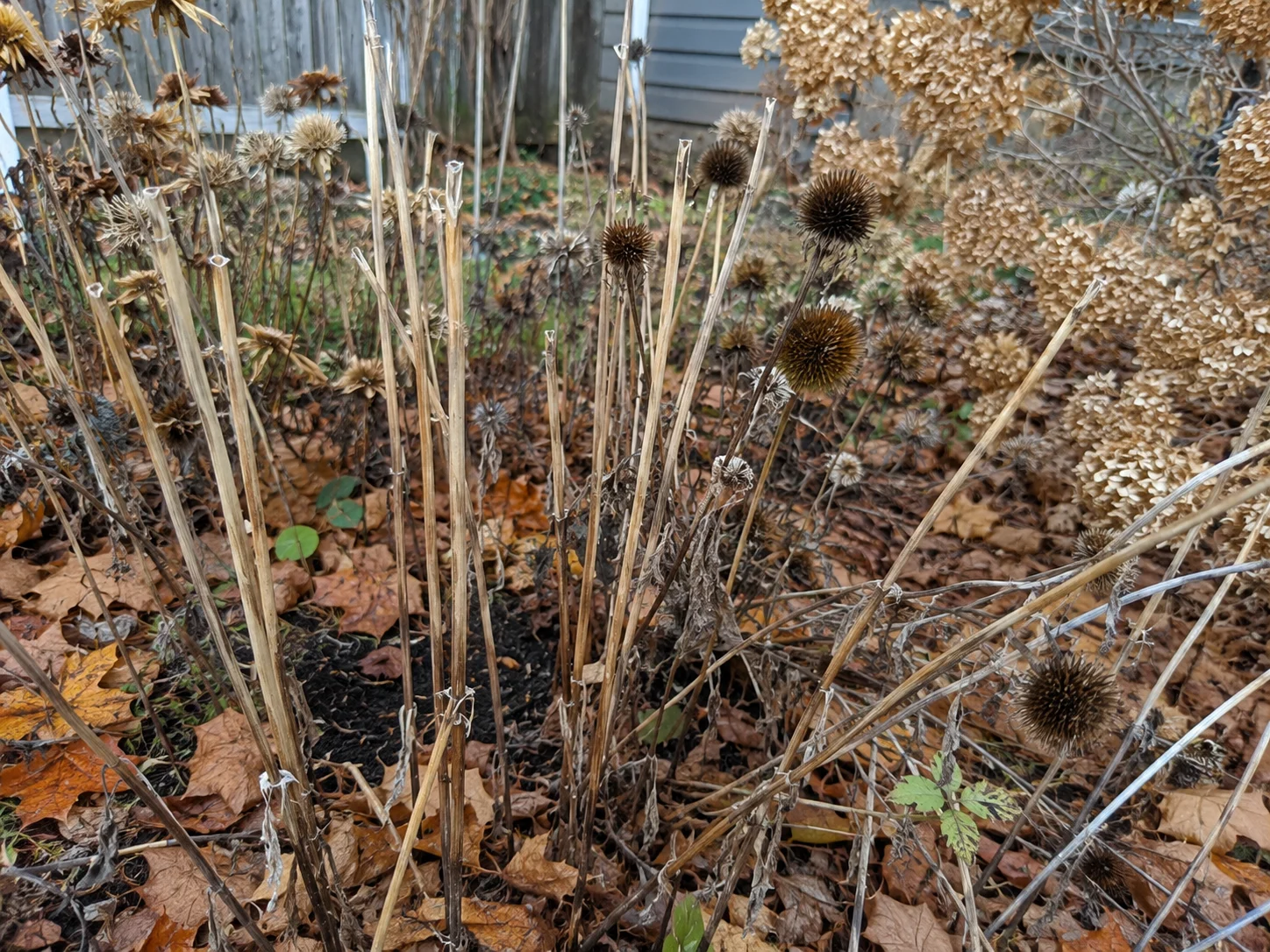
Some of those stems may be used by insects. Some seedheads feed birds. Some dried structure protects plant crowns. Some leaf litter shelters overwintering wildlife.
A bare garden might look clean to humans, but to pollinators it can mean fewer places to survive until spring.
If you already planted late-season flowers, do not ruin the benefit by cutting everything down the second the blooms fade. read our guide Autumn Bee Garden guide . It covers the late-season blooms that provide nectar and pollen before winter.
What You Should Leave Standing
You do not need to leave every dead plant untouched, but you should keep the most useful structure.
Leave some:
- Hollow stems
- Pithy stems
- Seedheads
- Standing grasses
- Dried flower stalks
- Late-blooming flowers
- Leaf litter under shrubs
- Small brush or twig piles
- Undisturbed soil patches
The key word is some.
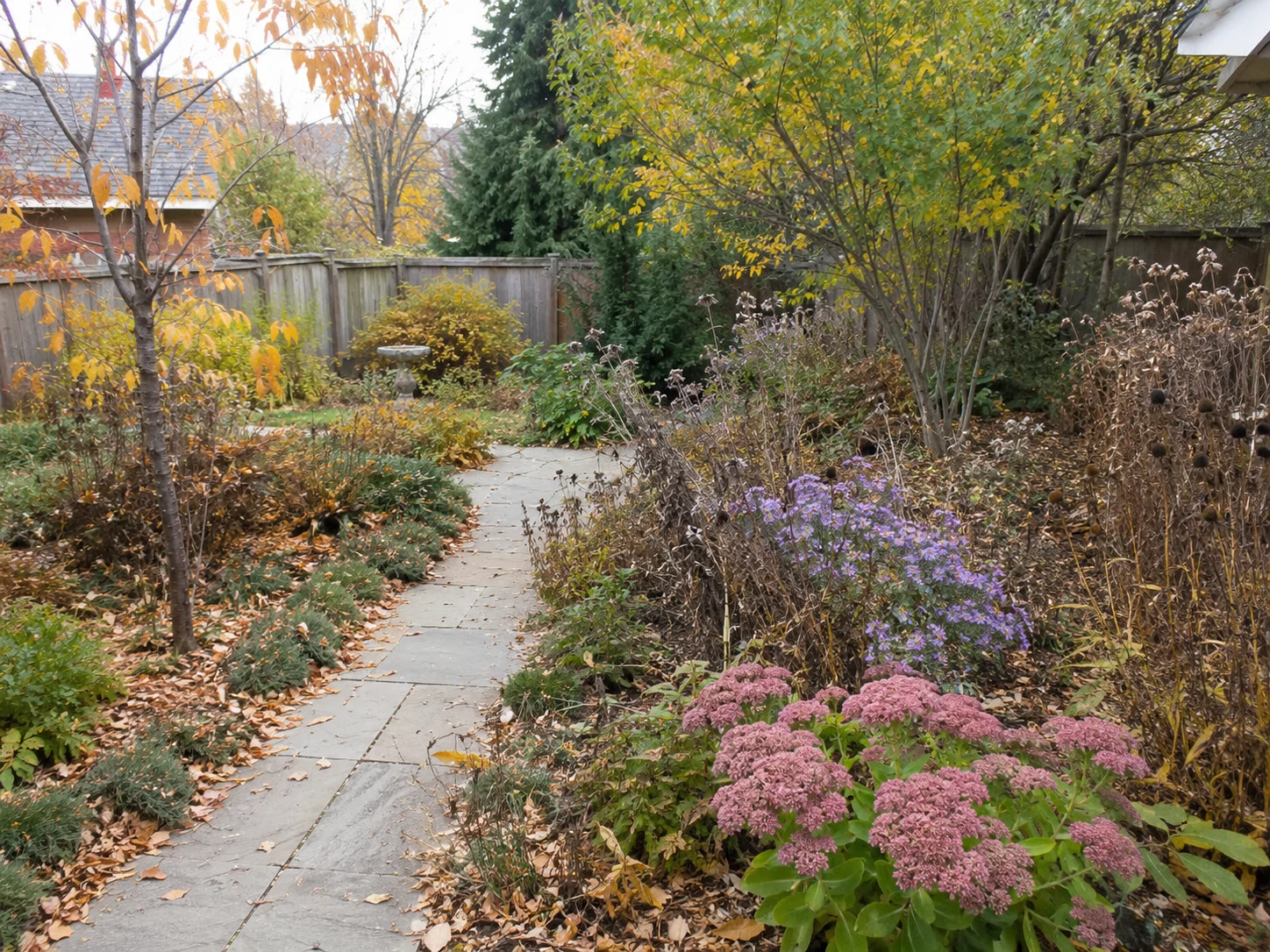
A garden can be both tidy and wildlife-friendly if you choose zones.
For example:
- Front path: cleared
- Lawn: mostly cleared
- Patio: cleared
- Back border: partly left standing
- Under shrubs: leaves left as mulch
- Wildlife corner: mostly untouched
- Diseased plants: removed
That is the difference between smart cleanup and lazy mess.
What You Should Cut Back
Do not turn this into a fake rule that “all dead plants must stay.”
That is bad gardening.
You should remove:
- Diseased foliage
- Mildewed plant material
- Pest-infested stems
- Rotting vegetable crops
- Collapsed plants blocking paths
- Wet leaves smothering lawn
- Anything touching timber structures where damp could cause problems
- Aggressive self-seeders you do not want everywhere
If a plant had serious disease, do not leave it standing for wildlife. Remove it and dispose of it properly. Do not compost diseased material unless your composting system gets hot enough to break down pathogens.
A bee-friendly garden still needs judgement.
The Leaf Mistake: Bagging Every Fallen Leaf
Leaves are not rubbish.
They are free mulch, soil food, and winter shelter.
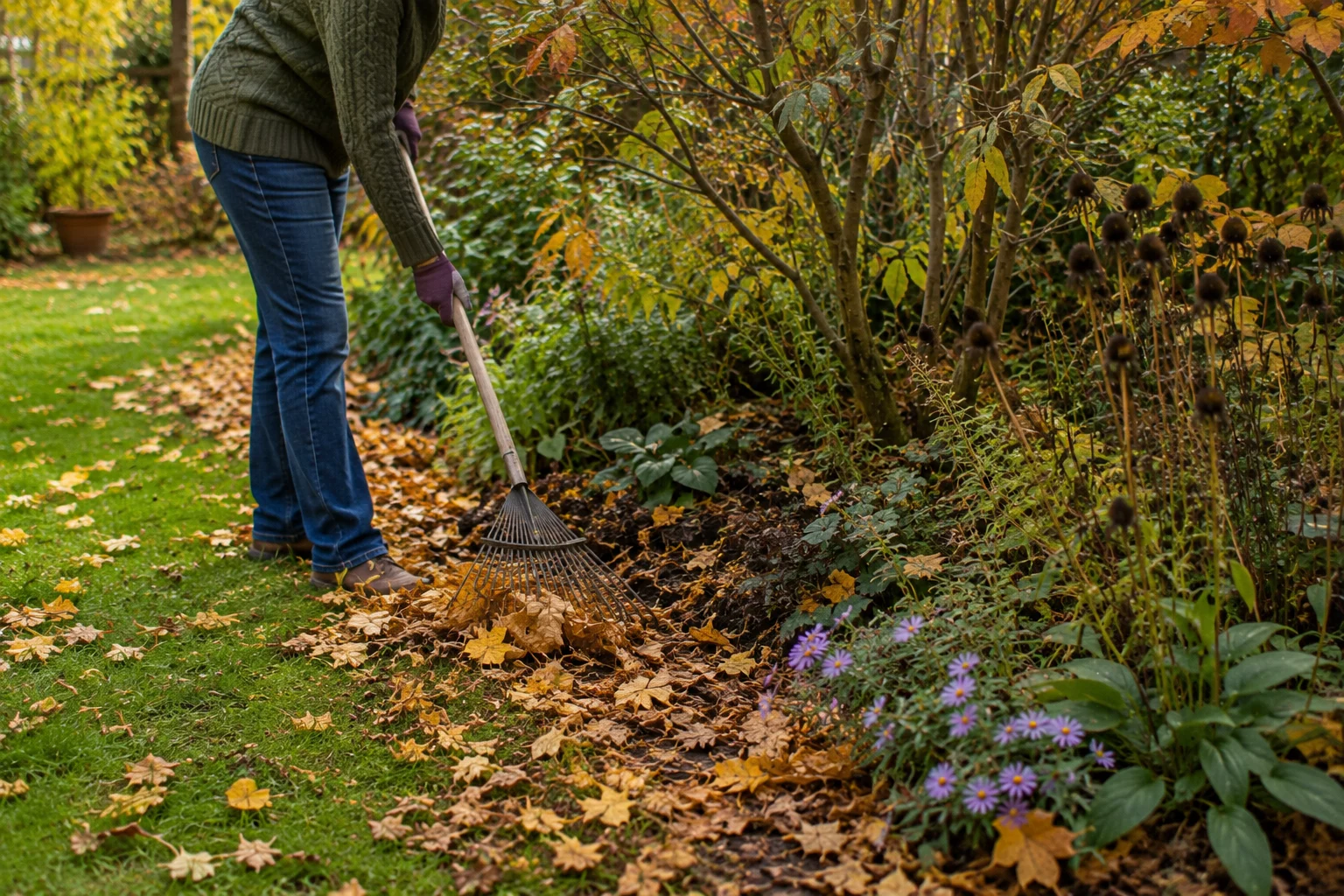
The mistake is raking every leaf into bags and sending it away. That removes organic matter from your garden and can destroy overwintering habitat.
Better options:
- Rake leaves off paths for safety
- Remove thick leaf mats from lawns
- Move leaves into borders
- Pile leaves under shrubs
- Use leaves around trees
- Make leaf mould
- Add some leaves to compost
- Leave a quiet leaf pile in a back corner
Do not leave a heavy wet blanket of leaves on grass and pretend that is ecological genius. It can smother the lawn. The smarter move is to move leaves from the wrong place to the right place.
Why Hollow Stems Matter
Some solitary bees use hollow or soft plant stems for nesting or shelter. Others use existing holes, dead wood, bare ground, or old plant structure.
That means a stem that looks dead may not be useless.
A better fall cleanup method is:
- Leave many stems standing through winter.
- In spring, wait until temperatures are reliably warmer.
- Cut stems high instead of cutting flush to the ground.
- Leave cut stems loosely in a quiet corner if possible.
- Let new growth hide the old structure naturally.
Do not overthink it. You are not building a museum exhibit for insects. You are simply leaving more habitat than a scalped garden provides.
The “Tidy Border” Compromise
If you hate messy gardens, use the tidy-border method.
Here is how it works:
- Cut only the front edge of the border.
- Leave taller stems standing toward the back.
- Rake leaves off the lawn into the bed.
- Keep paths and patios clean.
- Use logs, stones, or edging to make leaf areas look intentional.
- Leave one corner untouched until spring.
This gives you a garden that looks managed without turning it into a dead zone.
A clean edge changes everything. People forgive a wilder bed when the border has a clear shape.
Do Not Remove Late Flowers Too Soon
Fall cleanup often begins while useful flowers are still blooming.
That is backwards.
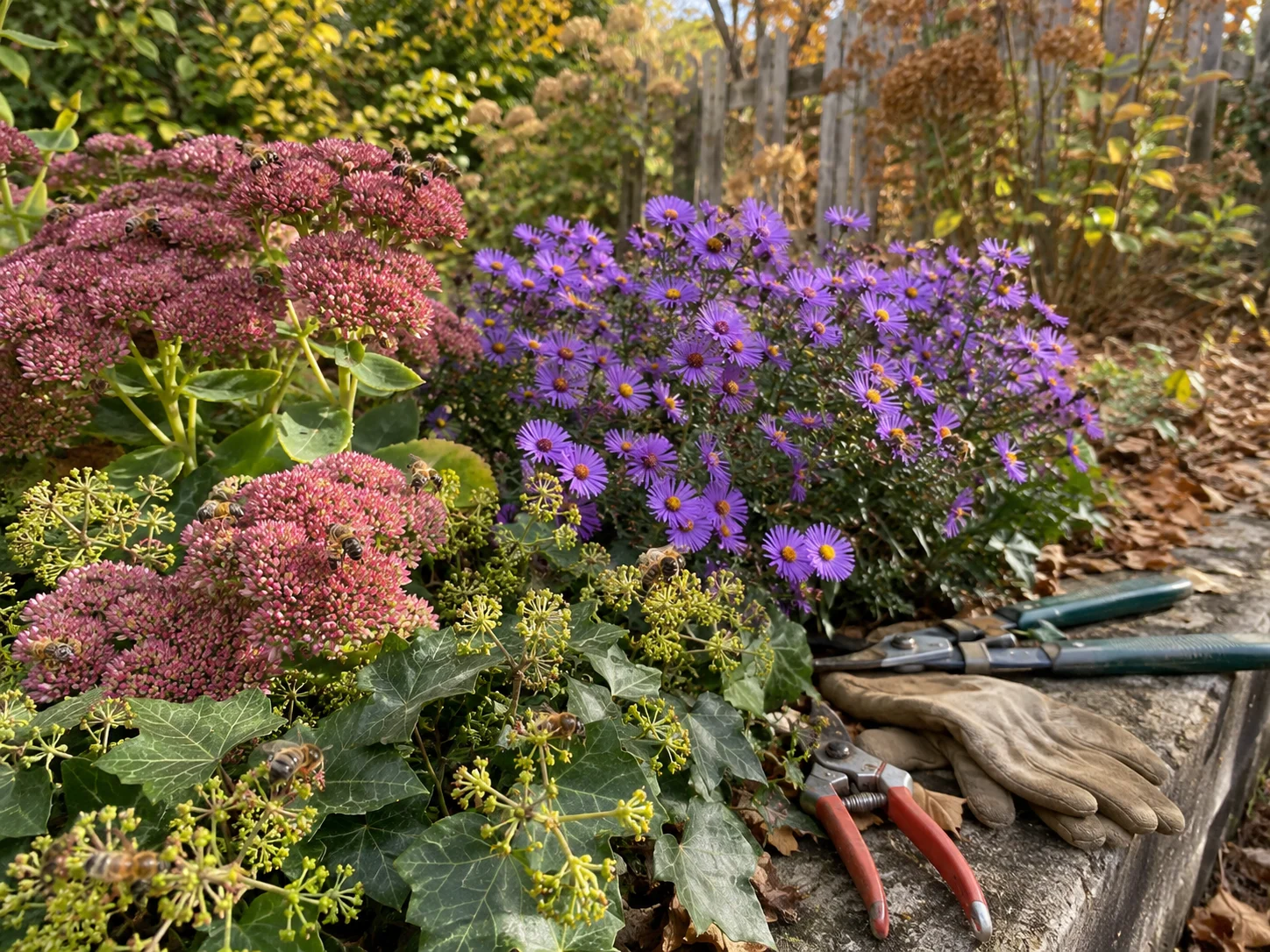
If asters, sedum, ivy, salvia, goldenrod, helenium, fuchsia, or open dahlias are still being worked by bees, leave them alone. Late flowers can provide nectar and pollen when many gardens are already empty.
The RHS guide to top plants for autumn pollinators highlights several late-season plants, including sedum, fuchsia, ivy, salvias, honeysuckle, helenium, Michaelmas daisies, oleaster, hardy plumbago, and devil’s-bit scabious.
If you want to plan the planting side properly, read our guide to autumn bee garden flowers, which covers the best late-season blooms to keep nectar and pollen available before winter.
Fall Cleanup Rules for Beekeepers
If you keep backyard bees, fall cleanup has an extra layer.
You are not only managing a garden. You are managing the environment around the hive.
Keep the area immediately around the hive practical:
- Keep the hive entrance clear
- Remove tall wet grass in front of the landing board
- Keep inspection space accessible
- Remove trip hazards
- Keep water available if weather is dry
- Do not pile leaves against hive stands
- Do not create damp vegetation pressed against equipment
But outside the working zone, leave more habitat.
Your apiary does not need to look sterile. It needs to be safe, dry, accessible, and useful.
For planting around the apiary, our guide to the best plants to grow near a backyard beehive explains how to build seasonal forage with herbs, shrubs, flowers, water, and practical hive spacing.
What About Lawn Cleanup?
Lawns need a different approach.
A thick layer of leaves can block light, trap moisture, and damage grass. But that does not mean every leaf has to leave the property.
Use this rule:
- Leaves on paths: clear them
- Leaves on patios: clear them
- Thick leaves on lawn: move them
- Leaves under shrubs: leave them
- Leaves in borders: usually helpful
- Leaves in one quiet corner: excellent
If you want to make your lawn more bee-friendly without letting it turn into a mess, read our guide to No-Mow May. It explains what to let grow, what to remove, and how to keep pollinator areas looking intentional.
The Best Fall Cleanup Plan for Bees
Use this simple plan.
Step 1: Remove Problems First
Clear anything diseased, dangerous, slippery, rotten, or blocking access.
That includes paths, steps, hive working areas, and diseased plant material.
Step 2: Protect Late Flowers
Leave anything still blooming until it is finished.
Do not cut flowers that bees are actively using.
Step 3: Leave Stems in Groups
Choose sections of the border where stems can stand through winter.
Do not leave one random stem every few metres. Groups create better shelter and look more intentional.
Step 4: Move Leaves Into Beds
Rake leaves from lawns and paths into garden beds, shrub borders, or a quiet wildlife corner.
Step 5: Save the Big Cleanup for Spring
Do a lighter autumn tidy and a more careful spring cleanup after insects have had time to emerge.
What Not to Do
Avoid these mistakes:
- Cutting every perennial to the ground
- Bagging every leaf
- Removing ivy before it flowers
- Deadheading every seedhead
- Using pesticides during cleanup
- Blowing leaves out of every border
- Mulching heavily over bare soil used by ground-nesting bees
- Clearing every corner of the garden
- Removing late flowers while bees are still visiting them
This is not complicated. Stop treating every brown stem like trash.
Quick Checklist: Bee-Friendly Fall Cleanup
Before you finish the garden for winter, ask:
- Did I leave some hollow stems?
- Did I leave some seedheads?
- Did I move leaves into beds instead of bagging all of them?
- Did I keep late flowers standing?
- Did I avoid pesticides?
- Did I leave one quiet corner?
- Did I keep hive access clear?
- Did I remove diseased material?
- Did I avoid smothering the lawn?
- Did I save some cleanup for spring?
If the answer is yes, your garden is already doing more for bees than most “perfect” yards.
Final Takeaway
The fall garden cleanup mistake that hurts bees is not cleaning up.
It is cleaning up too much.
A good autumn garden does not need to be messy everywhere. It needs managed mess: clean paths, healthy plants, removed disease, clear hive access, and enough stems, leaves, seedheads, flowers, and quiet corners to support wildlife through winter.
Cut less. Leave more. Move leaves instead of trashing them. Keep late flowers until they are finished.
Your garden will still look cared for — but it will also keep working for bees after summer is over.
Keep Reading
Build a stronger bee-friendly garden with these related Honey Road guides: