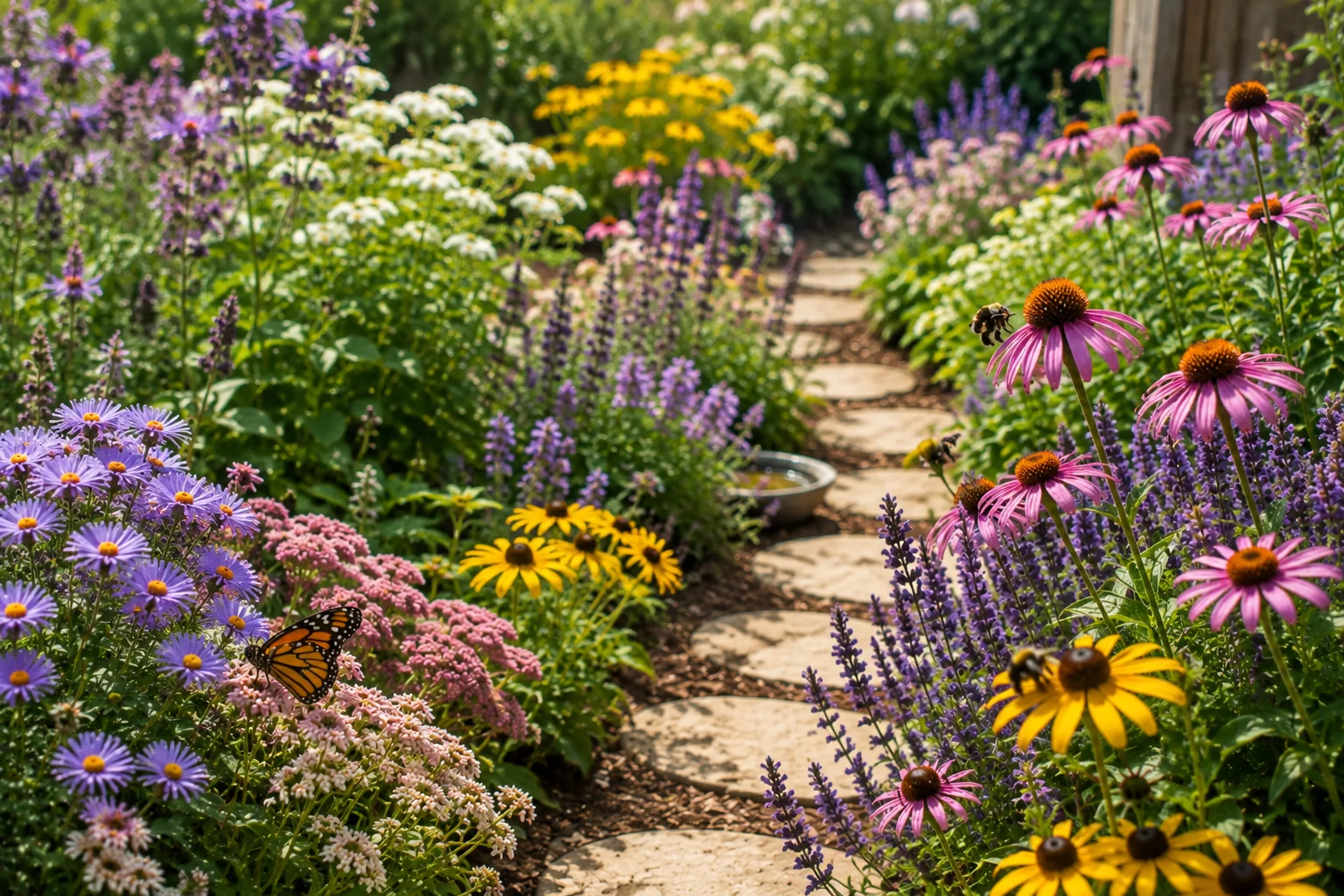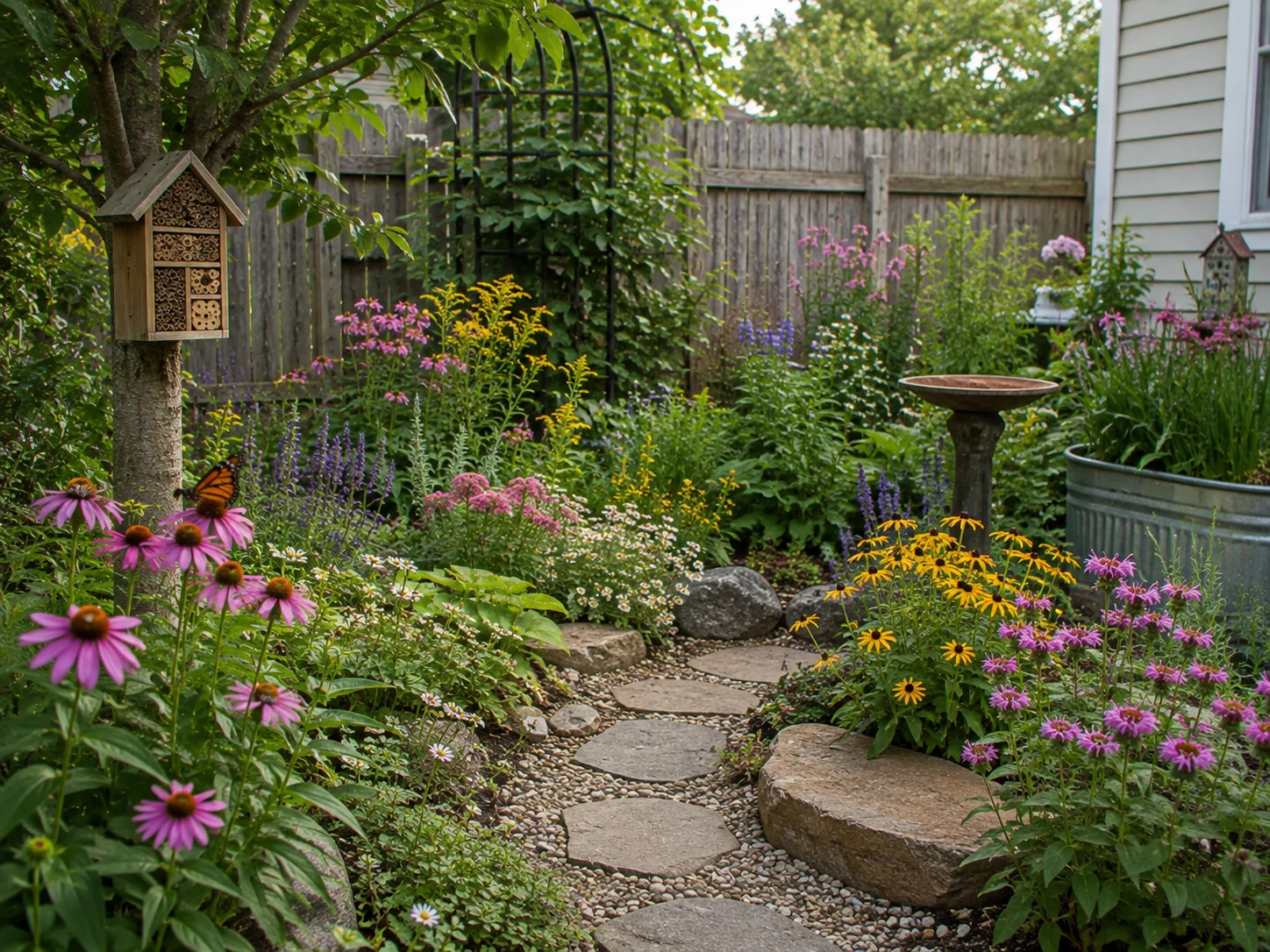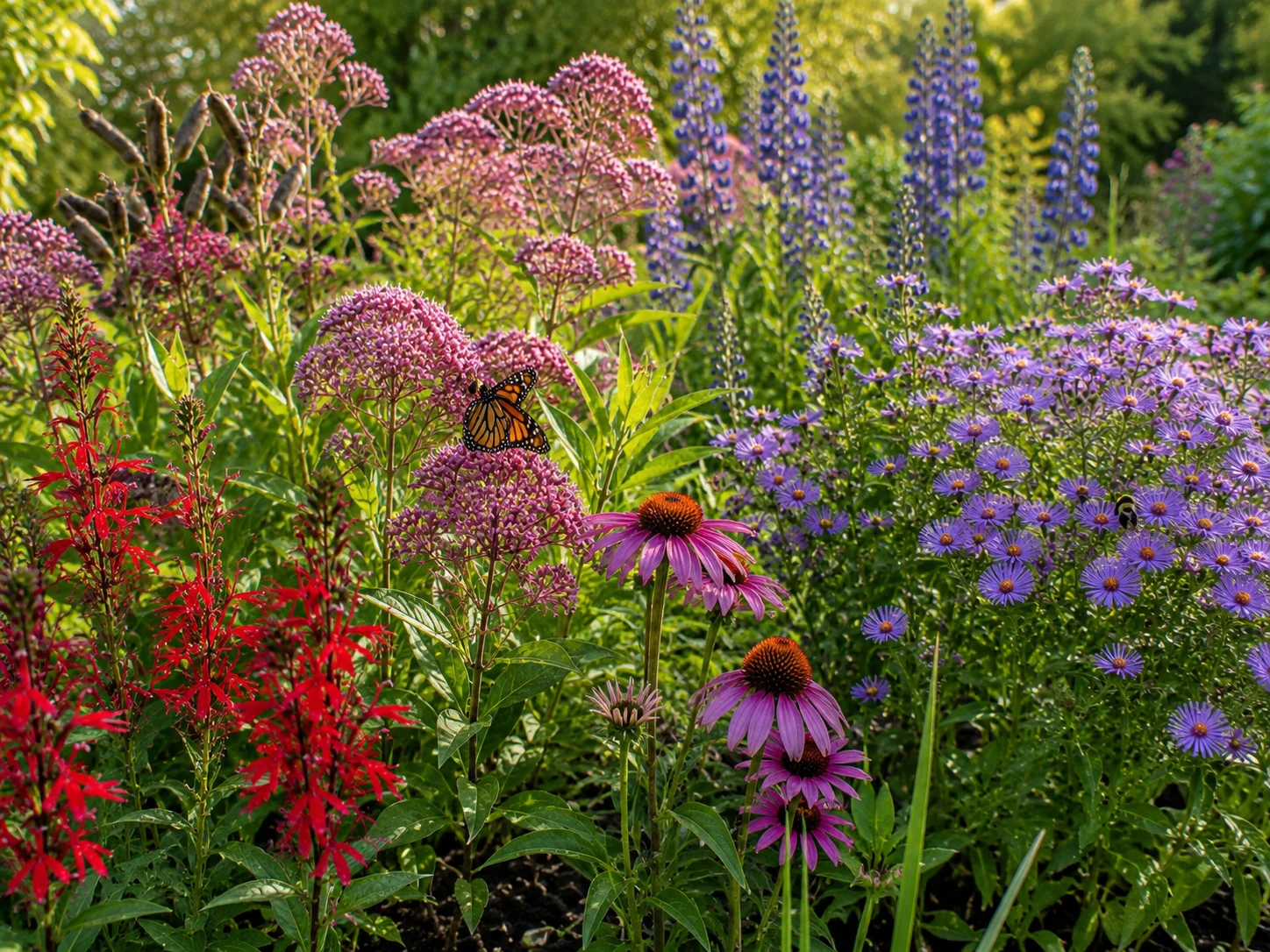

Your garden is not just a picture.
To bees, it is a living map of scent, color, memory, sunlight, and reward. Long before a honey bee lands on a flower, it may already be reading chemical signals drifting through the air.
That is the hidden layer most gardeners never think about.
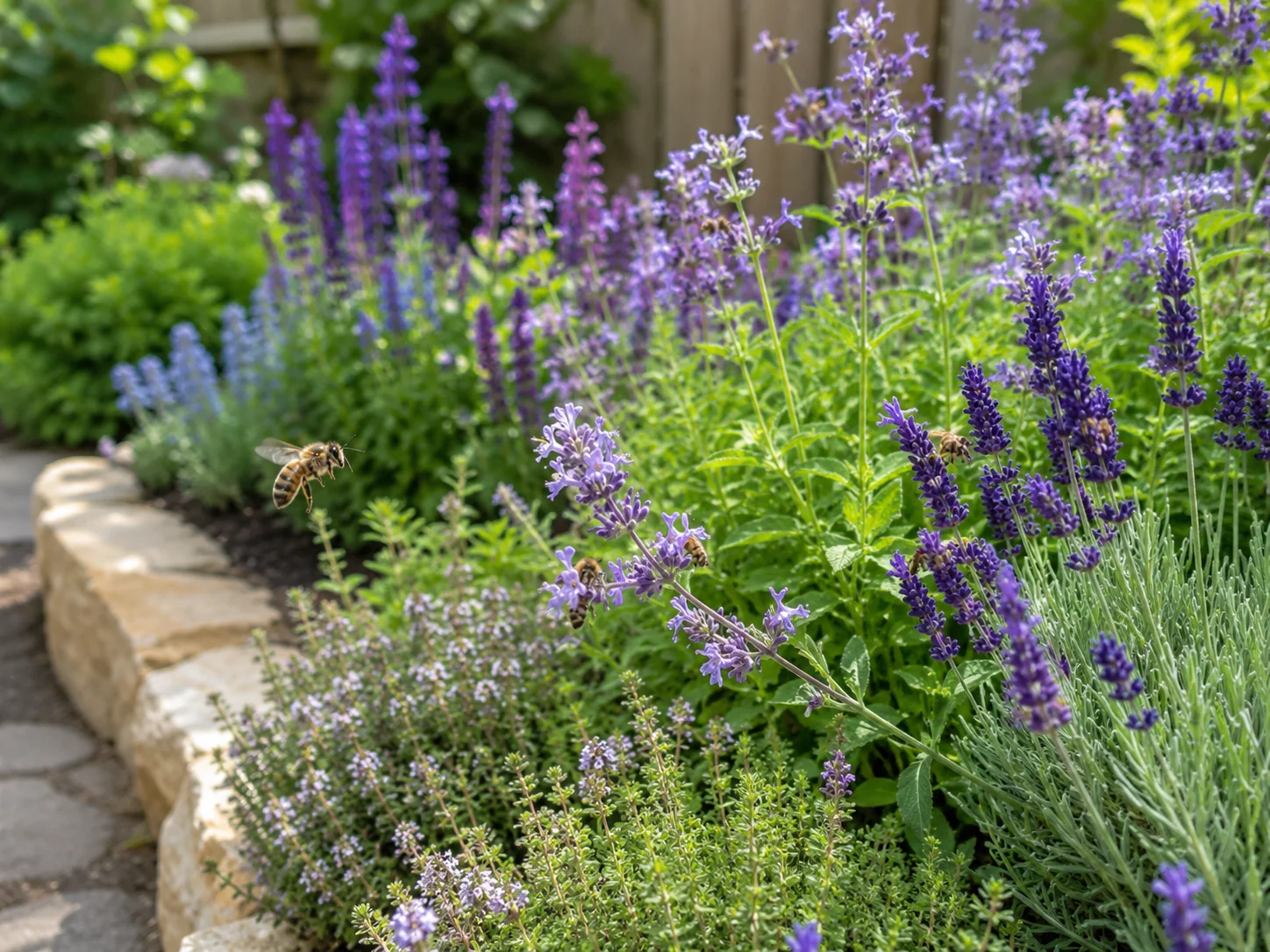
A lavender edge, a patch of flowering thyme, a row of catmint, a clump of asters, or a warm fence covered in honeysuckle can all send signals that help bees locate food. Flowers release scent compounds that bees can learn and associate with nectar or pollen. Research on honey bee olfactory learning shows that bees can learn odors and distinguish them in surprisingly detailed ways, which means flower scent is not just “nice fragrance.” It is usable information. PLOS Biology study on honey bee odor learning
That does not mean bees navigate only by smell. They also use vision, the sun, landmarks, memory, and communication inside the hive. But scent often helps bees detect that a useful flower patch is nearby before the flower becomes visually obvious.
In this guide, you will learn how to build a better scent map in your garden so bees can find, remember, and revisit your flowers more efficiently.
1. Why Bees Use Scent in the Garden
Flowers are not passive decorations.
They advertise.
Many flowers release volatile scent compounds into the air. Bees can learn those scents and connect them with a reward. If a bee visits a flower and finds nectar or pollen, that flower’s scent becomes part of its memory.
That is why bees often return to the same type of flower again and again during a foraging trip. They are not randomly wandering. They are working a known reward.
This matters for your garden because a strong scent signal can help bees locate useful flowers faster. A weak, scattered signal is easier to miss.
Think of it this way:
- One lavender plant is a whisper.
- A row of lavender is a signal.
- A mixed sunny herb border is a scent zone.
If you want bees to use your garden, stop planting like you are decorating a shelf. Plant like you are building a map.
2. Plant in Patches, Not Random Singles
This is the first rule.
Do not plant one of everything.
One catmint, one salvia, one oregano, one thyme, one aster, and one lavender may look diverse to you, but it creates a weak garden signal. Bees work more efficiently when flowers are grouped.
The University of Maryland Extension recommends pollinator gardens include a variety of flower colors, shapes, heights, and bloom periods, and it also emphasizes choosing plants that match the garden’s conditions. University of Maryland Extension pollinator garden guide.
Better planting patterns:
- 3 to 5 catmint plants together
- A strip of creeping thyme along a path
- 5 to 7 asters in one autumn patch
- A sunny herb corner with oregano, lavender, and rosemary
- Repeated salvia clumps through a border
This also helps the garden look better to humans. Repetition makes a border feel designed. Random singles make it look like a nursery trolley tipped over.
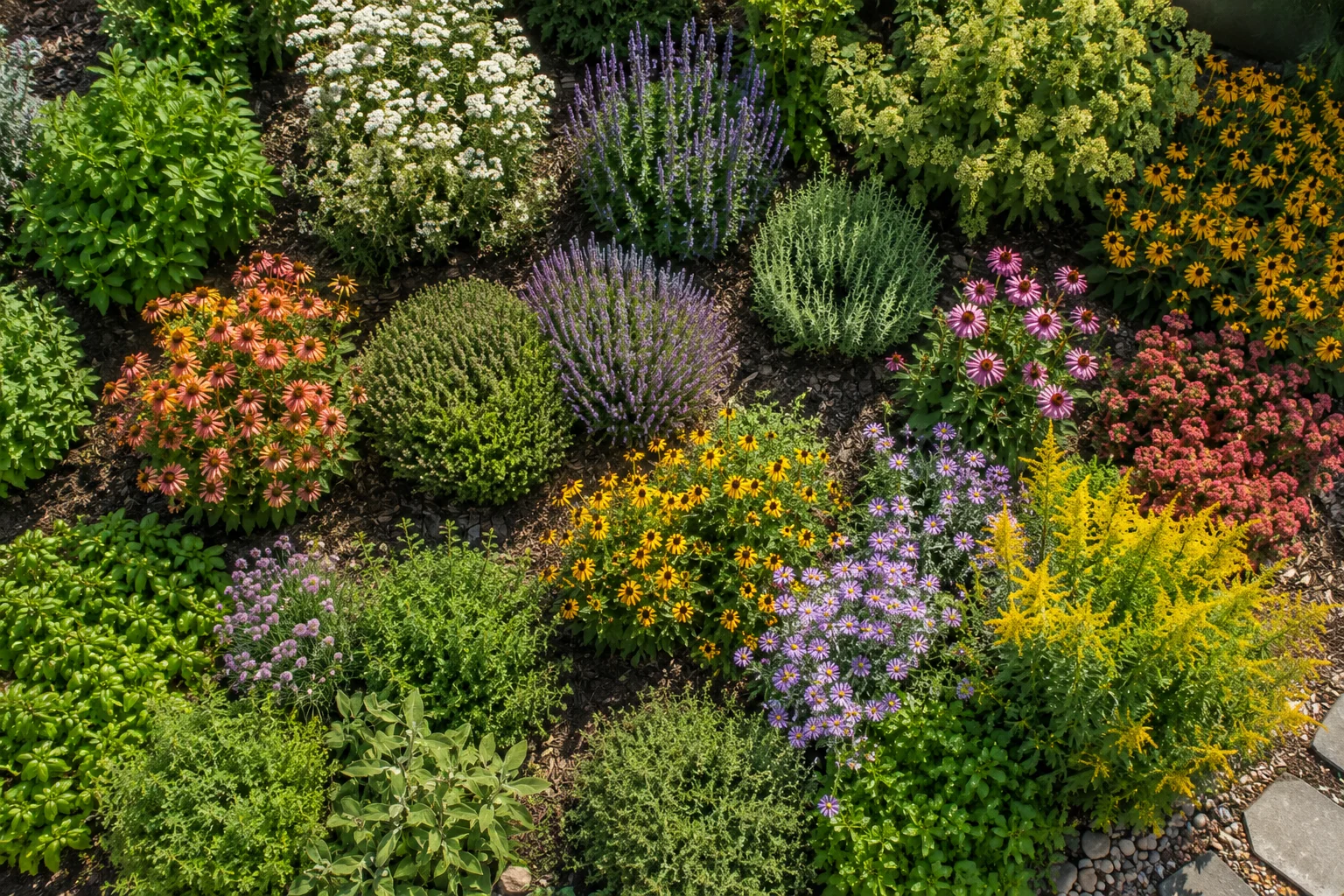
3. Create a Fragrant Herb Edge
Herbs are one of the easiest ways to build a scent map.
They are useful, beautiful, and many produce flowers bees love. They also release scent when warmed by sun or brushed by movement.
Good bee-friendly herbs include:
- Thyme
- Oregano
- Marjoram
- Lavender
- Rosemary
- Sage
- Mint in containers
- Lemon balm in controlled spaces
- Chives
- Garlic chives
- Anise hyssop
Plant them where scent naturally collects and moves:
- Along sunny paths
- Beside patios
- Near raised beds
- Along fence edges
- In large containers
- Around seating areas
- Near vegetable gardens
The key is to let some herbs flower. If you harvest every stem before bloom, you remove the bee value.
A sunny herb edge does two jobs at once: it gives you kitchen herbs and gives bees a strong scent-and-flower target.
4. Use Spring Scent to Wake the Garden Early
A good bee garden starts before the main border looks impressive.
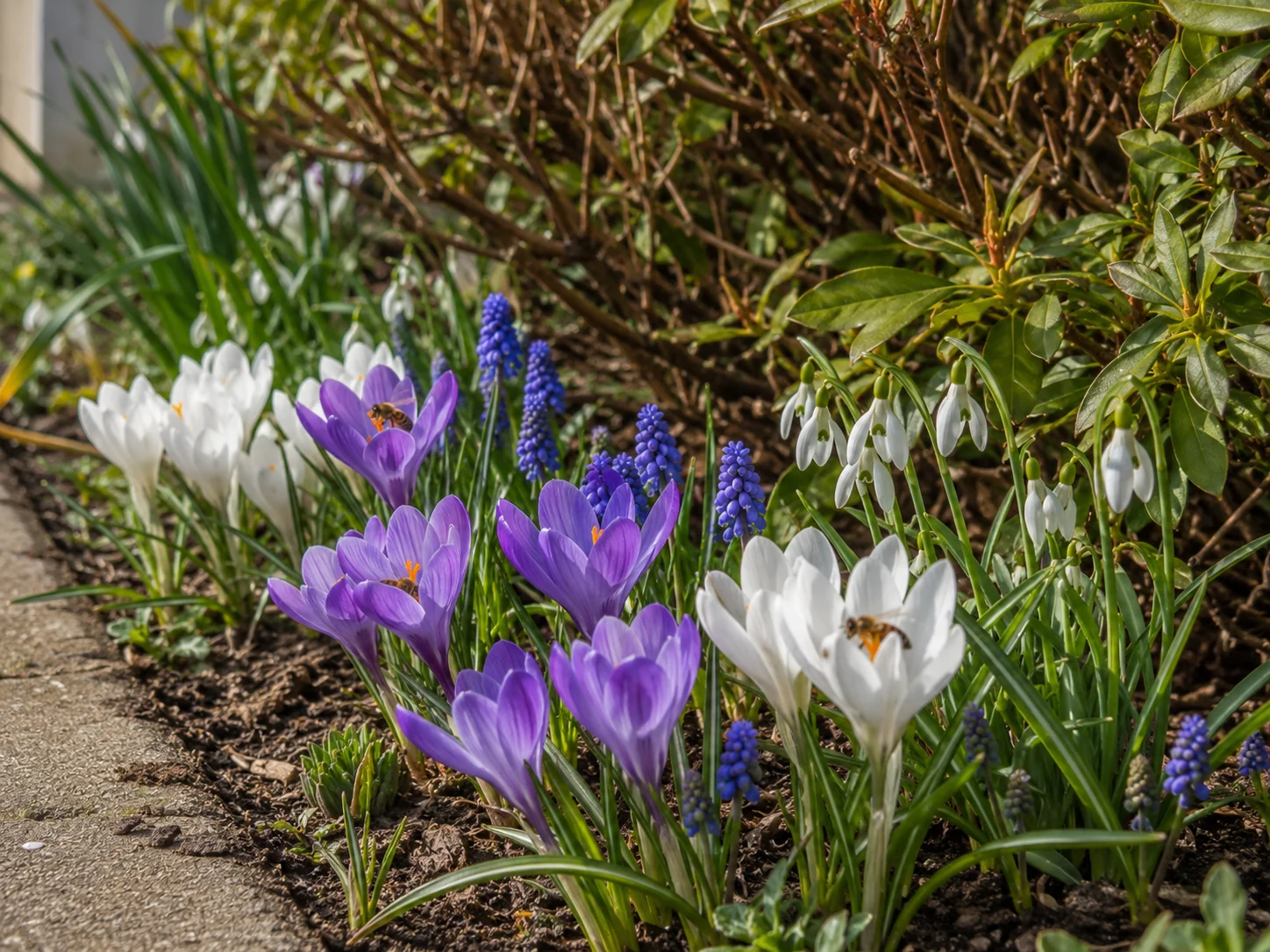
In early spring, bees may fly on mild days while much of the garden still looks bare. This is when early bulbs, shrubs, and fruit blossom matter.
Good spring scent and forage plants include:
- Crocus
- Grape hyacinth
- Snowdrops
- Fruit tree blossom
- Serviceberry
- Flowering currant
- Viburnum
- Hellebores
Plant spring flowers in generous patches, not tiny clumps. Ten crocus bulbs scattered across a lawn will not do much. A drift of 50 near a sunny edge becomes far more useful.
If your spring garden is weak, start with bulbs. They are one of the easiest ways to give bees early food before perennials wake up.
5. Build a Strong Summer Scent Zone
Summer is when scent-rich plants can carry the garden.
This is the season for herbs, mints, salvias, and long-blooming perennials. A summer scent zone should be warm, sunny, and planted in visible groups.
Best summer plants for a bee scent map:
- Catmint
- Salvia
- Bee balm
- Lavender
- Mountain mint
- Thyme
- Oregano
- Anise hyssop
- Yarrow
- Borage
- Penstemon
Do not hide these plants in random corners. Place them where bees can work them easily and where you can enjoy the activity.
A strong layout might be:
- Catmint at the front edge
- Salvia in repeated clumps
- Bee balm or mountain mint in the middle
- Lavender or thyme near the path
- A small shrub behind for structure
This is exactly why a beginner garden should start with clear plant roles instead of buying whatever is flowering today. start a beginner pollinator garden with five simple plant types.
6. Keep the Scent Map Alive Into Autumn
Most gardens fail here.
They smell good and bloom well in June, then collapse by September. That is weak planning.
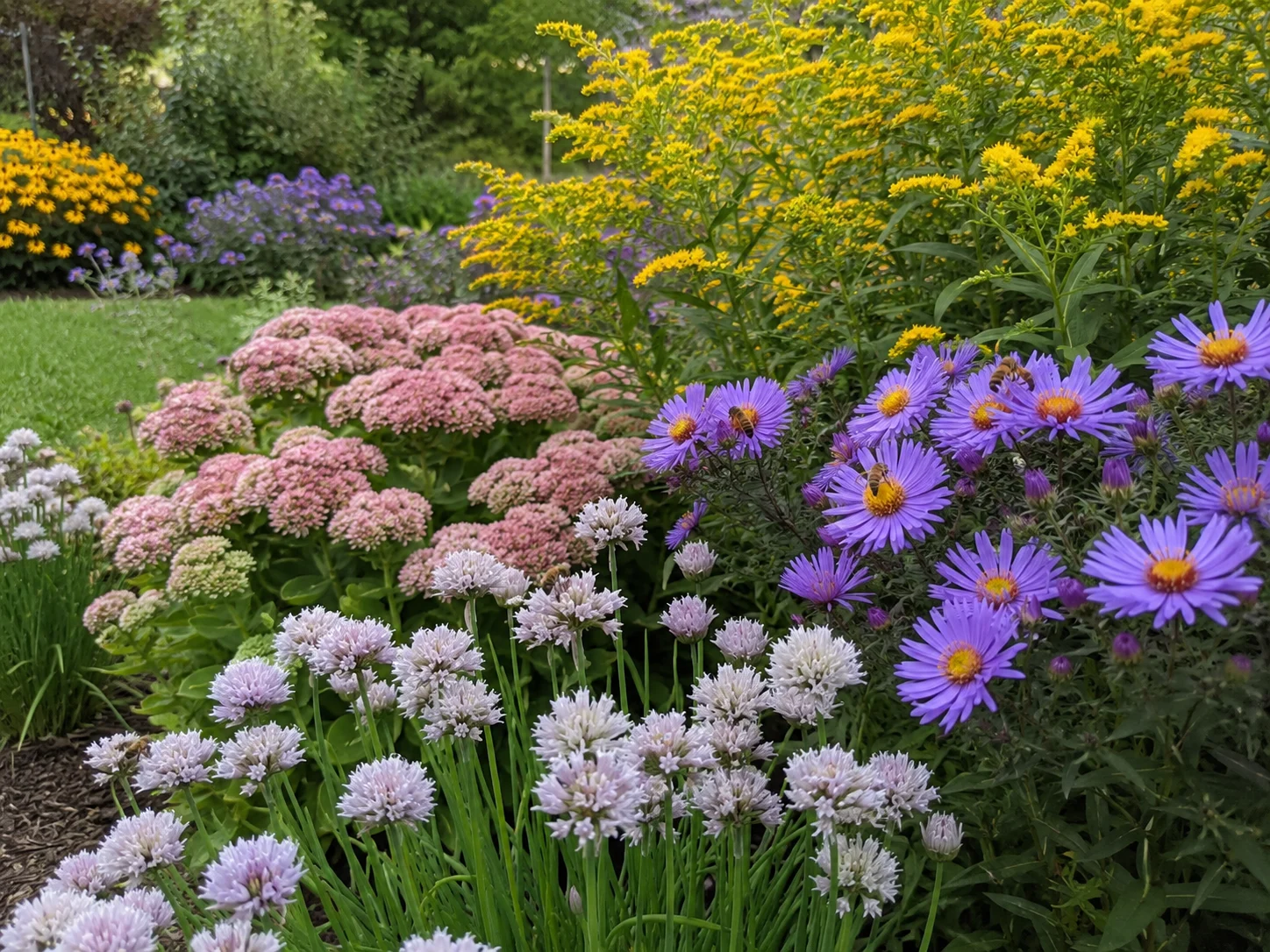
Bees may still forage on warm autumn days, so the garden should not go silent after summer. Late flowers keep the scent map active when many plants are finished.
Good autumn plants include:
- Asters
- Goldenrod
- Sedum
- Rudbeckia
- Helenium
- Garlic chives
- Single dahlias
- Late sunflowers
- Ivy where appropriate and controlled
Goldenrod and asters are especially strong together. Sedum adds tidy structure. Garlic chives are excellent for small spaces and herb gardens.
If the garden quits after August, fix the autumn layer first. late season flowers for bees.
7. Use Fence Lines as Scent Corridors
A plain fence is wasted space.
A planted fence line can become a scent corridor. Warm fence panels, climbing flowers, herbs, shrubs, and repeated perennials can create a long strip that bees follow through the garden.
Good fence-line plants include:
- Honeysuckle
- Clematis
- Climbing roses with open flowers
- Lavender
- Catmint
- Salvia
- Asters
- Goldenrod
- Sedum
- Creeping thyme
- Flowering currant
- Compact viburnum
The structure matters. Put taller shrubs and climbers at the back, perennials in the middle, and low herbs or groundcovers at the front.
A fence border is not just pretty. It creates a clear edge, a repeated planting strip, and a useful route through the garden. turn a plain fence into a pollinator border.
8. Avoid Flowers Bees Cannot Use
A flower can smell good and still be nearly useless.
Many double flowers hide the center under layers of petals. Bees may struggle to reach nectar and pollen, or the flower may provide very little reward.
Avoid relying on:
- Giant double dahlias
- Tight pompon flowers
- Overly frilled bedding plants
- Pollen-free ornamental sunflowers
- Flowers bred mainly for show, not access
Choose open flowers instead:
- Single dahlias
- Simple cosmos
- Open roses
- Asters
- Rudbeckia
- Salvia
- Catmint
- Yarrow
- Herbs in flower
The goal is not just fragrance. The goal is scent plus reward.
9. Keep Pesticides Away From Bee Plants
This should not need saying, but it does.
Do not build a bee garden and then spray the flowers.
The University of Maryland Extension advises avoiding pesticides in pollinator gardens. That is not optional if your goal is to support bees. A scented flower patch treated with insecticide is not a bee garden. It is a trap.
Practical rules:
- Do not spray open flowers.
- Avoid systemic insecticides on pollinator plants.
- Ask nurseries about plant treatments.
- Accept some leaf damage.
- Use hand removal, pruning, barriers, and plant health first.
- Keep flowering herbs and borders chemical-free.
If a plant is so pest-prone that you constantly need to spray it, it may not belong in your bee garden.
10. Design the Garden for Scent, Color, and Memory
Scent is powerful, but it is not the whole map.
Bees also use color, flower shape, sunlight, landmarks, and memory. Honey bees also share food-location information through the waggle dance, and research has found scent compounds associated with waggle-dancing bees. PLOS Biology study on the scent of the waggle dance.
So the best garden does not rely on scent alone.
It combines:
- Grouped flowers
- Strong seasonal bloom
- Fragrant herbs
- Open flower shapes
- Clear paths and borders
- Shrubs and vertical structure
- Late-season flowers
- No pesticide use
That is how you make the garden easier for bees to find, remember, and revisit.
Simple Scent Map Planting Plan
For a small sunny garden, start with this:
Spring
- Crocus
- Grape hyacinth
- Flowering shrub
Summer
- Catmint
- Salvia
- Thyme
- Oregano
Autumn
- Asters
- Sedum
- Goldenrod or rudbeckia
- Garlic chives
Structure
- One small flowering shrub
- One clean path edge
- One low groundcover strip
Do not overcomplicate it. A clear scent map beats a chaotic plant collection.
Conclusion
Your garden is not just seen by bees.
It is smelled, learned, remembered, and revisited.
A bee-friendly garden should not be a random collection of pretty flowers. It should have clear scent zones, grouped plants, open blooms, spring-to-autumn continuity, and safe flowers that actually reward pollinators.
Start with herbs. Add spring bulbs. Build summer flower patches. Keep autumn bloom going. Use fence lines as scent corridors. Avoid double flowers that hide the reward. Keep pesticides away.
That is how your garden becomes more than beautiful.
It becomes readable.