
Late summer and autumn are not the end of the bee garden.
They are the final test.
A garden can look full and colorful in June, then become almost useless by September. That is a problem for honey bees. As colonies prepare for winter, they still need reliable forage when weather allows them to fly. Late-season nectar can help bees top up stores, while pollen supports the last rounds of brood rearing before the colony contracts for winter.
That is why late-season flowers for bees matter so much.
This does not mean a few random mums by the back door will save a weak colony. That is fantasy. If a hive is short on stores, you inspect it and manage it properly. But a strong late-season planting plan can reduce forage gaps, support honey bees on warm autumn days, and help native pollinators, butterflies, hoverflies, and other beneficial insects at the same time.
In this guide, you will learn the best late-season flowers for honey bees, how to plant them in useful groups, which flowers are overrated, and how to build a garden that keeps feeding bees after the main summer bloom is over.
Why Late-Season Flowers Matter for Honey Bees
By late summer, many gardens are running out of useful flowers. Spring bulbs are long gone. Early shrubs have finished. Some perennials are exhausted. Lawns may be dry. In some areas, nectar flow drops sharply before autumn bloom picks up again.
For honey bees, this timing matters.
A colony heading toward winter needs:
- Enough stored food
- Healthy winter bees
- Pollen for late brood rearing
- Reduced stress from nectar gaps
- Safe forage during warm autumn flying days
Late-season flowers will not replace proper beekeeping. If your hive is dangerously light, planting asters today will not fix the immediate problem. You still need to check stores, assess colony strength, and feed if necessary.
But for the garden itself, late flowers are one of the best ways to turn autumn from a dead zone into a useful forage period. Pollinator garden guidance from university extensions often emphasizes overlapping bloom periods, flower diversity, habitat, water, and pesticide avoidance because bees and other pollinators need support across the whole season, not just during peak summer. University of Maryland Extension pollinator garden guidance.
If your garden stops feeding bees in August, it is not a full-season bee garden. It is a summer display.
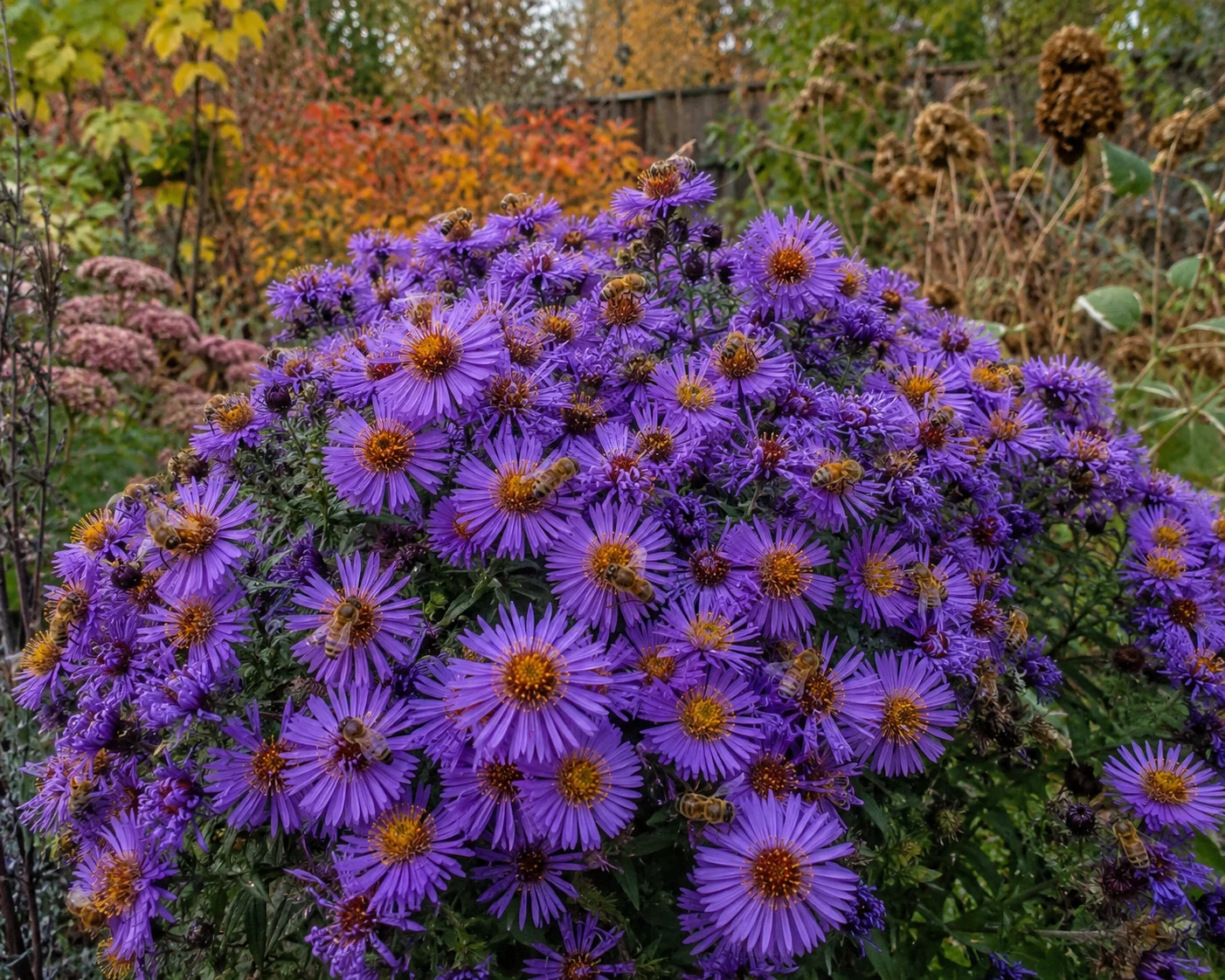
1. Asters: One of the Best Late-Season Flowers for Bees
If you want one reliable late-season flower group, start with asters.
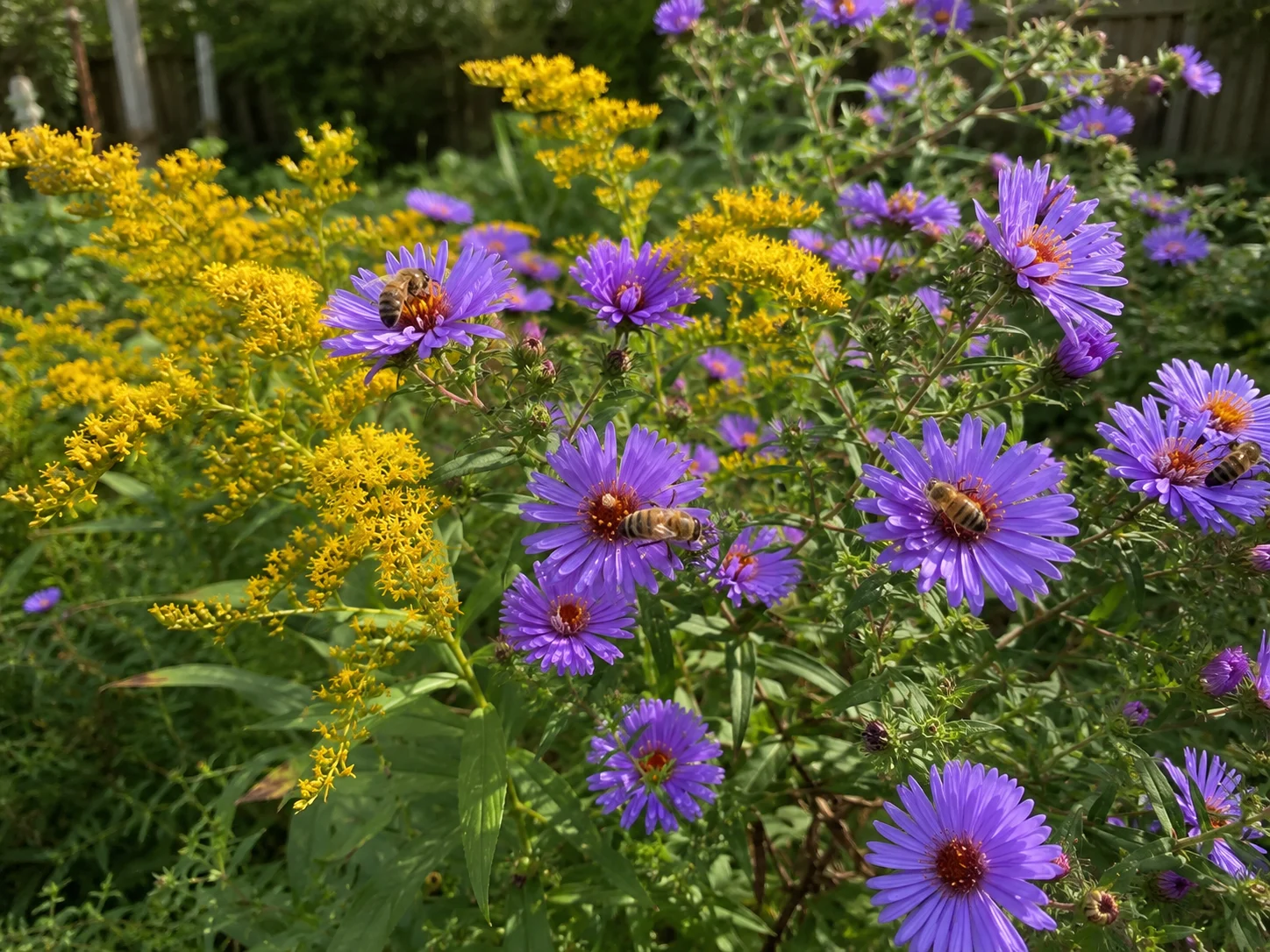
Asters bloom when many other flowers are fading, and they are often busy with honey bees, bumblebees, hoverflies, butterflies, and small native bees. Their open daisy-like flowers make pollen and nectar accessible, which is exactly what you want in a bee-support garden.
Good options include:
- New England aster
- Smooth aster
- Calico aster
- Aromatic aster
- Wood aster for part shade
- Regionally native aster species
Plant asters in groups rather than scattering single plants. A large clump of asters is much more useful than one lonely plant hidden behind a shrub.
Best uses:
- Back or middle of sunny borders
- Meadow-style planting
- Fence-line pollinator borders
- Late-season cottage gardens
- Around apiary edges where access stays clear
If you are already building a seasonal planting layout, asters should be part of the autumn layer in your garden plan. They fit naturally after spring bulbs, summer herbs, and midsummer perennials, especially if you are following a simple structure like a beginner pollinator garden that flowers across the seasons.
2. Goldenrod: The Late-Season Power Plant
Goldenrod gets blamed for allergies, but that blame is mostly trash.
The real allergy culprit is usually ragweed, which blooms around the same time and releases windborne pollen. Goldenrod has showy yellow flowers and insect-carried pollen, so people notice it and accuse it. Bad evidence, bad conclusion.
For bees, goldenrod can be one of the most valuable late-season plants in the garden. It offers nectar and pollen when many other flowers are finished, and it pairs beautifully with asters.
Good garden choices may include:
- Stiff goldenrod
- Showy goldenrod
- Zigzag goldenrod
- Wrinkleleaf goldenrod
- Compact cultivated goldenrod varieties
- Regionally native goldenrod species
The warning: some goldenrods spread aggressively. Do not plant a monster species in a tiny border and then complain when it behaves like a monster. Choose the right type for your space.
Use goldenrod in:
- Larger pollinator borders
- Meadow edges
- Fence lines
- Wildlife corners
- Back-of-border planting
- Naturalistic bee gardens
If your garden has a plain fence line or unused boundary, goldenrod can work well in a mixed planting with asters, grasses, and shrubs. It should not stand alone as a messy yellow takeover. It should be part of a designed border like a pollinator border fence that feeds bees all season.
3. Sedum: Easy Autumn Nectar for Small Gardens
Sedum, especially upright types like “Autumn Joy” and similar stonecrops, is one of the easiest late-season plants for ordinary gardens.
It is tough, drought-tolerant, tidy, and attractive to bees when the flat flower heads open in late summer and autumn. Unlike some wilder plants, sedum usually fits well in small gardens, front borders, and neat backyard layouts.
Why sedum works:
- It handles dry soil better than many perennials.
- It has sturdy stems.
- It gives bees an easy landing platform.
- It looks tidy before and after flowering.
- It works well in small borders and containers.
Plant sedum near paths, patios, and front-of-border areas where you want pollinator value without too much sprawl.
Good companions:
- Catmint
- Asters
- Dwarf grasses
- Salvia
- Rudbeckia
- Creeping thyme
- Alliums for earlier structure
For small-space gardeners, sedum is one of the easiest ways to keep late-season flowers available without building a huge meadow. It also fits well into patio planting, especially if you are building from ideas in a container pollinator garden for balconies and patios.
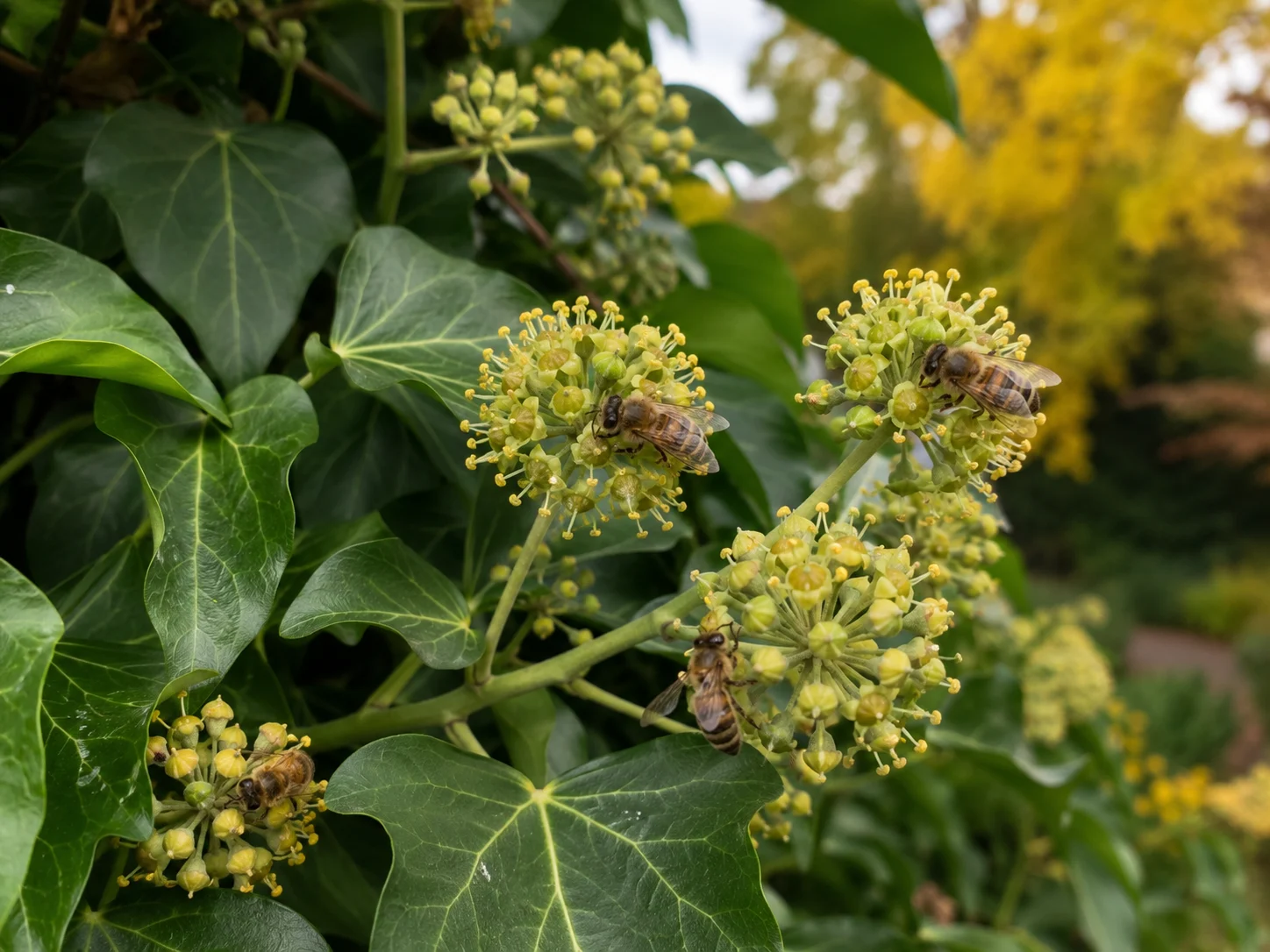
4. Ivy: A Late Nectar Source People Underestimate
Ivy is controversial, and it needs careful handling.
In the right place, mature ivy flowers can be extremely valuable late in the season because they bloom when many other plants are finished. Bees often work ivy flowers heavily on warm autumn days.
But do not be stupid with it. Ivy can damage weak structures, overwhelm small spaces, and become invasive or problematic depending on region and species. It should never be planted blindly.
Use ivy only where it is:
- Appropriate for your region
- Legally acceptable
- Managed carefully
- Kept away from weak fences, gutters, and roofs
- Not allowed to smother trees or native habitat
If ivy is already present and flowering safely, it may be worth managing rather than automatically removing. If it is becoming destructive, deal with it.
The lesson is simple: useful to bees does not always mean suitable for every garden.
5. Helenium: Bright Late Color With Bee Value
Helenium, also called sneezeweed, brings yellow, orange, bronze, and red tones into the late-season garden. It is especially good if your garden looks tired after midsummer.
Honey bees and other pollinators can visit the open flowers, and the plant works well in sunny borders with decent moisture.
Use helenium with:
- Asters
- Rudbeckia
- Grasses
- Sedum
- Goldenrod
- Coneflowers
Give it sun and avoid letting it dry out too badly. In rich soil, some varieties may need support or strategic cutting back earlier in the season to keep them compact.
Helenium is not always the first plant people think of for bees, but it is far more useful than many decorative autumn bedding plants.
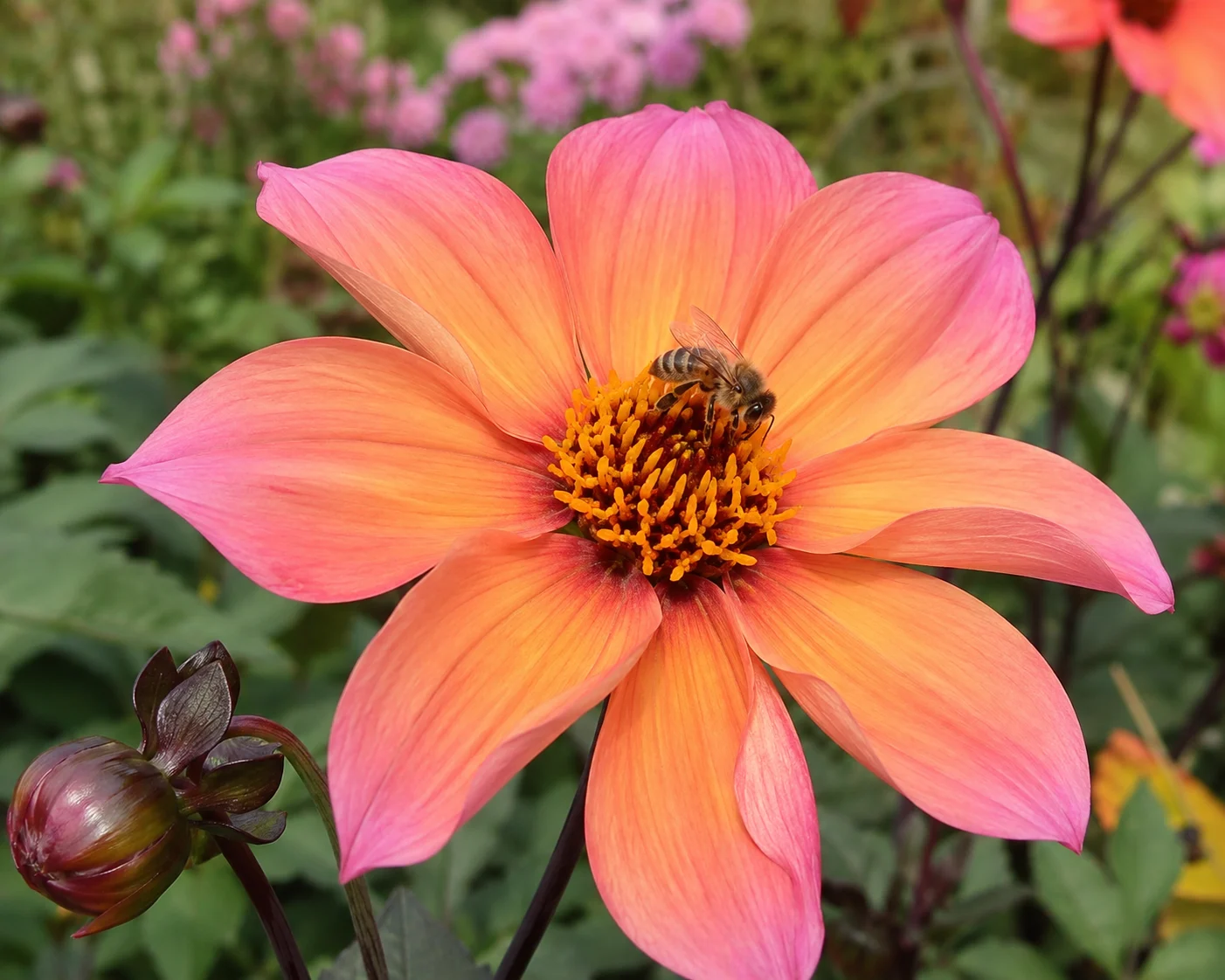
6. Single-Flowered Dahlias: Good If Bees Can Reach the Center
Dahlias can be excellent or useless. It depends on the flower form.
Big double dahlias may look impressive, but many are poor for bees because the pollen and nectar are buried under layers of petals. That is decorative fluff, not forage.
Choose:
- Single dahlias
- Collarette dahlias
- Open-centered varieties
- Simple flower forms
Avoid relying on:
- Giant dinnerplate doubles
- Tight pompon types
- Overly frilly varieties
- Flowers where the center is hidden
Open dahlias can bloom until frost and provide late food for bees in sunny beds and containers. They are especially useful in gardens where you want late-season color and bee value together.
7. Anise Hyssop: Long-Blooming and Bee-Friendly
Anise hyssop is a strong choice for sunny gardens because it can bloom for a long period and is often busy with bees.
Its upright flower spikes work well in pollinator borders, herb gardens, and mixed perennial beds. It also smells good, which makes it useful near patios and paths.
Best conditions:
- Full sun
- Well-drained soil
- Moderate watering during establishment
- Good airflow
- Planting in groups
It pairs well with grasses, echinacea, salvia, rudbeckia, and asters.
If you want a late-summer plant that does not instantly collapse into a mess, anise hyssop deserves a place on the list.
8. Japanese Anemone: Useful for Part-Shade Gardens
Not every bee garden is full sun.
If you have a partly shaded fence, wall, or border, Japanese anemones can help extend bloom into late summer and autumn. Bees may visit the open flowers, and the plants can brighten areas where classic sunny meadow plants struggle.
The warning: Japanese anemones can spread. In some gardens, they behave politely. In others, they start colonizing space like they own the place.
Use them where you have room, or choose less aggressive varieties.
Good spots:
- Part-shade borders
- Fence lines with morning sun
- Woodland-edge gardens
- Back of mixed beds
- Areas that need late flower height
9. Late Flowering Herbs: Small Plants, Big Value
Flowering herbs can be excellent late-season bee plants, especially in small gardens.
Useful options include:
- Garlic chives
- Oregano
- Marjoram
- Thyme
- Mint in containers
- Lemon balm in controlled areas
- Basil allowed to flower
- Fennel where space allows
The mistake is harvesting every herb before it flowers. If you want bees, let some plants bloom.
Garlic chives are especially useful because they flower later than many common herbs and can attract plenty of bees. Oregano and marjoram are also strong performers when planted in sunny, well-drained spots.
For a tidy garden, place herbs near paths, patios, raised beds, or container clusters. They give you edible value and bee value from the same space.
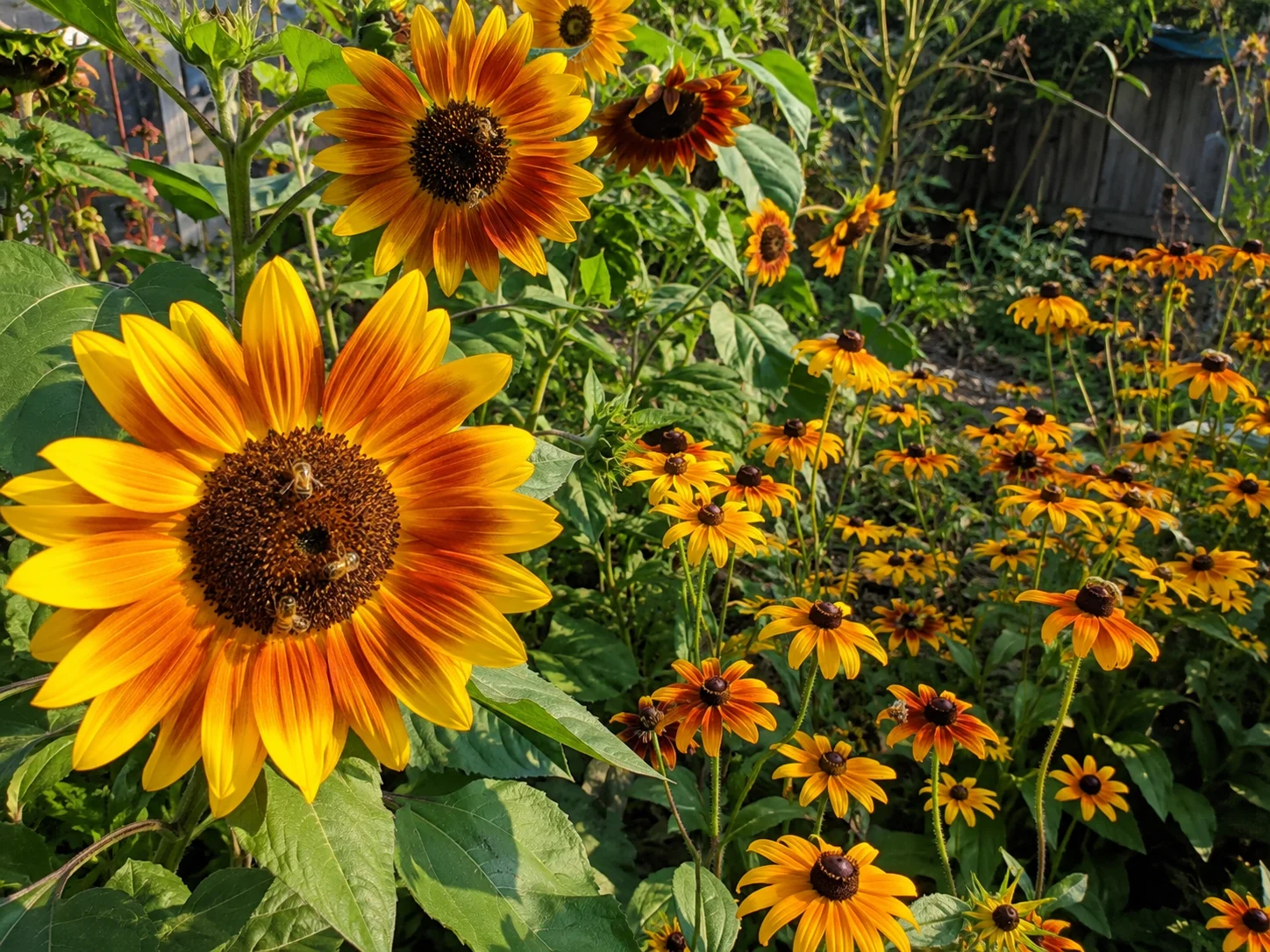
10. Late Sunflowers and Rudbeckia
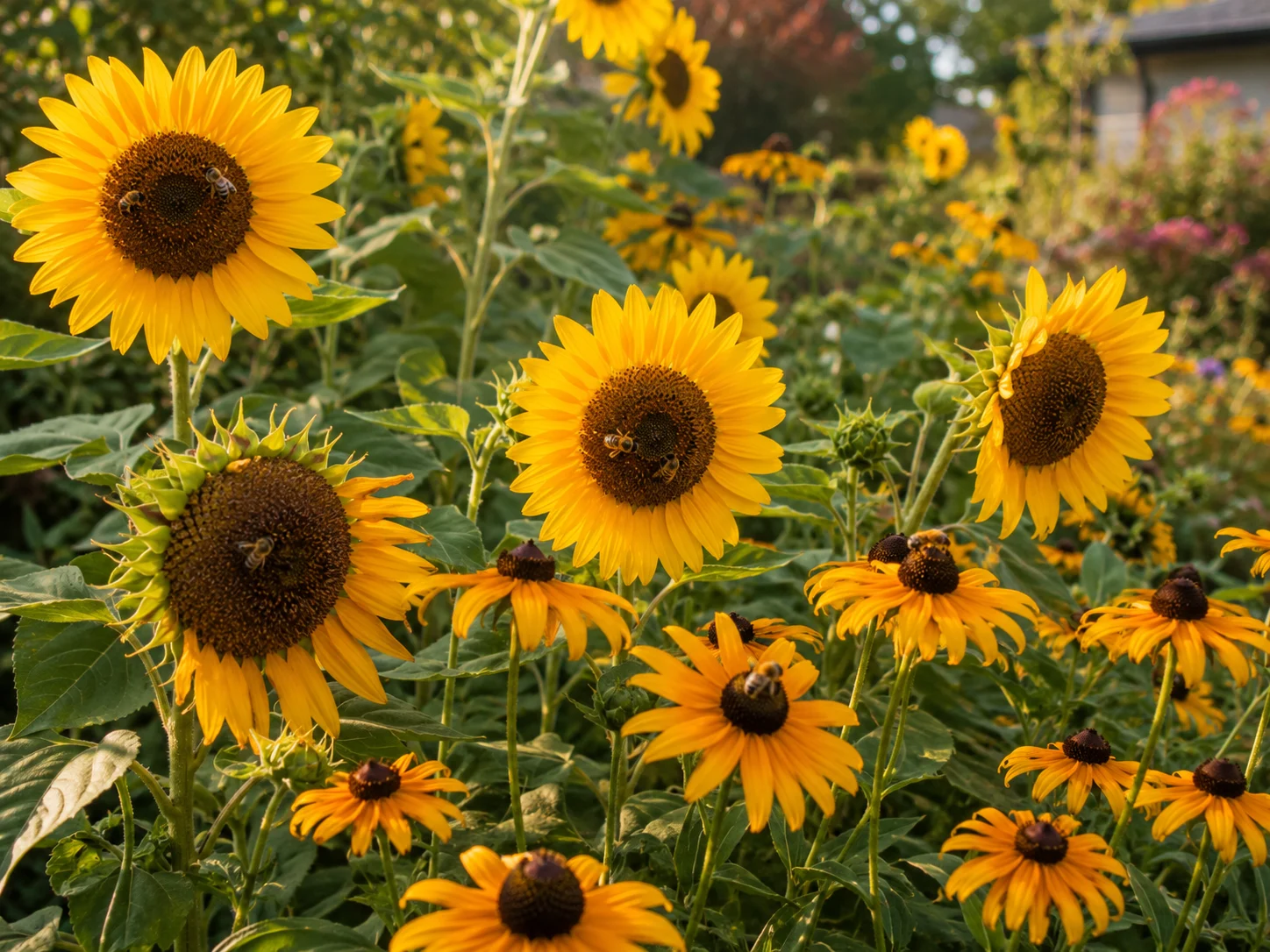
Sunflowers and rudbeckia can help stretch the season, especially if you sow or plant with timing in mind.
They provide open, accessible flowers that bees can use, and their seedheads can support birds later if you leave them standing.
Use:
- Branching sunflowers
- Black-eyed Susan
- Brown-eyed Susan
- Perennial sunflowers
- Compact forms for smaller borders
Avoid pollen-free ornamental sunflowers if your goal is bee support. They were bred for clean cutting, not for feeding insects. Pretty but weak for this job.
How to Plant Late-Season Flowers So Bees Actually Use Them
Here is where many gardens fail.
They have the right plants, but the planting is too scattered. One aster here, one sedum there, one tiny goldenrod at the back. That is not a forage patch. That is decoration.
Plant in Blocks
Honey bees work efficiently. Give them a visible patch.
Better:
- 3 sedum together
- 5 asters together
- 3 goldenrod plants in a controlled clump
- A row of garlic chives
- A mixed late-season border with repeated groups
Worse:
- One of everything
- Tiny isolated clumps
- Random plants hidden behind taller growth
- Too many double flowers
- No bloom overlap
Plan a Late-Season Bloom Relay
Your autumn garden should not rely on one plant.
Use a sequence:
- Late summer: anise hyssop, rudbeckia, sunflowers, oregano
- Early autumn: sedum, helenium, goldenrod, garlic chives
- Mid to late autumn: asters, ivy where appropriate, open dahlias until frost
This gives bees more chances to forage when weather windows open.
Keep Pesticides Out
Do not plant late-season flowers for bees and then spray them.
That is not gardening. That is baiting pollinators into a poisoned buffet.
Avoid insecticides, be careful with fungicides, and do not buy plants that may have been treated with systemic pesticides if your goal is pollinator support.
Best Late-Season Flower Combination for Honey Bees
For a simple sunny border, try this:
- Asters for late pollen and nectar
- Goldenrod for a strong autumn forage push
- Sedum for tidy structure
- Anise hyssop for long bloom
- Rudbeckia for late summer transition
- Garlic chives for edible late flowers
- Single dahlias for color until frost
- Grasses for structure and winter habitat
For a small patio:
- Sedum in a large container
- Garlic chives in a pot
- Dwarf aster
- Single dahlia
- Oregano or marjoram allowed to flower
For a fence border:
- Goldenrod at the back
- Asters in repeated clumps
- Sedum near the front
- Flowering herbs along the edge
- Spring bulbs tucked in for next year
Conclusion: Do Not Let Your Bee Garden Quit Early
The best bee gardens do not collapse after midsummer.
They keep working.
If you want reliable late-season flowers for bees, start with asters, goldenrod, sedum, helenium, anise hyssop, single dahlias, flowering herbs, late sunflowers, rudbeckia, and carefully managed ivy where appropriate. Plant them in generous groups, choose open flowers, avoid pesticides, and make sure the bloom sequence carries your garden from late summer into autumn.
A few random flowers will not do much. A planned late-season border can.
Your goal is simple: when warm autumn days arrive and honey bees leave the hive looking for food, your garden should not be empty.
Ready to make your garden and apiary more useful through every season? Explore the honeyroadblog.com shopping page for high-quality beekeeping supplies, whether you are starting your first hive, improving your backyard setup, or upgrading the gear that helps you manage bees with confidence.