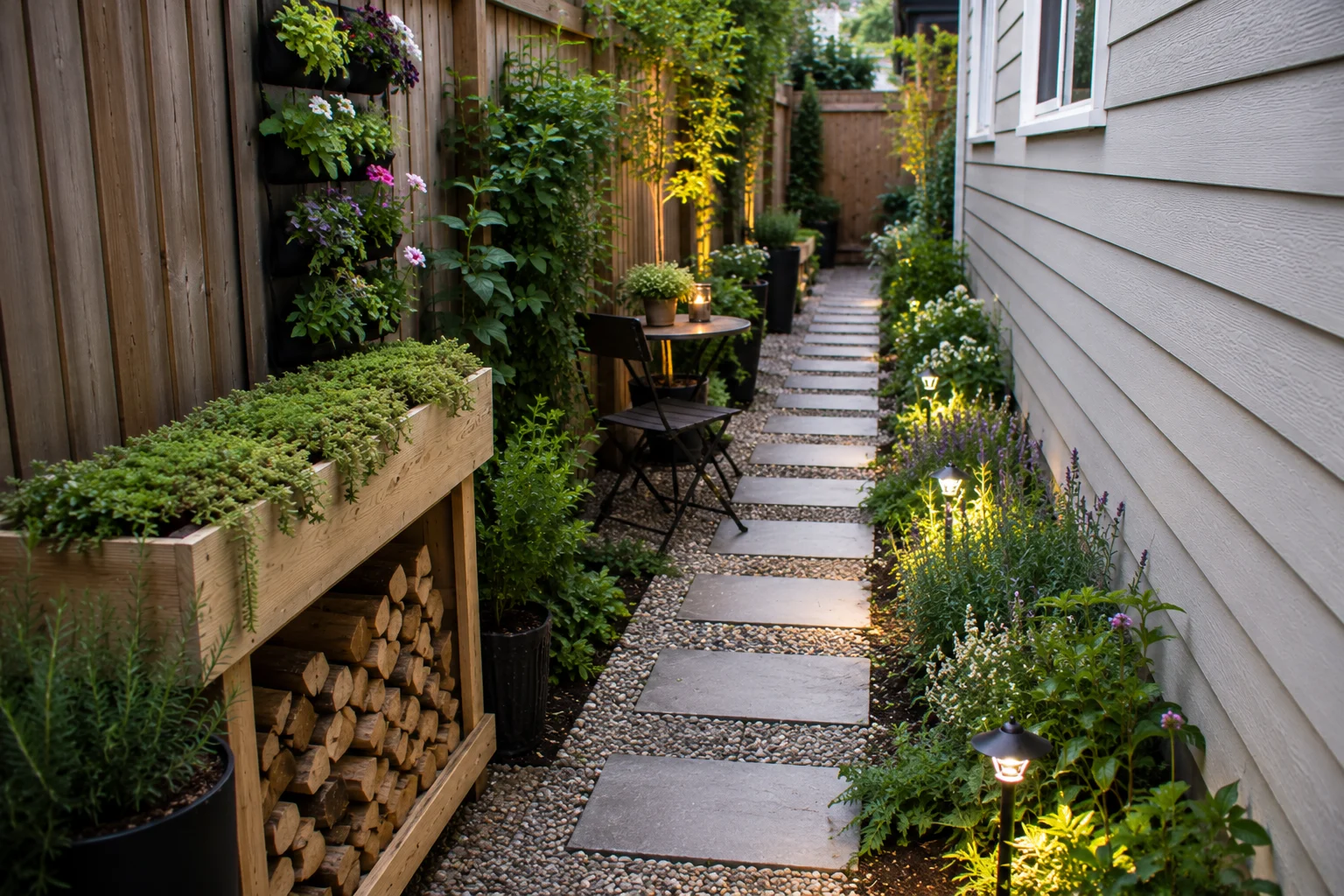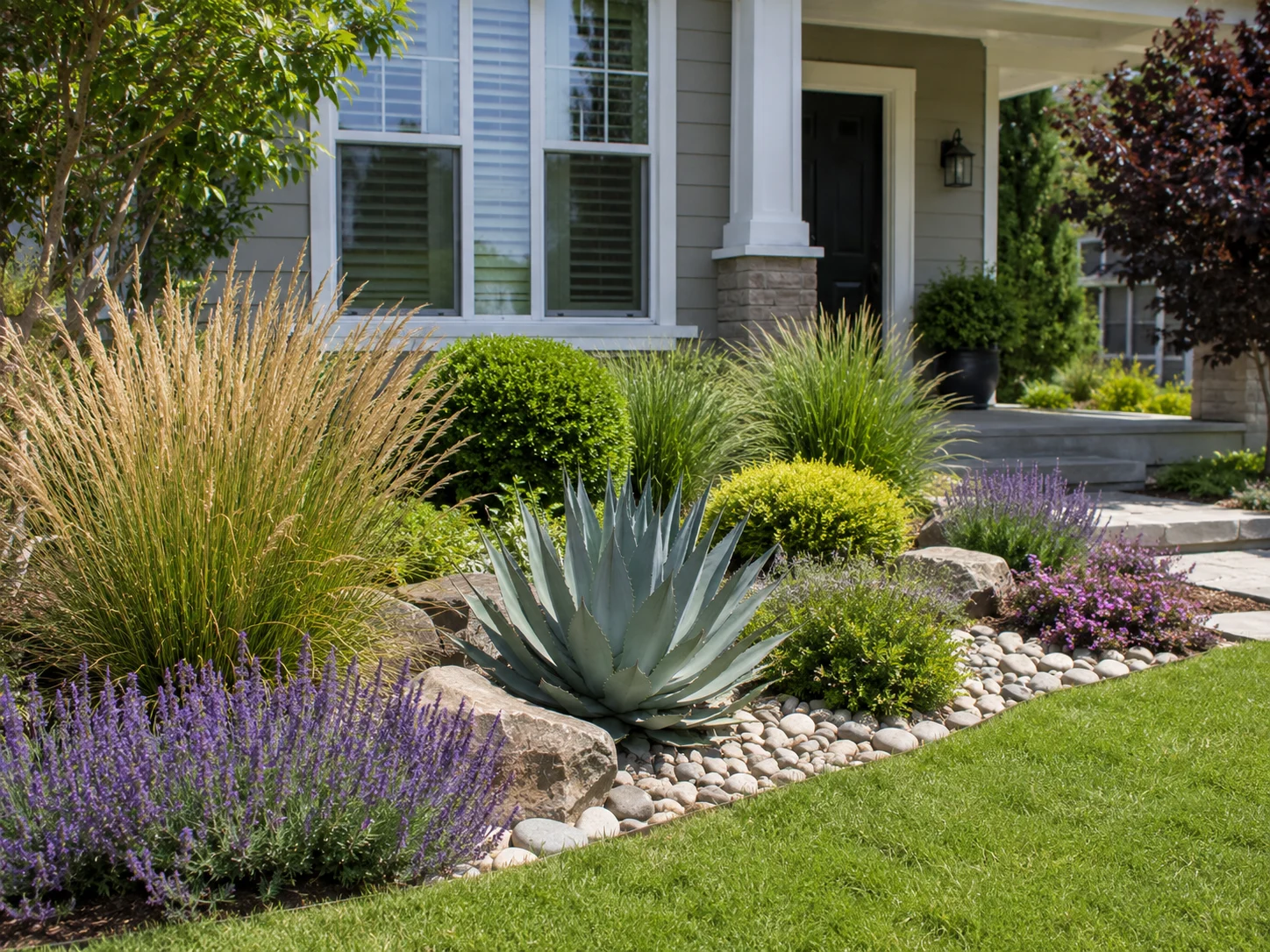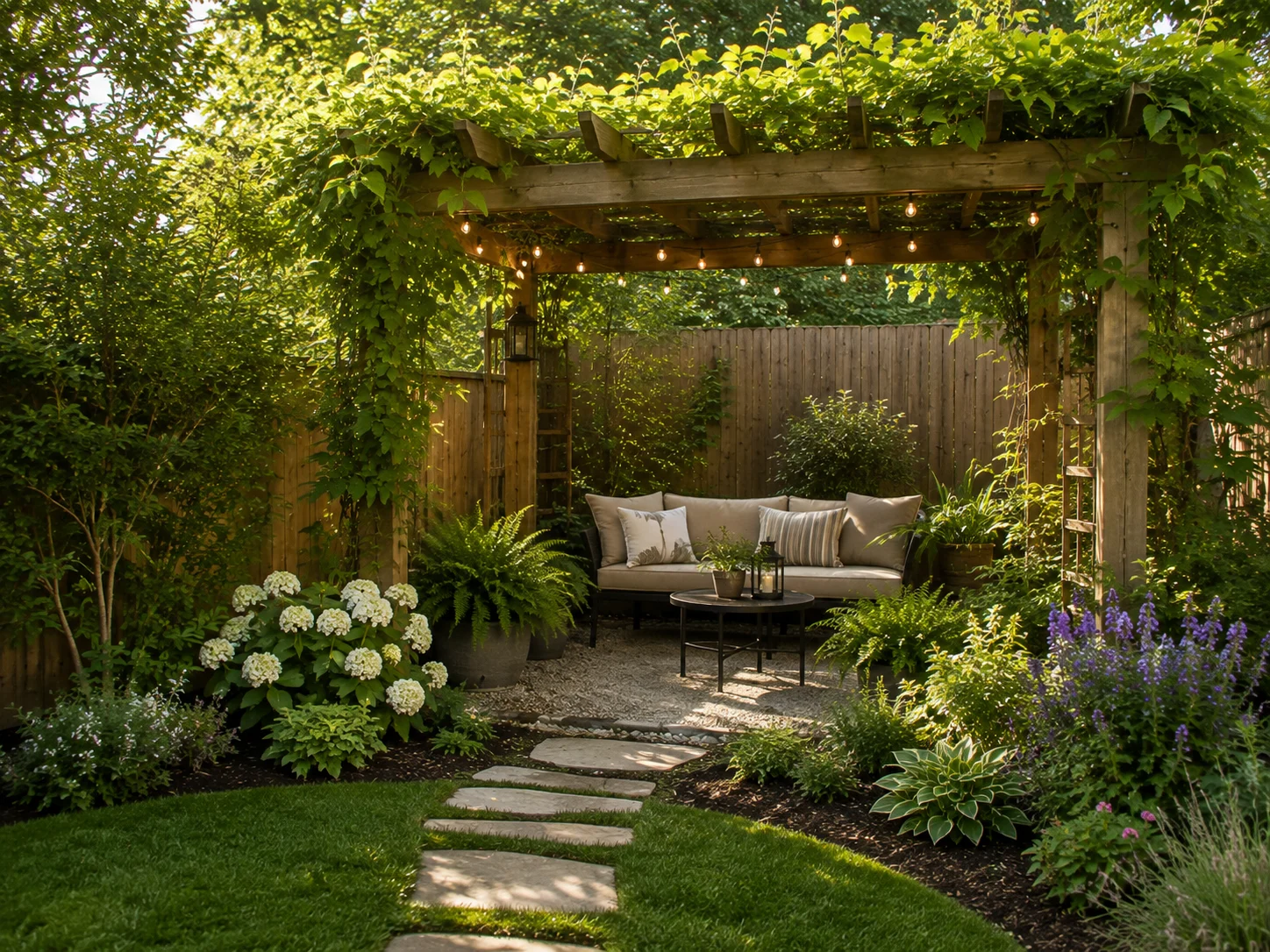

A fall garden is built around plants and features that keep a backyard interesting once summer’s flowers fade, using foliage color, late bloomers, texture, and harvest touches instead. Homeowners like this approach because it extends the usable, good-looking part of the gardening year by a couple of months, rather than watching the yard go quiet the moment temperatures drop.
This is achievable because many of the best fall performers, ornamental grasses, asters, mums, and foliage shrubs, are widely available and forgiving to grow. According to Iowa State University Extension, the yellows, oranges, reds, and purples seen in fall foliage come from compounds already present in the leaves earlier in the growing season, but masked by chlorophyll until it breaks down as temperatures cool, which means much of the color show happens on plants you may already have.
Fall Foliage & Color
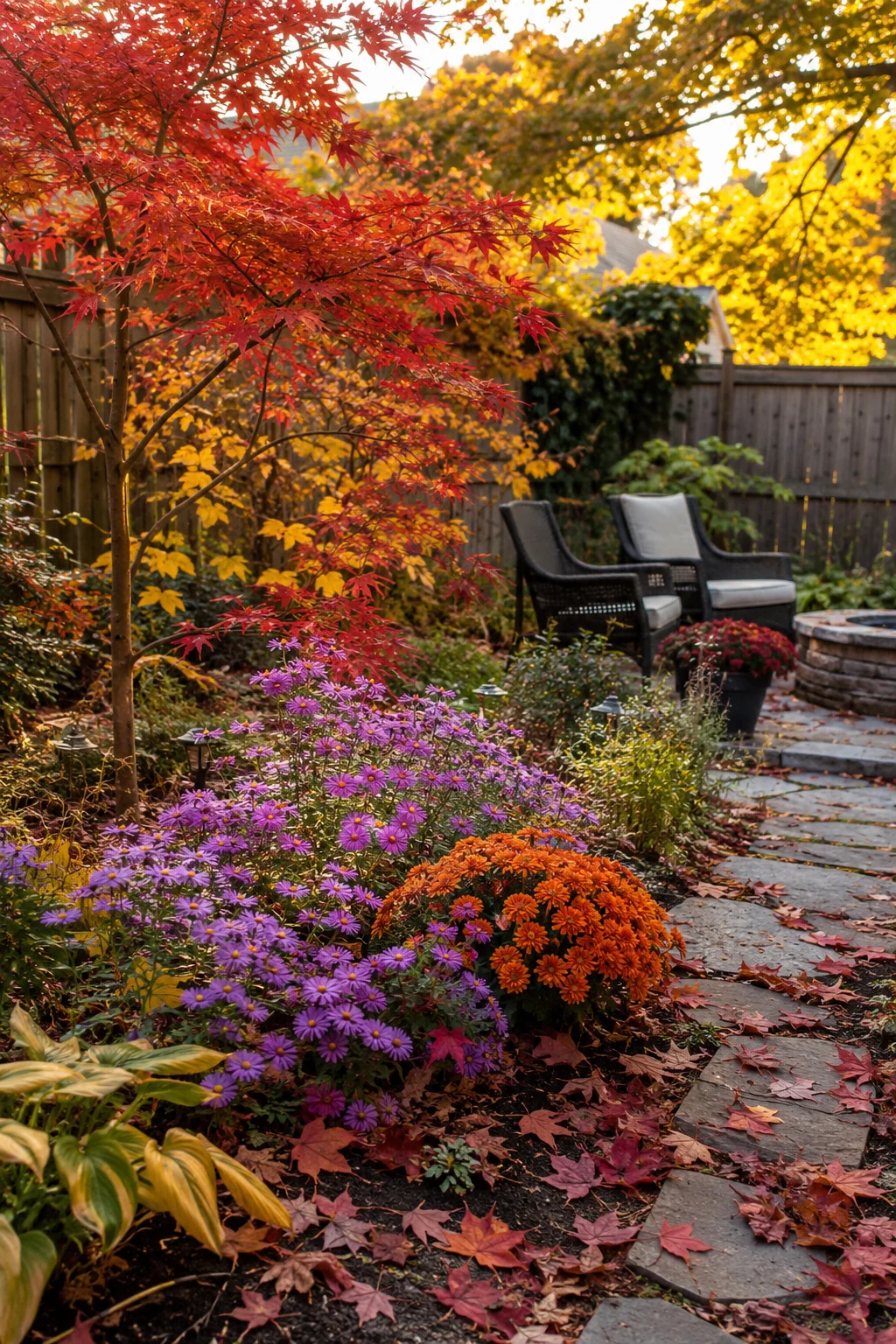
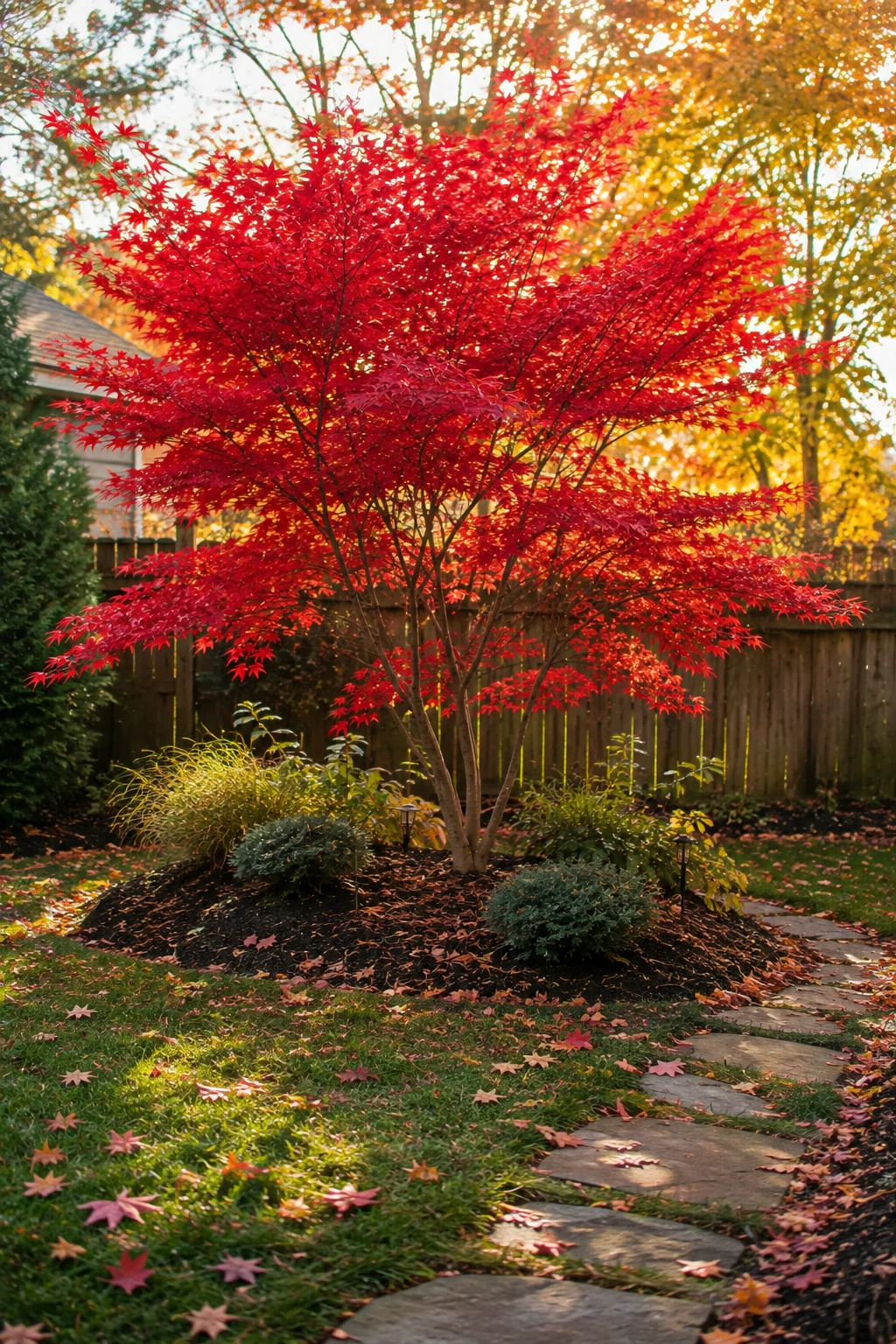
1. Japanese Maple Fall Color
A Japanese maple turns a corner of the yard into a focal point once its foliage shifts to deep red or orange in fall, and its compact size fits even small suburban lots. It works because the color show lasts for weeks and needs no special care beyond normal watering through the season. Plant in a spot with some afternoon shade to prevent leaf scorch, and give it room to spread without crowding nearby structures.
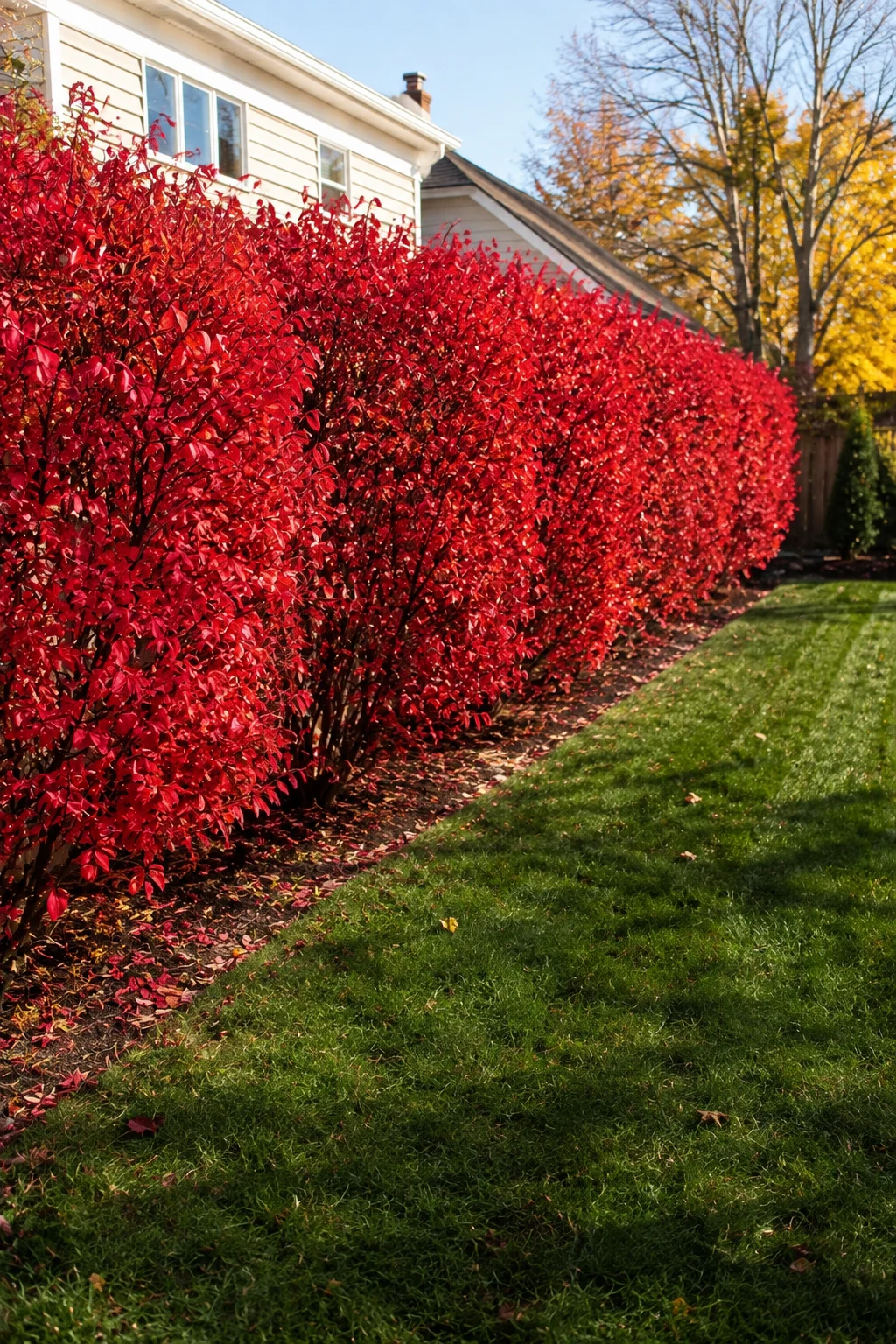
2. Burning Bush Hedge
A row of burning bush shrubs turns brilliant scarlet almost overnight in fall, making it one of the most dramatic and reliable hedge choices for autumn color. It works because the color change is consistent and predictable, unlike some trees that vary year to year with weather. Plant in full sun for the strongest color, and prune lightly in late winter to maintain a tidy hedge shape.
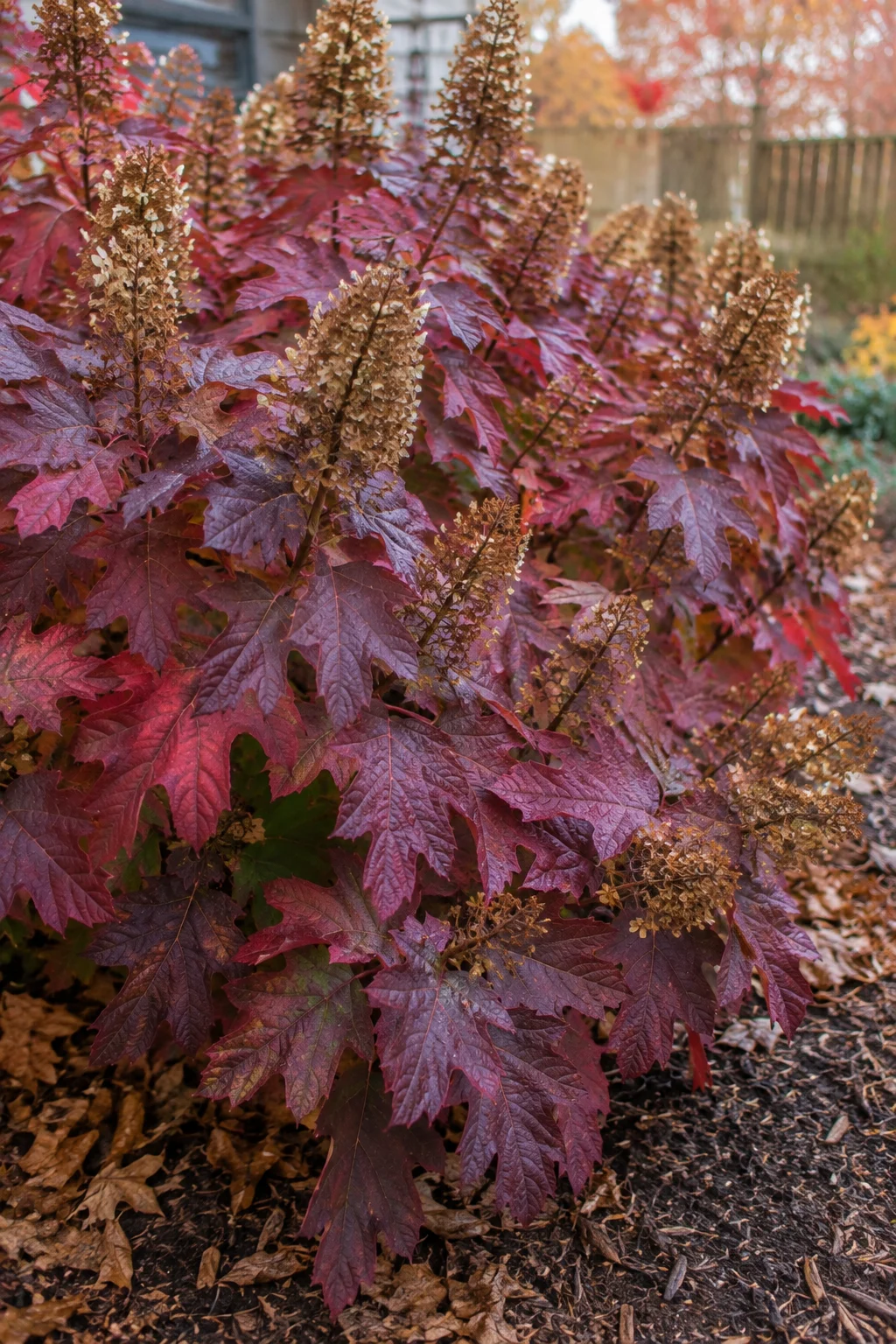
3. Oakleaf Hydrangea Foliage
Oakleaf hydrangea offers a second season of interest once its large, maple-shaped leaves turn deep maroon and purple in fall, according to the Chicago Botanic Garden, which notes the deep maroons, purples, and reds that fade throughout these shrubs provide excellent contrast against the spent summer flowers. It works well as a foundation planting since it offers structure well beyond its summer bloom. Plant in part shade with consistently moist soil for the best fall color development.
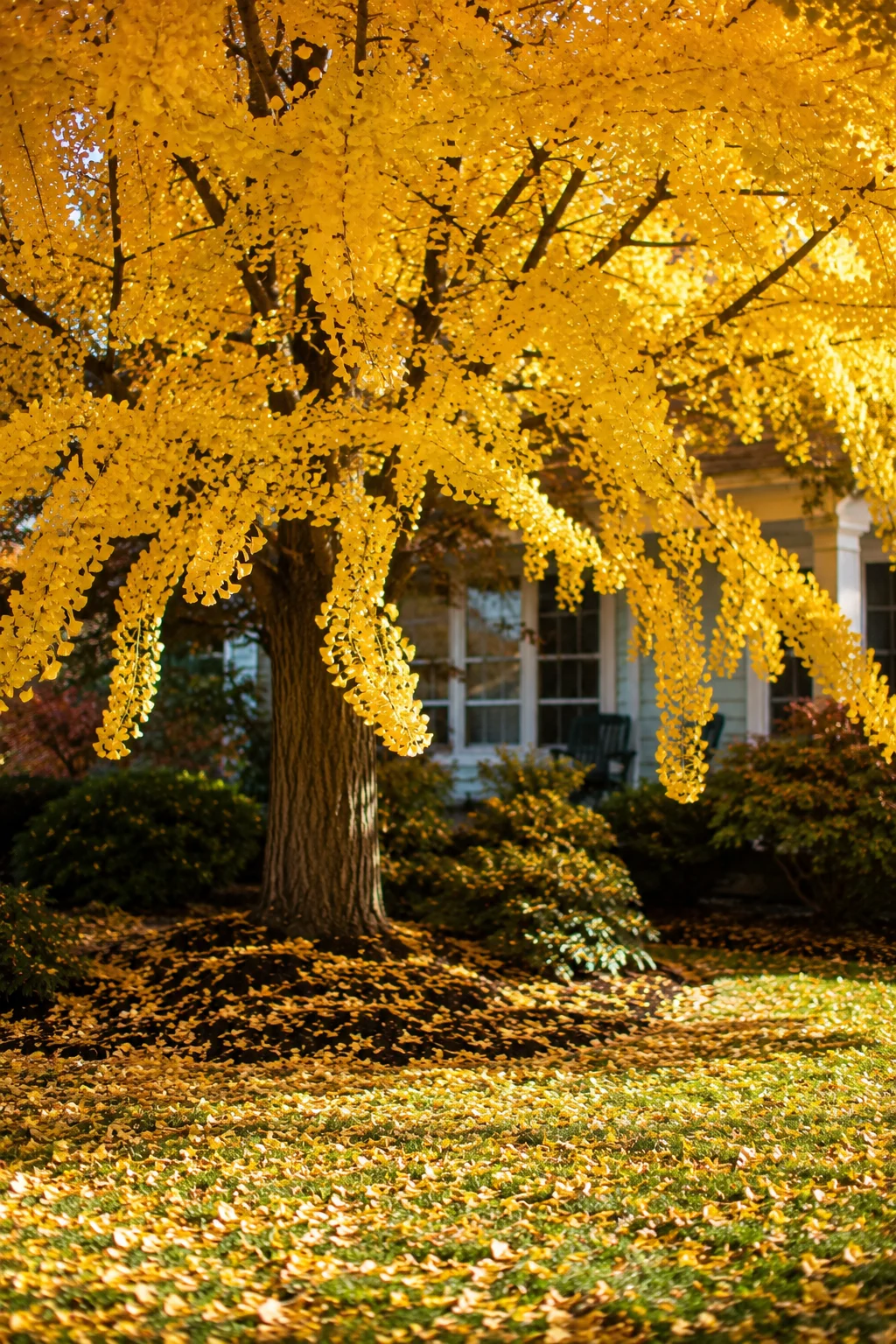
4. Ginkgo Tree Golden Canopy
A ginkgo tree turns a uniform, brilliant gold in fall and tends to hold its leaves later into the season than many other trees, giving a longer window of color. It works because ginkgos tolerate a wide range of soil and urban conditions, making them a reliable choice even in less-than-ideal yards. Plant a male cultivar specifically, since female trees produce messy, foul-smelling fruit in fall.
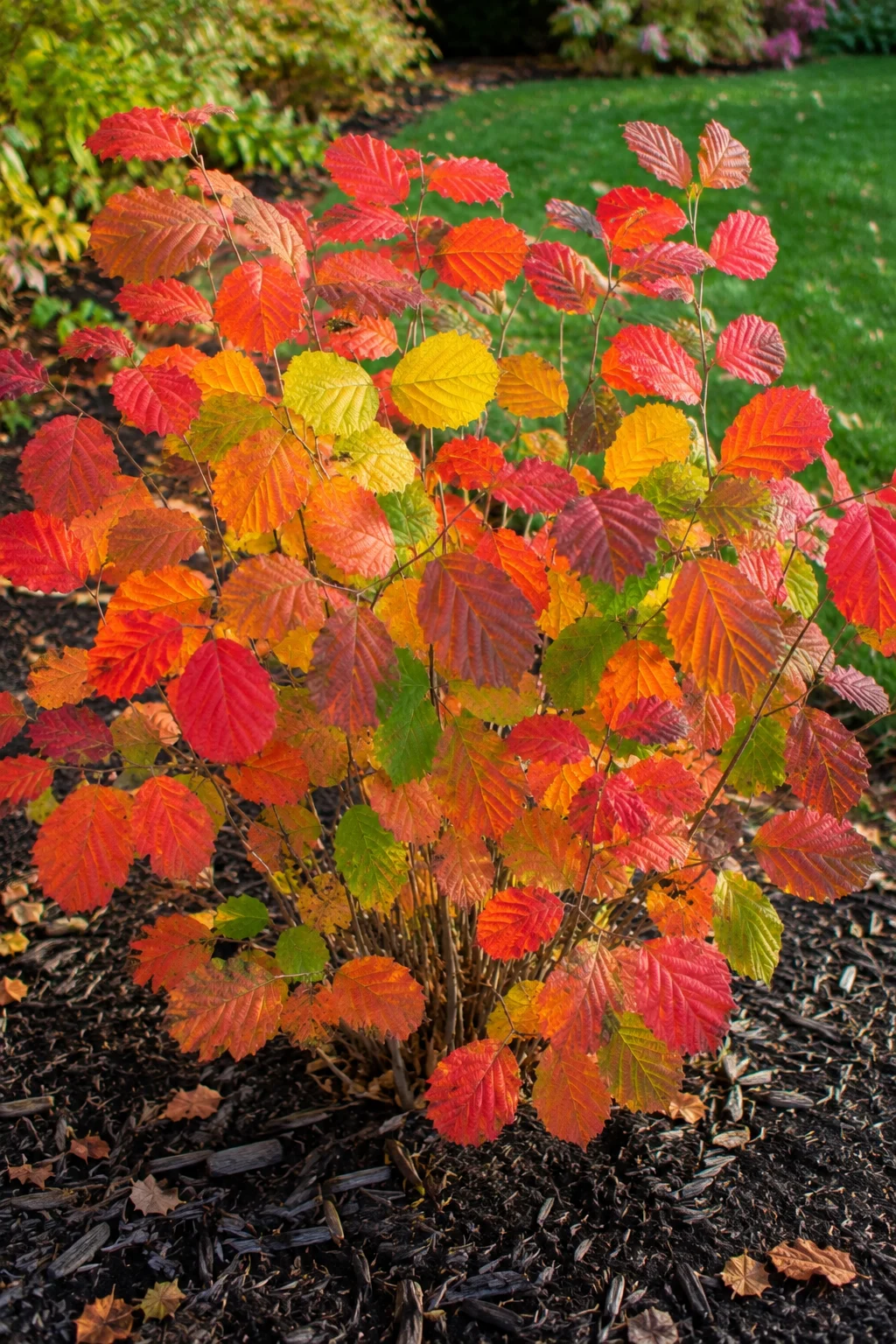
5. Fothergilla Multi-Color Shrub
Fothergilla is a compact native shrub that turns a mix of red, orange, and yellow on the same plant in fall, often with all three colors visible at once. It works especially well in smaller gardens since dwarf cultivars stay around three feet tall while still delivering a full display. Plant in part shade with acidic, well-draining soil for the healthiest color and growth.
Fall-Blooming Flowers
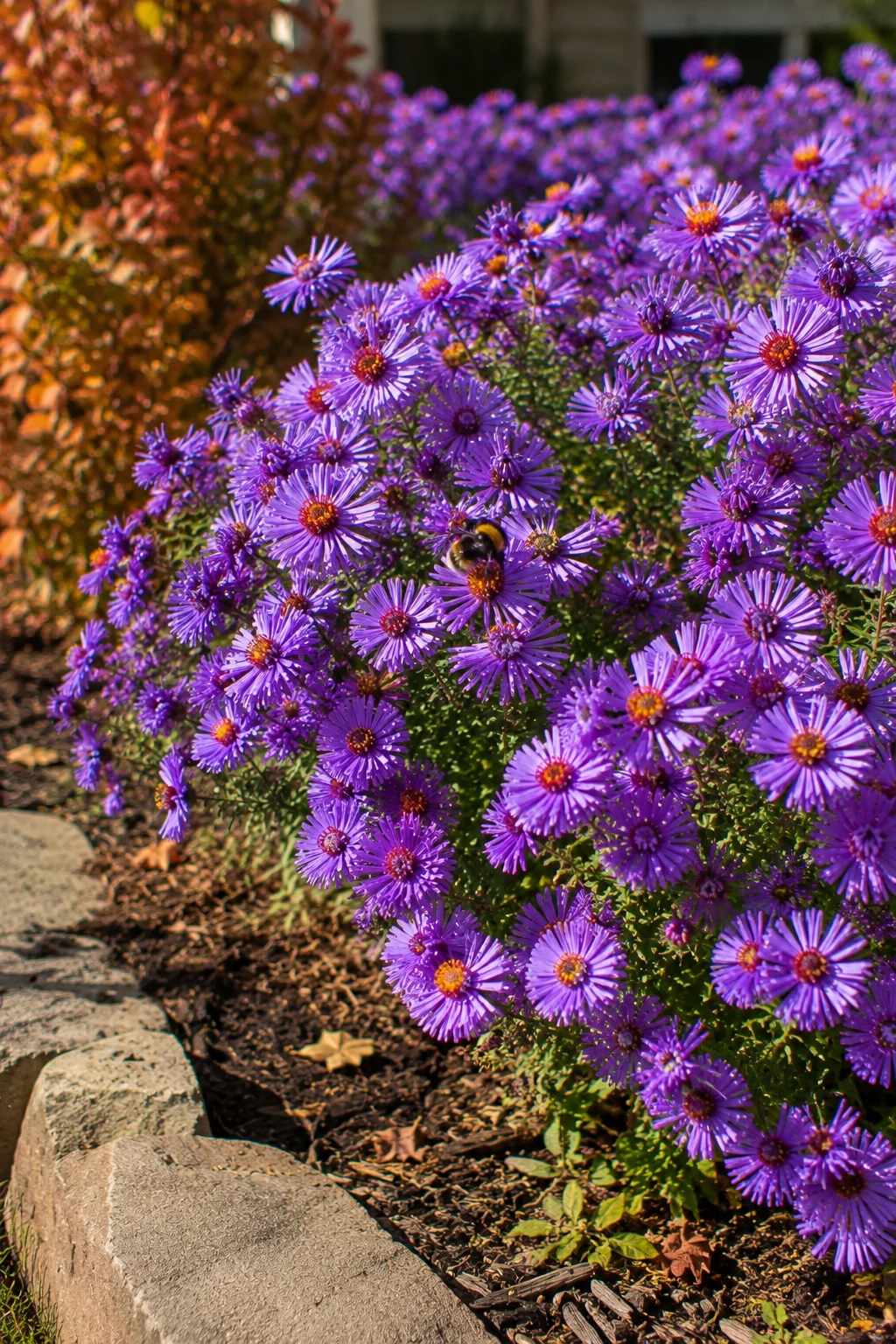
6. Aster Drift
A dense drift of purple or pink aster fills a bed with color right as most summer perennials are fading, extending the garden’s bloom season well into October in many climates. It works because asters are reliable, low-maintenance perennials once established, and they attract late-season pollinators heavily. Plant in full sun with good drainage, and pinch back stems in early summer for a fuller, more compact fall display.
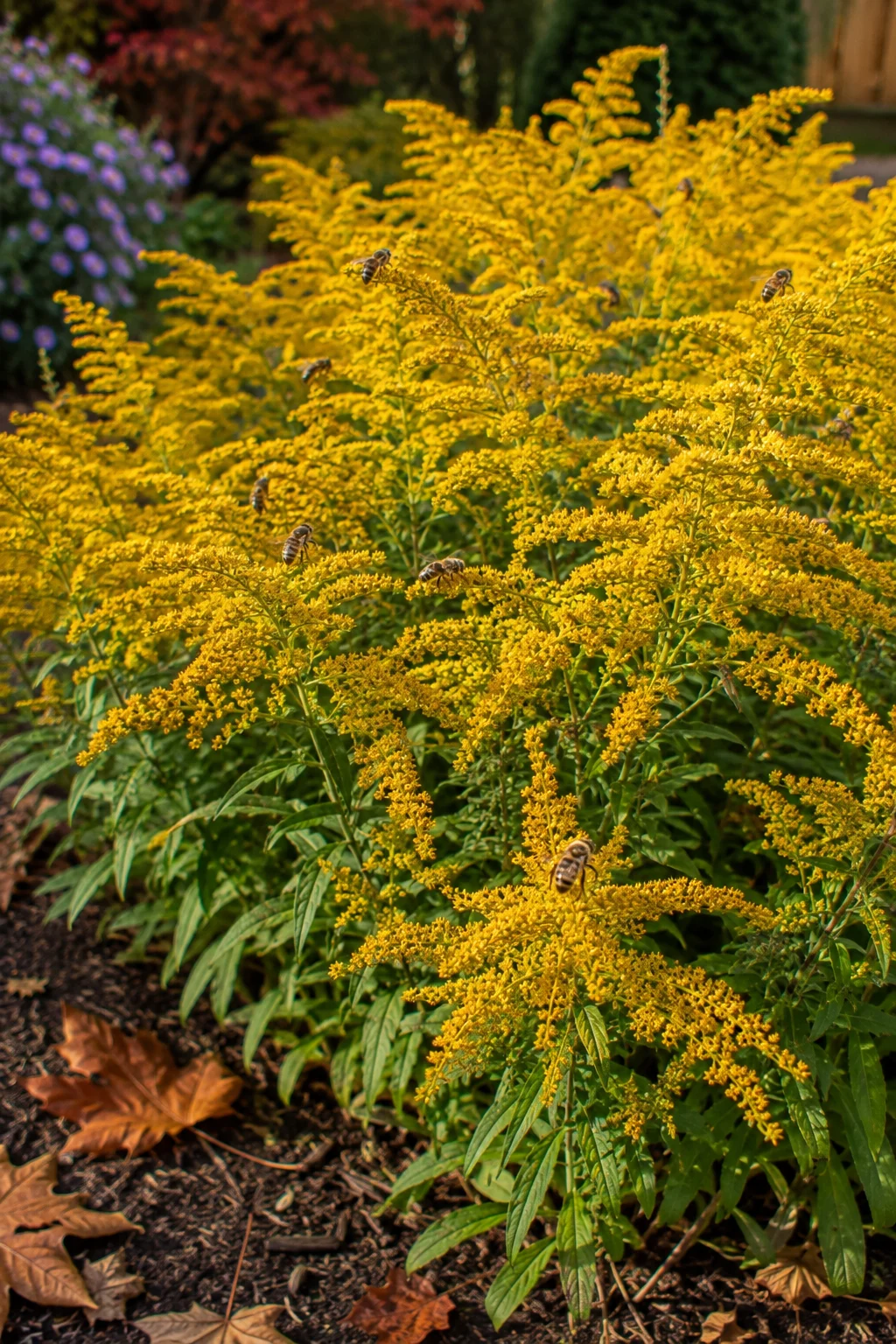
7. Goldenrod Patch
Goldenrod’s bright yellow plumes bring reliable color and heavy pollinator activity to the garden in fall, despite its undeserved reputation for causing allergies, which actually comes from wind-pollinated ragweed blooming at the same time. It works well in a sunny back corner where it can spread without crowding out neighboring plants. Give it room, since established colonies can expand significantly over a few growing seasons.
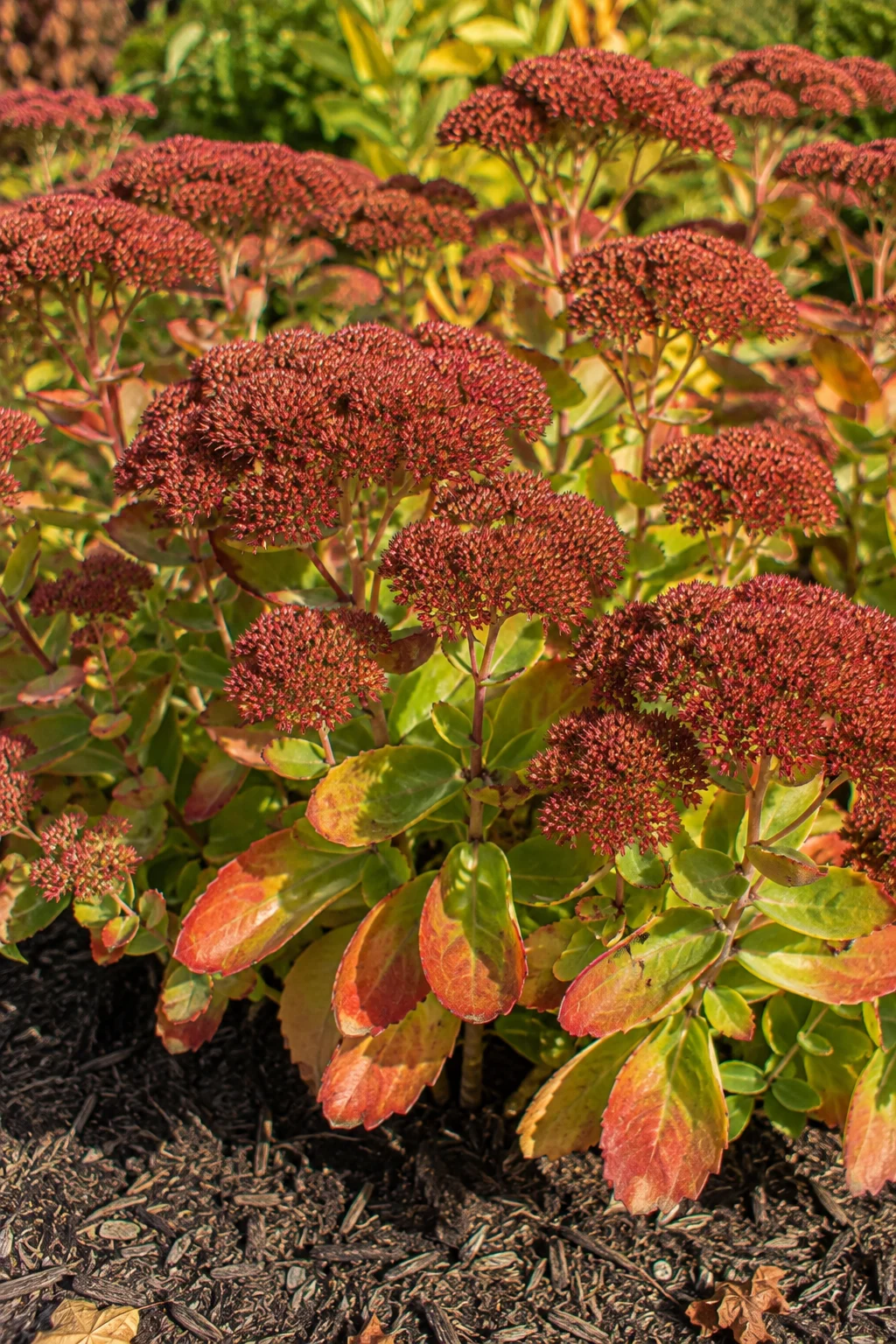
8. Sedum Autumn Joy
Sedum ‘Autumn Joy’ shifts from pale green summer foliage to rosy pink and eventually rust-colored flower heads by fall, giving one plant a full seasonal color arc without any extra care. It works because sedum tolerates poor soil and drought once established, making it one of the lowest-maintenance fall bloomers available. Plant in full sun, and leave the dried flower heads standing through winter for added structure.
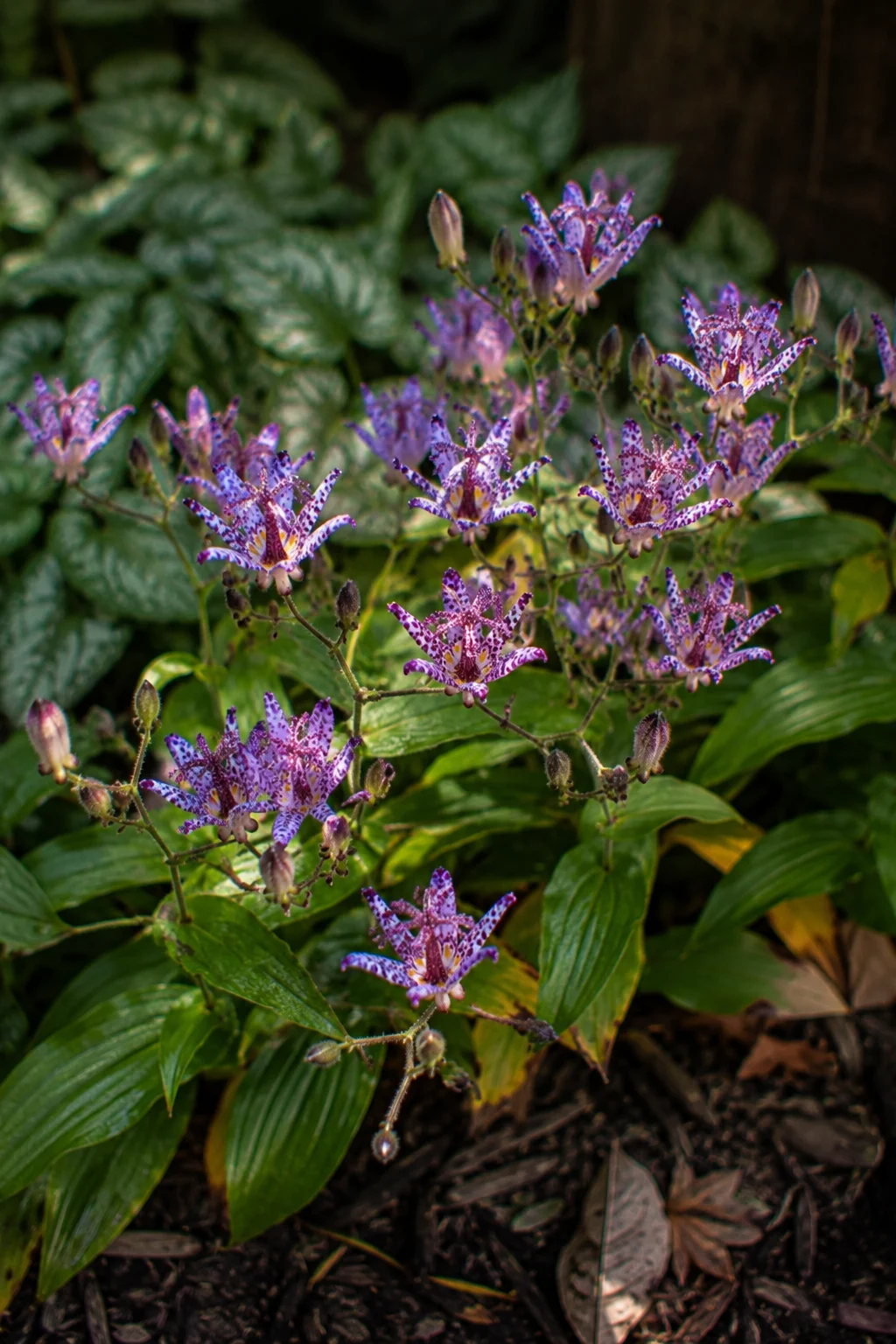
9. Toad Lily Shade Bloom
Toad lily brings an unusual, orchid-like flower to shaded fall garden beds, a spot where most other bloomers have already finished for the season. It works because it fills a genuine gap, few shade plants flower this late, giving a shaded corner real seasonal interest instead of just bare foliage. Plant in part to full shade with consistently moist, rich soil for the best bloom display.
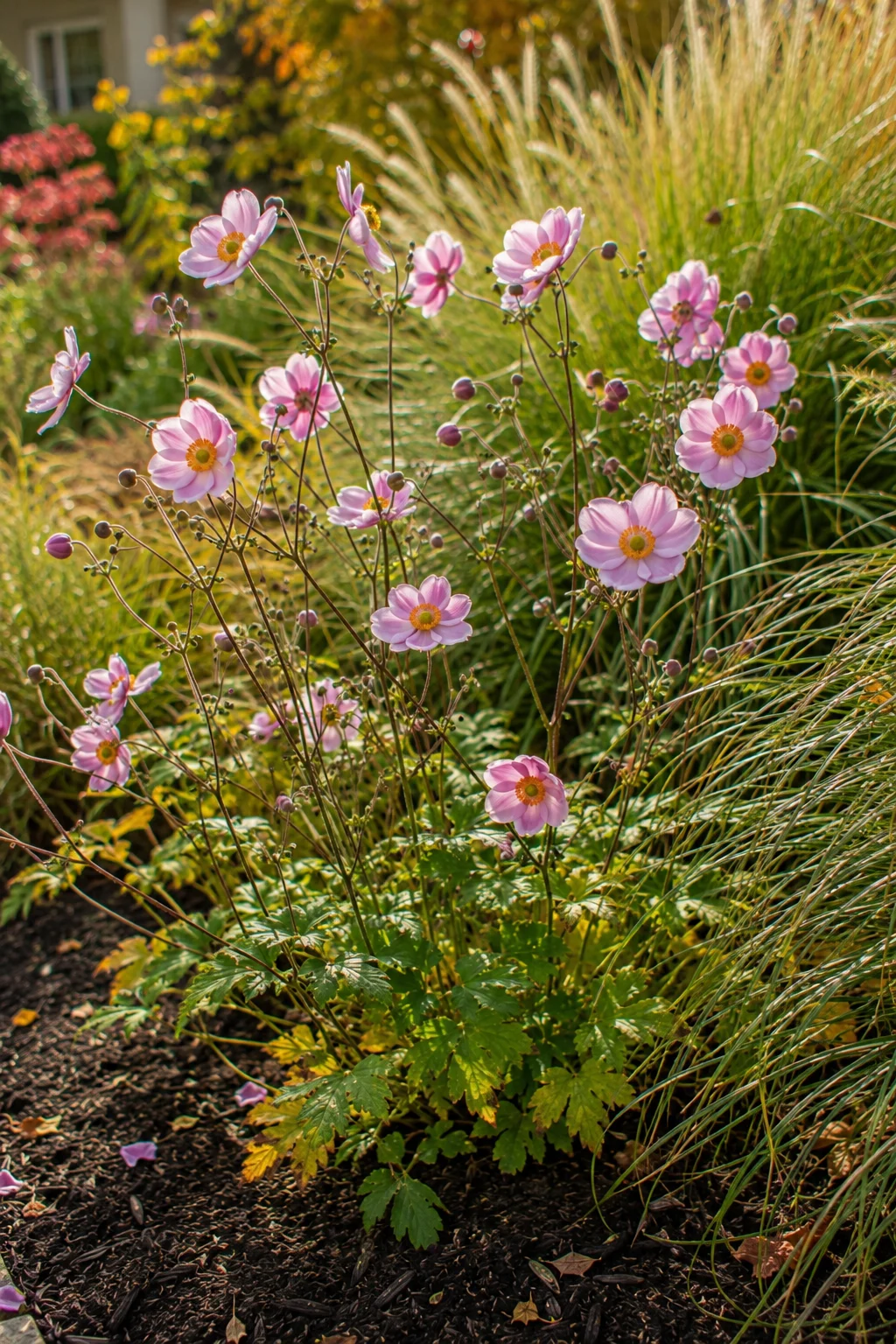
10. Anemone Fall Bloomer
Japanese anemone produces delicate pink or white flowers on tall, airy stems through September and October, adding a softer texture to a fall garden dominated by heavier foliage colors. It works well planted among ornamental grasses, where its light blooms contrast nicely with denser textures nearby. Plant in part shade with rich, well-draining soil, and expect it to spread gradually once established.
Mums, Kale & Container Displays
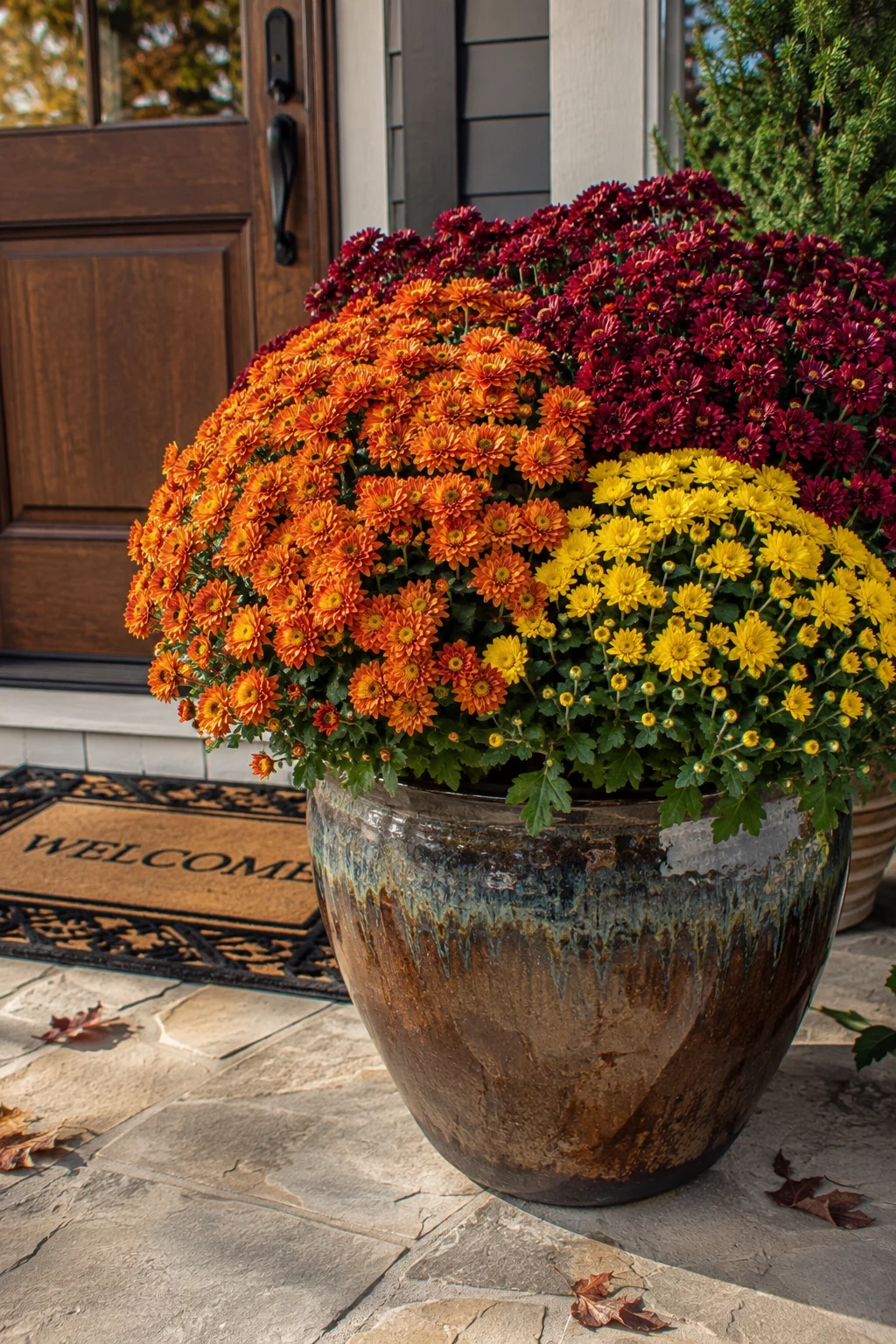
11. Layered Mum Container
A large container planted with mums in layered heights and colors gives an instant, high-impact fall display near a front door or patio without waiting for anything to establish. It works because mums are sold already in bud or bloom, so the visual payoff is immediate rather than seasons away. Choose plants still partly in bud for a longer display window, and water regularly since containers dry out faster than beds.
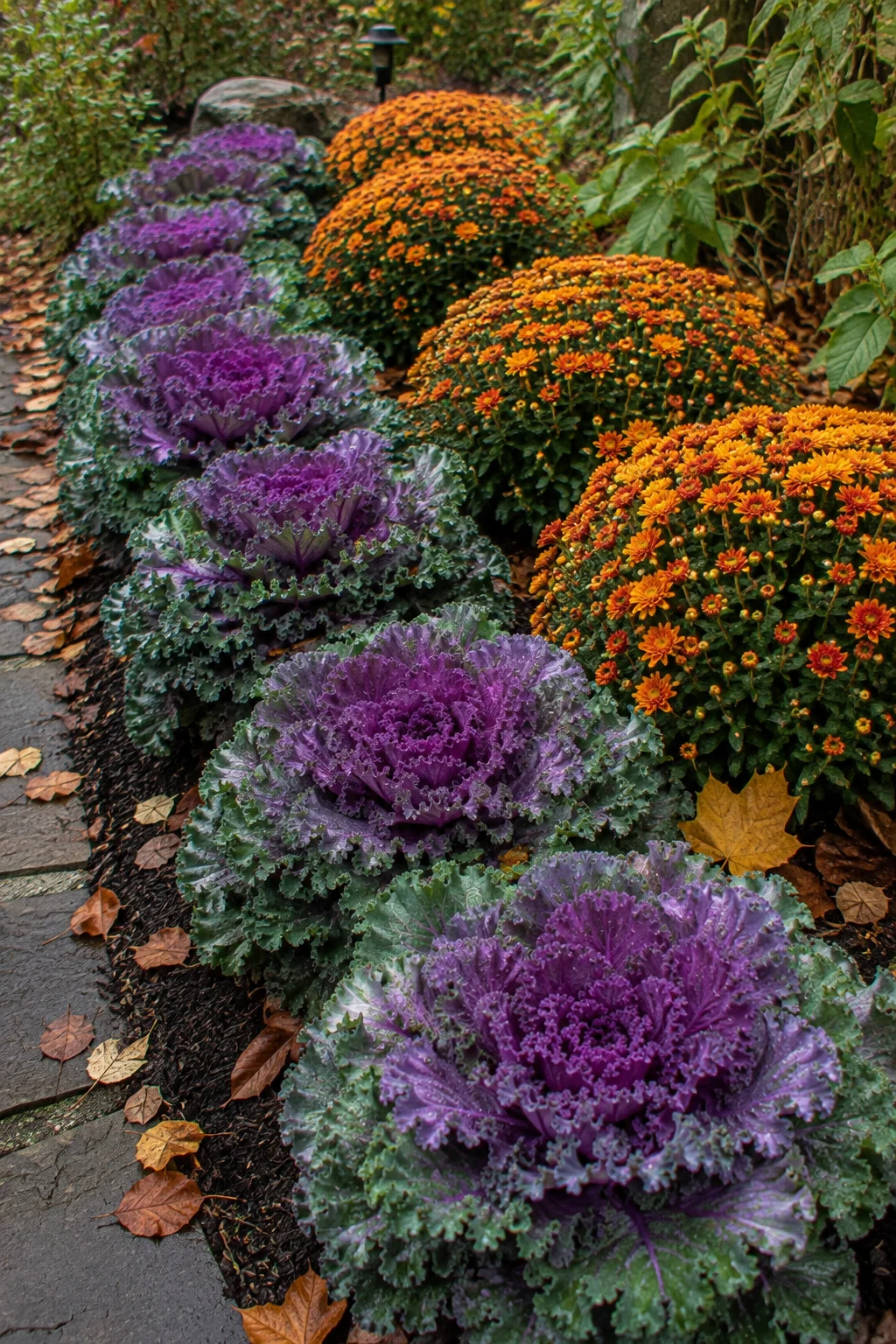
12. Ornamental Kale Border
A border of ruffled purple and green ornamental kale holds its color and shape through several frosts, well after most flowering annuals have given out, making it one of the longest-lasting fall bedding plants. It works especially well paired with mums, since the kale’s textured leaves contrast with the mums’ rounder blooms. Plant in full sun and expect the color to actually deepen as temperatures cool further into fall.
13. Pumpkin and Gourd Vignette
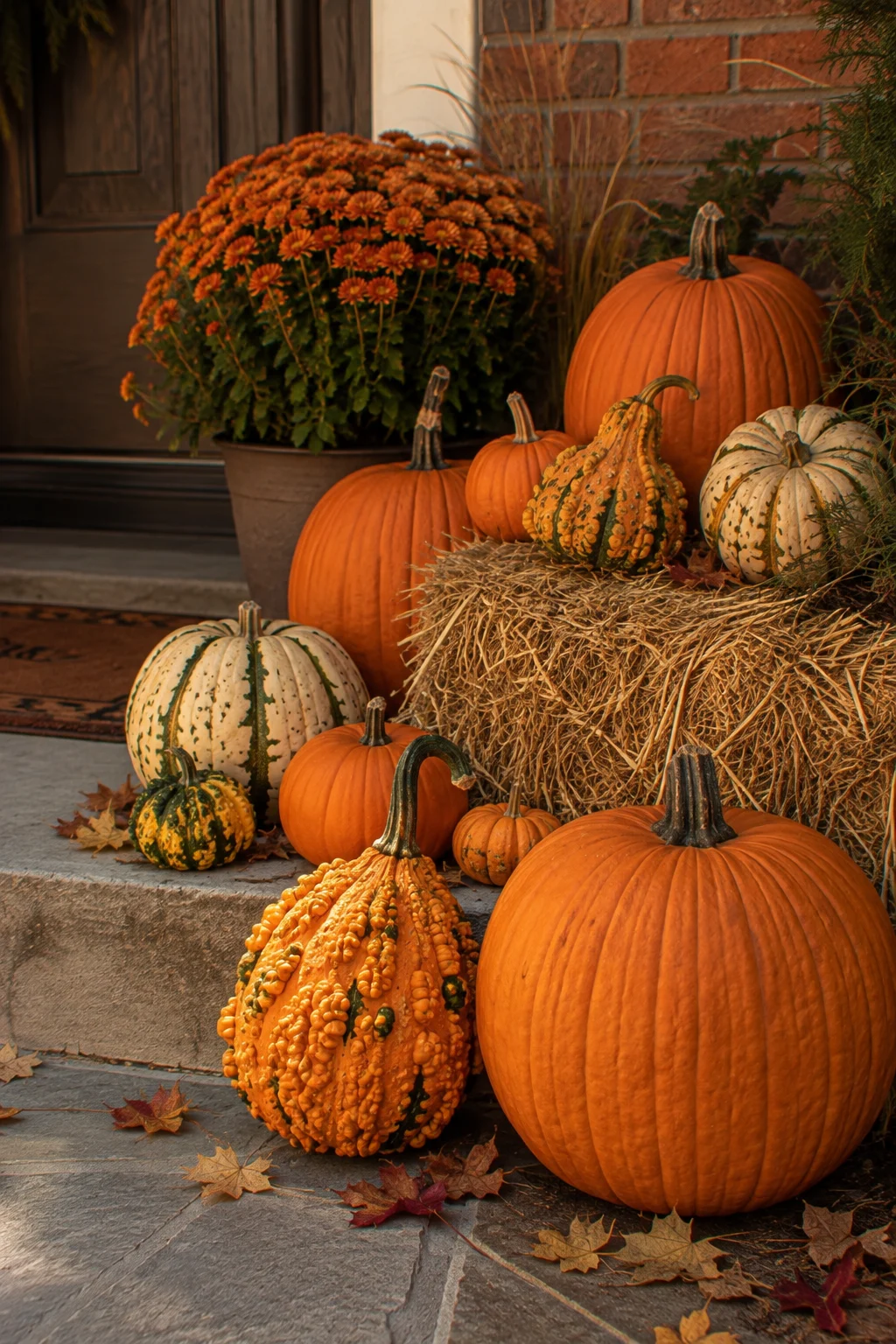
A small grouping of pumpkins and gourds arranged near a front step or garden bed edge adds seasonal charm without needing any additional planting at all. It works because it is one of the simplest and least expensive fall display ideas, using items already associated with the season. Arrange in varying sizes and colors for visual interest, and replace as needed if any begin to soften or rot.
14. Cabbage and Pansy Combo
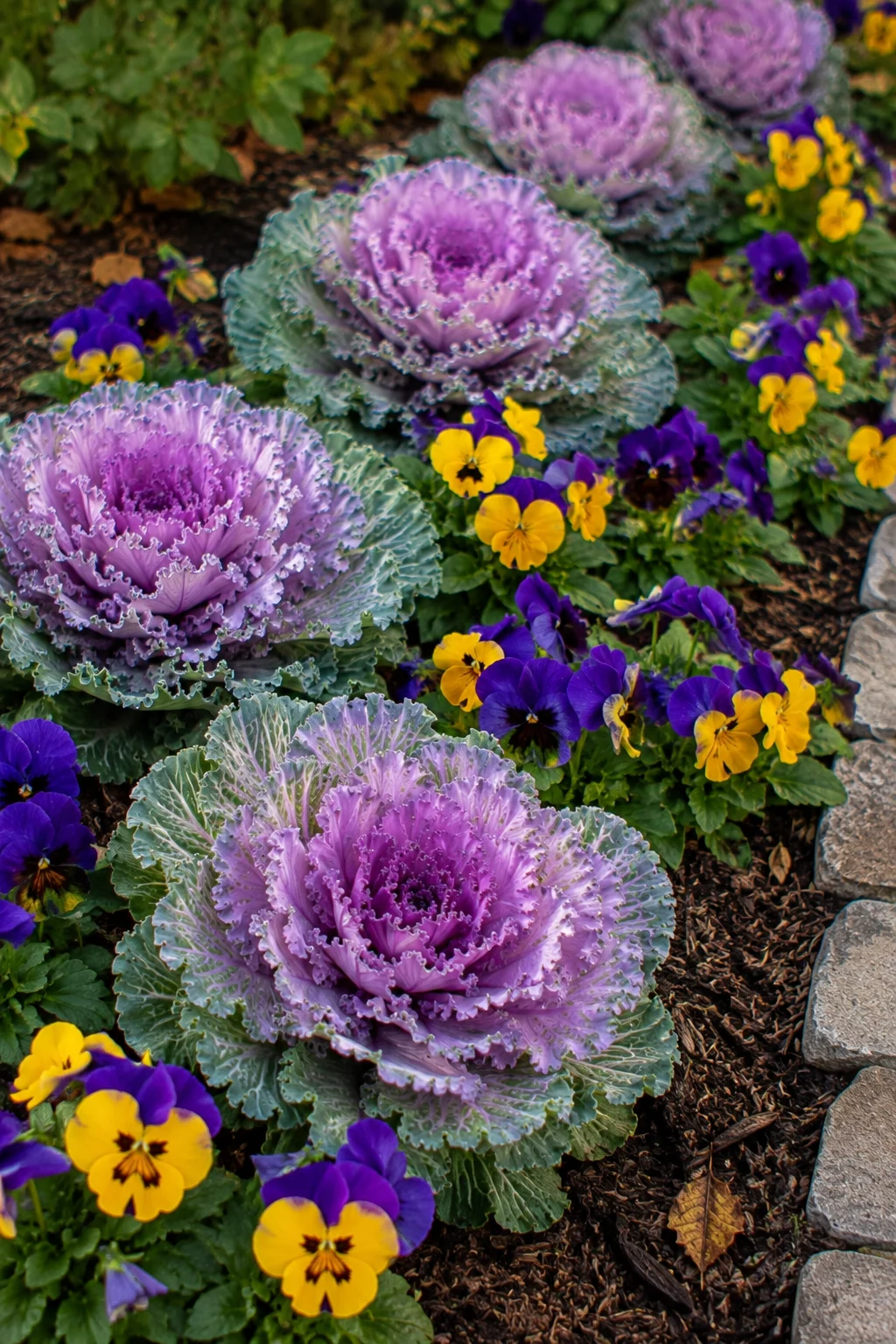
Flowering ornamental cabbage paired with cool-season pansies gives a container or bed both bold texture and reliable color that holds up through light frost. It works because pansies continue blooming even as temperatures drop, extending color into a period when most summer annuals have already faded. Plant in a sunny spot, and deadhead pansies regularly to keep new blooms coming through fall.
15. Fall Wreath on the Door
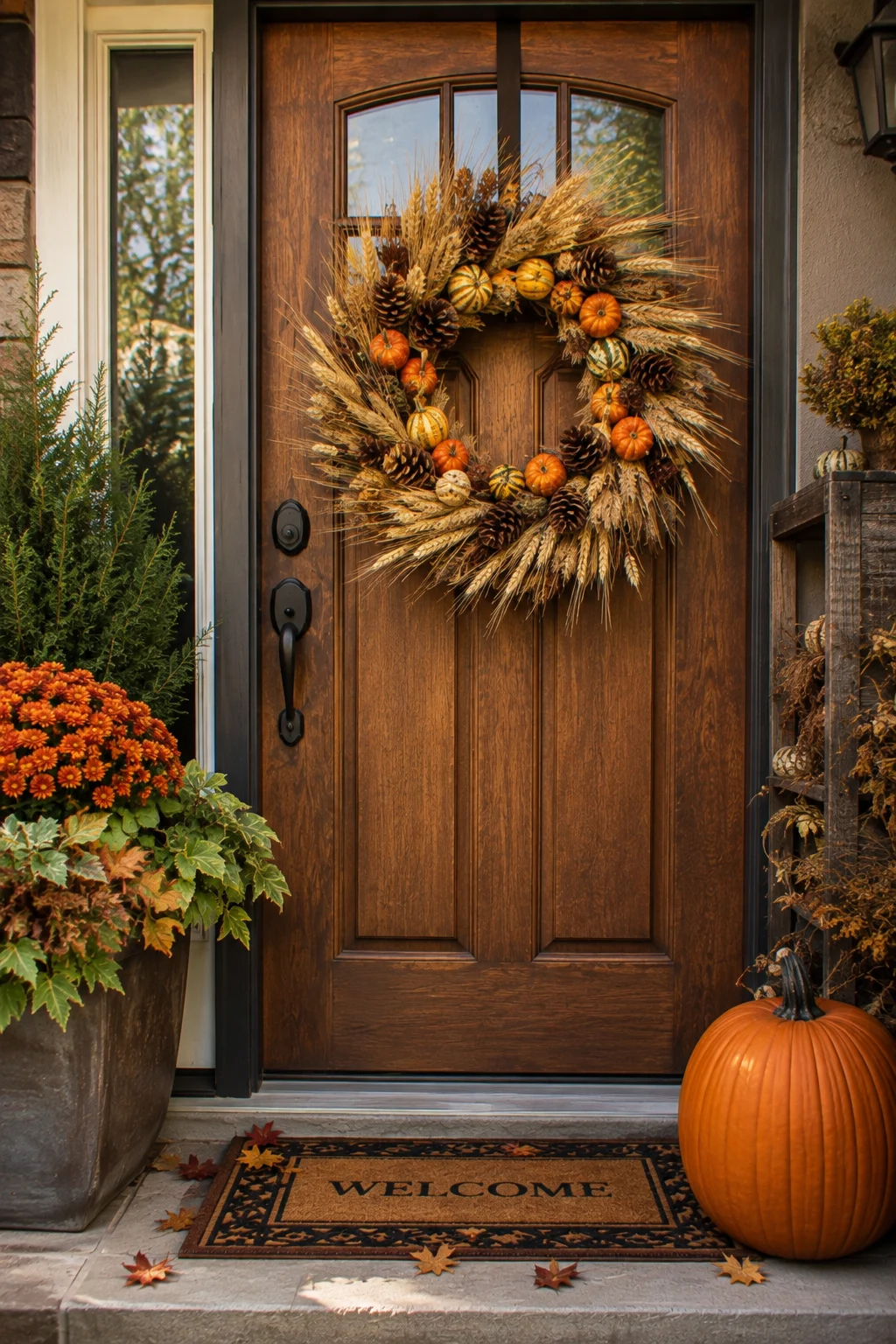
A dried or artificial wreath made from wheat, pinecones, and small gourds adds seasonal warmth to a front entry without requiring any garden space or planting at all. It works because it is a quick, low-cost way to signal the season change right at the point of first impression. Choose a weather-resistant wreath if it will hang outdoors through the full season, and hang it on a simple hook or wreath hanger.
Ornamental Grasses & Texture
16. Miscanthus Feature Planting
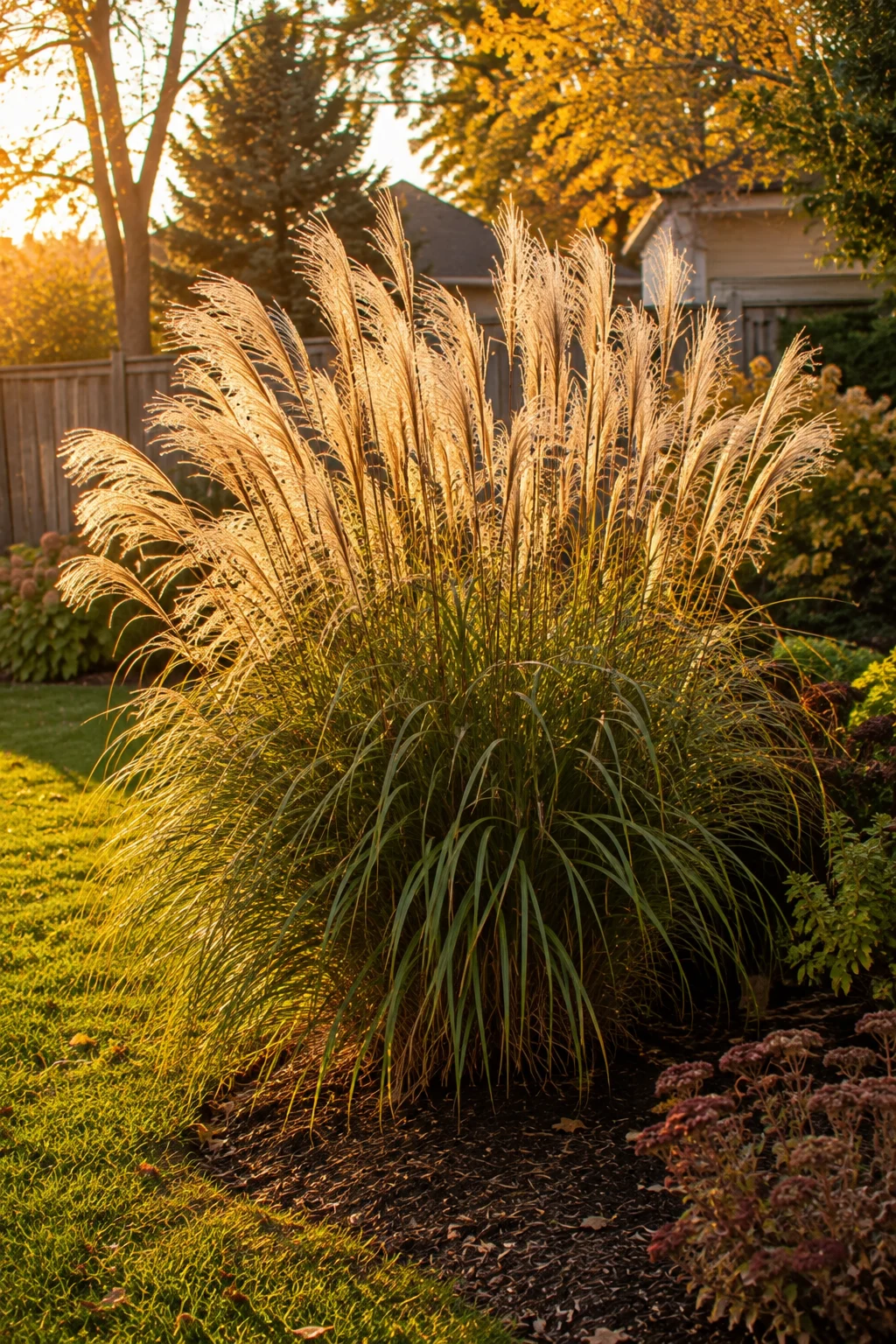
A single large miscanthus grass, with its feathery plumes catching low autumn light, works as a striking specimen planting that needs almost no care once established. It works because the plumes and blades hold their color and shape well into winter, unlike most flowering perennials that fade quickly after frost. Plant in full sun with room to reach its mature width, and cut back once in late winter before new growth starts.
17. Little Bluestem Mass
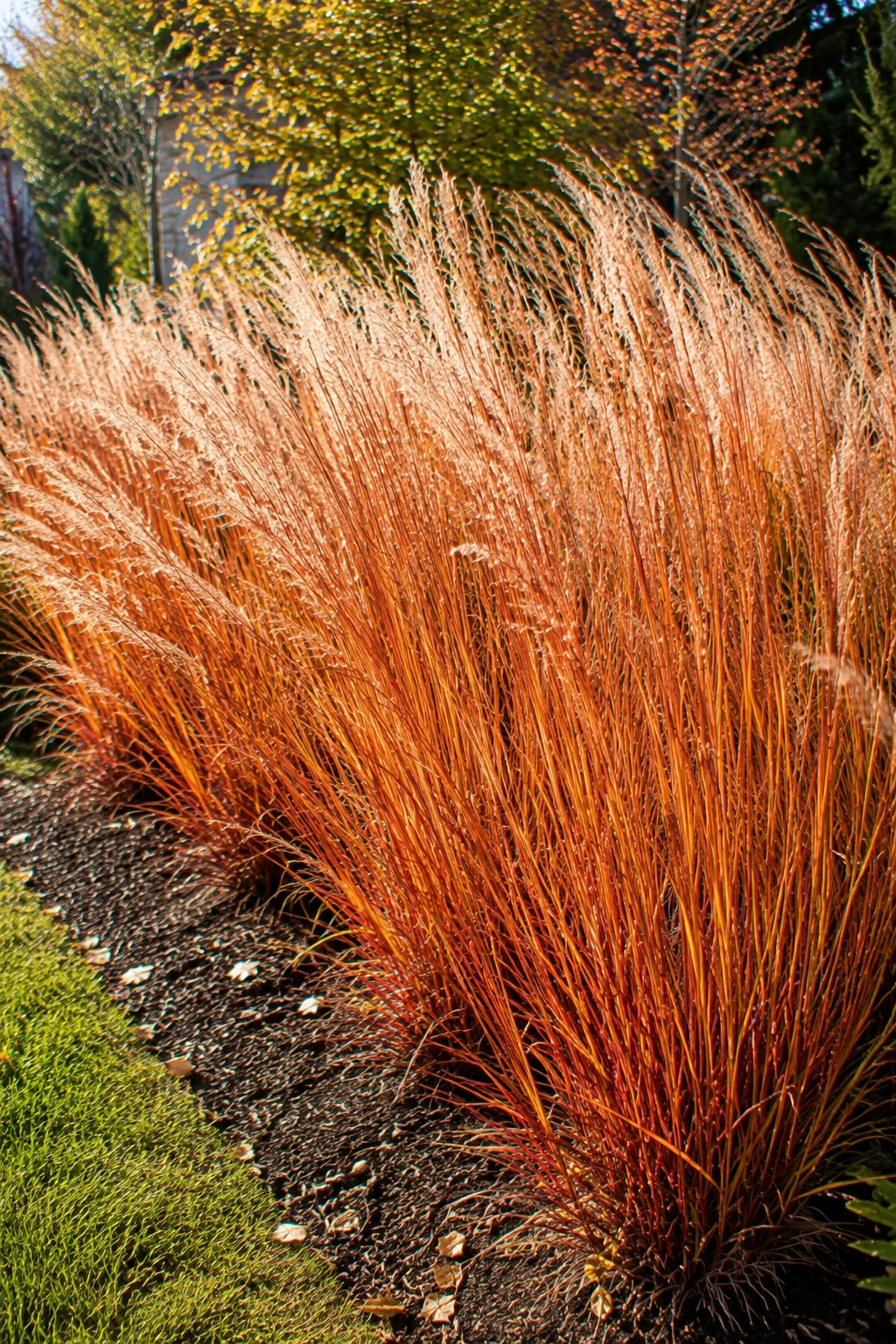
A mass planting of little bluestem turns a coppery orange-red in fall, adding warm color and movement to a bed without needing any flowers at all. It works well in dry, sunny spots where many flowering perennials struggle, making it a practical choice as well as an attractive one. Plant in a repeated drift, and leave standing through winter for continued texture and wildlife shelter.
18. Pampas Grass Focal Point
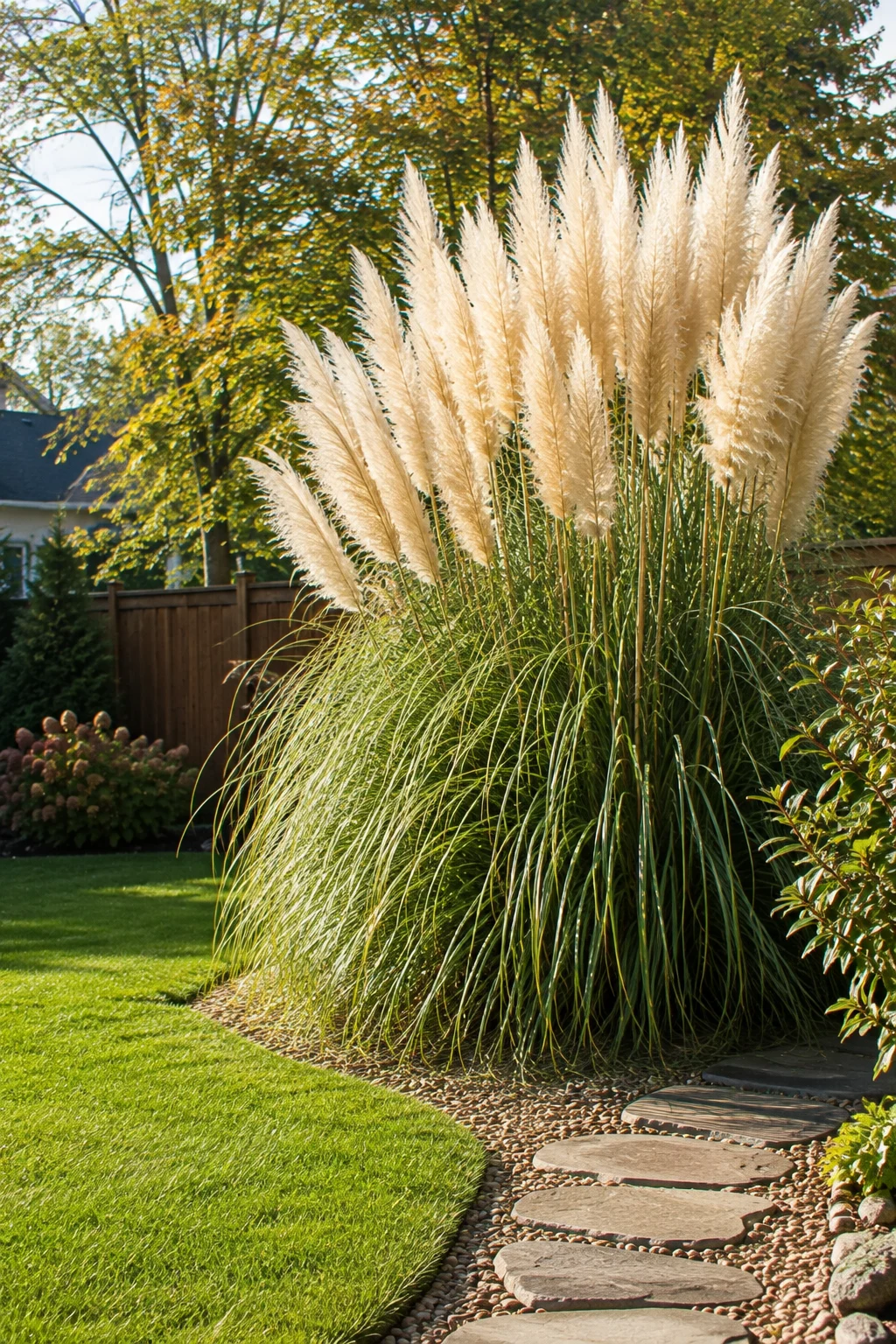
A single large pampas grass, with its tall plumy seed heads, creates a bold vertical focal point that dominates a fall garden view from a distance. It works because its scale and texture stand out even among other fall foliage and grasses, making it a natural anchor for a larger bed. Plant in full sun with plenty of room, since mature clumps can reach considerable width and height.
19. Fountain Grass Border
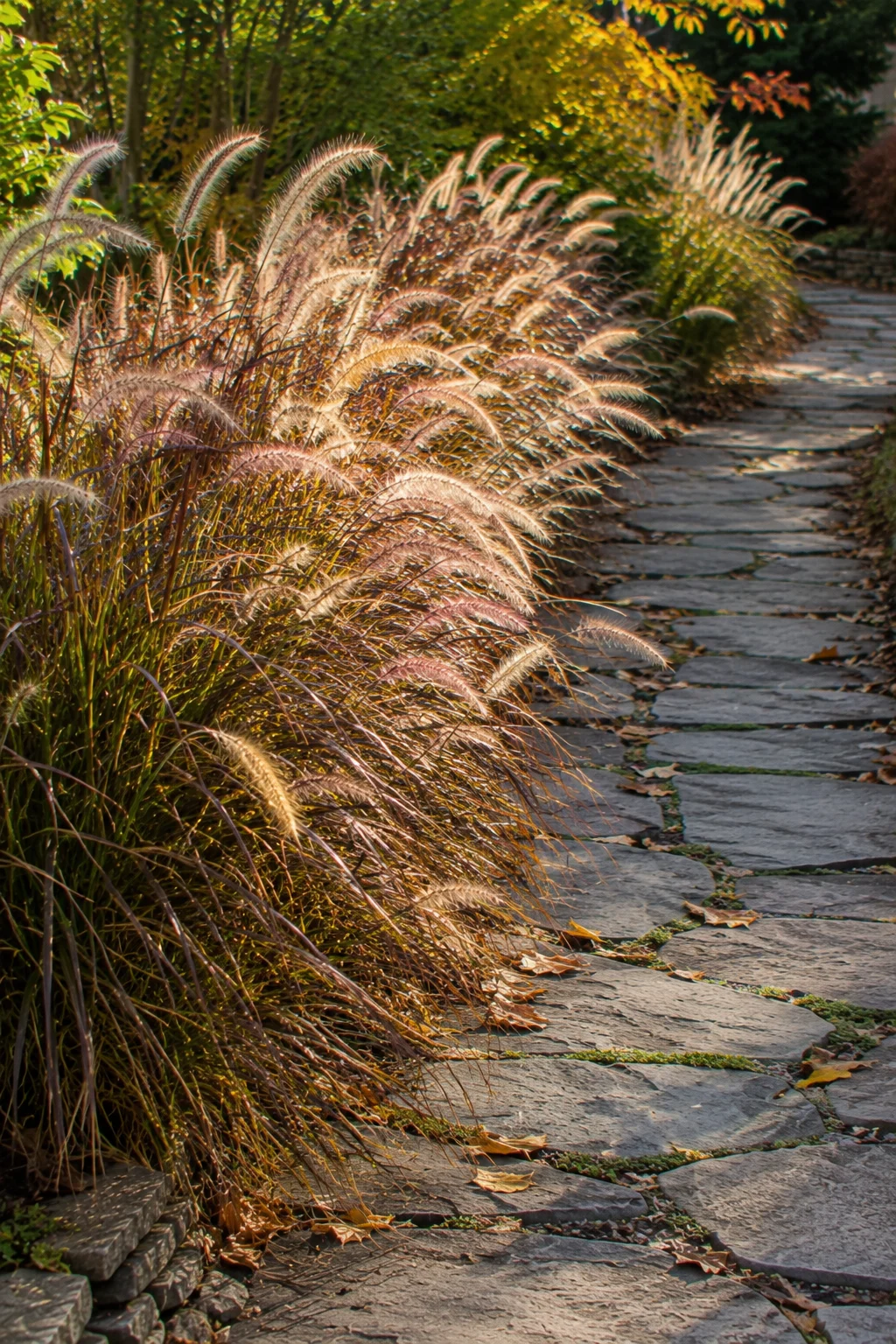
A low border of fountain grass, with its arching form and soft bottlebrush seed heads, softens the edge of a walkway or bed while adding fall texture that lasts through several frosts. It works well as a transition planting between taller specimens and lower groundcovers, tying a bed together visually. Plant in full sun, and cut back in late winter once the display has fully faded.
20. Switchgrass Backdrop
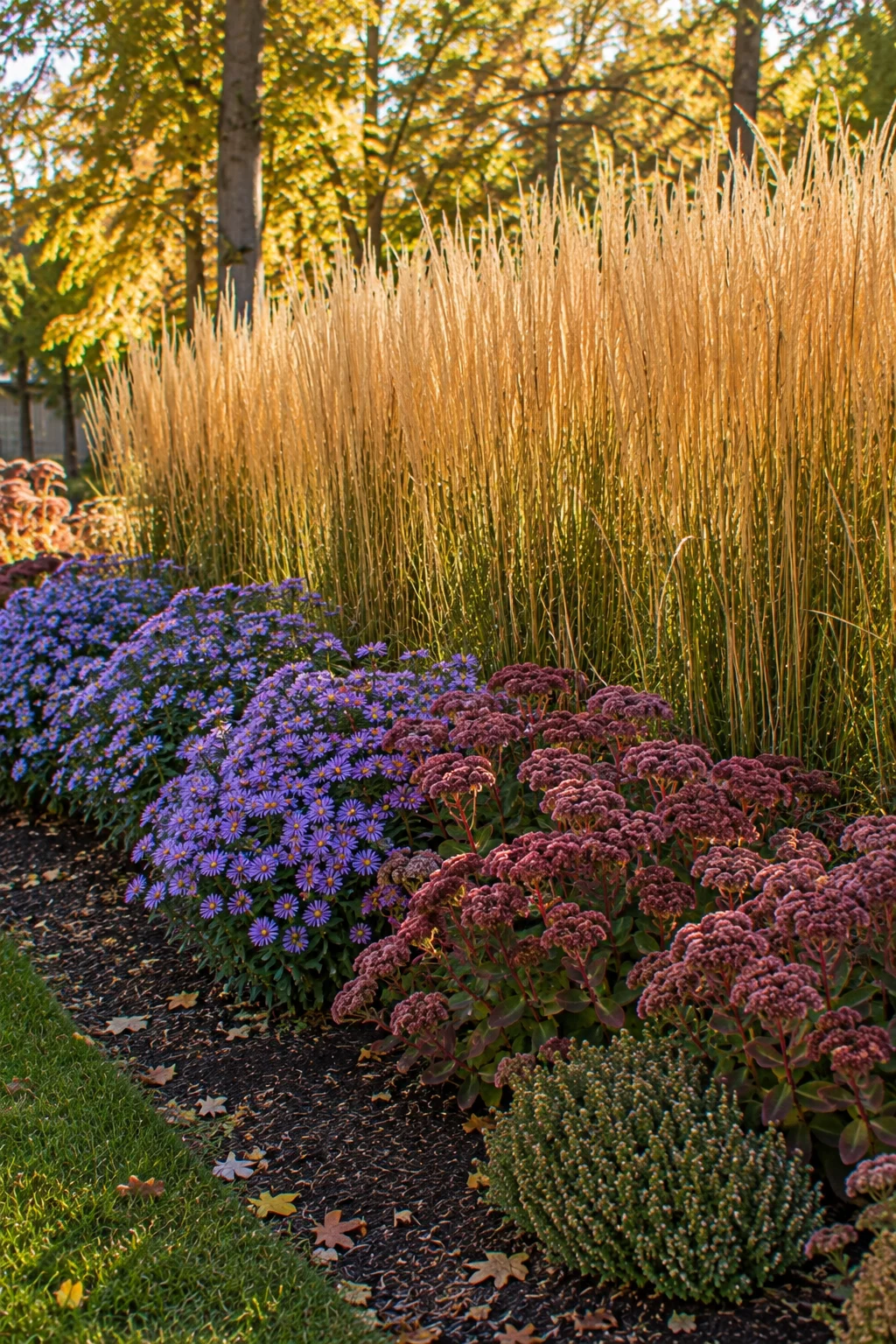
A row of switchgrass planted behind a shorter flowering bed gives the whole planting a layered backdrop that holds color and structure long after the flowers in front have finished blooming. It works because switchgrass turns a warm gold to burgundy depending on the cultivar, adding depth without competing with the flowers for attention. Plant in full sun, and leave standing through winter for continued visual interest and shelter.
Harvest & Edible Touches
21. Pumpkin Patch Corner
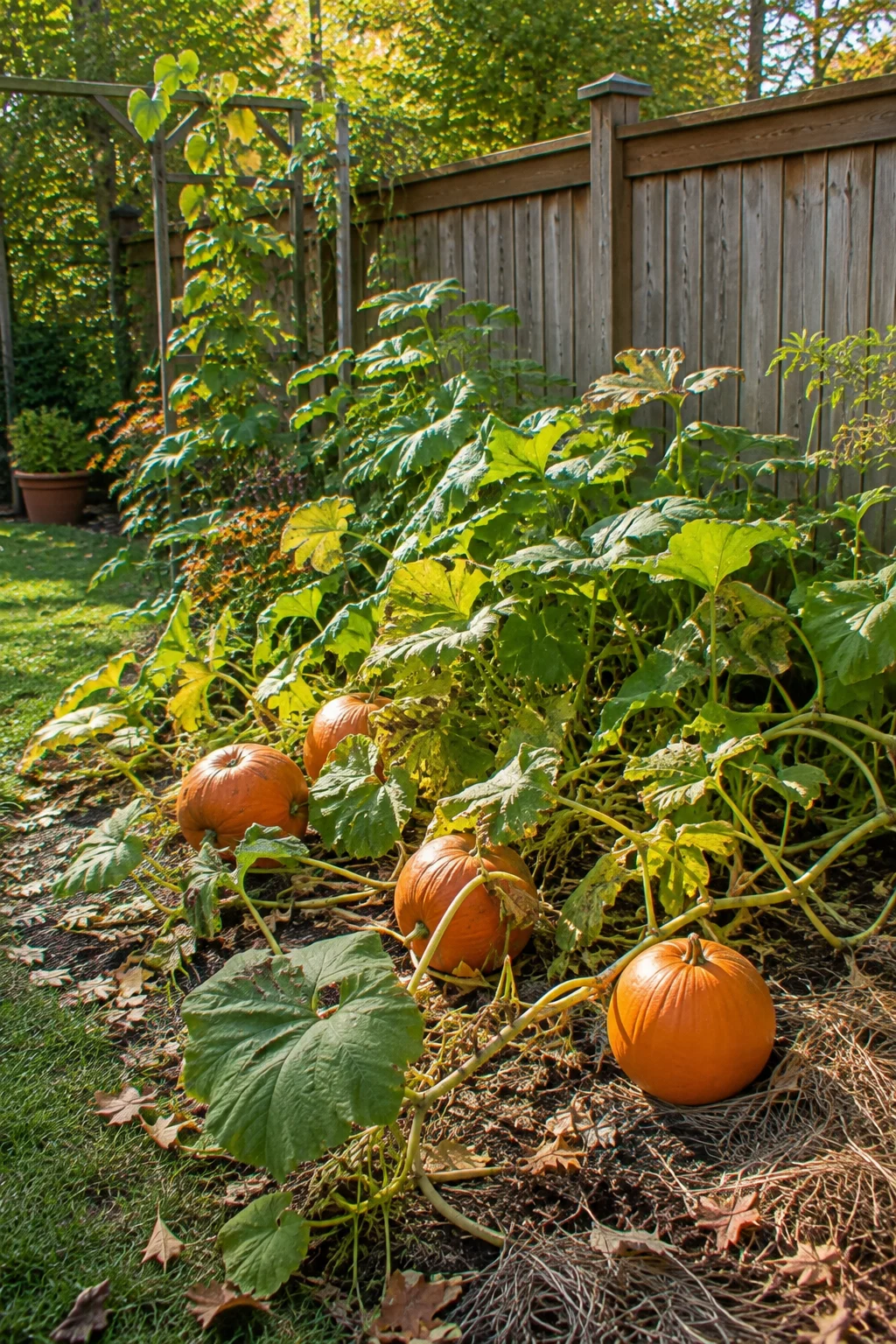
Dedicating a sunny garden corner to growing your own pumpkins turns a fall decorating tradition into a genuine gardening project, with vines sprawling attractively across the ground through late summer into fall. It works well in yards with extra space, since pumpkin vines need considerable room to spread. Plant in early summer for a fall harvest, and provide consistent water while fruit is developing for the best size and color.
22. Fall Vegetable Bed
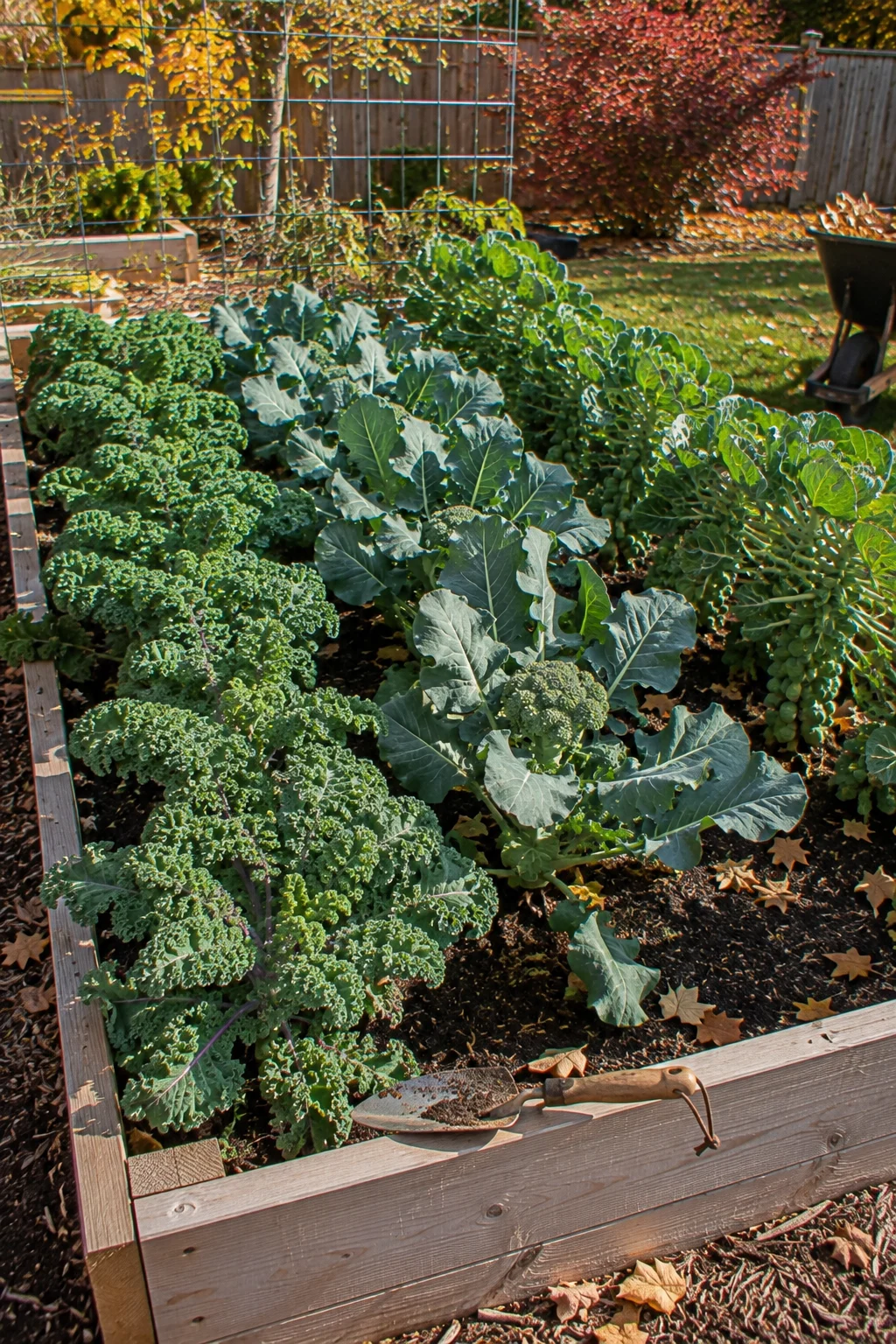
A dedicated bed of cool-season vegetables like kale, broccoli, and Brussels sprouts keeps a kitchen garden productive well after summer crops have finished, extending the growing season into fall. It works because many of these crops actually improve in flavor after a light frost, making fall harvest genuinely rewarding rather than just an extension exercise. Plant in late summer for a fall harvest, and cover with row fabric if an early hard freeze is expected.
23. Apple Tree Espalier
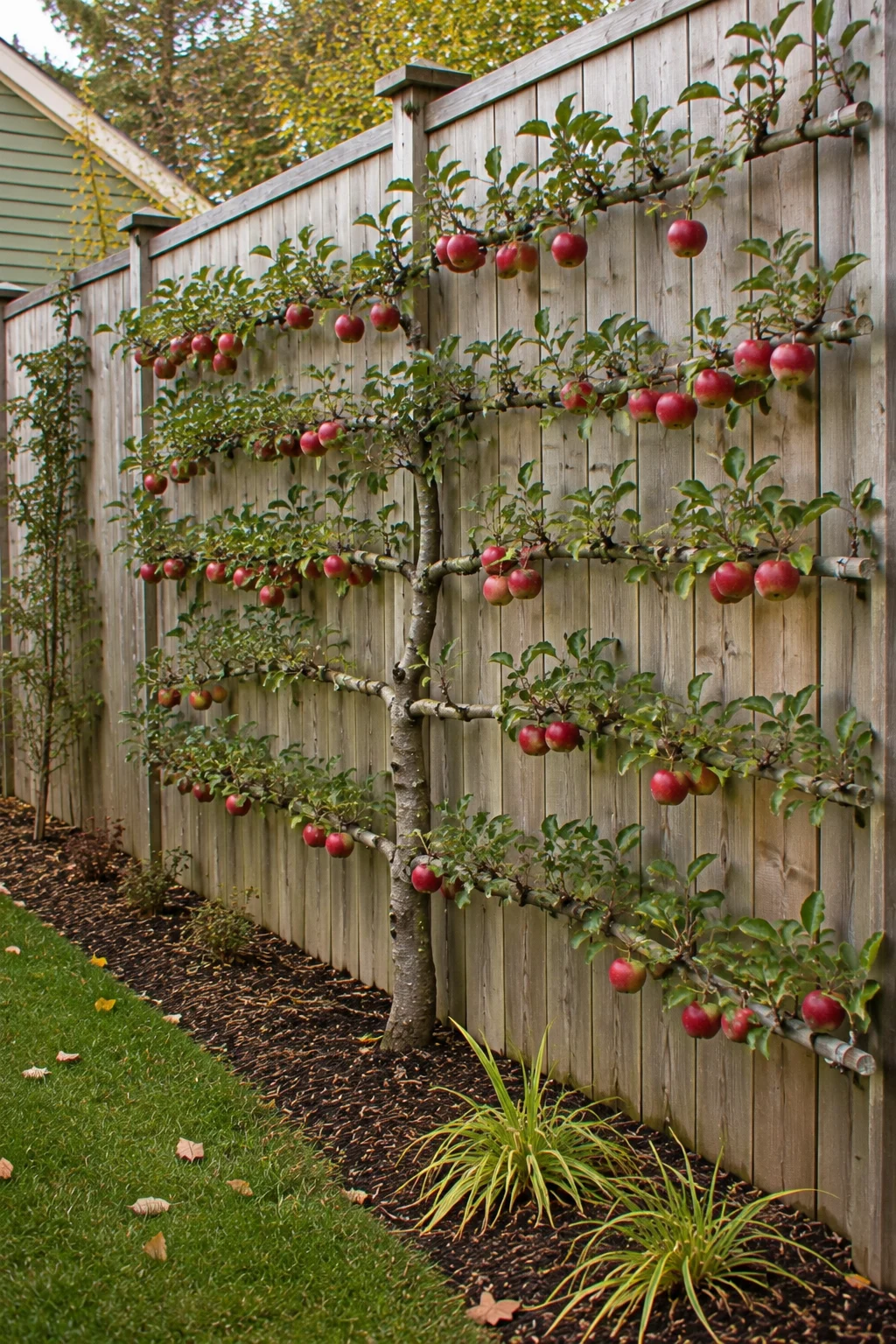
An apple tree trained flat against a fence in an espalier pattern delivers a genuine fall harvest in a narrow footprint, while also serving as a structural, sculptural garden feature through every season. It works especially well in side yards where ground space is limited but a sunny fence is available. Prune according to the specific espalier pattern chosen, and expect several years of training before the tree reaches full productive shape.
24. Herb Bed Second Flush
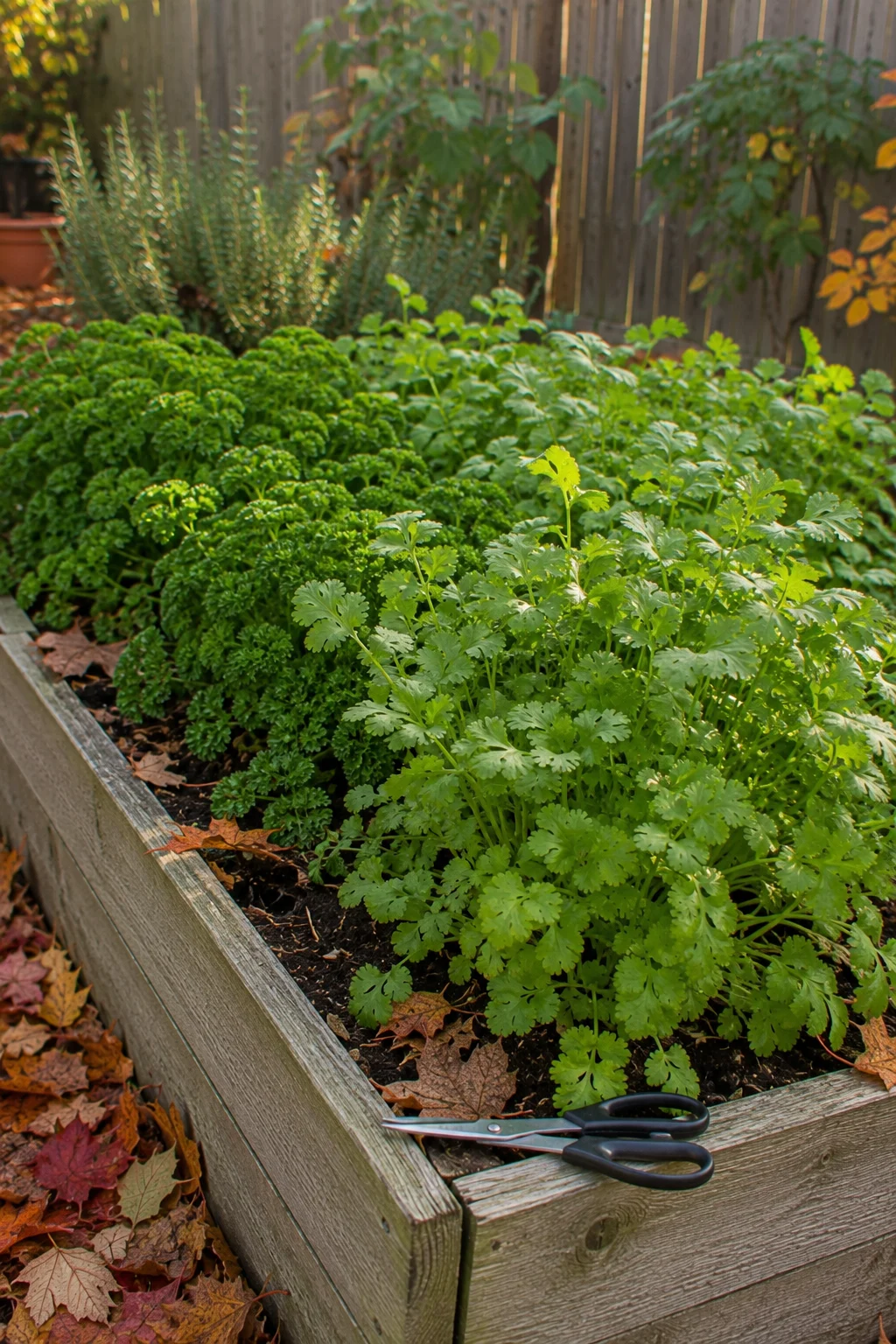
Many herbs, including cilantro and parsley, put out a strong second flush of growth once summer heat breaks, giving a fall herb bed fresh, tender leaves right as cooking shifts toward heartier autumn meals. It works because cooler fall temperatures actually suit these particular herbs better than peak summer heat, which tends to make them bolt. Plant a fresh round in late summer, and harvest regularly through fall until the first hard frost.
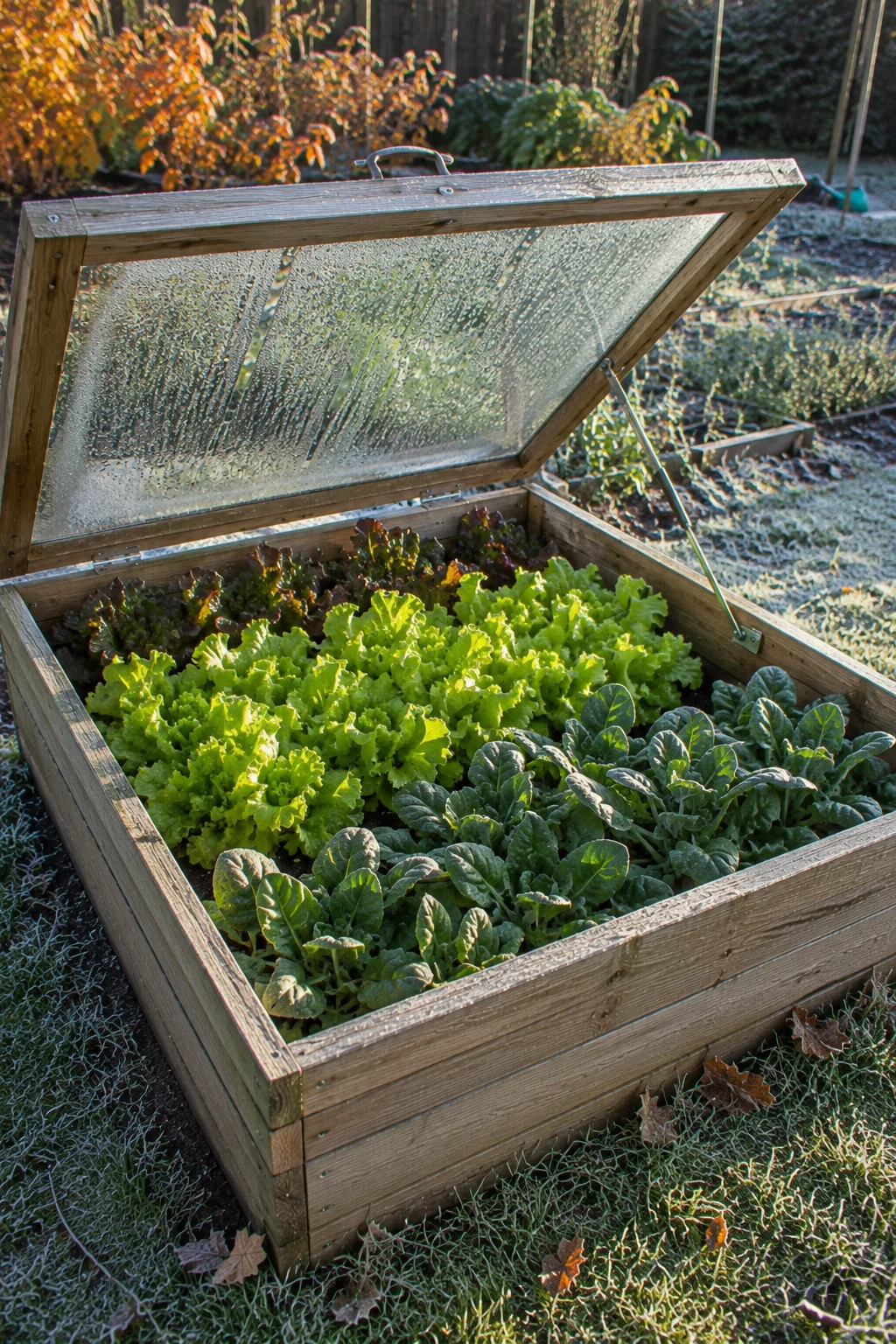
25. Cold Frame for Greens
A simple cold frame extends the harvest of leafy greens like lettuce and spinach well into late fall and even early winter in many climates, trapping heat while still allowing light through. It works because it protects tender greens from frost without the cost or complexity of a full greenhouse. Build or buy a frame with a hinged, clear lid, and vent it on warm days to prevent the interior from overheating.
Hardscape & Seasonal Structure
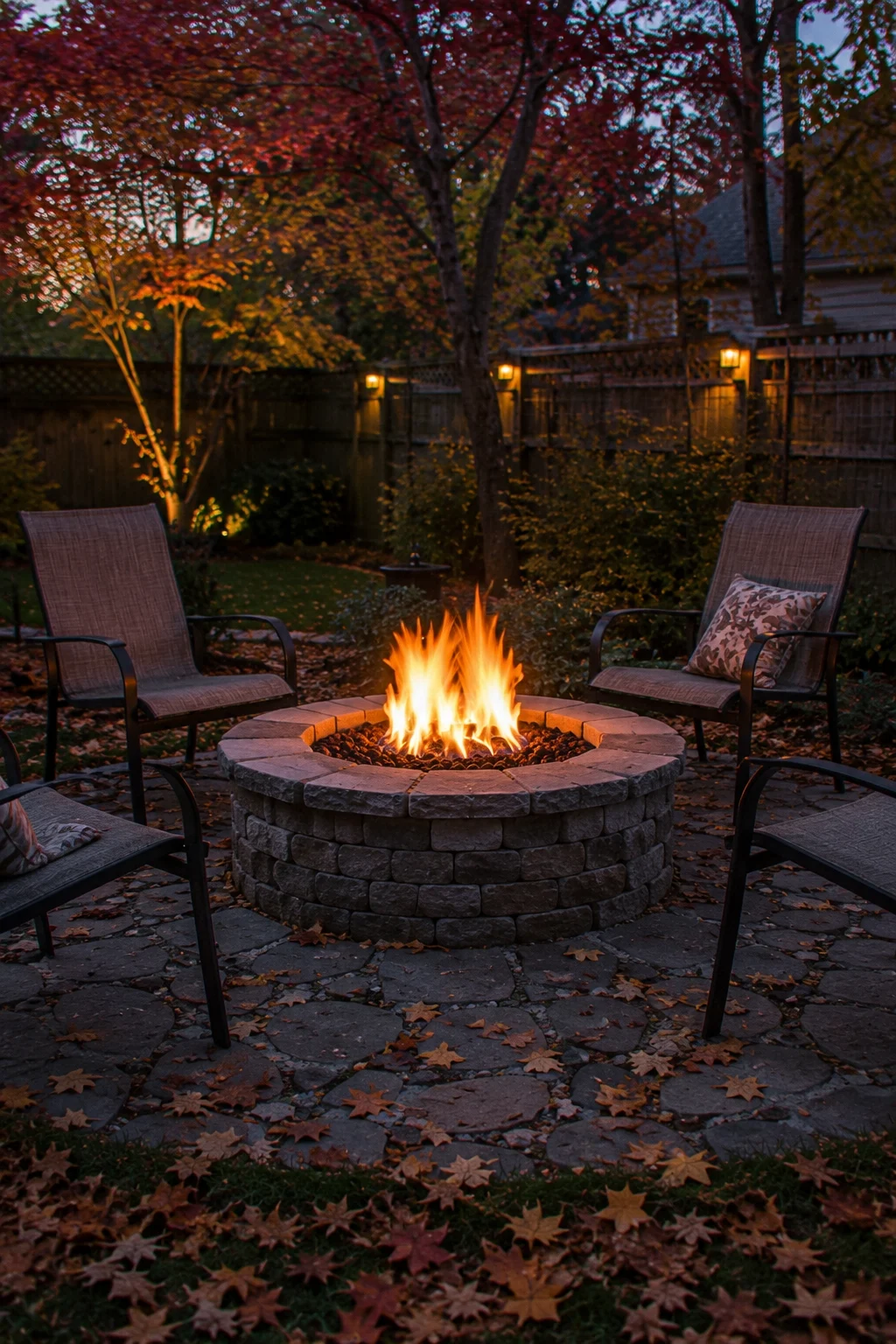
26. Fire Pit Gathering Area
A fire pit surrounded by simple seating gives a fall garden a natural gathering point once evenings turn cool, extending how often the backyard actually gets used into the shoulder season. It works because fire provides both warmth and ambiance, making outdoor time comfortable well past the point most yards go unused for the year. Position the pit away from overhanging branches, and check local regulations regarding open flame before installing.
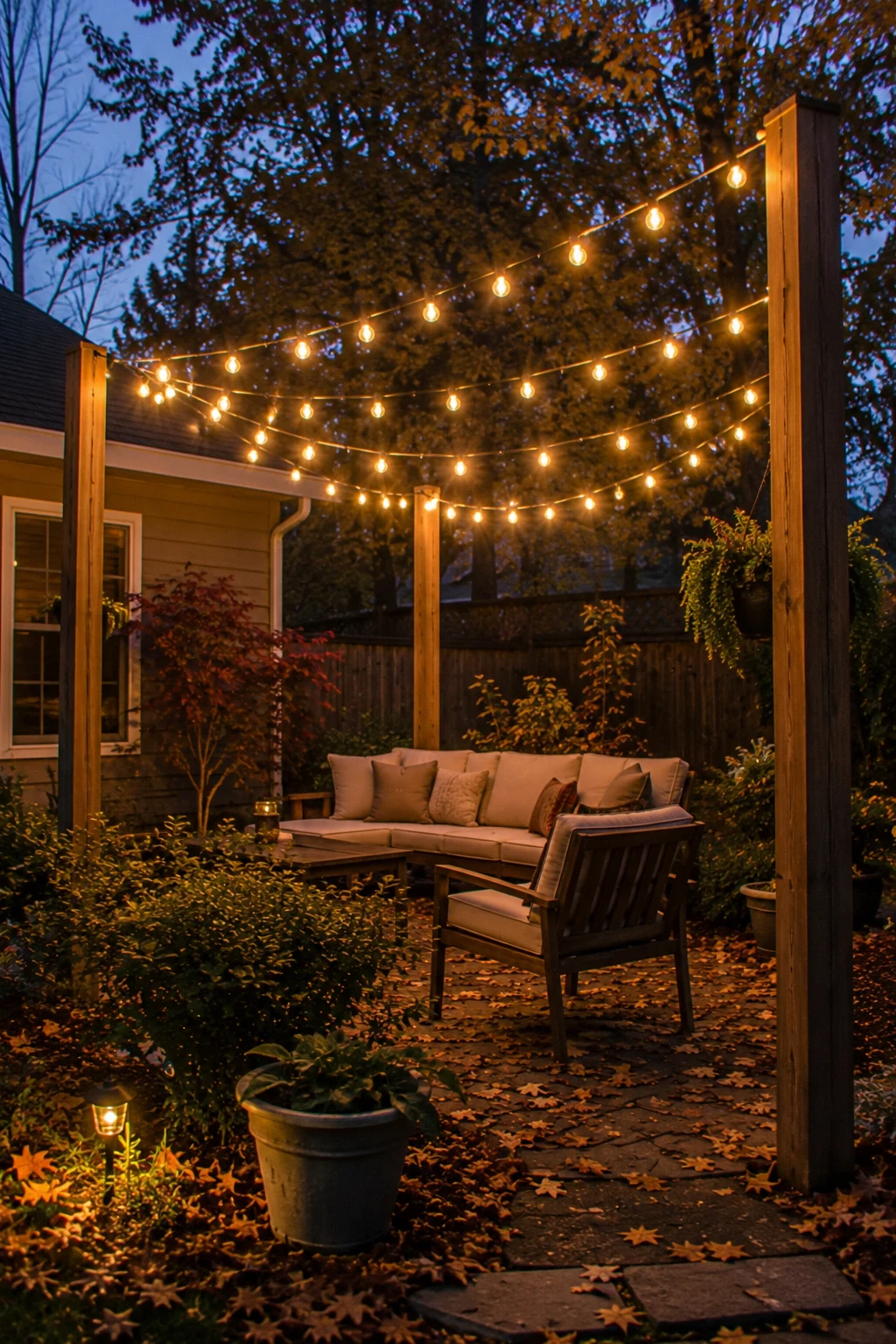
27. String Light Canopy for Cool Evenings
A canopy of warm string lights strung over a patio or seating area keeps the space inviting once daylight hours shorten in fall, extending usable evening time outdoors. It works because warm-toned lighting creates a cozy atmosphere that suits cooler weather better than bright overhead fixtures. String the lights between posts or across a pergola, and choose LED bulbs for efficient extended use through the darker months.
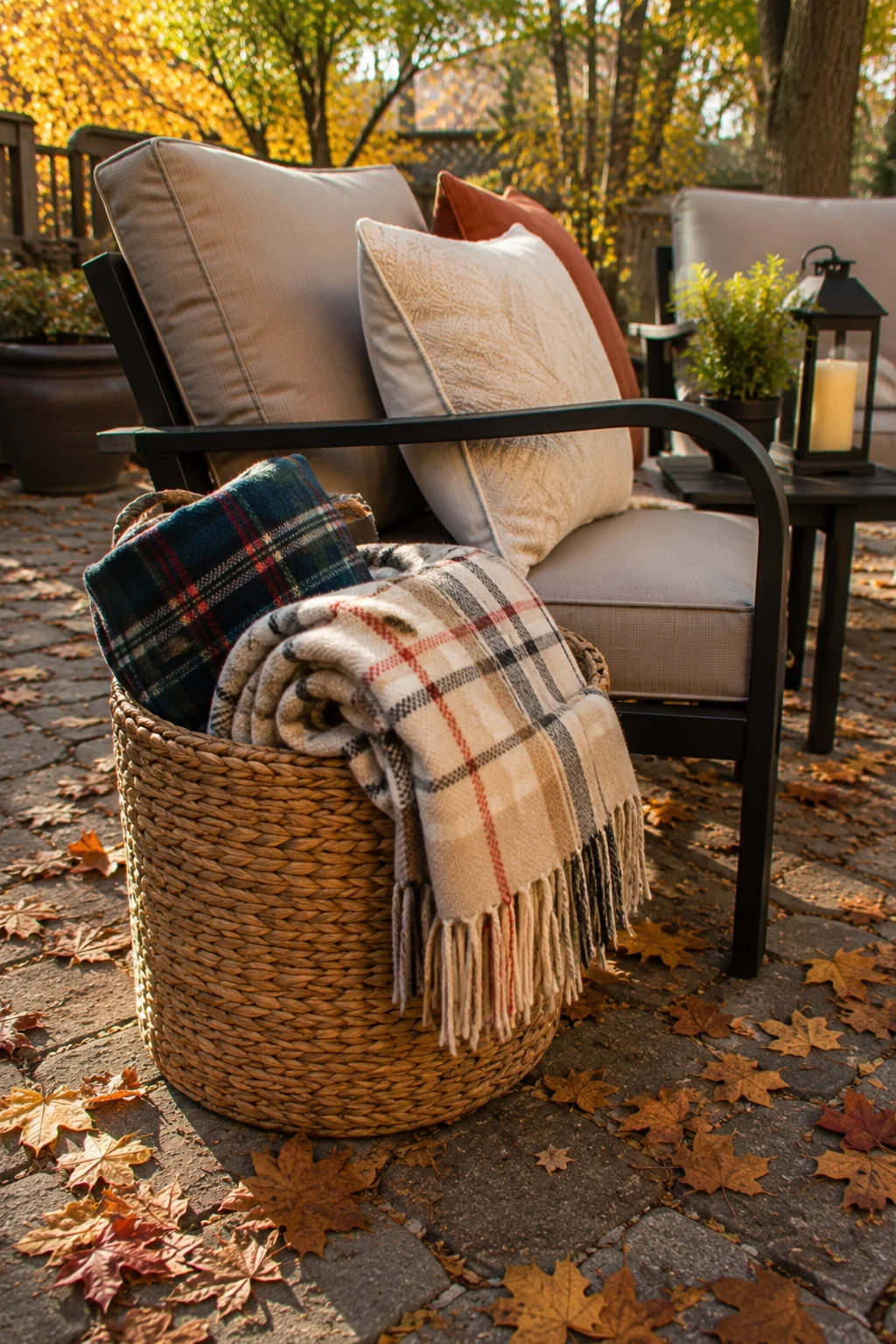
28. Layered Blanket Seating Nook
A seating area stocked with a basket of soft blankets makes outdoor gathering comfortable well into the cooler evenings of fall, encouraging more use of the yard as temperatures drop. It works because comfort, not just visual appeal, determines whether a space actually gets used once the weather turns. Choose weather-resistant storage for the blankets so they stay dry and accessible between uses.
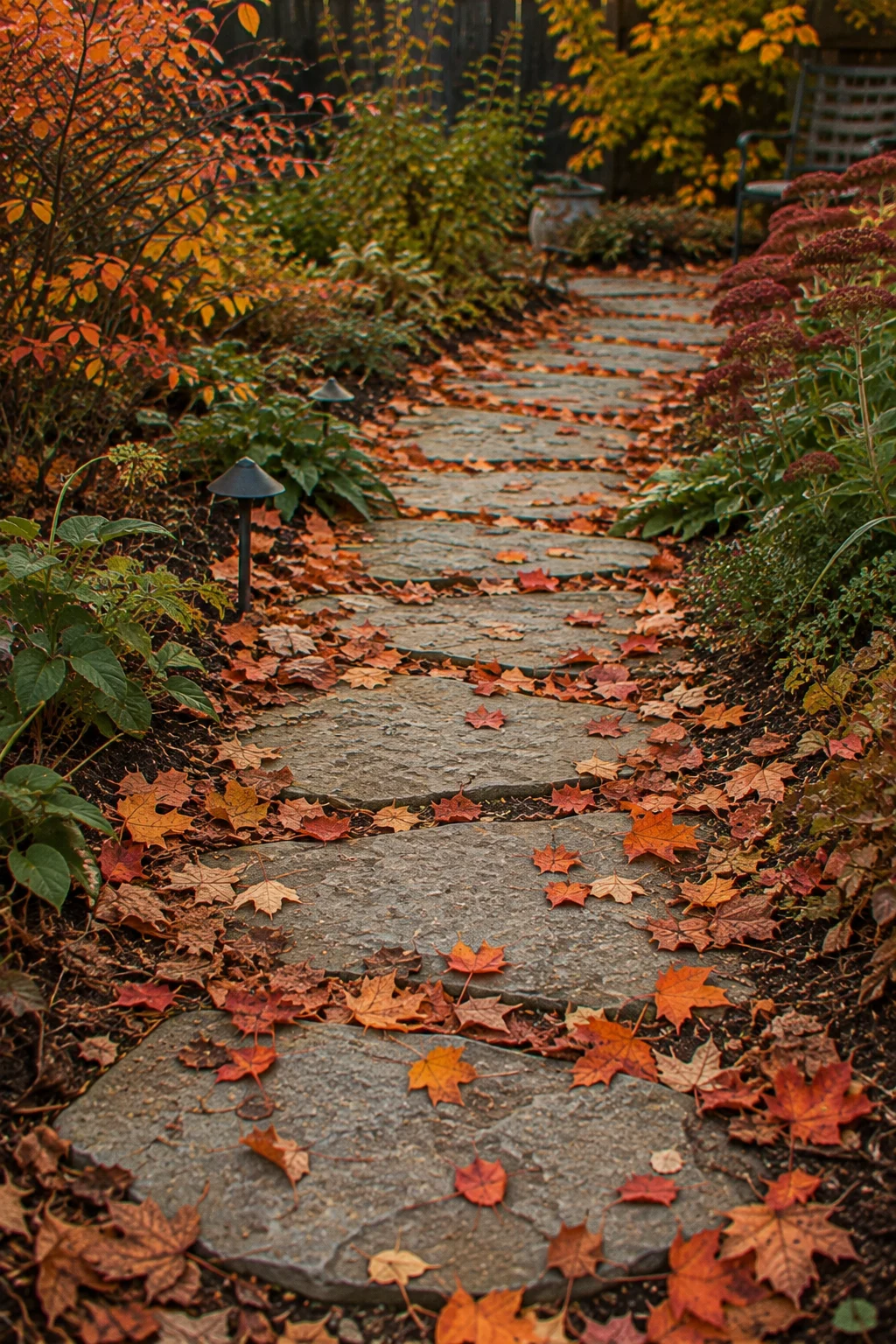
29. Stone Path Through Fallen Leaves
Leaving a scattering of fallen leaves along a stone garden path, rather than clearing every one immediately, gives the space a seasonal, natural look while reducing fall cleanup workload. It works because a light leaf covering reads as intentional and seasonal rather than neglected, provided the path itself stays clear enough for safe walking. Rake only enough to keep stepping stones visible and dry, leaving the rest for visual texture.
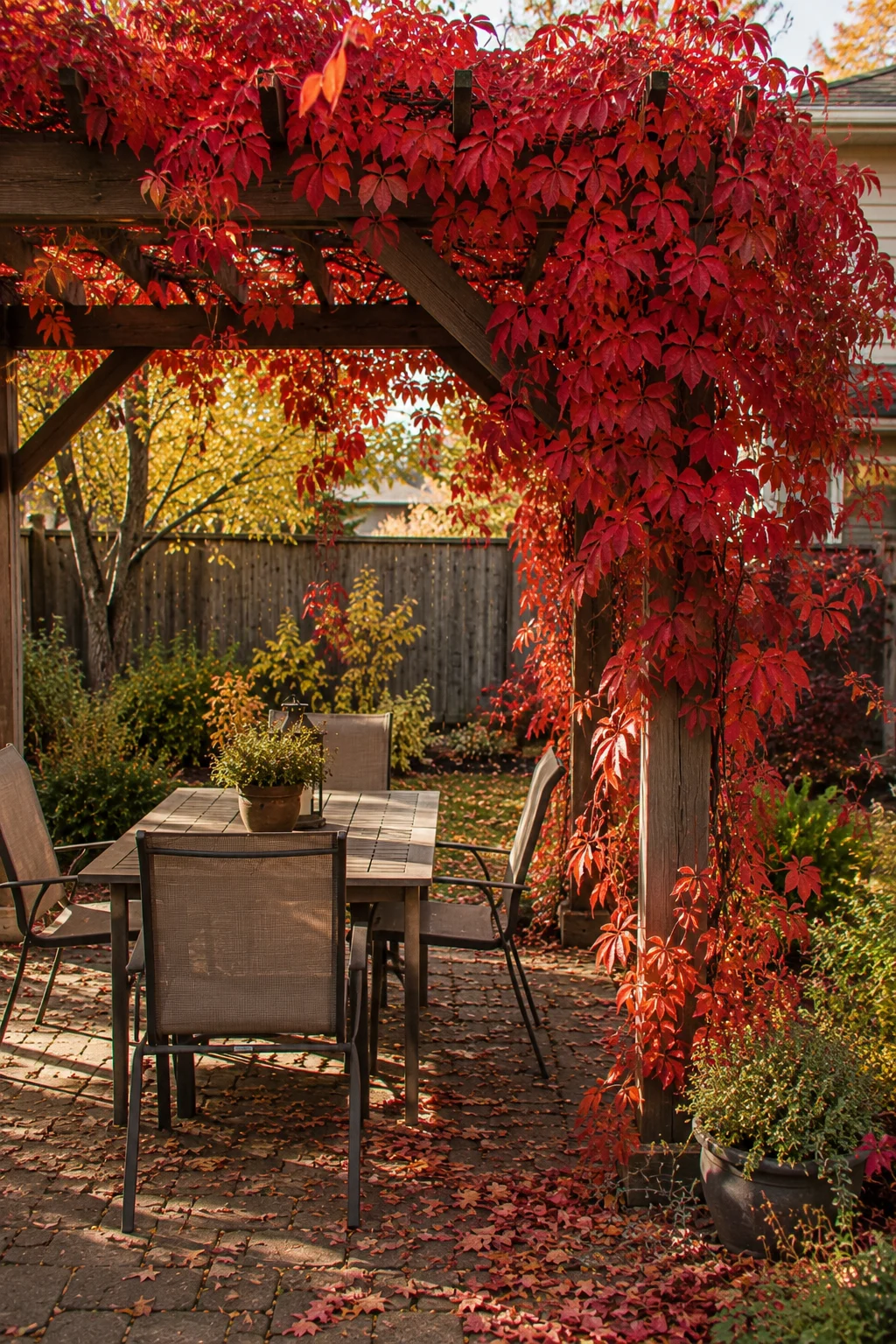
30. Pergola with Autumn Vine Color
A pergola draped in a deciduous vine like Virginia creeper turns brilliant red in fall, adding seasonal color to a structure that otherwise stays green and static through summer. It works because the vine’s color change happens right at the structure’s most visible point, giving the whole pergola a dramatic seasonal transformation. Train the vine along the pergola’s beams from planting, and prune as needed to keep growth controlled.
Wildlife & Pollinator Support
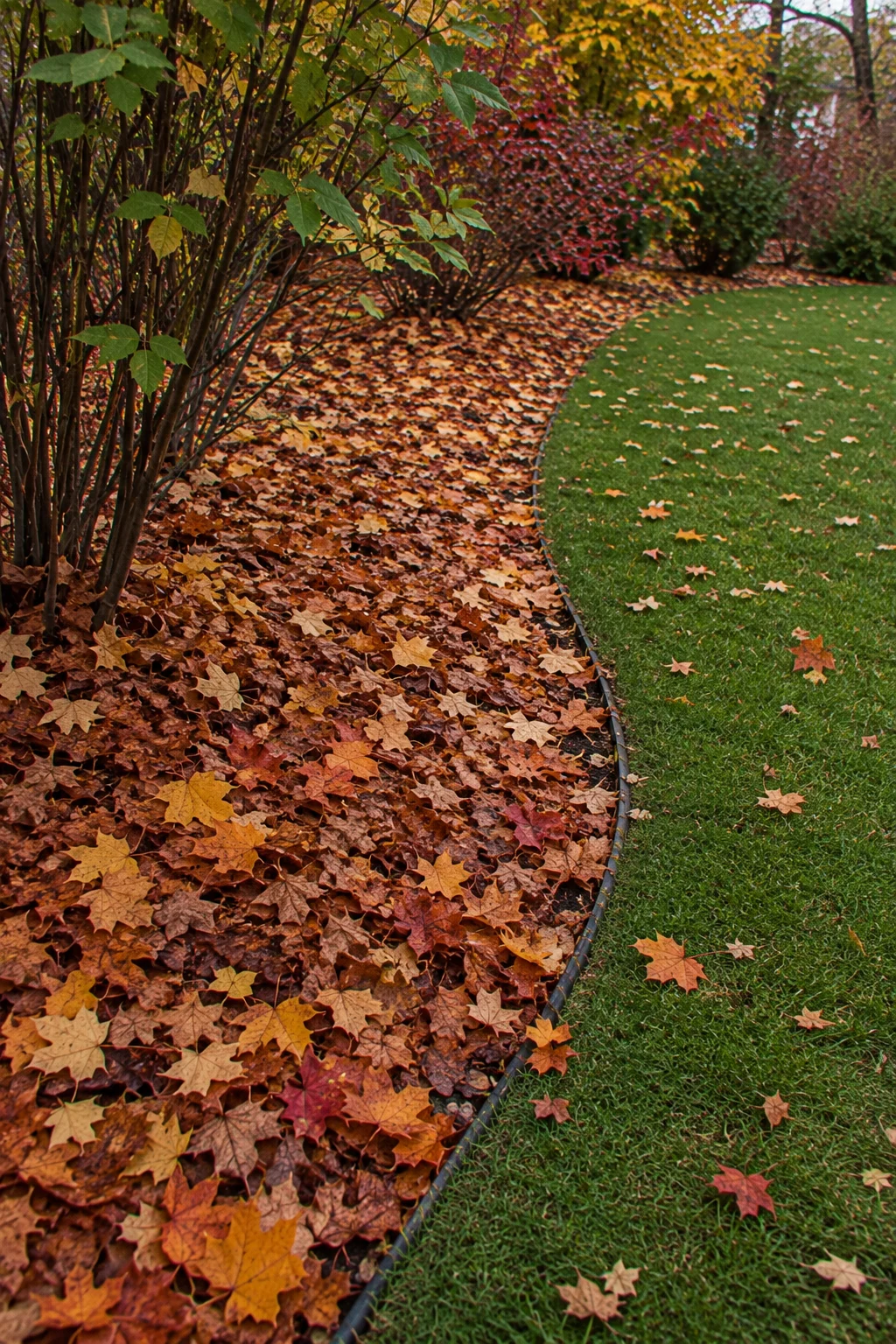
31. Leave-the-Leaves Zone
Designating one garden bed where fallen leaves are left in place rather than raked and bagged provides winter shelter for overwintering insects and improves soil as the leaves break down naturally. It works because many beneficial insects, including some butterfly and moth species, overwinter specifically in leaf litter, a resource that standard fall cleanup typically removes. Choose a bed tucked away from high-traffic areas if a tidy look matters elsewhere in the yard, and let the leaves break down through winter into spring.
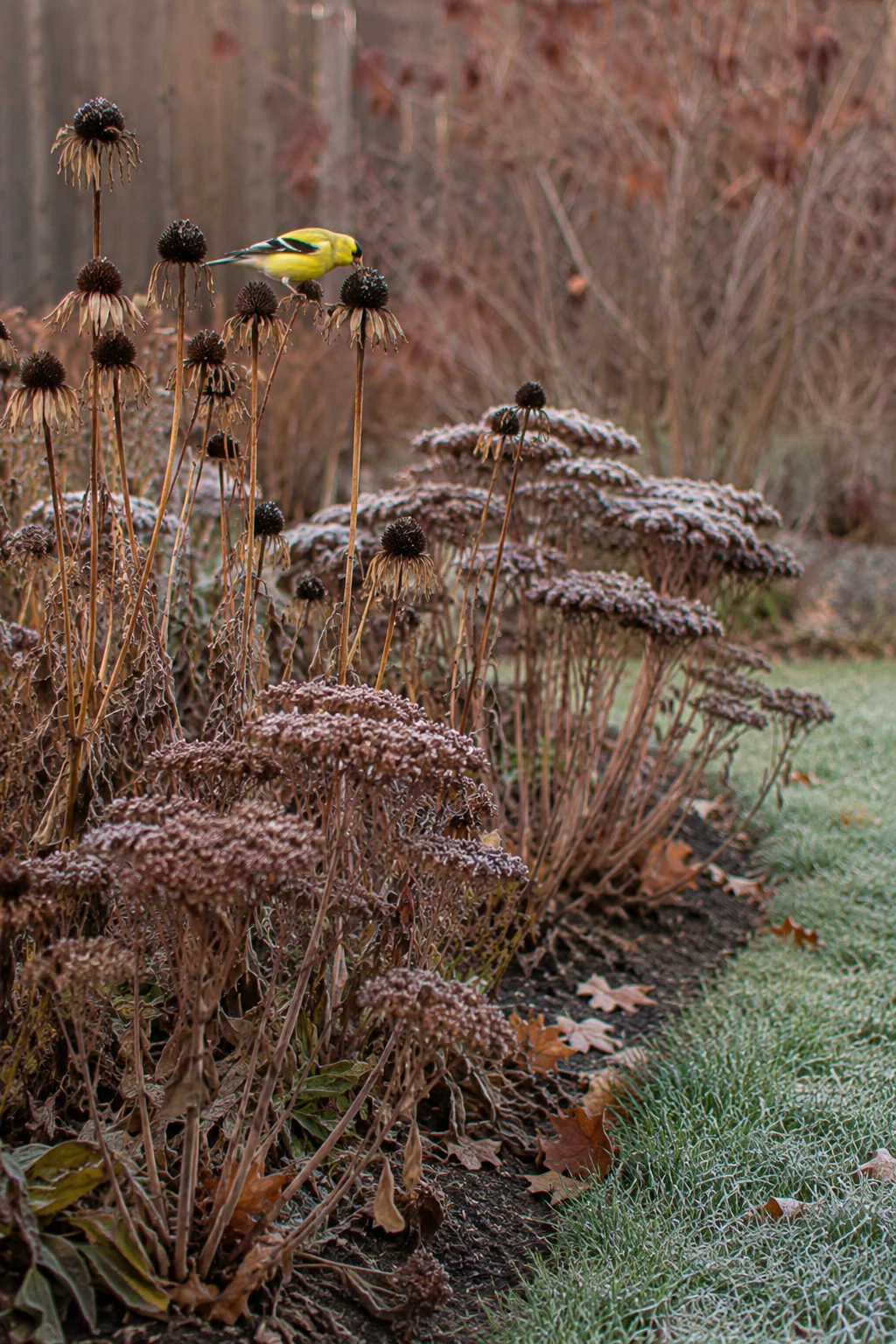
32. Seed Head Border Left Standing
Leaving spent flower stalks and seed heads standing through fall and into winter instead of cutting the garden back provides both food for birds and shelter for insects that overwinter inside hollow stems, a practice covered in more depth in the guide on cutting back a pollinator garden in fall. It works because many seed heads, like coneflower and sedum, also add visual texture through the colder months rather than leaving bare, cut-back beds. Choose one border to leave fully standing, then cut back gradually in spring once temperatures warm.
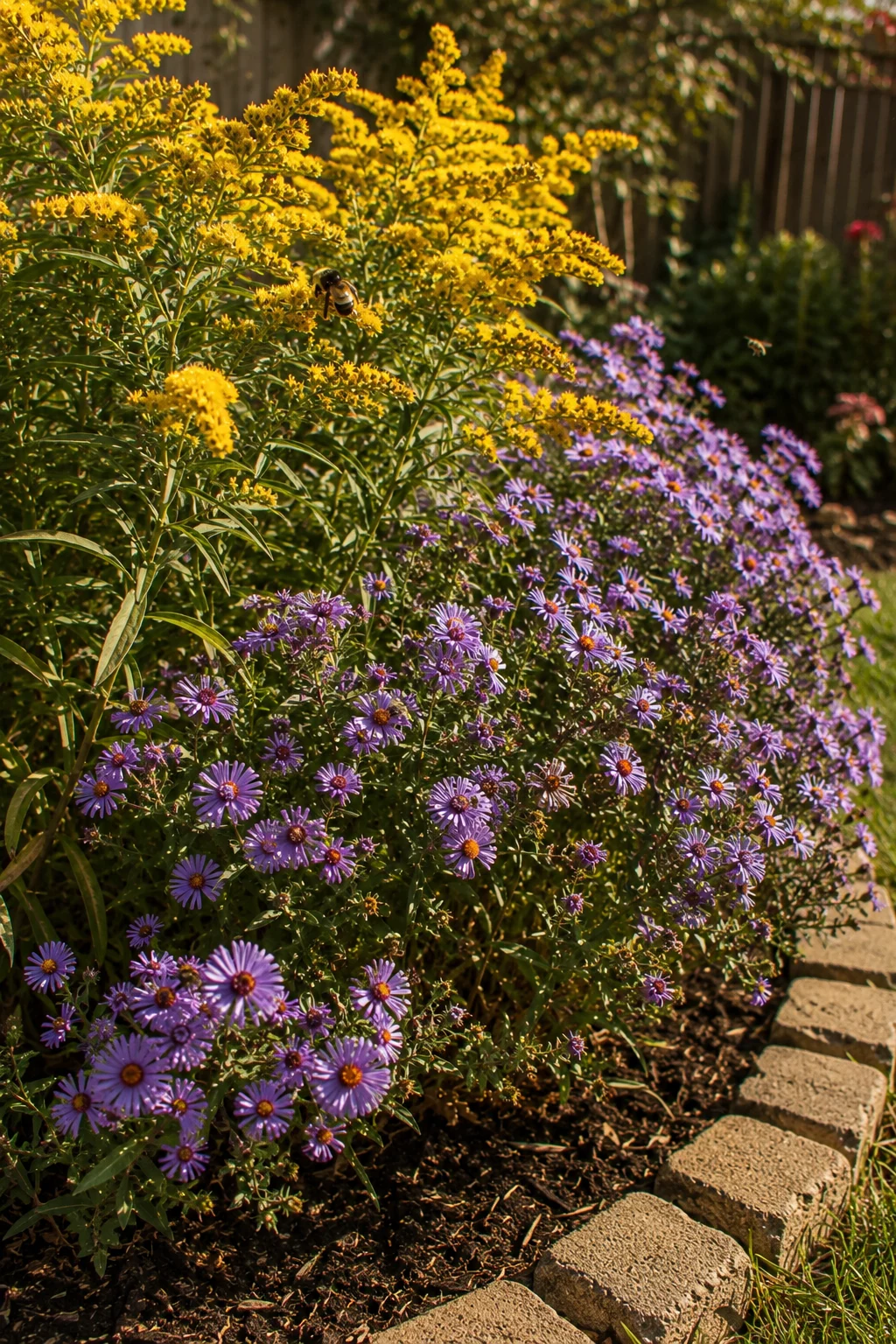
33. Bee-Friendly Late Bloom Corner
A dedicated corner planted with aster and goldenrod gives late-season pollinators a substantial nectar source right when most of the garden has already finished blooming, which matters for colony health going into winter, as covered further in the autumn bee garden guide on late-season flowers bees need before winter. It works because fall nectar availability directly affects how well-provisioned bees are for the colder months ahead. Plant both species in a sunny spot with room to spread, positioned within easy reach of any nearby hives or garden beds.
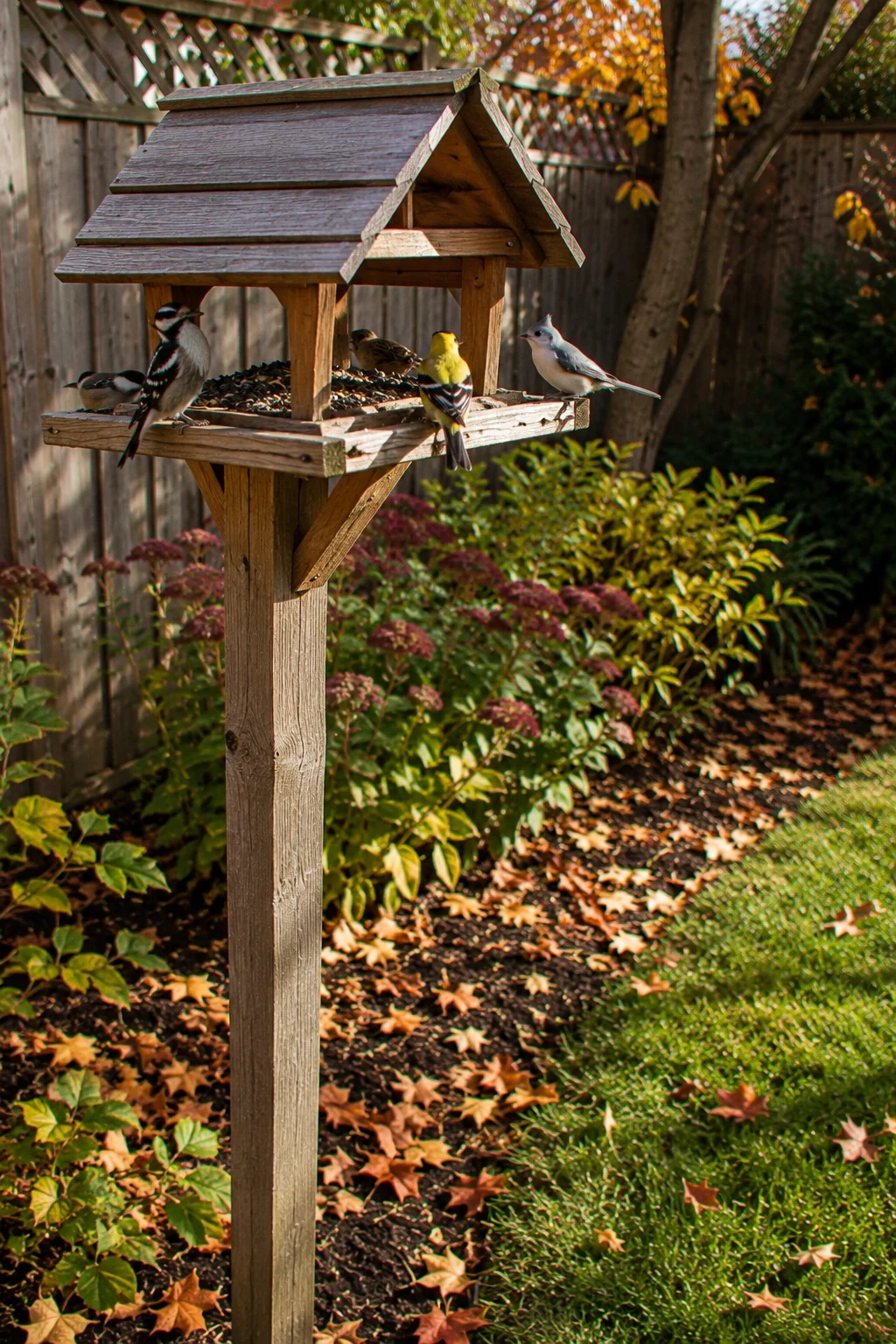
34. Bird Feeder Station
A well-stocked bird feeder positioned near cover, like a shrub border or small tree, brings visible wildlife activity to the yard right as natural food sources start to dwindle in fall. It works because birds are actively searching for reliable food sources this time of year, making a feeder more likely to attract regular visitors than during peak summer abundance. Position the feeder a few feet from cover so birds have a quick escape route from predators, and clean it regularly to prevent mold and disease spread.
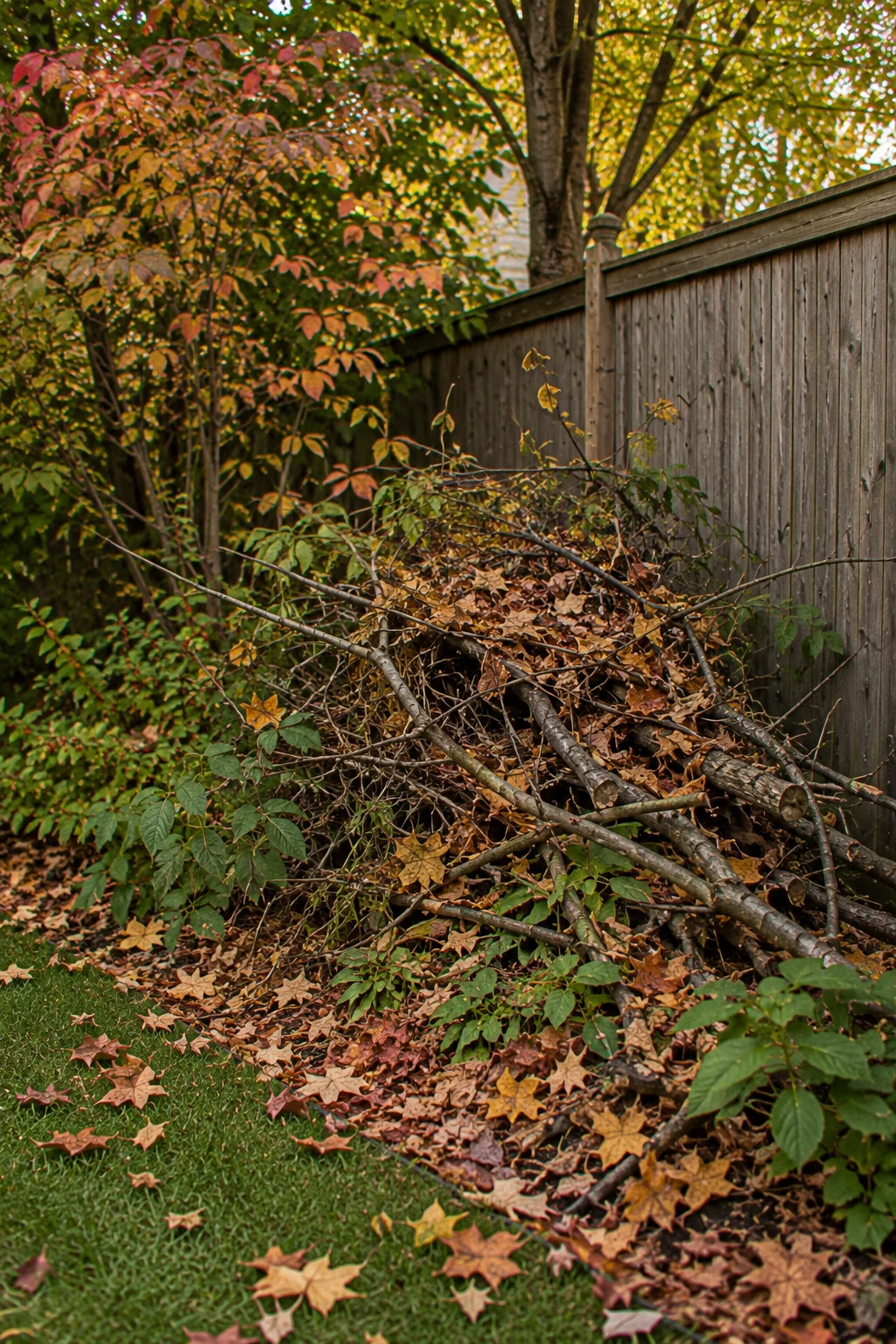
35. Brush Pile Habitat Corner
A loosely stacked pile of fallen branches and garden trimmings, tucked into an unused corner, offers shelter for overwintering insects and small wildlife through the colder months ahead. It works because it repurposes material that would otherwise be bagged and hauled away, turning fall cleanup debris into genuine habitat. Build the pile loosely so gaps remain for animals to move through, and keep it tucked in a corner if visibility matters elsewhere in the yard.
How to Choose From This List
With 35 fall garden ideas spanning foliage, flowers, containers, grasses, harvest touches, hardscape, and wildlife support, start with one or two foliage or flowering plants suited to your climate, since those provide the most visible seasonal change with the least ongoing effort. Layer in a seasonal hardscape element, like a fire pit or string lights, if you want the yard to stay usable into cooler evenings, and consider leaving at least one bed unmowed and uncut for wildlife. According to Eartheasy’s guide on fall foliage, a growing season with plenty of moisture followed by drier conditions in late summer tends to produce the strongest color displays, so keeping new plantings well watered through late summer sets up a better fall show. Avoid trying to fit every idea into one yard at once, since a handful of well-placed choices tend to look more intentional than a scattered mix.
Final Thoughts
A fall garden does not need a full redesign to look good once summer fades. Many of the ideas here work as additions to an existing yard, a few fall-blooming perennials, one specimen tree, a bit of restraint on cleanup, rather than a separate project altogether.
Start with one or two plant-based ideas this season, and consider adding a hardscape or wildlife element once those are established. A backyard built to carry interest into autumn tends to feel more complete year-round, not just during the months when everything is in full bloom.