
A narrow garden is any outdoor space defined more by its width limits than its total square footage, side yards, gaps between fences, thin balconies, and sharp corner angles all qualify. Homeowners run into these spaces often because most properties have at least one strip that got left out of the main landscaping plan simply because it was too tight to treat like a normal bed or lawn.
This is achievable because narrow spaces respond well to a specific set of design tricks, curved paths, vertical growing, and careful material choices, that do not require extra width to work. According to Gardening Know How’s guidance on compact yard design, curved bed lines help maximize perceived space in narrow yards, which means the shape of a path or bed matters just as much as what you plant in it.
Narrow Side Yard Foundations
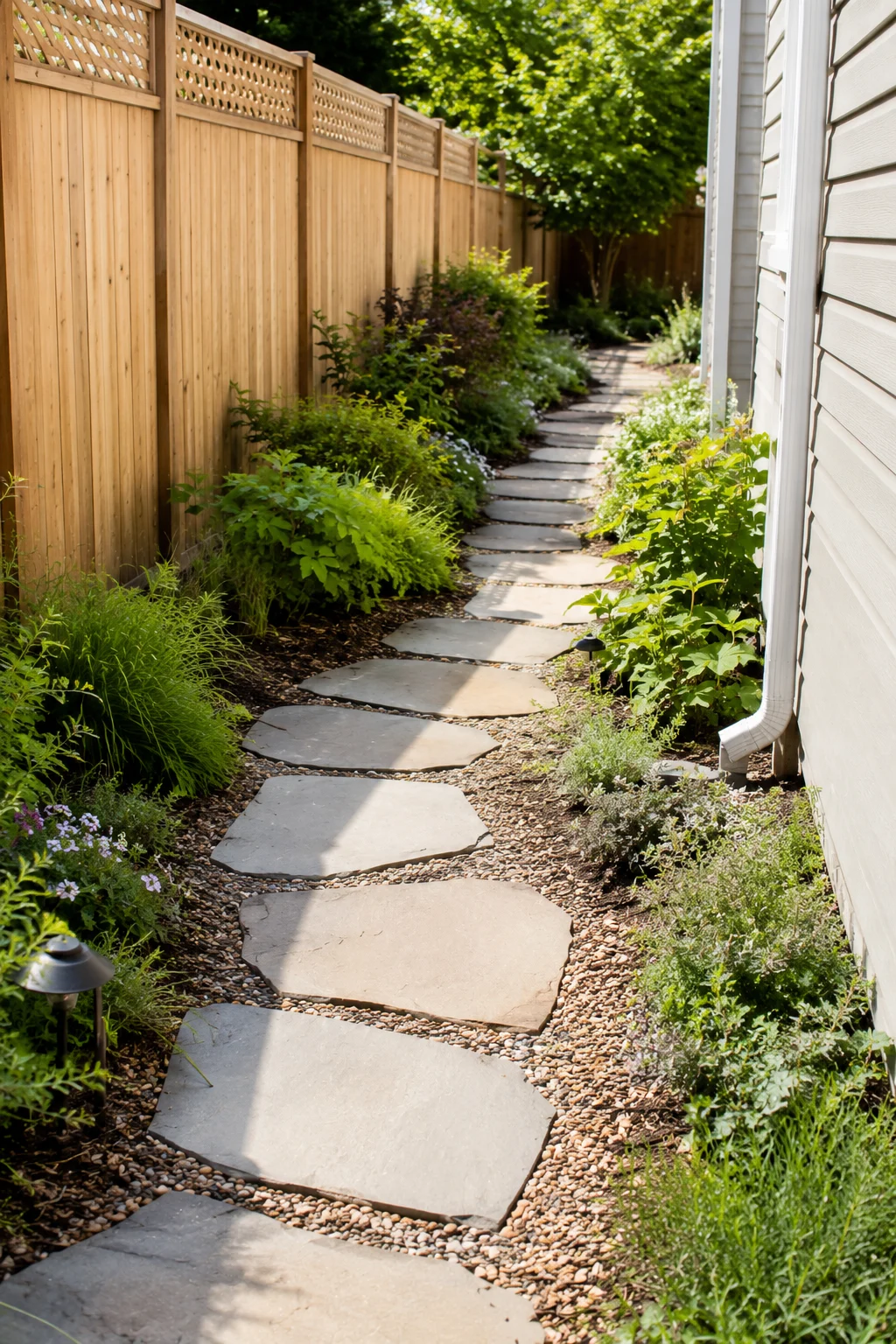
1. Curved Stepping Path to Break the Bowling Alley Effect
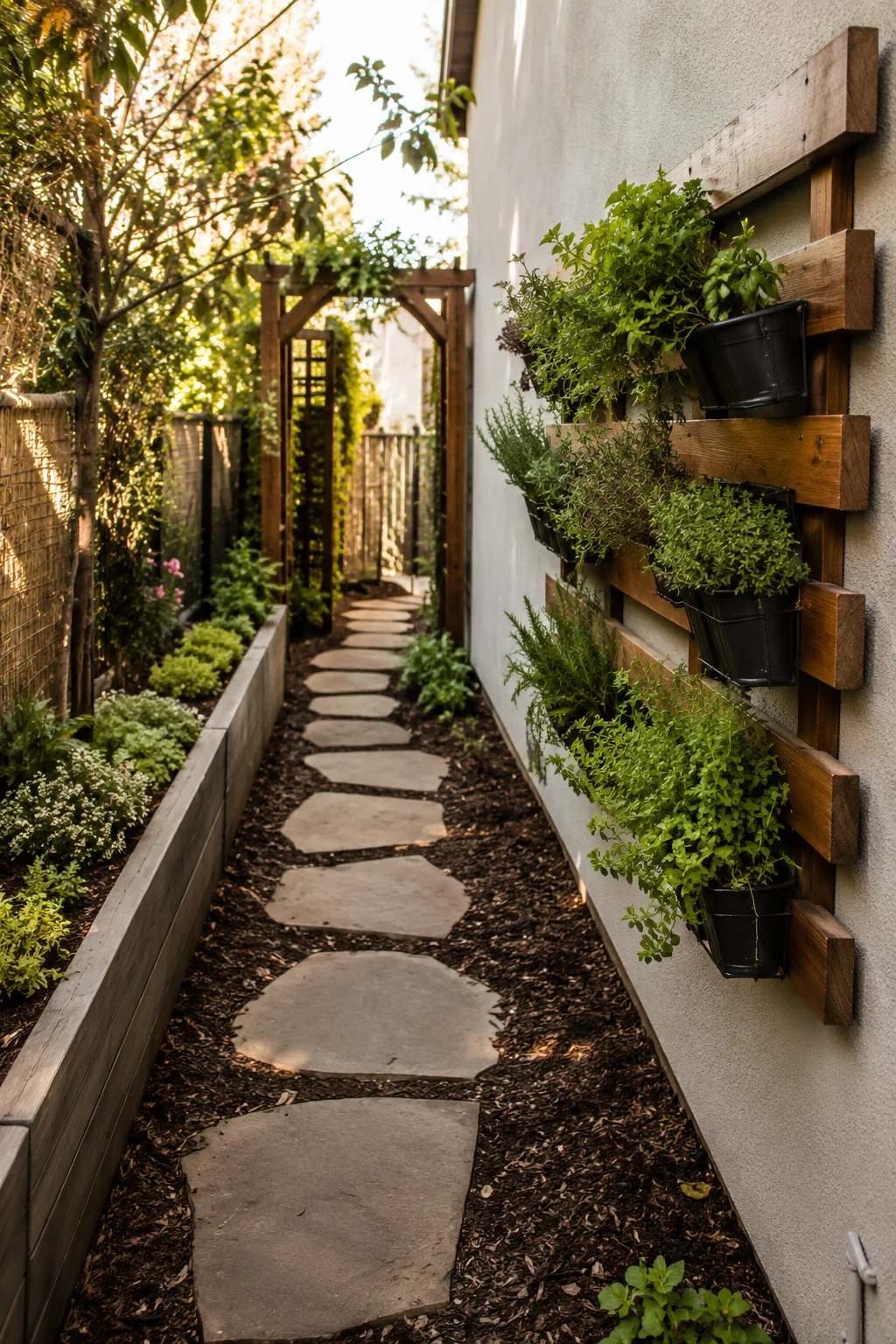
A straight path down a narrow side yard tends to emphasize how tight the space is, while a gently curved stepping stone path slows the eye down and makes the same width feel less confined. It works because a curve forces a slight pause in sightline rather than a single straight shot to the end. Set stepping stones with a soft S-curve rather than a straight line, and plant low on both edges so the curve reads clearly.
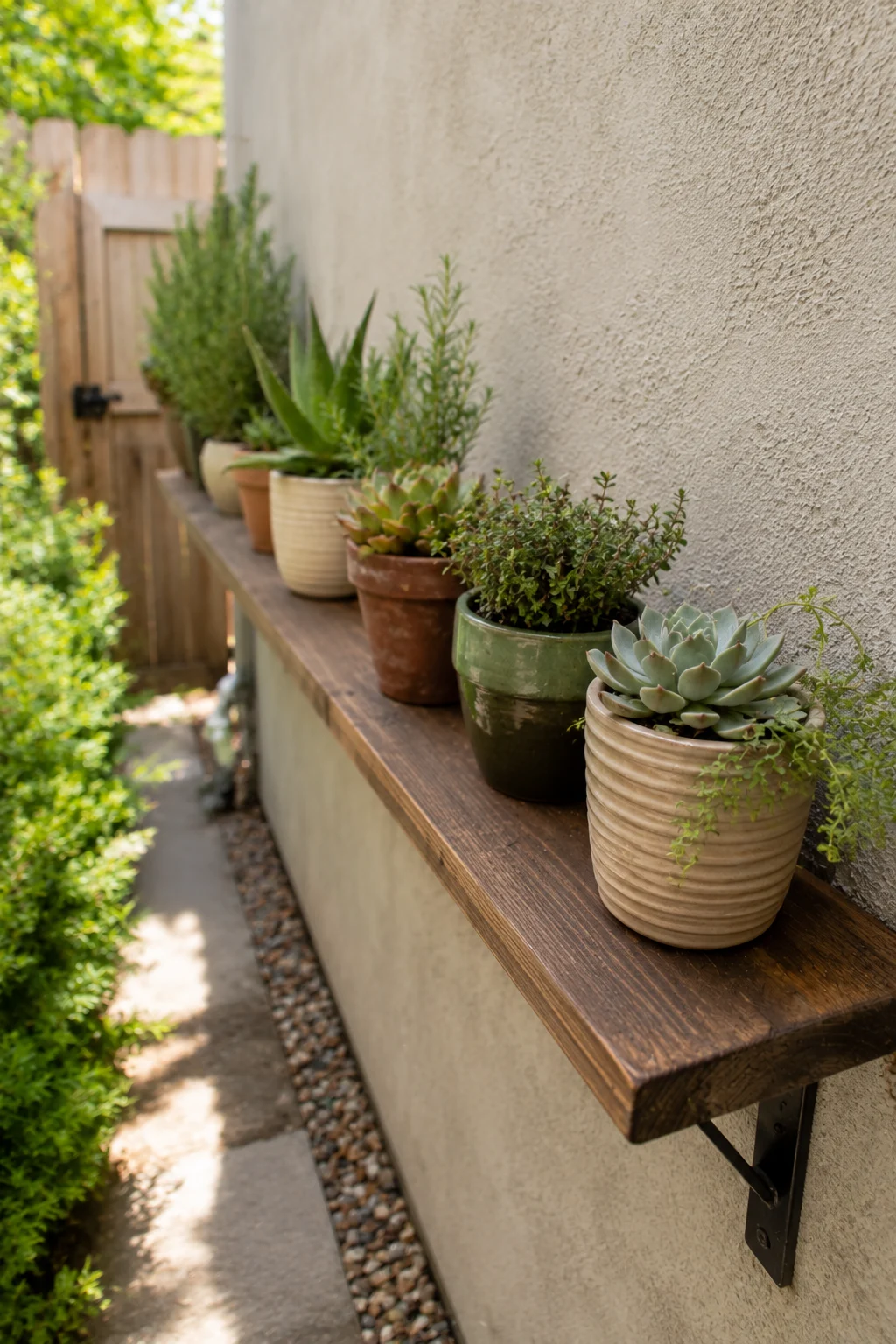
2. Slim Cantilevered Shelf Garden Along a Wall
A narrow shelf, mounted directly to a wall or fence at a slight downward angle, holds a row of small pots without taking up any floor width at all. It works because it uses only a few inches of depth, which matters most in a side yard where every inch of walking clearance counts. Mount brackets rated for wet soil weight, and use lightweight plastic or resin pots rather than heavy ceramic to keep the load manageable.
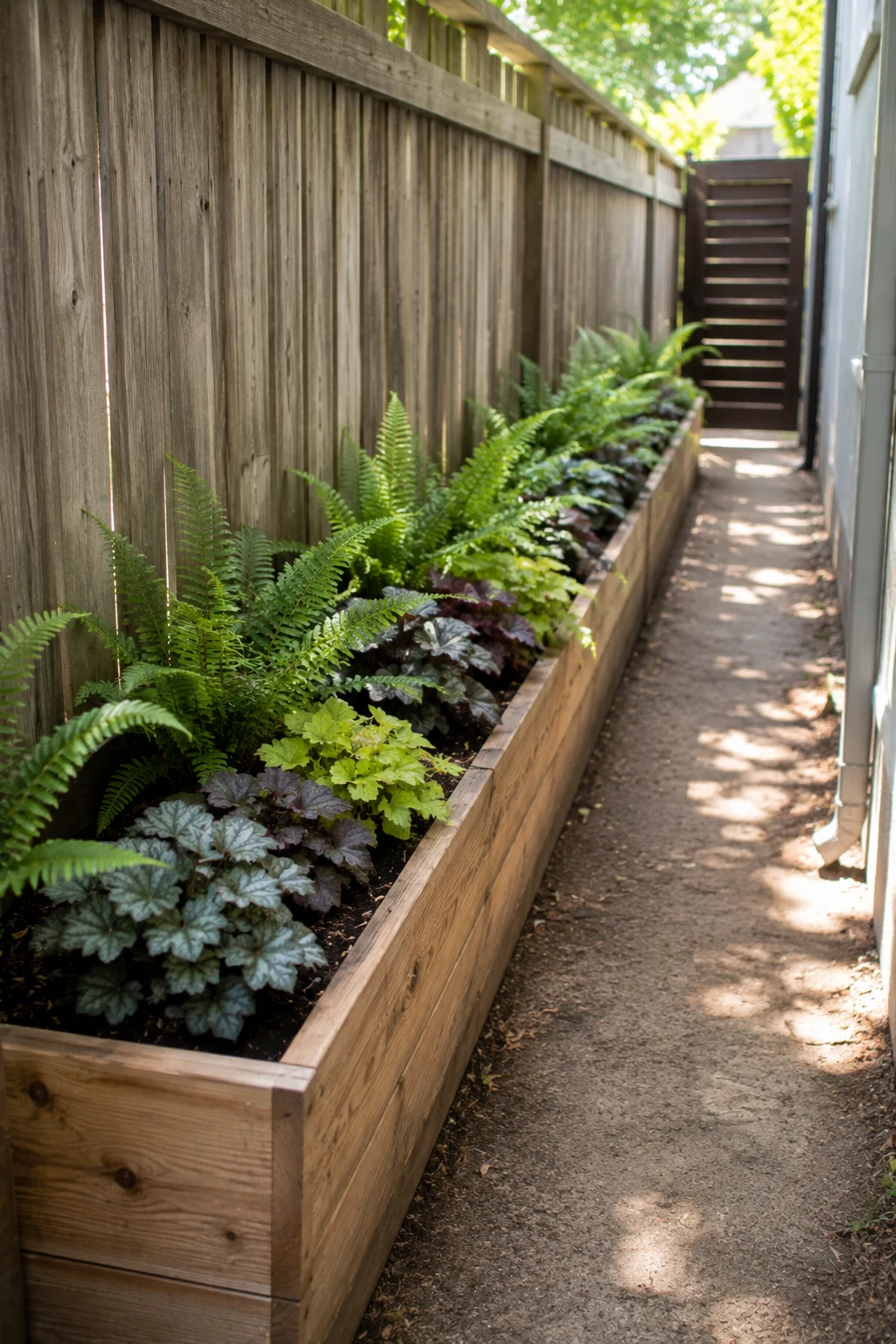
3. Narrow Raised Planter Box Against a Fence
A long, shallow raised planter built against a fence line adds real growing depth to a side yard without narrowing the walkway itself, since the box sits flush against the vertical surface. It works because it defines a clear planting zone distinct from the walking path, which keeps the narrow space feeling organized rather than cluttered. Build the box only twelve to eighteen inches deep, and fill with shallow-rooted plants suited to that limited soil volume.
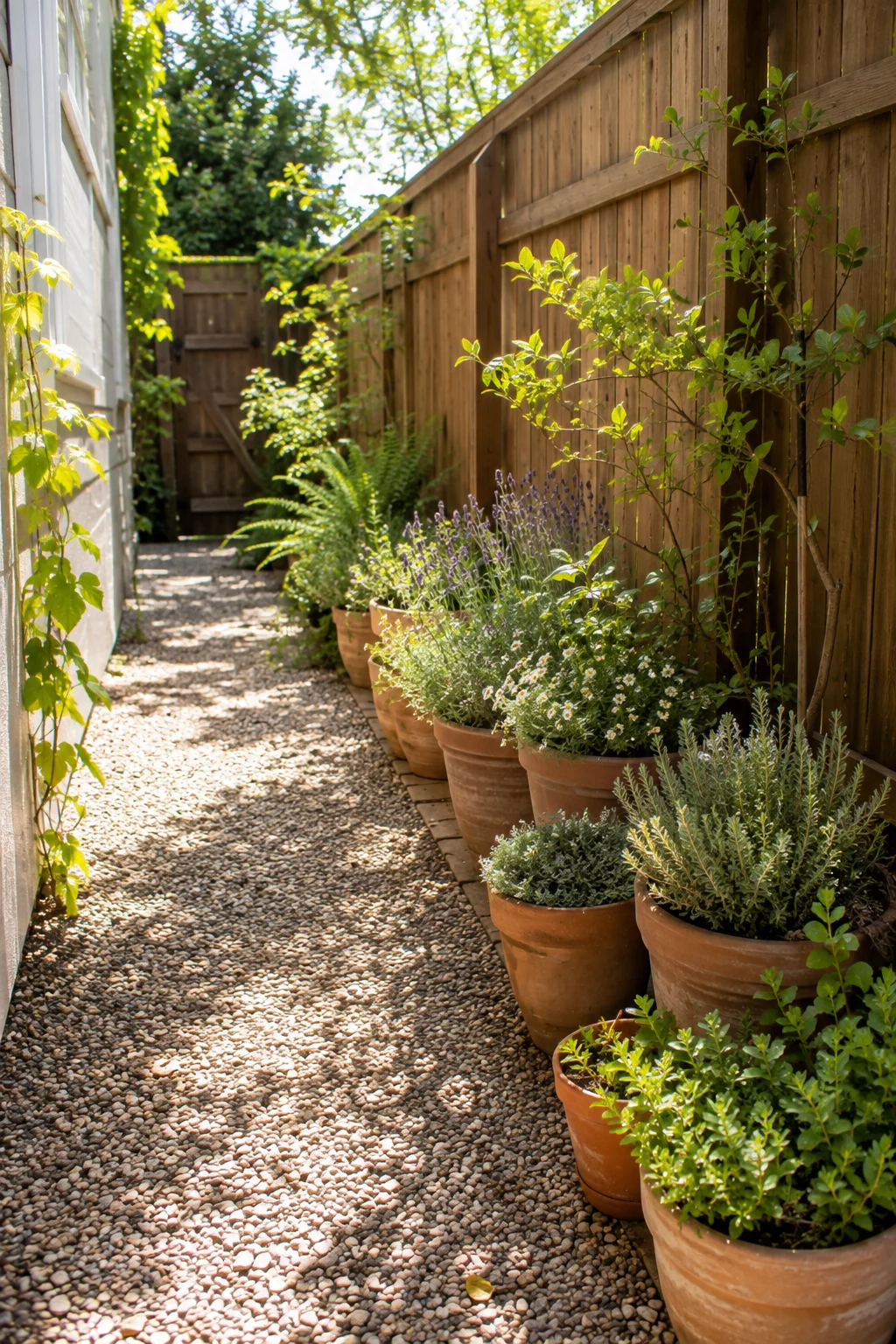
4. Gravel Runner with Potted Accents
A continuous gravel runner down the center or side of a narrow yard gives a clean, low-maintenance walking surface, while a line of potted plants along one edge adds greenery without permanent planting. It works because gravel handles foot traffic better than lawn in a tight space where grass often thins out from repeated use. Lay landscape fabric first, then a few inches of gravel, and group pots at varying heights along one edge rather than spacing them evenly.
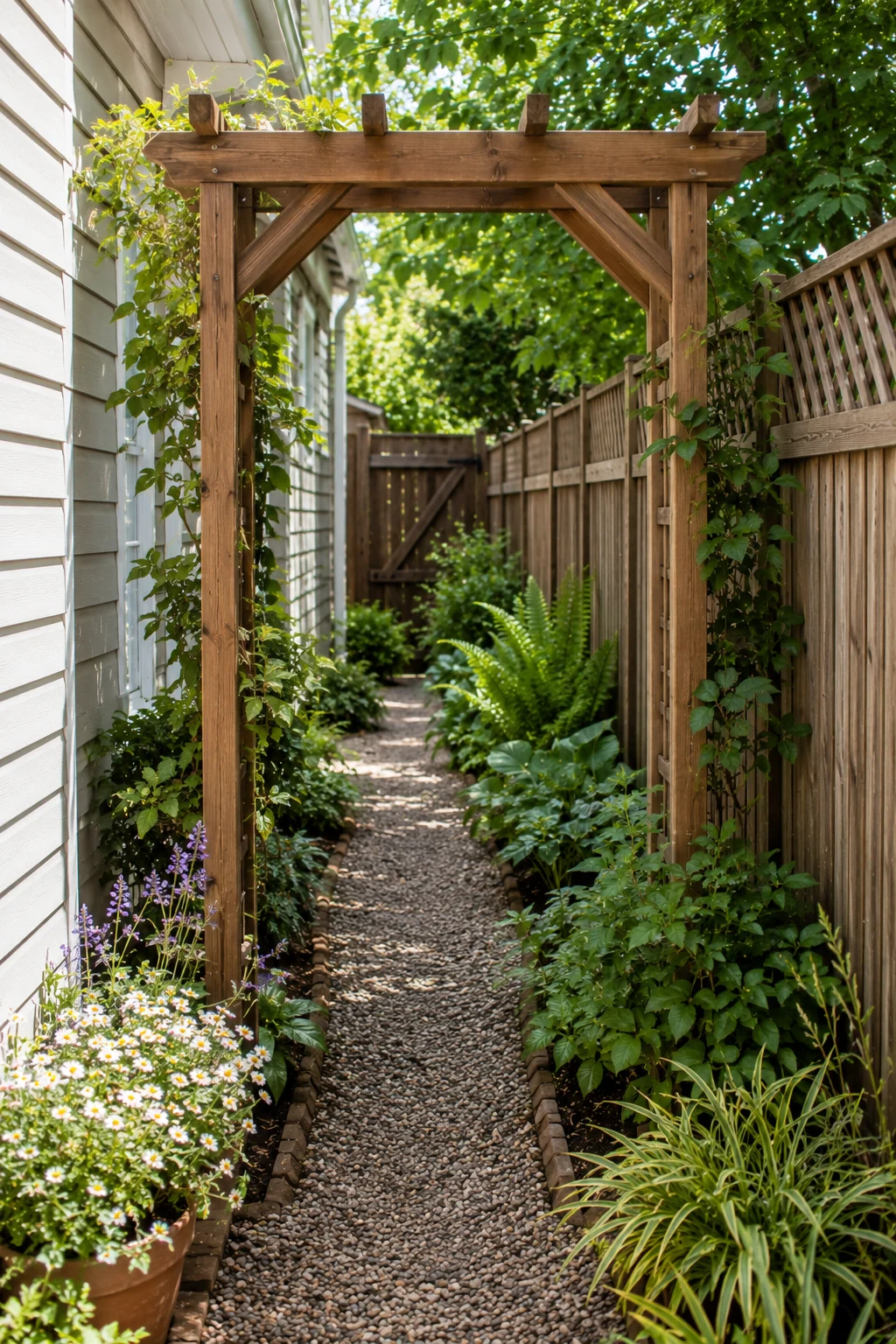
5. Arbor or Moon Gate Entry Marker
Installing a simple arbor or circular moon gate at the entrance to a narrow side yard signals that the space is a distinct garden room rather than just a leftover gap between structures. It works because framing the entry point changes how the whole passage reads, turning a narrow pass-through into something that feels intentional from the first step. Choose a structure sized to the yard’s actual width, and consider training a light vine over it for added softness.
Vertical Solutions for Tight Width
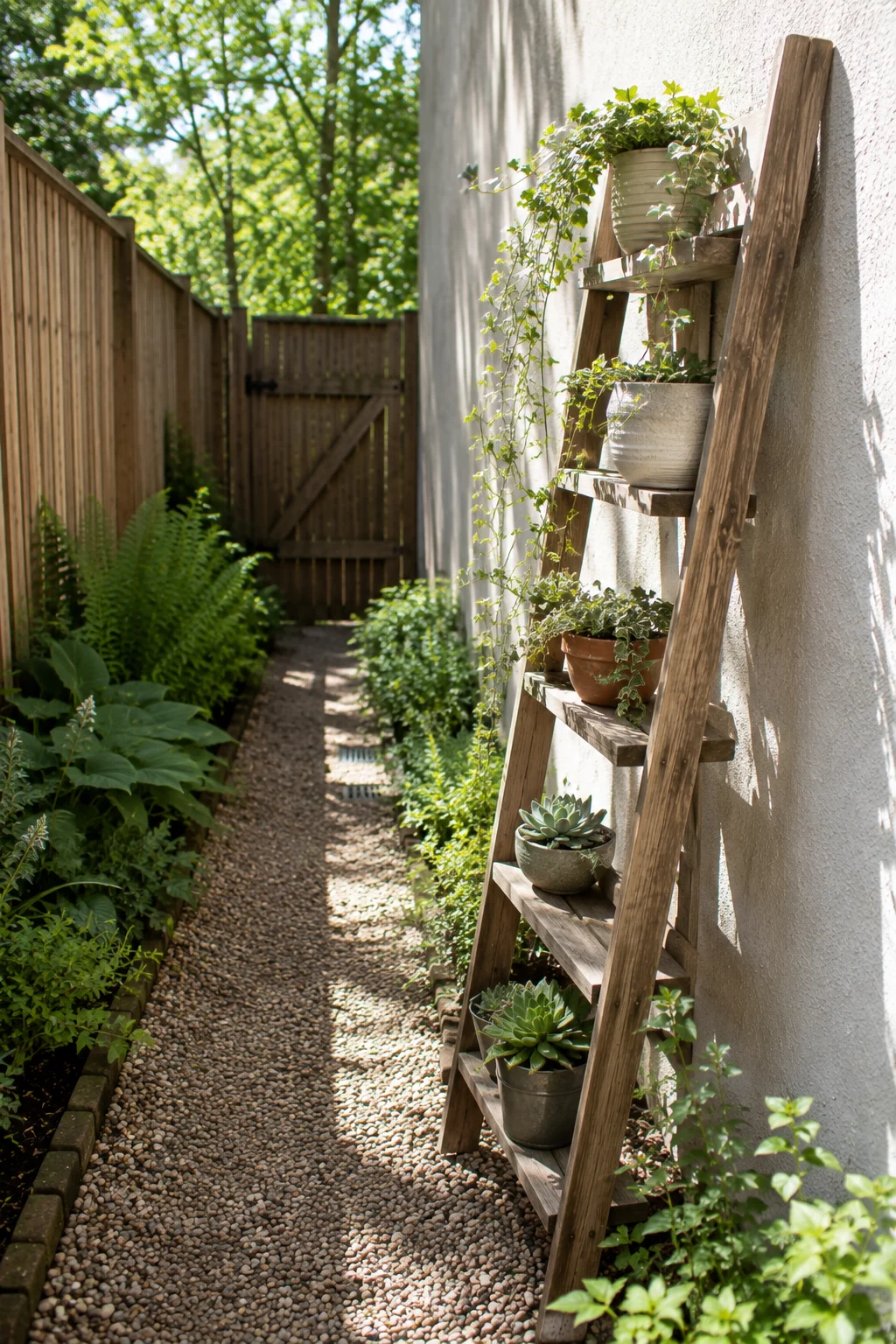
6. Ladder Shelf Plant Display
A tall, narrow ladder shelf, either purpose-built or repurposed from an old wooden ladder, holds several small pots stacked vertically in a footprint of just a foot or two. It works especially well against a blank wall in a narrow space, since it adds plant variety without eating into walking clearance. Choose a ladder shelf sized to your specific wall height, and place heavier pots on lower rungs for stability.
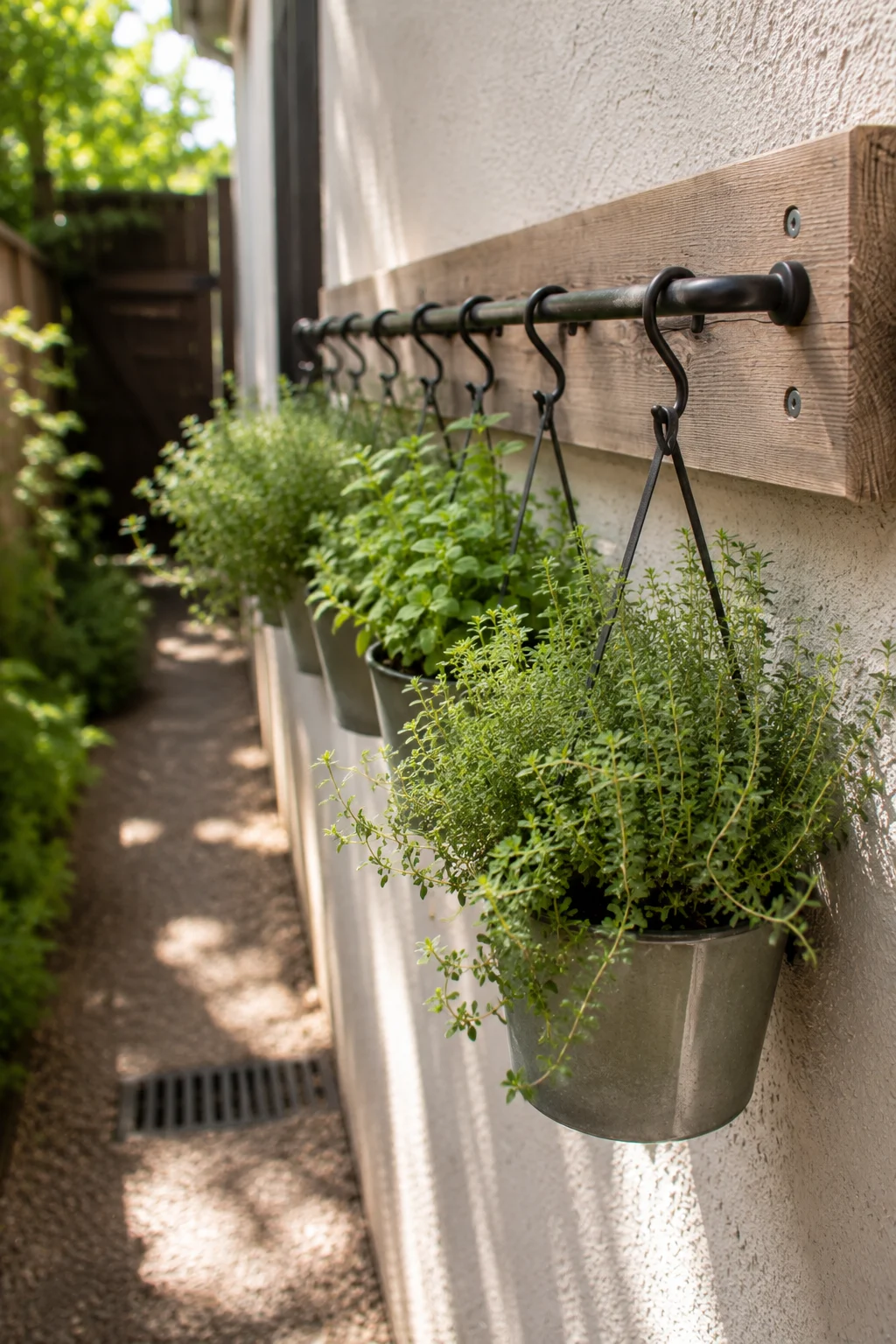
7. Wall-Mounted Herb Rail
A single horizontal rail fitted with hanging herb pots turns a blank fence or wall section into a working kitchen garden without needing any ground space at all. It works because it keeps the growing area entirely off the path, which matters most in the tightest side yards. Mount the rail at a comfortable reaching height, and choose herbs like thyme and oregano that tolerate the shallower soil volume of rail-mounted pots.
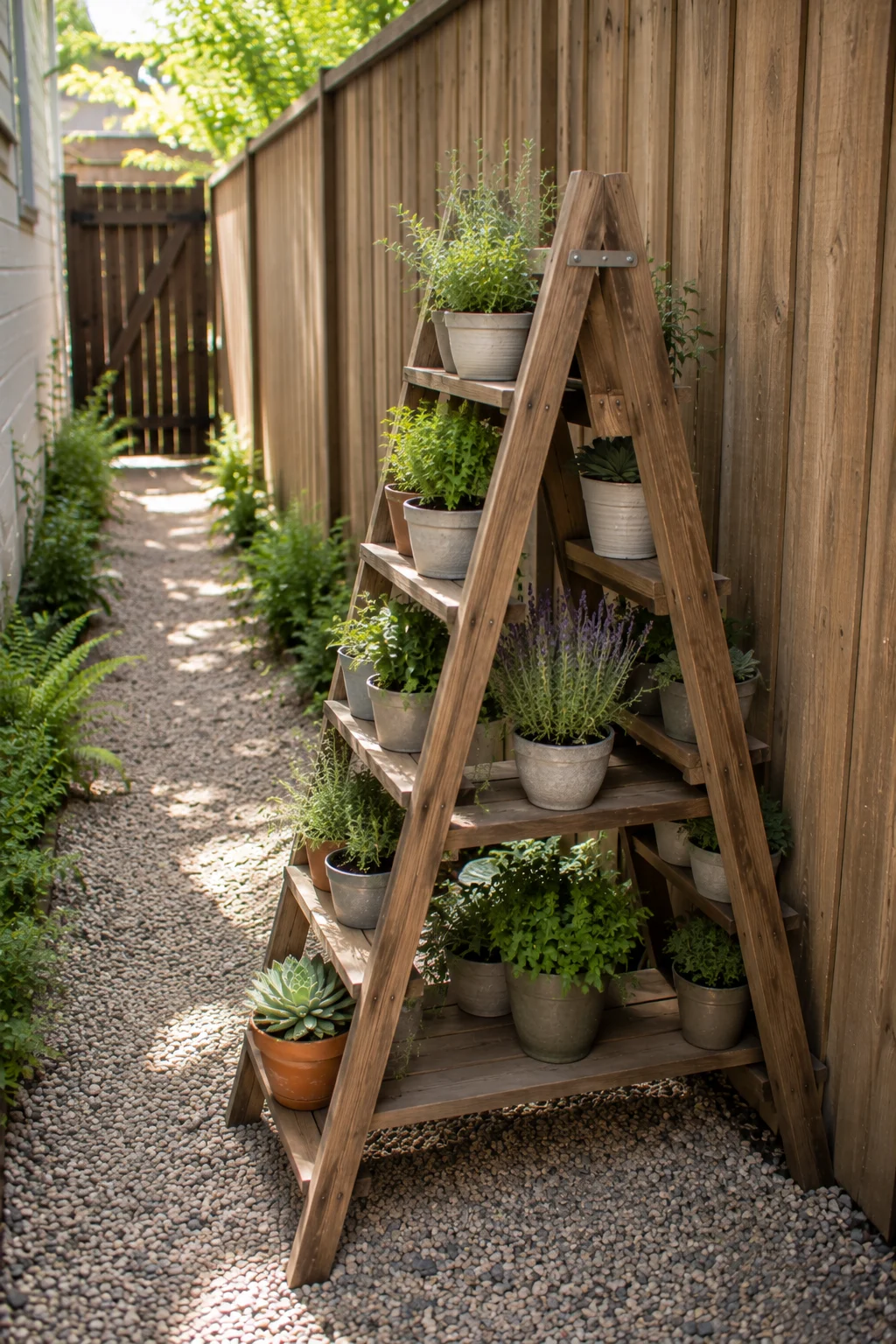
8. Slim A-Frame Plant Stand
A narrow A-frame stand, similar in shape to a sandwich board sign, holds pots on both sloped sides while taking up only a foot or so of floor width, making it a genuinely flexible option for the tightest spaces. It works because the A-shape distributes pots across two visible faces rather than one flat shelf, doubling display capacity for the same footprint. Choose a stand rated for outdoor use, and position it where both sides get adequate light through the day.
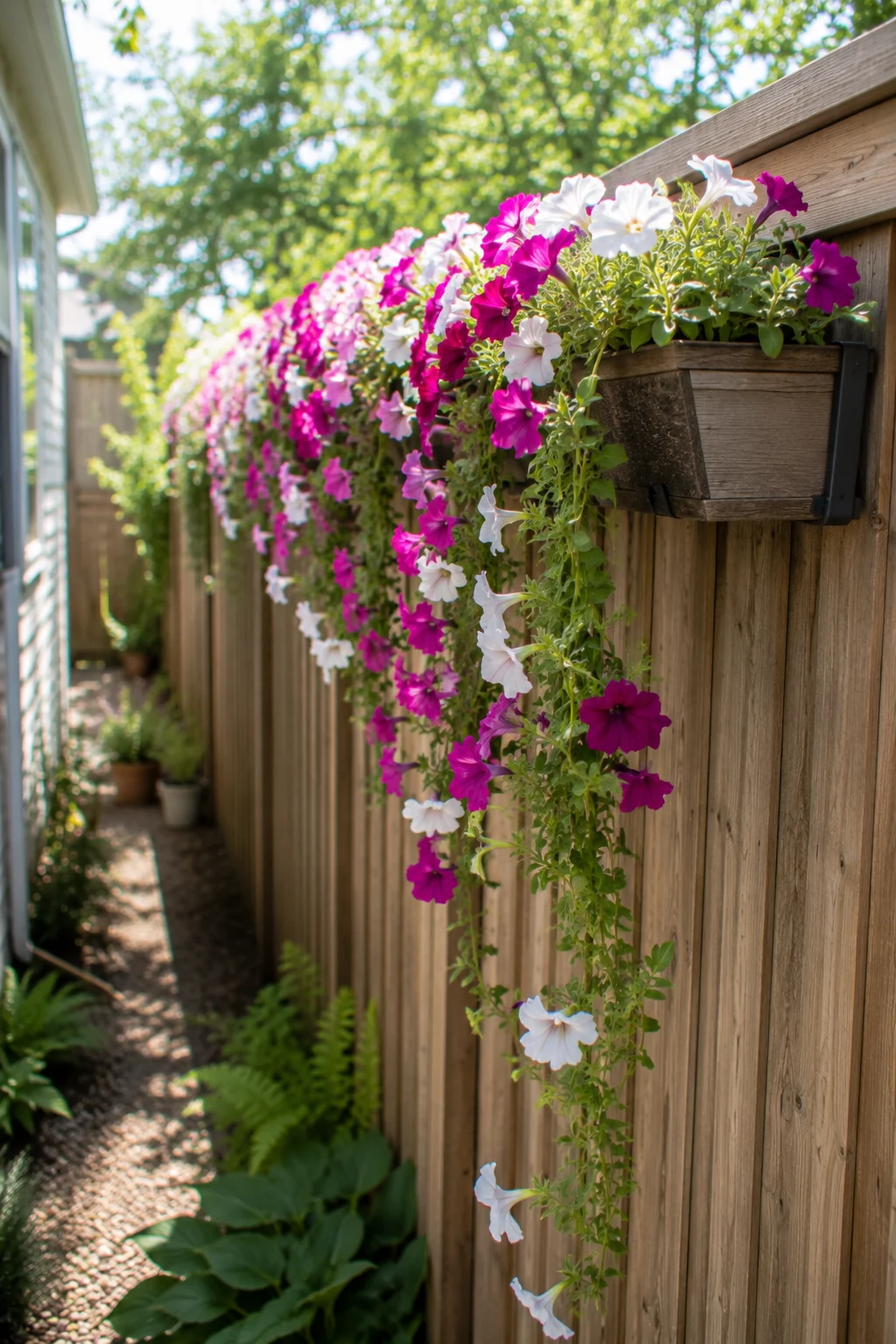
9. Rail-Top Planter Along a Fence Cap
A planter box designed specifically to sit on top of an existing fence cap adds a whole new growing level above the fence line without using any ground space in the yard below. It works because it makes use of a surface that otherwise serves no purpose beyond holding the fence together. Choose a planter with a secure clip or bracket system rated for your fence cap’s width, and fill with trailing plants that will cascade down the fence face.
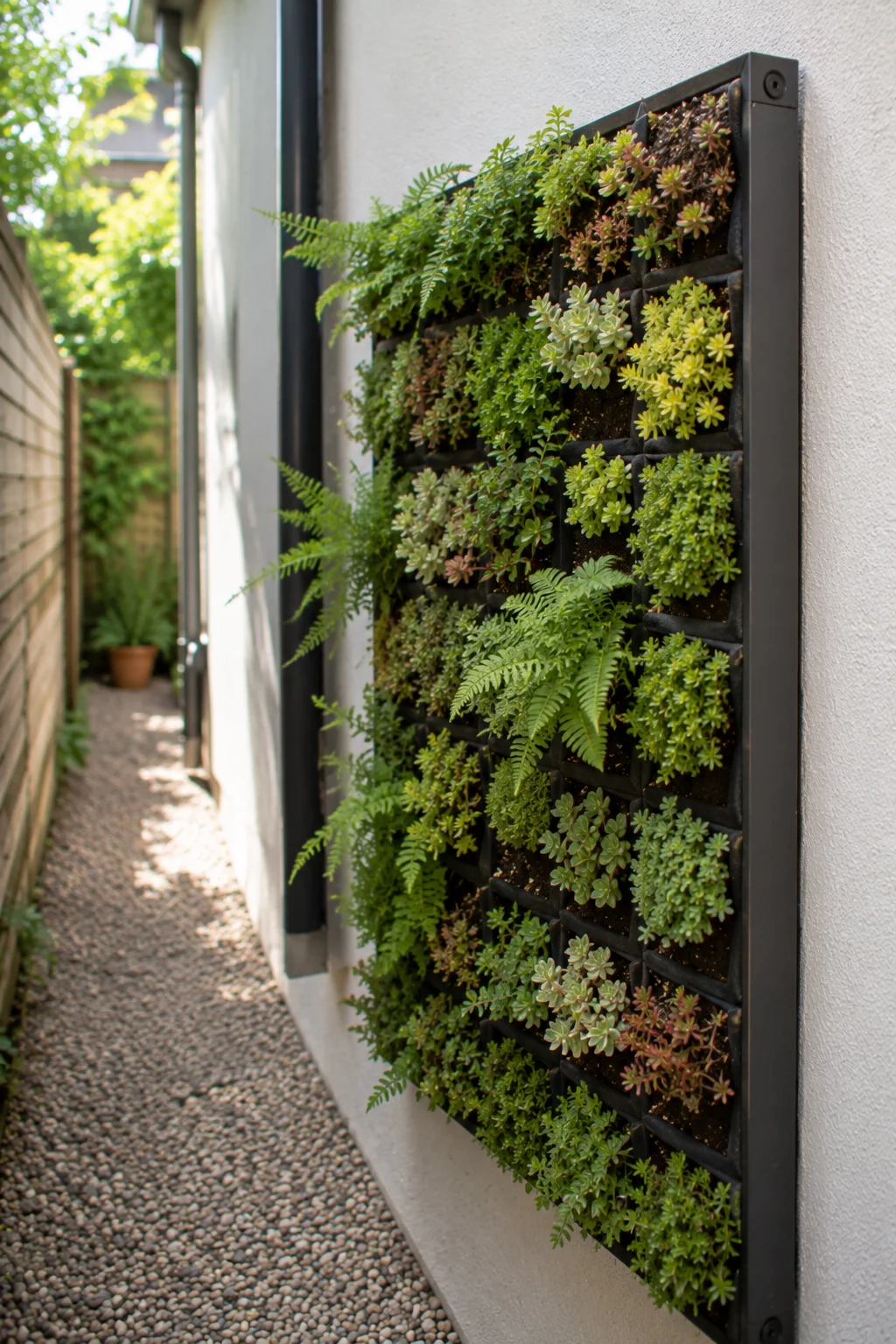
10. Narrow Living Wall Panel
A slim modular living wall panel, just a few inches deep, covers a blank vertical surface with a dense grid of small plants, giving a narrow space significant greenery without any floor footprint at all. It works because the growing medium sits directly against the wall, unlike shelves or rails that still require some standoff depth. Mount the panel securely to structural studs, and choose shallow-rooted plants like sedum or small ferns suited to the panel’s limited soil depth.
Awkward Corners & Triangular Gaps
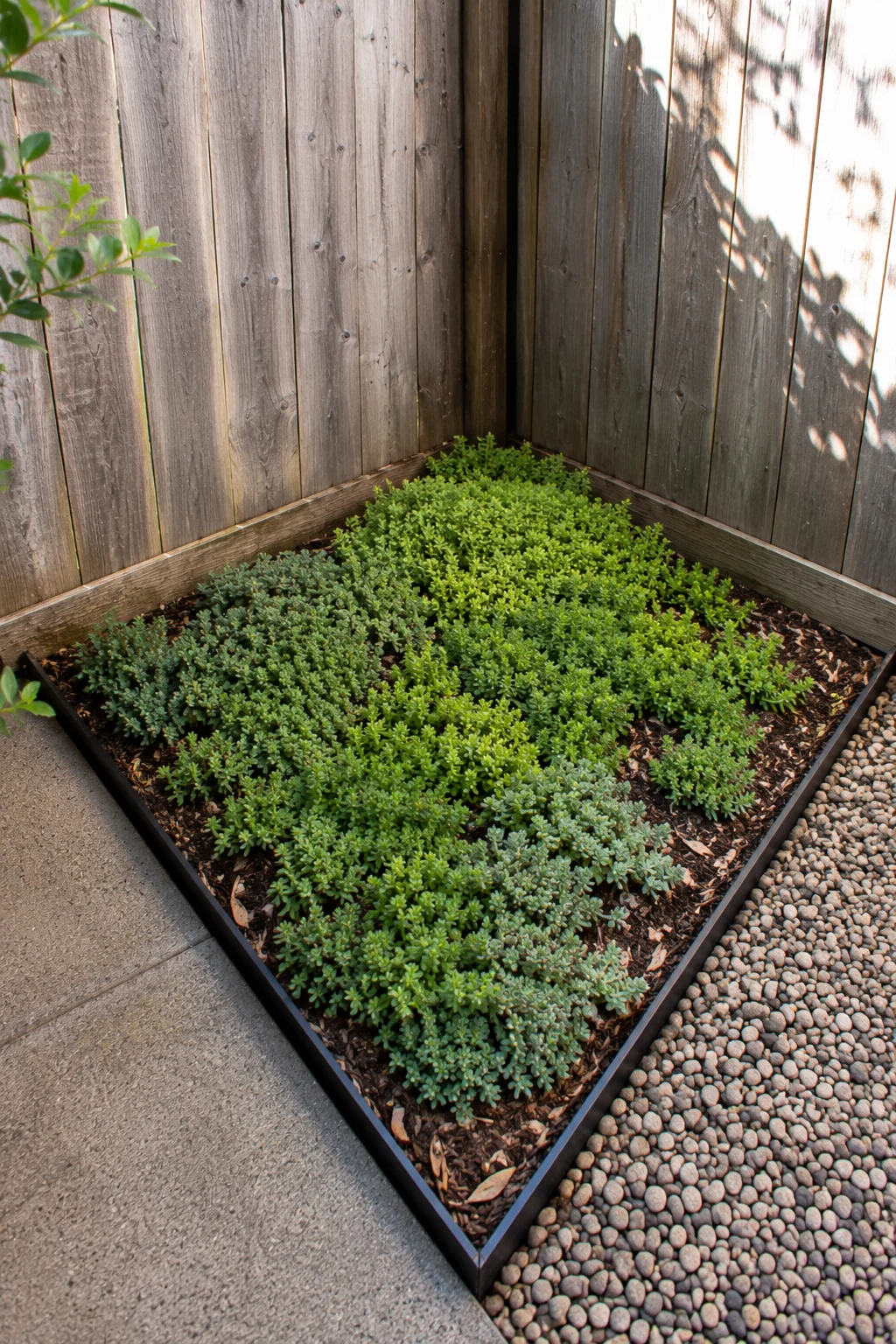
11. Triangle Bed Filled with Groundcover
A bed shaped to exactly match a sharp triangular corner, rather than a standard rectangle awkwardly wedged in, uses the full available space and avoids the leftover dead zones a mismatched shape usually creates. It works because groundcover fills the bed’s irregular shape evenly without needing precise plant placement in every corner. Edge the bed to follow the exact angle, and choose a single spreading groundcover variety so the fill reads as intentional rather than patchy.
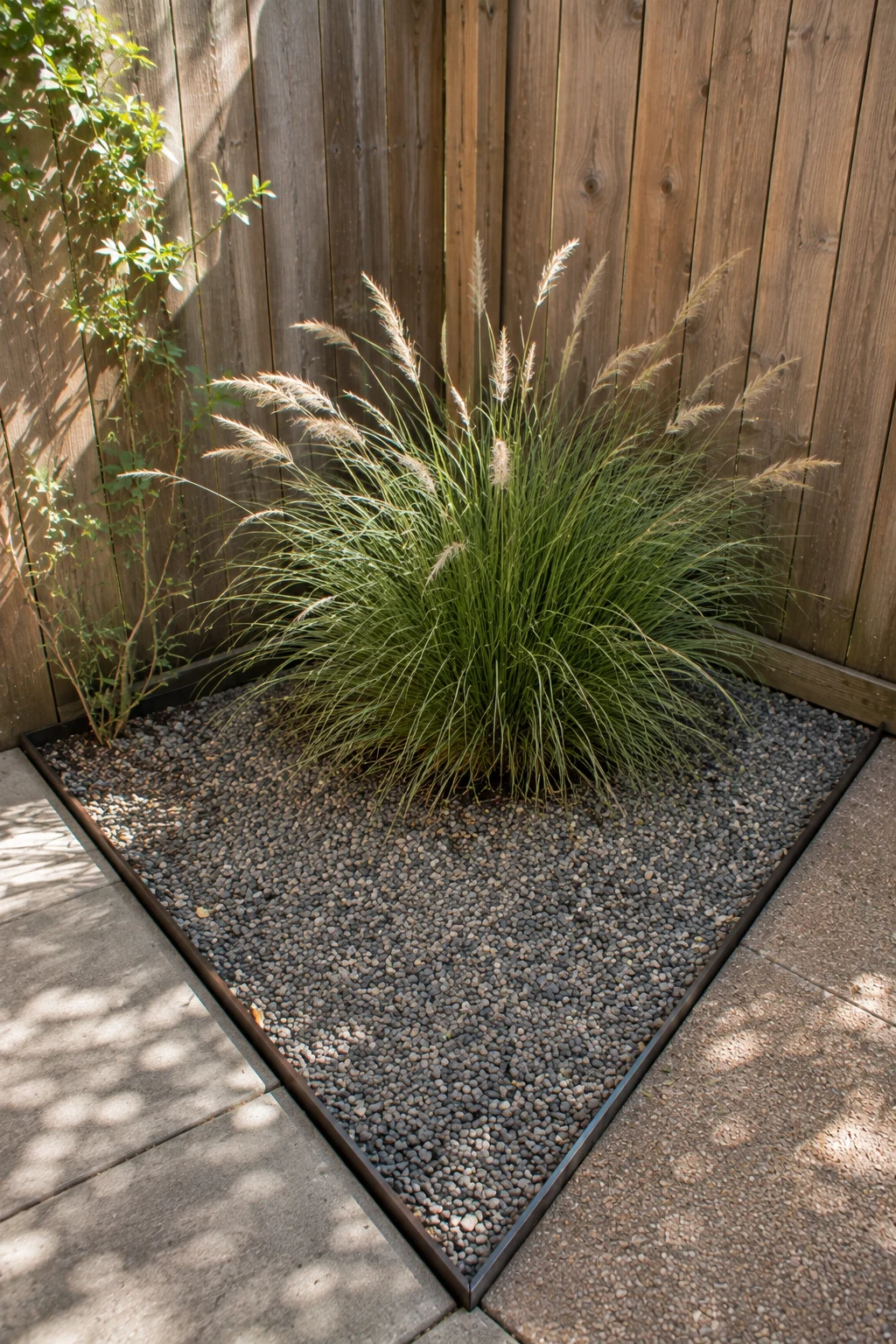
12. Wedge-Shaped Gravel Bed with Grass
A gravel-filled wedge bed, planted with just one or two clumps of ornamental grass, turns a sharp, hard-to-plant angle into a clean, low-maintenance feature rather than a spot that gets ignored. It works because gravel handles the irregular shape without needing careful edge trimming the way lawn would in the same corner. Lay landscape fabric first, then gravel, and position the grass clump toward the widest part of the wedge where it has the most room to mature.
13. Corner Rain Barrel Planting
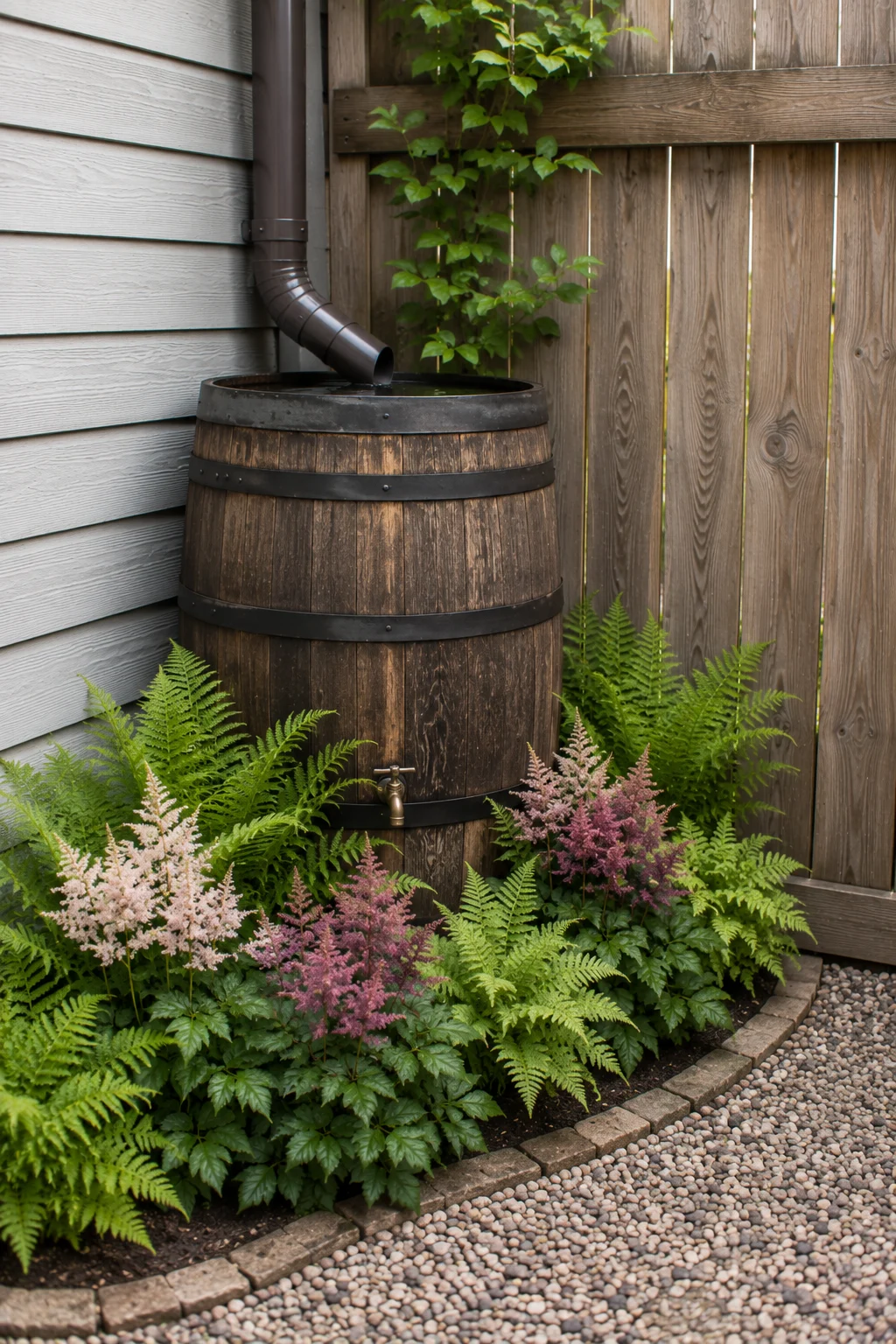
Positioning a rain barrel in an awkward corner, then surrounding its base with a small ring of moisture-loving plants, turns a purely functional water catchment feature into a genuine planting display. It works because the barrel itself often ends up in corners too tight for much else, so pairing it with plants makes productive use of otherwise wasted space around its base. Choose plants that tolerate occasional splash and overflow moisture, like astilbe or ferns, for the surrounding ring.
14. Single Anchor Planter for a Sharp Angle
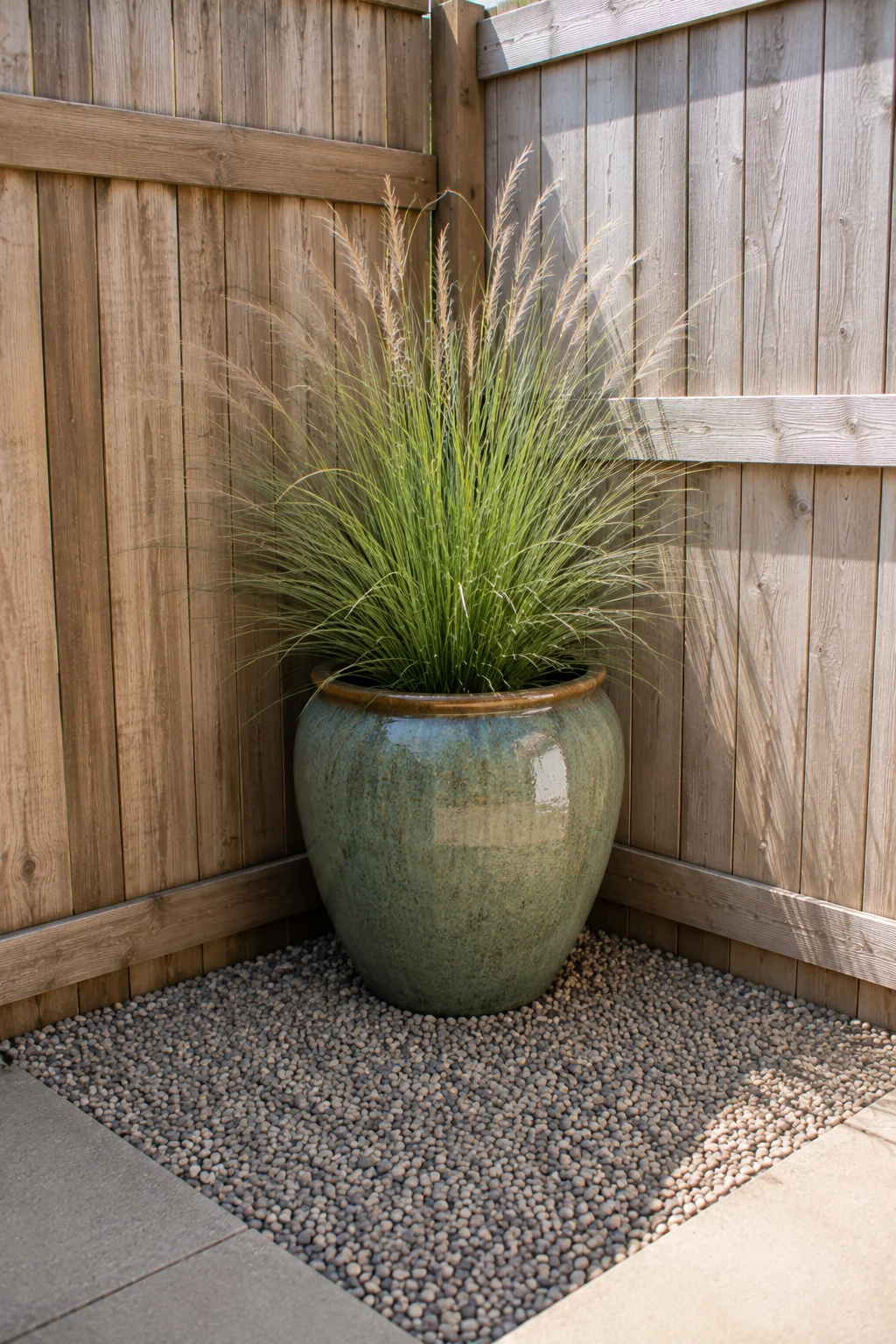
One oversized planter, positioned right at the point of a sharp corner angle, gives the space a clear visual anchor without needing to fill the whole irregular shape with plants. It works because a single strong element reads as more intentional in an awkward space than trying to spread plantings evenly across a shape that resists even coverage. Choose a pot large enough to hold its own visually, and plant with one dramatic specimen rather than a mixed combination.
15. Narrow Wedge Herb Spiral
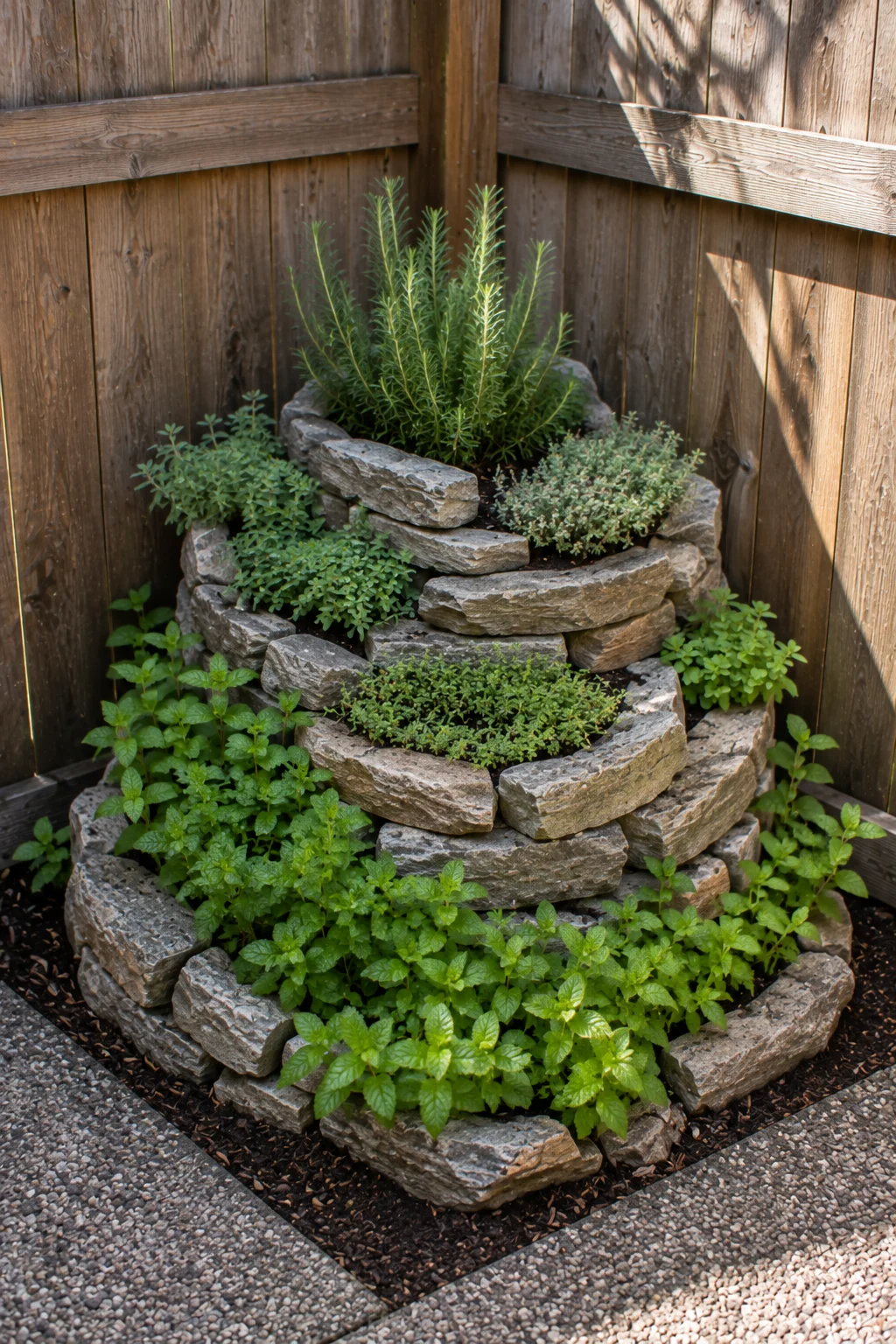
A miniaturized herb spiral, scaled down to fit a tight wedge-shaped corner rather than a full circular footprint, still creates the layered microclimates a standard spiral offers, just compressed into an irregular space. It works because the stacked stone or brick structure can be shaped to follow the corner’s actual angle instead of forcing a full circle where one does not fit. Build with drier, sun-loving herbs near the highest point and moisture-loving varieties toward the base.
Between-Structure Passages
16. Runnel-Style Narrow Water Channel
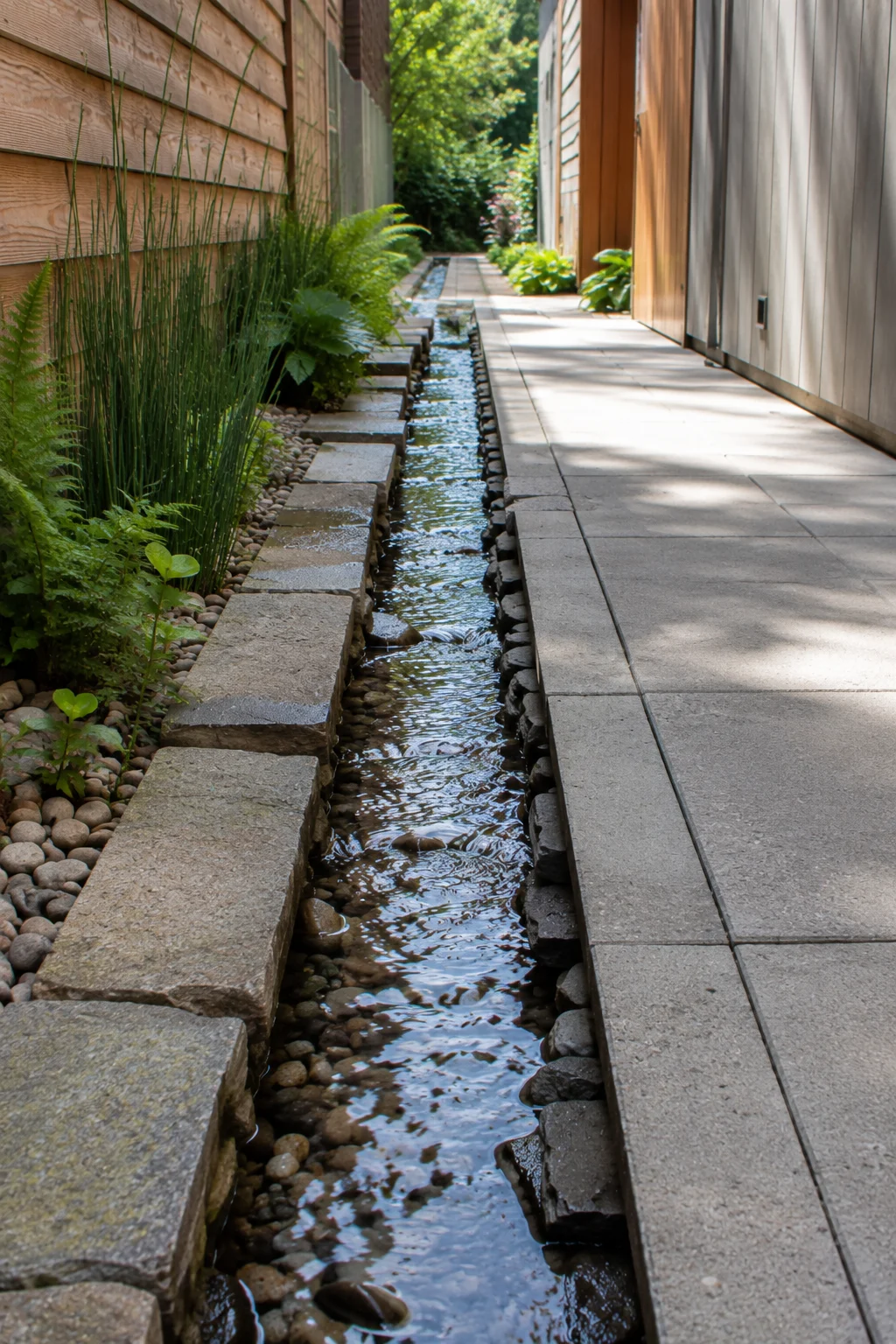
A slim concrete or stone channel of moving water, called a runnel, fits a narrow passage far better than a traditional pond since it works with the linear shape instead of fighting it. It works because the sound and movement of water read clearly even in a channel just a few inches wide, adding a sensory element to a passage that might otherwise feel purely functional. Build the runnel along one edge of the walkway, with a small recirculating pump hidden beneath a grate.
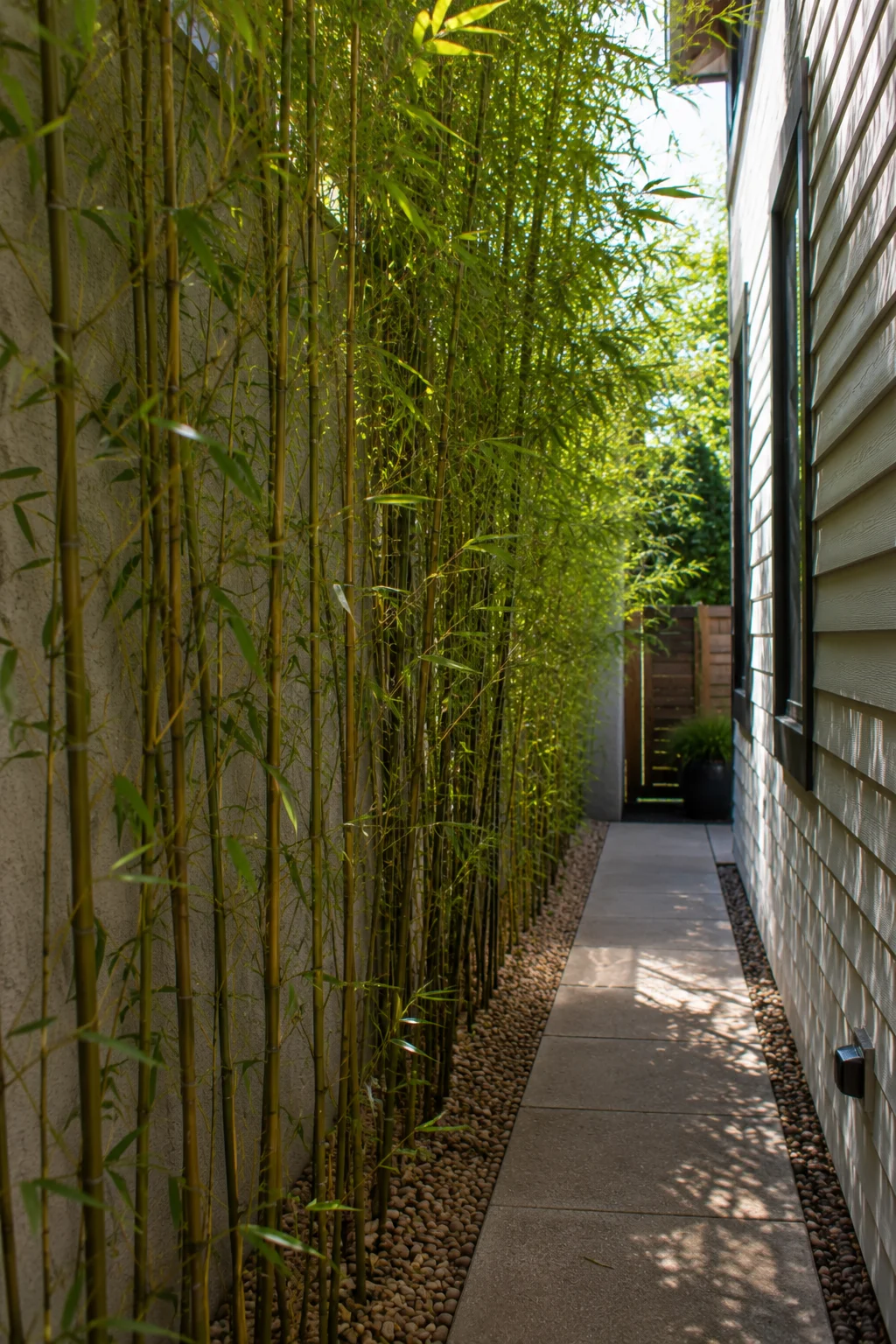
17. Clumping Bamboo Screening Passage
Clumping bamboo, distinct from running varieties that spread aggressively, grows tall and narrow, making it one of the few plants that provides real vertical screening in a passage too tight for a normal hedge. It works because it takes up very little horizontal ground space while still blocking sightlines from neighboring windows above eye level. Plant clumping varieties specifically, and confirm the mature spread with a nursery before planting in a truly narrow gap.
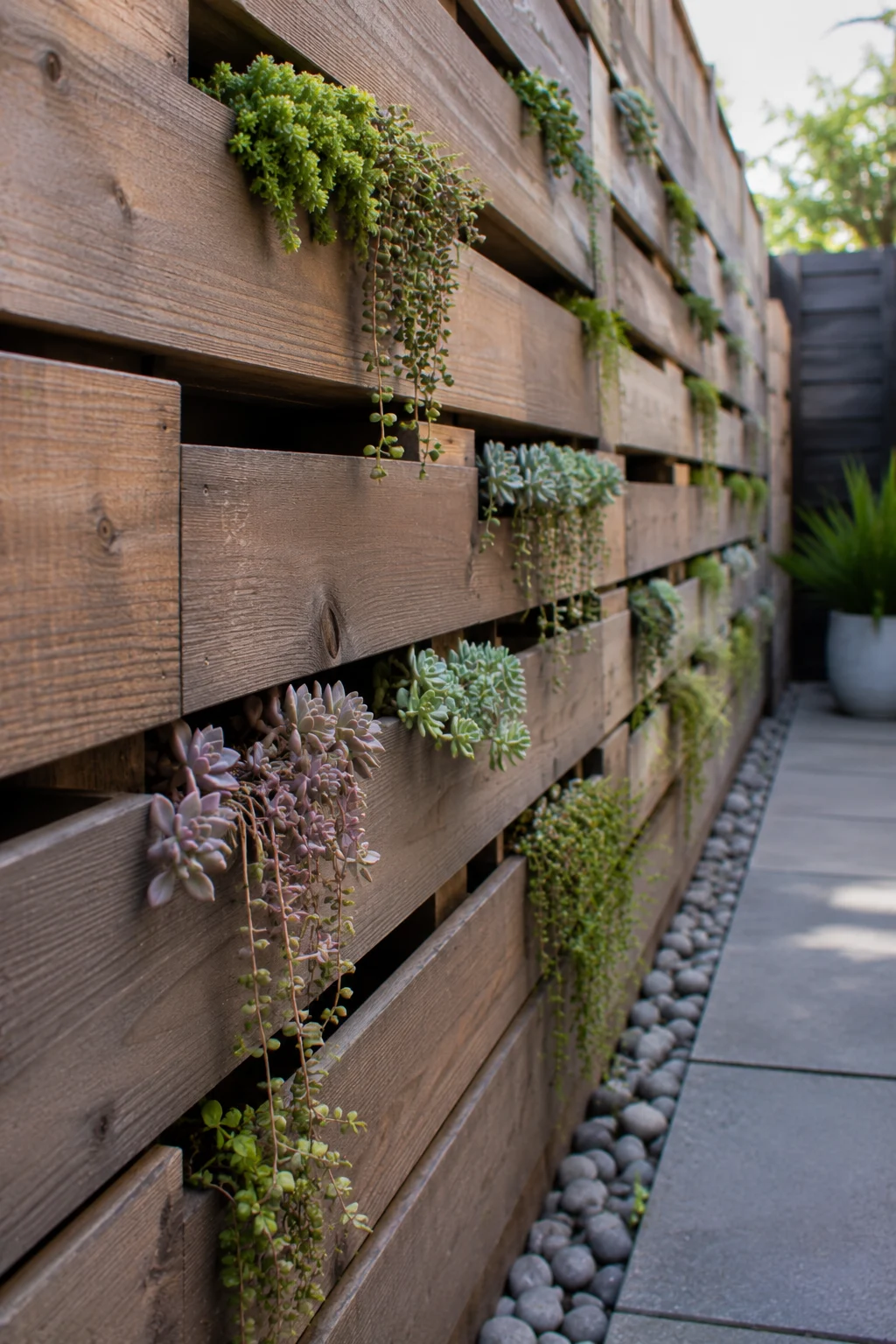
18. Slatted Fence Gap Planting Pockets
Small planting pockets built into the gaps of a slatted or louvered fence let you grow plants directly within an existing screening structure rather than adding separate planters that take up floor space. It works because it uses a surface you likely already have, turning a purely functional fence into a planted feature without any additional footprint. Fit small lined boxes into select gaps, and choose trailing or compact plants that will not obstruct the fence’s screening function.
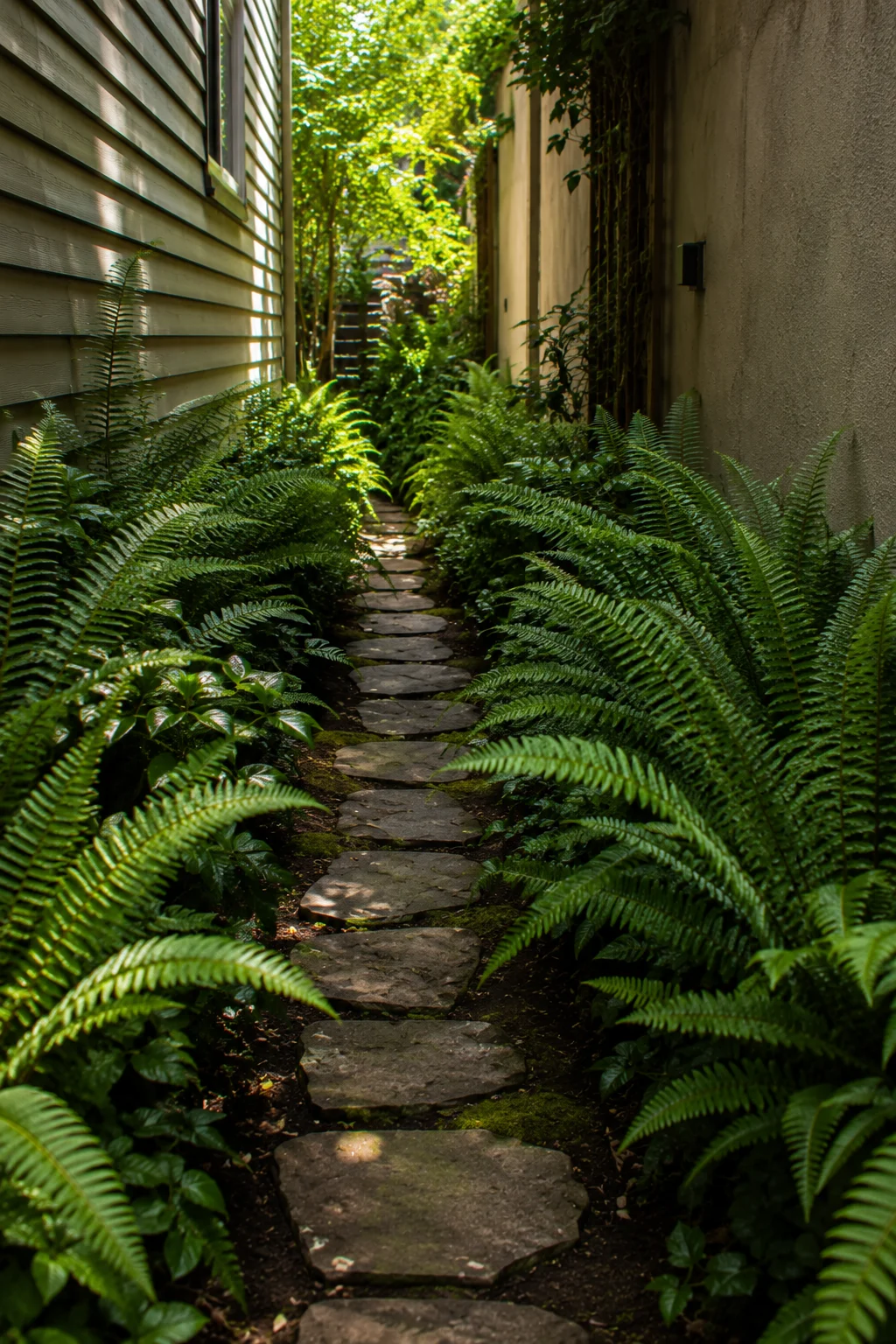
19. Narrow Shade Fern Tunnel
A passage that receives little direct sun, common between two structures, can become a lush fern tunnel rather than a bare, neglected gap, since ferns are among the few plants that thrive in exactly these low-light conditions. It works because it embraces the passage’s actual growing conditions instead of fighting them with sun-loving plants that would struggle there anyway. Layer several fern varieties by height along both walls, and keep soil consistently moist since shaded passages can dry out unevenly.
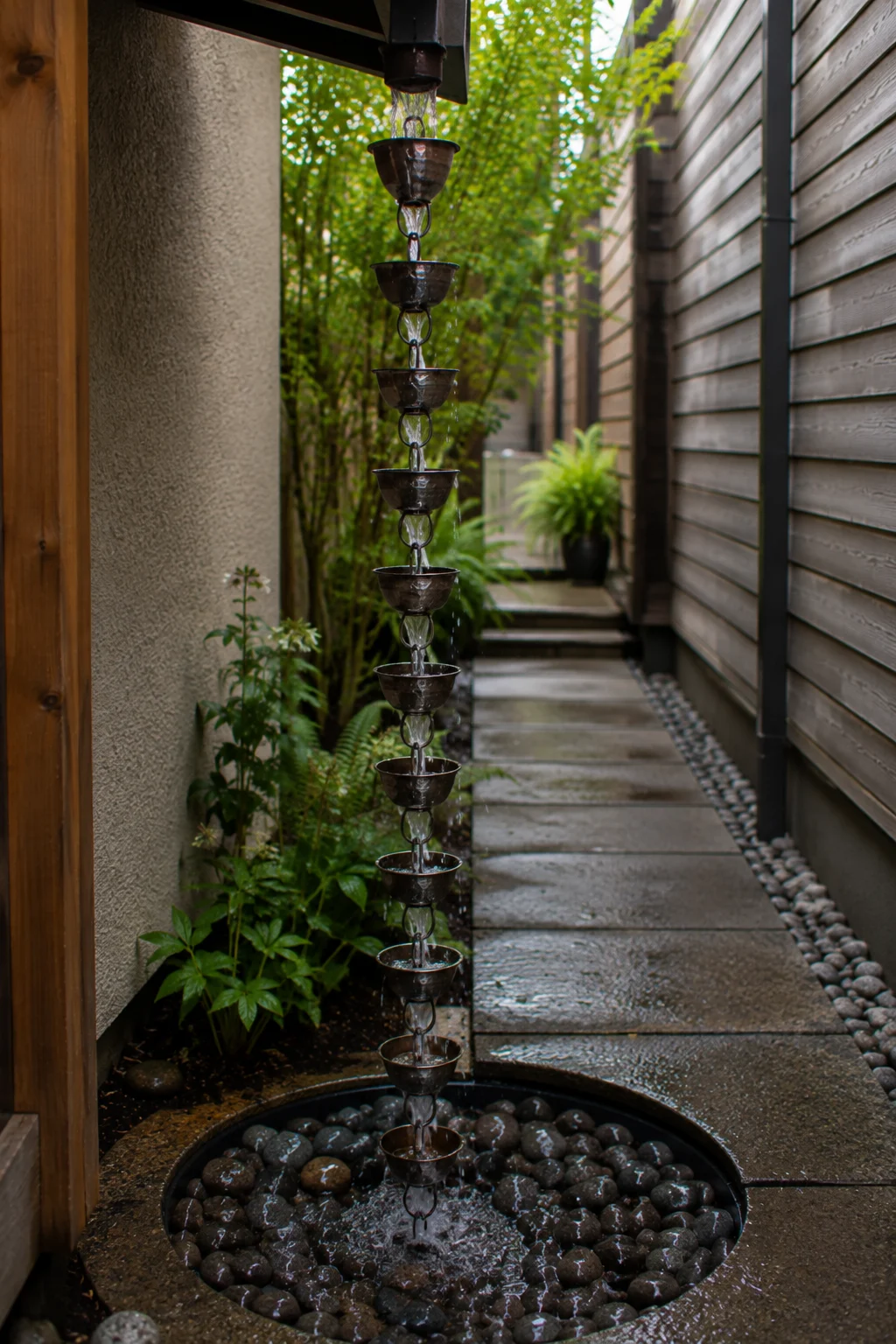
20. Narrow Rain Chain Water Feature
A rain chain, hung from a gutter or small overhang along a narrow passage, channels rainwater downward in a visible, decorative way that takes up almost no floor space at all. It works because it turns a purely functional drainage need into a sensory garden feature, adding movement and sound during rain without requiring any additional width. Position a small basin or gravel catch pit at the base, and choose a chain style, cups or links, that suits the passage’s overall look.
Narrow Balconies & Ledges
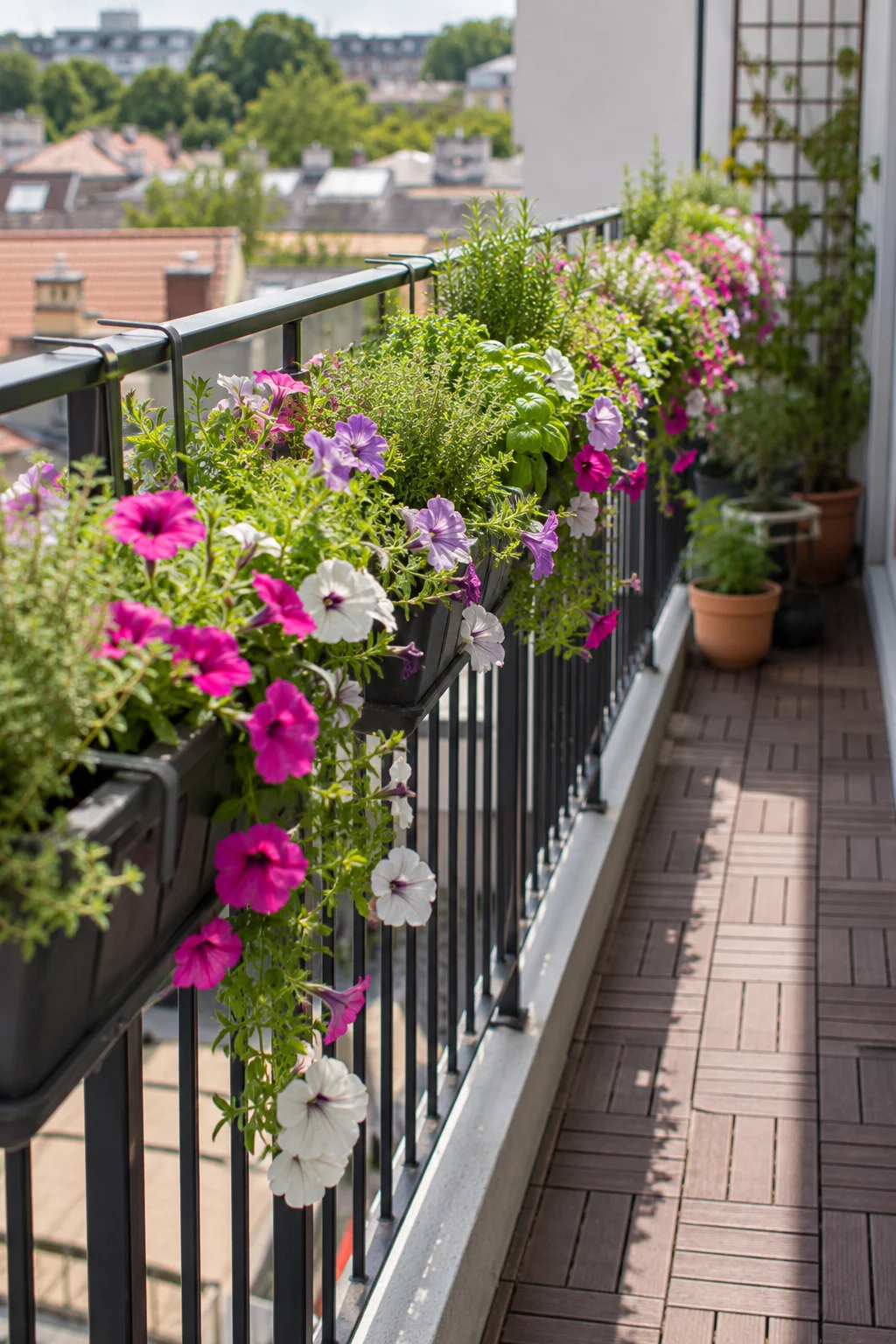
21. Rail Planter Line Along a Narrow Balcony
A continuous line of rail-mounted planters along a narrow balcony’s railing adds a full row of growing space without using any of the balcony’s already-limited floor area. It works because it treats the railing itself as usable planting surface, which matters most on balconies too narrow for freestanding pots. Choose planters rated for your specific rail width and material, and check the weight limit before filling with wet soil.
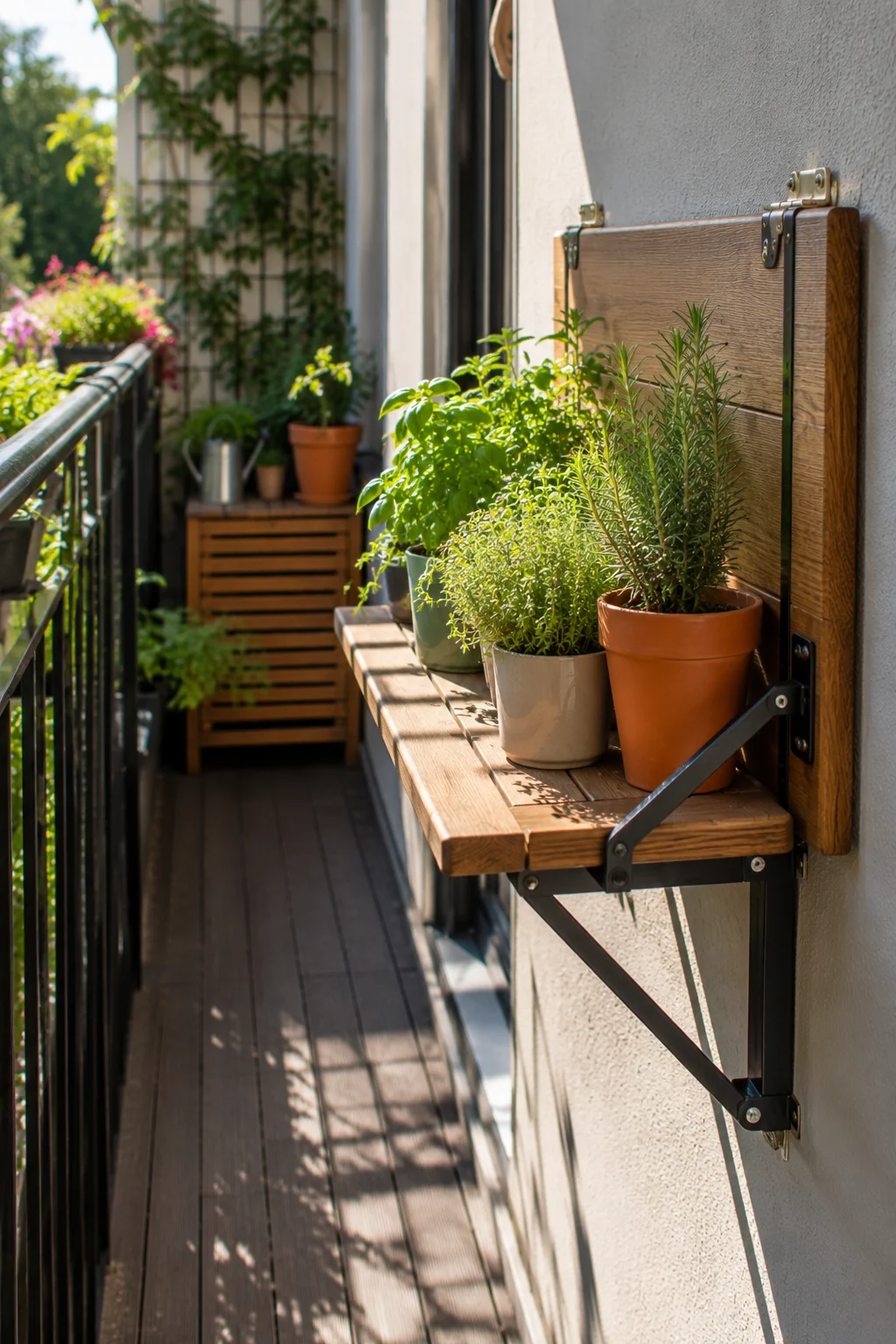
22. Fold-Down Shelf Garden
A hinged shelf that folds flat against a narrow balcony wall when not in use, and drops down to hold a row of pots when needed, solves the core problem of tight balconies, where fixed furniture eats into already-limited space. It works because it gives you growing space on demand without permanently committing floor area to it. Attach the shelf with a piano hinge and folding support bracket, and use lightweight pots to keep the loaded weight manageable.
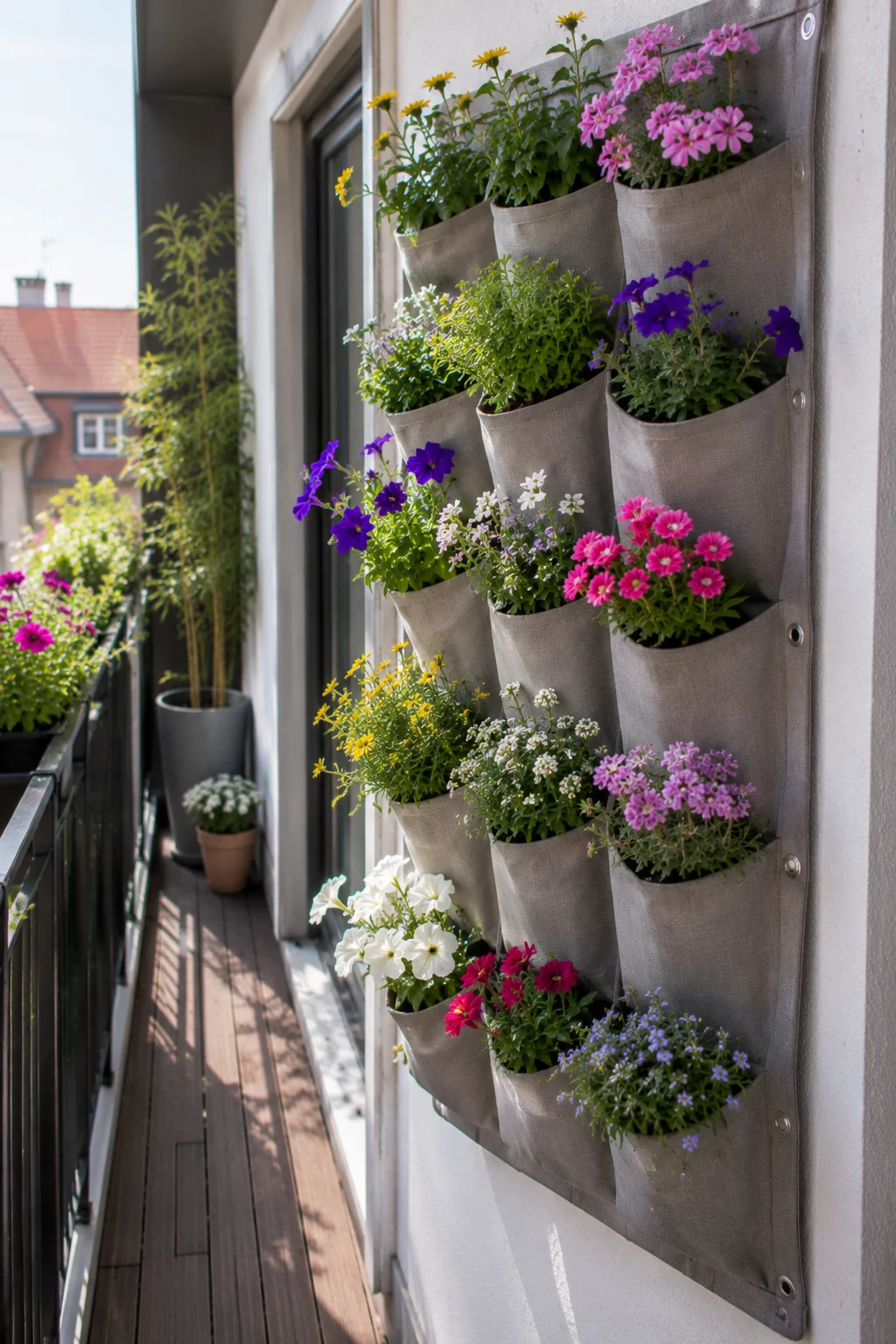
23. Narrow Balcony Pocket Garden
A fabric pocket planter system, hung on a narrow balcony wall, fits a surprising number of individual plants into a footprint of just a few inches deep, similar to a vertical herb garden but scaled for balcony use specifically. It works because the soft fabric pockets weigh far less than an equivalent number of pots would, an important factor on balconies with weight restrictions. Hang the system from a secure mounting rail, and fill each pocket with a different compact plant variety.
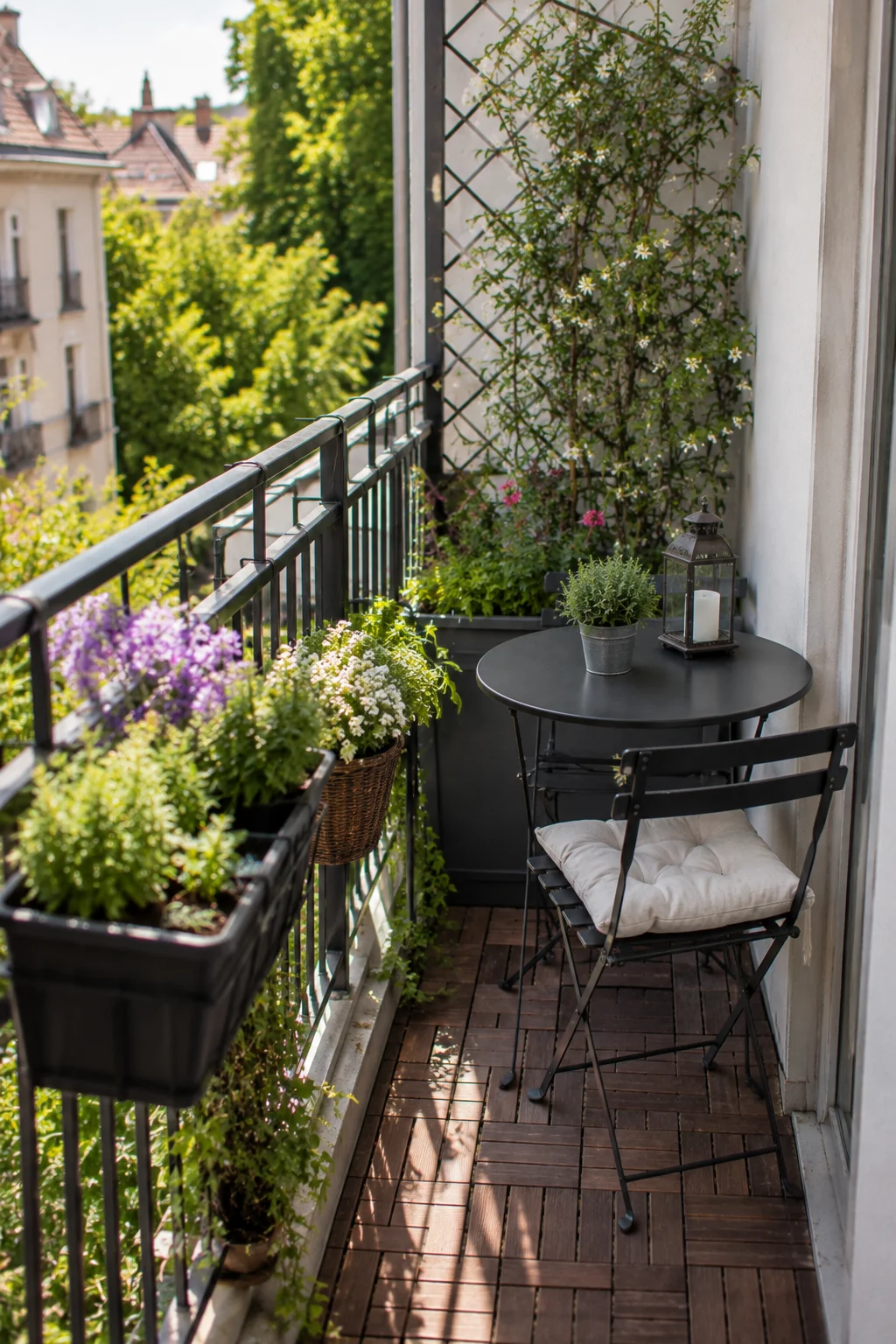
24. Slim Balcony Bistro Corner
A single small bistro table pushed into the narrowest end of a balcony, paired with just one chair rather than two, makes a genuinely usable seating spot even on balconies too tight for standard furniture sets. It works because scaling the furniture down to match the actual available width matters more than trying to fit a full-size table and chair pair into a space that cannot comfortably hold it. Choose foldable or slim-profile furniture specifically designed for tight balcony dimensions.
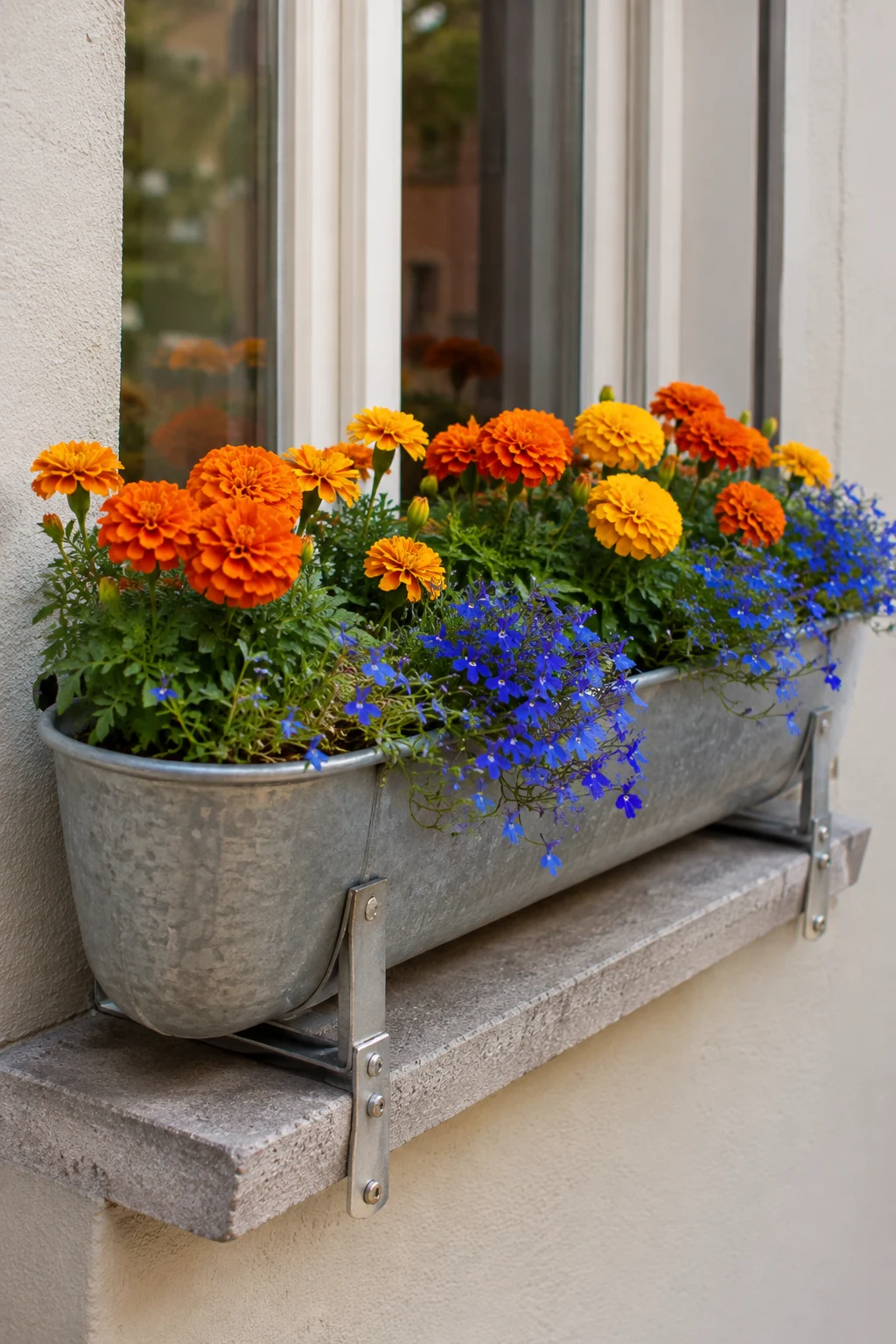
25. Window Ledge Trough Planting
A shallow trough planter secured to a window ledge brings greenery to a narrow space that has no floor area to work with at all, since the entire planting happens outside the window’s footprint. It works because it uses a surface that is otherwise entirely unused, adding color and life visible from both inside and outside the home. Secure the trough with brackets rated for the specific ledge width, and choose compact, shallow-rooted plants suited to trough conditions.
Functional Narrow-Space Additions
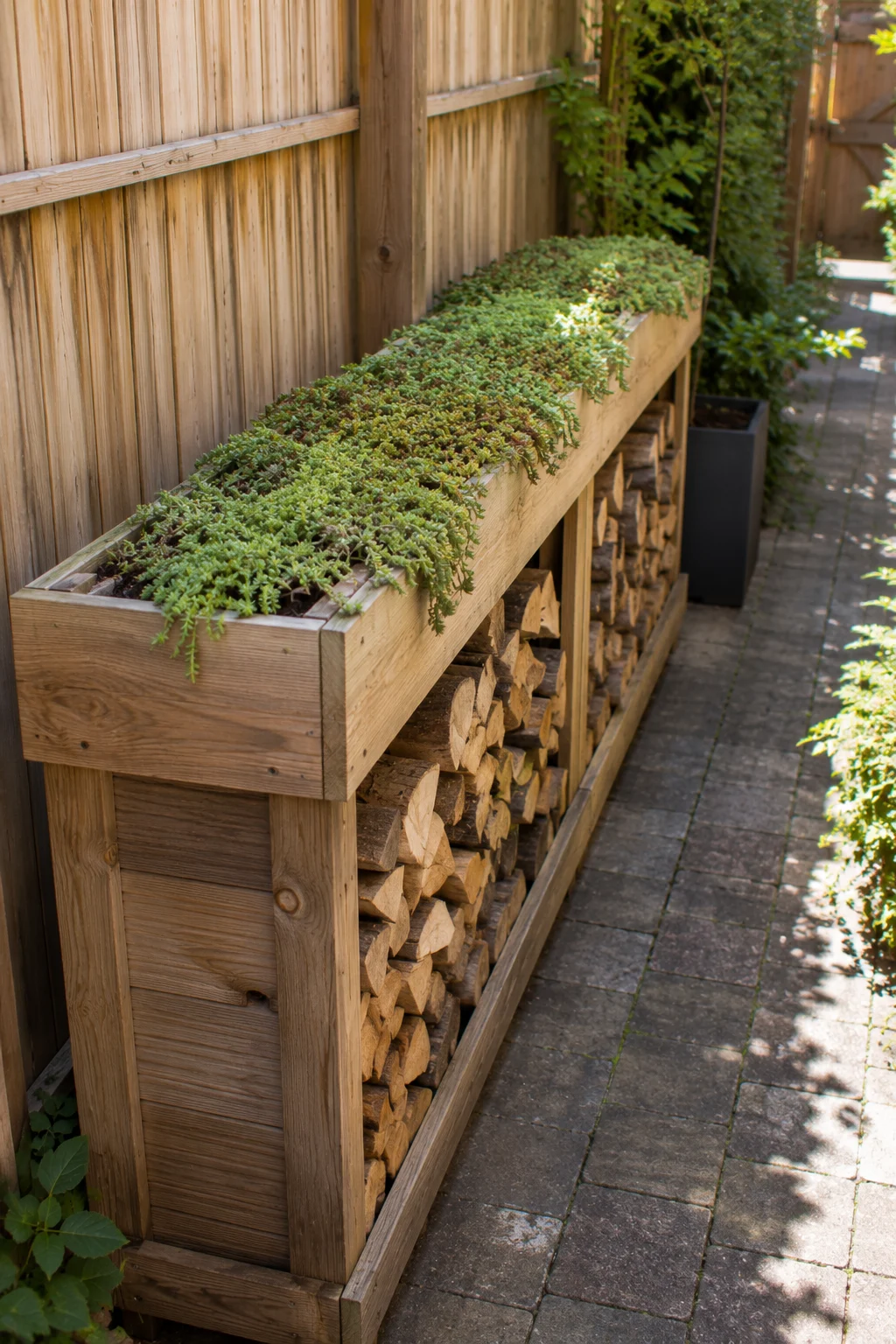
26. Narrow Storage Bench with Planter Top
A slim storage bench, built to fit against a fence in a tight passage, doubles as seating and enclosed storage for tools or cushions, with a planter box built into its top surface for added growing space. It works because it stacks three functions, seating, storage, and planting, into a single footprint, which matters most where floor space cannot be spared for separate features. Build from weather-resistant lumber, and seal the storage compartment against moisture.
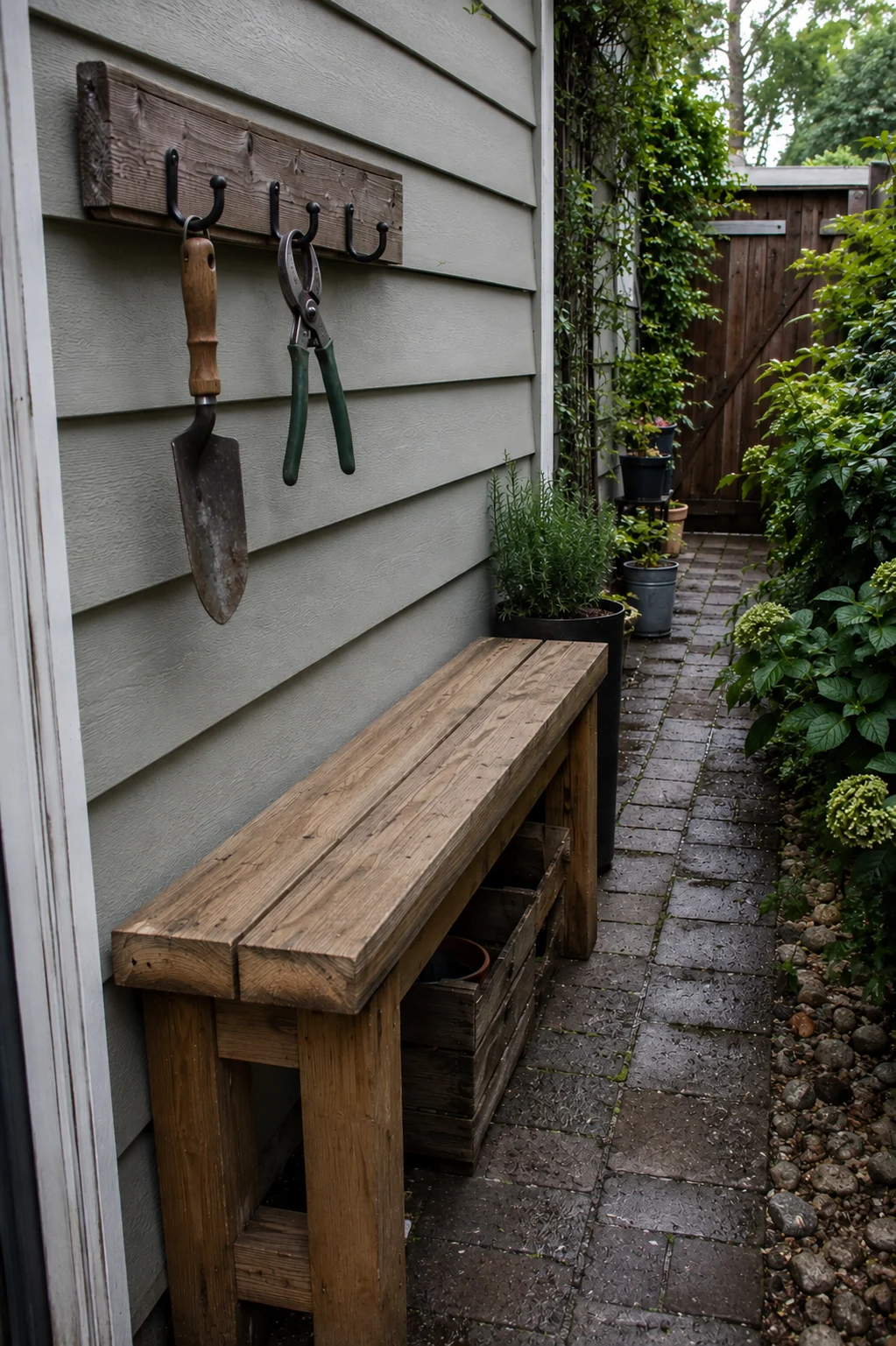
27. Tool Nook Bench Along a Fence
A simple bench with hooks mounted above it, positioned along a narrow side yard, keeps garden tools organized in a passage that gardeners frequently walk through anyway on the way to a main garden or shed. It works because it turns unavoidable foot traffic through the narrow space into a functional stop rather than just a pass-through. Mount hooks at varying heights for different tool sizes, and choose a bench narrow enough not to obstruct the walkway.
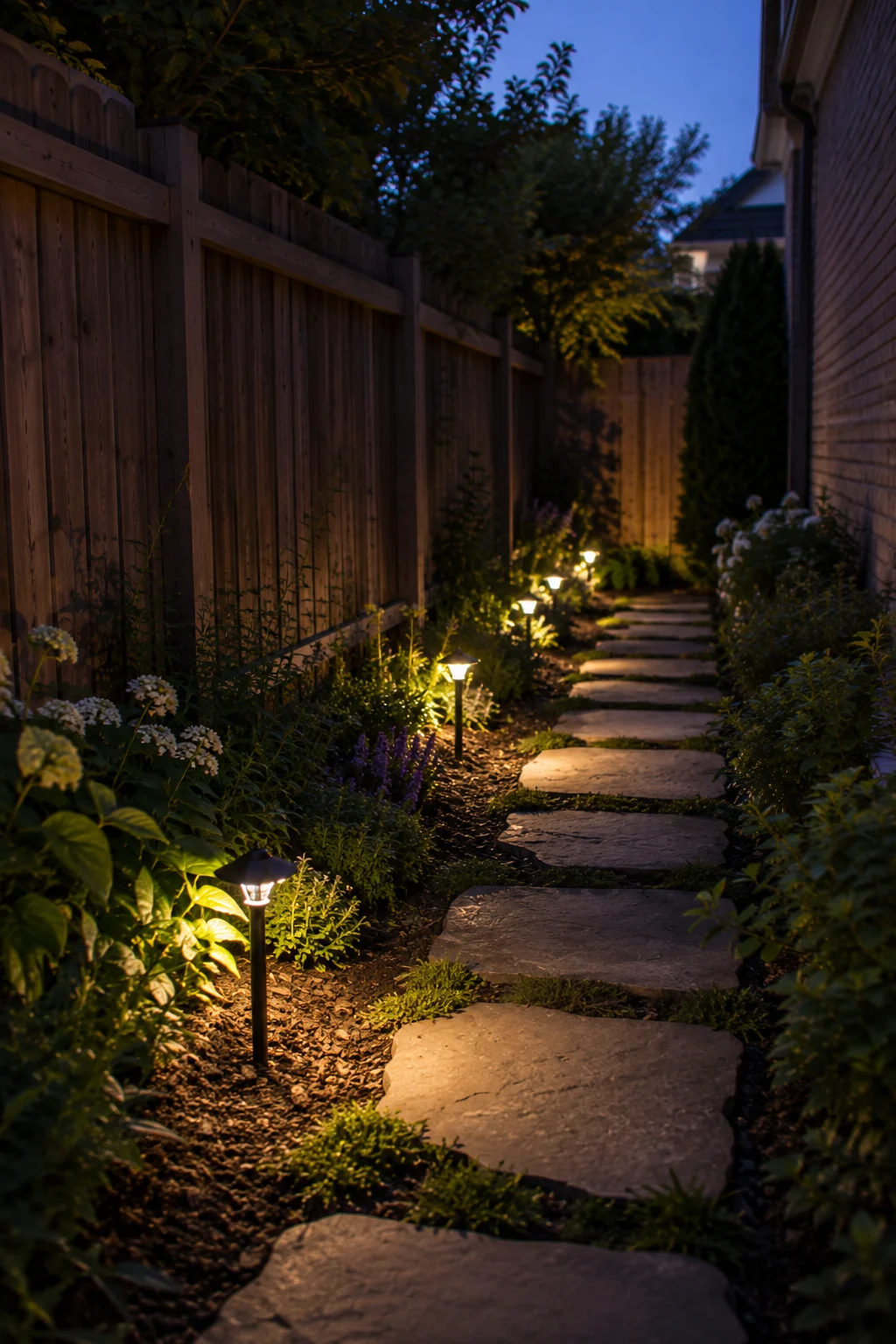
28. Low-Voltage Lighting Runner Along a Path
A row of small low-voltage path lights installed along the edge of a narrow garden improves nighttime safety in a space where tripping hazards are more likely due to limited width for maneuvering. It works because narrow passages often get less attention during general yard lighting planning, even though they are used just as regularly as wider paths. Space fixtures every six to eight feet, angled to wash light along the ground rather than into anyone’s eyes.
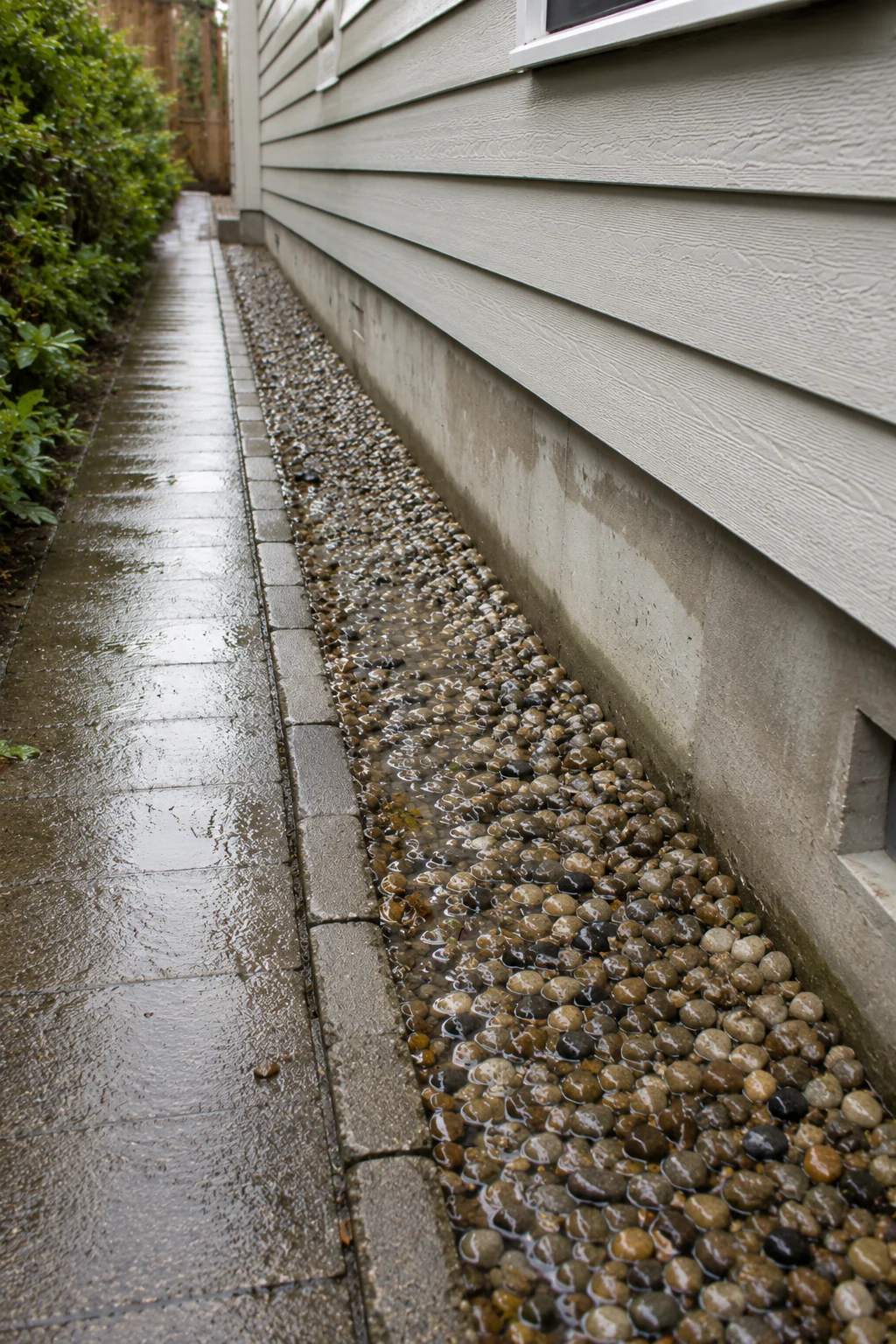
29. Hidden Drainage Channel Under Gravel
A hidden drain pipe or gravel-filled channel running beneath a narrow garden’s surface directs rainwater away from a home’s foundation, a genuine risk in side yards where water often has nowhere else to go. It works because narrow spaces frequently sit right against a house wall, making drainage a functional necessity rather than just a design choice, as noted in water-wise landscaping guidance from Utah State University’s Center for Water-Efficient Landscaping. Slope the channel slightly away from the foundation, and top with gravel so the drainage stays invisible day to day.
How to Choose From This List
With 29 narrow garden ideas covering side yards, vertical growing, awkward corners, passages, balconies, and functional additions, start by identifying the exact type of narrow space you have, since a side yard and a balcony rarely benefit from the same solutions. Pick one structural idea, a path shape or a vertical growing system, then layer in one planting choice suited to the space’s actual light conditions. For broader layout planning beyond these specific narrow-space fixes, see 25 small garden ideas and 25 small backyard layout ideas for how narrow spaces fit into a yard’s overall design. Avoid trying to force a wide-space solution into a narrow one, since most of the ideas here work specifically because they were designed around width limits rather than in spite of them.
Final Thoughts
A narrow garden does not have to stay a neglected strip just because it is too tight for conventional landscaping. The most successful narrow spaces work with their actual dimensions, going vertical, curving paths, and choosing plants suited to limited soil depth, rather than trying to force a standard layout into a space that was never going to fit one.
Start with the single narrowest, most awkward part of your property, and apply just one or two ideas from this list to it first. Once that space is working, the rest of the narrow areas around a typical home tend to become much easier to see solutions for.