
A backyard retreat is a defined outdoor space set apart from the rest of the yard, built specifically for quiet and privacy rather than entertaining or play. Homeowners are drawn to this idea because it turns even a small portion of the yard into a place to actually decompress, away from screens, chores, and whatever else is happening inside the house. According to landscape professionals interviewed by Family Handyman, the word retreat itself implies cozy, private spaces, which is why shaded seating and layered screening tend to matter more here than open lawn or big statement features.
This kind of space is achievable in almost any backyard because it does not require a full renovation, just a clearly defined corner, some privacy screening, and comfortable seating. A retreat can be as small as one hammock tucked behind a hedge or as involved as a raised deck with a fire bowl and curtained pergola. What makes it work is intention: choosing one spot and building toward quiet rather than trying to make the whole yard peaceful at once.
Privacy & Screening
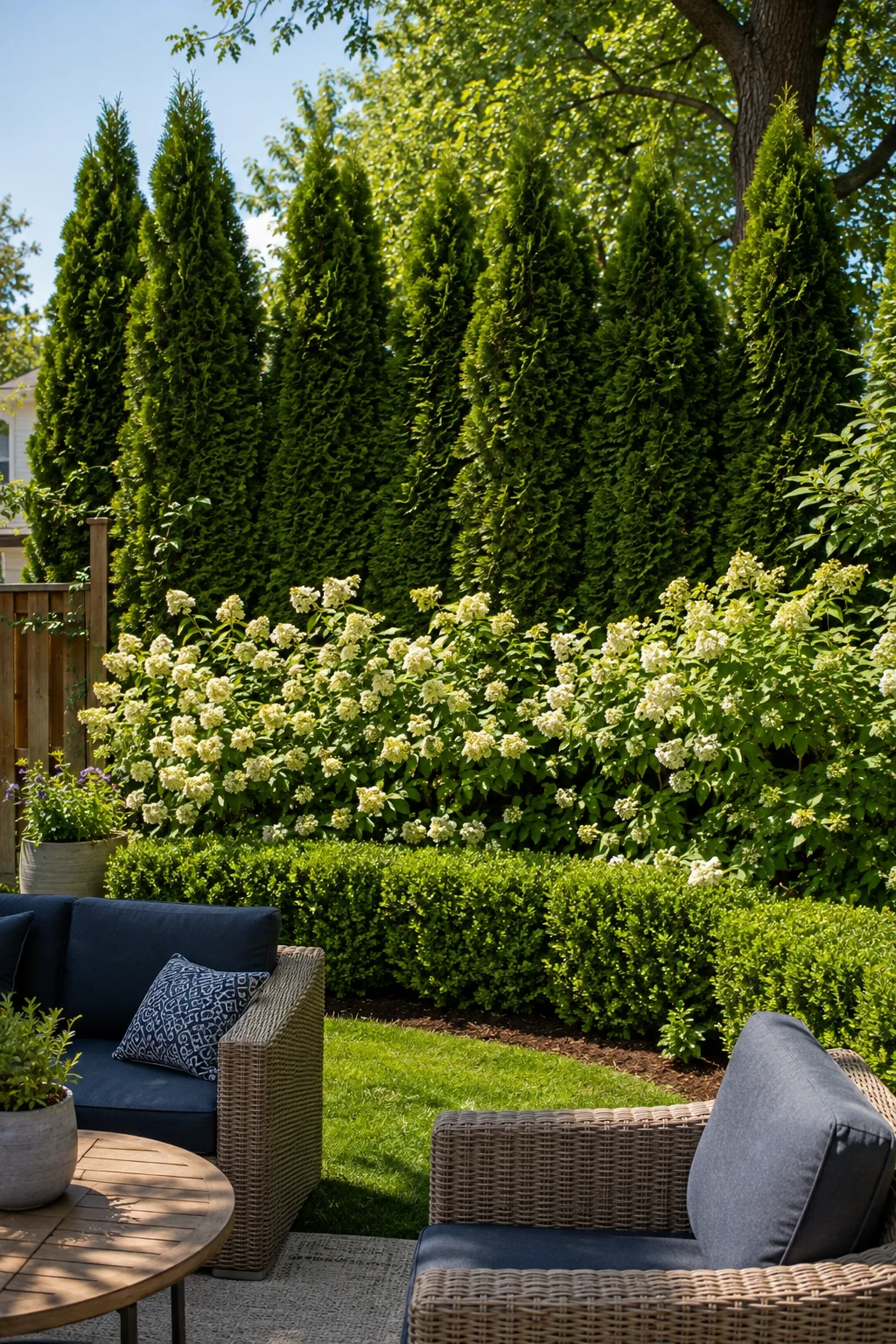
1. Layered Privacy Hedge
Planting two or three rows of shrubs at staggered heights, rather than a single hedge line, creates a denser, more effective visual barrier around a retreat space than one row alone. This works because layering fills gaps that a single hedge often leaves near the base, while also adding more texture and depth than a flat green wall. Choose a taller evergreen for the back row, a mid-height flowering shrub for the middle, and a low border plant in front, staggering the planting pattern rather than lining everything up. Give the hedge two to three growing seasons to fill in fully before expecting complete privacy.
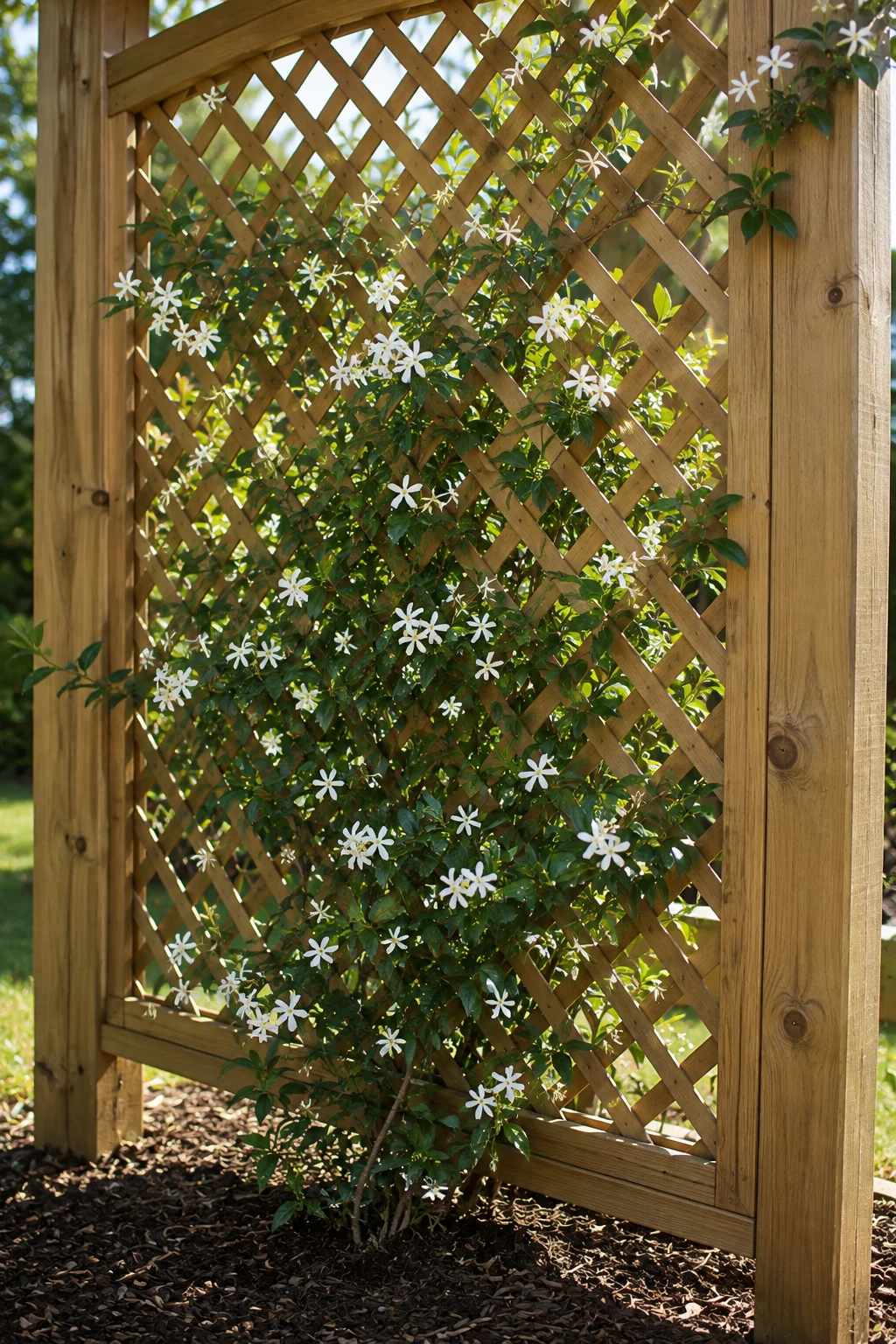
2. Lattice Panel with Climbing Vines
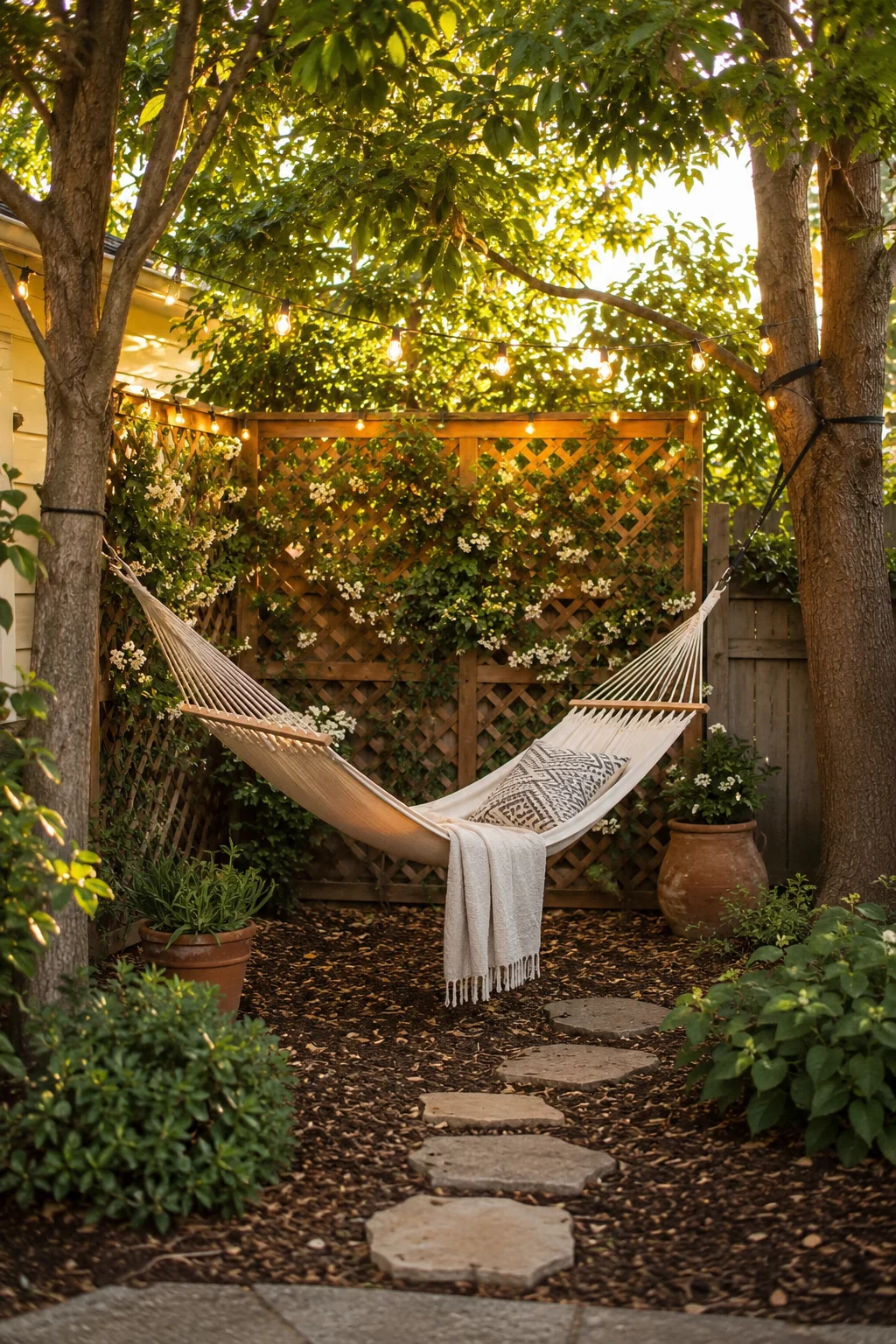
A wood or vinyl lattice panel, planted with a climbing vine like jasmine or clematis, gives faster privacy than a hedge while still allowing some light and airflow through the gaps. This works because it solves the biggest downside of hedges, the years-long wait for full coverage, offering usable screening the same season it is installed. Mount the lattice on sturdy posts set in concrete, and plant the vine at the base so it climbs and fills in the open gaps over one or two seasons. Choose a fragrant flowering vine if you want the screen to add a sensory element to the retreat as well.
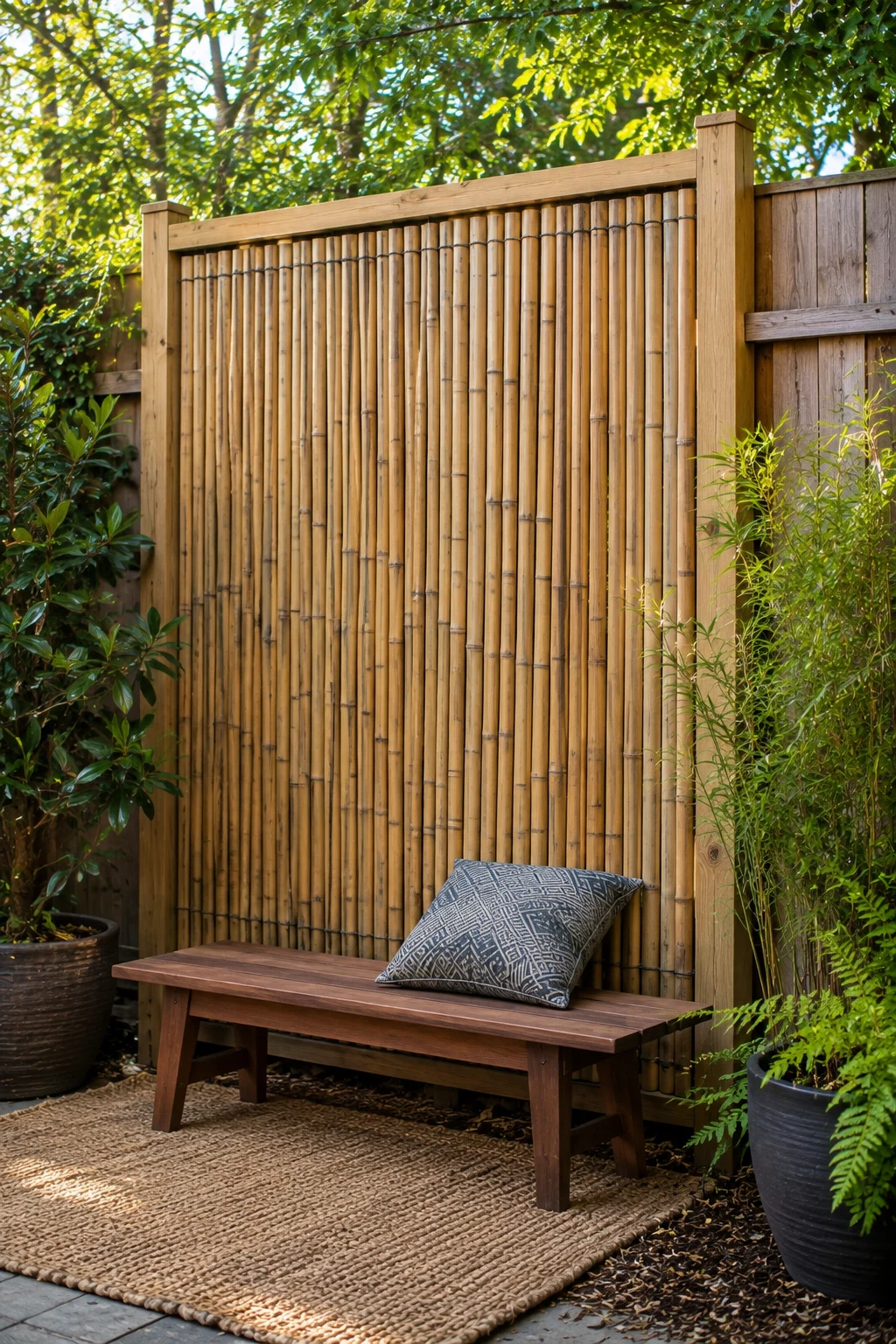
3. Bamboo Screening Fence
Rolled bamboo screening attached to an existing fence or freestanding frame adds natural texture and near-total privacy in one straightforward installation. This works well for retreat spaces that need privacy quickly, since it does not require any plant establishment time the way hedges or vines do. Unroll the screening along the frame, secure it with the included wire ties or zip ties at regular intervals, and trim any excess length with garden shears. Bamboo screening typically holds up for a few years outdoors before needing replacement, depending on sun and rain exposure.
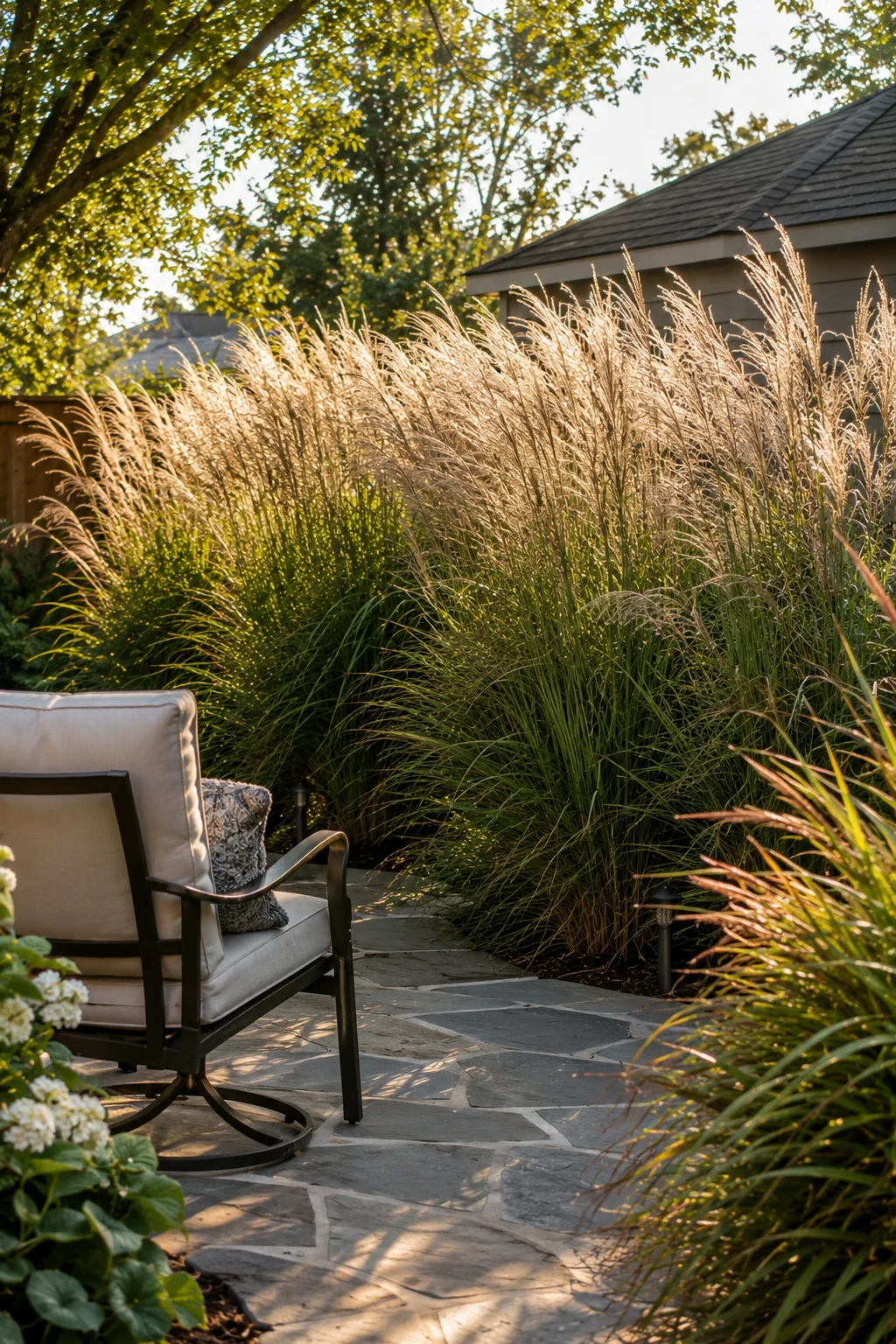
4. Tall Ornamental Grass Border
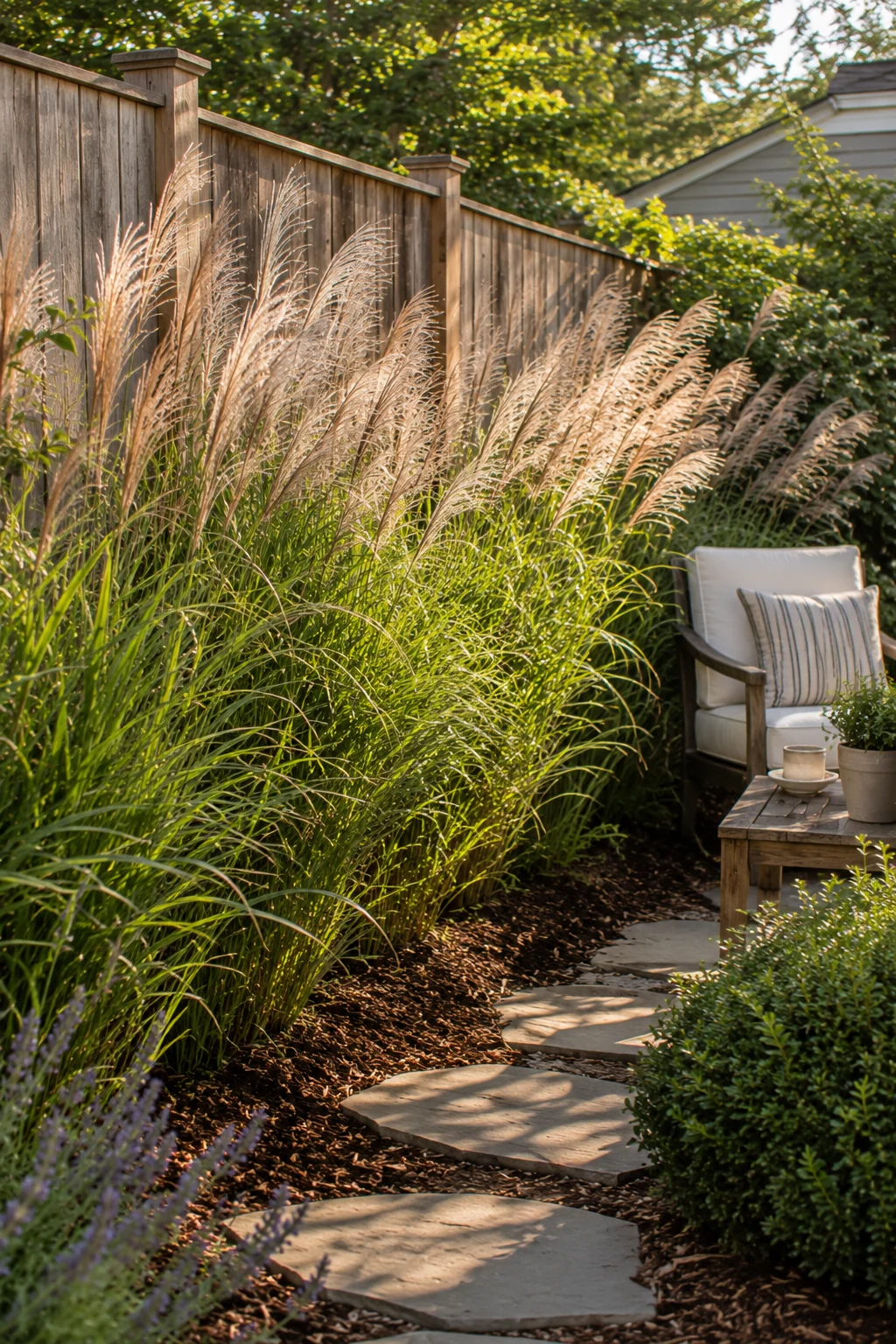
A dense planting of tall ornamental grasses, like miscanthus or switchgrass, creates a softer, more natural-looking privacy screen than a solid fence or hedge, while also adding movement and sound as it sways in the wind. This works because grasses grow quickly, often reaching full height within one growing season, and their texture reads as informal and calming rather than architectural. Plant grasses in a staggered double row for denser coverage, spacing according to the mature width of your chosen variety. Cut the grasses back once a year in late winter before new growth emerges, since most varieties die back seasonally.
5. Privacy Pergola with Curtains
A pergola fitted with outdoor curtains along one or more sides creates an adjustable, semi-enclosed retreat that can be opened for airflow or drawn closed for full privacy depending on the moment. This works because it gives you control over the space’s openness, unlike fixed screening, which stays the same regardless of weather or mood. Install curtain rods along the pergola’s beams, and choose outdoor-rated fabric that resists fading and mildew. Weight the bottom hem of the curtains slightly so they do not blow around excessively in wind.
Seating & Structure
6. Hammock Reading Nook
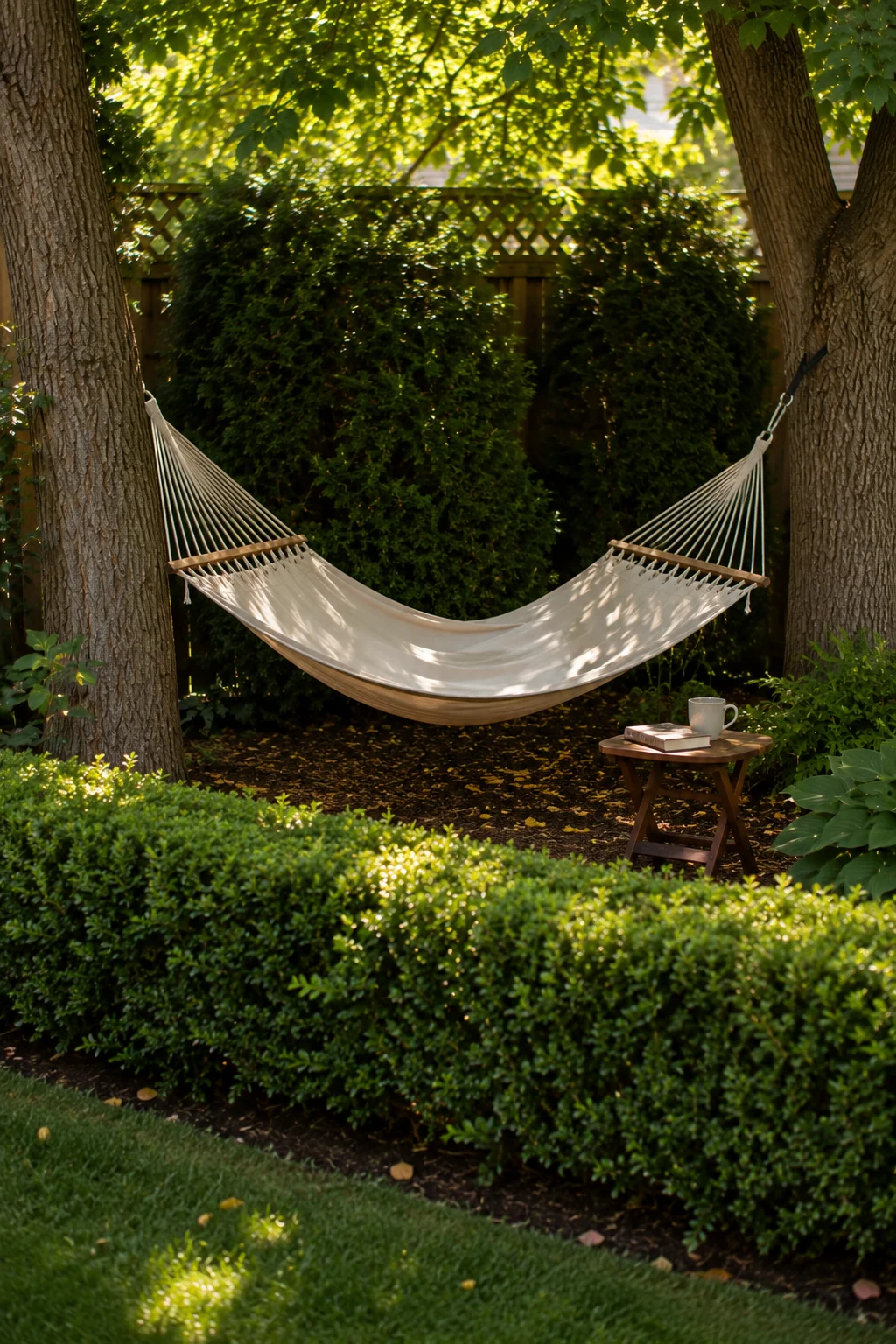
A hammock strung between two trees or a freestanding frame, tucked behind a privacy screen, creates one of the simplest and least expensive backyard retreats possible. This works because a hammock naturally slows you down, and the enclosed, swaying feel of it reinforces the sense of being tucked away from the rest of the yard. Choose a spot with two trees spaced appropriately for your hammock’s length, or use a freestanding stand if natural anchor points are not available. Add a small side table or hanging pouch nearby for a book or drink, so the space stays functional as well as relaxing.
7. Sunken Conversation Pit
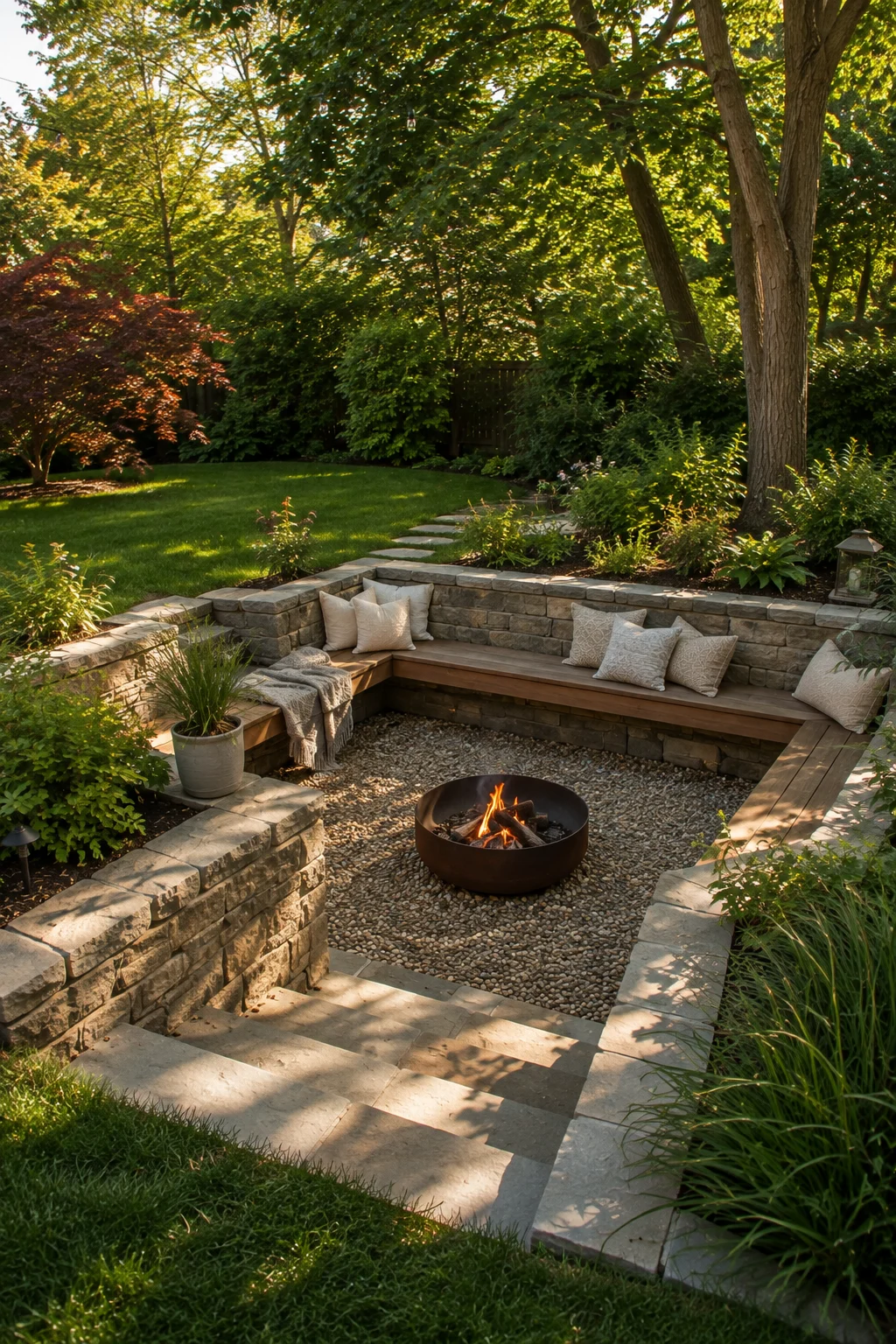
A slightly recessed seating area, built a step or two below the main yard level, creates a cozy, enclosed feeling without needing tall screening on every side. This works because the change in elevation alone signals a separate, more intimate space, similar to how a sunken living room feels different from an open floor plan indoors. Build retaining walls from stone, concrete block, or timber to define the lowered area, and finish the floor with pavers, gravel, or a wood deck depending on your style. Include built-in or freestanding bench seating around the perimeter so the space naturally draws people inward rather than leaving the center empty.
8. Cozy Two-Chair Fire Pit Corner
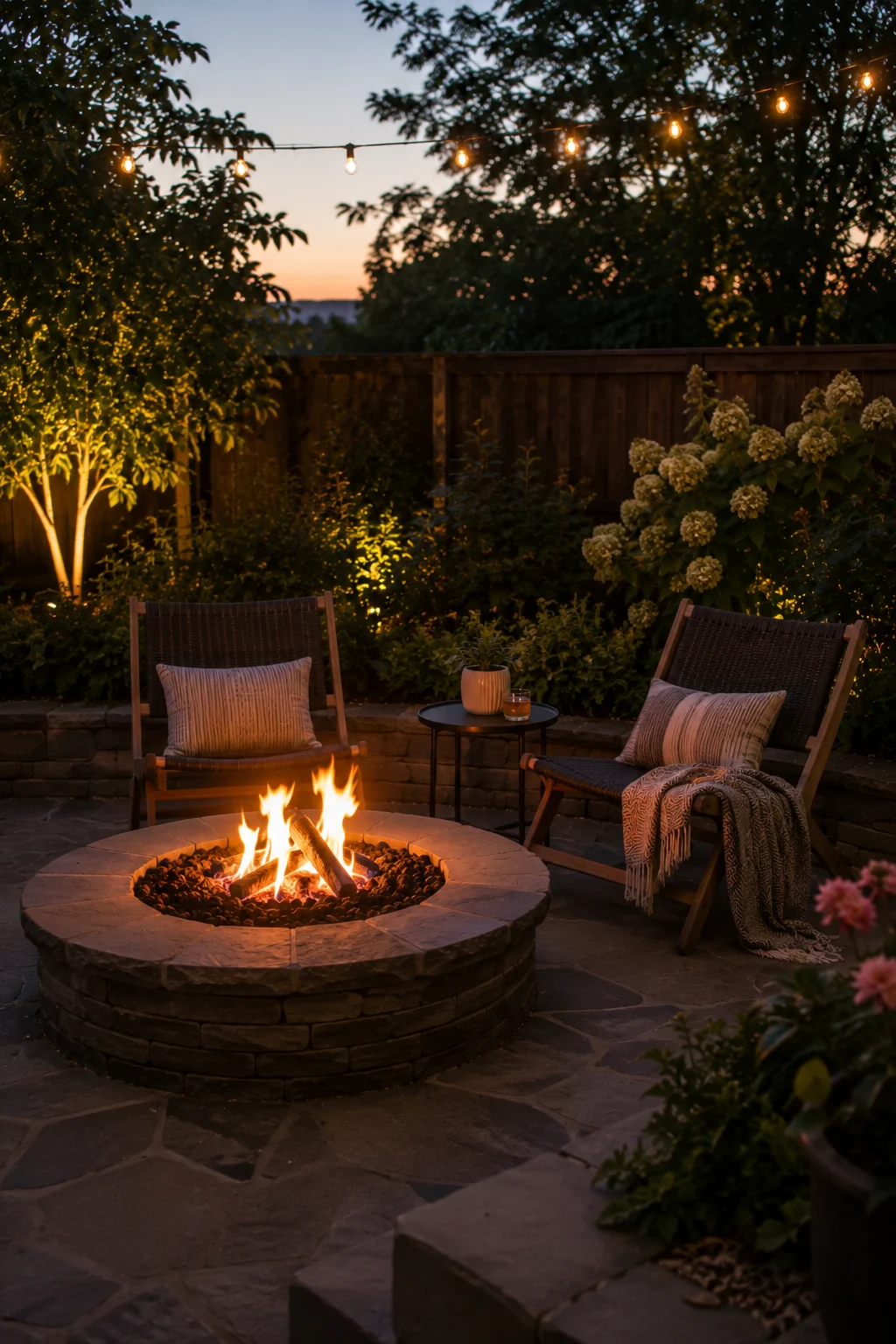
A small fire pit paired with just two chairs, rather than a large circular seating arrangement, keeps the space feeling intimate and suited to quiet conversation or solo evenings outside. This works because scaling the seating down intentionally signals the space is for a couple or one person, not a gathering, which suits a retreat’s purpose better than standard entertaining setups. Choose a compact fire pit, either wood-burning or gas depending on local regulations, and position the two chairs close enough for conversation but angled slightly outward for comfortable individual views. Add a small side table between the chairs for drinks or a book.
9. Window Seat Bench Along a Wall
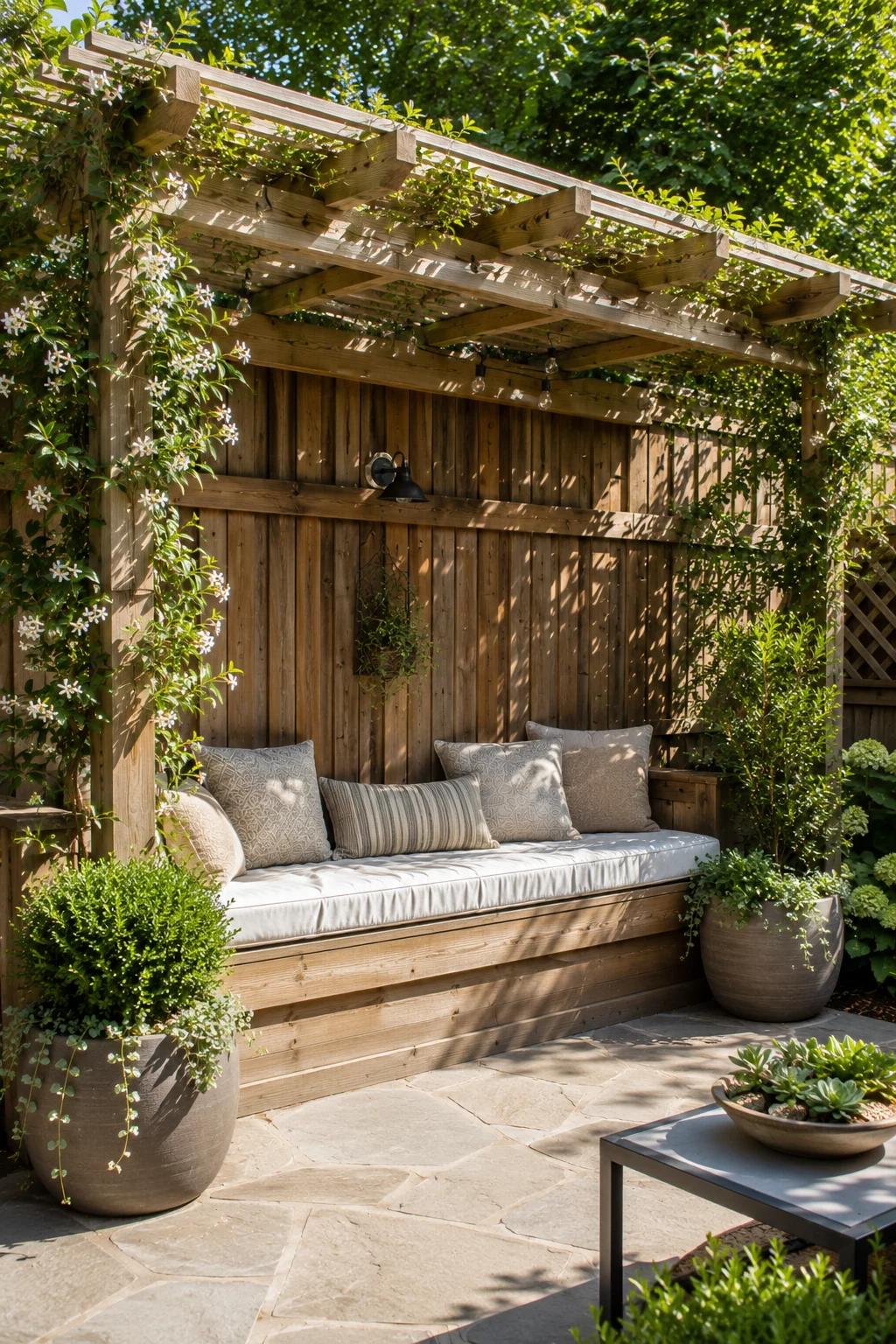
A built-in bench positioned along a fence or exterior wall, ideally with a bit of overhead shelter, offers a defined, furniture-like retreat spot without needing much floor space. This works especially well in smaller yards, since the bench sits flush against an existing structure rather than requiring a separate freestanding seating area. Build the bench with weather-resistant lumber, and add outdoor cushions and a few pillows to soften the look and improve comfort. Position it somewhere with a decent view, whether that is a garden bed or simply a quiet corner away from the house’s main sightlines.
10. Daybed Lounge Under a Canopy
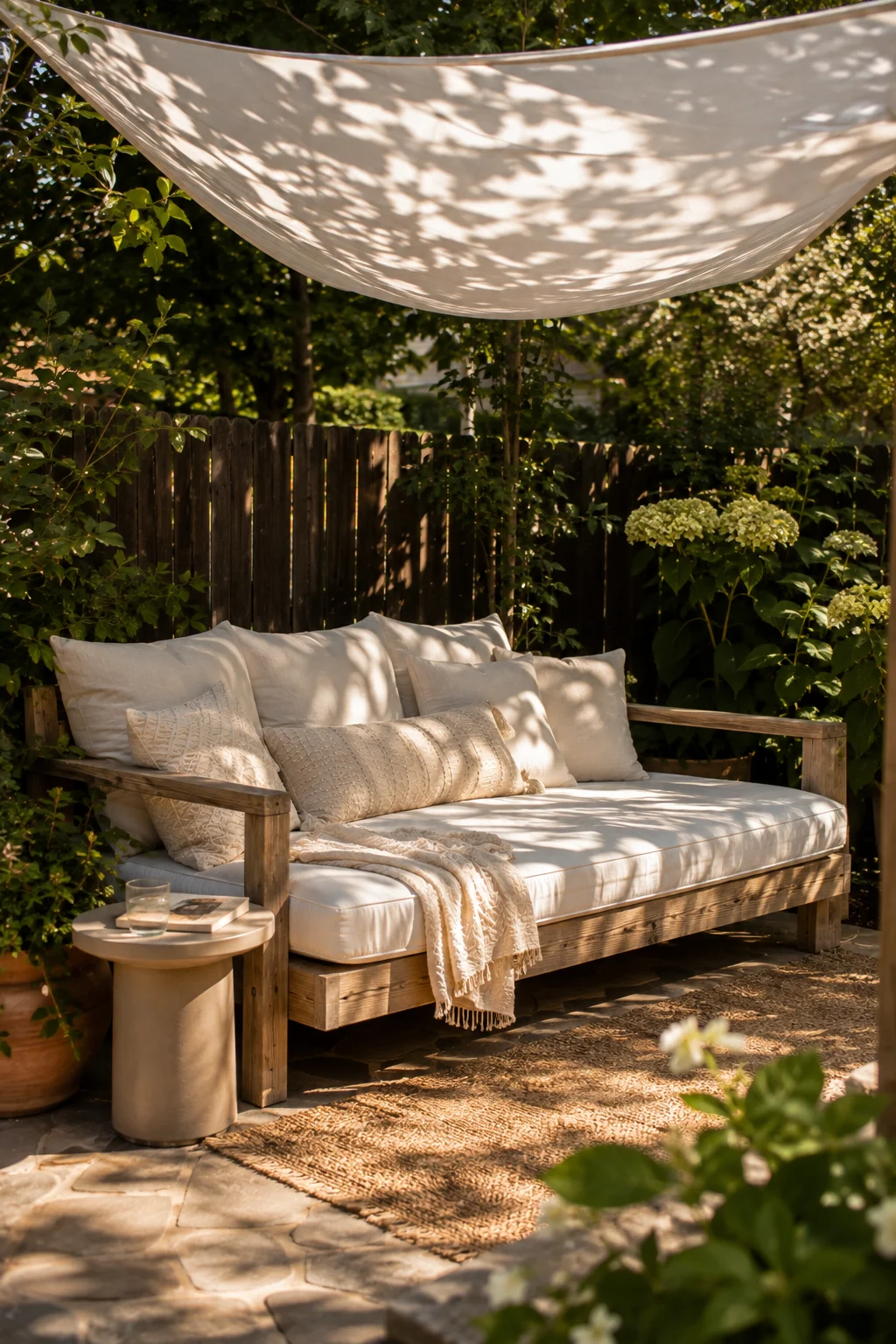
An outdoor daybed positioned beneath a fabric canopy or shade sail creates a retreat spot substantial enough for a nap or extended reading session, closer to an outdoor bedroom than a typical patio seating arrangement. This works because a daybed’s scale and softness signal rest more clearly than a standard chair or bench, making the space feel more like an intentional escape. Choose weather-resistant cushions and frame materials, and position the canopy to block the harshest midday sun while still allowing some light through. Add a small side table for essentials so you are not tempted to get up once settled in.
Sound & Sensory Calm
11. Small Trickling Fountain
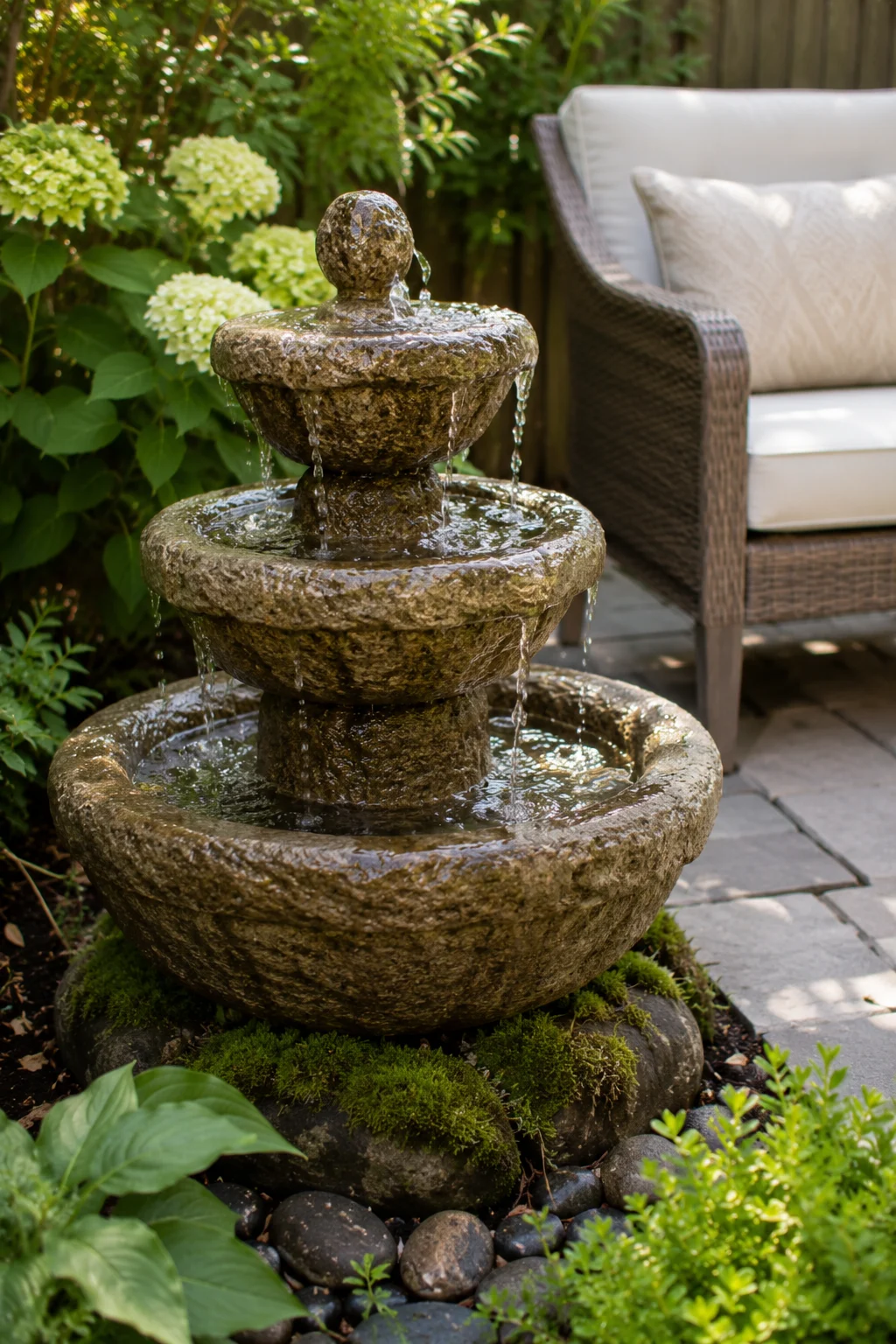
A compact tabletop or standing water fountain adds the gentle sound of moving water, which is widely cited as one of the most effective ways to mask nearby traffic or neighbor noise in a small outdoor space. This works because consistent background water sound helps cover intermittent noise more effectively than silence does, making the retreat feel more acoustically private even without full physical enclosure. Choose a fountain sized appropriately for your space, and position it near the main seating area so the sound is close enough to be effective. Clean the fountain regularly to prevent algae buildup, which can affect both the look and the pump’s performance over time.
12. Wind Chimes in a Sheltered Corner
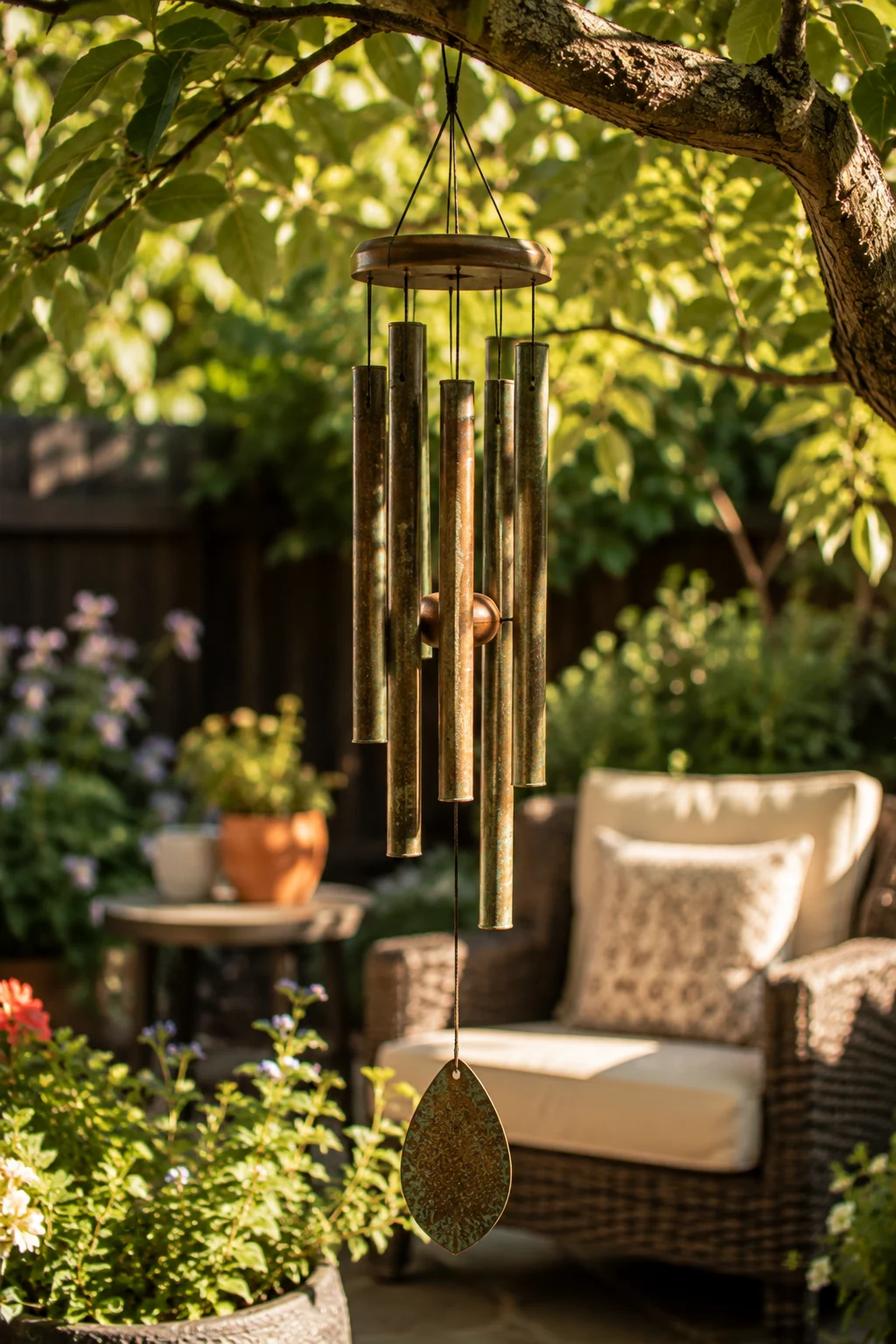
A set of wind chimes hung in a naturally breezy but sheltered spot adds an intermittent, soothing sound element to the retreat without requiring any plumbing or electrical work. This works because wind chimes respond to natural airflow, giving the space an ambient soundtrack that changes with the weather rather than staying static. Choose a chime material and tuning that suits your taste, since metal chimes tend to carry brighter, more resonant tones while wood or bamboo chimes sound softer and more muted. Hang the chimes from a sturdy hook under an eave or tree branch where they get consistent but gentle airflow.
13. Fragrant Herb Border Along a Path
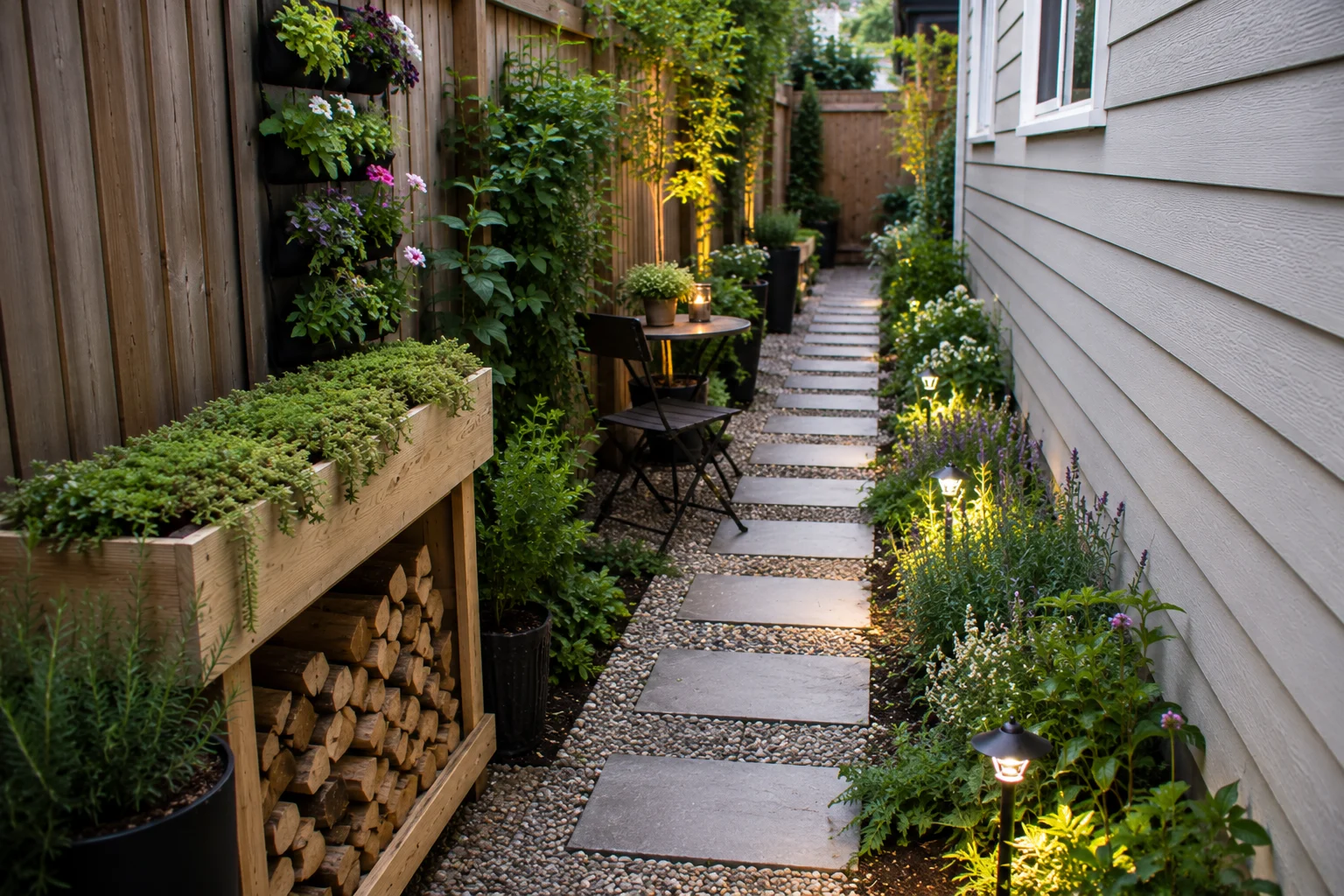
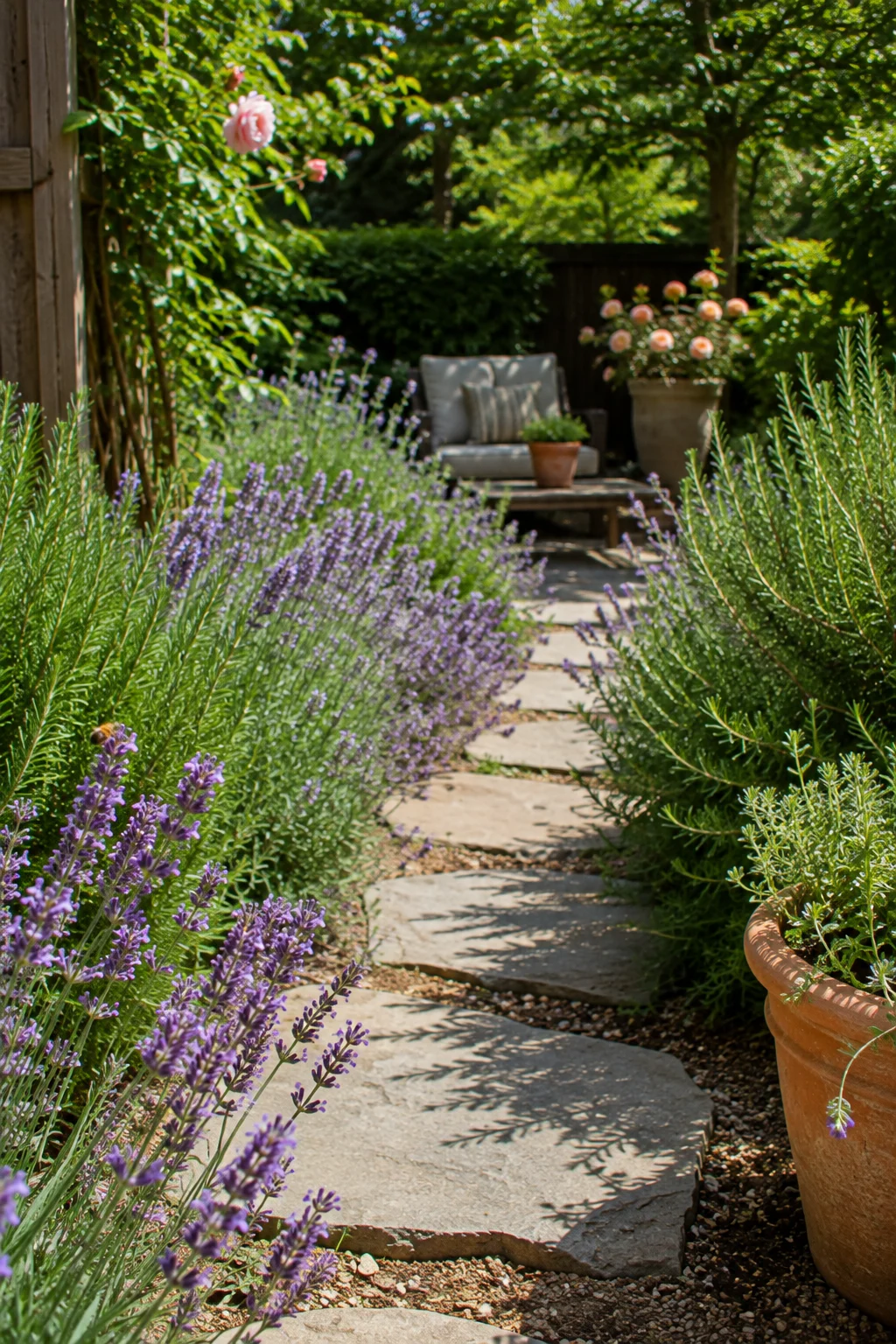
Planting fragrant herbs like lavender, rosemary, and mint along the path leading into a retreat space engages the sense of smell as part of the transition into the quieter area. This works because scent has a strong effect on mood and relaxation, and brushing past aromatic plants on the way in reinforces the shift from the main yard to the retreat. Plant low, spreading varieties along the path edges where they will be brushed against occasionally, since light contact releases more fragrance than plants left untouched. Choose a mix of bloom times so the scent changes subtly through the growing season.
14. Rustling Grass Buffer Against Noise
Beyond visual screening, a dense planting of ornamental grasses positioned specifically between the retreat and a noise source, like a street or a neighbor’s yard, helps soften and diffuse sound in addition to blocking sightlines. This works because the fine, moving texture of grass foliage breaks up sound waves more effectively than a single hard surface, complementing rather than replacing a fence or hedge. Plant the grasses in the densest possible arrangement your budget allows, since sound absorption improves with plant density and depth. Combine this buffer with a solid fence behind it for the most noticeable noise reduction in a small space.
Lighting & Ambiance
15. Warm String Light Canopy
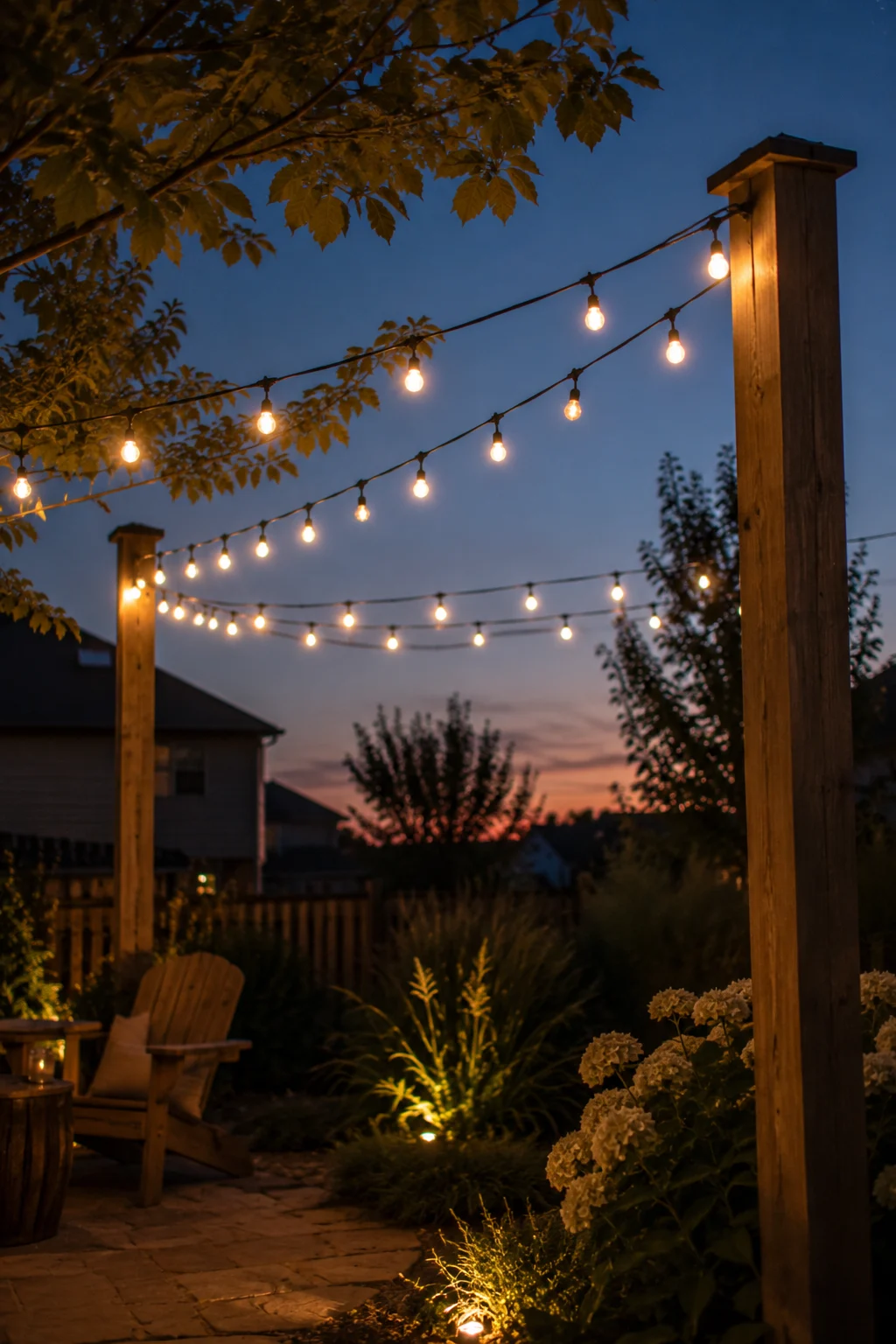
A canopy of warm white string lights strung overhead, either between posts or across a pergola, extends how long the retreat space is usable into the evening while adding a soft, calming glow. This works because warm-toned light reads as relaxing rather than functional, unlike bright white or cool-toned fixtures typically used for task lighting. String the lights in a crisscross or draped pattern using hooks or eye screws mounted at each anchor point, and choose LED bulbs to keep the canopy running efficiently over long evening use. Test the layout at dusk before finalizing placement, since lighting density looks different once it’s actually dark.
16. Lantern-Lined Path
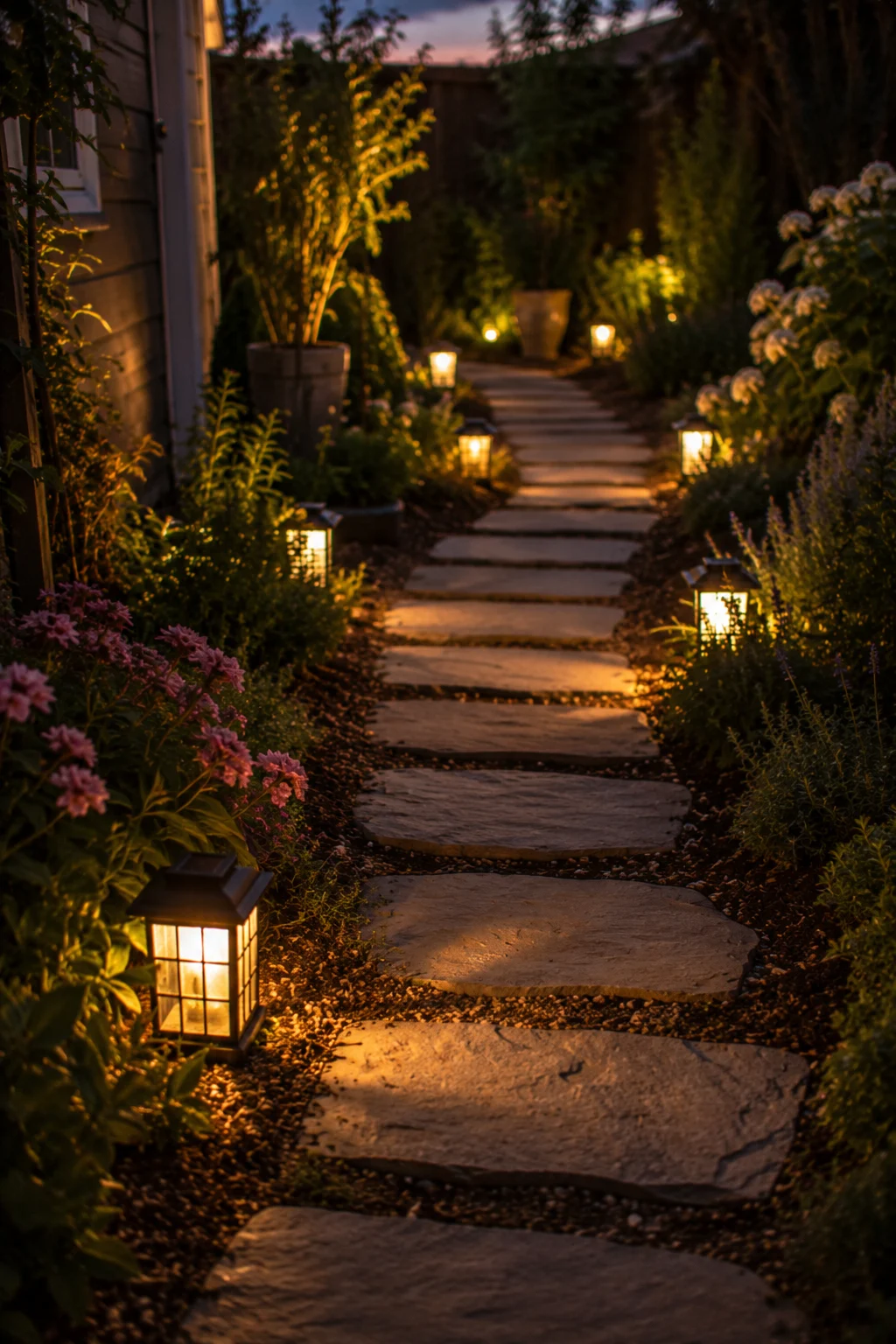
A row of small solar or battery lanterns lining the path into the retreat space adds both practical visibility after dark and a gentle sense of arrival as you walk toward it. This works because lighting the transition itself, not just the destination, reinforces the feeling of leaving one space and entering another. Space the lanterns evenly along the path edges, choosing a warm light temperature that matches any other lighting in the retreat area. Check solar lantern placement for adequate sun exposure during the day, since shaded spots will result in dim or short-lived light after dark.
17. Fire Bowl for Evening Glow
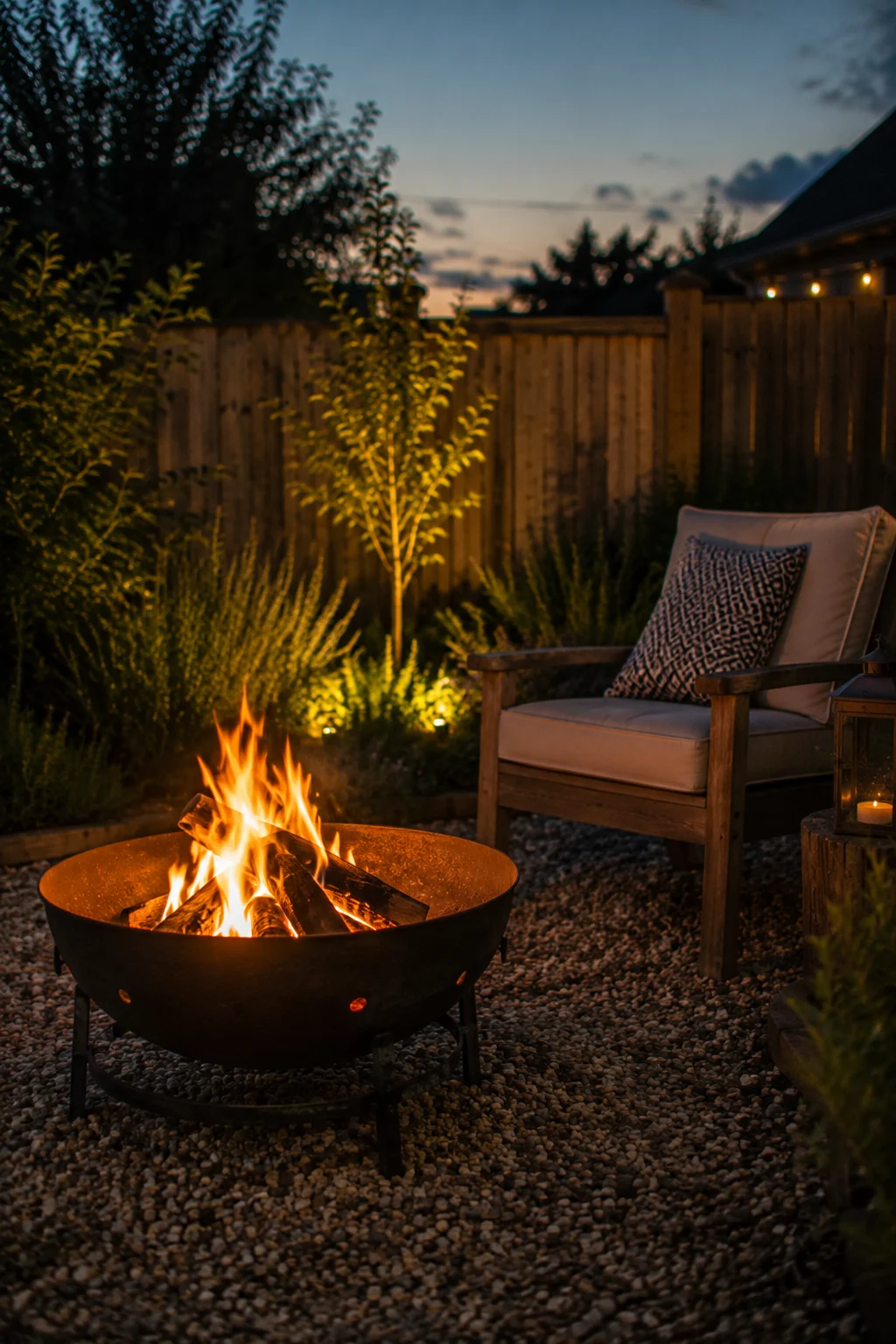
A simple portable fire bowl, smaller and more casual than a built-in fire pit, adds warmth and a flickering light source to a retreat space without requiring permanent construction. This works because the movement and glow of live flame has a naturally calming effect, and a portable bowl can be positioned wherever the retreat space happens to be that evening. Choose a fire bowl sized appropriately for your seating area, and always place it on a heat-safe surface like gravel, stone, or a fire-resistant mat. Check local regulations regarding open flame before adding this feature, since rules vary by location and season.
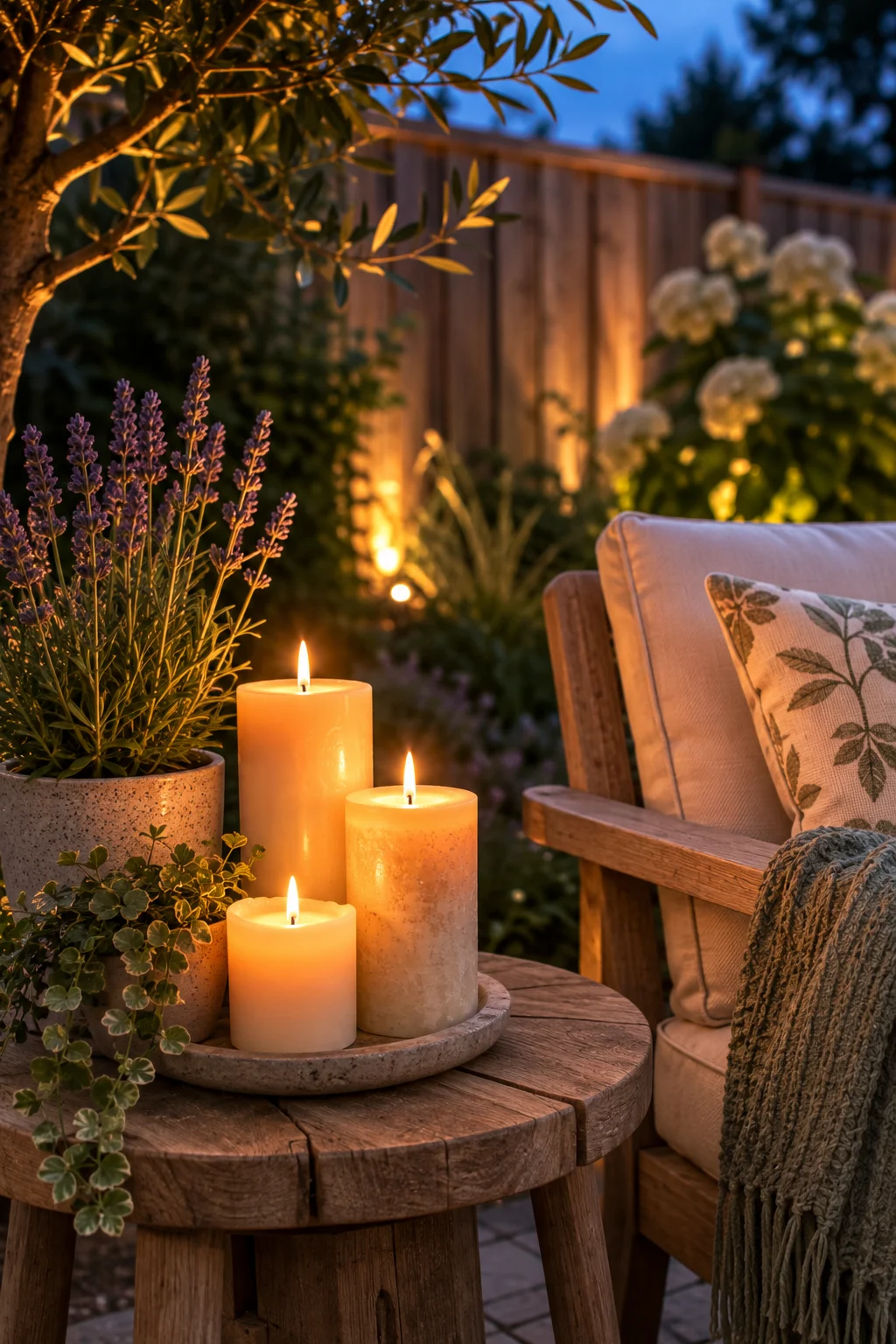
18. Candlelit Side Table Nook
A small side table set with a cluster of candles, whether real or flameless LED, adds a soft, intimate light source scaled specifically to one or two people rather than the whole yard. This works because candlelight reads as personal and quiet in a way overhead lighting does not, reinforcing the retreat’s purpose as a solo or shared quiet spot rather than an entertaining area. Group candles of varying heights on a small tray or table, and use flameless versions if the space will be unattended or if local fire risk is a concern. Position the table within reach of the main seating so the light stays close and usable.
Layout & Zoning
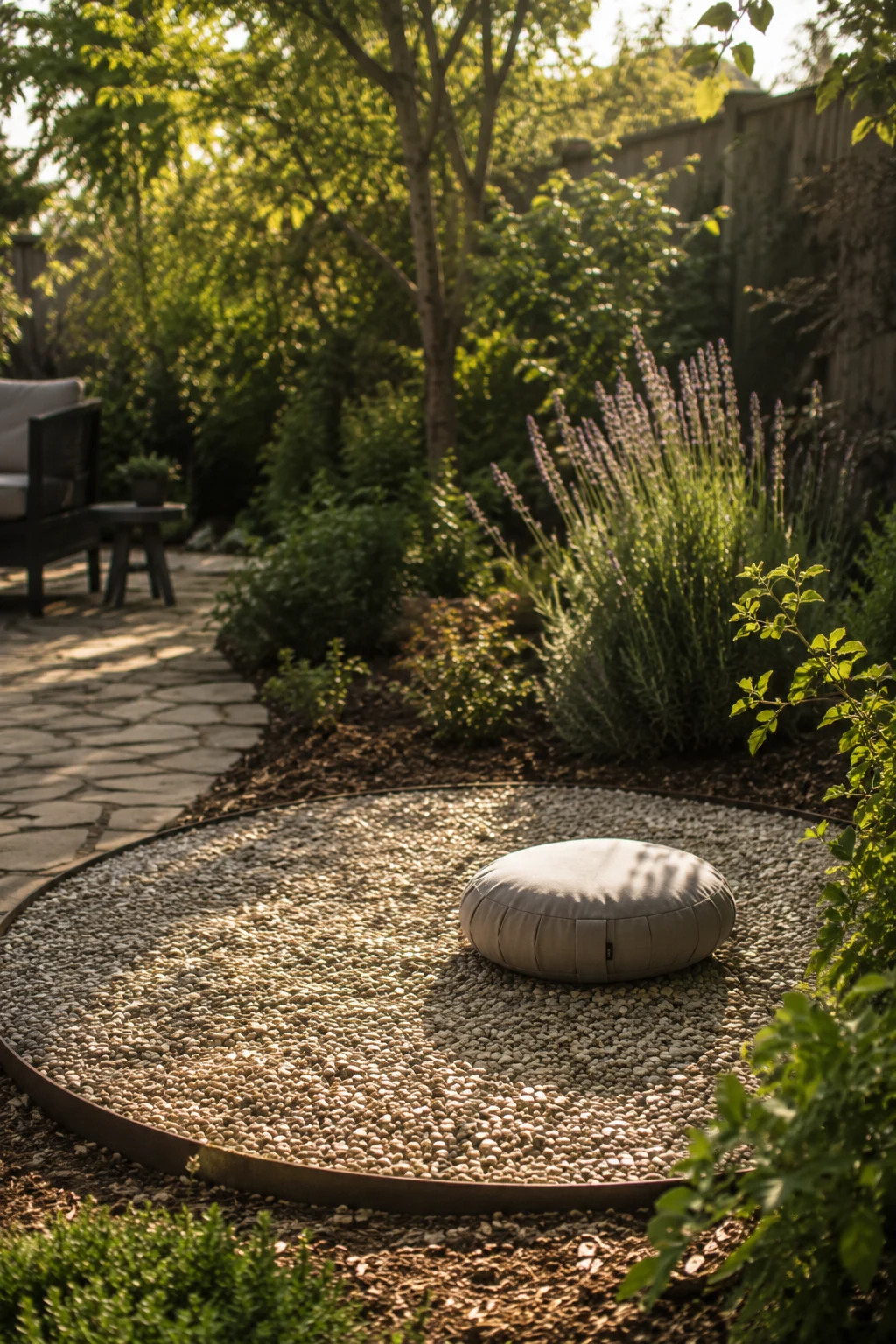
19. Gravel Meditation Pad
A small gravel pad, separate from the main patio surface, defines a dedicated spot for meditation, stretching, or simply sitting on the ground without needing a full deck or paver installation. This works because a distinct surface material signals a change in purpose, similar to how a rug defines a seating area indoors. Lay landscape fabric first, then a few inches of fine, comfortable gravel like decomposed granite, edged with a simple paver or steel border. Add a single cushion or low stool if sitting directly on the ground is not comfortable long-term.
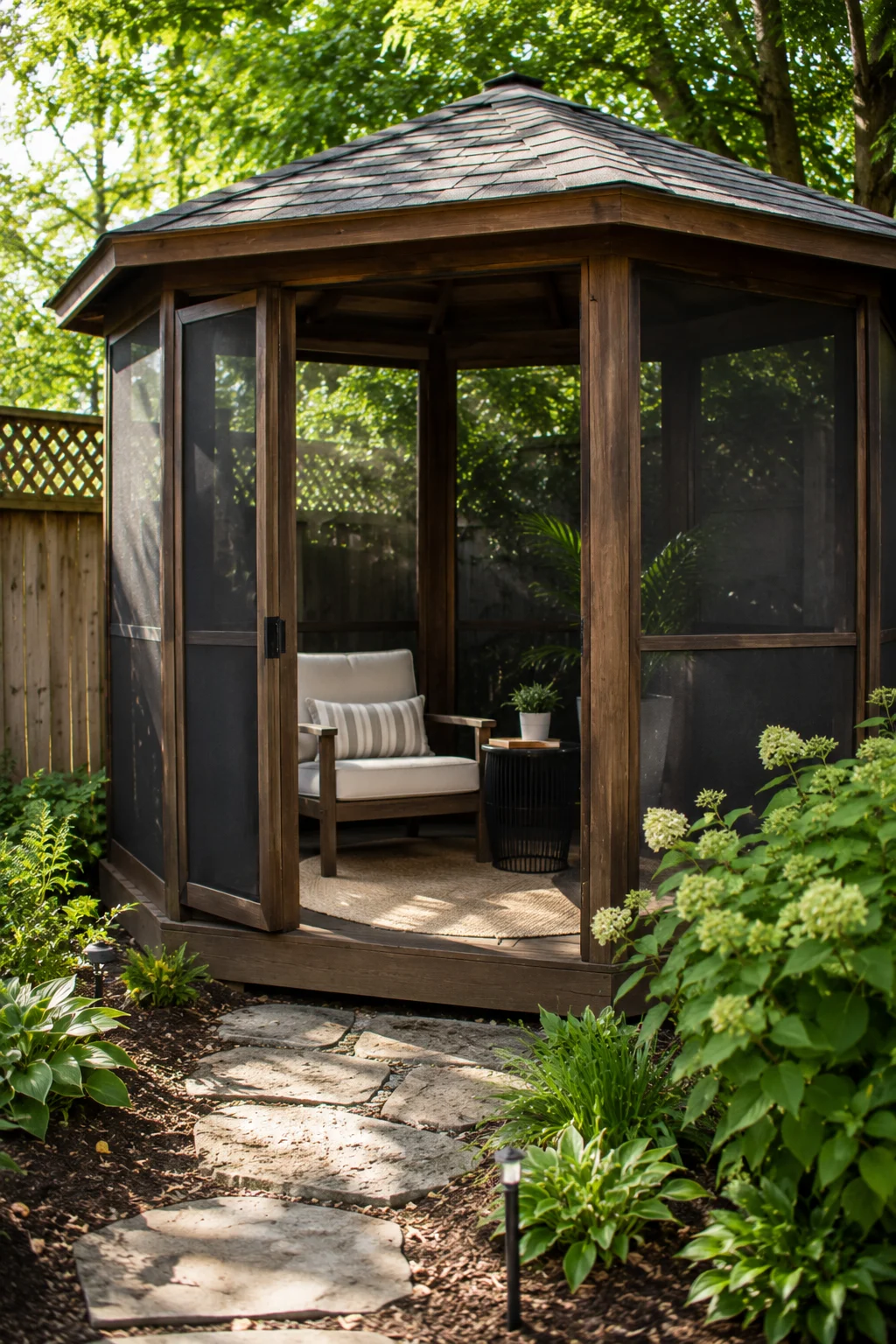
20. Screened Reading Corner
A small screened structure, either a freestanding gazebo or a simple frame with mesh panels, keeps insects out of a retreat space while still allowing airflow and a clear view of the garden around it. This works especially well in regions with heavy mosquito activity during the warmer months, when an open retreat space might otherwise go unused in the evenings. Choose a screen mesh fine enough to block common local pests without restricting airflow too much, and include a single door or zippered opening for easy access. Furnish the inside simply, one comfortable chair and a small table is often enough for this style of nook.
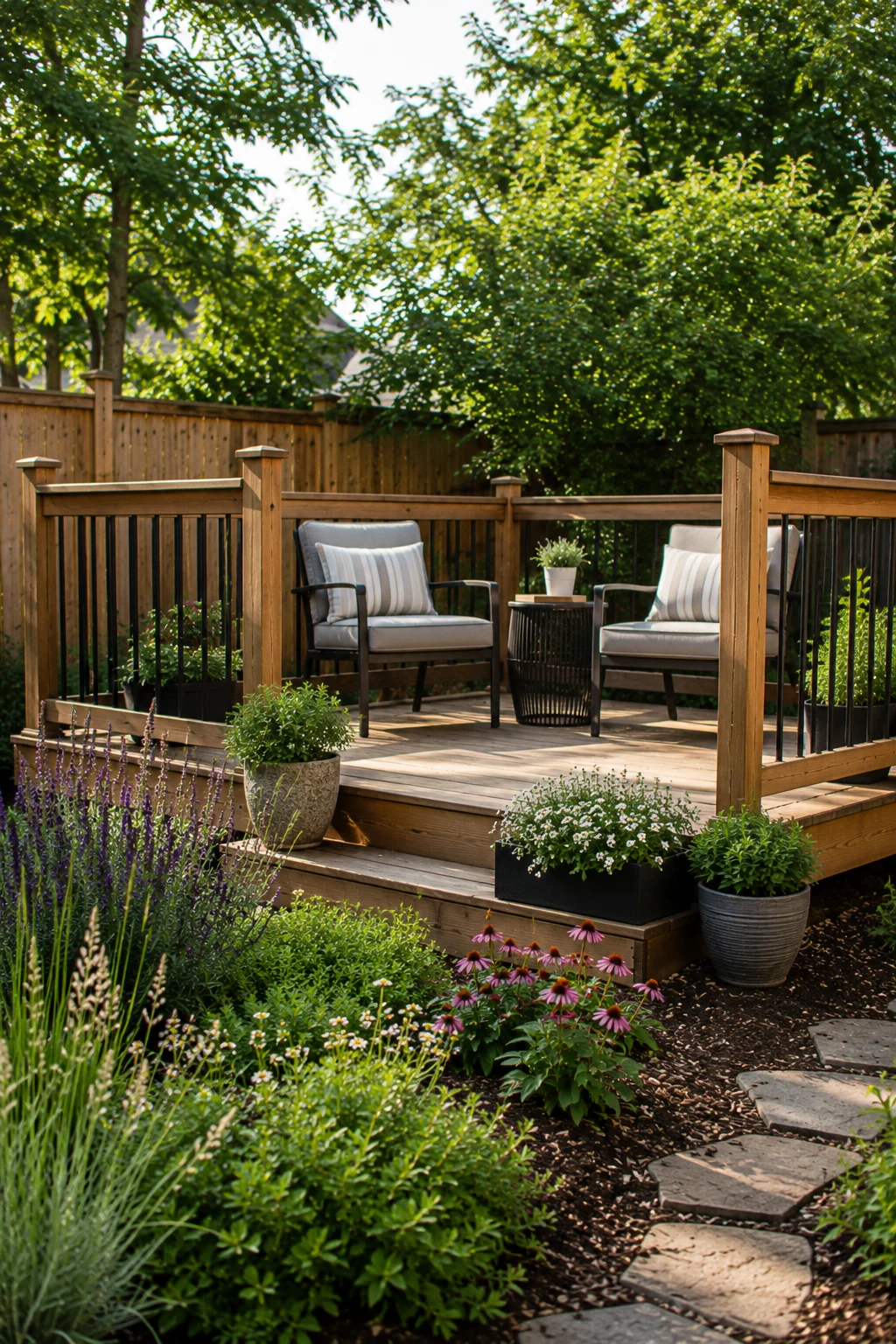
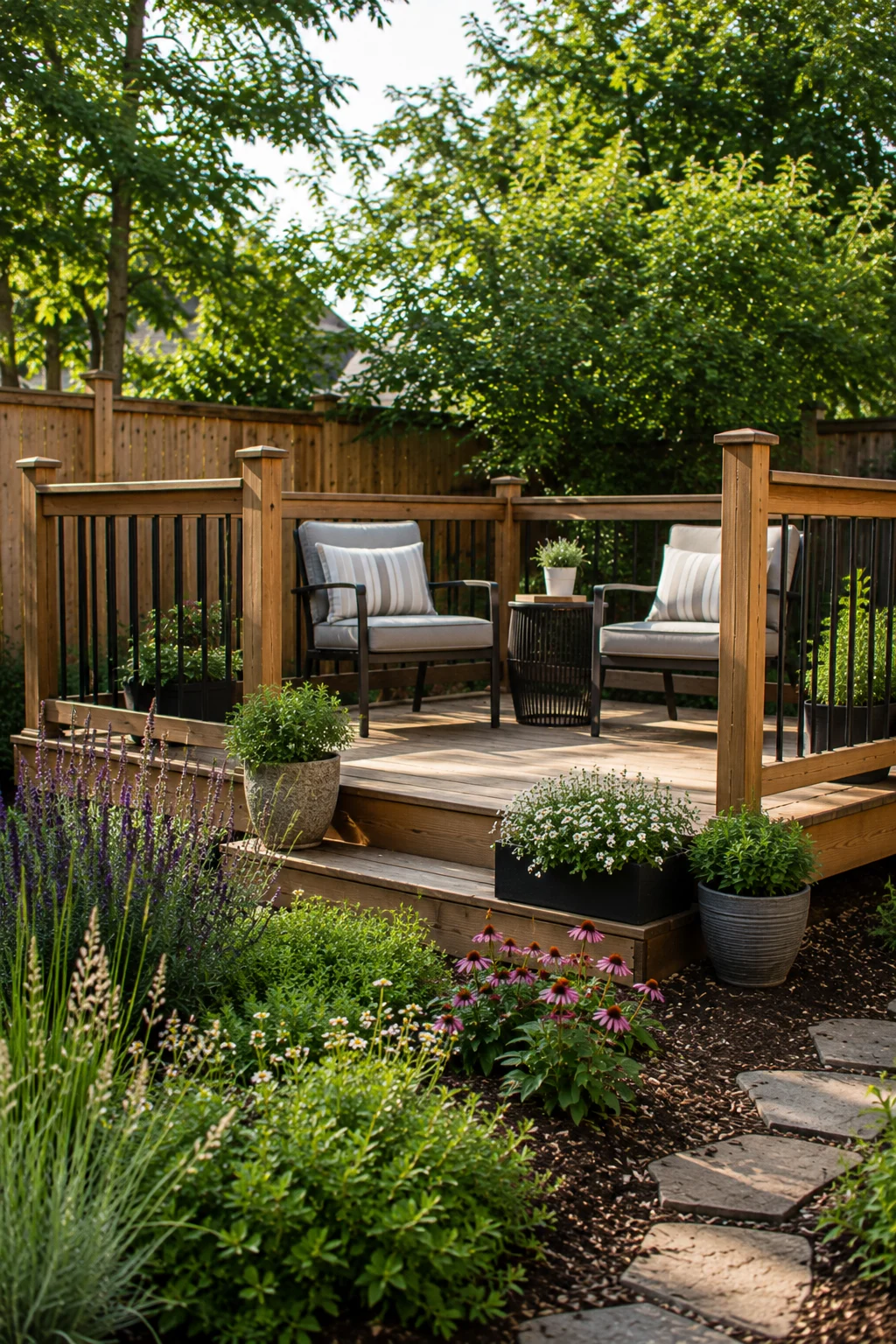
21. Raised Deck Retreat Platform
A small raised deck, separate from the main patio, gives a retreat space its own defined footprint and can be positioned to take advantage of a specific view, whether that is a garden bed, a distant tree line, or simply a quieter corner of the property. This works because elevation, even just a few inches, visually and physically separates the retreat from the rest of the yard’s activity. Build the deck with weather-resistant decking material, and keep the footprint modest, often eight by eight feet is enough for a small seating group. Add a simple railing or low planter boxes around the edge to reinforce the sense of enclosure without blocking the view entirely.
22. Secluded Side Yard Nook
An often-overlooked side yard, the narrow strip between a house and a fence, can become a surprisingly private retreat since it is naturally enclosed on at least two sides already. This works because the space requires minimal additional screening compared to an open backyard, making it one of the most efficient spots to convert into a quiet corner. Clear out any stored items or clutter first, then add a single chair, some potted plants, and a simple overhead light or lantern to make the space feel intentional rather than leftover. This idea pairs especially well with a fragrant path planting, since the narrow space concentrates scent effectively.
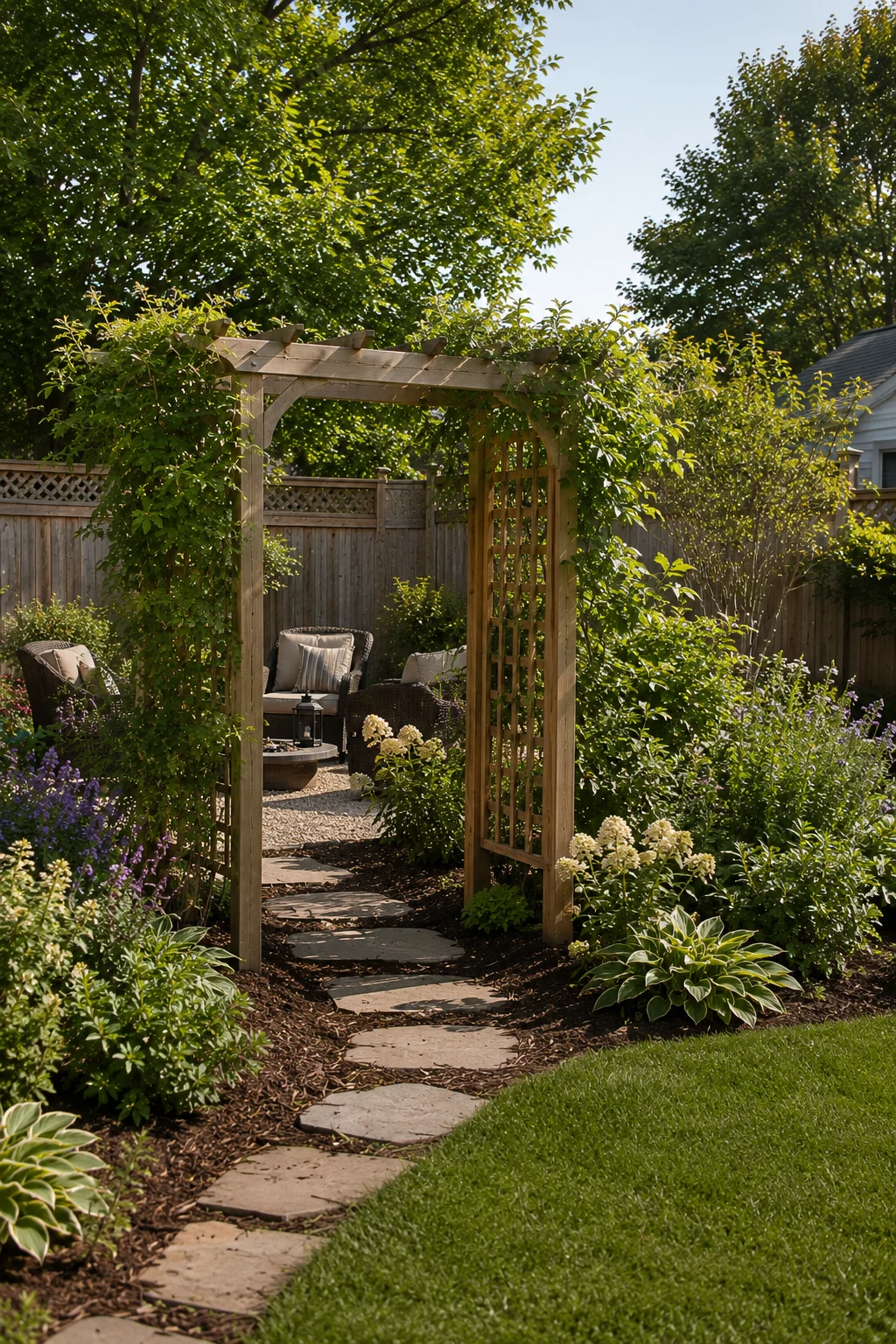
23. Boundary Planting to Separate From Main Yard
A dedicated planting bed, positioned specifically to separate the retreat area from the rest of the yard rather than from neighboring properties, reinforces the sense that this is a distinct space rather than just another patio corner. This works because the visual break tells your own eye, and anyone else in the yard, that the space beyond the planting serves a different purpose. Use a mix of medium-height shrubs and perennials wide enough to read clearly as a boundary without needing to be a full privacy hedge, since the goal here is zoning rather than blocking outside views. Leave a clear, deliberate opening, like an arbor or a gap in the planting, to mark the entrance into the retreat.
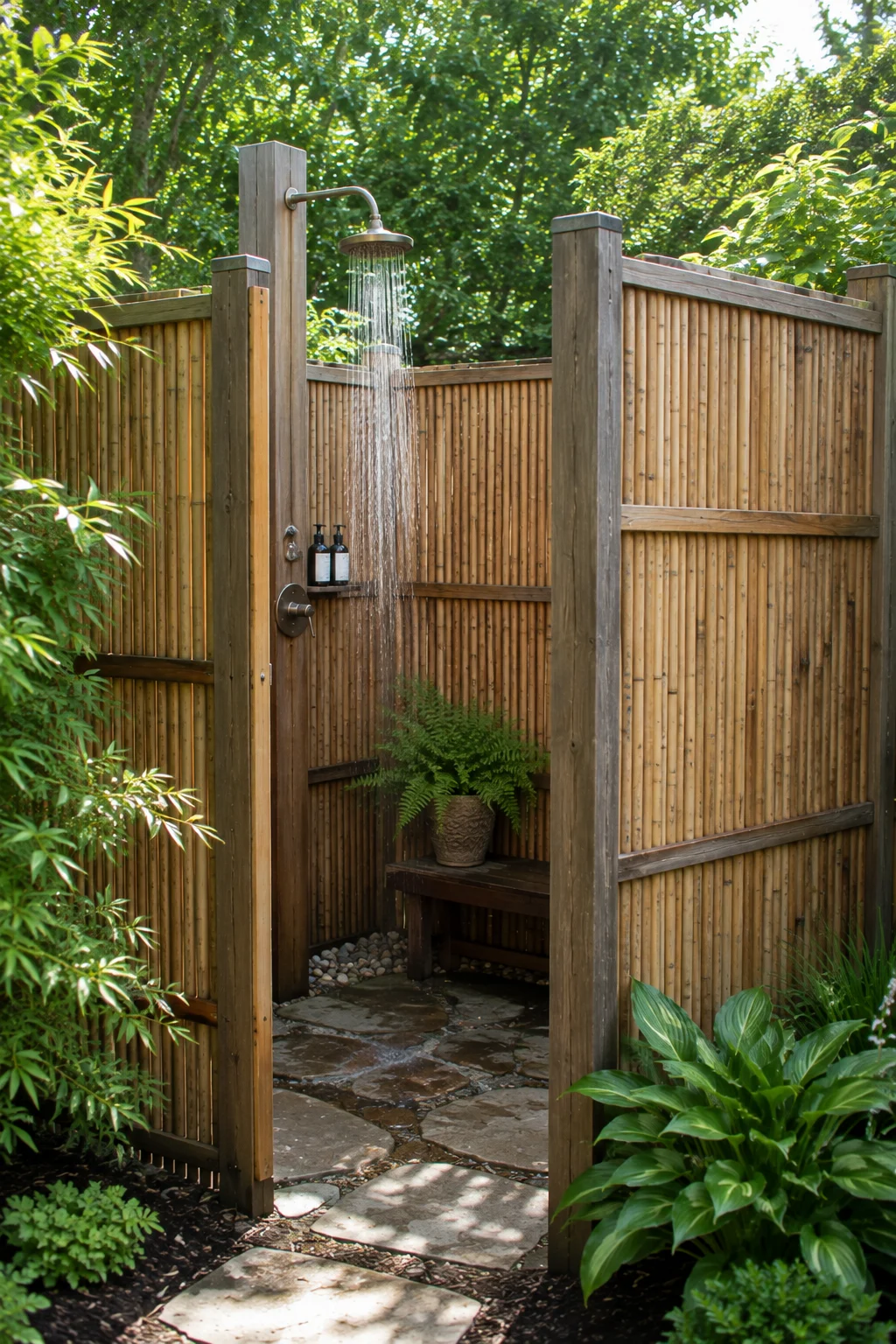
24. Private Outdoor Shower Corner
A screened outdoor shower, tucked into a corner near a pool, garden, or side yard, adds a genuinely private, sensory retreat experience that goes beyond typical seating-based ideas. This works because an outdoor shower combines privacy screening with water and fresh air in a way no other backyard feature does, making it a distinctive addition for anyone drawn to a more immersive retreat concept. Install the shower with proper drainage and plumbing, and screen it with tall lattice, bamboo, or dense planting on all sides that need privacy. Add a simple wood deck or stone flooring beneath it for comfortable, non-slip footing.
How to Choose From This List
With 24 backyard retreat ideas spanning privacy, seating, sound, lighting, and layout, the most effective approach is to start with screening before adding anything else, since a retreat that still feels exposed will not function as one no matter how comfortable the seating is. Pick one privacy method suited to your timeline and budget, whether that is fast bamboo screening or a slower-growing hedge, then layer in one seating idea and one sensory or lighting touch. For more layout and screening options to draw from, see 35 backyard privacy ideas that actually work and 19 pergola ideas for every garden style and budget for structural inspiration beyond what is covered here. Resist adding every idea from this list into one small space, since a retreat works best when it stays simple and uncluttered.
Final Thoughts
A backyard retreat does not need to be large or expensive to actually function as a quiet, private space. The ideas that matter most are the ones addressing privacy and comfort first, since those two elements do the most work in making a space feel like an actual escape rather than just another part of the yard.
Start with a single corner, add one privacy element and one comfortable place to sit, and build from there as time and budget allow. A retreat built gradually, based on how you actually use it, tends to feel more genuinely restful than one designed all at once from a checklist.