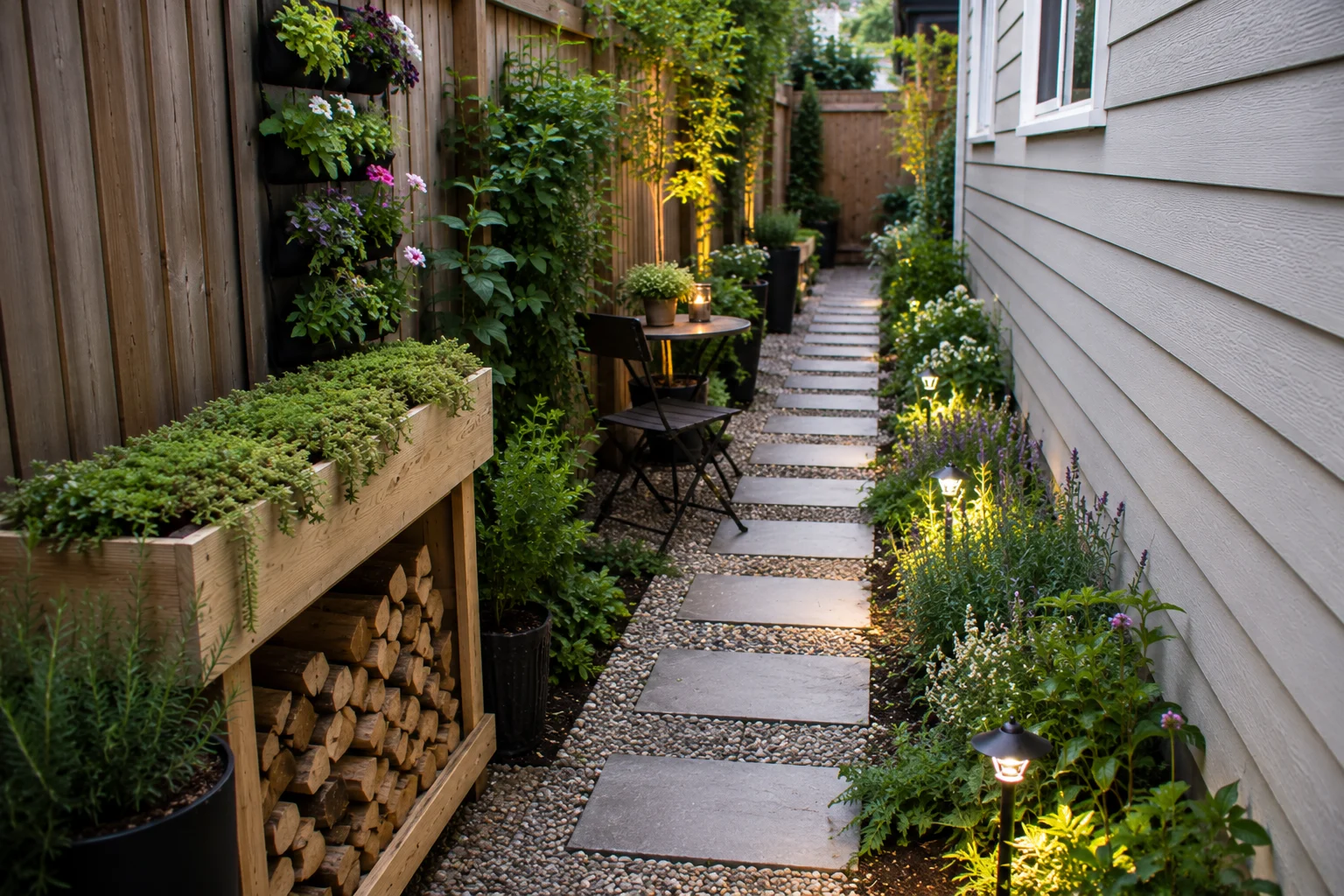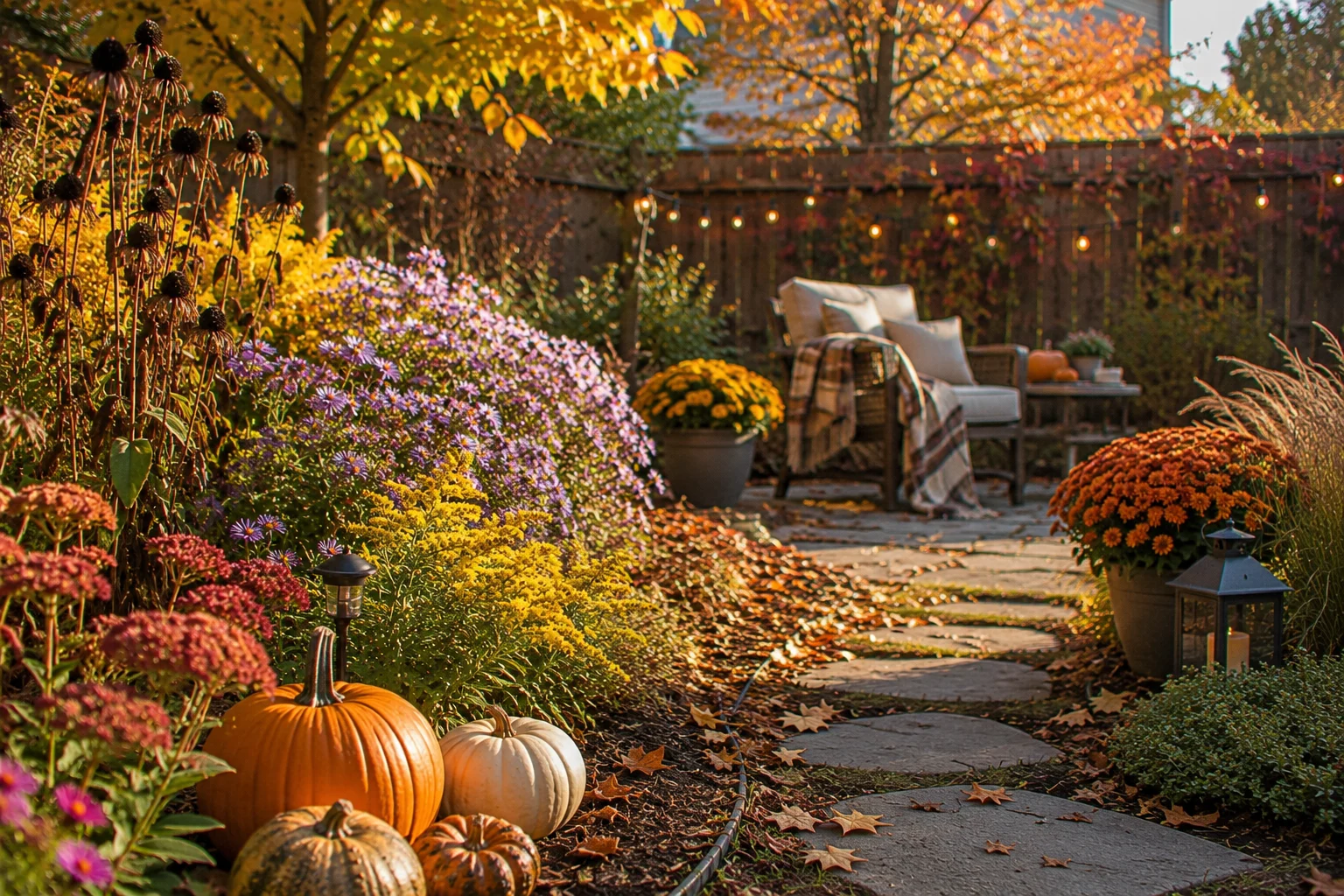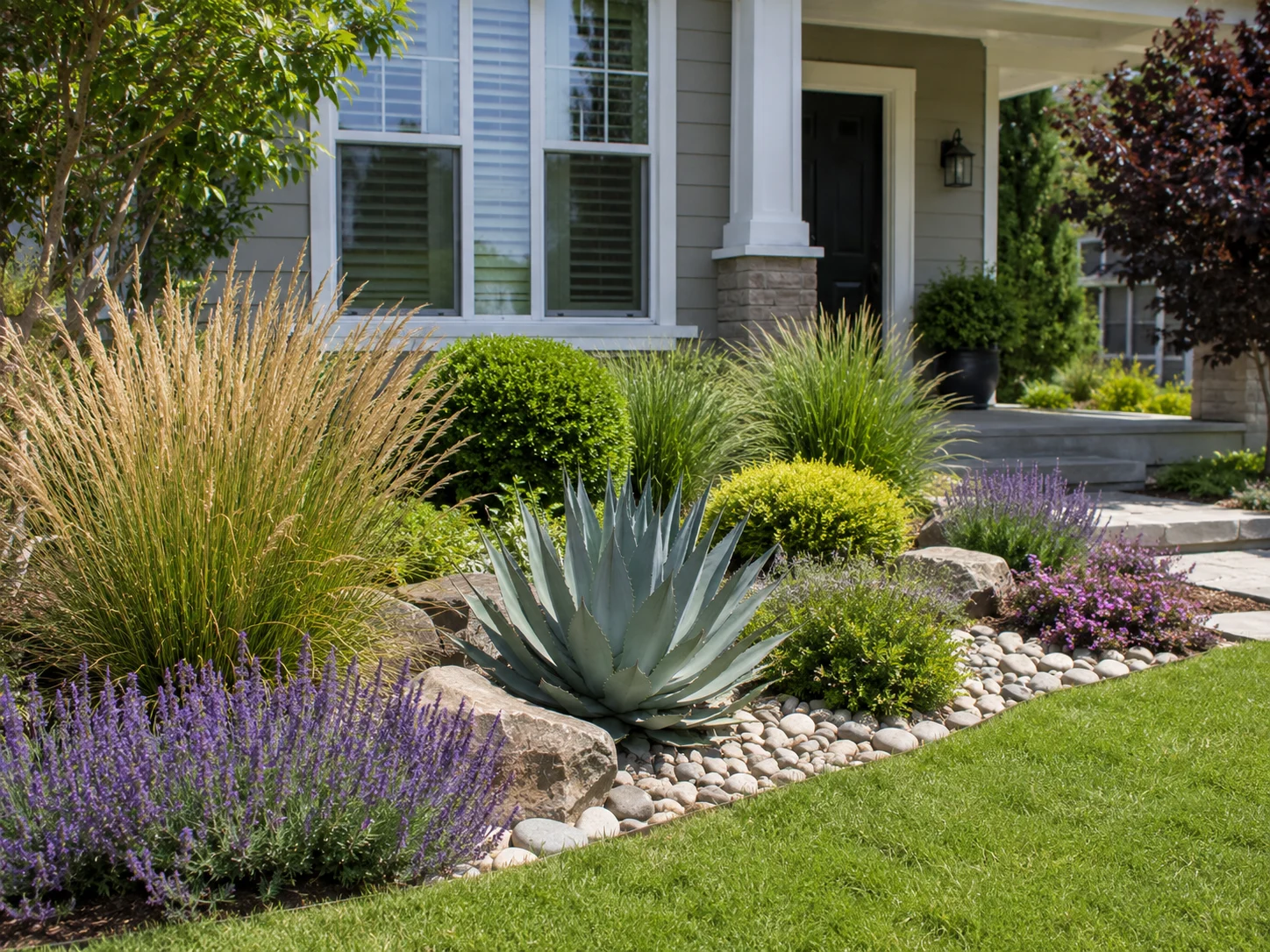

Most gardening advice assumes full sun, which leaves a genuinely shaded yard — under mature trees, on a north-facing slope, or beside a wooded property line — feeling like a design problem rather than an opportunity. A woodland garden flips that: it leans into the dappled light, layered canopy, and naturally rich soil that shade actually provides, working with the existing conditions rather than fighting them.
This list covers 23 woodland garden ideas across five categories — paths and structure, layered planting, groundcover and forest floor, wildlife and habitat features, and rustic seating and finishing touches — each suited to a shaded, naturalistic yard rather than a conventional sunny border.
Paths and Structure
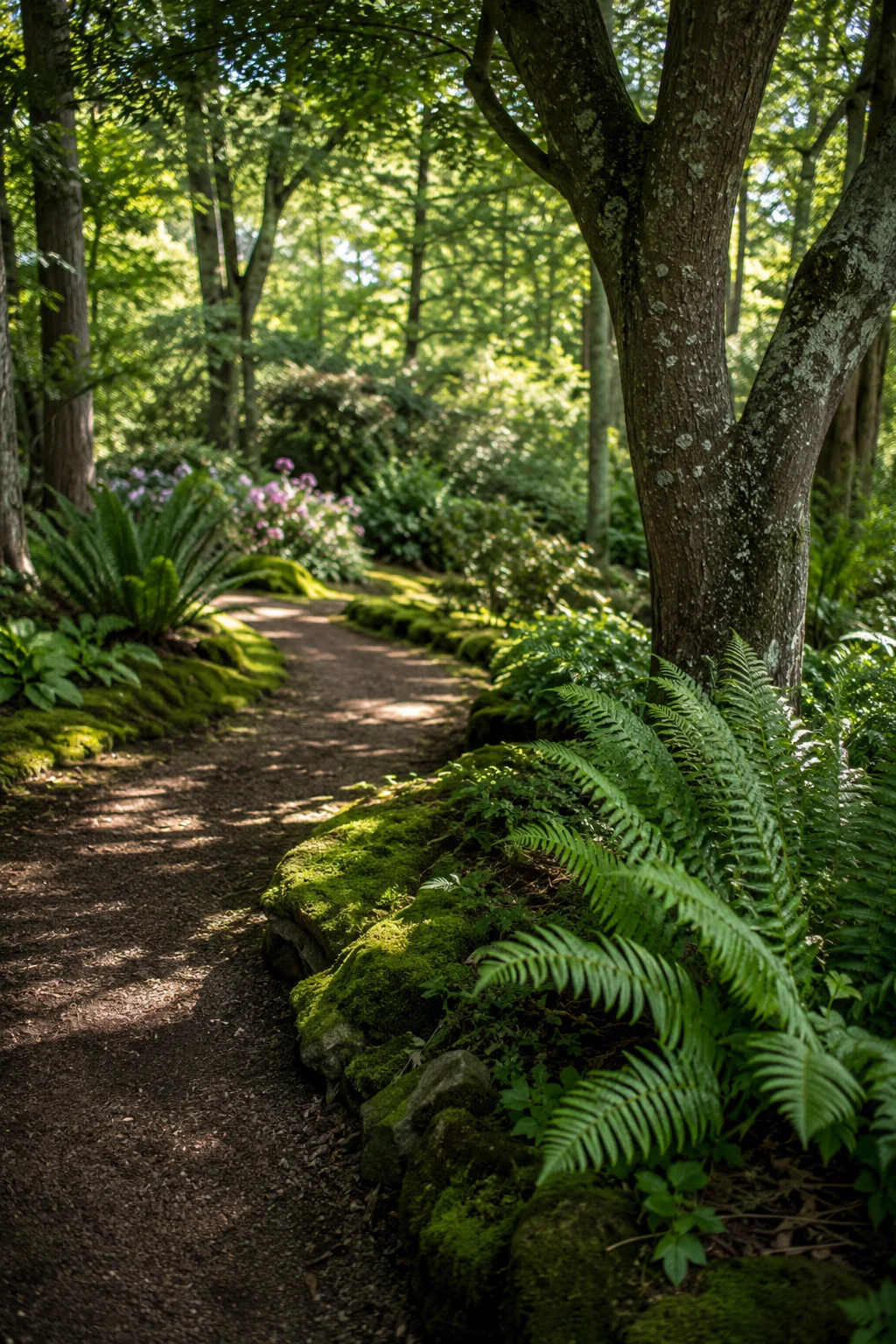
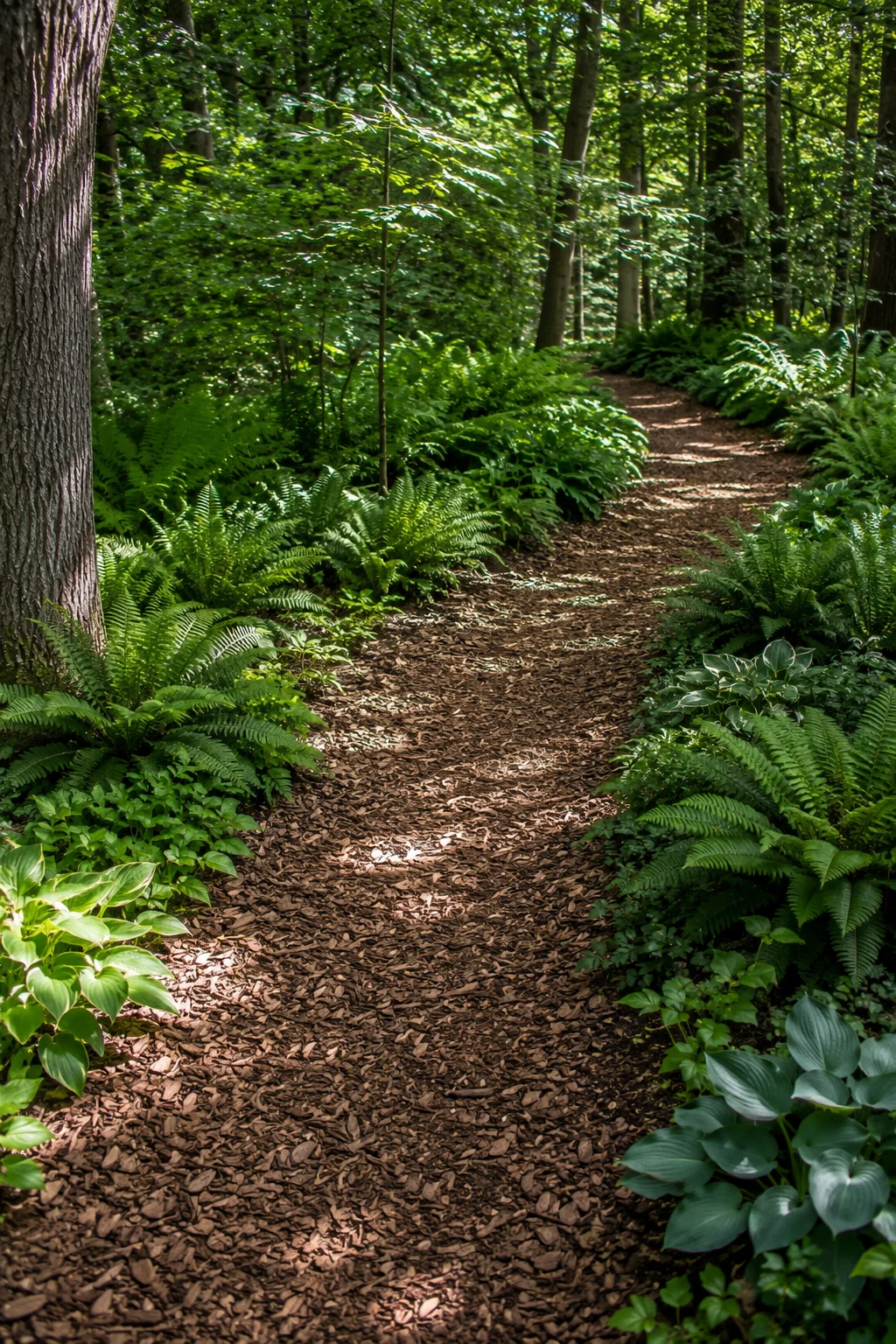
1. Meandering Mulch or Stepping Stone Path
A gently curving path through a wooded area, surfaced in wood chip mulch or informal flat stepping stones rather than a straight paved walk, matches the organic, unhurried feel a woodland setting calls for.
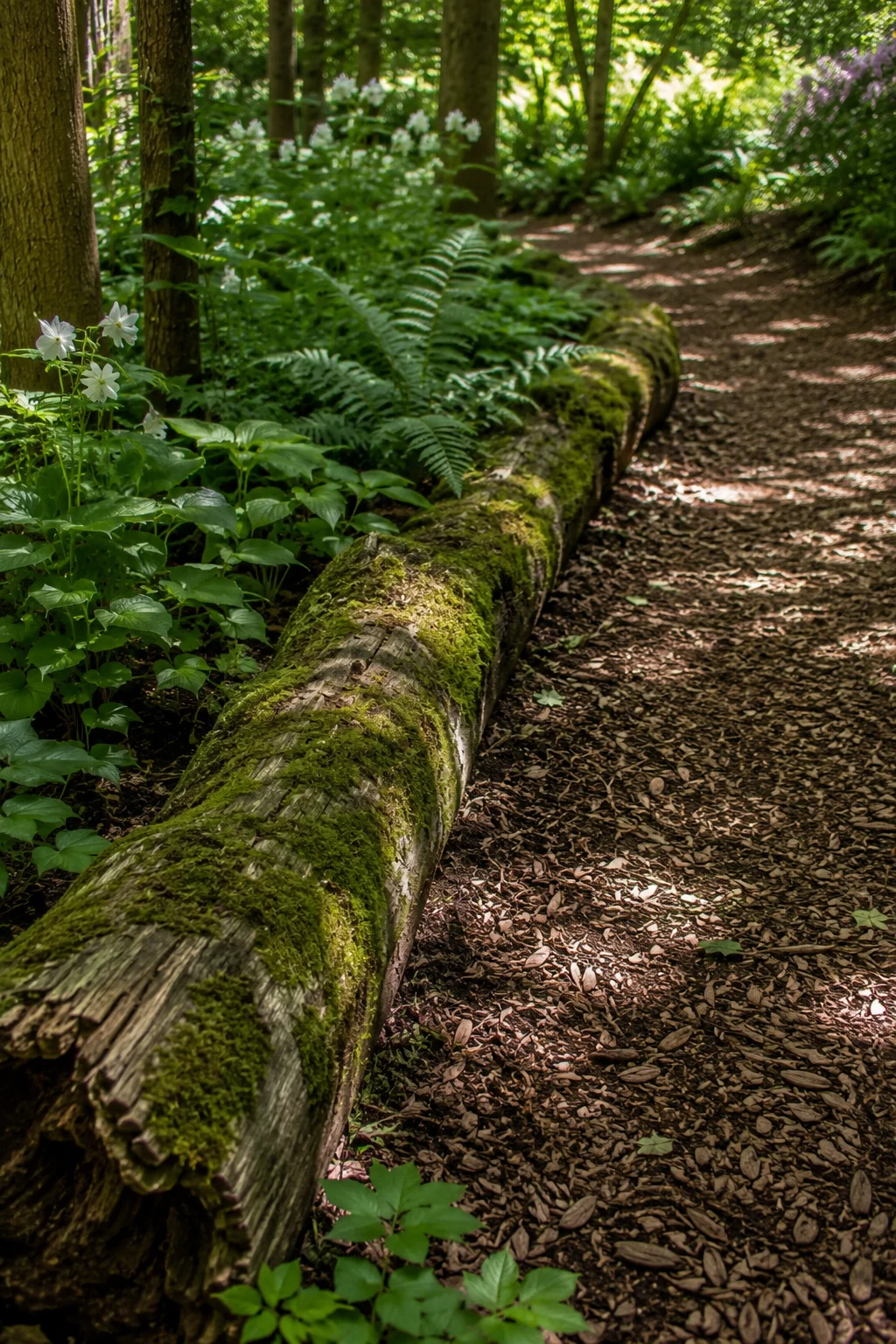
2. Fallen Log as a Natural Edge
A partially sunken fallen log, left along a path edge rather than removed, defines the trail informally while doubling as habitat for insects and fungi as it slowly decomposes.
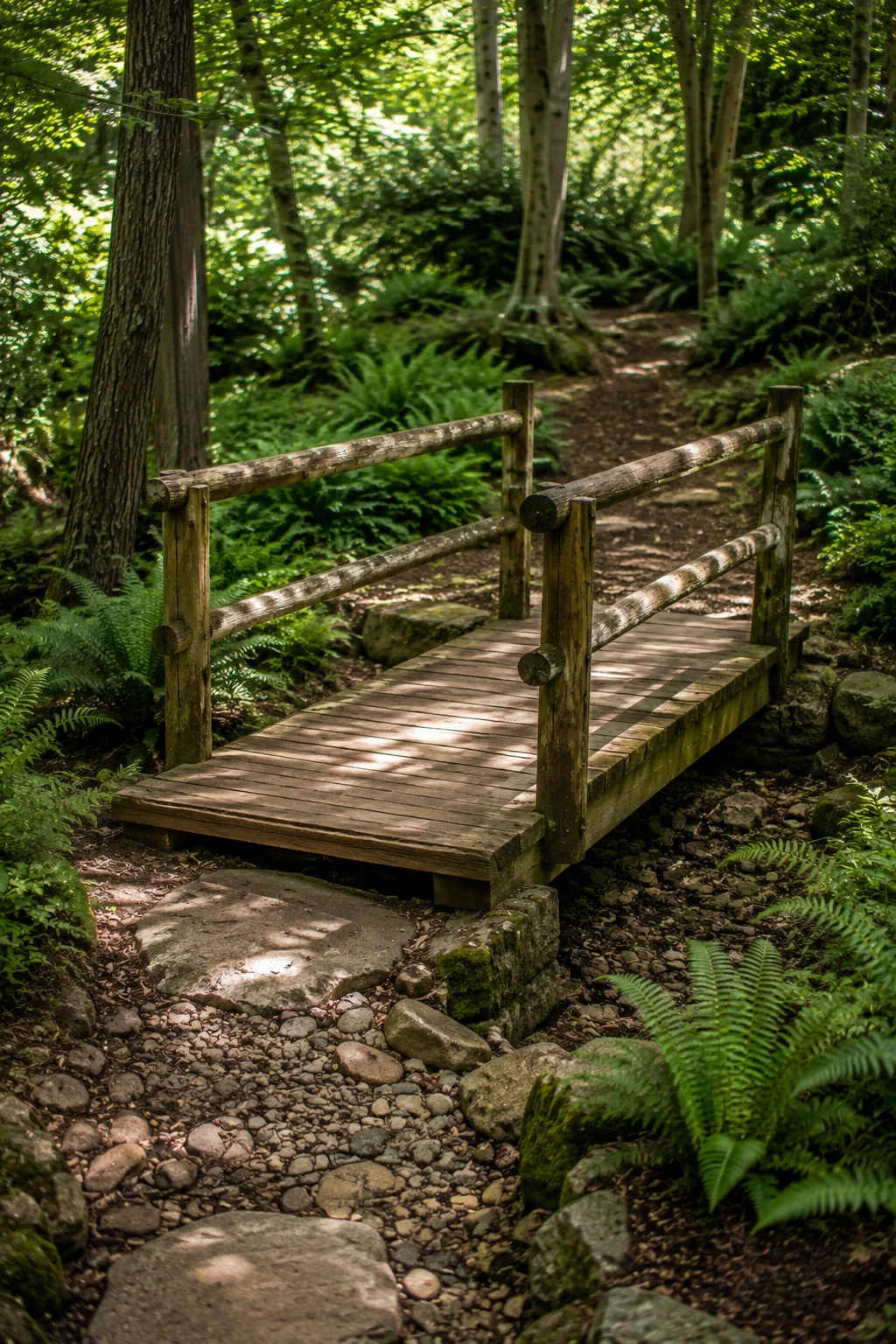
3. Rustic Footbridge Over a Low Spot
A simple wooden footbridge crossing a damp low area or seasonal dry creek bed adds a genuine sense of journey to a woodland path and solves the practical problem of a consistently soggy crossing point.
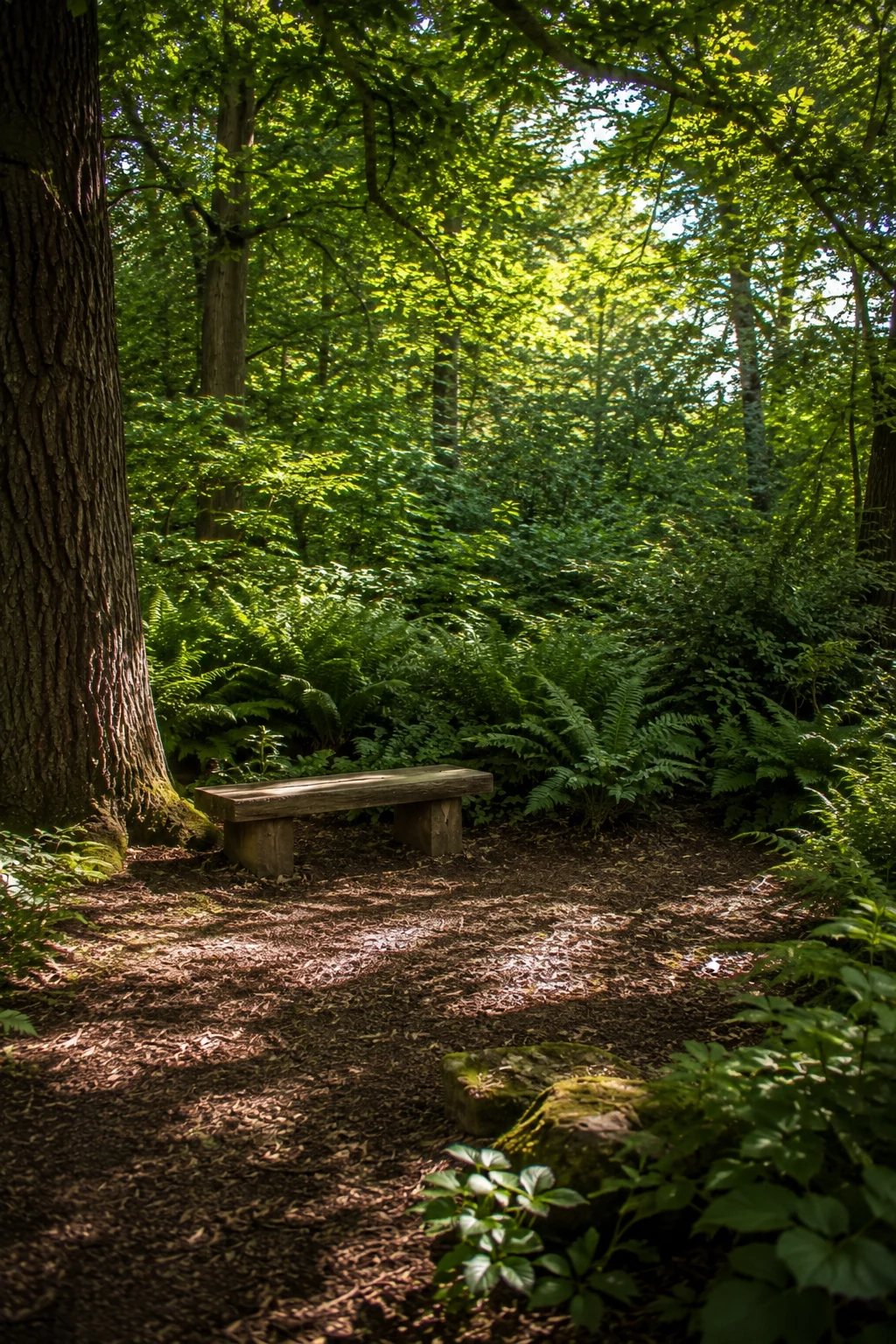
4. Carved-Out Shaded Clearing
Thinning a small area of underbrush to create a defined clearing, just large enough for a bench or a pair of chairs, gives a woodland garden a destination rather than only a path to walk through.
Layered Planting
5. Working With the Existing Canopy
Rather than fighting mature trees for light, a woodland garden is built around them — thinning selectively for a bit more dappled light where needed, rather than removing large canopy trees that took decades to establish.
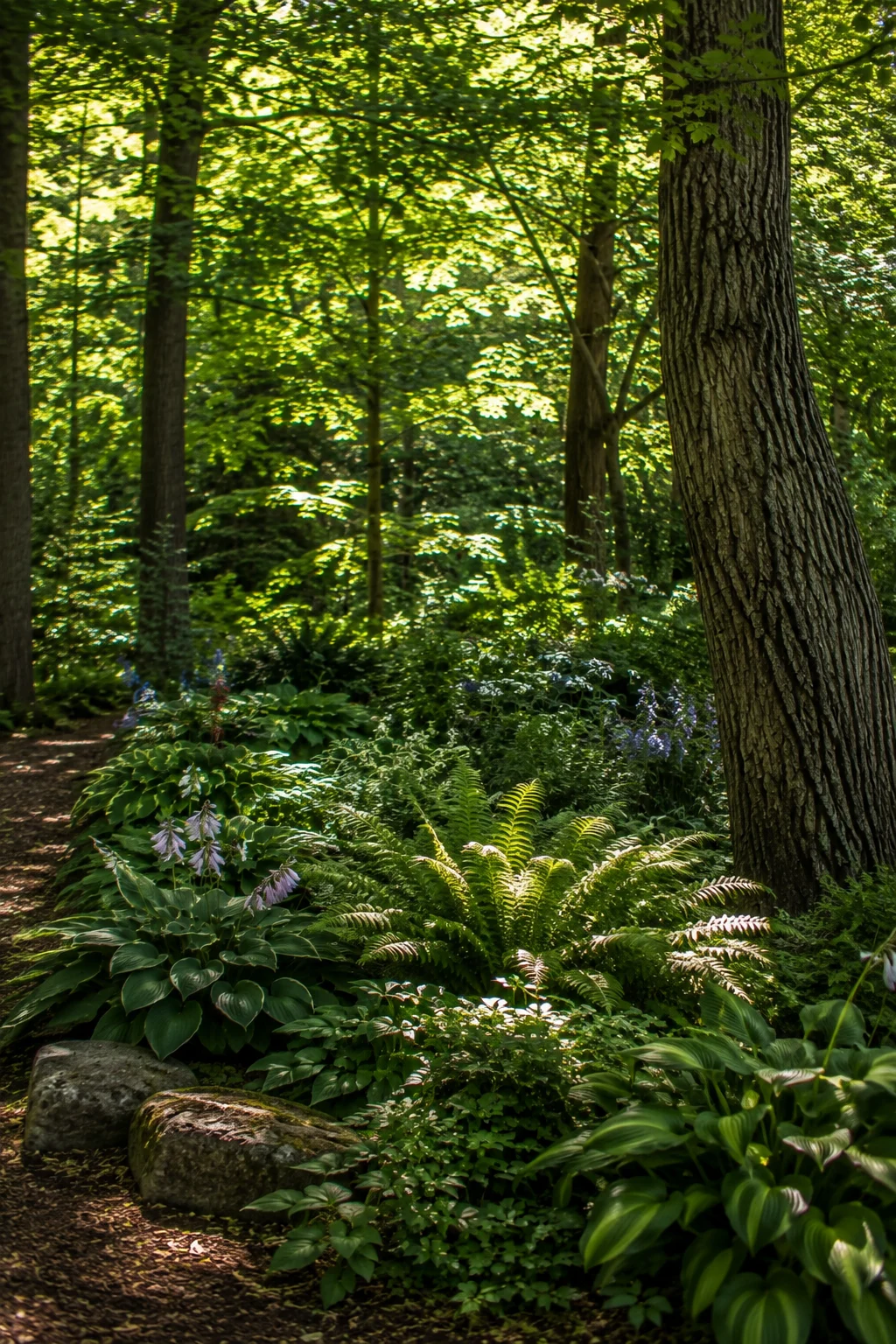
6. Understory Flowering Shrubs
Dogwood, viburnum, and azalea planted beneath the main canopy form a mid-height layer that blooms in the dappled light most other flowering shrubs can’t tolerate, bridging the gap between tall trees and low groundcover.
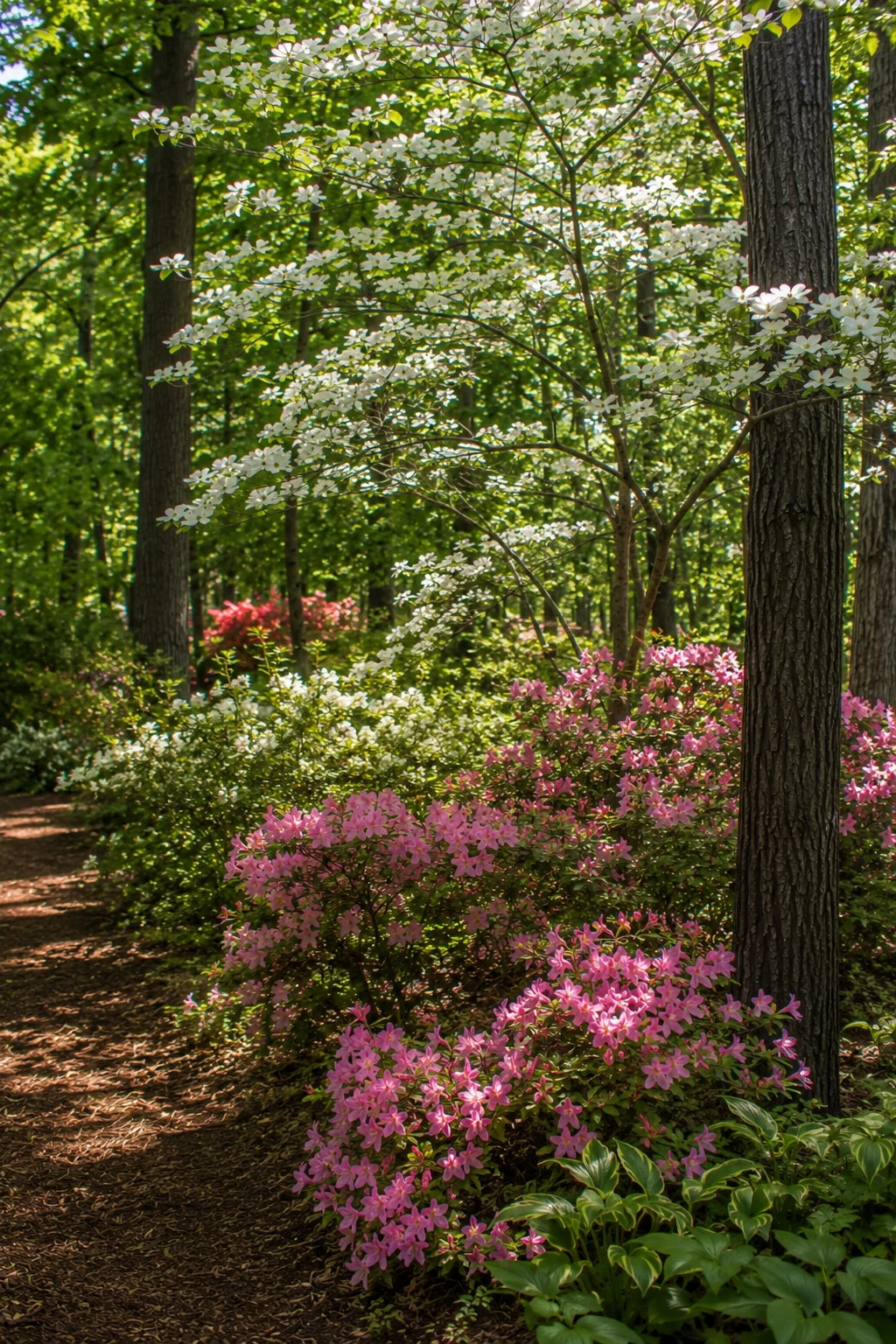
7. Classic Woodland Perennials
Hosta, astilbe, heuchera, and hellebore form the reliable backbone of most shaded perennial plantings, offering foliage texture and color even in beds that get only a few hours of dappled light each day.
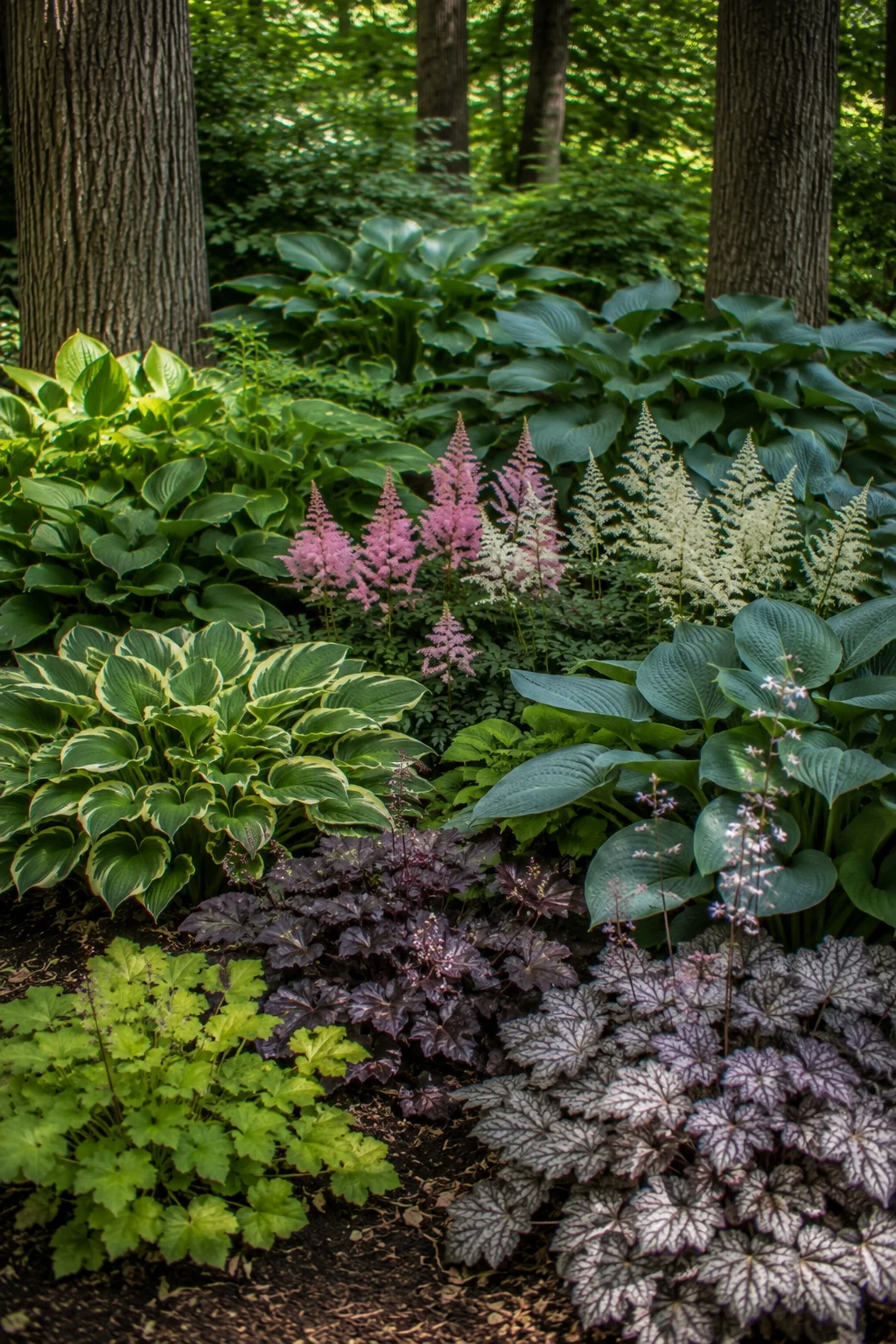
8. Native Woodland Wildflowers
Trillium, bloodroot, and Solomon’s seal bloom in early spring before the tree canopy fully leafs out, taking advantage of the brief window of stronger light that reaches the forest floor each year.
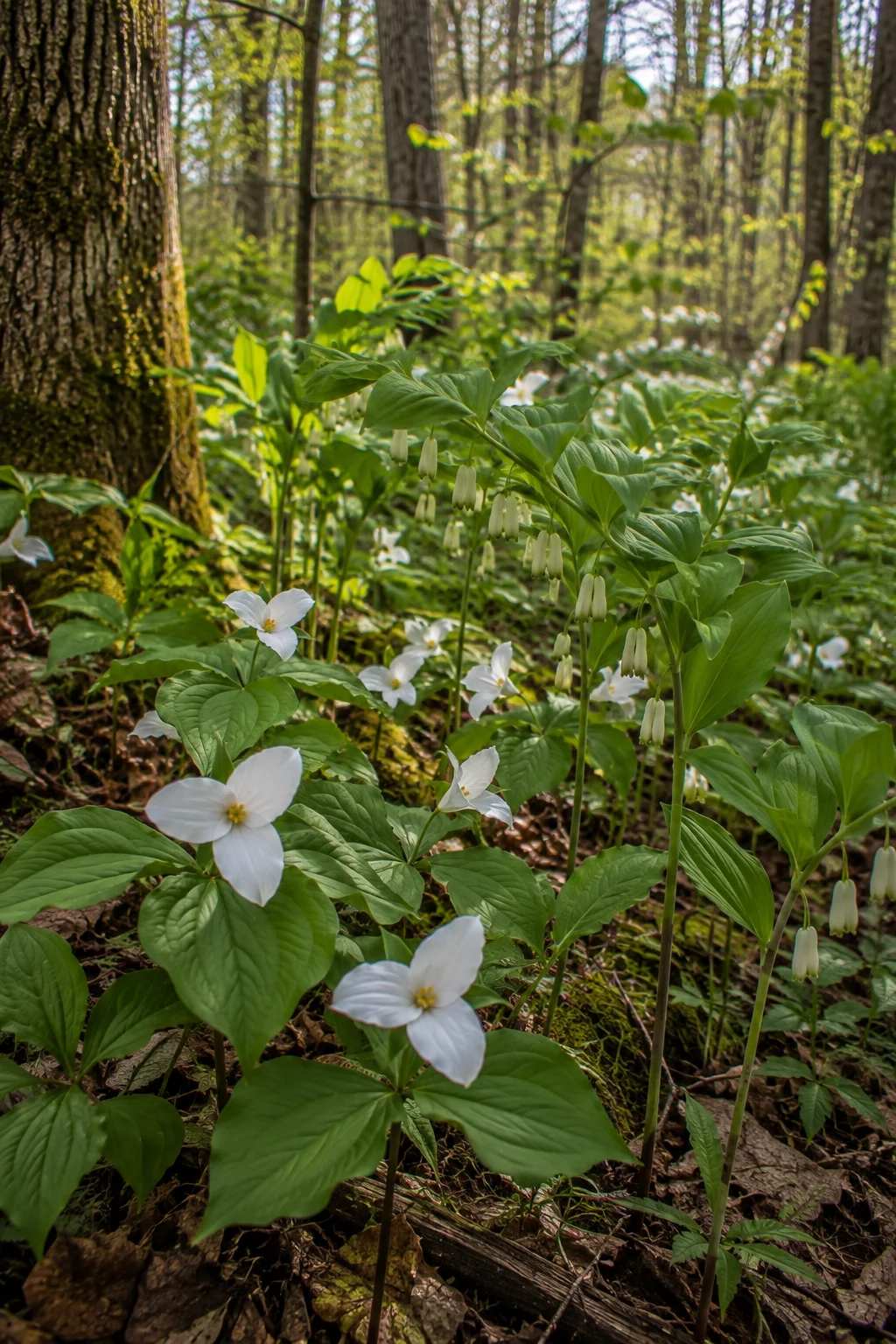
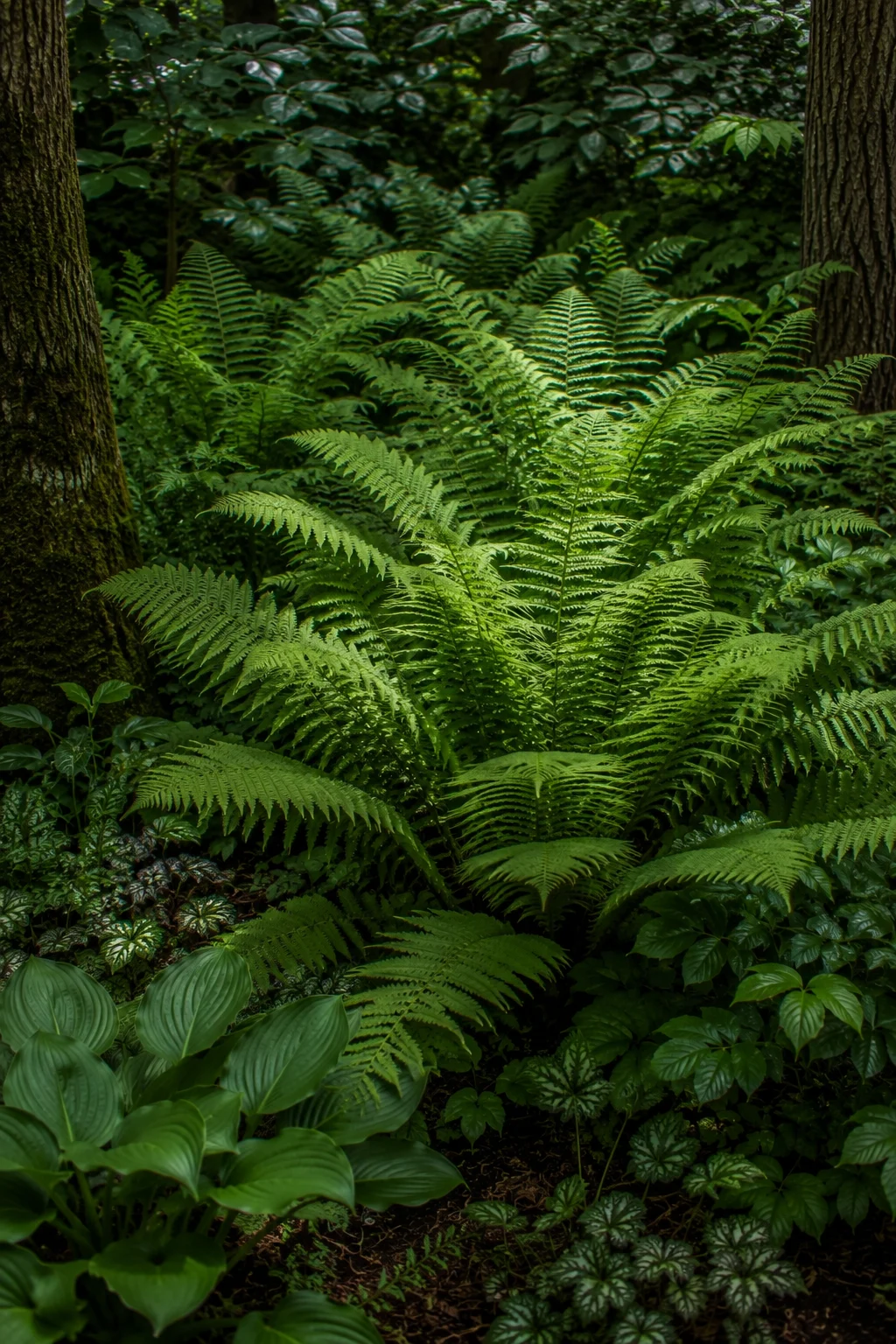
9. Ferns for Deep Shade Texture
Ferns tolerate deeper shade than nearly any flowering plant, filling the darkest corners of a woodland garden with soft, textural green where color-based planting simply won’t succeed.
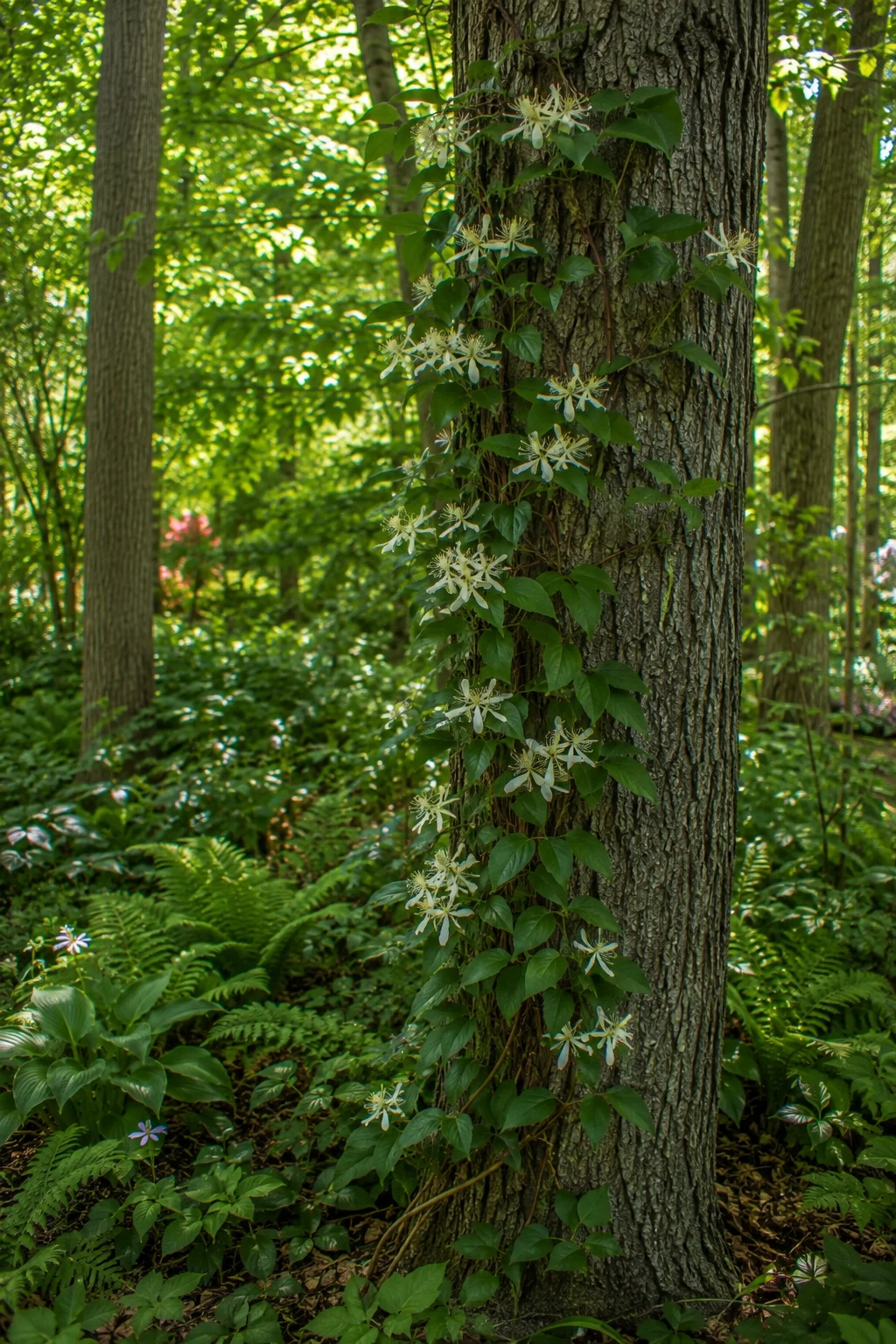
10. Native Vines Climbing Tree Trunks
Native climbers like virgin’s bower or coral honeysuckle, trained loosely up an established tree trunk, add vertical interest without the aggressive girdling growth of non-native climbing vines.
Groundcover and Forest Floor
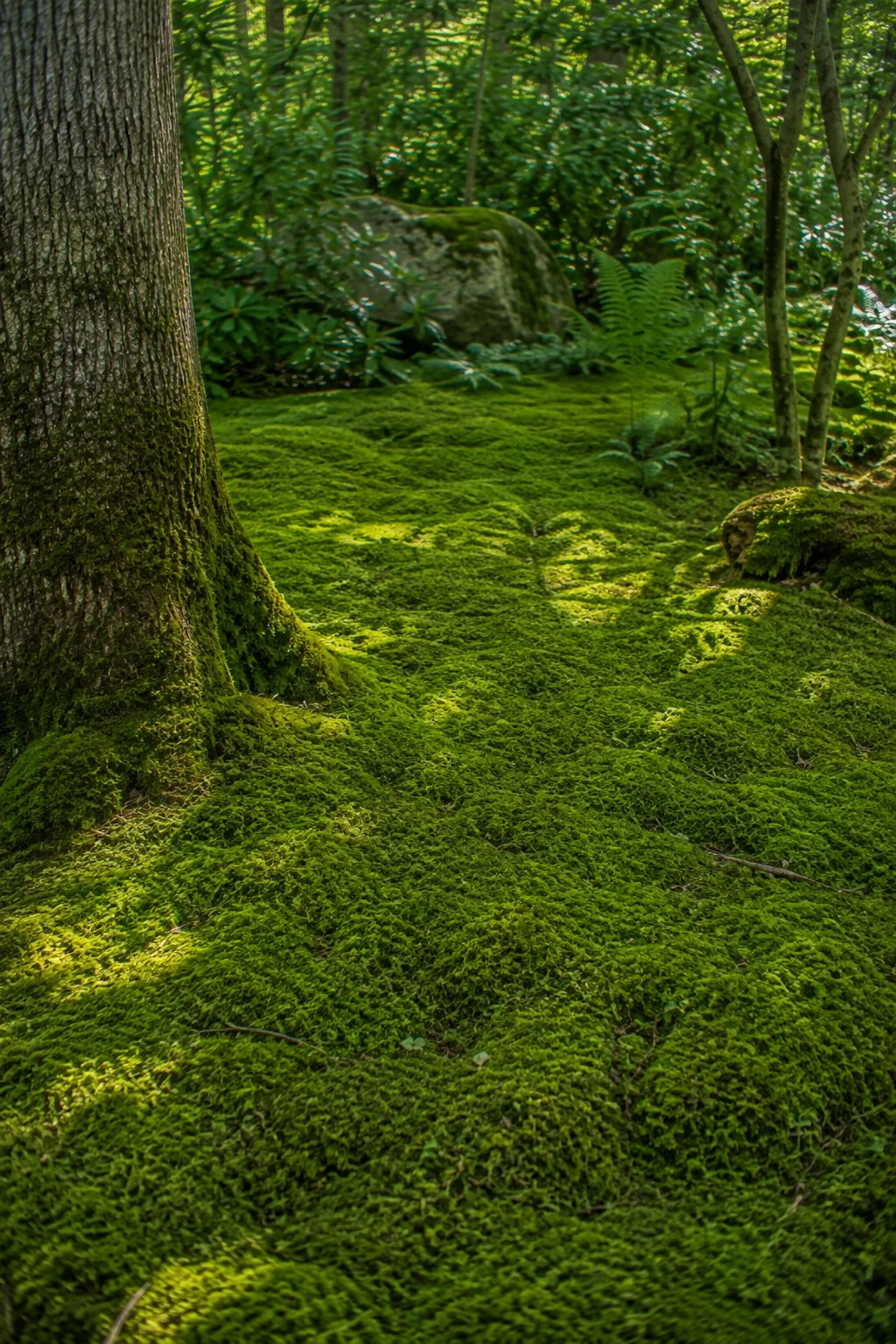
11. Moss Carpet in Deep Shade
In consistently damp, deeply shaded areas where grass struggles anyway, moss reads as lush and requires no mowing, matching the genuine forest-floor look a woodland garden is going for.
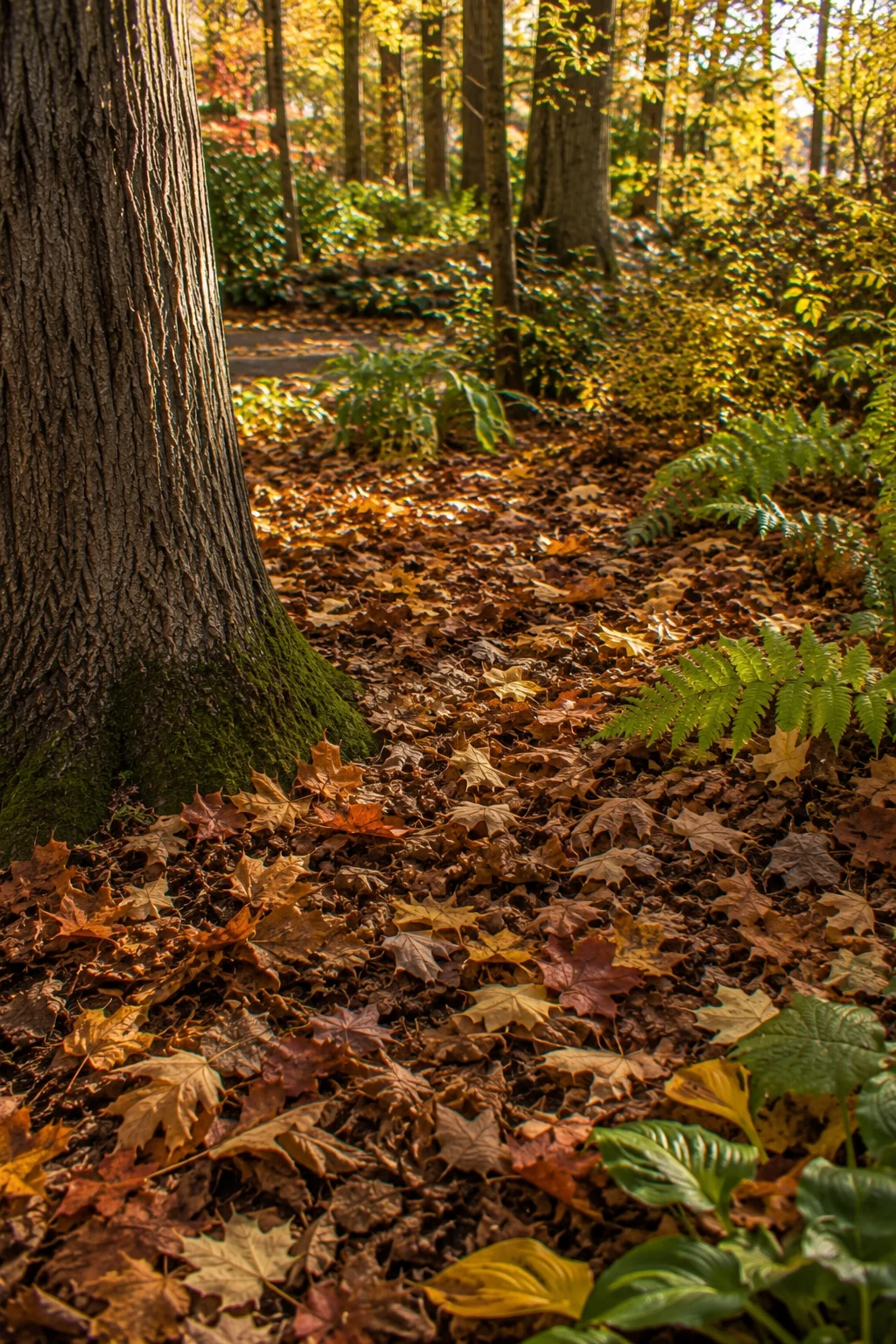
12. Leaf Litter as Natural Mulch
Leaving fallen leaves in place, rather than raking and bagging them every autumn, replicates the natural forest floor cycle, suppresses weeds, and provides genuine overwintering habitat for insects and beneficial fungi.
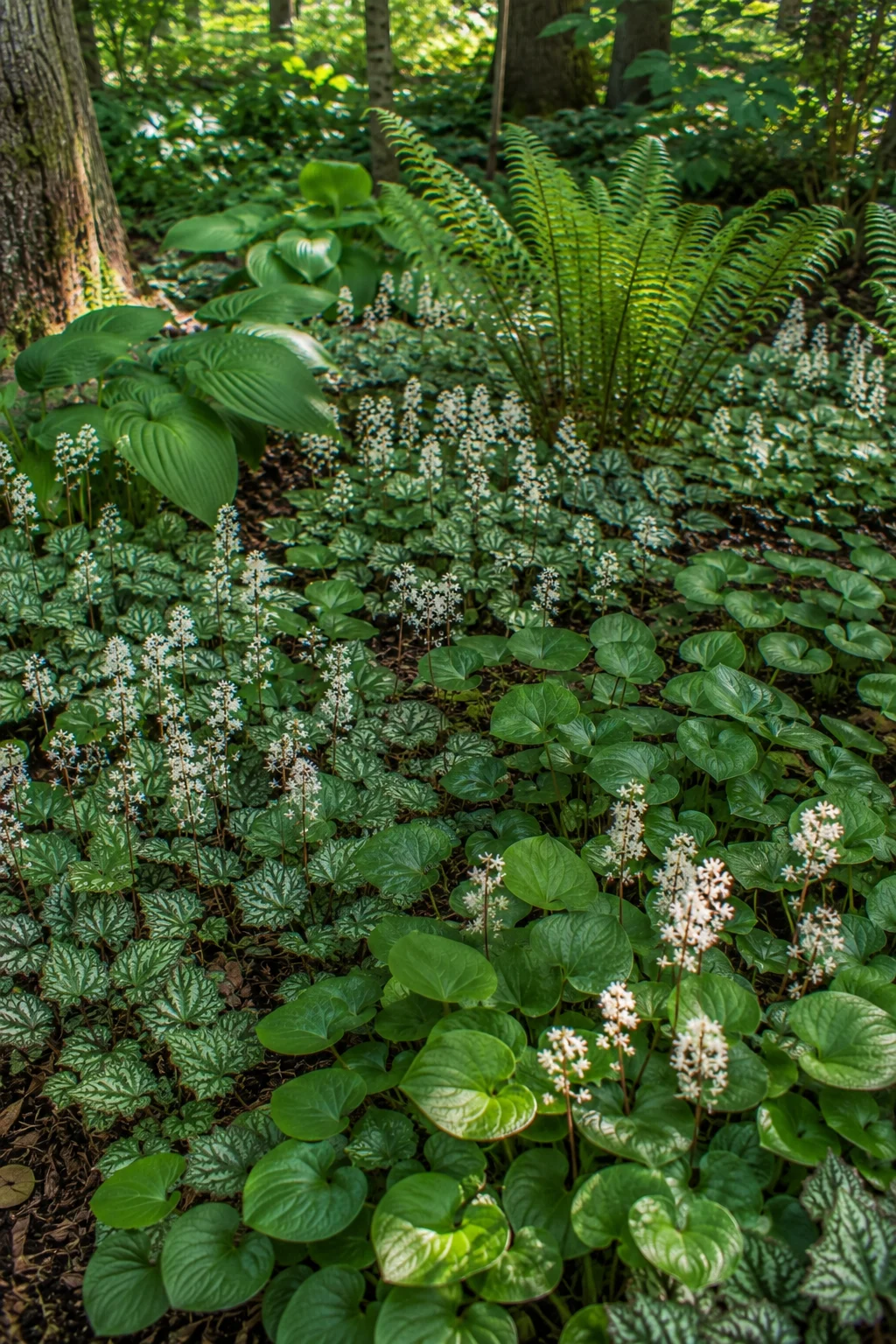
13. Woodland Groundcover Mix
Wild ginger, foamflower, and native pachysandra alternatives spread to form a dense, low carpet beneath taller plantings, filling gaps between perennials the way moss fills gaps in the deepest shade.
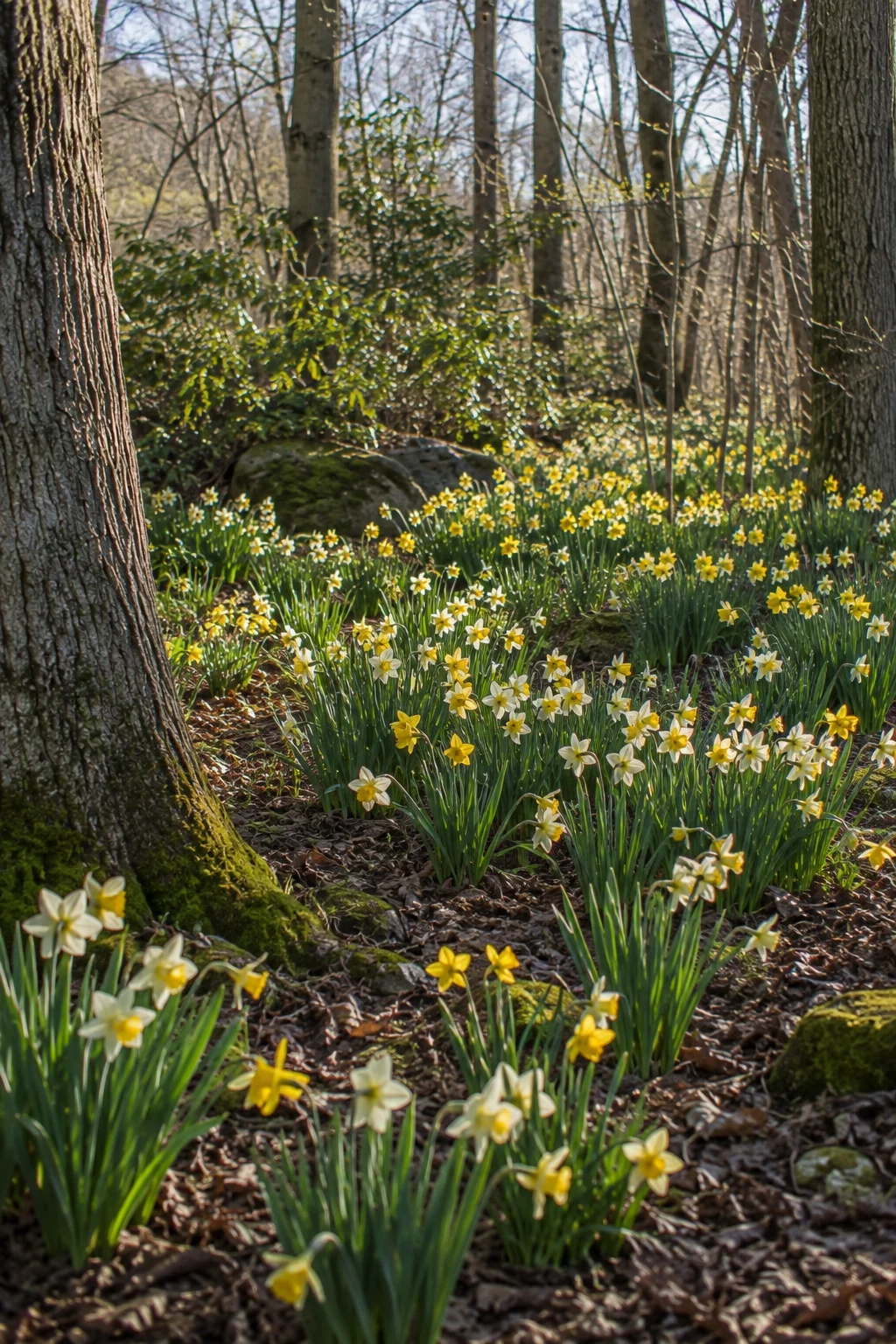
14. Naturalized Bulb Drifts
Daffodils and snowdrops, planted in loose, informal drifts rather than straight rows, naturalize under deciduous trees over several years, spreading and multiplying on their own with almost no ongoing maintenance.
Wildlife and Habitat Features
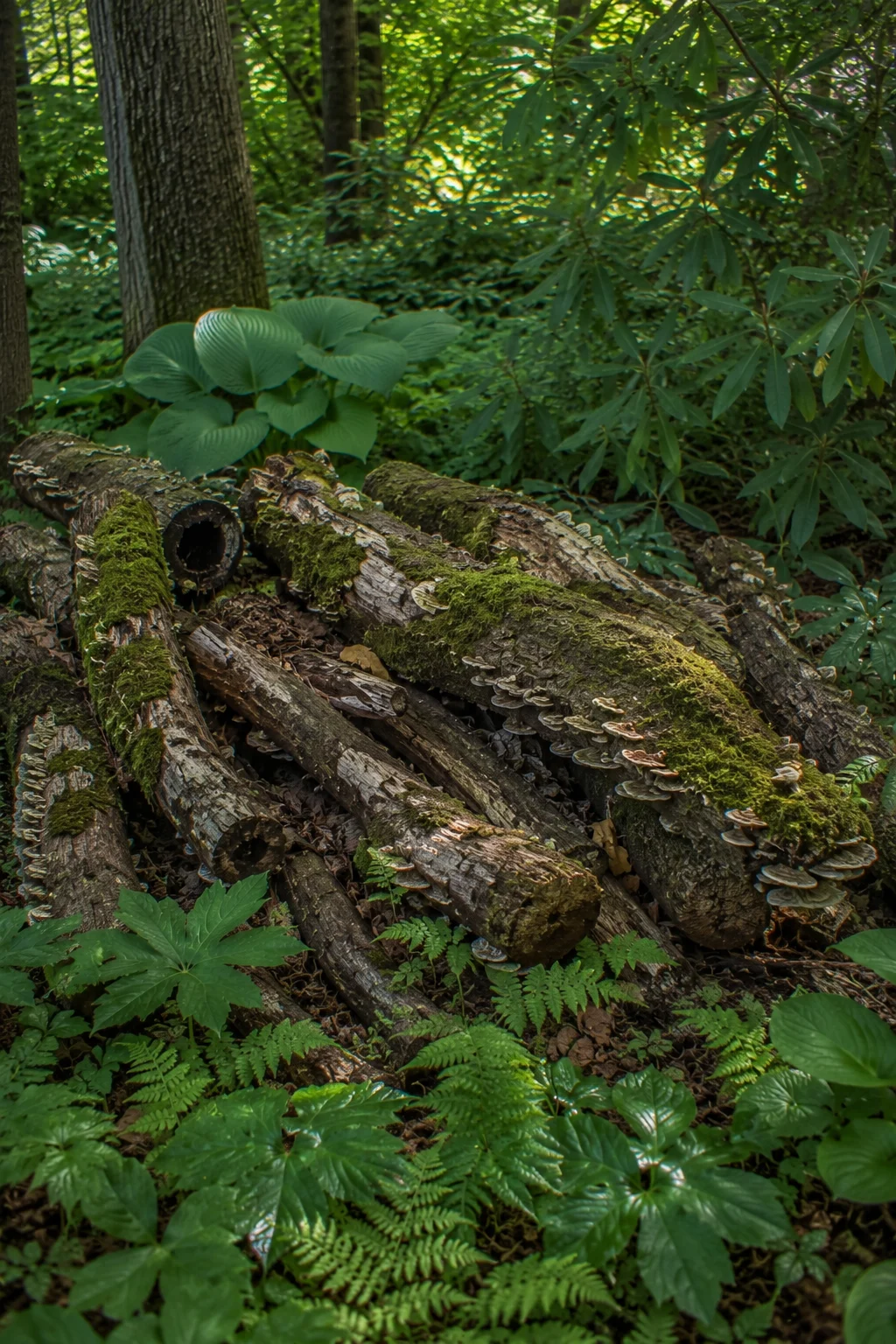
15. Log Pile and Deadwood Habitat
A deliberately placed pile of logs and deadwood in an out-of-the-way corner provides shelter for insects, amphibians, and fungi, and needs essentially no maintenance once established.
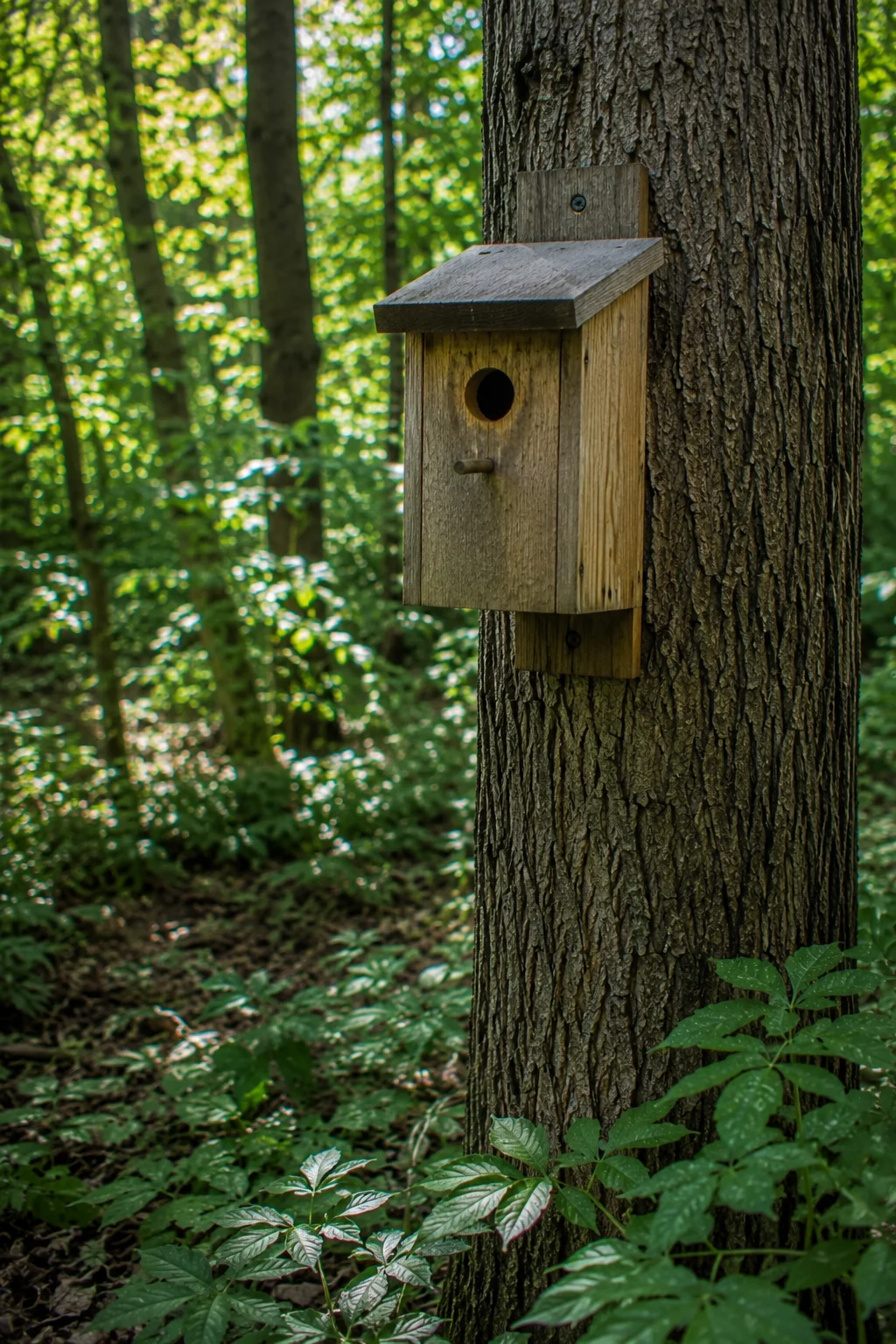
16. Birdhouses and Feeders Among the Trees
Mounting a few birdhouses or feeders at varying heights through the woodland planting draws in birds that help manage insect populations naturally, while adding a genuinely charming visual detail to the space.
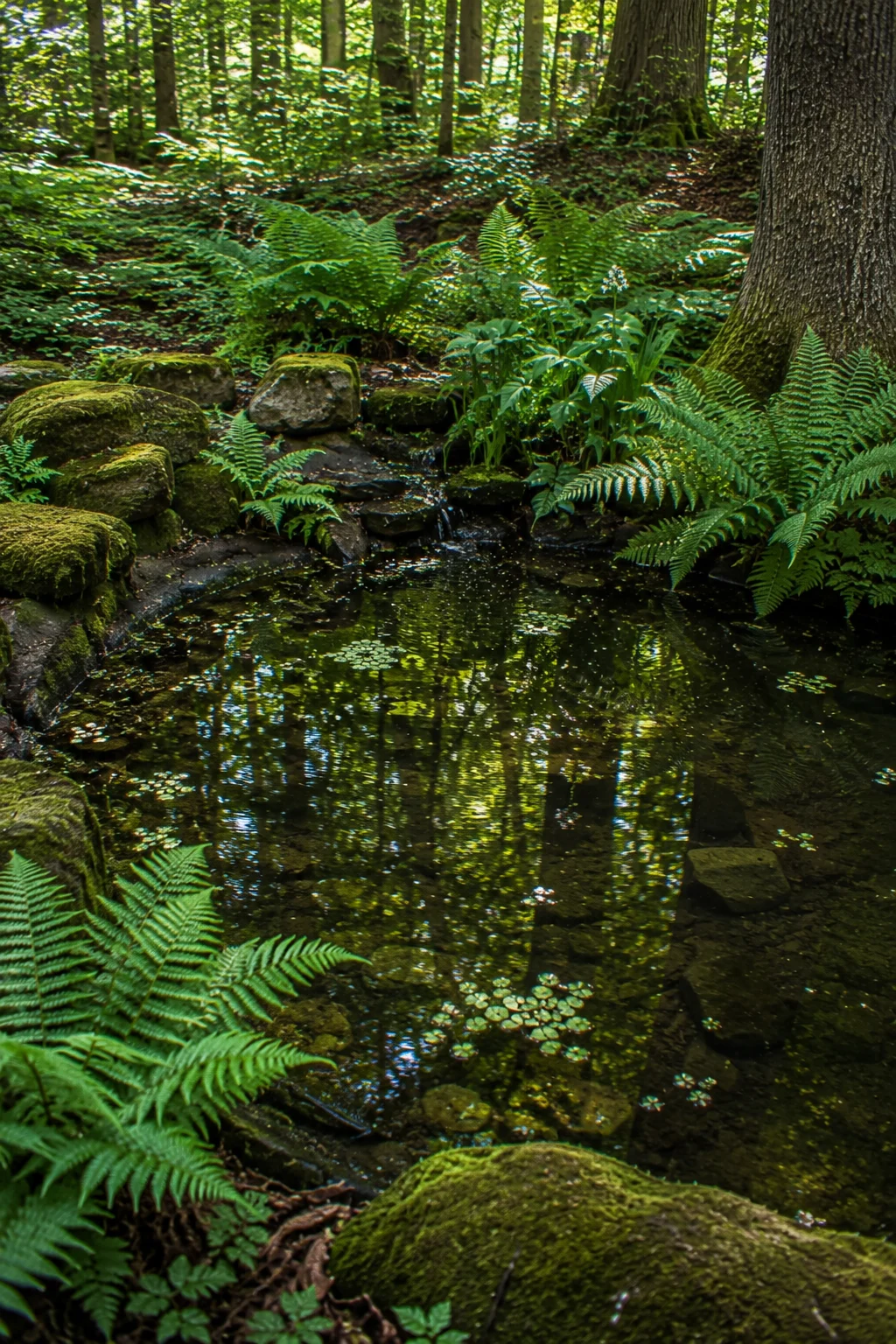
17. Small Woodland Pond or Seasonal Puddle
A small, informally shaped pond or a seasonal low spot that holds water after rain supports amphibians and insects, and can be as simple as a sunken container planted around with moisture-loving ferns.
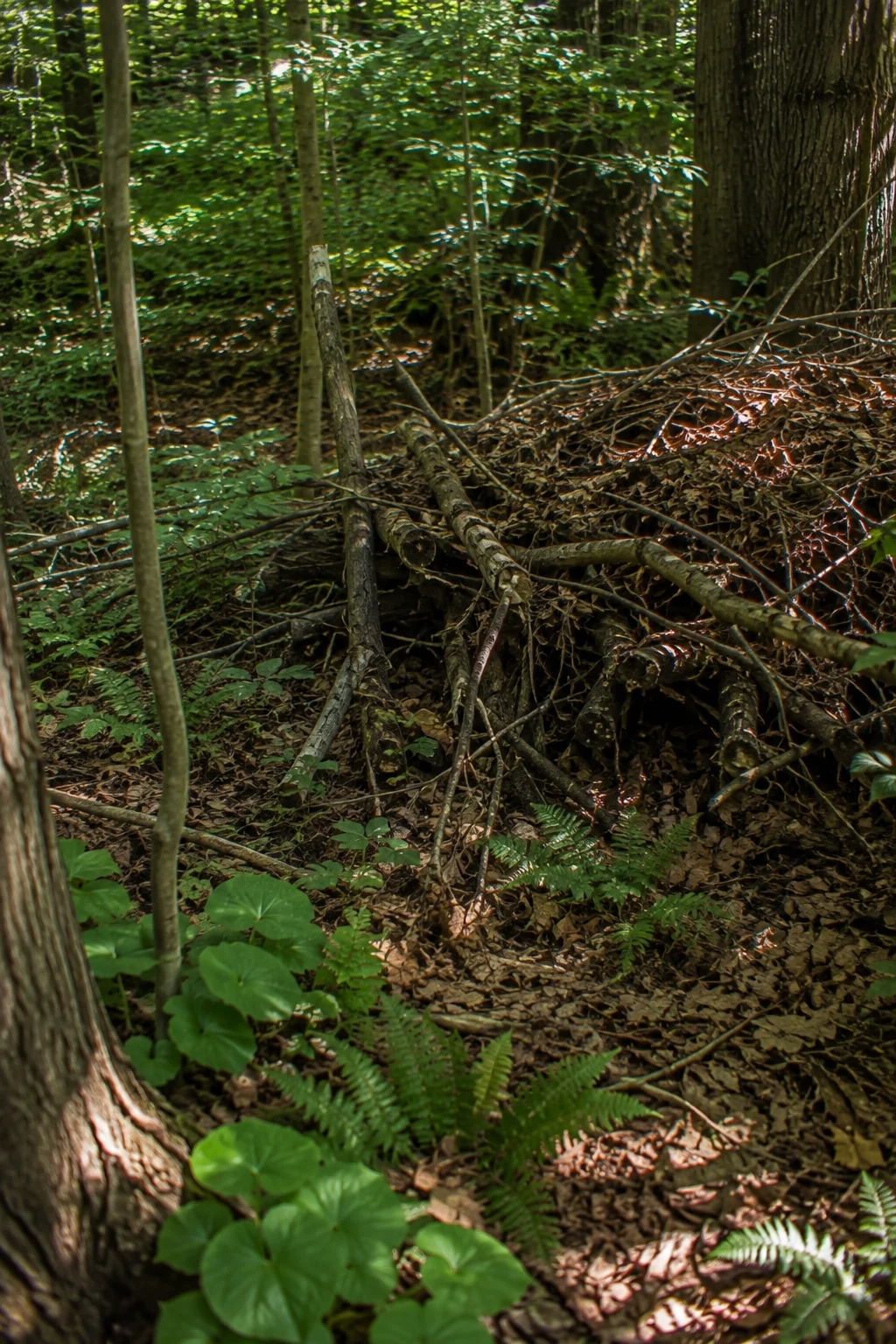
18. Undisturbed Brush Pile Corner
Leaving one corner of the woodland garden as a loosely maintained brush pile, rather than clearing every fallen branch, reinforces the naturalistic character of the space while giving small wildlife a place to shelter undisturbed.
Rustic Seating and Finishing Touches
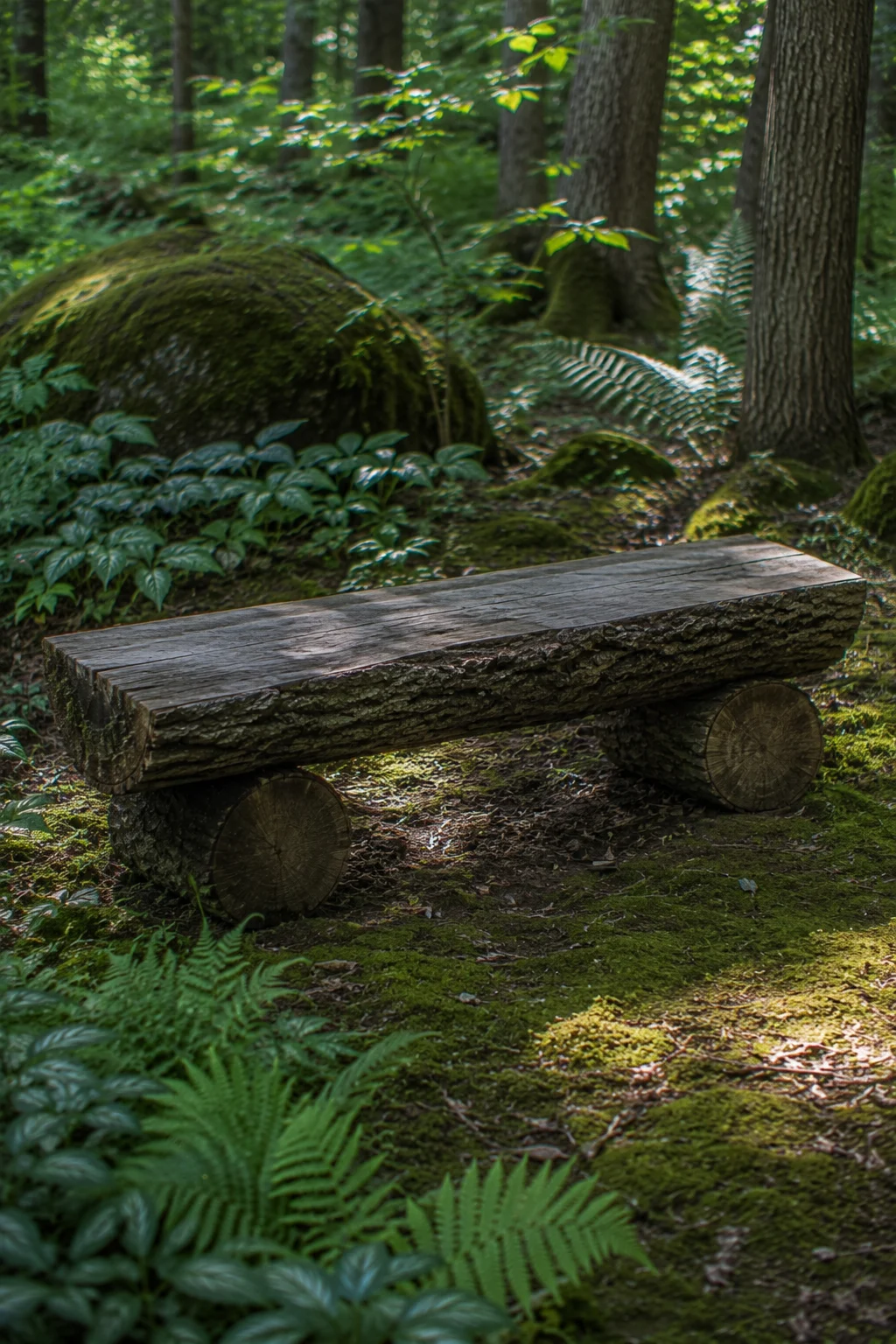
19. Log Bench or Stump Seating
A section of a large fallen log, cut flat on top, or a cluster of tree stumps arranged as seating, gives a woodland garden genuinely rustic seating that costs nothing beyond the labor to place it.
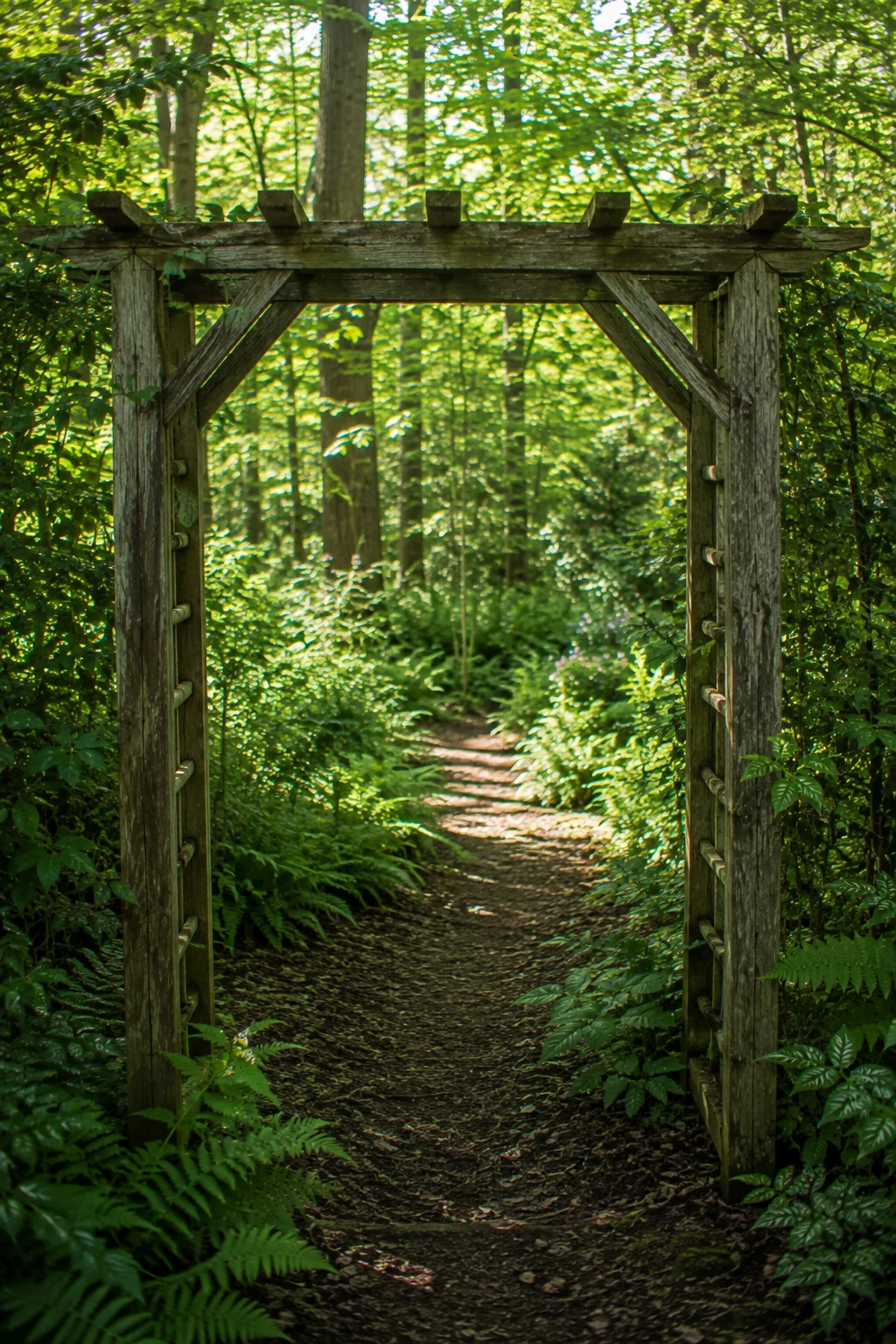
20. Simple Wooden Entry Arbor
A rough-hewn wooden arbor marking the transition from open lawn into the wooded section of the garden gives the space a clear sense of arrival, similar to how a garden gate signals entry elsewhere.
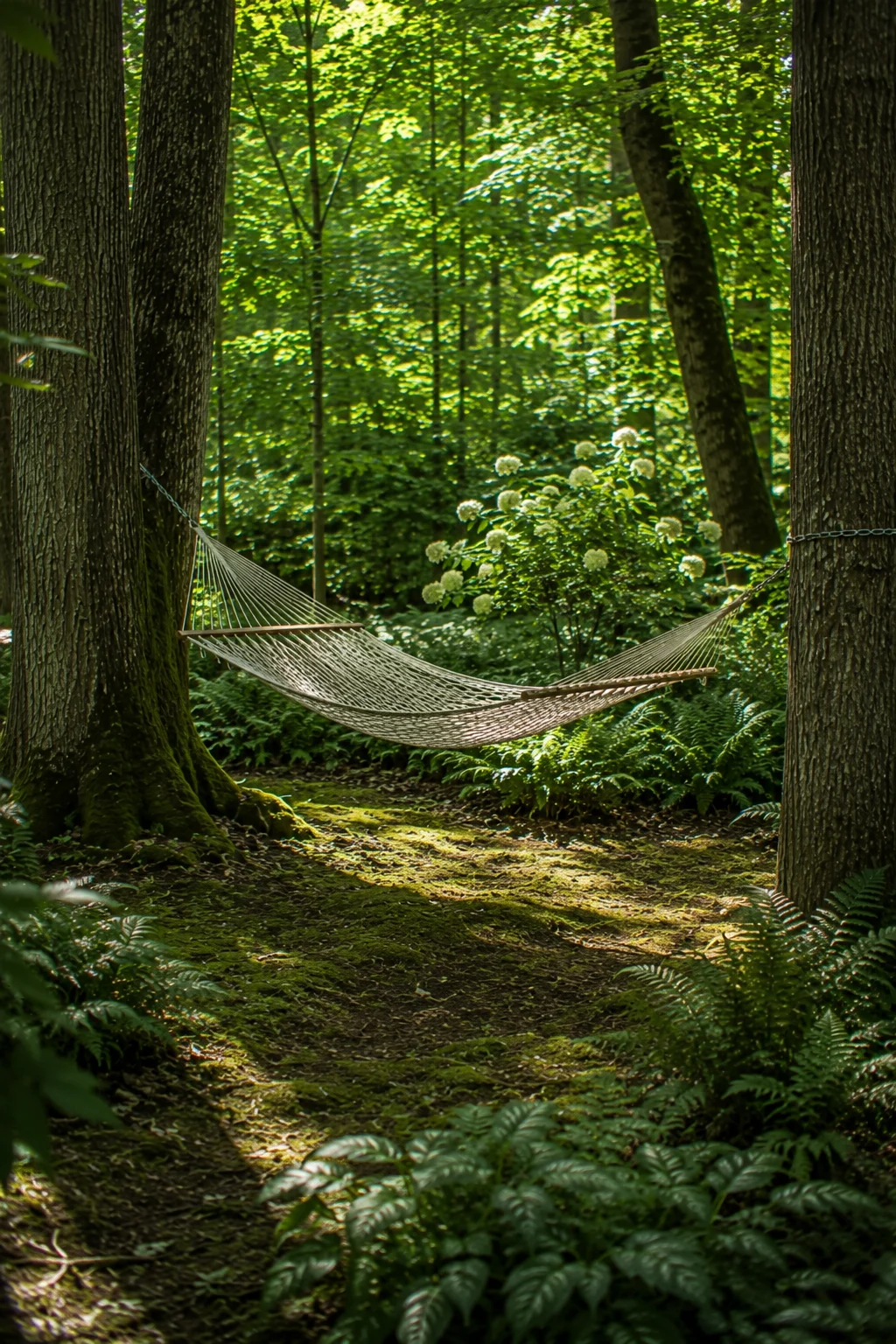
21. Hammock Strung Between Two Trees
A simple hammock, strung between two suitably spaced and sturdy trees, is one of the most natural uses of a woodland garden’s existing structure, requiring no additional posts or building materials at all.
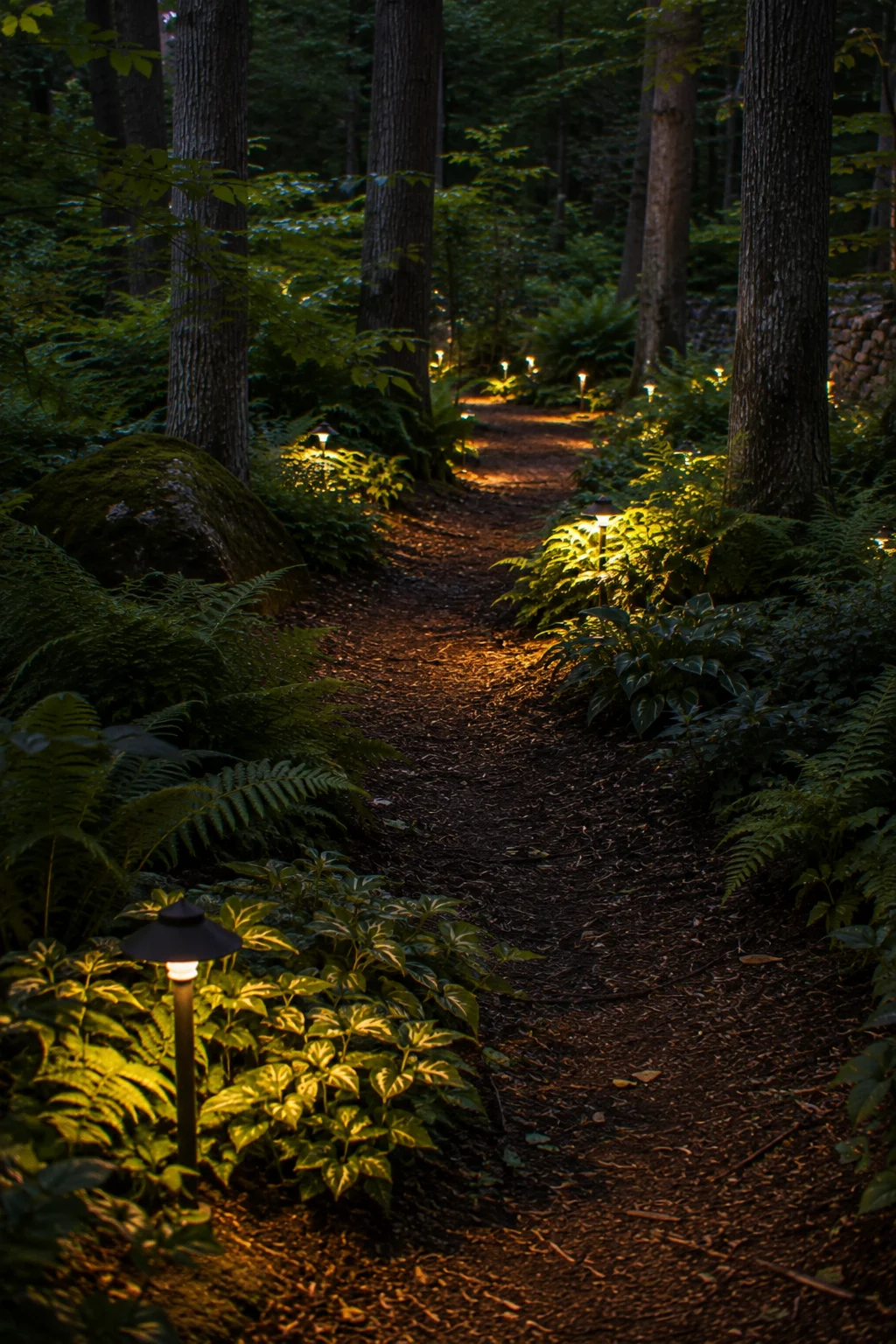
22. Low-Voltage Path Lighting
Simple low-voltage or solar path lights, spaced along the woodland trail at a low, ground-hugging height, extend the garden’s use into the evening without introducing the harsh glare of a taller fixture.
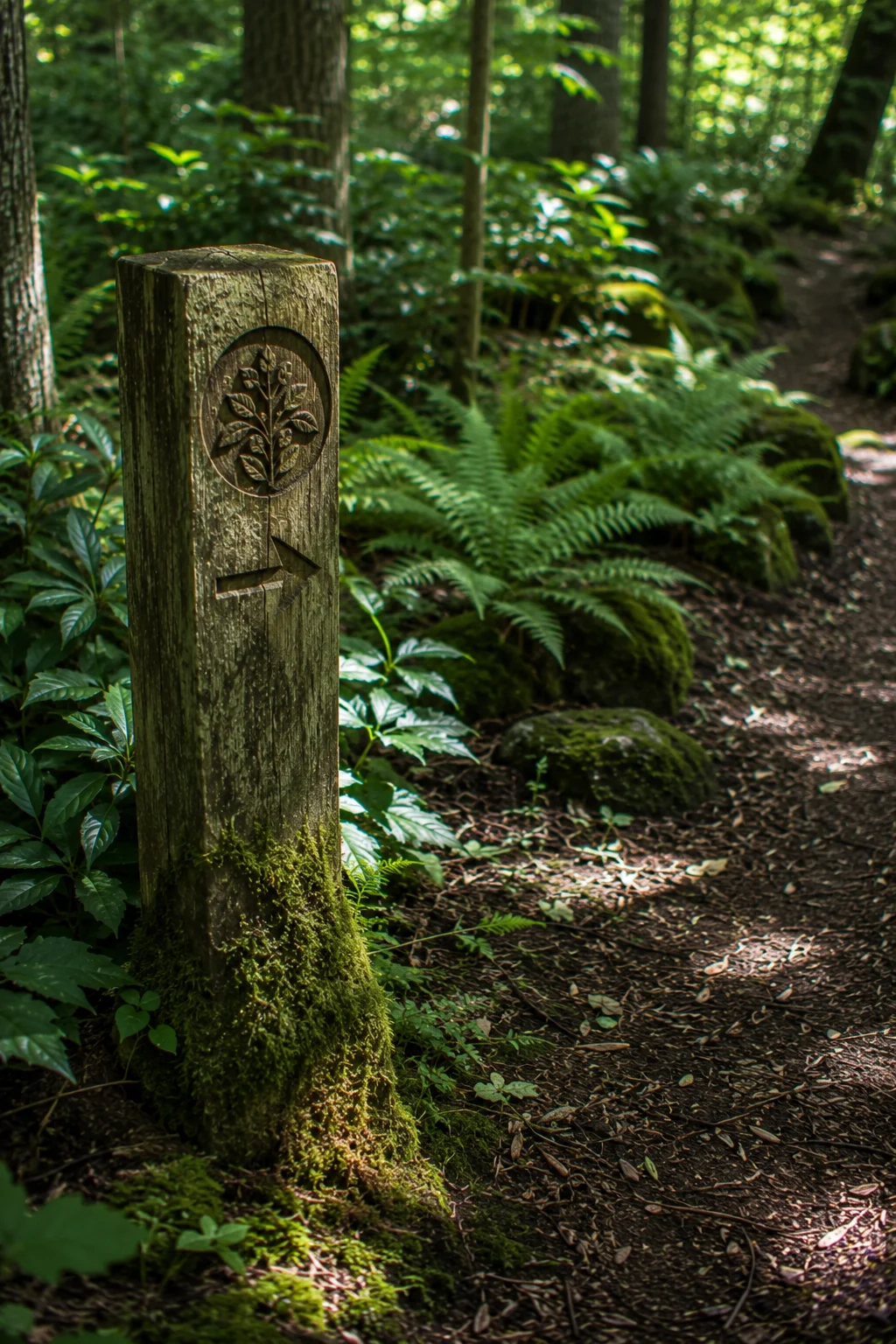
23. Natural Stone or Wood Trail Markers
Small, simple markers — a flat engraved stone or a carved wooden post — placed at path junctions or notable specimens add a quiet, storybook quality to a woodland garden without needing any electrical or structural work.
Working With Shade Instead of Against It
The plants that succeed in a woodland garden are, almost without exception, ones suited to the specific light level actually present rather than generic “shade tolerant” labels applied loosely. For a broader list of plants suited to darker corners beyond the woodland-specific choices above, our shade garden plants guide covers additional species options, and our ground cover plants guide is a useful reference for filling gaps between larger woodland perennials.
According to woodland garden guidance published by The Morton Arboretum, leaving leaf litter in place and minimizing soil disturbance around mature tree roots are two of the most important practices for keeping an established woodland garden healthy over the long term, since most woodland natives evolved specifically to grow in that undisturbed leaf-litter layer rather than bare, cultivated soil.
Final Thoughts
A woodland garden succeeds by working with what shade already provides rather than treating it as a limitation to design around — layered planting beneath an existing canopy, a forest floor left mostly undisturbed, and rustic structures that feel found rather than installed. Start with a path and one seating destination, build the planting in layers from canopy down to groundcover, and leave a corner or two genuinely a little wild for wildlife. The result is a garden that looks less designed than most, and often needs considerably less maintenance because of it.
If you want, I can also turn this into a clean blog-ready version with the image prompts removed.