
When most people envision a thriving, bee-friendly pollinator garden, they picture a sun-drenched meadow bursting with bright sunflowers, towering coneflowers, and massive patches of blooming lavender. But what happens if your backyard is dominated by a dense canopy of mature oak trees, or shadowed by a tall privacy fence?
For many beginner beekeepers and wildlife gardeners, a shady yard feels like a landscaping death sentence. It is incredibly easy to look at those dark, damp corners and assume that nothing of value will ever grow there.
Fortunately, this is a complete myth. Think about a natural woodland ecosystem: the forest floor is rarely exposed to direct, blazing sunlight, yet it is teeming with native flowers, buzzing bumblebees, and fluttering moths. By intentionally choosing plants that have adapted to the understory, you can transform the darkest corners of your property into a lush, multi-layered buffet of nectar and pollen.
This comprehensive guide will break down 20 brilliant shade garden plants, organized by blooming season, that will inject massive color into your landscape while feeding your local bees from early spring all the way through winter.
Understanding the “Woodland Edge”
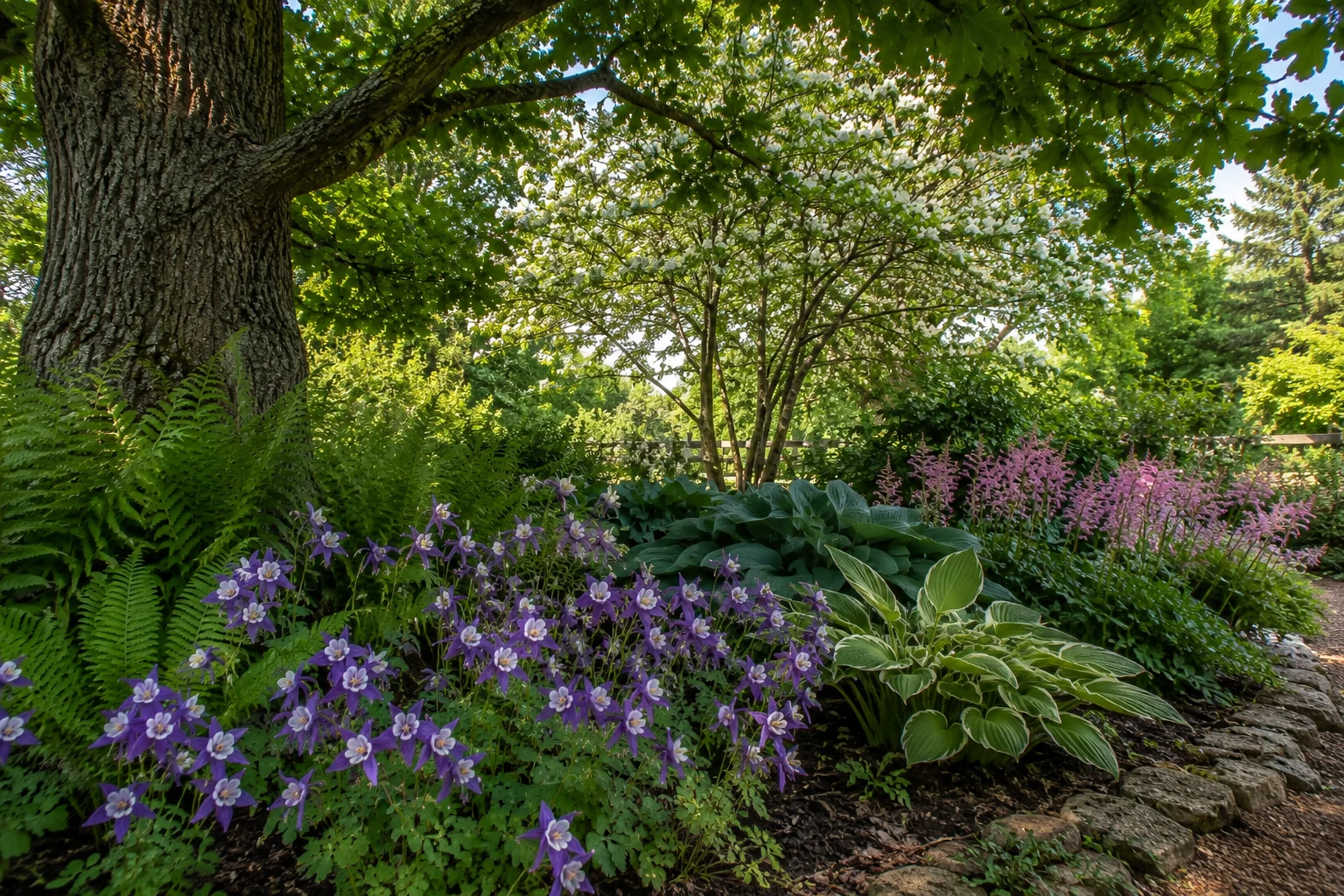
Before rushing out to buy plants, it is important to understand that not all shade is created equal. The trick to a successful shade garden is mimicking the woodland edge—the transitional zone where the deep forest meets the open meadow.
- Dappled Shade: This is the shifting, filtered sunlight that makes it through the canopy of a deciduous tree. This is the absolute sweet spot for woodland flowers.
- Partial Shade: Areas that receive direct sunlight for only 2 to 4 hours a day, typically in the cool early morning or late afternoon.
- Deep Shade: The pitch-black areas directly under dense evergreen trees or heavy staircases. Very few flowering plants thrive here; rely on ferns and foliage for these specific spots.
According to the Xerces Society for Invertebrate Conservation, many native pollinators—specifically bumblebees and solitary mason bees—actually prefer foraging in the cooler, sheltered microclimates of dappled and partial shade, making these areas incredibly valuable.
Early Spring Bloomers for the Shadows
When overwintered honeybees and queen bumblebees first emerge, they are desperately hungry. These early woodland bloomers push through the cold soil to provide a critical first meal.
1. Snowdrops (Galanthus nivalis)
Snowdrops are often the very first flowers to appear, sometimes pushing directly through the late-winter snow.
- Why Bees Love It: On unseasonably warm winter days when bees take cleansing flights, snowdrops offer a vital, emergency source of fresh pollen.
- Growing Tips: Plant the bulbs in the autumn under deciduous trees. They will bloom and die back long before the trees leaf out and plunge the area into deep shade.
2. Hellebores (Lenten Rose)
Hellebores are the ultimate rebels of the shade garden. They push thick, leathery foliage and elegant, cup-shaped flowers through the frost as early as February.
- Why Bees Love It: The downward-facing, bowl-like flowers protect pollen from cold spring rains, ensuring it stays dry and accessible for foraging bees.
- Growing Tips: Plant them in deep, rich soil. They are incredibly long-lived, highly shade-tolerant, and virtually ignored by deer and rabbits.
3. Lungwort (Pulmonaria)
Named for its speckled, lung-shaped leaves, Lungwort is a stunning, low-growing perennial that produces clusters of bell-shaped flowers that magically shift from pink to bright blue as they age.
- Why Bees Love It: It is a magnet for early-emerging pollinators, particularly the hairy-footed flower bee, which has a long tongue perfectly adapted to the tubular blooms.
- Growing Tips: It thrives in damp, fully shaded borders and acts as an excellent, weed-suppressing ground cover.
4. Native Primrose (Primula vulgaris)
Native primroses push pale yellow flowers through the cold, damp soil of early spring, illuminating dark borders.
- Why Bees Love It: They offer a vital lifeline of nectar when almost nothing else is flowering in the garden.
- Growing Tips: Plant them in moist, well-drained soil under deciduous trees where they can soak up the early spring sun before the canopy fills in.
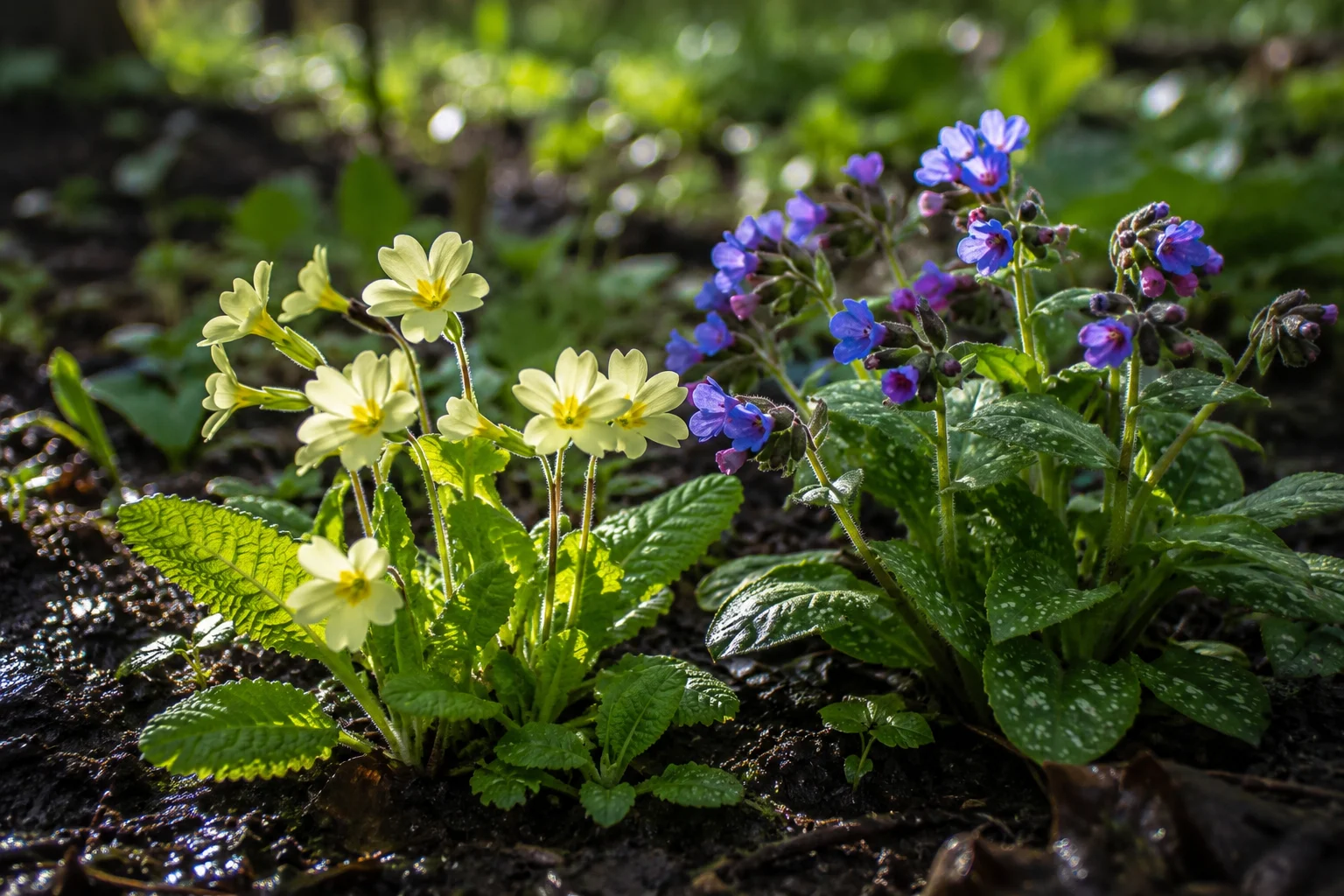
5. Wood Anemone (Anemone nemorosa)
A classic indicator of ancient woodlands, the Wood Anemone is a delicate spring ephemeral that produces brilliant white, star-shaped flowers.
- Why Bees Love It: Hoverflies and small solitary bees rely heavily on these low-growing flowers for early-season pollen.
- Growing Tips: It spreads slowly via rhizomes. Plant it in rich, leafy soil and leave it undisturbed to form a beautiful white carpet.
Mid-Spring to Early Summer Powerhouses
As the weather warms, the shade garden truly comes alive. These plants offer dramatic heights and bold colors.
6. Foxglove (Digitalis purpurea)
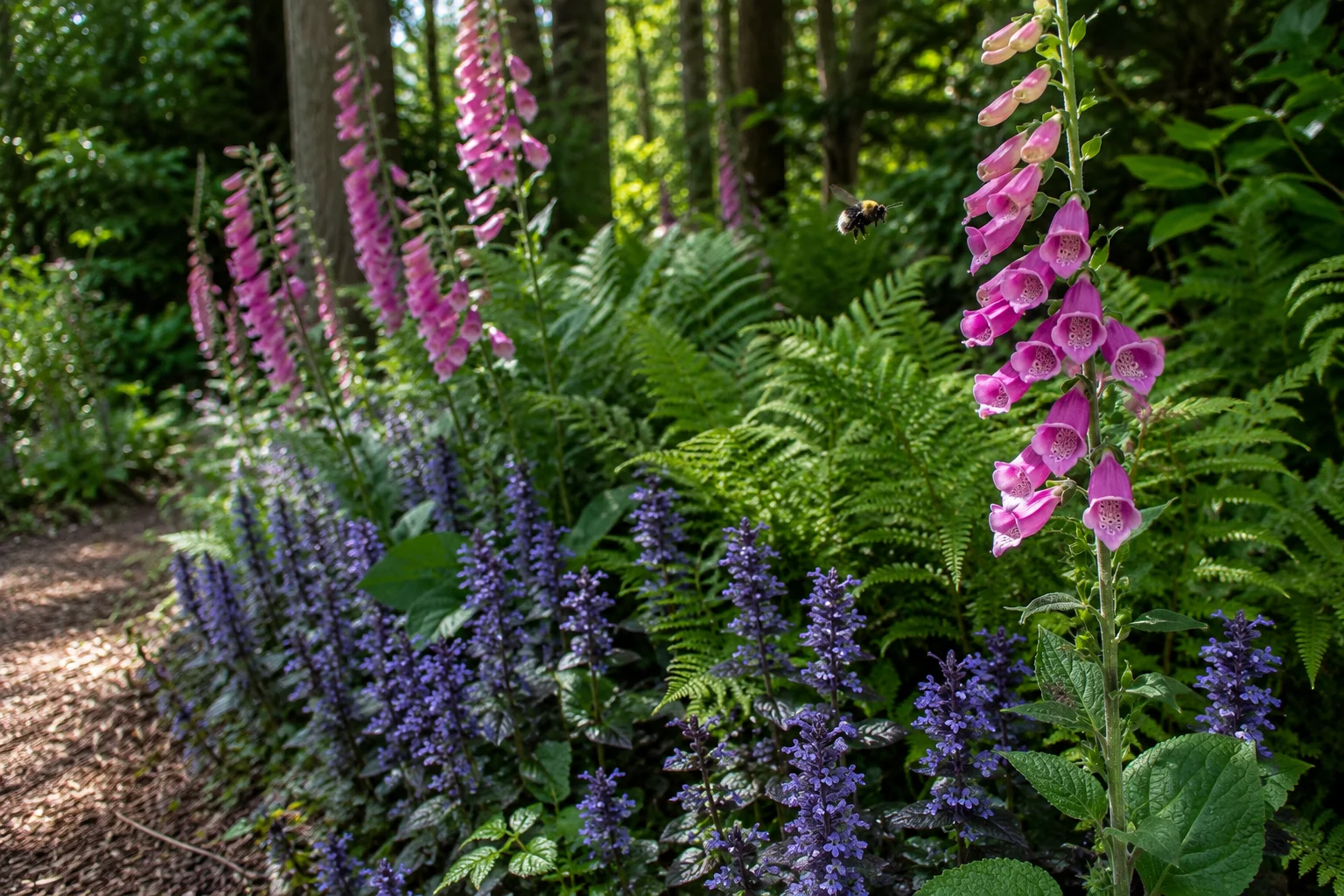
Foxgloves are the undisputed royalty of the shade garden. These stunning biennials send up tall, dramatic spikes covered in tubular, bell-shaped flowers ranging from deep purple to soft pink.
- Why Bees Love It: The tubular shape is perfectly evolved for long-tongued bumblebees. The internal spots act as “nectar guides,” literally pointing the bee toward the food.
- Growing Tips: Allow them to self-seed at the end of the season to ensure a continuous blooming patch year after year.
7. Bugleweed (Ajuga reptans)
If you are struggling to grow grass in a damp, shady area, plant Bugleweed instead. This low-growing creeper forms a dense mat of dark bronze foliage.
- Why Bees Love It: It sends up striking spikes of vibrant blue and violet flowers that mason bees absolutely flock to.
- Growing Tips: Ajuga spreads rapidly via runners, making it an excellent living mulch that suppresses weeds.
8. Columbine (Aquilegia)
With their intricate, spur-backed flowers that look like tiny lanterns, Columbines bring a whimsical feel to the woodland edge.
- Why Bees Love It: The deep nectar spurs are highly attractive to long-tongued bees and hummingbirds.
- Growing Tips: Choose native varieties over highly cultivated double-blooms to ensure the nectar remains accessible. They thrive in dappled shade.
9. Bleeding Heart (Dicentra spectabilis)
Famous for its arching stems dripping with heart-shaped pink and white flowers, the Bleeding Heart is a shade garden staple.
- Why Bees Love It: While the unusual shape can be tricky for honeybees, strong bumblebees easily pry open the petals to access the rich nectar hidden inside.
- Growing Tips: It prefers cool, moist soil and will go dormant (die back to the ground) during the peak heat of late summer.
10. Serviceberry (Amelanchier)
While many gardeners focus entirely on perennials, small understory trees are essential. If you feel overwhelmed by plant-shopping confusion, building your garden backbone with reliable native plants like serviceberry is the perfect place to start.
- Why Bees Love It: It explodes with delicate, star-shaped white flowers in spring, offering massive quantities of early nectar.
- Growing Tips: It provides four-season interest, including edible summer berries for birds and brilliant red autumn foliage.
11. Red Campion (Silene dioica)
A staple of natural woodland edges, Red Campion produces an abundance of bright, rose-pink flowers that seemingly glow in the shadows.
- Why Bees Love It: It blooms continuously from mid-spring well into the summer, attracting a wide variety of solitary bees and hoverflies.
- Growing Tips: Highly tolerant of poor soils, making it an excellent choice for difficult garden banks.
12. Sweet Woodruff (Galium odoratum)
This creeping ground cover features star-shaped whorls of leaves and tiny, brilliant white flowers that smell like fresh-cut hay when crushed.
- Why Bees Love It: The tiny, shallow flowers are perfect for small, short-tongued native bees and beneficial parasitic wasps.
- Growing Tips: It spreads aggressively in moist shade, making it a perfect living carpet beneath heavy shrubs.
Summer Bloomers for the Shadows
Keeping the garden blooming during the summer heat can be challenging, but these shade-lovers step up to the plate.
13. Hardy Geranium / Cranesbill (Geranium phaeum)
Also known as the “Dusky Cranesbill,” this shade-tolerant geranium produces dark purple, almost black flowers.
- Why Bees Love It: It is an incredibly reliable nectar producer during the early summer, drawing in honeybees and bumblebees alike.
- Growing Tips: Cut the foliage back hard after the first flush of flowers to encourage a second bloom later in the summer.
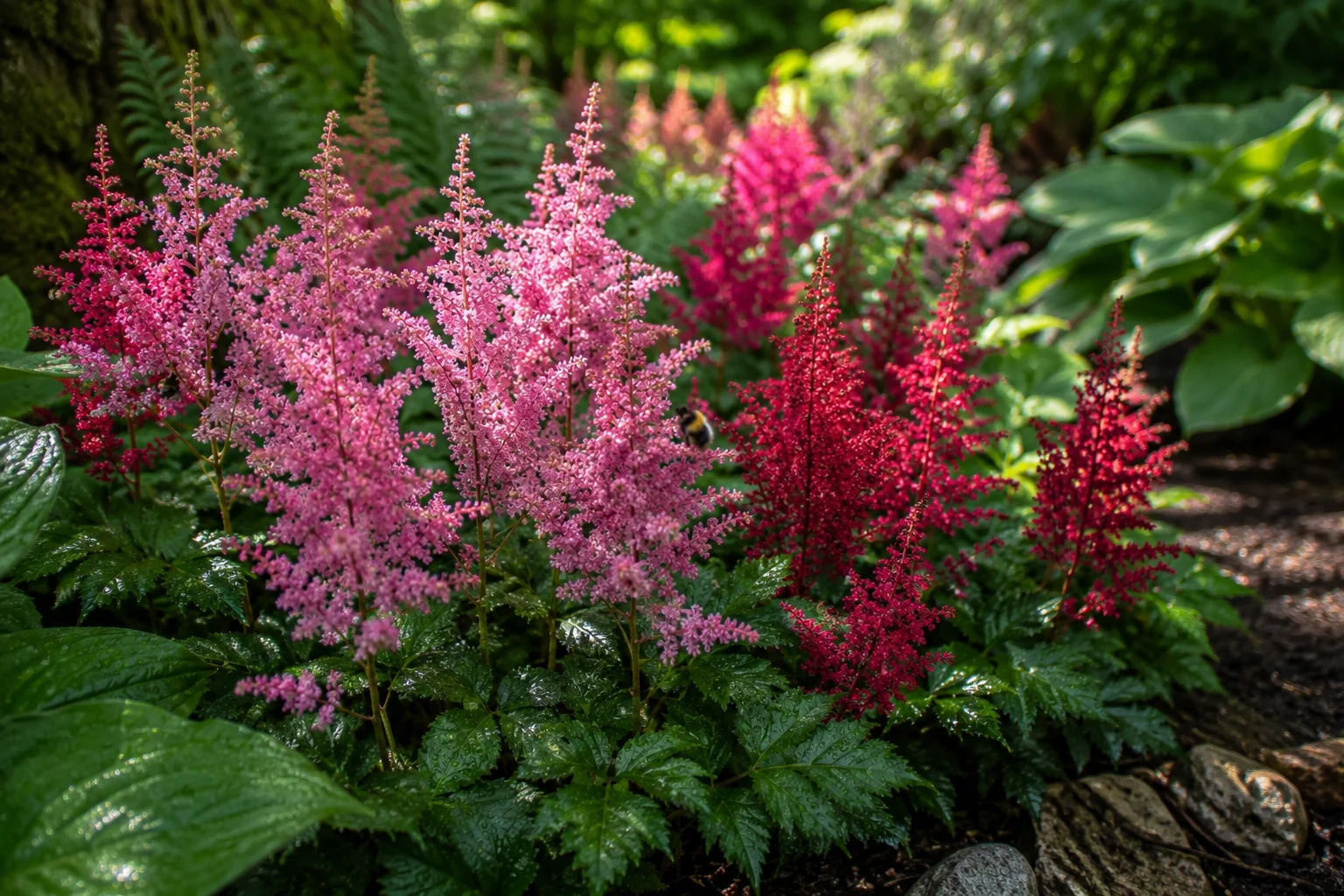
14. Astilbe (False Spirea)
If you have a damp, boggy area in your shade garden, Astilbe is your best friend. It produces feathery, plume-like flower spikes in shades of pink, red, and white.
- Why Bees Love It: The massive clusters of tiny flowers provide an easily accessible landing pad for small pollinators.
- Growing Tips: Astilbe will quickly scorch and die in dry soil; it requires consistent moisture to thrive.
15. Comfrey (Symphytum)
Comfrey is a permaculture superhero. While it prefers full sun, it is highly adaptable and will grow vigorously in partial shade.
- Why Bees Love It: Comfrey has one of the fastest nectar refill rates of any garden plant. A bee can empty a flower, and the plant will replenish the nectar in under an hour.
- Growing Tips: It has a deep taproot that mines nutrients from the soil. Use the chopped leaves as a nutrient-rich mulch for your other plants.
16. Native Honeysuckle (Lonicera periclymenum)
If you have a dark, ugly privacy fence, native honeysuckle is the perfect twining climber to cover it.
- Why Bees Love It: The tubular flowers are rich in nectar and release an intoxicating scent at dusk, drawing in night-flying pollinator moths.
- Growing Tips: Honeysuckle loves to have its “feet in the shade and head in the sun.” Plant the roots in a dark spot, and let the vine climb toward the light.
Late Season and Winter Lifelines
As summer fades, your bees desperately need to stock up for winter. These late-blooming shade plants deliver.
17. Hardy Fuchsia (Fuchsia magellanica)
Hardy shrub fuchsias are robust perennials that thrive in garden beds, dropping brilliant pink and purple lantern-like flowers.
- Why Bees Love It: They are prolific late-bloomers. As summer fades, they provide crucial food, helping you build an autumn bee garden that keeps nectar and pollen available after summer flowers fade.
- Growing Tips: They prefer cool, moist, dappled shade and should be planted in a sheltered spot to protect from harsh winds.
18. Toad Lily (Tricyrtis)
One of the most unique flowers in the autumn garden, the Toad Lily features exotic, orchid-like blooms speckled with purple.
- Why Bees Love It: Blooming from late August to October, it provides a much-needed late-season nectar source in deep shade.
- Growing Tips: Plant them near the front of a shaded border or along a woodland path where their intricate details can be appreciated.
19. Mahonia (Oregon Grape)
Mahonia is a tough, shade-tolerant evergreen shrub with prickly, holly-like leaves.
- Why Bees Love It: It produces towering spikes of bright yellow, highly fragrant flowers in the dead of winter (November to March), offering a critical lifeline for bees that wake up early.
- Growing Tips: It handles dry shade exceptionally well once established.
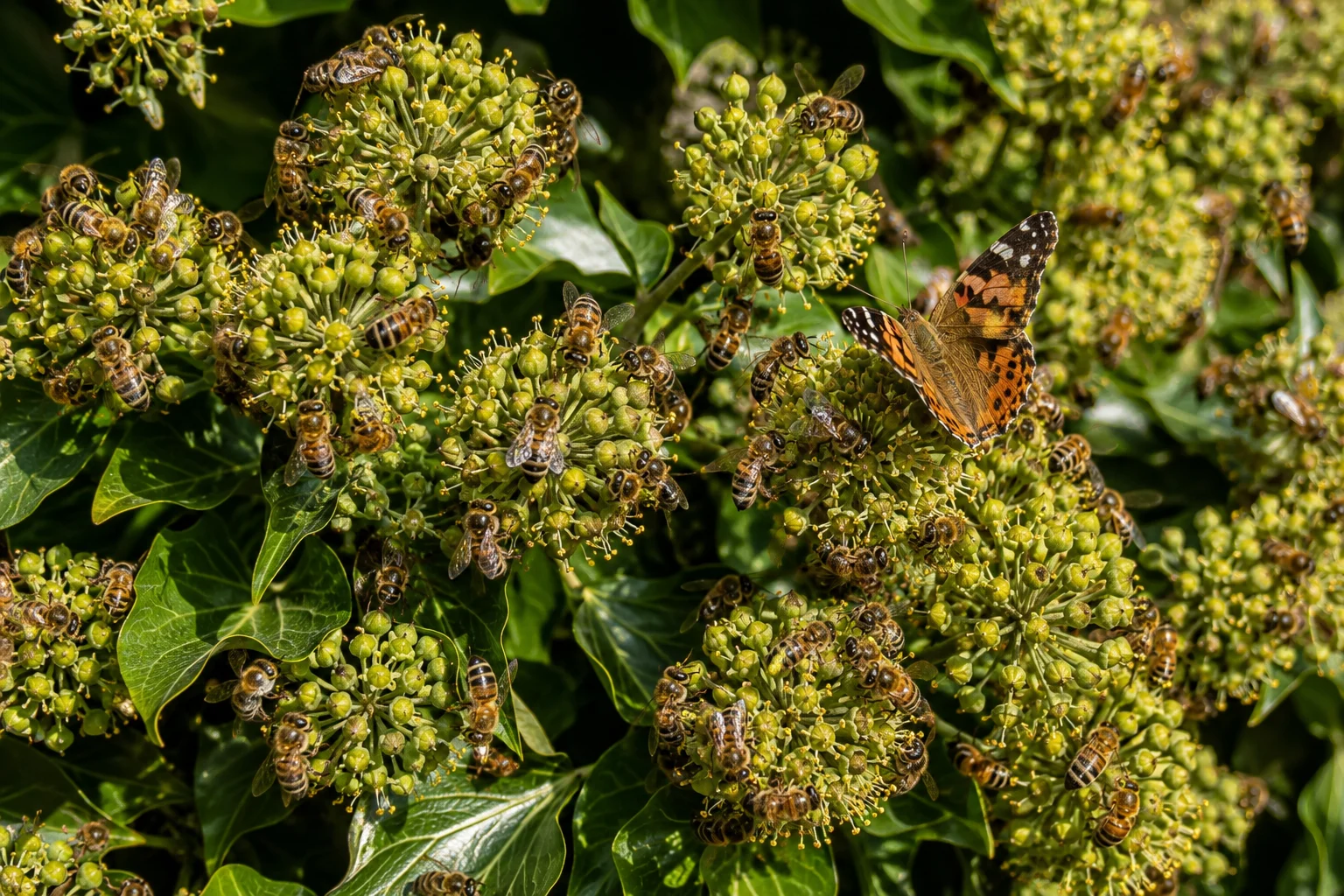
20. Flowering Ivy (Hedera helix)
According to the Royal Horticultural Society’s research on plants for pollinators, mature ivy is an absolute superhero of the shade garden.
- Why Bees Love It: Ivy only produces flowers on its mature, woody growth. In late autumn, these greenish-yellow flower clusters drip with nectar, providing a massive final feast for overwintering bees.
- Growing Tips: Allow ivy to mature and flower on sturdy brick walls or dedicated fences where it can be managed safely.
Designing a Multi-Layered Woodland Border
Now that you have your plant list, how do you arrange them so they look intentional rather than messy? The secret to woodland design is vertical layering.
In nature, a forest has a canopy, an understory, a shrub layer, and a ground cover layer. By utilizing these shade plants to combine small trees, structural shrubs, perennials, and groundcovers into a multi-layered boundary hedgerow, you create incredible visual depth and a long, uninterrupted bloom sequence.
Plant in bold drifts rather than single dots, leave the fallen autumn leaves to protect the soil, and mix different foliage textures (like fern fronds next to leathery hellebore leaves) to keep the garden visually interesting even when the flowers have faded.
Conclusion
A shady yard is not a limitation; it is an invitation to explore a completely different, deeply rewarding style of gardening. By embracing the woodland edge and planting shade-tolerant powerhouses like foxgloves, bugleweed, and snowdrops, you can turn dark, neglected corners into vibrant, life-sustaining habitats. Your local bees, moths, and butterflies will thank you for the cool, sheltered forage, and you will finally have the colorful backyard oasis you have always wanted.