
Most gardens wake up too late for bees.
That is the brutal truth. People plant for May, June, and July because that is when the garden looks pretty to humans. But bees do not start needing food when your borders look Instagram-ready. They need nectar and pollen as soon as mild spring weather pulls them out of winter survival mode.
That is where spring bulbs for bees become one of the smartest autumn planting jobs you can do.
Plant the right bulbs in autumn, and by late winter or early spring, your garden can offer food before the main perennials, herbs, hedges, and fruit trees fully wake up. This guide will show you which bulbs are actually useful, where to plant them, how to avoid wasting money, and how to build a spring bloom sequence that supports honey bees, bumblebees, solitary bees, and other early pollinators.
Why Autumn Bulb Planting Matters for Spring Bees
Spring bulbs are not just decoration. They are stored energy buried in the ground.
When planted in autumn, many spring-flowering bulbs develop roots before winter, sit quietly through the cold, then push up flowers when the garden still looks bare. The Royal Horticultural Society notes that spring-flowering bulbs are usually planted in autumn, with many types going in during September and October and tulips later in October and November. RHS guide to growing bulbs
For bees, that timing matters because early spring is often a food bottleneck. A few warm days can trigger foraging, but if there are no flowers open, the garden is useless. A colony may look active, and queen bumblebees may be searching, but without accessible flowers, your space is basically empty real estate.
A good bulb planting plan helps provide:
- Early nectar for energy
- Early pollen for brood rearing and bee development
- Repeated bloom from late winter into late spring
- Low-maintenance forage that returns each year
- Food in small spaces, including lawns, pots, patios, and borders
University of Maryland Extension recommends pollinator gardens include plants with overlapping bloom periods to provide nectar and pollen for as long as possible, while also avoiding pesticides. University of Maryland Extension pollinator garden guidance
That is the goal here: not one pretty clump of flowers, but a working spring feeding system.
The Best Spring Bulbs for Bees to Plant in Autumn
Not every spring bulb is equally useful. Some are beautiful but poor forage. Some are so double, frilly, or closed that bees struggle to access them. Some bloom too late to solve the early-season gap.
Here are the bulbs worth prioritizing.
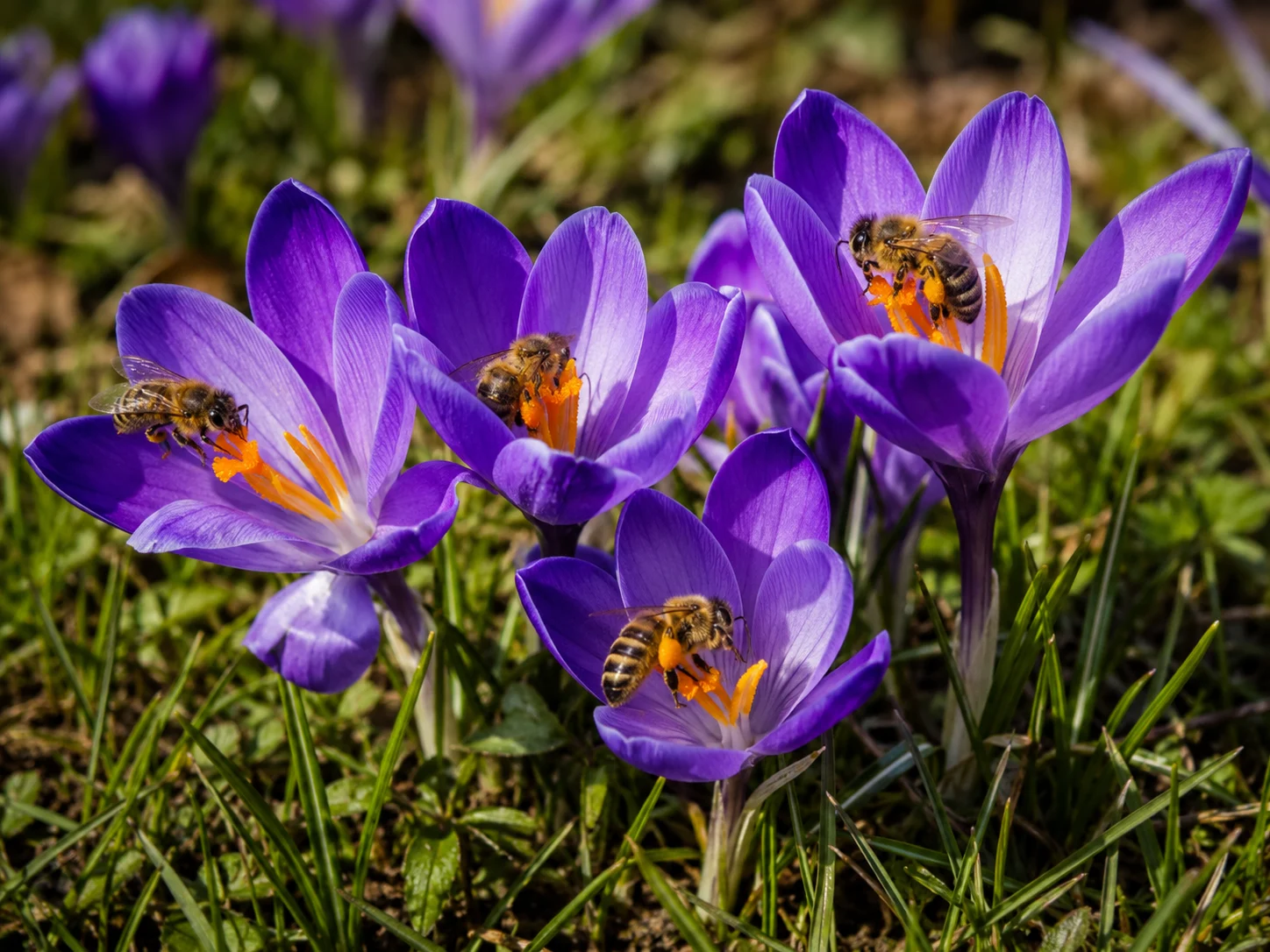
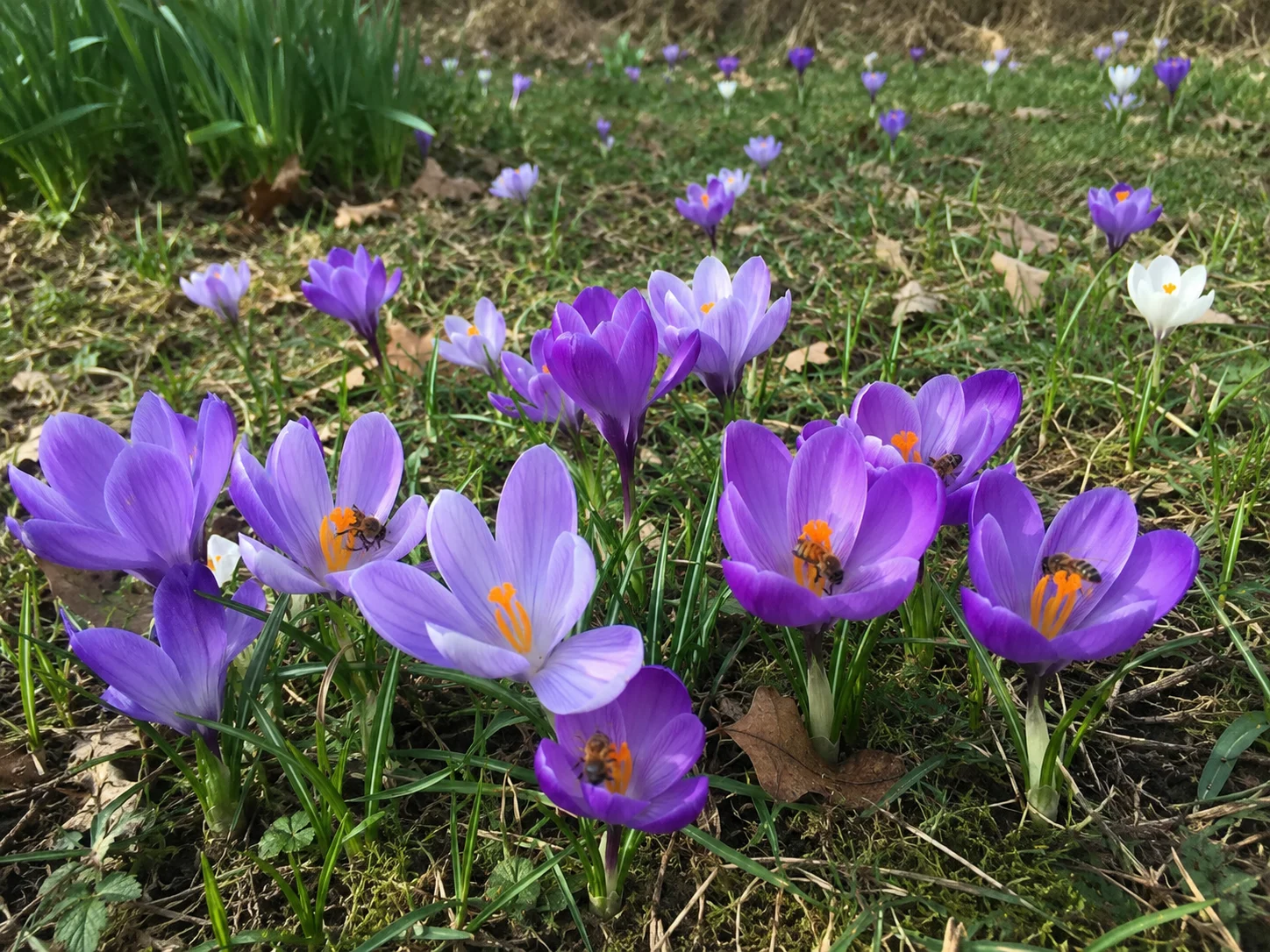
1. Crocus: The Classic Early Bee Bulb
If you only plant one bulb for early bees, start with crocus.
Crocuses are low, tough, cheerful, and often among the first flowers visited on mild spring days. They work well in lawns, under deciduous trees, along path edges, in sunny borders, and in containers.
Best uses:
- Plant in large drifts, not tiny groups of three.
- Mix purple, white, and yellow varieties for visual impact.
- Plant near hive areas, patios, and sunny lawn edges.
- Let foliage die back naturally before mowing.
The mistake is planting ten crocus bulbs and expecting a bee buffet. That is weak. Plant 50, 100, or more if you want the patch to matter.
2. Snowdrops: Very Early Flowers for Mild Winter Days
Snowdrops are small, but they are valuable because they bloom when almost nothing else is awake.
They are especially useful under deciduous trees, near hedges, around shrub bases, or in lightly shaded garden edges. Bees will not use them every day because cold weather limits bee flight, but during mild spells, snowdrops can become important early forage.
Tips:
- Plant snowdrops in groups under trees or shrubs.
- Consider buying them “in the green” after flowering if dormant bulbs fail for you.
- Combine them with crocus and winter aconite for a stronger early patch.
Snowdrops are not a full solution by themselves. They are the opening act.
3. Winter Aconite: Tiny Yellow Flowers That Wake Up the Border
Winter aconite produces small yellow flowers very early, often close to snowdrop season. It is useful because bees are strongly drawn to accessible yellow flowers in early spring.
Use it in:
- Woodland edges
- Under deciduous shrubs
- Fronts of borders
- Informal lawns
- Areas that stay slightly moist but not waterlogged
It can naturalize where it is happy, which means the patch improves over time instead of needing complete replanting every year.
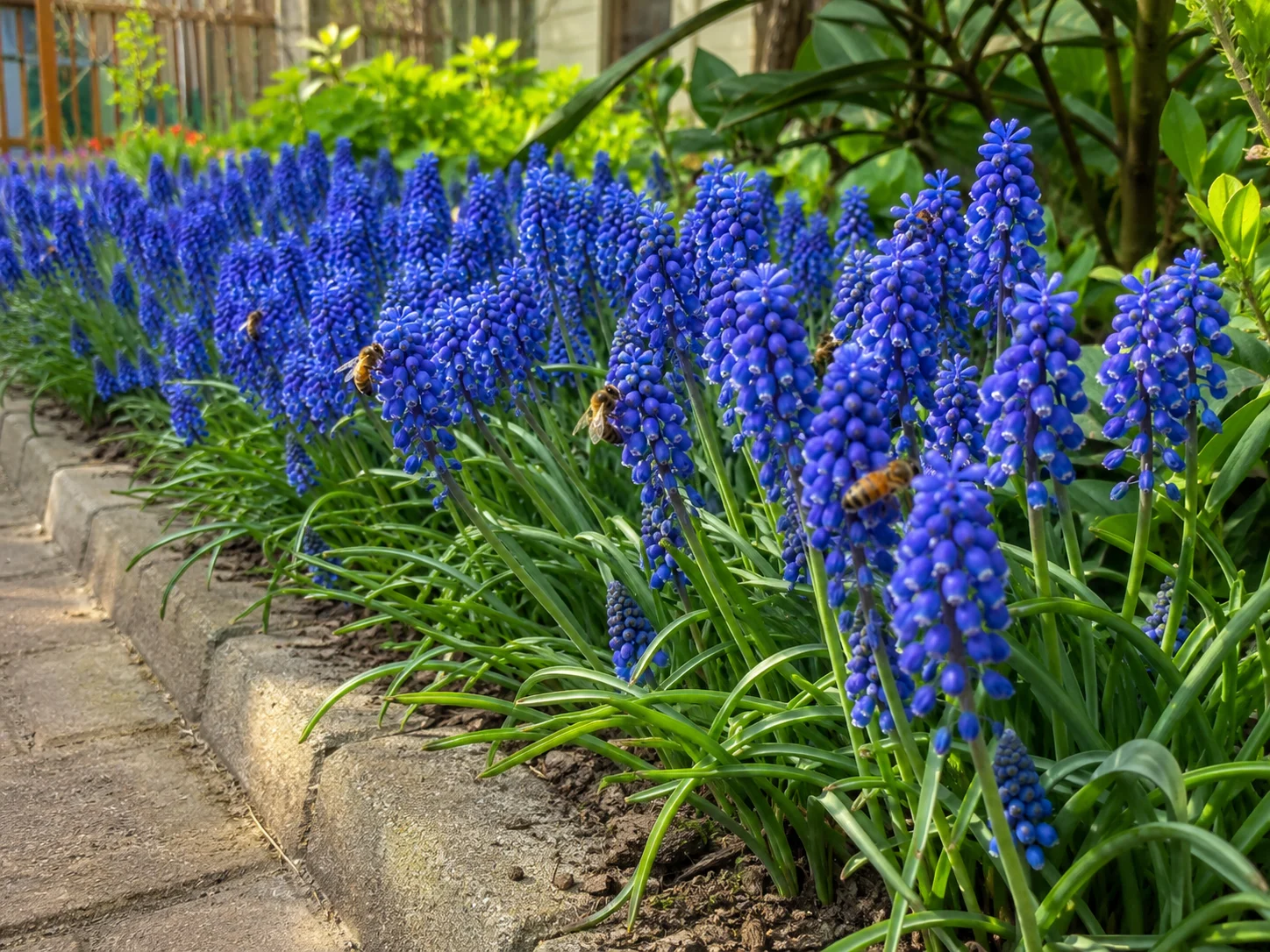
4. Grape Hyacinth: Easy, Tough, and Bee-Friendly
Grape hyacinth — also called Muscari — is one of the easiest spring bulbs for beginners.
It produces dense blue or purple flower spikes that bees often visit. It is tough, affordable, and works in containers as well as borders. It can spread, so do not place it where you want a very controlled, formal look.
Good planting spots:
- Front of sunny borders
- Around young fruit trees
- Patio containers
- Pollinator bed edges
- Between later-emerging perennials
build a simple beginner pollinator garden around spring, summer, and autumn bloom
Muscari is especially useful because it bridges the gap between the earliest crocus/snowdrop phase and the stronger mid-spring bloom.
5. Species Tulips: Better Than Fancy Hybrid Tulips
Most people think tulips first. That is where they go wrong.
Big show tulips are often bred for human drama, not bee access. Some are useful, but many are not the strongest choice if your main goal is feeding pollinators.
Instead, look at species tulips or simpler open-flowered tulips. They are usually smaller, more natural-looking, and better suited to pollinator planting than giant double tulips.
Choose:
- Open, single-flowered tulips
- Species tulips such as Tulipa tarda or Tulipa turkestanica
- Varieties that return more reliably than heavily bred bedding tulips
Avoid:
- Very double tulips
- Overly frilled varieties
- Tulips used as one-season disposable bedding
Your garden is not a showroom. It is supposed to feed insects. Do not waste the whole bulb budget on flowers bees can barely use.
6. Daffodils: Good Structure, Mixed Bee Value
Daffodils are reliable, deer-resistant, and excellent for spring structure. Their value to bees can vary depending on the variety and flower form, but they still deserve a place in a bee-friendly spring garden.
For better pollinator access, choose:
- Smaller daffodils
- Simple open forms
- Early and mid-season varieties
- Naturalizing types
Daffodils are especially useful in grass, under trees, and along fence lines where you want repeat spring color with low maintenance.
Just remember: daffodils are not enough. Pair them with crocus, muscari, snowdrops, and later alliums.
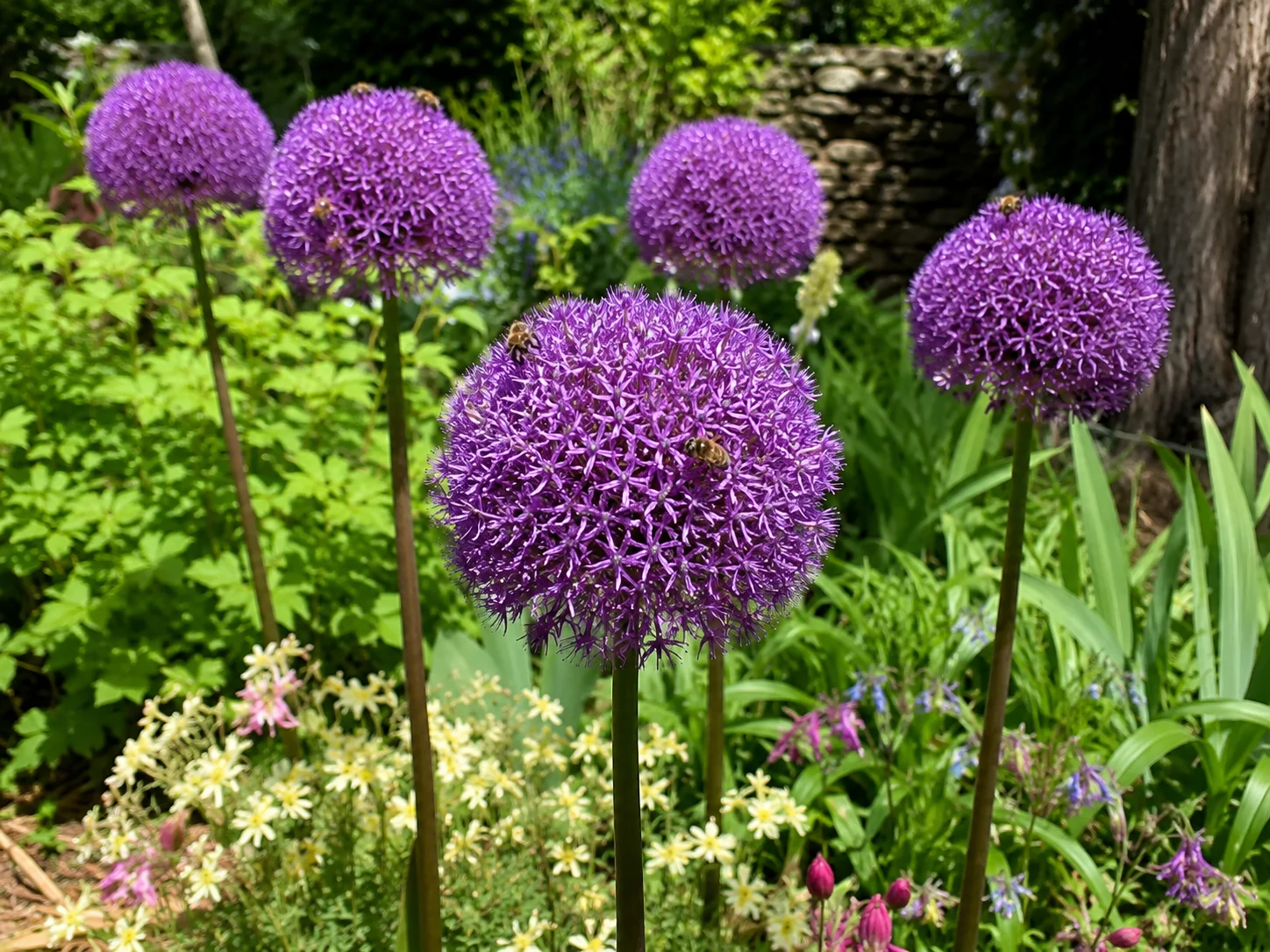
7. Alliums: Late Spring Bulbs Bees Love
Alliums bloom later than crocus and snowdrops, but they are excellent for extending the spring feeding window.
Their globe-shaped flower heads are highly attractive to bees, and they create strong vertical structure in the garden. Plant them through perennial beds so they rise above fresh spring foliage.
Best uses:
- Sunny borders
- Pollinator beds
- Cottage-style gardens
- Around herbs and perennials
- Near vegetable gardens
Alliums are not your early emergency food. They are the bridge into late spring and early summer.
8. Camassia: A Strong Choice for Damp Spring Soil
If your garden has heavier or slightly damp soil, camassia can be a smarter choice than bulbs that hate moisture.
It produces tall starry flowers in blue, purple, or white and is often attractive to pollinators. It works well in meadow-style areas, damp lawns, and naturalistic borders.
Use camassia where you want the spring bulb display to continue after the earliest flowers fade.
How to Plant Spring Bulbs for Bees Without Wasting Money
A bad bulb planting plan is easy to spot: one bag of mixed bulbs scattered randomly across a bed. It looks hopeful in autumn and pathetic in spring.
Plant like you mean it.
Plant in Useful Clumps, Not Lonely Dots
Bees forage efficiently. A single flower here and another five feet away is not ideal. Plant bulbs in generous clusters so bees can move from bloom to bloom without wasting energy.
Better planting pattern:
- 25–50 crocus in one sunny lawn patch
- 15–25 muscari near a border edge
- 10–15 snowdrops under a shrub
- 7–11 alliums repeated through a sunny bed
- 20+ species tulips in a warm, dry border
The goal is not random color. The goal is visible, concentrated forage.
Use a Bloom Relay
A strong spring bulb plan should move in stages:
- Late winter to very early spring: snowdrops, winter aconite, early crocus
- Early to mid-spring: crocus, dwarf iris, early daffodils
- Mid-spring: muscari, species tulips, more daffodils
- Late spring: alliums, camassia, later tulips
This gives bees a longer feeding season instead of one short burst.
plan flowers that feed bees through the whole season
Match Bulbs to the Right Place
Do not force bulbs into bad conditions. That is amateur gardening.
Use this simple rule:
- Sunny, dry, well-drained soil: crocus, species tulips, alliums
- Light shade under deciduous trees: snowdrops, crocus, winter aconite
- Border edges and containers: muscari, dwarf iris, crocus
- Slightly damp meadow-style areas: camassia
- Grass/lawn areas: crocus, daffodils, snowdrops, camassia where suitable
Most bulbs hate sitting in cold, wet soil. If your ground is heavy clay, improve drainage or use containers.
Can You Plant Spring Bulbs for Bees in Containers?
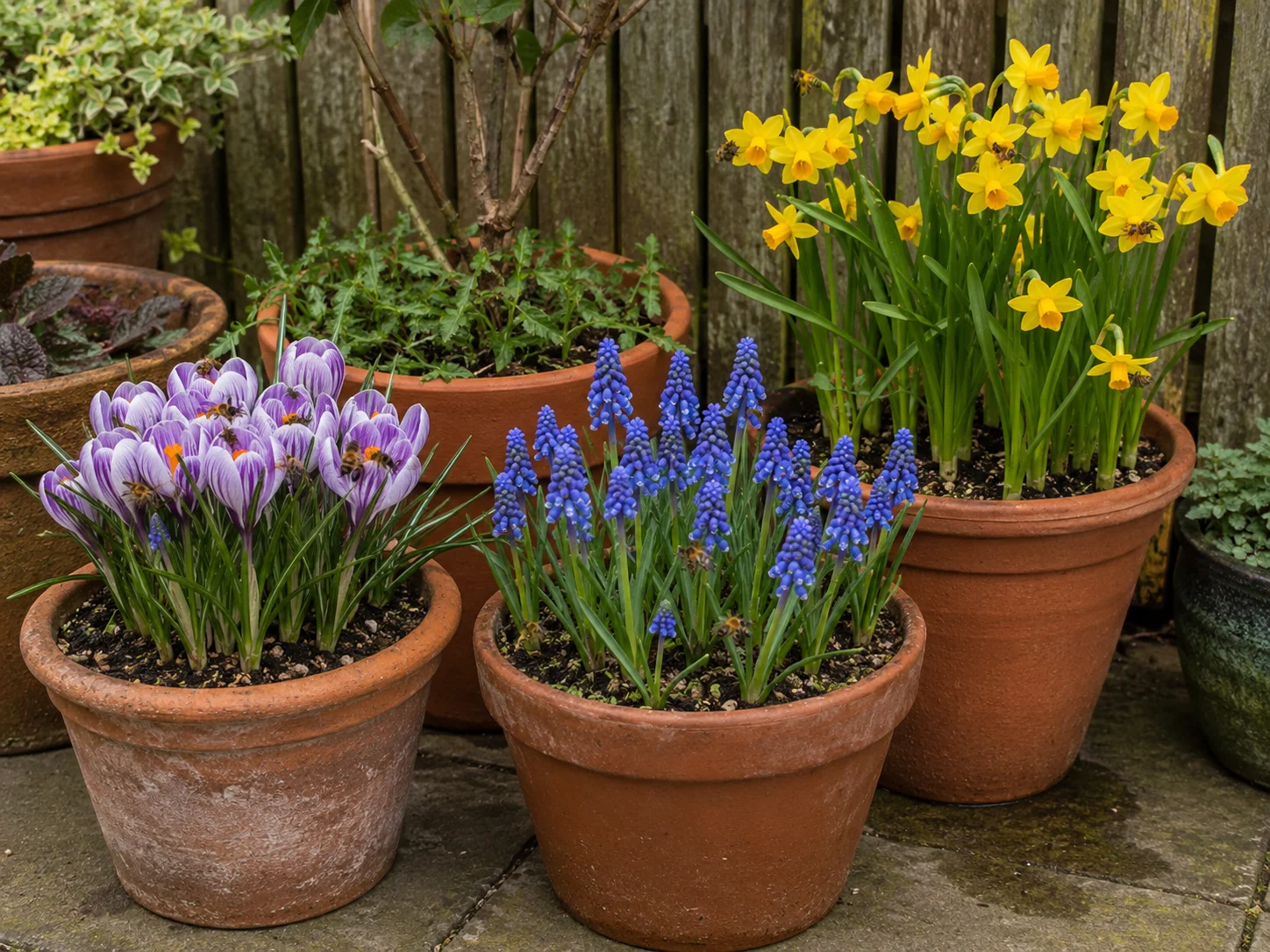
Yes — and this is one of the easiest wins for small spaces.
A balcony, patio, doorstep, or small backyard can still offer early bee forage. Use wide containers rather than tiny decorative pots that dry out quickly or freeze hard.
Good container combinations:
Early Spring Bee Pot
- Crocus
- Snowdrops
- Miniature daffodils
- Muscari
Late Spring Bee Pot
- Muscari
- Species tulips
- Alliums
- Compact perennials for later bloom
Container tips:
- Use drainage holes.
- Use peat-free multipurpose compost mixed with grit if needed.
- Plant bulbs in layers if the pot is deep enough.
- Keep compost slightly moist, not soggy.
- Move pots into sun when shoots appear.
- Avoid pesticide-treated bulbs and compost additives where possible.
create a container pollinator garden for balconies and patios
Aftercare: What to Do After the Flowers Fade
This is where many people ruin next year’s display.
After spring bulbs flower, the leaves need time to feed the bulb for the following year. If you cut the leaves too early, tie them in knots, or mow them while still green, you weaken the bulb.
Do this instead:
- Let foliage yellow naturally.
- Wait roughly six weeks after flowering before cutting back many bulb leaves.
- Deadhead larger bulbs if you do not want seed production.
- Keep spring containers watered while leaves are active.
- Feed container bulbs lightly if you want them to return.
- Do not mow naturalized lawn bulbs until leaves have died back.
If the dying foliage annoys you, plant bulbs among emerging perennials. The new perennial leaves will hide the bulb foliage while it finishes recharging.
Common Mistakes to Avoid
Mistake 1: Planting Too Few Bulbs
Ten bulbs is decoration. A proper bee patch needs density.
Buy fewer varieties and more of each. A strong patch of crocus beats a confused mix of random bulbs.
Mistake 2: Choosing Double Flowers
Double flowers may look impressive, but many are less useful to bees because the nectar and pollen can be harder to reach.
Choose simple, open flowers whenever pollinator value matters.
Mistake 3: Forgetting the Earliest Window
Alliums are great, but they bloom too late to solve the early spring food gap. You still need crocus, snowdrops, winter aconite, or other early flowers.
Mistake 4: Using Pesticides Around Bulb Areas
This should be obvious, but people still do it. If you are planting for bees, avoid pesticides in and around the planting area. A “bee garden” treated like a chemical battlefield is a joke.
Mistake 5: Cleaning the Garden Too Hard
Early bulbs work even better when the rest of the garden also supports overwintering insects. Leave some stems, leaves, and quiet corners through winter instead of stripping every bed bare.
avoid the fall cleanup mistake that removes winter bee habitat
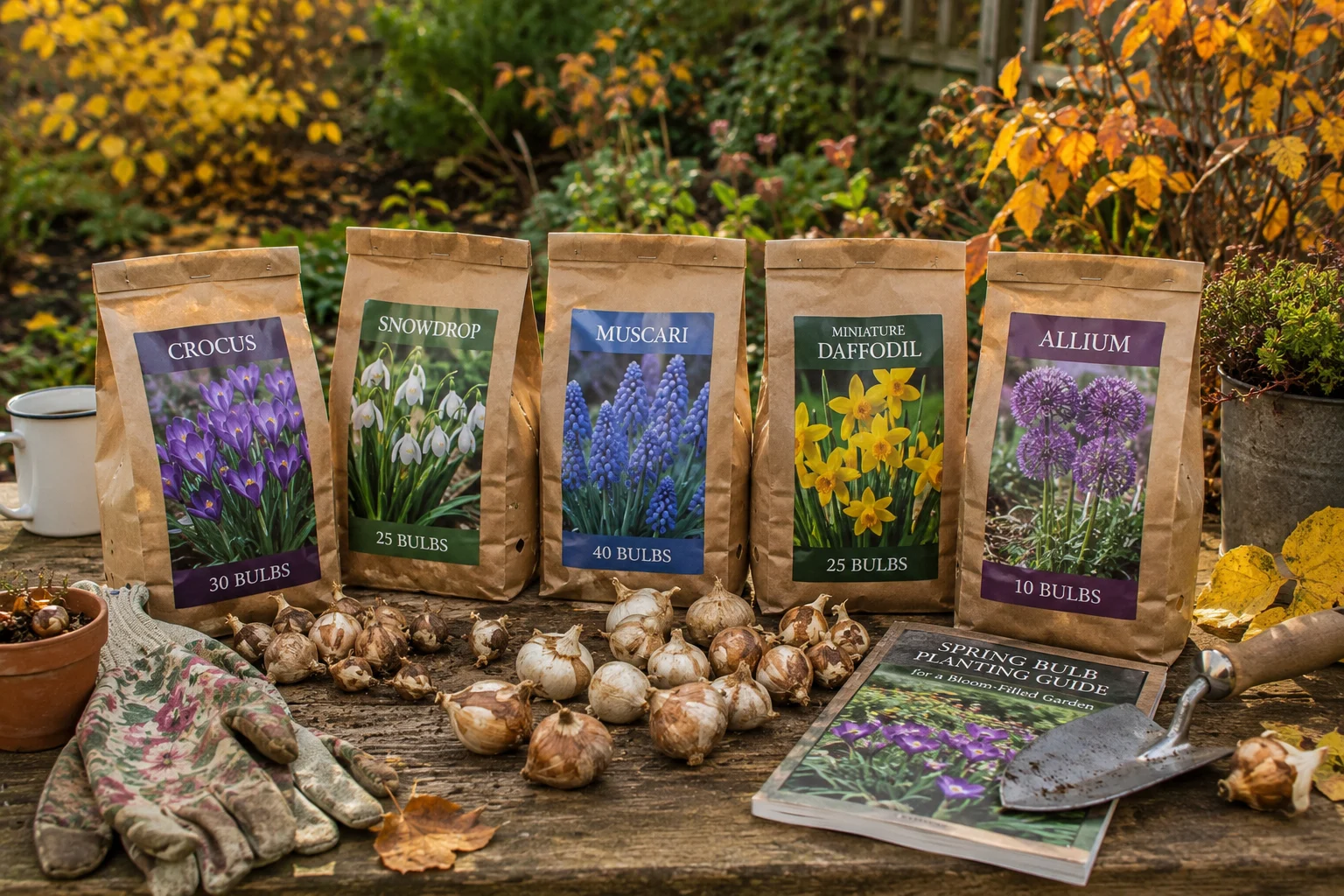
A Simple Autumn Bulb Shopping List for Bees
For a beginner-friendly garden, start with this:
- 50 crocus for lawn edges or sunny borders
- 25 snowdrops for light shade
- 25 muscari for border fronts or containers
- 15 miniature daffodils for structure and repeat bloom
- 10 species tulips for open sunny spots
- 10 alliums for late spring nectar
- 10 camassia if you have a damp meadow-style area
If the budget is tight, skip the fancy tulips first. Prioritize crocus, snowdrops, muscari, and alliums. Those will do more useful work for bees.
[Image: | Alt text: ]
Conclusion: Plant Autumn Bulbs Now, Feed Spring Bees Later
Spring bee support starts months before spring.
If you wait until the bees are already flying, you are late. The smarter move is to plant spring bulbs for bees in autumn, while the soil is still workable and the bulbs have time to settle in.
Start with early crocus, snowdrops, and winter aconite. Add muscari and simple daffodils for mid-spring. Finish the sequence with alliums and camassia. Plant them in real clumps, avoid double flowers, keep pesticides out of the area, and let the foliage die back naturally.
That is how a normal garden becomes useful before the rest of the neighborhood has even started thinking about flowers.
Ready to make your bee garden more than just pretty? Explore the honeyroadblog.com shopping page for high-quality beekeeping supplies, whether you are starting your first apiary, improving your backyard hive setup, or upgrading the gear that keeps your bees healthy through every season.