
Most beekeeping books spend chapters on winter losses. Far fewer give summer heat the attention it deserves — which is a problem, because a heatwave can kill or seriously damage a colony in a matter of days.
Here’s what happens when a hive gets too hot: the wax combs soften and sag. Brood dies. The queen stops laying. Bees abandon normal foraging duties to become full-time water carriers and fanning machines, burning through energy and stores at an alarming rate. In extreme cases — particularly in dark-coloured hives with no ventilation in direct sun — entire combs collapse under their own weight, drowning brood and bees in a catastrophic cascade of honey and wax.
This isn’t a rare edge case. With summers becoming hotter and longer across both Europe and North America, hive overheating is one of the most underappreciated threats in modern beekeeping.
This guide covers everything you need to protect your colonies — from the biology of why bees struggle with heat, to the practical steps any beekeeper can take right now: ventilation, shade, water, mesh floors, and the warning signs that tell you a hive is already in trouble.
Why Bees Struggle With Heat — The Biology
To understand the problem, you need to understand what bees are trying to maintain inside the hive.
The brood nest must be kept at exactly 34–35°C (93–95°F). This is non-negotiable. Drop below it and brood development slows. Exceed it consistently and brood dies. Bees have evolved sophisticated mechanisms to hold this temperature with remarkable precision — but those mechanisms have limits, and a sustained heatwave pushes hard against them.
On a hot day, bees manage hive temperature through two primary strategies:
- Fanning — Bees at the entrance and throughout the hive beat their wings in coordinated chains to move air through the colony, creating evaporative cooling. A large portion of the foraging workforce can be redirected entirely to fanning duty during a heatwave.
- Water evaporation — Bees collect water and spread it in thin films over the comb and cell cappings. As it evaporates, it pulls heat out of the brood area. This is essentially the same principle as sweating — or an air conditioning unit.
Both strategies have a critical weakness: they require enormous energy and workforce. A colony running full cooling operations is a colony that isn’t foraging, isn’t building comb, and isn’t raising brood efficiently. Prolonged heatwaves don’t just risk killing bees directly — they quietly drain the colony’s productive capacity for weeks afterward.
There’s a second threat that’s less dramatic but equally serious: wax melting. Beeswax begins to soften at around 40°C (104°F) and can reach structural failure point during extreme heat, especially in a poorly ventilated, dark-coloured hive in full sun. A comb collapse mid-summer is one of the most demoralizing events in beekeeping — and almost entirely preventable.
Warning Signs: Is Your Hive Already Overheating?
Before getting into prevention, know what to look for. These signs tell you a hive is under heat stress right now:
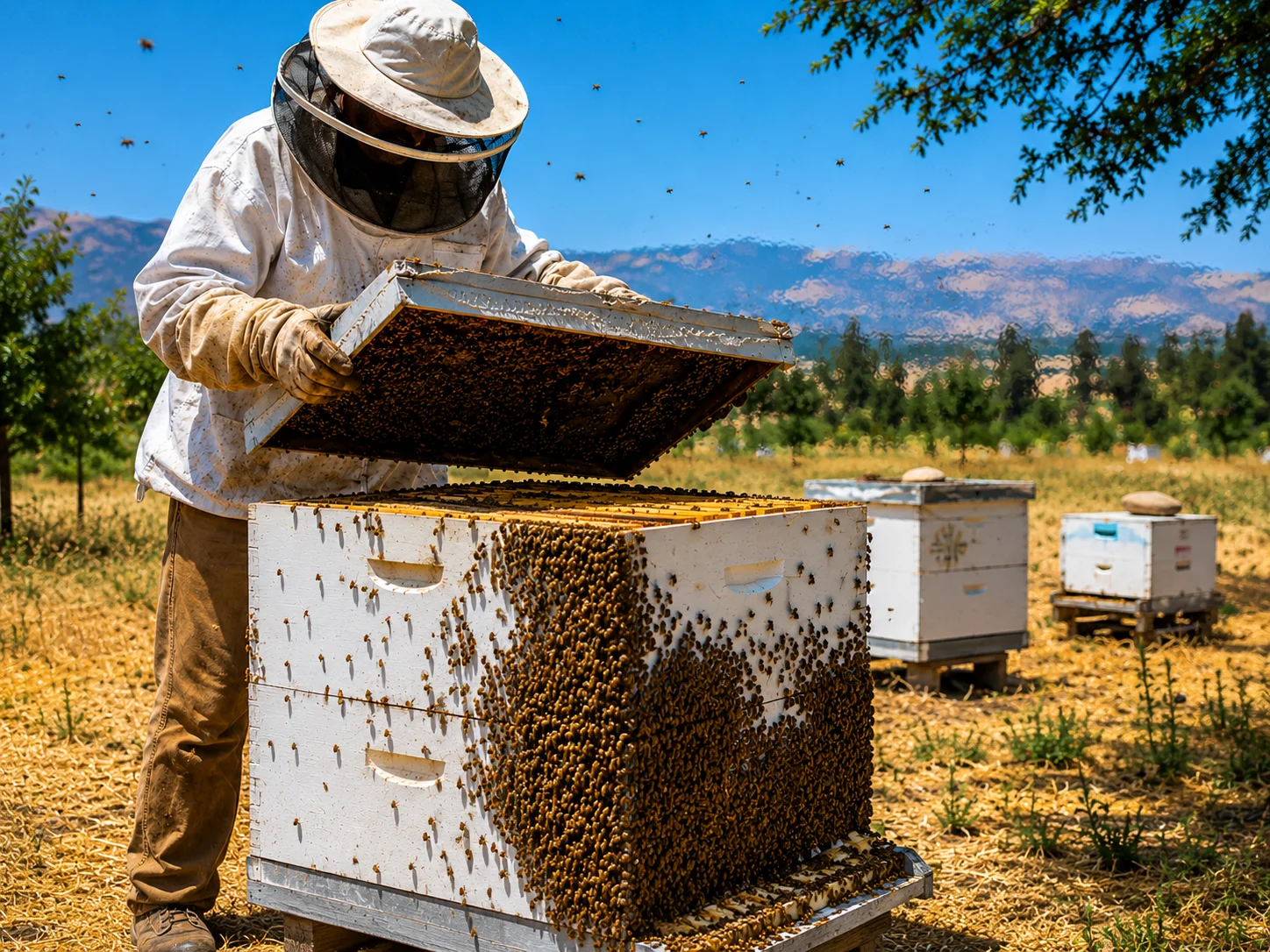
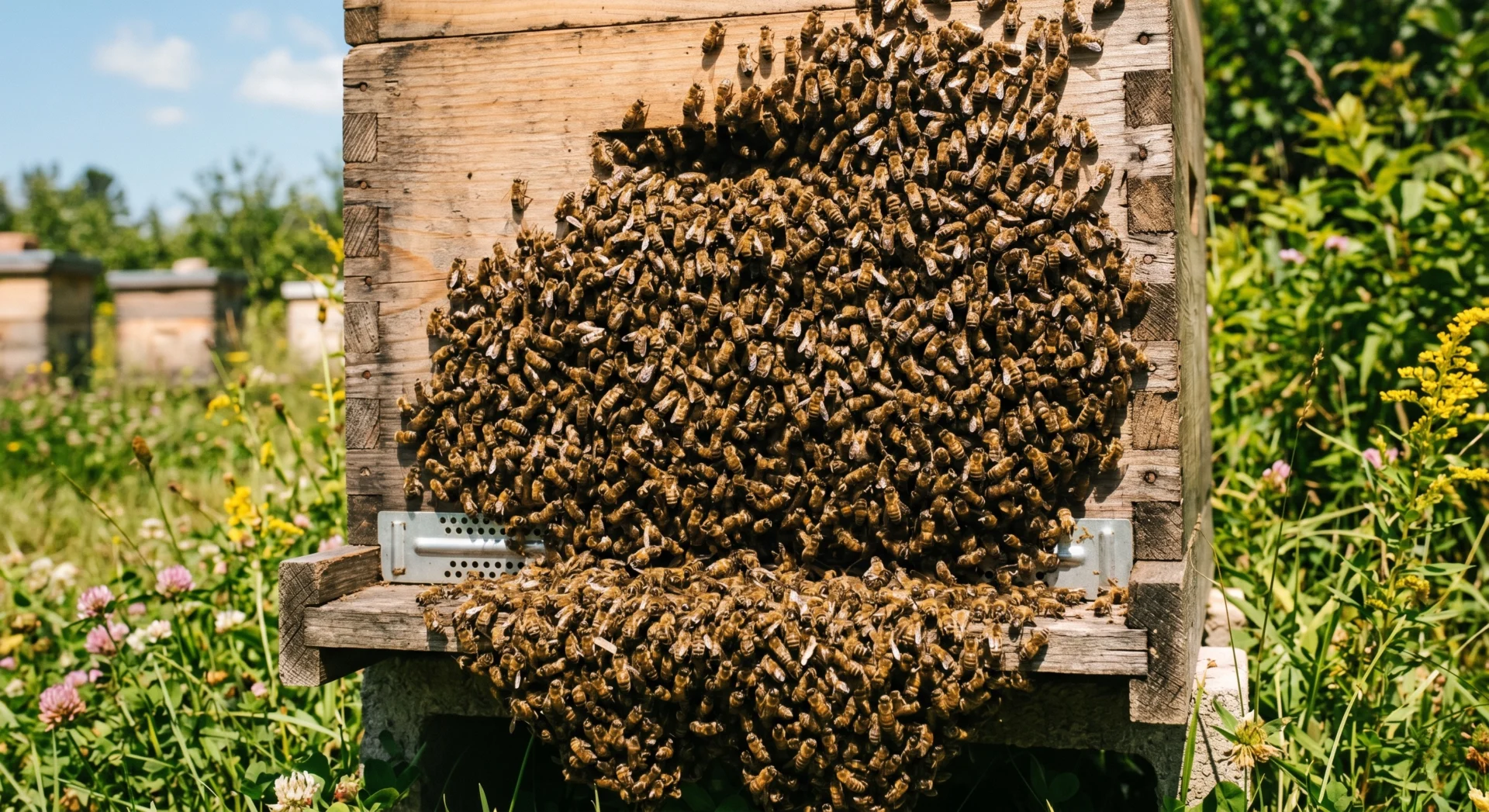
- Bearding — Large clusters of bees hanging on the outside of the hive, especially on the front and sides. Some bearding is normal on warm nights, but a dense, persistent beard during the day is a strong heat stress signal.
- Bees fanning at the entrance — A line of bees facing outward at the landing board, wings beating rapidly. Again, some fanning is normal, but a thick wall of fanners is a sign the colony is struggling to cool itself.
- Unusual aggression — Overheated colonies are often more defensive than usual. If your normally calm hive is acting irritably during a hot spell, temperature stress may be a factor.
- Reduced foraging activity — If you notice fewer bees coming and going than you’d expect on a warm day, it may be because much of the workforce has been reassigned to cooling duty.
- Water foragers at unusual sources — Bees desperately collecting water from garden ponds, puddles, pet bowls, or damp soil nearby, in unusually high numbers.
- Wax softening or comb sagging — Visible during inspection. Combs that feel soft or look slightly distorted in the frame are a serious warning sign.
If you’re seeing two or more of these together during a heatwave, act immediately.
Prevention Strategy 1: Shade — The Most Impactful Single Change
If you do only one thing from this guide, make it this: get your hives out of full afternoon sun.
Morning sun is generally fine — it warms the hive gently, encourages early foraging, and helps the colony get productive quickly. It’s the afternoon sun, particularly from 1pm–6pm when solar radiation peaks, that causes the most damage.
Ideal Hive Positioning for Summer
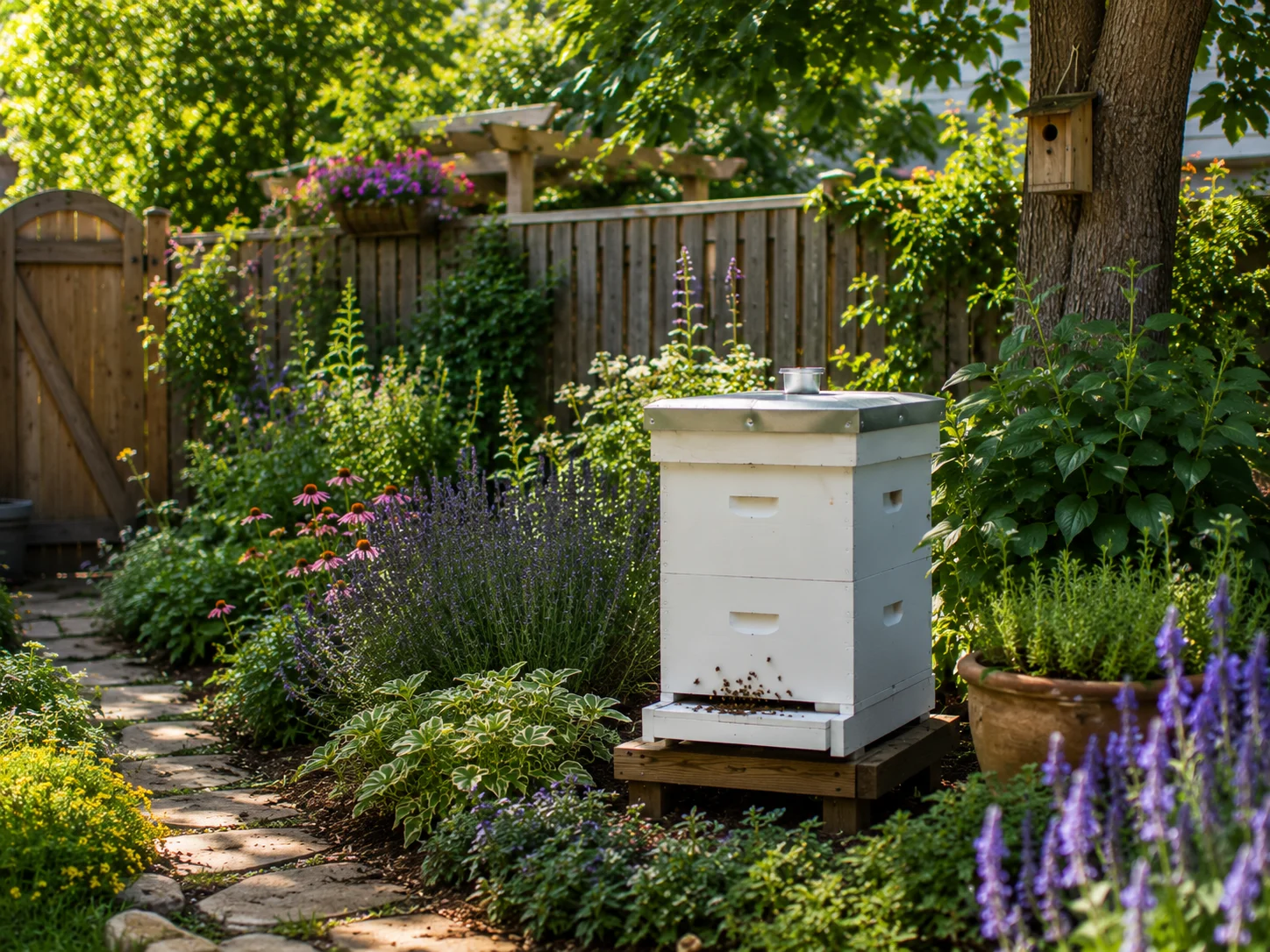
- Morning sun, afternoon shade — The classic recommendation. East-facing hives catch the early warmth and are shielded from the brutal afternoon heat.
- Dappled shade — Hives under the light canopy of a deciduous tree get natural temperature regulation. The leaves filter direct radiation without blocking airflow.
- Avoid enclosed heat traps — A hive in a south-facing corner surrounded by walls, fences, or dense hedging on three sides can become an oven. Heat reflects off surfaces and accumulates with no escape.
Temporary Shade Solutions for Heatwaves
If your hives are already positioned in full sun and you can’t move them mid-season, improvise:
- Shade cloth (50–70% block) draped loosely over the roof — leave a gap for airflow, don’t wrap tightly
- A sheet of plywood propped at an angle to cast a shadow over the hive while not trapping heat
- Hessian sacking dampened with water and draped over the roof — evaporative cooling from the outside works surprisingly well
- Relocating supers — if a colony is particularly strong and the hive very tall, temporarily removing a super reduces the internal volume that needs cooling
We’ve covered hive placement in depth in the context of apiary design — the full guide to positioning hives for sun, shade, wind, and flight paths across the seasons. Getting placement right from the start is far easier than retrofitting shade solutions mid-heatwave.
Prevention Strategy 2: Ventilation — Let the Air Move
Shade reduces heat input. Ventilation removes heat that has already built up inside the hive. Both are necessary — neither alone is sufficient in a serious heatwave.
Open the Entrance Fully
This sounds obvious but is often overlooked: during summer, the entrance reducer should be completely removed or set to its maximum opening. A restricted entrance during a heatwave forces bees to fan harder for less airflow, like trying to cool a room with the window barely cracked.
Roof and Crown Board Ventilation
Heat rises. A hive with no upper ventilation traps rising hot air inside the brood box with nowhere to go. Options for upper ventilation:
- Ventilated crown board — Many crown boards have a central hole or slot. Ensure it’s open and not covered with a travelling screen or insulation during summer.
- Propped roof — On extremely hot days, slightly propping the back of the roof with a small piece of wood (1–2cm gap) creates a chimney effect — cool air enters at the bottom, hot air escapes at the top. Simple and effective.
- Dedicated ventilation holes — Some hive designs include upper ventilation ports. If yours doesn’t, this is worth considering for next season’s setup.
Super Positioning as an Airflow Gap
If you’re running supers, the interface between boxes naturally creates some airflow opportunities. Ensure frames are not propolised solid at the edges — bees will seal every gap they can, including ventilation gaps, and may need gentle encouragement with the hive tool to keep airflow paths open.
Prevention Strategy 3: Mesh Floors — A Game Changer for Summer
This is where experienced beekeepers can significantly upgrade their summer management, and where beginners should seriously consider their floor choice from the start.
A solid floor traps heat. There is no airflow from below, and in a hot hive, the floor becomes a radiator — absorbing and re-emitting heat into the brood box from underneath.
A mesh (open) floor solves this elegantly. The wire mesh allows continuous passive airflow through the base of the hive, pulling cooler air up through the brood nest and venting hot air through the top. Studies from the Scottish Agricultural College’s apiculture research have shown mesh floors also contribute meaningfully to varroa monitoring and reduction — so switching has dual benefits.
Mesh Floor Practicalities
- In summer: Remove or slide out the inspection board entirely — full open mesh, maximum airflow
- In winter: Slide the inspection board back in to block cold draughts from below
- Retrofitting: Mesh floors are available for all standard hive types (Langstroth, National, WBC, Dadant) and are a straightforward swap — no structural changes to the hive required
- Cost: Typically £20–£40 / $25–$50 depending on hive type — one of the highest-value single upgrades for summer management
If you’re running solid floors and experiencing heat stress issues, switching to mesh is the single most impactful equipment change you can make.
Prevention Strategy 4: Water — The Most Overlooked Factor
This is the one that catches the most beginners off guard, because it’s not about the hive itself — it’s about what’s around it.
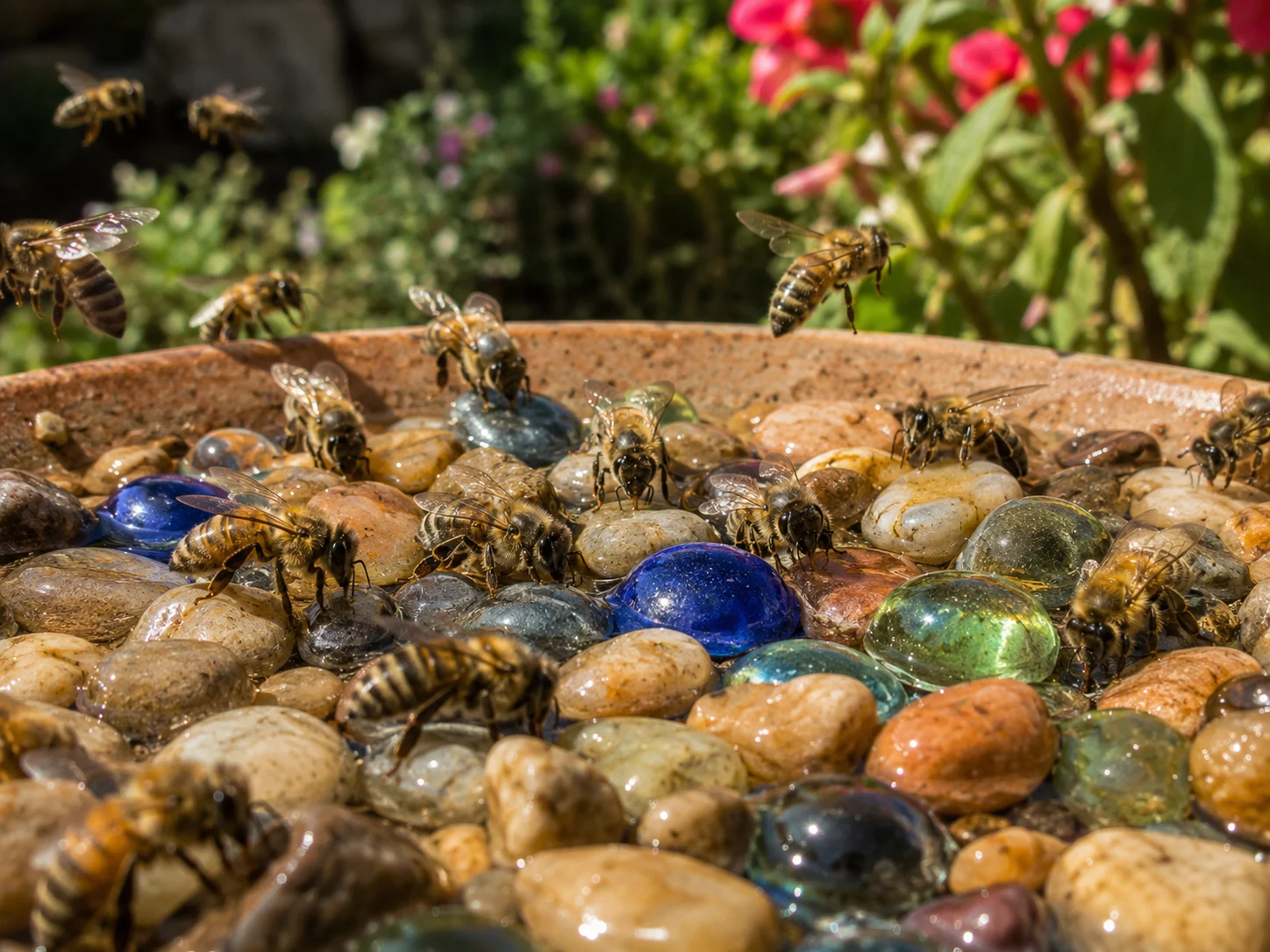
Bees need significant quantities of water during a heatwave. A colony managing heat stress can collect water almost continuously throughout the day, with hundreds of dedicated water foragers making trip after trip. If there’s no reliable water source close to the apiary, bees will travel further — burning energy, risking losses, and sometimes finding water in places your neighbours won’t appreciate (swimming pools, gutters, pet water bowls).
Setting Up a Water Source
- Location: Within 10 metres of the hive if possible. Once bees establish a water source habit, they’re loyal to it — so establish yours early in spring before they find something less convenient.
- Landing surfaces: Bees can’t swim and will drown in open water. Fill a shallow dish, bucket, or birdbath with marbles, cork floats, pebbles, or wooden skewers so bees have a dry surface to land on while drinking.
- Running water: If you can create a slow drip or trickle, bees are strongly attracted to moving water and damp surfaces. A hose dripping onto a stone or a mossy surface works very well.
- Shaded water: Water in direct sun evaporates quickly and gets too warm. Keep your water source in partial shade and refresh it daily during a heatwave.
- Don’t move it: Once bees have found and committed to a water source, moving it even a few metres confuses foragers. Establish it in its permanent position from the start of the season.
A reliable water source within the apiary isn’t a luxury — during a serious heatwave it’s as critical as having enough honey stores.
Prevention Strategy 5: Hive Colour and Material
This is a longer-term consideration rather than an emergency fix, but worth understanding if you’re buying new equipment or painting existing hives.
Dark-coloured hives absorb significantly more solar radiation than light-coloured ones. A black or dark brown hive in full afternoon sun can reach internal temperatures dramatically higher than an identical white or pale-coloured hive in the same position.
- Best colours for summer: White, cream, pale grey, pale yellow
- Avoid: Black, dark brown, dark green — beautiful but thermally problematic in hot climates
- Material matters too: Thin plywood hives heat up faster than thick cedar or pine. If you’re in a consistently hot region, thicker walls are worth the extra weight and cost.
This doesn’t mean you need to repaint all your hives immediately — shade and ventilation have a bigger impact than colour. But if you’re starting fresh or replacing equipment, factor it in.
The Heatwave Action Checklist
When a heatwave is forecast, run through this list before temperatures peak:
48 hours before:
- [ ] Check and fully open all entrance reducers
- [ ] Ensure upper ventilation is unobstructed
- [ ] Set up or check water source — add floating surfaces if needed
- [ ] Identify any shade solutions needed for exposed hives
During the heatwave:
- [ ] Check water source daily — refill as needed
- [ ] Observe hive entrance morning and evening for bearding and fanning intensity
- [ ] Do not open hives during peak heat (11am–4pm) — inspect early morning only
- [ ] Consider propping roof slightly on the hottest days
- [ ] If using solid floors, slide out inspection board fully
After the heatwave:
- [ ] Inspect for signs of comb damage or brood loss
- [ ] Check stores — cooling operations consume significant reserves
- [ ] Assess whether the nectar dearth that often follows hot spells has affected stores — how the summer nectar crash affects colony stores and how to manage feeding
A Note for Experienced Beekeepers: Heat and Varroa Interact
One thing that’s easy to miss in the focus on immediate heat management: summer heat stress and varroa pressure compound each other in damaging ways.
A colony under heat stress is a colony with compromised immune function, disrupted brood cycles, and potentially a partially failing queen. Introduce a high varroa load on top of that, and the colony’s ability to recover is severely diminished. The August–September varroa treatment window isn’t just about mites — it’s about ensuring your colony goes into autumn with full strength after what may have been a difficult summer.
Keep your varroa monitoring tight through summer, particularly after any heat event. The Honey Bee Health Coalition’s Varroa Management Guide is the most thorough freely available resource on monitoring thresholds and treatment timing if you want to go deeper.
Conclusion: Summer Heat Is Manageable — If You Plan for It
The beekeepers who lose colonies to summer heat are almost never the ones who prepared. The hive that gets shade, airflow, and water reliably comes through even a brutal July heat dome. The hive that doesn’t — solid floor, full afternoon sun, no water nearby, entrance half-blocked — is one prolonged heatwave away from serious trouble.
The key takeaways:
- Shade afternoon sun — morning sun is fine, afternoon sun from 1–6pm is the danger window
- Open all ventilation — entrance fully open, upper ventilation cleared, mesh floor exposed
- Install a mesh floor if you haven’t — passive airflow from below is one of the most effective and lowest-effort upgrades available
- Provide water within 10 metres — with landing surfaces, in shade, from early in the season
- Watch the warning signs — bearding, massed fanning, reduced foraging, aggressive behaviour
- Act before peak temperatures, not after
Your bees are extraordinary thermal engineers. Give them the right conditions and they’ll manage almost anything. Your job is simply to make sure those conditions are in place before the heatwave arrives.
Keep Reading 🐝
These posts from the blog pair directly with summer hive management:
- 🏡 How hive placement, sun exposure, and apiary layout affect colony health across all seasons — Get the fundamentals of positioning right from the start.
- 📅 What the summer nectar dearth means for a heat-stressed colony already burning through stores — Heat and dearth hit at the same time. This post covers the food side of the equation.
- 💀 The full biology of a bee sting — and why swarming bees are so unlikely to use it — Understanding the sting mechanism is the fastest way to dissolve the fear.
Summer beekeeping is about staying one step ahead. Keep reading, keep watching your hives, and the season will reward you. 🌻