

It is a core memory for almost everyone: you’re a child running barefoot through the grass on a hot summer day, a sudden buzzing fills your ears, you feel a sharp pinch, and panic ensues. As you cry over the swelling red welt on your foot, an adult offers the ultimate piece of backyard comfort: “Don’t worry, the bee is going to die now anyway.”
It’s meant to be a comfort—a sort of karmic justice for the sudden, burning pain of a sting. But is this famous piece of summer trivia actually true? Does a bee really sign its own death warrant the moment it decides to attack?
The short answer is yes, but not always. The science behind how and why it happens is much more gruesome, fascinating, and heroic than you might think. Furthermore, if you think all buzzing insects play by these suicidal rules, you are in for a terrifying surprise.
In this comprehensive guide, we will dive deep into the bizarre anatomy of a sting, the evolutionary mystery behind the honey bee’s ultimate sacrifice, the complex chemistry of bee venom, and exactly what you should do if you find yourself on the wrong end of a stinger.
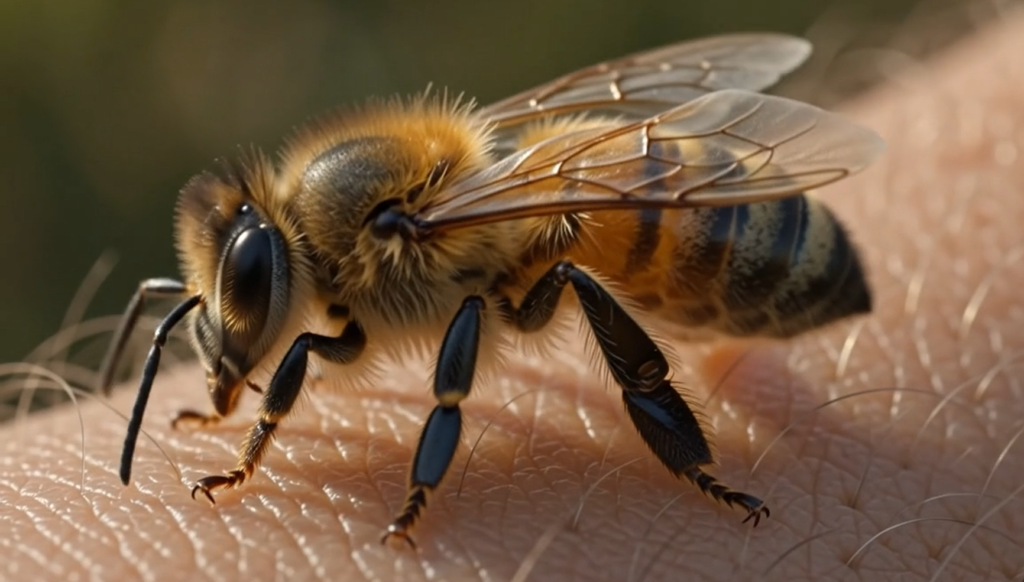
The Anatomy of a Sting: Why Do Honey Bees Die?
To understand why a honey bee (Apis mellifera) dies after a sting, we first have to look closely at the biological weapon itself.
First, a fascinating entomological fact: only female bees can sting. The stinger is a highly modified evolutionary adaptation of an ovipositor—the organ female insects normally use to lay eggs. Because worker bees are sterile females who do not lay eggs (leaving that job entirely to the Queen), their ovipositor evolved over millions of years into a defensive weapon to protect the hive.
The “Fishhook” Effect on Mammalian Skin
If you look at a worker honey bee’s stinger under an electron microscope, it doesn’t look like a smooth, clean medical hypodermic needle. Instead, it is made of two heavily barbed lancets sliding along a central shaft. It looks exactly like a jagged saw blade or a microscopic fishhook.
When a honey bee stings another insect—like an invading beetle or a rival wasp trying to steal honey—the stinger easily pierces the bug’s hard, brittle exoskeleton and pulls right back out. In the insect world, the bee lives to fight another day.
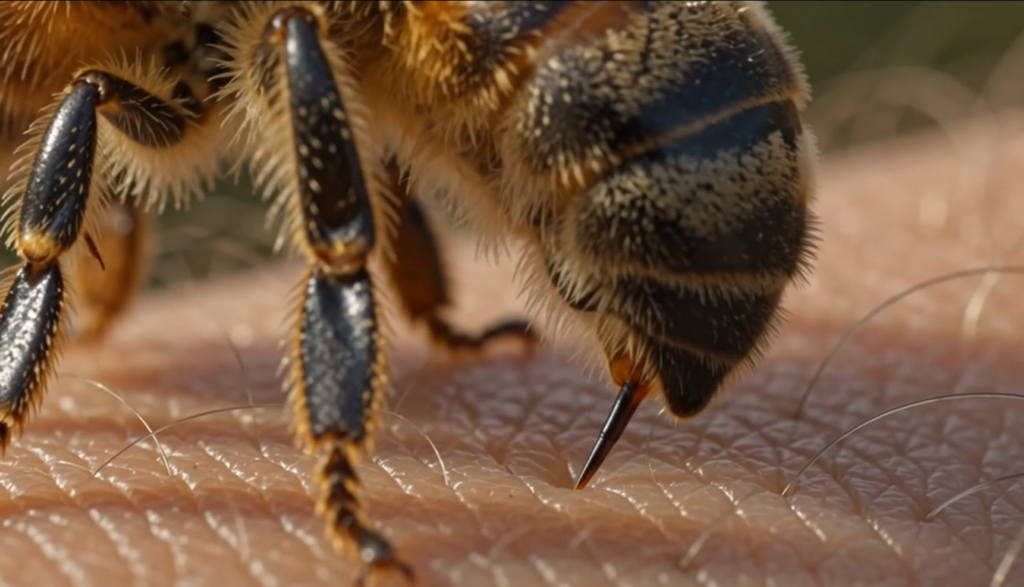
But mammalian skin is a completely different battlefield. Human skin (as well as the skin of predators like bears, badgers, and dogs) is thick, fleshy, fibrous, and highly elastic. When a honey bee plunges that jagged, barbed stinger into a human arm, it gets locked in. The elasticity of our skin closes tightly around the microscopic, backward-facing barbs, acting like a biological one-way trap. The weapon goes in, but it cannot come out.
Autotomy: The Gruesome Aftermath of a Sting
When the worker bee realizes she is tethered to your skin, panic sets in. She frantically tries to fly away, pulling with all her might. This triggers a biological event known as autotomy (the act of an animal leaving a body part behind to escape, like a lizard dropping its tail).
However, because the stinger is anchored so tightly into your skin, the sheer force of the bee pulling away literally tears its lower abdomen apart. The bee leaves behind the stinger, but she also leaves behind a gruesome payload: a significant portion of her digestive tract, abdominal muscles, and a cluster of nerves.
Without her lower abdomen, the honey bee is fatally wounded. She will fly away, but she will tragically die within a few minutes to a few hours due to massive fluid loss and organ failure.
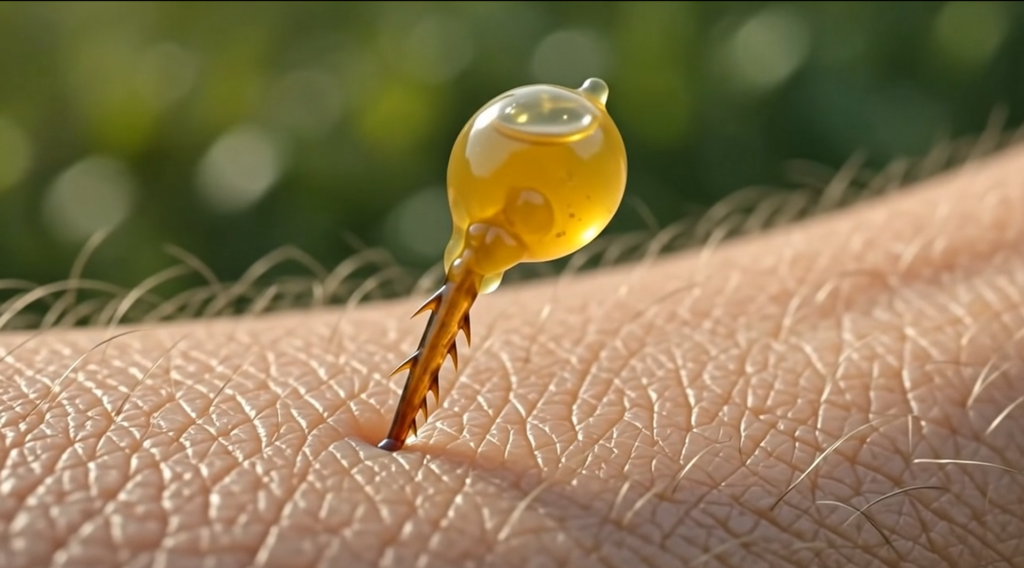
The “Zombie” Venom Sac
Here is the most mind-blowing—and slightly terrifying—part: The attack isn’t over when the bee leaves.
Attached to the top of that detached stinger is the bee’s translucent venom sac. Because a tiny cluster of nerves (a ganglion) is still attached to the muscles surrounding the sac, the severed organ essentially has a life of its own.
It will actually continue to autonomously pulse, flex, and pump venom deep into your bloodstream for up to 10 minutes after the bee is completely gone! It is basically a microscopic, zombified smart-weapon that keeps doing its job long after the soldier has fallen.
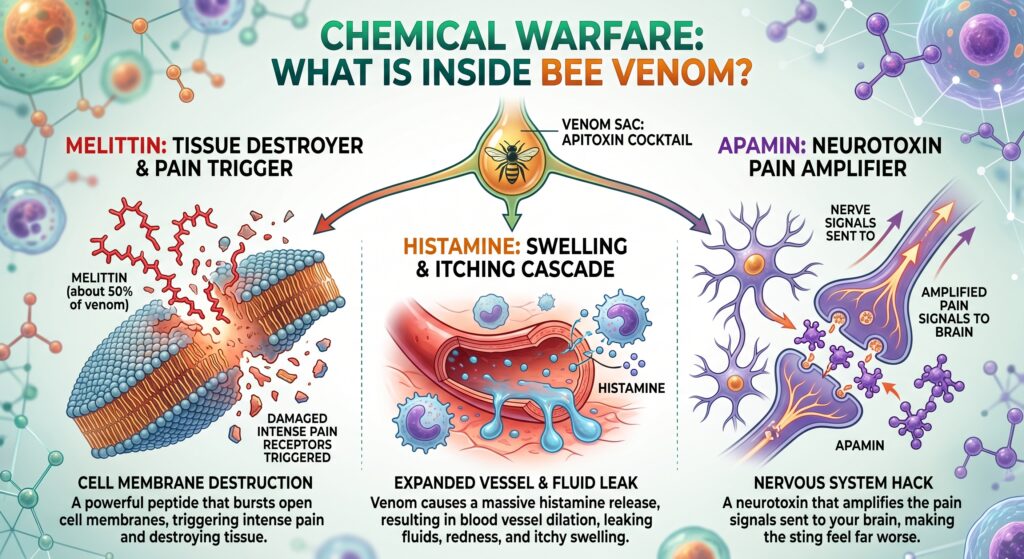
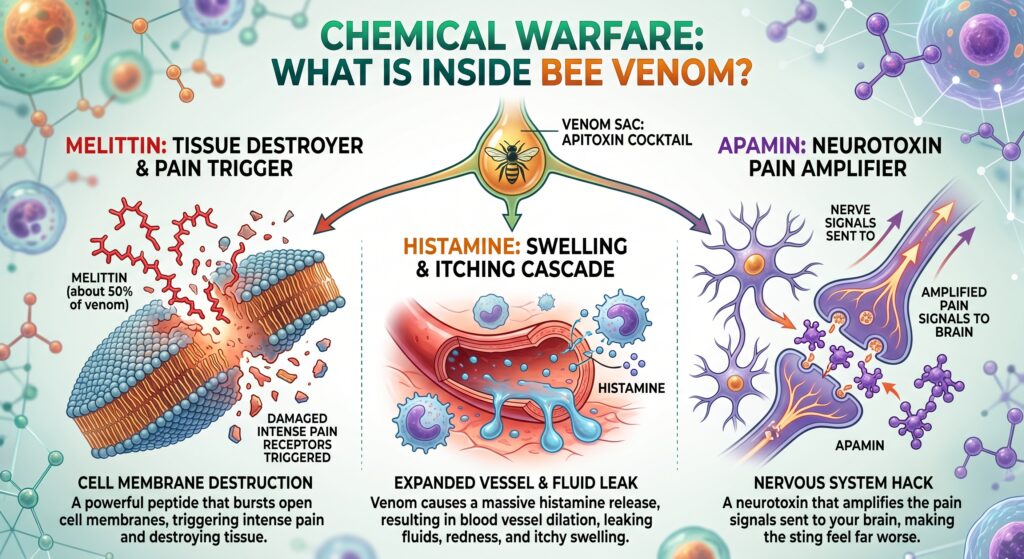
Chemical Warfare: What Is Inside Bee Venom?
So, what exactly is that little autonomous sac pumping into your body? Bee venom (known scientifically as apitoxin) is a highly complex cocktail of proteins, peptides, and enzymes designed to cause maximum discomfort.
- Melittin: This powerful peptide makes up about 50% of the venom. Melittin literally busts open your cell membranes, destroying tissue and triggering intense, immediate pain receptors.
- Histamine: The venom forces your body’s immune system to overreact, releasing massive amounts of histamine. This causes blood vessels to expand and fluids to leak into the surrounding tissue, resulting in the red, itchy, hot swelling around the sting site.
- Apamin: A neurotoxin that essentially hacks your nervous system, amplifying the pain signals being sent to your brain.
Why Bee Stings Smell Like Bananas
As if the zombie venom sac isn’t wild enough, there is a chemical homing beacon involved. As the venom sac pumps, it releases an alarm pheromone called isoamyl acetate.
Interestingly, to the human nose, this chemical smells remarkably like artificial banana flavoring. This scent signals to every other guard bee in the area: “Danger is here! Attack this exact spot!” (Pro Tip: If you ever smell bananas near a beehive, walk away immediately).
The Evolutionary Mystery: Why Evolve a Suicidal Weapon?
From a purely logical standpoint, this seems like a terrible evolutionary flaw. Why would nature design a self-destructive defense mechanism? Charles Darwin himself famously wrestled with this exact question.
The answer lies in a biological concept called Kin Selection and the survival of the hive.
Individual worker bees do not reproduce. Their sole biological purpose is to gather resources and protect the Queen (the only one who reproduces) and the thousands of developing baby bees inside the hive. To a worker bee, her individual life is entirely disposable if it means the genetic line of the colony survives.
By sacrificing herself and leaving a pumping venom sac deeply embedded in a predator, the bee guarantees maximum, long-lasting pain. If a hungry bear gets a face full of autonomous, pumping venom sacs that it cannot easily brush off, it is guaranteed to run away in agony and never come near that hive again. It is the ultimate altruistic sacrifice for the greater good of the family.
Do ALL Bees Die When They Sting? (Myth Busted!)
Here is a massive misconception that gets people stung every summer: Not all bees die after stinging. The suicidal sting is almost entirely unique to the worker honey bee.
Bumblebees vs. Carpenter Bees
Those massive, fuzzy, clumsy bumblebees floating around your garden? They have smooth stingers. Because they lack the severe fishhook barbs of the honey bee, they do not get stuck in human skin. If you provoke a bumblebee, it can sting you multiple times in a row and fly away completely unharmed. Fortunately, bumblebees are incredibly docile and will almost never sting unless you physically crush them.
Similarly, female carpenter bees have smooth stingers and can sting repeatedly (though they rarely do). The male carpenter bees—the ones that aggressively dive-bomb your head near wooden porches—don’t even have stingers! They are all bark and no bite.
The Queen Honey Bee
Plot twist! The Queen honey bee has a smooth, unbarbed stinger. She never leaves the hive to forage, so she doesn’t need to defend against bears or humans. She uses her smooth stinger exclusively to battle rival queens to the death, ensuring she remains the sole ruler of the colony without dying in the process.
The Villains of the Garden: Wasps, Hornets, and Yellowjackets
We can all agree to have a little empathy for the brave, tragic honey bee. She only attacks when she feels her family is threatened, and it costs her everything.
But what about the other striped insects in your backyard? What about Yellowjackets, Paper Wasps, and Hornets? Do they make the ultimate sacrifice too?
Absolutely not.
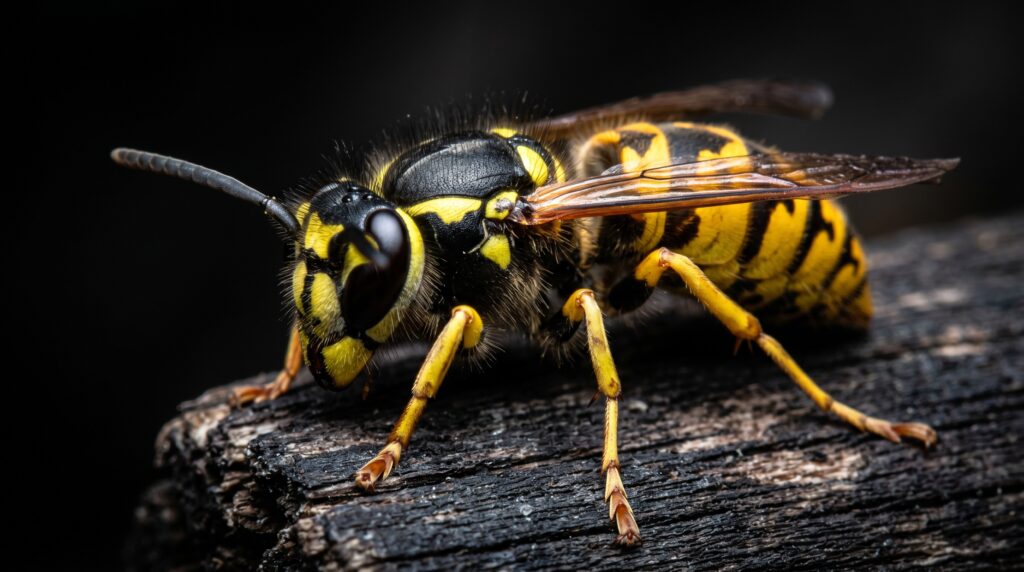
Unlike the noble honey bee, wasps and hornets are apex predators. While bees are peaceful vegetarians foraging for pollen and nectar, wasps are carnivorous hunters. They actively hunt other insects to feed their young (and scavenge the hot dogs and sodas at your summer picnic).
Because they are hunters, wasps are equipped with perfectly smooth, high-grade biological weapons. They have no jagged barbs. Their stingers are designed like perfect hypodermic needles.
Because they do not get stuck in mammalian skin, a single Yellowjacket can land on you, sting you, pull its weapon out, and sting you again. And again. And again. They don’t die after they sting you—they just get angrier.
Crucial First Aid: How To Treat a Bee Sting
Because of the “zombie venom sac” we discussed earlier, how you treat a honey bee sting in the first 10 seconds dictates how much it will swell and hurt for the next three days.
❌ What NOT To Do: Do Not Pinch!
Human instinct is to grab the stinger with your thumb and index finger (or tweezers) to pull it out. Do not do this. Pinching the top of the stinger squeezes the attached venom sac like a syringe, shooting 100% of the remaining venom directly into your bloodstream.
✅ What TO Do: The Scrape Method
- Scrape it fast: Use the edge of a credit card, a dull butter knife, or even your fingernail to scrape sideways across your skin to flick the stinger out. This severs the stinger without squeezing the sac.
- Wash the area: Clean the sting site thoroughly with soap and water to prevent secondary bacterial infection and wash away the “banana” alarm pheromone.
- Ice it: Apply a cold compress or ice pack for 15 minutes to constrict blood vessels, slow the spread of venom, and reduce swelling.
- Neutralize the venom: Apply over-the-counter hydrocortisone cream or a paste made from baking soda and water to neutralize the acidic venom.
- Watch for Anaphylaxis: This is the most important step. If the person stung begins to experience swelling of the face/throat, hives far from the sting site, dizziness, or difficulty breathing, this is a severe allergic reaction (Anaphylactic shock). Administer an EpiPen immediately if available and call emergency services.
The Final Verdict
The next time you see a fuzzy, golden honey bee bumping clumsily into a clover in your yard, give her some space and a little respect. She is an essential pollinator responsible for one-third of the food we eat. She isn’t out to get you, she is just collecting groceries for her family, and if she is forced to use her weapon, it will be her last day on earth.
But if you see a sleek, hairless wasp hovering near your plate? Pack up the picnic and leave. They have unlimited ammo and zero regrets.
💬 Frequently Asked Questions (FAQ)
Do bees feel pain when they sting and tear their abdomen?
While insects do not possess the same complex nervous systems and pain receptors as mammals, scientists observe that they do respond negatively to tissue damage. It is safe to say the process of losing their lower abdomen is biologically traumatic and physically debilitating.
Can a honey bee survive if it stings another bug?
Yes! Honey bees only die when they sting animals with thick, elastic skin (like humans, bears, or dogs). If a honey bee stings another insect, the stinger slides easily out of the hard exoskeleton, and the bee survives.
Is there a way to remove a bee without it dying?
If a honey bee has already plunged its stinger into your skin, the damage is done. Some internet myths claim that if you wait patiently, the bee will naturally “unscrew” herself. While bees have been observed trying to spin in circles to free themselves, it rarely works on human skin. Waiting just allows the venom sac to empty completely into your body. It is best to scrape the stinger off immediately to save yourself from further pain.
Why are wasps so much more aggressive than bees?
Bees are defensive; they only attack when their hive is directly threatened. Wasps and yellowjackets are offensive predators. Because they actively hunt and scavenge for meats and sugars, they naturally evolved a much more aggressive, territorial temperament.
We want to hear from you!
Have you ever been stung by a bee or a wasp? Did you know the terrifying truth about the pulsing venom sac? Let us know your worst bug-bite stories in the comments below!
(If you found this article fascinating, use the share buttons below to send it to someone who is terrified of bees—or pin it for your next summer camping trip!)