
A garden can contain healthy plants and colorful flowers and still feel unfinished. The problem is usually not a lack of plants but a lack of structure.
Good design makes a backyard easier to use, maintain, and enjoy. You do not need a huge yard or a complete renovation. These practical backyard garden design ideas will help you improve what you already have.
1. Decide What the Garden Must Do
Before buying more plants, decide what jobs the garden needs to perform.
Your priorities might include:
- Outdoor meals
- Space for children or pets
- Flower or vegetable growing
- Entertaining
- Quiet seating
- Composting and storage
- Pollinator habitat
Trying to fit every possible feature into a small yard creates clutter. Choose two or three main purposes and let the remaining features support them.
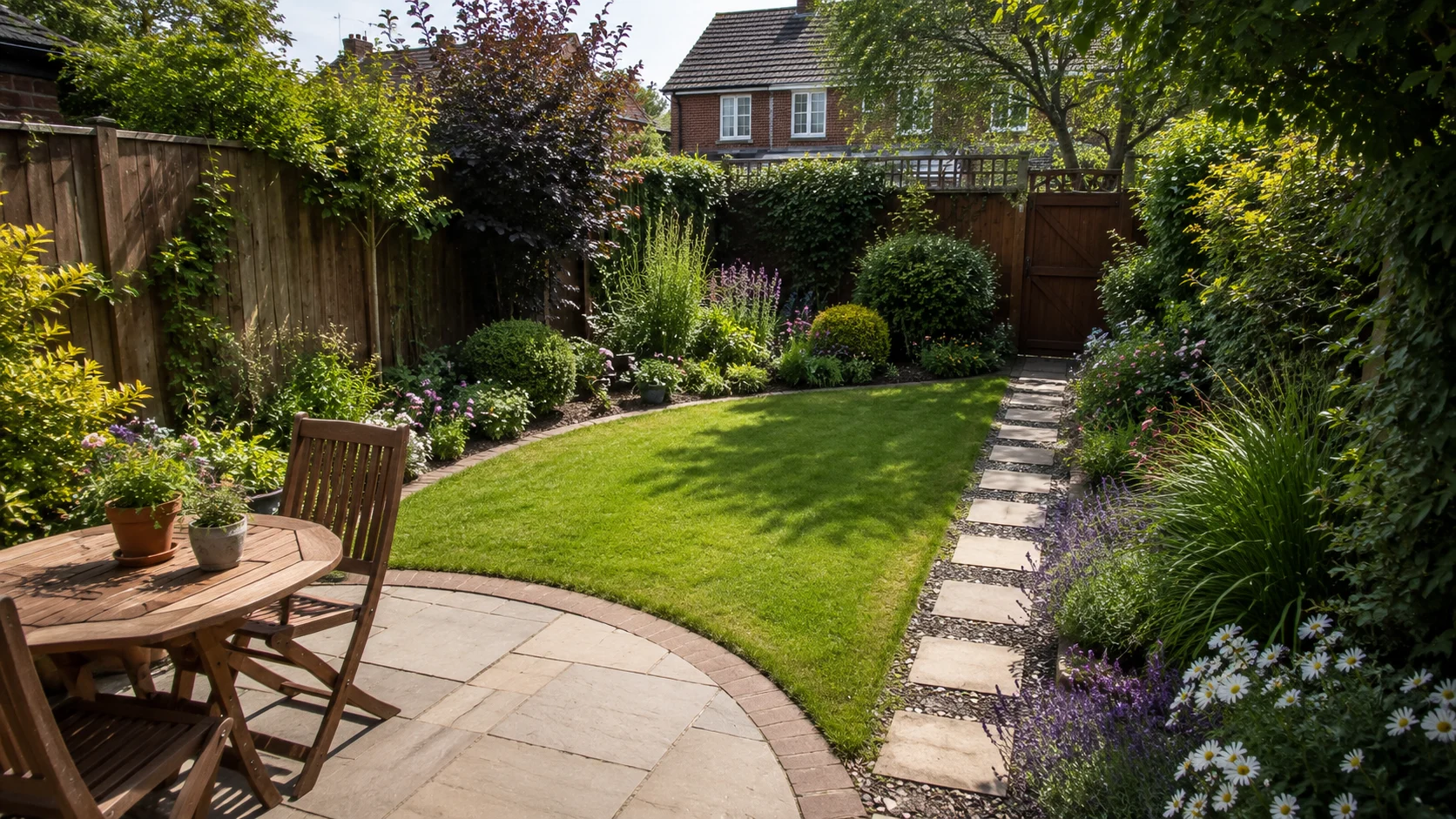
A compact garden may need only a patio, one generous border, and an open lawn or gravel area.
The University of Minnesota Extension recommends planning landscapes around function, plant performance, and long-term maintenance. Its landscape design guidance explains how thoughtful planning can create useful outdoor spaces while reducing wasted water, time, and inputs.
2. Create a Clear Layout
A designed garden should make movement obvious. You should know where to walk, sit, plant, and work.
Sketch the yard from above. Mark doors, windows, fences, trees, sheds, sunlight, and existing paths. Then divide the space into a few broad zones.
Keep shapes simple. One confident curve is stronger than several weak bends, and one generous border has more impact than several narrow strips.
The patio, paths, lawn, and planting should feel like parts of one plan.
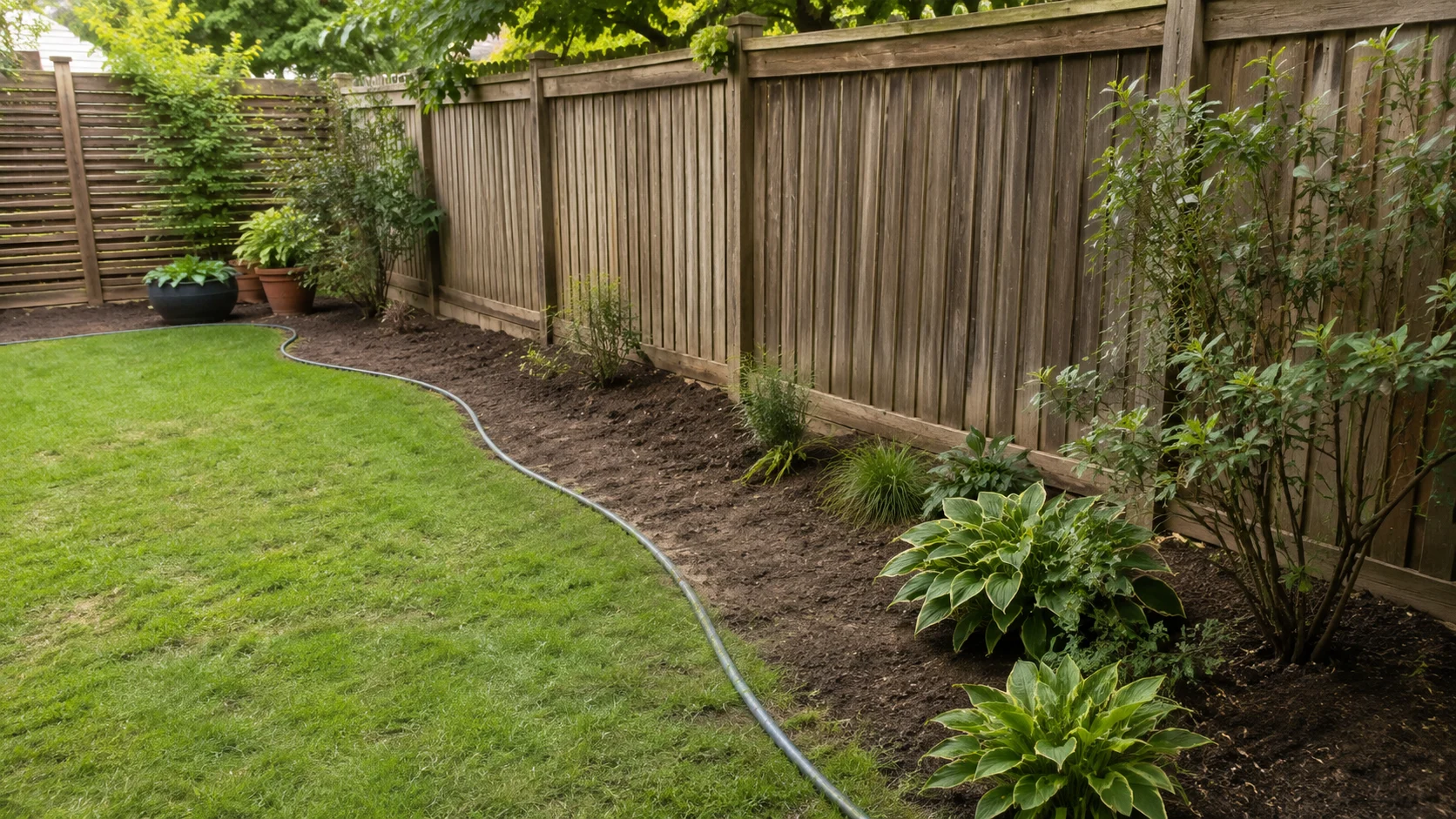
3. Strengthen the Border Shape
Weak borders make a garden look accidental.
A thin strip against a fence rarely has enough depth for layered planting. Widening one border can improve the whole yard because it creates room for shrubs, medium perennials, and lower plants at the front.
Use a hose or rope to test a new edge before digging. View the shape from the patio, kitchen window, and entrance. Remove awkward bends and make sure the remaining lawn is easy to mow.
The Royal Horticultural Society recommends repeating plant groups to create flow and stop borders from looking fragmented. Its garden border planning guide also explains how height, spacing, and repetition help unify a planting scheme.
4. Add One Strong Focal Point
Every garden needs somewhere for the eye to rest.
A focal point could be:
- A small tree
- A bench
- A large container
- A birdbath
- An arch
- A distinctive shrub
Place it where it can be seen from the kitchen window, patio, or entrance. Use a path, border curve, or repeated planting to guide attention toward it.
One clear focal point gives the garden direction. Several unrelated ornaments create visual noise.
5. Repeat Plants Instead of Collecting Them
Buying one of everything is not design.
A border containing one plant of every color, height, and texture often looks chaotic. Repeating a smaller selection creates rhythm and connects different parts of the garden.
A practical planting palette might include:
- One structural shrub
- One ornamental grass
- Two long-flowering perennials
- One seasonal accent
- One groundcover
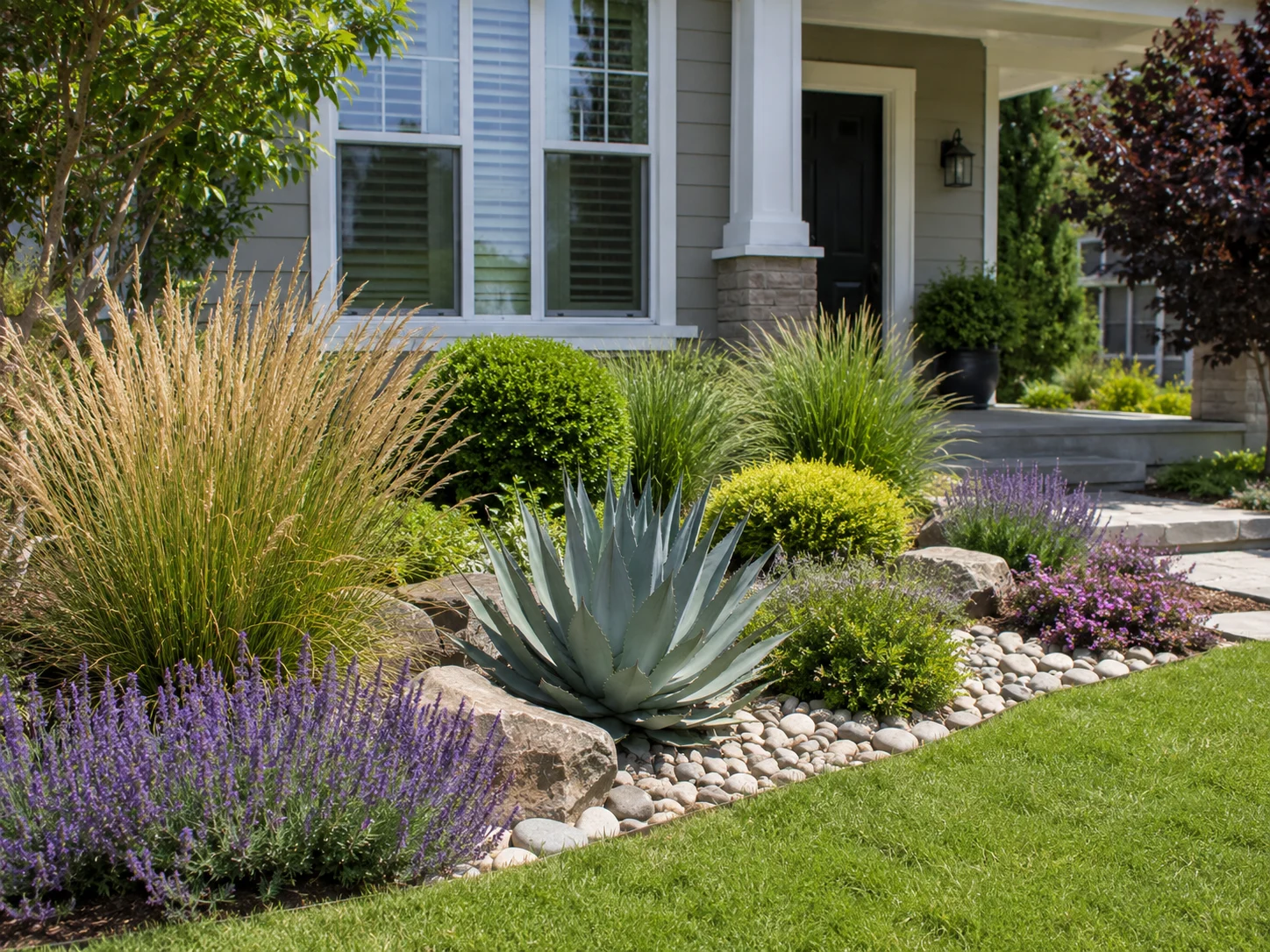
Use these plants in groups rather than as isolated specimens. Repeat the same grass, flower color, or evergreen shape along the border. You can still add variety, but the repeated plants should hold the design together.
create a backyard garden that pollinators actually use.
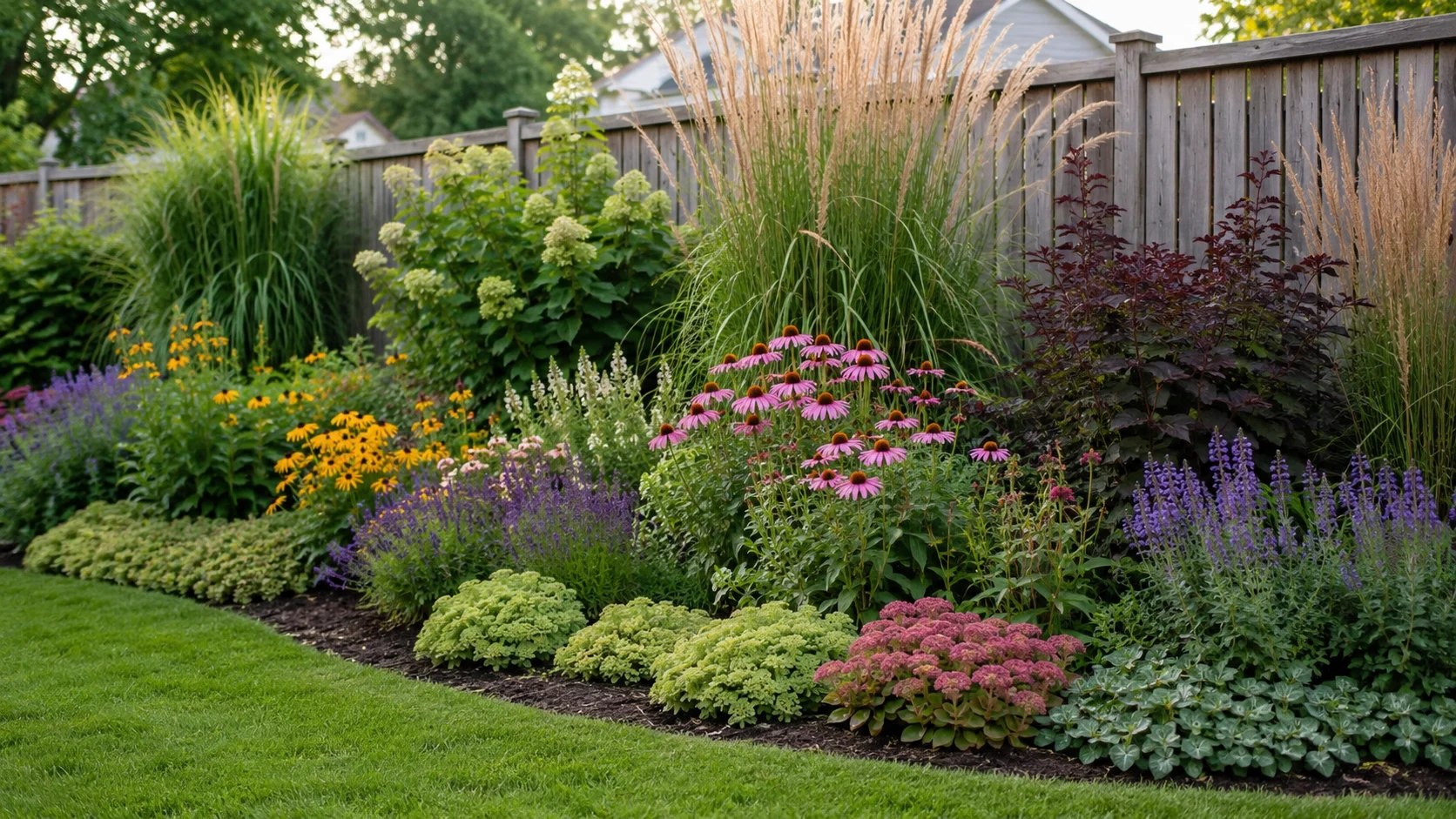
6. Build Planting in Layers
Flat planting makes even a large bed look weak.
Use three broad levels:
- Tall layer: Small trees, shrubs, climbers, grasses, or tall perennials
- Middle layer: Rounded shrubs and medium flowering plants
- Front layer: Compact perennials, herbs, groundcovers, or low grasses
Tall plants usually belong toward the back, but the arrangement should not become rigid. Airy plants can move forward, while lower openings can reveal deeper layers.
Plan beyond summer flowers too. Evergreen foliage, bark, grasses, and seedheads provide structure when blooms disappear.
7. Make Paths Useful
A path should lead somewhere.
It might connect the house to the shed, guide visitors to a bench, provide access to vegetable beds, or let you maintain borders without stepping on soil. A decorative path that ends against a blank fence is wasted space.
Choose materials that suit the house and budget. Gravel, brick, stepping stones, and paving can all work, but too many materials make a small garden look fragmented.
Keep main paths comfortable and their edges clear.
8. Use Clean Edges to Control Loose Planting
Defined edges create an immediate visual improvement, even before new plants mature.
Clearly separate lawn, planting, gravel, and paved areas. Edging can be metal, brick, stone, timber, or simply a sharply cut lawn edge.
Strong boundaries make relaxed planting look intentional. They also reduce grass creeping into borders and stop gravel or mulch spreading across the yard.
A wildlife-friendly garden does not have to look abandoned. Keep paths and visible edges controlled, then allow seedheads, groundcover, and denser habitat inside the beds.
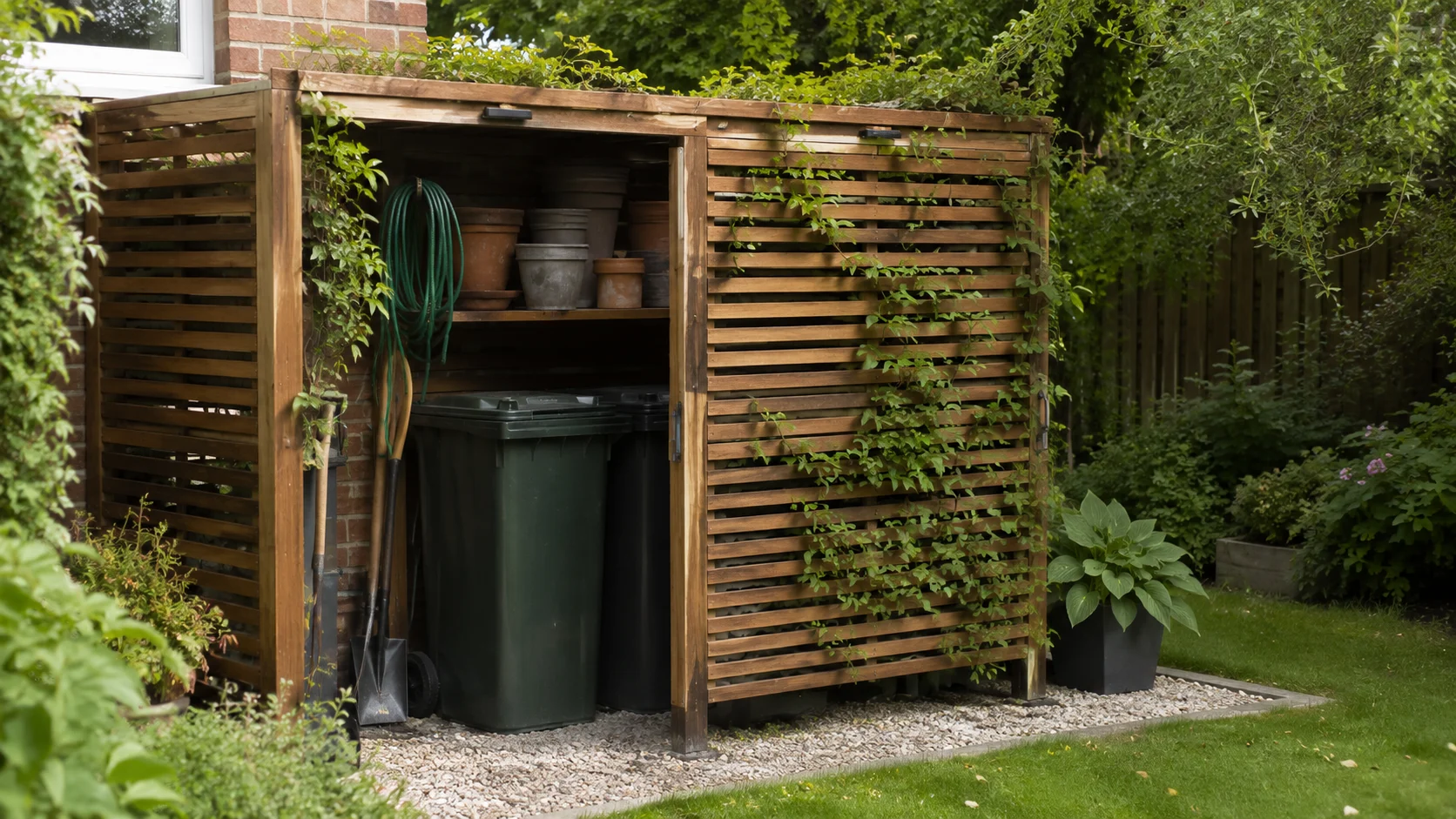
9. Hide Practical Clutter
Bins, hoses, tools, compost, and spare pots are part of real gardens. Ignoring them produces a design that fails as soon as the space is used.
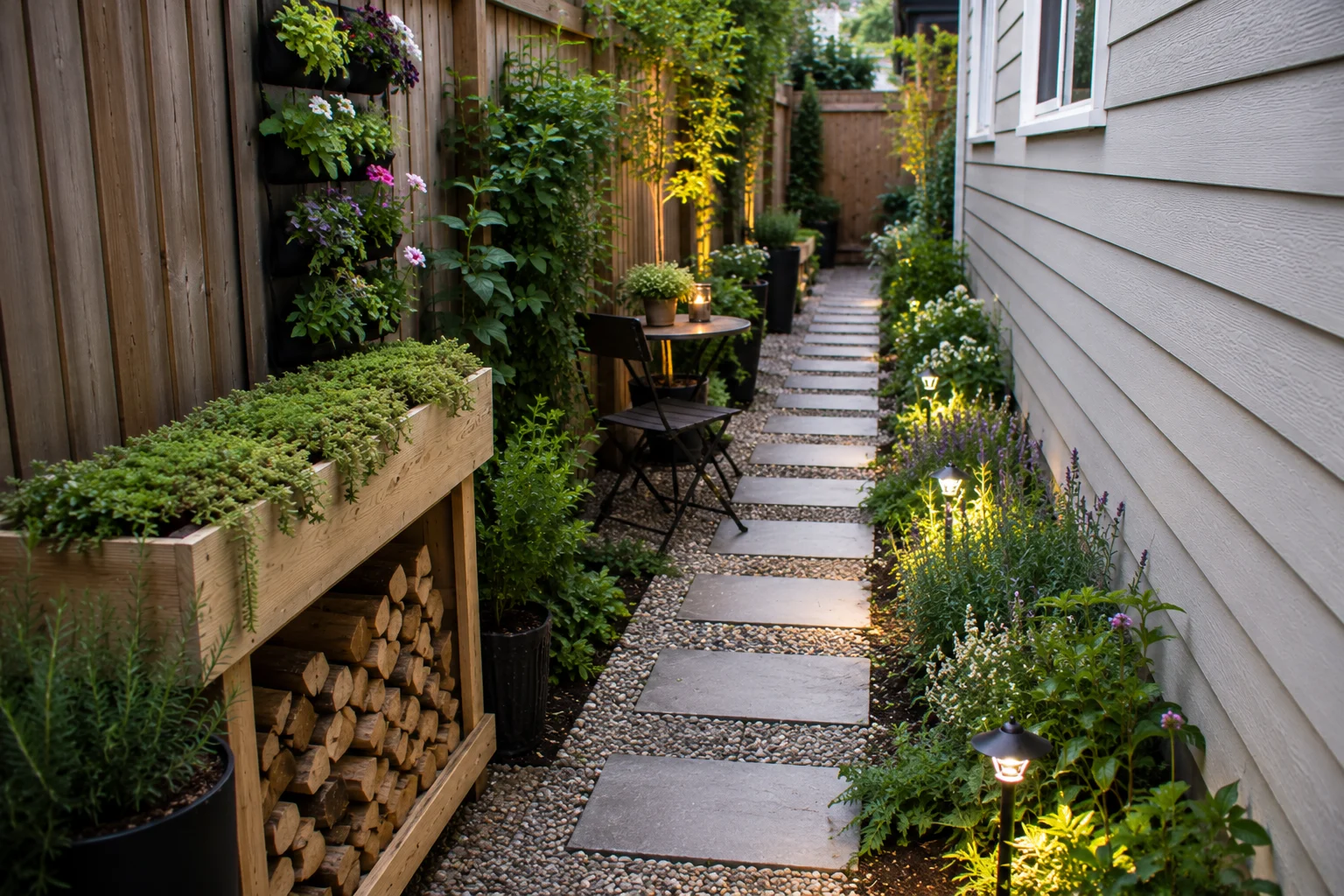
Give practical items permanent locations. Use a slim screen, storage bench, trellis, or planted enclosure without making access difficult.
Repeat materials used elsewhere so the storage area feels integrated.
10. Design for Maintenance
A garden that looks perfect for one photograph but requires constant rescue is badly designed.
Before planting, ask:
- Can you reach every bed for pruning and weeding?
- Will mature plants block paths or windows?
- Can the mower follow the lawn edge?
- Does water reach containers and borders?
- Will aggressive plants overwhelm their neighbors?
Choose plants for the real sunlight, soil, drainage, and available space. A plant in the wrong conditions will always look weak.
Reduce tiny pots, complicated lawn shapes, and isolated plants. Larger groups and fewer generous containers are easier to manage.
choose late summer flowers that stop borders fading early.
A Simple Backyard Garden Design Formula
When the garden feels confused, use this sequence:
- Choose the main purpose of the open space.
- Create one clear patio or seating area.
- Add one useful route through the yard.
- Build one generous border instead of several thin strips.
- Select one focal point.
- Repeat five or six dependable plants.
- Keep edges, paths, and storage controlled.
This creates hierarchy. The garden gains a main purpose, supporting features, and a repeated visual language.
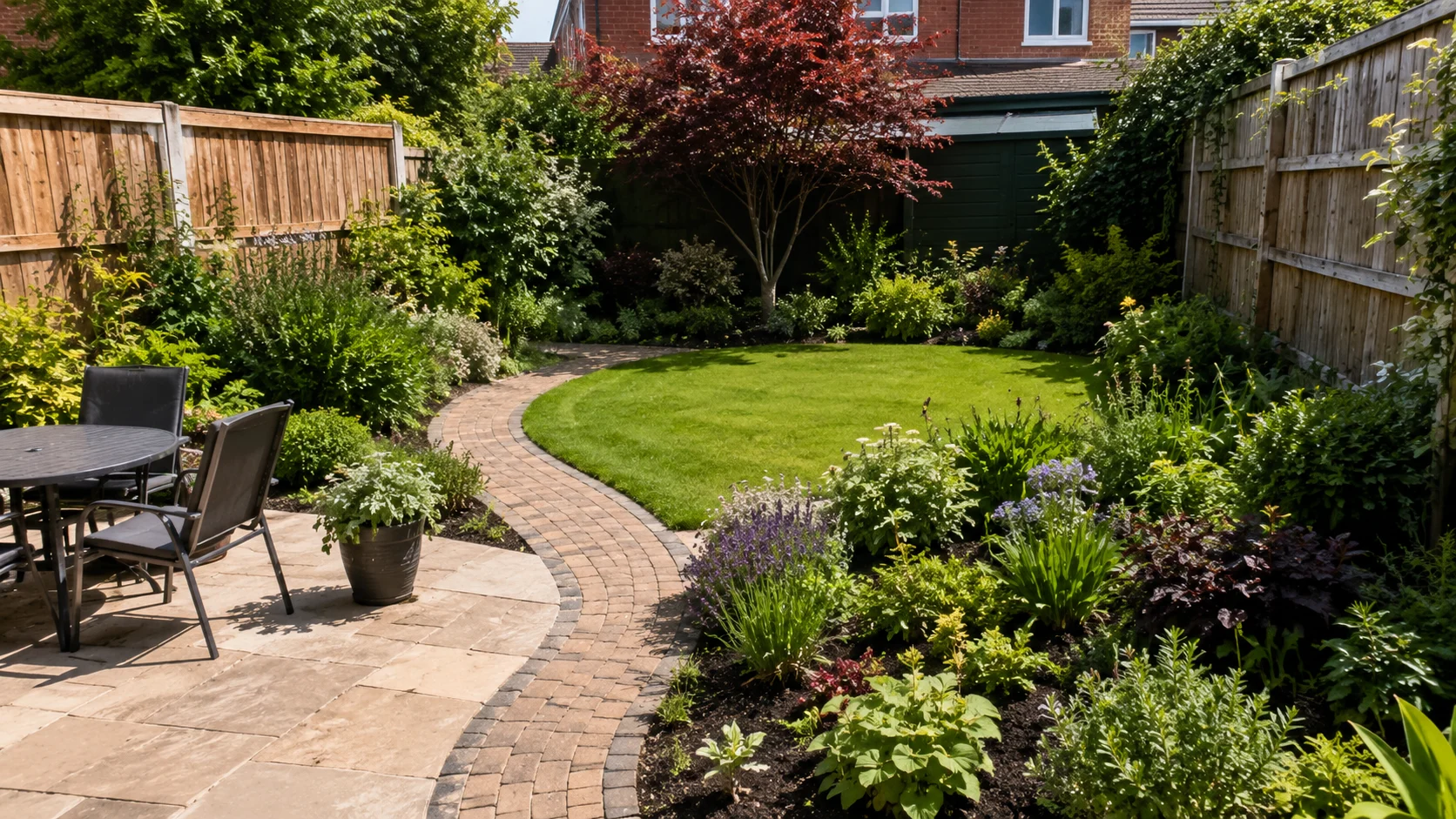
Improvements That Do Not Require a Full Rebuild
Start with the changes that provide the biggest return:
- Reshape and widen one border
- Remove broken containers and unused furniture
- Move scattered plants into stronger groups
- Add one bench, tree, or large pot as a focal point
- Define lawn and path edges
- Screen bins and garden storage
- Repeat one plant in three areas
Work on one connected section at a time. Randomly improving five separate corners will preserve the original confusion.
plan a garden with flowers across every season.
Conclusion
The best backyard garden design ideas do more than make a yard prettier. They make it easier to walk through, maintain, plant, and enjoy.
Start with function, create a clear layout, strengthen the borders, and repeat plants instead of collecting them randomly. Add one focal point, useful paths, clean edges, and proper storage.
Do not try to fix weak design by buying more decoration. That usually adds clutter. Improve the structure first, and the plants you already own will immediately look more deliberate.