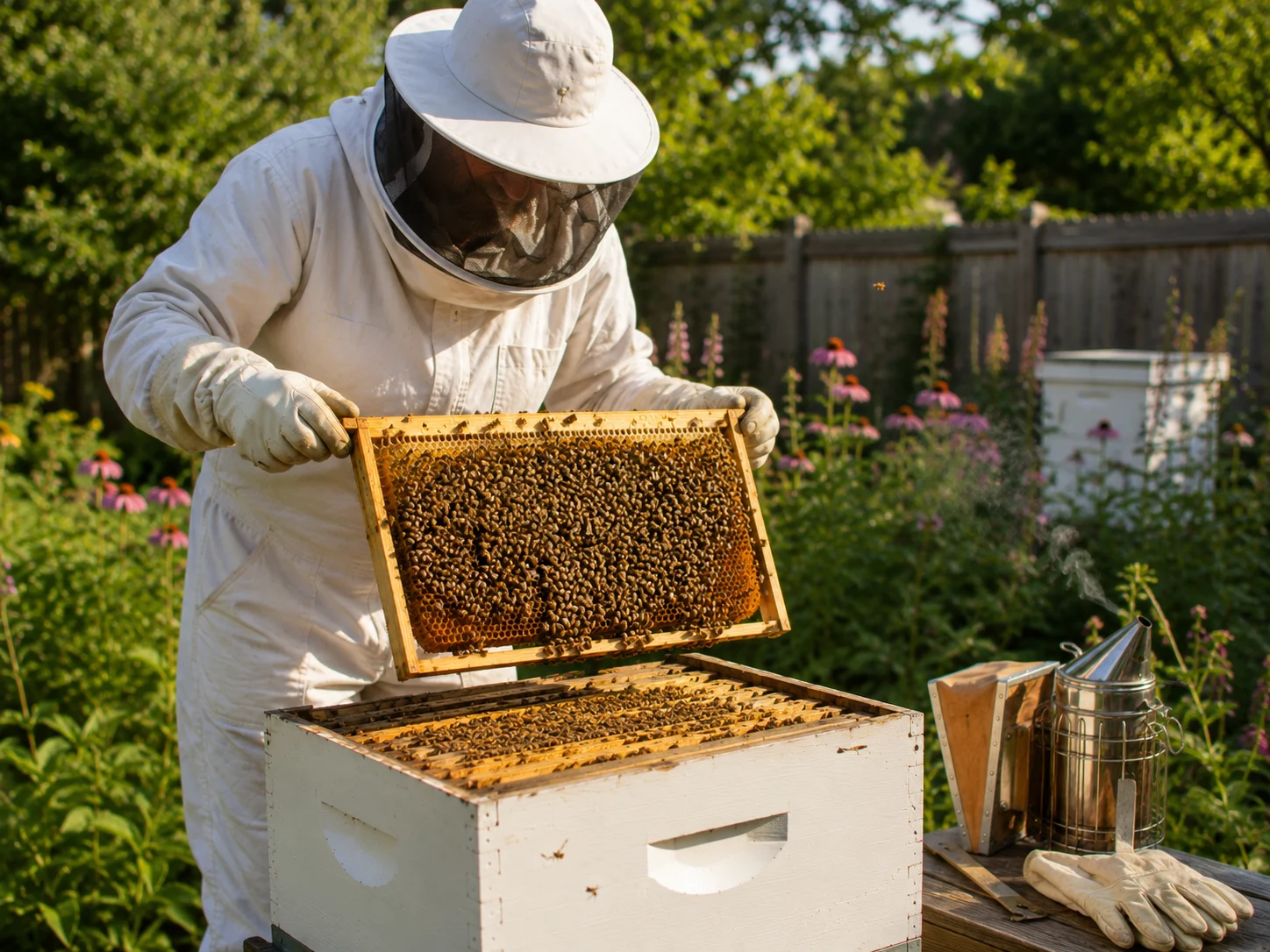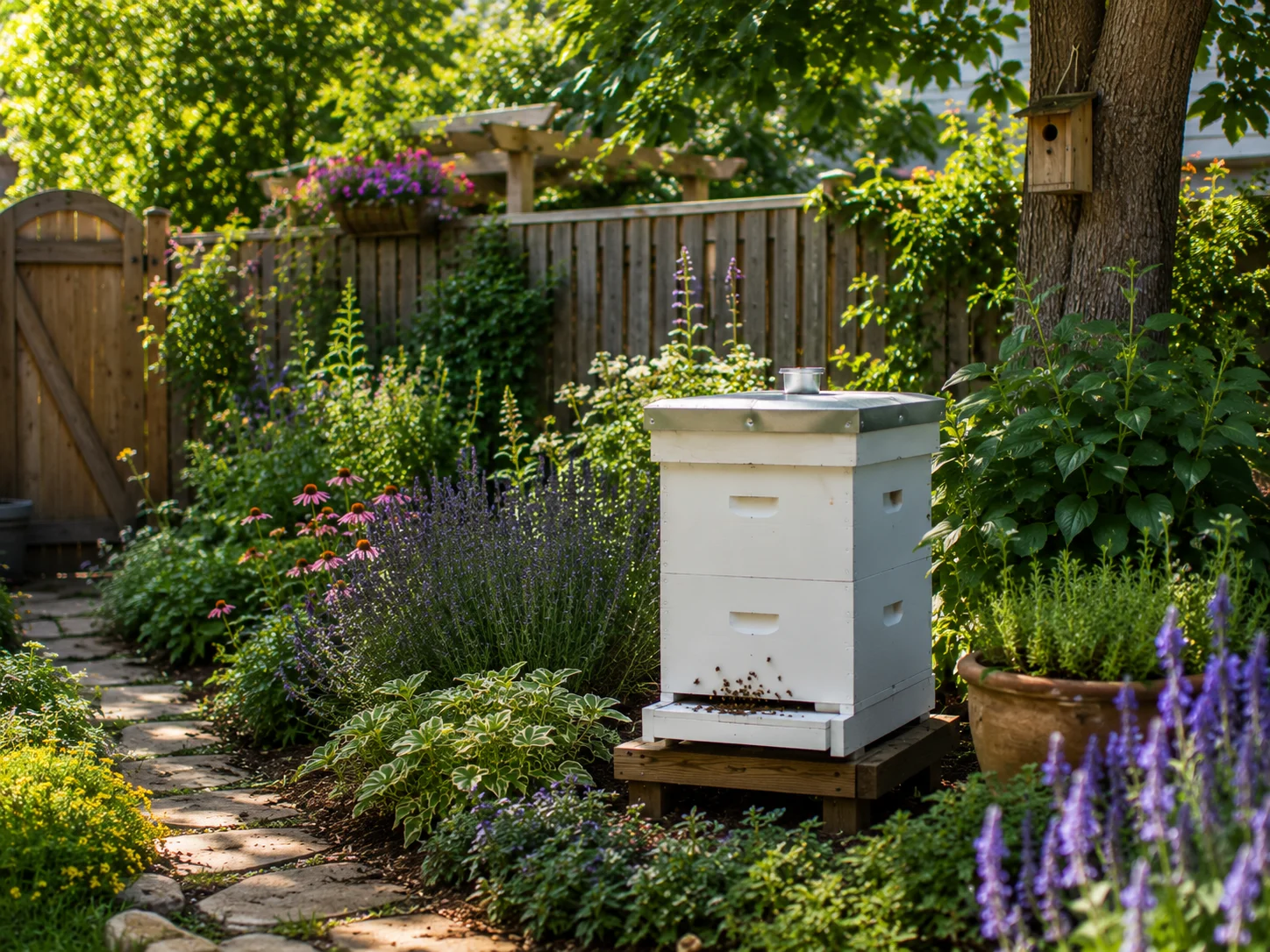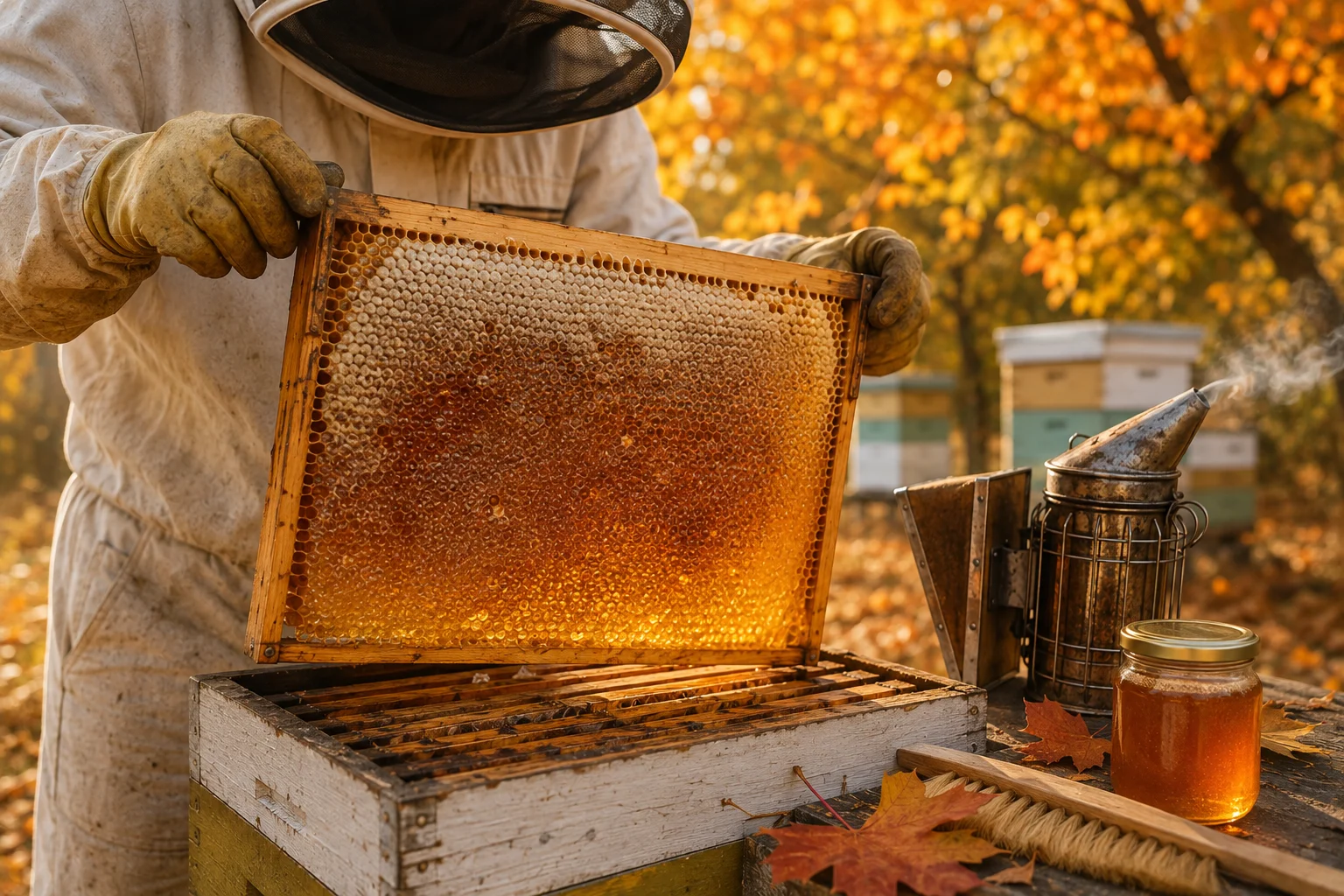

Urban and suburban beekeeping is experiencing a massive resurgence. As more people seek a deeper connection to their local food systems and ecosystems, backyard apiaries are popping up in densely populated neighborhoods across the world. Bringing a colony of 50,000 stinging insects into a small residential garden is an incredibly rewarding experience, but it also carries a significant amount of responsibility.
Keeping bees in the middle of a 10-acre rural farm is vastly different from keeping them 15 feet away from your neighbor’s patio. In a confined urban environment, minor hive management mistakes can quickly escalate into neighborhood disputes, legal complaints, and the forced removal of your bees.
If you are planning to set up a backyard apiary, you cannot simply drop a box of bees in the grass and walk away. You must proactively manage their behavior, their flight paths, and your relationship with your community. This guide covers the essential strategies every urban beekeeper must master to keep their colonies healthy, their yard productive, and their neighbors perfectly happy.
1. Know the Law Before You Buy the Bees
Before you even look at a beekeeping equipment catalog, you must understand the legal landscape of your specific location. Urban beekeeping laws vary wildly from city to city, and even from neighborhood to neighborhood.
Important Legal Checks for Urban Apiaries:
- Zoning Laws and Ordinances: Many cities restrict the number of hives you can keep based on your total square footage (e.g., a maximum of two hives for lots under a quarter-acre).
- HOA Restrictions: If you live in a community governed by a Homeowners Association, check the bylaws. Many HOAs explicitly ban the keeping of livestock or stinging insects, overriding city laws.
- Registration: The vast majority of regions require you to officially register your apiary with the state or local Department of Agriculture to help track disease outbreaks.
2. Master the “Fly-Up” Flight Path
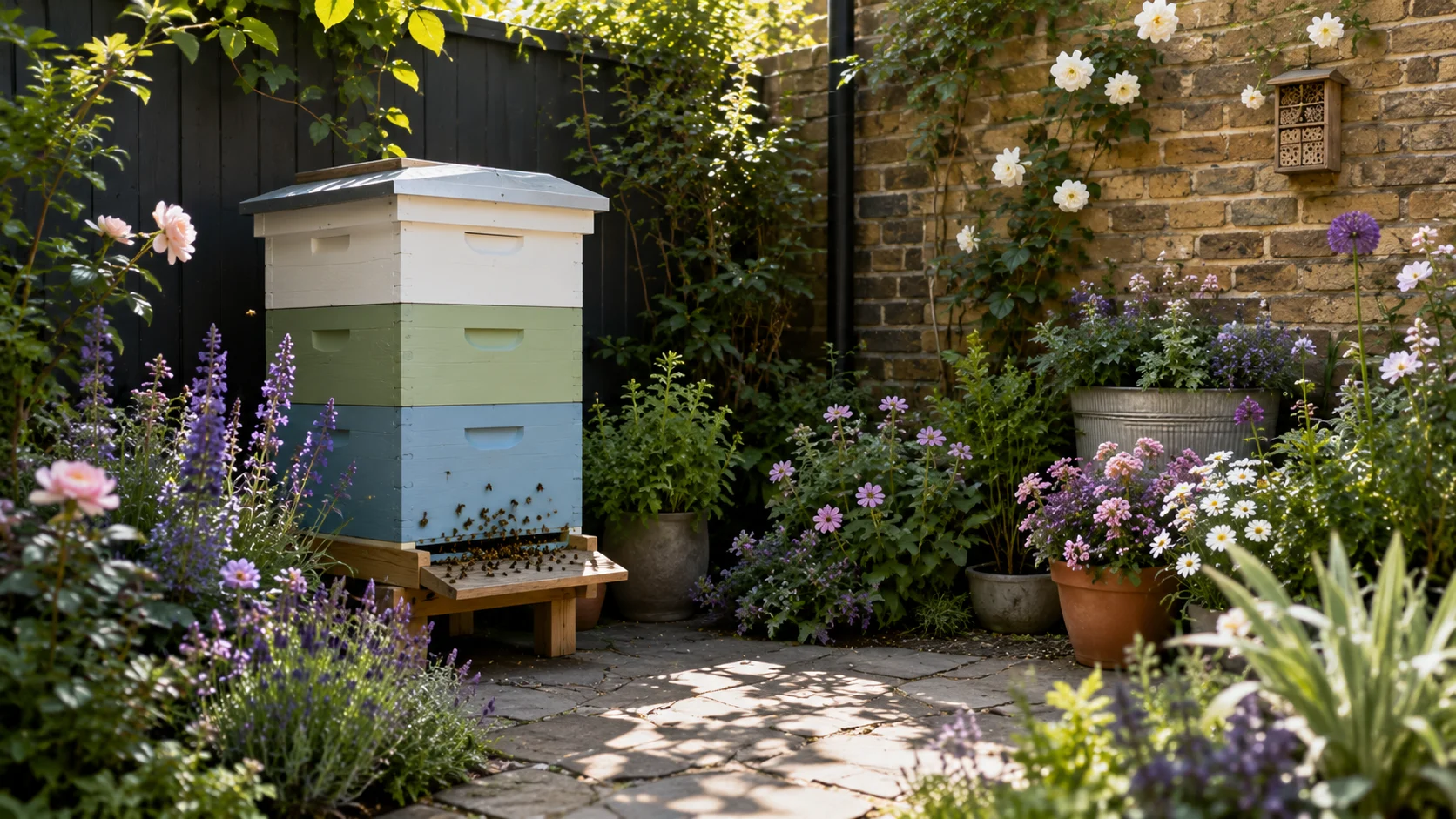
Honeybees are highly efficient foragers. When they exit the hive, they fly in a rapid, straight line toward their destination. If your hive entrance is at ground level and points directly at a sidewalk, a shared fence, or your neighbor’s driveway, collisions are inevitable. When a foraging bee collides with a human, she often stings out of defense.
To prevent this, urban beekeepers use a technique called the fly-up barrier.
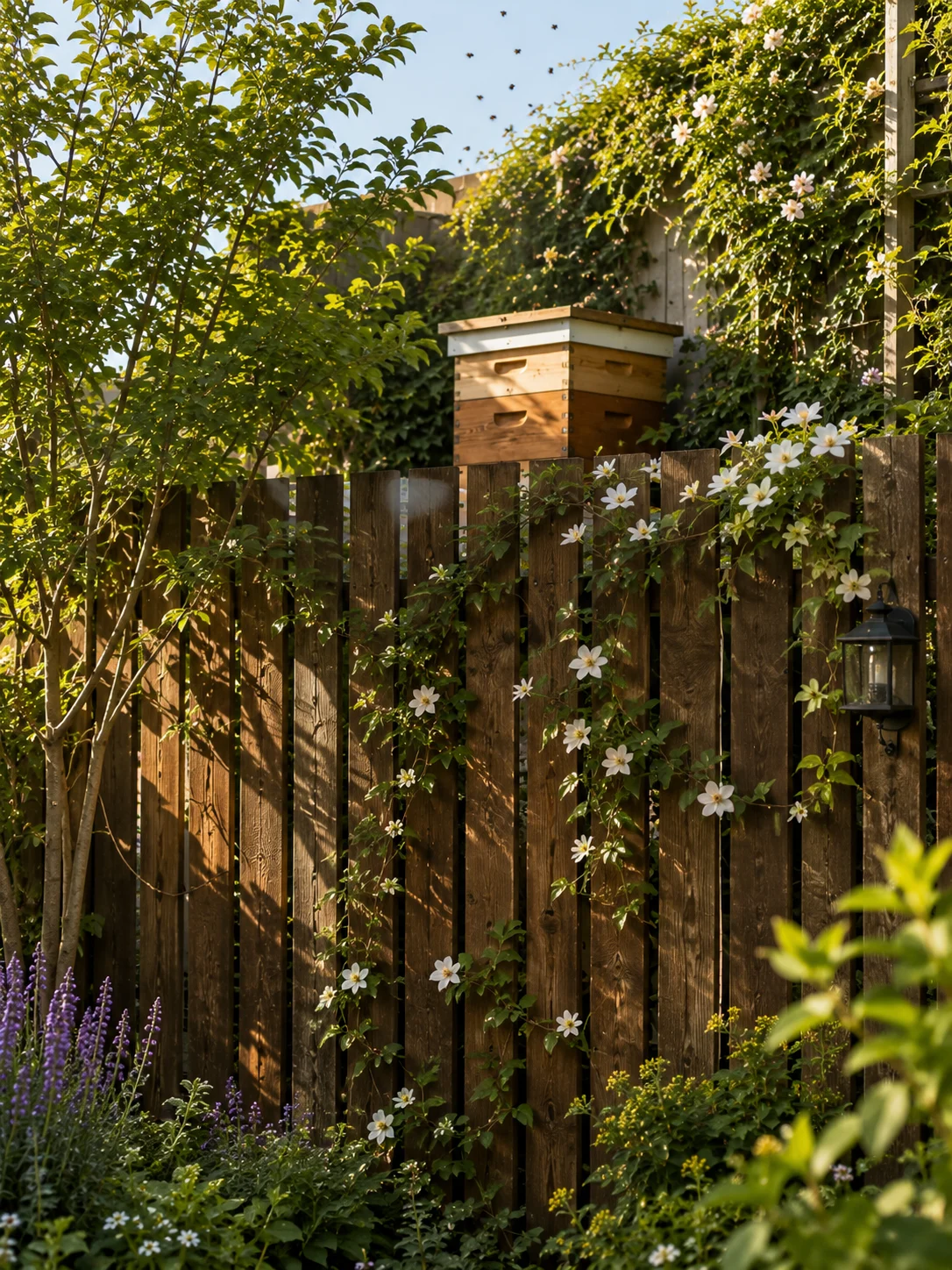
By placing a physical obstacle roughly three to four feet in front of the hive entrance, you force the bees to instantly fly upward and gain altitude before they cross your property line. Once bees are flying six to eight feet above the ground, they are completely out of human traffic zones and rarely cause issues.
Effective Fly-Up Barriers:
- Lattice Fencing: A simple wooden lattice panel overgrown with native vines.
- Dense Shrubbery: Planting a boundary hedgerow with several vertical layers naturally directs bee traffic upward while simultaneously providing early-season forage.
- Strategic Shed Placement: Pointing the hive entrance directly toward the blank wall of your own garden shed or garage.
3. Provide a Dedicated, High-Quality Water Source
One of the most common causes of neighbor disputes is not stinging—it is water.
During the peak heat of summer, a strong honeybee colony requires literal gallons of water every week. They do not drink it; they use it to dilute stored honey and air-condition the hive through evaporative cooling. If you do not provide a reliable water source within your own garden, your bees will find one. Usually, that ends up being your neighbor’s chlorinated swimming pool, a leaky outdoor faucet, or the neighborhood birdbaths.
According to the University of Florida IFAS Extension on Honeybee Hydration, bees exhibit high site fidelity when it comes to water. Once they establish a favorite watering hole, it is incredibly difficult to break their habit.
How to Water Your Bees Properly:
- Set up your water source in early spring, before the bees take their first cleansing flights.
- Use a shallow basin, like a large terracotta saucer or a dedicated birdbath.
- Fill the basin with flat river stones, wine corks, or glass marbles. Bees are terrible swimmers and will quickly drown in open water; they need dry, solid landing pads to drink from safely.
- Keep it consistently full. If your water station dries up for even one afternoon during July, the bees will permanently abandon it and head straight for the neighbor’s pool.
4. Aggressive Swarm Management
Swarming is a honeybee colony’s natural method of reproduction. When a hive becomes too congested in the spring, the old queen and half the worker bees will leave in a massive, swirling cloud to find a new home.
To a seasoned beekeeper, a swarm is a beautiful, fascinating event. To an uneducated neighbor, a cloud of 20,000 buzzing insects landing on their child’s swing set or their car mirror is a terrifying nightmare. A single unmanaged swarm can ruin your neighborhood reputation forever. Urban beekeepers must be highly proactive about space management.
Preventing Urban Swarms:
- Frequent Spring Inspections: Check your hives every 7 to 10 days during the spring nectar flow. Look specifically for swarm cells (peanut-shaped wax cups hanging off the bottom of the frames).
- Add Space Early: Do not wait until the brood box is 100% full before adding a honey super. Give the bees room to expand before they feel congested.
- Make Splits: If a hive is booming, pull frames of capped brood and the old queen out to create a new “nuc” (nucleus colony). This relieves the pressure on the primary hive and satisfies their urge to reproduce.

5. Be Ruthless About Hive Genetics
In a rural setting, a beekeeper might tolerate a slightly aggressive or “hot” hive because it produces a lot of honey. In an urban setting, tolerance for aggression must be absolute zero.
Honeybee temperament is largely dictated by genetics. If you walk into your backyard and your bees immediately begin head-butting your veil or following you 50 feet away from the hive, they are too defensive for a small garden.
The Requeening Rule:
If a colony becomes aggressive, unmanageable, or overly defensive of their space, you must immediately pinch (kill) the queen and replace her with a mated queen from a known, gentle genetic line (such as Carniolans or gentle Italian stock). Within 30 to 40 days, the old defensive workers will die off, the new queen’s gentle offspring will take over the hive, and peace will return to your yard.
6. Stop Robbing Before It Starts
In late summer, when the nectar flow abruptly stops and flowers dry up, bees become desperate for food. Strong colonies will actively seek out weak colonies to invade, kill the defenders, and steal their honey stores.
This process is called “robbing,” and it turns an apiary into a chaotic, violent warzone. A robbing frenzy involves thousands of fighting bees loudly darting around the yard, making the entire area unsafe for humans and pets.
The Penn State Extension Guide to Overwintering and Late Season Management emphasizes that preventing robbing is significantly easier than stopping it once it begins.
Anti-Robbing Strategies:
- Never leave frames of honey or open sugar syrup exposed in the yard during an inspection.
- If you notice a colony struggling, immediately reduce their entrance to a one-inch gap so they have less territory to defend.
- Familiarize yourself with the early warning signs of robbing bees so you can act quickly before a full frenzy erupts.
7. Practice “Honey Diplomacy”
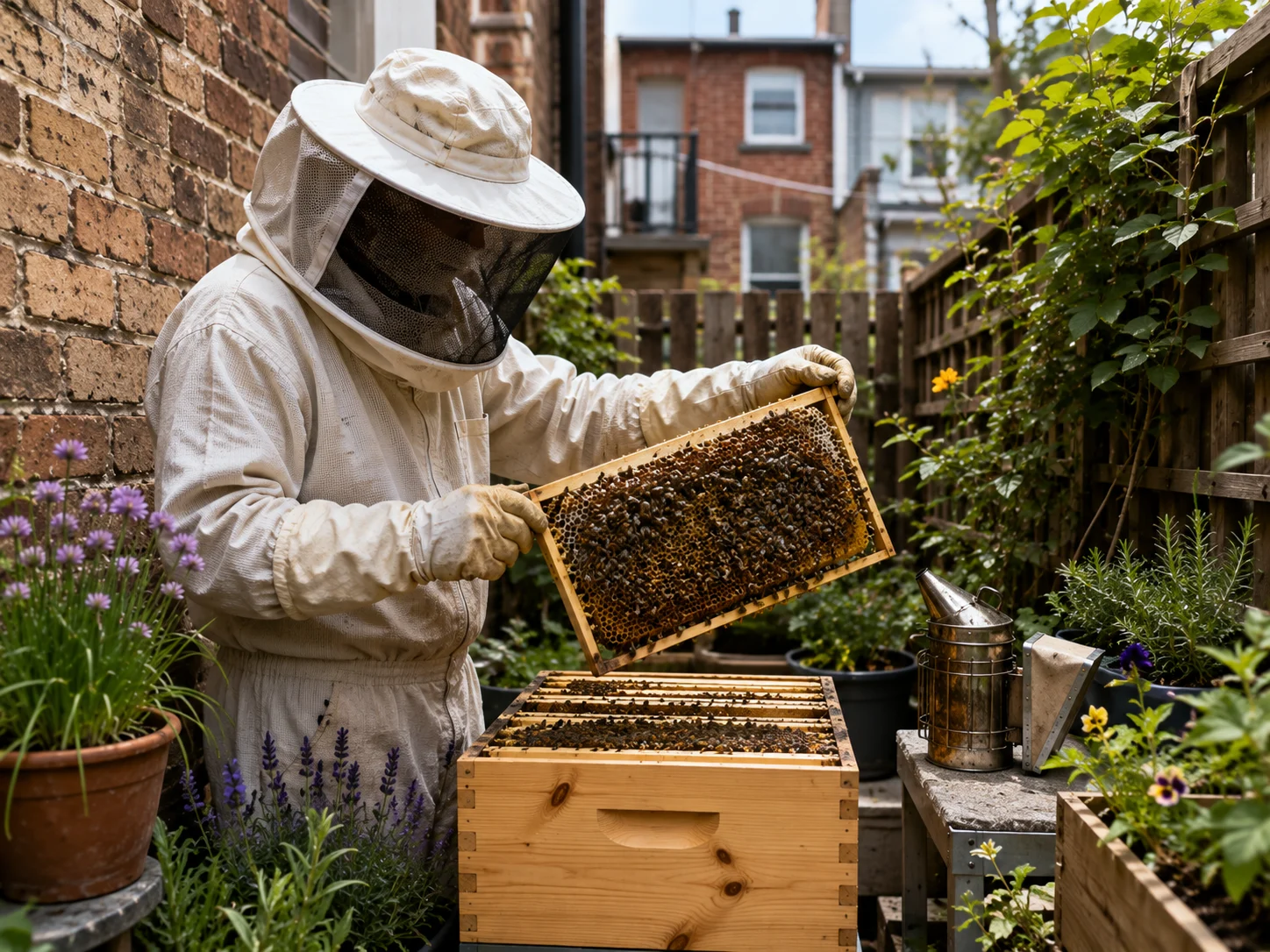
The single most effective tool in an urban beekeeper’s arsenal isn’t a smoker or a hive tool—it is communication.
The vast majority of neighborhood complaints stem from fear and a lack of education. People naturally associate honeybees with the aggressive yellowjackets that ruin late-summer picnics. By keeping an open line of communication, you can turn a nervous neighbor into your biggest advocate.
- Talk to Them First: Before you bring bees home, talk to your immediate neighbors. Explain your setup, how the fly-up barrier works, and the steps you are taking to ensure their safety.
- The Allergy Check: Ask if anyone in their household has a diagnosed, systemic anaphylactic allergy to bee stings. If they do, keeping bees on the shared fence line is highly irresponsible.
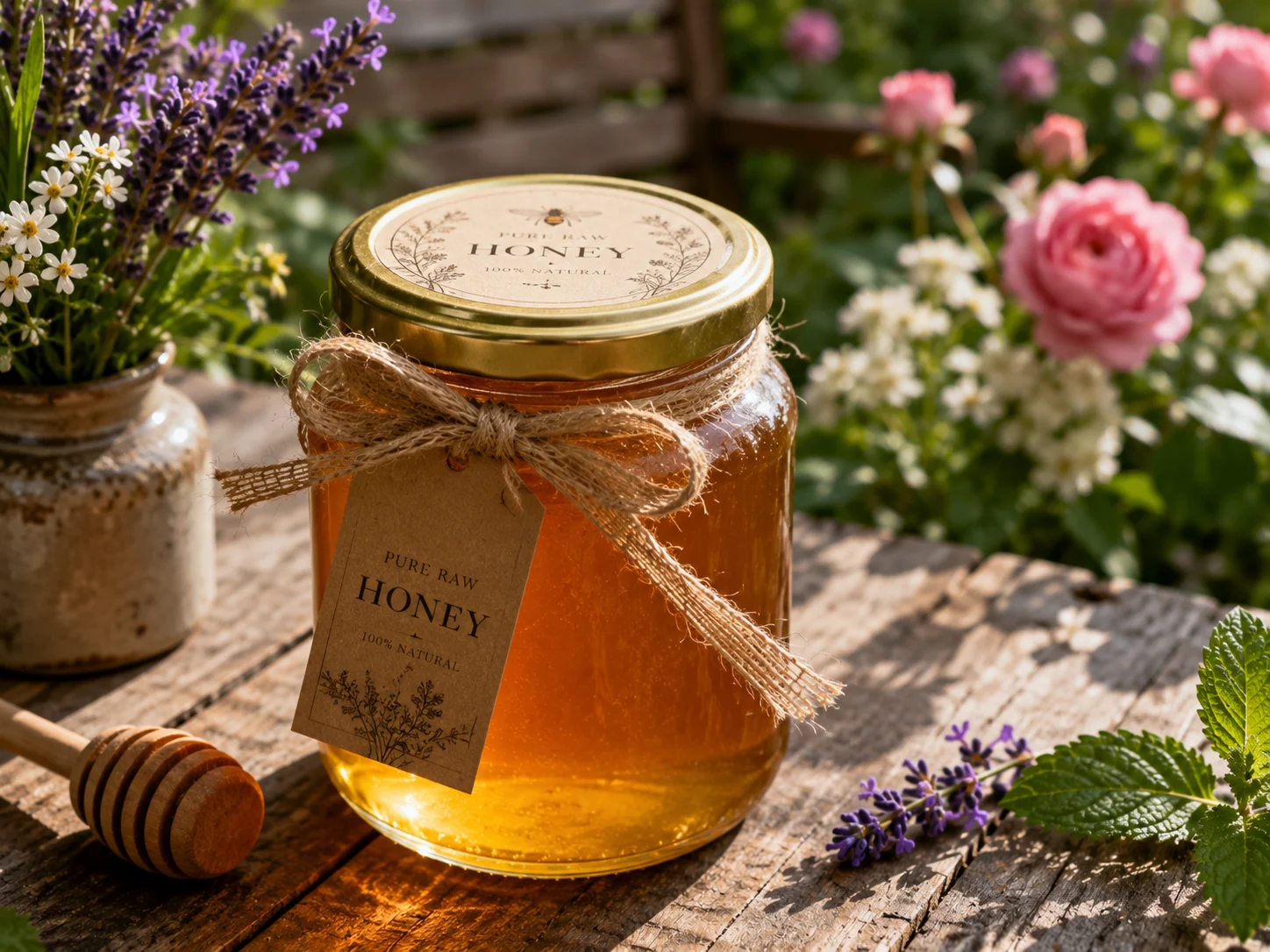
- Share the Harvest: A free jar of hyper-local, raw honey solves 95% of neighborhood complaints. When people taste the incredible product of your hard work, their anxiety usually melts away.
Conclusion
Urban beekeeping is a brilliant way to support local ecology, pollinate your neighborhood gardens, and harvest your own incredible honey. However, it requires a higher standard of management than keeping bees in the country. By utilizing fly-up barriers, providing dedicated water, proactively managing swarms, and practicing a little bit of sweet diplomacy, you can ensure your backyard apiary remains a hidden, harmonious asset to your community rather than a neighborhood nuisance.