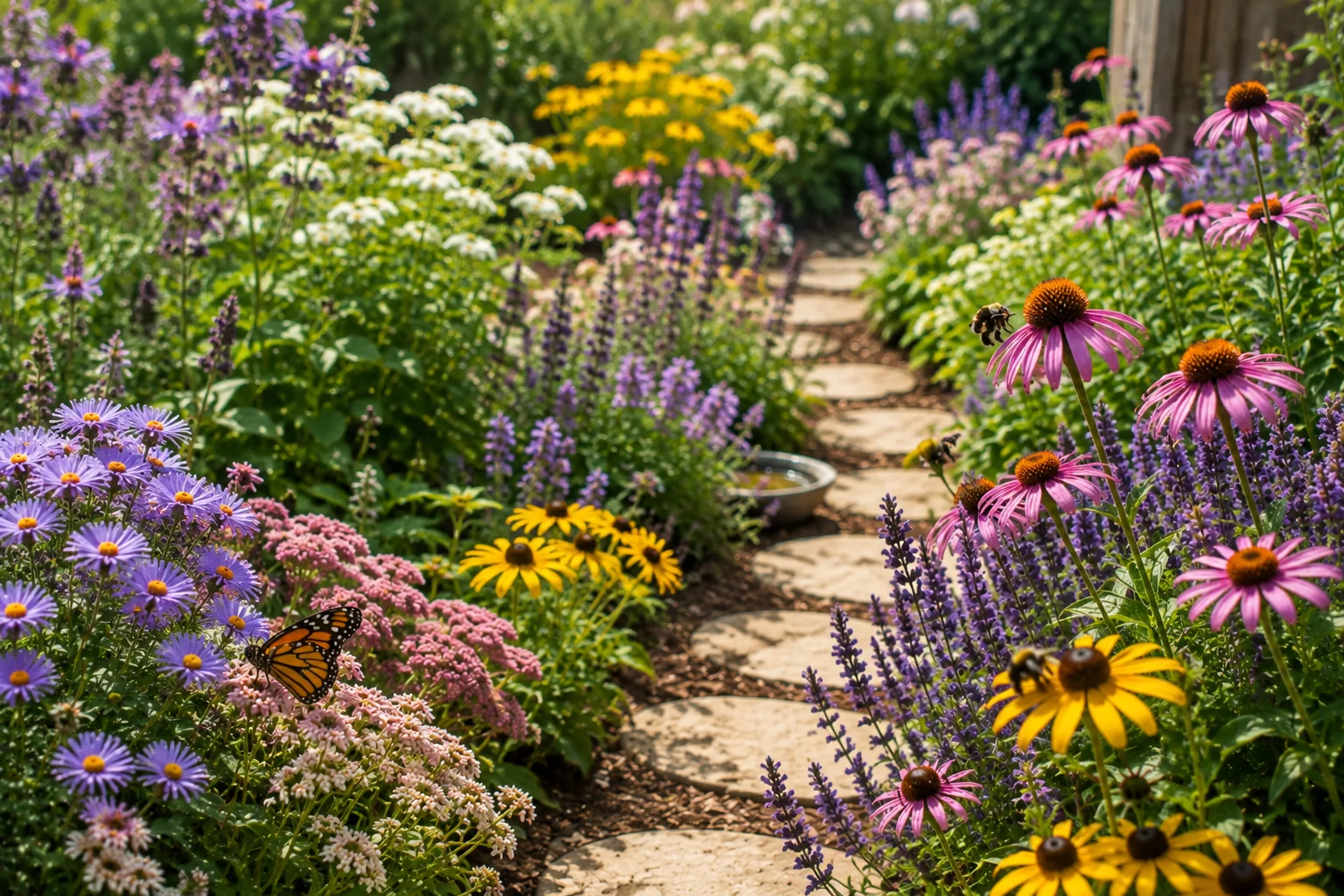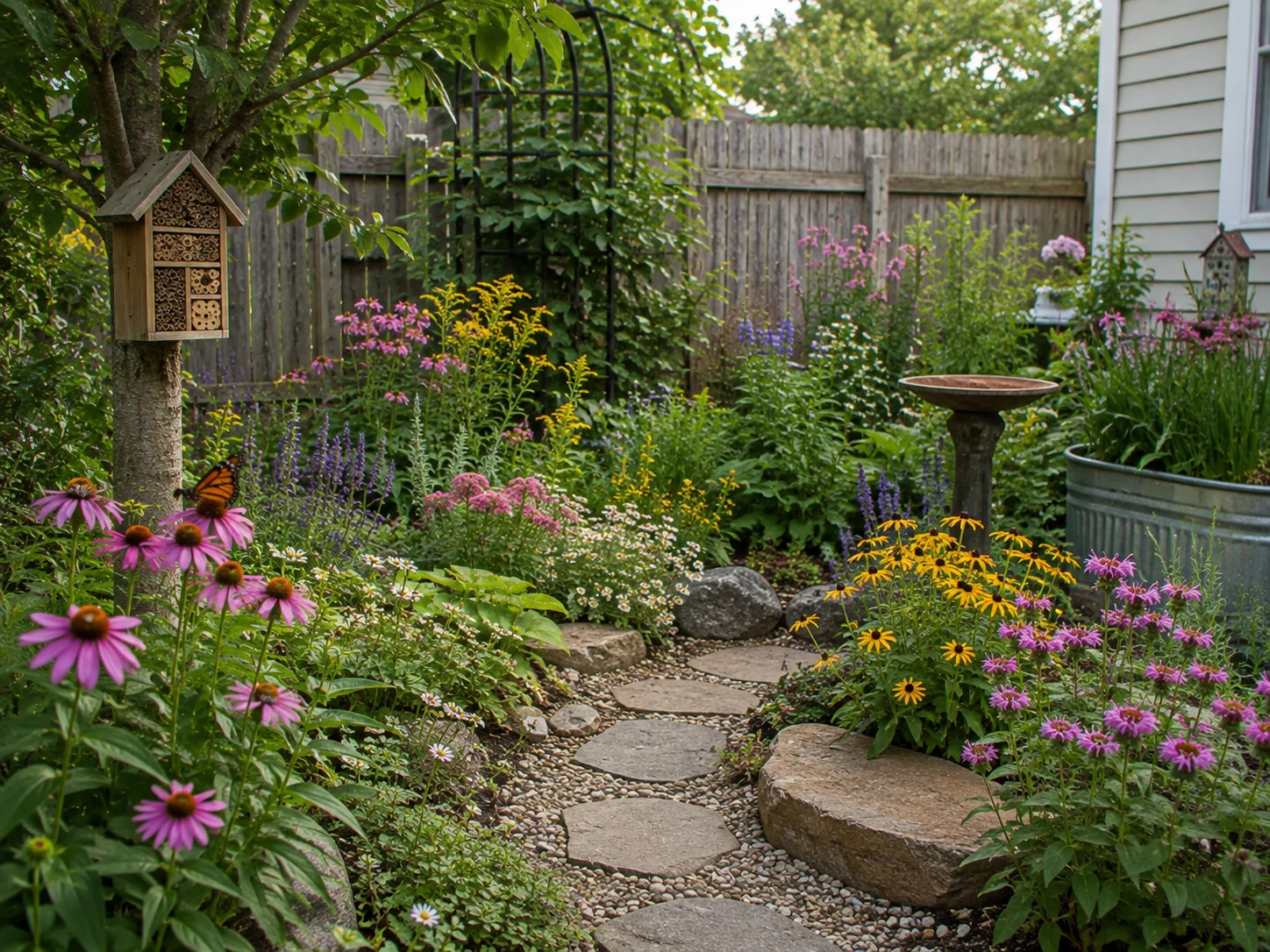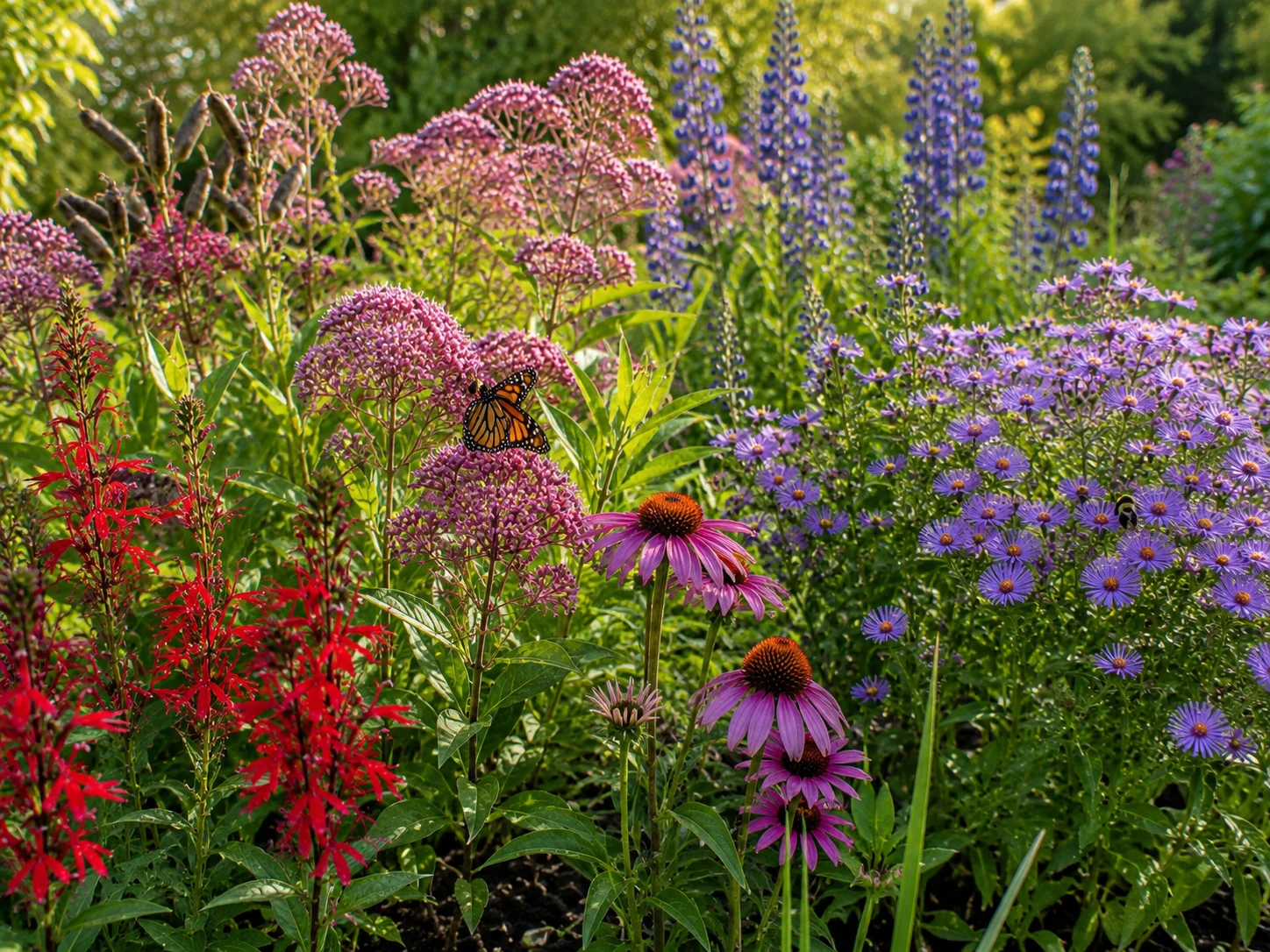

A garden that looks finished by August was not planned properly.
That sounds harsh, but it is true. Too many gardens peak in early summer, then collapse into tired leaves, empty stems, and a few sad bedding plants by September. If you want a garden that still has color, movement, bees, butterflies, and structure in autumn, you need to plant for the late season on purpose.
The trick is not buying random fall flowers when everything starts looking bad. That is patchwork gardening. The smarter move is to build autumn bloom into the garden from the start.
These 12 flowers that keep your garden blooming into autumn will help you stretch color beyond summer, support late pollinators, and stop your borders from looking dead before the season is actually over.
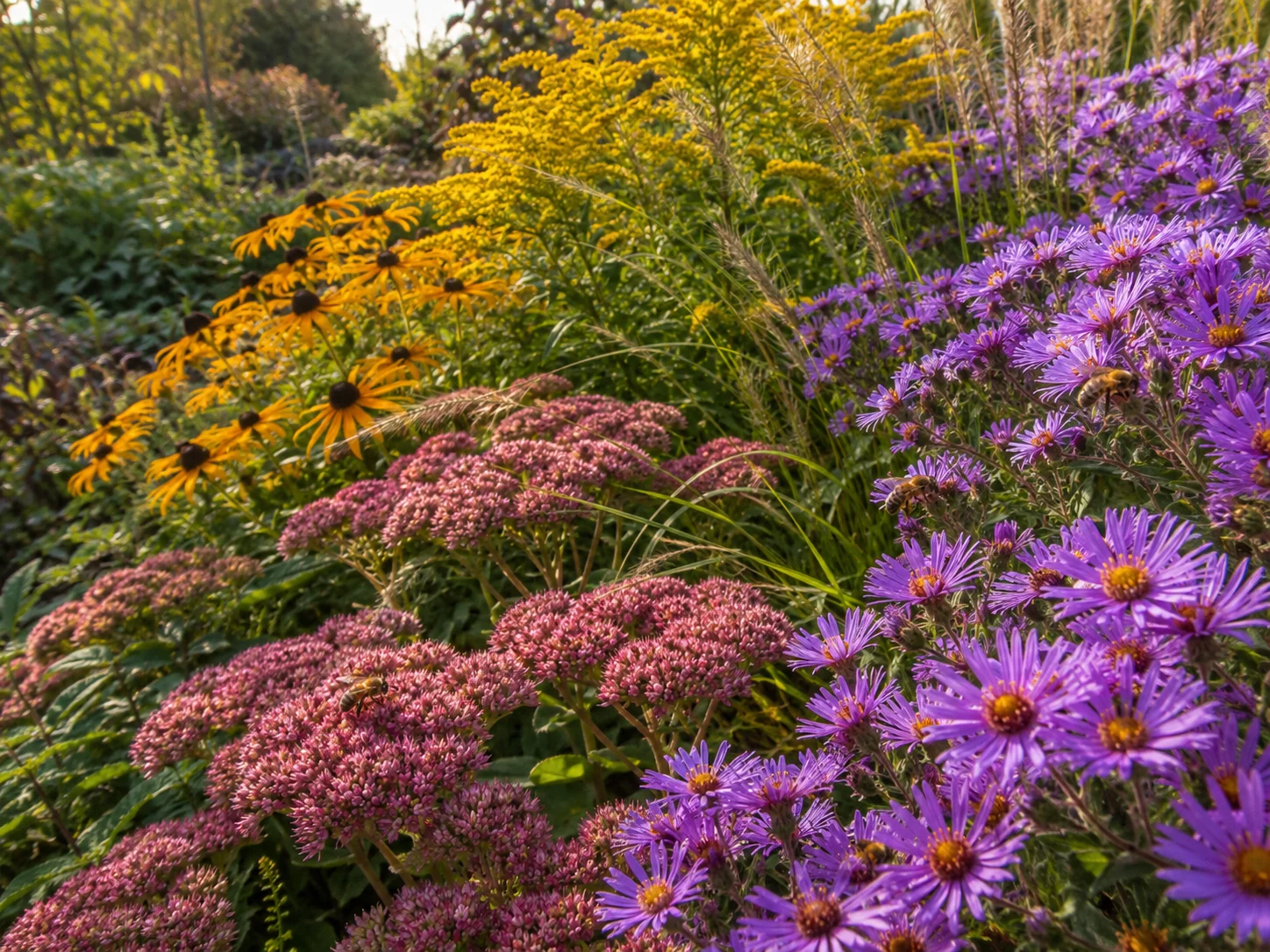
Why Autumn-Blooming Flowers Matter
Autumn flowers do more than make the garden look pretty.
They help bridge the gap between peak summer bloom and winter dormancy. For bees and other pollinators, late flowers can provide nectar and pollen when many common garden plants have already stopped producing. The University of Maryland Extension pollinator garden guide recommends using plants with overlapping bloom periods so pollinators have nectar and pollen available for as long as possible.
That is the design principle: do not let the garden bloom all at once.
A strong autumn garden needs:
- Late flowers for bees and butterflies
- Seedheads for birds and winter structure
- Grasses or shrubs to hold the border together
- Open flowers, not just decorative doubles
- Repeated planting groups so the garden looks intentional
- No pesticides, especially on flowers visited by pollinators
Now let’s get to the plants.
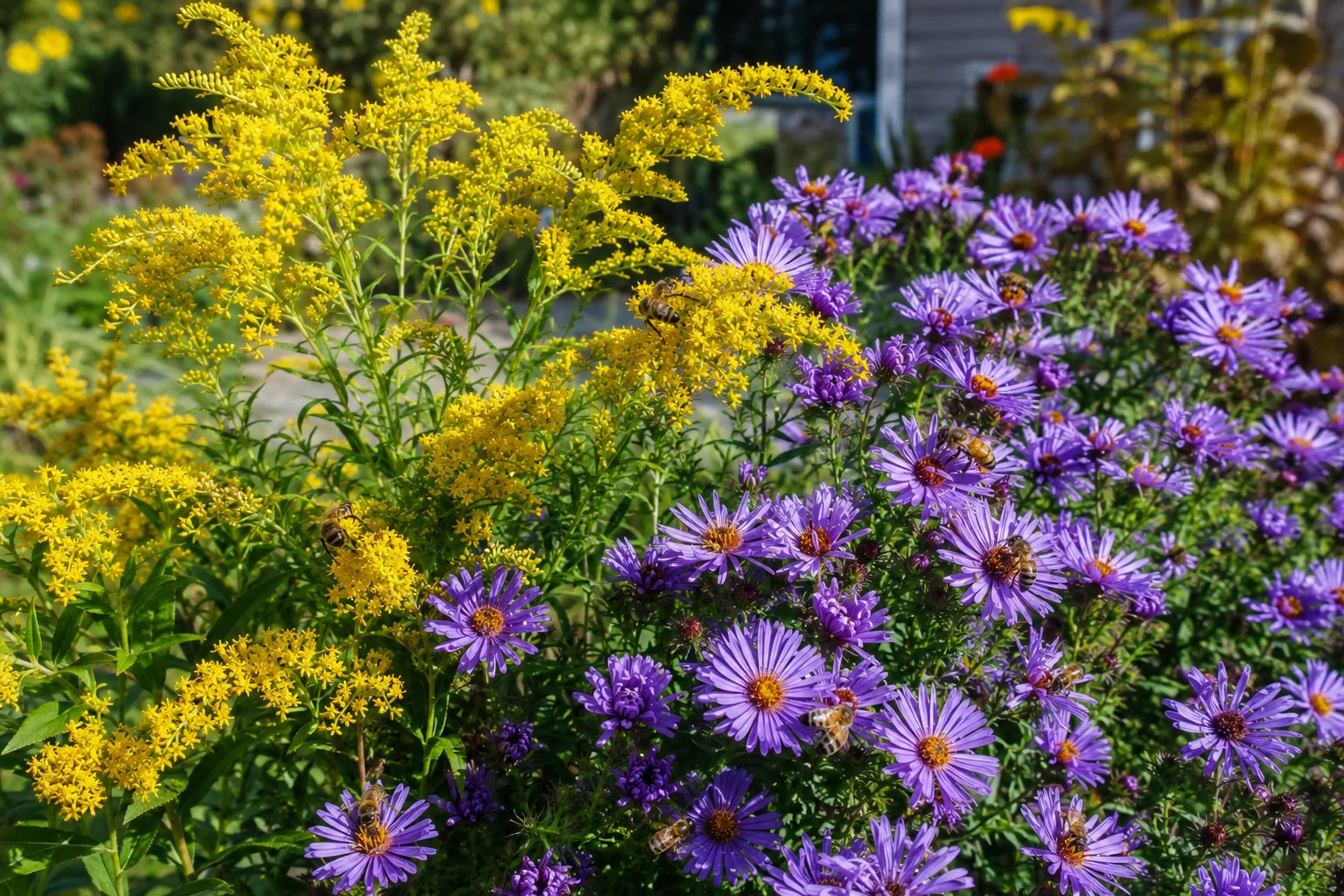
1. Asters
Asters are one of the best flowers for keeping a garden alive into autumn.
They bring clouds of purple, blue, pink, or white flowers just when many borders start fading. Bees often work asters heavily on mild autumn days, and they pair well with goldenrod, sedum, rudbeckia, and ornamental grasses.
Use asters in:
- Sunny pollinator borders
- Meadow-style beds
- Fence lines
- Wildlife gardens
- Cottage gardens
Plant them in clumps, not lonely single plants. One aster looks accidental. A group of asters looks like a plan.
2. Goldenrod
Goldenrod is one of the most misunderstood fall flowers.
People blame it for allergies, but ragweed is usually the bigger airborne pollen problem. Goldenrod is insect-pollinated, which is exactly why bees love it. Its bright yellow flowers bring serious late-season energy to the garden.
Goldenrod works best with:
- Asters
- Grasses
- Sedum
- Rudbeckia
- Joe-Pye weed
- Mountain mint
Choose compact or well-behaved types for small gardens. Some goldenrods spread hard, and pretending they will stay polite is amateur gardening.
3. Sedum
Sedum is one of the easiest autumn garden plants because it is tough, tidy, and useful.
Upright sedums produce flat flower heads that start pink, deepen with age, and still look good after flowering. Bees can land easily on the broad flower clusters, which makes sedum useful as well as attractive.
Why sedum earns its place:
- Handles dry soil
- Works in small gardens
- Looks neat near paths
- Provides late nectar
- Holds winter structure
- Pairs well with grasses and asters
For beginners, sedum is not exciting in a flashy way. It is better than that: it is reliable.
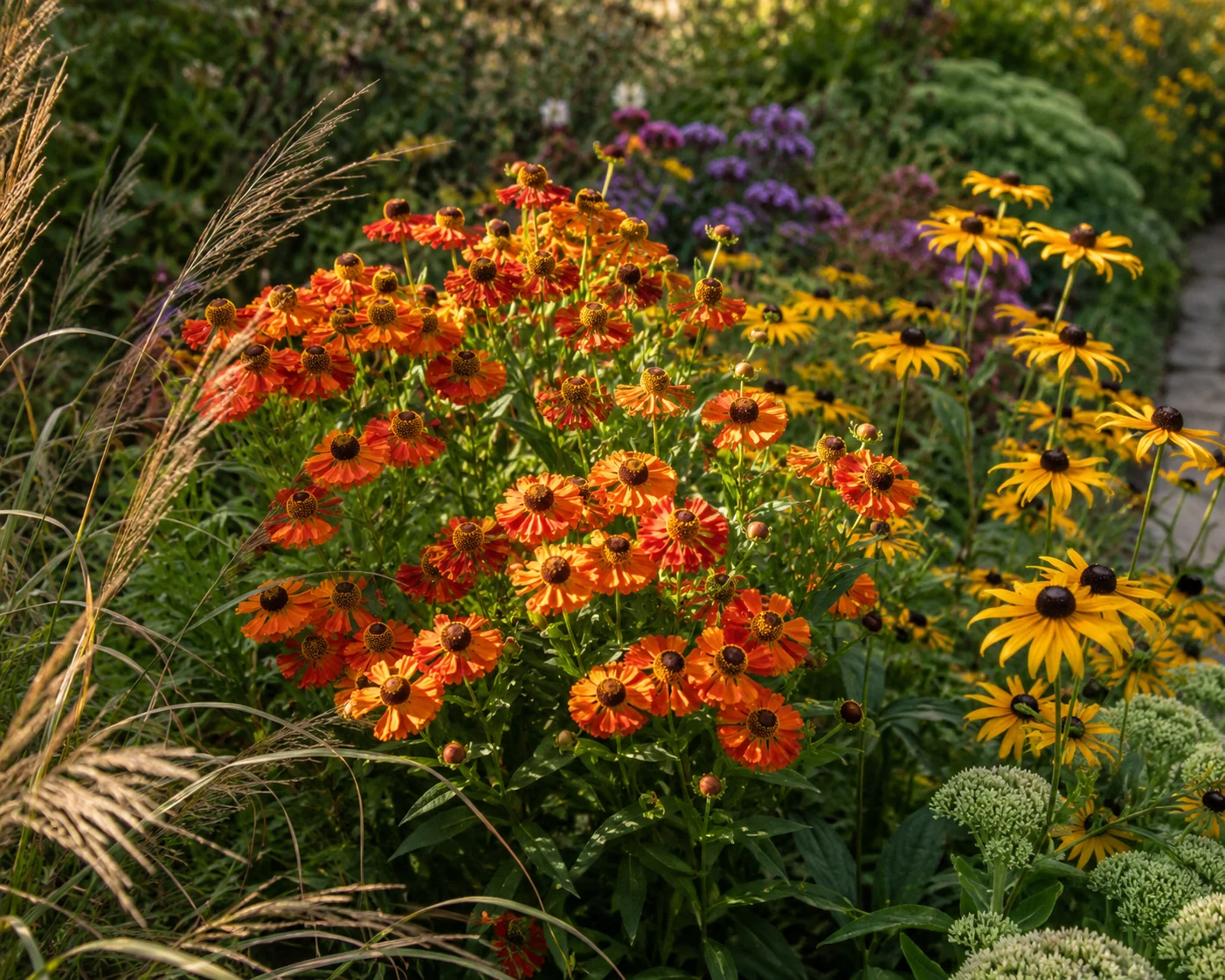
4. Rudbeckia
Rudbeckia, often called black-eyed Susan, keeps borders bright from late summer into autumn.
Its yellow flowers are bold, cheerful, and easy to combine with purple asters, blue salvias, bronze grasses, and pink sedums. Pollinators visit the open flower centers, and the seedheads can also be left standing later.
Use rudbeckia when your garden needs:
- Warm autumn color
- Strong visual impact
- Open flowers for insects
- Low-maintenance late bloom
- A bridge from summer into fall
Plant it in generous groups. Three to five plants will do far more than one lonely specimen.
5. Helenium
Helenium brings copper, orange, yellow, and red tones into the late-season garden.
It is a strong choice if your borders need warmth and drama after midsummer. The flowers are open and accessible, and they mix well with grasses, asters, rudbeckia, and sedum.
Give helenium:
- Full sun
- Decent moisture
- Good airflow
- Support if the variety is tall
- Room to bulk up
Do not hide it at the back where nobody sees it. Helenium is for autumn color. Let it do its job.
6. Japanese Anemones
Japanese anemones are useful because they bloom late and handle part shade better than many classic pollinator plants.
Their pink or white flowers float above the border on tall stems, making them good for softening shady edges, fence lines, and mixed beds. Bees may visit the open flowers, and the plant adds movement when heavier autumn flowers dominate.
Warning: Japanese anemones can spread. In some gardens they behave. In others, they start acting like they paid the mortgage.
Use them where they have room, or choose varieties known to be more restrained.
7. Single Dahlias
Dahlias can keep blooming until frost, but flower form matters.
Big double dahlias are often poor for bees because the flower center is hidden under layers of petals. If you want pollinator value, choose single, collarette, or open-centered dahlias.
Good uses:
- Sunny borders
- Cutting gardens
- Containers
- Late-season color gaps
- Patio pollinator pots
Deadhead regularly to keep flowers coming. Dahlias are not low-effort like sedum, but they pay you back with strong late color.
8. Salvias
Many salvias bloom for a long time, especially if cut back after the first flush.
Their flower spikes add vertical shape, and bees often work them well. In warmer climates, some salvias continue flowering deep into autumn. In cooler areas, they may still help carry the garden through late summer and early fall.
Use salvias with:
- Catmint
- Sedum
- Rudbeckia
- Grasses
- Asters
- Single dahlias
They like sun and well-drained soil. Do not drown them in heavy wet ground and then blame the plant.
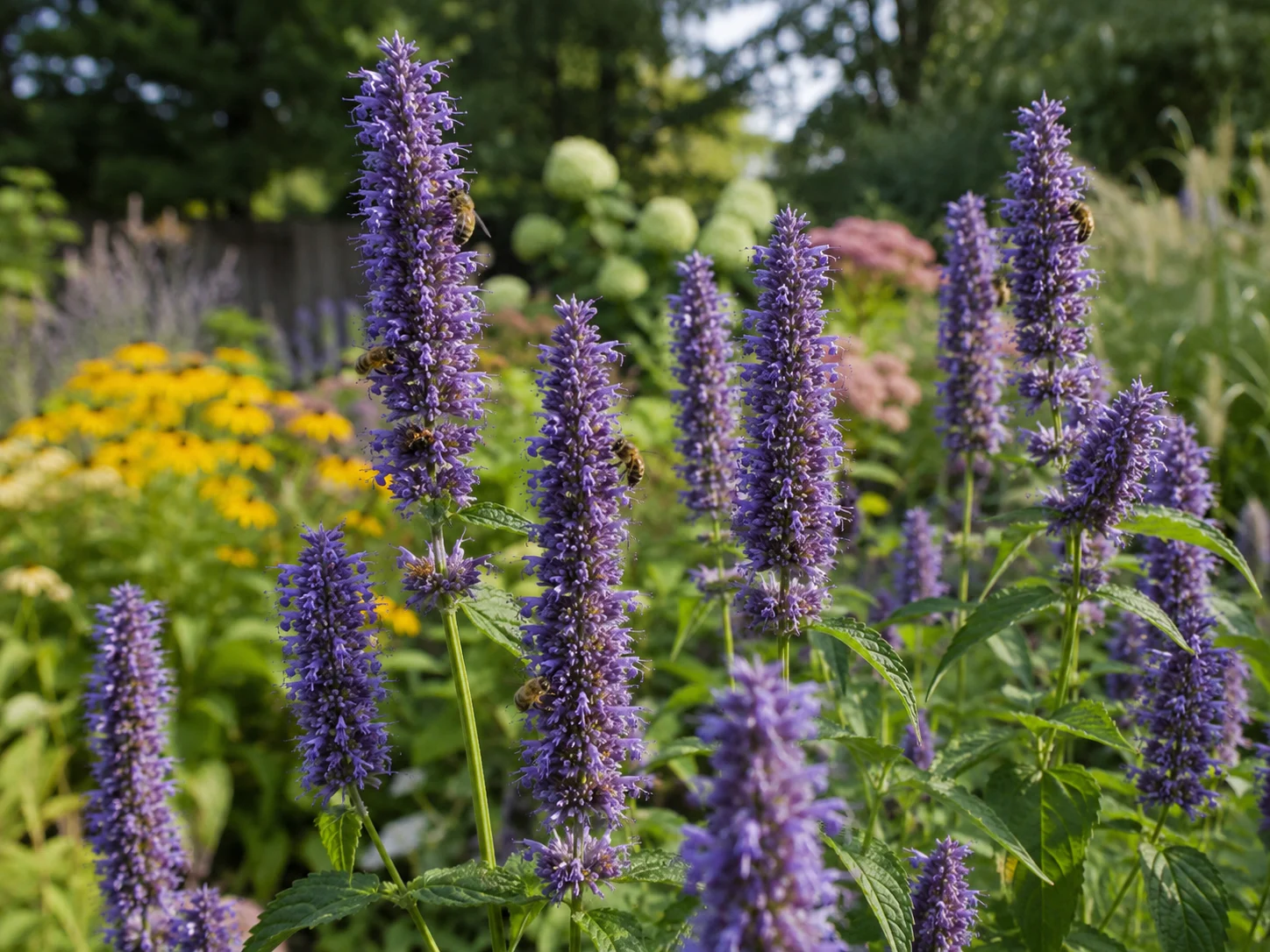
9. Anise Hyssop
Anise hyssop is one of those plants that works harder than it looks.
It has upright flower spikes, aromatic foliage, and a long flowering season. Bees, butterflies, and other pollinators often visit it, and it blends easily into both herb gardens and pollinator borders.
Plant it in:
- Sunny borders
- Herb gardens
- Fence-side beds
- Cottage gardens
- Wildlife gardens
It combines especially well with rudbeckia, echinacea, grasses, and asters. If your goal is autumn bloom with pollinator value, anise hyssop is not optional filler. It is useful structure.
10. Cosmos
Cosmos is an easy annual for extending garden color.
It flowers for months if deadheaded and can keep going until frost. The open daisy-like flowers are simple, cheerful, and accessible to insects.
Cosmos works well when you need:
- Fast color
- Cheap filler
- A soft cottage-garden look
- Late flowers from seed
- A plant for gaps between perennials
Do not overfeed it. Too much rich soil can give you leafy growth instead of flowers. Cosmos performs best when it is not pampered to death.
11. Garlic Chives
Garlic chives are underrated.
They produce white starry flower clusters late in the season, and bees often visit them. They also work beautifully along path edges, in herb beds, vegetable gardens, and container plantings.
Why they are useful:
- Edible leaves
- Late flowers
- Compact growth
- Pollinator value
- Easy division
- Works in small spaces
Let some flower instead of harvesting every stem. If you cut every herb before bloom, you cannot complain that your herb garden does not feed bees.
12. Verbena Bonariensis
Verbena bonariensis adds height without feeling heavy.
Its tall, airy stems carry purple flowers that seem to float above other plants. Butterflies and bees often visit it, and it helps connect lower autumn plants visually.
Use it with:
- Grasses
- Dahlias
- Rudbeckia
- Sedum
- Cosmos
- Asters
In mild climates, it may self-seed. That can be useful or annoying depending on your garden. Pull extra seedlings early if you do not want it spreading.
How to Combine These Flowers for a Better Autumn Border
Do not plant one of each and call it a garden. That is a shopping addiction with soil.
Use combinations.
Sunny Autumn Border Combination
Try:
- Asters
- Goldenrod
- Sedum
- Rudbeckia
- Helenium
- Grasses
This gives you strong color, pollinator value, and structure.
Soft Cottage Autumn Combination
Try:
- Cosmos
- Single dahlias
- Verbena bonariensis
- Japanese anemones
- Salvias
This gives a looser, romantic look without quitting in September.
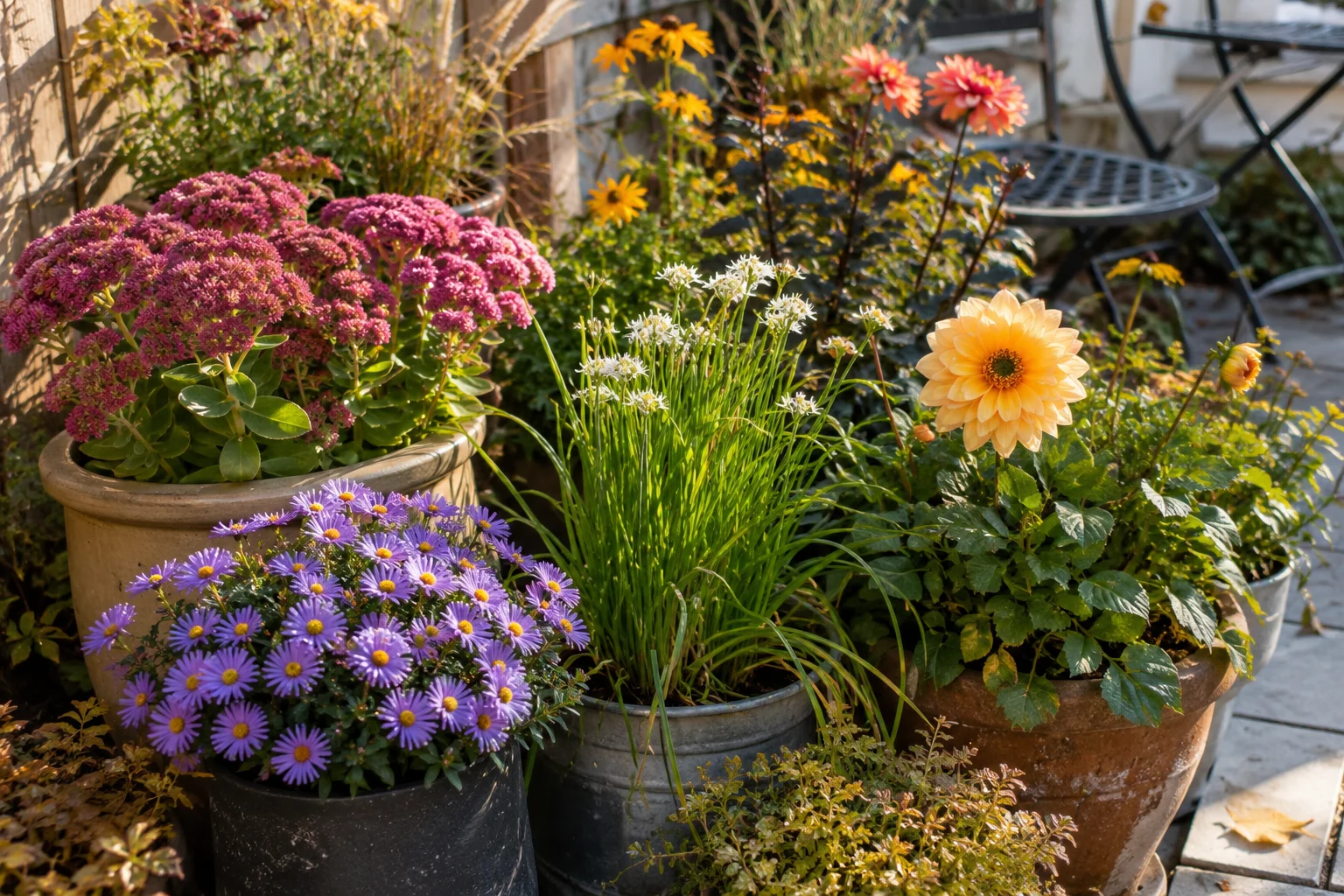
Small Garden or Patio Combination
Try:
- Sedum
- Garlic chives
- Compact asters
- Single dahlias
- Salvia
This works well for containers and narrow borders. If you are working with a balcony, patio, or small paved area, this naturally connects to container pollinator garden for balconies and patios.
Design Rules That Stop Autumn Gardens Looking Messy
Autumn gardens can become beautiful or chaotic. The difference is structure.
Use these rules:
- Repeat plants in groups of 3, 5, or 7.
- Keep taller plants toward the back.
- Add grasses or shrubs for structure.
- Use a clean edge along paths and lawns.
- Deadhead annuals like cosmos and dahlias.
- Leave some seedheads for winter interest.
- Avoid too many unrelated colors in one small bed.
- Plant spring bulbs between perennials in autumn for next year.
A garden that blooms into autumn should not look like the clearance rack at a garden center exploded.
If you are building a border from scratch, use the same layered thinking as pollinator border fence planting plan, even if the bed is not along a fence.
Conclusion: Do Not Let the Garden Die in August
Autumn color does not happen by accident.
If you want flowers that keep your garden blooming into autumn, build the late season into the planting plan. Start with reliable performers like asters, goldenrod, sedum, rudbeckia, helenium, Japanese anemones, single dahlias, salvias, anise hyssop, cosmos, garlic chives, and verbena.
Plant in groups. Choose open flowers. Avoid pesticide use. Keep the edges tidy. Leave some stems and seedheads when the season ends.
That is how you get a garden that still looks alive when everyone else’s borders have given up.