
Late summer can turn a calm apiary ugly fast.
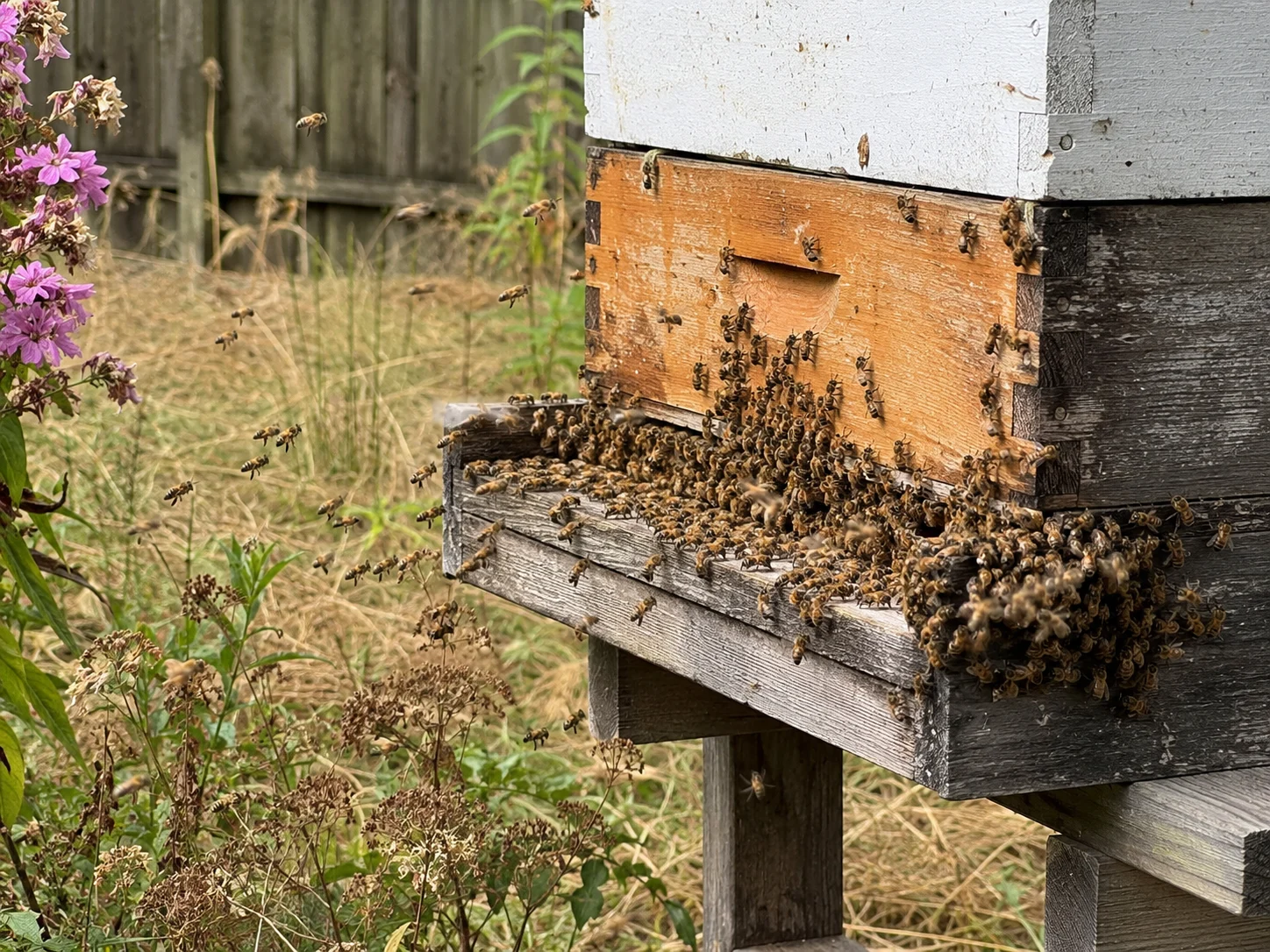
One day the hive entrance looks normal. The next, bees are fighting at the landing board, strange bees are circling the hive, wax crumbs are scattered near the entrance, and the colony feels more defensive than usual.
That is not “busy bee activity.” That can be robbing bees.
Robbing happens when honey bees invade another colony to steal honey, nectar, or syrup. It usually gets worse when nectar is scarce, especially after the main summer flow slows down. According to the University of Florida IFAS guide on robbing behavior in honey bees, robbing can begin with only a few bees but escalate quickly into a full frenzy, especially when nectar is scarce.
This guide shows you how to recognise robbing bees, why it happens in late summer, and what to do before a weak hive gets stripped.
What Are Robbing Bees?
Robbing bees are honey bees that enter another colony or exposed food source to steal honey, nectar, or sugar syrup.
They are usually foragers from stronger colonies. When natural nectar drops, those foragers start searching for easier food. A weak hive with a wide-open entrance, spilled syrup, exposed comb, or poor defences becomes a target.
Robbing bees may attack:
- Weak colonies
- Small nucleus colonies
- Queenless colonies
- Recently split colonies
- Hives left open too long
- Supers left uncovered
- Feeders with syrup leaks
- Honey buckets or extraction equipment
The brutal part is this: once robbers find food, they can recruit more bees. That is why a small problem can become chaos in the same afternoon.
Signs of Robbing Bees
Do not confuse robbing with normal traffic. A strong hive can have heavy entrance activity without being robbed.
Look for these warning signs:
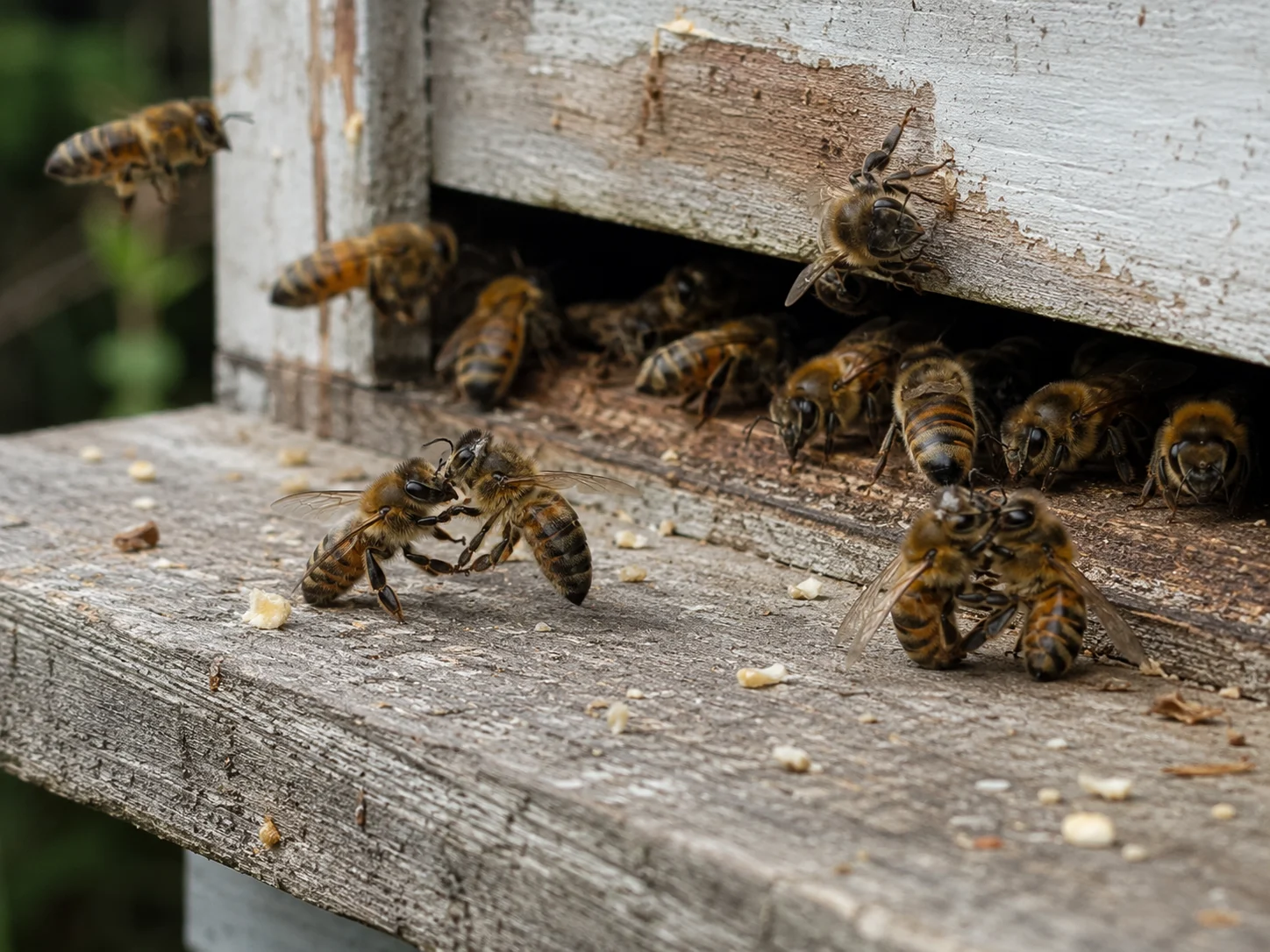
- Bees fighting at the entrance
- Bees trying to enter through cracks, under the lid, or between boxes
- A frantic, zigzag flight pattern around the hive
- Unusual numbers of bees scouting the outside of the colony
- Wax cappings or shredded wax near the entrance
- Dead bees on the landing board or ground
- Bees leaving the hive with full abdomens
- A sudden defensive mood across the apiary
- Honey stores dropping quickly
UF IFAS notes that robbing bees often try to enter through joints, cracks, bottom boards, lids, and other openings—not only the main entrance.
Robbing Bees vs Orientation Flights
Beginners mess this up all the time.
Orientation flights look dramatic, but they are not robbing.
Orientation Flights
Orientation flights usually happen when young bees are learning the hive location. They often appear as bees hovering in front of the hive, facing it, flying in small arcs.
Signs of orientation:
- Bees face the hive
- Flight is calm and floating
- Activity often happens in the afternoon
- No fighting
- No dead bees
- No wax debris
- Bees are not forcing into cracks
Robbing
Robbing is rougher and more aggressive.
Signs of robbing:
- Bees rush the entrance
- Bees fight guards
- Bees crawl around seams and cracks
- Activity looks frantic, not calm
- Wax debris appears
- The colony may become defensive
- The hive may lose stores fast
If there is fighting, wax debris, and bees attacking every gap in the equipment, stop calling it orientation. That is likely robbing.
Why Robbing Gets Worse in Late Summer
Late summer is prime robbing season because colony demand and forage availability stop matching each other.
By late summer:
- Main nectar flows may be ending
- Strong colonies still have many foragers
- Weaker colonies may struggle to defend themselves
- Beekeepers may be harvesting honey
- Supers, comb, and syrup are handled more often
- Wasps and other pests may also be searching for sugar
UF IFAS explains that robbing is more likely when nectar resources are scarce and that weak colonies are especially vulnerable because they have fewer guard bees.
This connects directly to the seasonal forage problem. When the summer nectar flow fades, bees do not politely wait for autumn flowers. They search for sugar wherever they can find it.
why your hive can struggle during the July nectar crash
What Causes Robbing Bees?
Robbing is natural behaviour, but poor beekeeping can trigger it. That is the part people do not like hearing.
Common causes include:
1. Leaving Hives Open Too Long
During a nectar dearth, an open hive smells like free food. Long inspections can attract robbers from nearby colonies.
Work quickly. Keep boxes covered. Do not inspect every hive at once.
2. Spilling Syrup or Honey
Syrup on the ground, feeder leaks, sticky hive walls, and exposed honey comb are open invitations.
Clean spills immediately.
3. Feeding the Wrong Way
Open feeding near the apiary can start robbing behaviour. Leaky external feeders can do the same.
If you feed, avoid spills and make sure the colony can defend the feeder.
4. Wide Entrances on Weak Colonies
A small colony cannot defend a huge entrance. That is like leaving the front door open during a robbery and blaming the thieves.
Use an entrance reducer when needed.
5. Weak or Queenless Colonies
Queenless, diseased, or underpopulated colonies are easy targets. A healthy, organised colony defends itself better.
6. Exposed Supers After Harvest
Honey supers left uncovered can start a robbing frenzy. UF IFAS specifically warns against leaving supers, honey debris, syrup, combs, or extraction equipment exposed around the apiary.
How to Stop Robbing Bees Fast
Once robbing starts, do not stand there watching. Act quickly.
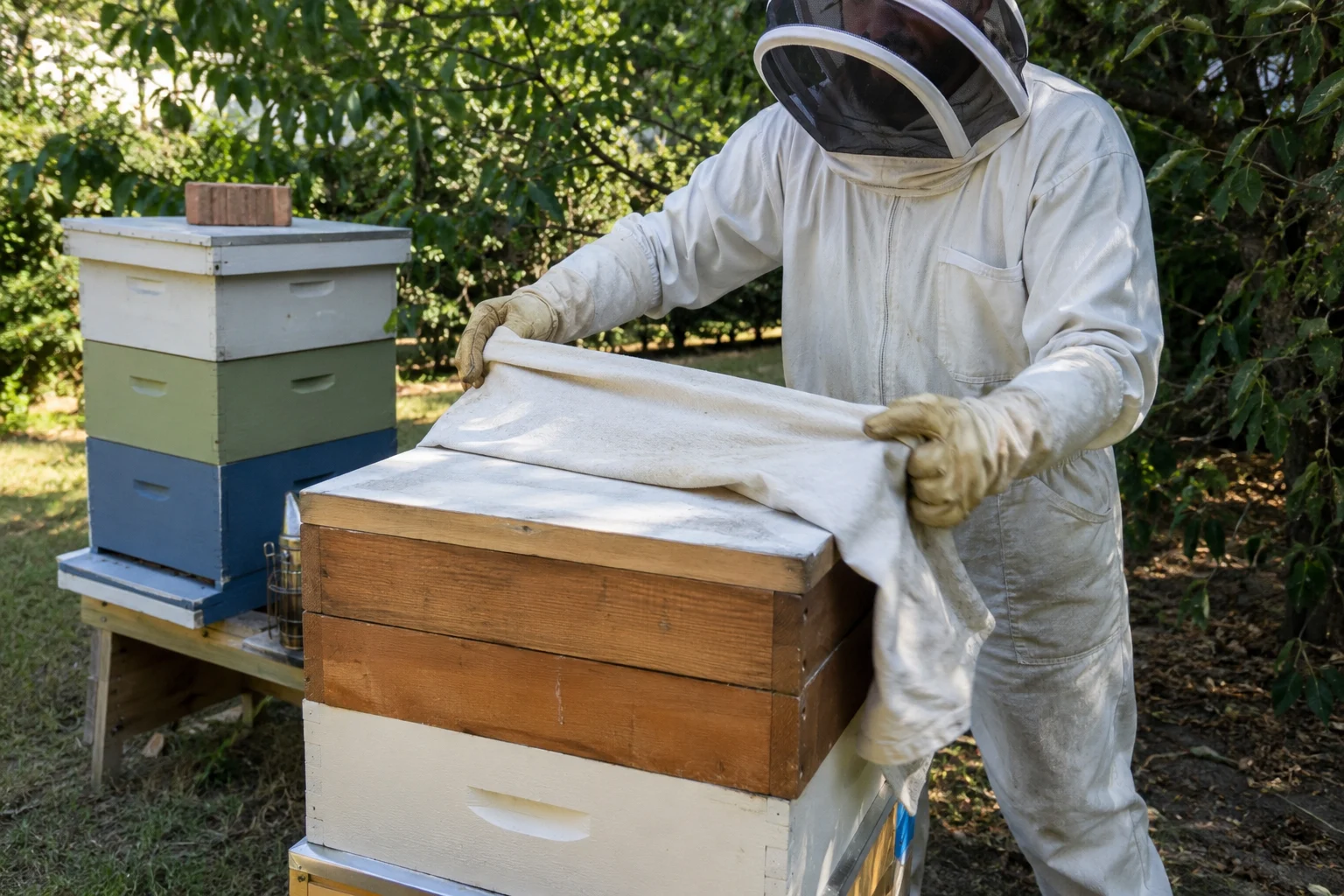
Step 1: Close the Hive
Stop the inspection. Reassemble the hive immediately.
Do not keep frames exposed while “figuring it out.”
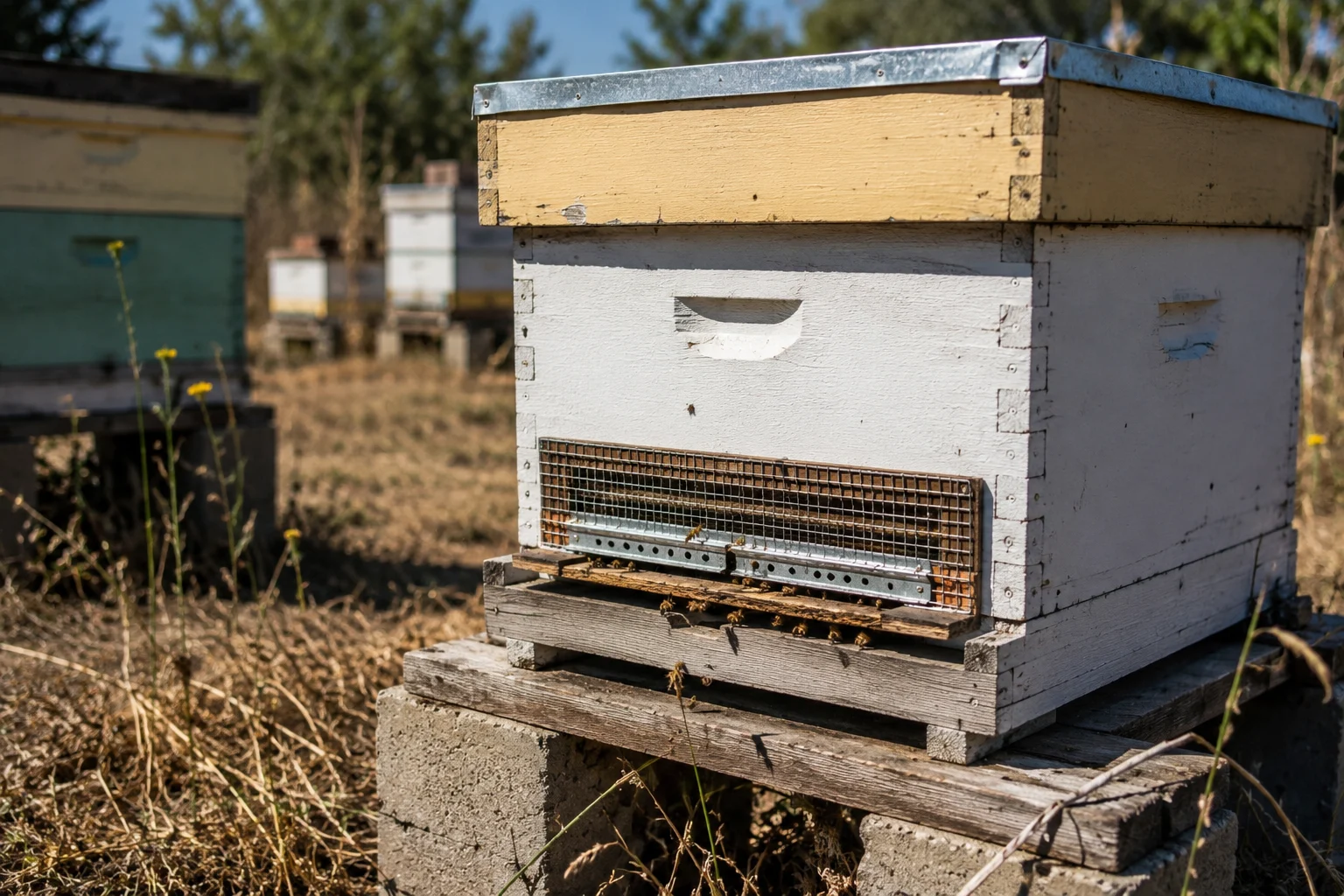
Step 2: Reduce the Entrance
Make the entrance small enough for the colony to defend.
For a weak colony, reduce it to a narrow opening. In cooler conditions, UF IFAS says entrances can be reduced so only a few bees can enter or exit at a time.
Step 3: Seal Gaps
Robbers do not only use the entrance.
Check:
- Lid gaps
- Box joints
- Warped hive parts
- Bottom board gaps
- Feeder gaps
- Cracks between supers
Use tape, grass, foam, or temporary blocking material to close unwanted openings.
Step 4: Remove the Trigger
Remove or cover anything sweet:
- Open syrup
- Exposed comb
- Sticky tools
- Honey buckets
- Wet supers
- Wax scraps
- Leaky feeders
This is non-negotiable. Trying to stop robbing while leaving honey exposed is stupid.
Step 5: Use a Robbing Screen
A robbing screen lets resident bees use a redirected entrance while confusing robbers that keep attacking the old entrance area.
It is especially useful for:
- Nucs
- Weak colonies
- Late-summer splits
- Colonies being fed
- Apiaries with repeated robbing pressure
Install it before the situation becomes a full frenzy.
Step 6: Move the Weak Colony
If the colony is still being overwhelmed, move it away from the apiary until it recovers.
UF IFAS recommends relocating victim colonies when other steps do not reduce robbing.
What Not to Do During Robbing
Some beginner reactions make robbing worse.
Avoid these mistakes:
- Do not leave the hive open
- Do not keep inspecting “just one more frame”
- Do not spill syrup while feeding
- Do not open multiple colonies at once
- Do not leave honey supers uncovered
- Do not assume smoke will solve it
- Do not use chemical repellents at the entrance
UF IFAS specifically notes that smoking is not an effective way to stop robbing and warns against chemical repellents at hive entrances because they may repel the resident bees too.
How to Prevent Robbing Before It Starts
Prevention is easier than rescue.
Use this late-summer robbing checklist:
- Keep inspections short during nectar dearths
- Work one colony at a time
- Cover boxes and supers immediately
- Reduce entrances on weak colonies
- Use robbing screens on vulnerable hives
- Feed inside the hive when possible
- Avoid spilling syrup
- Clean equipment after honey harvest
- Keep colonies queenright and strong
- Do not leave comb, wax, or honey debris outside
- Remove extra empty space weak colonies cannot defend
- Plant late-season forage where possible
best plants to grow near a backyard beehive
Your site already has strong supporting content around nectar dearth, robbing prevention, water management, and seasonal forage planning, so this article fits naturally into the Honey Road backyard beekeeping pillar.
Feeding Without Starting Robbing
Feeding can help a light colony, but sloppy feeding can start the exact problem you are trying to avoid.
Better feeding habits:
- Feed in the evening
- Use internal feeders where practical
- Reduce entrances before feeding weak colonies
- Clean syrup spills immediately
- Avoid open feeding near the apiary
- Do not leave feeder jars leaking
- Feed all needy colonies at the same time if appropriate
- Keep the outside of the hive dry and clean
If a colony is too weak to defend food, feeding alone may not be enough. It may need reducing in size, combining, moving, or closer inspection for queen and disease problems.
Late-Summer Apiary Routine to Reduce Robbing
During late summer, shift into defensive management.
A simple routine:
- Check hive weight weekly.
- Inspect quickly and purposefully.
- Keep entrances reduced on weaker colonies.
- Clean up after every harvest or feeding session.
- Watch entrance behaviour in the afternoon.
- Plant or protect late forage where possible.
- Do not let failing colonies sit exposed.
A weak colony in late summer is not just “struggling.” It can become a robbing magnet that spreads chaos across the whole apiary.
Keep Reading
Robbing bees are usually part of a bigger seasonal pressure problem. Keep building the full system with these guides:
- Why Your Hive Can Struggle During the July Nectar Crash
- Best Plants to Grow Near a Backyard Beehive
- Small Backyard Beekeeping: What You Need Before You Start
Final Takeaway
Robbing bees are not something to ignore.
If you see fighting, wax debris, frantic bees attacking cracks, and stores dropping fast, act immediately. Close the hive, reduce the entrance, seal gaps, remove exposed honey or syrup, and protect weak colonies before the situation becomes a frenzy.
Late summer is when sloppy beekeeping gets punished. Keep the apiary clean, work quickly, feed carefully, and never leave a weak colony with more entrance than it can defend.