
You walk into your garden one morning and stop dead. There it is — a writhing, buzzing, living cloud of thousands of bees hanging from your apple tree like something out of a nature documentary. Your heart rate doubles. Your first instinct is to run.
Take a breath. You are almost certainly in zero danger.
A honeybee swarm is one of the most dramatic and misunderstood events in the beekeeping calendar. For most people — and for most beginner beekeepers — it triggers pure panic. But here’s what the experienced beekeeper standing calmly ten feet away knows that you don’t yet: a swarm is not an attack. It’s a moving house. And once you understand what’s actually happening, the whole spectacle becomes something genuinely extraordinary rather than terrifying.
This guide is written specifically for beginners — people who have either just started keeping bees, or who have just found a swarm in their garden and are urgently googling what to do. By the end, you’ll understand why swarms happen, what the bees are doing, how to stay safe, and — if you keep hives — what practical steps to take before, during, and after a swarm to protect your colony.
First: What Actually Is a Swarm?
Before anything else, let’s kill the fear at its root by understanding what you’re actually looking at.
A swarm is not an attack force. It’s not a sign that something has gone wrong. It is, in fact, a sign of remarkable success — it means a colony has grown so strong and healthy that it has decided to reproduce at the colony level.
Here’s what’s happening biologically:
- The original colony has become crowded. The queen’s pheromones — which normally suppress the workers’ instinct to raise a new queen — can no longer reach every bee in the packed hive.
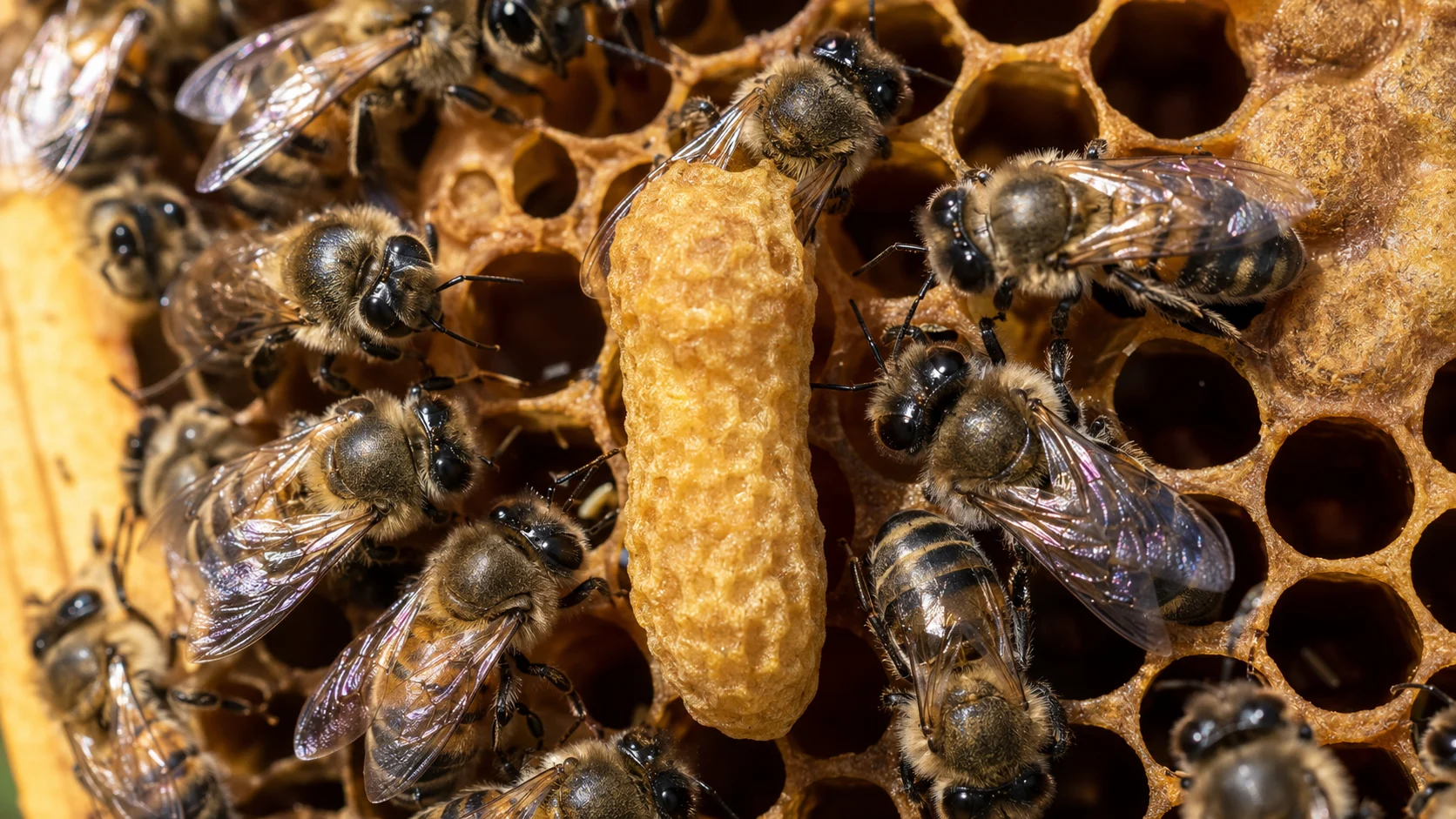
- The workers begin raising queen cells — special enlarged cells where a new queen will develop.
- Before the new queen emerges, the old queen leaves the hive, taking roughly half the colony (anywhere from 5,000 to 20,000 bees) with her.
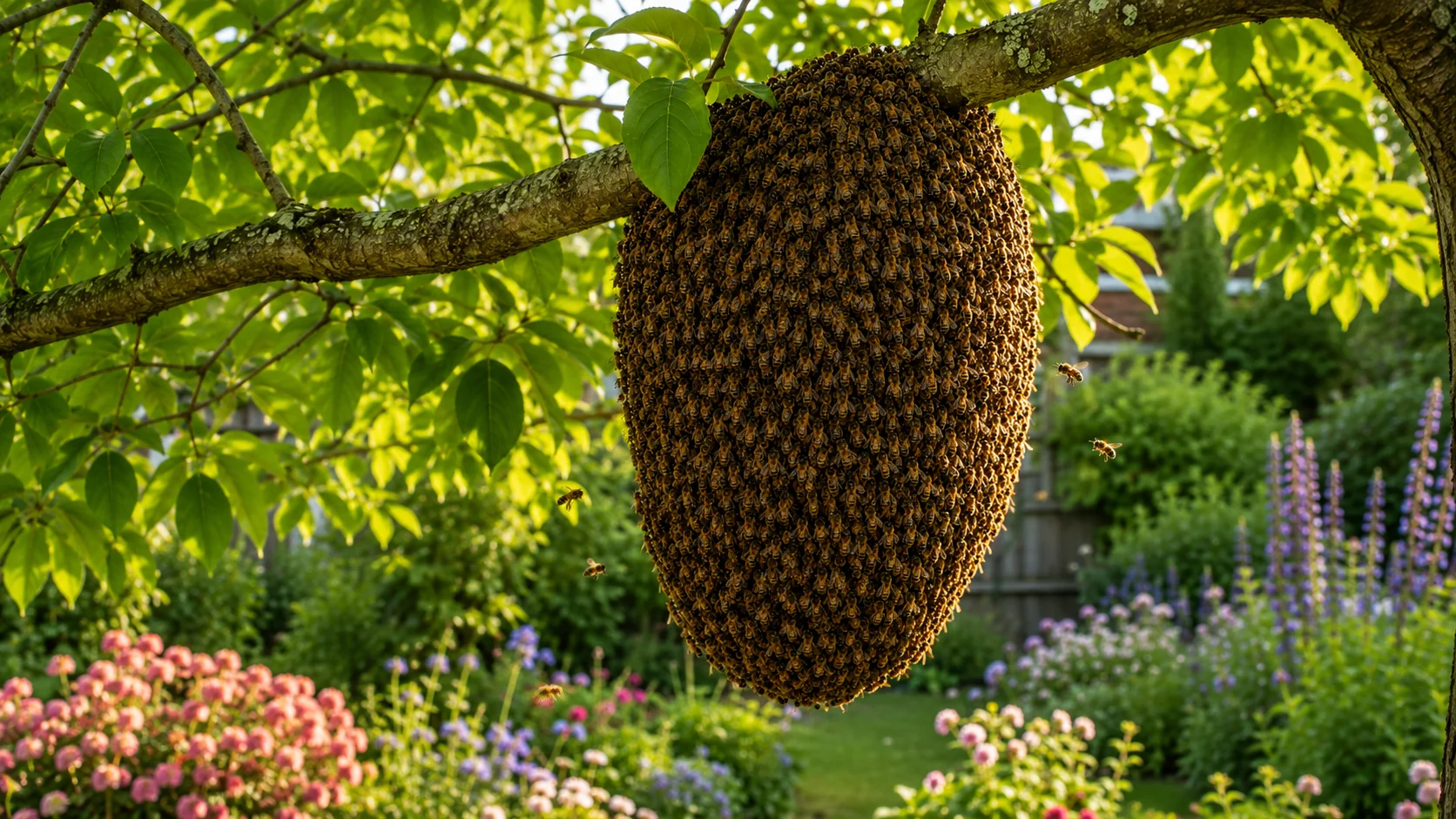
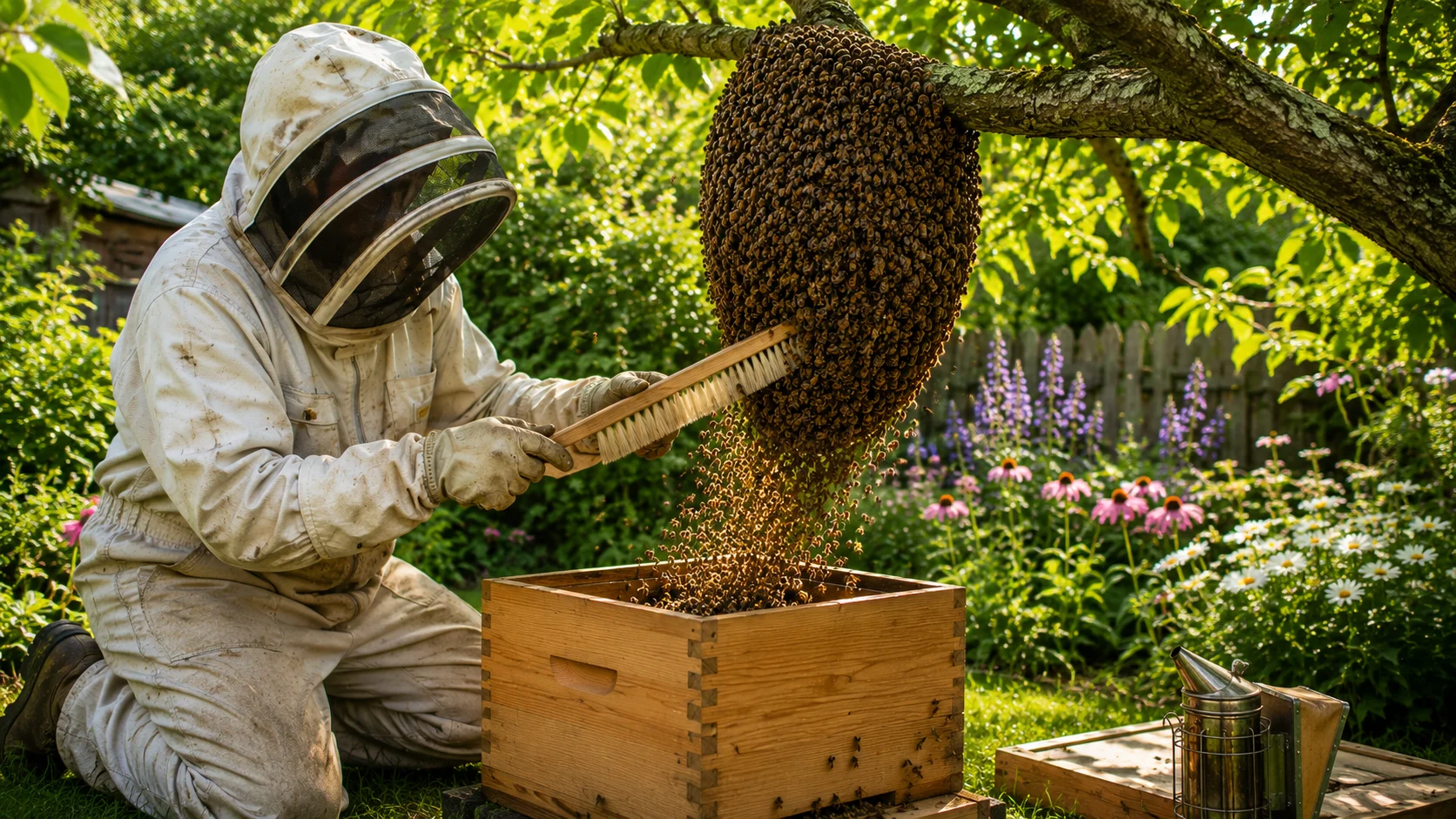
- This departing group is the swarm. They fly a short distance, cluster together on a surface (a branch, a fence post, a letterbox), and wait — sometimes for hours, sometimes for a day or two — while scout bees search the area for a suitable new home.
- Once the scouts agree on a location, the entire cluster lifts off and moves in.
Back at the original hive, the new queen emerges, mates, and takes over the colony. The hive effectively reproduces itself. Two colonies where there was once one.
Why swarms are calm: Every bee in that cluster has gorged on honey before leaving — they filled their honey stomach as fuel for the journey. A bee with a full honey stomach is physiologically less able to sting. They have no hive to defend, no honey stores to protect, no brood to guard. Their only goal is to find a new home. They are, by bee standards, almost entirely preoccupied and unbothered.
When Does Swarm Season Happen?
Swarm season typically peaks in late spring to early summer — May and June in the Northern Hemisphere — though it can begin as early as April in a warm year and extend into July.
The triggers are consistent:
- Warm weather accelerates colony growth
- Good forage (lots of flowering plants) means the colony expands rapidly
- Overcrowding in the hive creates the conditions for swarming instinct to kick in
First-year beekeepers are often caught off guard because their colony spends its first spring quietly building up — and then suddenly, without warning, hits critical mass and swarms. It’s not a failure on your part. It’s the colony doing exactly what colonies do.
Part 1: BEFORE — How to Reduce the Chances of Swarming
You can’t prevent swarming entirely — it’s a deep biological drive. But you can significantly reduce the likelihood through good hive management. These are the basics every beginner should understand going into their first spring.
Inspect Regularly
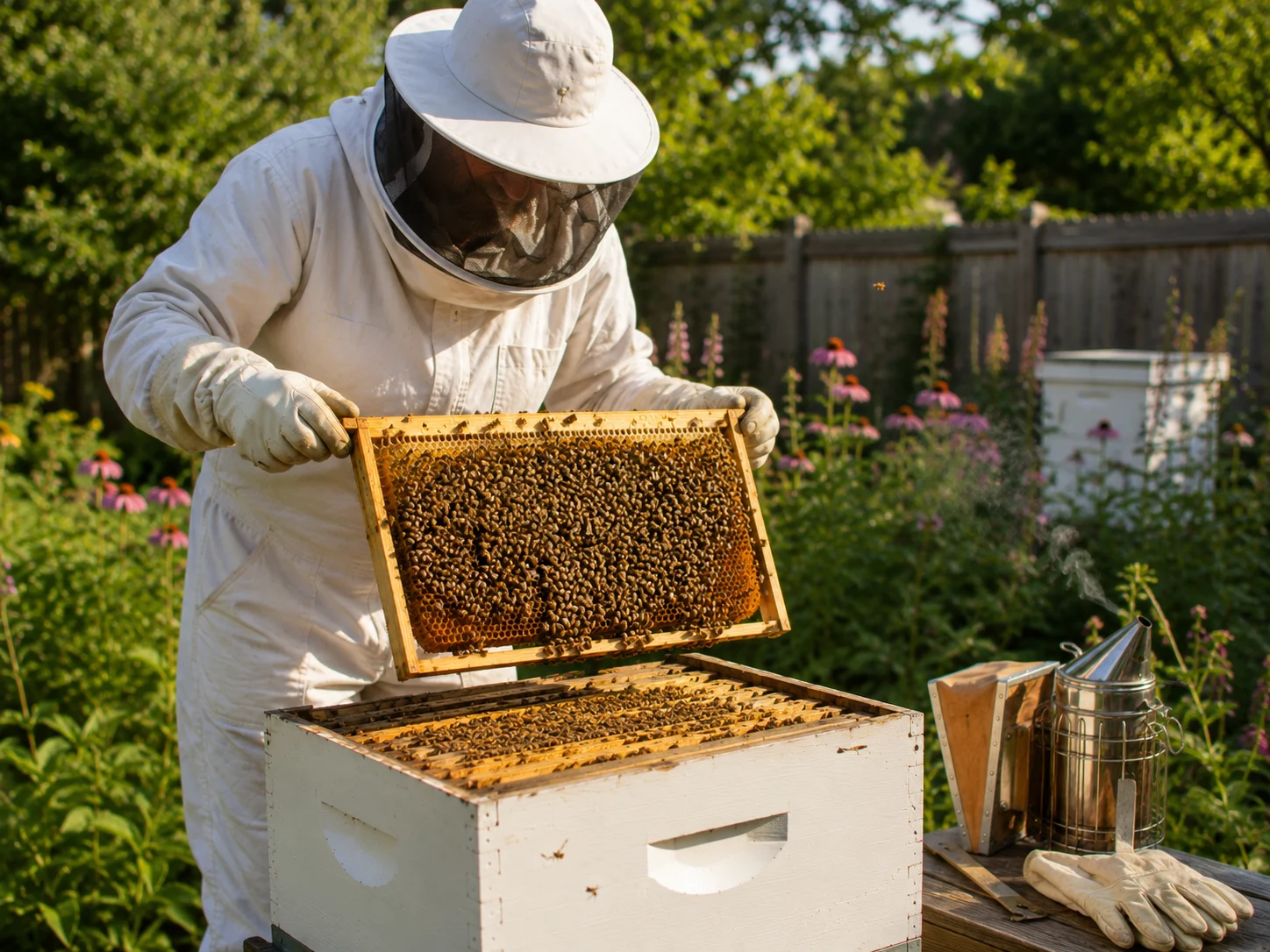
From April onwards, inspect your hive every 7–9 days during swarm season. You’re looking for:
- Queen cells — enlarged, peanut-shaped cells, usually found along the bottom edges of frames or on the face of the comb. Their presence means the colony is preparing to swarm.
- Overcrowding signs — frames packed solid with bees, little empty space, bees “bearding” heavily on the outside of the hive.
- Backfilling — the brood nest being filled with nectar, leaving the queen less space to lay. This is a classic pre-swarm condition.
a full seasonal inspection checklist and what to look for frame by frame.
Give the Colony More Space
The single most effective swarm prevention tool is simply adding a super (an extra box for honey storage) before the colony runs out of room. A crowded hive swarms. A hive with room to expand is far less likely to.
If you’re seeing bees crammed into every frame and little empty space, add space immediately — don’t wait for your next scheduled inspection.
The Artificial Swarm Technique
If you find sealed or unsealed queen cells during an inspection, the colony has already committed to swarming. At this point, swarm prevention is off the table — but you can perform an artificial swarm to control the process:
- Move the original hive to one side.
- Place a new hive on the original spot with a drawn frame of brood, a frame of stores, and — crucially — the old queen.
- Leave the original hive (now offset) with the queen cells in place.
- Field bees returning to the original spot will fill the new hive. The old hive raises its new queen naturally.
This mimics what a natural swarm does but keeps everything contained and manageable. It’s a fundamental beekeeping skill worth learning before your first swarm season arrives. The British Beekeepers Association has a clear breakdown of swarm management techniques with diagrams that are genuinely useful for beginners.
Part 2: DURING — There’s a Swarm in Your Garden Right Now
You’ve found a swarm. It’s hanging from your fence, your tree, or — yes, this happens — your doorbell camera bracket. Here is exactly what to do.
Step 1: Don’t Panic, and Don’t Disturb Them
Walk away calmly. Do not spray them with water, hit the branch, shout, or wave things near them. A swarm cluster is calm — but it responds to vibration, sudden movement, and perceived threat like any living creature. Leave them alone and they will almost certainly leave on their own within 24–48 hours.
Keep children and pets away from the immediate area, but there is no need to evacuate your garden.
Step 2: Watch From a Safe Distance
A clustered swarm is actually fascinating to observe. You’ll see bees returning and leaving in small groups — these are the scouts. Watch them and you’re watching a democratic decision-making process in real time. how bees make collective decisions and why their intelligence as a group is extraordinary.
Step 3: Call a Local Beekeeper (Not Pest Control)
If the swarm has been there more than 24 hours, or if it’s in a problematic location, contact a local beekeeping association rather than a pest control company. Most beekeeping associations maintain a swarm collector list — registered beekeepers who will come and collect the swarm for free, rehome the bees, and add them to their apiary.
In the UK, the British Beekeepers Association swarm collector directory is the first place to look. Most countries have an equivalent through their national association.
Never call pest control for a honeybee swarm. Honeybees are under serious pressure globally and killing a swarm of 10,000+ bees is an enormous and entirely unnecessary loss.
What If It’s Your Own Colony Swarming?
If you keep bees and you witness your own colony swarming — a boiling cloud of bees pouring out of your hive and rising into the air — the best thing you can do is watch and stay calm.
Mark where they land. If they settle nearby, you have the opportunity to collect them. Have an empty hive or a skep ready if you can. The goal is to get the queen into the new box — once she’s in, the rest of the bees will follow.
Part 3: AFTER — What Happens Next (In Your Hive and In the Swarm)
In the Swarm (The Departing Group)
Once the scouts have agreed on a new home, the cluster lifts off all at once in a sudden roaring cloud and moves to the new location. They will begin building comb, the queen will start laying within days, and within a few weeks you have a fully functioning new colony.
If you collected them into a hive box, give them:
- A frame of drawn comb if you have one (speeds up establishment enormously)
- A light sugar syrup feed for the first week or two while they build up stores
- Minimal disturbance for at least a week — let them settle
In the Original Hive
This is where beginners often make mistakes. After a swarm leaves, the original hive contains:
- Nurse bees and young workers (the older field bees left with the swarm)
- Brood at all stages
- One or more queen cells
Your job is to do as little as possible for at least two weeks. The new queen needs time to emerge, mature, take her mating flights, and begin laying. Constant inspections during this period risk killing her or disrupting the process.
After two weeks, inspect gently and look for eggs — the single-cell eggs standing upright in the base of cells are proof your new queen is laying. If you find eggs, your hive is queenright and recovering well.
If after three weeks you find no eggs, no larvae, and no queen, you may have a problem — a failed or lost queen — and will need to take action, either introducing a new queen or combining with another colony.
Watch for Cast Swarms
A detail many beginners don’t know: after the first (primary) swarm leaves, the original colony can swarm again. These secondary swarms, called cast swarms or after-swarms, are led by a virgin queen and are typically smaller. A strong colony can cast multiple times in quick succession, leaving the original hive dangerously depleted.
If you want to prevent this, you can reduce the queen cells in the original hive to just one or two after the primary swarm has left. Leave the best-looking cell and carefully remove the others. This reduces the impulse to cast again.
A Quick-Reference Timeline for Swarm Season
Use this as your mental checklist from April onwards:
April–May (Pre-Swarm)
- Inspect every 7–9 days
- Add supers before the colony runs out of room
- Watch for queen cells and overcrowding signs
May–June (Peak Swarm Season)
- If you find queen cells: consider artificial swarm technique
- If a swarm appears in your garden: stay calm, call a beekeeper
- If your colony swarms: mark where they land, attempt collection
June–July (Post-Swarm)
- Leave the original hive alone for 2 weeks minimum
- After 2 weeks: inspect for eggs to confirm new queen is laying
- Watch for cast swarms in the week following the primary swarm
- Feed any collected swarm with light syrup while they establish
The Sting Risk: What You Actually Need to Know
Let’s address it directly, because beginners always wonder.
Can a swarm sting you? Yes — any bee can sting. But the risk from a clustered swarm is genuinely very low. The gorged-on-honey, no-home-to-defend physiology of a swarming bee makes her far less likely to sting than a hive-bound worker.
The risk increases if you:
- Physically disturb the cluster
- Swat at individual bees
- Make sudden, aggressive movements nearby
Standing two metres away and observing calmly? You’re almost certainly fine. We’ve covered exactly what happens when a bee does sting — the biology, the venom, and why it’s so much worse with wasps — in the full breakdown of bee sting biology and why wasps are a bigger threat than bees
Conclusion: Swarms Are a Sign of Success, Not Disaster
Here’s what to hold onto from this guide:
- A swarm is a colony reproducing — it’s a sign of health and strength, not chaos.
- Swarming bees are at their calmest and least defensive at any point in their lives.
- Prevention comes down to space and regular inspection during April–June.
- If a swarm appears: stay calm, leave them alone, and call a beekeeper — not pest control.
- After a swarm: give your original hive two weeks of peace and then check for a laying queen.
Swarm season can feel overwhelming in your first year. But beekeepers who’ve been through it once almost universally describe it as one of the most thrilling things they’ve witnessed. You’re watching 50 million years of evolved colony intelligence playing out on your apple tree. That’s worth a moment of wonder, not just panic.
Keep Learning for Your First Season 🐝
Swarms are just one piece of the summer beekeeping puzzle. These posts from the blog will help fill in the rest:
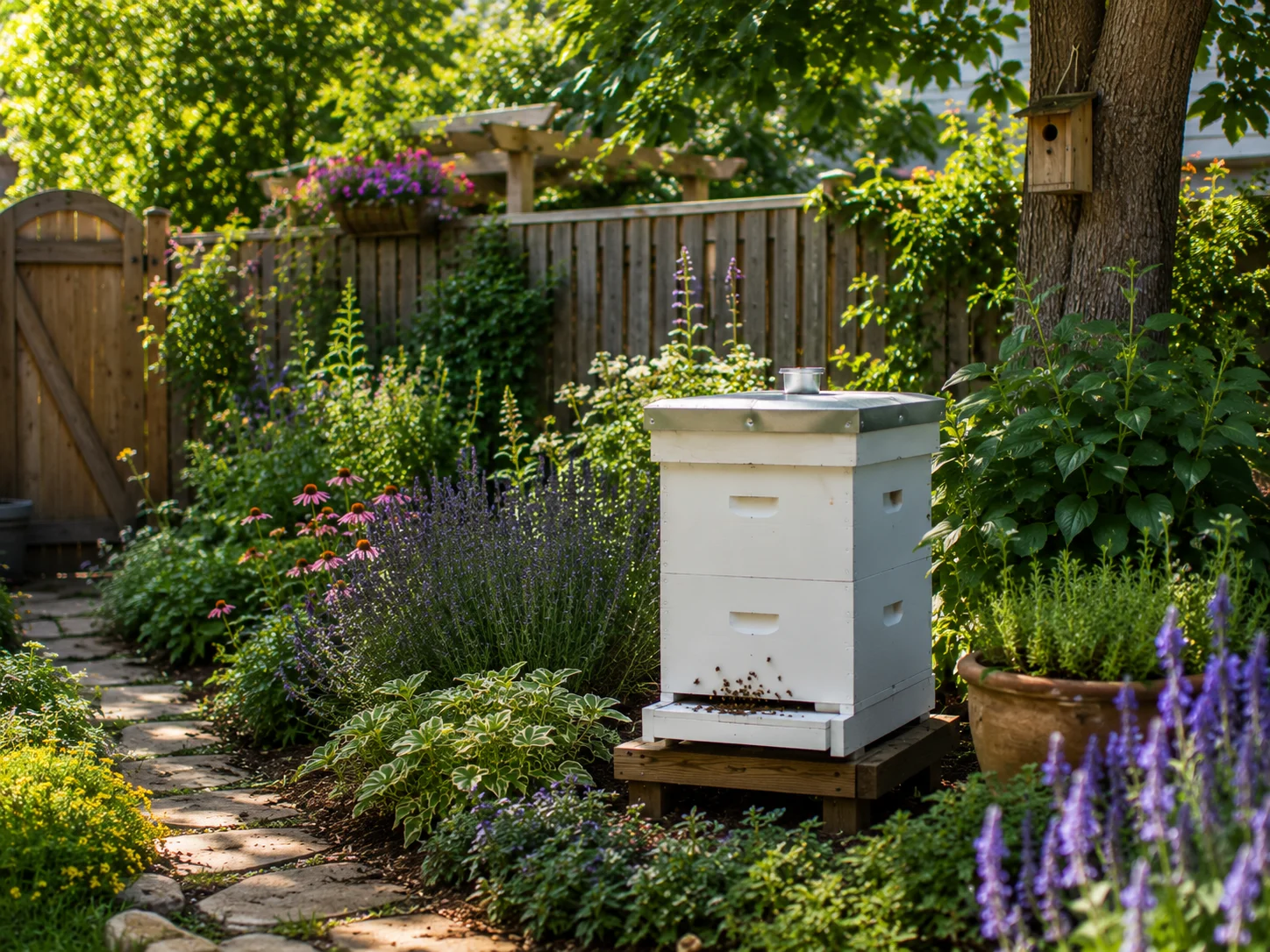
- 🏡 The 10 essentials of garden apiary layout — and how hive placement affects swarming behaviour — Where you site your hive influences everything, including swarm dynamics.
- 📅 What the July nectar crash means for a recently swarmed colony trying to build up stores — A swarm collected in June faces the summer dearth almost immediately. This post explains how to help them through it.
- 💀 The full biology of a bee sting — and why swarming bees are so unlikely to use it — Understanding the sting mechanism is the fastest way to dissolve the fear.
Your first swarm season is a rite of passage. Go into it informed, and you’ll come out the other side a much more confident beekeeper. 🍯