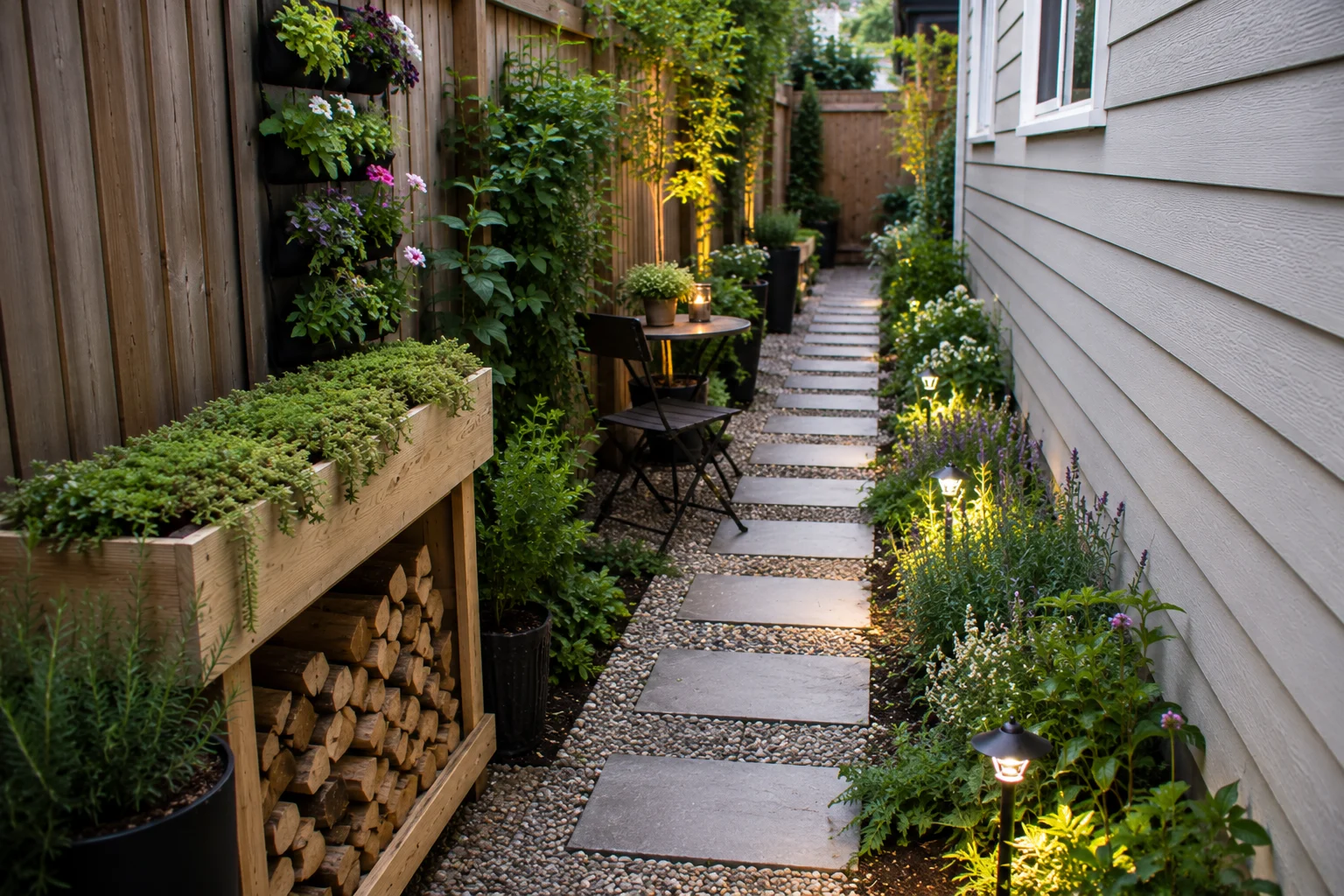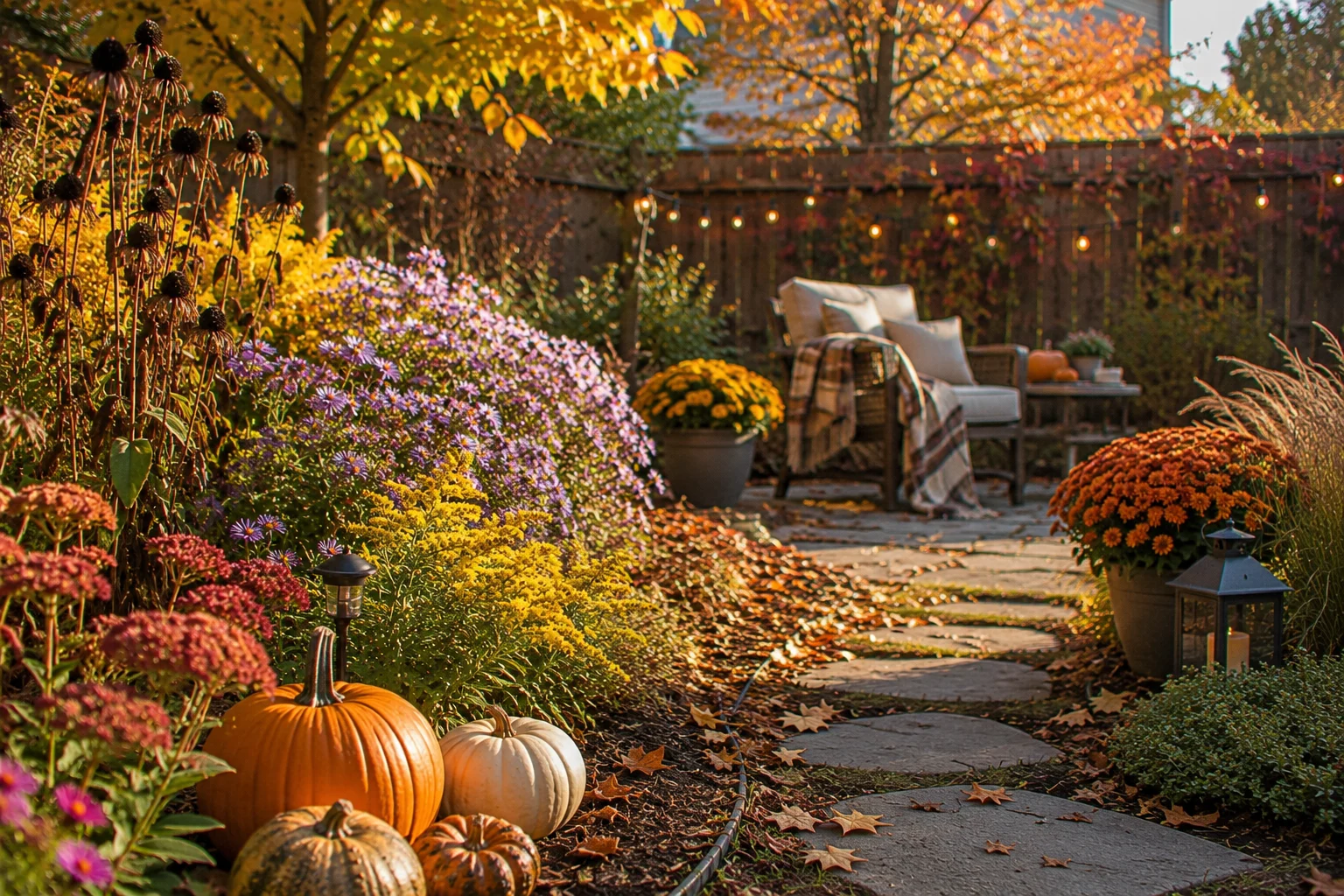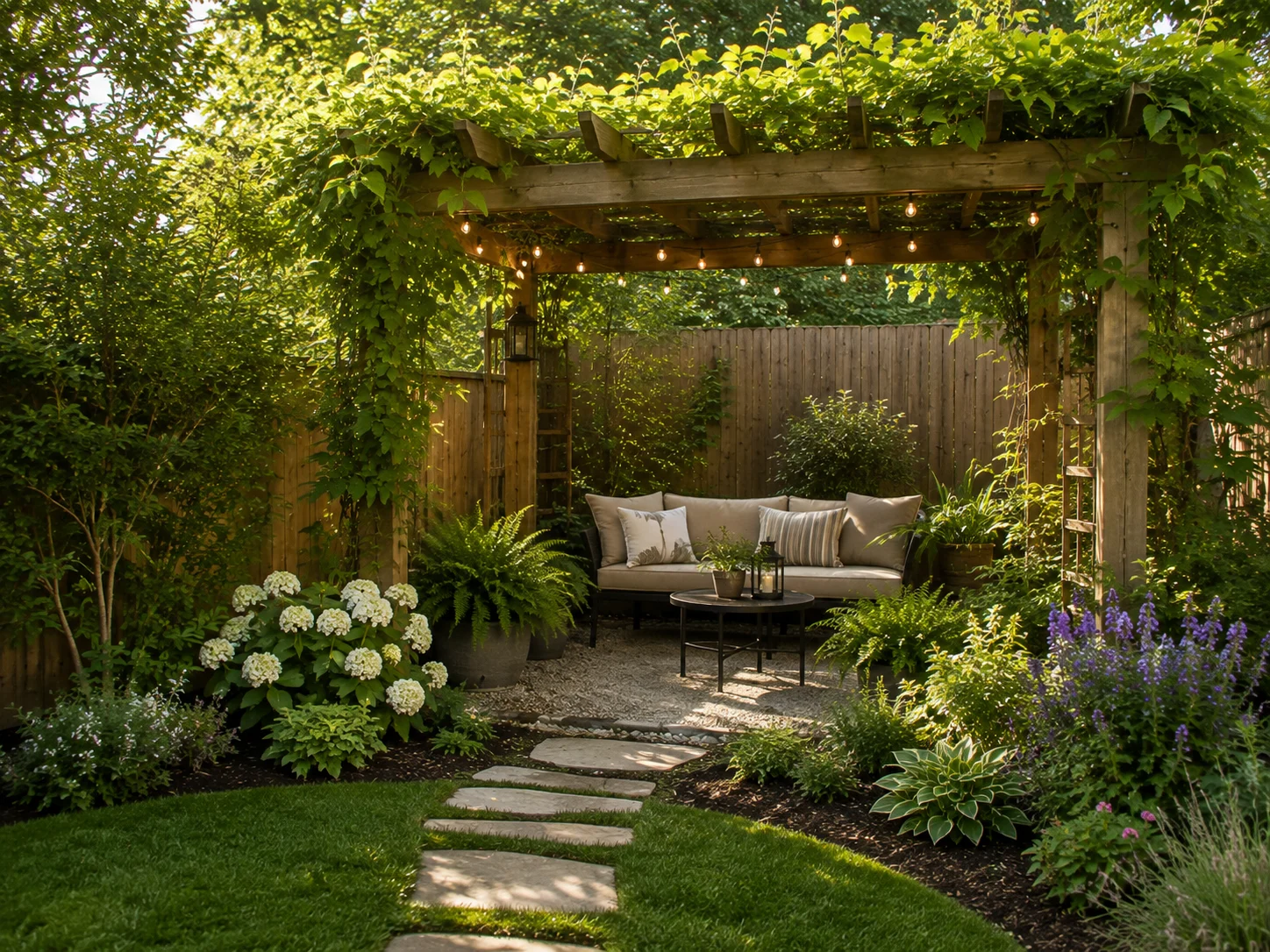

A low maintenance front yard is designed around plants and materials that hold up well with minimal watering, pruning, and replanting, so the space still looks finished without demanding a weekly time commitment. Homeowners like this approach because curb appeal matters, but most people do not want a front yard that requires constant attention just to look presentable.
This is achievable because low maintenance does not mean low impact. Choosing the right plants, drought-tolerant perennials, structural shrubs, and ground covers among them, can produce as much visual interest as a high-maintenance bed, just with far less ongoing work once everything is established.
Layout & Structure
1. Simplified Foundation Bed
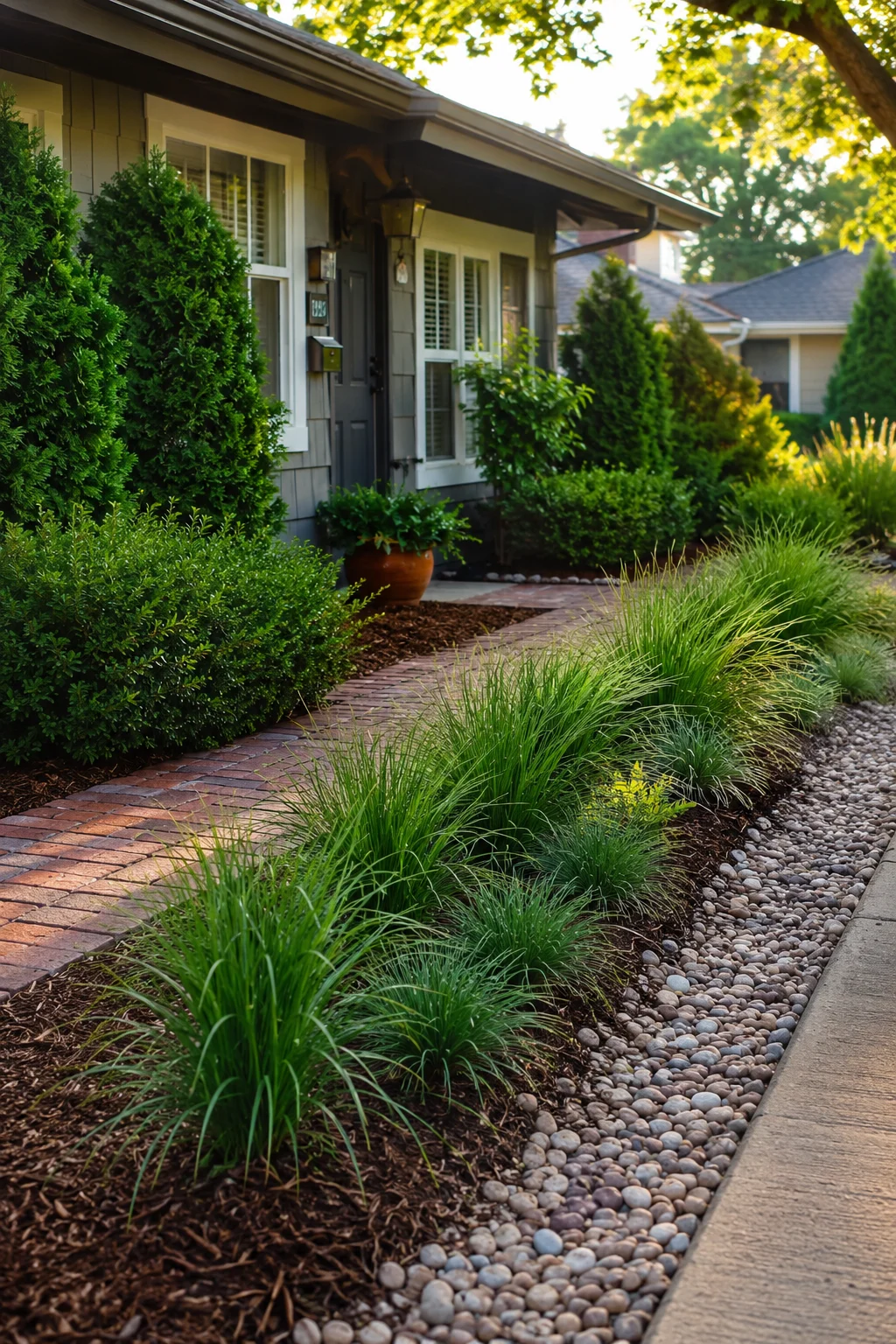
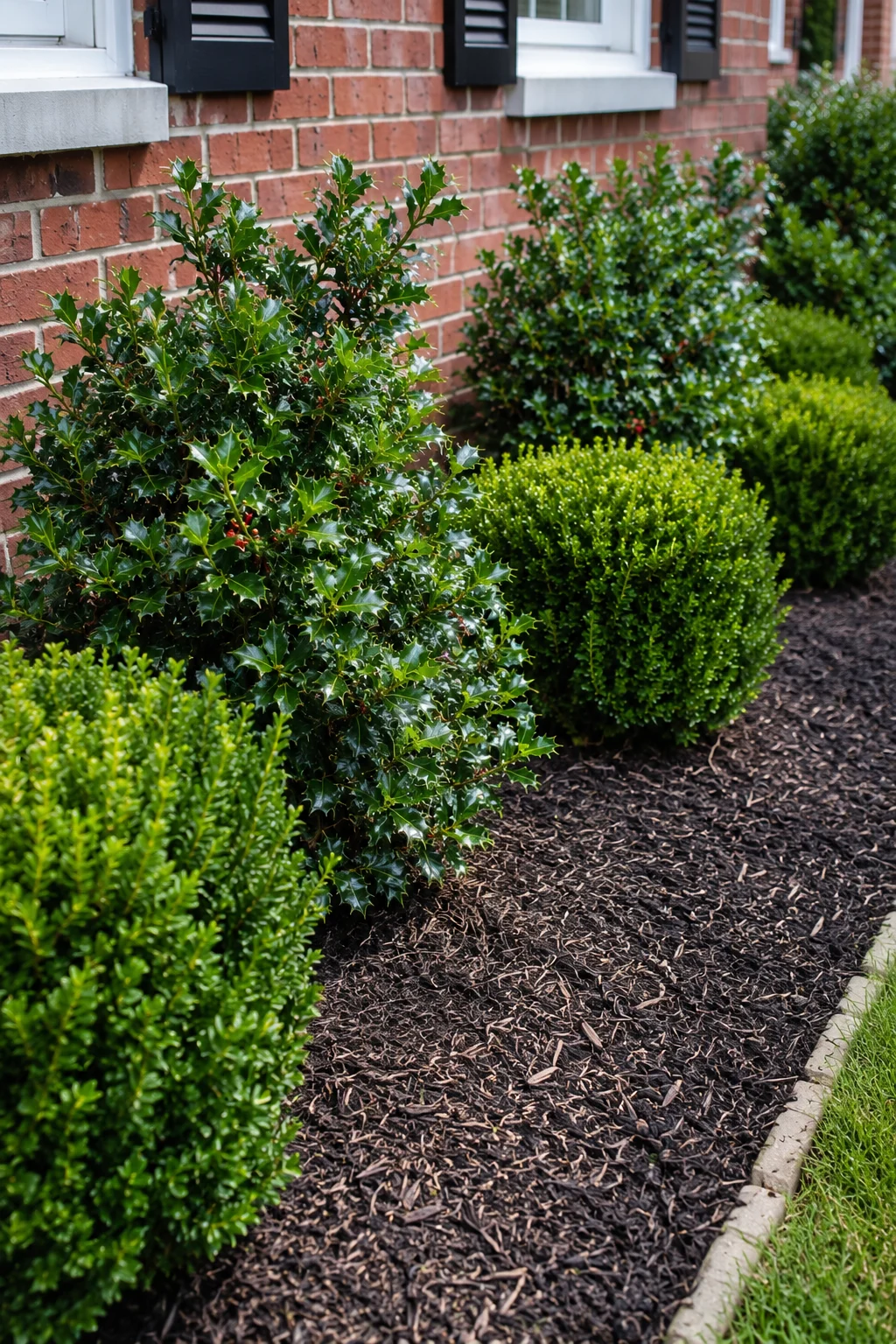
A foundation bed planted with just three or four repeated shrub varieties, rather than a mix of a dozen different plants, cuts down on the different pruning and care schedules you need to track. This works because uniform beds are easier to maintain at a glance, and repeated shapes read as more intentional than a scattered mix. Choose slow-growing evergreens for structure, and space them according to mature width so you are not pruning constantly within a few years.
2. Mulched Island Bed Around a Tree
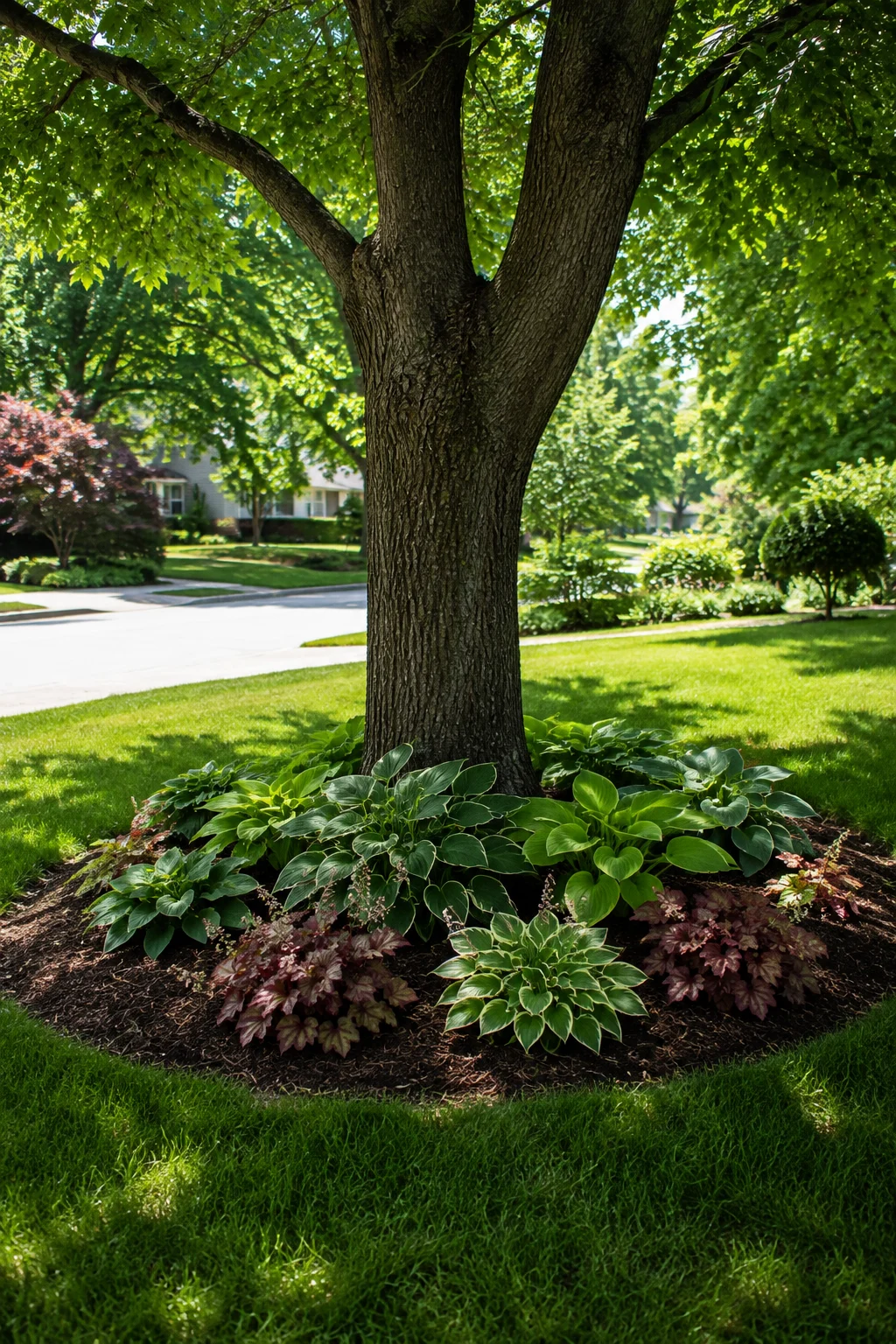
Turning the grass-starved ring beneath a mature tree into a mulched island bed removes a spot that is difficult to mow and often struggles to grow turf anyway. This works because tree roots and shade make grass hard to maintain there in the first place, so converting the area actually reduces effort rather than adding a new task. Extend the mulch ring to the tree’s drip line, and add a few shade-tolerant perennials like hosta or heuchera if you want more than bare mulch.
3. Gravel Border Instead of Mulch
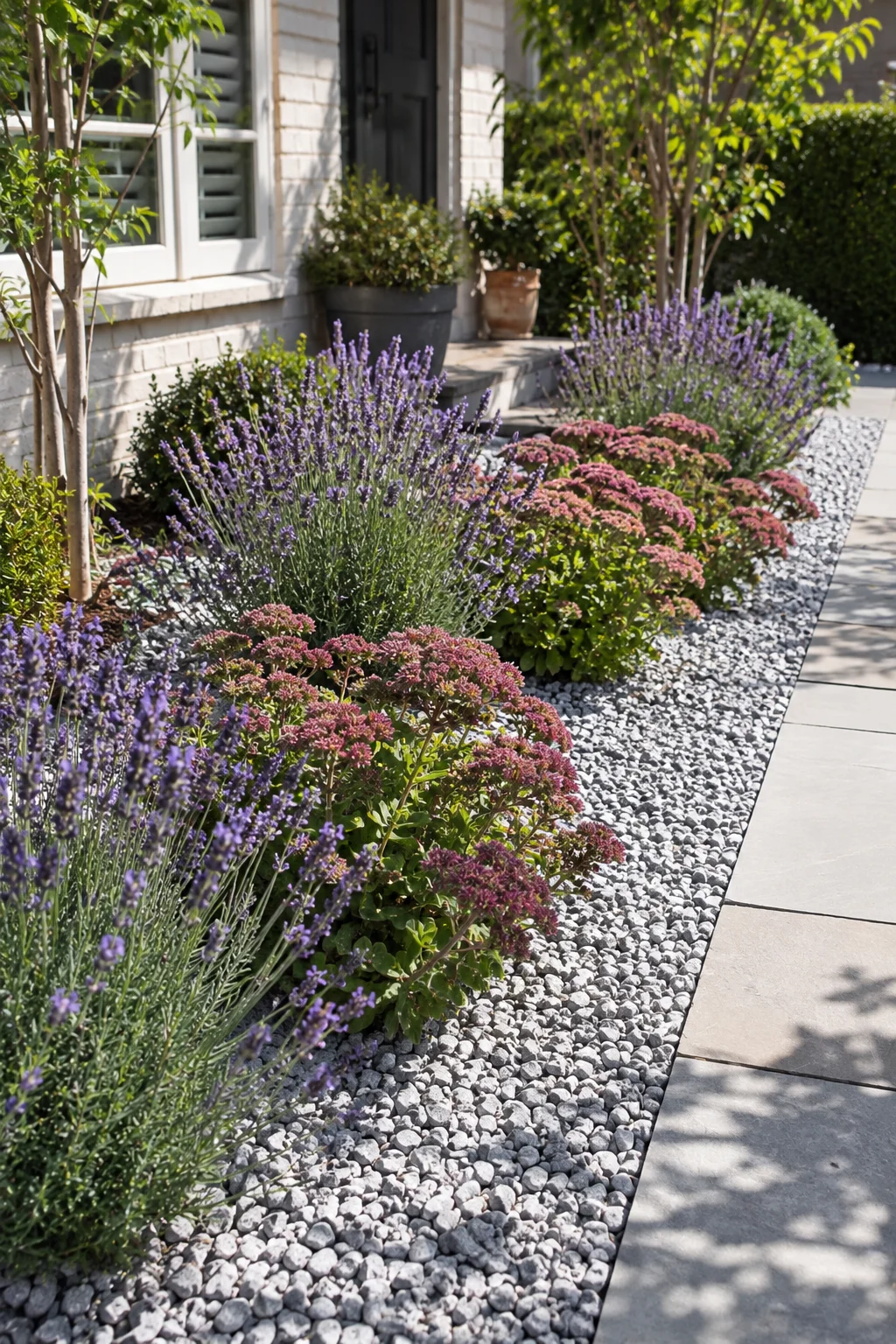
Replacing organic mulch with a gravel border around planting beds cuts down on the annual re-mulching most homeowners do every spring, since gravel does not break down or wash away the way bark mulch does. This works especially well in beds with drought-tolerant plants, since gravel also reflects heat and improves drainage around the root zone. Lay landscape fabric first, then a few inches of gravel sized to complement your home’s exterior, from fine pea gravel to larger river rock, depending on the look you want.
4. Single Specimen Tree as a Focal Point
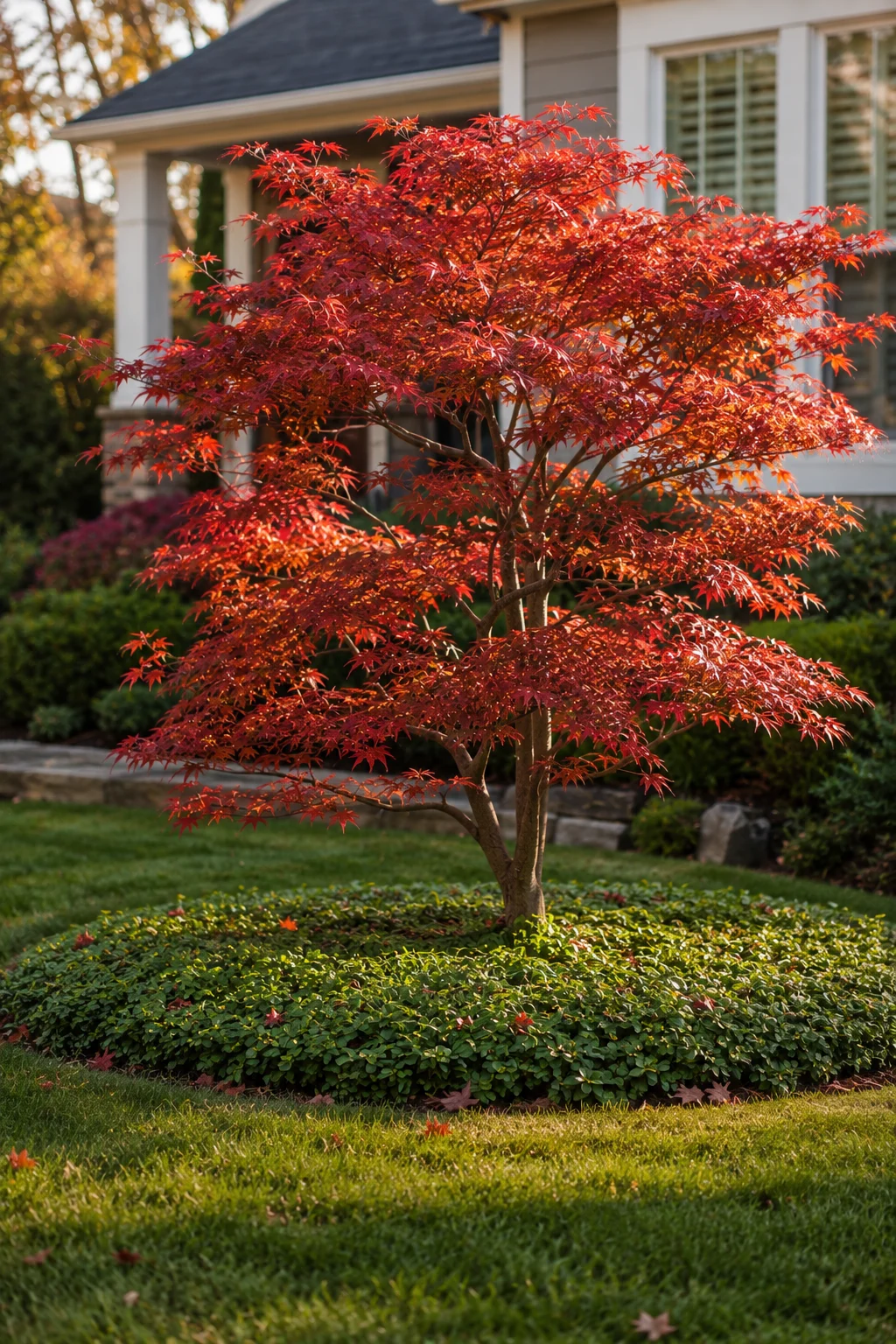
Planting one well-chosen ornamental tree, like a Japanese maple or crape myrtle, gives a front yard a clear focal point without needing a whole bed of supporting plants to look finished. According to landscape guidance on low-maintenance trees, both varieties stay compact, keep good year-round form, and need little pruning or watering once established, making a single tree an efficient way to add real visual weight. Position it where it is visible from the street, and underplant lightly with a low groundcover rather than a dense mixed bed.
5. Defined Bed Edging
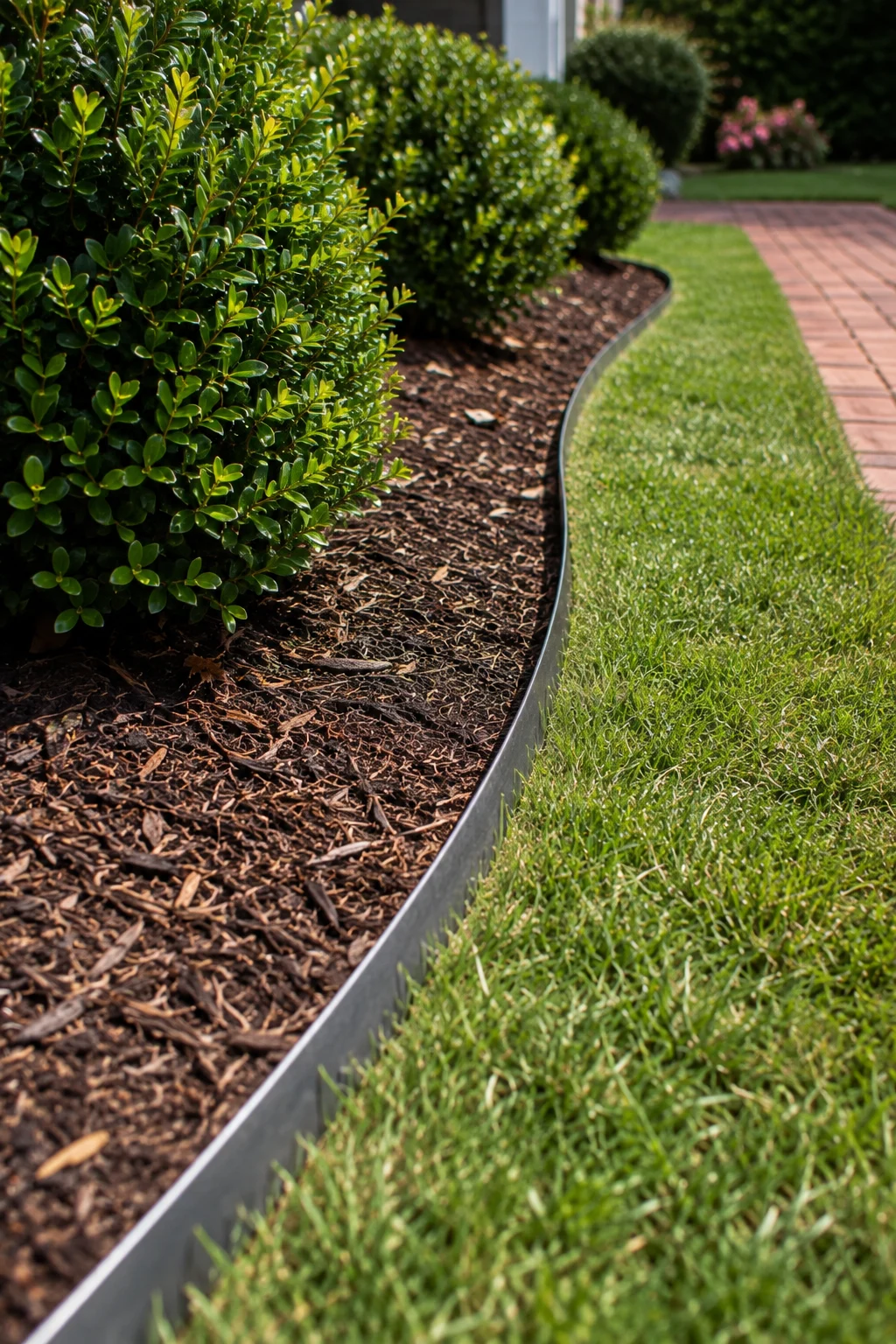
Installing a clean physical edge, steel, stone, or brick, between planting beds and lawn keeps grass from creeping into beds and reduces how often you need to manually trim that line. This works because a defined edge does the maintenance work that hand-trimming would otherwise require every couple of weeks through the growing season. Choose a material that matches your home’s exterior, and set it slightly below grade so a mower wheel can run along it without extra trimming needed.
Low-Maintenance Plant Choices
6. Ornamental Grass Mass Planting
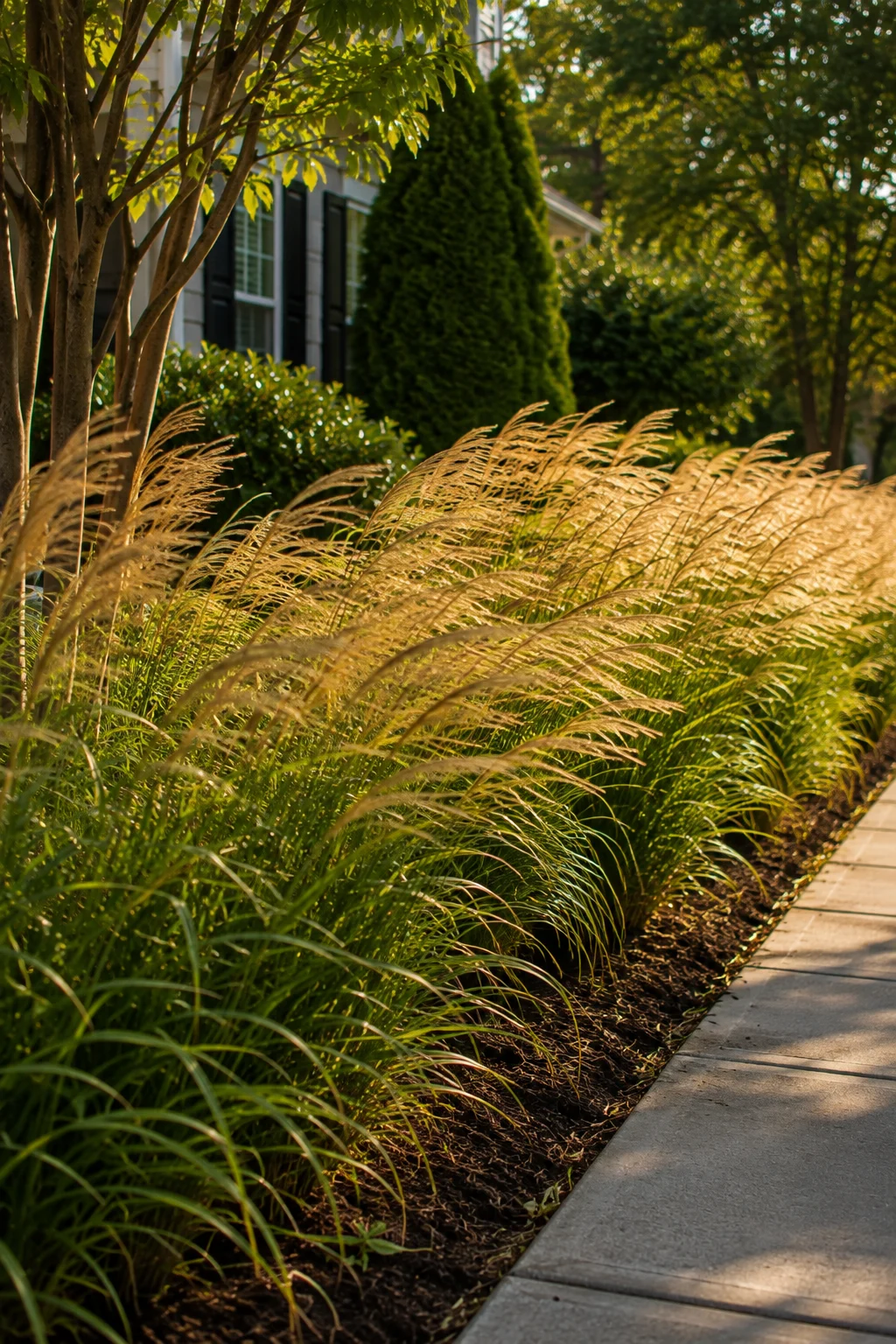
A mass planting of a single ornamental grass variety, like feather reed grass or little bluestem, fills a large front yard area with structure and movement while needing only one annual cutback rather than regular pruning or deadheading. This works because grasses are naturally low-input once established, tolerating heat, poor soil, and inconsistent watering better than most flowering perennials. Plant in a repeated drift rather than scattering individual clumps, and cut the whole planting back once in late winter before new growth starts.
7. Drought-Tolerant Perennial Mix
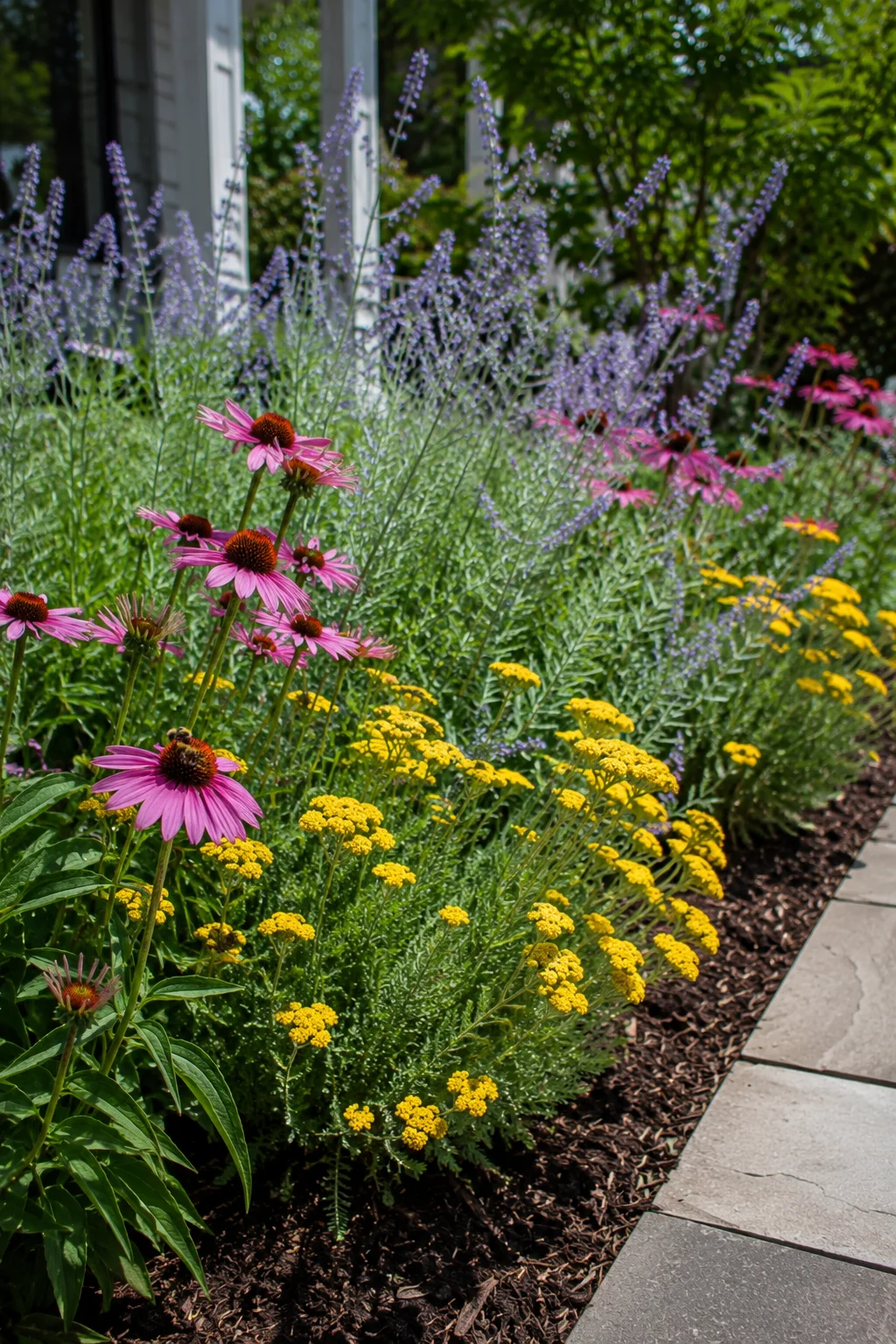
A bed built around drought-tolerant perennials like coneflower, yarrow, and Russian sage holds up through dry spells without regular supplemental watering once roots are established, according to gardening guidance from Gardenia.net on layering these plants by height and bloom time. This works because these species evolved to handle heat and inconsistent rainfall, making them far more forgiving than typical bedding annuals. Group plants by similar water needs, and mulch well the first season to help roots establish before dry weather sets in.
8. Evergreen Shrub Foundation
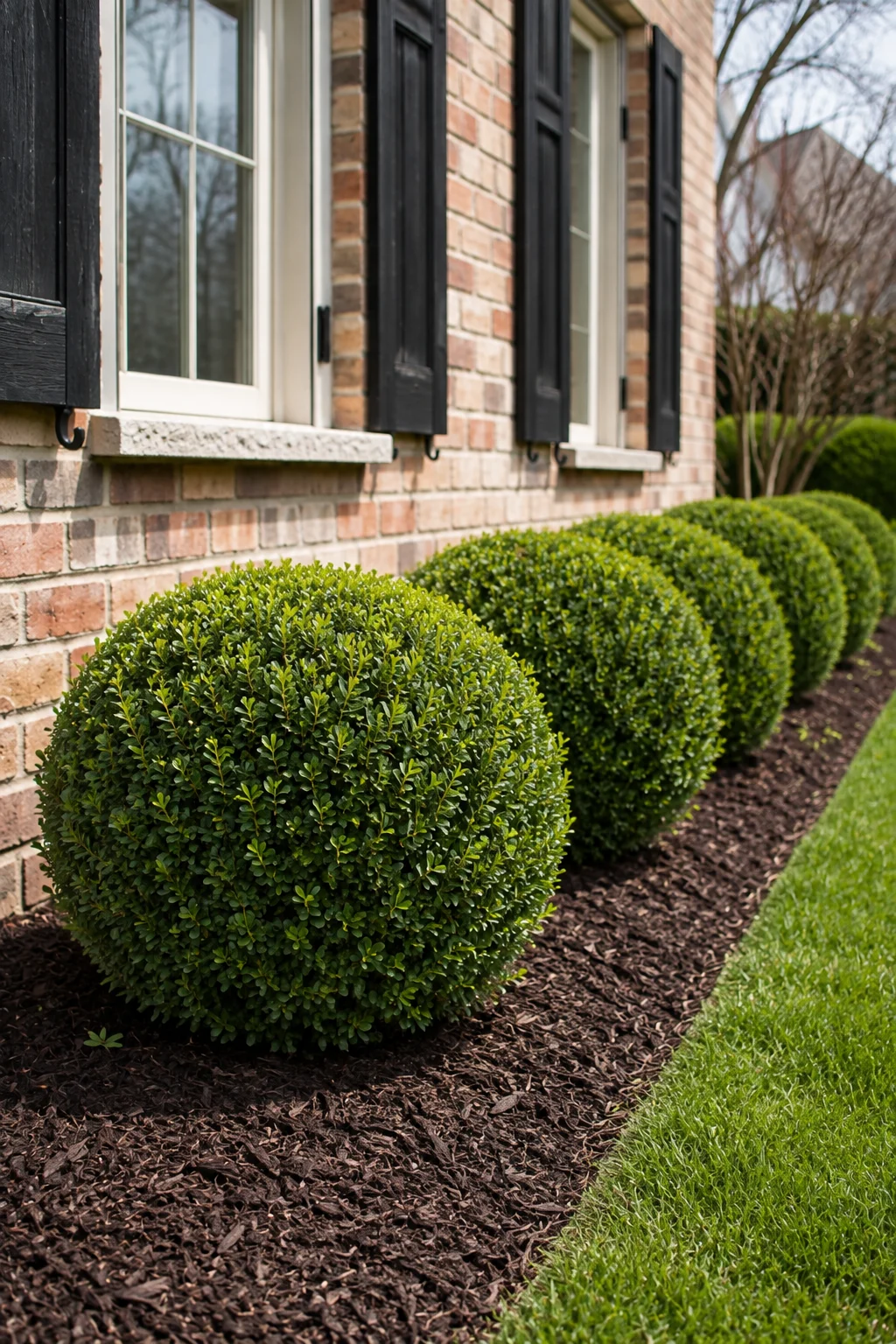
Anchoring the front of the house with slow-growing evergreen shrubs like boxwood or dwarf yew keeps the yard looking finished through every season without the seasonal die-back and replanting that perennial beds require. This works because evergreens provide consistent structure year-round, which matters most for curb appeal in winter when most flowering plants have gone dormant. Choose dwarf or compact cultivars specifically, since standard varieties can quickly outgrow foundation spacing and require more frequent pruning than intended.
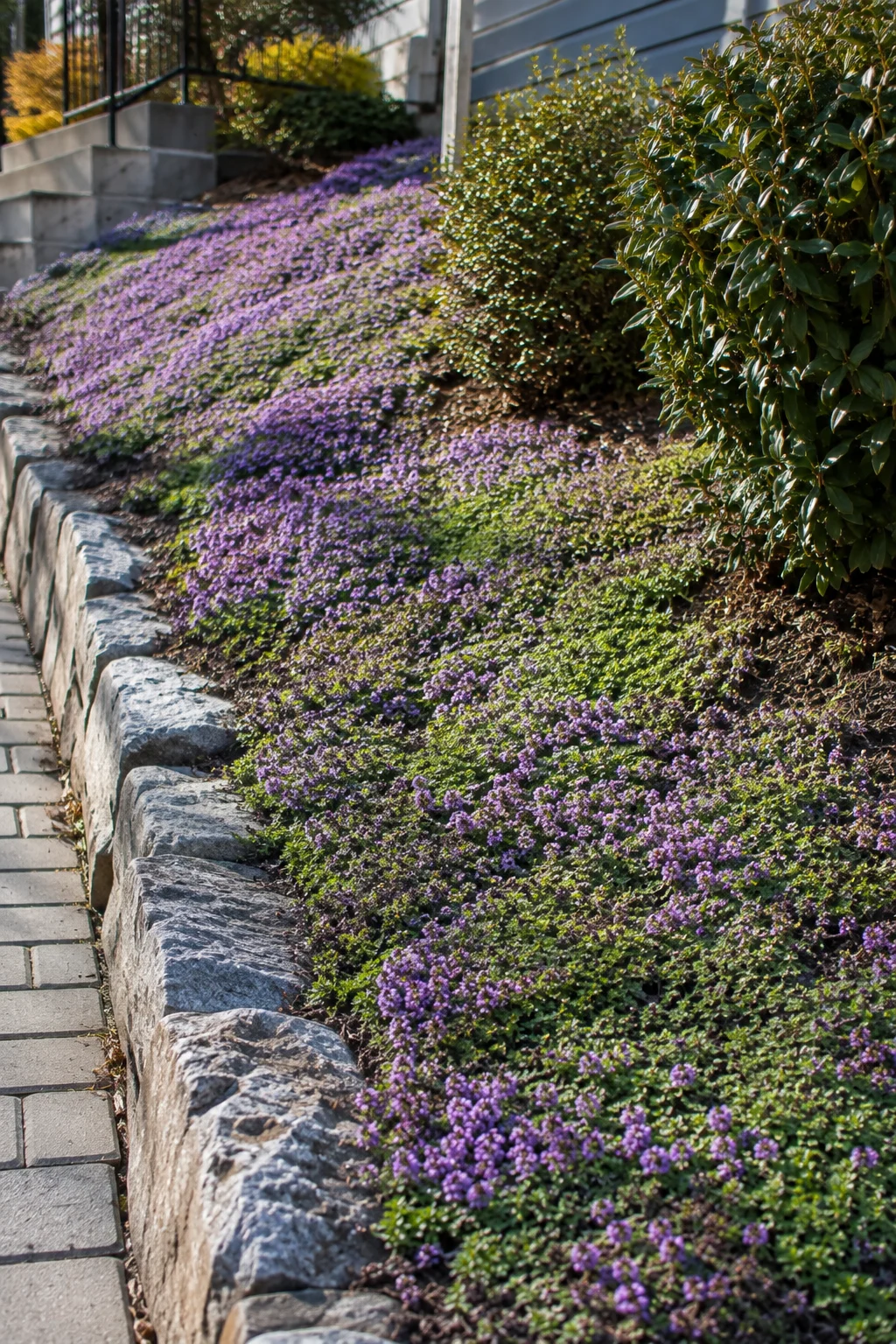
9. Groundcover Instead of Turf
Replacing a difficult-to-mow strip of lawn with a spreading groundcover like creeping thyme or sedum removes a mowing task entirely while still keeping the area green and low to the ground. This works especially well on slopes or narrow strips where mowing is awkward or where turf tends to struggle anyway. According to The Spruce’s guide on drought-tolerant ground covers, spreading sedum varieties root readily where their leaves touch soil, which helps them fill in a problem area with minimal replanting.
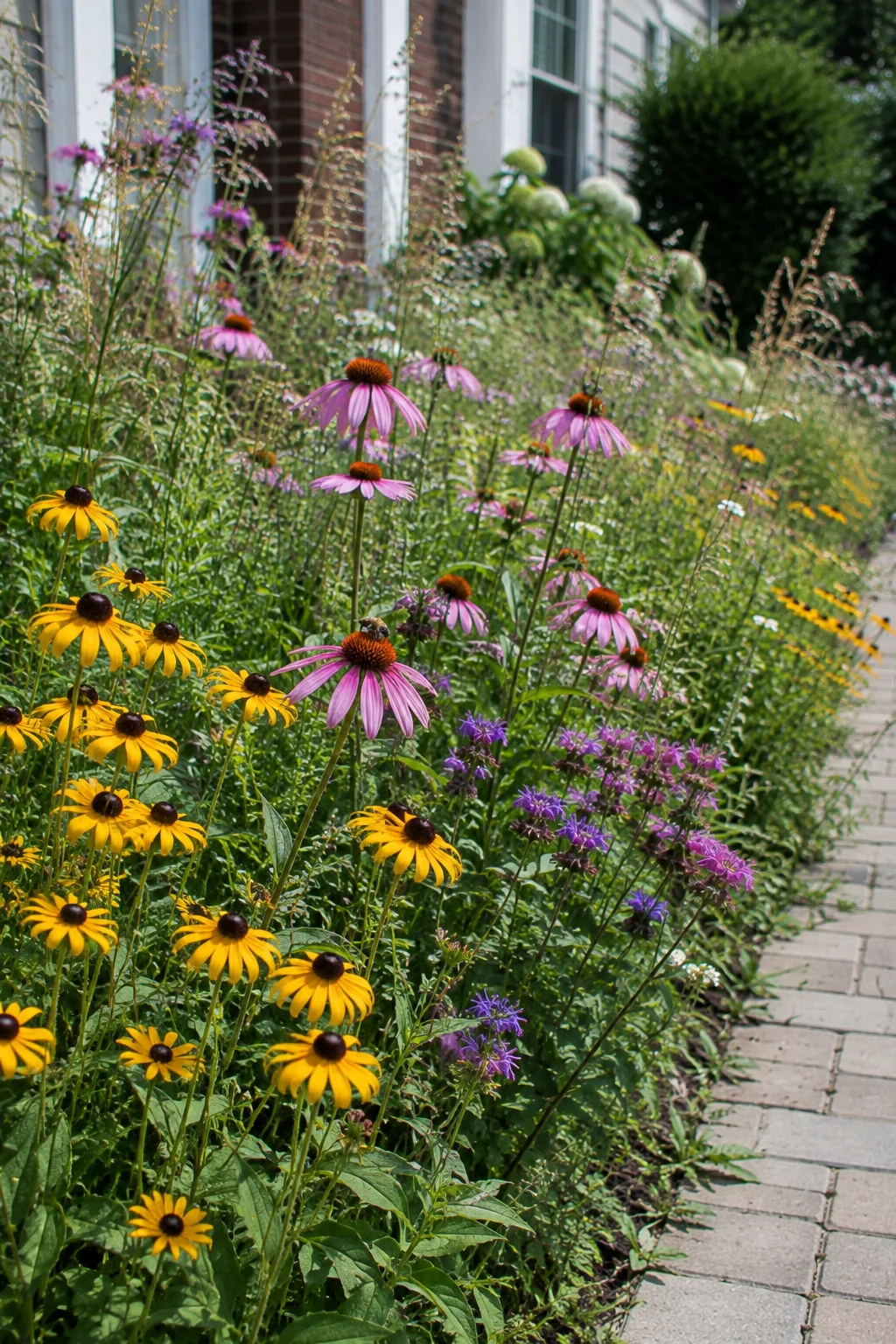
10. Native Wildflower Patch
A patch of regionally native wildflowers, seeded rather than planted individually, establishes a self-sustaining planting that needs little more than an annual cutback once it matures. This works because native species are already adapted to local rainfall and soil conditions, so they typically outperform non-native plantings with far less irrigation or fertilizer. Choose a seed mix specific to your region rather than a generic blend, and keep the area lightly watered only during the first establishment season.
Hardscape to Reduce Planting
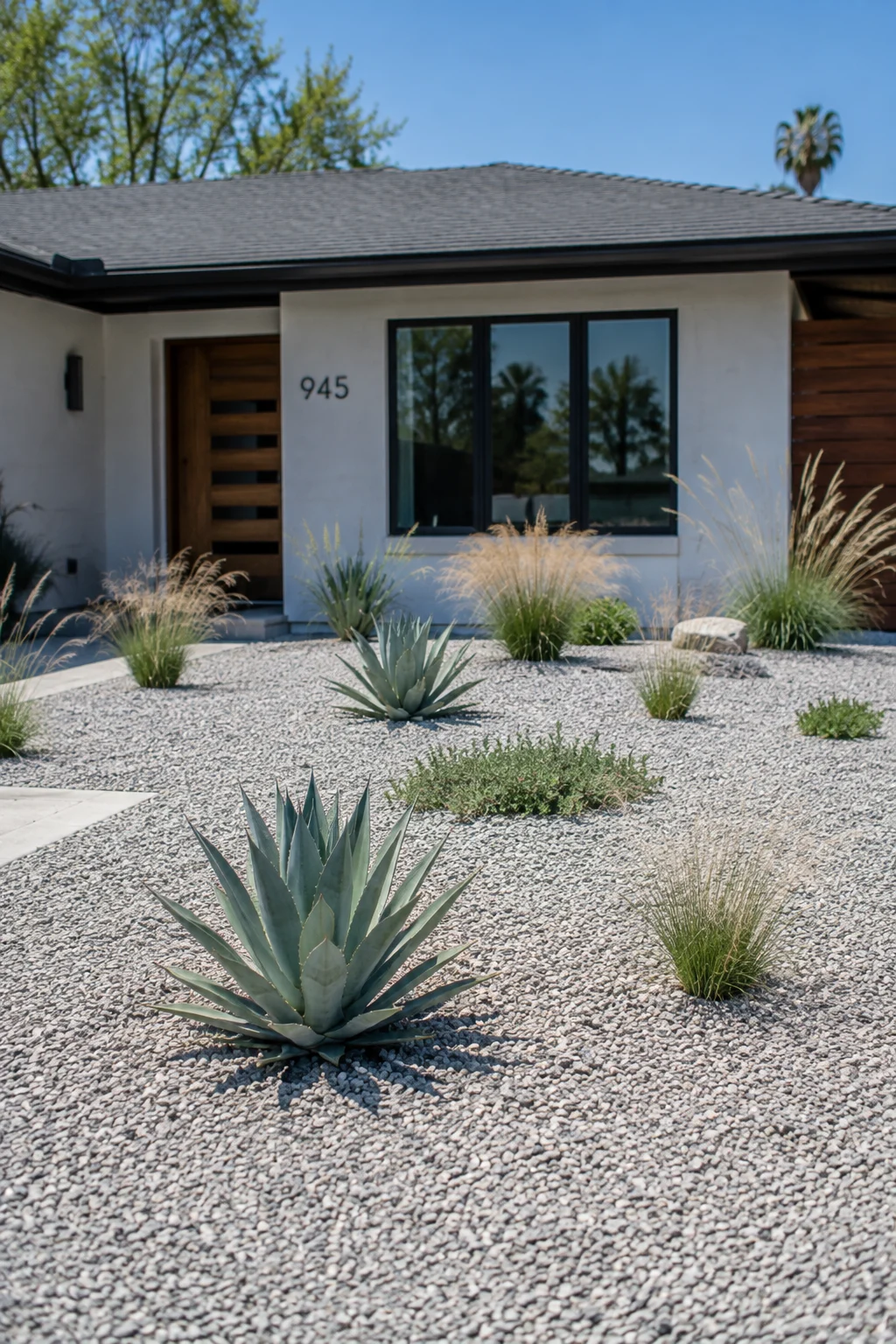
11. Gravel Front Yard Conversion
Replacing a full lawn with a gravel yard, planted sparsely with drought-tolerant specimens, removes mowing and most watering needs entirely, as covered in more depth in 30 gravel garden ideas for drought-tolerant yards. This works especially well in hot, dry climates where turf struggles without heavy irrigation anyway. Lay landscape fabric across the full area, then a few inches of gravel, and plant sparingly with a handful of structural specimens rather than dense beds.
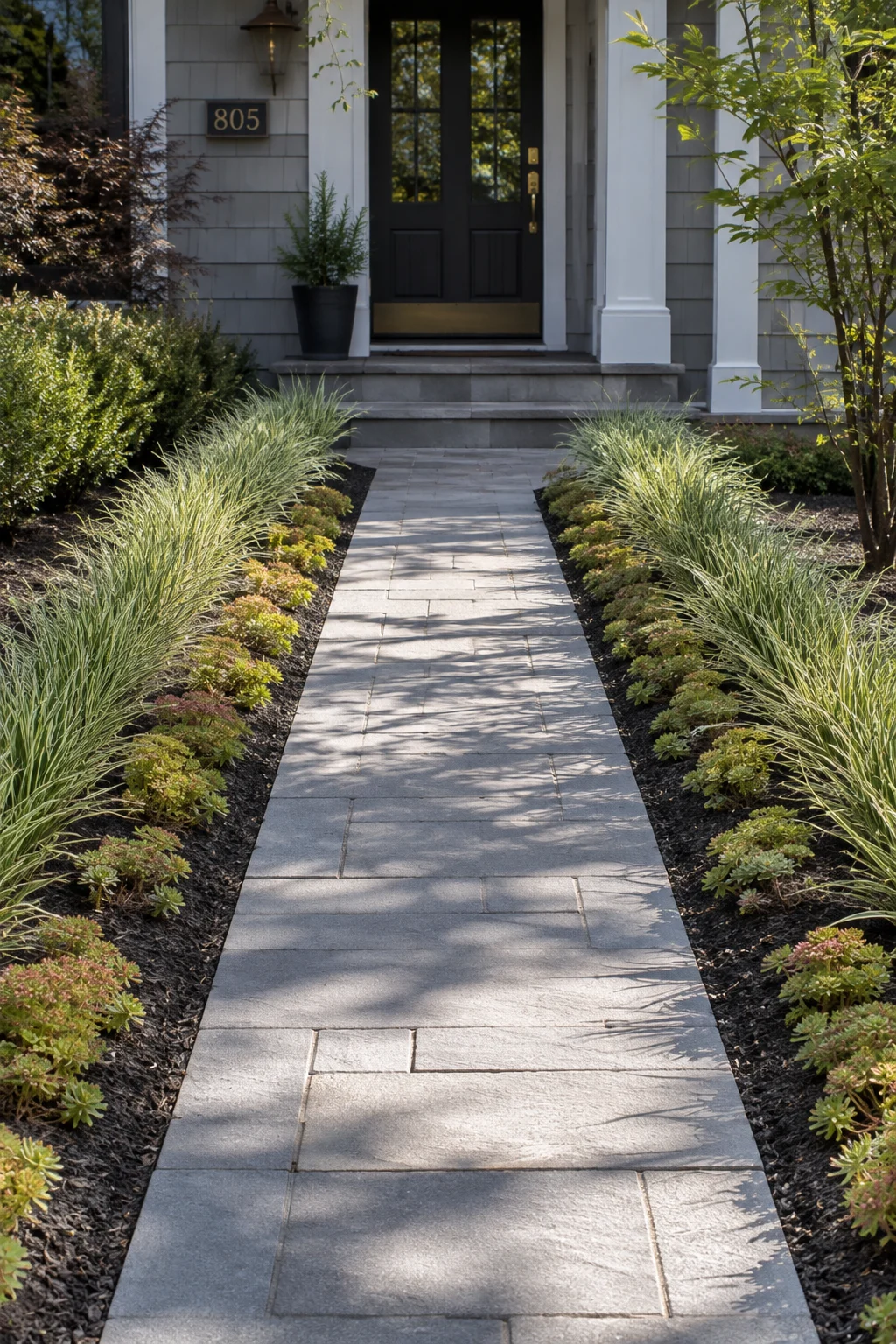
12. Paver Path Through Minimal Beds
A paver path connecting the driveway to the front door, flanked by narrow, simply planted beds, reduces the total planting area you need to maintain while still adding visual interest along the route. This works because it concentrates plant care into a smaller, well-defined space rather than spreading it across the whole yard. Choose pavers that complement your home’s exterior, and keep the flanking beds narrow, just wide enough for one or two plant rows.
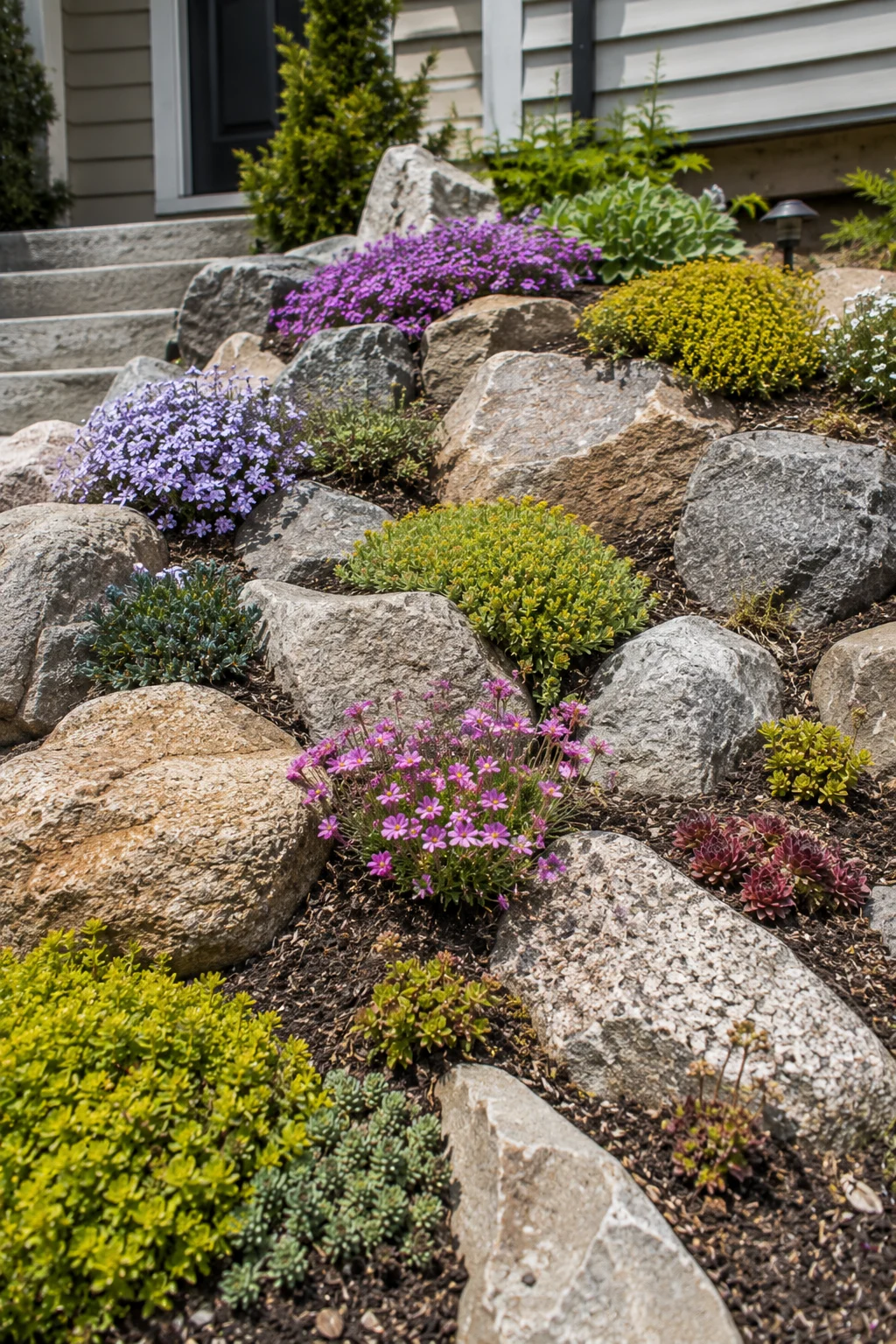
13. Rock Garden Accent
A small rock garden, built with varied stone sizes and a handful of drought-tolerant alpine or succulent plants, gives a front yard a distinct focal feature that needs almost no ongoing care once established. This works because the stones themselves provide most of the visual structure, so the planting portion can stay minimal without the bed looking empty. Arrange stones in a natural-looking cluster rather than a straight line, and tuck plants into pockets of soil between them.
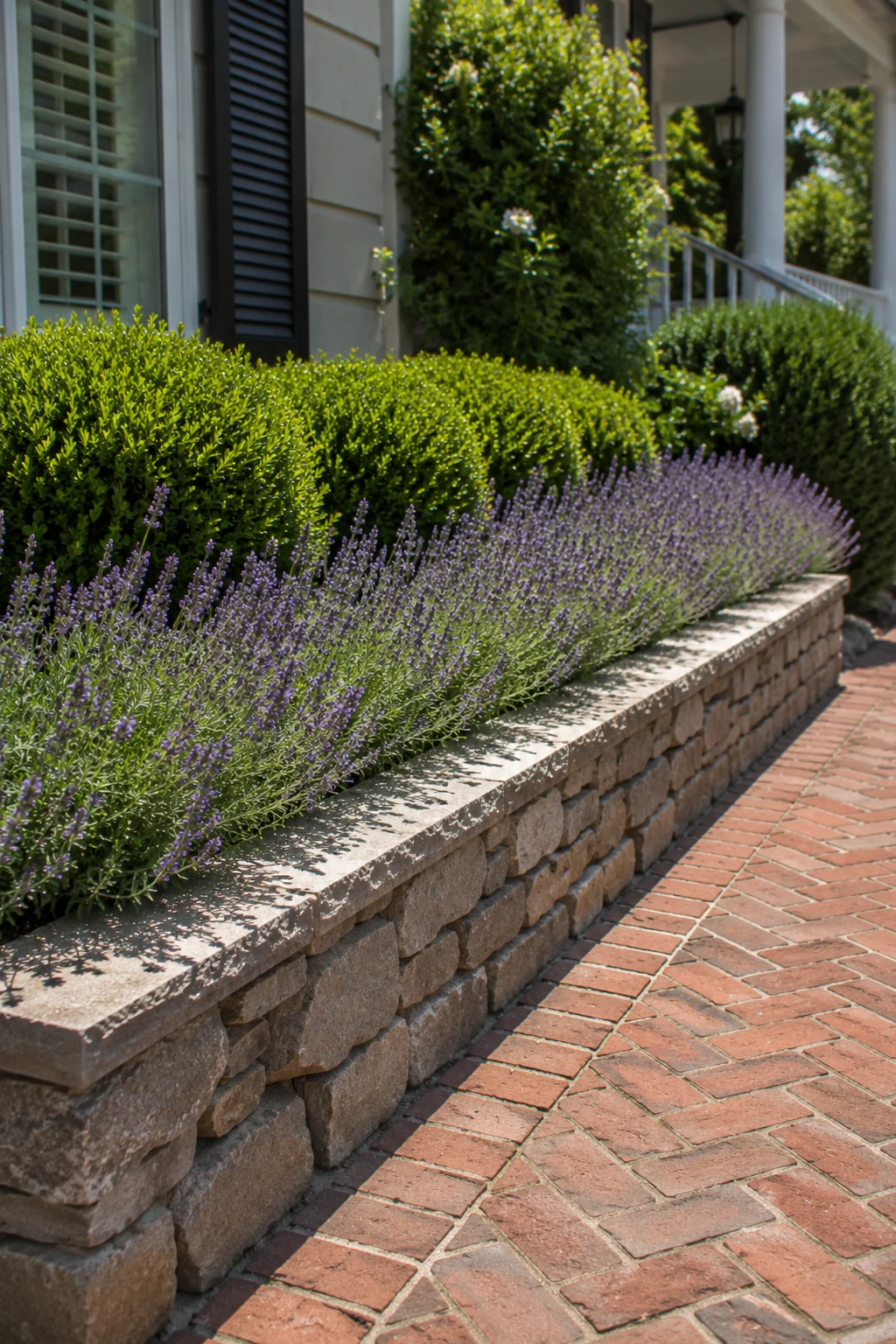
14. Raised Bed Border
A raised bed built along the front walkway or porch contains soil and plants within a defined structure, which limits how far roots and mulch spread into surrounding lawn and reduces edge maintenance. This works because the raised walls act as a permanent boundary, unlike a flush bed that needs regular edging to keep its shape. Build the bed from stone, brick, or timber to match your home’s style, and fill with a low-maintenance mix of evergreen shrubs and perennials.
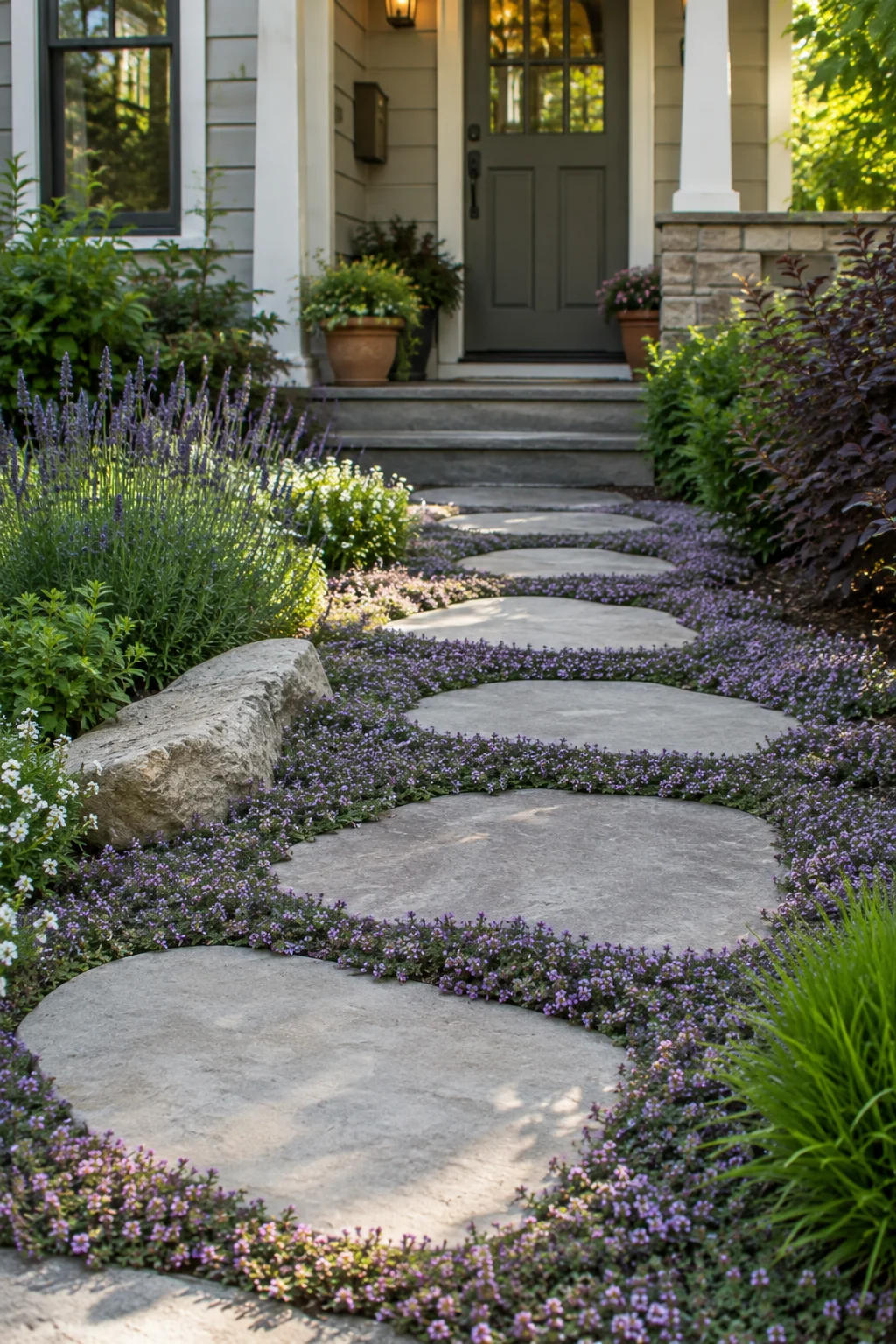
15. Stepping Stone Entry Walk
A stepping stone path set directly into a groundcover or gravel bed replaces a section of lawn that would otherwise need regular mowing right along the entry route. This works because it combines the practical need for a walking surface with a reduction in turf area, solving two problems in one feature. Set stones with consistent spacing for a natural stride, and fill the gaps with a low, spreading groundcover or gravel rather than grass.
Seasonal & Structural Color
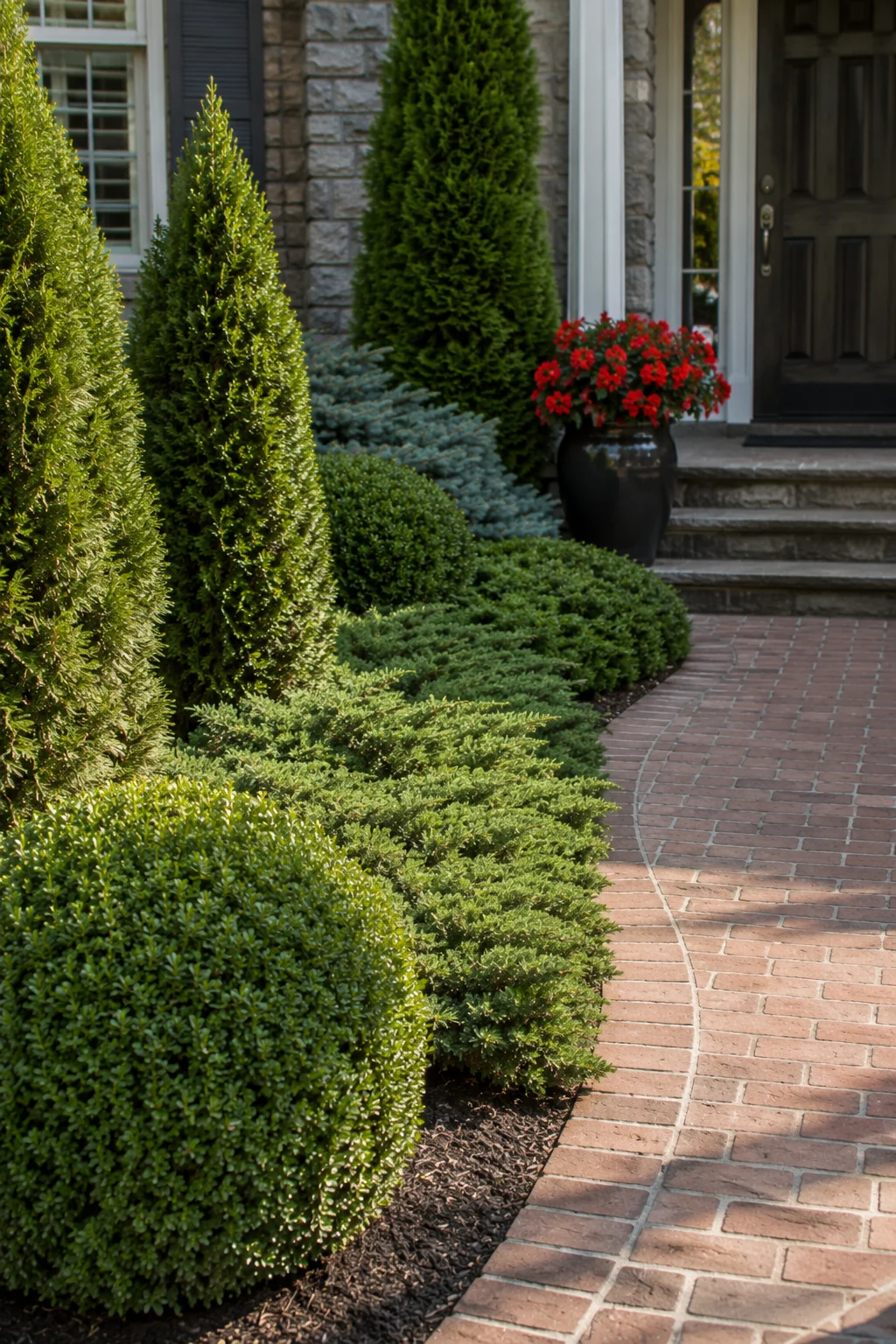
16. Evergreen Backbone with Seasonal Pops
Building the bulk of a front yard planting from evergreen shrubs, then adding just a few pots or small patches of seasonal color, keeps most of the yard low-maintenance while still allowing some seasonal variety. This works because the evergreen backbone requires almost no seasonal replanting, while the small color accents can be swapped a few times a year without much effort. Reserve seasonal color for high-visibility spots, like near the front door, rather than spreading it throughout the whole bed.
17. Repeating Color Block Planting
Repeating the same one or two flower colors across a bed, rather than mixing many different hues, creates a cohesive look that also simplifies plant selection and seasonal replanting decisions. This works because a limited palette reads as intentional and requires less planning each time you swap or add plants. Choose two or three plant varieties within your chosen color range so the bed still has some textural variety despite the simplified palette.
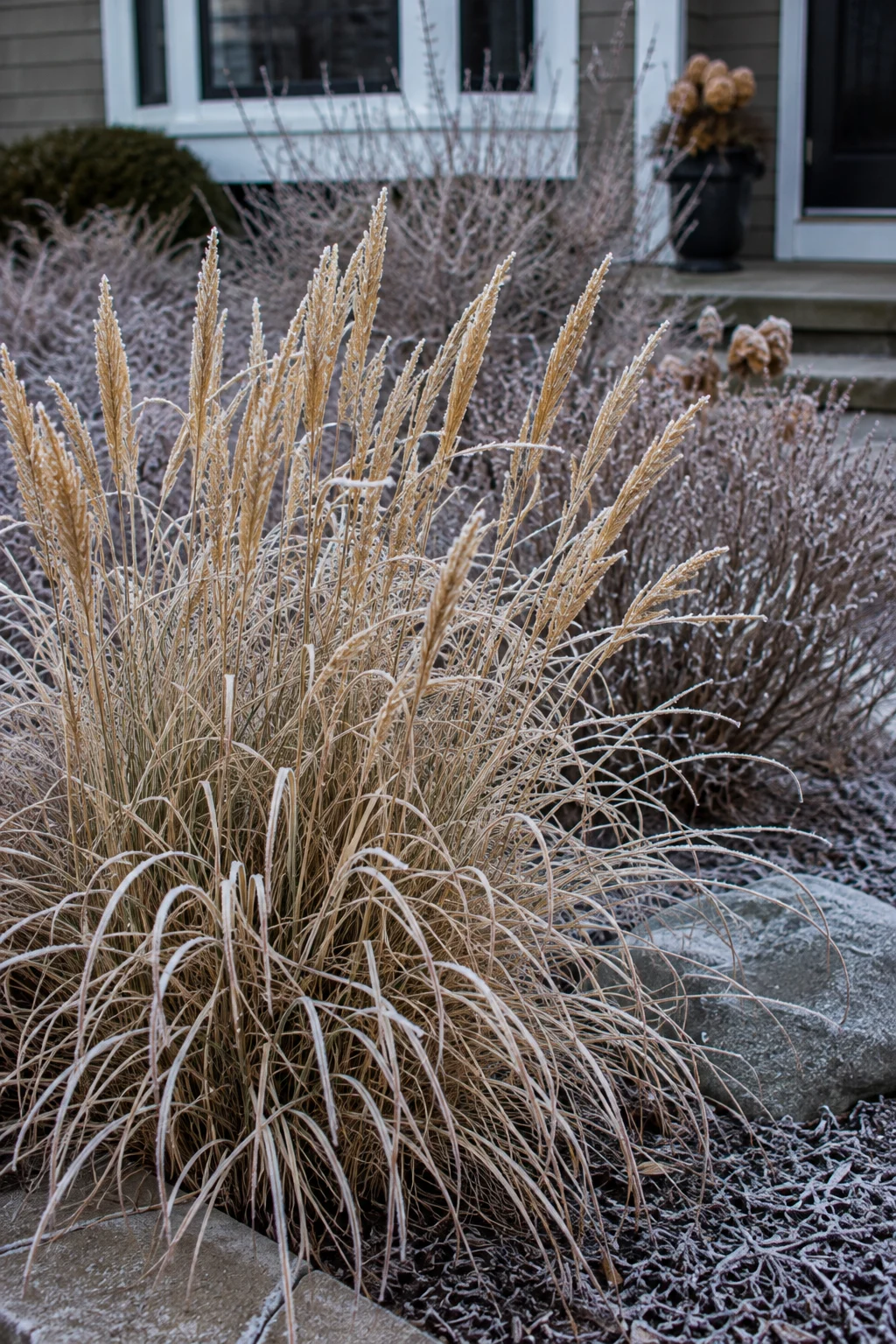
18. Ornamental Grass for Fall/Winter Interest
Leaving ornamental grasses standing through fall and winter instead of cutting them back in autumn keeps the front yard visually interesting during months when most other plants have gone dormant. This works because grass seed heads and blades hold their shape and color well into winter, catching light and moving with wind in a way bare beds cannot. Cut the grasses back just once, in late winter before new growth emerges, rather than on a typical fall cleanup schedule.
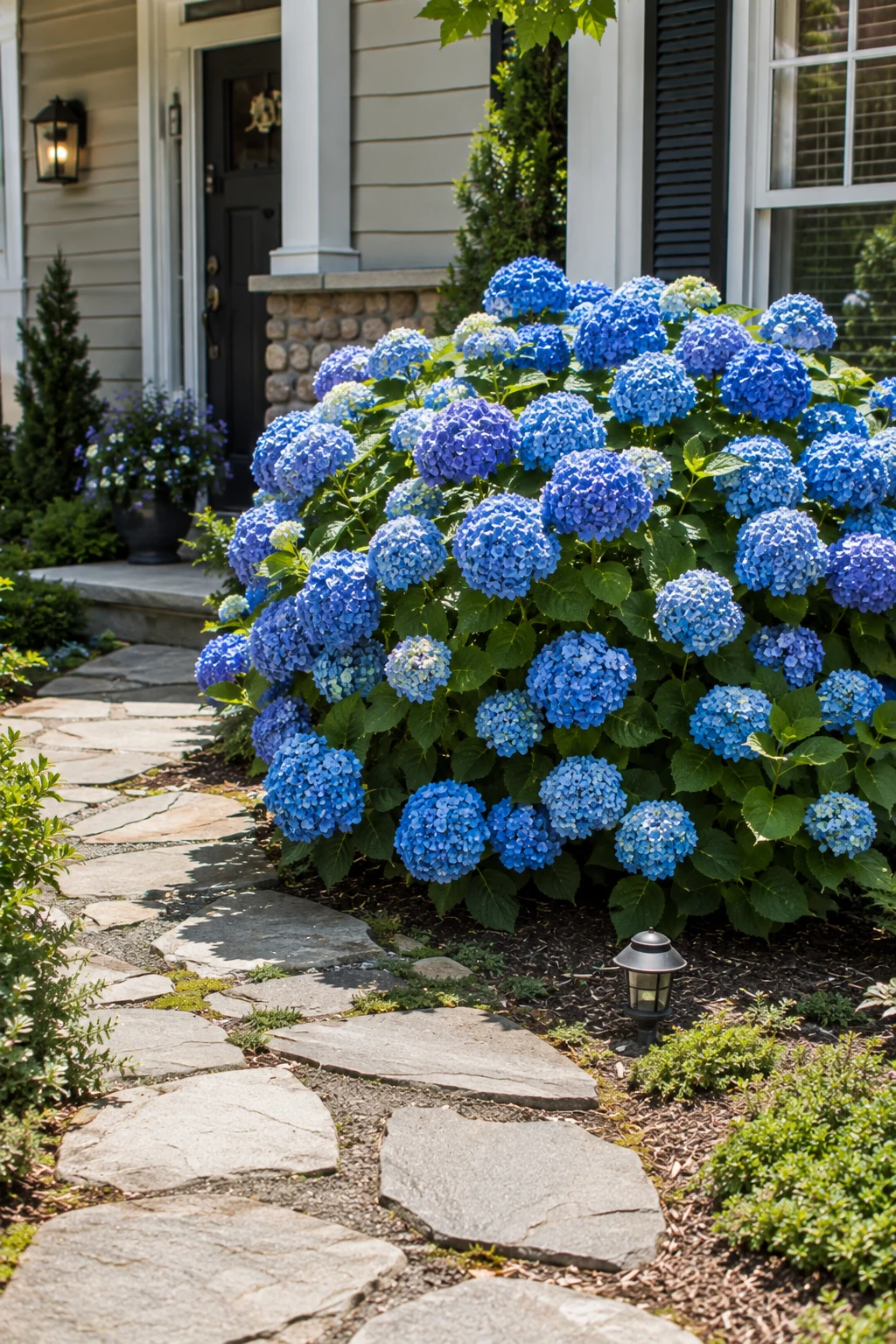
19. Flowering Shrub Anchor
One reliable flowering shrub, like hydrangea or spirea, positioned as a seasonal anchor gives a front yard a predictable, low-effort bloom period each year without needing an entire bed of annuals. This works because shrubs bloom reliably once established and need far less seasonal attention than replanting annual flowers every year. Choose a variety suited to your climate and light conditions, and prune according to its specific bloom timing so you do not accidentally remove next season’s flower buds.
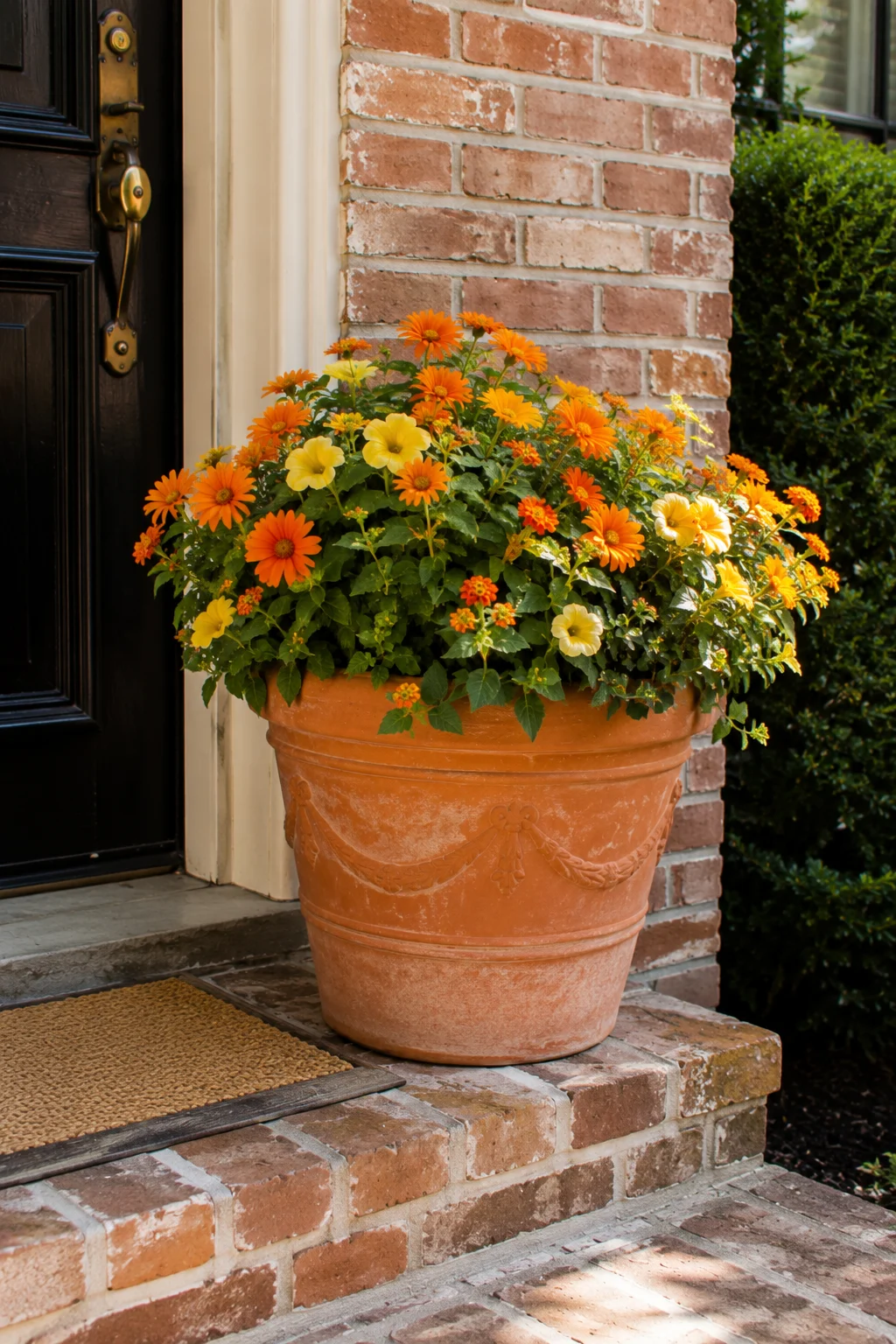
20. Container Pop of Color at the Door
A single well-planted container near the front door concentrates seasonal color into one small, easy-to-manage spot rather than committing an entire bed to plants that need regular swapping. This works because containers are simple to refresh a few times a year without disturbing any of the yard’s permanent low-maintenance planting. Choose one large pot rather than several small ones, and fill it with a simple, high-impact combination that suits the current season.
Water-Wise & Practical Additions
21. Drip Irrigation Under Mulch
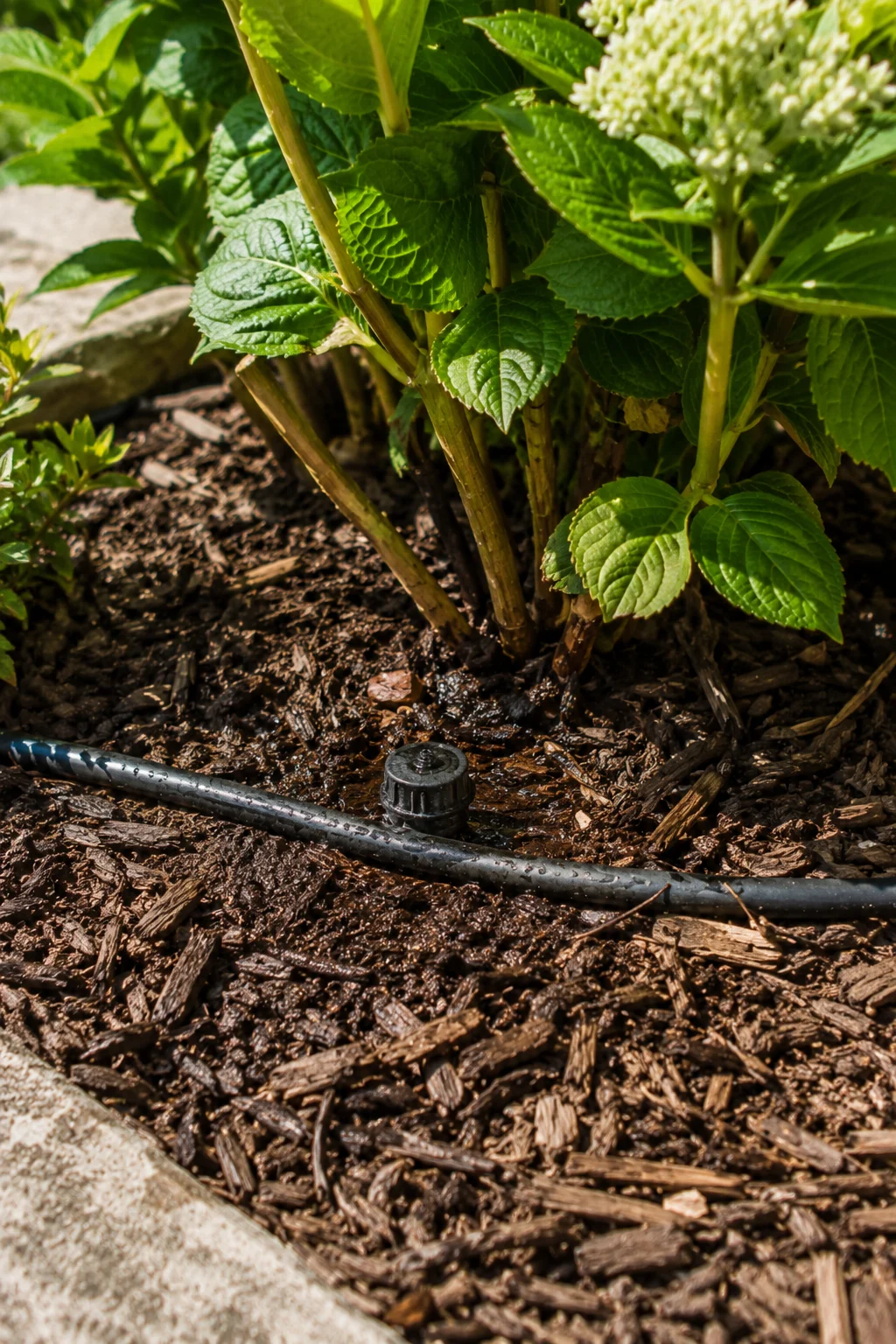
Installing a simple drip irrigation line beneath the mulch in planting beds delivers water directly to root zones with far less waste than overhead sprinklers, and it can run on an automatic timer so watering happens without you remembering. This works because drip systems lose very little water to evaporation compared to spray irrigation, making beds more resilient during hot, dry stretches. Run the tubing before adding mulch, and set the timer for early morning watering to further reduce evaporation loss.
22. Xeriscape Corner Bed
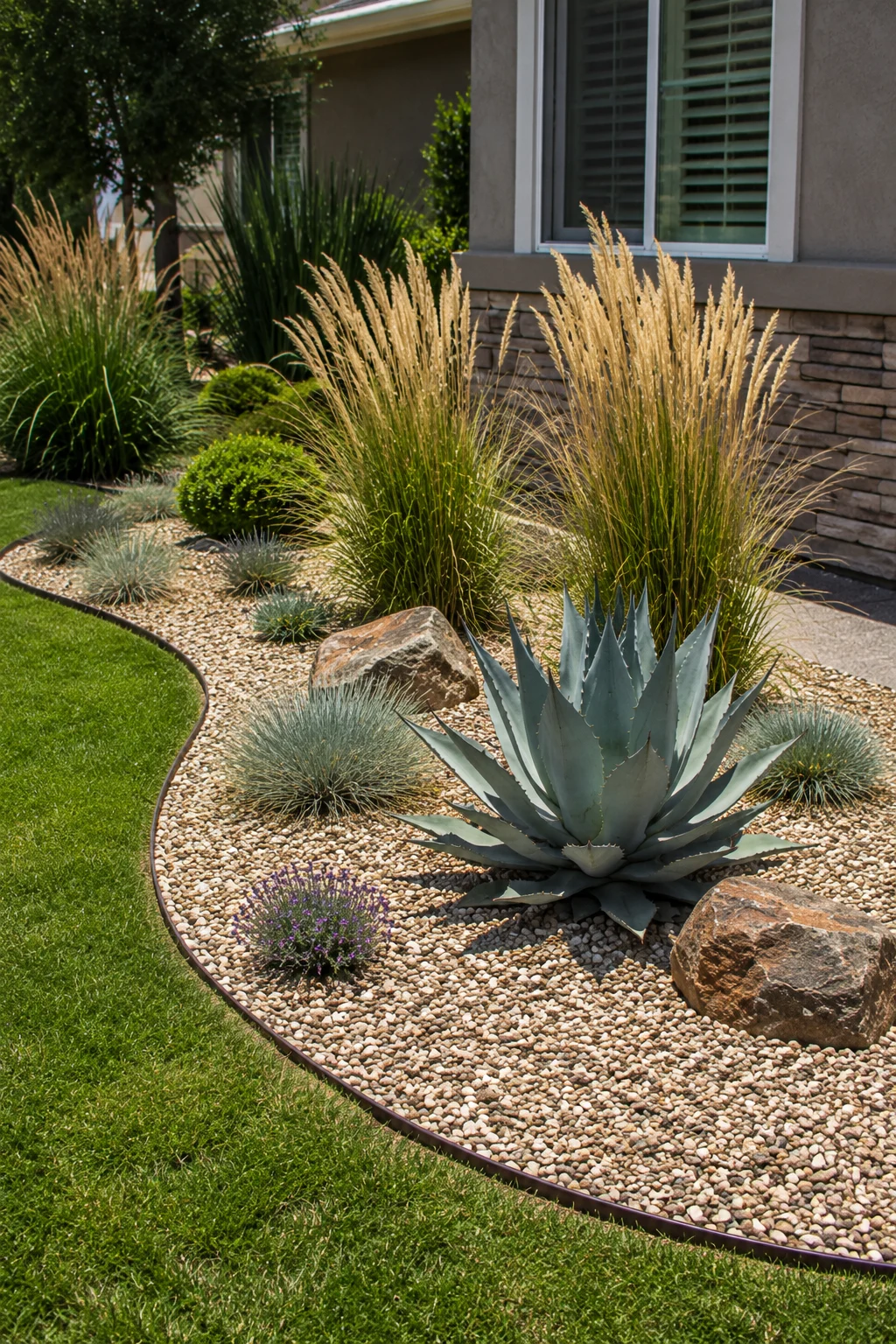
Dedicating one corner of the front yard specifically to xeriscape principles, gravel, drought-tolerant plants, and minimal irrigation, lets you test the approach in a contained area before committing the whole yard to it. This works because it limits risk while you learn which drought-tolerant plants perform best in your specific soil and sun conditions. Group plants by water need within the corner, and use gravel or rock mulch rather than organic mulch for a fully water-wise result.
23. Rain Garden for Runoff
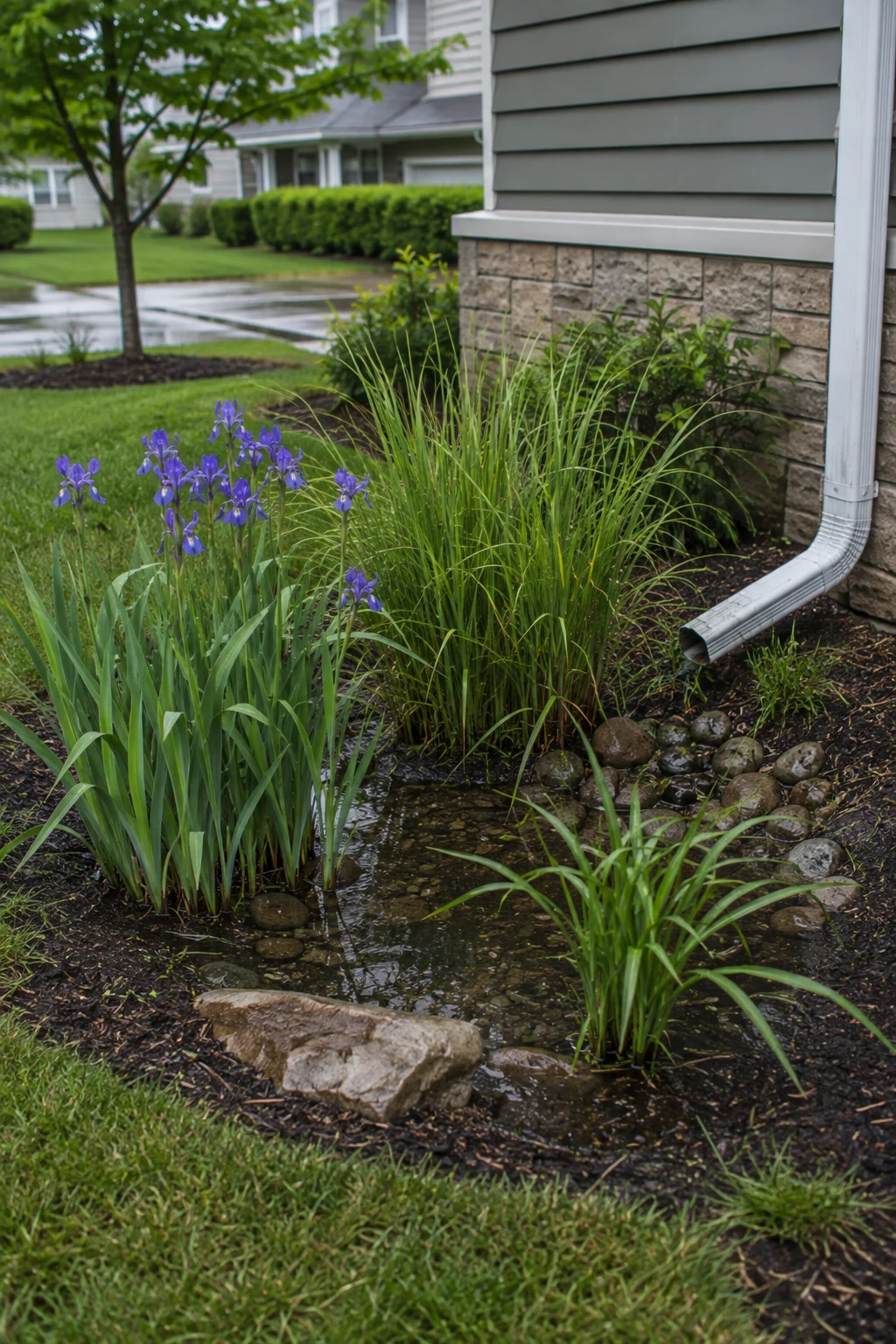
A shallow, planted depression positioned to catch runoff from a downspout or driveway both manages excess water and creates a planting area that actually benefits from the extra moisture rather than needing supplemental watering. This works because it redirects water that would otherwise pool or run off elsewhere into a spot planted specifically with species that tolerate periodic wet conditions. Choose native moisture-loving perennials for the basin, and size the depression based on how much runoff the connected downspout or slope typically produces.
24. No-Mow Lawn Alternative
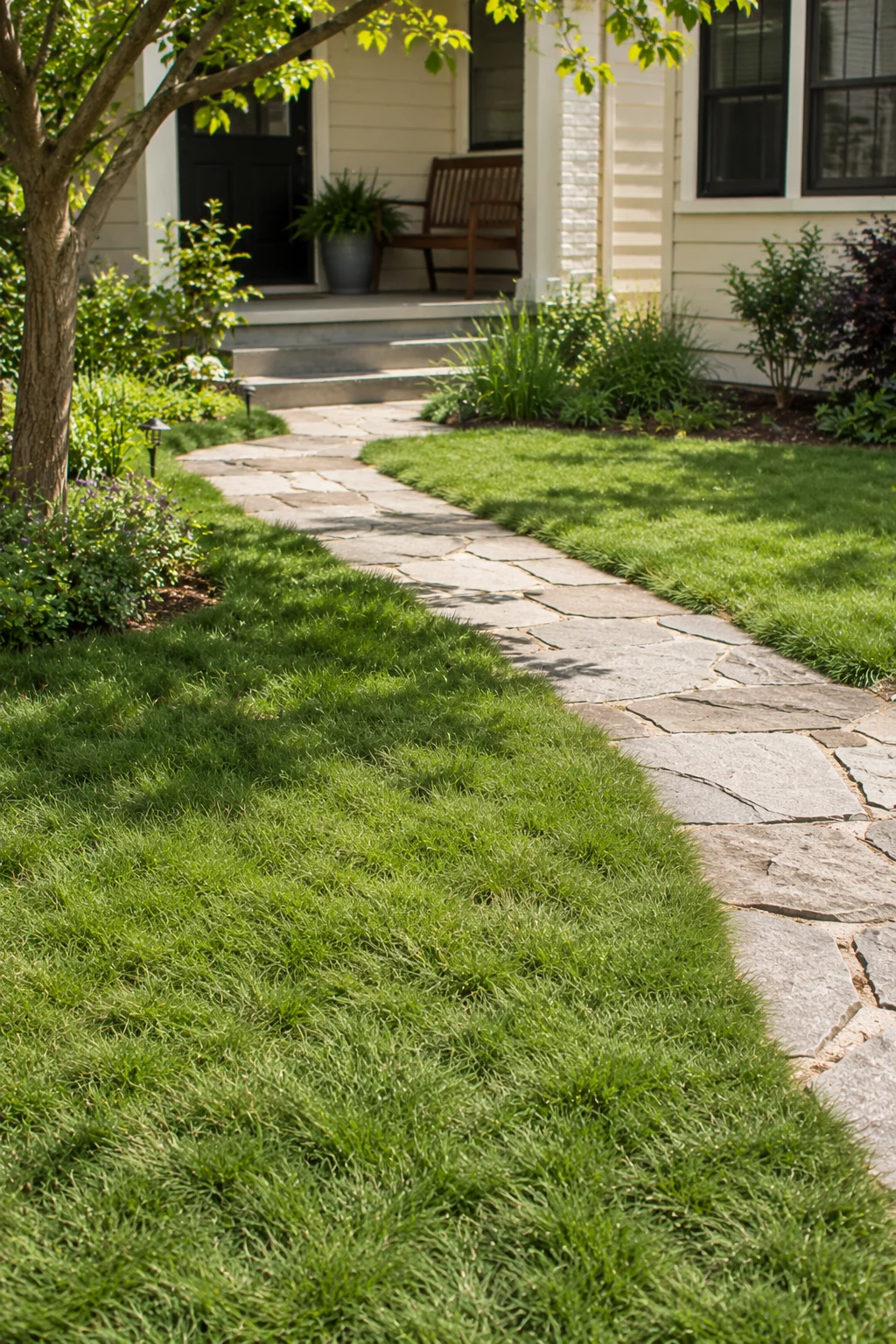
Replacing a traditional turf lawn with a low, slow-growing alternative like fine fescue blends or clover removes most regular mowing while still keeping a green, lawn-like appearance across the yard. This works because these alternatives grow much slower and shorter than standard turf grass, often needing just a few mows a year instead of weekly cutting through the growing season. Overseed an existing lawn gradually, or remove turf entirely and reseed with the alternative blend for a full conversion. For more layout inspiration if you are rethinking the whole front yard at once, see 35 small front yard landscaping ideas for additional design directions.
How to Choose From This List
With 24 front yard ideas covering layout, plants, hardscape, seasonal color, and water-wise additions, start by identifying which part of your current yard demands the most upkeep, whether that is a hard-to-mow strip, a thirsty flower bed, or constant edging, and address that first. Combine one structural idea, like defined bed edging or a gravel border, with one plant-based idea suited to your climate, rather than trying to overhaul the entire yard in one season. Low maintenance planting works best as a system, where layout, plant choice, and irrigation all support each other rather than fighting against a yard’s natural conditions.
Final Thoughts
A front yard built around low maintenance planting can still offer real curb appeal, it just relies on smarter plant choices and layout decisions instead of constant upkeep. The goal is not a bare or boring yard, but one where the plants and materials do more of the work on their own.
Start with one bed or one problem area, apply a couple of these ideas, and expand gradually once you see what holds up in your specific yard’s sun, soil, and rainfall. A front yard updated this way tends to stay looking good with a fraction of the effort a traditional lawn and flower bed setup usually demands.