
A small front yard is not a limitation. It is a design constraint — and design constraints, when worked with rather than against, produce some of the most striking and intentional outdoor spaces imaginable. The most memorable front gardens are rarely the largest ones. They are the ones where every square foot has been considered, where the planting feels deliberate, and where the overall impression from the street is immediate and confident.
Whether you have a narrow strip between pavement and door, a compact American front lot with a driveway to one side, a small British front garden behind a low wall, or a townhouse plot that gets more foot traffic than sunlight — this list has ideas that work for your space and your maintenance level.
Browse all 35 ideas below. Save the ones that speak to your space directly to Pinterest using the vertical images attached to each idea.
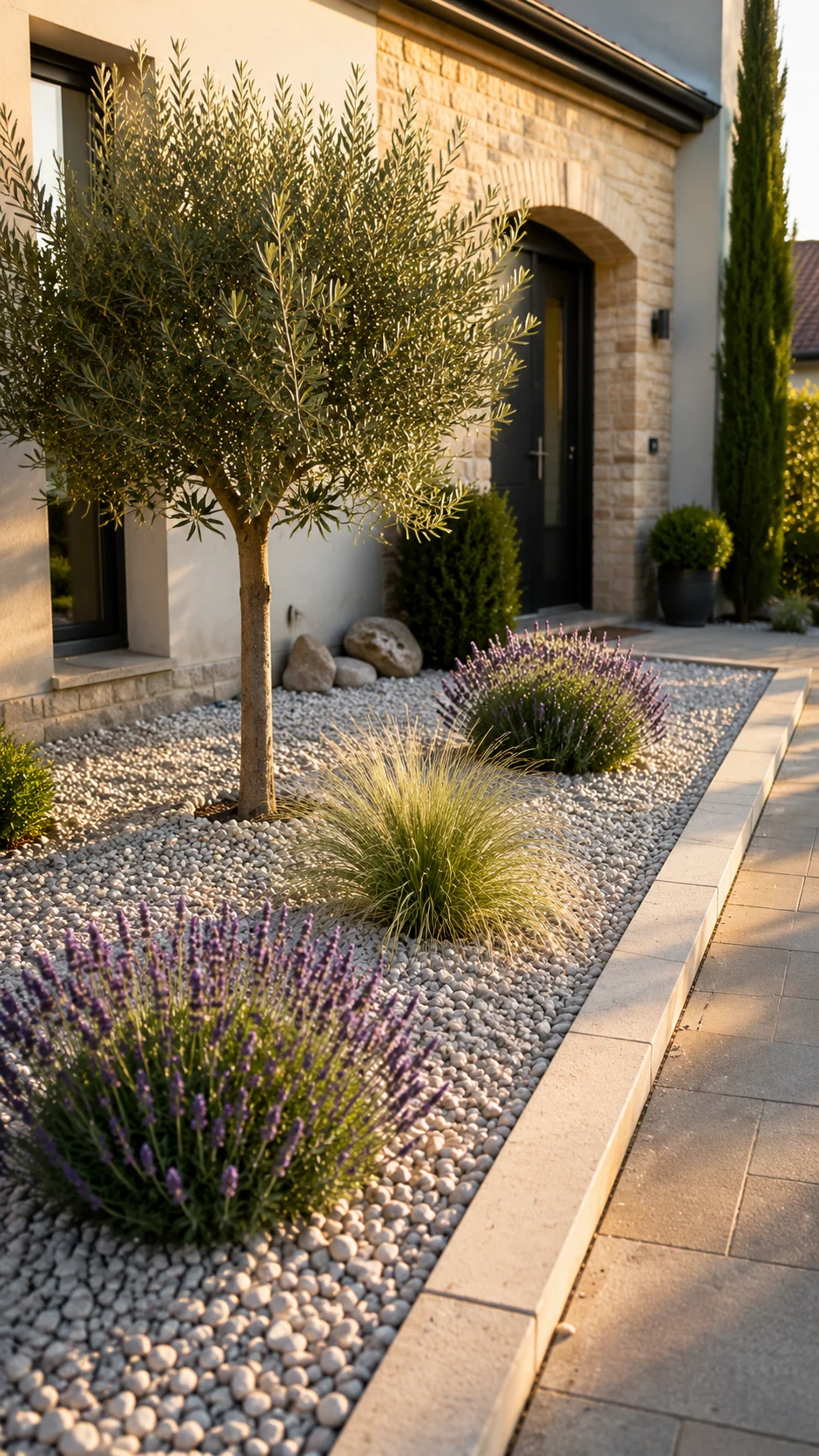
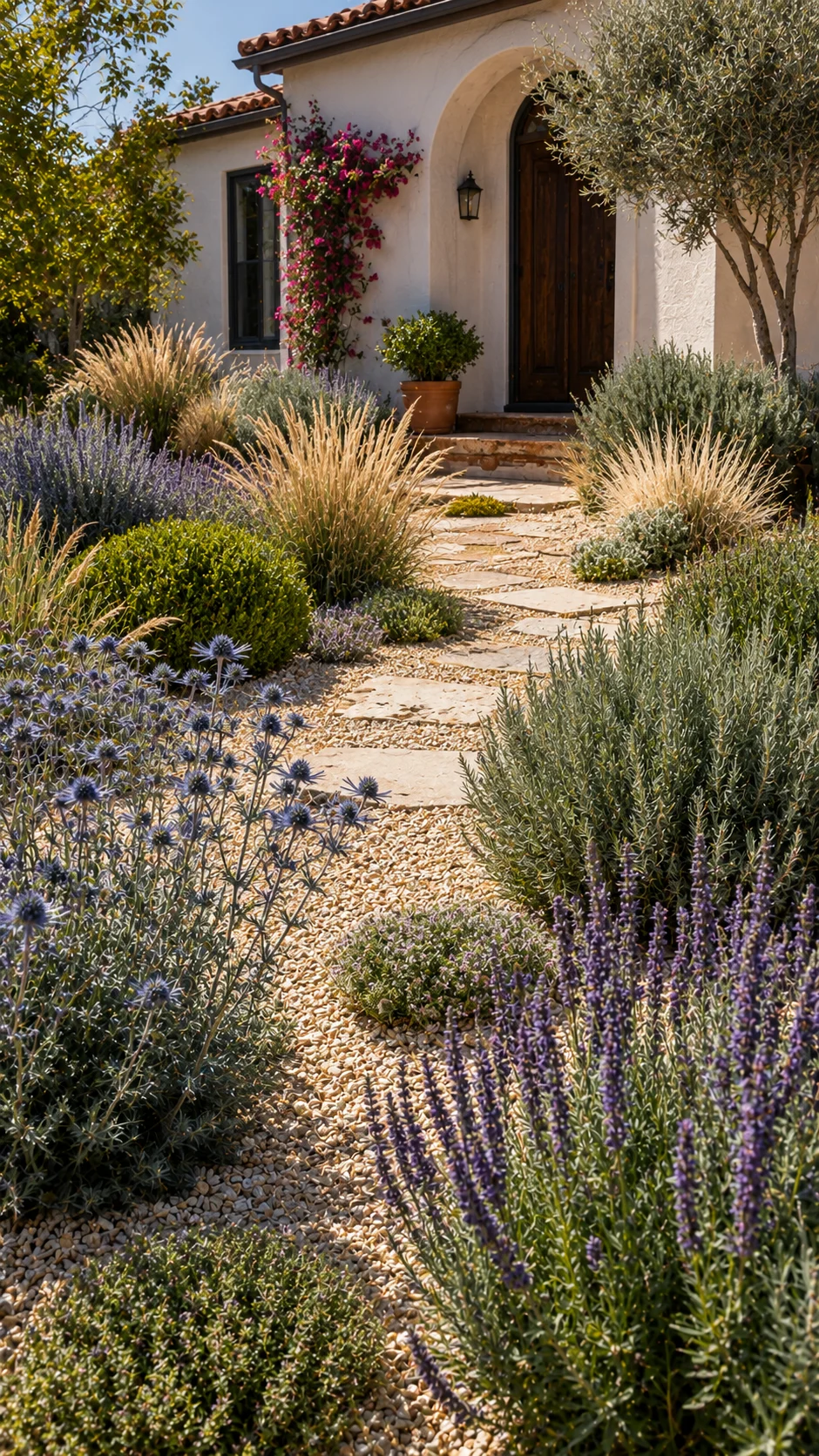
1: The Gravel Garden With Statement Planting
Replace high-maintenance lawn with decorative gravel and punctuate it with three to five architectural plants — a dwarf ornamental grass, a low-growing lavender, and a single structural shrub. The gravel handles itself. The plants do the visual work.
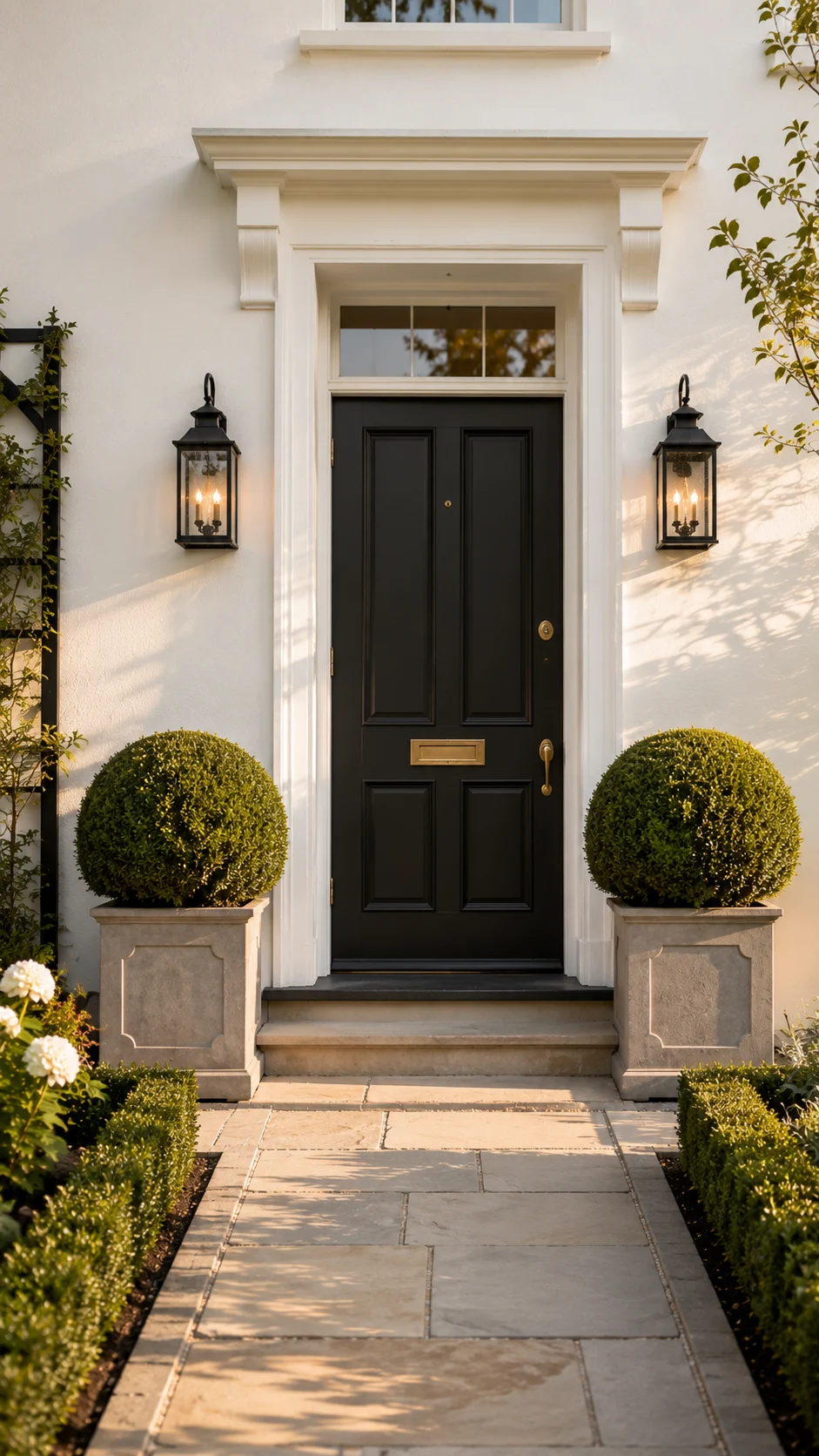
2: The Symmetrical Entry With Box Balls
Two matching clipped spheres of box (Buxus) or its replacement alternatives (box blight is widespread — consider Japanese holly or pittosporum) flanking a front door create instant formality and curb appeal that reads beautifully from the street regardless of what else surrounds them.
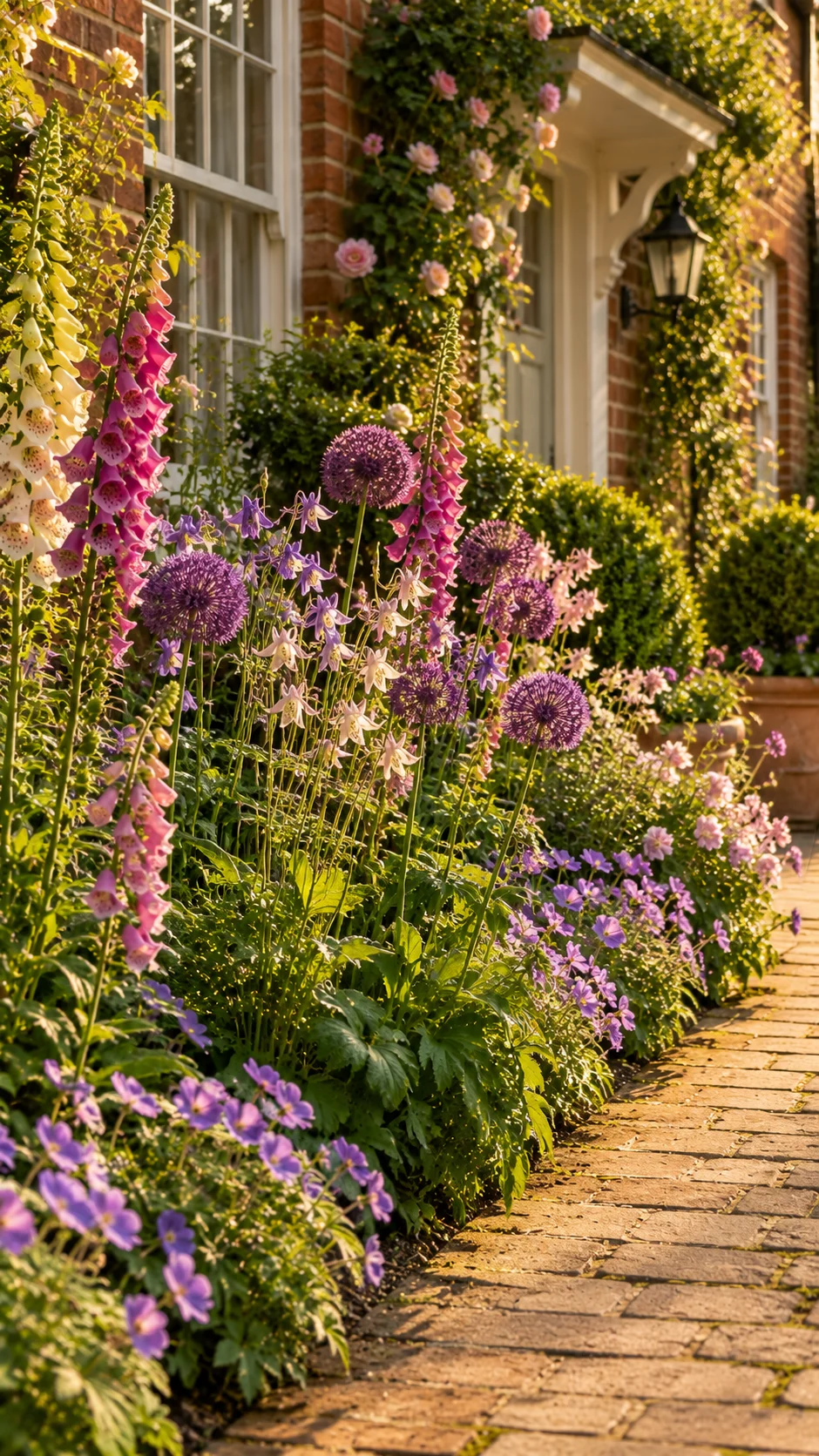
3: The Cottage Garden Strip
A narrow border between path and boundary filled with self-seeding cottage garden plants — foxgloves, aquilegia, hardy geraniums, alliums, and sweet Williams — creates a romantic, abundant look that maintains itself through self-seeding and costs almost nothing after the first season.
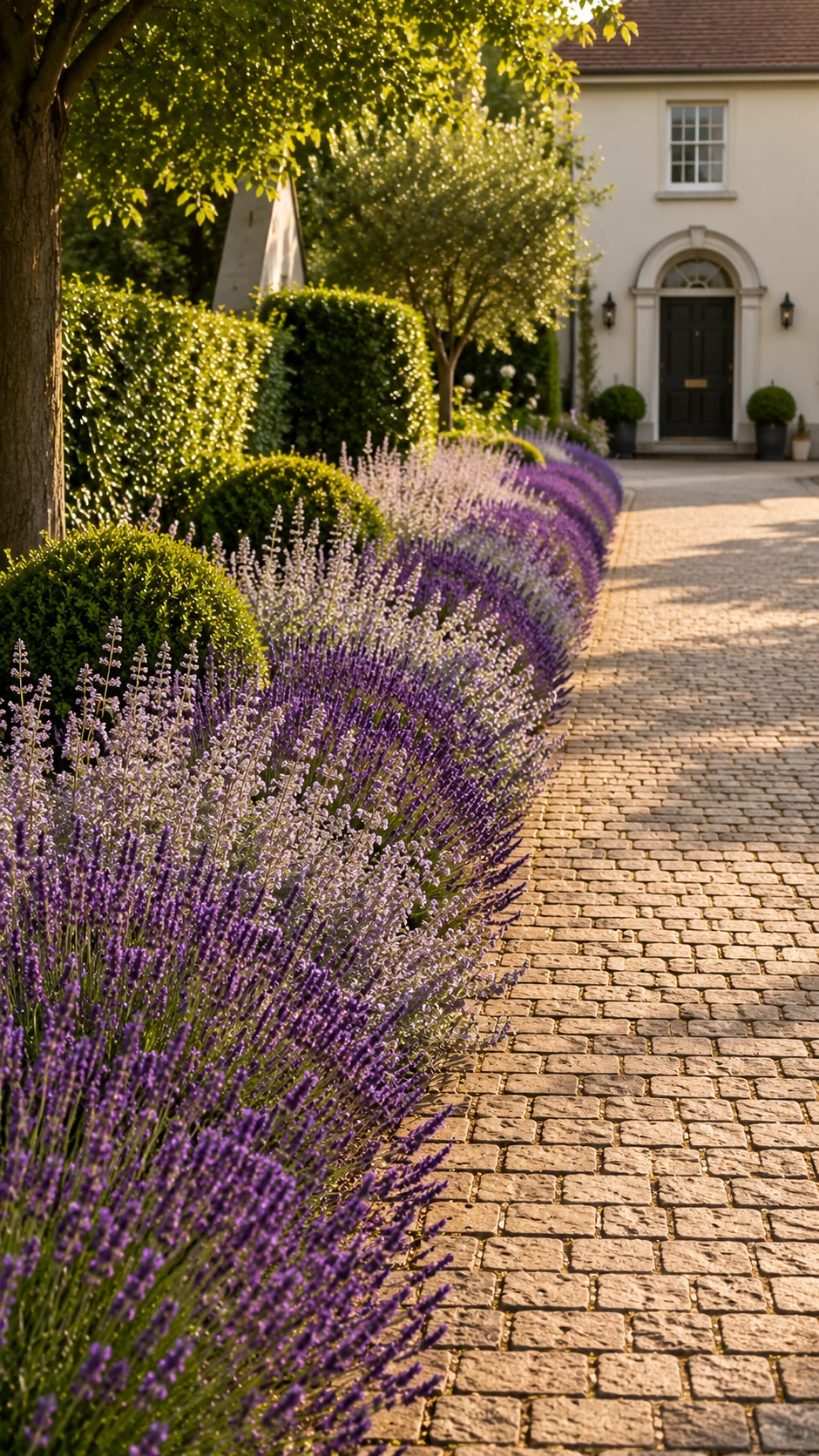
4: The Driveway Edge Planting
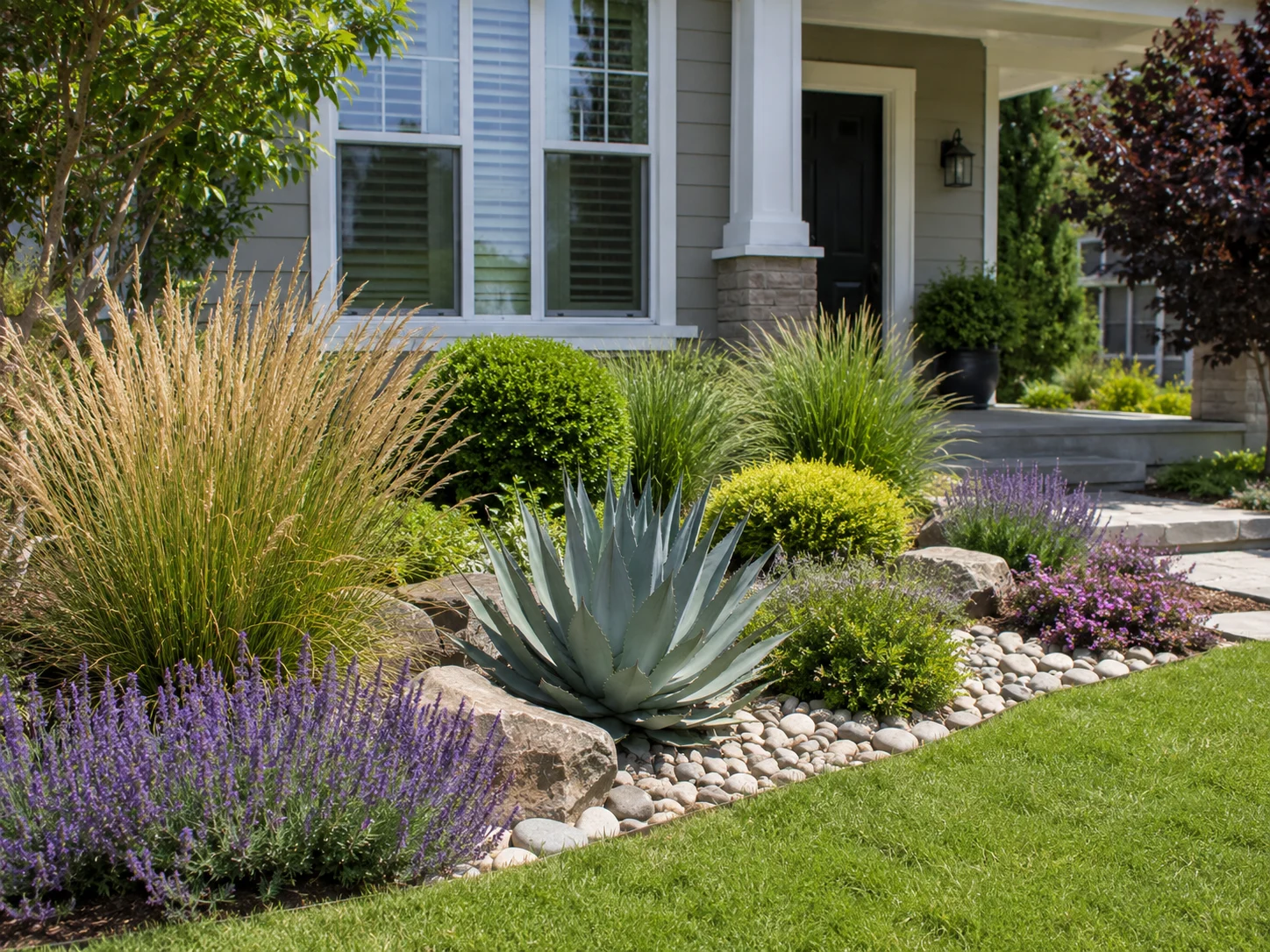
The strip of ground between a driveway and a boundary or lawn is one of the most underused spaces in any front yard. A continuous low planting of lavender, catmint, or dwarf ornamental grasses along the driveway edge transforms a hard, utilitarian surface into something that looks designed and intentional.
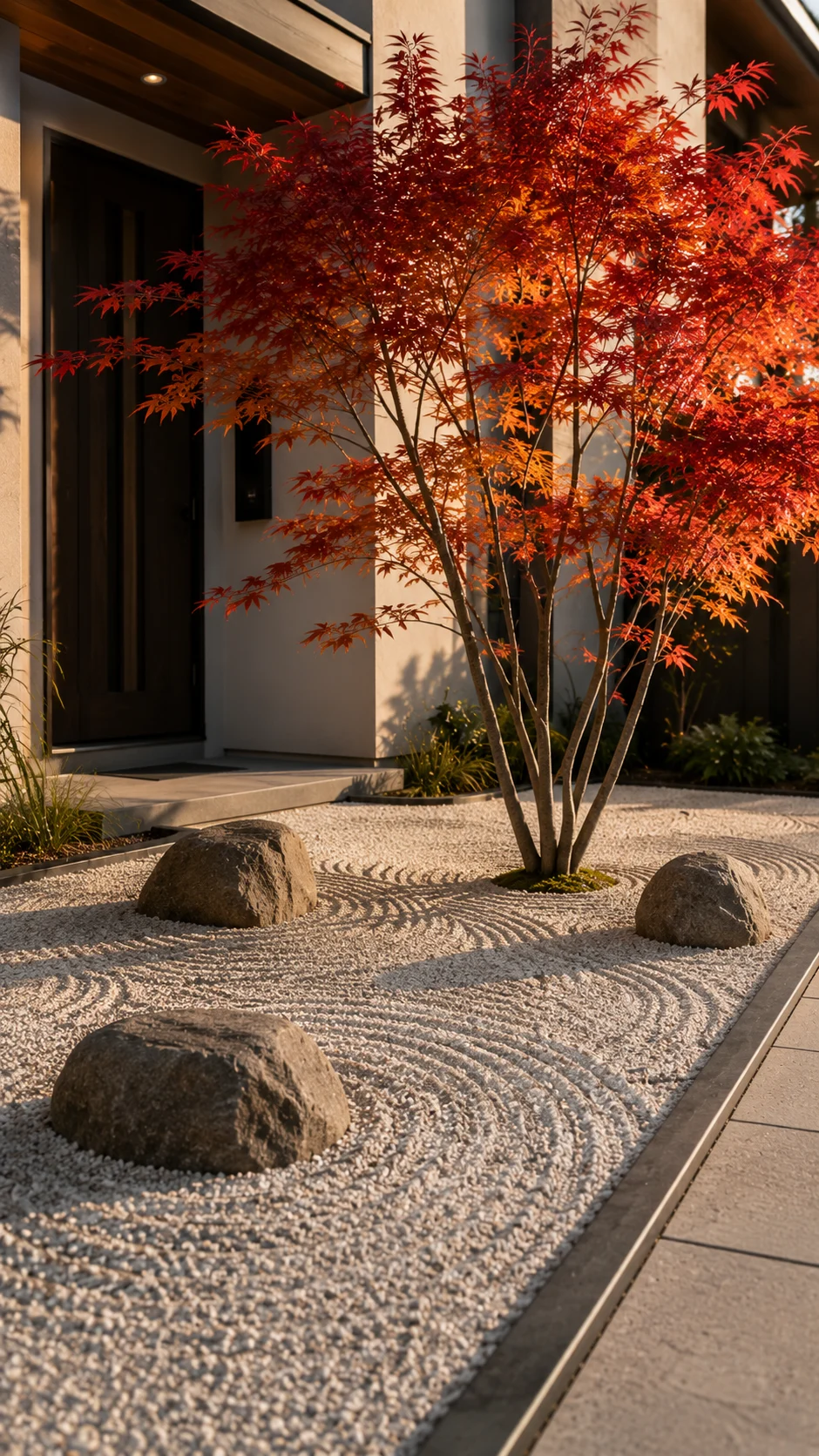
5: The Japanese-Inspired Minimalist Front Garden
Raked gravel or decomposed granite, a single specimen Japanese maple (Acer palmatum) in a key position, and a few carefully placed stones or pavers. Requires almost zero maintenance once established and looks extraordinary in every season — particularly autumn when the maple turns.
6: The Flowering Hedge Boundary
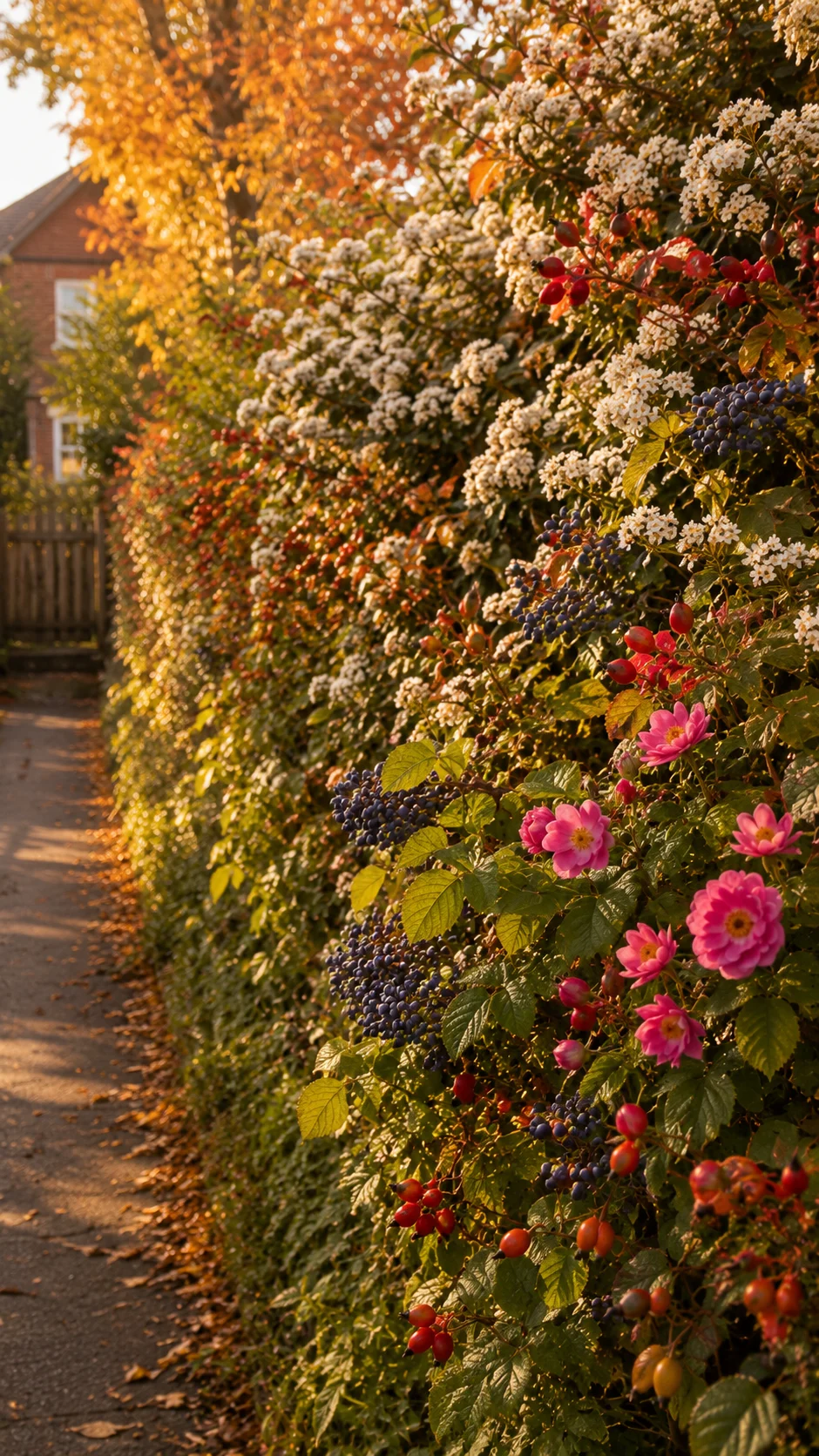
Replace a wooden fence or wall with a mixed flowering hedge — hawthorn, rosehip roses, native viburnums, or forsythia — that provides privacy, seasonal interest, and movement in a way no fence ever can.
7: The Raised Bed Entrance Garden
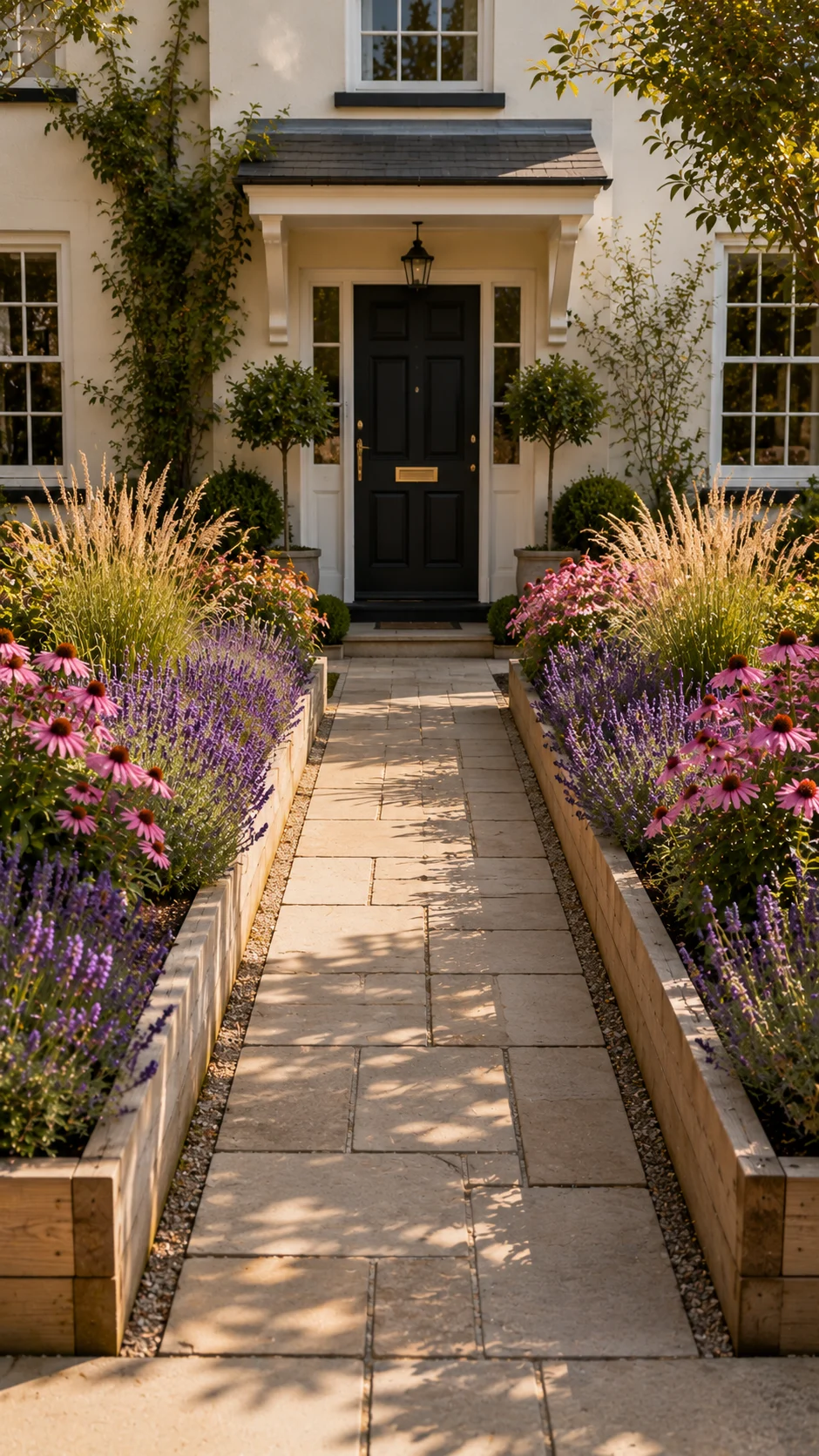
Two low raised timber or stone beds either side of a front path, filled with seasonal planting — tulips and wallflowers in spring, lavender and echinacea in summer, asters and sedums in autumn — create a structured, manageable front garden that changes beautifully through the year.
8: The Front Garden Meadow
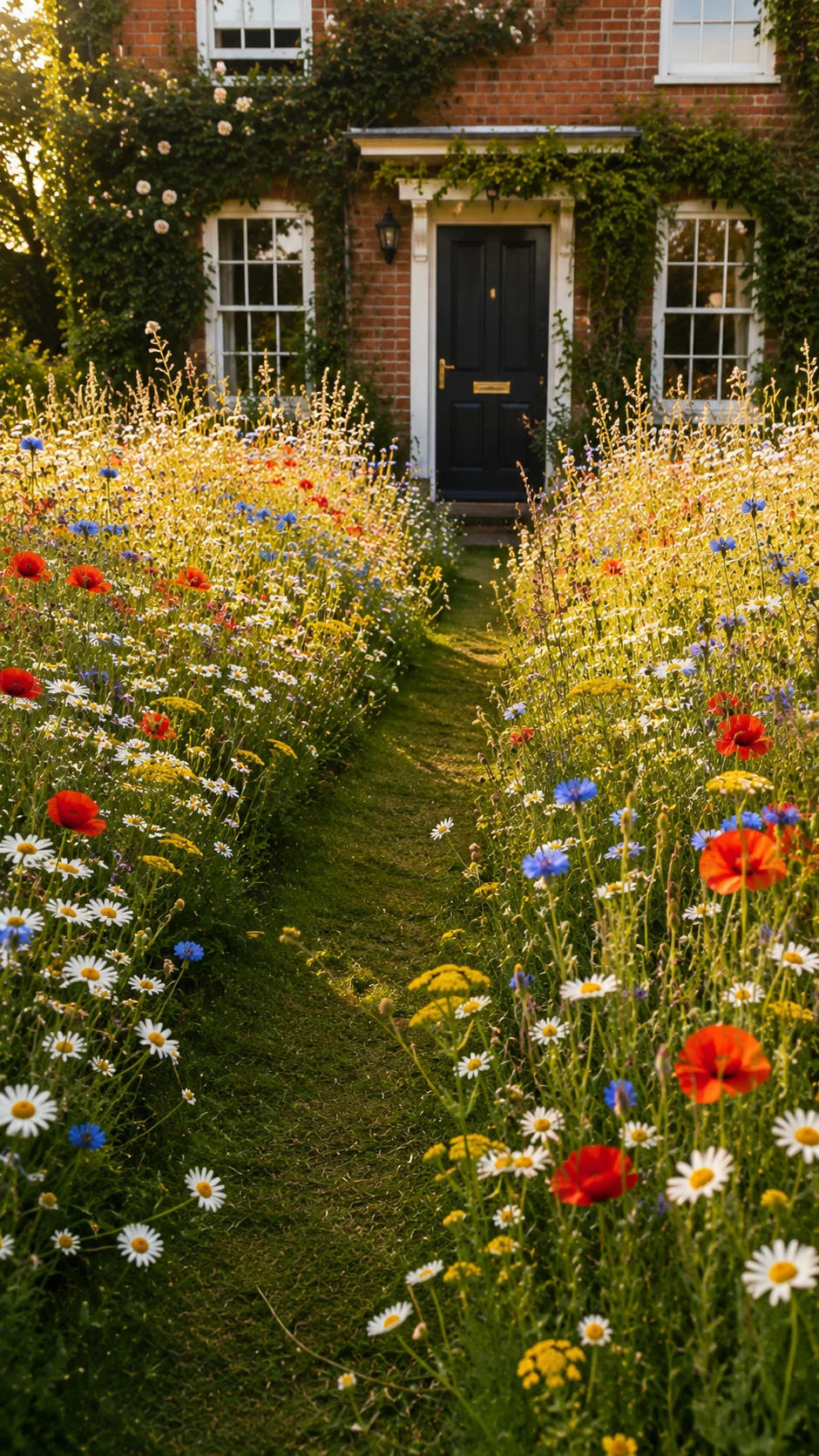
A patch of front lawn allowed to grow long and seeded with native wildflowers — cornflower, poppy, ox-eye daisy, yarrow — creates a meadow effect that is visually stunning, requires mowing only once a year, and stops the street cold.
9: The Evergreen Foundation Planting
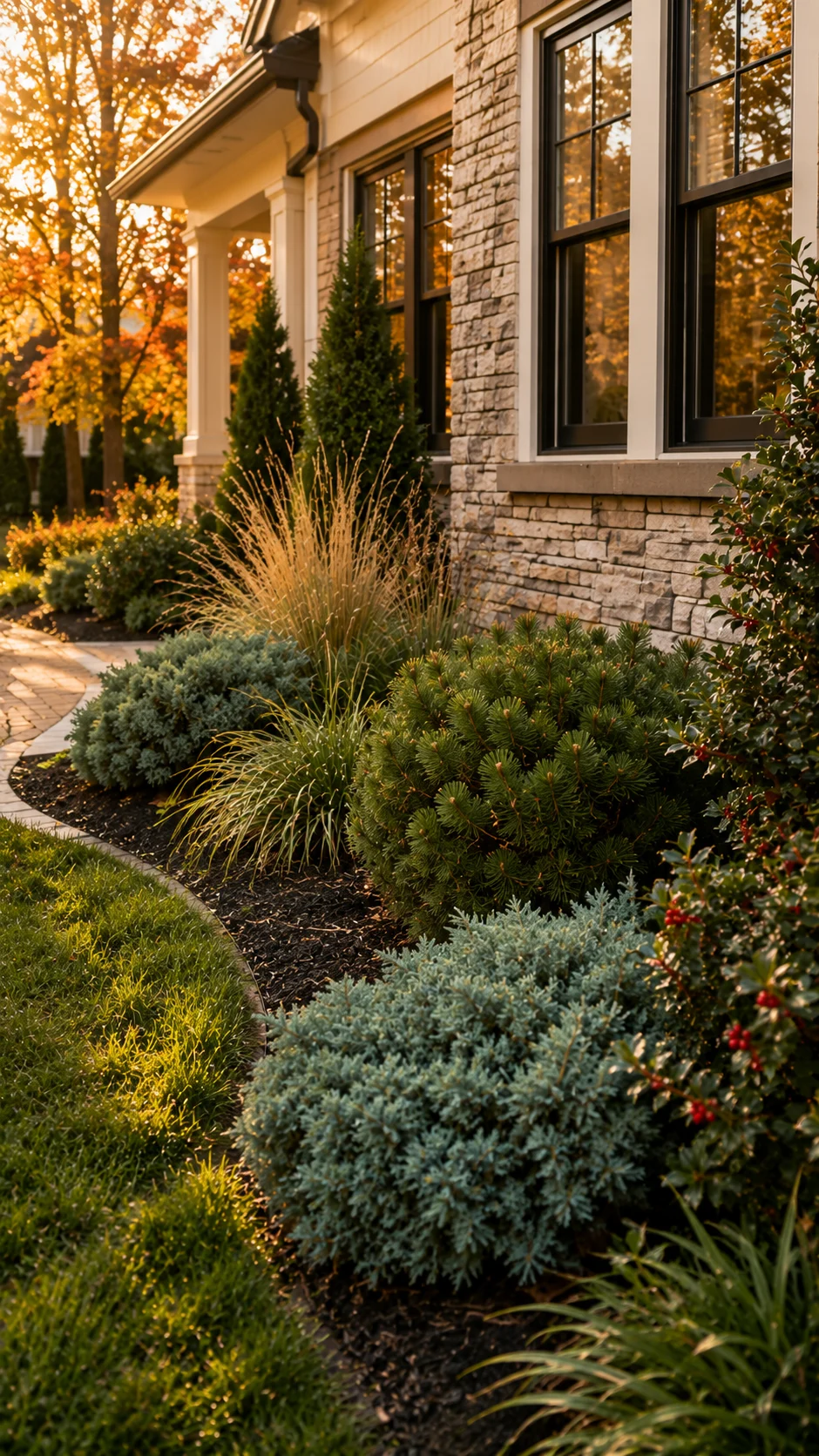
A classic American front yard approach — low evergreen shrubs planted against the house foundation to ground the building visually in the landscape. Updated with interesting textural choices: dwarf mugo pine, Japanese holly, blue-grey juniper, and ornamental grasses instead of the tired old privet and yew row.
10: The Potted Entrance Display
When there is genuinely no planting space, large statement pots either side of the front door — planted with seasonal color and a structural central plant — create the impression of a well-considered front garden with almost no permanent commitment.
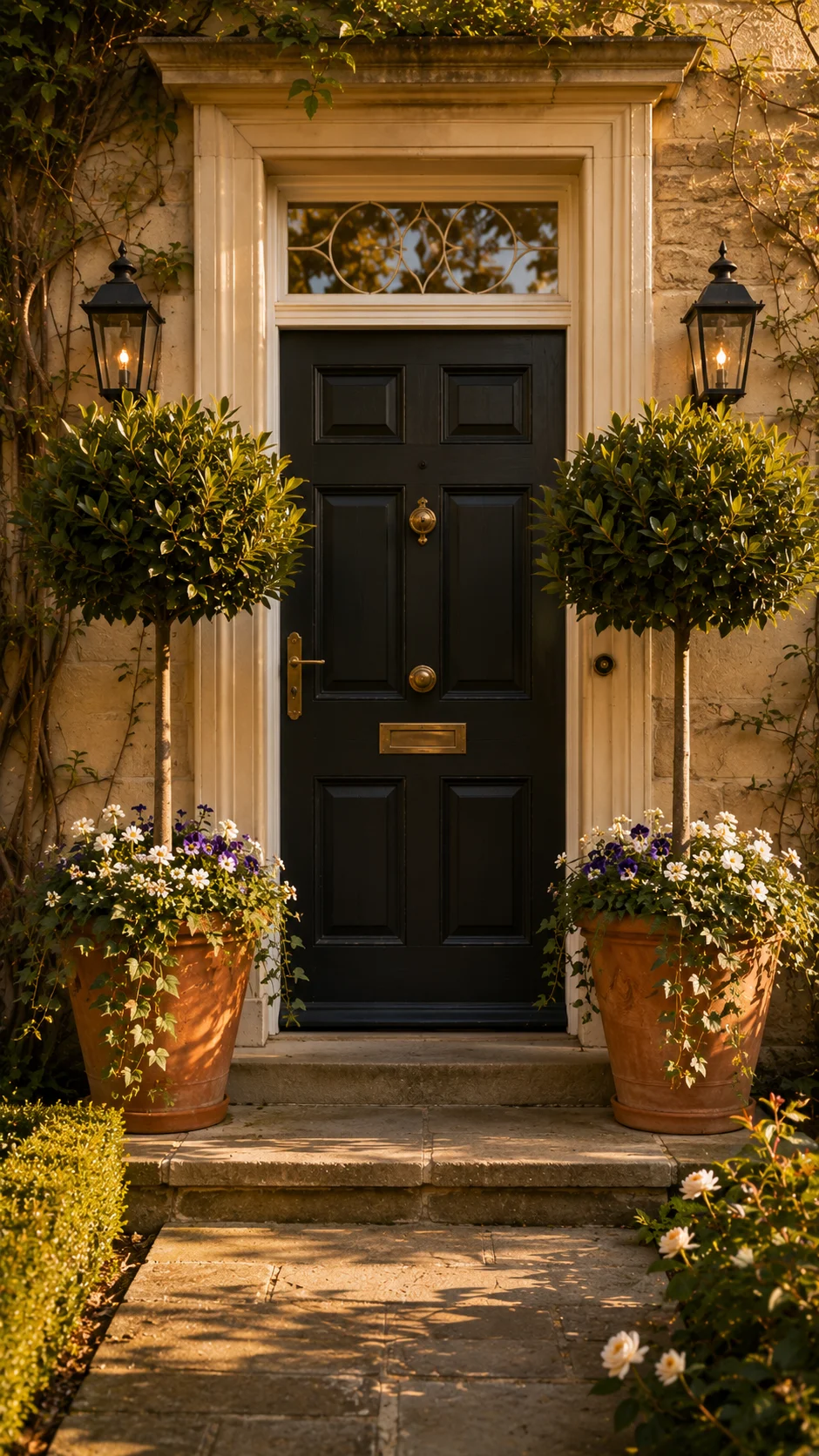
11: The Clover Lawn
Replace conventional grass with a white clover lawn — lower maintenance, no fertilizer required (clover fixes its own nitrogen), drought-tolerant, soft underfoot, and covered in tiny white flowers from June to September that look like a living carpet from the street.
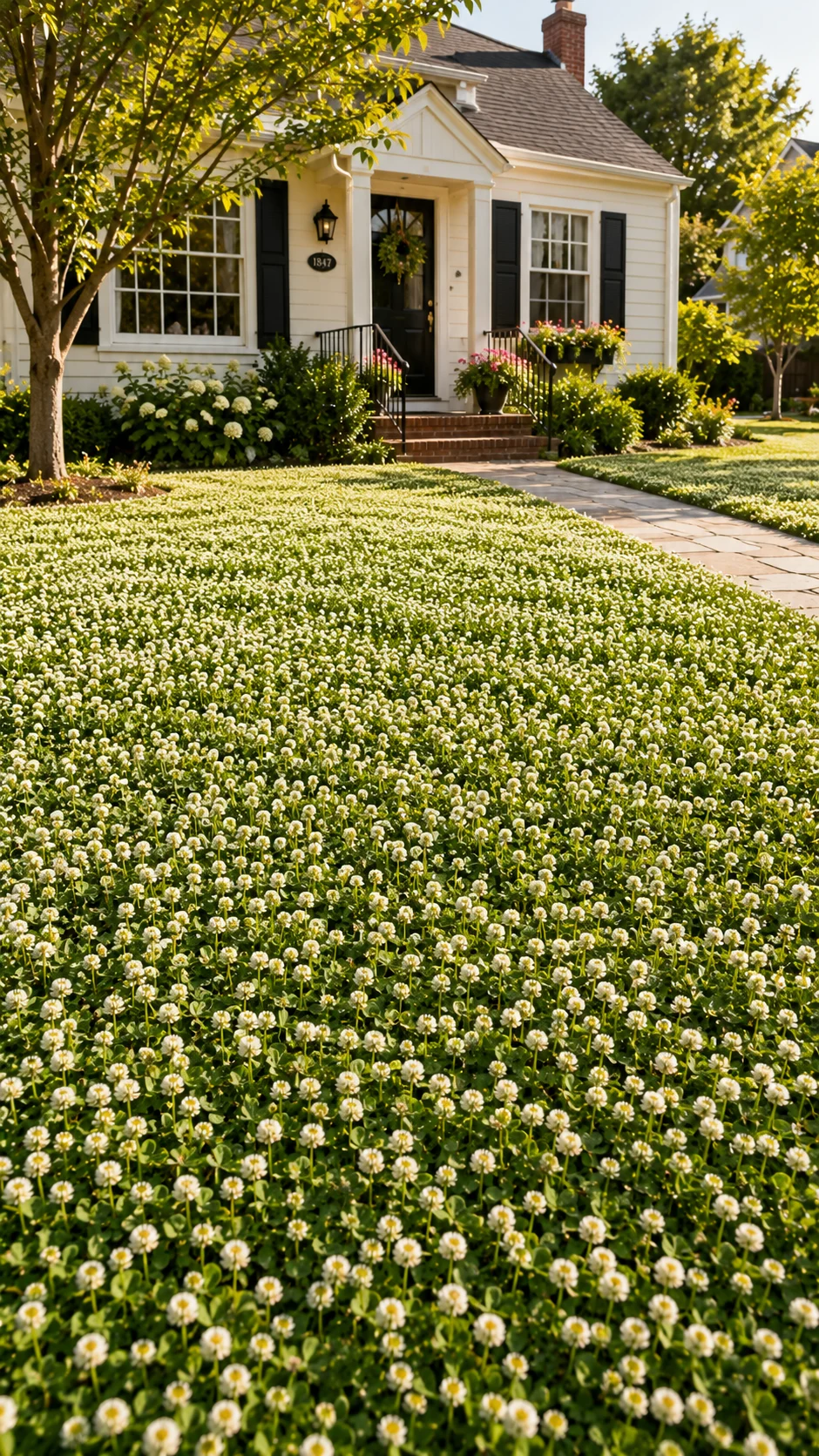
12: The Dry Garden
For sun-baked, south-facing front yards with poor soil and no irrigation, a dry garden of Mediterranean and drought-tolerant plants — rosemary, cistus, thyme, sage, eryngium, and ornamental grasses — creates a striking, silver-green planting that thrives on neglect and looks spectacular in summer.
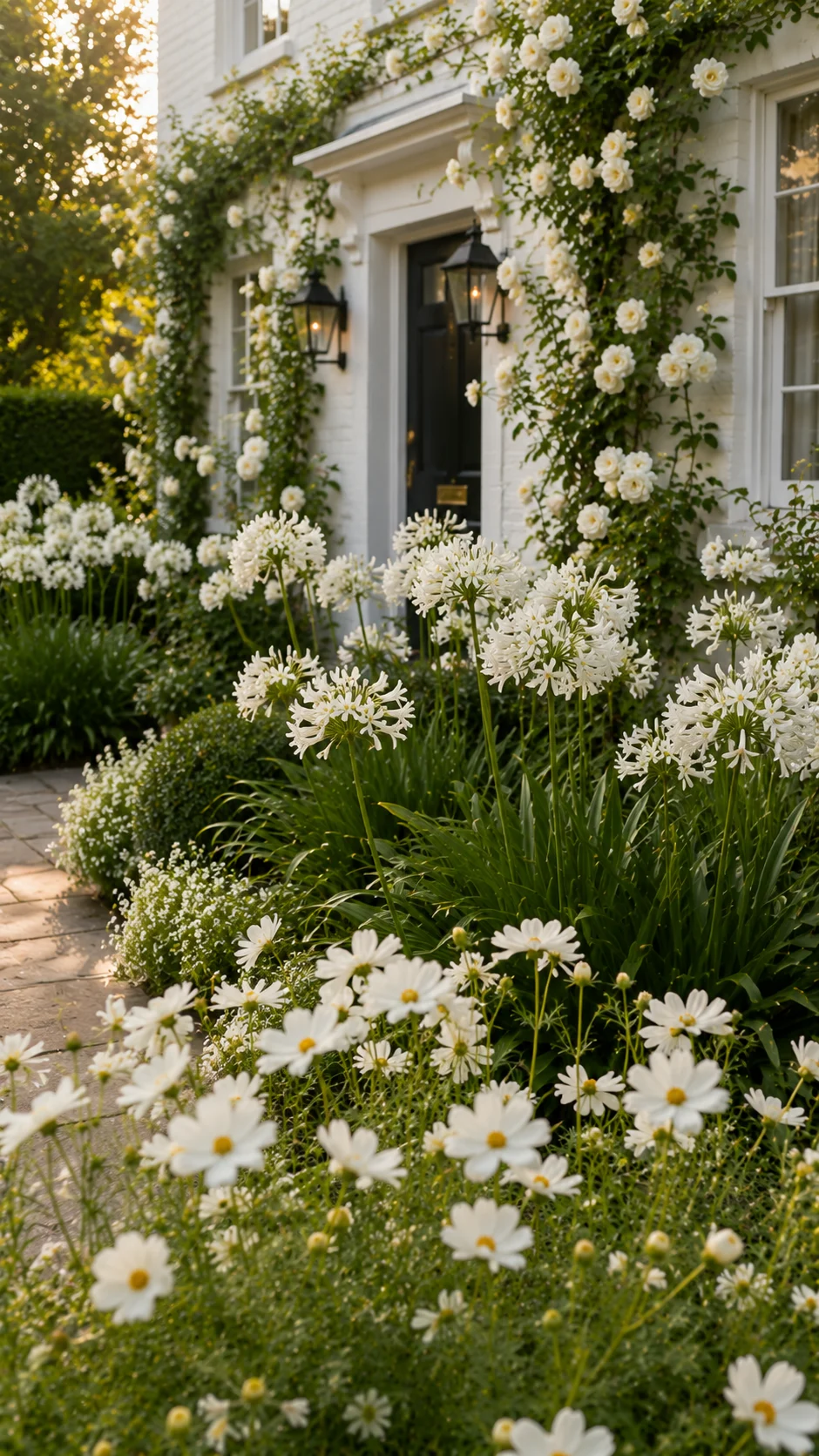
13: The Monochrome White Garden
An all-white planting scheme — white roses, white agapanthus, white hydrangeas, white cosmos — creates a sophisticated, almost luminous front garden that looks equally beautiful in daylight and at dusk, and photographs stunningly.
14: The Pocket Prairie
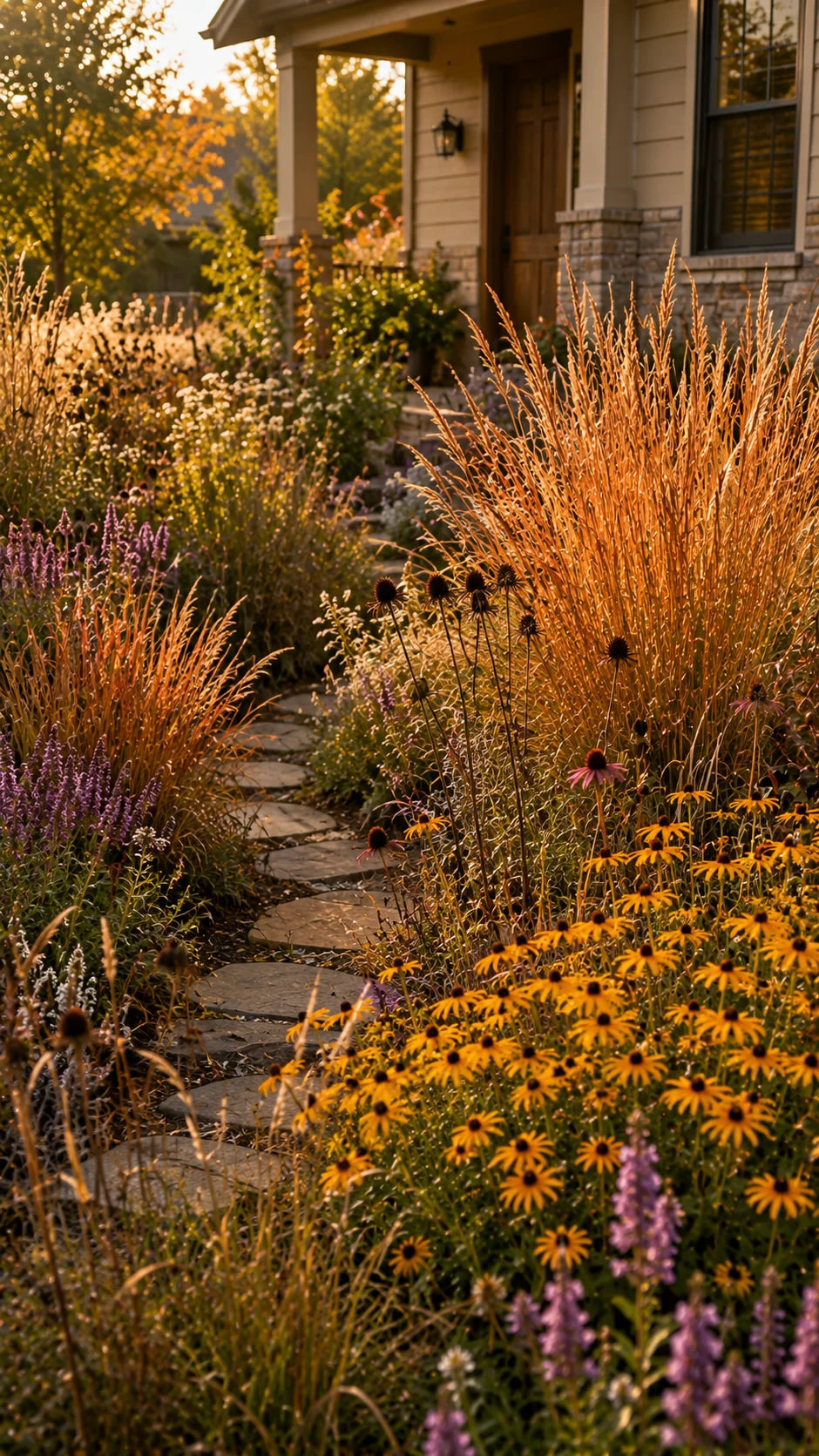
A small patch of North American native prairie planting — little bluestem grass, purple coneflower, black-eyed Susan, and prairie dropseed — creates an authentic, wildlife-rich front yard that looks intentional and beautiful in every season including winter when the grasses catch the frost.
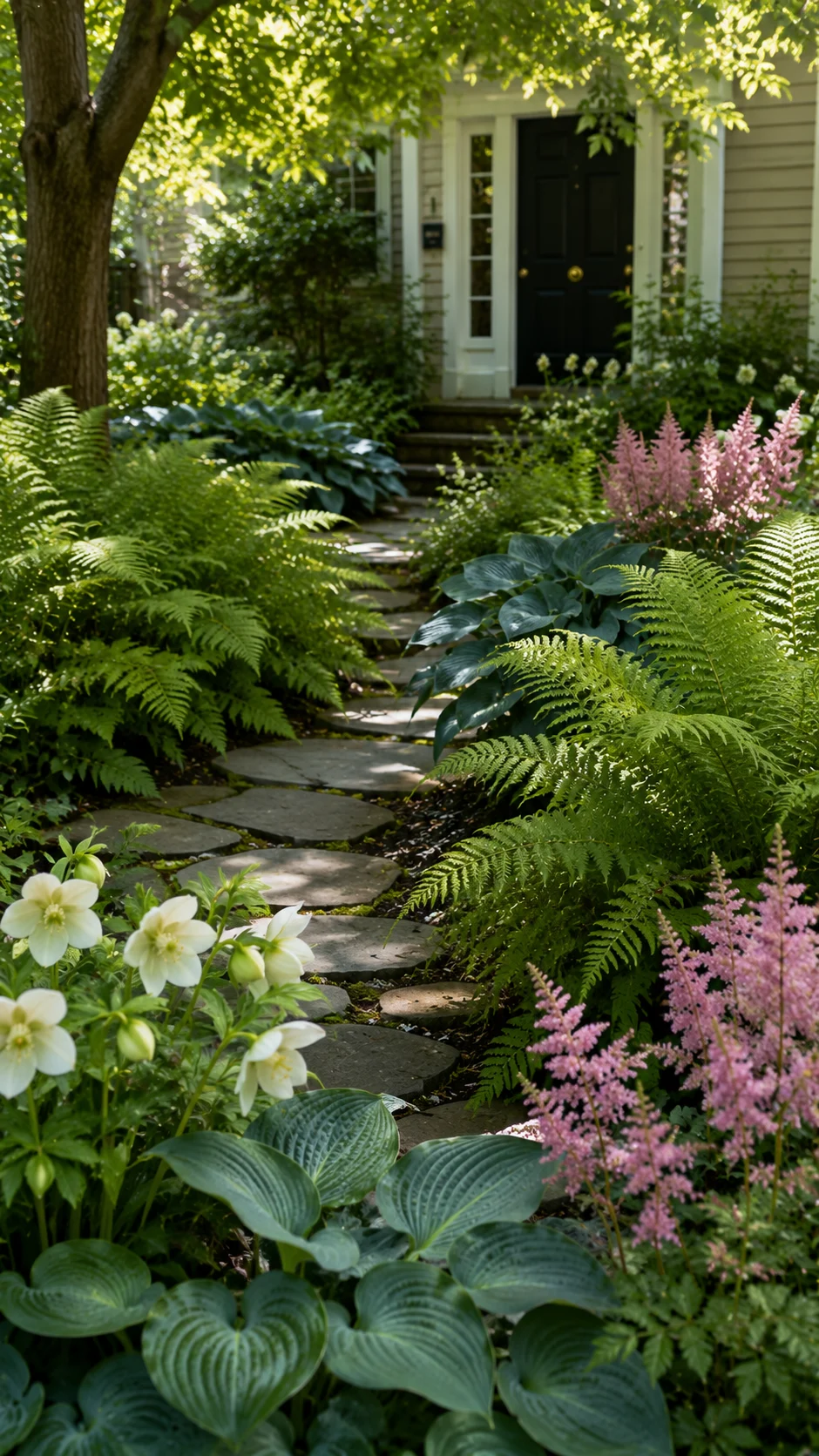
15: The Fern and Shade Garden
For a north-facing or heavily shaded front yard — one of the most common landscaping challenges — a lush planting of ferns, hostas, astilbes, and hellebores turns a difficult site into a cool, green, textural garden that looks effortlessly good.
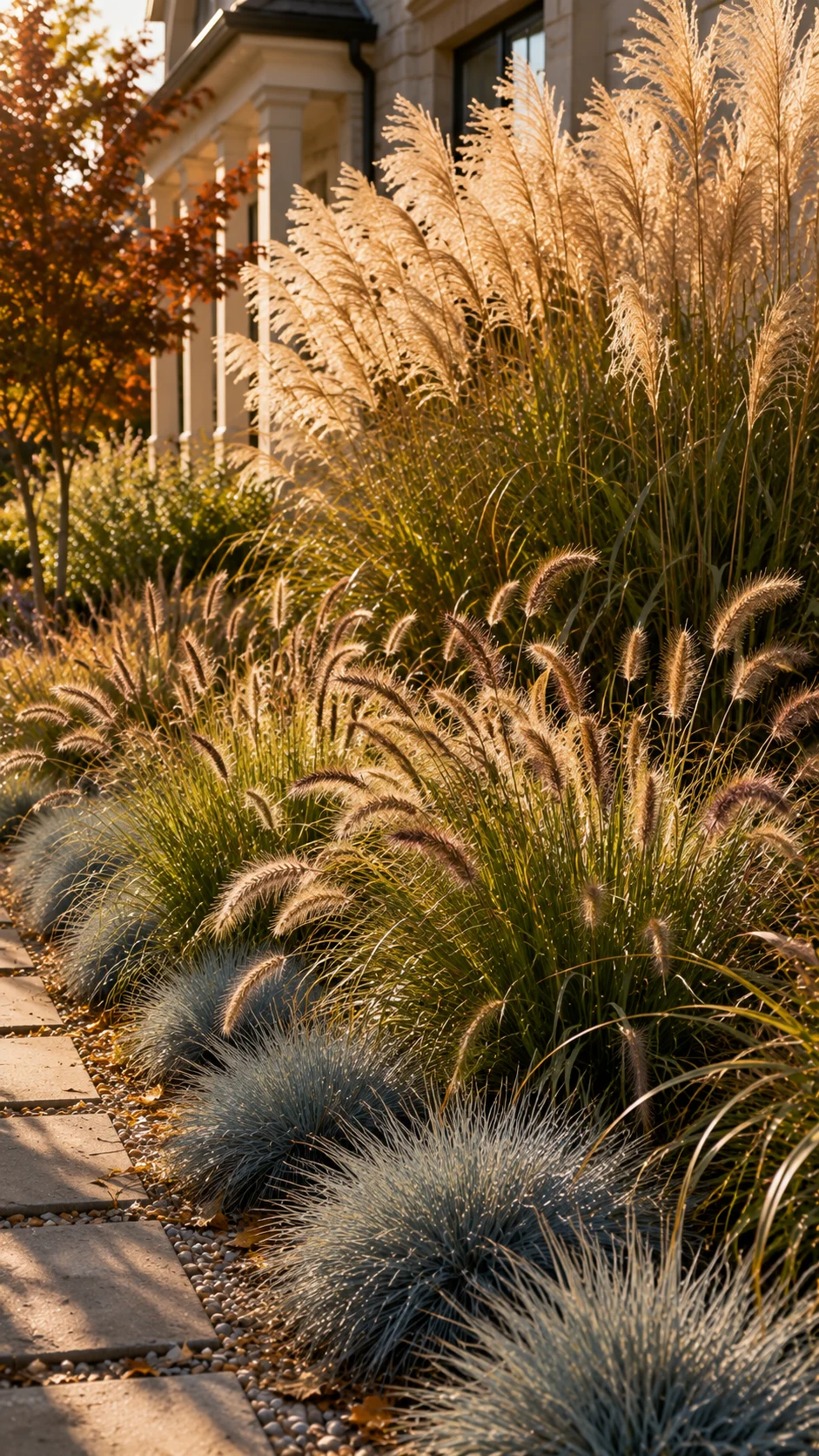
16: The Ornamental Grass Border
A front border planted entirely with ornamental grasses — in varying heights, textures, and autumn colors — creates a planting that is genuinely magnificent from August to February, requires one cut a year, and moves beautifully in the wind.
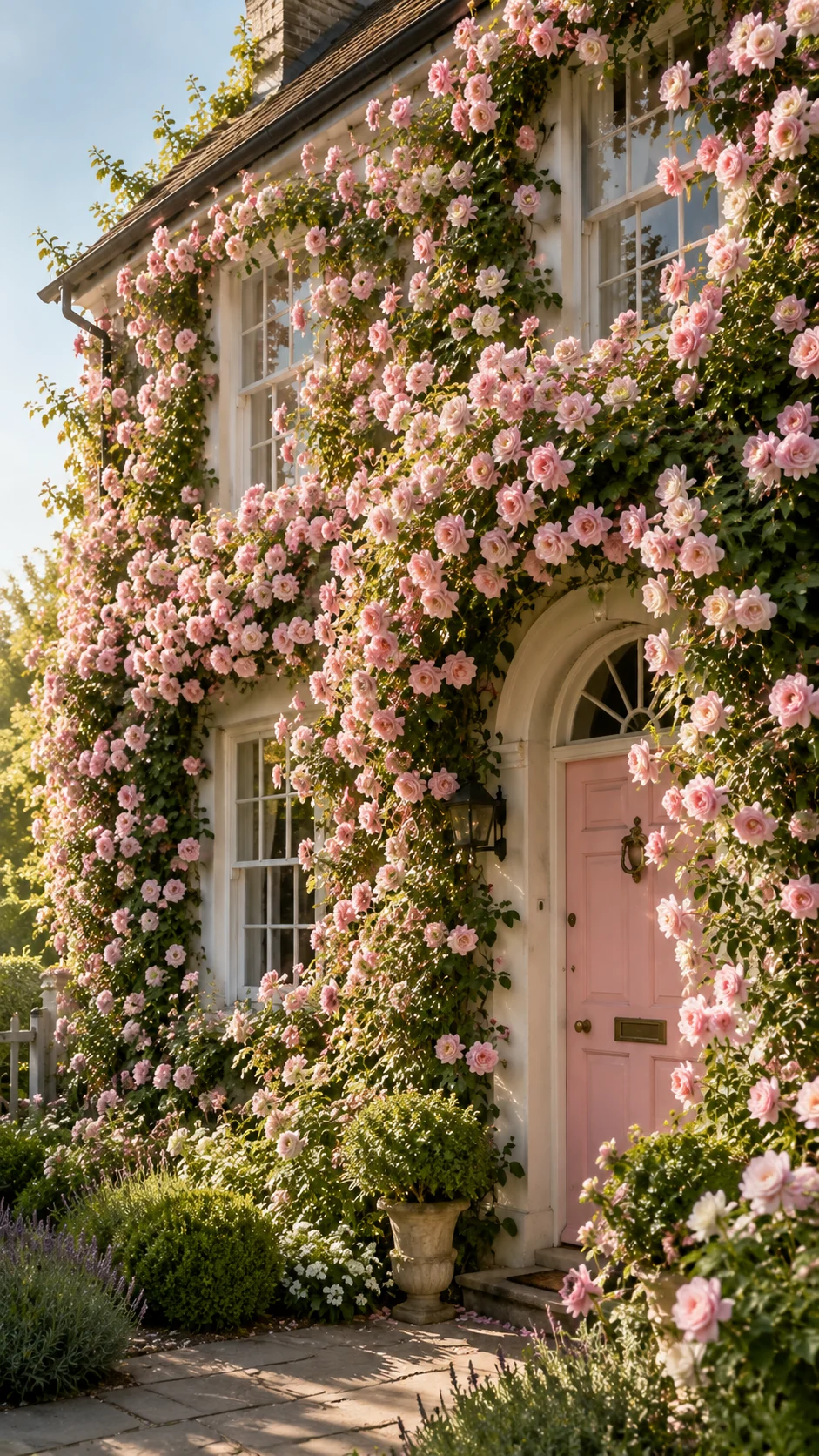
17: The Climbing Rose House Front
A climbing rose trained over a house front — covering the wall between windows, framing the door, and reaching toward the eaves — creates the most romantically beautiful house facade possible and requires only an annual prune.
18: The Linear Modern Front Garden
Clean lines, a single material palette — black granite setts, white gravel, dark steel edging — and architectural planting in strict grid formation. Agave, phormium, or architectural grasses in geometric groupings. Designed for the contemporary house.
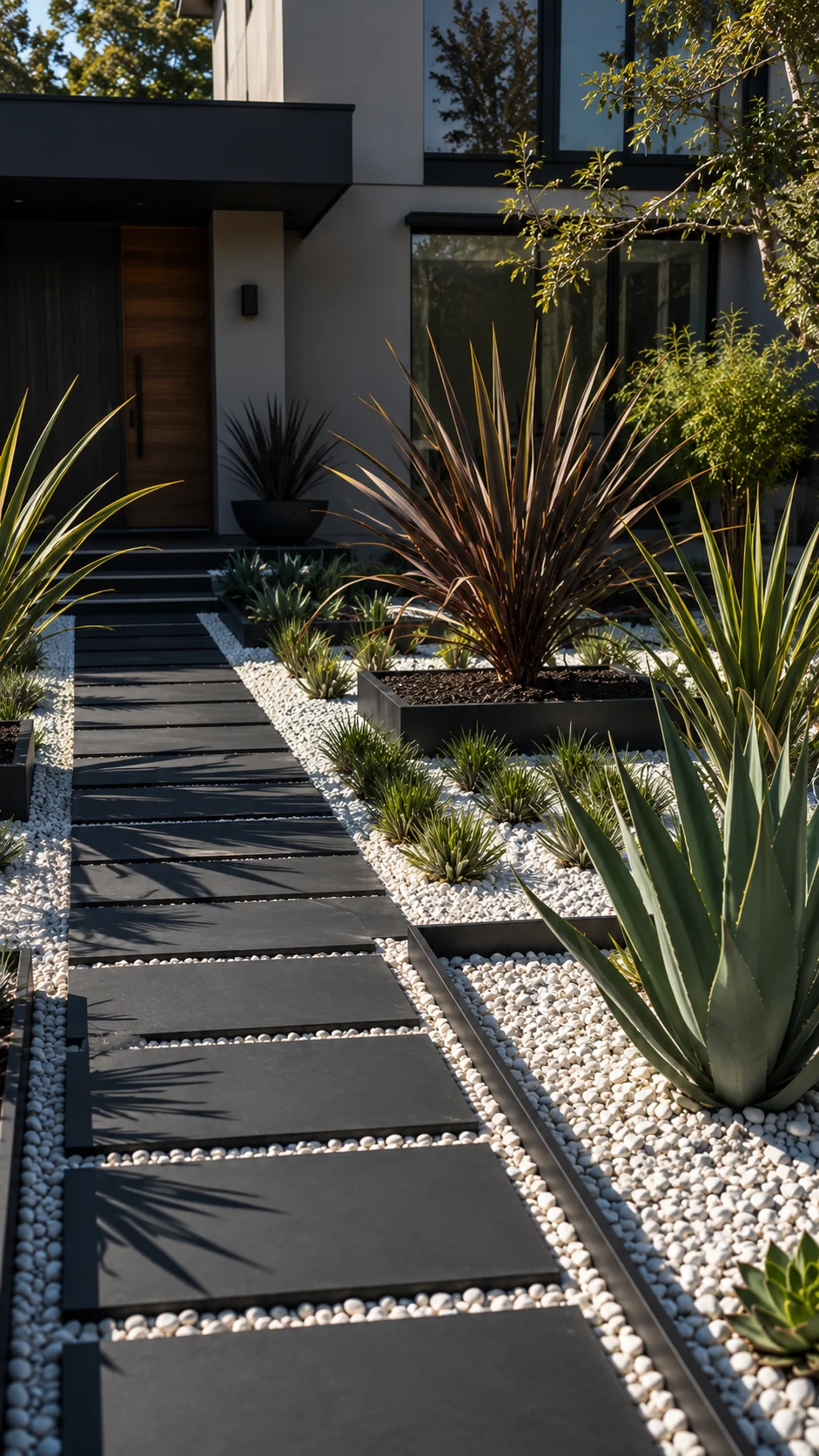
19: The Topiary Accent Garden
One or two pieces of simple topiary — a spiral, a cone, a cloud-pruned ball — as focal points in an otherwise simple planting create an immediate impression of care, craft, and personality that elevates any front garden.
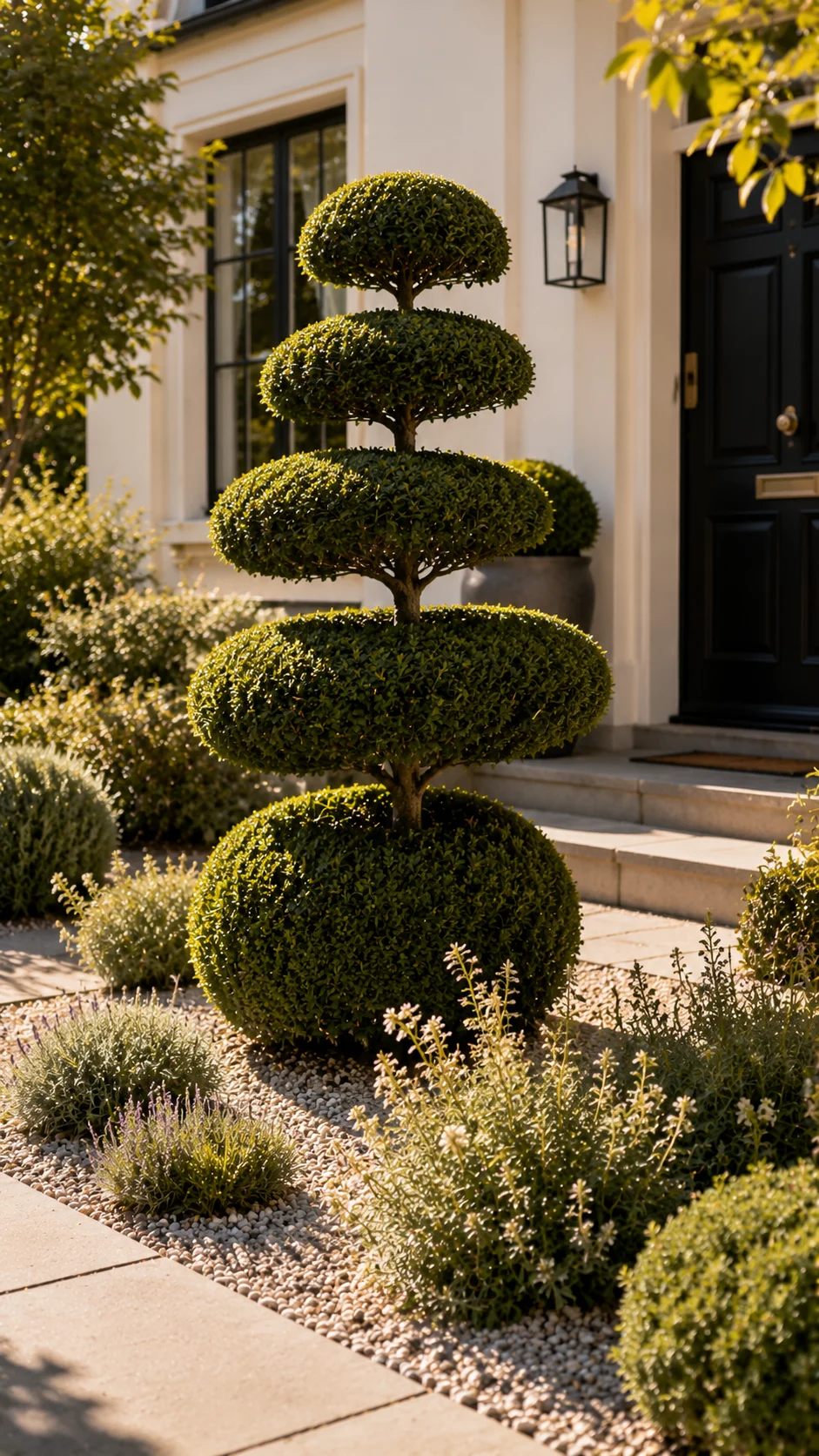
20: The Wildflower Verge
The strip of ground between the pavement/sidewalk and the road — often owned by the municipality but maintained by the homeowner — planted with low wildflowers and native plants instead of mown grass. Highly visible, frequently admired, and genuinely transformative for the street.
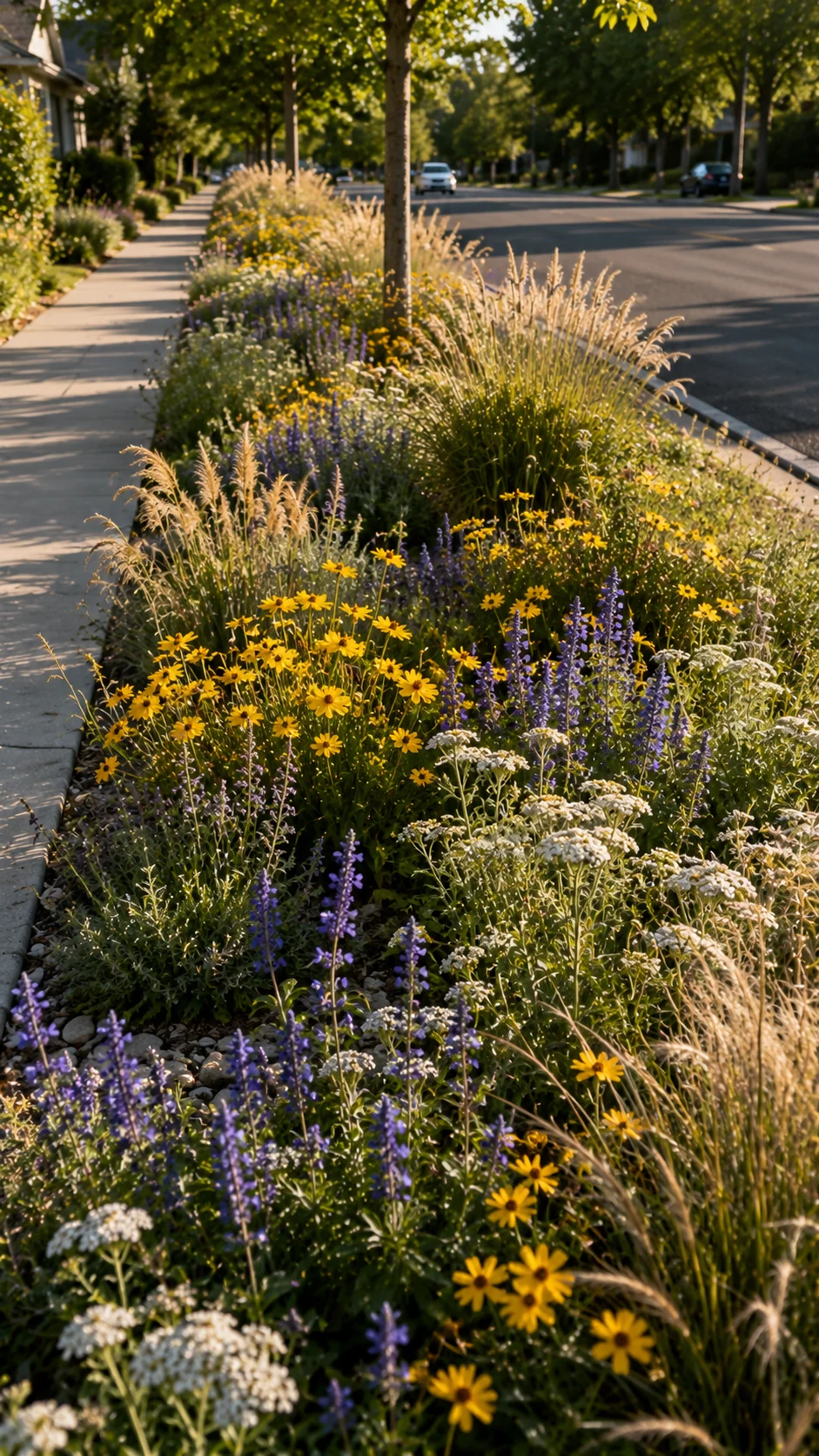
21: The Bay Tree Lollipop Pair
Two standard bay trees (Laurus nobilis) clipped into perfect lollipop standards in matching containers flank a front door with instant formal elegance. Evergreen, extremely long-lived in containers, and so classic that they never look dated.
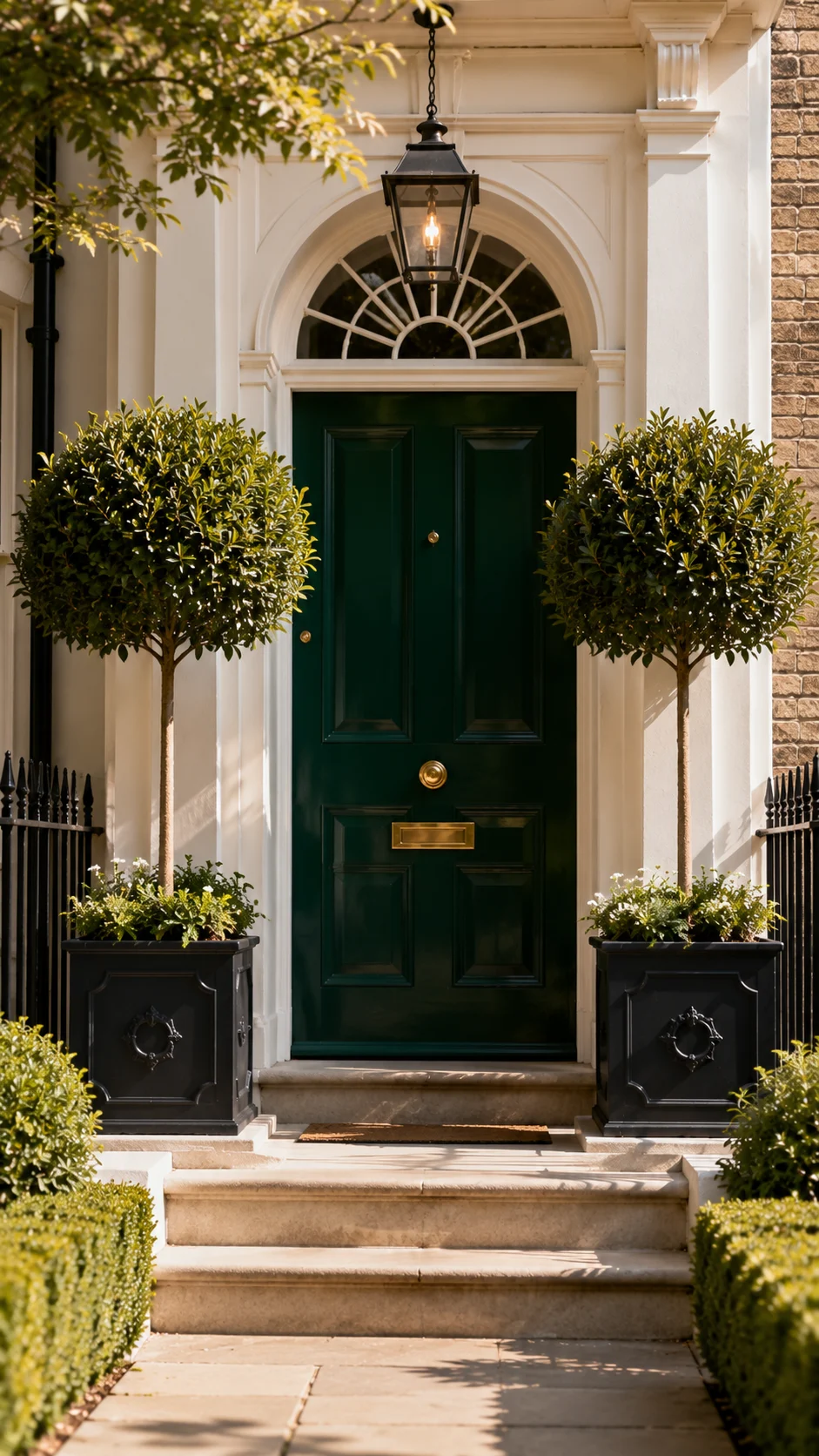
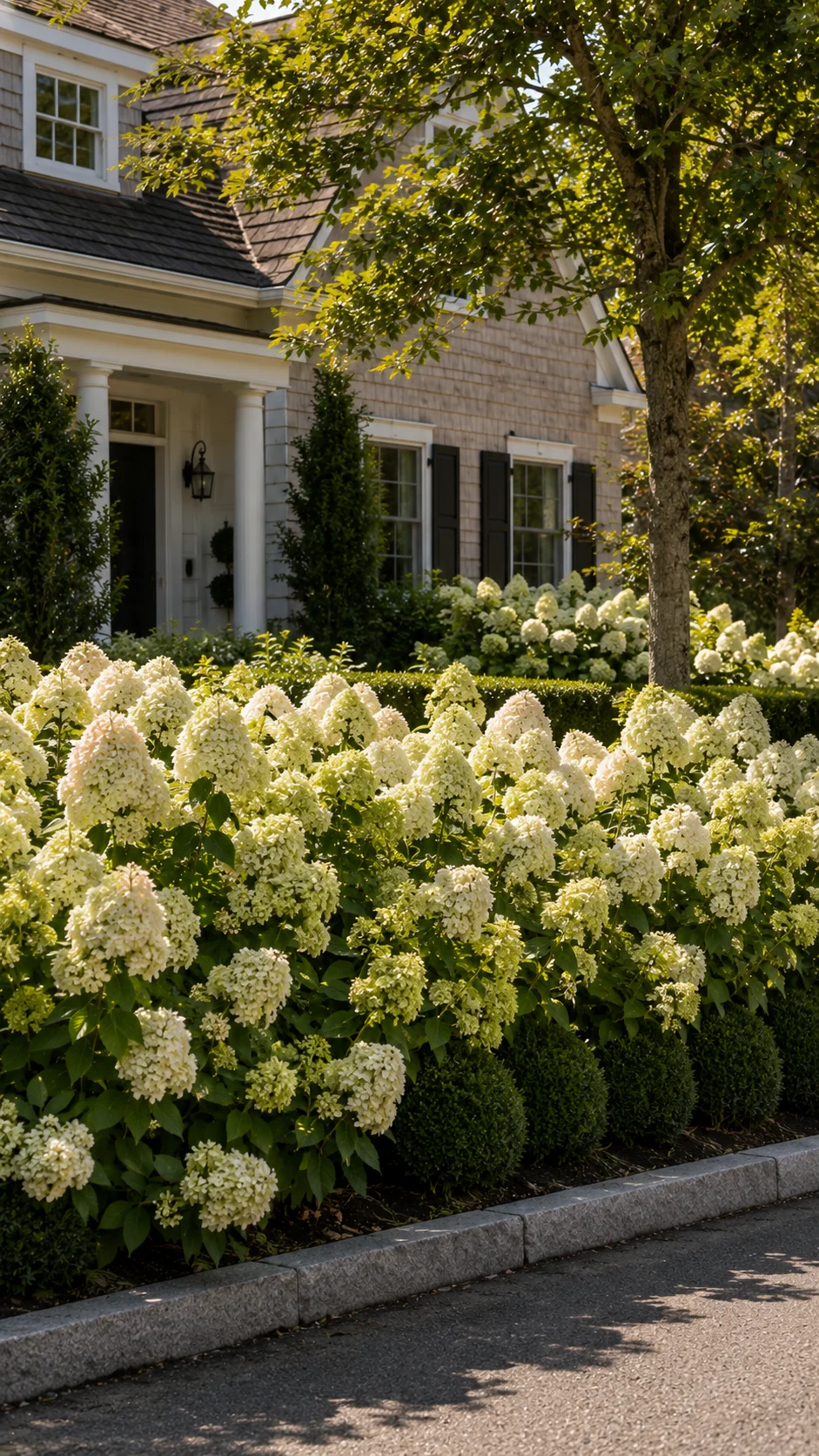
22: The Hydrangea Front Border
A full front border of hydrangeas — particularly the hardy Hydrangea paniculata varieties that handle sun and neglect — creates one of the most reliably spectacular summer displays available to any front garden. They bloom for months, dry beautifully on the plant, and require almost no care.
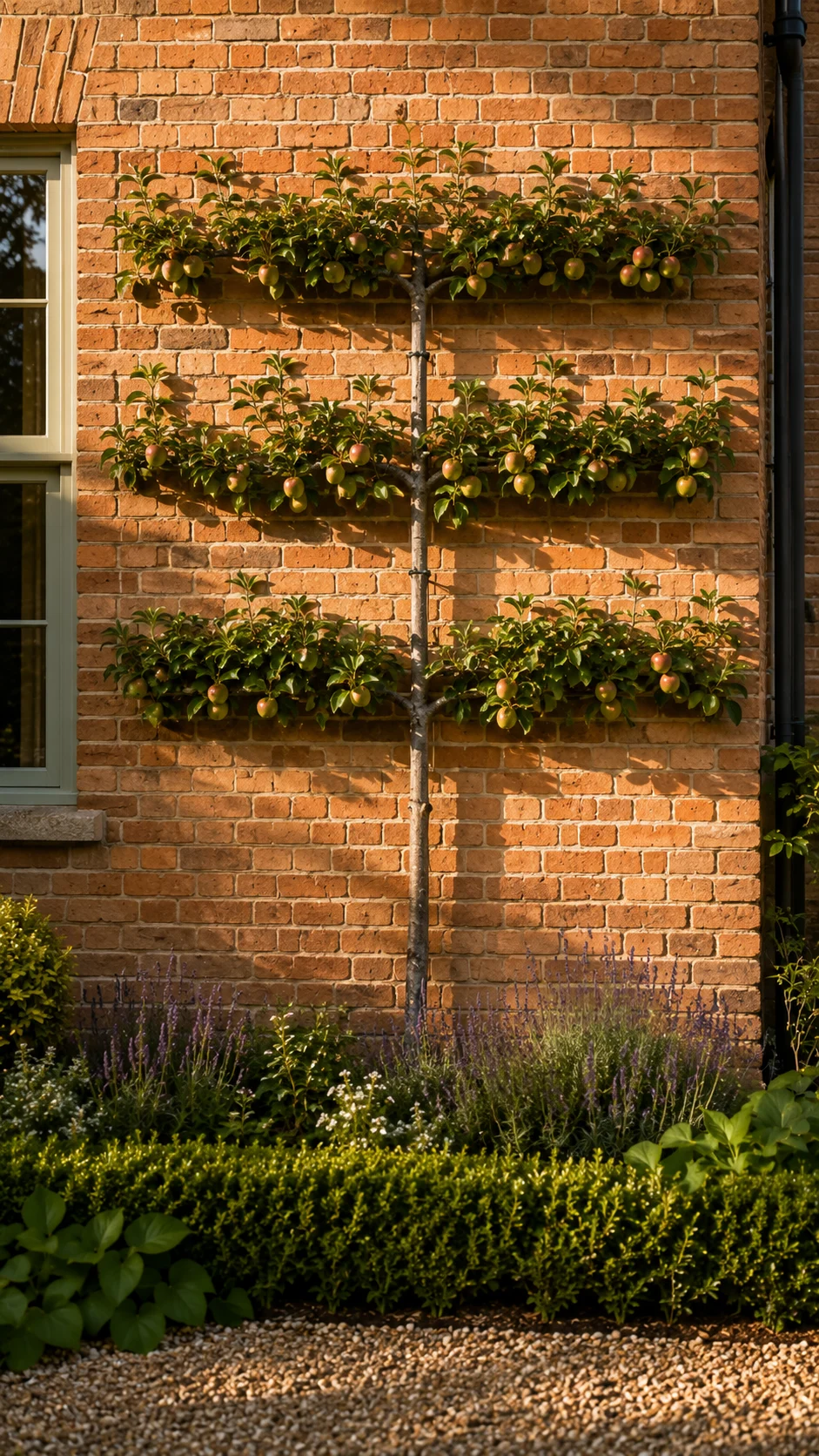
23: The Espalier Fruit Tree Wall
A fruit tree trained flat against a front wall in an espalier pattern — horizontal branches at regular intervals, symmetrical on both sides — creates one of the most striking and productive garden features possible on a blank house wall.
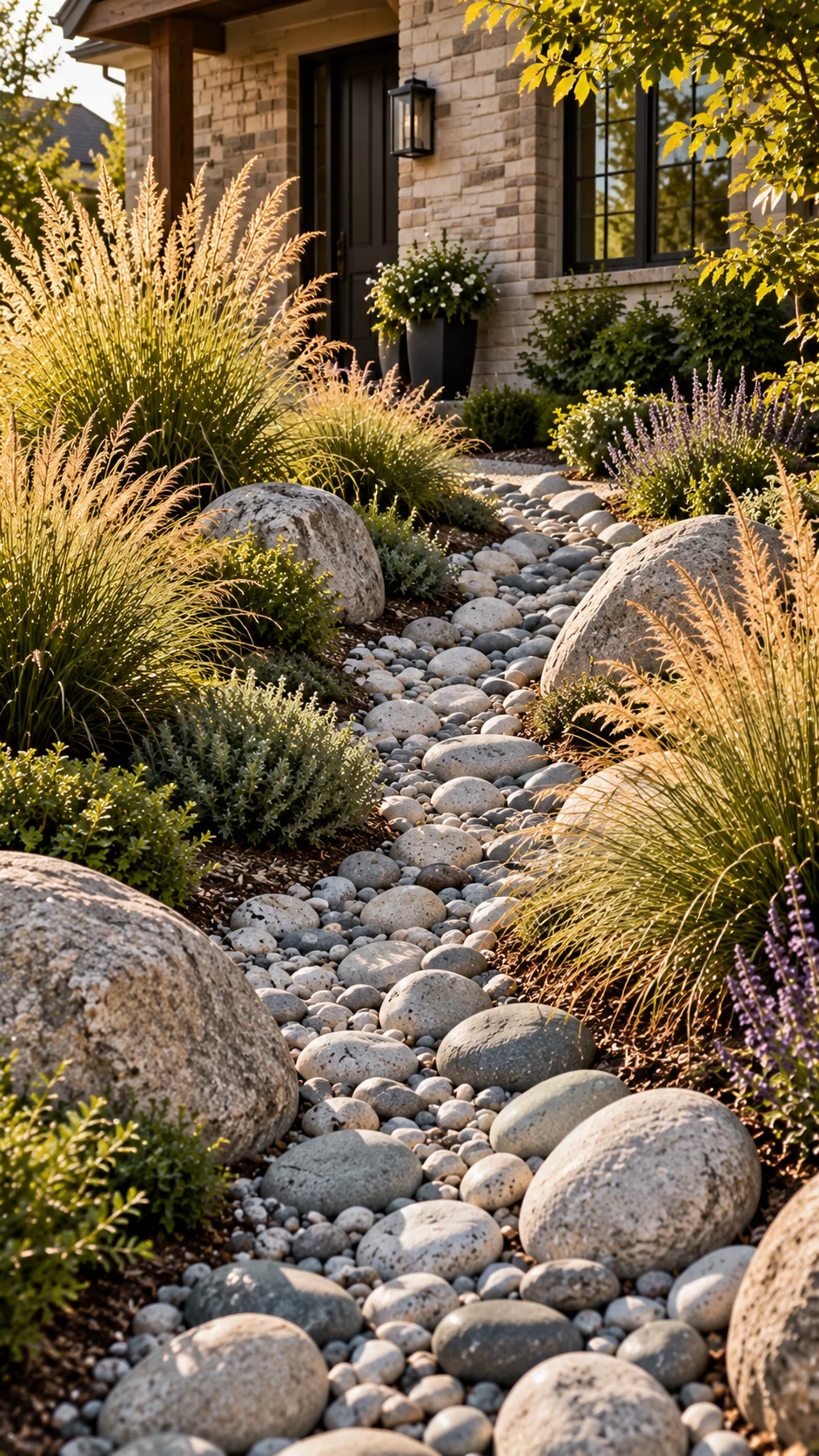
24: The River Rock Dry Stream
A dry stream bed of smooth river rocks winding through a front garden — lined with ornamental grasses, agapanthus, and sculptural boulders — manages rainwater runoff while creating a naturally beautiful garden feature that requires zero maintenance.
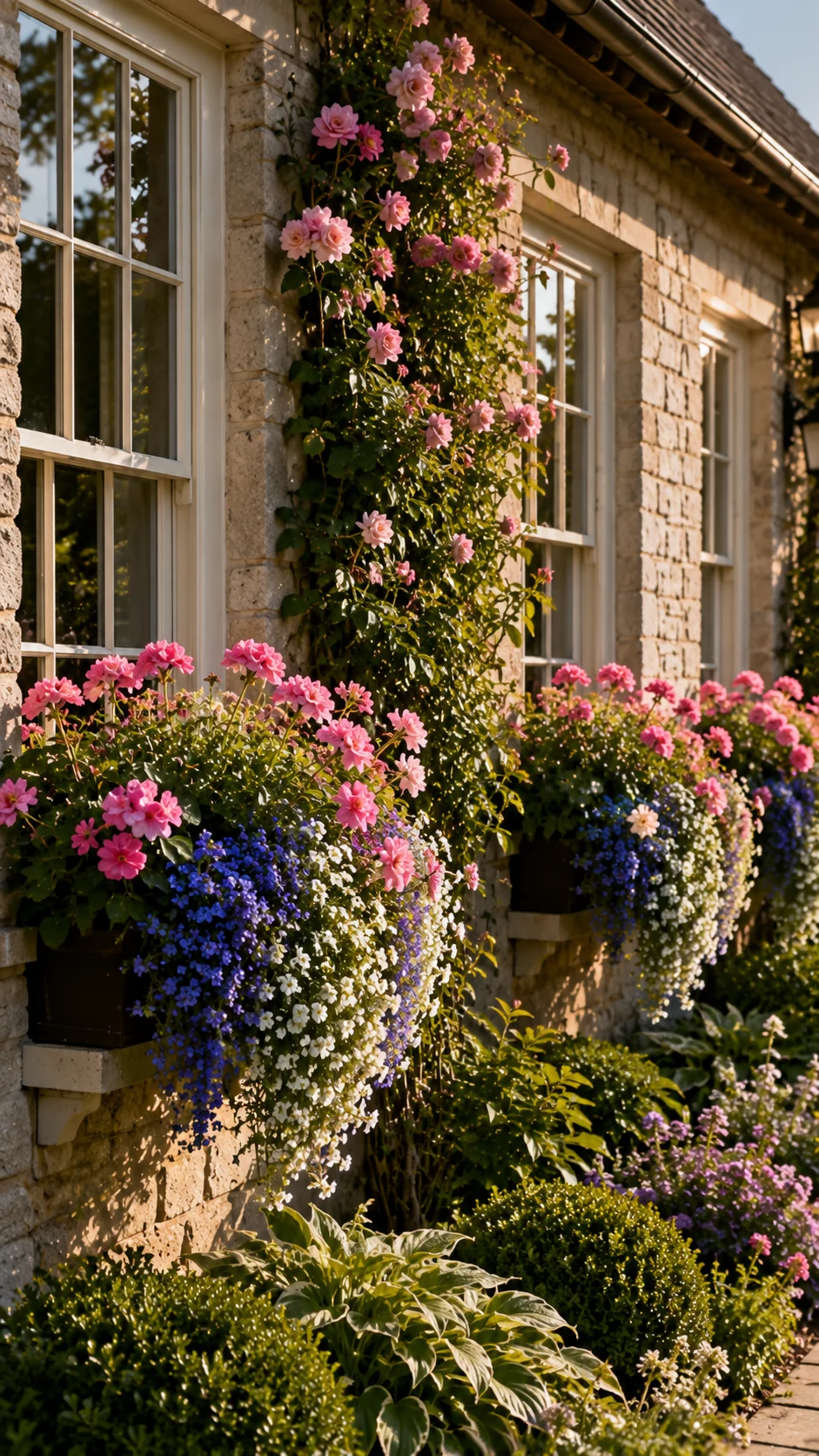
25: The Cottage Windowbox Street View
Window boxes filled with trailing plants — lobelia, calibrachoa, bacopa, trailing geraniums — mounted below each front window create a cottage garden effect that transforms the street-facing elevation of a house with relatively minimal effort and cost.
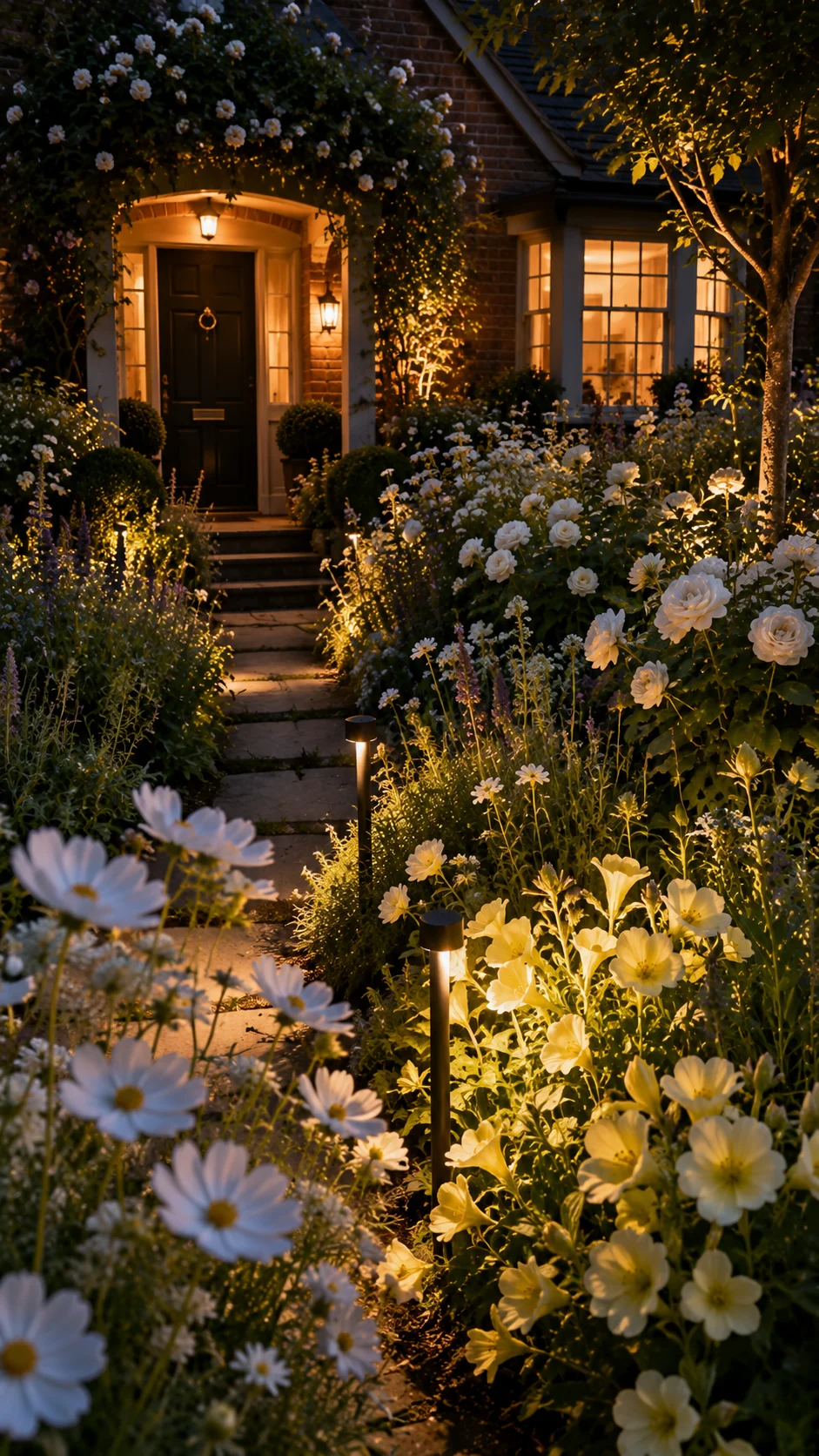
26: The Night Garden — White Flowers and Uplighting
A front garden designed specifically to look beautiful after dark — white and pale yellow flowers that glow in low light, combined with simple stake uplighters among the plants — creates a magical evening street presence and makes the house visible and welcoming at night.
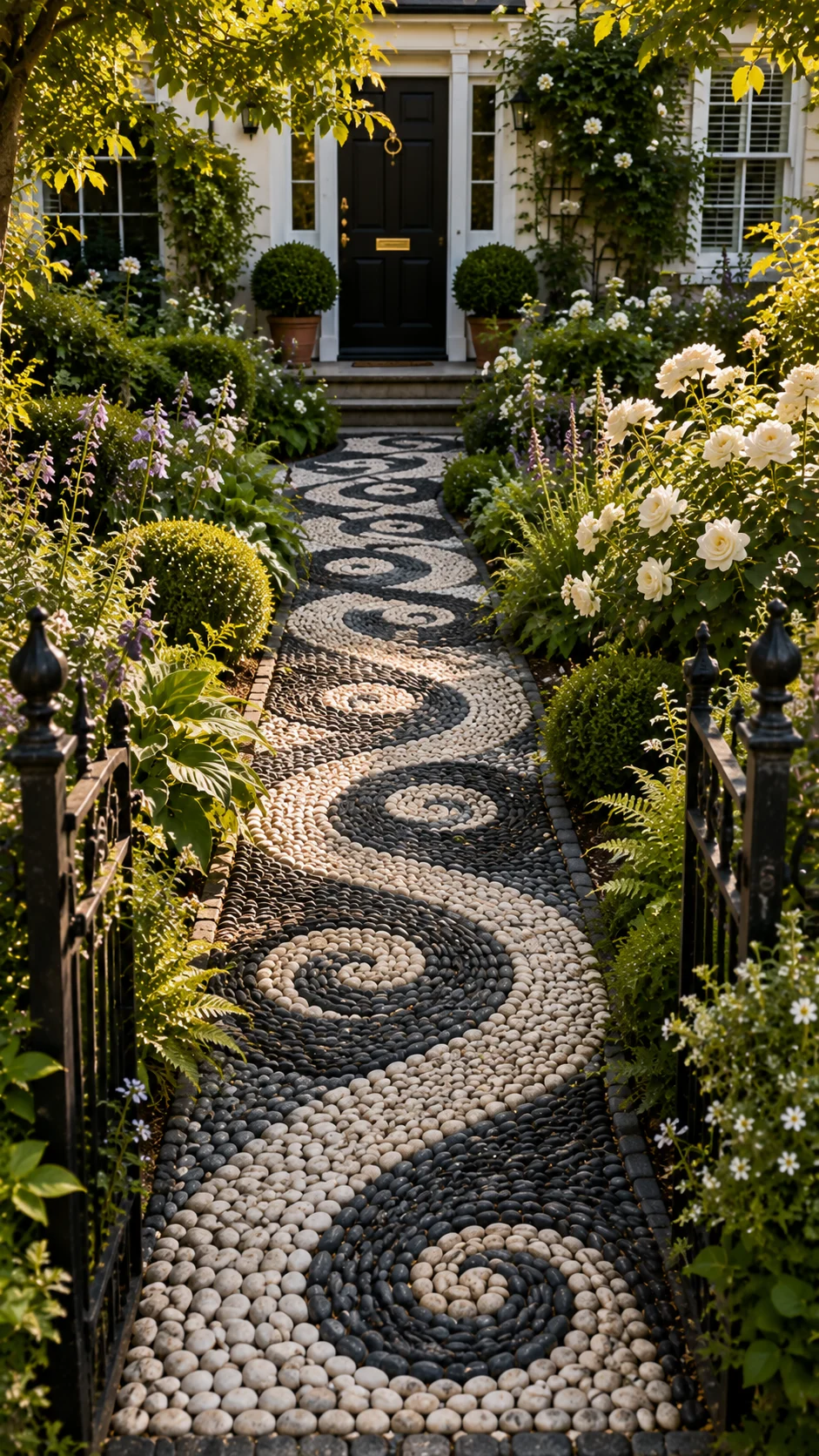
27: The Pebble Mosaic Path
A path of decorative pebble mosaic — loose patterns of differently colored river pebbles set into a mortar base to create simple geometric or organic designs — turns the front garden path from a utilitarian necessity into a permanent piece of outdoor art.
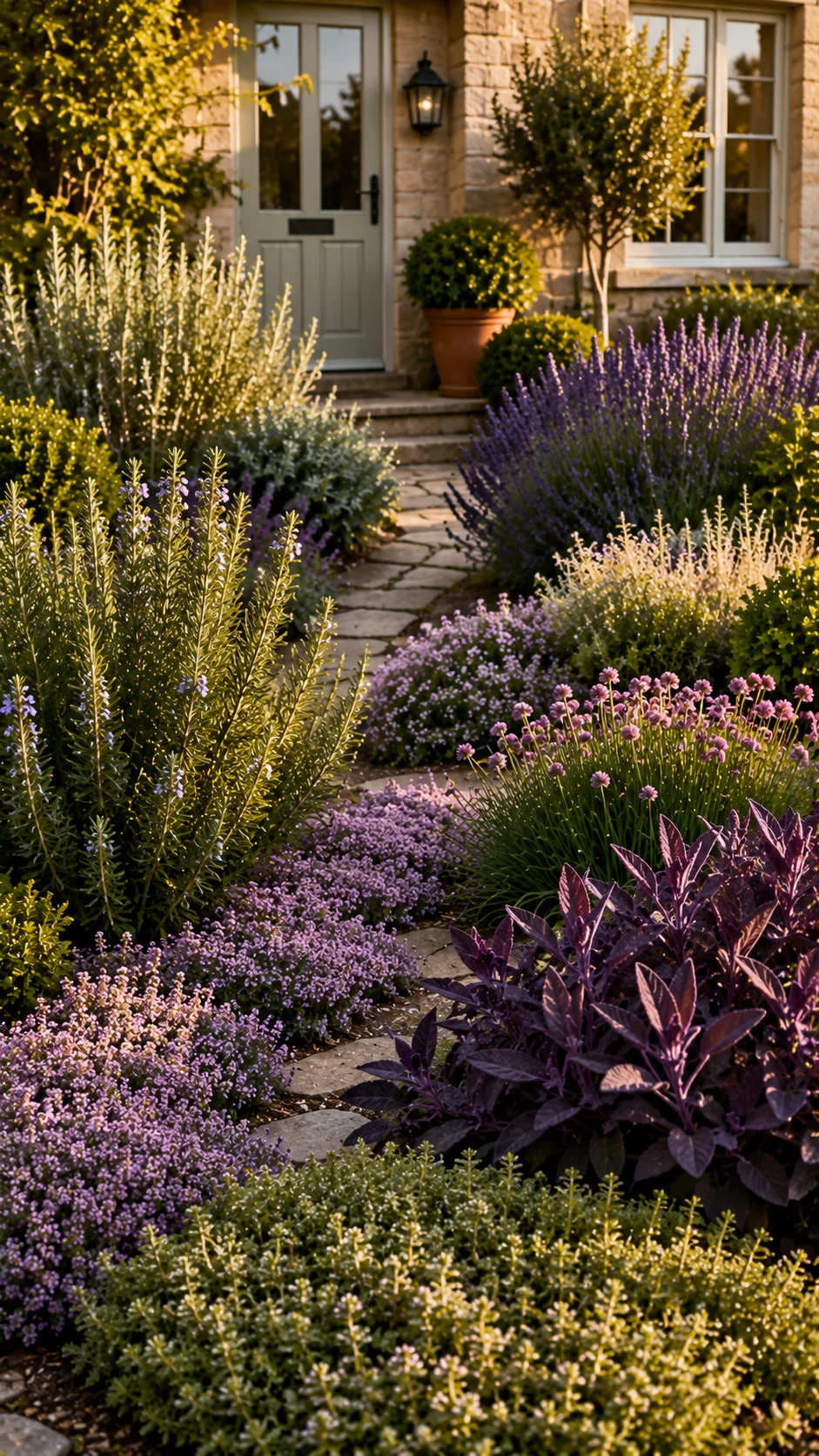
28: The Kitchen Herb Front Garden
A front garden planted entirely with culinary and medicinal herbs — rosemary, sage, thyme, lavender, chives, fennel, and mint in containers — is both beautiful and functional, provides constant fragrance for anyone approaching the house, and requires almost no maintenance.
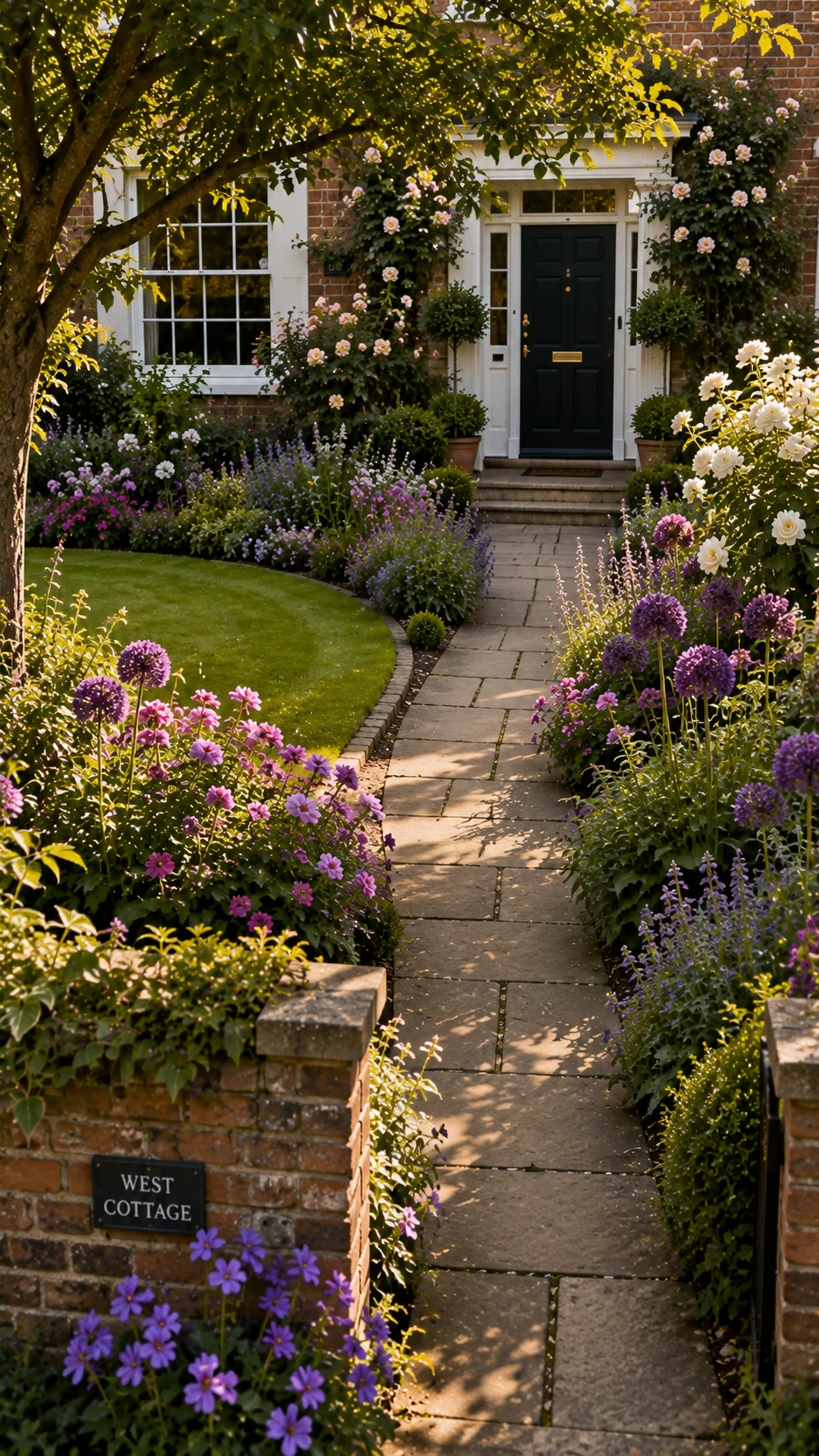
29: The Curved Lawn With Border
The simplest and most timeless front garden layout in Britain and Ireland — a curved edge lawn with a generous curved border of mixed planting on one or both sides, a straight path to the door, and a gate. Nothing needs to improve on this.
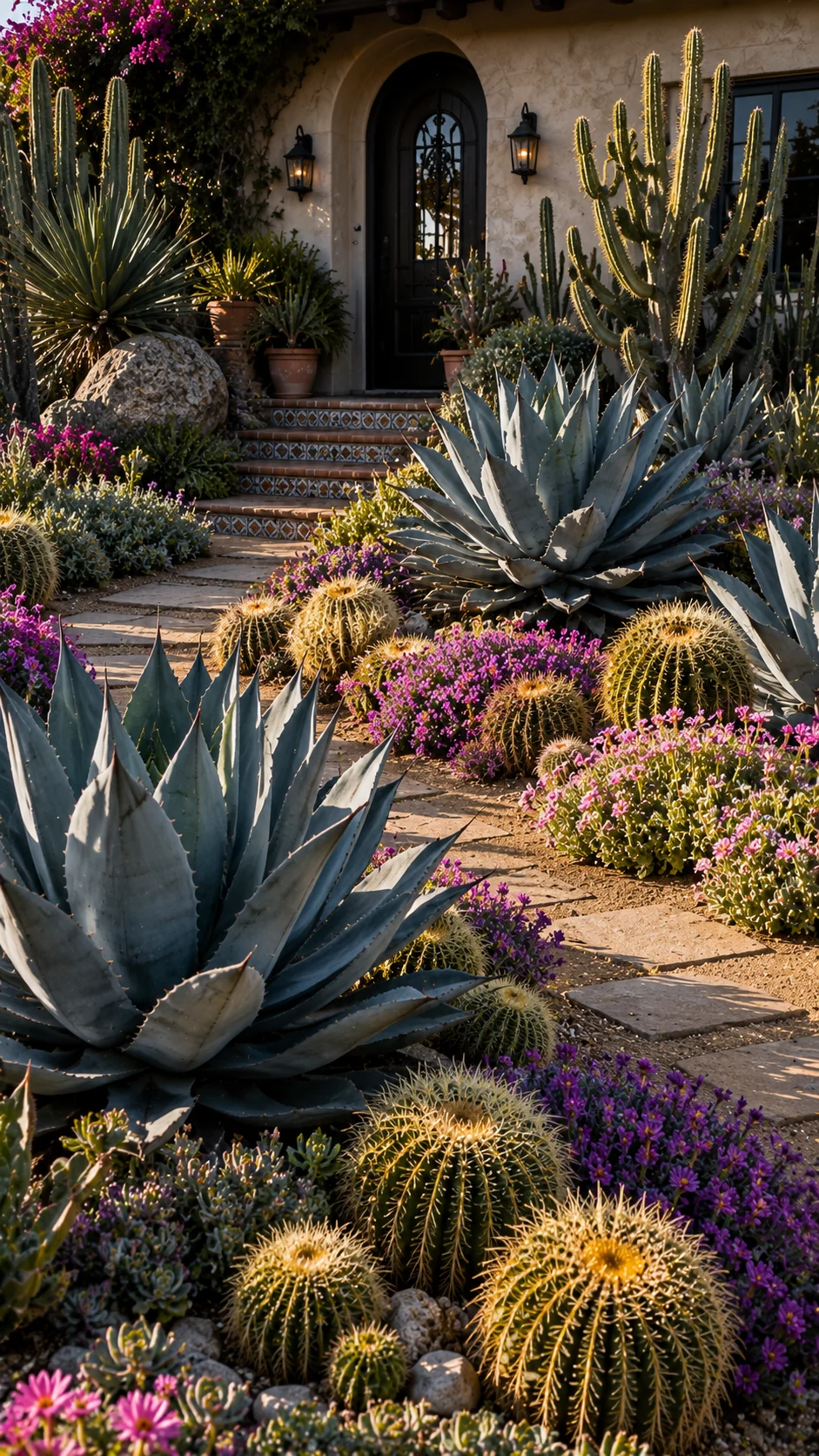
30: The Succulent and Cactus Front Garden
For warm, dry climates — Southern California, Arizona, New Mexico, Texas, the Mediterranean — a front garden of sculptural succulents and cacti creates a striking, water-wise landscape that looks magnificent and requires essentially zero maintenance or irrigation.
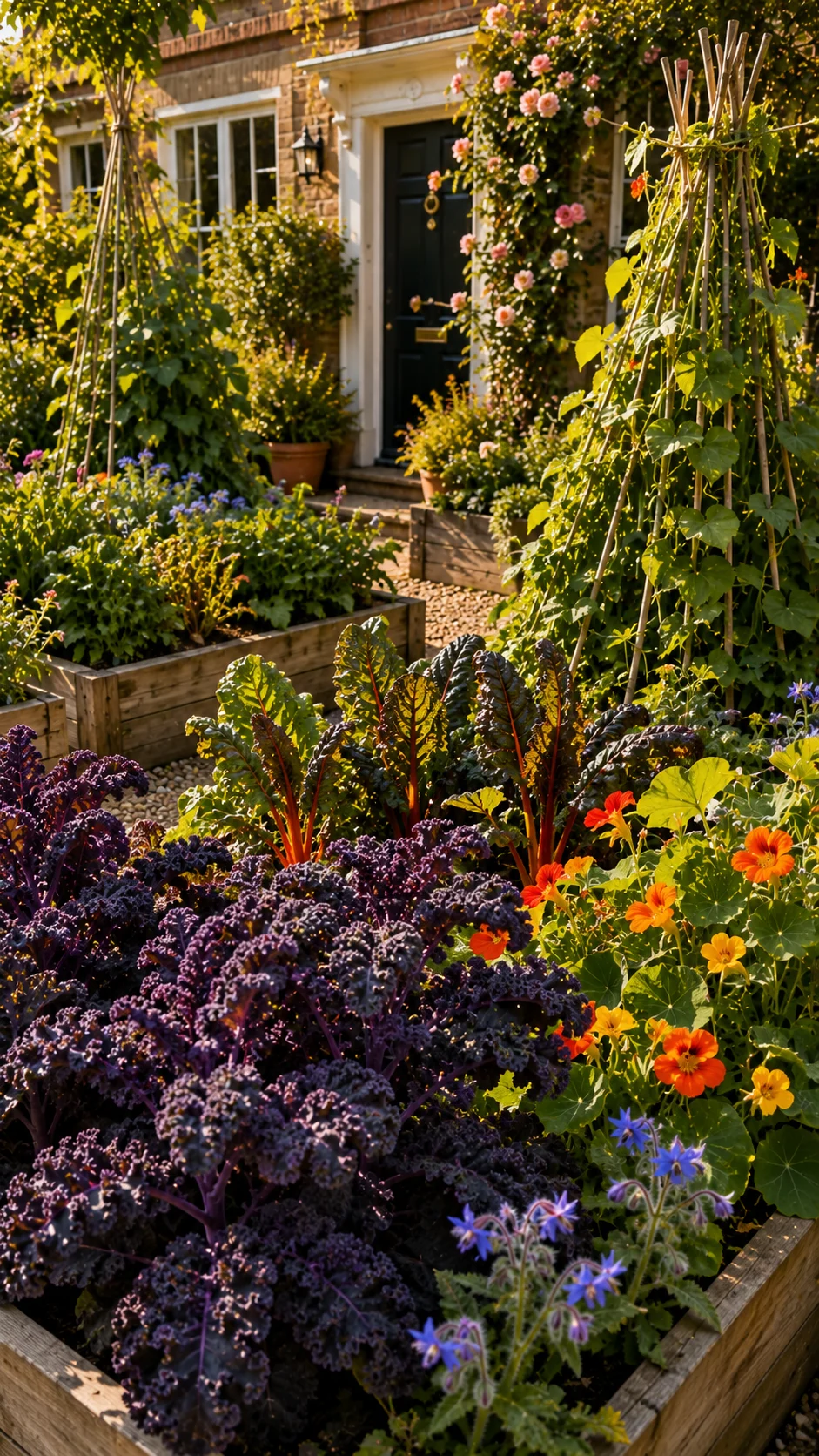
31: The Allotment-Style Front Garden
Raised timber beds filled with vegetables and edible flowers — kale, chard, nasturtiums, calendula, borage, climbing beans — making the front garden genuinely productive while looking extraordinarily colorful and intentional from the street.
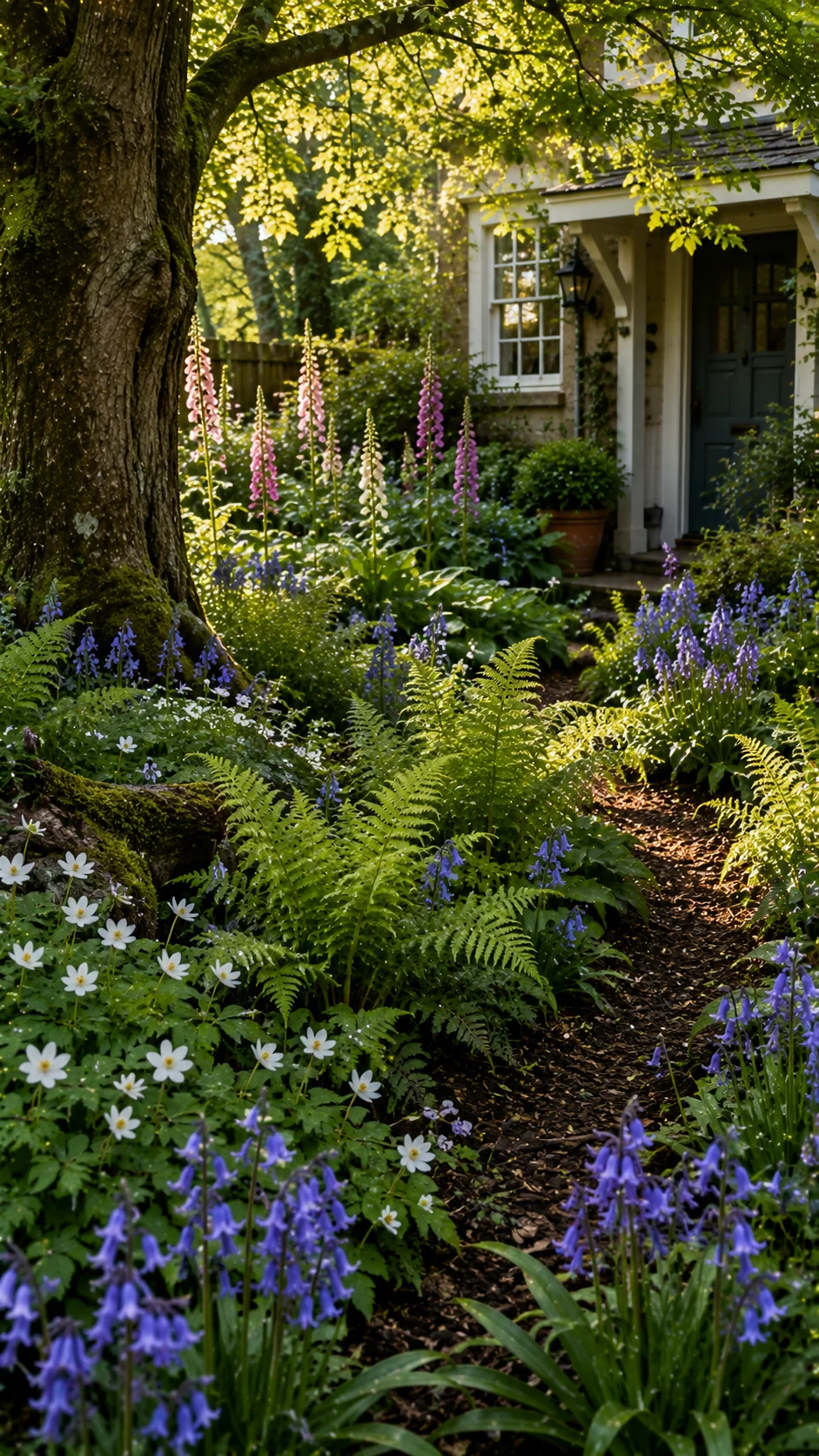
32: The Bark and Fern Woodland Edge
For a front garden with established trees creating significant shade, a woodland floor planting of bark mulch, ferns, wood anemones, bluebells, and foxgloves under the tree canopy creates a magical, naturalistic space that works entirely with the existing conditions rather than fighting them.
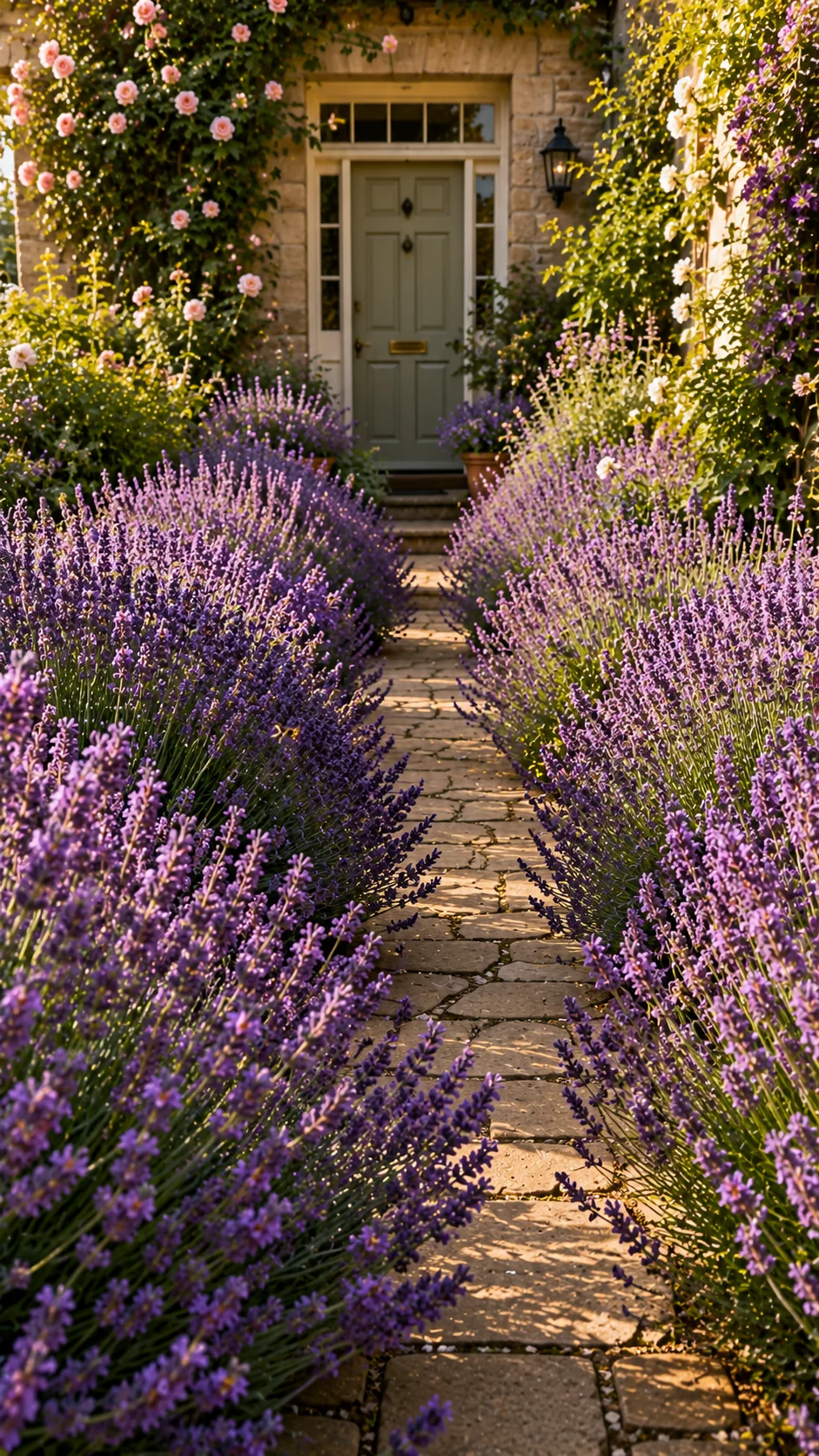
33: The Lavender Lined Path
A path lined on both sides with lavender — not an edging of lavender but a full dense planting that the path cuts through — creates the most fragrant and beautiful arrival at any front door. Brushing the lavender with your arm as you pass releases the scent. In summer the whole path hums with bees.
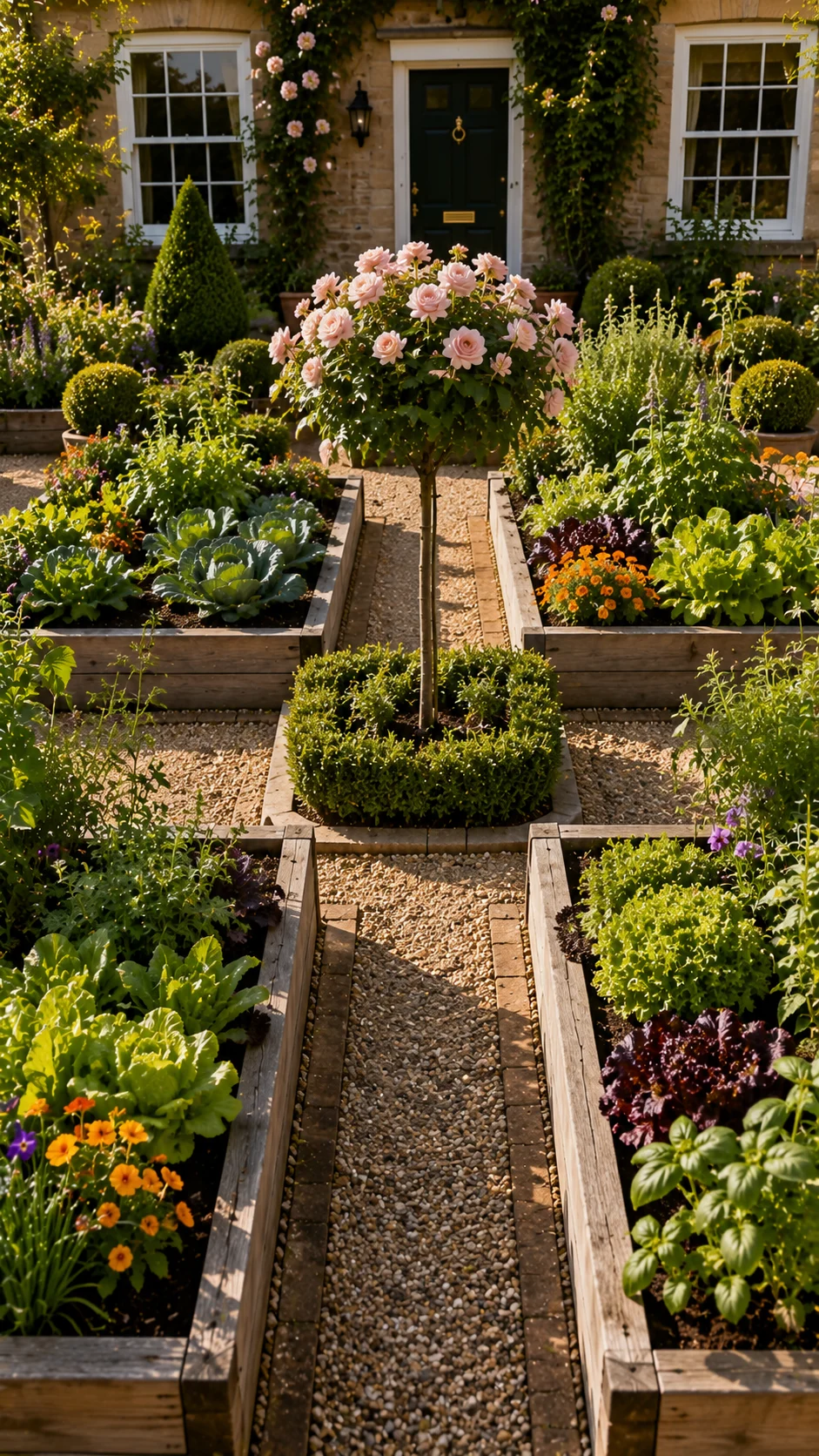
34: The Ornamental Vegetable Potager
Vegetables and herbs arranged in a formal geometric layout — a cross of paths, four raised beds, a central focal point — creates a potager garden that is simultaneously beautiful, productive, and completely at home in a small front yard.
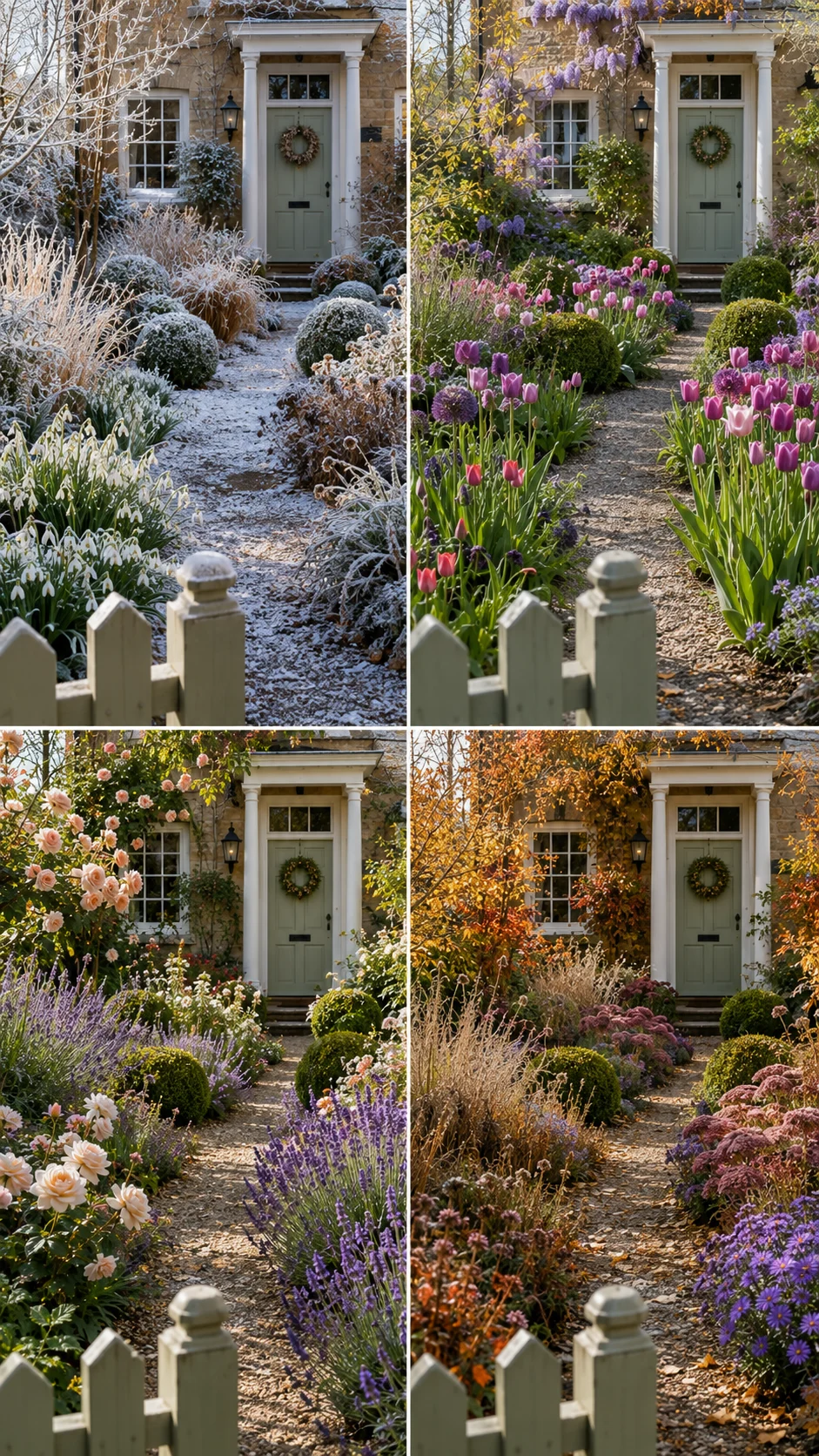
35: The Four-Season Front Garden
A carefully planned front garden designed to have something beautiful at every point of the year — snowdrops and hellebores in February, tulips and alliums in April, roses and lavender in June, sedums and asters in September, berry-laden shrubs and grasses in December. Never dull, always changing.
Save Your Favorites to Pinterest
Every idea in this list has a vertical 9:16 image designed specifically for Pinterest. Save the ideas that match your space, your climate, and your maintenance level — then come back to the ones you saved when you are ready to start planning.
The best front yard landscaping is not about doing all 35 of these things. It is about choosing the two or three ideas that fit your space honestly, executing them well, and letting the result speak for itself from the street.
A small front yard, well designed, is more impressive than a large one treated as an afterthought. Start small. Plant well. The curb appeal follows. 🌿