
The Mediterranean garden look comes from a small, repeatable set of materials and plants — terracotta, gravel, whitewashed stucco, olive and citrus trees, lavender, and simple wrought iron — used consistently rather than a wide, complicated plant list. That’s good news for actually recreating it: most of these 30 ideas are straightforward to implement in a weekend or a single planting season, not a full landscaping overhaul.
Below are 30 simple, real-world Mediterranean garden ideas across five categories — hardscape and structure, signature planting, water features, furniture and shade, and finishing details — each paired with a realistic visual reference so you know exactly what you’re aiming for.
Hardscape and Structure
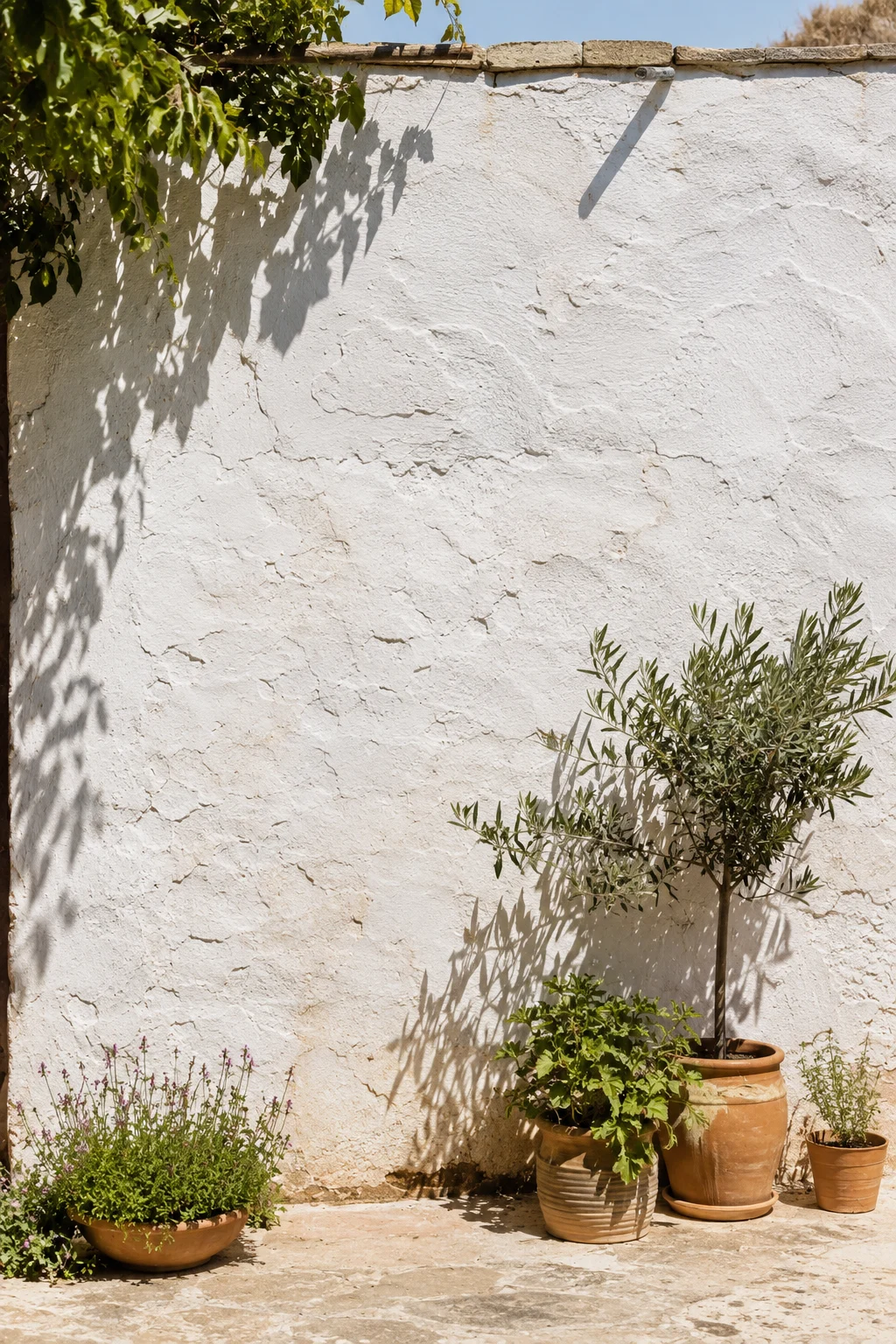
1. Whitewashed Stucco Walls
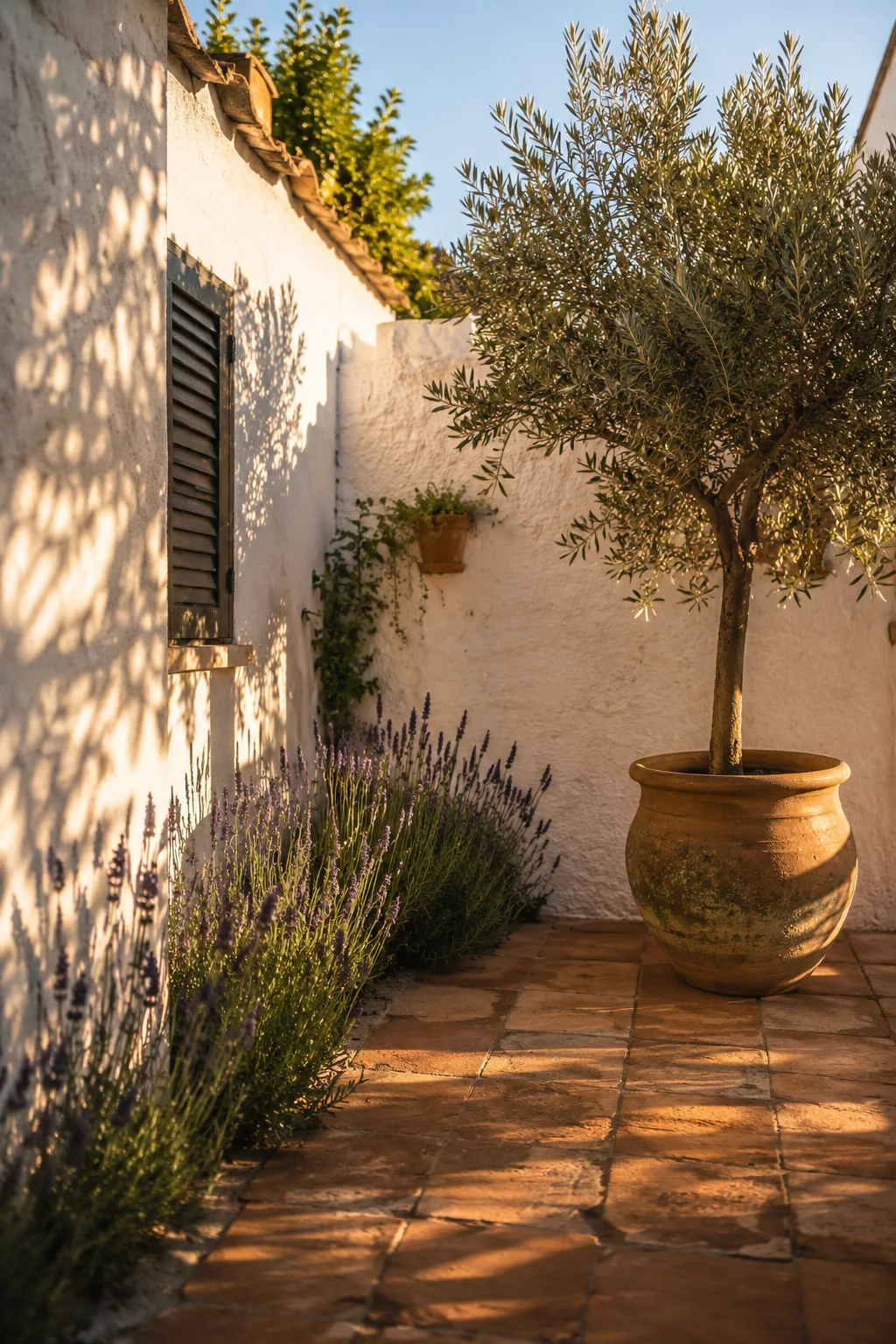
Paint or render existing block or concrete walls in a bright, slightly textured white or warm off-white stucco finish — the single fastest way to establish a Mediterranean backdrop.
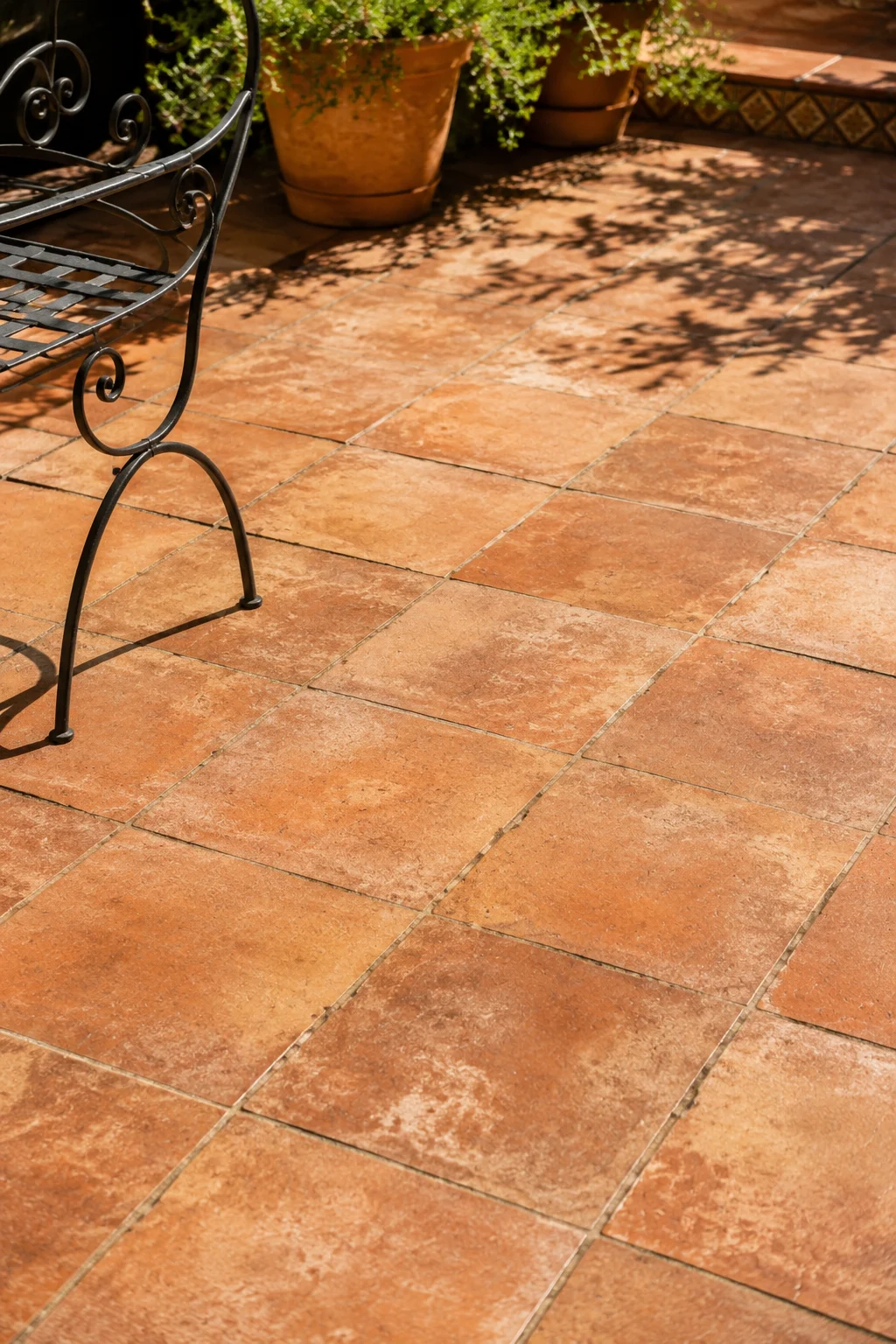
2. Terracotta Tile Flooring
Lay terracotta tiles or pavers across a patio or courtyard floor for warm, sun-baked color underfoot that anchors the entire space in the same palette as the pots above it.
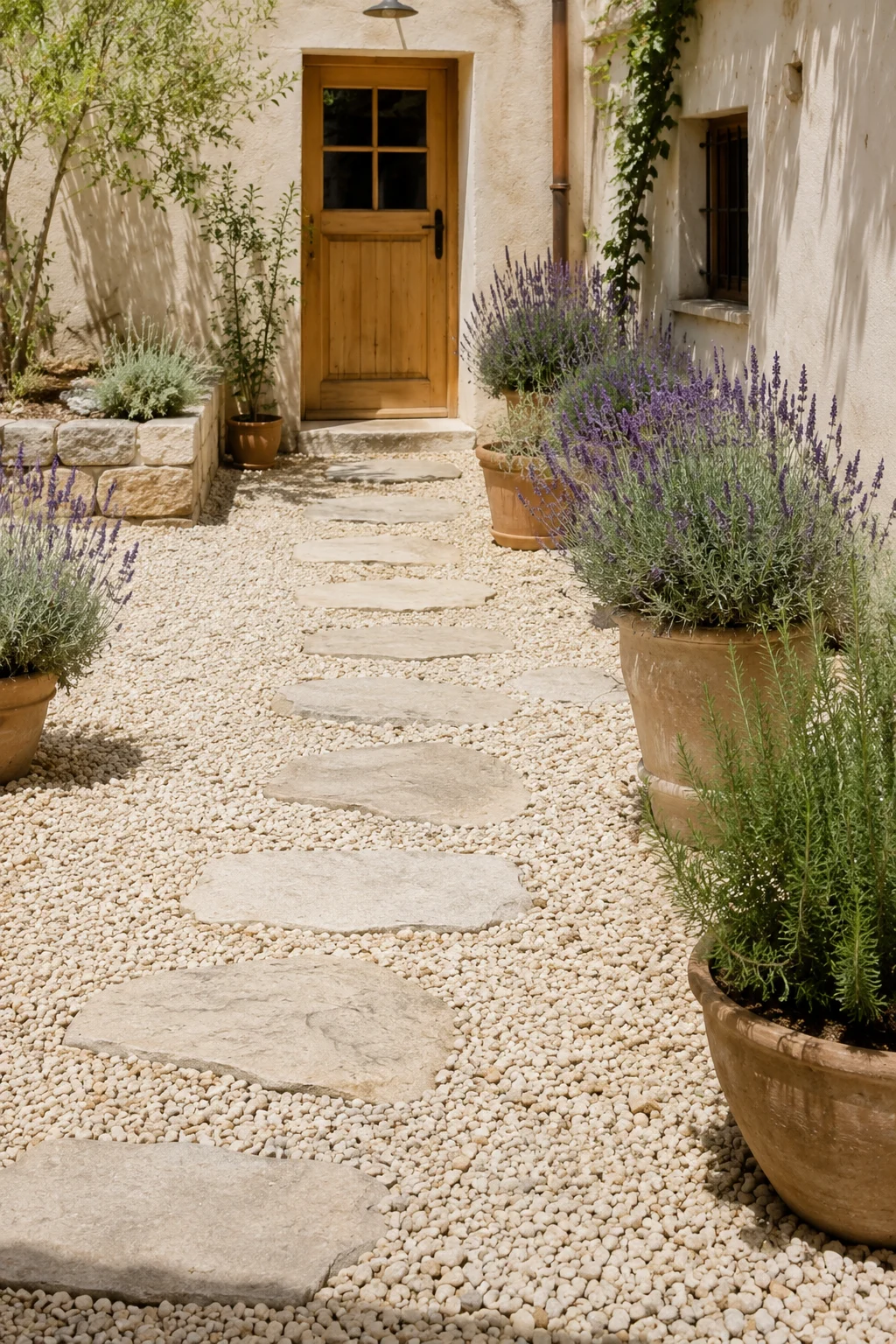
3. Gravel Courtyard With Stepping Stones
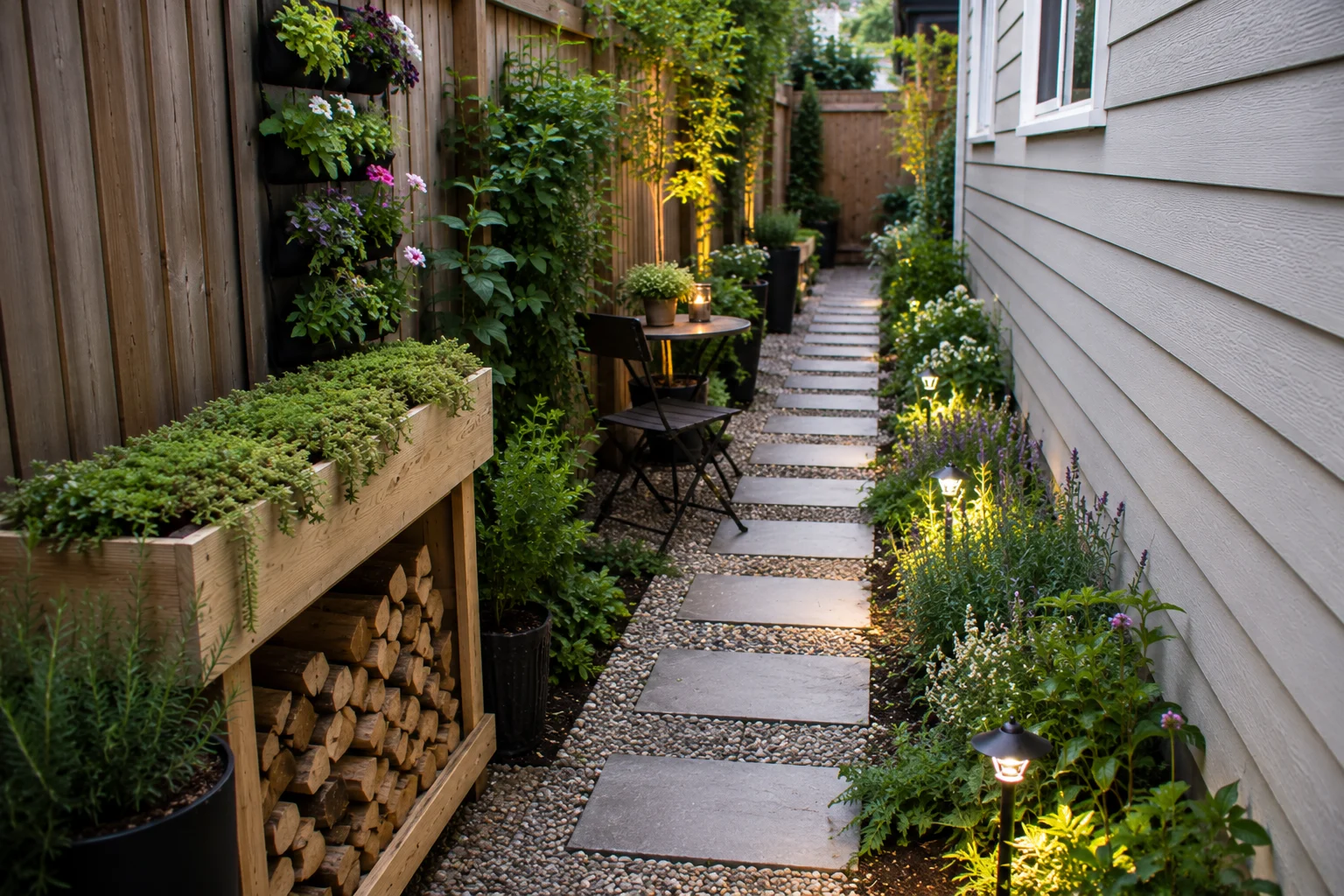
Fill an open courtyard area with pale gravel and set simple flat stone slabs as a path through it, keeping maintenance low while echoing the dry, sun-baked ground typical of the region.
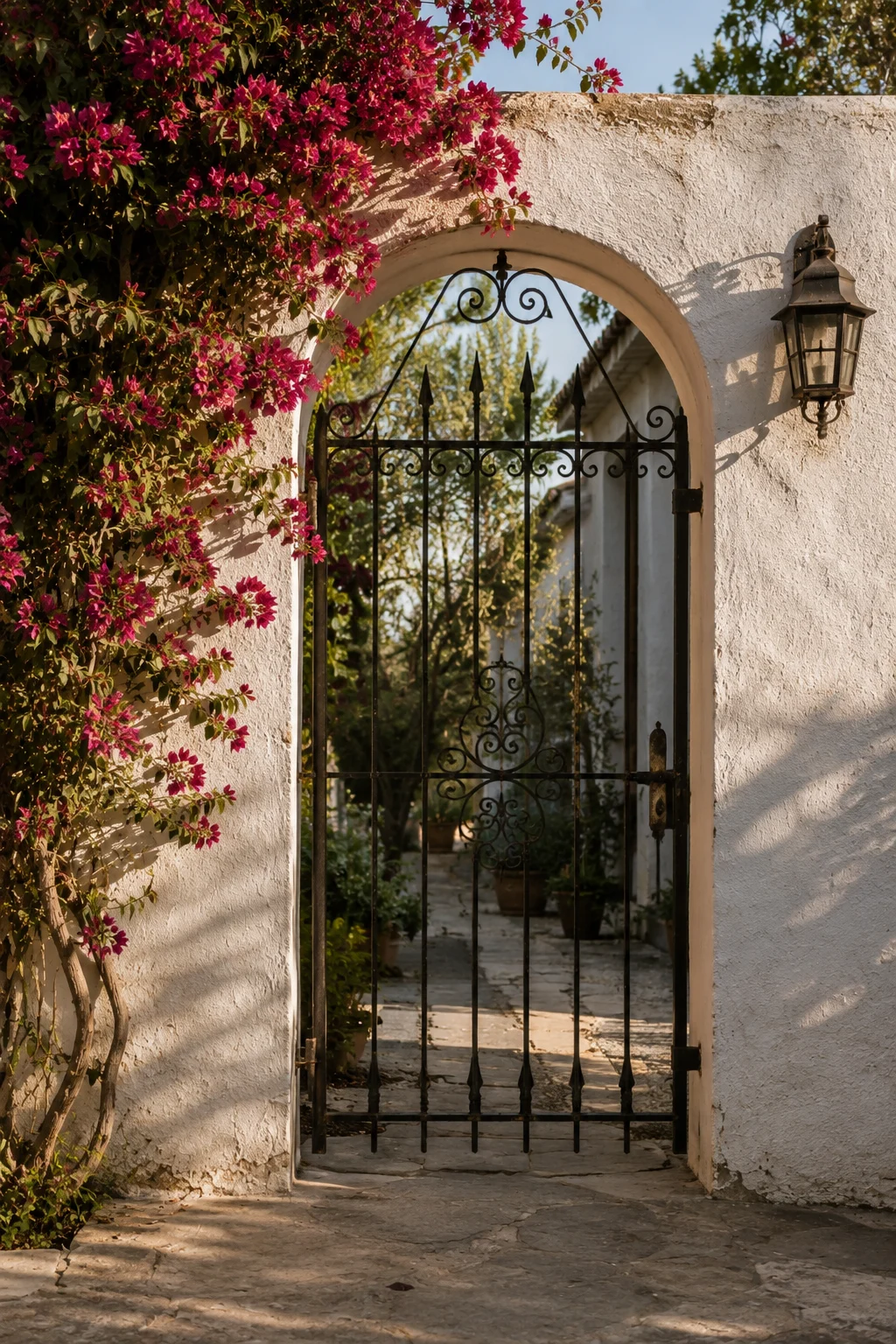
4. Wrought Iron Gate or Fence Detail
A simple black wrought iron gate, even a small decorative panel inset into an existing wall or fence, adds an authentic architectural note without a major structural project.
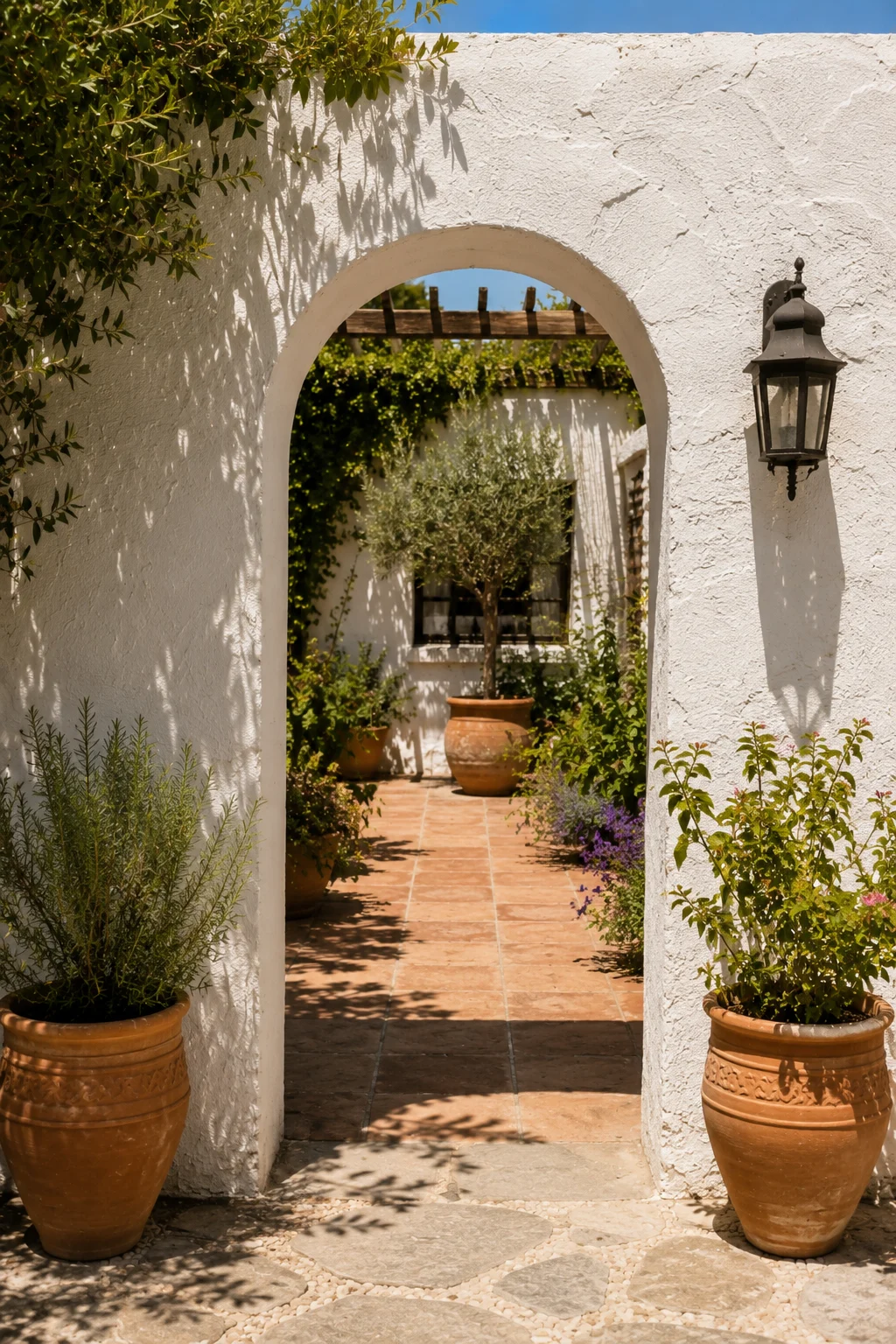
5. Arched Doorway or Wall Opening
Where a new structure is being built, a simple arched opening — in a garden wall, a pergola support, or a doorway — immediately reads as Mediterranean in a way a square opening doesn’t.
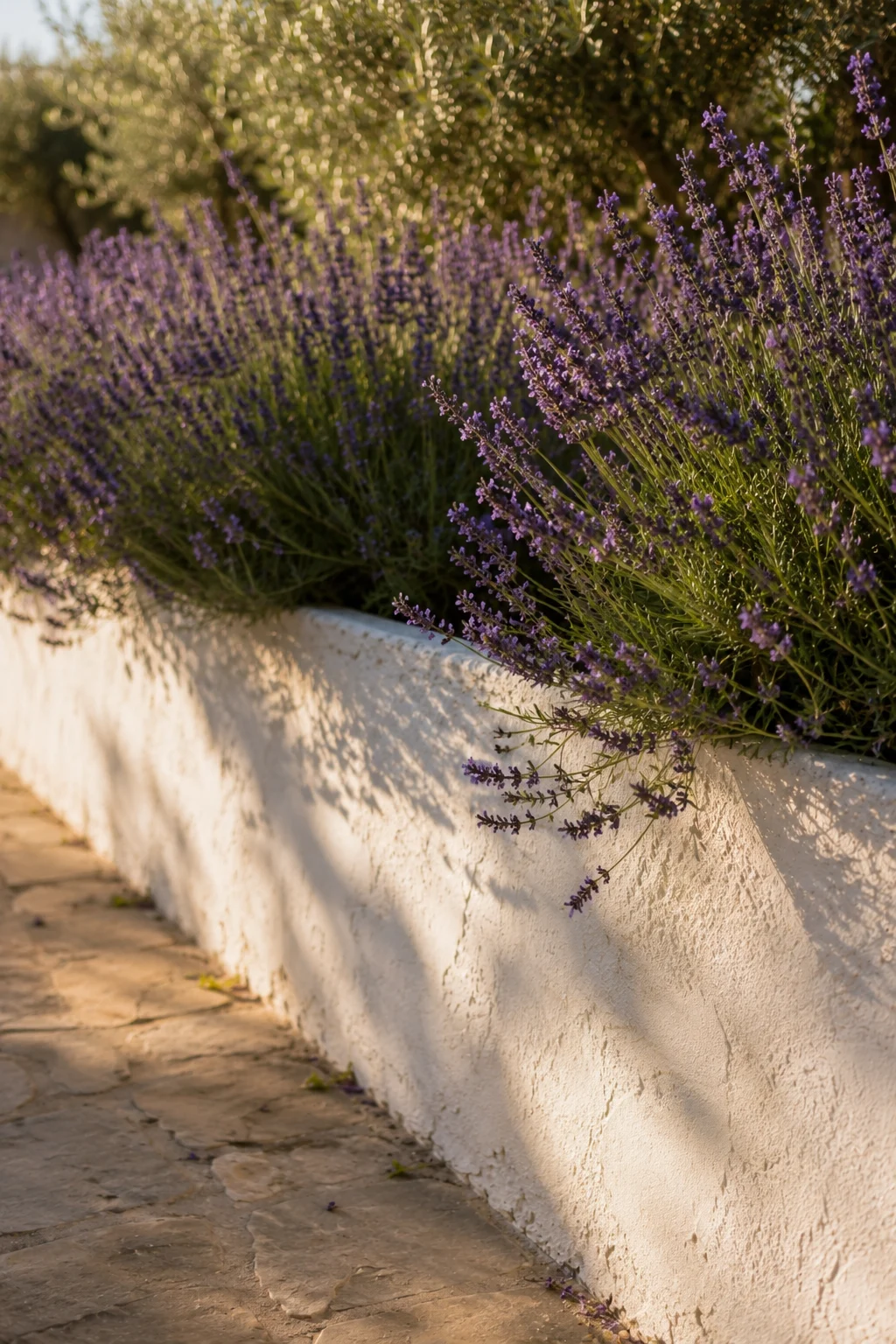
6. Low Stucco or Stone Garden Wall
A low, rendered wall — two to three feet high — defines a planting bed or terrace edge and gives lavender or rosemary something to spill over, the same way it would along a hillside terrace.
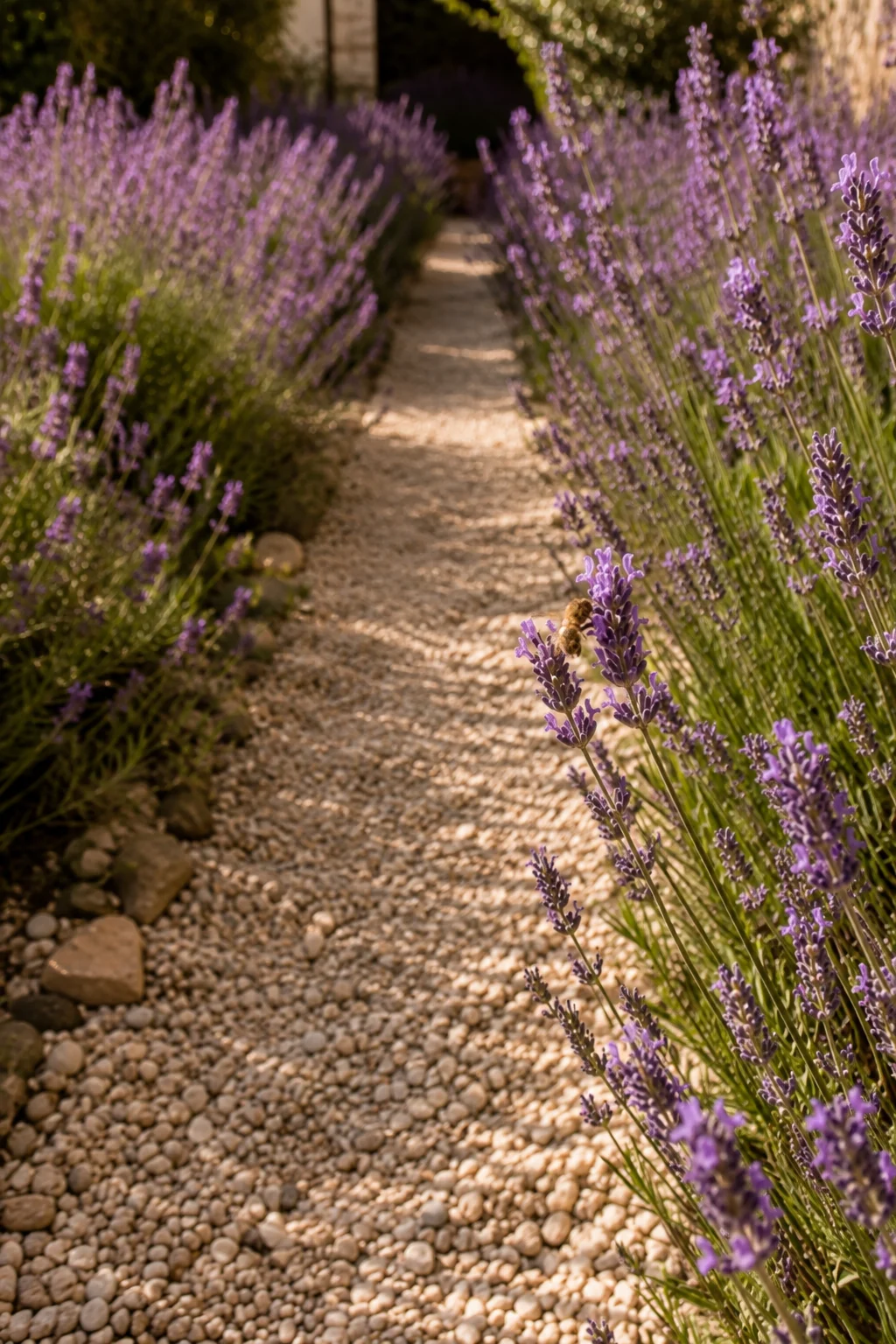
7. Gravel Path Bordered by Lavender
A simple gravel path lined on both sides with a dense lavender hedge turns a purely functional walkway into one of the most recognizable Mediterranean garden images there is.
Signature Mediterranean Planting
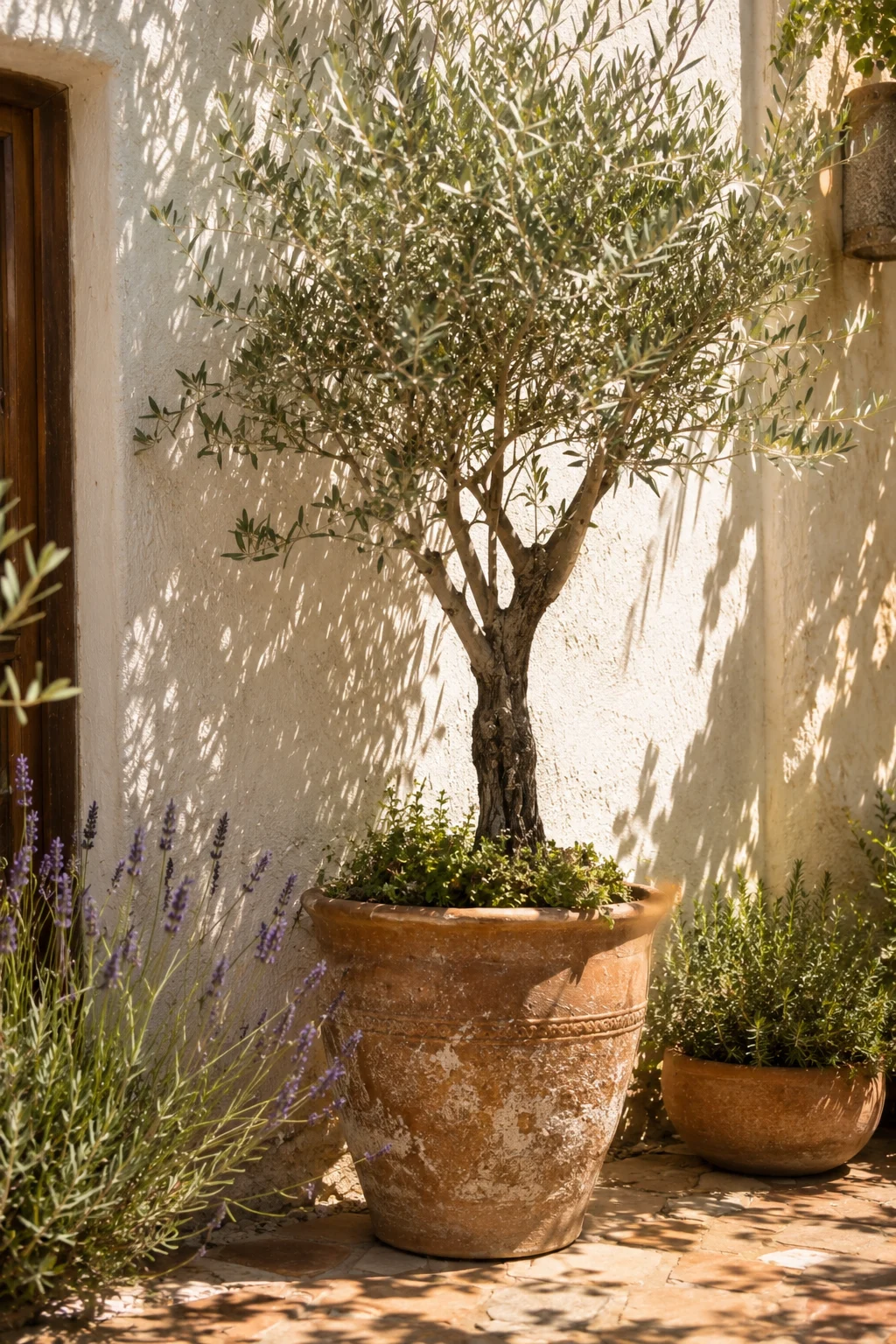
8. Potted Olive Tree as a Focal Point
A single olive tree in a large terracotta or aged concrete pot, placed beside a doorway or at a courtyard’s corner, is close to a shorthand for the entire style on its own.
If you’re working with limited space, our guide to best trees for small gardens can help you choose compact varieties that fit beautifully into Mediterranean-inspired landscapes.
Before planting an olive tree outdoors, check its growing requirements in the Missouri Botanical Garden Plant Finder to make sure it suits your climate.
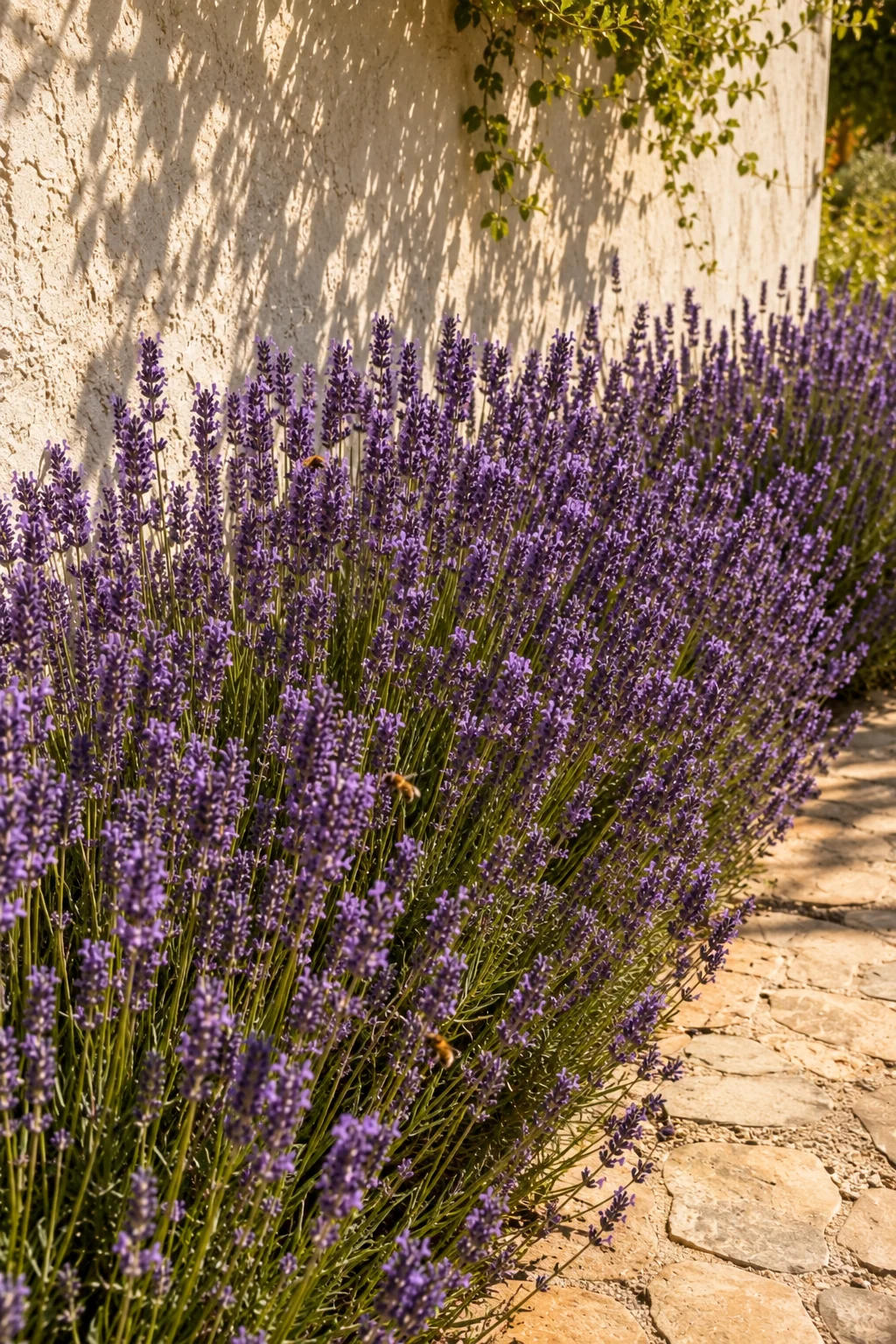
9. Lavender Border Along a Path or Wall
A dense, repeated planting of lavender along any straight edge — a path, a wall base, a driveway — gives instant color, fragrance, and unmistakable Mediterranean character for very little ongoing maintenance.
For planting and care advice, the Royal Horticultural Society’s lavender growing guide offers reliable recommendations on pruning, watering, and choosing the right variety.
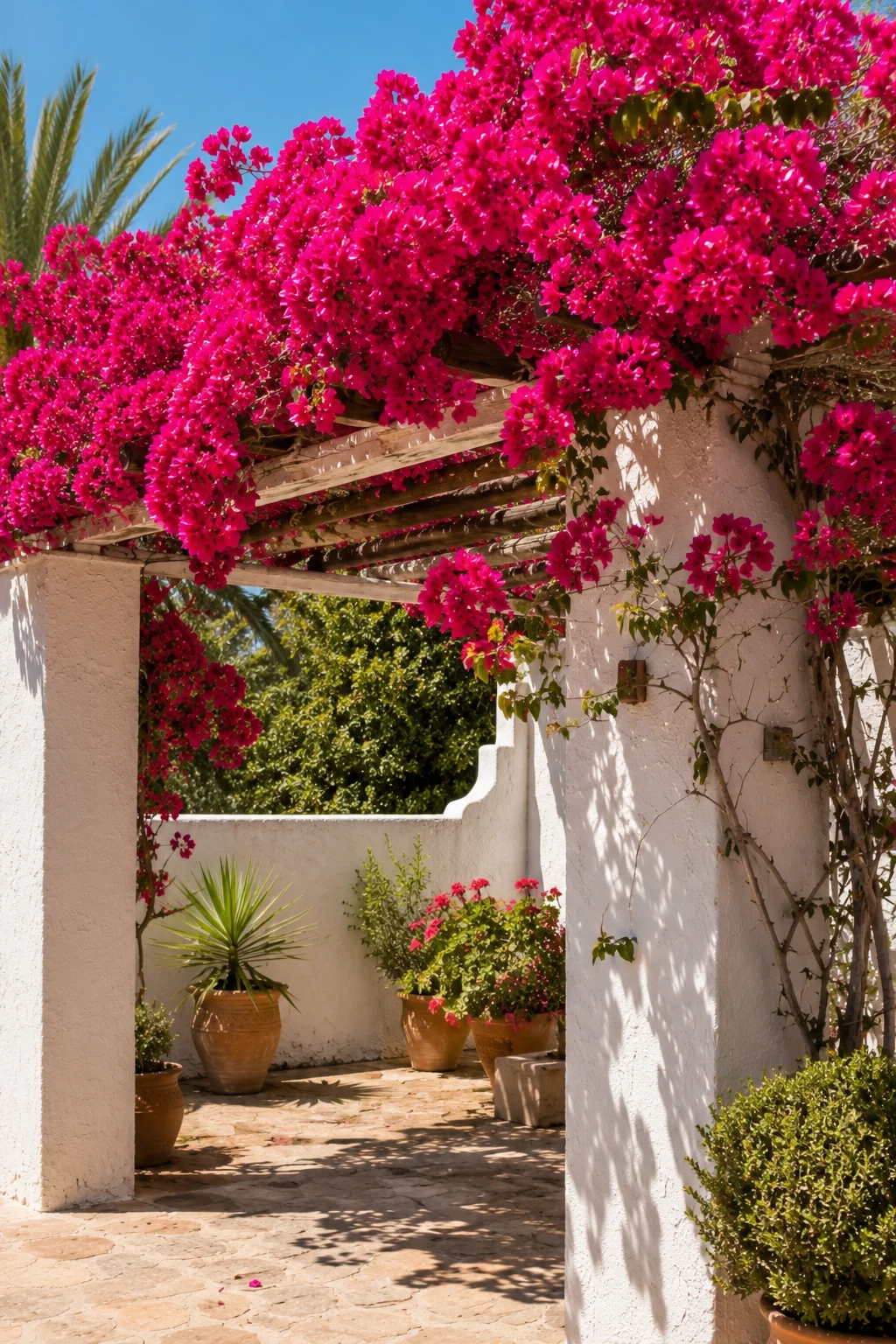
10. Bougainvillea Climbing a Wall or Pergola
Trained up a wall, over a pergola, or along a simple wire support, bougainvillea’s vivid magenta or orange bracts do more color work per square foot than almost any other Mediterranean plant.
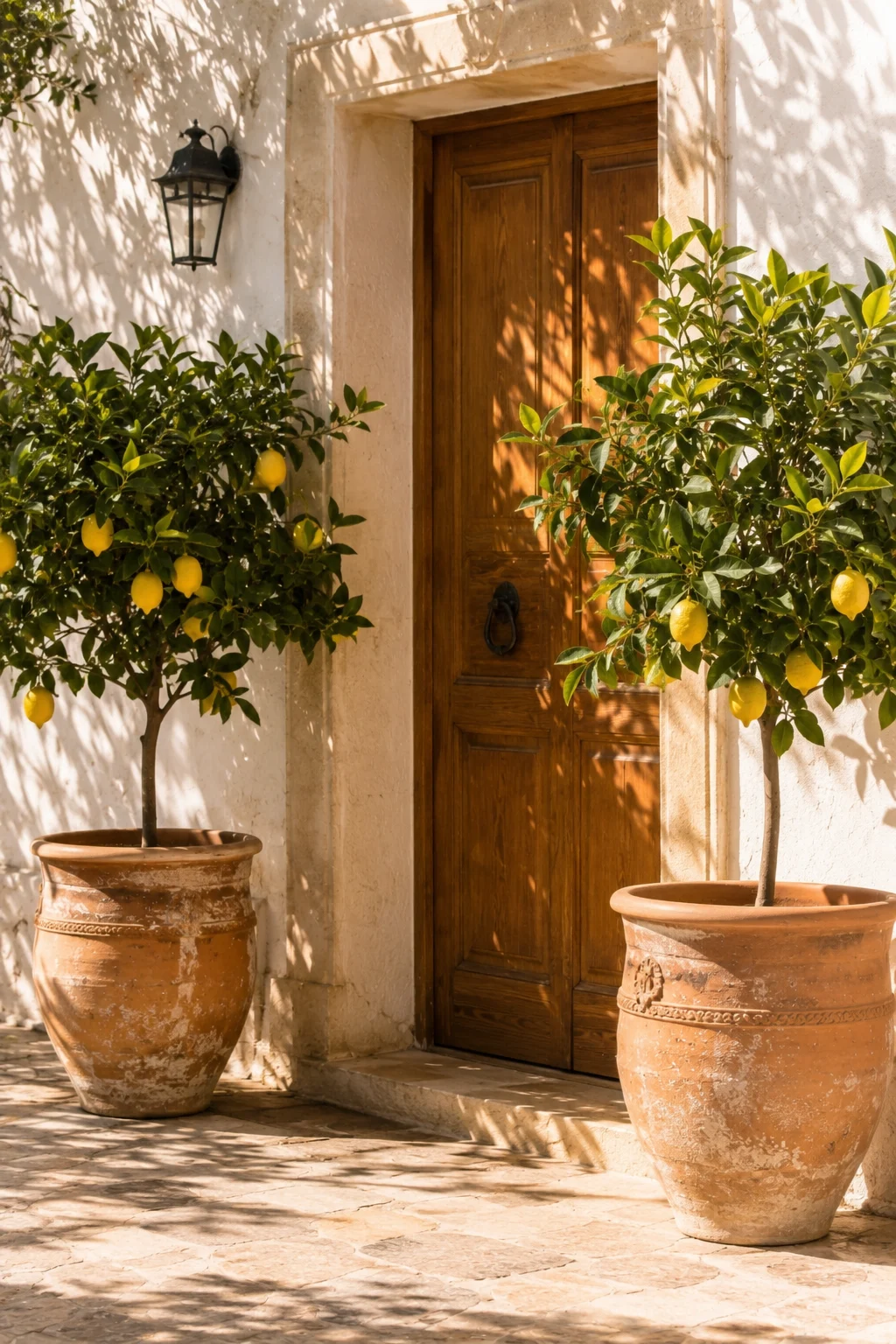
11. Potted Citrus Trees
A pair of potted lemon or orange trees flanking a doorway or set along a sunny wall brings genuine fruit, fragrant spring blossom, and a classic terracotta-pot pairing into the garden.
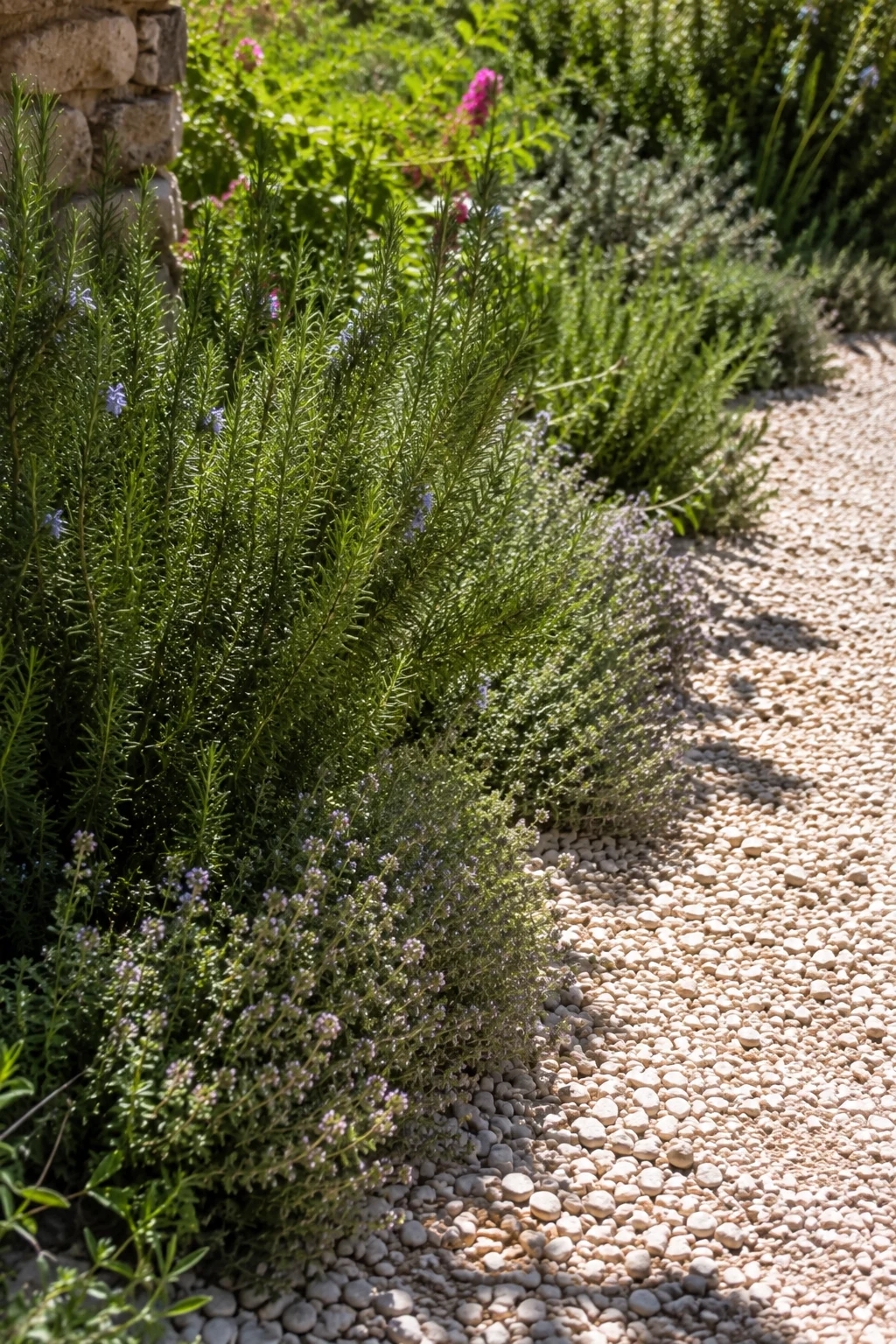
12. Rosemary and Thyme as Ground Planting
Letting rosemary and thyme spread loosely along path edges or gravel beds, rather than confining them to a formal herb garden, matches how they actually grow wild across much of the Mediterranean coast.
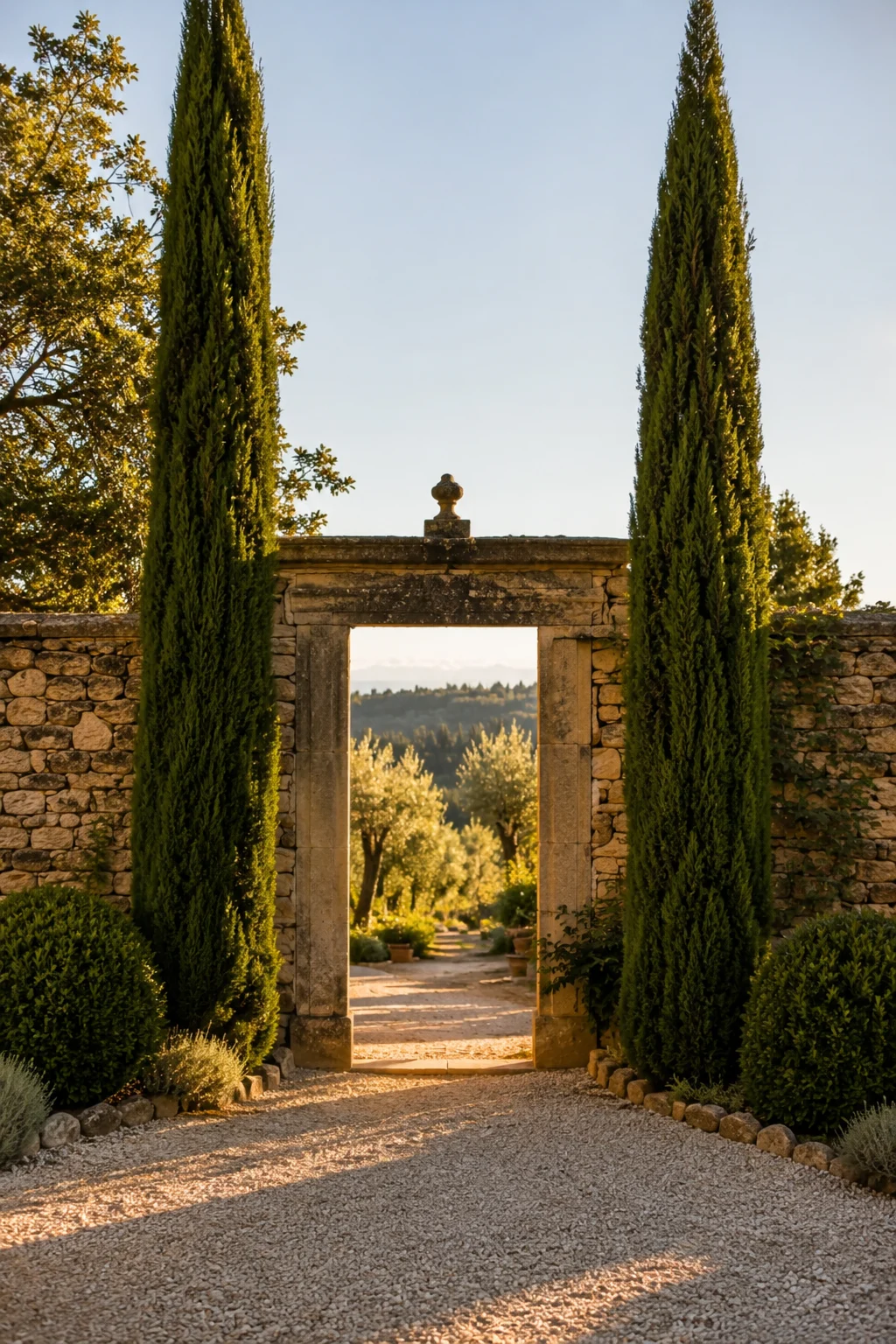
13. Cypress Trees for Vertical Accents
A pair or row of tall, narrow Italian cypress trees instantly signals the region’s classic hillside look, working especially well flanking a gate, drive, or the corners of a courtyard.
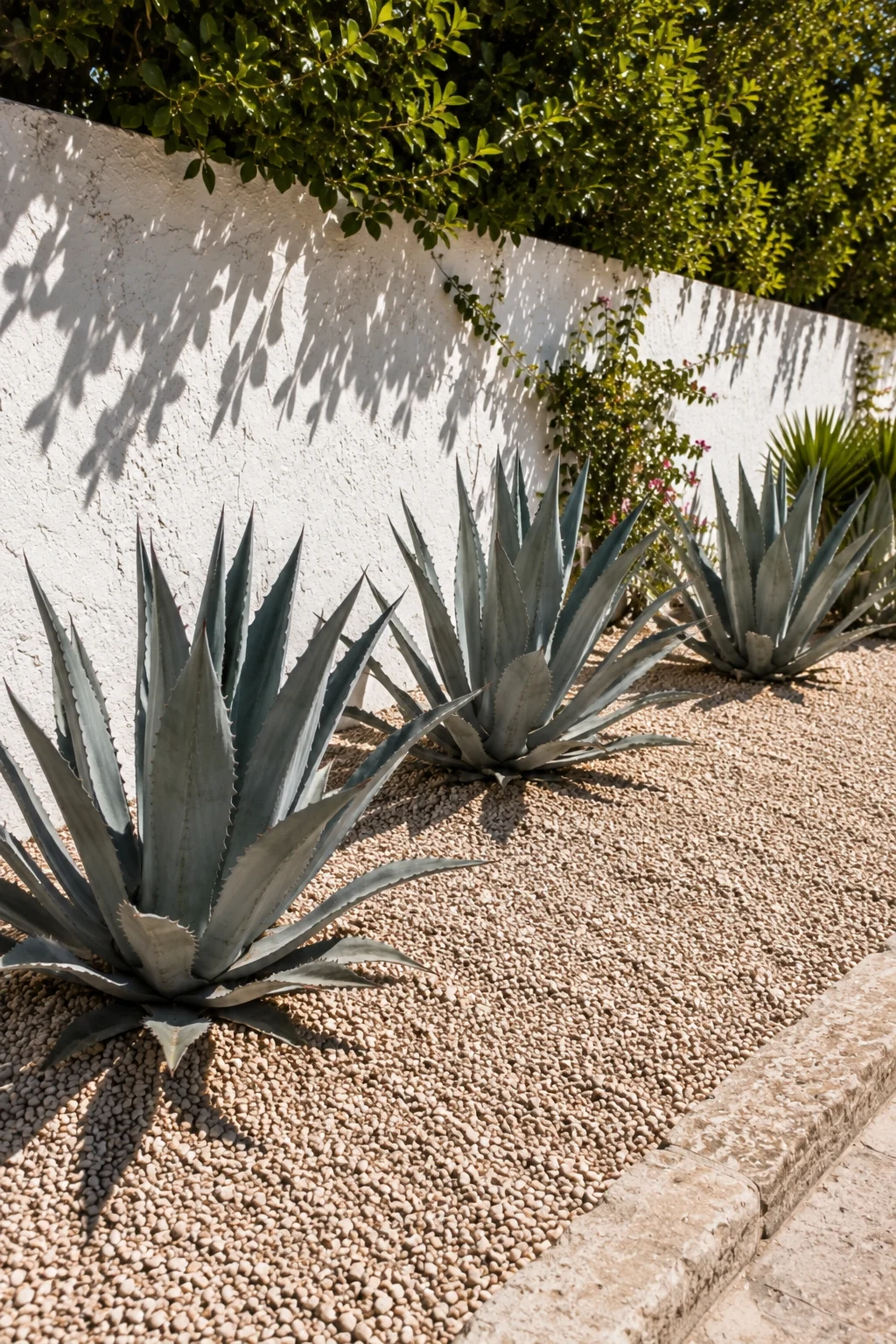
14. Agave or Succulent Gravel Bed
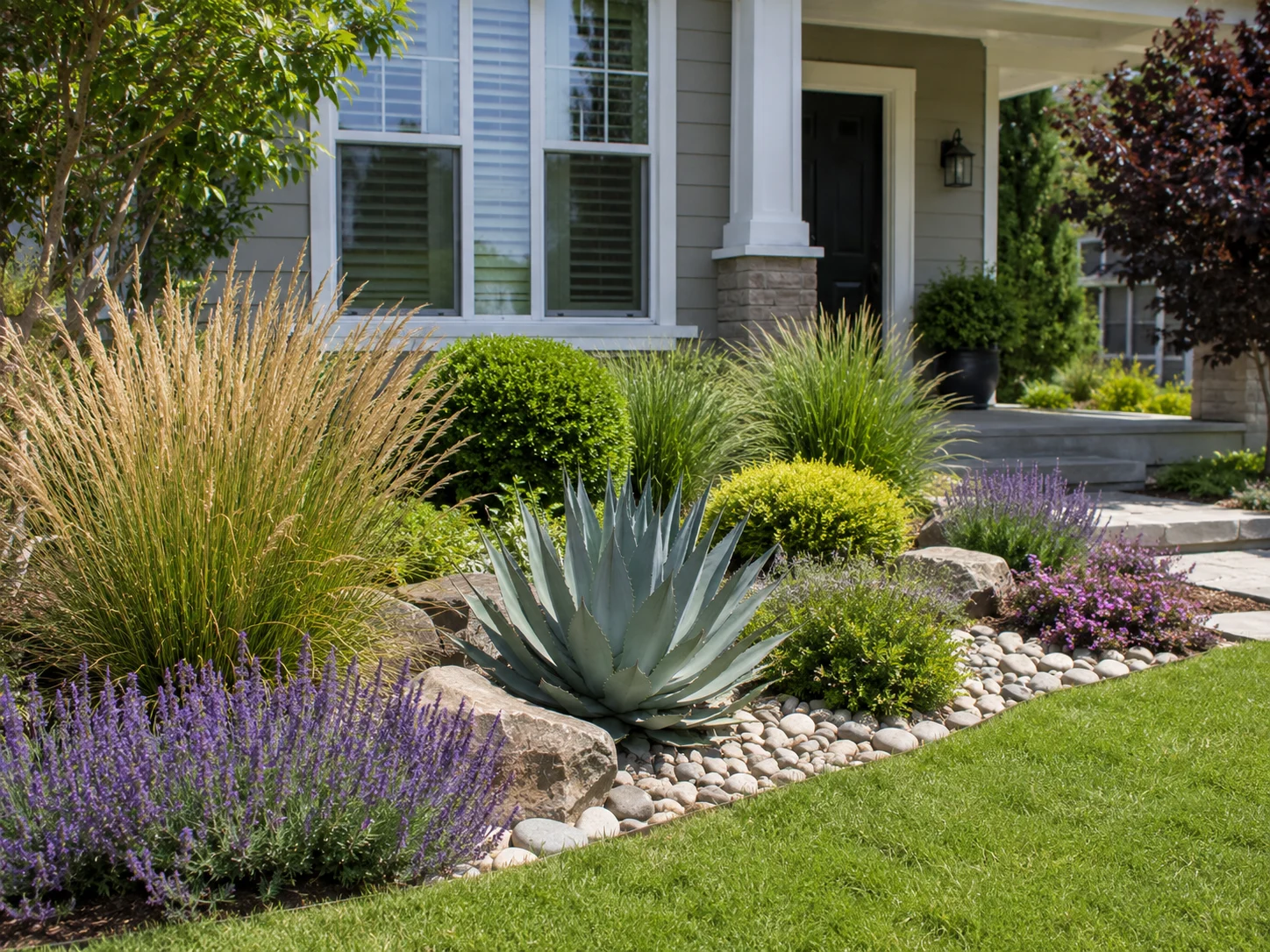
A bed of pale gravel planted with a few structural agave or aloe specimens brings genuine drought-tolerant texture and works well in the sunniest, driest corner of a Mediterranean-style garden.
Pairing agave with other low-water plants creates an even more resilient landscape—see our collection of drought-tolerant garden ideas for additional inspiration.
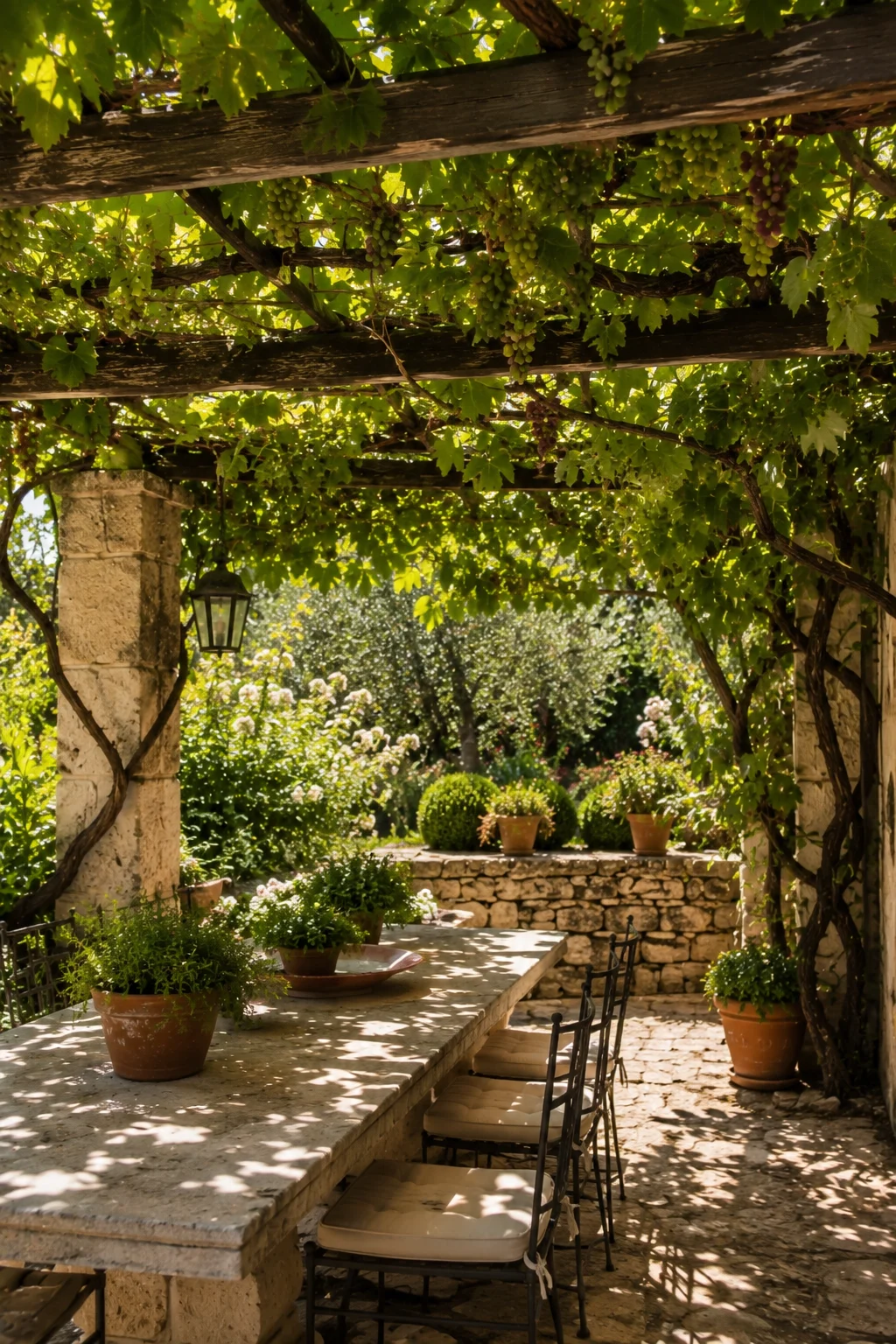
15. Grapevine-Covered Pergola
Training a grapevine over a simple wooden pergola creates dense dappled shade through summer and a genuinely productive, traditional Mediterranean feature by late season.
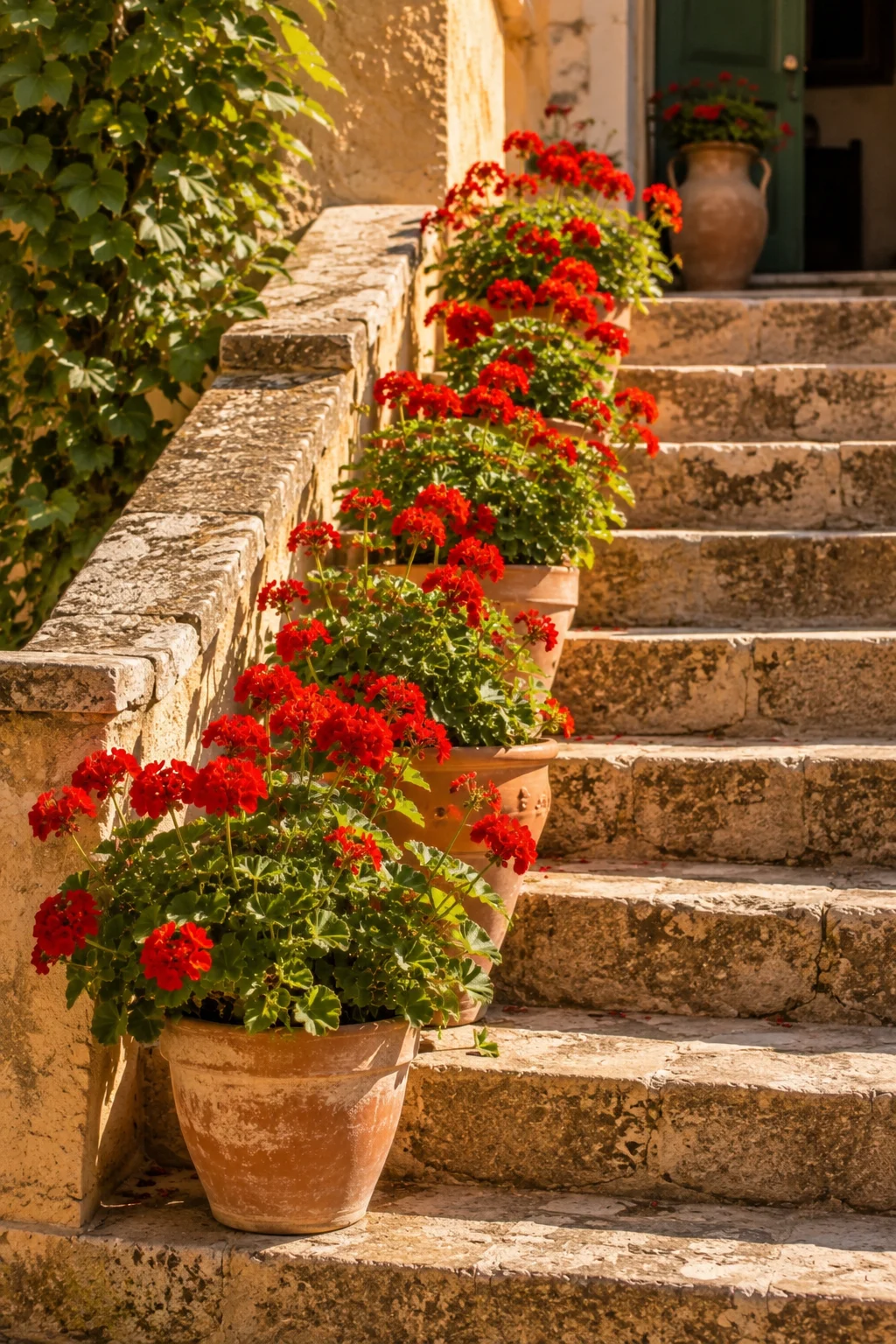
16. Potted Geraniums on Steps or Windowsills
Simple red or pink geraniums in terracotta pots lined along steps or a windowsill are one of the most common and recognizable Mediterranean village details, and among the easiest to copy directly.
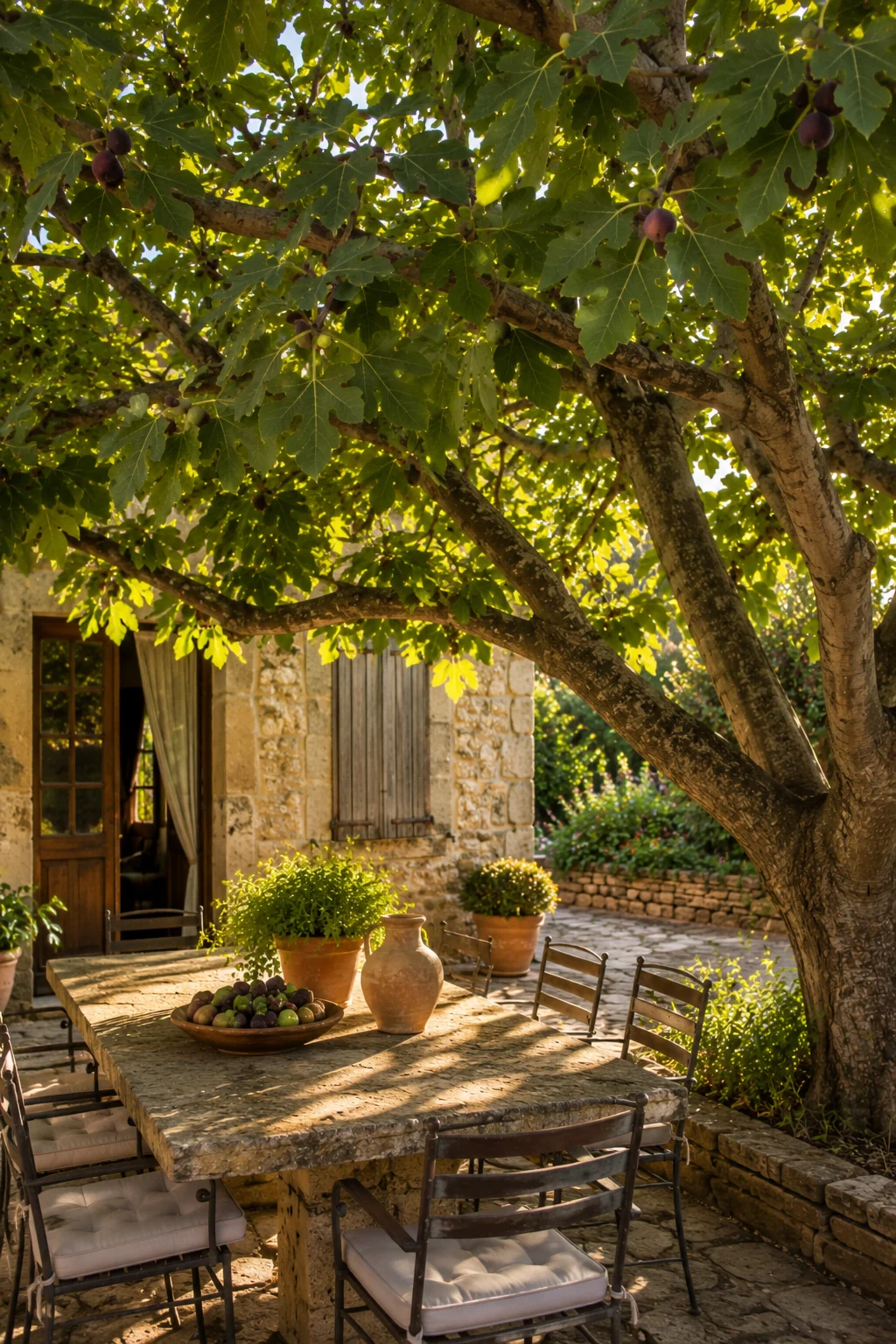
17. Fig Tree for Shade and Fruit
A fig tree planted near a seating area provides broad, dappled shade along with genuine summer fruit, and its large distinctive leaves add a different texture than the fine-leaved olive or cypress elsewhere in the garden.
Water Features
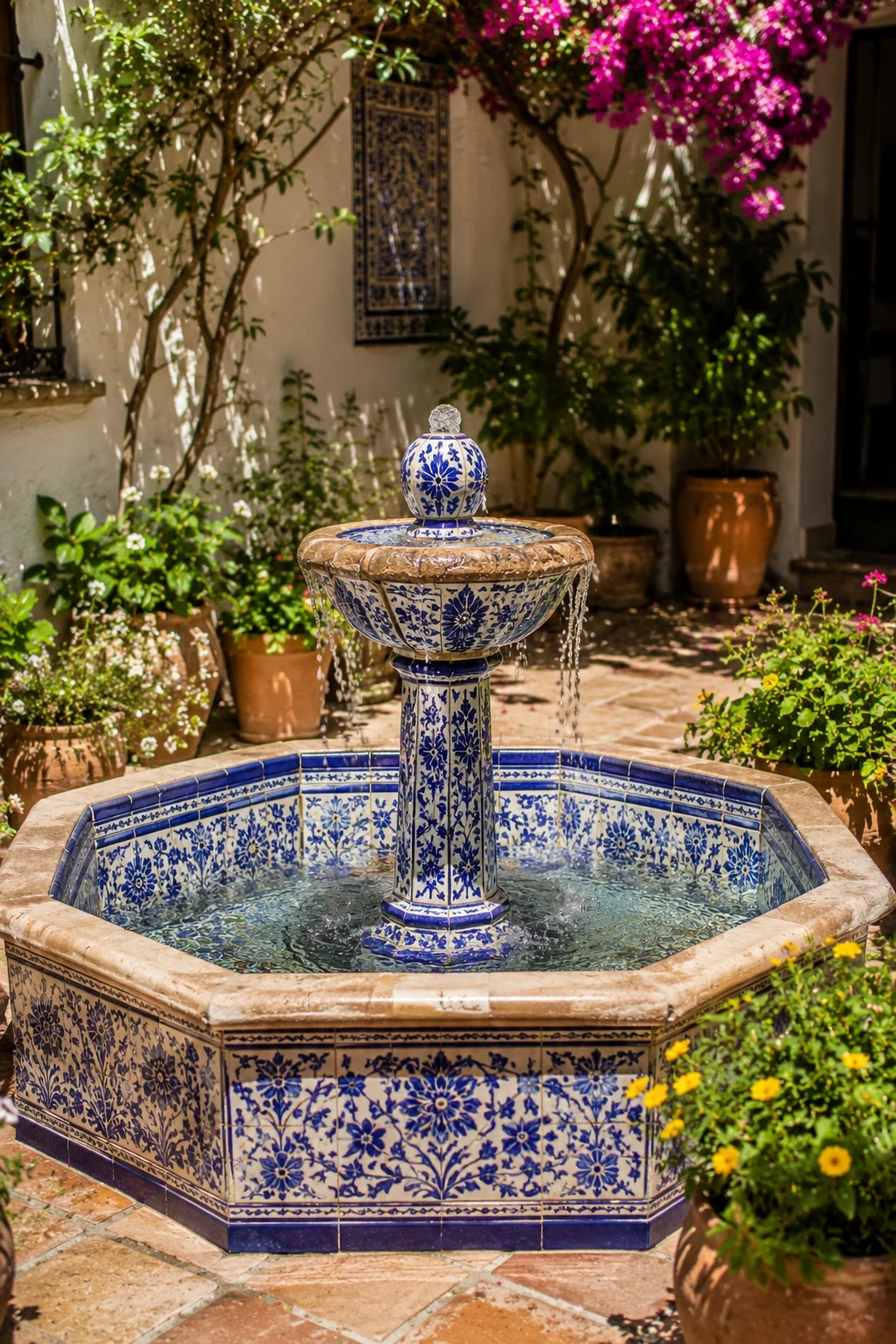
18. Tiled Fountain Centerpiece
A small central fountain finished in hand-painted blue and white tile gives a courtyard both sound and a clear focal point, working well even at a modest, tabletop-adjacent scale.
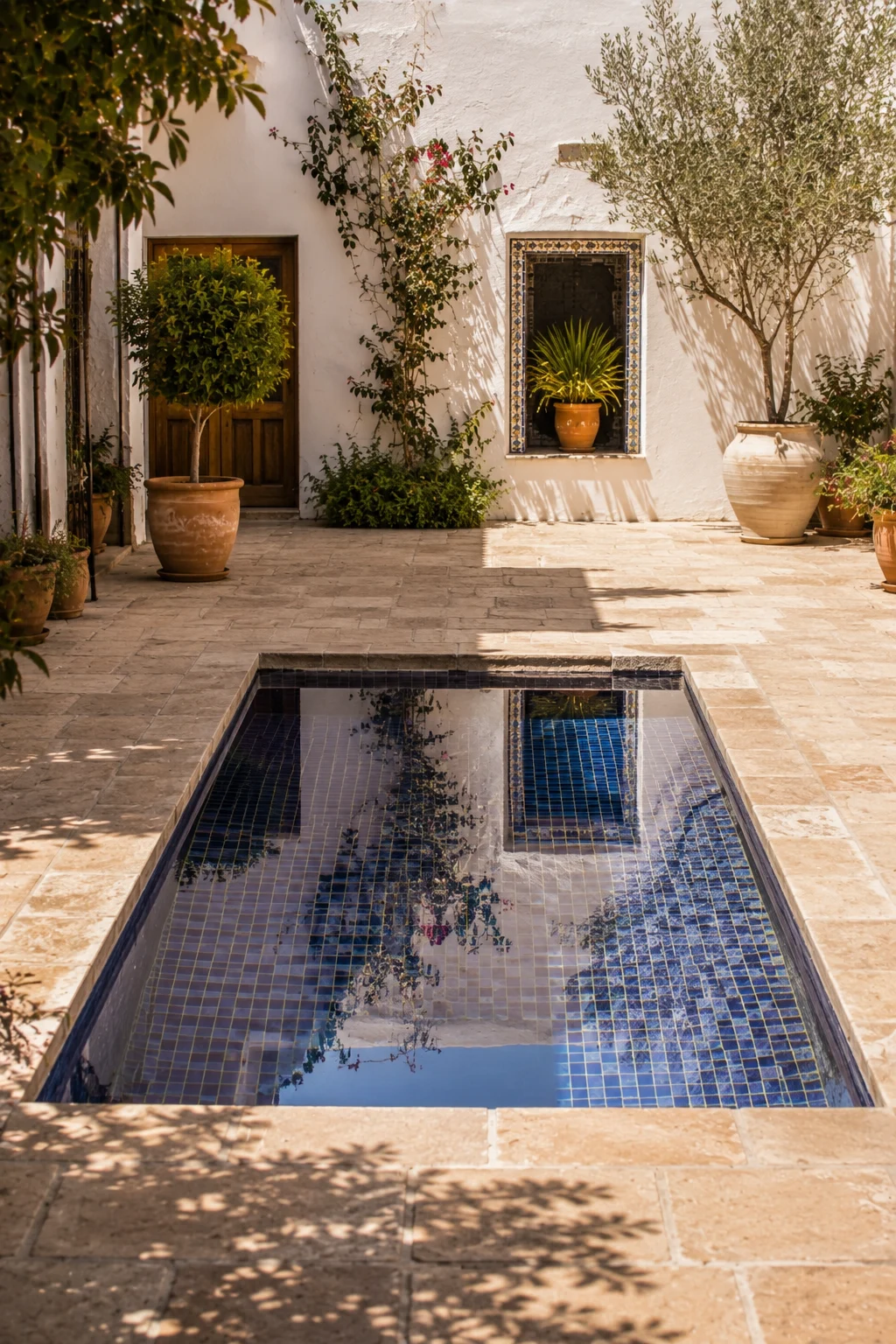
19. Small Reflecting Pool With Blue Tile
A shallow, tile-lined reflecting pool set into a courtyard floor brings a cooling visual element and works especially well lined in the same blue and white tile pattern used elsewhere in the space.
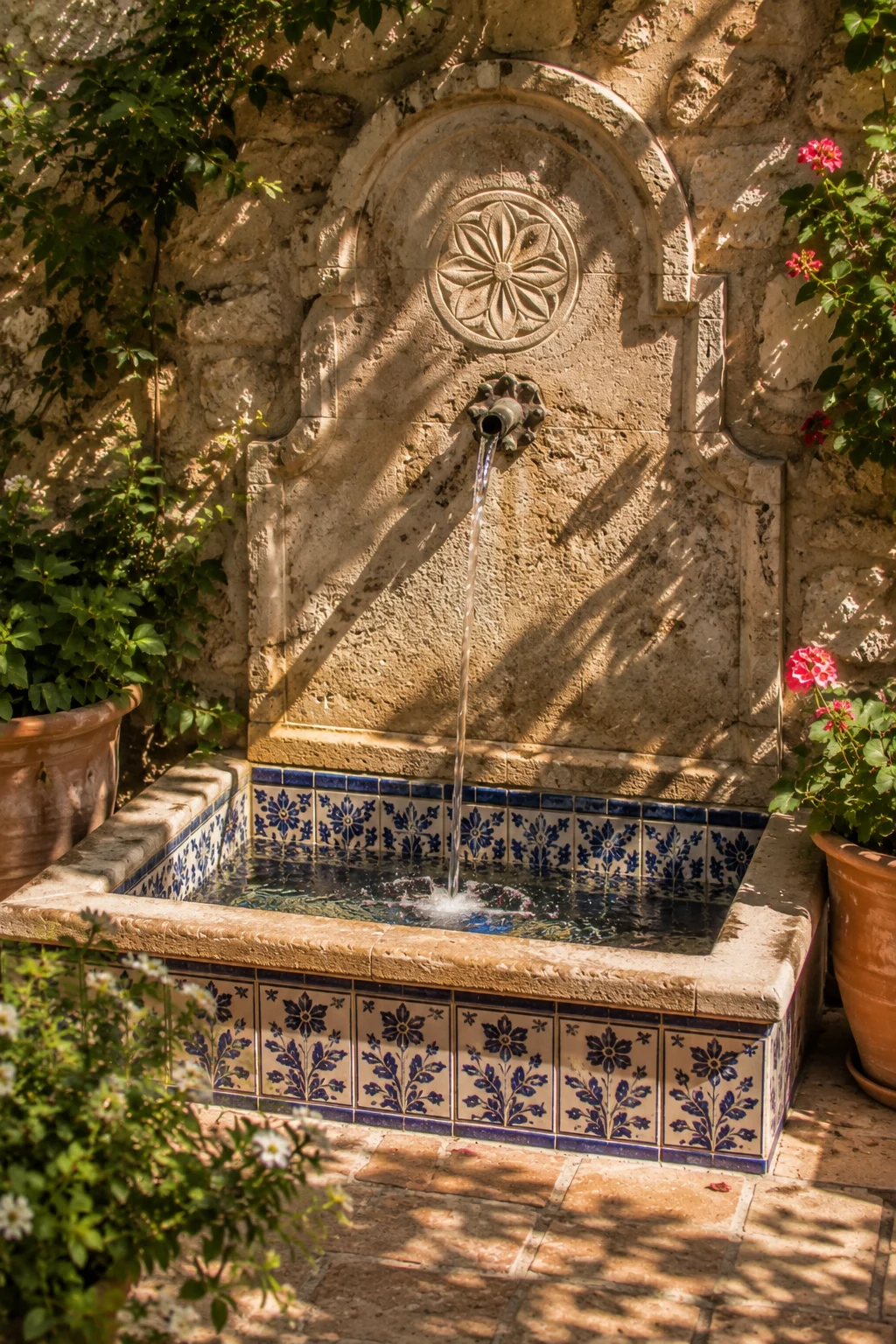
20. Wall-Mounted Spout Fountain
A simple stone or ceramic spout mounted on a wall, feeding a small basin below, adds the sound of moving water without needing floor space for a full pool.
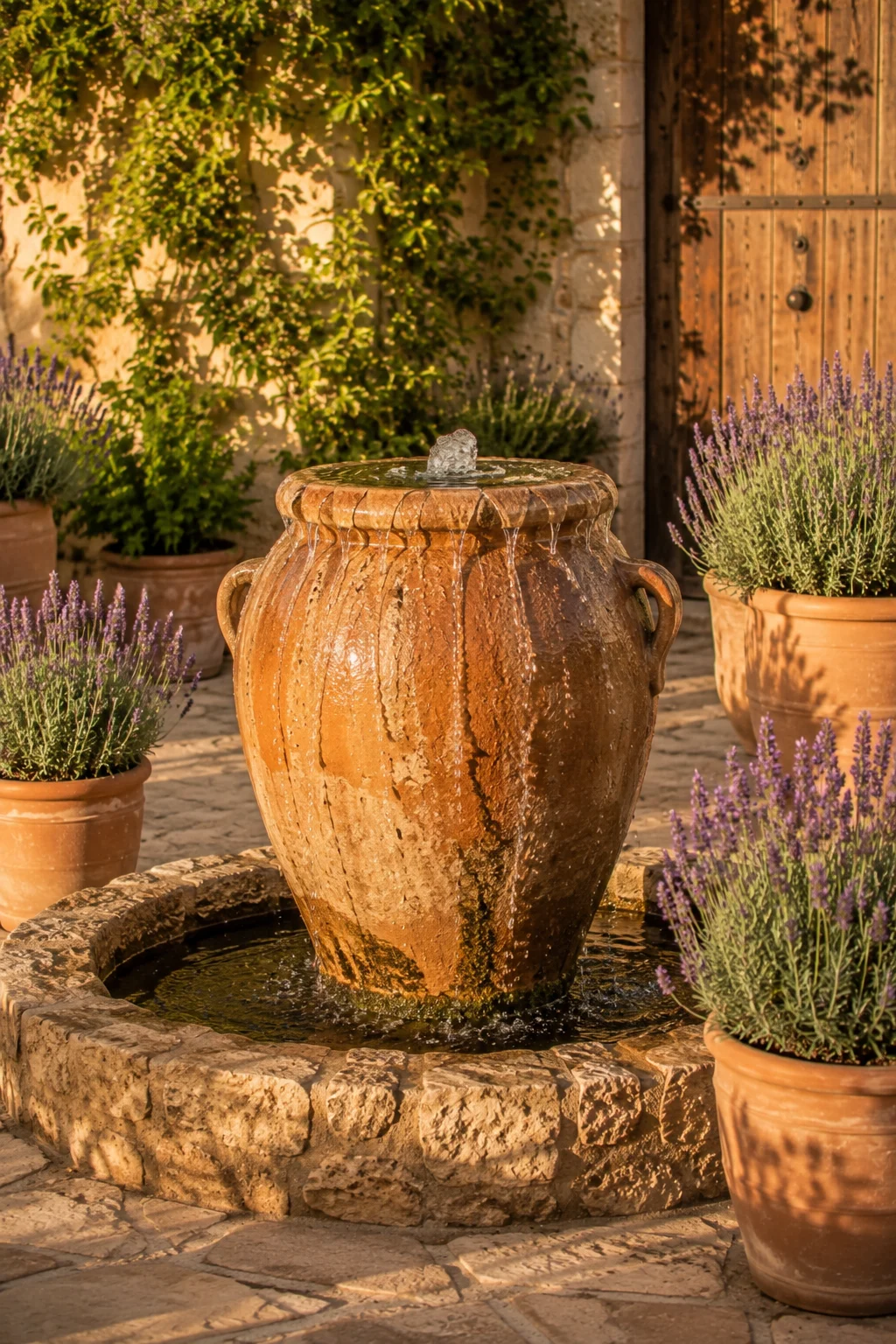
21. Terracotta Urn Fountain
A large terracotta urn, plumbed with a small recirculating pump so water bubbles gently over its rim, doubles as both a planter-style focal point and a genuine water feature.
Furniture and Shade
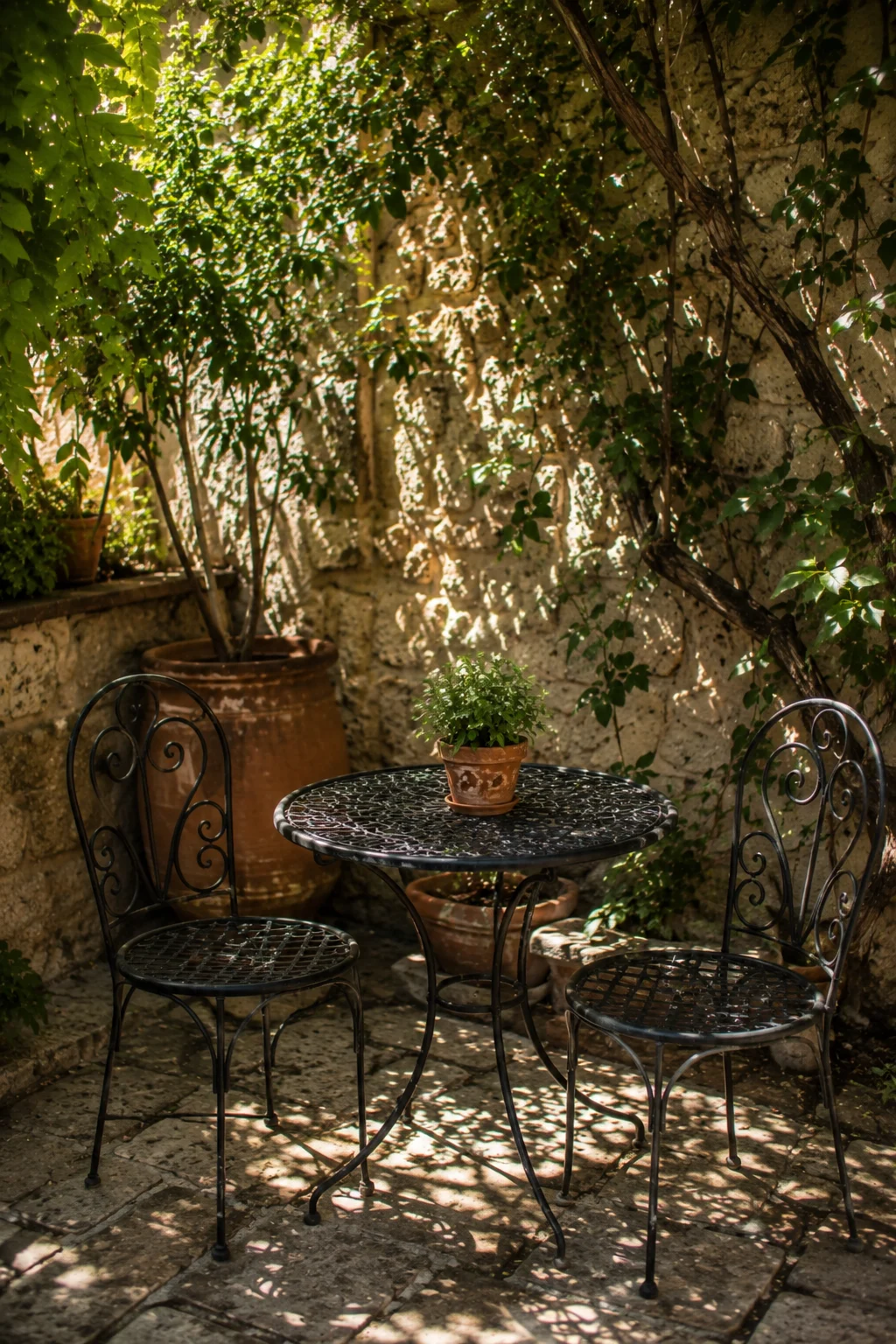
22. Wrought Iron Bistro Table and Chairs
A simple black wrought iron table and chair set, placed in a shaded courtyard corner, is an easy, inexpensive way to bring in the same material used in the garden’s gates and fencing.
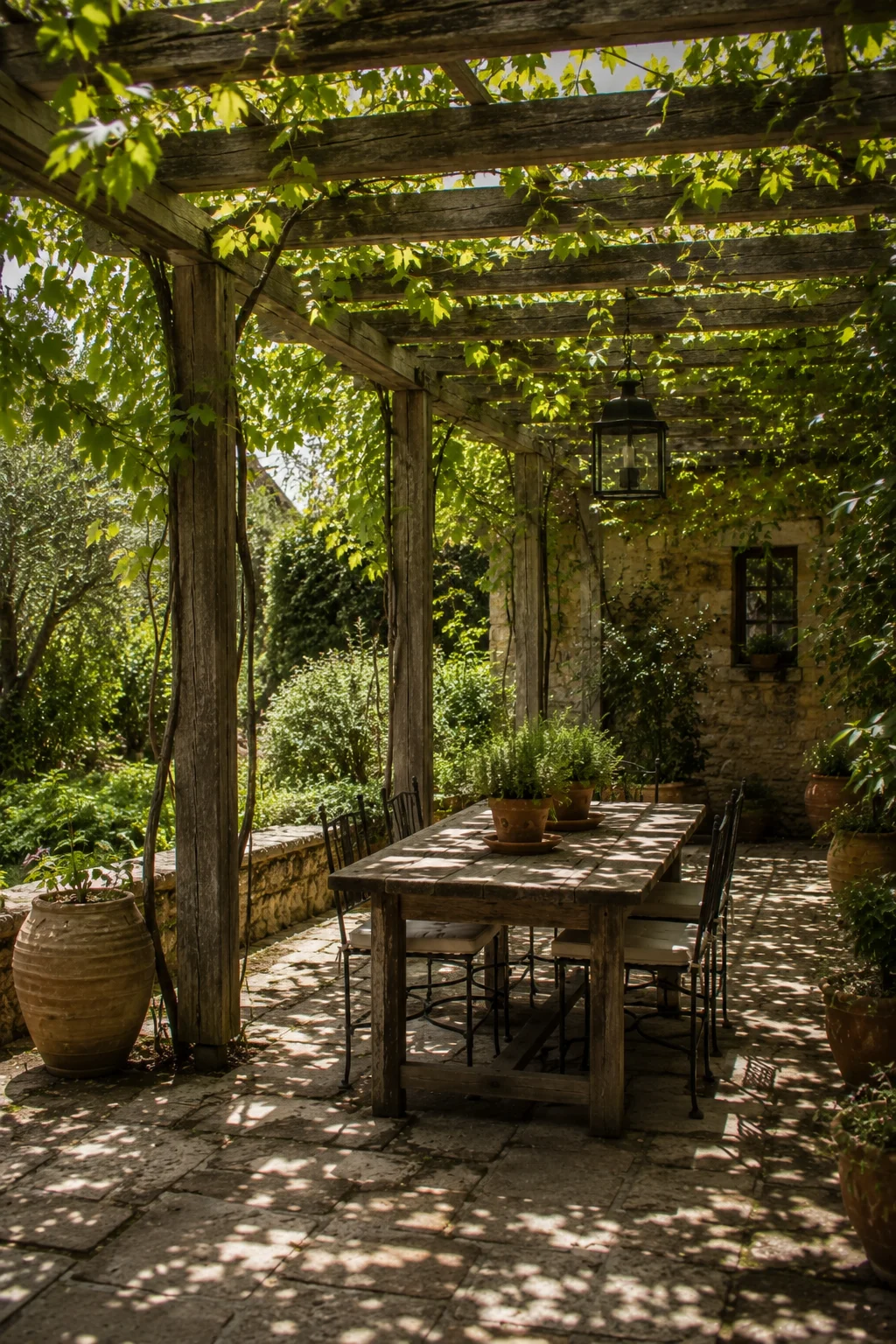
23. Rustic Wooden Pergola
A simple, slightly rough-hewn wooden pergola, left unpainted or finished in a natural weathered tone, provides shade structure for climbing vines without looking overly polished or modern.
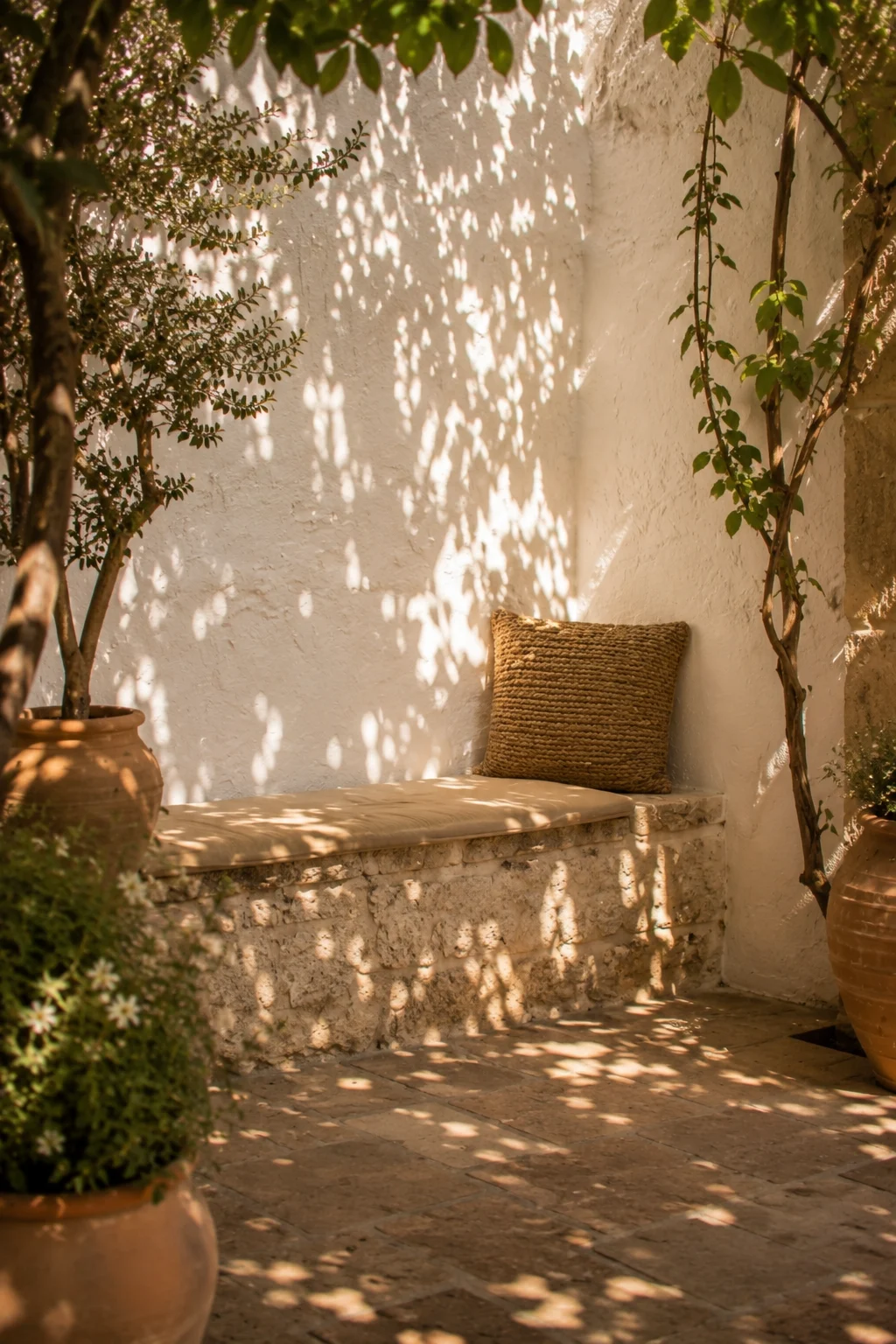
24. Built-In Stone Bench Along a Wall
A simple bench built directly into a low garden wall, finished in the same stucco or stone as the wall itself, gives a courtyard permanent seating without needing separate furniture.
25. Woven Rattan Lounge Chairs
A pair of natural woven rattan or wicker lounge chairs, arranged facing each other in a shaded corner, bring warmth and texture that suits the region’s relaxed, sun-worn aesthetic.
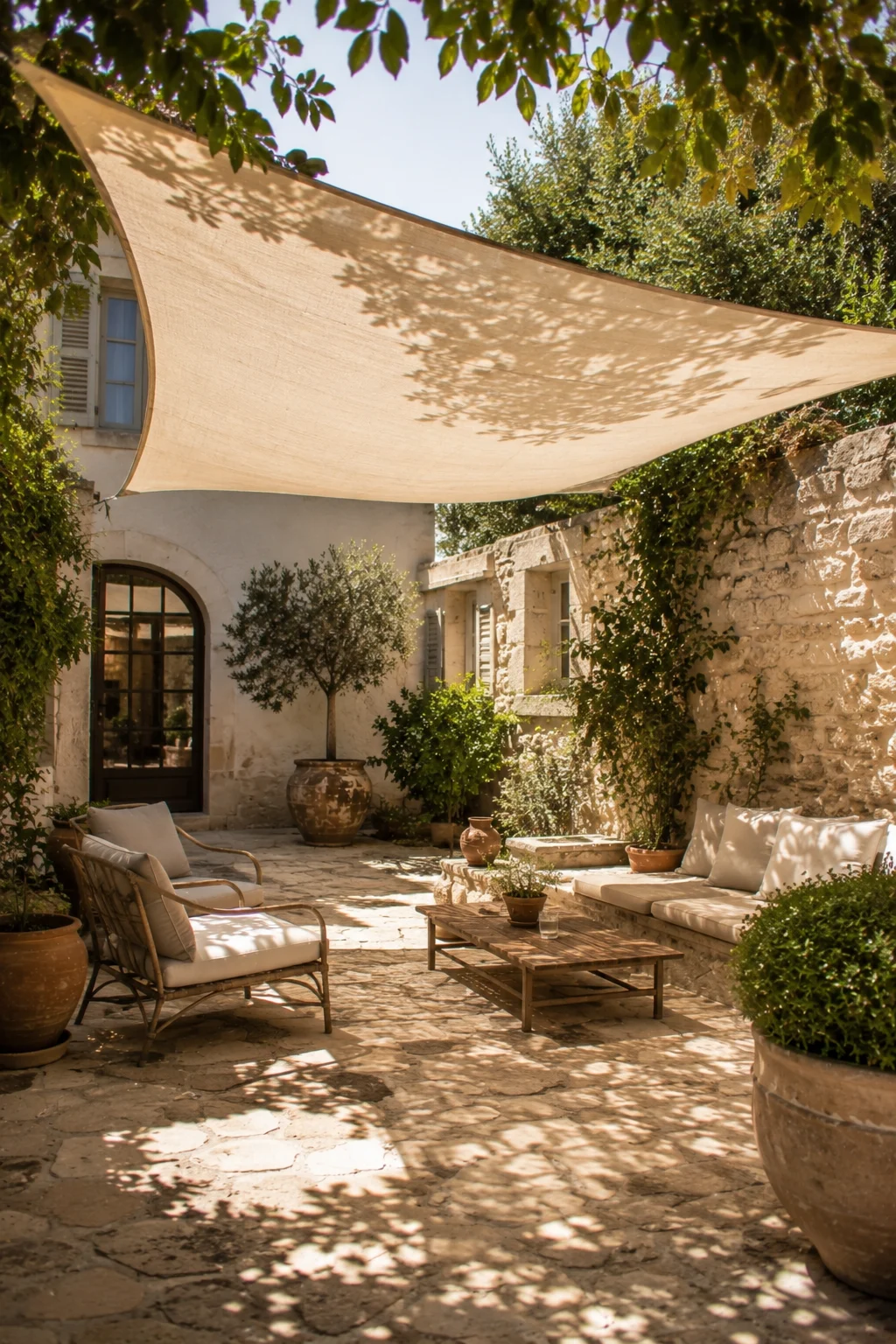
26. Canvas Sail Shade
A simple triangular canvas sail shade, stretched between a wall and one or two posts, provides flexible shade over a seating or dining area without the cost of a full pergola build.
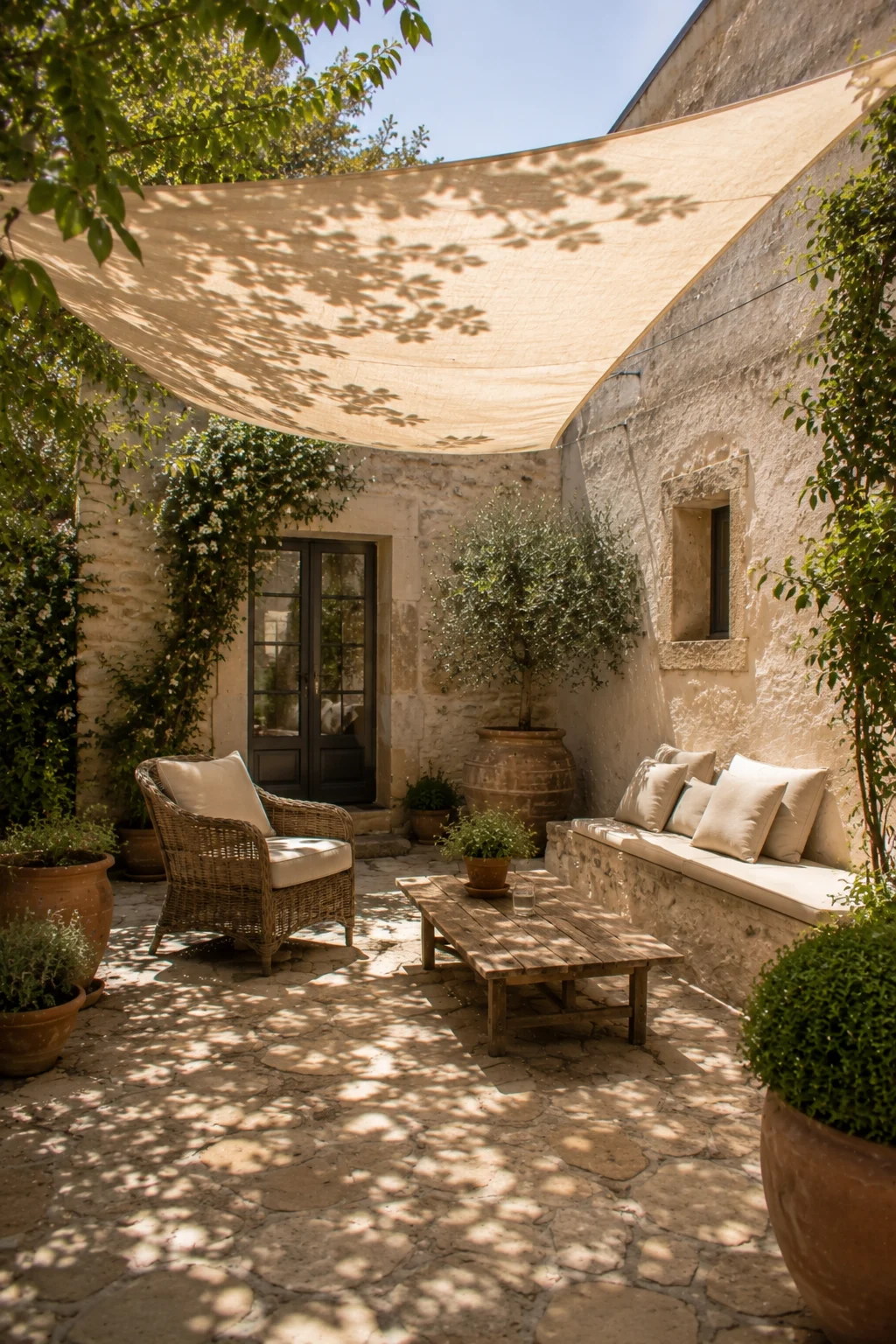
Finishing Touches
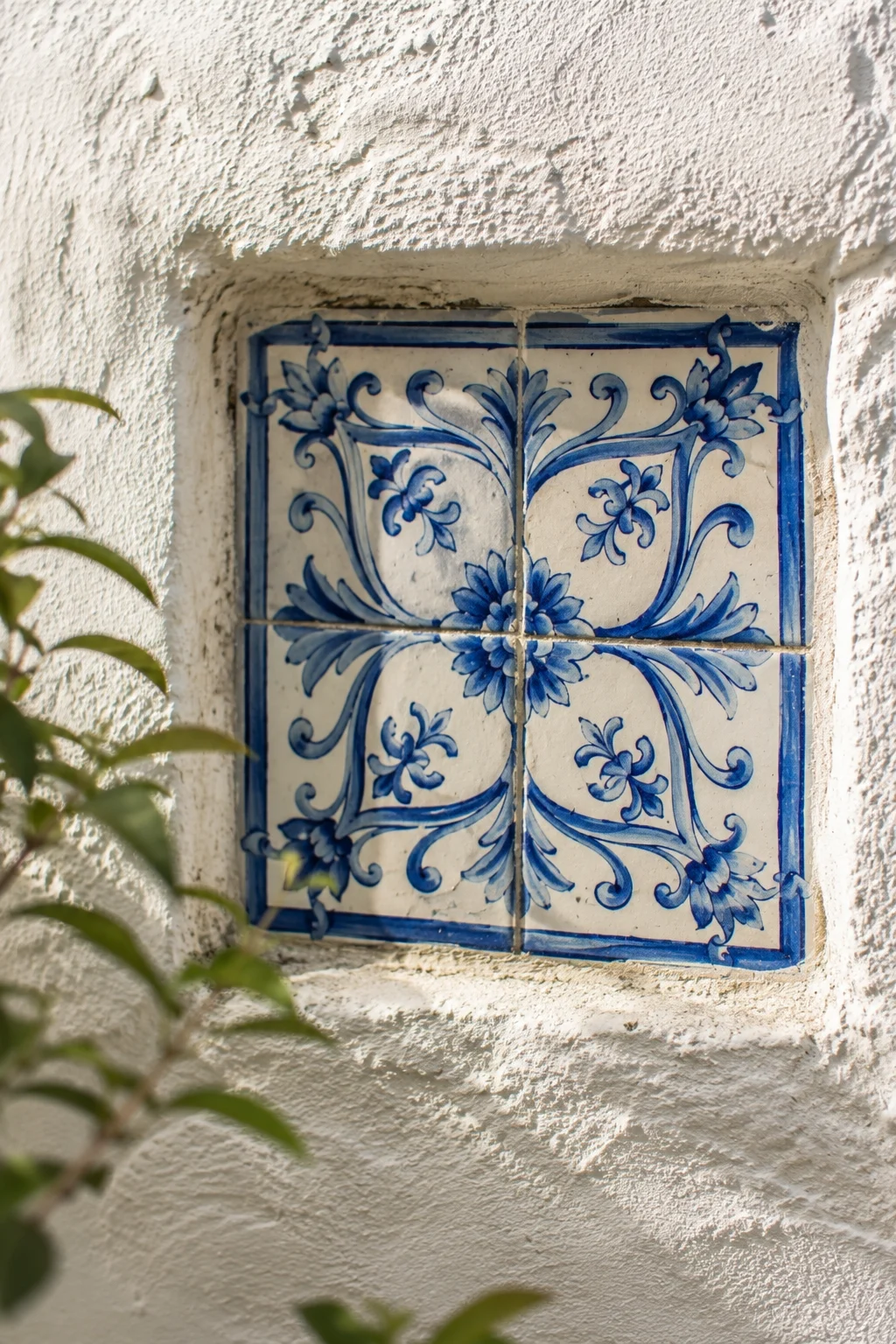
27. Blue and White Tile Accents
Hand-painted blue and white tiles used sparingly — as a stair riser detail, a fountain surround, or a small inset panel in a plain wall — introduce color and pattern without overwhelming the otherwise neutral palette.
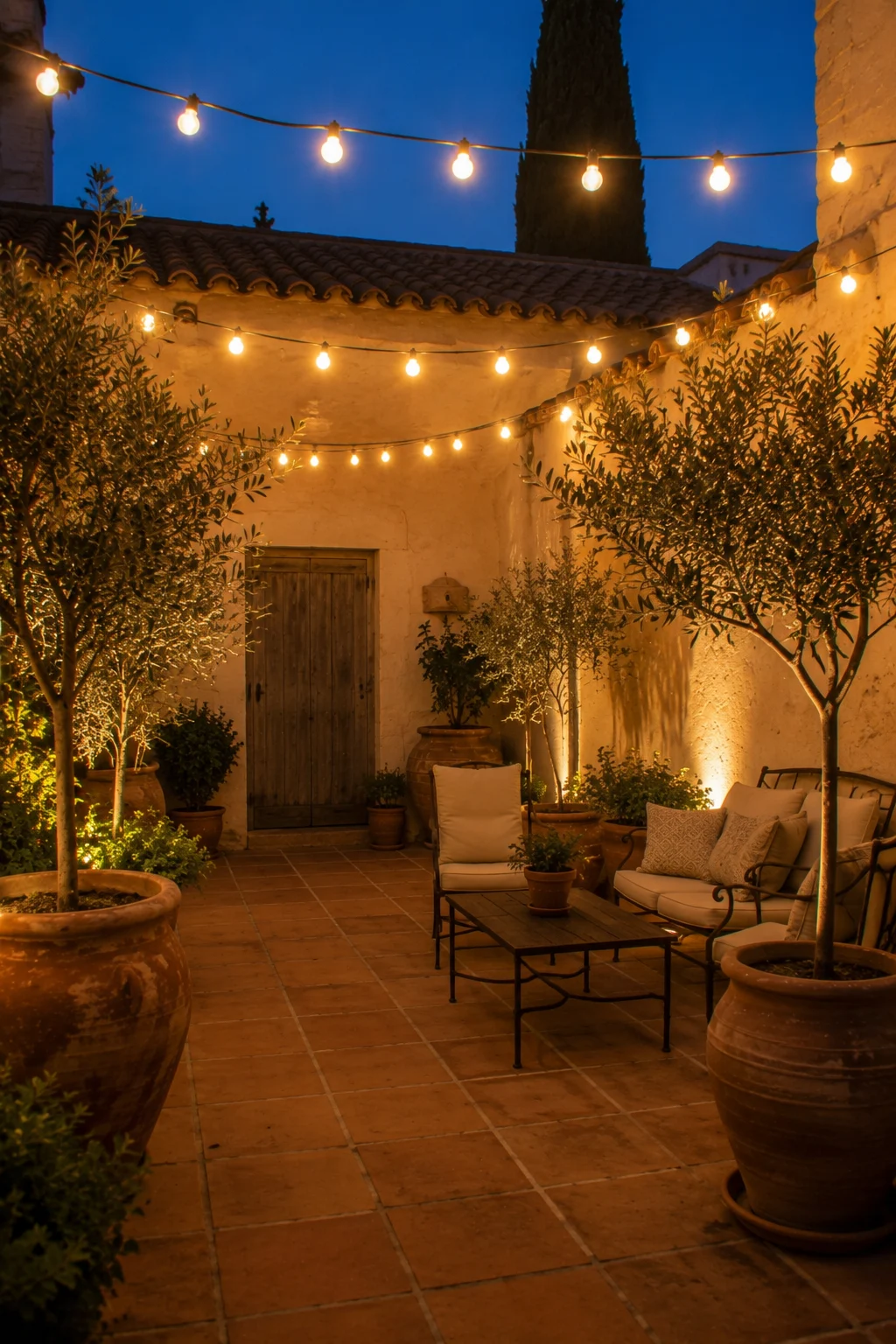
28. String Lights Across the Courtyard
Simple warm-white string lights, strung between two walls or pergola posts above a courtyard, extend the space’s usable hours into the evening with minimal cost or installation effort.
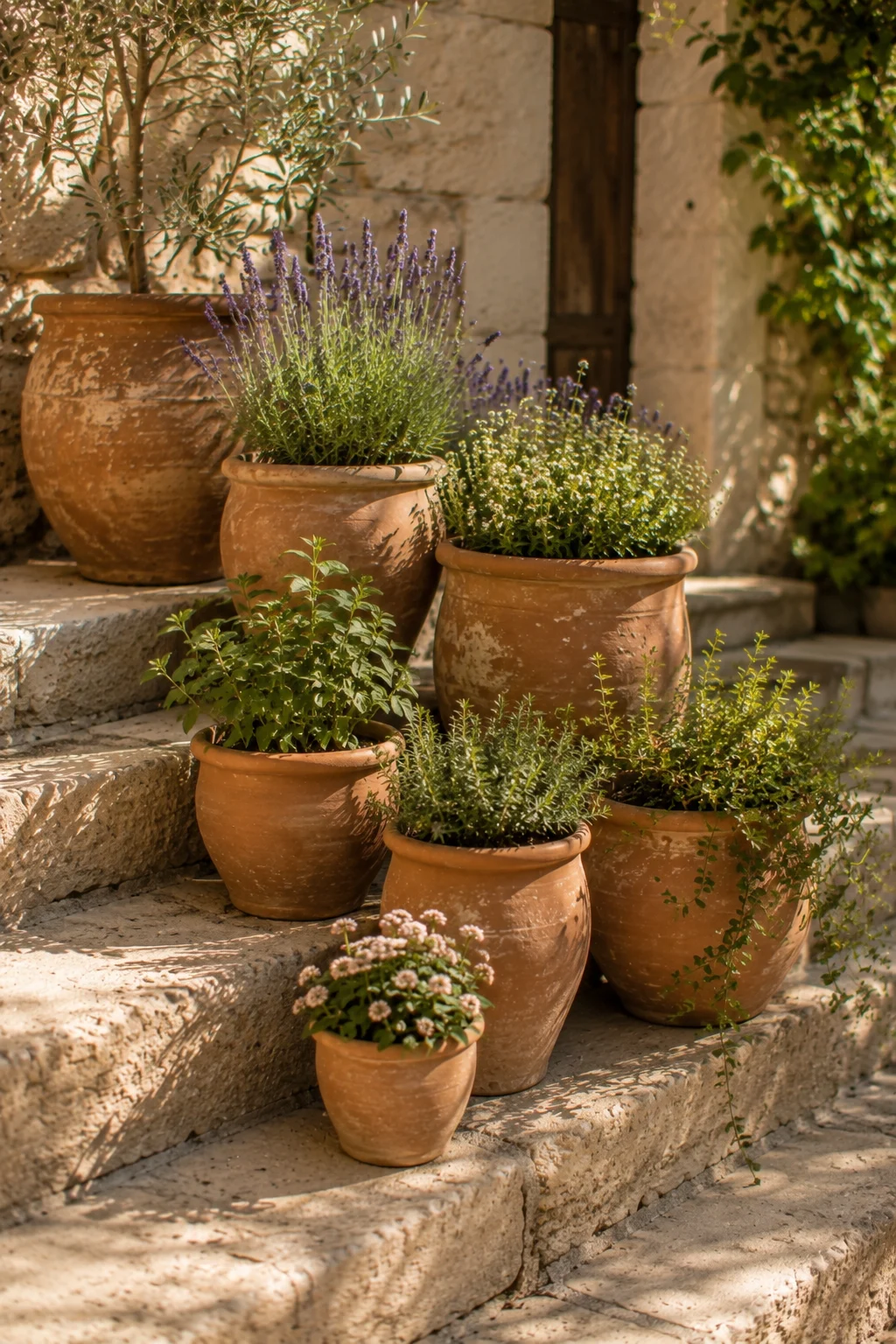
29. Grouped Terracotta Pots in Varying Sizes
Clustering several terracotta pots of different sizes together near an entry or on a set of steps, rather than spacing single pots evenly apart, gives an instantly full, lived-in Mediterranean look.
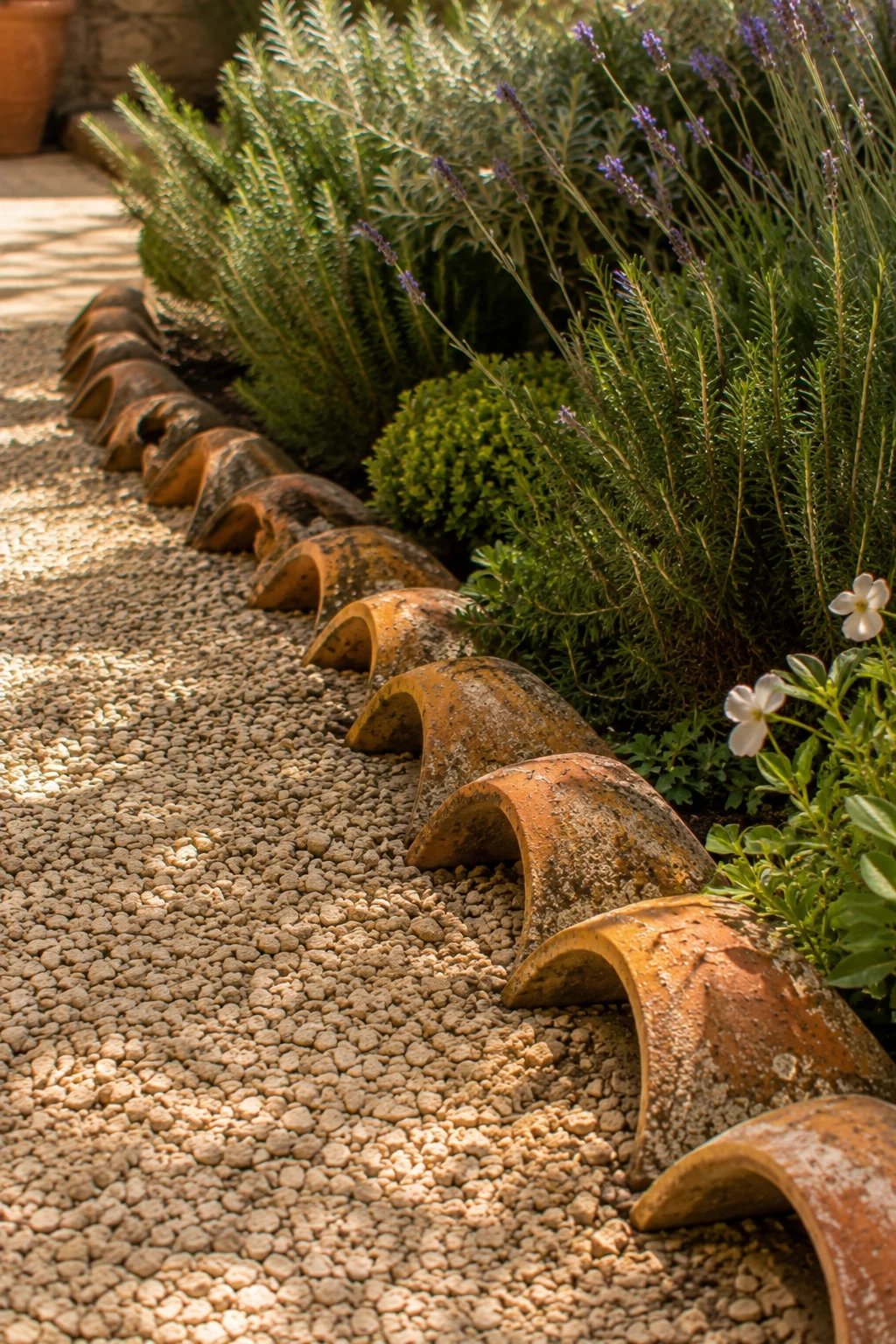
30. Reclaimed Clay Roof Tiles as Decorative Edging
Old, curved clay roof tiles, laid decoratively along a garden bed’s edge or stood upright as a border, repurpose a genuinely regional material into a simple, low-cost finishing detail.
How to Choose From This List
The Mediterranean look holds together because of a narrow, repeated material and plant palette, not variety — pick one hardscape material (terracotta or gravel), one or two signature plants (olive, lavender, or cypress), and one furniture material (wrought iron or rattan), and repeat them consistently rather than pulling one idea from every category above.
Final Thoughts
A Mediterranean garden comes together fastest when the materials do the talking: terracotta underfoot, whitewashed walls behind, an olive tree or a stand of lavender doing most of the planting work, and simple wrought iron or rattan furniture tying it together. Start with the hardscape, add two or three signature plants, and layer in a water feature or lighting only once that foundation is in place — the same handful of ideas, repeated with restraint, is what actually reads as authentic rather than themed.