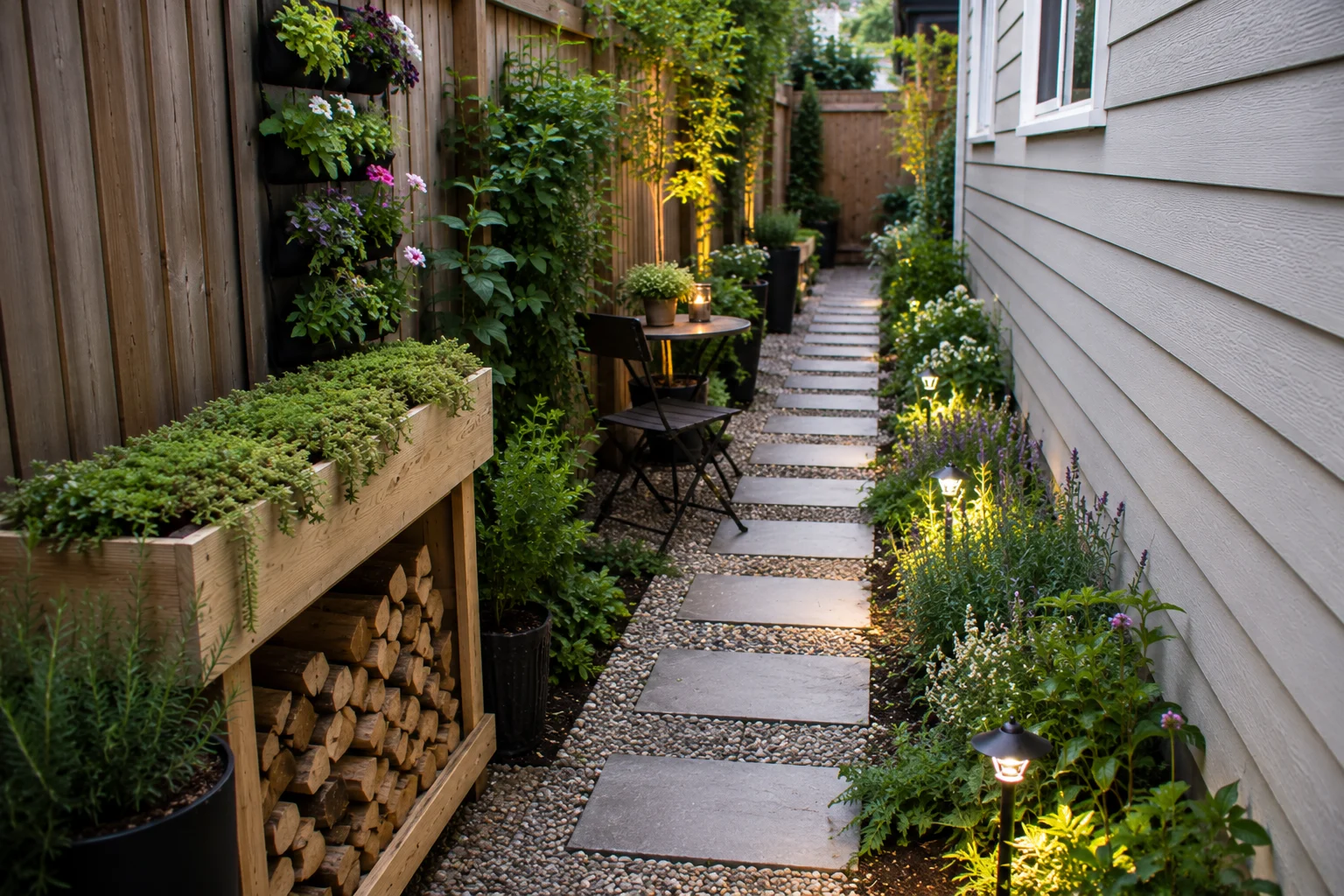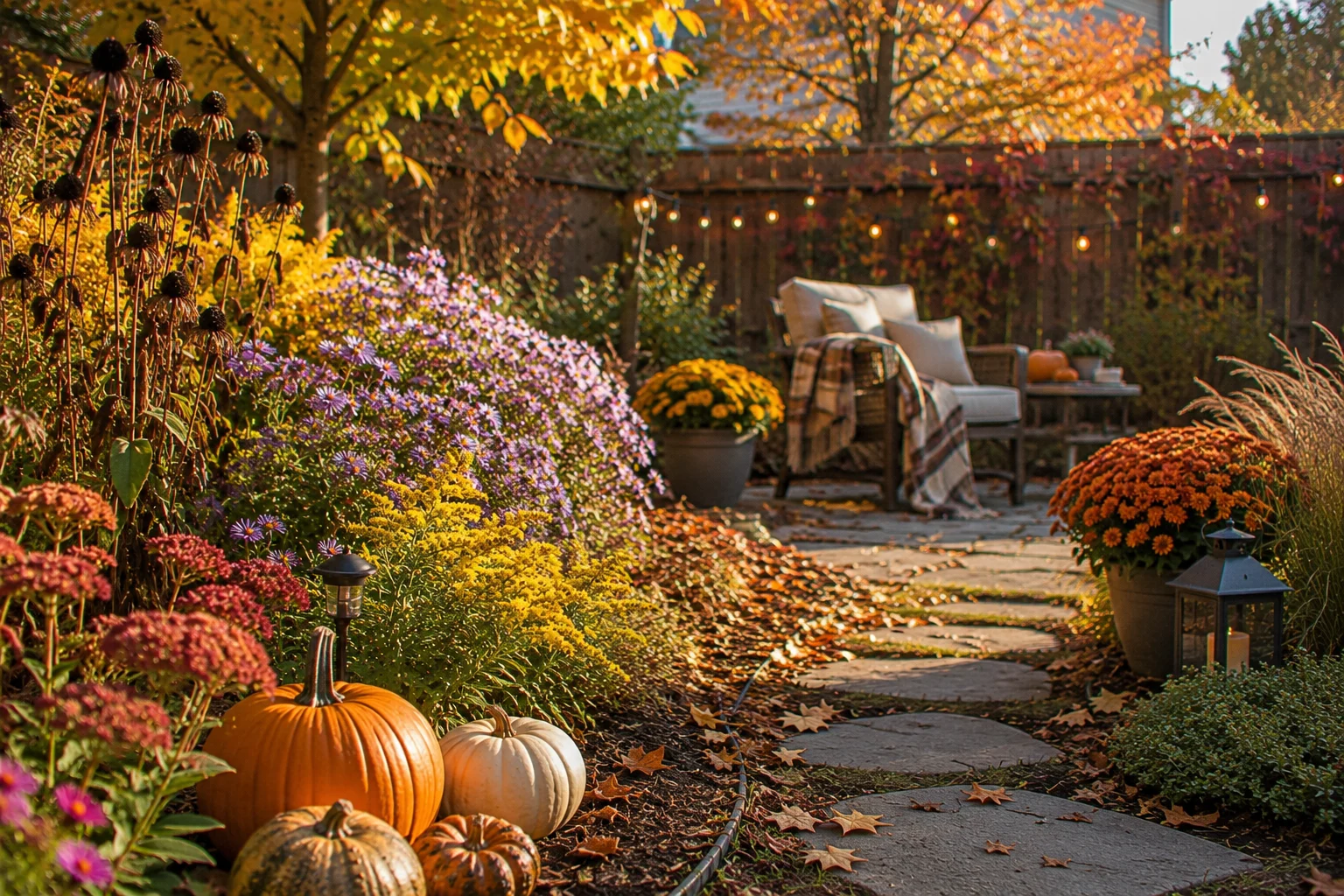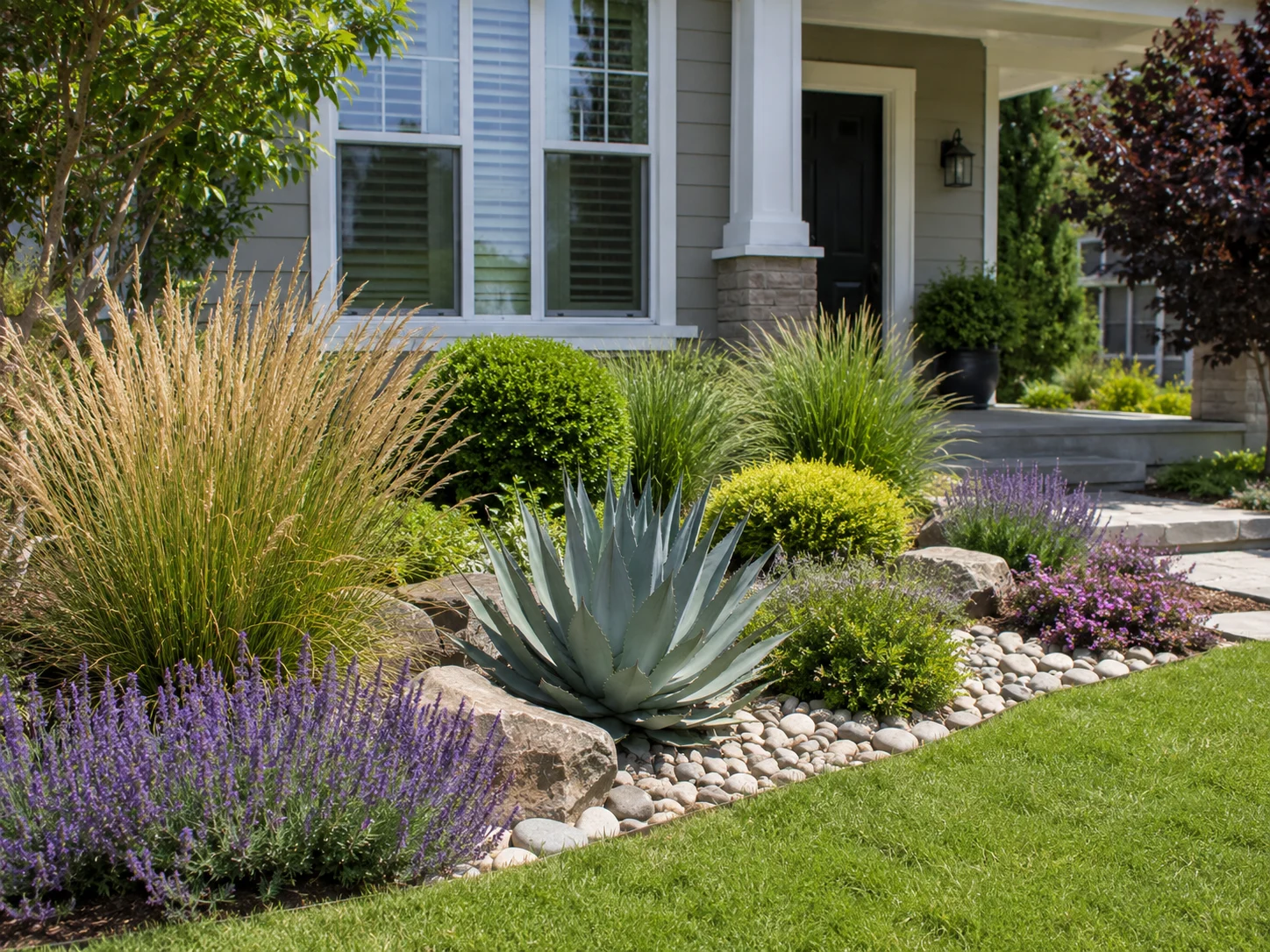

A small garden doesn’t have wasted space to spare — every strip, corner, and wall either earns its place or sits there doing nothing. The good news is that constraint tends to produce better design, not worse: small gardens that work well are almost always the ones where every element was chosen deliberately, rather than the ones crammed with whatever fit.
This list breaks down 25 small garden ideas across 8 practical categories — vertical planting, corner spaces, side yards, courtyards, raised beds, wildlife-friendly touches, dining space, and container layering — each with enough detail to actually plan and build. Pick a handful that match your specific space rather than trying to fit all 25 in; a small garden built from five well-executed ideas will always outperform one trying to cram in twenty.
Vertical Flower Wall
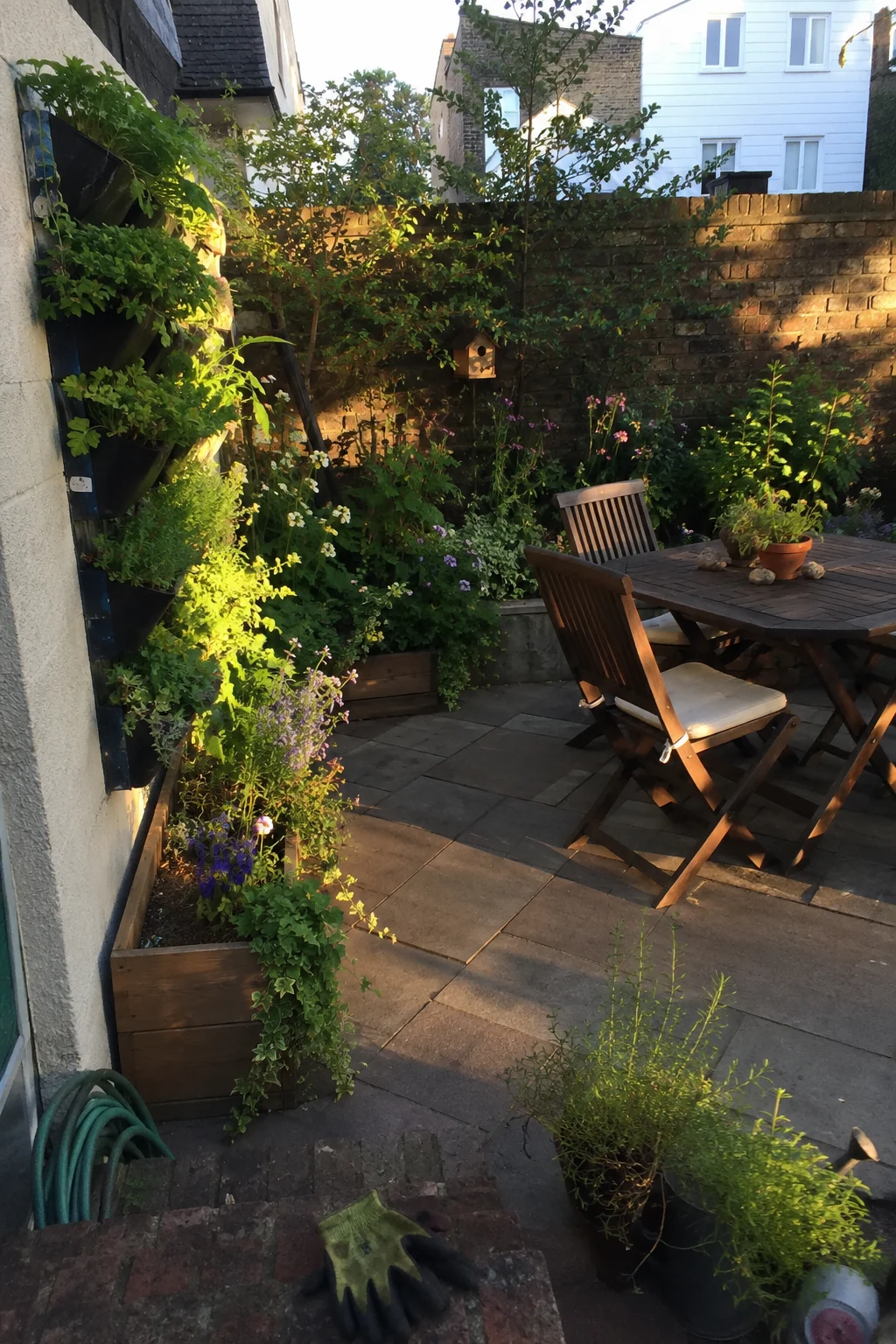
Walls and fences are the most overlooked square footage in a small garden — treating them as growing space rather than a backdrop can double the effective planting area without using any ground at all.
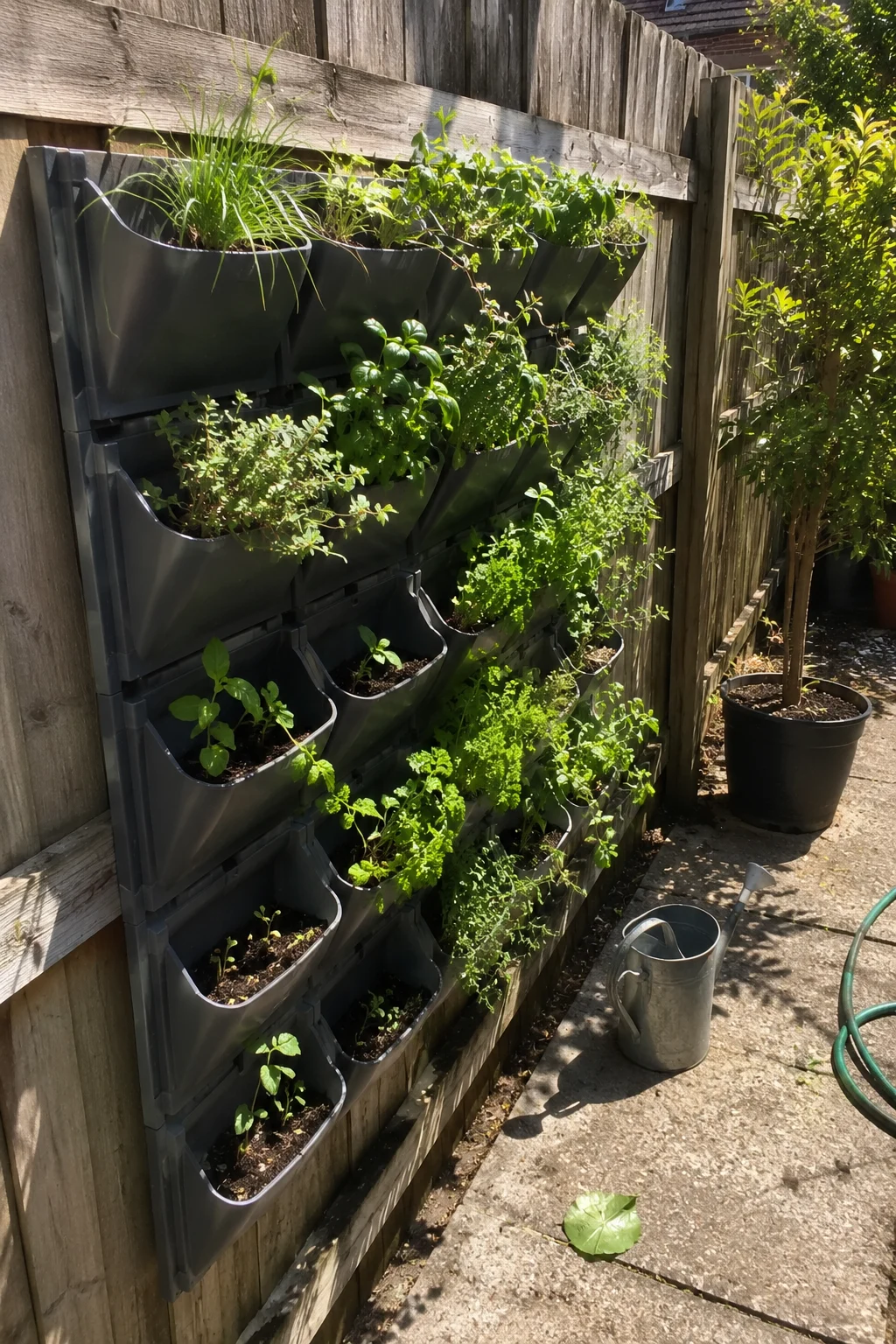
1. Modular Vertical Planter System
Stackable or wall-mounted planter modules — sold as kits or built from repurposed guttering — let you grow a full wall of flowers or herbs in a footprint of just a few inches deep. Position the system where it gets at least half a day of direct sun, and choose a drip irrigation line run along the top row so water reaches every level without hand-watering each pocket individually.
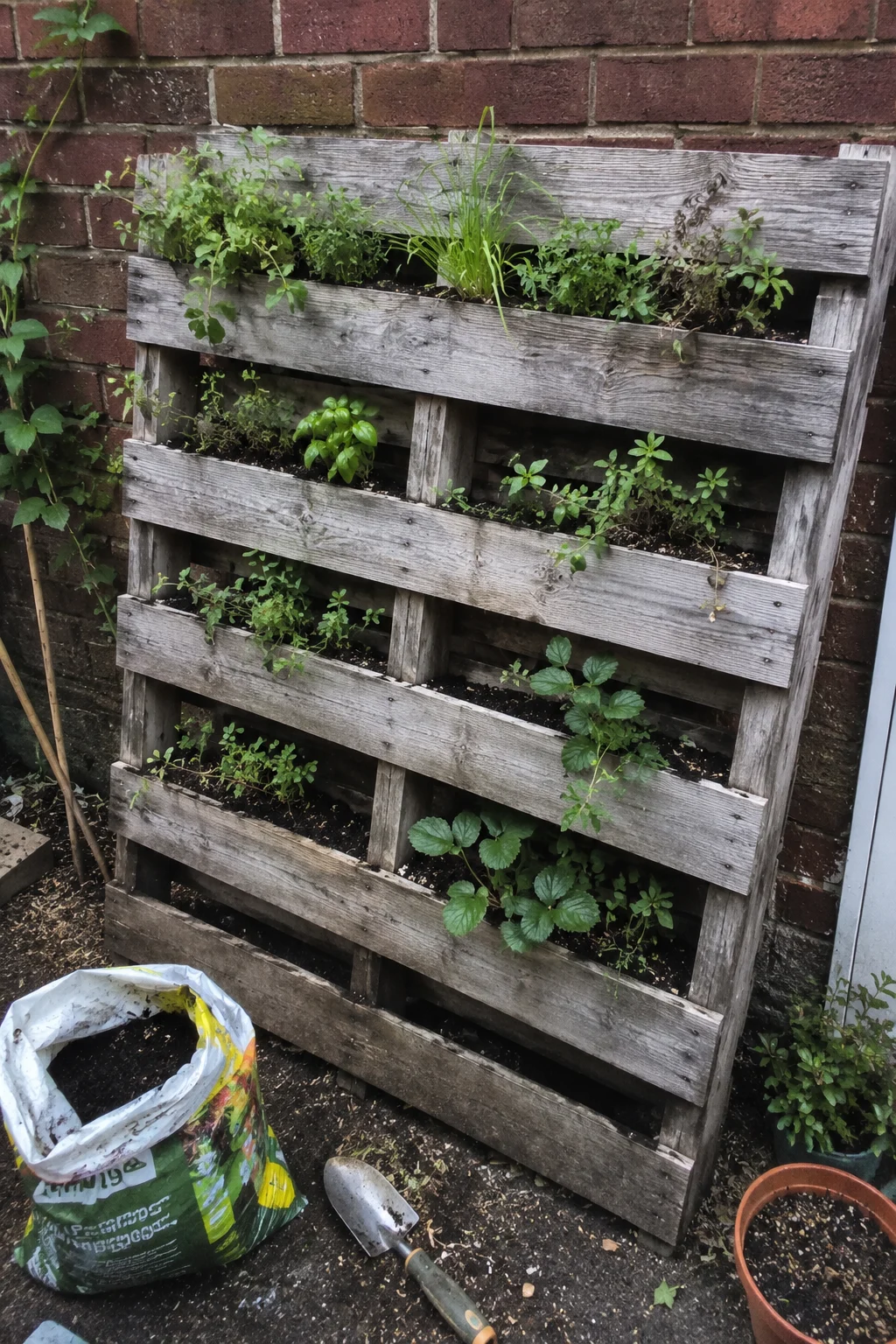
2. Repurposed Pallet Wall Planter
A single wooden pallet, stood on end and lined with landscape fabric, creates a rustic vertical bed deep enough for shallow-rooted flowers, succulents, or herbs. Let it lean against a solid wall for support and stability, and orient the slatted front face outward so plants have room to fill in and cascade slightly over each shelf.
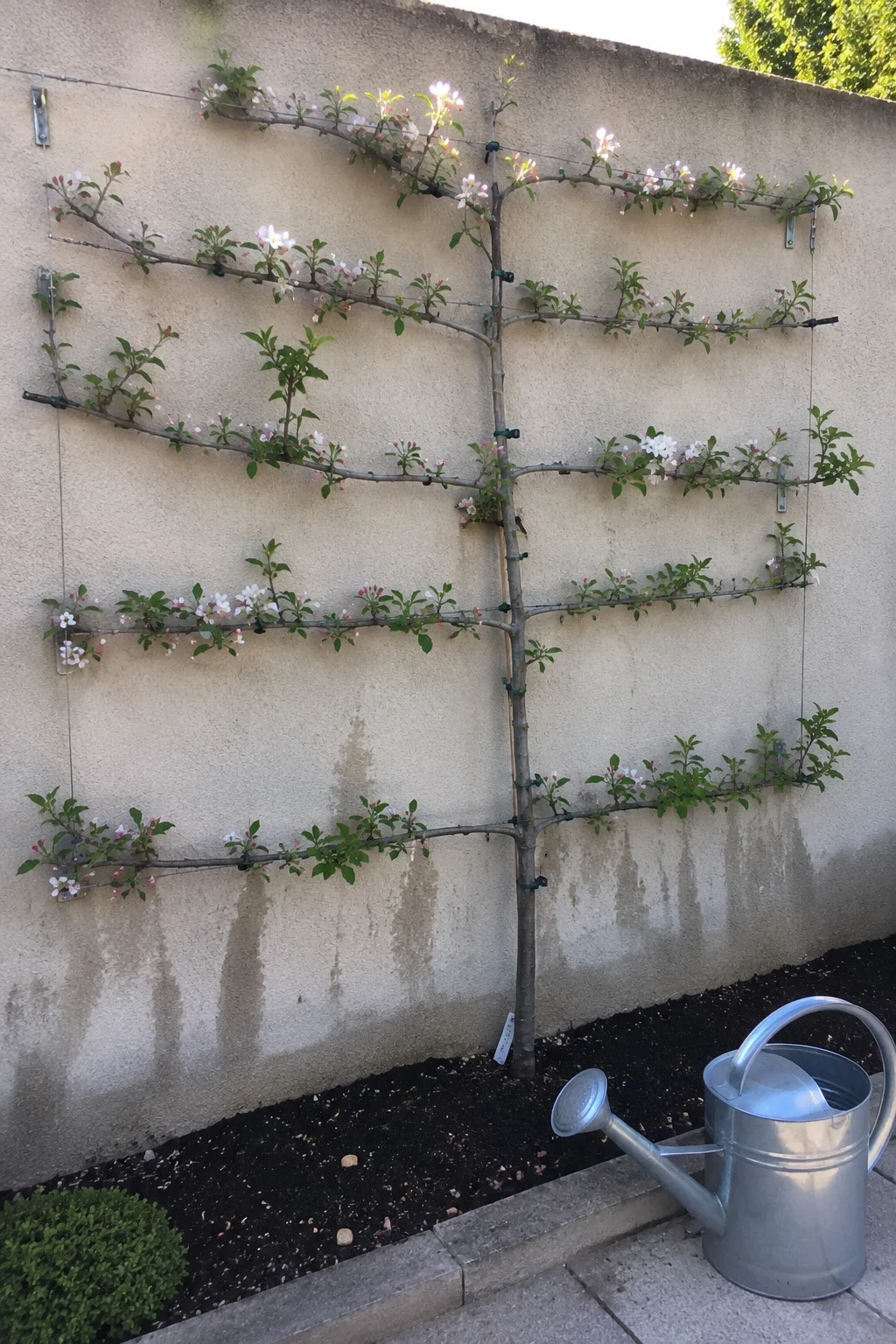
3. Espaliered Flowering Shrub
Training a flowering shrub or small fruit tree flat against a wall or fence in a formal branching pattern (espalier) turns a plant that would otherwise need several feet of depth into something that occupies just inches. It takes a few seasons of pruning to establish the pattern fully, but the result is a living wall feature that looks intentional year-round, even before it flowers.
Corner Herb Garden
Corners are naturally awkward to plant in a conventional bed layout, which makes them ideal for a self-contained herb feature instead.
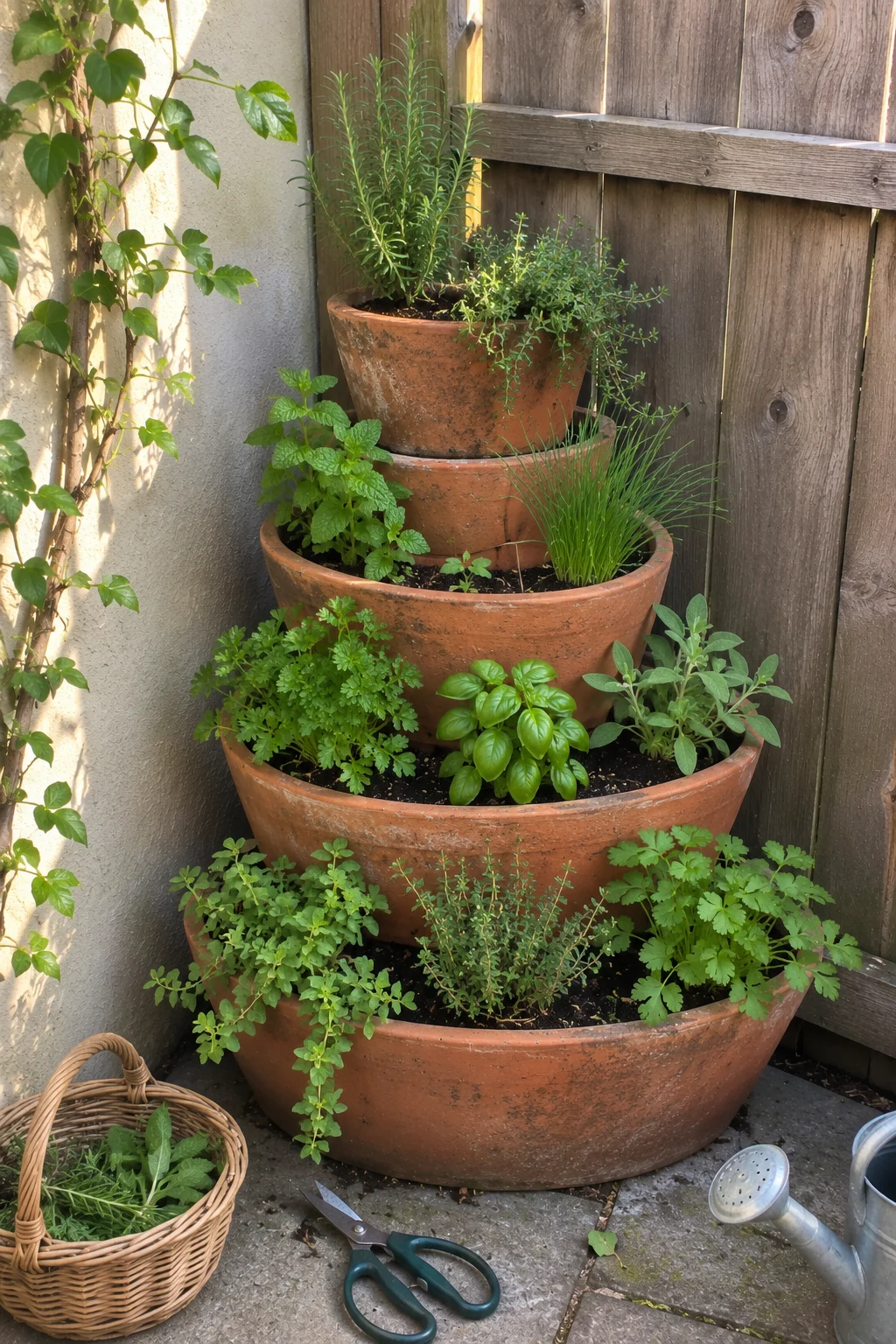
4. Stacked Corner Herb Tower
A tiered, pyramid-style planter tucked into a 90-degree corner makes use of vertical space that a flat bed never could, and keeps different herbs at slightly different heights for easy harvesting. Position taller, sun-loving herbs like rosemary at the top tier, with lower, shade-tolerant herbs like parsley or mint toward the base.
5. Built-In Corner Raised Bed
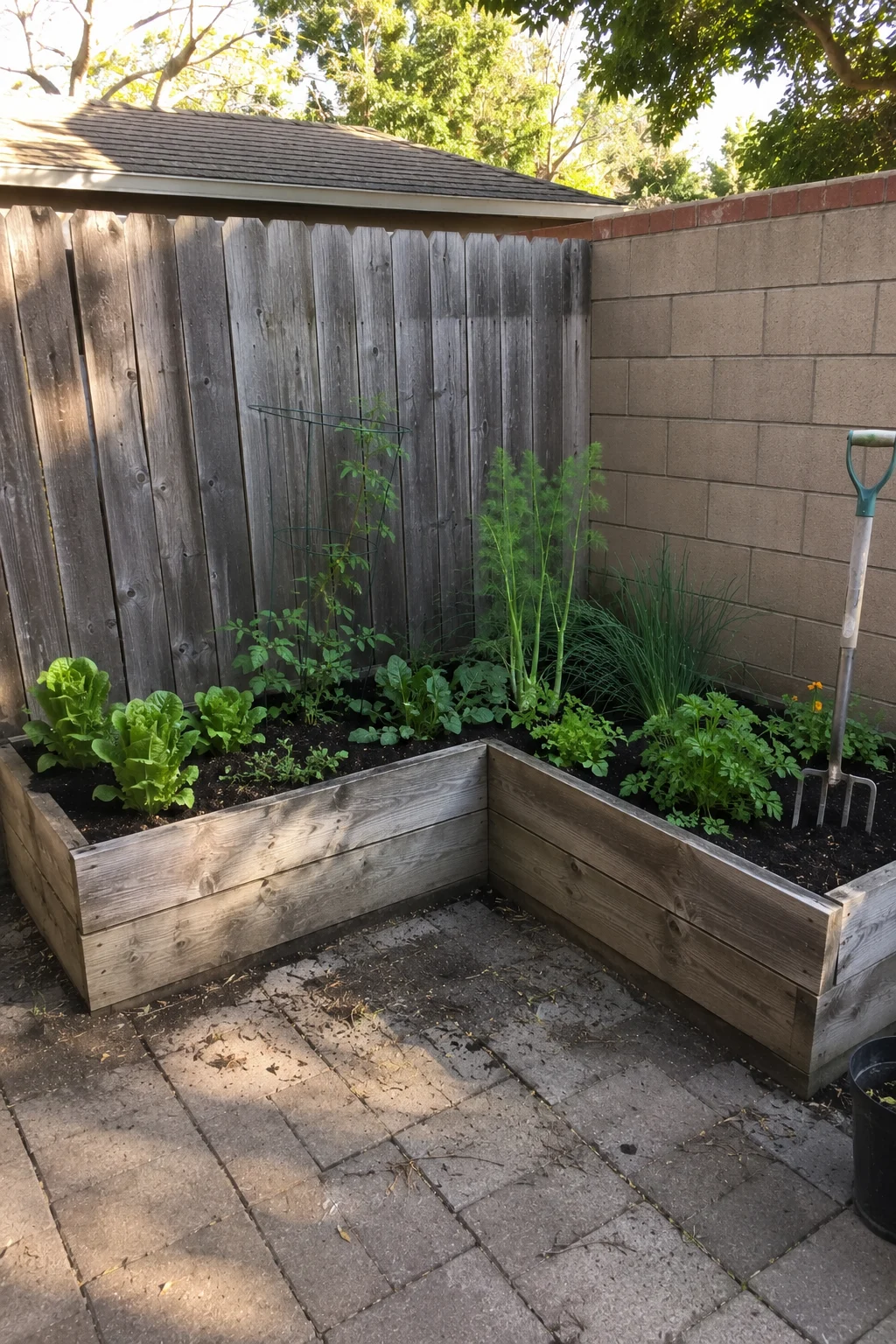
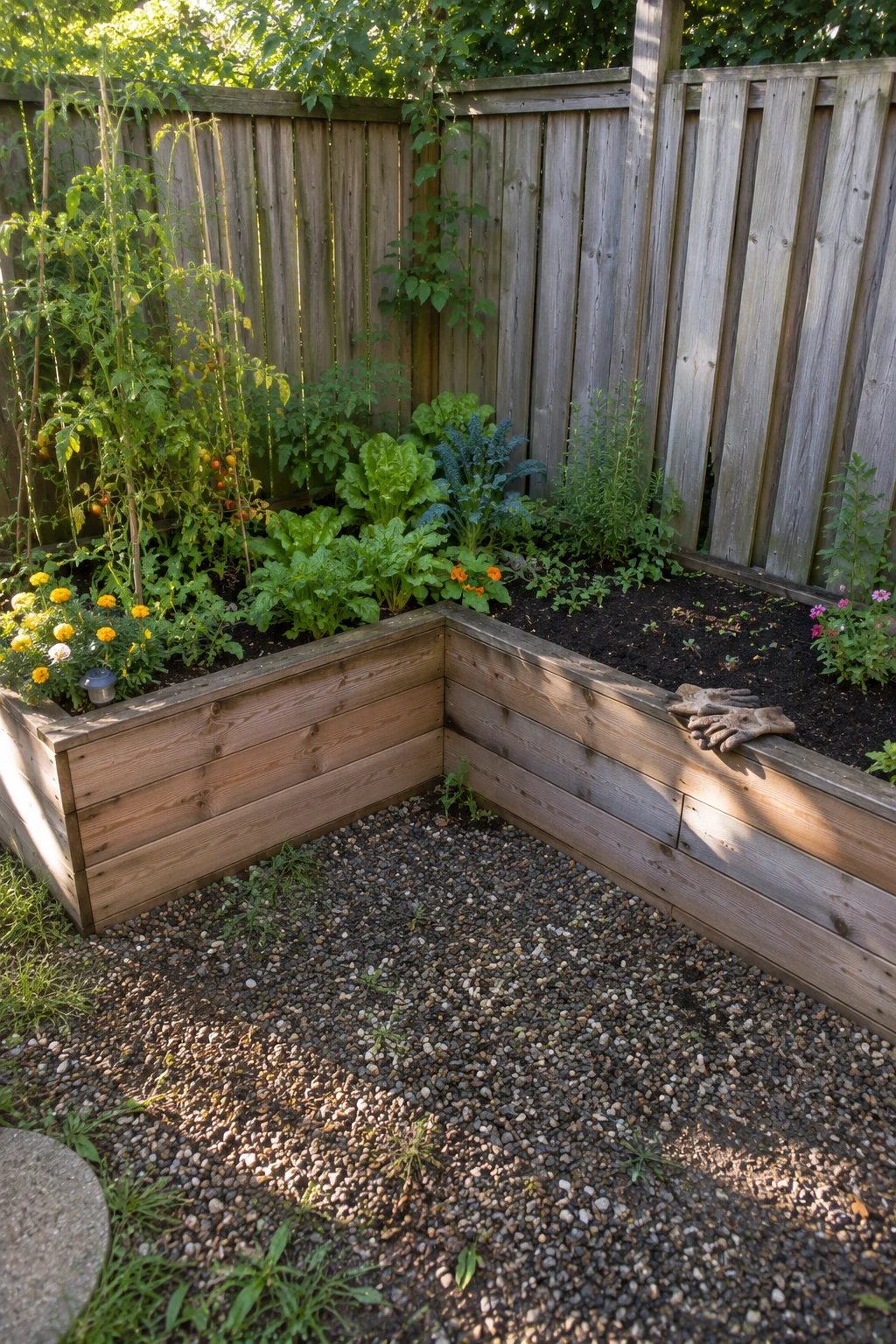
An L-shaped raised bed built to follow the exact angle of a fence corner uses the space far more efficiently than a rectangular box awkwardly wedged into the same spot. Build it from the same material as any nearby fencing or hardscoping so it reads as a designed feature rather than an afterthought.
6. Spiral Herb Garden
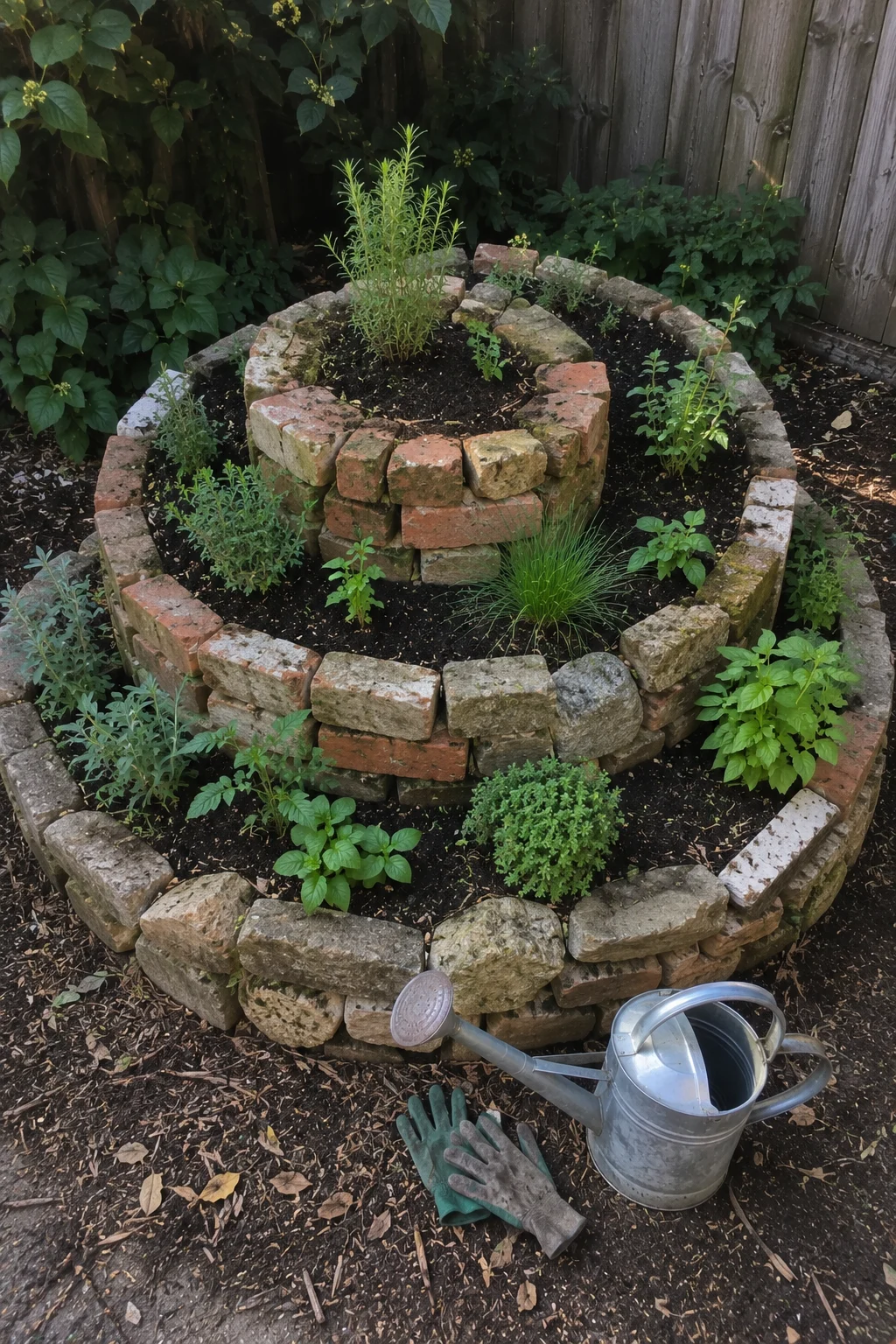
A small spiral-shaped mound of stacked stone or brick, planted with herbs from top to bottom, creates multiple microclimates in a single compact footprint — drier and sunnier near the top, cooler and moister near the base — letting you grow a wider range of herbs than a single flat bed of the same size could support.
Slim Side Yard Garden
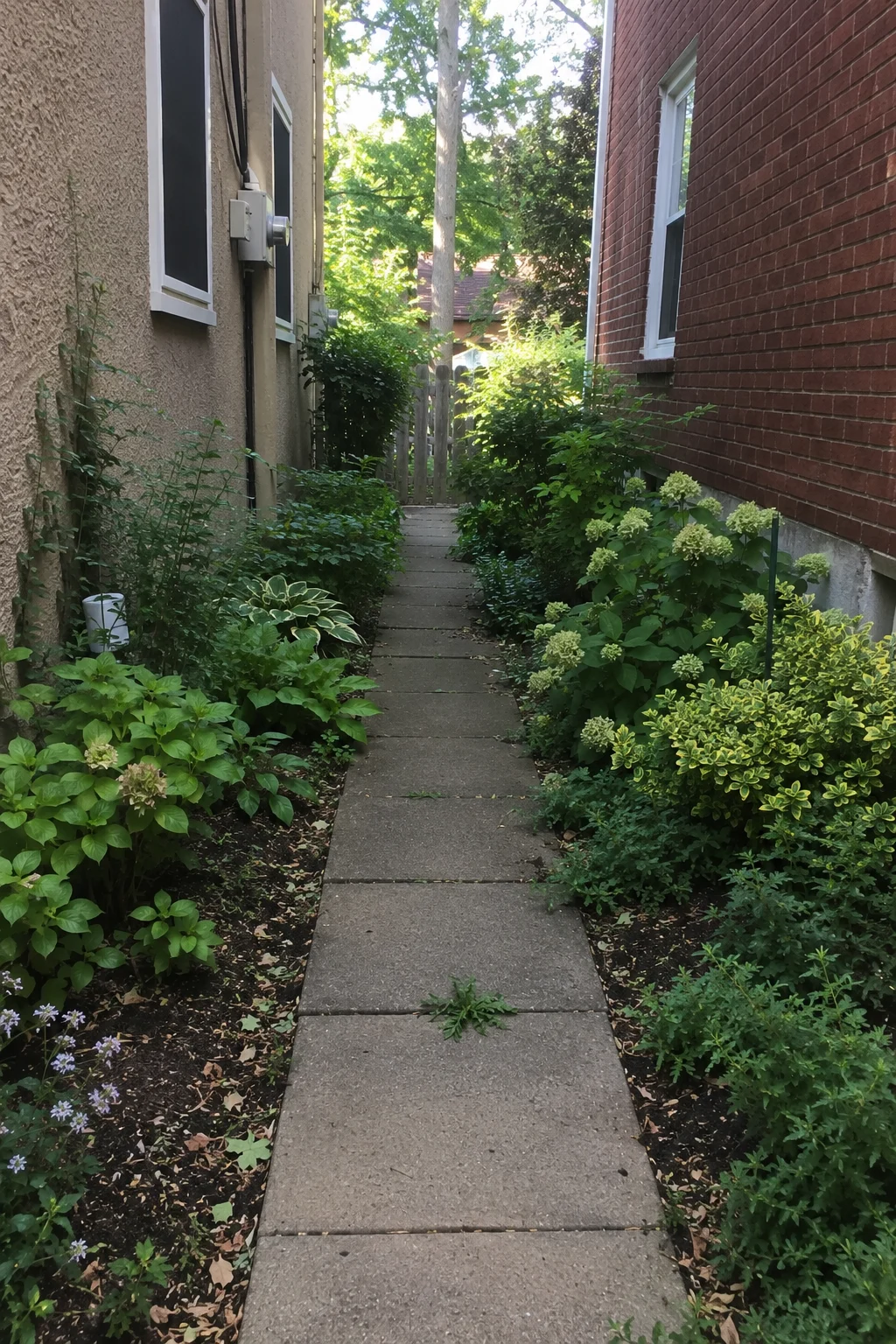
The narrow strip between two houses is often the most neglected space on a property, typically written off as a service path rather than usable garden.
7. Narrow Layered Planting Strip
Even a side yard as narrow as two feet can support a layered planting scheme: a climbing plant trained against one wall, a low groundcover along the opposite edge, and a clear central path between them. Choose plants that stay narrow and upright rather than sprawling varieties that would immediately block the walkway.
8. Vertical Trellis Screen
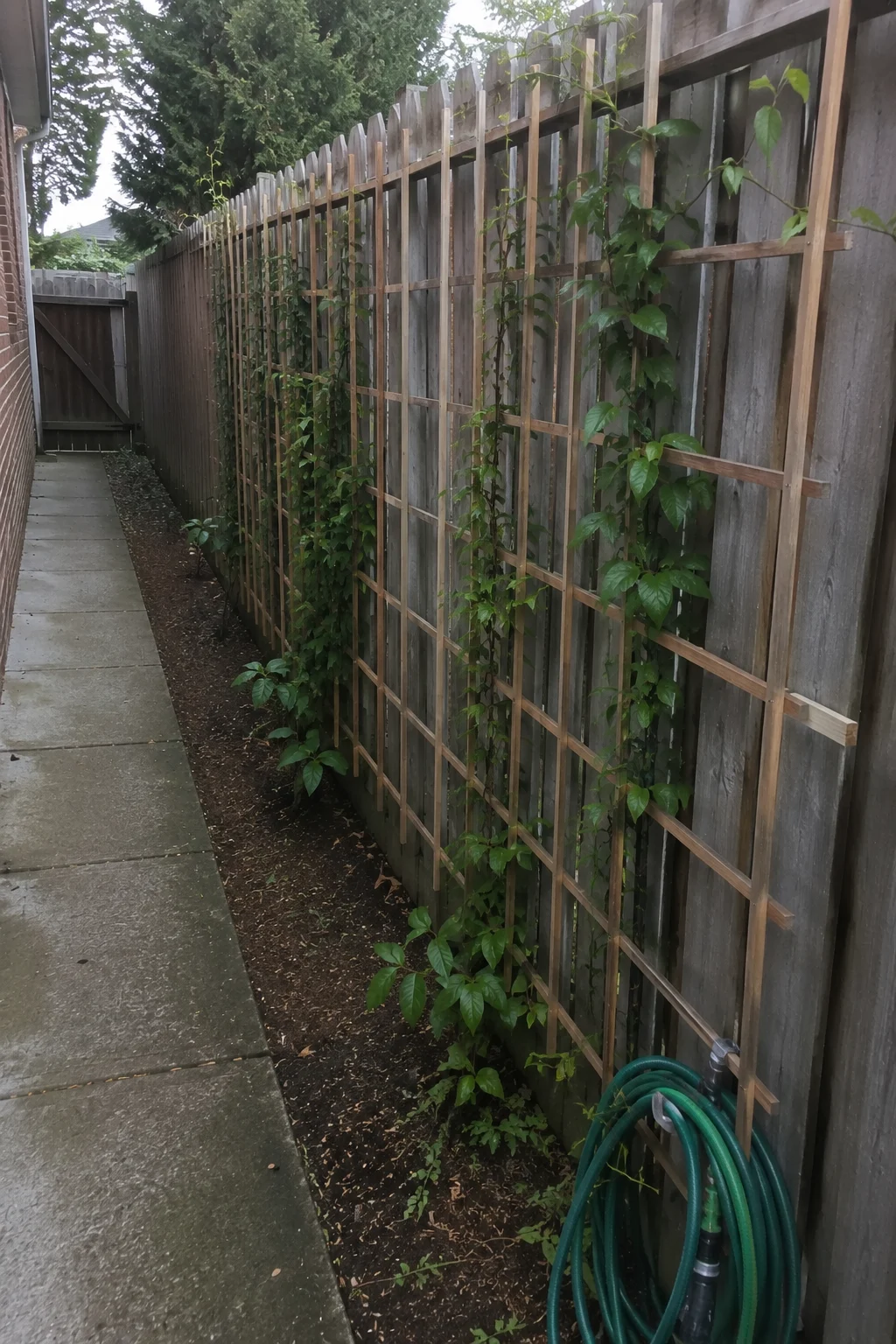
A slim trellis running the length of a side yard, planted with a fast-growing annual vine or a permanent climber, adds privacy and greenery without eating into the narrow walking space below it. This works especially well paired with the vertical growing approach covered in more depth in our guide to climbing plants for small spaces.
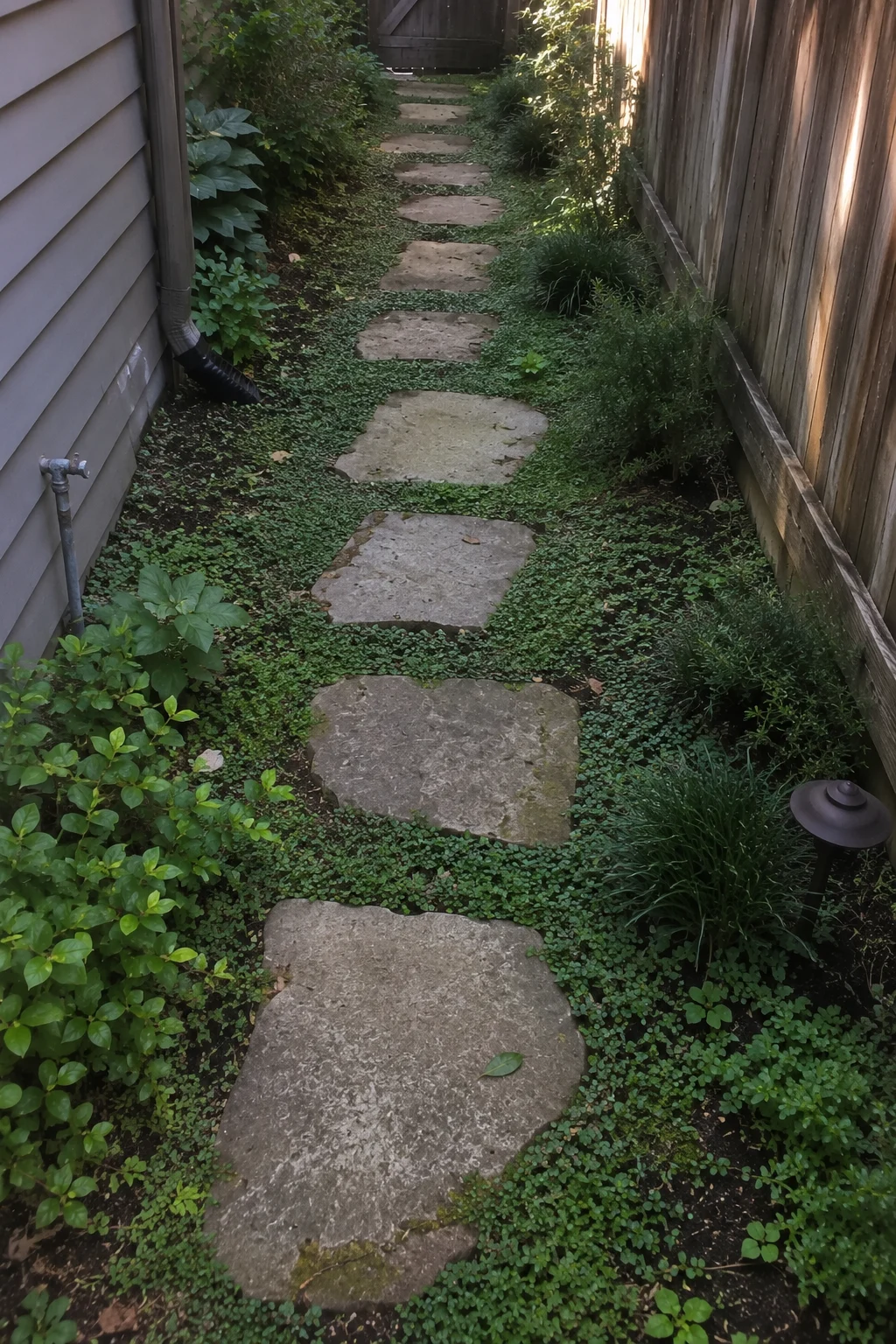
9. Stepping Stone Walk With Groundcover Fill
Replacing a solid paved side-yard path with individual stepping stones set into low, tough groundcover (creeping thyme or dwarf mondo grass) keeps the space functional while still feeling planted rather than purely utilitarian.
Tiny Courtyard
A fully enclosed courtyard, even one just a few feet across, can function as a complete garden room rather than leftover space between structures.
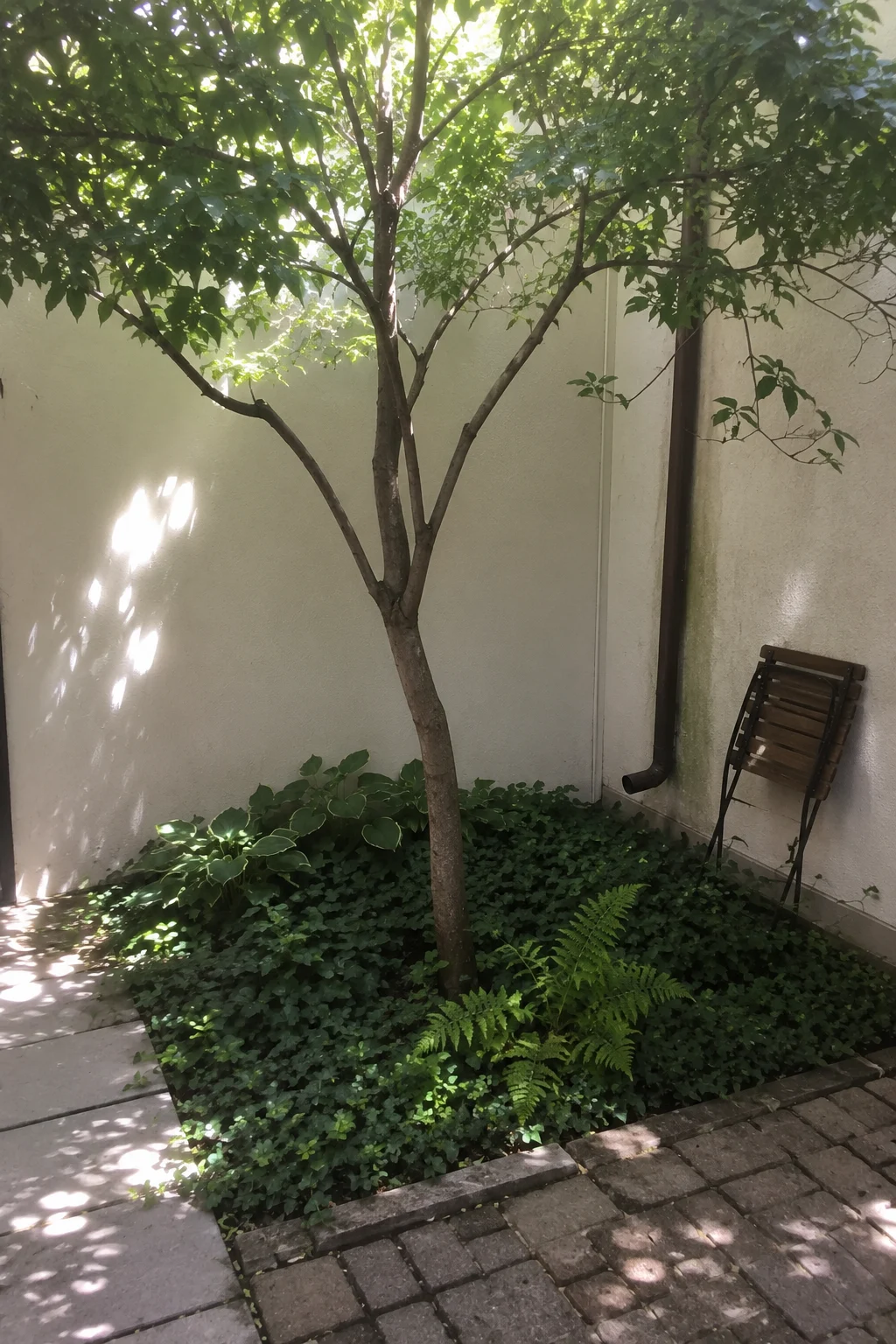
10. Single Specimen Tree Courtyard
Rather than filling a small courtyard with many competing plants, a single well-chosen small tree — underplanted with one type of low groundcover — creates a calm, resolved composition that a crowded planting scheme in the same space couldn’t achieve.
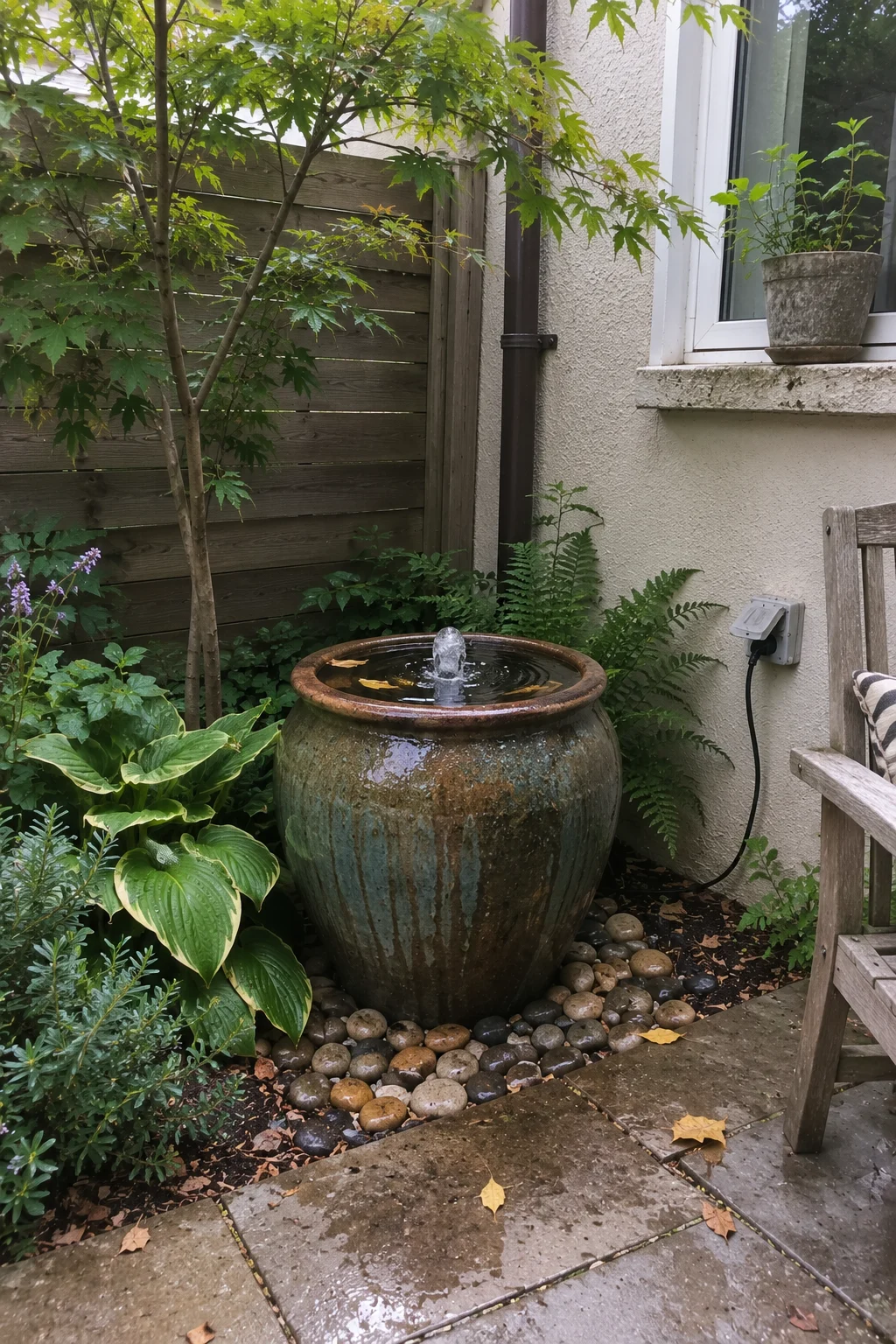
11. Courtyard Water Feature
A small self-contained water feature, such as a bubbling urn or a compact recirculating fountain, introduces sound and movement into an enclosed courtyard without requiring drainage work or a large footprint.
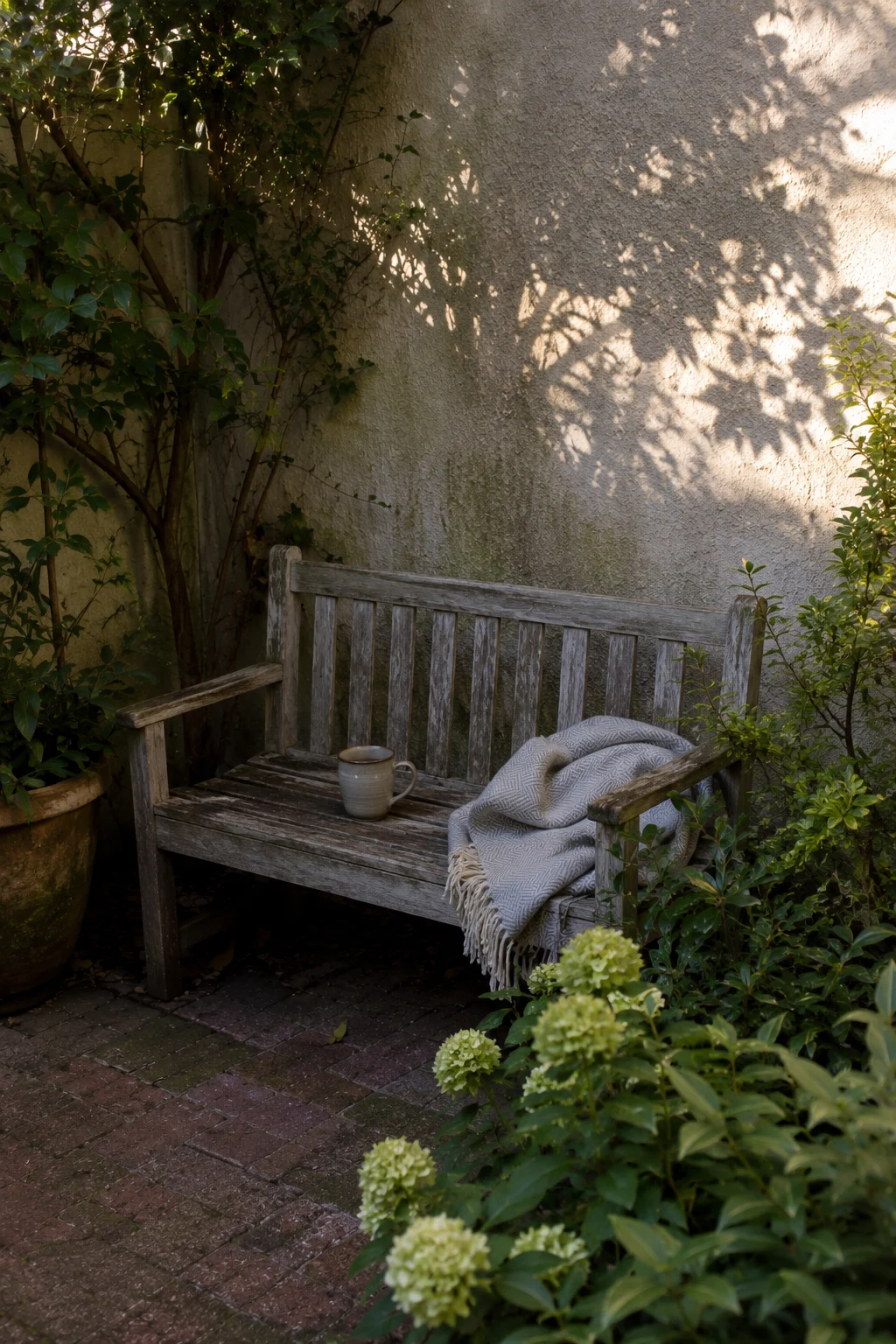
12. Enclosed Seating Nook
A single bench or two chairs positioned in a courtyard, framed by planting on two or three sides, turns even a modest enclosed space into a genuine outdoor room rather than just a gap between buildings.
Raised Bed Layout
Raised beds solve poor soil, drainage, and accessibility problems simultaneously, and a small garden benefits from planning their layout deliberately rather than defaulting to a single rectangular box.
13. L-Shaped Raised Bed Configuration
Building a raised bed to wrap around a corner, rather than as a single straight rectangle, maximizes planting area relative to the yard’s actual usable footprint and can double as informal seating along one edge if built at bench height.
14. Tiered Raised Beds on a Slope
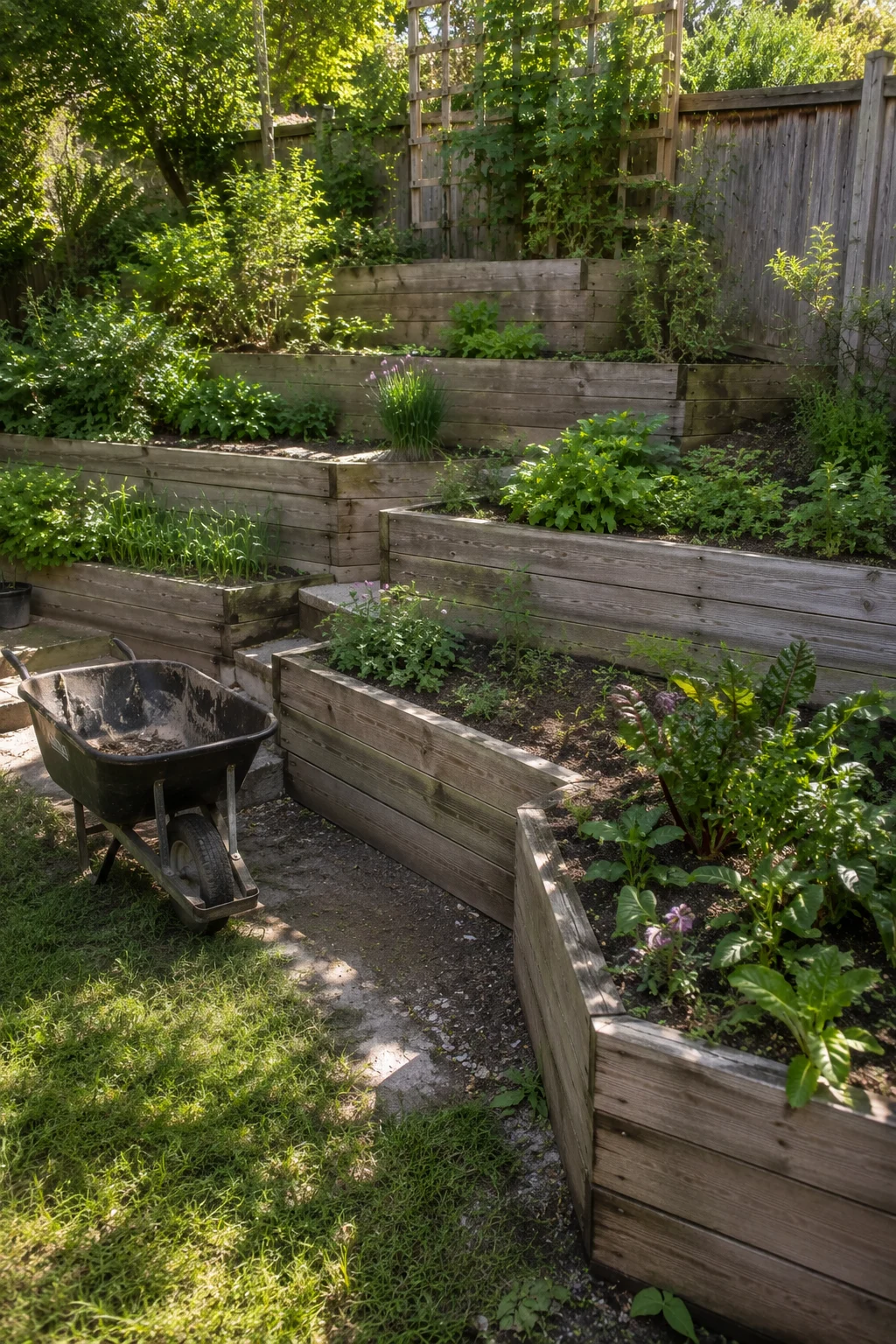
On a sloped small lot, stepped raised beds turn an awkward grade into a series of flat, usable planting terraces, each retained by its own low wall — solving a drainage and erosion problem while adding planting area at the same time.
15. Keyhole Raised Bed
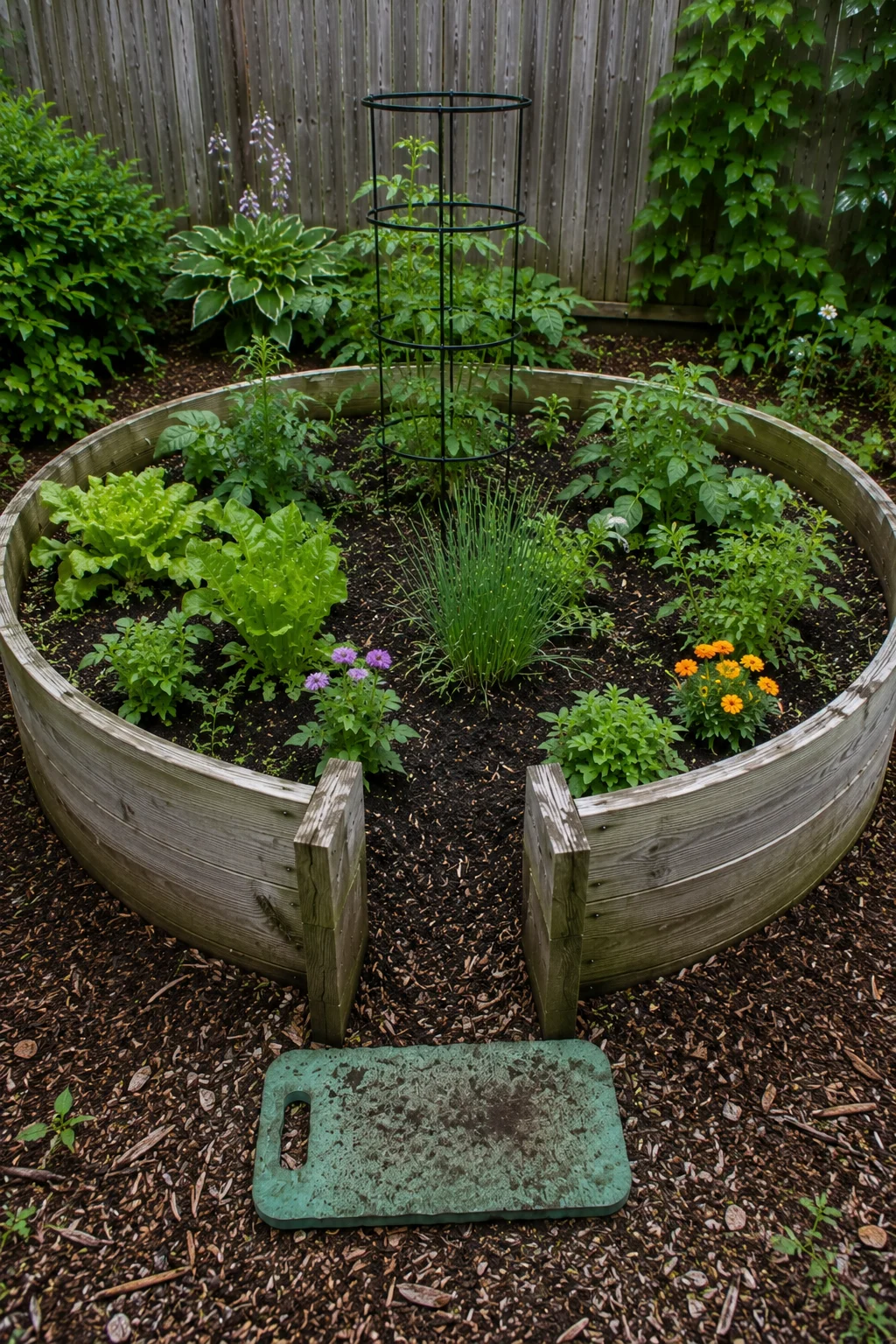
A circular or horseshoe-shaped raised bed with a small notch cut into one side lets a gardener reach every plant from a central access point without stepping into the bed itself, which matters more in a small garden where every square foot of growing space counts.
Mini Wildlife Garden
Even a small garden can set aside a dedicated corner for wildlife rather than treating every inch as purely ornamental.
16. Log Pile and Insect Habitat Corner
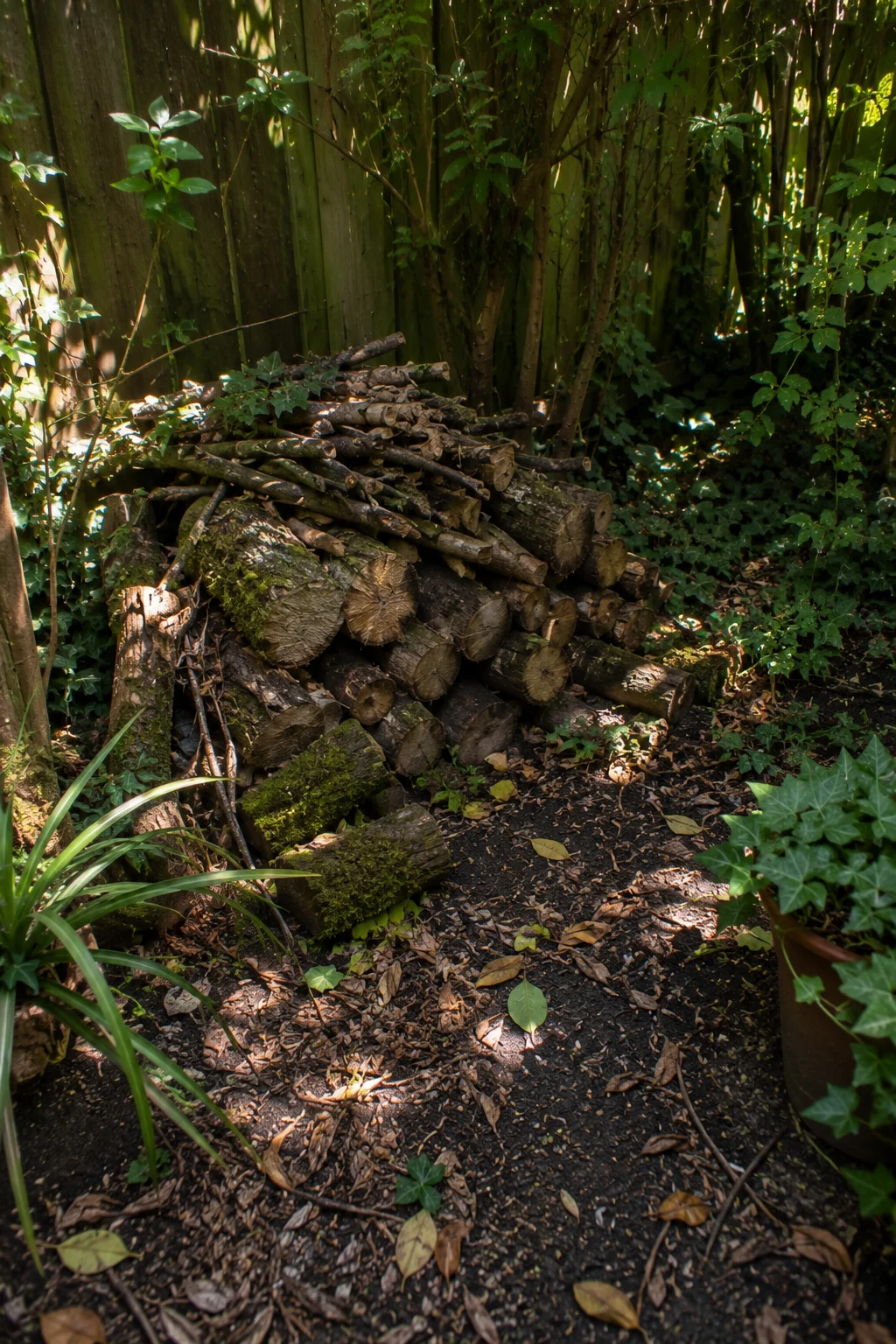
A small, deliberately placed pile of logs, sticks, and leaf litter in an out-of-the-way corner provides shelter for beneficial insects and small wildlife, and requires essentially no maintenance once established — one of the highest wildlife-value, lowest-effort features on this entire list.
17. Miniature Wildlife Pond
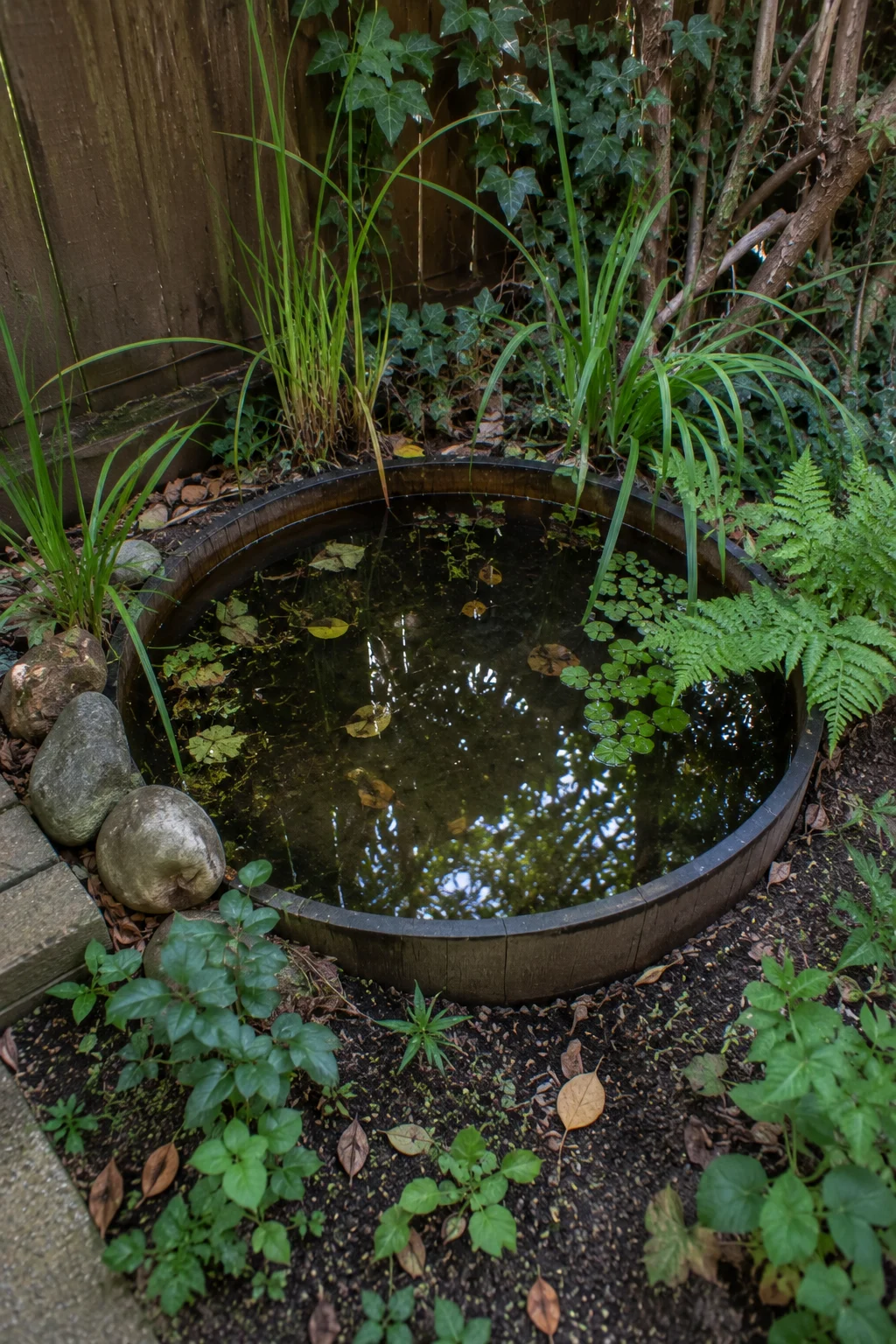
A container as small as a half-barrel, sunk into the ground or left above it, filled with water and a few marginal plants, can support amphibians, insects, and birds in a footprint far smaller than a conventional pond.
18. Native Flowering Pocket Patch
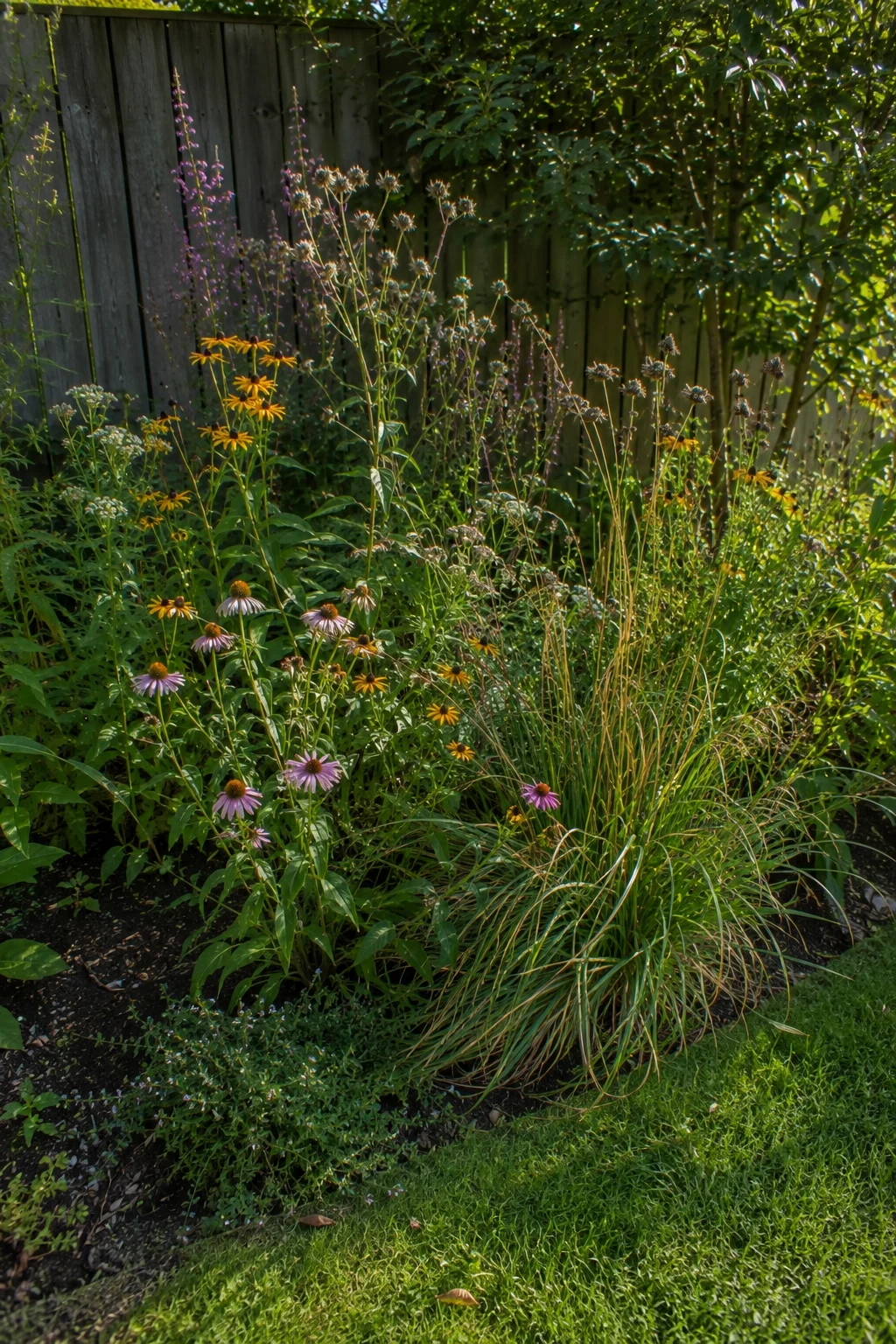
Dedicating a small, defined patch — even a few square feet — to native flowering plants rather than exclusively ornamental species gives local pollinators and other wildlife a reliable resource without requiring the whole garden to be redesigned around it.
Compact Dining Space
Fitting a functional dining area into a small garden usually comes down to scale and placement rather than needing more square footage than it seems.
19. Bistro Nook With Vertical Greenery
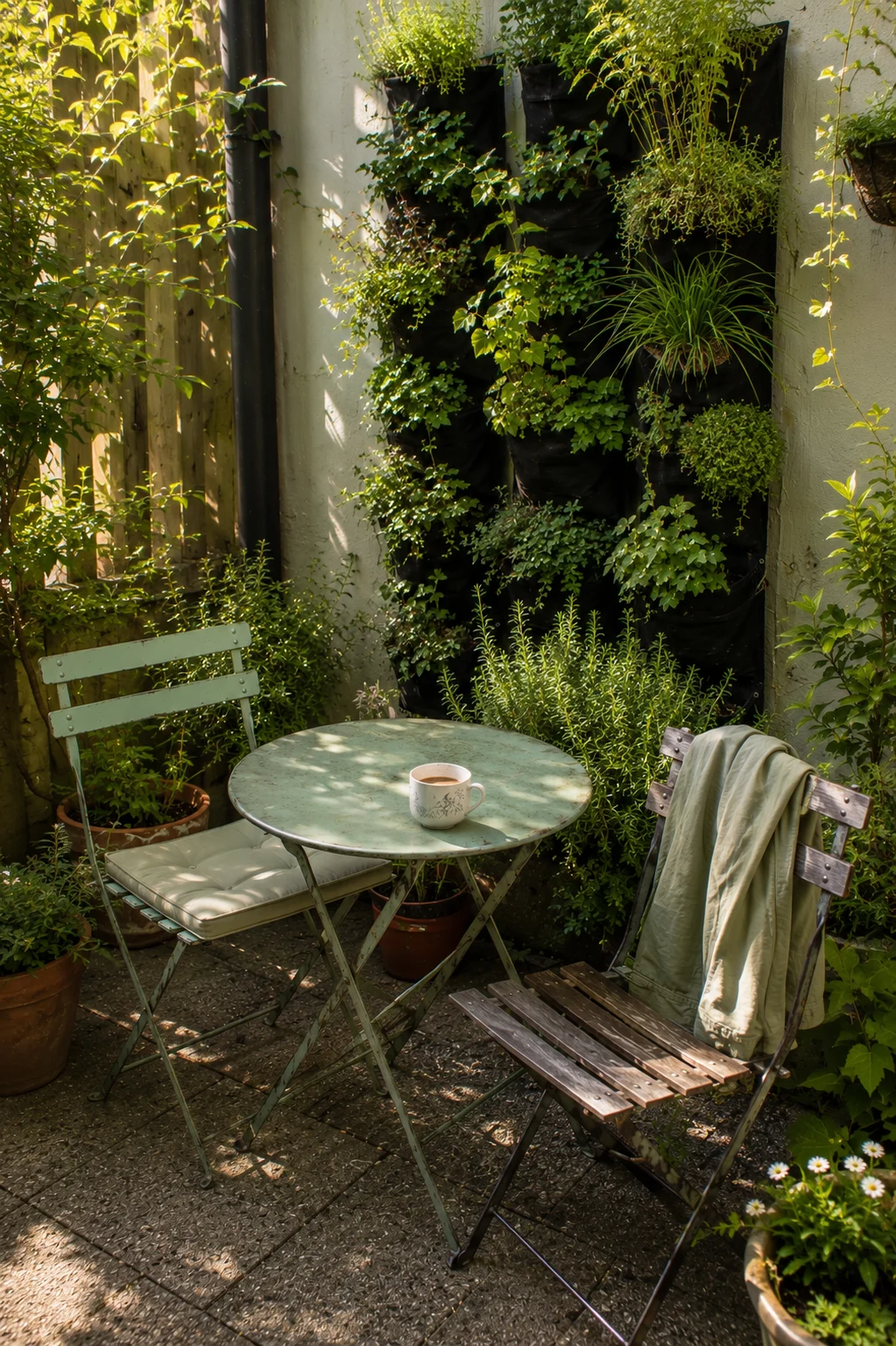
A small two-person bistro set tucked against a wall of vertical planters or a trellis feels intentional rather than cramped, since the surrounding greenery gives the eye somewhere to rest instead of emphasizing how little floor space is actually available.
20. Foldable Dining Set With Planter Divider
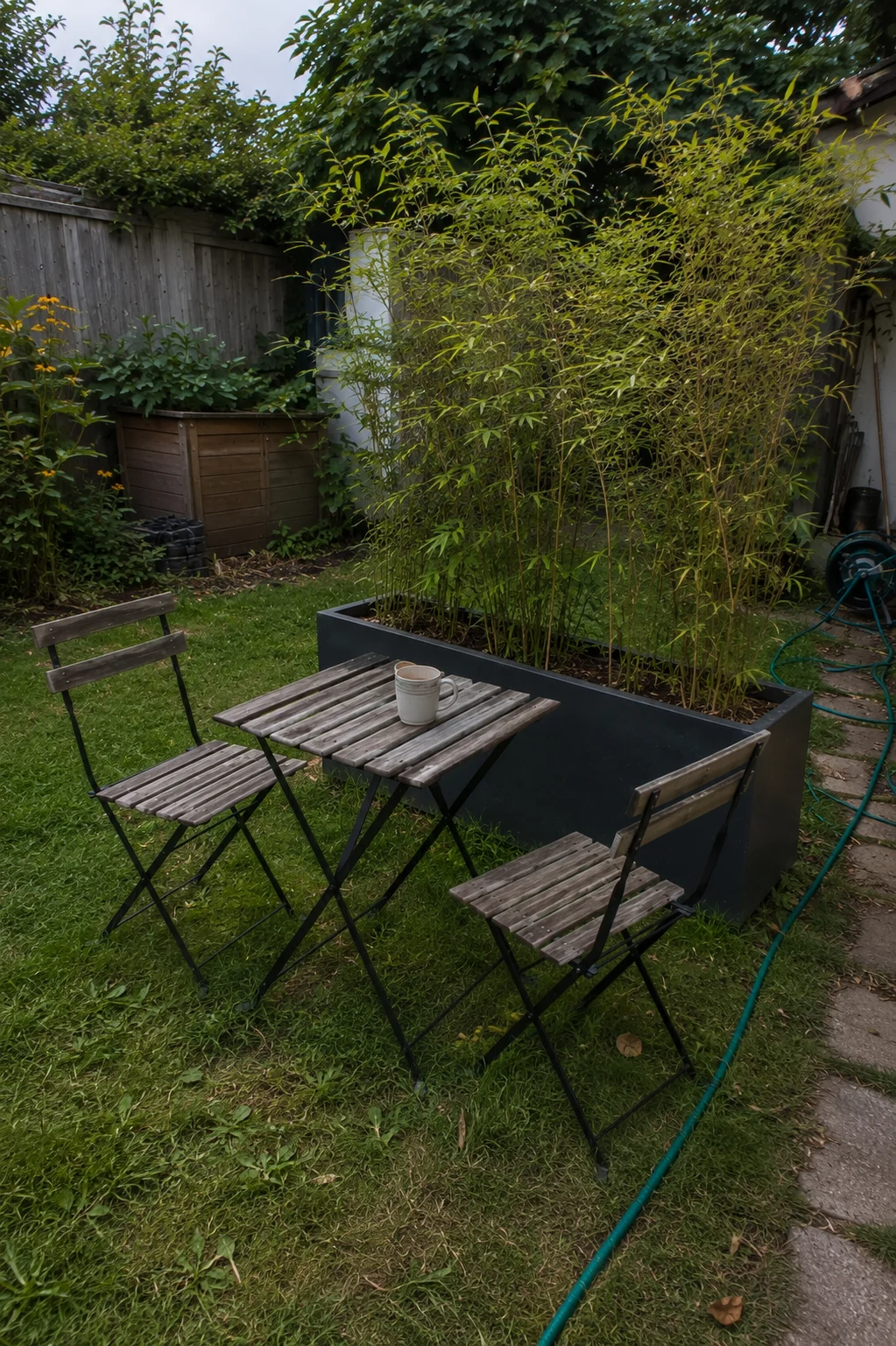
A foldable table and chairs that can be stored when not in use, combined with a single tall planter used as a soft visual divider from the rest of the yard, lets a small garden serve double duty as both dining space and open lawn without permanently sacrificing either.
21. Pergola-Covered Dining Corner
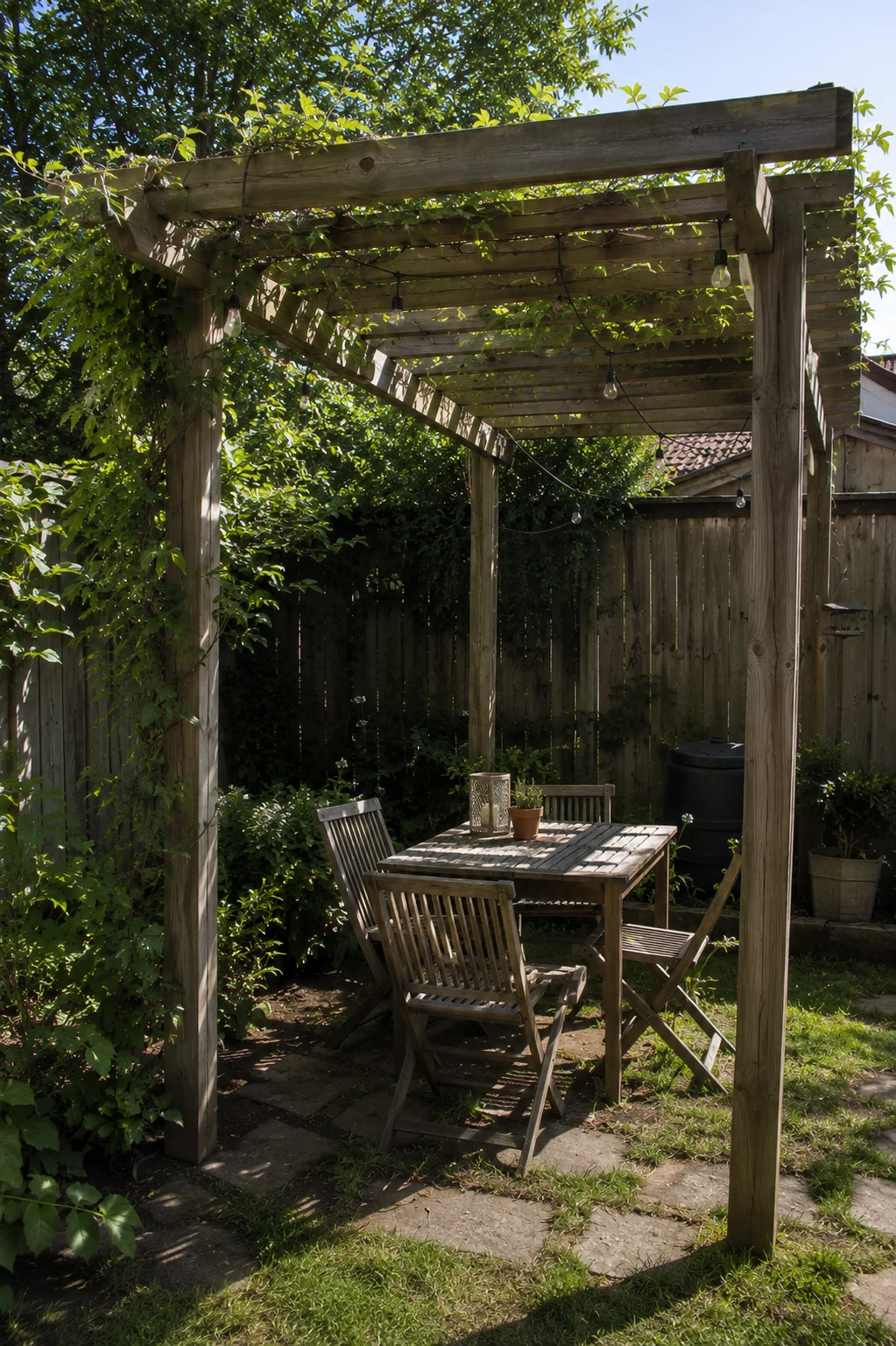
A small pergola, even one just large enough to cover a table for four, defines a dining area as its own distinct zone within a small garden and provides structure for a flowering climber overhead at the same time.
Layered Container Garden
Containers remain the most flexible tool in small-space gardening, and layering them thoughtfully makes a bigger visual impact than scattering pots at random.
22. Tiered Container Stand
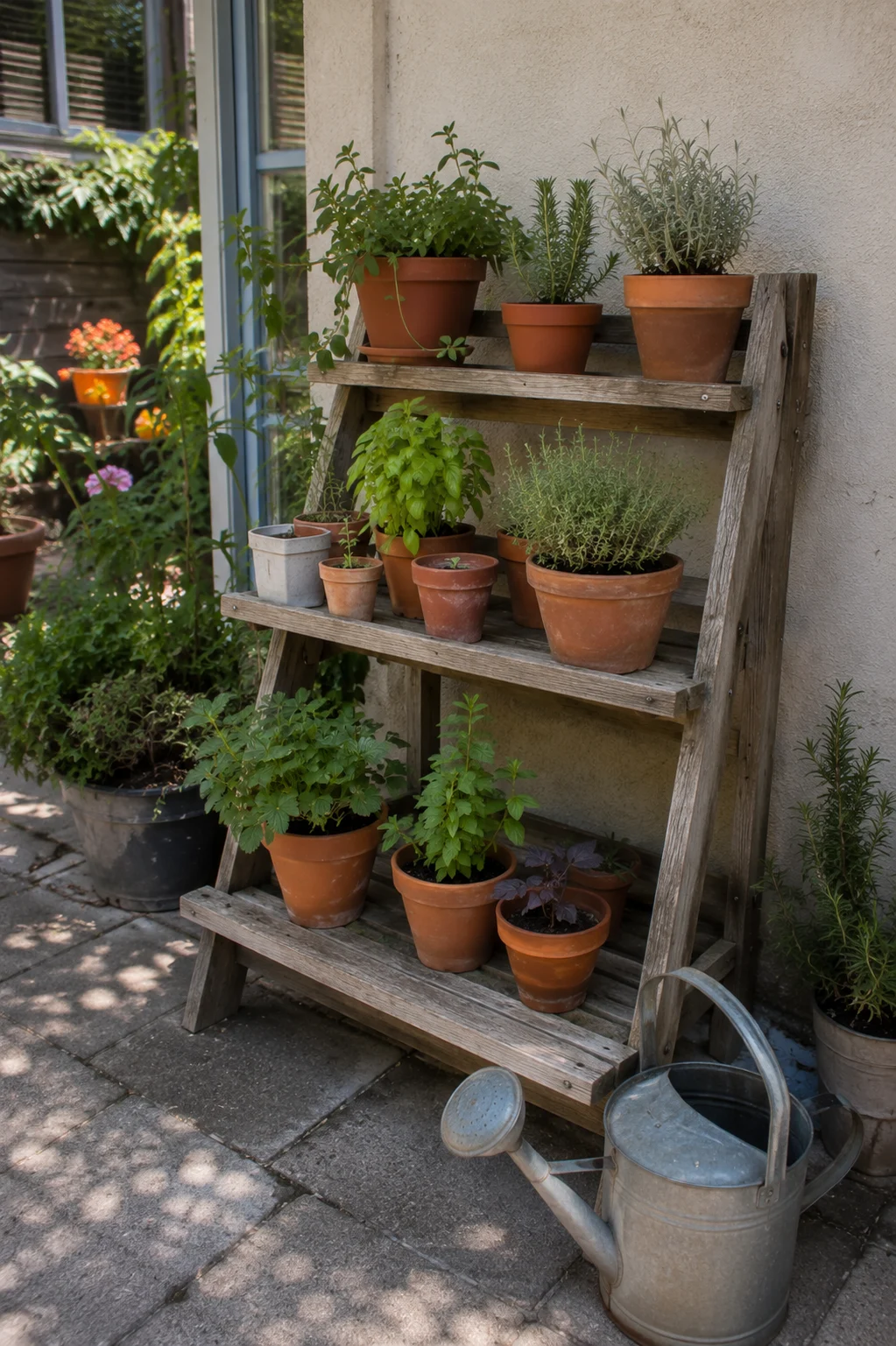
A simple wooden or metal tiered stand holds several pots at staggered heights in the footprint of a single large planter, letting a small patio or balcony display considerably more plant variety than flat ground-level pots alone.
23. Grouped Odd-Numbered Pot Clusters
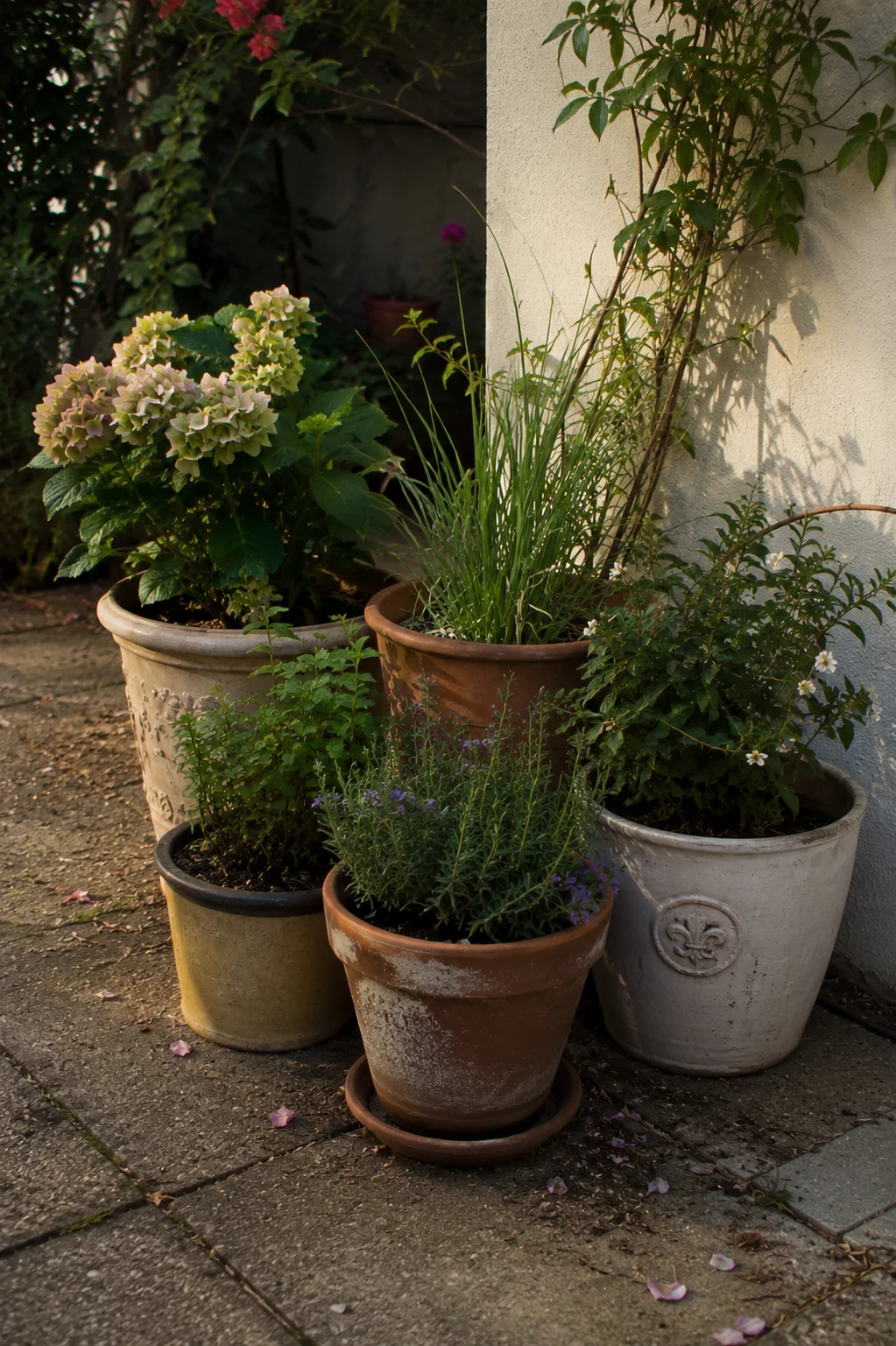
Grouping containers in threes or fives, at varying heights and sizes, reads as a deliberate design choice in a way that evenly spaced single pots rarely do — the same grouping principle used in in-ground drift planting, just applied to movable containers.
24. Hanging Baskets Above Ground-Level Pots
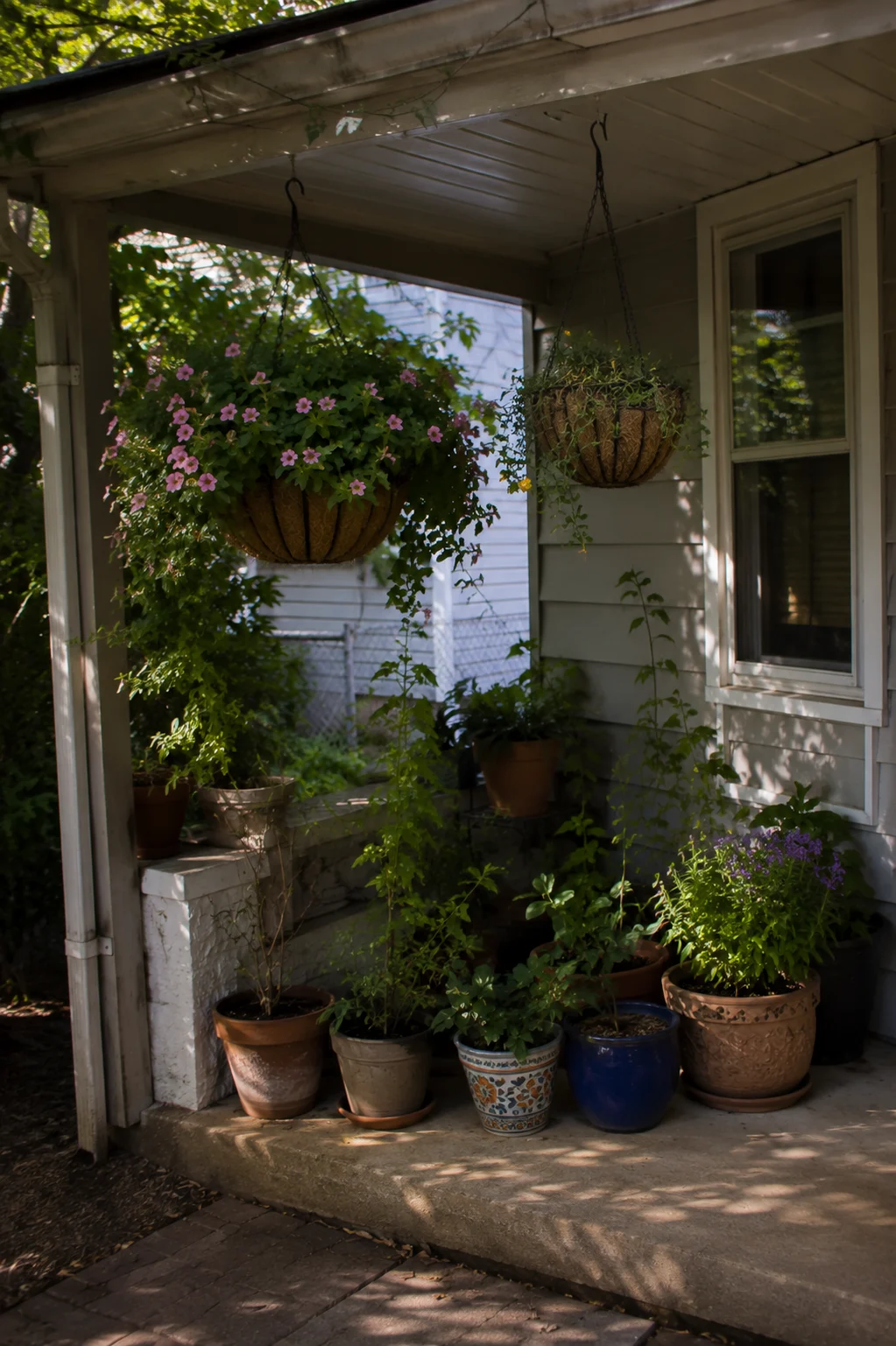
Adding a layer of hanging baskets above a grouped container arrangement uses vertical space that would otherwise sit empty above the pots, and works particularly well under a pergola, porch overhang, or wall-mounted bracket.
Bonus: Expand the Sense of Space
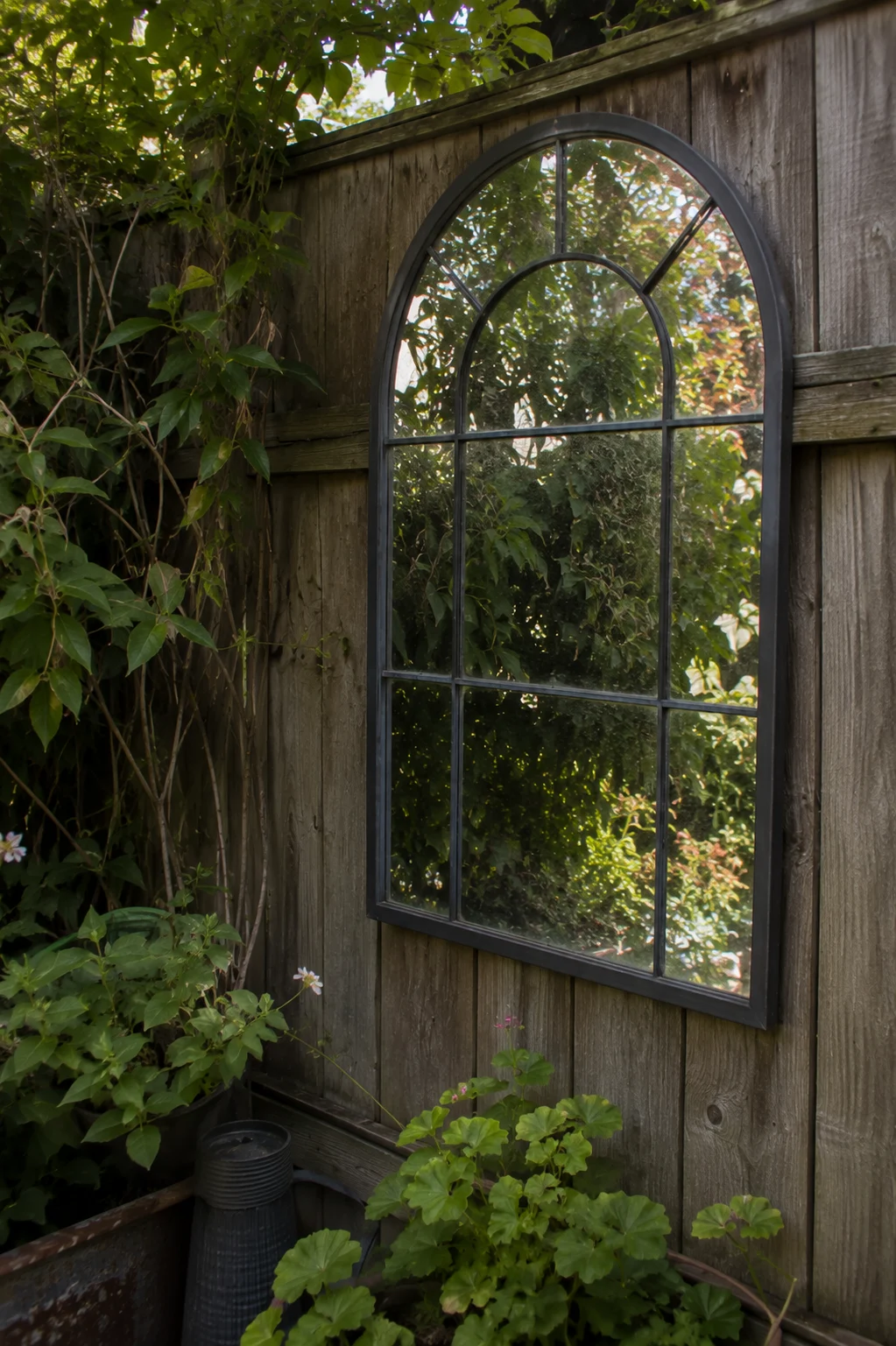
25. Strategic Mirror or Reflective Accent
A weatherproof outdoor mirror, positioned to reflect a planted area rather than a fence or wall, can visually double the apparent depth of a small garden — one of the simplest, lowest-cost tricks for making a tight space feel considerably larger than its actual dimensions. Place it where it reflects greenery rather than the sky or a neighboring structure, since the effect depends entirely on what’s being mirrored back.
How to Choose From This List
Twenty-five ideas is a menu, not a to-do list. A well-executed small garden typically pulls from just four or five of these — one vertical element, one seating or dining solution, one planting structure (raised bed, corner bed, or containers), and maybe one wildlife touch — rather than trying to include a version of everything. If you’re mapping out the full yard layout before choosing individual features, our [Internal Link: small backyard layout guide -> Target: article on small backyard layout ideas for tight spaces] and [Internal Link: small patio design guide -> Target: article on small patio designs for any budget] both cover the broader spatial planning that these smaller ideas fit into. For front-of-house spaces specifically, our small front yard landscaping guide covers similar principles adapted for street-facing appeal.
Final Thoughts
The strongest small gardens succeed by treating every surface — walls, corners, slopes, even the space above a container — as legitimate planting opportunity rather than leftover space. Start with the one or two constraints your yard actually has (a bare side passage, an awkward corner, a wall doing nothing), pick the idea from this list that solves it directly, and resist the urge to add everything else at once. A small garden built around a few deliberate choices will always read as more finished than one trying to fit twenty-five ideas into the same square footage.