
The English cottage garden was never designed by a professional in the modern sense — it grew out of necessity, with herbs, vegetables, and flowers planted together in whatever space was available around a rural cottage, spilling over paths and climbing up walls because there was no room to keep things separated. That informal, layered, slightly overgrown quality is exactly what makes the style so hard to fake with a few matching planters; it depends on genuine density, a mix of old-fashioned plants, and structure that looks found rather than installed.
This list covers 19 English cottage garden ideas across four categories — layout and structure, classic cottage planting, rustic garden features, and finishing touches — each with enough detail to actually plant and build toward that lush, lived-in look rather than a stiff imitation of it.
Layout and Structure
Cottage gardens read as informal, but the best ones still have an underlying structure — it’s just softened by dense planting rather than left bare.
1. Curved Brick or Gravel Path
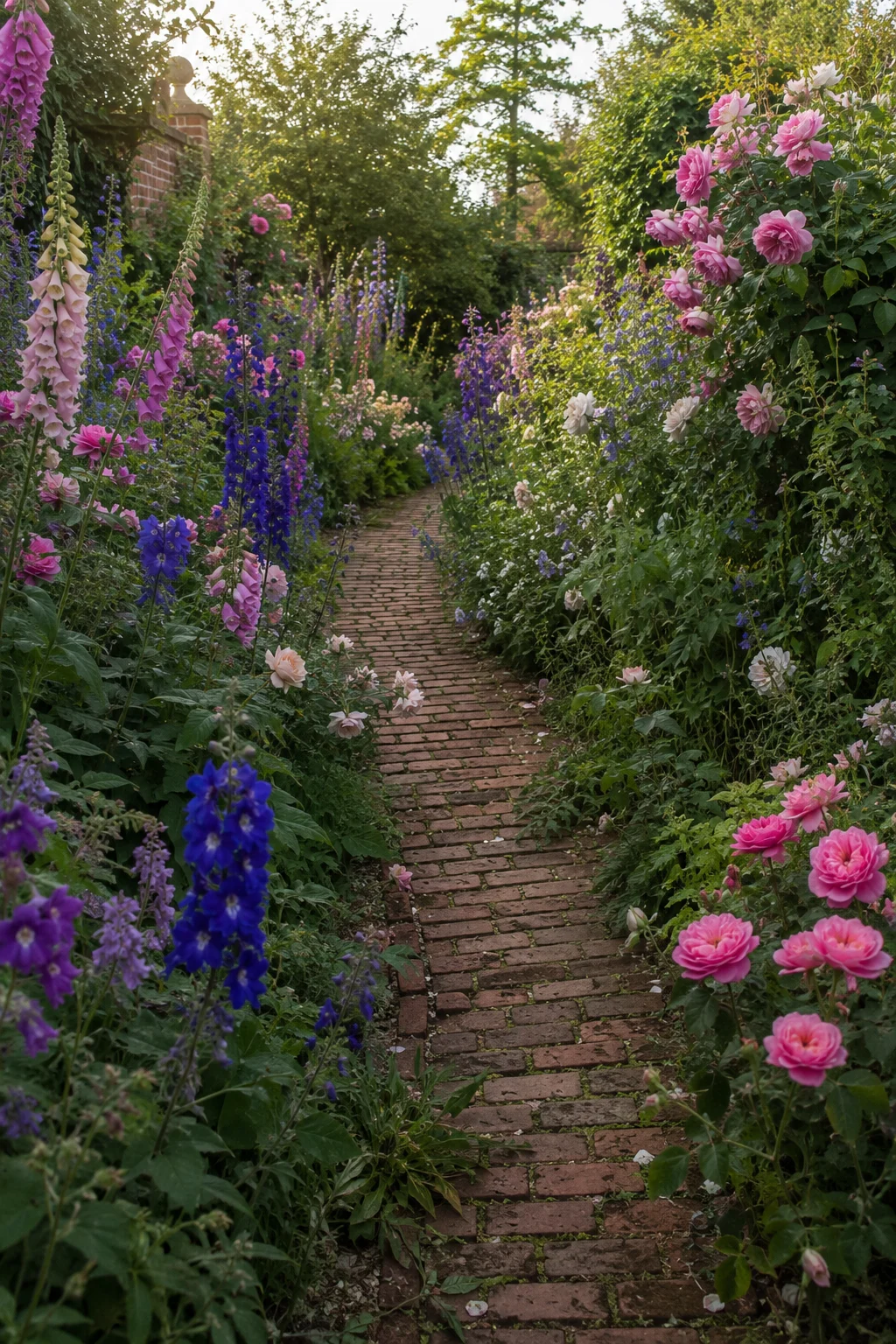
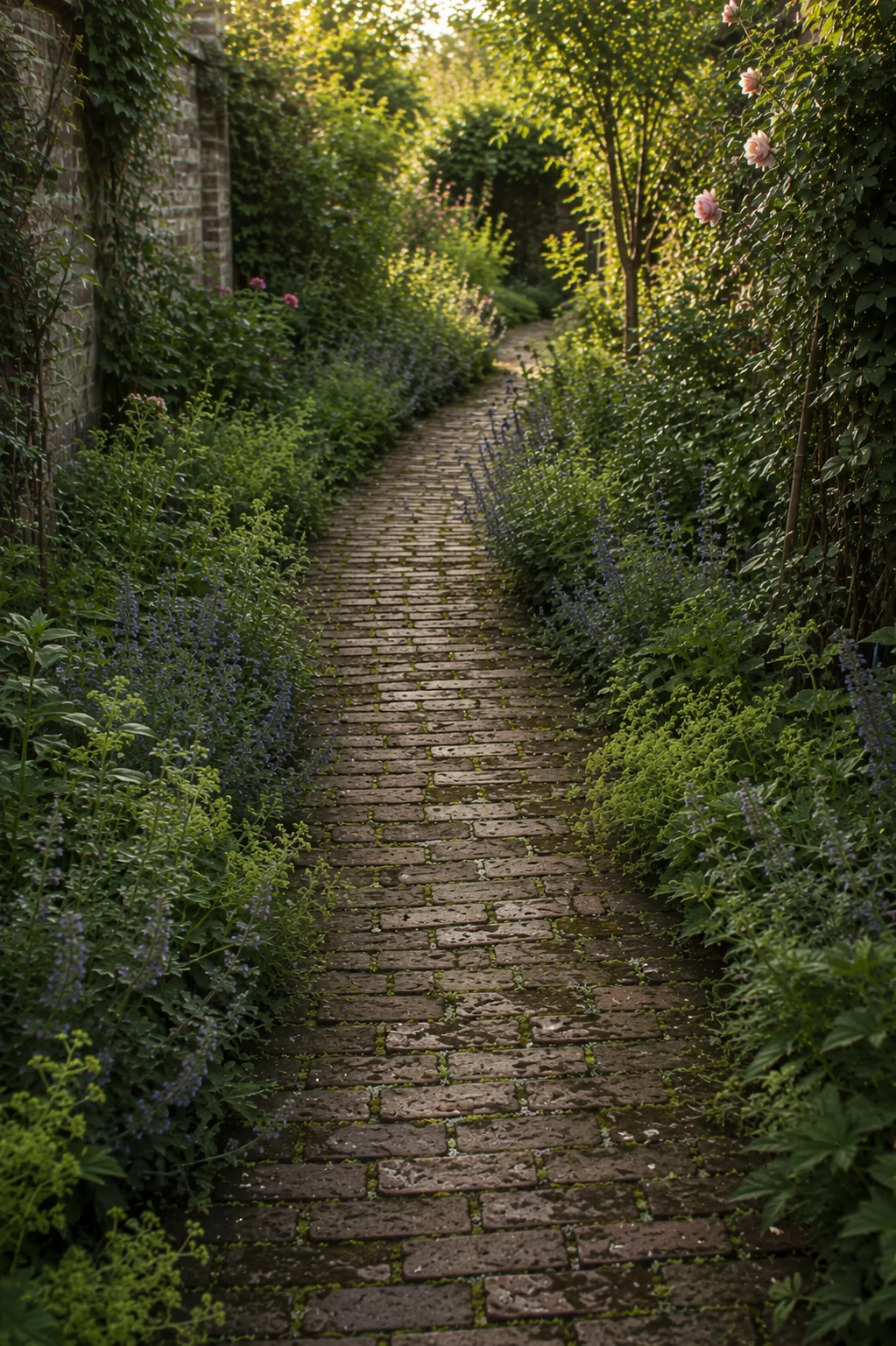
A narrow, gently curving path — reclaimed brick laid in a simple running bond, or plain gravel — winding between the borders rather than cutting straight through them is one of the most defining structural elements of the style. Letting plants spill slightly over the path’s edge rather than keeping a hard clipped line is part of the intended effect; a path with crisp, weed-free edges reads as too formal for the style. Our guide to designing garden paths covers the layout principles for getting the curve and width right before planting around it.
2. Low Picket or Wattle Fencing
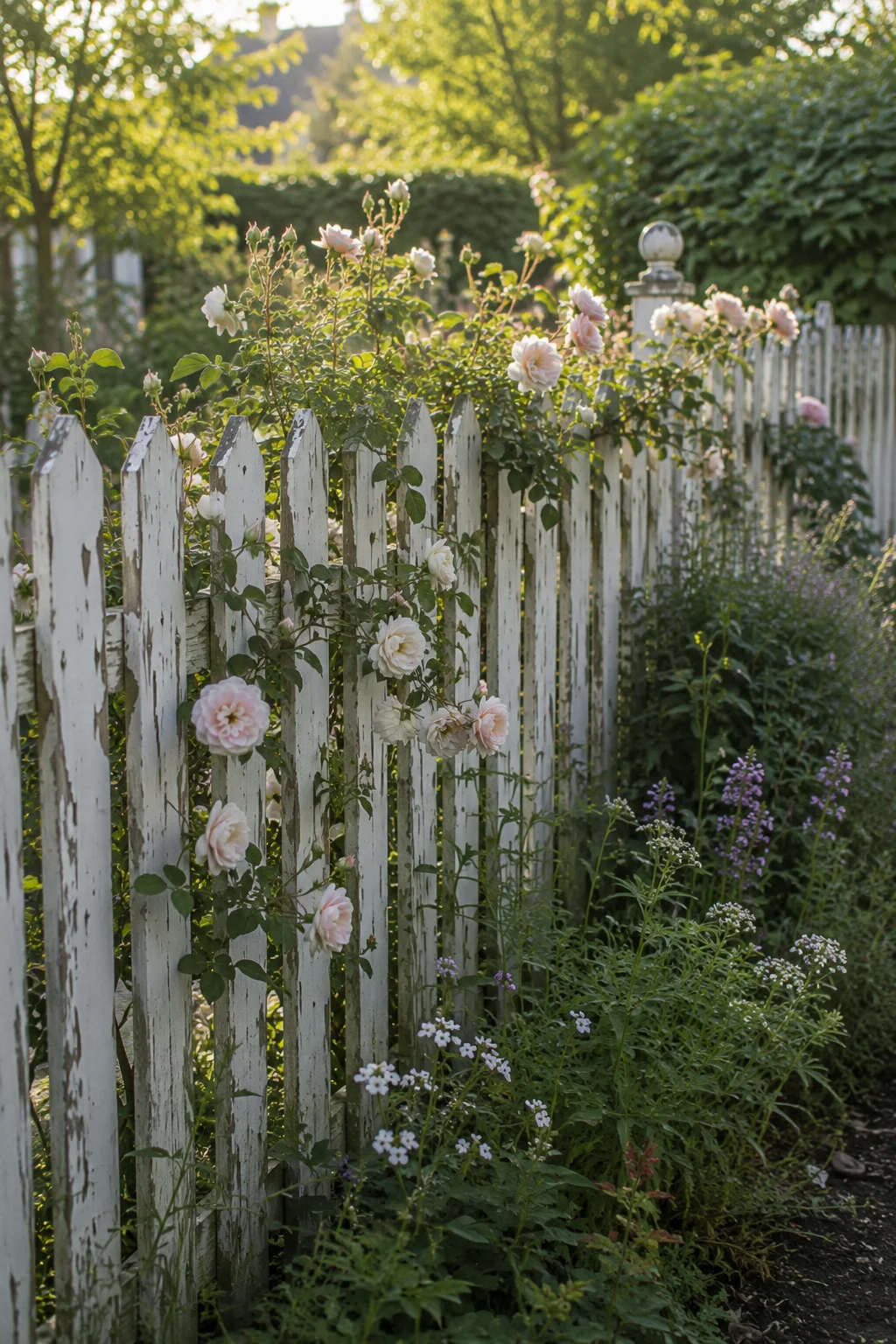
A low, slightly weathered white picket fence, or a rustic woven wattle fence made from bent willow or hazel branches, defines the garden’s edge without fully enclosing it the way a tall privacy fence would. Picket fencing suits a front-garden cottage look particularly well, while wattle fencing gives a more rustic, kitchen-garden feel better suited to a back plot or vegetable section.
3. Rose-Covered Arched Entry Gate
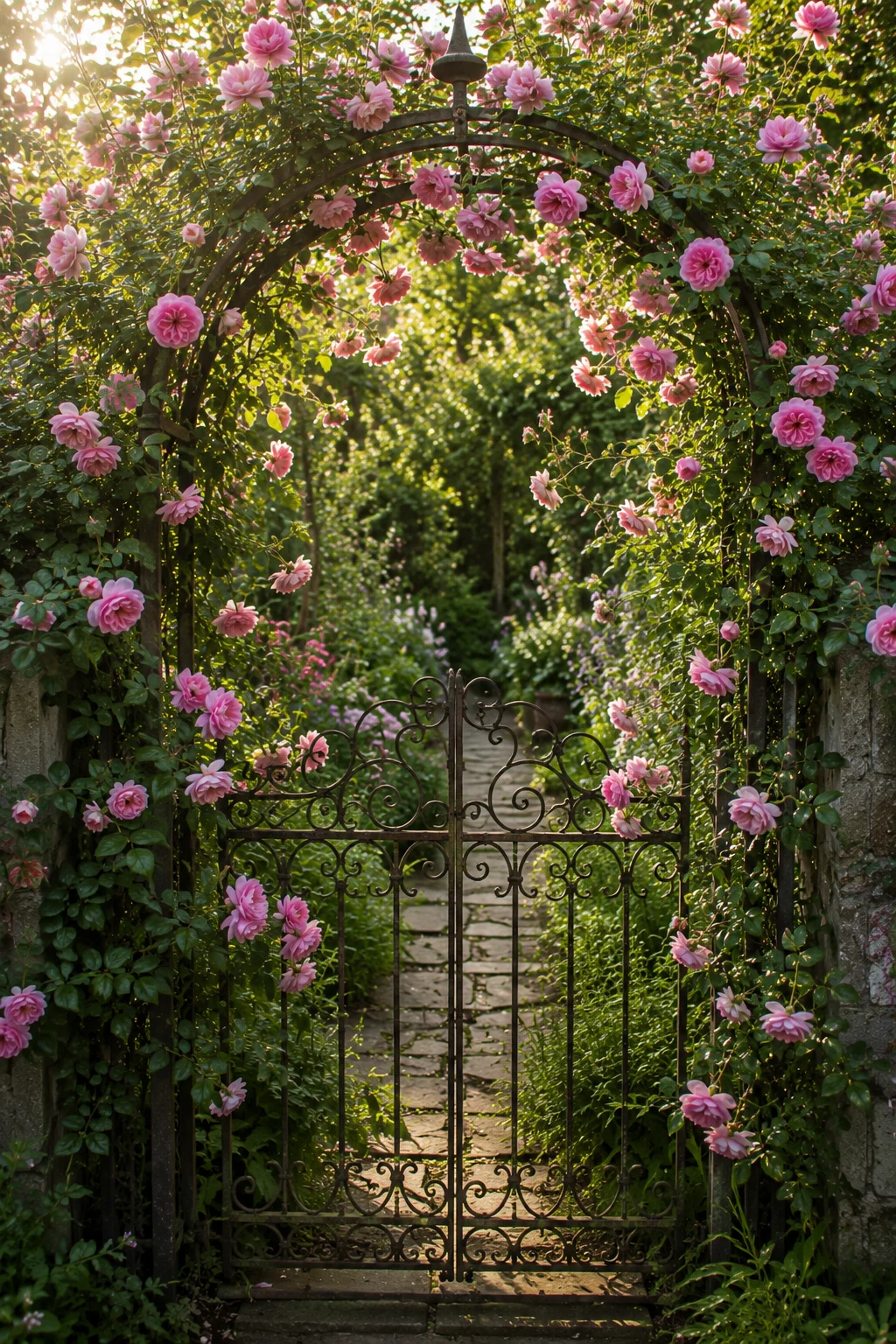
A simple metal or wooden arch positioned over the garden’s entry gate, trained with a climbing or rambling rose, creates an immediate sense of arrival and is one of the single most recognizable cottage garden features. Choose a repeat-flowering climbing variety if you want color through most of the season rather than a single early flush, and expect it to take two to three years to fully cover the arch.
4. Dense, Overflowing Borders
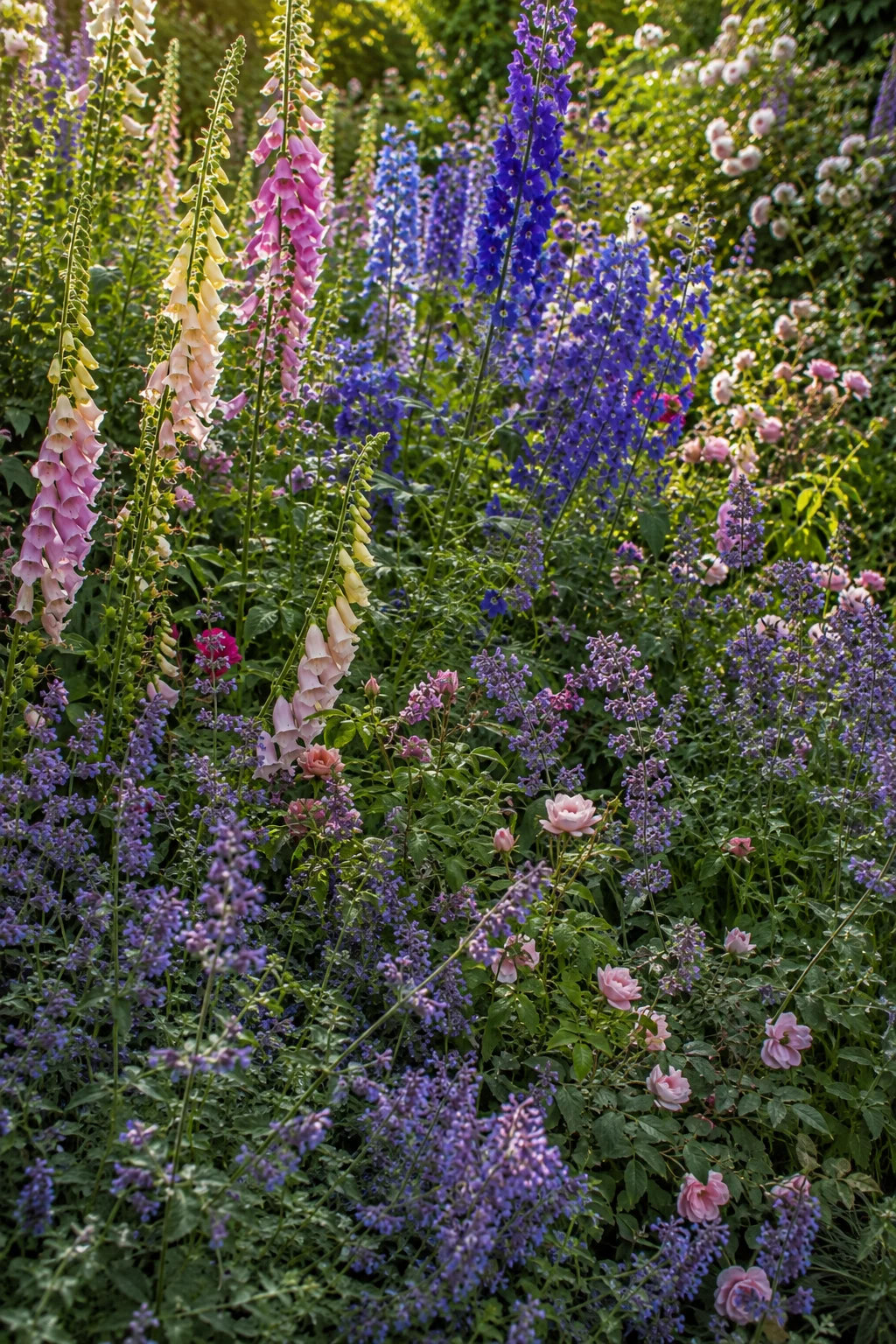
The defining visual trait of a cottage garden is the near-total absence of bare soil or mulch showing between plants — borders are packed tightly enough that neighboring plants touch and lean into one another. Achieving this without looking chaotic comes down to repetition: using the same handful of plants in drifts throughout the border rather than one of everything, so the density reads as intentional rather than accidental.
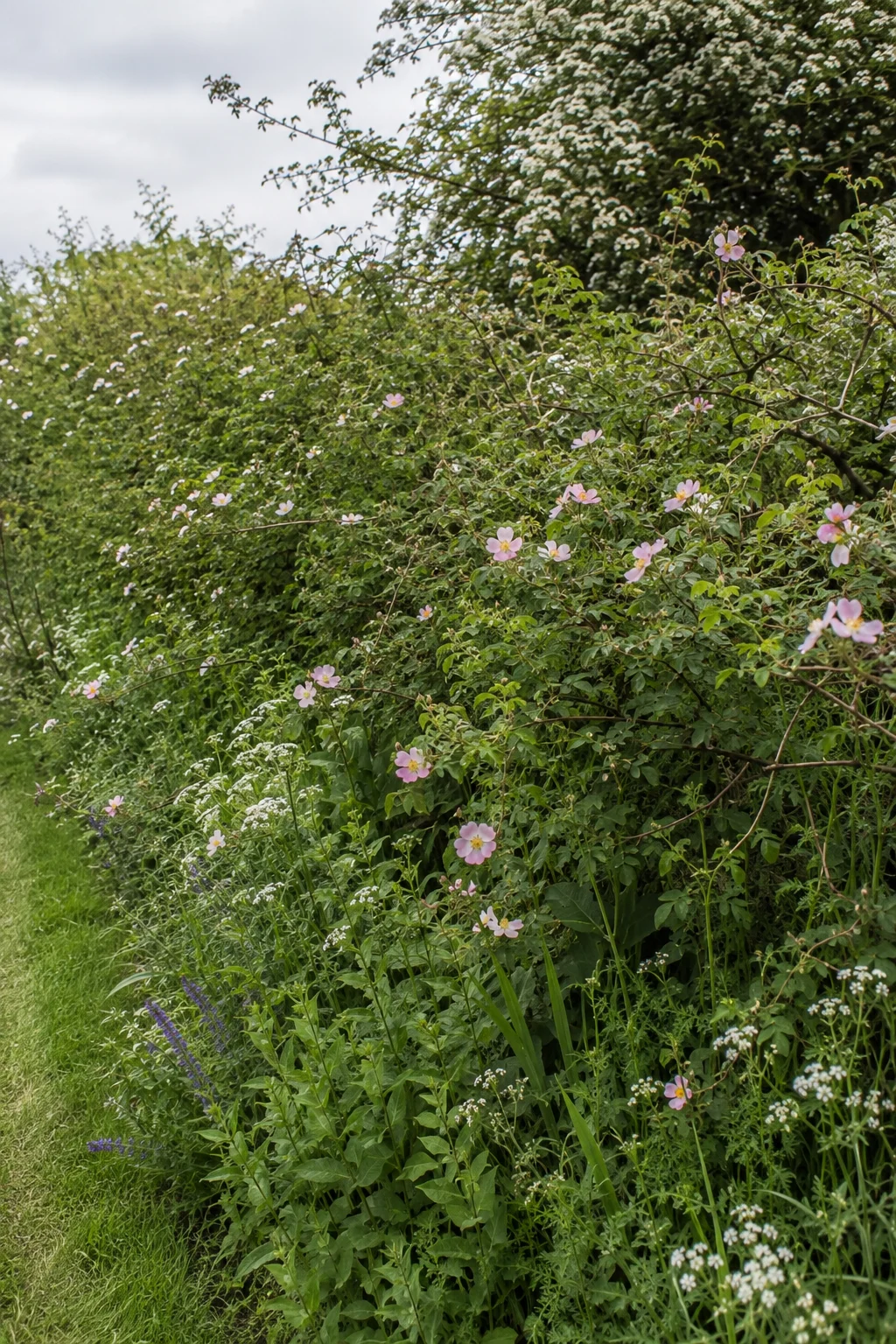
5. Mixed Hedgerow Boundary
Rather than a single-species clipped hedge, a mixed hedgerow boundary — hawthorn, hazel, dog rose, and blackthorn planted together and lightly maintained rather than sharply trimmed — gives the garden’s outer edge the same informal, layered quality as the borders within it. This works particularly well combined with the layered planting approach covered in our multi-layered hedgerow guide, scaled down to a cottage-appropriate mix of flowering natives.
Classic Cottage Planting
The plant palette is what most people associate with the style first, and getting a handful of these right does most of the work.
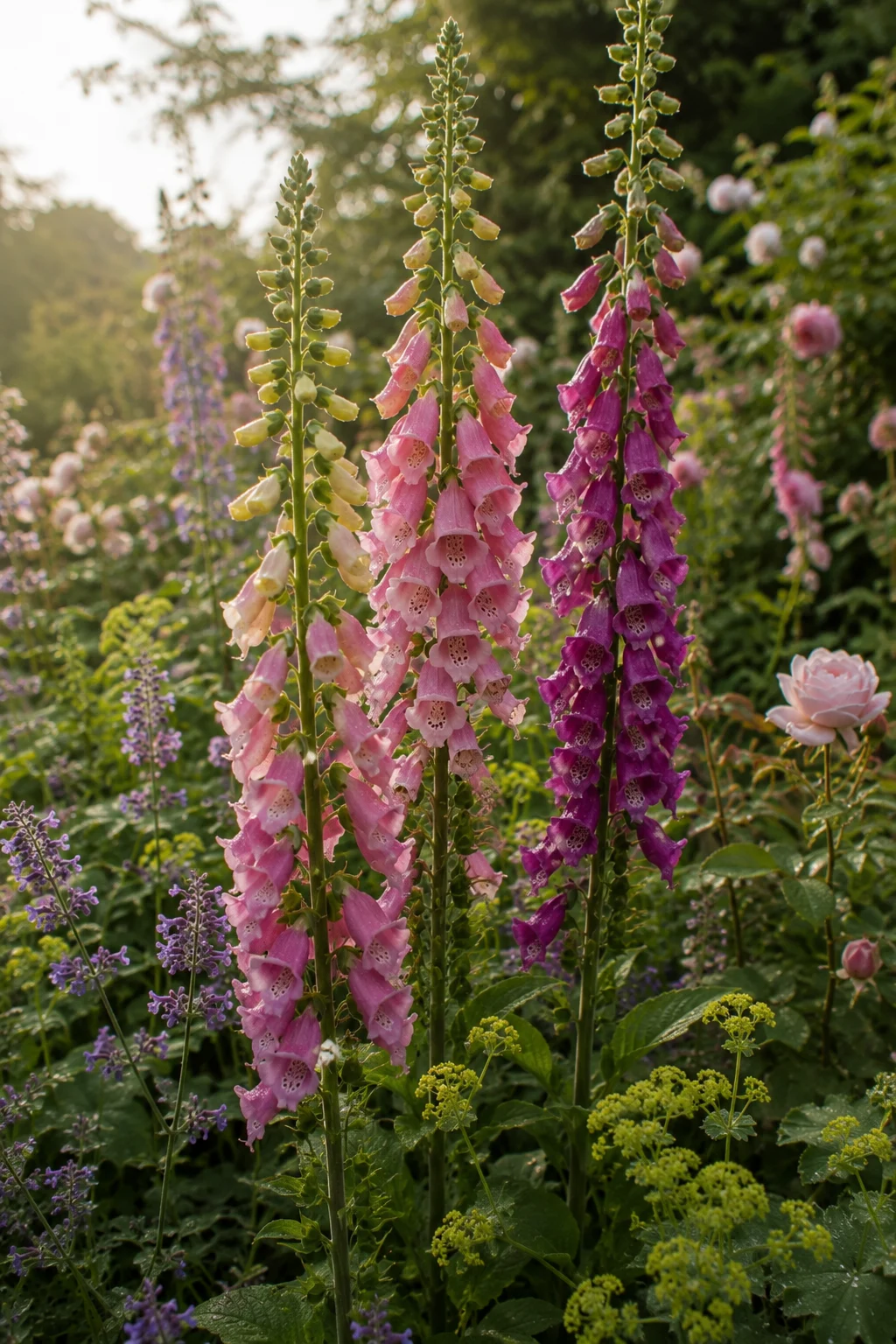
6. Tall Cottage Perennials as the Backbone
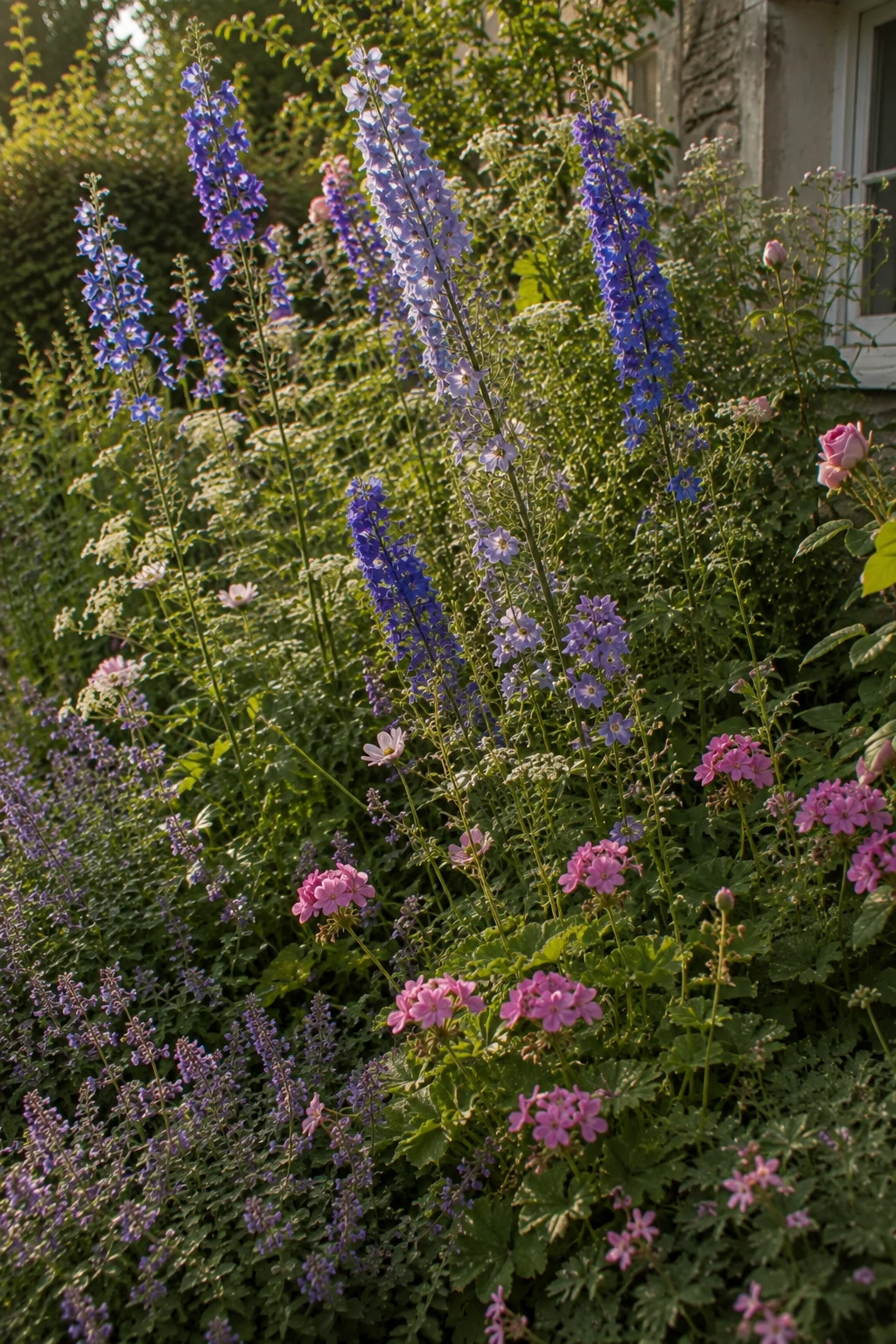
Foxglove, delphinium, and lupine are the classic vertical anchors of a cottage border, providing the tall spires that give the planting scheme real height and rhythm. Plant them toward the back or center of a border in repeated groups of three or more rather than as single specimens, since isolated spikes read as sparse rather than lush.
Before planting, it’s worth checking the mature size and growing requirements of each perennial so the border stays full without becoming overcrowded. The Missouri Botanical Garden Plant Finder is an excellent reference for detailed plant information.
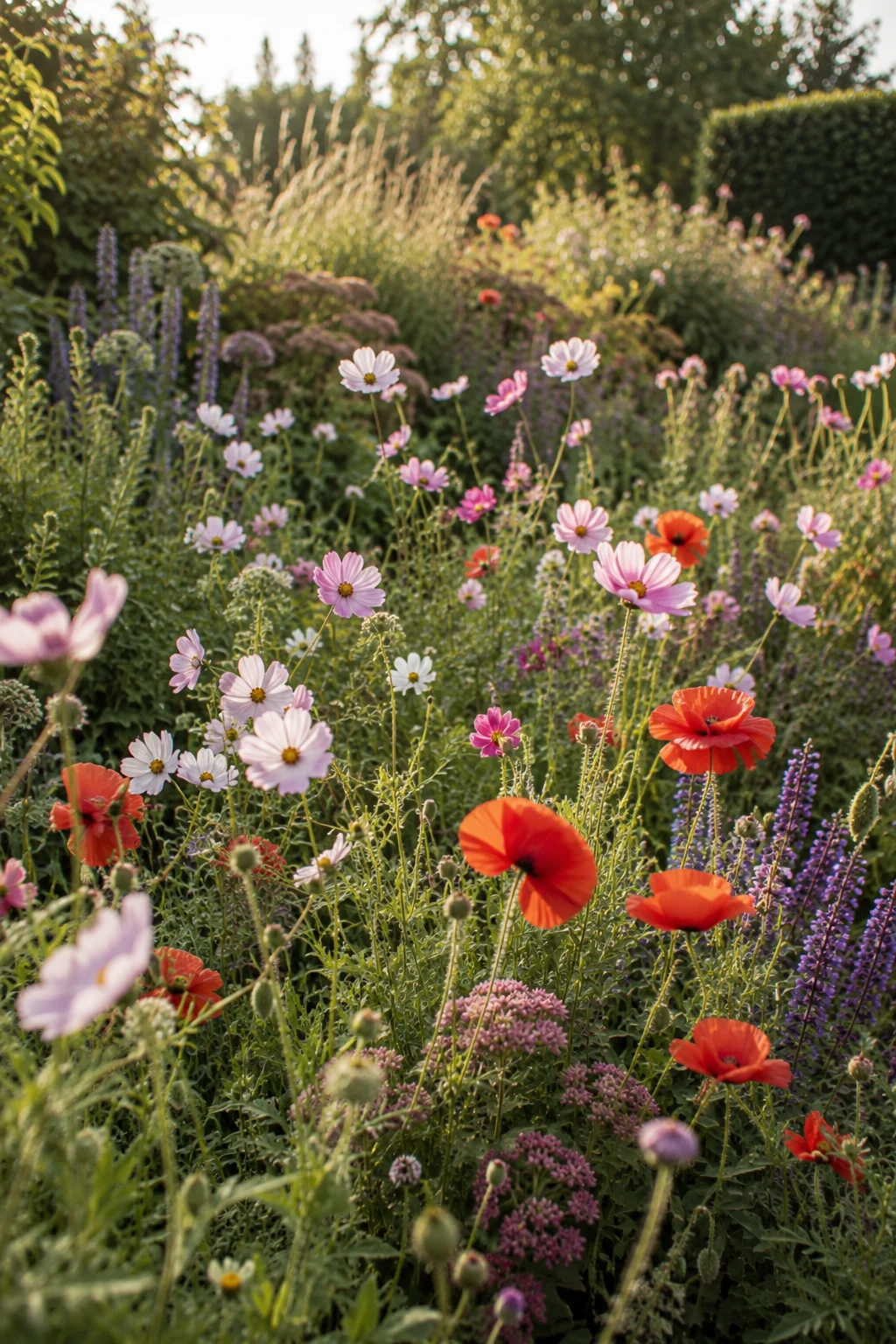
7. Self-Seeding Annuals for Informal Fill
Cosmos, corn poppies, and love-in-a-mist (nigella) drop seed freely and return the following year with little deliberate effort, filling any gaps left in the border with the same relaxed, unplanned quality the style depends on. Letting a few seed heads stand through late summer rather than deadheading everything ensures the following year’s self-seeded display.
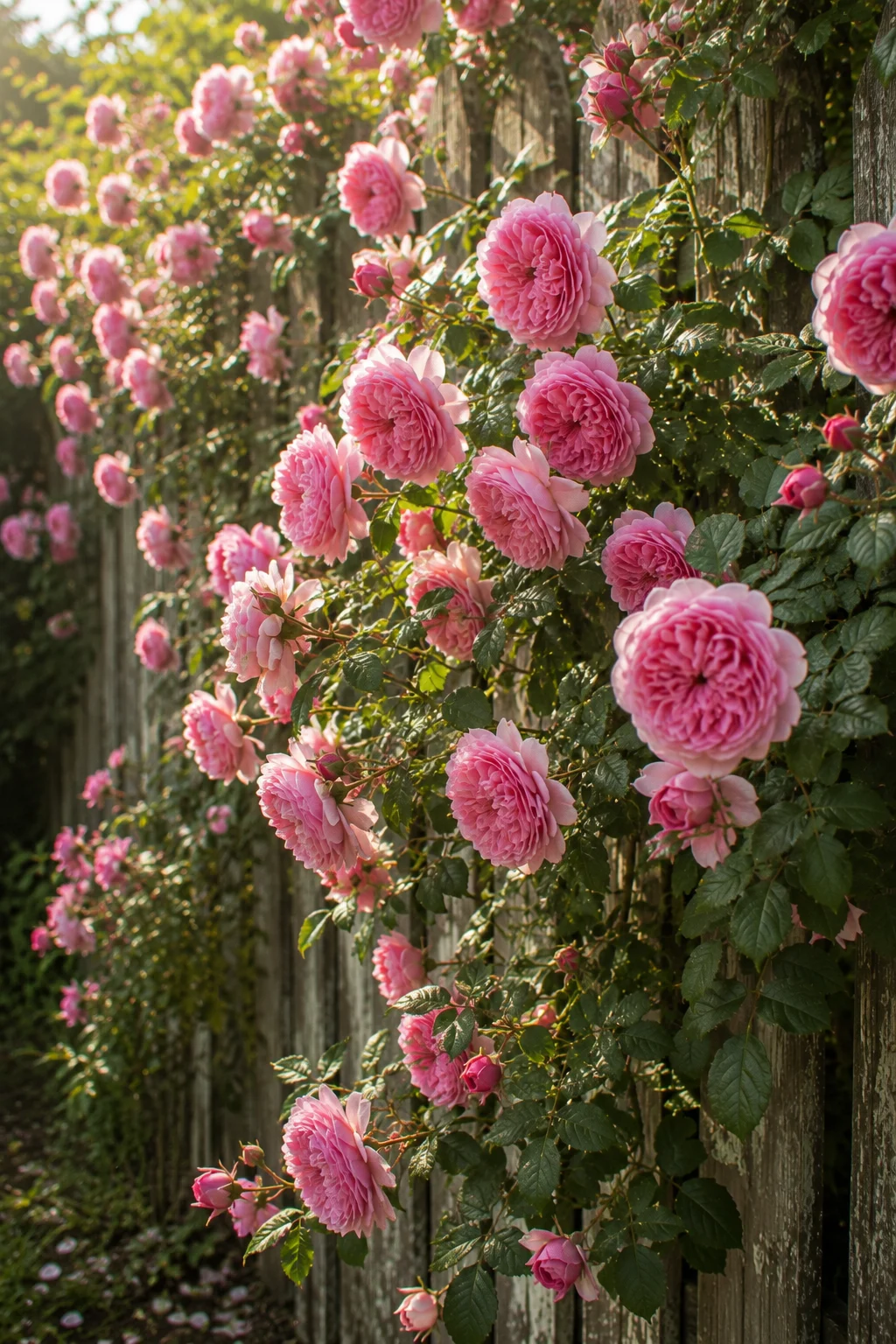
8. Old-Fashioned Climbing and Rambling Roses
Beyond the entry arch, roses trained along a fence, up a wall, or over a rustic arbor are central to the look — old garden rose varieties or David Austin-style English roses, with their fuller, more romantic bloom form, suit the style better than modern hybrid tea varieties bred for uniform florist-style blooms.
9. Kitchen Herb Border Near the Door
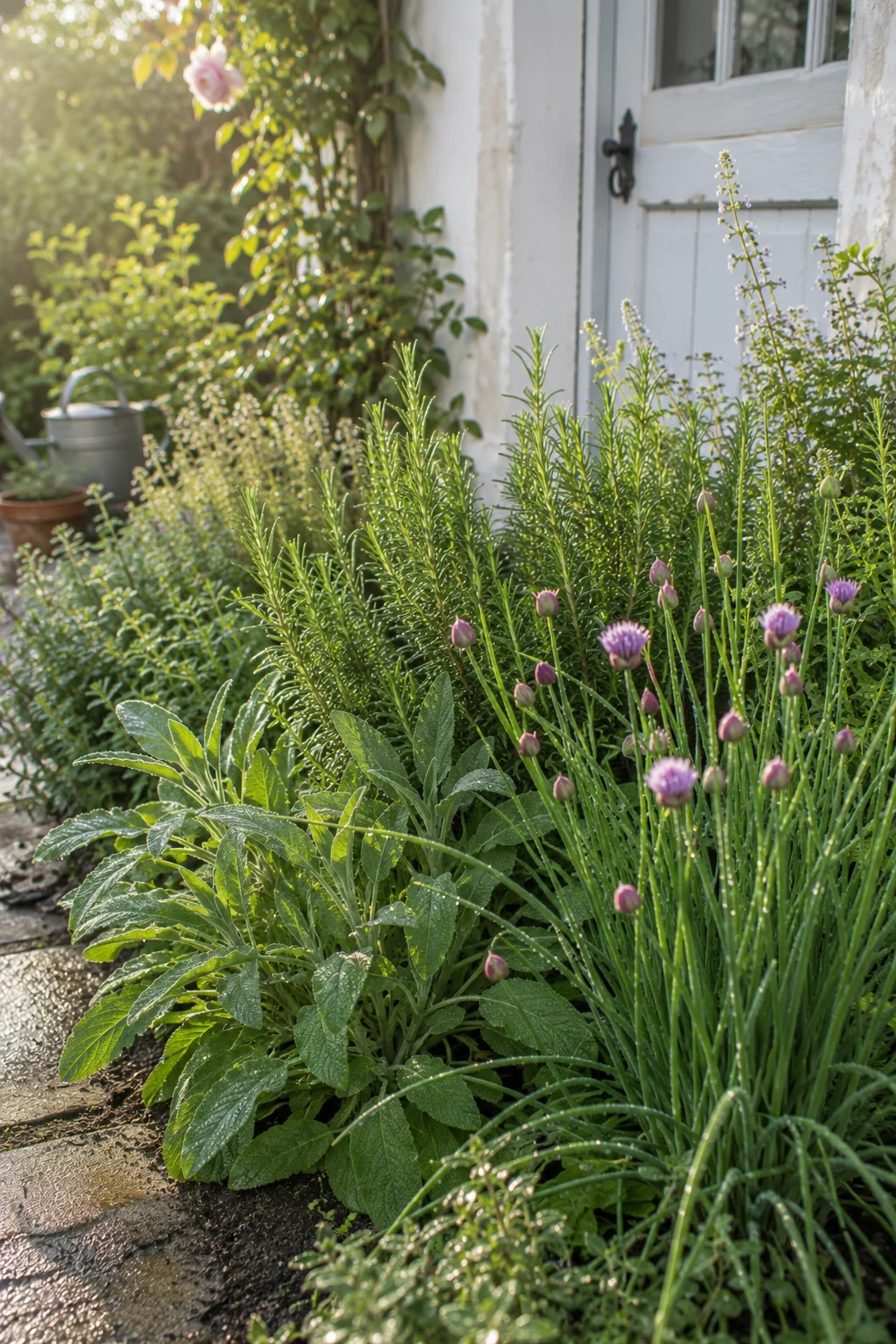
A dedicated herb border planted close to the kitchen door — rosemary, sage, thyme, and chives mixed informally rather than in tidy rows — keeps commonly used herbs within easy reach while adding to the garden’s lived-in, working quality rather than treating it as purely ornamental.
10. Layered Height Without Strict Rows
Rather than the traditional formal-garden rule of tallest plants strictly at the back, a cottage border mixes heights more loosely, with a few taller plants allowed to lean forward into the mid-border and shorter plants tucked in unpredictably throughout, creating the layered, slightly wild look the style depends on.
11. Repeat-Blooming Perennials for Season-Long Structure
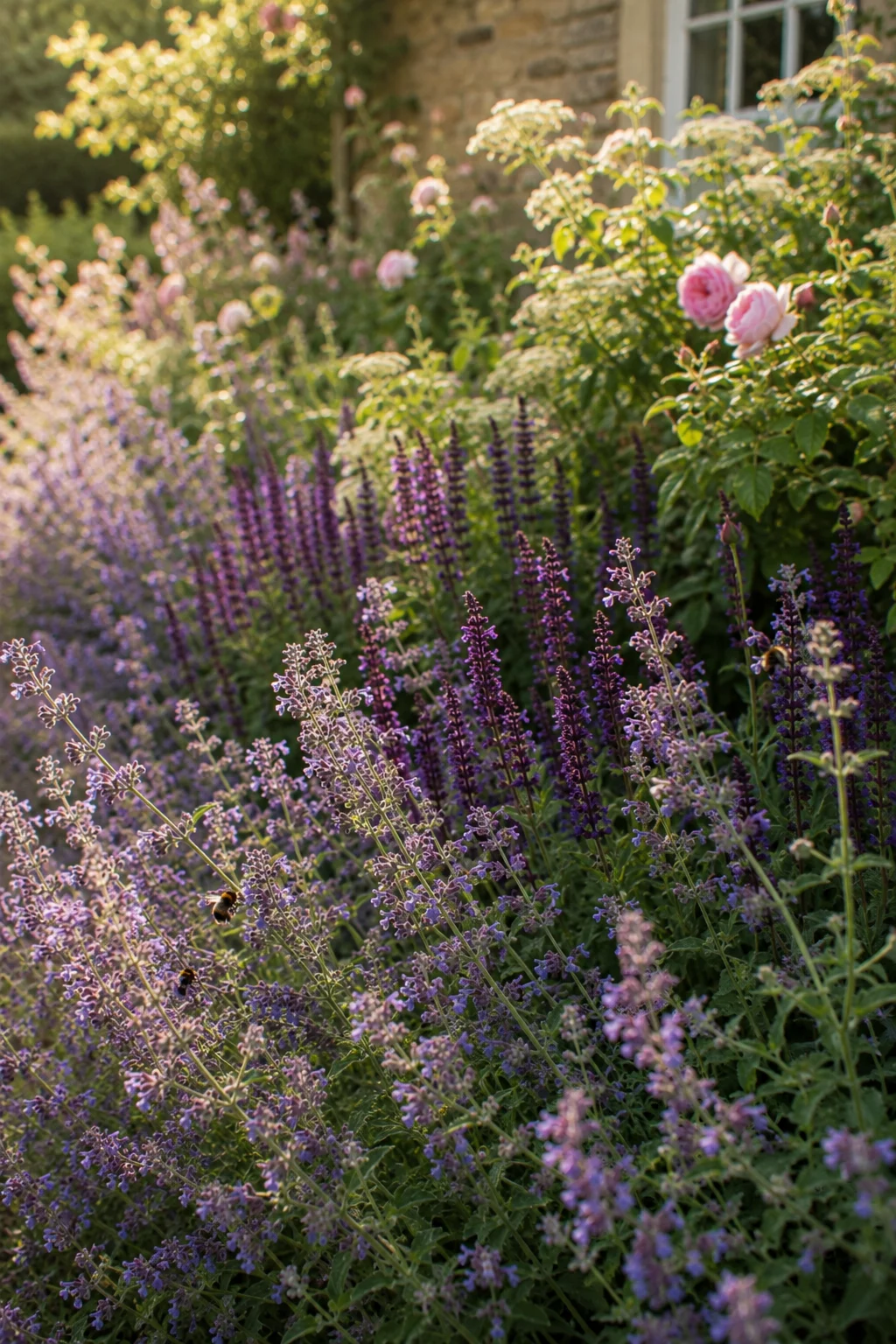
Catmint, hardy geraniums, and salvia bloom over a much longer window than the classic tall spires, and repeating them in drifts throughout the border keeps the planting from going flat once the early summer flush of foxglove and delphinium fades.
12. Potager-Style Vegetable Patch Among the Flowers
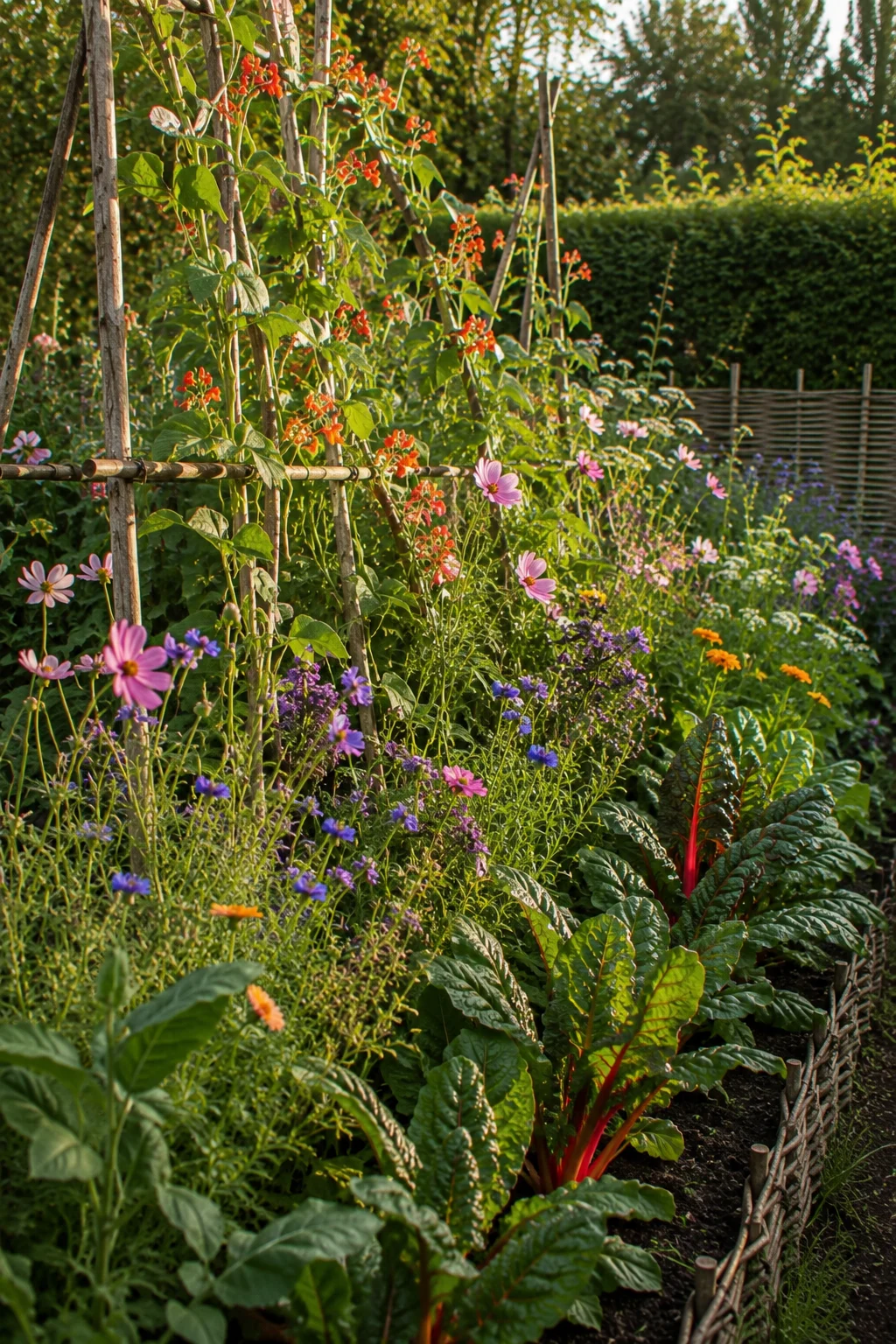
Tucking vegetables — runner beans on a rustic support, lettuces, and chard — directly among the ornamental planting rather than segregating them into a separate plot is a genuinely traditional cottage garden practice, and it adds textural and color variety that a purely ornamental border doesn’t have on its own.
Rustic Garden Features
A handful of simple structural or utilitarian features, left slightly weathered rather than pristine, reinforce the garden’s lived-in character.
13. Rustic Arbor or Pergola
A simple wooden arbor, built from rough-sawn timber rather than precisely milled lumber, gives climbing plants — roses, clematis, or sweet peas — a structure to grow over while creating a shaded seating spot or a secondary garden “room” within a larger plot.
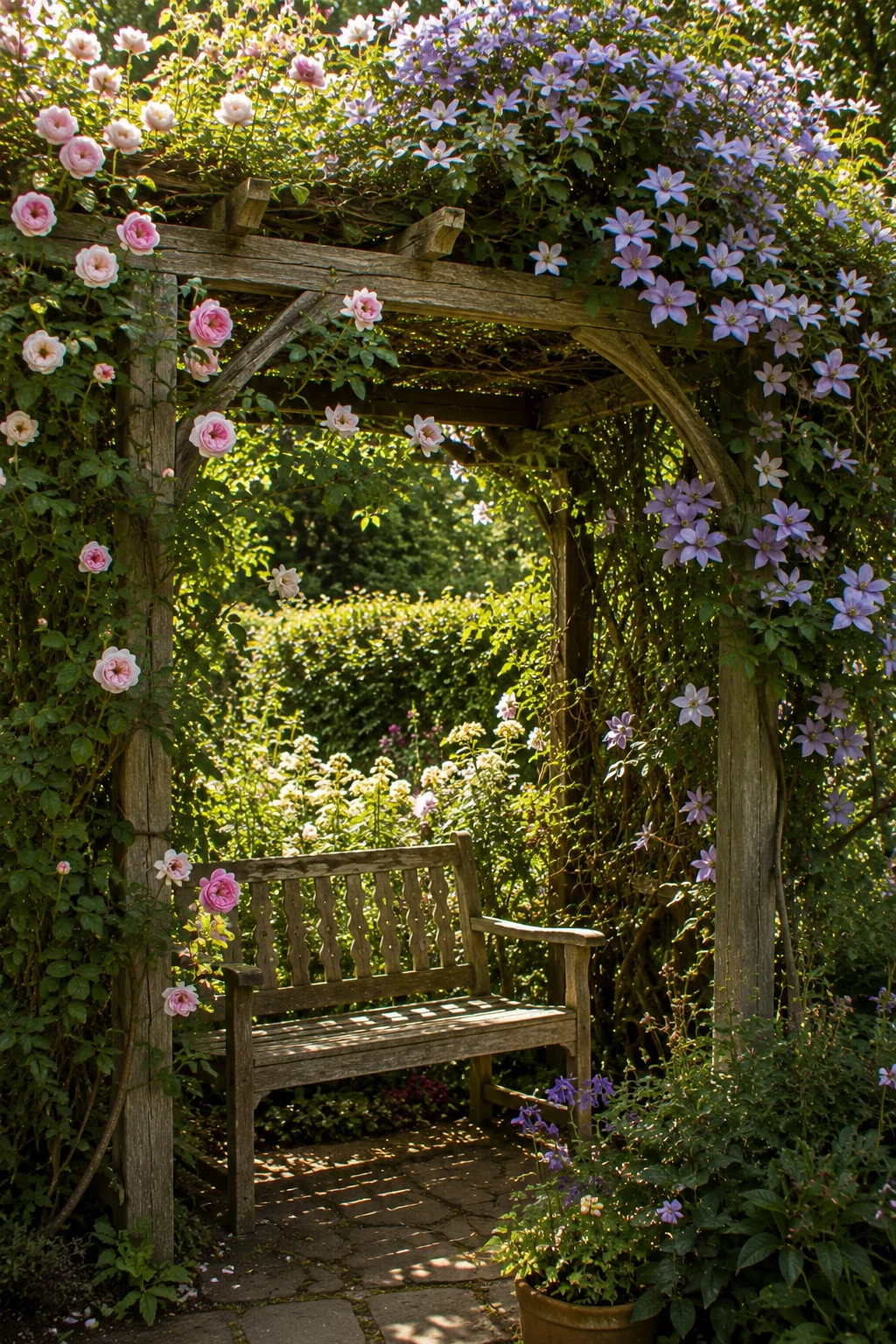
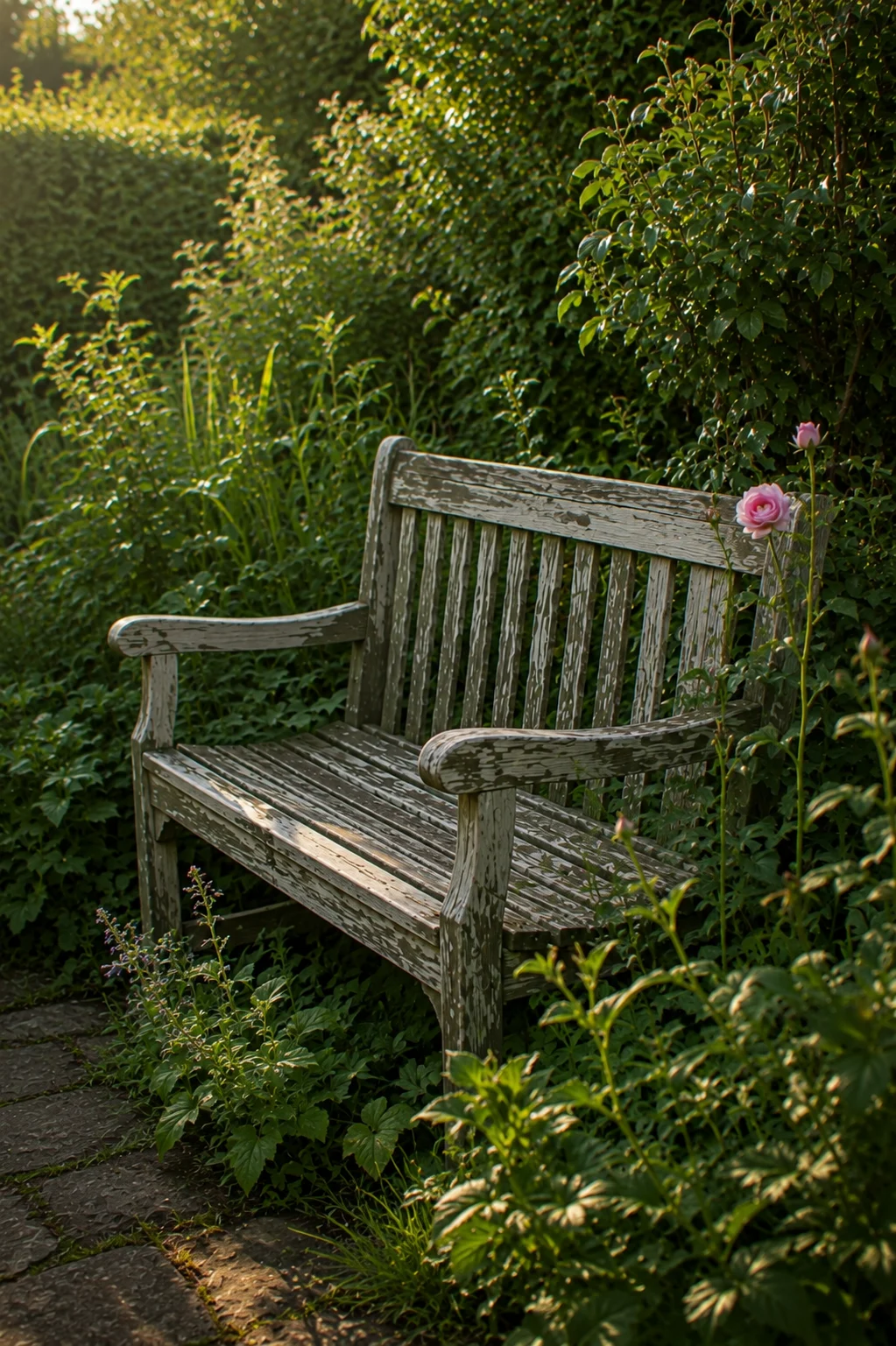
14. Weathered Wooden Bench Tucked Into a Border
A simple painted or unfinished wooden bench, placed directly within a planted border rather than on an open patio, lets a seating spot feel discovered rather than staged, half-surrounded by the same dense planting as the rest of the garden.
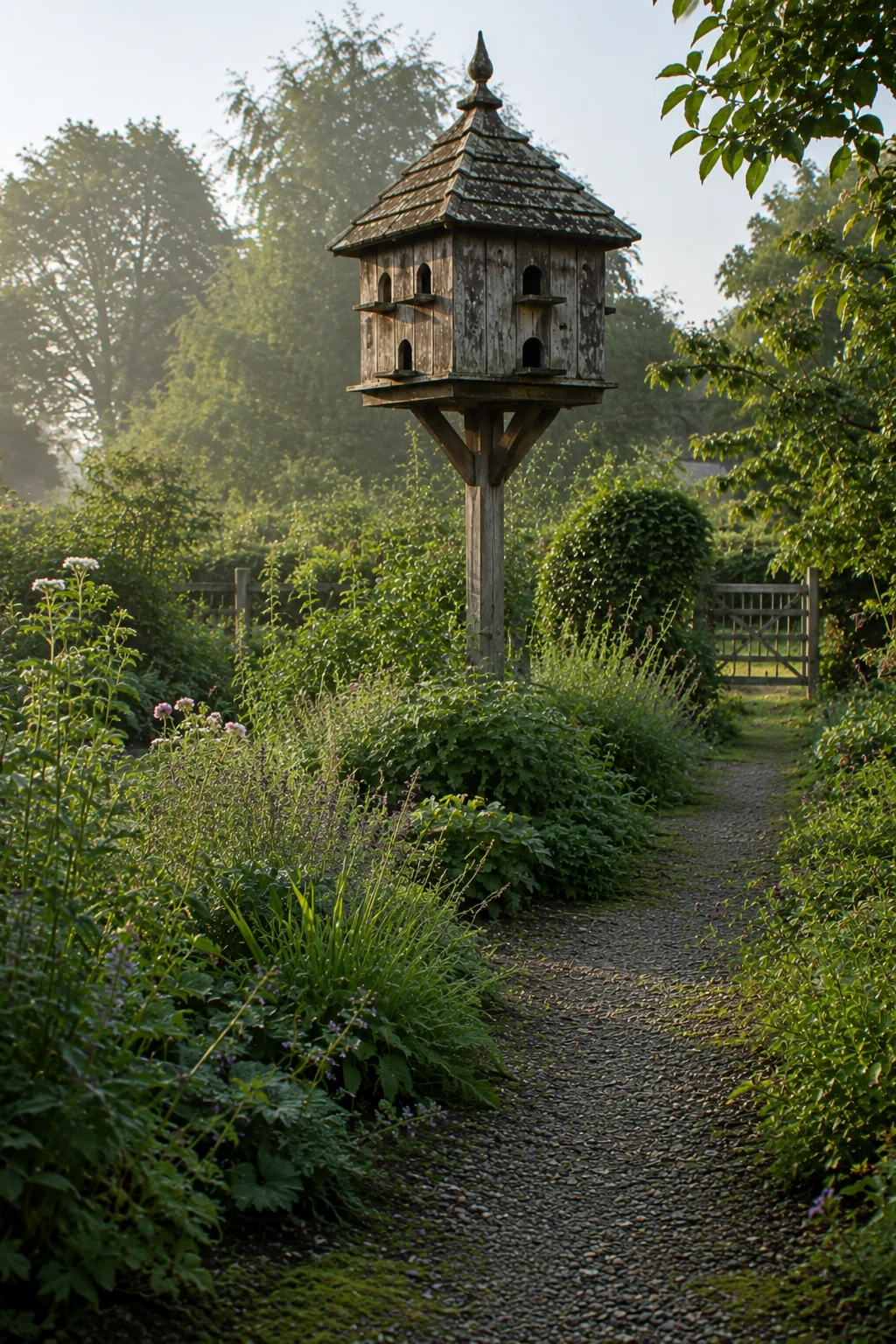
15. Dovecote or Birdhouse as a Focal Point
A freestanding dovecote or a simple painted birdhouse mounted on a post, placed at the end of a path or within a border, gives the garden a charming vertical focal point and reinforces its traditional, rural character.
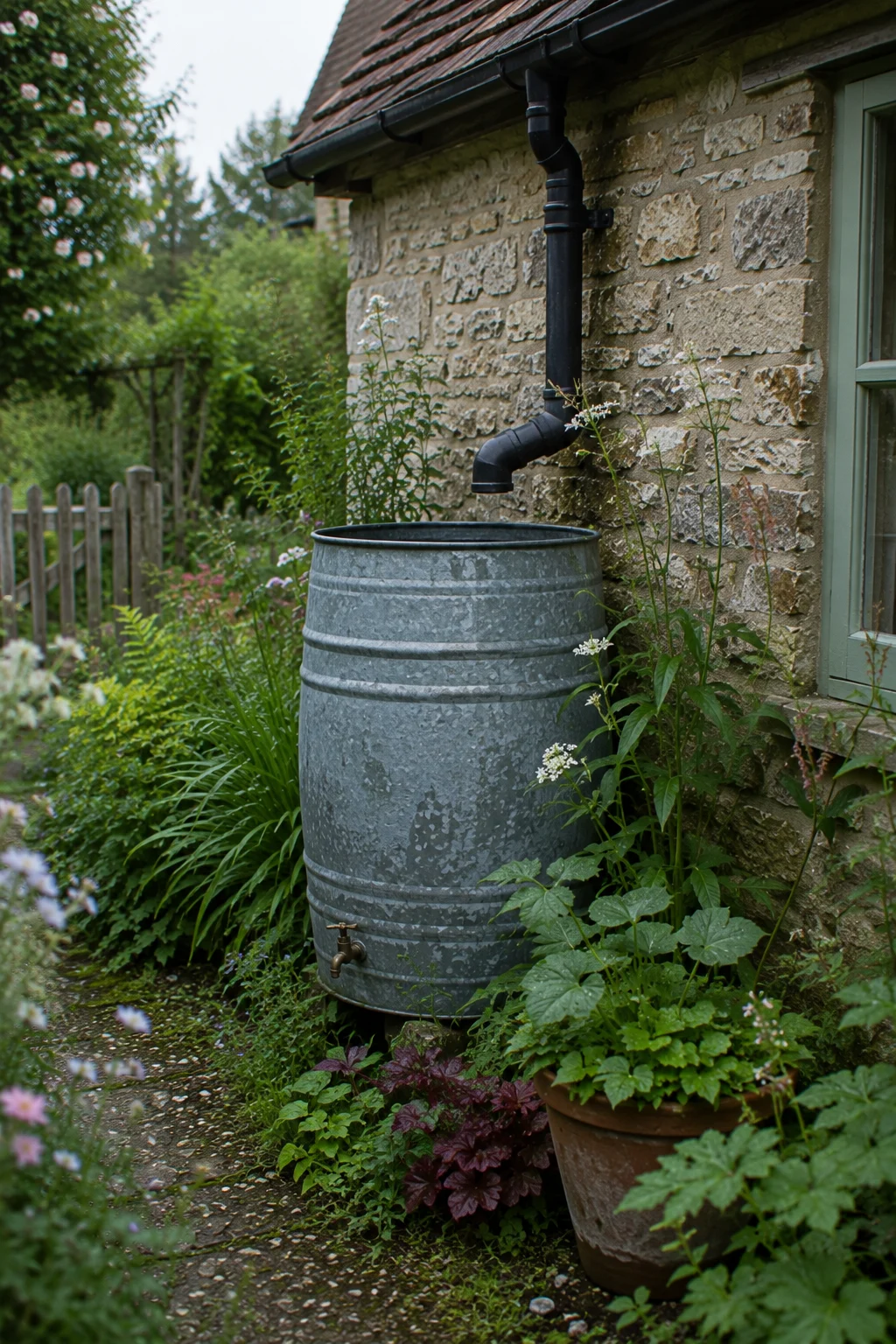
16. Repurposed Rain Barrel or Water Butt
A traditional wooden or galvanized metal water butt, positioned beneath a downspout, collects rainwater for garden use while doubling as an authentic period detail — a genuinely functional feature rather than a purely decorative one, consistent with the practical roots of the style.
17. Small Cold Frame or Lean-To Greenhouse
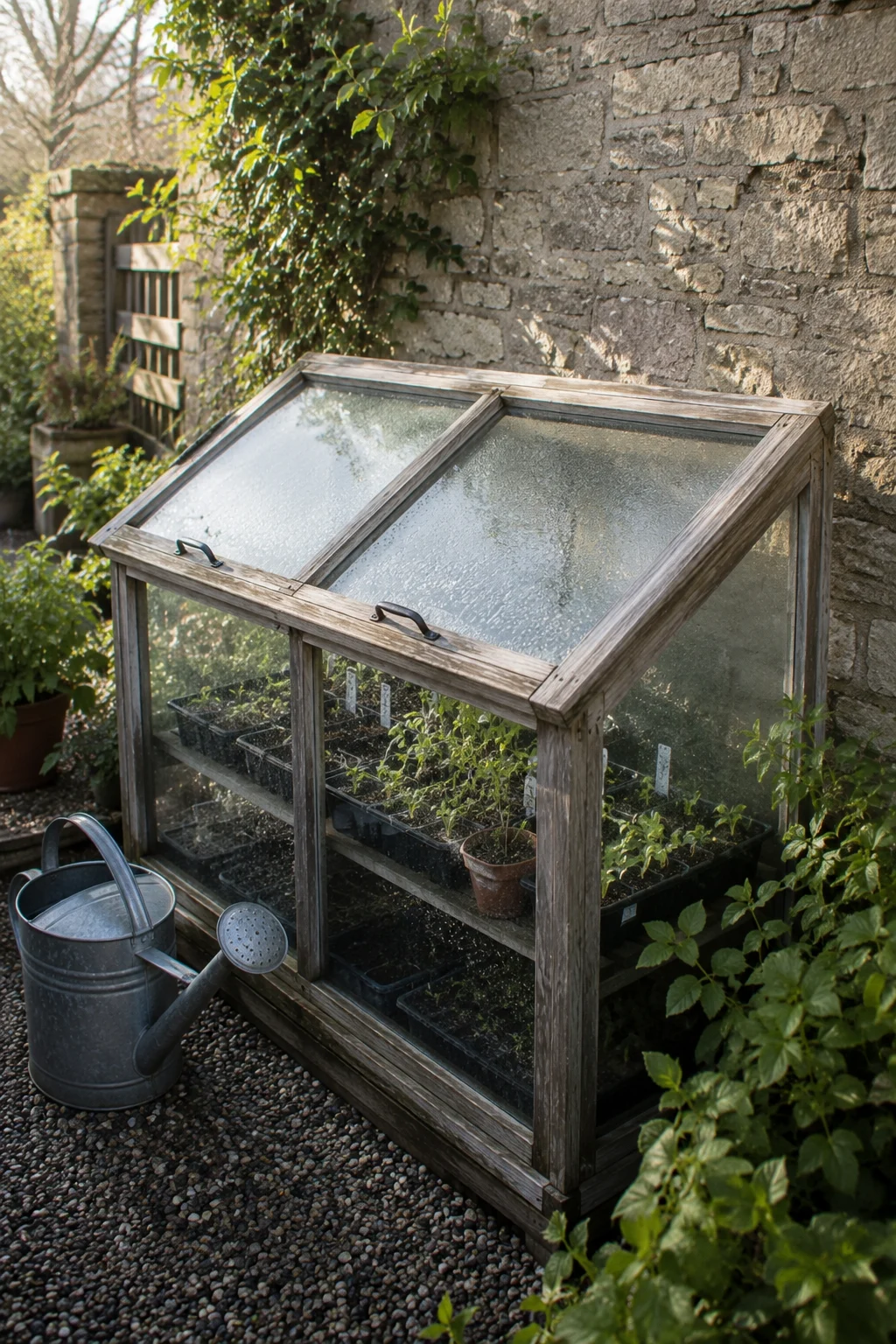
A simple glass-paned cold frame or a small lean-to greenhouse against a wall extends the growing season for seedlings and tender plants, and its slightly utilitarian, glass-and-timber look fits naturally into the garden’s practical, working character rather than looking out of place.
Finishing Touches and Wildlife
The last few details are less about individual features and more about resisting the urge to tidy the garden into something it isn’t meant to be.
18. A Deliberately “Untidy” Wildflower Corner
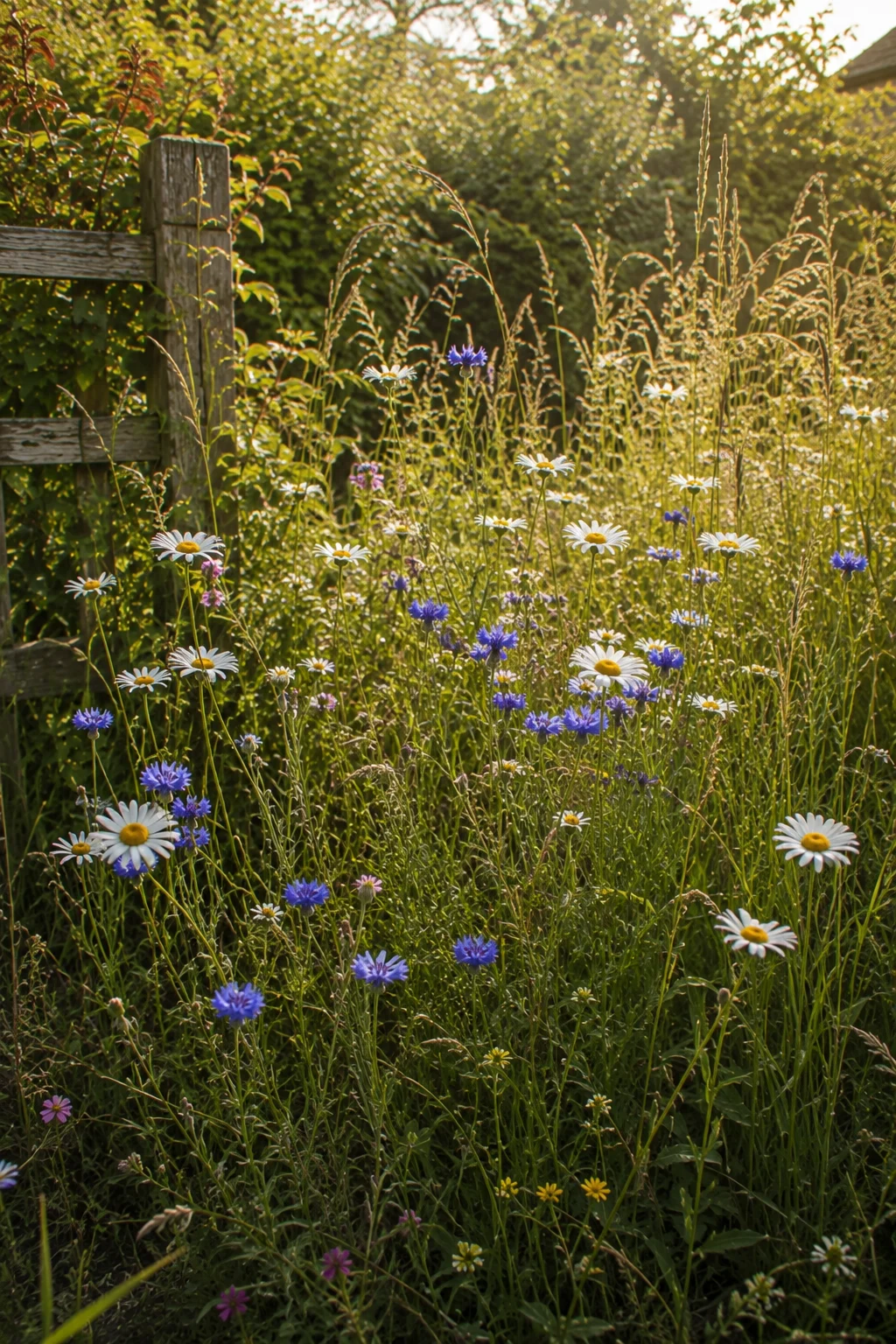
Leaving one corner of the garden as a loosely maintained wildflower patch — ox-eye daisies, cornflowers, and native grasses left to grow and seed with minimal intervention — reinforces the informal character of the whole garden while supporting local wildlife in a way the more structured borders don’t fully achieve on their own.
19. Climbing Plants Softening the Cottage Walls
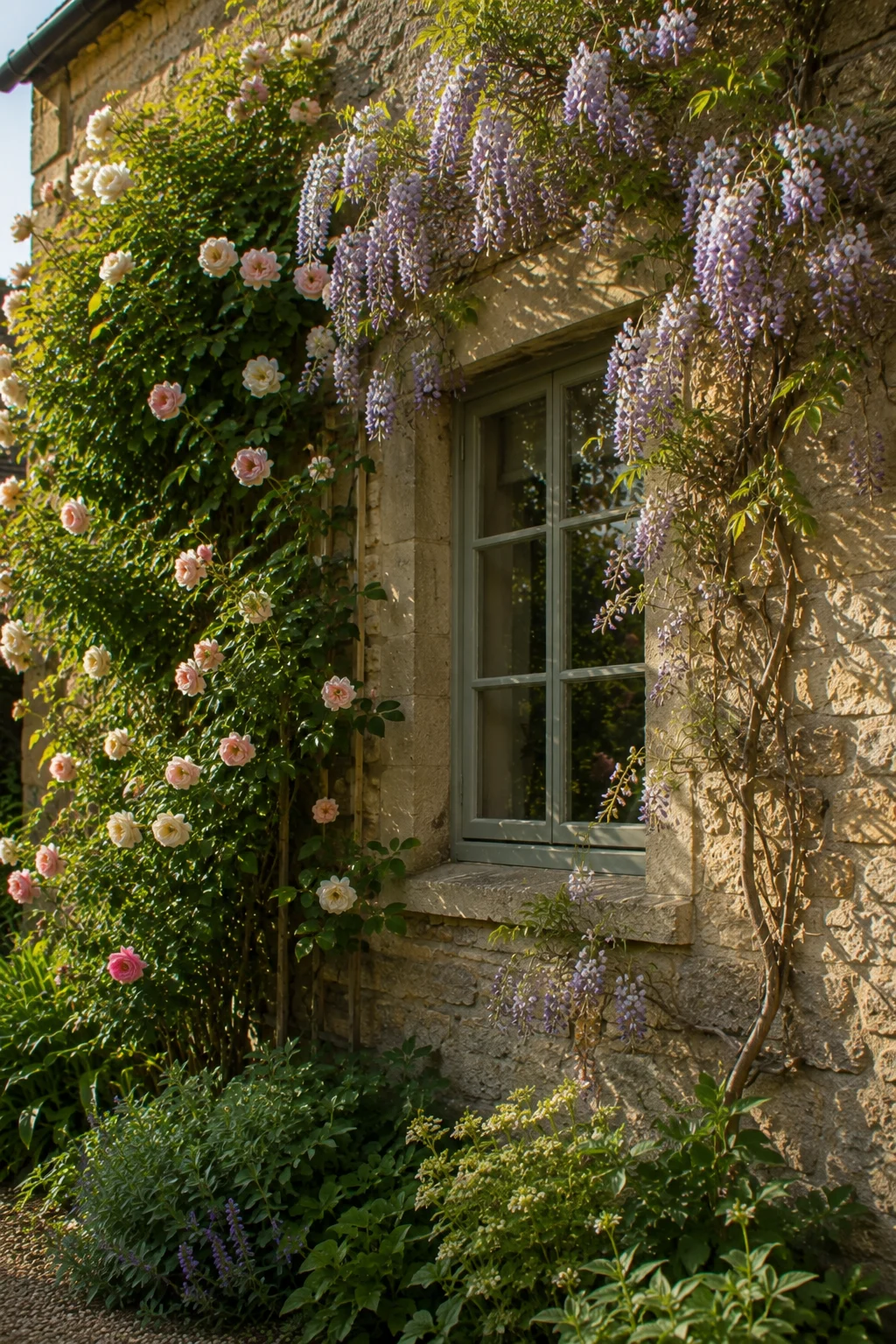
Training climbing roses, clematis, or wisteria directly up the walls of the cottage or outbuilding itself — rather than confining climbers to fences and arbors alone — blurs the line between the building and the garden, which is one of the most characteristic visual traits of the style at its best.
How to Choose From This List
A genuine cottage garden depends on density and repetition more than variety, so resist the urge to include a small amount of everything from this list. A strong starting combination is a curved path, one boundary treatment (fence or hedgerow), three or four repeated perennials for the border’s backbone, one climbing feature (an arch, arbor, or wall), and one rustic focal point. For readers adapting this style to a smaller or front-facing plot, our small front yard landscaping guide covers how to keep a dense planting style from feeling overwhelming in a limited footprint, and our ground cover plants guide is useful for filling the low front-of-border gaps between larger cottage perennials.
Final Thoughts
An English cottage garden succeeds by looking like it grew rather than was installed — dense, overlapping borders, a handful of repeated old-fashioned plants rather than one of everything, and rustic features left slightly weathered instead of pristine. Start with the structural bones (a curved path, a boundary, one climbing feature), build the borders around a small number of repeated cottage perennials, and let a few corners stay a little untidy on purpose. That restraint in variety, paired with real density in the planting, is what makes the difference between a garden that reads as genuinely charming and one that just looks like scattered flowers.