
Japanese garden design is often assumed to require acreage — sweeping ponds, mature pine trees, borrowed mountain views. In reality, the tradition has an entire branch built specifically around tiny spaces: the tsubo-niwa, or courtyard garden, historically fit into gaps between buildings barely wider than a hallway. The core principles — restraint, asymmetry, framed views, and a strong sense of intentional emptiness — actually translate better to a small yard than a sprawling one, because every element has to earn its place.
This list breaks down 25 small Japanese garden ideas, each with enough detail to actually plan and install, organized from structural elements down to seasonal planting choices. You don’t need all 25 — most successful small Japanese gardens are built from a disciplined handful of these ideas, not a checklist of everything at once.
Structural Foundations
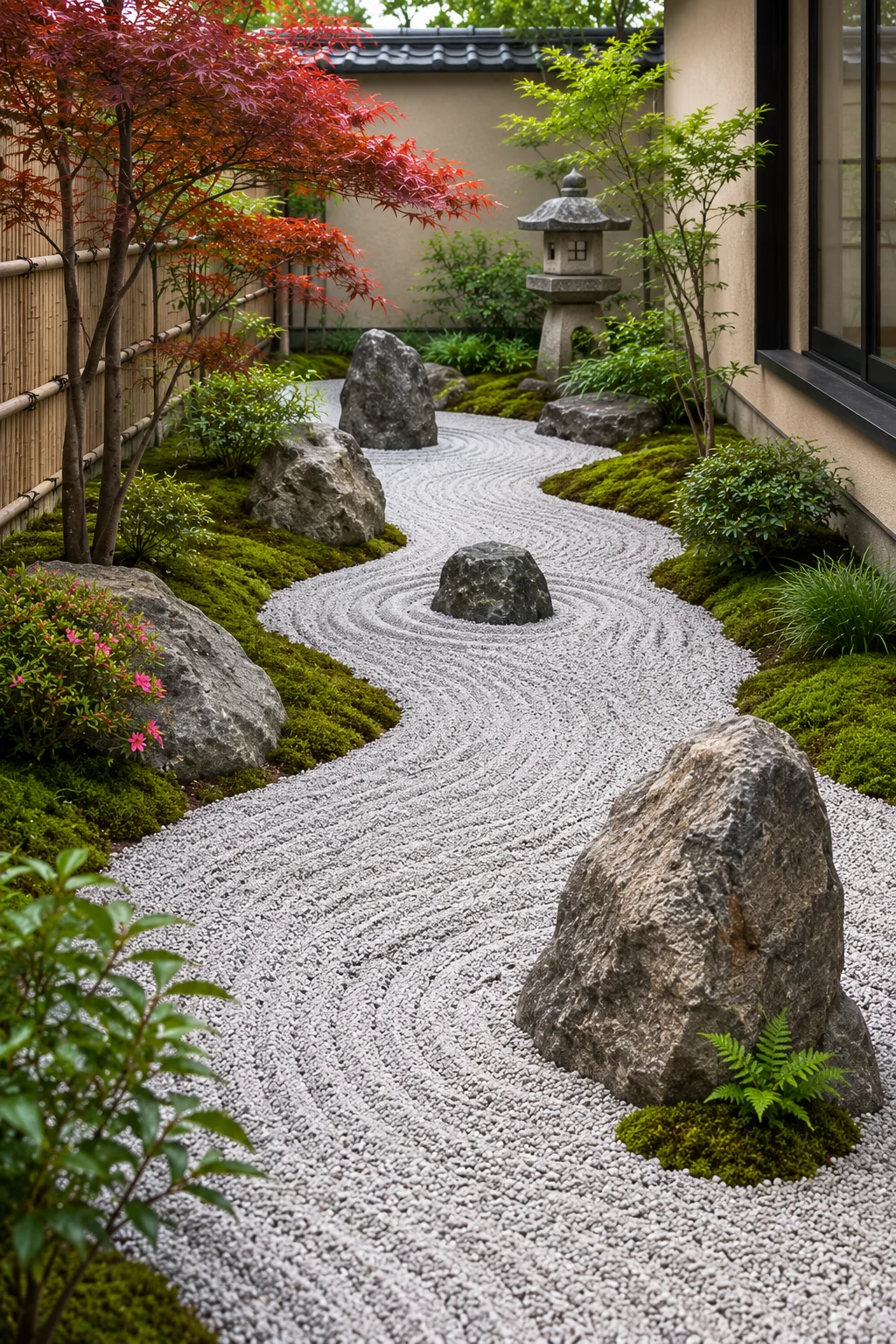
1. Dry Gravel River (Karesansui)
A raked bed of light grey or white gravel standing in for a river or sea is the signature element of Japanese dry landscape design, and it’s one of the most space-efficient features you can install — a strip as narrow as three feet can read as a full water feature. Use crushed granite or decomposed granite gravel rather than rounded pea gravel, since the flat facets hold a raked pattern far better. Edge the bed with a low steel or stone border to keep the gravel contained and give the “river” a crisp, deliberate outline.
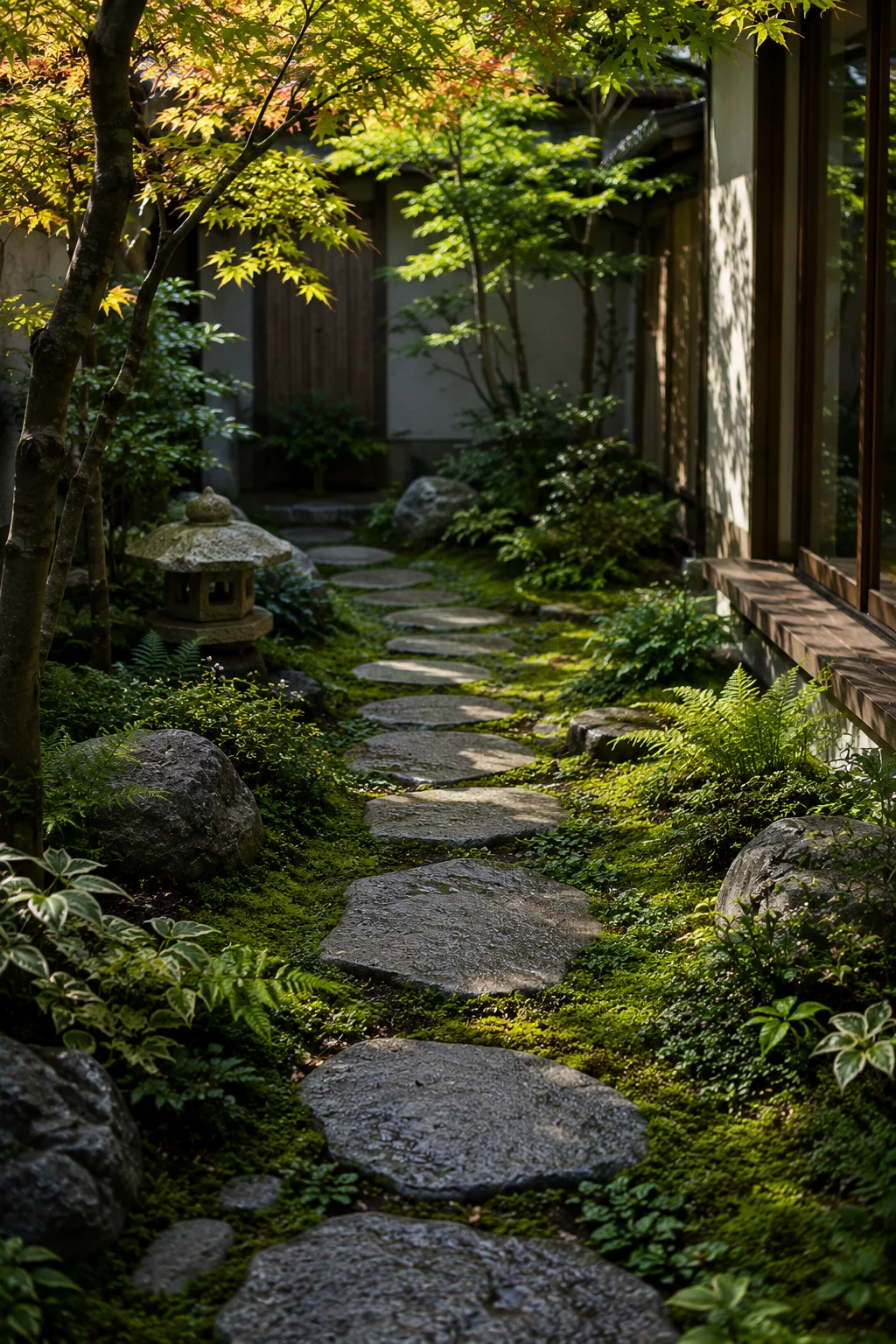
2. Stepping Stone Path (Tobi-ishi)
Irregularly shaped flat stones set with deliberate gaps — never a continuous paved surface — force a visitor to slow down and look downward, which is part of the intended effect. Space stones for a natural, slightly uneven stride rather than a perfectly even gait, and let moss or low groundcover fill the gaps between them rather than gravel or mulch.
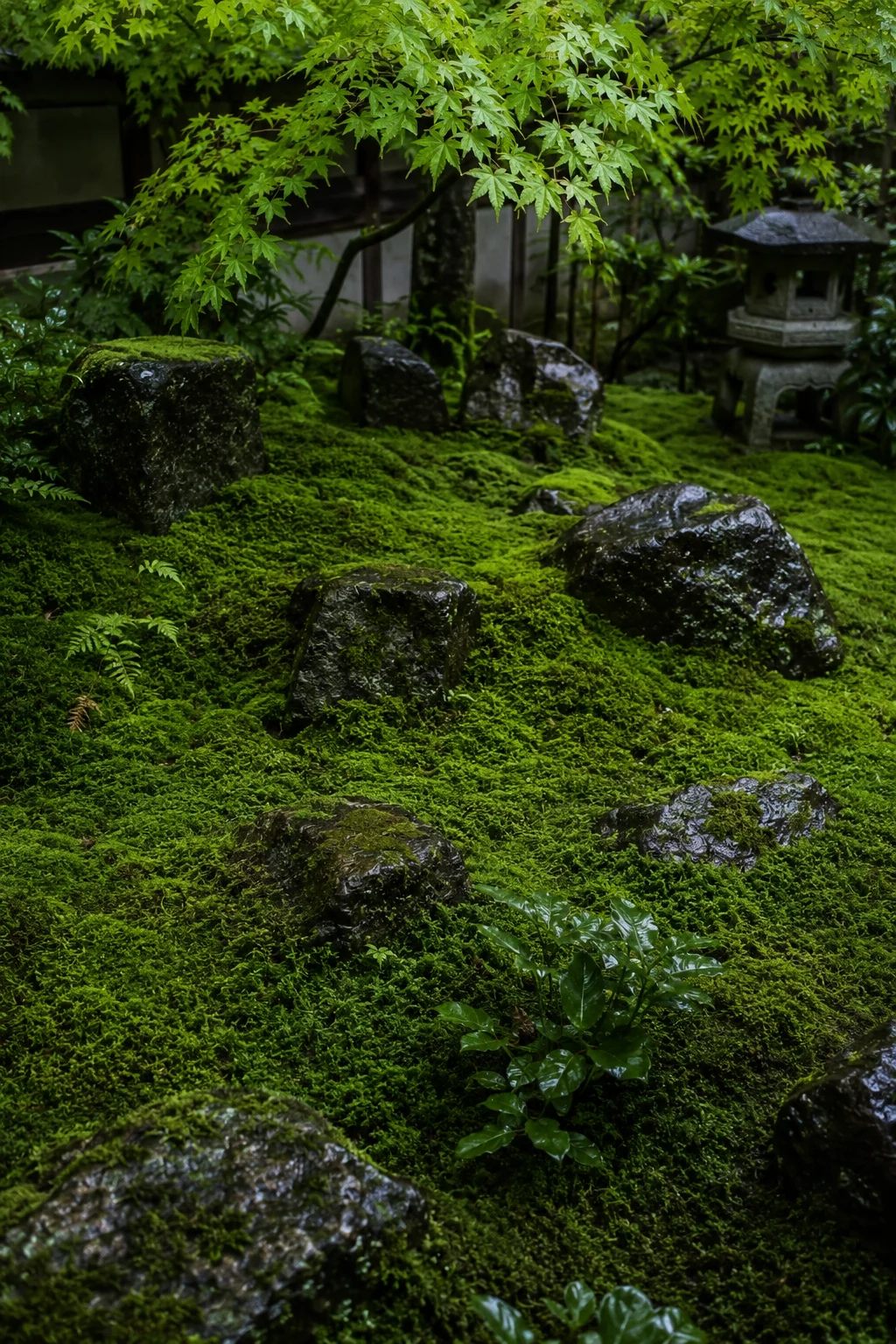
3. Moss Carpet Instead of Lawn
In shaded, moisture-retentive corners where grass struggles anyway, moss reads as lush, requires no mowing, and is a foundational material in traditional Japanese gardens. Establish it from nursery-grown moss patches or moss slurry rather than transplanting wild moss, and keep the area consistently damp for the first several weeks until it roots into the soil surface.
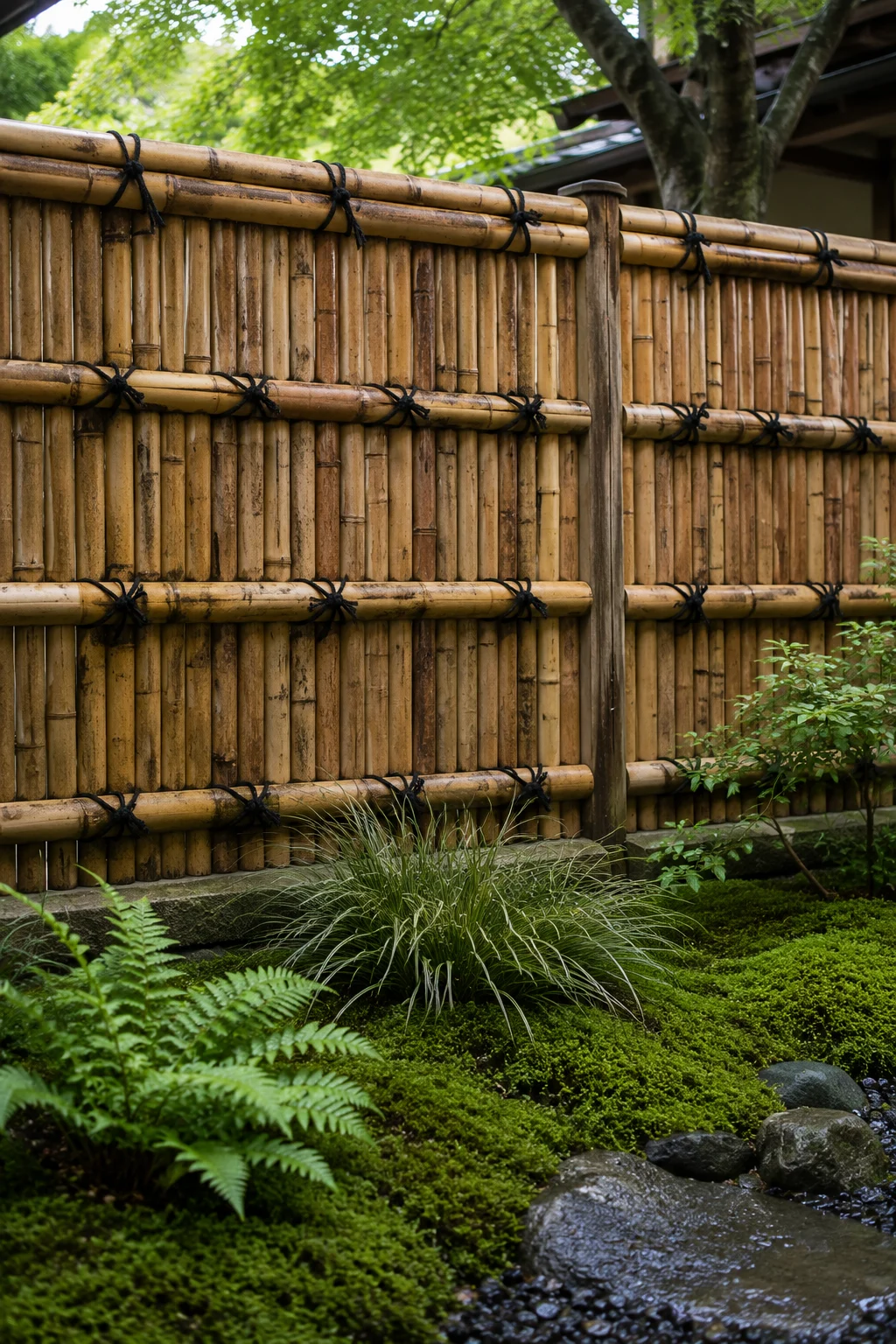
4. Bamboo Fencing (Yotsume-gaki)
A simple four-eyed bamboo fence — vertical bamboo poles lashed to horizontal rails with black cord in a visible cross pattern — screens a small yard from neighbors without the visual bulk of a solid wooden fence. It reads as intentional rather than utilitarian, and pairs well as a backdrop for a single specimen tree or a gravel bed in front of it.
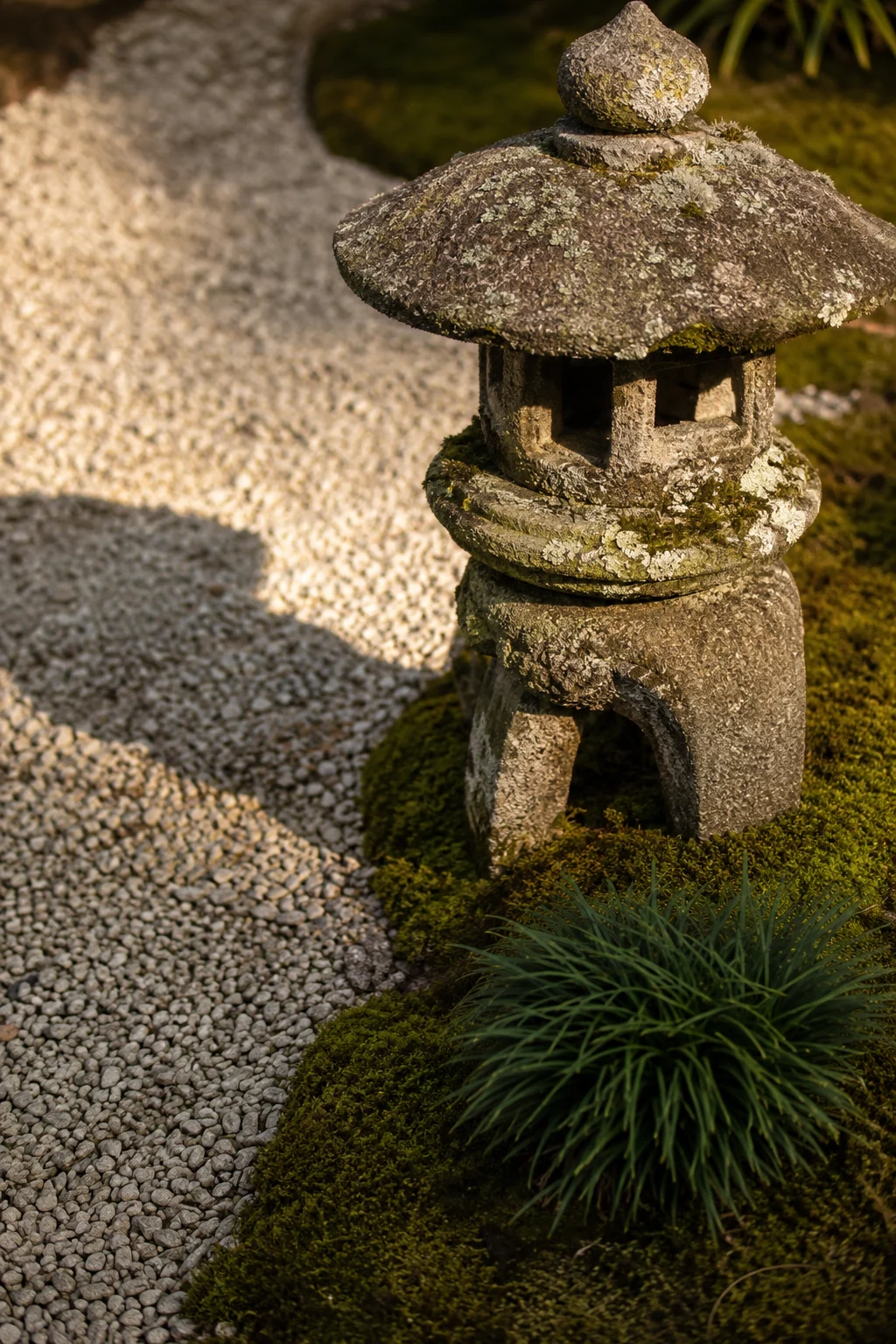
5. Stone Lantern (Tōrō) as a Focal Point
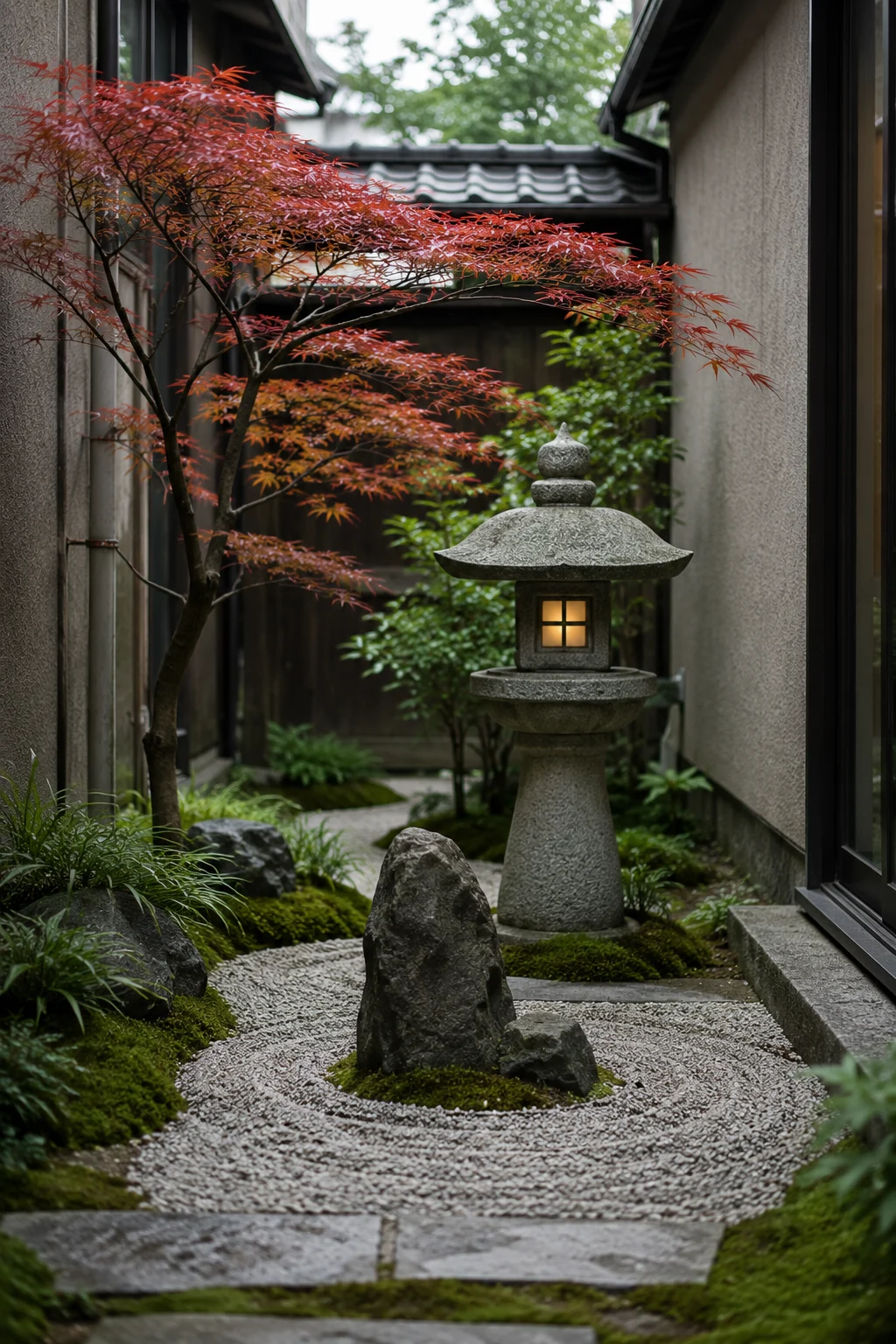
A carved stone lantern, whether lit or purely ornamental, gives a small garden a single unmistakable focal point without requiring a large footprint. Traditional placement puts it near a path bend or beside a water feature rather than dead-center in the composition — Japanese design consistently favors asymmetry over symmetry.
Water Features
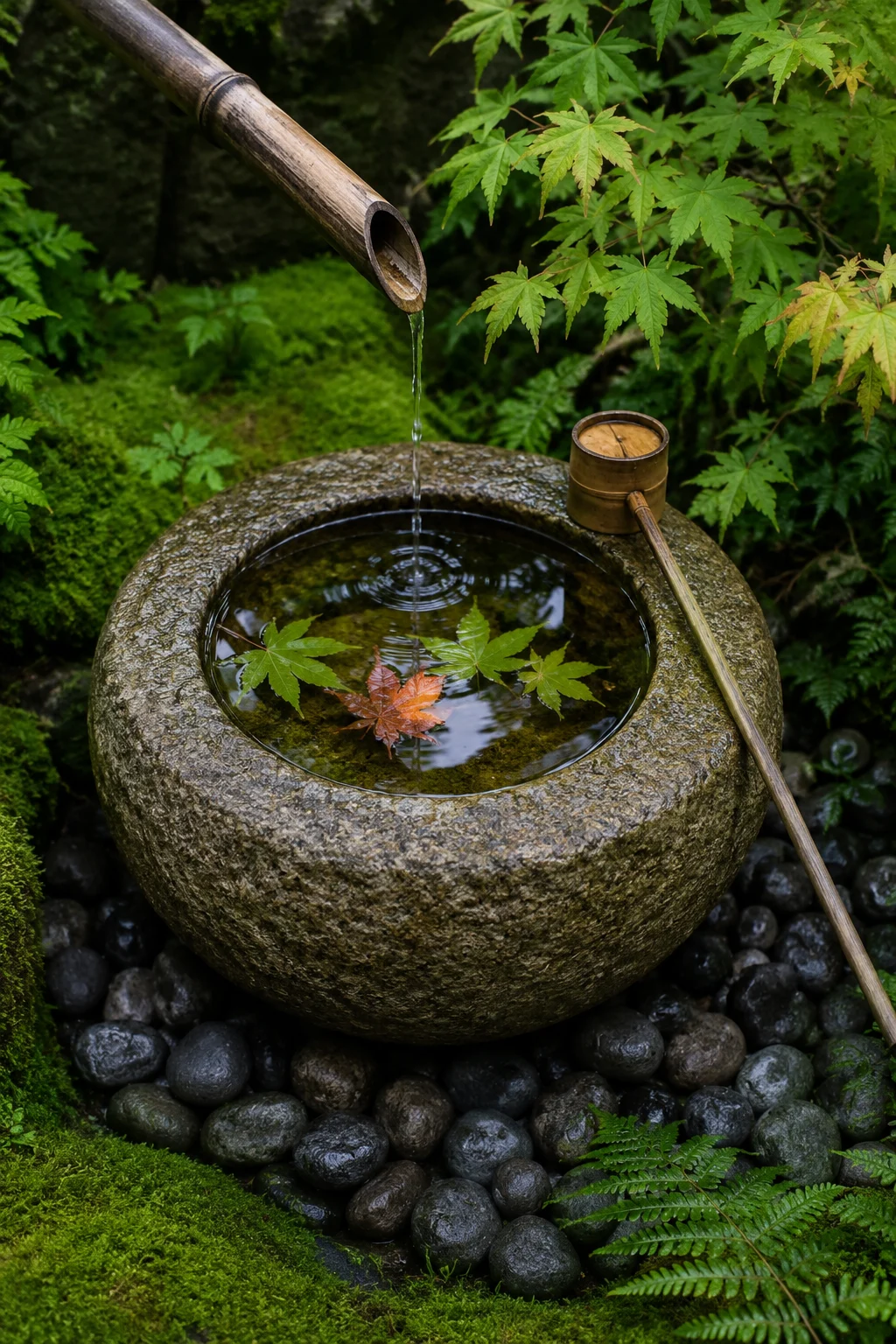
6. Water Basin (Tsukubai)
A low stone basin, traditionally used for ritual hand-washing before tea ceremony, works beautifully as a self-contained water feature in a corner too small for a pond. Pair it with a small bamboo spout (kakei) feeding water into the basin from above, and surround the base with a bed of smooth river stones to catch splash and drainage.
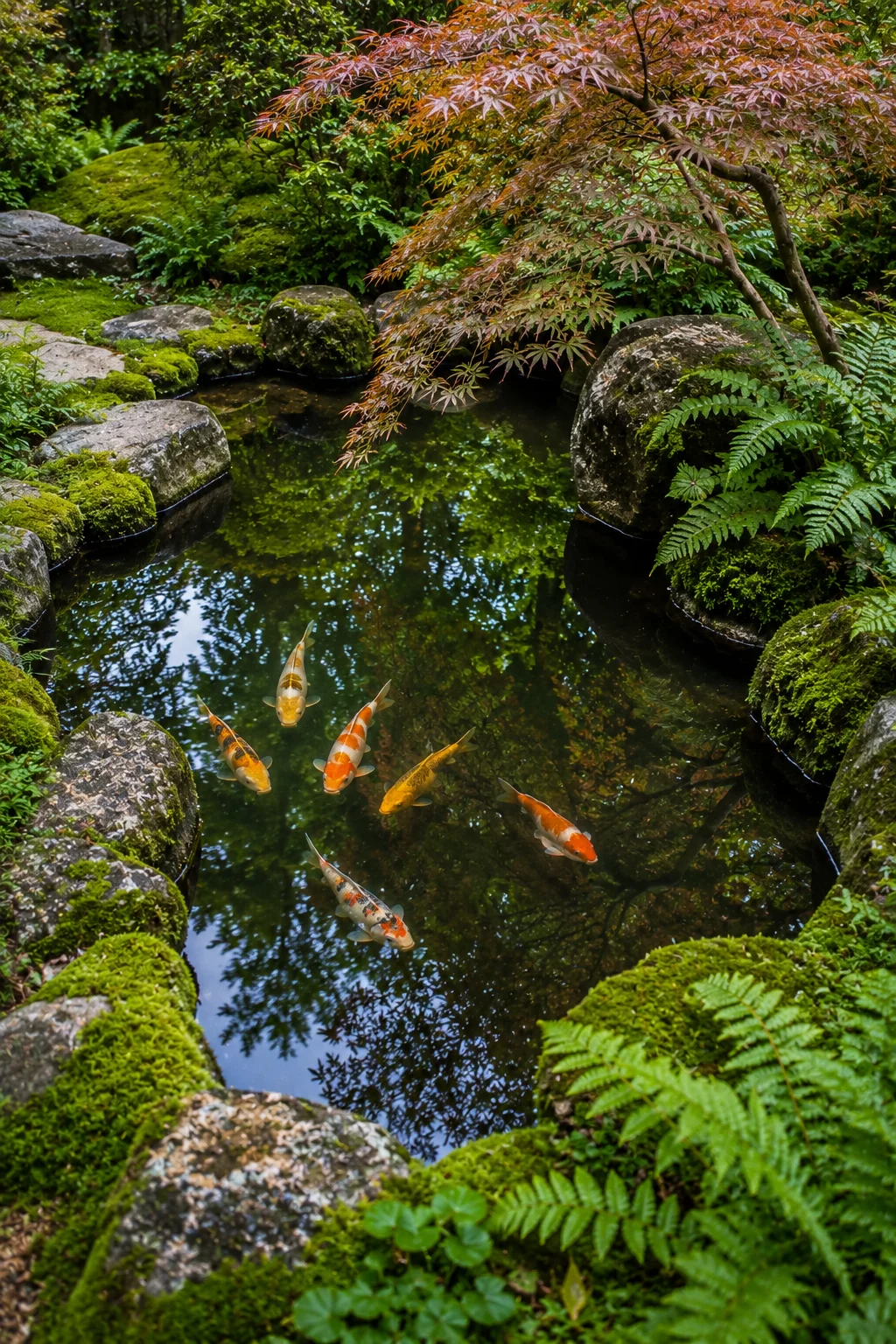
7. Miniature Koi Pond
A pond doesn’t need to be large to work — even a pond four to six feet across, properly proportioned with the rest of the garden, can house a small number of koi or simply still water and aquatic plants. Keep the edges irregular rather than a perfect circle, and use one or two flat “viewing stones” at the water’s edge where the pond can be observed up close.
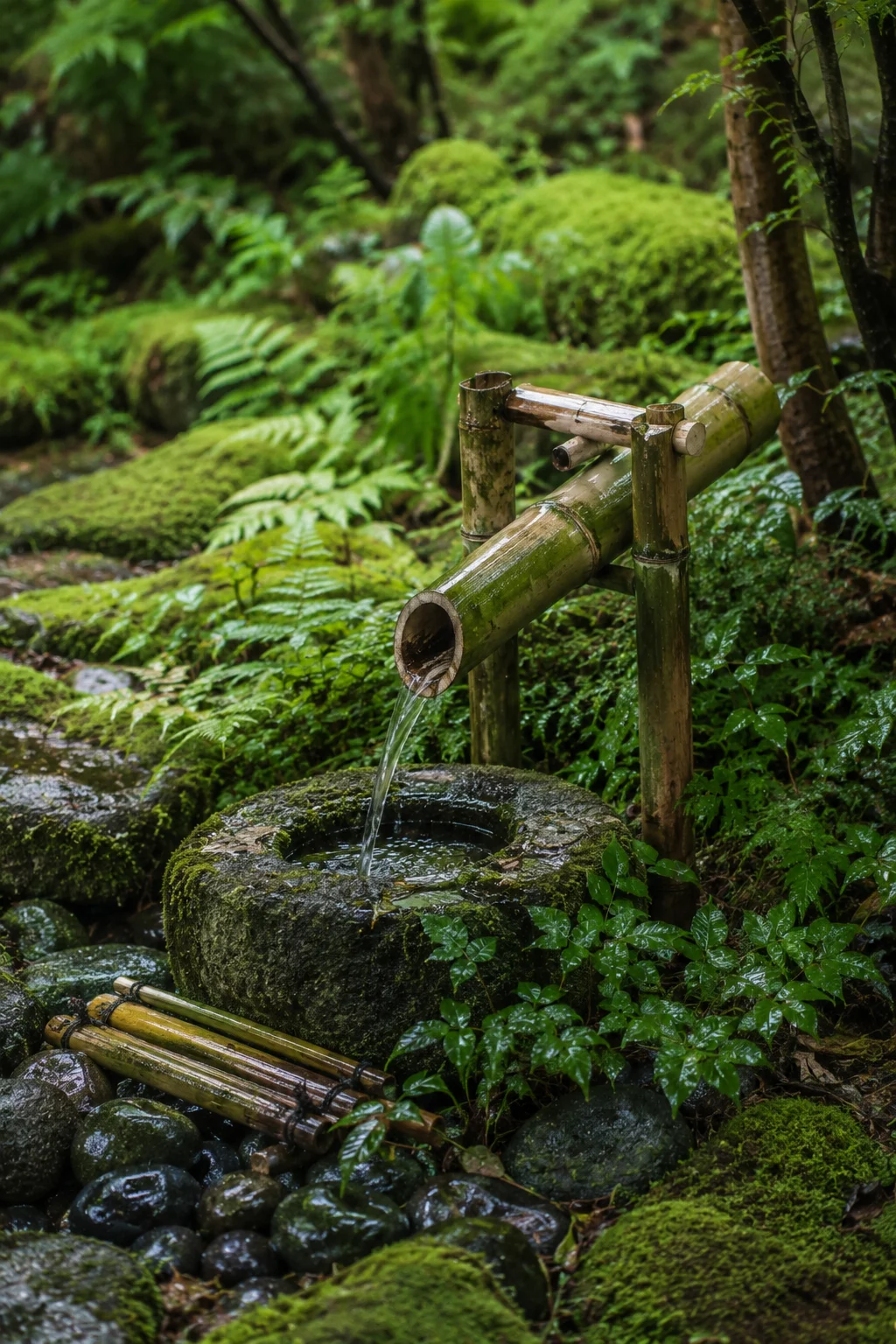
8. Bamboo Deer Scarer (Shishi-Odoshi)
This mechanical bamboo fixture fills slowly with water, tips to empty, and knocks against a stone with a distinctive clack — originally designed to frighten deer, now valued purely for the rhythmic sound it introduces into a still garden. It needs only a small water source to operate and works as a freestanding feature or paired with a tsukubai basin.
9. Reflecting Water Bowl
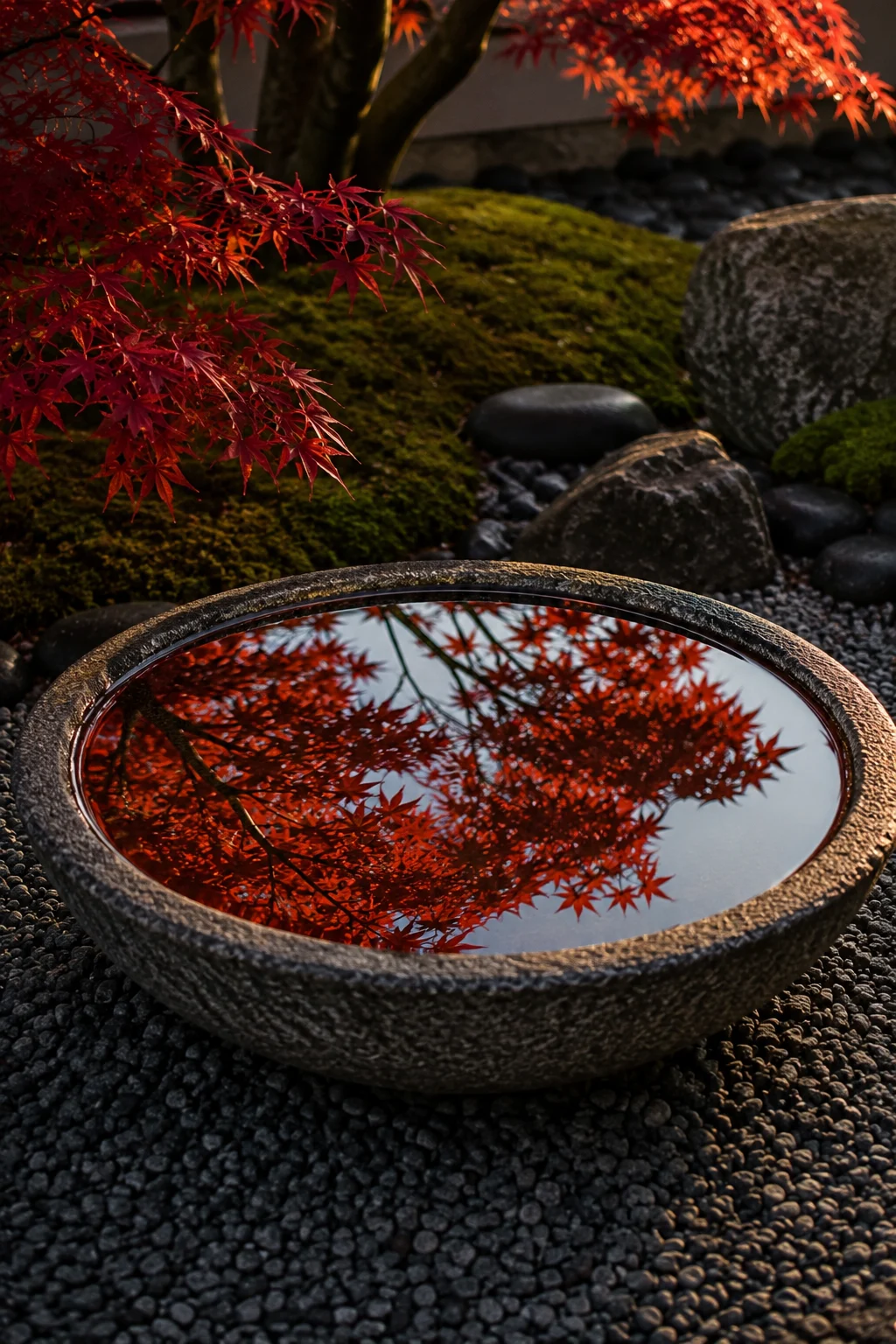
Where a full basin or pond isn’t practical, a single wide, shallow ceramic or stone bowl filled with still water can capture reflections of overhead foliage or a nearby lantern. Place it where morning or evening light will catch the water’s surface, and keep it topped up and free of debris so the reflection stays clear.
Plants and Greenery
10. Dwarf Japanese Maple as a Specimen Tree
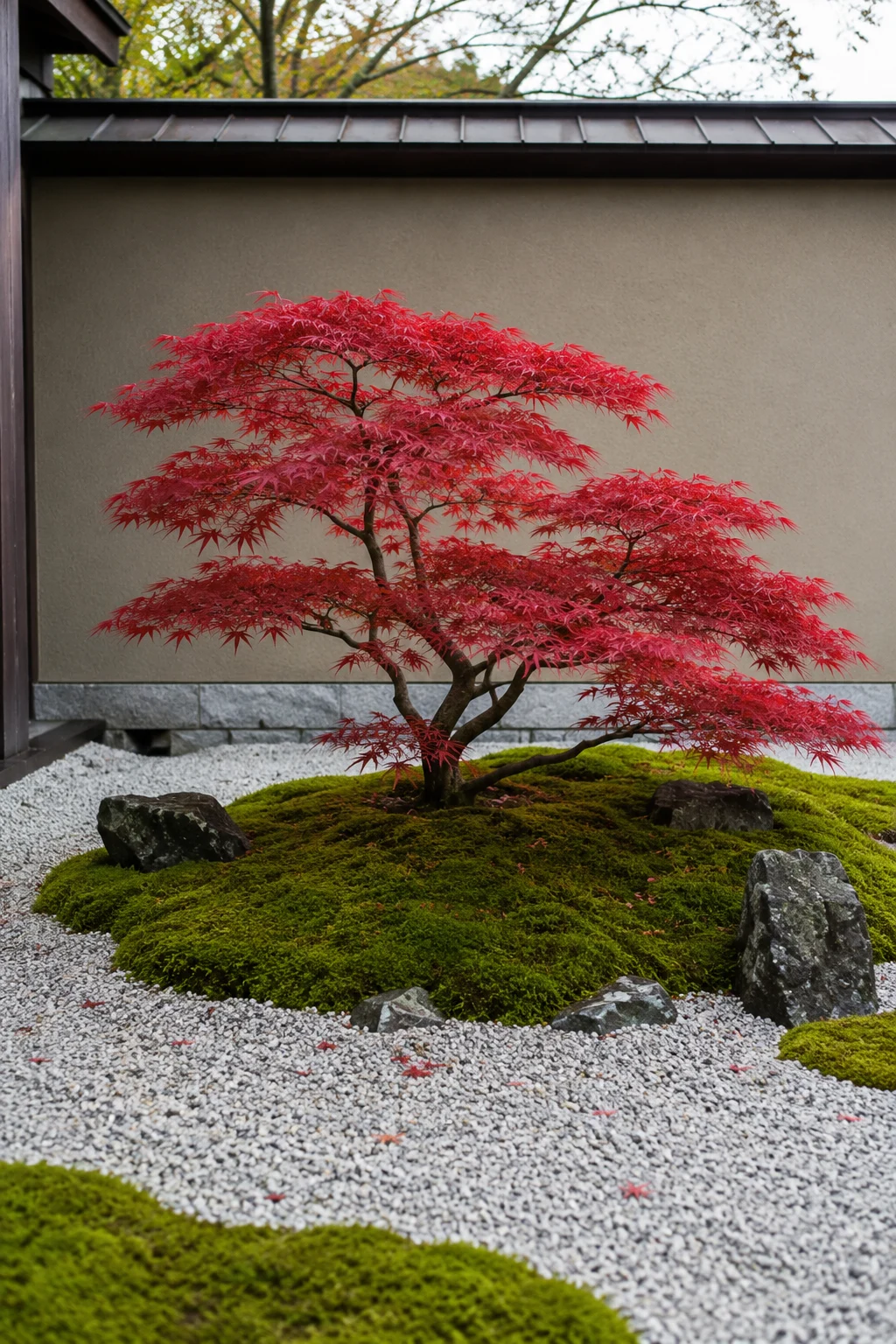
A single well-placed Japanese maple (Acer palmatum), particularly a weeping or dwarf cultivar, provides the entire seasonal arc a Japanese garden depends on — soft red-tinged new growth in spring, dense shade in summer, and vivid color in fall. In a small space, one specimen tree does more design work than several smaller plants combined.
11. Pruned Cloud Shrubs (Niwaki)
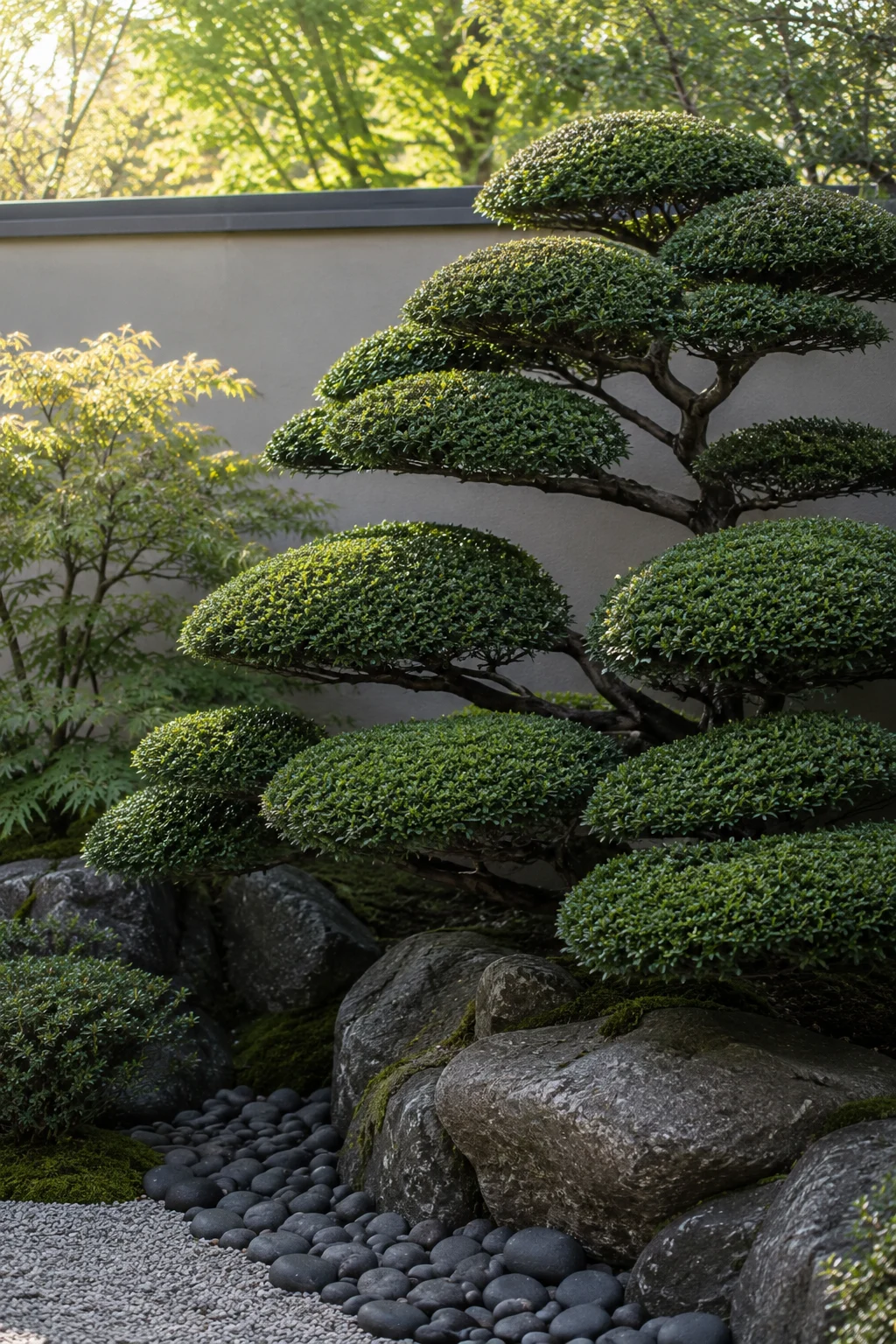
Shrubs pruned into rounded, cloud-like tiers — traditionally boxwood, azalea, or pine — introduce sculptural structure that reads as deliberate year-round, unlike unpruned shrubs that rely on bloom for visual interest. This takes ongoing maintenance but requires very little space, making it well suited to tight courtyards.
12. Azalea Mounds
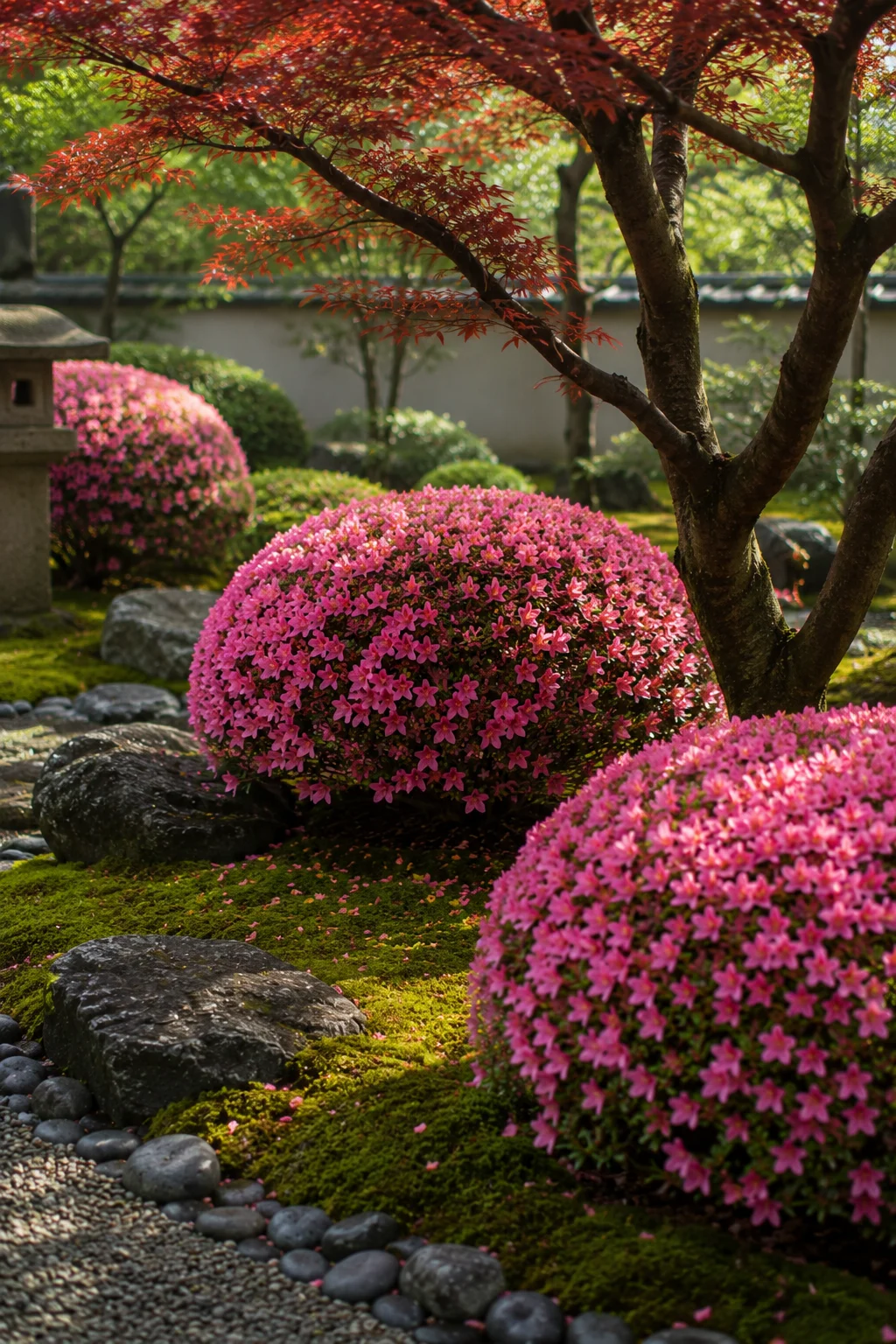
Low, densely pruned azalea mounds, kept clipped into smooth rounded forms rather than allowed to grow loosely, provide a burst of spring color and read as sculptural even when not in bloom. Group two or three mounds of varying size together rather than planting a single isolated shrub.
13. Bonsai Display Shelf
A dedicated low shelf or raised stone platform for displaying one or two bonsai specimens brings an entire miniature-tree tradition into a space as small as a balcony corner. Position the shelf where the bonsai gets appropriate light for its species and can be viewed at a natural eye level from a seated position.
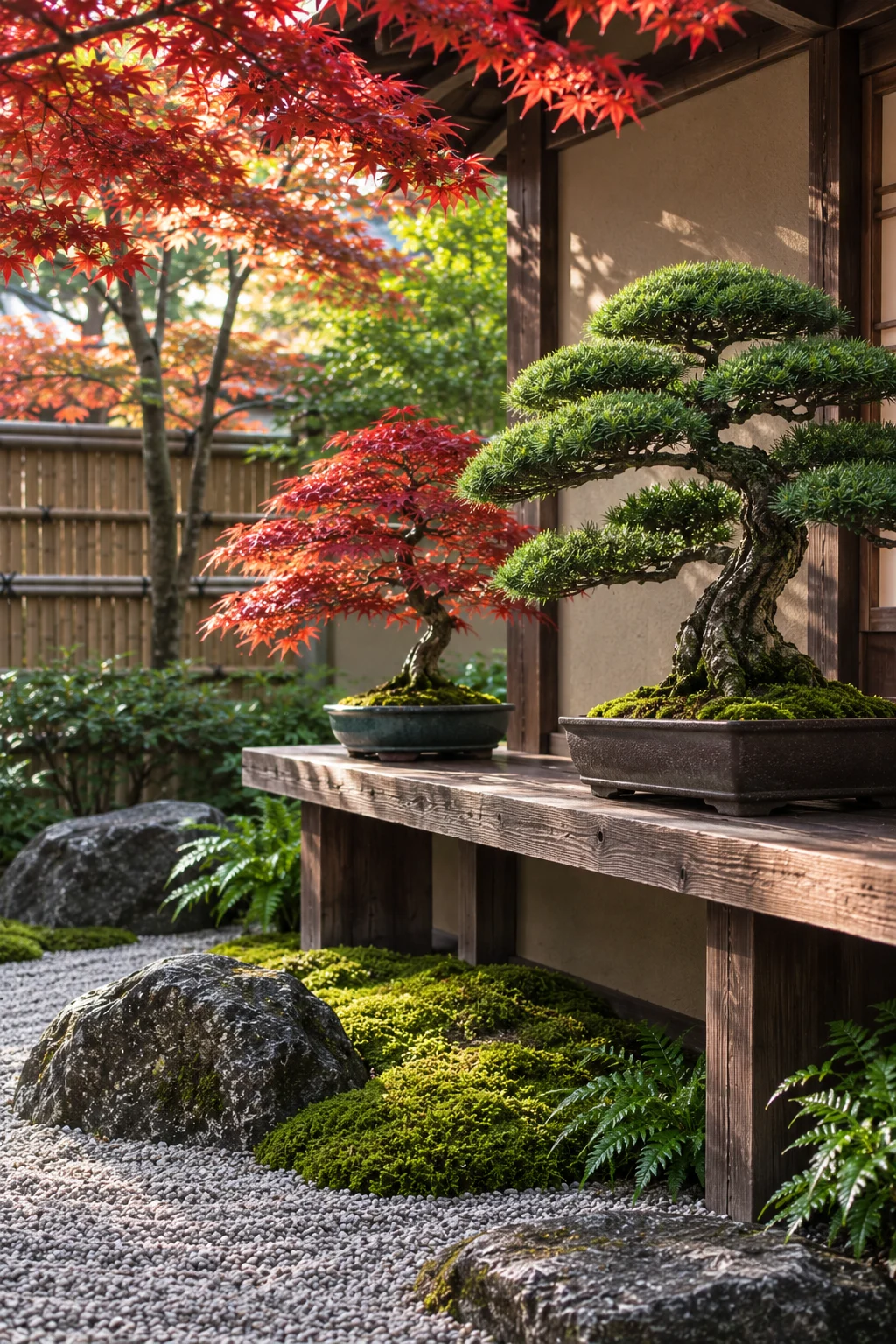
14. Ferns and Shade Groundcover
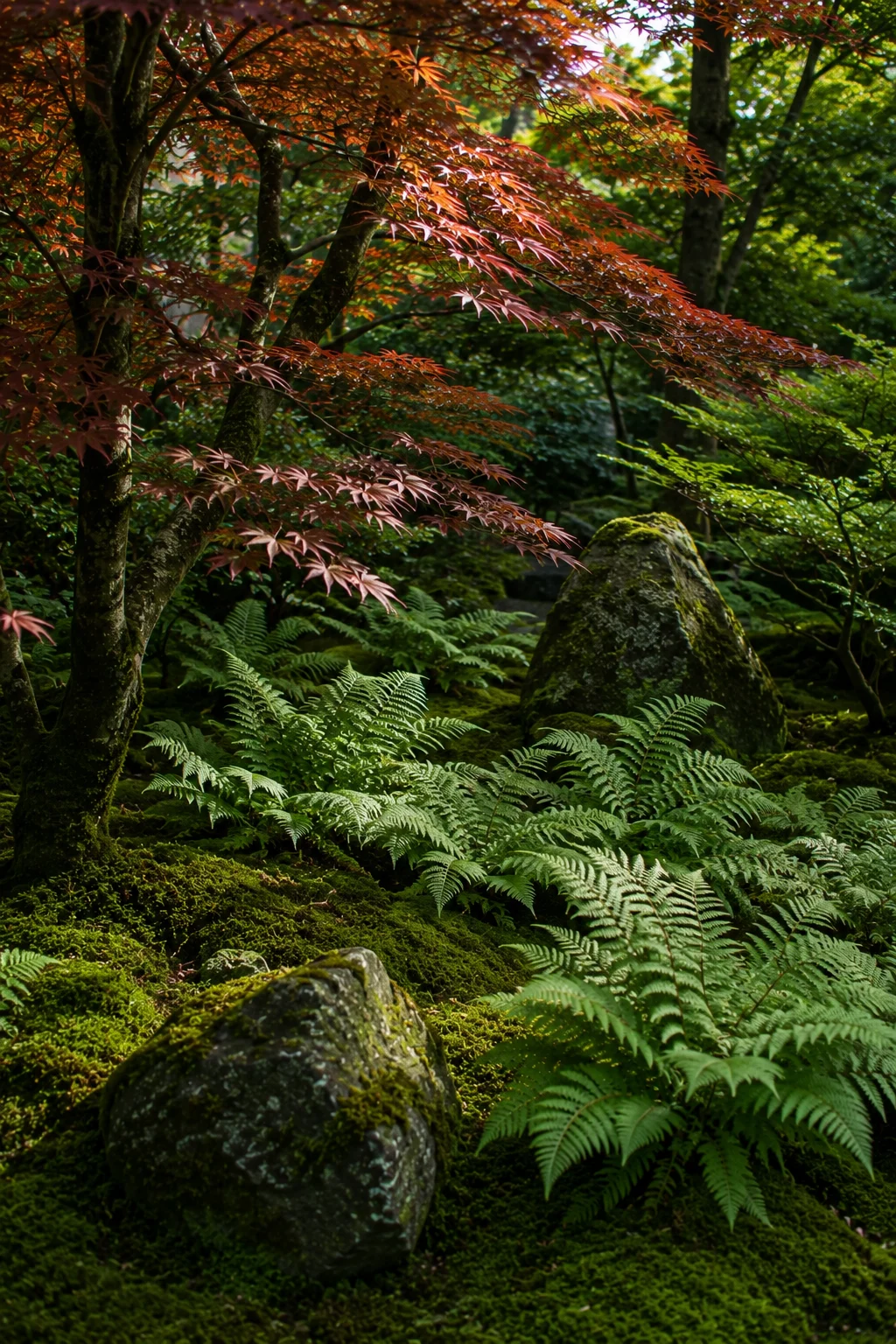
In the shaded pockets that most small yards have somewhere, ferns and low shade-tolerant groundcover fill the understory beneath a specimen tree without competing visually with it. If you’re planning a broader shaded corner beyond the Japanese garden itself, our shade garden plant guide covers additional options that pair well with this style.
15. Dwarf Bamboo as a Living Screen
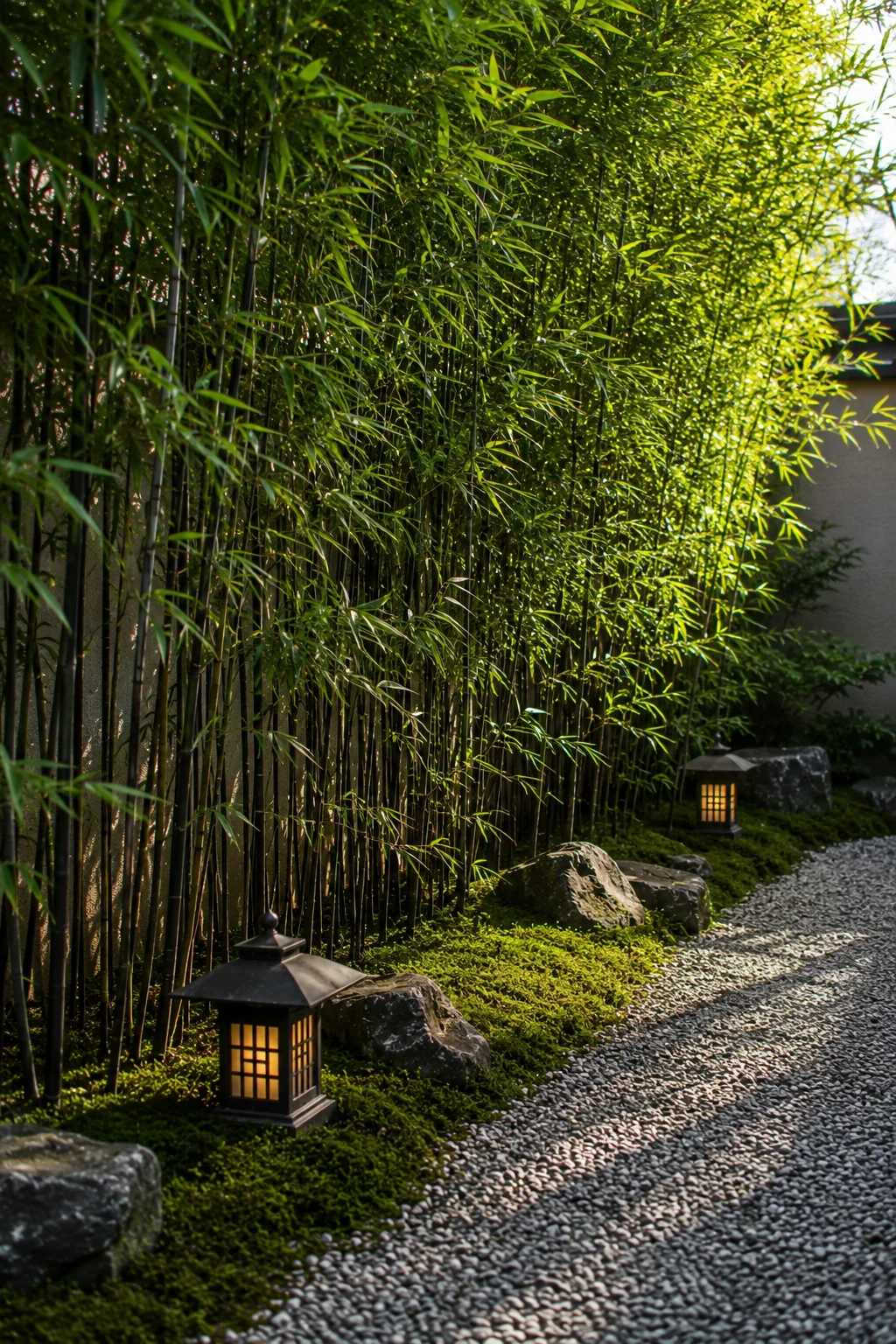
Clumping (non-running) dwarf bamboo varieties provide vertical, textural screening in a narrow bed without the aggressive spreading of running bamboo species. Contain it in a bed with a buried root barrier regardless of variety, since even clumping types can spread further than expected over many years.
Stone and Gravel Work
16. Rock Groupings (Suteishi)
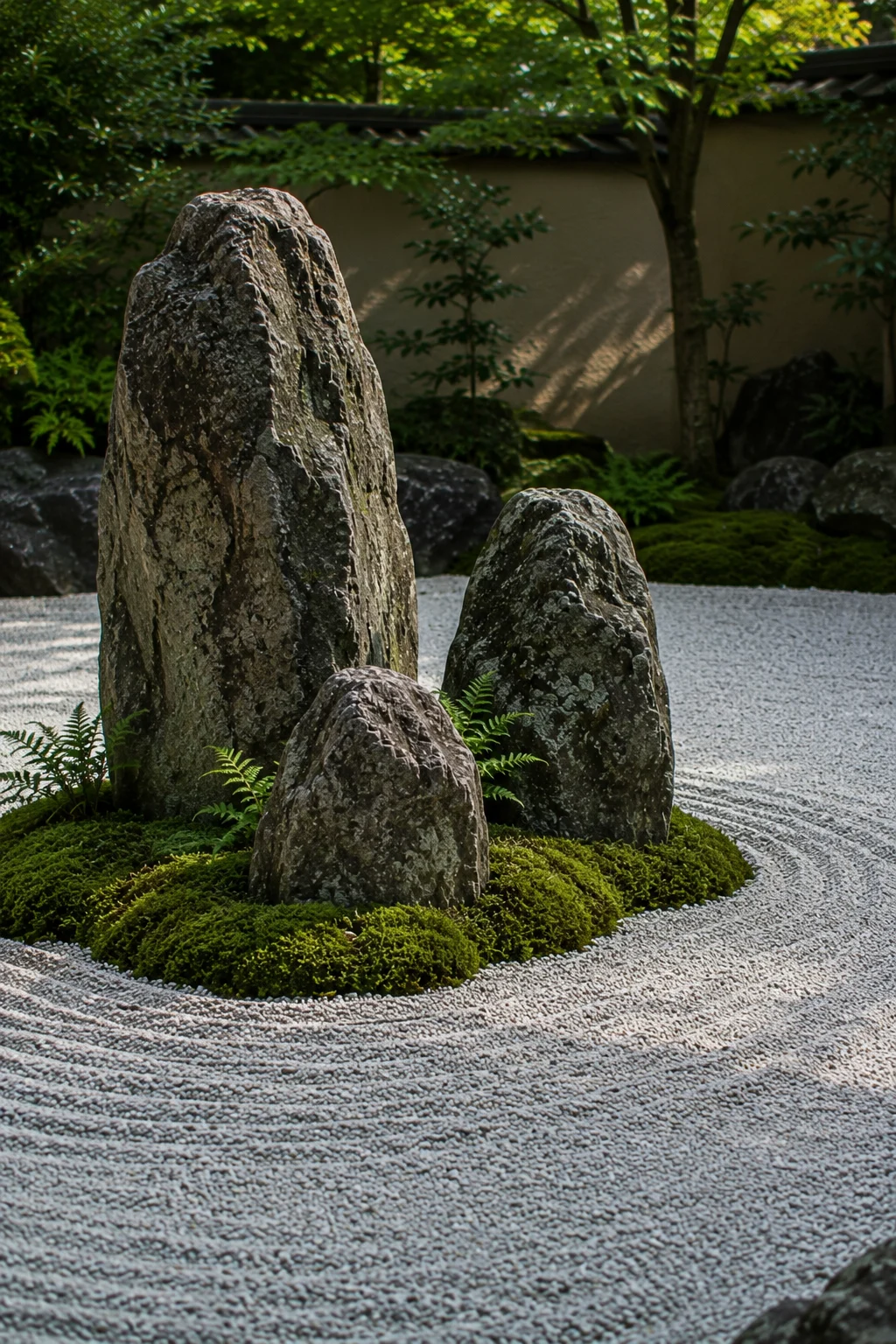
Traditional Japanese design places rocks in odd-numbered groupings — typically three or five — of varying size and shape, arranged to look as though they occurred naturally rather than as an obvious cluster. Choose one dominant “primary” stone and let the smaller stones support it visually rather than compete with it in size.
17. Raked Gravel Patterns
Beyond a static gravel bed, use a garden rake with a wide, evenly spaced tine pattern to draw concentric circles around rock groupings or straight parallel lines across open gravel, representing rippling water. Re-raking after wind or rain becomes part of the garden’s ongoing maintenance ritual rather than a chore.
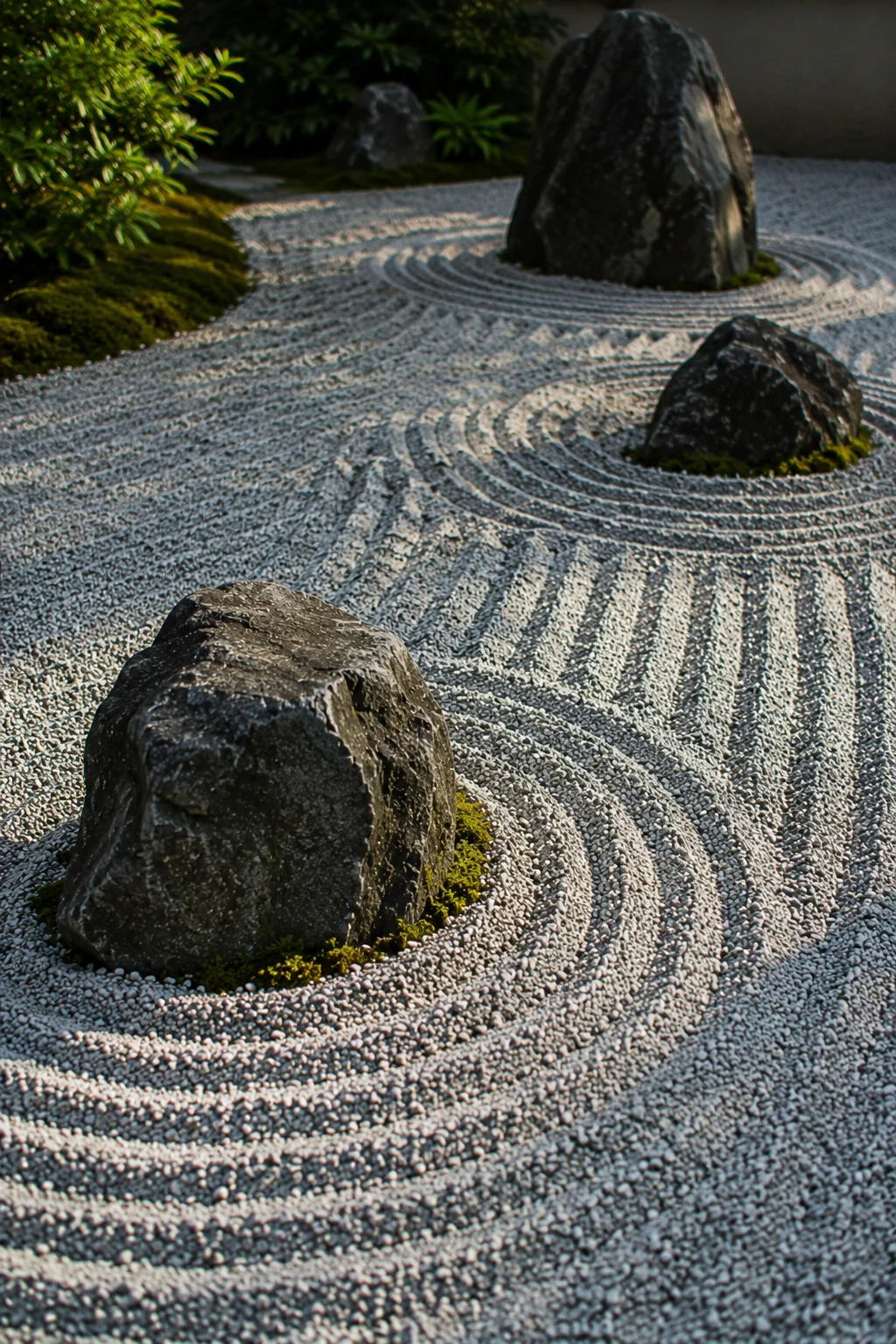
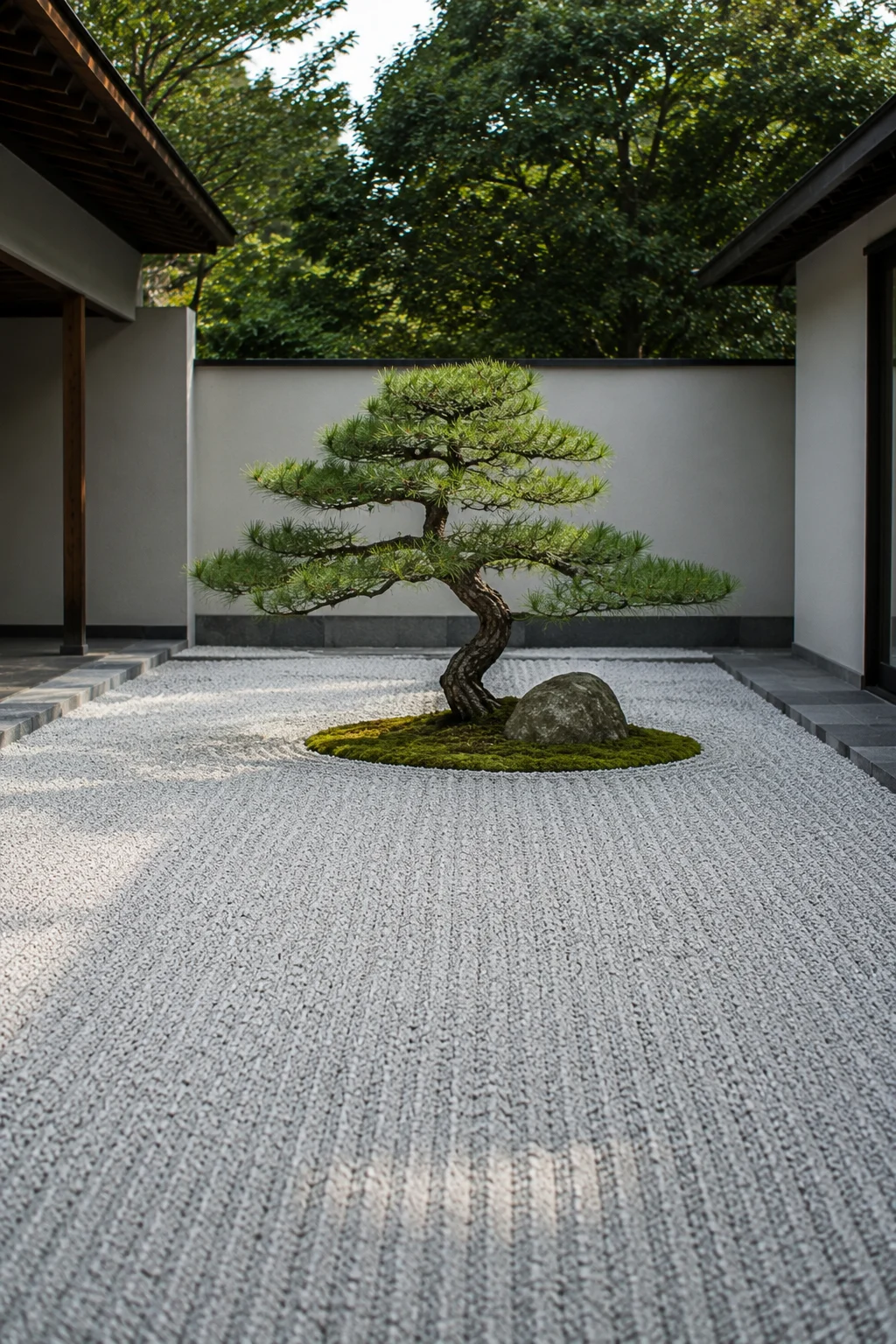
18. Gravel Courtyard With a Single Specimen
In extremely tight spaces — a side yard or entryway strip — a bed of raked gravel with just one specimen tree or a single rock grouping can outperform a densely planted bed, since the empty space itself becomes a deliberate design element rather than a gap to be filled.
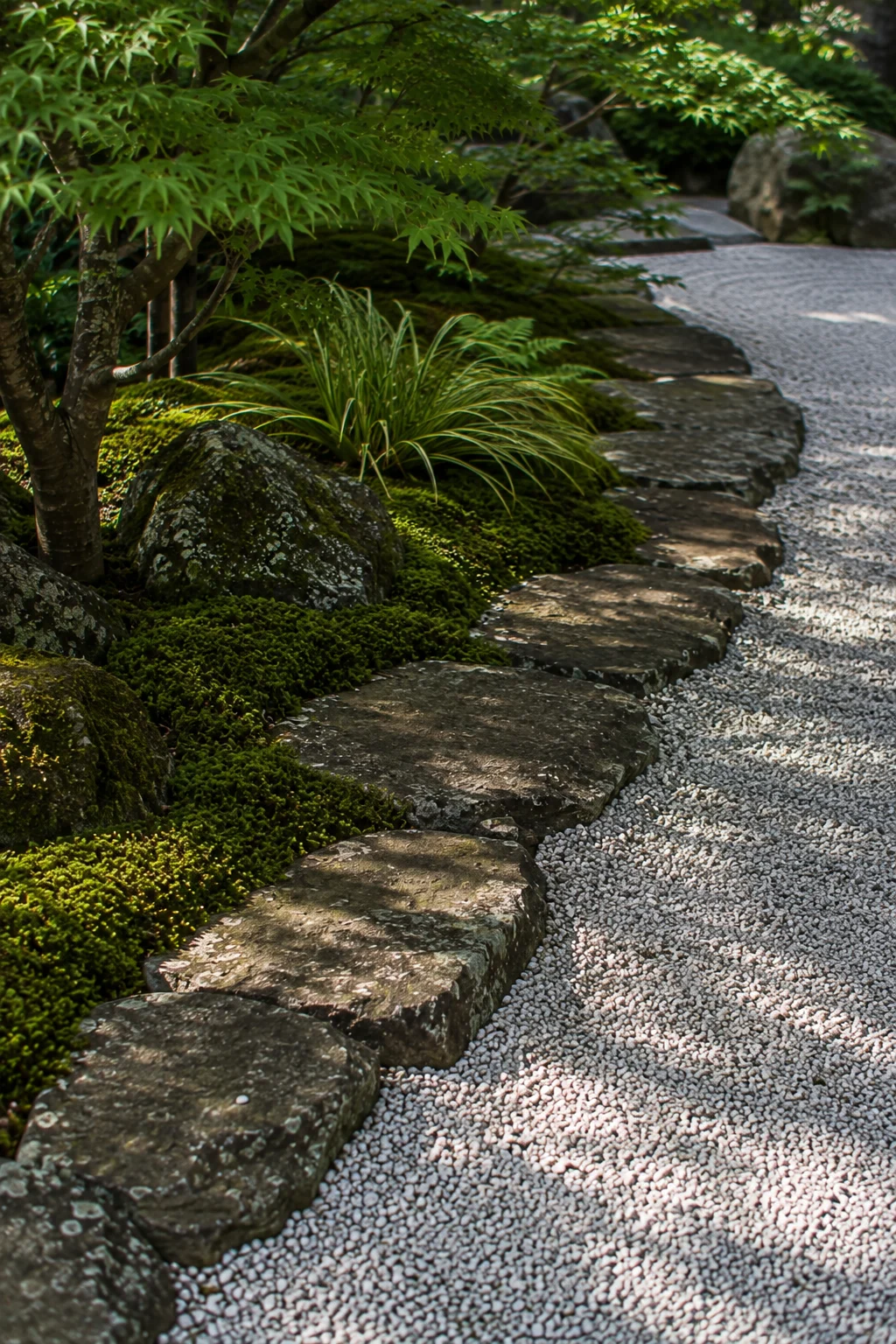
19. Stone Edging Along Beds
Using irregular flat stones, rather than uniform brick or plastic edging, to define the boundary between gravel and planted beds keeps the hard landscaping consistent with the natural materials used throughout the rest of the design.
Framing, Boundaries, and Structure
20. Borrowed Scenery (Shakkei)
Rather than screening out everything beyond the yard’s boundary, shakkei deliberately frames a distant tree, rooftop, or hillside as if it belongs to the garden itself — achieved by pruning or positioning foreground elements to guide the eye toward that background feature instead of blocking it. This is one of the most powerful tricks for making a small garden feel larger than its actual footprint.
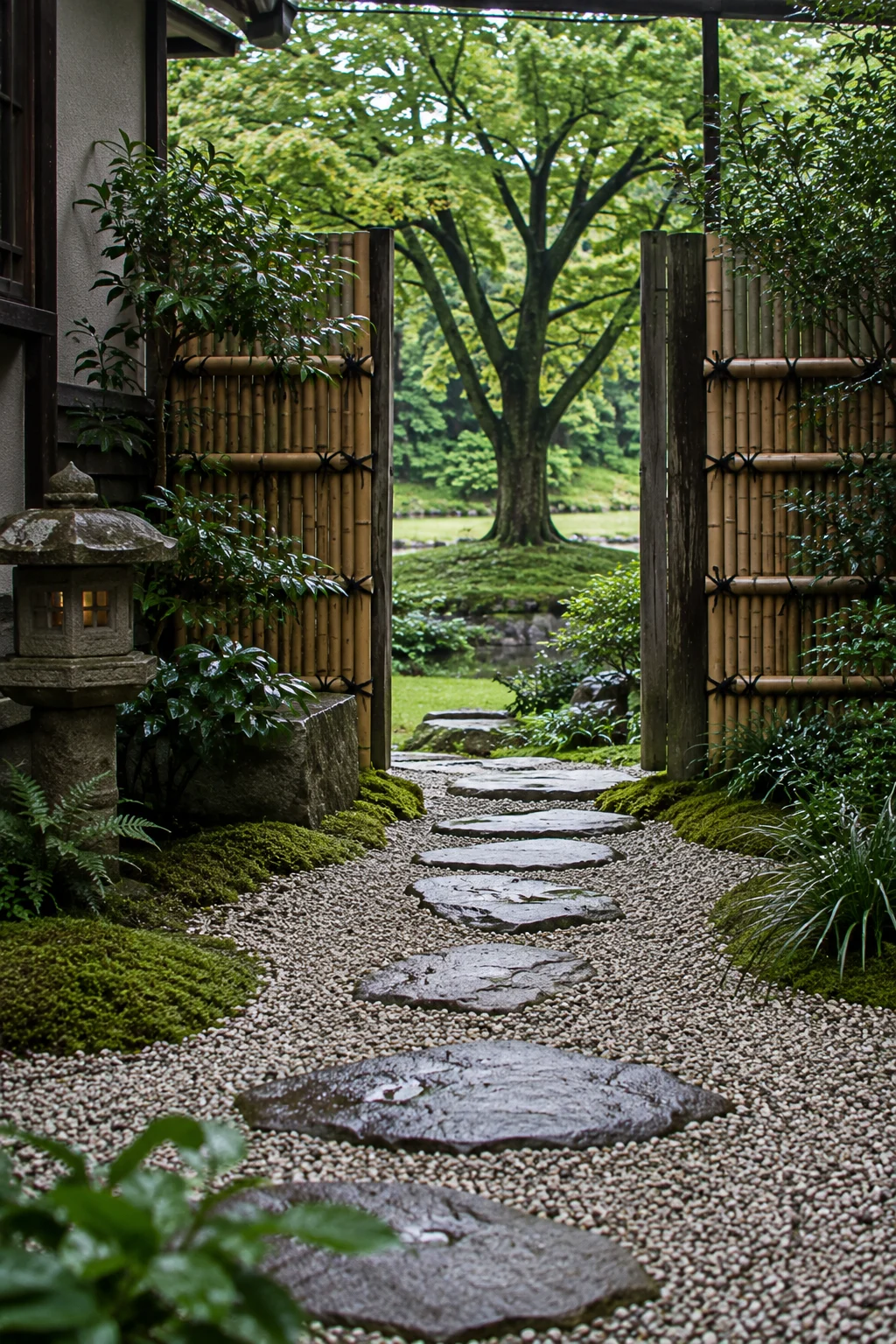
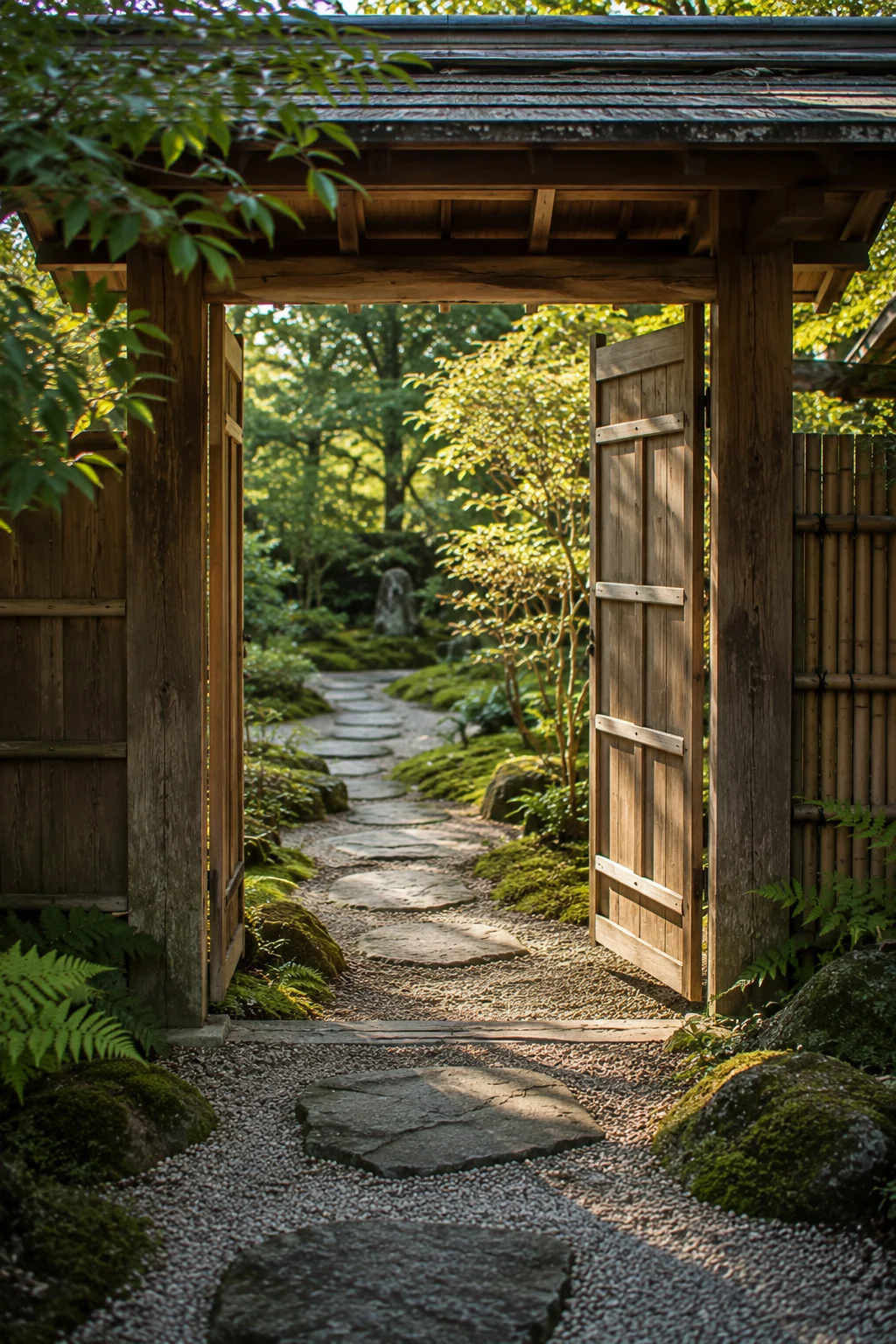
21. A Simple Wooden Gate (Mon)
A freestanding wooden gate, even one that doesn’t connect to a full fence, marks a symbolic threshold into the garden space and reinforces the sense of a deliberate, separate world within the yard. Keep the design plain — unpainted or lightly stained wood — rather than ornate.
22. Layered Hedge Screening
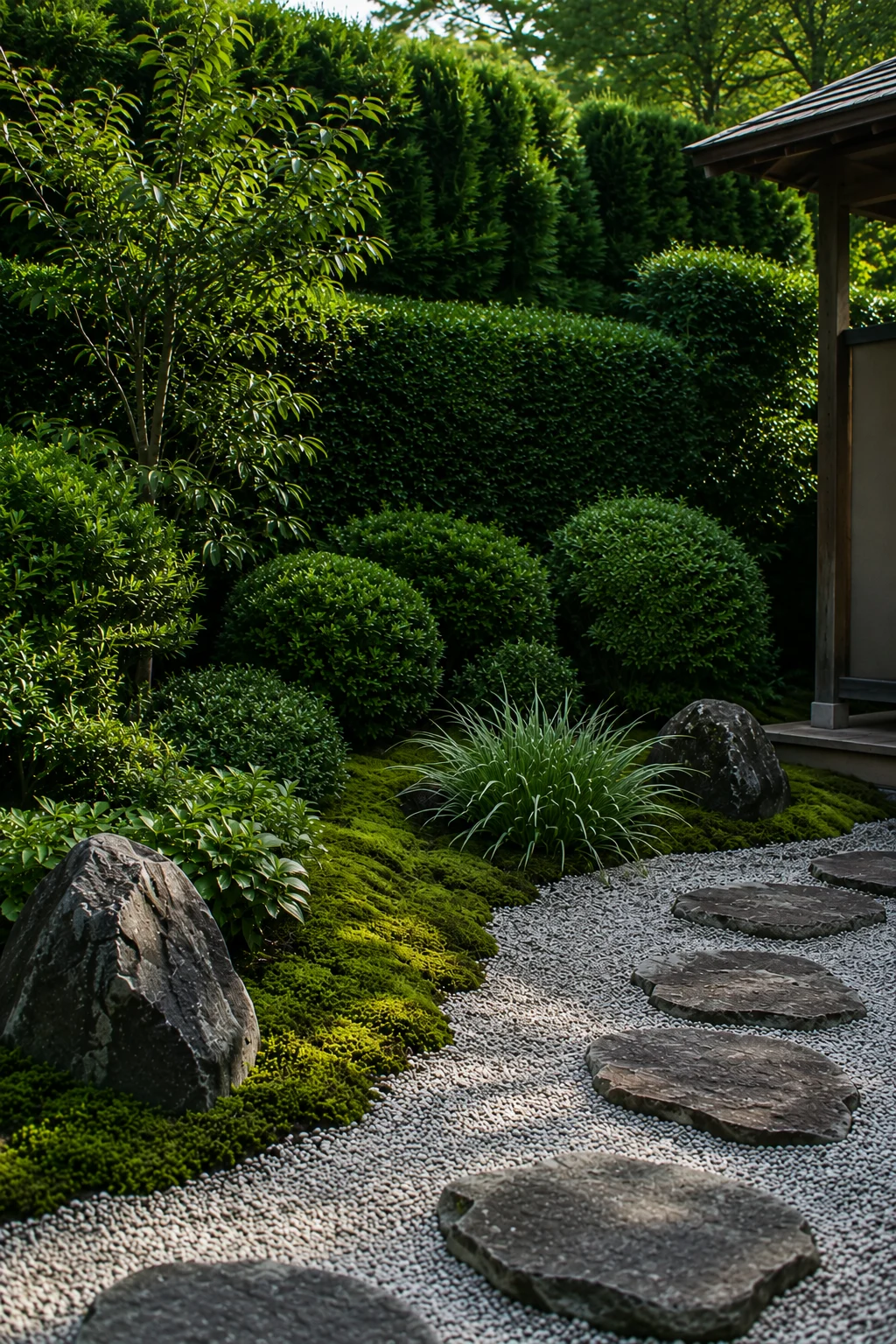
A tiered hedge, denser at the base and thinner toward the top, screens neighboring views without creating a flat, solid wall effect. This layering principle overlaps with general small-yard privacy screening covered in our small backyard layout guide, adapted here with more restrained, single-species plantings typical of Japanese design.
23. Tea Garden Path (Roji) With a Dew Basin
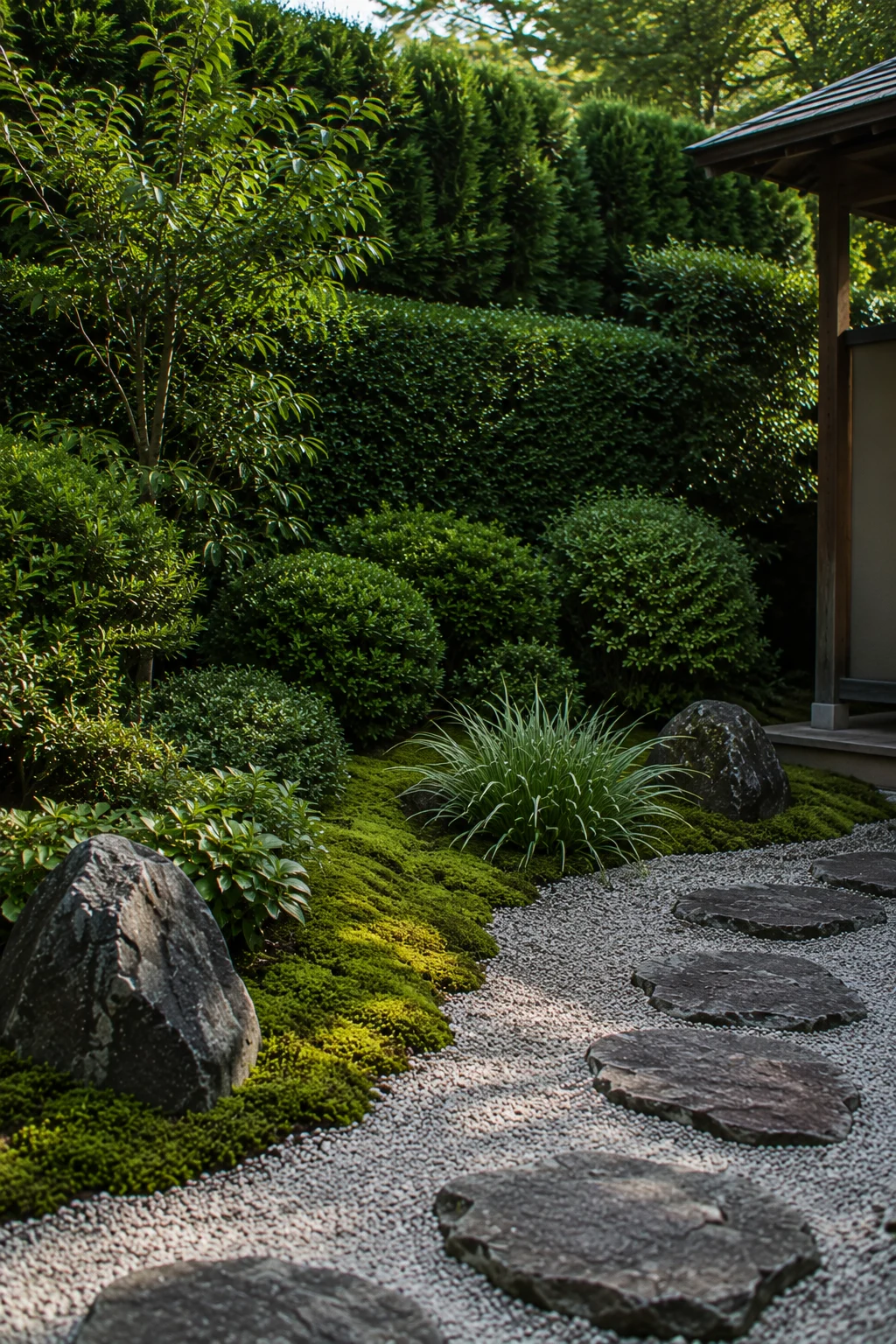
A dedicated narrow path leading to a tea house or seating area, traditionally punctuated by a low stone basin near the entrance, works as a scaled-down version even without a formal tea house — just a stepping-stone path ending at a small basin and a simple seat creates the same sense of transition and arrival.
Small-Space and Seasonal Adaptations
24. Container-Based Japanese Garden for Balconies
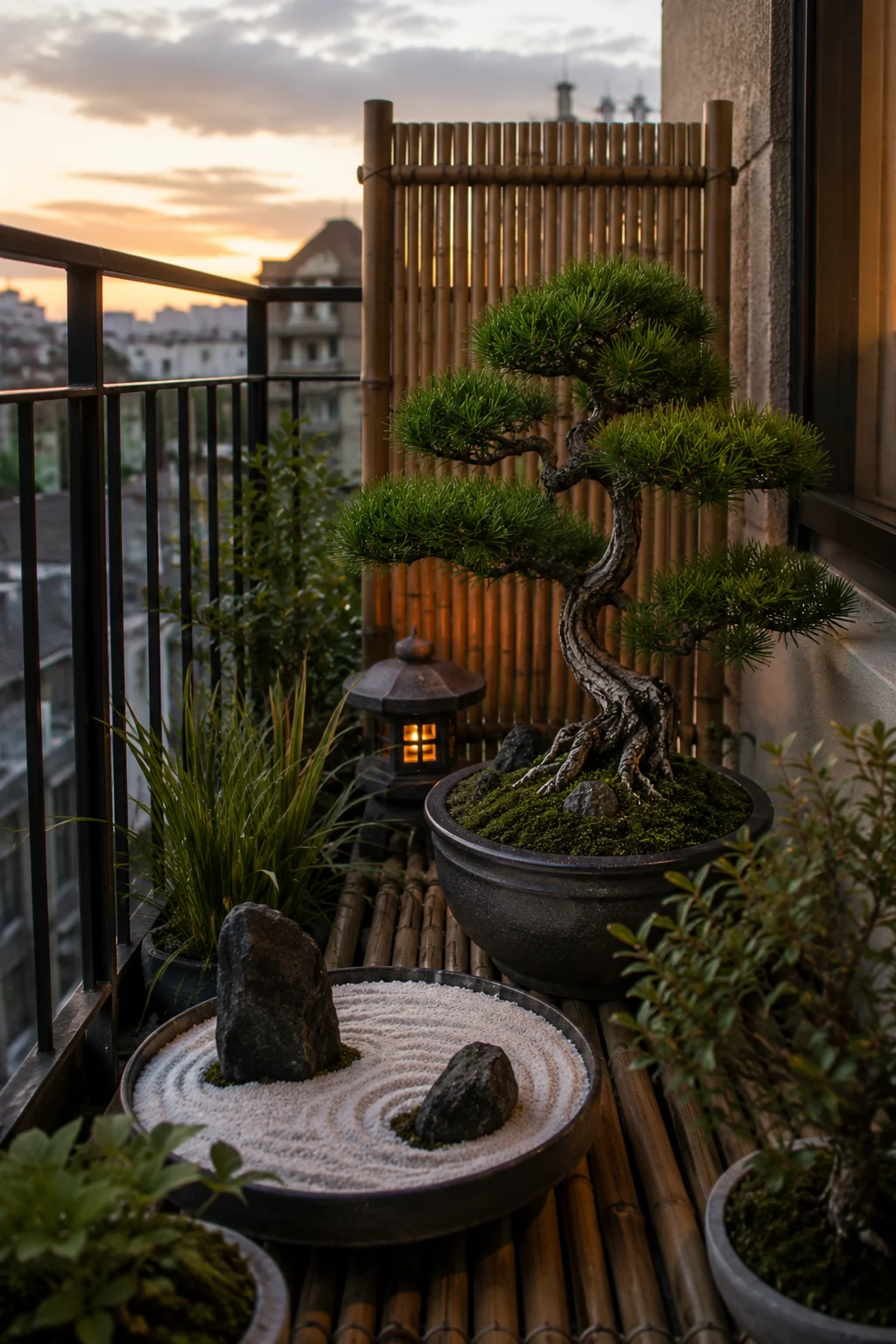
Every core principle scales down further into containers: a shallow ceramic tray with raked sand standing in for a gravel bed, a single dwarf pine or maple in a large pot as the specimen tree, and a small stone or two for rock-grouping symbolism. This lets an apartment balcony or tiny patio adopt the same design language as a full yard — an approach that pairs naturally with the container gardening ideas in our small patio design guide.
25. Seasonal Planting for Year-Round Interest
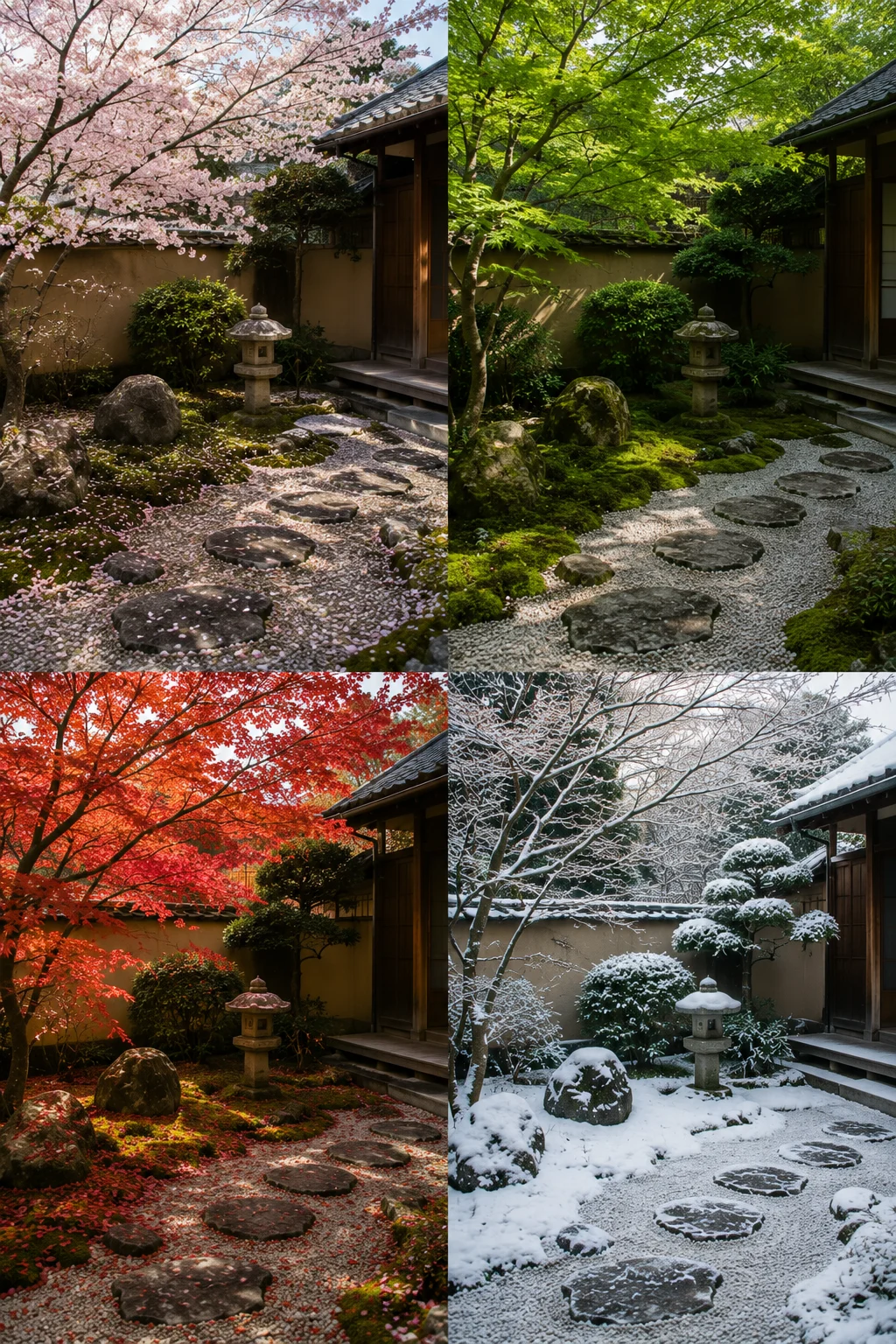
A well-designed Japanese garden is planned around the full year rather than a single bloom season: early flowering plum or cherry for spring, deep green structure through summer, maple color in fall, and evergreen pine or bamboo carrying the garden’s structure through winter when almost everything else has gone dormant. Choosing even two or three plants specifically for their off-season presence prevents the garden from looking abandoned outside of peak bloom.
How to Choose From This List
Twenty-five ideas is a menu, not a checklist. A strong small Japanese garden usually draws from no more than six or seven of these: one structural gravel or stone element, one water feature, one specimen tree, one or two supporting plant choices, and one framing or boundary element. Layering in everything at once tends to produce clutter — the opposite of the restraint the style depends on. If you’re mapping out the layout itself before choosing individual features, our garden path design guide covers how path placement should typically come before planting decisions, not after.
Final Thoughts
The strongest small Japanese gardens succeed by doing less, more deliberately — a single well-placed stone, one specimen tree given room to be seen properly, a path that makes you slow down before you reach the end of it. Start with the structural bones (gravel, stone, or a path), add one water feature and one specimen tree, and layer in the smaller plant and framing details only once the core composition feels resolved. Restraint isn’t a limitation in this style — it’s the entire design principle.