
Late summer is when many borders begin to expose their weaknesses.
Early flowers have faded, tall plants are leaning, weeds are setting seed, and gaps hidden in June are suddenly obvious. Do not declare the season finished. A few well-timed late summer garden tasks can restore color, sharpen the design, and prepare the border for a stronger autumn without cutting everything down.
1. Walk the Border Before You Touch Anything
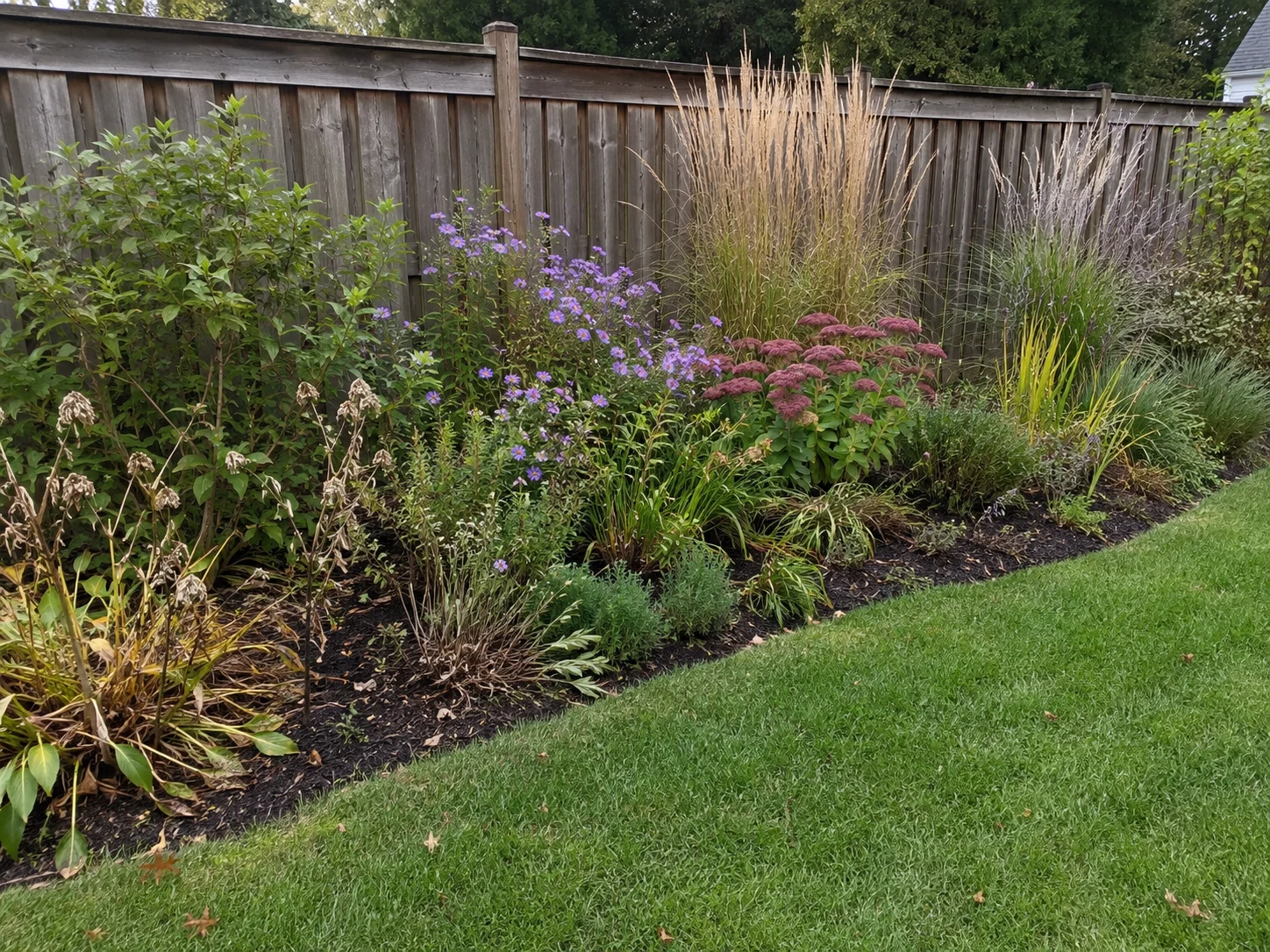
Start with observation, not pruning.
View the border from the patio, windows, gate, and main path. Take photographs from these positions because a bed that looks fine close up may appear flat or unbalanced from the house.
Look for:
- Empty areas with no late-season color
- Plants blocking paths or smaller neighbors
- Repeated plants that have disappeared visually
- Floppy growth and broken stems
- Bare soil where weeds keep returning
- Colors that no longer connect across the border
Mark important gaps with canes or labels so you fix the design instead of filling every opening with sale plants.
2. Deadhead Plants That Can Flower Again
Selective deadheading can keep dahlias, cosmos, zinnias, salvias, penstemons, and many bedding plants flowering into early autumn. Remove the whole faded flower, cutting back to a healthy leaf, side shoot, or new bud.
The goal is not to deadhead every plant. Leave attractive or useful seedheads on sedum, coneflower, ornamental grasses, sunflowers, and some rudbeckias. They provide structure after the flowers fade and can offer food or shelter for wildlife.
The Royal Horticultural Society explains that deadheading can improve appearance and encourage additional flowers. Its August flower checklist also recommends maintaining flowering containers and leaving ornamental grass flowerheads intact.
3. Remove Growth That Is Genuinely Finished
There is a difference between useful seedheads and collapsed, diseased growth.
Cut out stems that are:
- Rotten or slimy
- Badly affected by disease
- Broken across paths
- Smothering healthy plants
- Producing unwanted seed
- Completely dead with no structural value
Do not flatten the border in the name of tidiness. Keep strong stems and seedheads, but remove diseased or collapsed material. This creates cleaner lines without stripping away texture.
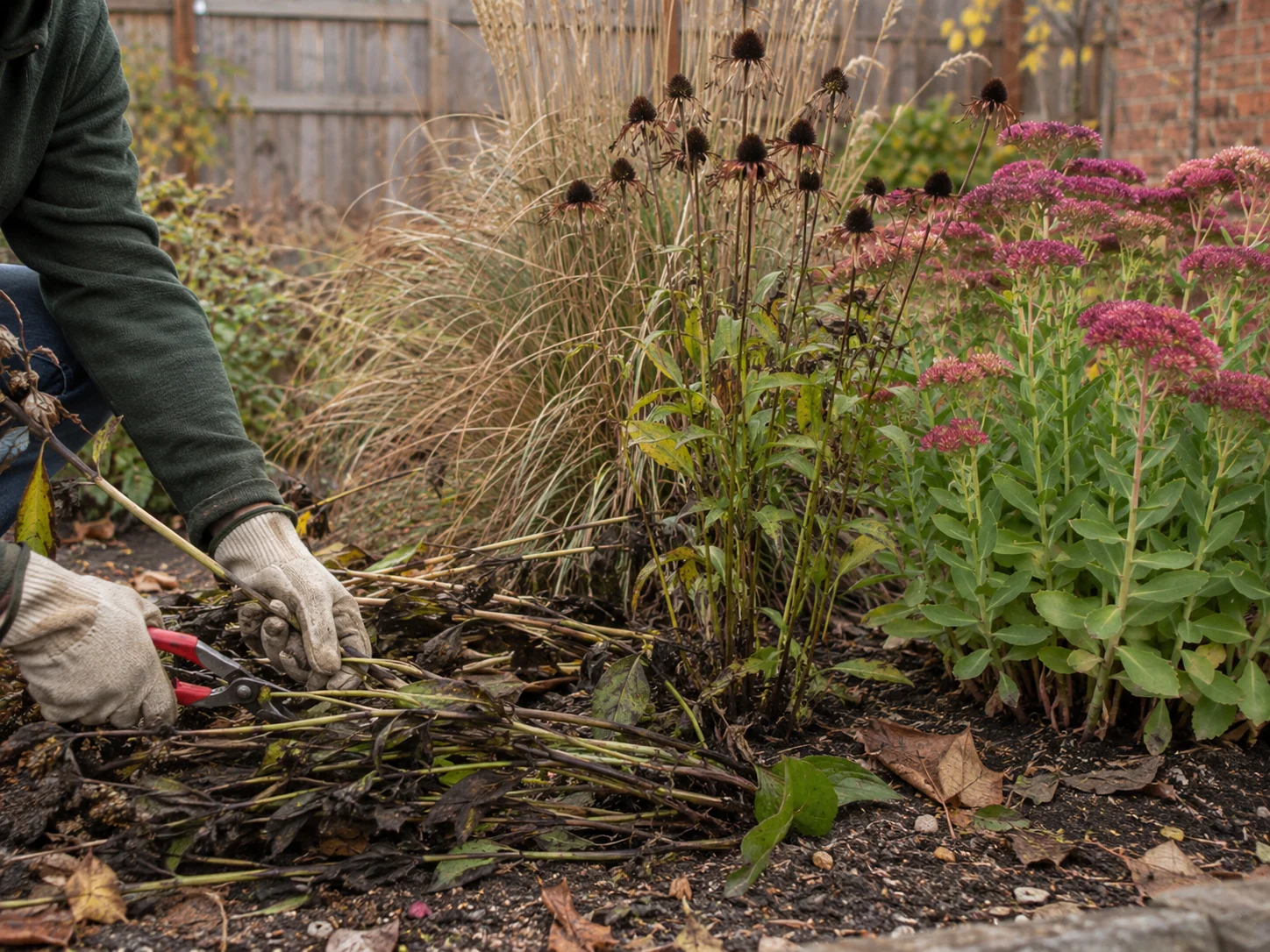
4. Stop Weeds Before They Set Seed
Late-summer weeds are preparing to spread. Pull annual weeds before their seedheads mature. Remove as much perennial root as practical, and do not shake ripe seeds across the border or compost invasive roots unless your system destroys them.
Weeding now reduces next year’s workload and reveals where the border needs more groundcover. Recurring weed zones may need denser planting, improved edging, or a better mulch layer.
Do not simply cover established weeds with mulch. Many persistent weeds will grow straight through it, leaving you with the same problem beneath a more expensive surface.
5. Repair the Shape of the Border
Plants are not always the problem. Sometimes the border itself is too thin, awkward, or weakly shaped.
Use a hose or rope to test a cleaner edge. Widen weak narrow areas, remove tiny bends that complicate mowing, and make curves broad enough to look deliberate. A stronger edge can transform the yard before any new planting.
A wider border also creates enough depth for proper planting layers:
- Taller shrubs, grasses, or perennials at the back
- Rounded flowering plants through the middle
- Compact plants or groundcovers along the front
use stronger borders, repeated plants, and clear focal points.
6. Fill the Late-Summer and Autumn Gaps
Now use the gaps you identified earlier.
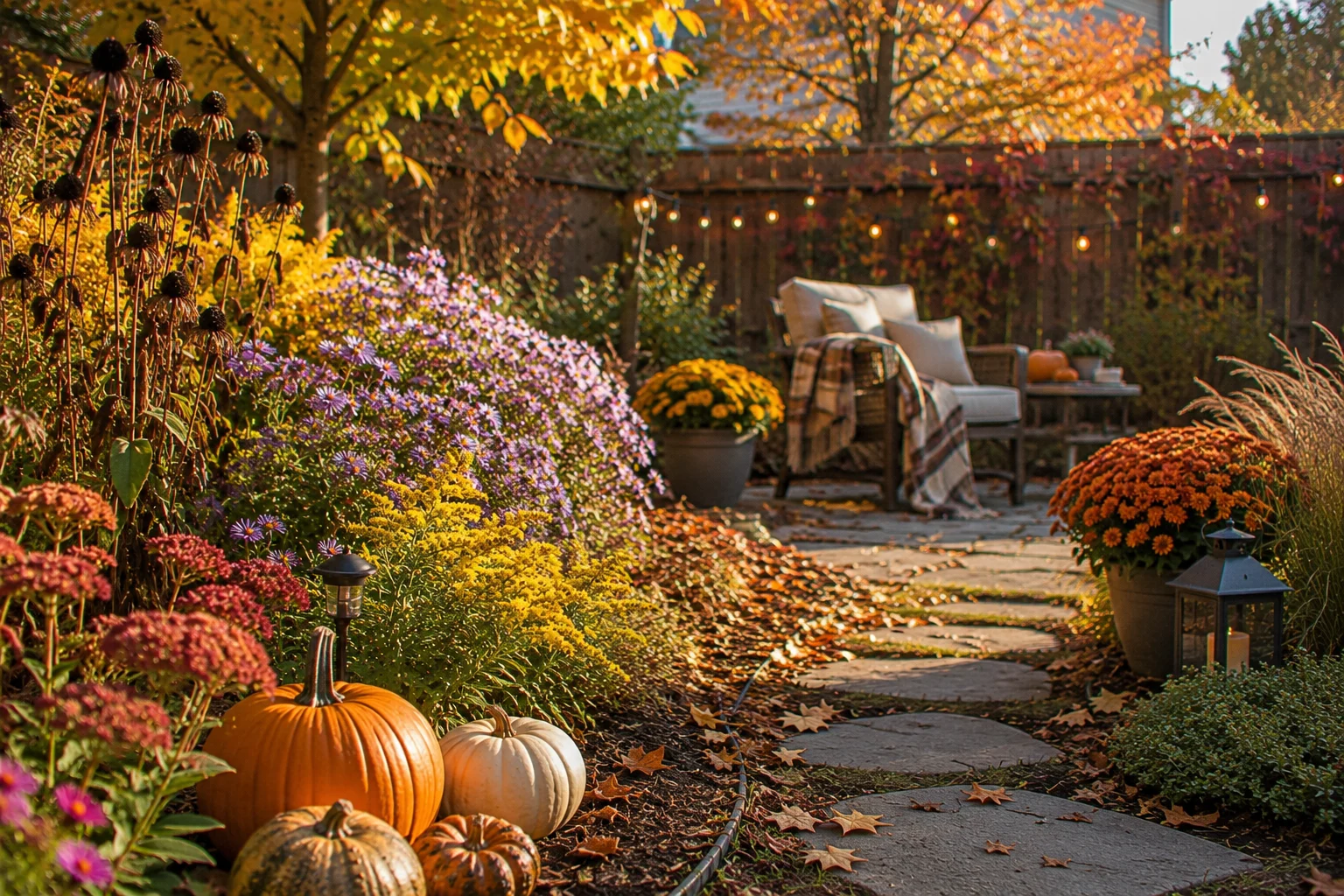
Choose plants that are beginning their main display rather than adding more spring-heavy varieties. Depending on your climate and site, useful options may include:
- Asters
- Upright sedum
- Goldenrod
- Helenium
- Rudbeckia
- Japanese anemone
- Hardy chrysanthemums
- Late-flowering salvias
- Ornamental grasses
Use repeated groups instead of isolated plants. Three compact asters create more impact than three unrelated flowers. Check mature size before planting so a small nursery plant does not later overwhelm the border.
Do not try to use every plant on the list. Choose two or three that suit your soil, sunlight, and existing color palette.
choose flowers that keep blooming after the main summer display fades.
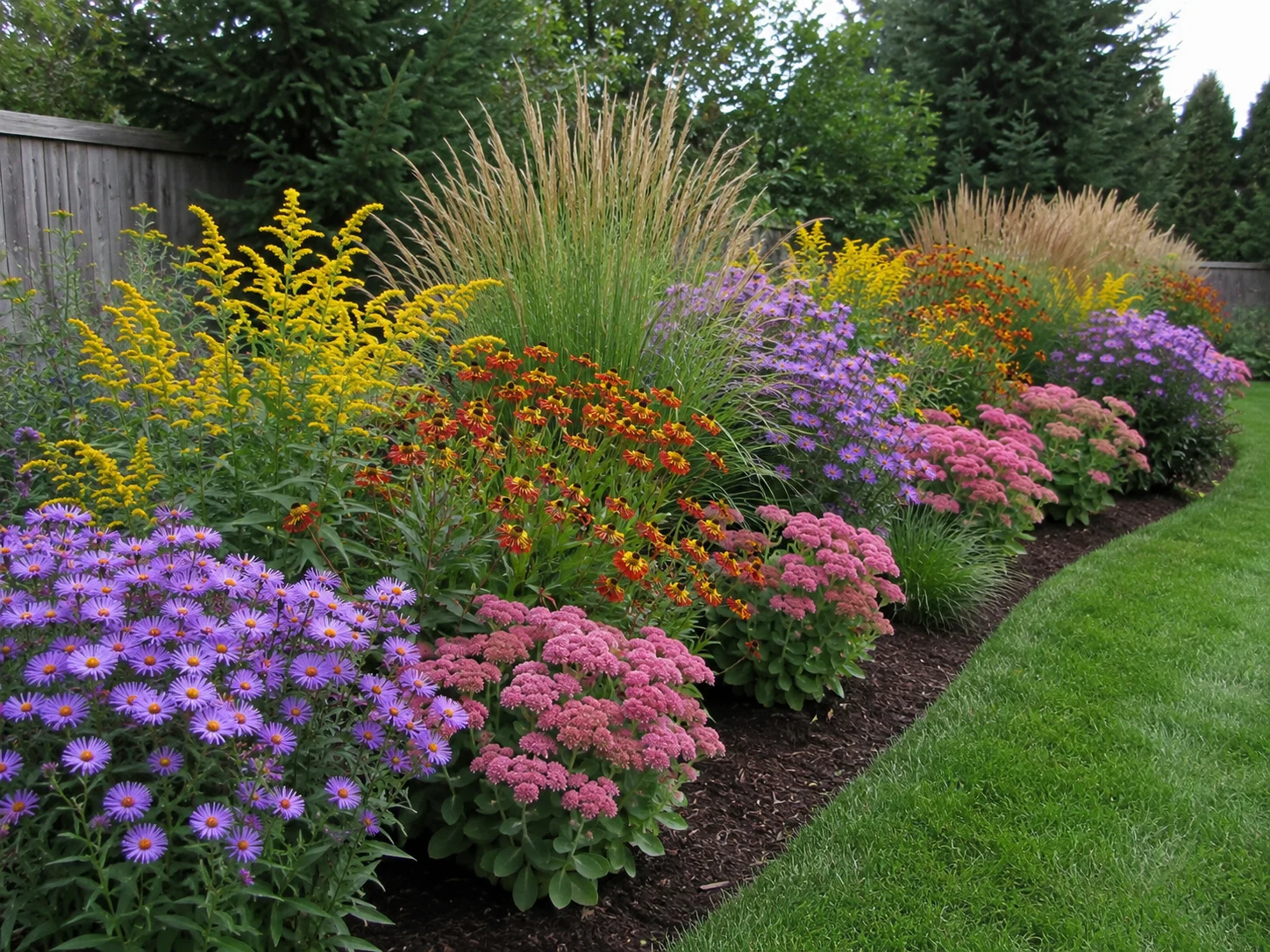
7. Divide Crowded Perennials at the Right Time
Crowded clumps may flower poorly, develop empty centers, or push neighboring plants out of position.
Do not divide everything automatically. Some plants dislike disturbance, and active heat or drought can stress new divisions. Identify which clumps need attention, then divide suitable spring- or summer-flowering perennials when conditions are cooler and the soil is moist.
In cold climates, fall divisions need enough time to establish before the ground freezes. The University of Minnesota Extension recommends allowing roughly four to six weeks for root establishment in fall. Its guide to dividing perennials also explains which plants are better divided in different seasons.
Water divisions thoroughly and keep them evenly moist while they recover. Replant the strongest sections and share or compost healthy leftovers.
8. Move Plants That Are Clearly in the Wrong Place
Late summer makes placement mistakes obvious: sun-loving plants lean toward light, short plants disappear behind shrubs, and tall stems fall across paths.
Label and photograph anything that should move, then relocate it during a suitable planting window for your climate.
Do not move stressed plants during severe heat unless survival requires it. Water beforehand, prepare the new hole first, retain as much root as possible, and water deeply after replanting.
Also consider the plant’s final height. Moving a tall perennial only a few inches farther back may improve the entire border without requiring a major redesign.
9. Support Tall Plants Before Autumn Weather Arrives
Autumn rain and wind can flatten plants that survived summer upright.
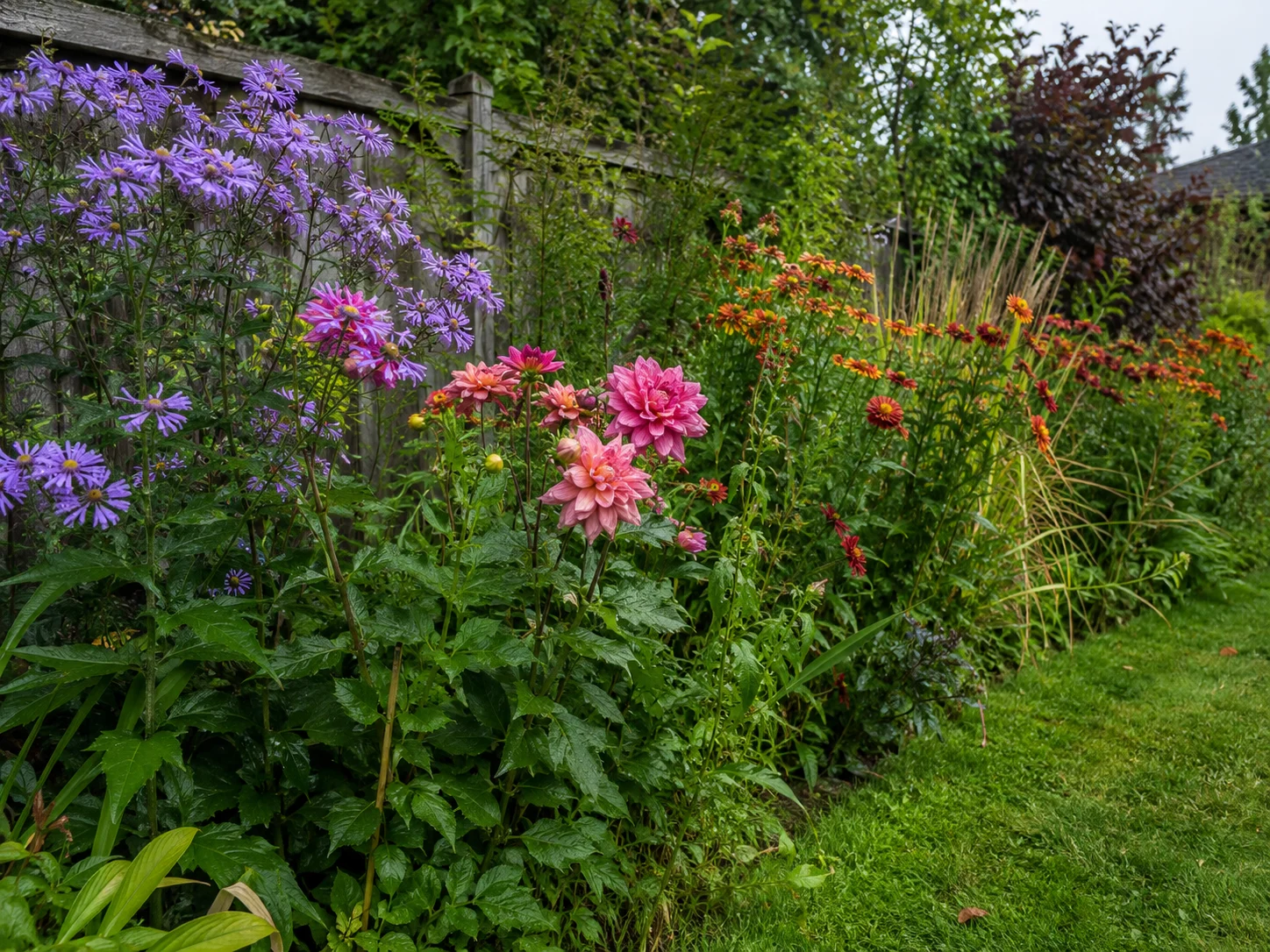
Support top-heavy dahlias, asters, heleniums, and tall grasses before they collapse. Use stakes, hoops, twiggy branches, or soft ties that disappear into the planting.
Remove broken stems cleanly and thin overcrowded growth when airflow is poor. Do not tie every stem into a rigid bundle. The plants should retain some natural movement.
10. Water Deeply and Refresh the Soil Surface
Late-summer drought can shorten flowering and weaken newly planted autumn performers.
Water deeply at soil level, prioritizing new plants, divisions, containers, and anything beginning to wilt. Even established drought-tolerant plants may struggle during prolonged heat.
After weeding and watering, add an appropriate organic mulch where needed. Mulch can:
- Conserve soil moisture
- Reduce new weed growth
- Protect exposed soil
- Give the border a cleaner finish
- Add organic matter as it breaks down
Keep mulch away from plant crowns and stems to reduce rot risk. Do not bury small plants under a thick layer. Mulch should support the planting, not smother it.
11. Plan Autumn Bulbs and Next Year’s Gaps
Your late-summer photographs are a map for autumn bulb planting.
Identify spaces beneath deciduous shrubs, between perennials, and along the front of borders where spring bulbs can emerge before later plants fill out. Mark those areas now because they may be impossible to identify after the foliage dies back.
Also note which plants need repetition, better companions, division, relocation, or replacement.
Do not rely on memory. By bulb-planting season, the border may look completely different, and it is easy to damage dormant perennials or crowd areas that are already full.
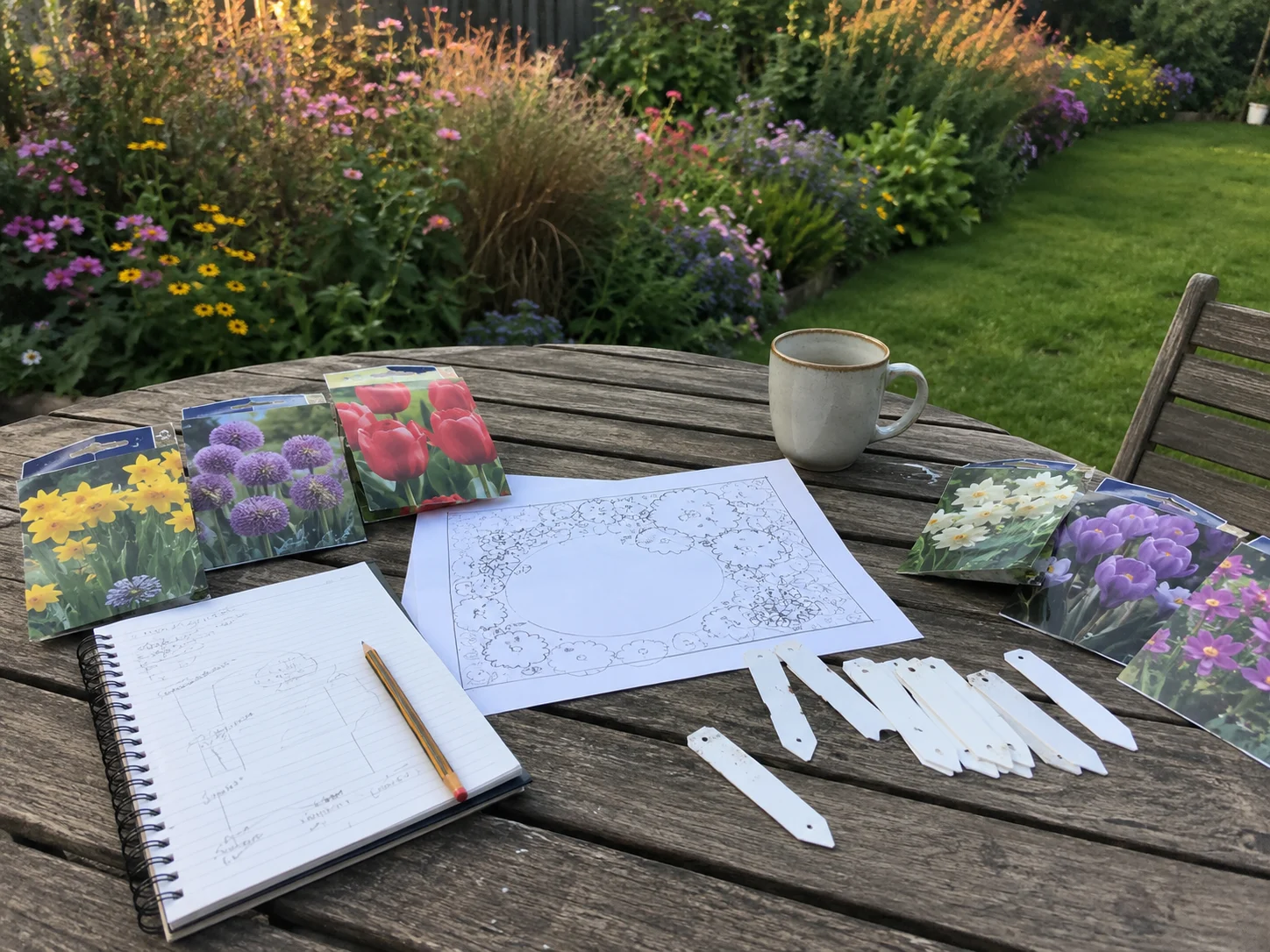
A Practical Weekend Checklist
Start with one visible border and work in this order:
- Photograph and mark the problem areas.
- Deadhead repeat-flowering plants.
- Remove diseased and collapsed growth.
- Pull weeds before they seed.
- Repair the border edge.
- Add two or three repeated late-flowering plants.
- Support tall growth.
- Water deeply and mulch exposed soil.
- Label plants that need dividing or moving.
- Record suitable spaces for autumn bulbs.
This order prevents wasted work. There is no point mulching before weeds are removed or buying plants before you understand the gaps.
Avoid attempting the entire yard in one weekend. Finish one border properly, then move to the next. Several half-completed areas will make the garden look worse, not better.
Conclusion
The best late summer garden tasks are targeted corrections, not aggressive cleanup.
Deadhead repeat bloomers, preserve strong seedheads, remove disease and weeds, improve weak border shapes, and add repeated groups of autumn flowers.
Work on one border at a time. By autumn, it will look more colorful, structured, and controlled—and you will already have a clearer plan for next year.