
Most gardens run out of usable space long before they run out of ideas, and the fix is usually staring right at you: a bare fence, an unused wall, a plain trellis nobody’s planted anything on. Climbing plants turn that vertical space into genuine growing area — often more flower coverage per square foot of ground than any bed can offer — while doing double duty as privacy screening, shade, and a long season of forage for bees.
Here are 7 climbing plants worth prioritizing if you want height, real flower coverage, and a garden bees actually visit, along with what each one needs to thrive and where it works best.
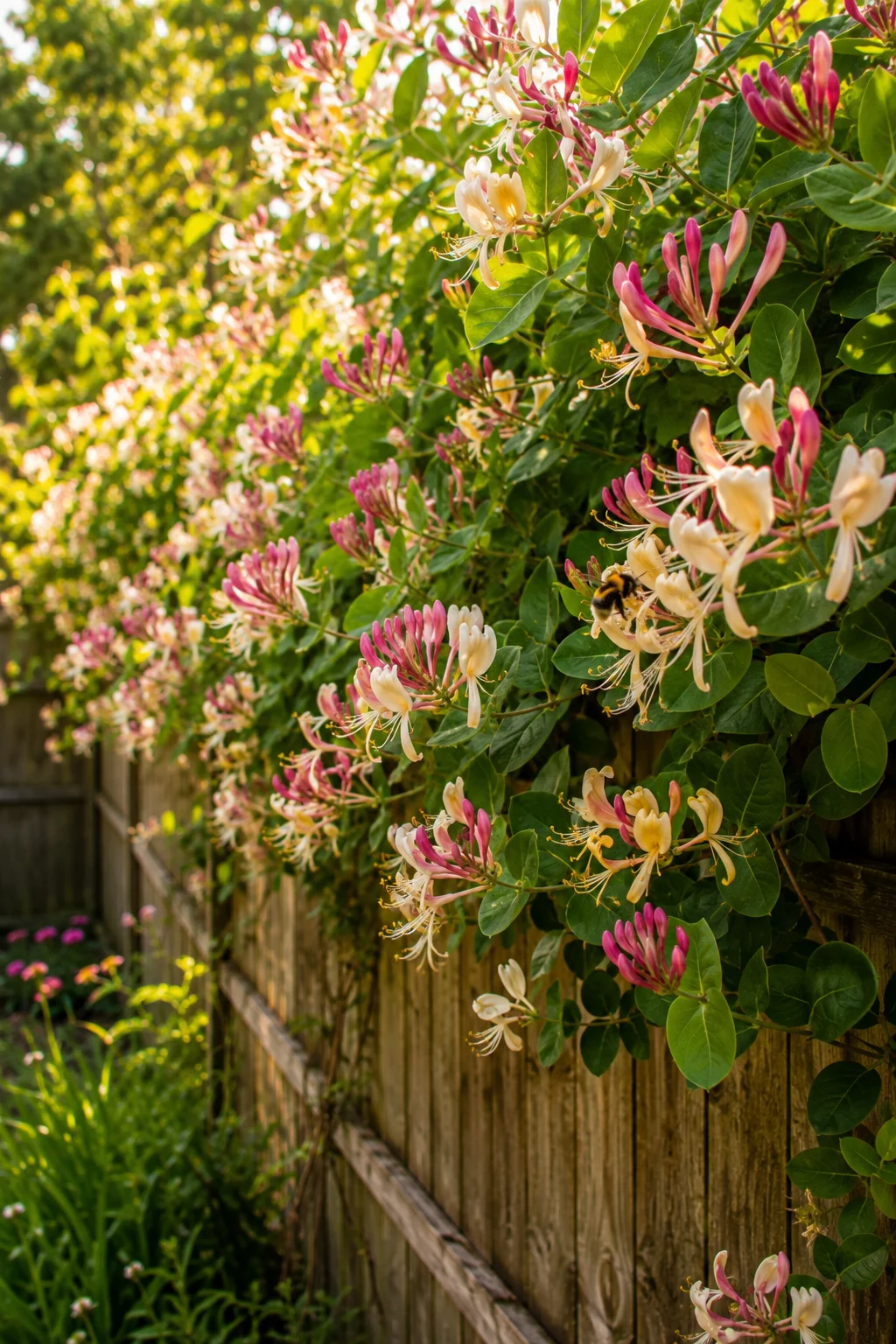
1. Honeysuckle (Lonicera species)
Honeysuckle is one of the most reliable flowering climbers for pollinators, producing clusters of tubular, intensely fragrant flowers over a long summer bloom window. Native species like coral honeysuckle (Lonicera sempervirens) and woodbine (Lonicera periclymenum) are strong choices — both draw bees steadily while also feeding hummingbirds, and neither has the aggressive, smothering growth habit of Japanese honeysuckle, which is invasive in much of North America and worth avoiding.
- Light: Full sun to part shade
- Support: Trellis, fence, or arbor with something to twine around
- Bloom time: Late spring through summer, with some reblooming into fall
- Bee appeal: Long flowering window and heavy nectar production make it one of the highest-value climbers on this list
2. Clematis
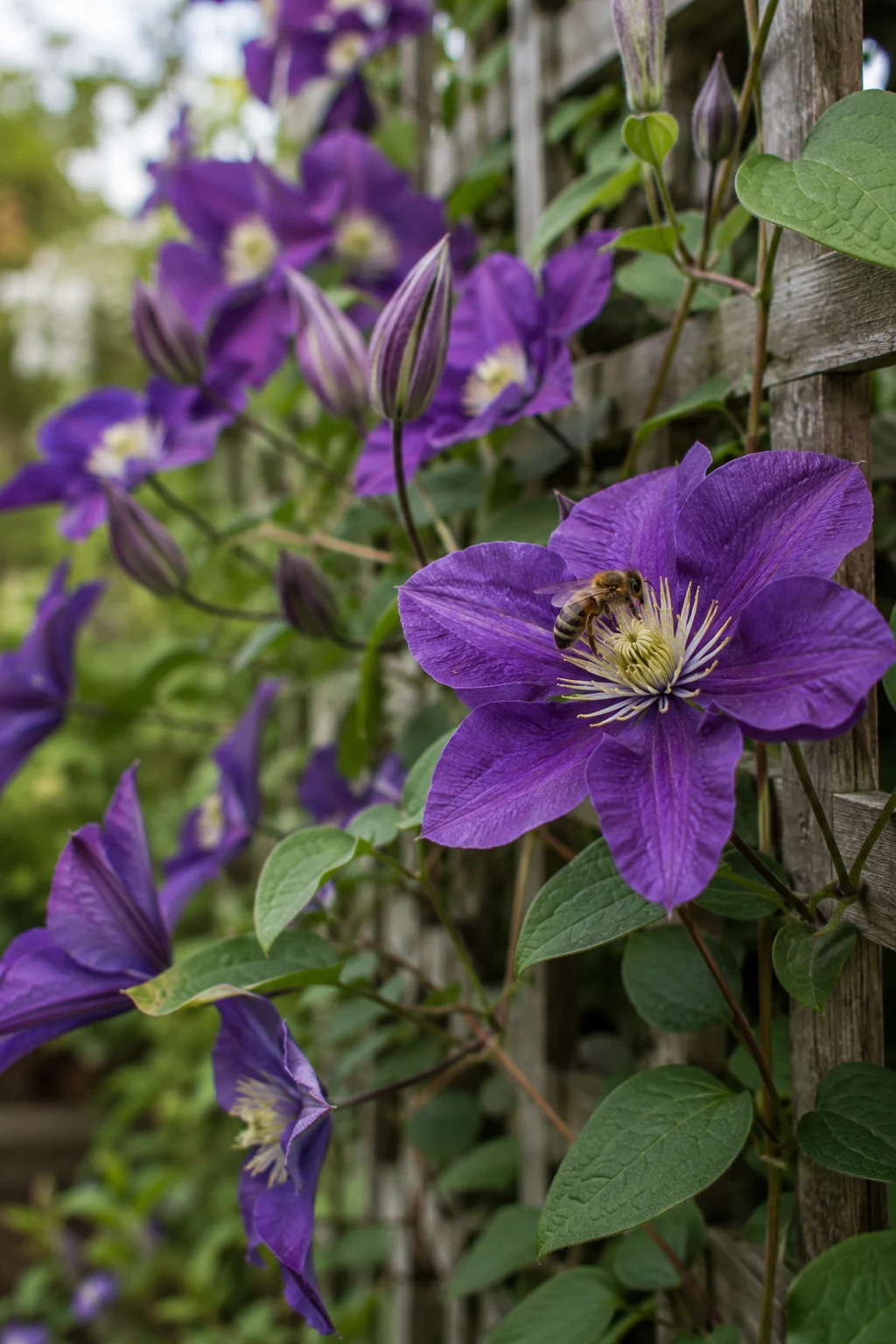
With hundreds of cultivars available, clematis offers more flower-color and bloom-timing variety than almost any other climbing plant, and many varieties — particularly single-flowered types rather than the heavily ruffled doubles — are genuinely good bee plants. Early-flowering species varieties (like Clematis montana) bloom before many perennials have started, while later types extend color and forage well into summer.
- Light: Full sun on top growth, shaded roots — the classic clematis planting rule is “head in the sun, feet in the shade”
- Support: Wire, trellis, or through an existing shrub or small tree
- Bloom time: Varies by cultivar; choosing a mix of early and late types extends the forage window significantly
- Bee appeal: Best with single, open-faced flowers rather than heavily doubled cultivars, which can hide or reduce access to pollen
3. Climbing and Rambling Roses
Not all roses are useful to bees — heavily doubled hybrid tea roses often have so many petal layers that pollinators can’t reach the center at all. Climbing and rambling varieties bred closer to their species origins, particularly single or semi-double flowered types, are a different story: they provide accessible pollen in large quantities during their bloom flush, plus genuine height and structure along a fence or arch.
- Light: Full sun for best flowering
- Support: Needs sturdy wire or lattice, since mature canes get heavy
- Bloom time: Most put on one strong flush in late spring to early summer; some repeat-flowering varieties continue sporadically through fall
- Bee appeal: Choose single or semi-double flowered cultivars specifically — the flower form matters more than the variety name
4. Wisteria
Few climbers make a bigger visual impact than wisteria in full bloom, with long cascading clusters of purple, lavender, or white flowers that bees work heavily during the bloom window. Be selective about species, though: American wisteria (Wisteria frutescens) and Kentucky wisteria (Wisteria macrostachya) are far better behaved than the commonly sold Chinese and Japanese wisteria, which grow aggressively, can girdle nearby trees, and are considered invasive in several regions.
- Light: Full sun for reliable flowering
- Support: Requires very sturdy structure — a pergola or reinforced arbor, not a light trellis, since mature vines become heavy and woody
- Bloom time: Spring, in a dramatic multi-week flush
- Bee appeal: Extremely high nectar production during bloom, making it a strong seasonal draw even though the flowering window is relatively short
5. Trumpet Vine (Campsis radicans)
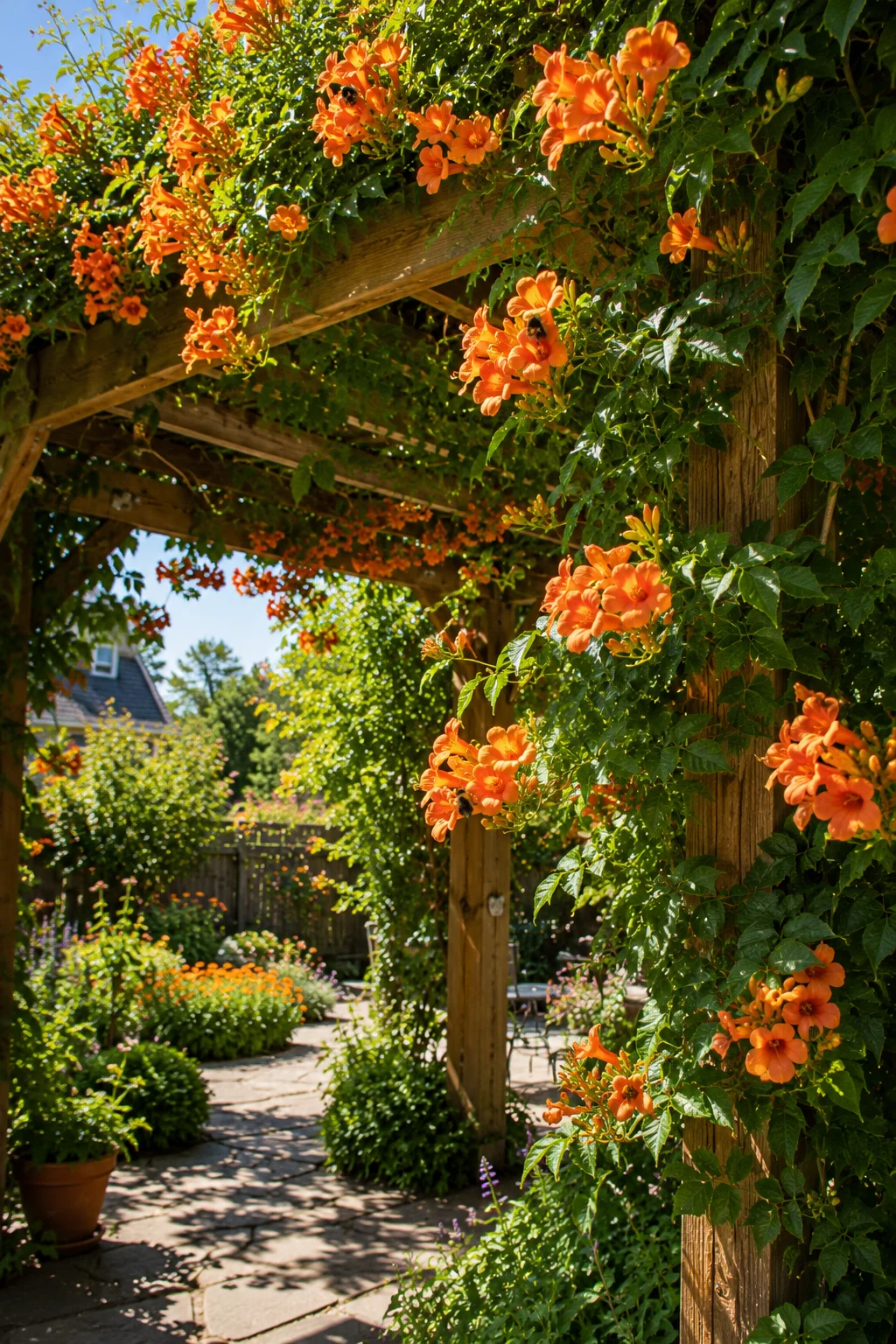
Trumpet vine is one of the most vigorous flowering climbers available, producing large orange-red tubular blooms through summer that draw both bees and hummingbirds in large numbers. That same vigor is worth planning around — it spreads by suckering roots as well as climbing, so it needs a sturdy structure and firm boundaries (a buried root barrier or an isolated planting spot) to keep it from spreading into lawns or beds.
- Light: Full sun to part shade
- Support: Strong structure — fence, sturdy arbor, or a wall it can cling to directly
- Bloom time: Mid to late summer
- Bee appeal: Long bloom period lands right in the midsummer stretch when many other flowering plants have slowed down
6. Climbing Hydrangea (Hydrangea petiolaris)
Most flowering climbers want full sun, which makes climbing hydrangea a particularly valuable exception — it tolerates shade well and still produces flat, lacy white flower clusters that bees can access easily, unlike the mophead hydrangea varieties bred for solid, sterile flower balls. It’s slower to establish than most climbers on this list, often taking two or three years before it really takes off, but it becomes a substantial, long-lived woody vine once established.
- Light: Part shade to shade, unusual for a flowering climber
- Support: Clings directly to walls, fences, or tree trunks via aerial rootlets — no trellis required
- Bloom time: Early summer
- Bee appeal: The flat, open lacecap-style flower clusters are far more accessible to pollinators than the dense mophead varieties often sold for pure ornamental appeal
7. Passionflower (Passiflora)
Passionflower produces one of the most visually striking blooms of any climbing plant, and its unusual structure — a wide, flat landing platform with a prominent central column — makes it easy for bees and other pollinators to access, alongside its role as a host plant for certain butterfly species in warmer climates. Hardy passionflower (Passiflora incarnata) tolerates cooler climates better than the tropical purple passionflower varieties, dying back in winter and returning from the root each spring.
- Light: Full sun to part sun
- Support: Trellis or wire; it climbs by tendrils and needs something narrow enough to grip
- Bloom time: Summer through early fall
- Bee appeal: Unusual flower structure with abundant, easily accessible nectar and pollen; also supports fritillary butterfly caterpillars where it’s native
Choosing the Right Structure for Each Climber
Not every climbing plant grips the same way, and matching the plant’s climbing method to the right support prevents a lot of frustration:
- Twining climbers (honeysuckle, wisteria) need something to wrap around — wire, trellis, or an arbor post — rather than a flat wall.
- Tendril climbers (clematis, passionflower) need thin supports like wire or netting they can grip with their tendrils; a solid wall alone won’t work.
- Clinging climbers (climbing hydrangea) attach directly via aerial rootlets and can grow straight up a wall or fence with no additional support structure.
- Sprawling climbers (climbing and rambling roses, trumpet vine) technically need to be tied in by hand to a support, since they don’t grip on their own.
If you’re planning climbers as part of a fence or boundary rather than a standalone trellis, our turning a plain fence into a pollinator border covers how to integrate climbing plants directly into an existing fence line, and our living fence guide extends the same idea into a full planted boundary.
Small-Space Vertical Growing
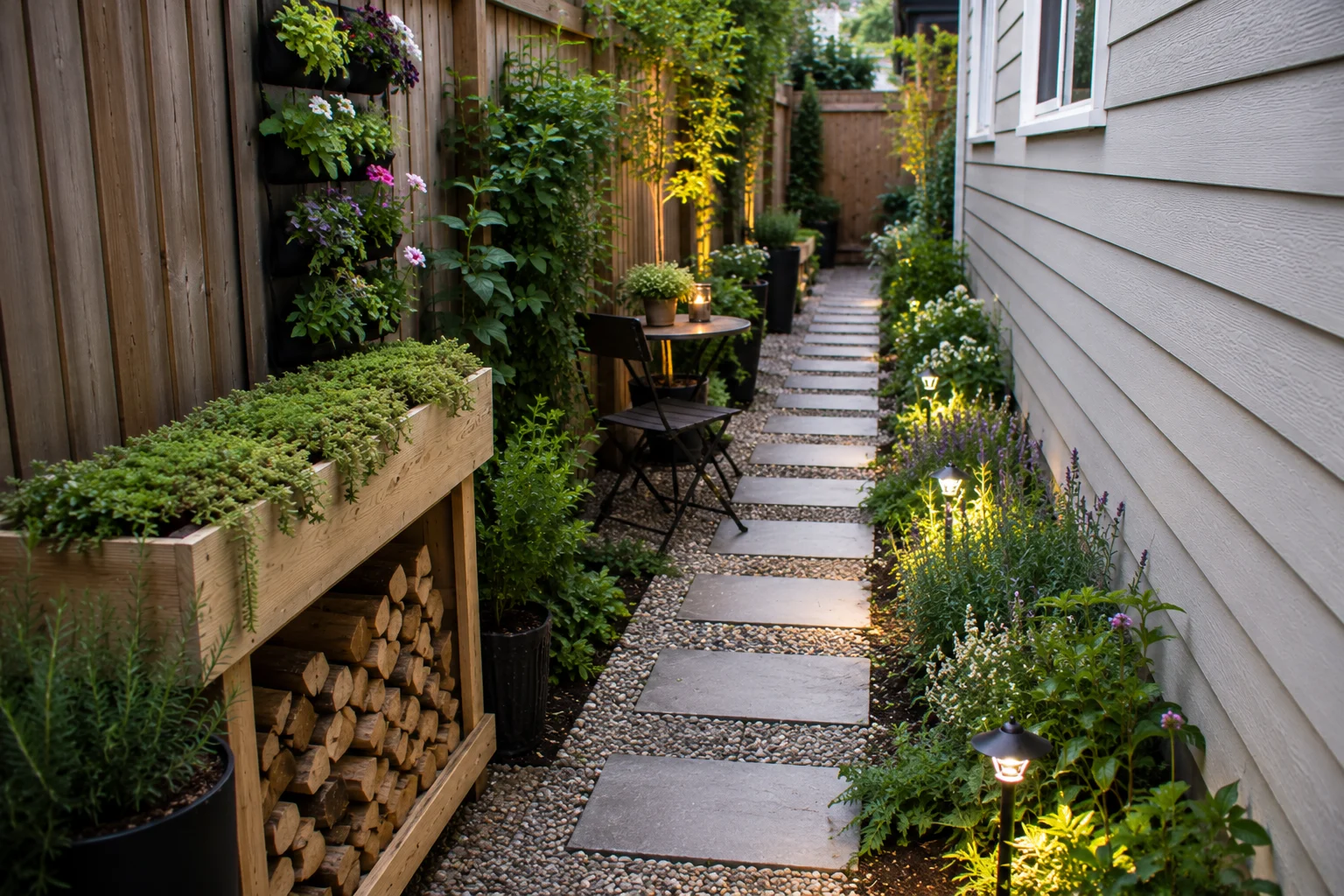
Climbers are especially valuable in small yards, balconies, and patios, where ground space is limited but wall and fence space usually isn’t. A single large container with a small trellis can support a modest clematis or an annual climber like black-eyed Susan vine for a full season of vertical bloom without needing any in-ground bed at all — an approach that pairs naturally with the container-based forage strategies covered in our container pollinator garden guide.
A Note on Choosing Bee-Friendly Cultivars
Across every plant on this list, flower form matters as much as species choice. Heavily doubled cultivars — bred for maximum petal count — frequently sacrifice pollen and nectar accessibility for visual density, sometimes almost entirely. When buying any of these seven climbers, favor single or semi-double flowered varieties specifically labeled as such, rather than assuming every cultivar of a “good bee plant” is equally useful. Pollinator research consistently shows that flower structure, not just species, determines how usable a bloom actually is to foraging bees (Royal Horticultural Society: Plants for Pollinators).
Final Thoughts
A fence, wall, or trellis left bare is wasted growing space in almost every garden. Honeysuckle and clematis are the easiest starting points for most yards; wisteria and trumpet vine deliver the biggest visual impact if you have a sturdy structure and room to manage their vigor; climbing hydrangea solves the shady-wall problem most flowering climbers can’t; and passionflower adds something genuinely unusual for a sunny spot. Choose based on your structure, your light conditions, and — as much as species — the flower form of the specific cultivar you buy, and even one well-chosen climber can add a full season of height, color, and bee activity to a space that was previously doing nothing at all.