
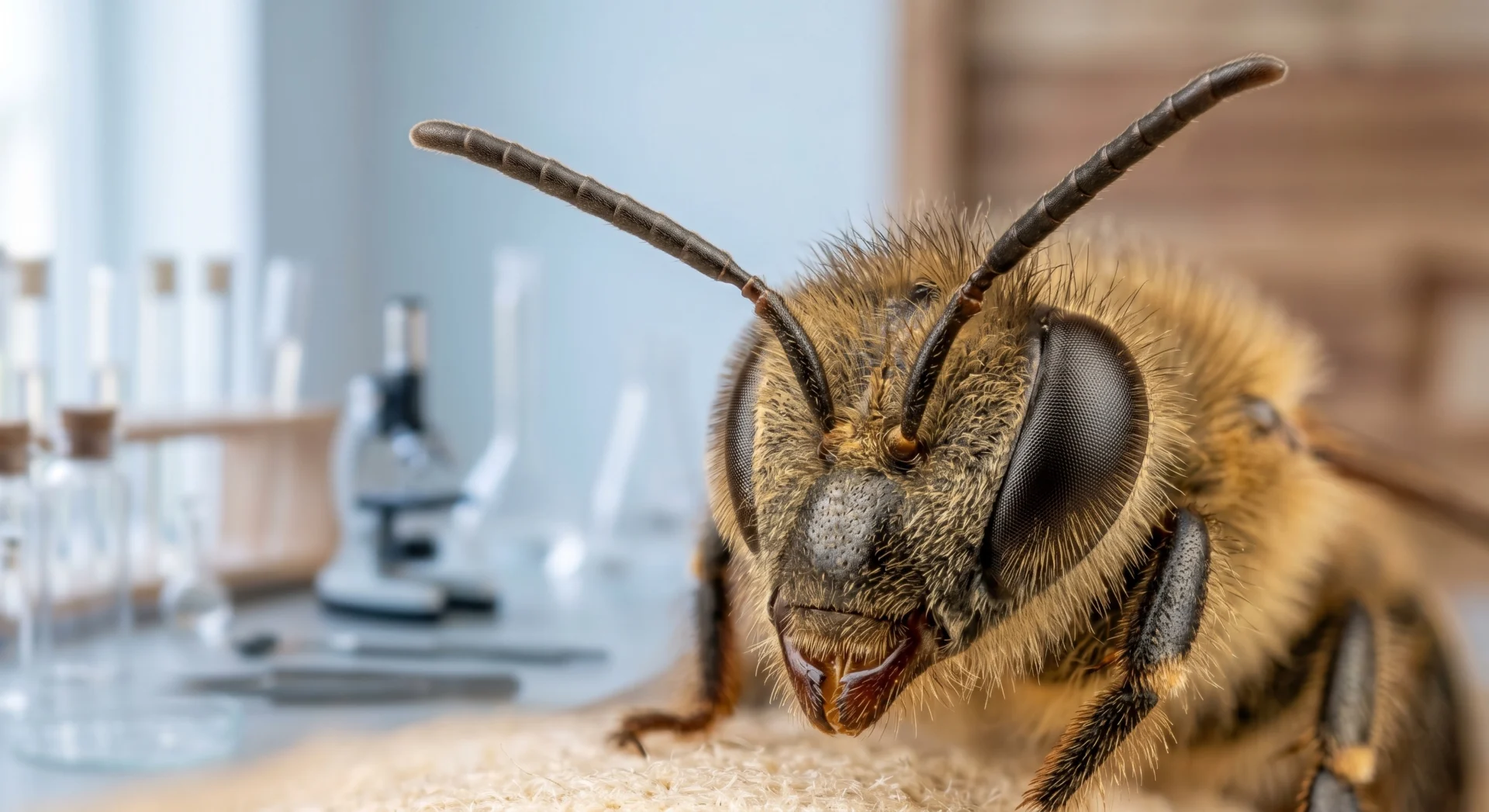
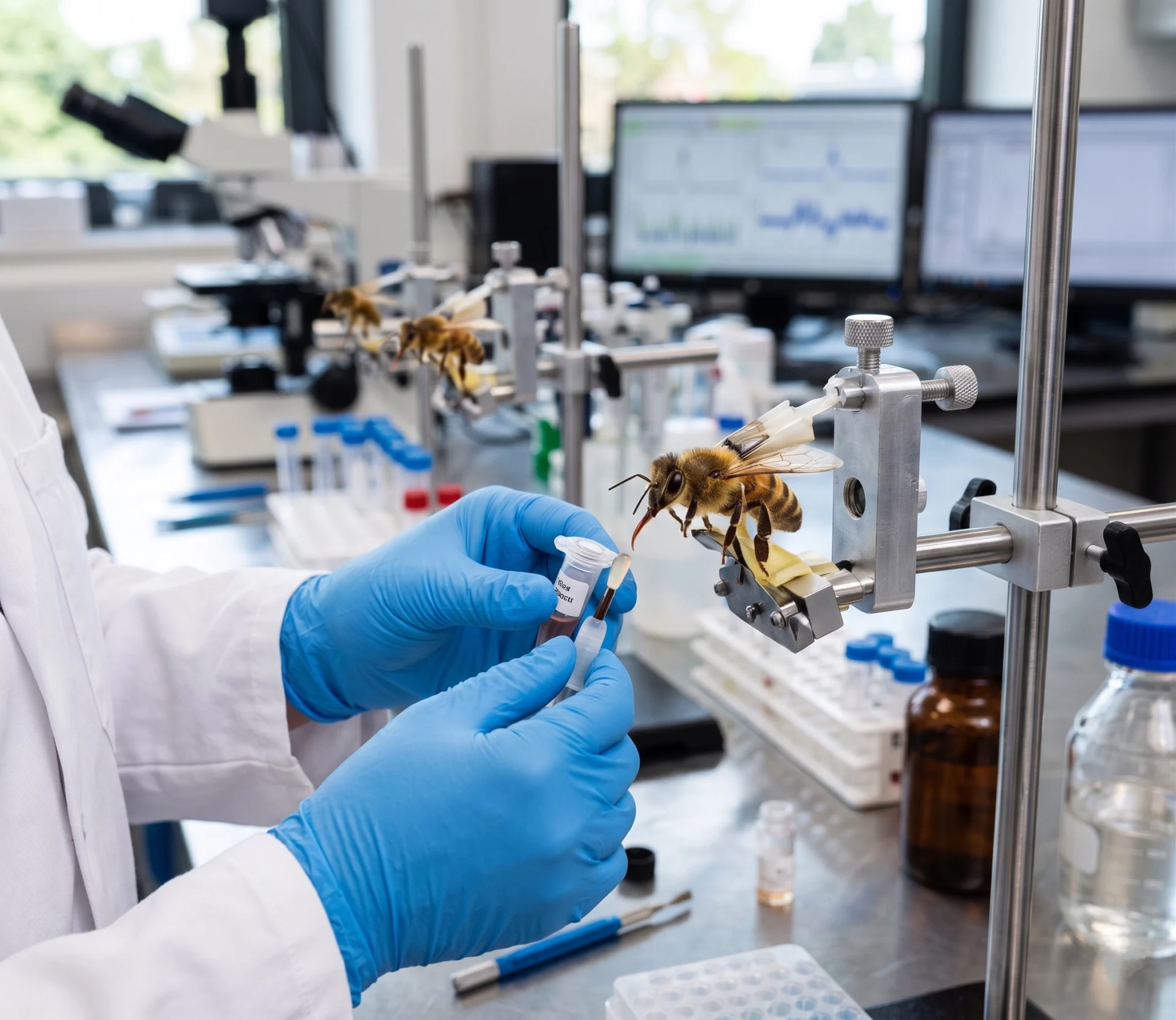
In a laboratory in the Netherlands, a honeybee extends her proboscis — the long tubular tongue she normally uses to collect nectar — toward a small sample. She has been trained over several days using a classical conditioning protocol. The sample she is responding to contains volatile organic compounds produced by lung cancer cells. She has never encountered a cancer cell in her life. She has no brain region dedicated to medical diagnosis. She weighs approximately 0.1 grams. And yet her accuracy rate, across thousands of trials, exceeds 90%.
This is not a thought experiment or a speculative future technology. It is documented, peer-reviewed science, actively being developed into medical diagnostic tools by research teams across Europe and North America. The honeybee’s olfactory system — arguably the most sensitive and precisely calibrated chemosensory apparatus in the animal kingdom relative to body size — can detect chemical signatures in biological samples that the most advanced laboratory equipment struggles to identify at the same concentration levels.
This post is a complete, factual account of what the science actually shows: how the bee’s olfactory system works at the biological level, what the peer-reviewed research has demonstrated about cancer detection specifically, which other diseases bees have been trained to identify, how the conditioning protocol works, what the current state of clinical development is, and what the genuine limitations and open questions remain. By the end, you will have a thorough, accurate understanding of one of the most remarkable intersections of entomology and medicine in contemporary science.
The Honeybee Olfactory System: Why the Nose of a 0.1-Gram Insect Outperforms Laboratory Equipment
To understand why bees can detect cancer, you first need to understand what they are smelling with — because the bee olfactory system is not simply a scaled-down version of a mammalian nose. It is a fundamentally different and in several key respects more capable sensory architecture.
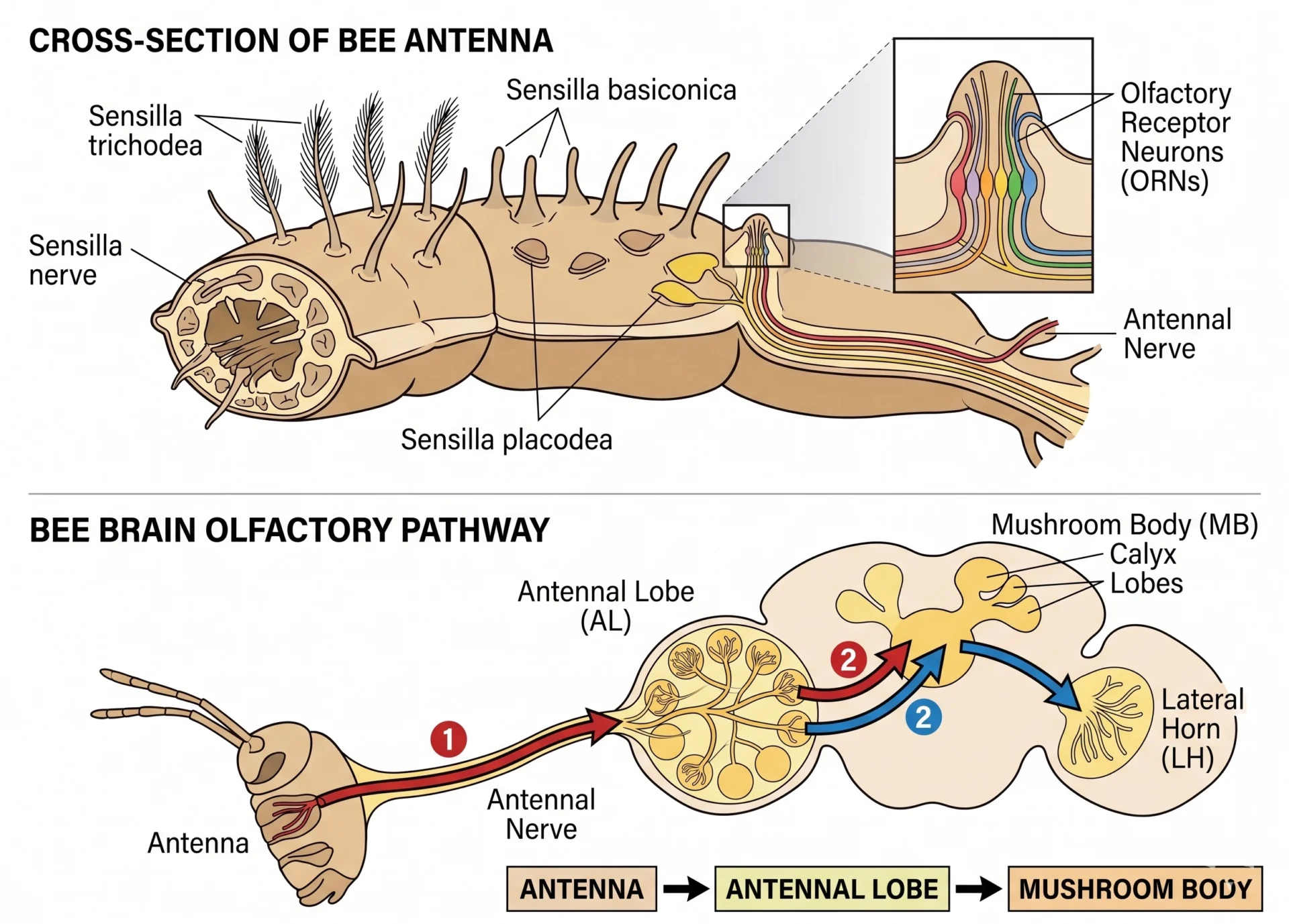
The bee’s primary olfactory organs are her antennae — the two segmented appendages that extend from her head and are in constant motion during any olfactory task. Each antenna is covered with approximately 170 different types of olfactory receptor neurons, distributed across three antennal segments. The total receptor count across both antennae reaches into the thousands — and each receptor type is tuned to respond to a specific class of chemical compound or a specific molecular configuration.
What makes this system extraordinary is not simply the number of receptors but their sensitivity threshold. Bee olfactory receptors can detect airborne molecules at concentrations measured in parts per trillion — a sensitivity level that rivals or exceeds the most advanced gas chromatography equipment used in analytical chemistry laboratories. For context: detecting one part per trillion is equivalent to identifying a single drop of a substance dissolved in 20 Olympic swimming pools of water.
The neurological processing that follows initial detection is equally sophisticated. Olfactory signals from the antennal receptors travel to the antennal lobes — the insect equivalent of the mammalian olfactory bulb — where they are processed through a network of approximately 160 glomeruli (neural processing units, each dedicated to a specific chemical class). From the antennal lobes, processed signals travel to the mushroom bodies — paired structures in the bee brain that serve as the primary center for learning, memory, and associative conditioning. It is the mushroom bodies that make the cancer detection protocol possible: they are the neural substrate on which the training association between a specific odor and a food reward is encoded and stored.
The combined result of this architecture — extreme receptor sensitivity, parallel processing across hundreds of glomeruli, and a powerful associative memory system — is an olfactory instrument that can learn to identify a specific chemical signature among thousands of background compounds in a complex biological sample, and to recall that identification with remarkable consistency across repeated trials.
The Research: What the Peer-Reviewed Studies Actually Show
The most substantial and most cited body of research on bee-based cancer detection comes from Inscentinel Ltd in collaboration with researchers at the University of Nottingham in the UK, and from the iHive project at Wageningen University in the Netherlands. These are not fringe science claims — they are peer-reviewed findings published in journals including PLOS ONE, the Proceedings of the Royal Society B, and Scientific Reports.
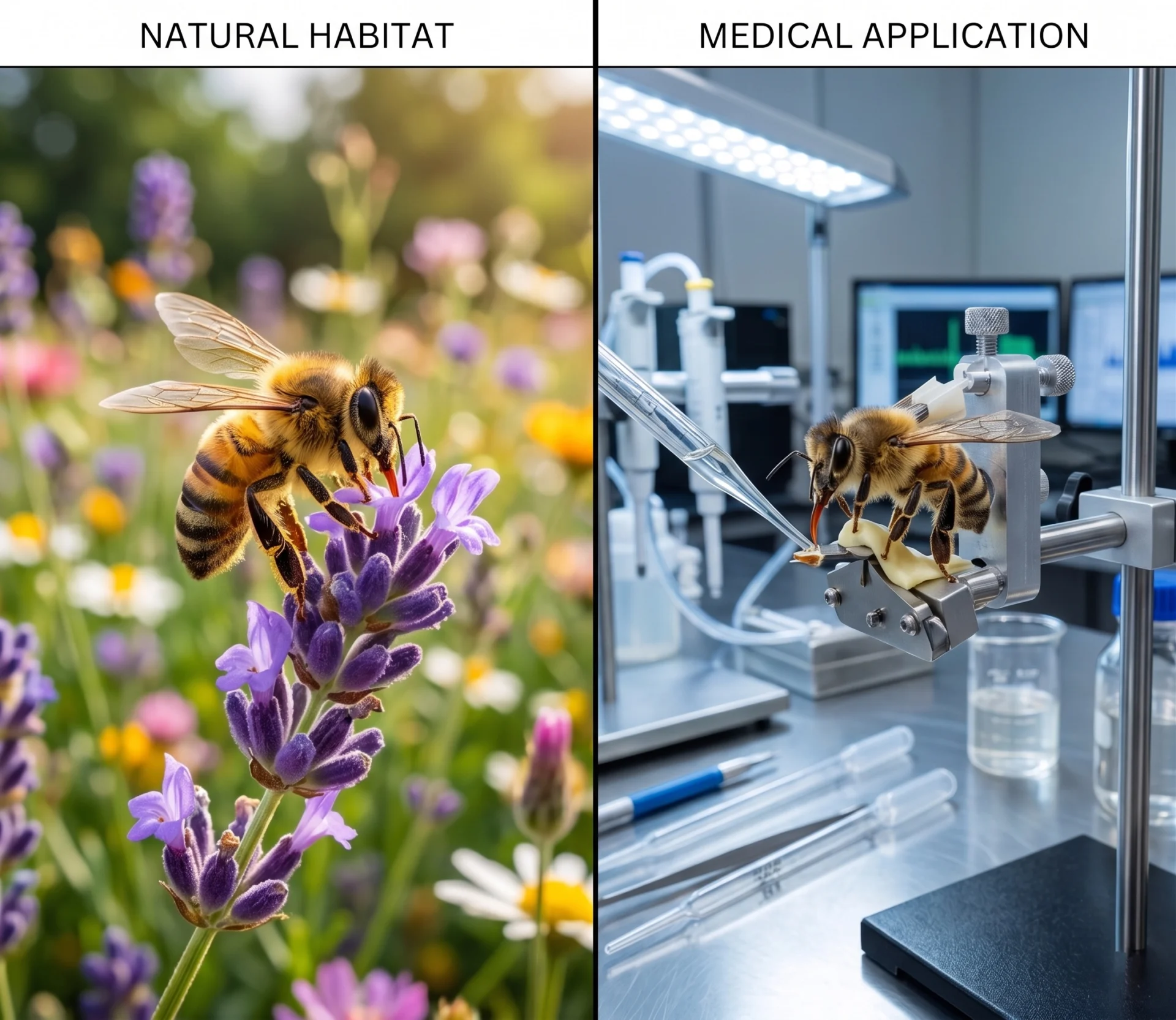
The foundational mechanism exploited in cancer detection research is a well-established behavioral reflex called the Proboscis Extension Response (PER). When a bee detects a food-associated odor — one she has learned to associate with a sucrose reward — she extends her proboscis involuntarily. This reflex is rapid, measurable, and highly consistent across trained individuals. It forms the basis of the conditioning and testing protocol.
The training procedure follows a classical Pavlovian conditioning model:
In the training phase, a bee is briefly immobilized in a small tube that holds her body while leaving her head and antennae exposed. She is then presented with a target odor — in cancer detection studies, this is typically a synthetic version of the volatile organic compound (VOC) profile produced by cancer cells — immediately followed by a sucrose solution delivered to her antennae. The sucrose triggers the PER. After three to five pairings of odor and reward, the bee reliably extends her proboscis in response to the odor alone, without any sucrose present. The association is formed.
In the testing phase, the trained bee is exposed to biological samples — exhaled breath, urine, or cell culture samples — and her response is observed. Extension of the proboscis indicates detection of the target VOC signature. No extension indicates absence.
The lung cancer findings represent the most advanced application to date. Research published in PLOS ONE demonstrated that honeybees trained on the VOC profile of lung cancer cell cultures could correctly identify lung cancer samples with accuracy rates consistently above 90% across blind trials. Critically, the bees could distinguish cancer samples from both healthy control samples and samples from patients with non-cancerous lung conditions — a specificity that is essential for any viable diagnostic tool.
The breast cancer research from the Wageningen iHive project demonstrated similar results using exhaled breath condensate from breast cancer patients. Bees trained on cancer-positive breath samples showed statistically significant PER responses to cancer samples compared to controls, with specificity rates that would qualify as clinically meaningful if replicated at scale.
Beyond cancer specifically, bees have been successfully trained to detect:
Tuberculosis — A study conducted in Mozambique by the APOPO organization (which also trains giant African pouched rats for landmine detection) demonstrated that trained bees could identify Mycobacterium tuberculosis in sputum samples with sensitivity and specificity rates competitive with standard laboratory smear microscopy — the diagnostic method used in most developing-world TB screening programs.
Type 1 diabetes — Bees have been trained to detect the specific VOC signature of hypoglycemia (low blood sugar) in human breath. The target compound is isoprene, which is elevated in the breath of hypoglycemic individuals. The potential application — a bee-based early warning system for diabetic hypoglycemic episodes — has been explored in several preliminary studies.
Malaria — Research published in Current Biology in 2019 demonstrated that trained bees could distinguish the odor of malaria-infected mosquitoes from uninfected ones with statistically significant accuracy, suggesting potential applications in vector surveillance.
The Volatile Organic Compound Signature: What Bees Are Actually Smelling
The biological mechanism that makes bee-based cancer detection theoretically sound — rather than merely empirically observed — is the well-documented phenomenon of cancer-specific volatile organic compound (VOC) signatures.
Cancer cells have fundamentally altered metabolic profiles compared to healthy cells. The Warburg effect — the preferential use of anaerobic glycolysis by cancer cells even in the presence of oxygen — and other cancer-specific metabolic alterations produce characteristic byproduct compounds that are detectable in exhaled breath, urine, blood serum, and other biological fluids. These cancer-associated VOCs include compounds from chemical classes including alkanes, aldehydes, ketones, and aromatic hydrocarbons, in combinations and concentrations that differ meaningfully between cancer-positive and cancer-negative samples.
The challenge for conventional analytical chemistry is that these VOC signatures occur at extremely low concentrations — often in the parts-per-billion to parts-per-trillion range — against a complex background of thousands of other VOCs present in exhaled breath or urine. Identifying the cancer-specific signal within this noise requires either extremely sophisticated (and expensive) laboratory equipment such as gas chromatography-mass spectrometry (GC-MS), or a biological detector sensitive enough to filter for the relevant signal among the background compounds.
This is precisely the problem the bee olfactory system is well suited to solve. The bee does not need to analytically decompose the VOC mixture into its individual components — she learns to recognize the overall pattern of the cancer-associated signature as a gestalt, in the same way she learns to recognize the overall scent of a specific flower species rather than identifying each of its constituent aromatic compounds separately. The mushroom body memory system stores a pattern, not a chemical formula. And pattern recognition of complex olfactory mixtures is exactly what the bee brain has evolved to do at extraordinary levels of sensitivity.
The Technology in Development: From Laboratory Protocol to Clinical Tool
The practical challenge of translating bee-based detection from a laboratory protocol to a scalable clinical diagnostic tool is significant, and the research teams developing this technology are transparent about both the progress made and the obstacles remaining.
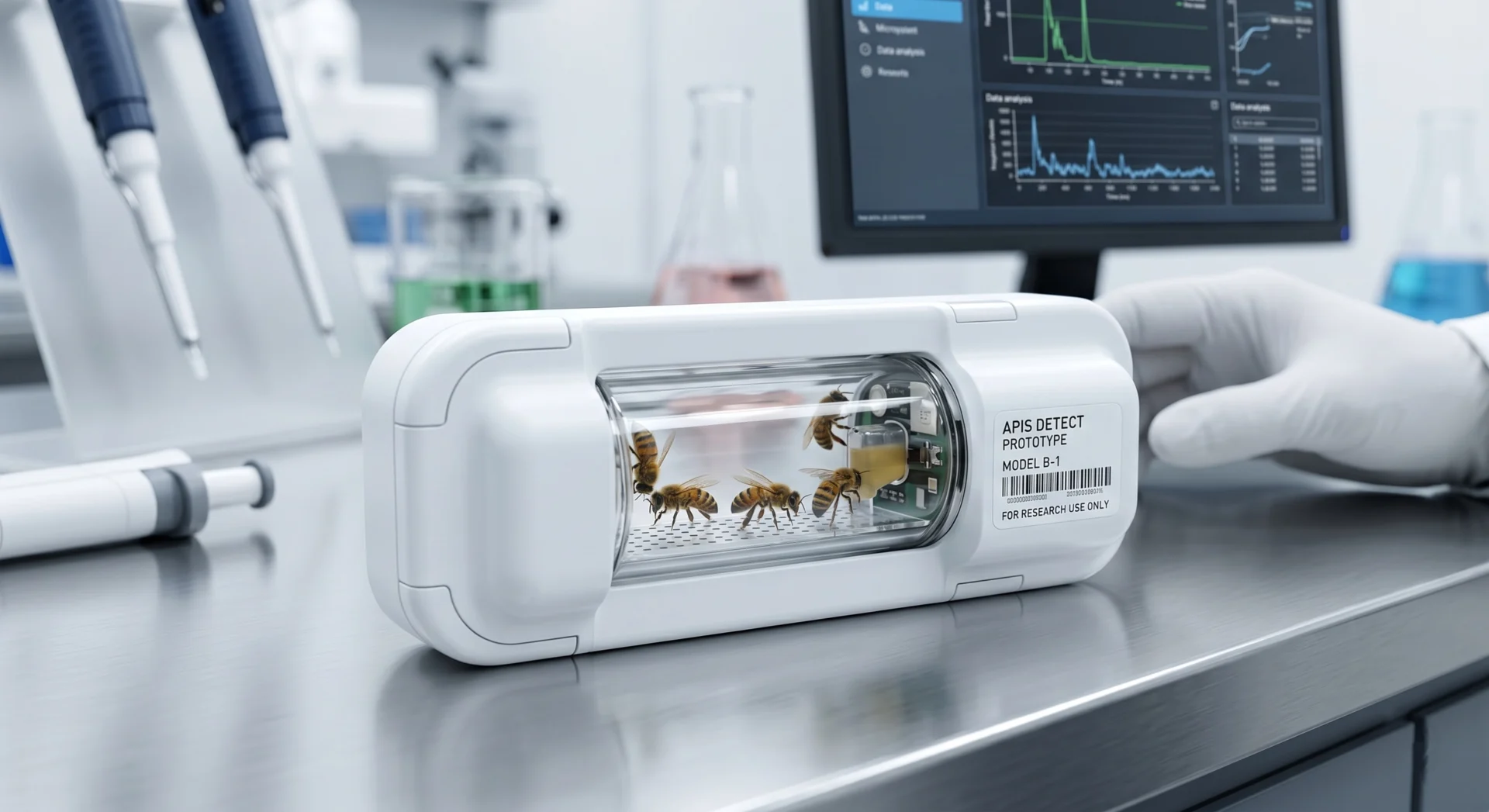
The most developed commercial application is the HerePET system developed from Inscentinel research — a device that houses a small number of trained bees in a cartridge format, exposes them to a patient’s exhaled breath through a standardized protocol, and records their PER responses using a small camera and automated image recognition software. The entire screening process takes approximately ten minutes. The disposable bee cartridge is replaced between patients.
The system is designed for use as a rapid first-line screening tool rather than a definitive diagnostic — analogous to the role of a PSA test in prostate cancer screening, which identifies patients who warrant further investigation rather than providing a standalone diagnosis. In this role, the speed, sensitivity, and low cost of bee-based screening could be particularly valuable in resource-limited healthcare settings where access to CT scanning, bronchoscopy, or MRI is restricted.
Current clinical development status: as of the research available through mid-2025, bee-based cancer detection technology is in late-stage pre-clinical and early clinical trial phases in Europe. No bee-based diagnostic device has yet received regulatory approval for clinical use in the US or EU, though several applications are in progress with the relevant regulatory bodies.
The primary technical challenges being addressed in current research are:
Standardization of training — Individual bees vary in their learning rates and retention. Developing standardized training protocols that produce consistent sensitivity across large numbers of bees, and establishing quality control methods to verify training efficacy before clinical use, is an active area of research.
Sample collection and preparation — Exhaled breath condensate collection is not fully standardized across clinical settings, and variation in sample collection methodology can affect VOC profiles and therefore detection accuracy.
Bee lifespan and welfare — A trained forager bee has a working lifespan of approximately four to six weeks. Maintaining a continuously trained and welfare-compliant population of detection bees requires ongoing training programs and careful consideration of the ethical dimensions of using insects in medical research.
What This Means for Our Understanding of the Honeybee
For beekeepers and anyone who has spent time observing colonies, the cancer detection research is not entirely surprising — though it is consistently astonishing. The olfactory sophistication required to navigate the chemical landscape of a beehive, to recognize individual queens by their pheromone profile, to identify the specific VOC signatures of diseased brood and remove affected larvae before infection spreads, to distinguish the scent of their own hive’s honey from a neighboring colony’s during robbing season — all of these everyday colony functions require exactly the kind of fine-grained, high-sensitivity, pattern-learning olfactory capability that the cancer detection research is exploiting.
The bee’s olfactory system did not evolve to detect cancer. It evolved to manage the extraordinarily complex chemical environment of a colonial insect society — an environment that may, in terms of molecular diversity and information density, be one of the most chemically rich habitats any organism navigates. The cancer detection application is a serendipitous consequence of a sensory system of remarkable sophistication finding a new use in a different domain.
This broader context is worth holding alongside the specific medical application. The same olfactory capability that allows bees to identify diseased brood cells — covered in depth in the extraordinary biology of undertaker bees and how they detect and remove diseased individuals from the colony through olfactory identification — is the capability being applied in cancer screening. The same chemical sensitivity that drives bees to seek out specific medicinal plants with documented antimicrobial properties for incorporation into propolis is the sensitivity that allows detection of cancer VOCs at parts-per-trillion concentrations.
The bee is not a simple organism repurposed for a clever trick. It is a complex biological system whose capabilities, when properly understood, consistently exceed what we expect from an insect brain the size of a sesame seed.
The Broader Landscape: Other Animals Trained to Detect Disease
It is worth placing the bee research in the context of the broader field of biodetection — the training of animals to identify disease through olfactory cues — to understand both how the bee fits into this landscape and what distinguishes it from other biodetection species.
Dogs are the most established and most studied biodetection animal. Canine cancer detection research dates to the early 1990s, and multiple peer-reviewed studies have demonstrated that trained dogs can detect lung, breast, colorectal, prostate, and ovarian cancers in breath and urine samples with sensitivity and specificity rates that frequently exceed 90%. The Medical Detection Dogs charity in the UK has produced some of the most rigorous and clinically validated results in the field. Dogs, however, are expensive to train (18–24 months of specialist training per dog), have limited throughput (one dog can screen perhaps 20–30 samples per day), and raise welfare and logistical challenges for clinical deployment at scale.
Bees offer a compelling alternative profile: training takes 2–4 days rather than 18 months, throughput can be scaled by housing multiple trained bees in parallel, cost per test is potentially very low, and the standardized cartridge format of devices like HerePET allows deployment in settings where a trained dog program would be logistically impossible.
Electronic nose (e-nose) technology — artificial olfactory systems designed to replicate biological VOC detection — is the primary competing technology. Current e-nose systems have made significant advances but remain less sensitive than biological detectors at the concentration ranges relevant to cancer VOC detection, and are substantially more expensive per test than bee-based alternatives.
The research published in the gravity-defying capabilities of bees and other insects that continually surprise the scientific community reflects a broader pattern: the more carefully science examines what bees are capable of, the more consistently they exceed expectations set by assumptions about insect cognitive and sensory limitations.
The Remaining Questions and Honest Caveats
Rigorous science requires honest acknowledgment of what is not yet established, and the bee cancer detection field has several genuinely open questions that the most responsible researchers are careful to flag.
Replication at clinical scale is the most significant outstanding requirement. The most impressive accuracy figures in the literature come from controlled laboratory conditions with relatively small sample sizes. Clinical deployment involves far larger and more diverse patient populations, greater variation in sample quality, and the full range of confounding factors present in real-world medical settings. Whether laboratory accuracy rates are maintained at clinical scale remains to be definitively established.
Cancer type specificity is partially established but not complete. The research to date has most thoroughly characterized VOC signatures for lung and breast cancer. The extent to which bees can be trained to discriminate between different cancer types — or between cancer and other inflammatory conditions that produce overlapping VOC profiles — is an active research question.
Long-term reliability of trained bees in a clinical deployment context — including how training fades over the bee’s lifespan, how environmental factors affect detection accuracy, and how to maintain consistent performance across a continuously rotating population of trained individuals — requires further characterization.
None of these caveats diminish the genuine significance of what the research has already demonstrated. They are the normal open questions of a field in active and productive development, not fundamental objections to the viability of the approach.
Conclusion: A Sesame-Seed Brain and a Parts-Per-Trillion Nose
The science of bee-based cancer detection is real, it is peer-reviewed, it is being actively developed for clinical application, and it is grounded in a thoroughly understood biological mechanism. The honeybee’s olfactory system — evolved over tens of millions of years to navigate one of the most chemically complex environments in the animal kingdom — turns out to be precisely the instrument needed to detect the faint molecular signature of a cancer cell among the thousands of VOCs in human breath.
The key facts established by the research:
Honeybees can be trained in 2–4 days using classical Pavlovian conditioning to detect specific VOC signatures. The Proboscis Extension Response provides a reliable, measurable, and automatable detection signal. Accuracy rates above 90% have been demonstrated for lung and breast cancer detection in peer-reviewed laboratory studies. Tuberculosis, malaria, and diabetic hypoglycemia have also been successfully detected by trained bees. Clinical device development is in progress in Europe, with regulatory approval applications underway.
And behind all of this is a biological truth that every beekeeper quietly understands: the honeybee is not a simple creature. She never was.
Keep Reading 🐝
The olfactory and cognitive capabilities of the honeybee connect to much broader questions about insect biology and what we continue to discover about the complexity of colonial insect life:
- 💀 How undertaker bees use olfactory detection to identify and remove diseased individuals from the colony — the same sensory system at work in cancer detection — The colony-level application of the same capability science is now using for medical diagnosis.
- 💙 The extraordinary sensory biology of the Blue Bee and what it reveals about pollinator diversity and adaptation — Another deep dive into what bee biology continues to reveal.
- 🌿 The medicinal plants bees actively seek out for propolis production — evidence of olfactory-guided self-medication in the colony — The same olfactory sophistication applied to colony healthcare.
The more science looks at the honeybee, the more it finds. 🐝