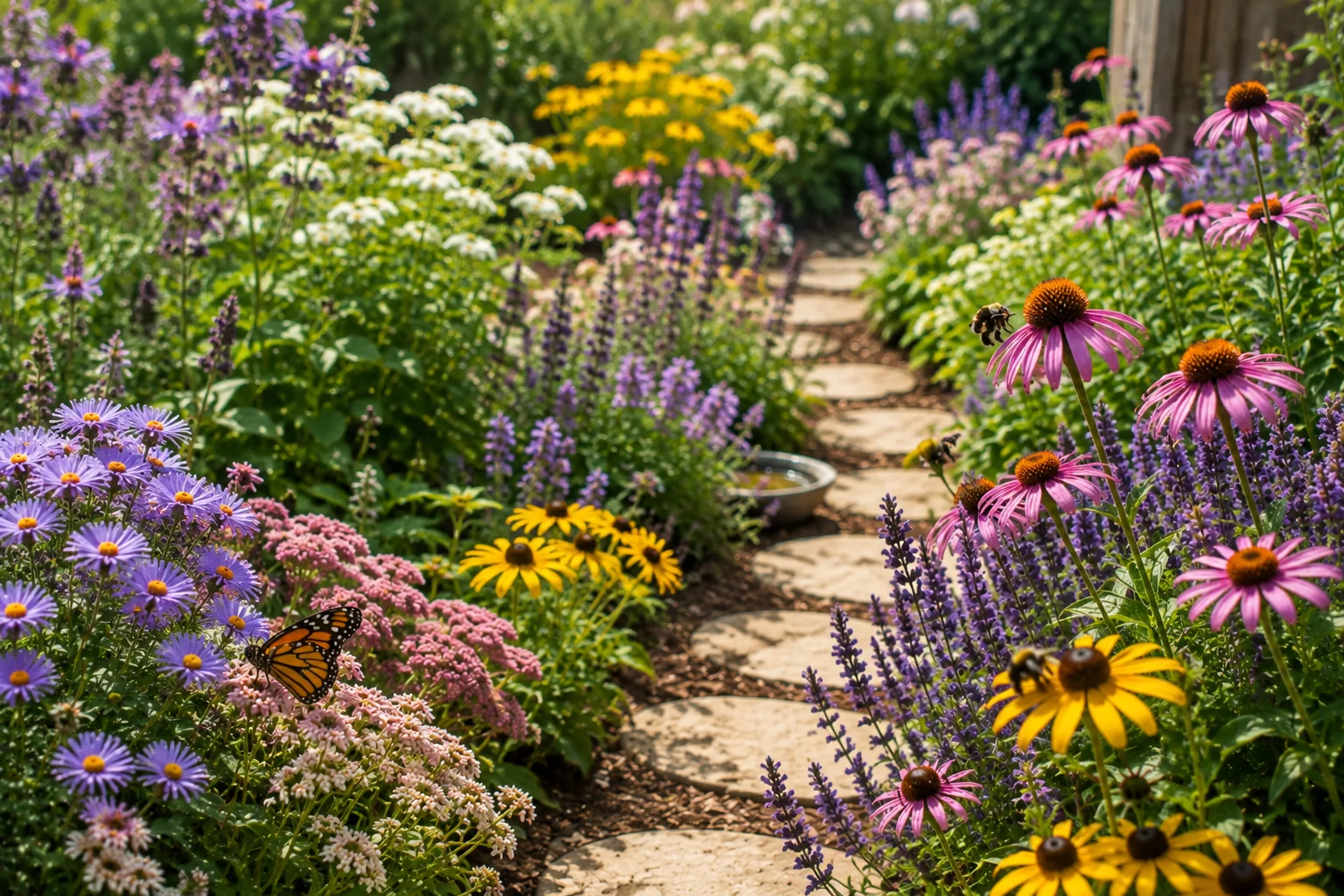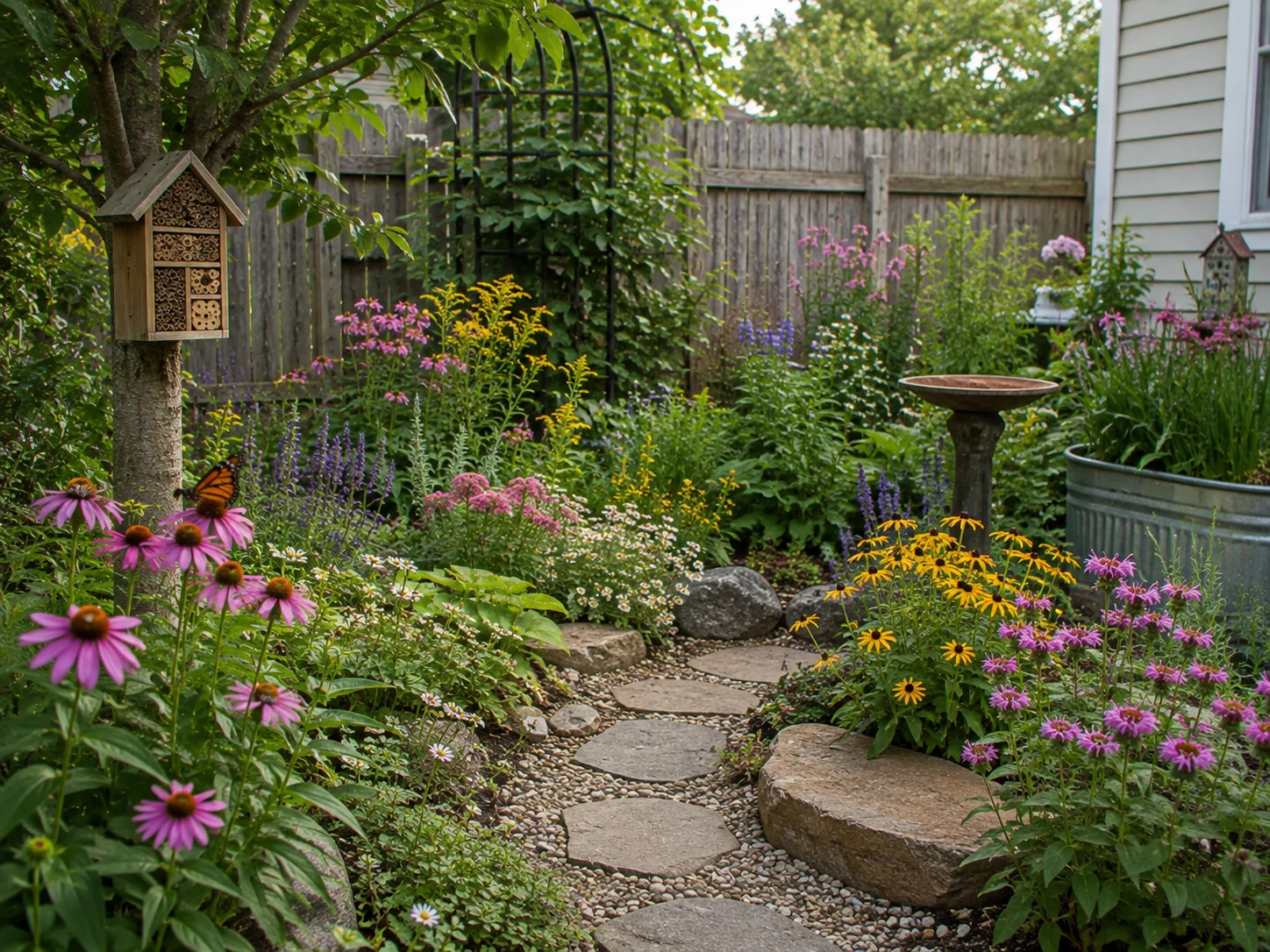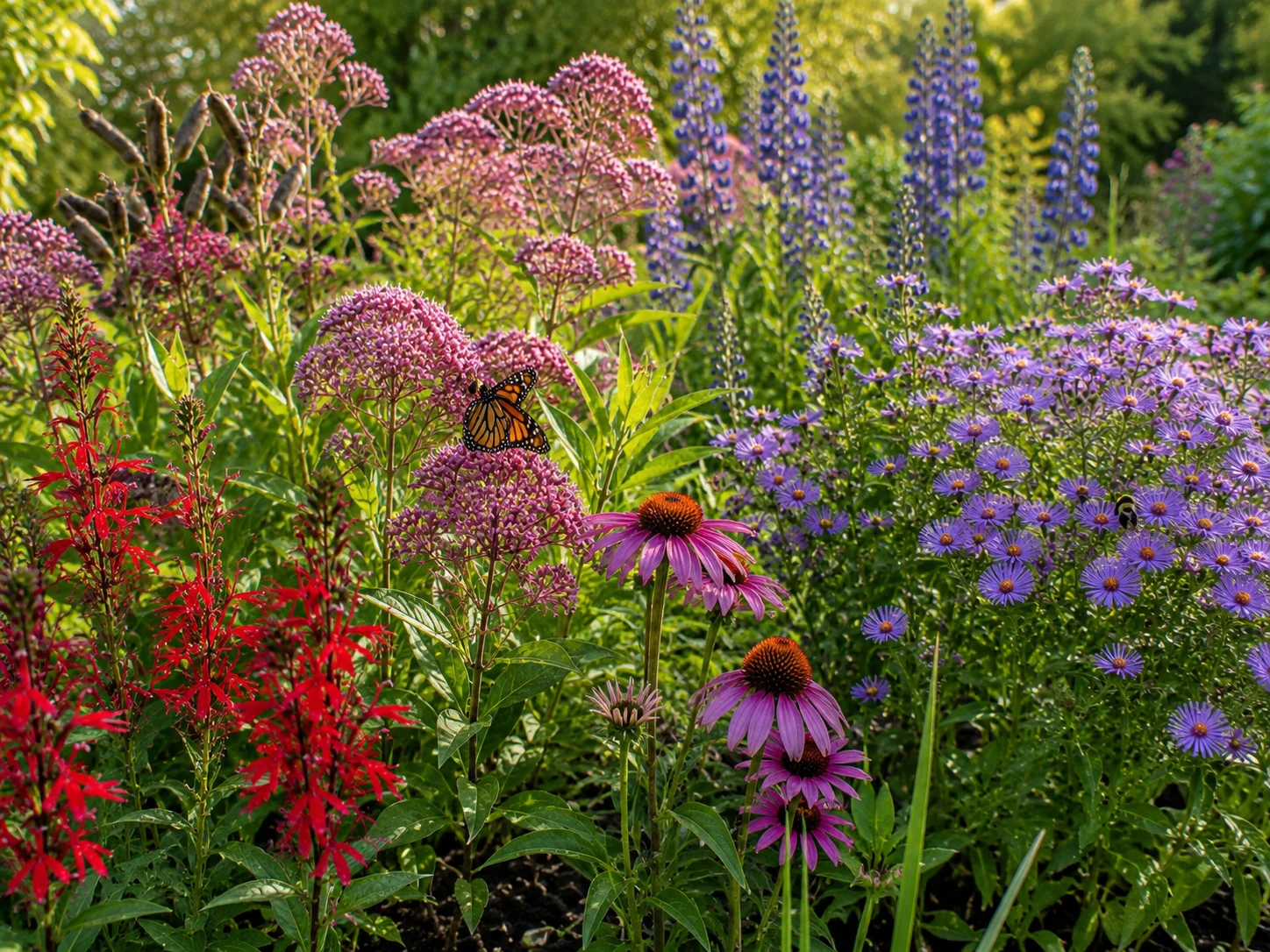

When designing a new bee yard, most beekeepers spend hours agonizing over the physical placement of their hive boxes, ensuring they receive the gentle morning sun and avoid harsh winter winds. But while securing the best woodenware and optimizing geographical positioning are absolutely essential, many apiarists overlook a massive factor in colony survival: the immediate botanical landscape.
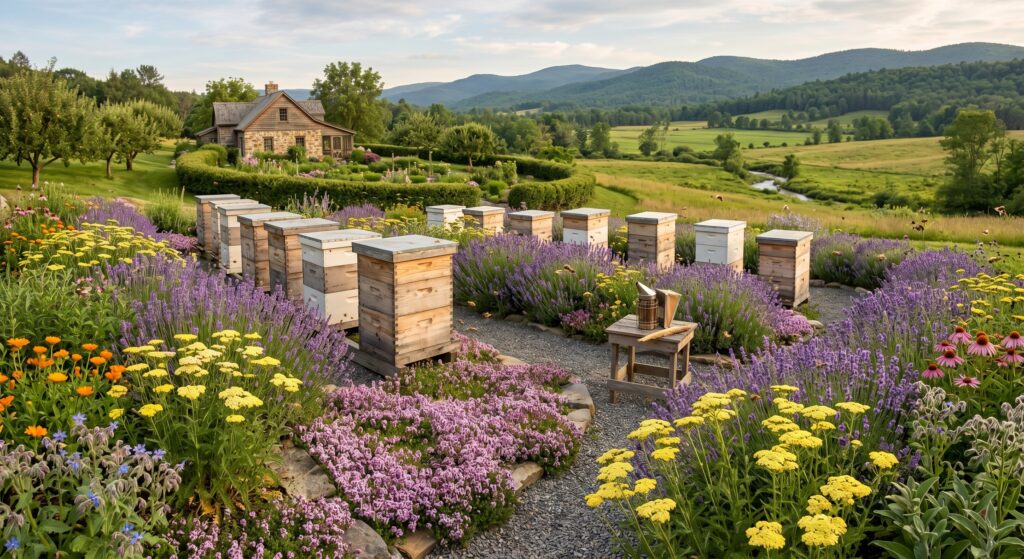
Your apiary layout shouldn’t just be a patch of mowed grass or a gravel pad. By intentionally landscaping the 10 to 20 feet surrounding your colonies with specific medicinal herbs, you can create a dynamic, living “bee pharmacy.” This holistic approach allows your bees to self-medicate, naturally bolsters their immune systems, and helps deter invasive, destructive pests like the Varroa destructor mite.
Whether you are a beginner preparing for your very first package of bees or an experienced commercial beekeeper looking to upgrade your apiary’s natural defenses, this guide will show you exactly how to design a protective, health-boosting landscape for your hives.
The Science of the “Bee Pharmacy”: Zoopharmacognosy
Before digging into the soil, it is vital to understand why herbs are so beneficial to honey bees. Nature has equipped honey bees with a remarkable survival mechanism known as zoopharmacognosy—the ability of animals to self-medicate by selecting specific plants, soils, or resins to treat and prevent diseases.
When honey bees forage on medicinal herbs, they aren’t just looking for carbohydrates (nectar) and protein (pollen) to feed their growing brood. They are actively seeking out potent phytochemicals, essential oils, and antimicrobial plant resins. They collect these sticky plant resins and blend them with beeswax to create propolis, the “bee glue” used to sanitize the hive interior, seal cracks against drafts, and even embalm intruders.
Research from esteemed institutions like the USDA Agricultural Research Service has consistently demonstrated that when bees have access to diverse botanical compounds, they produce propolis with significantly higher antimicrobial properties. This potent propolis envelope drastically lowers the overall immune stress on the colony, making individual worker bees significantly more resilient against bacterial and viral infections.
Top 5 Medicinal Herbs for Optimal Hive Health
When planning your new apiary layout, consider incorporating the following high-value medicinal herbs. Not only are they robust, drought-tolerant, and visually stunning, but they also provide scientifically proven health benefits for your colonies.
1. Thyme (Thymus vulgaris)
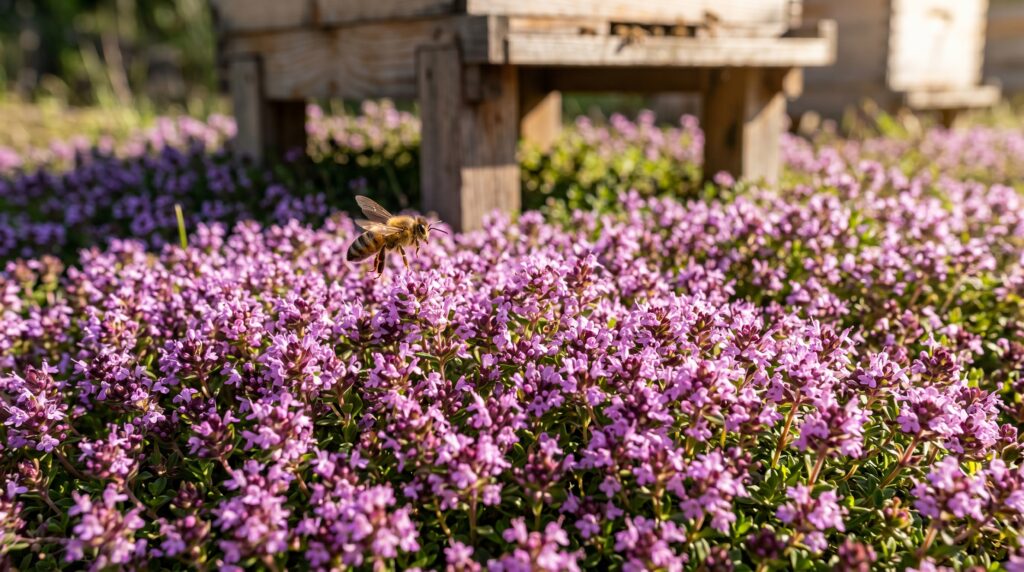
Thyme is an absolute must-have for any beekeeper’s garden. This creeping, highly aromatic herb produces a naturally occurring compound called thymol.
- Mite Defense: Thymol is a powerful natural biocide and miticide. In fact, many commercial Varroa mite treatments use concentrated thymol as their active ingredient. While foraging on thyme won’t instantly cure a severe infestation, the essential oils brought into the hive create an inherently hostile environment for mites.
- Layout Tip: Creeping thyme thrives in poor, rocky soils and makes an excellent, low-maintenance ground cover. Plant it directly under your hive stands. As you walk during inspections, your boots will crush the leaves, releasing mite-repelling vapors. For severe infestations, you will still need reliable varroa mite testing and treatment gear readily available.
2. Lemon Balm (Melissa officinalis)
Lemon balm is legendary in the apiculture community. The botanical name Melissa actually translates to “honey bee” in Greek, proving its historical significance.
- Swarm Attraction: The volatile essential oils in lemon balm (specifically geraniol and nerolic acid) closely mimic the honey bee’s Nasonov pheromone—the homing scent worker bees use to communicate that a space is safe and welcoming. Furthermore, the nectar boasts strong antiviral properties.
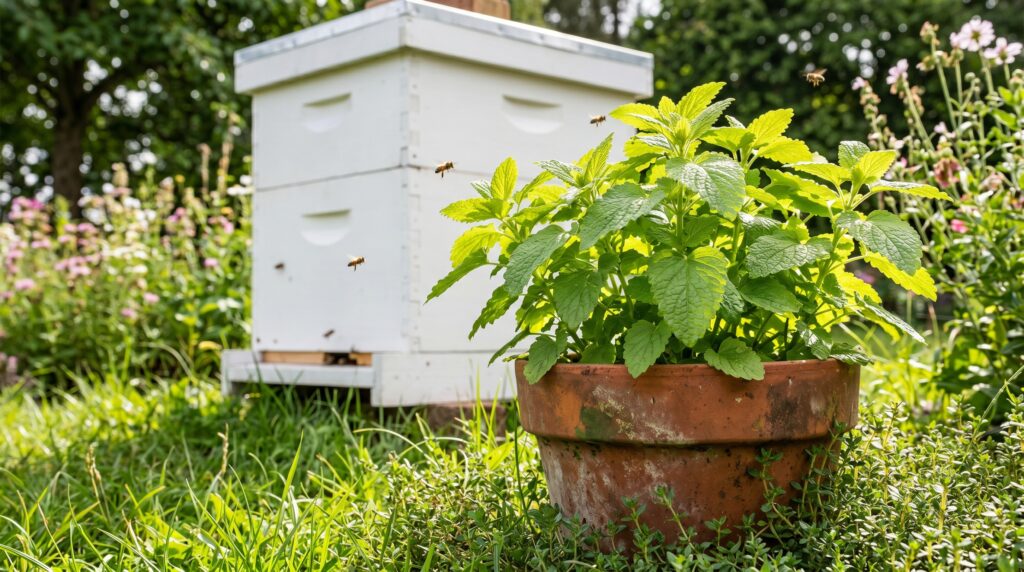
- Layout Tip: Lemon balm can be highly invasive. Plant it in sturdy pots or raised beds along the perimeter of your apiary. You can also crush its leaves inside a bait hive to attract spring swarms.
3. Borage (Borago officinalis)
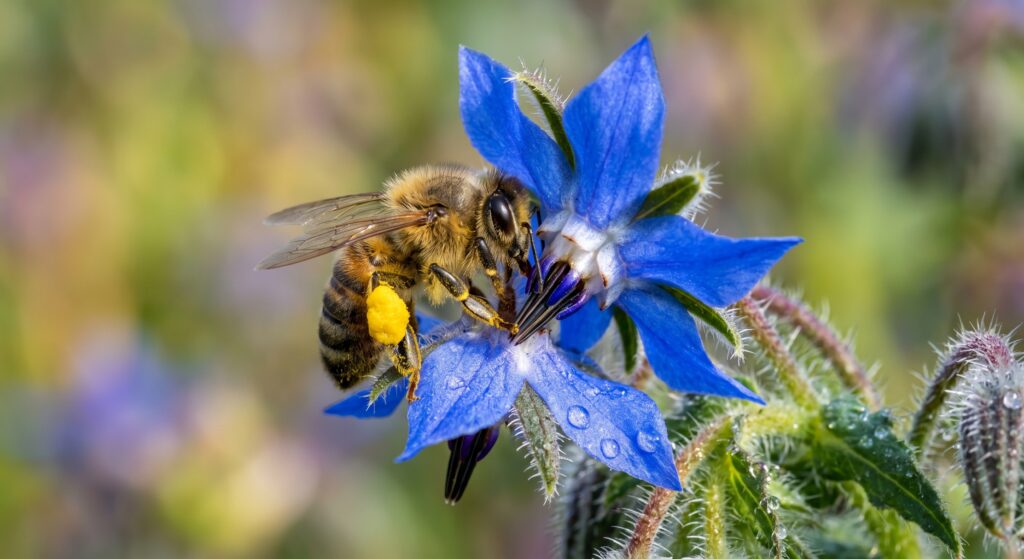
Often referred to as the “starflower” due to its beautiful blue, star-shaped blooms, borage is an apiary superstar that drips with high-quality nectar.
- Continuous Blooming: Borage is incredibly unique because its nectaries replenish exceptionally fast—often within just a few minutes of a bee visiting. This provides a high-energy, uninterrupted food source for the colony.
- Trace Minerals: Borage nectar is exceptionally rich in trace minerals that contribute to overall brood vitality, helping the queen lay strong, healthy larvae that develop robust exoskeletons.
4. Echinacea (Echinacea purpurea)
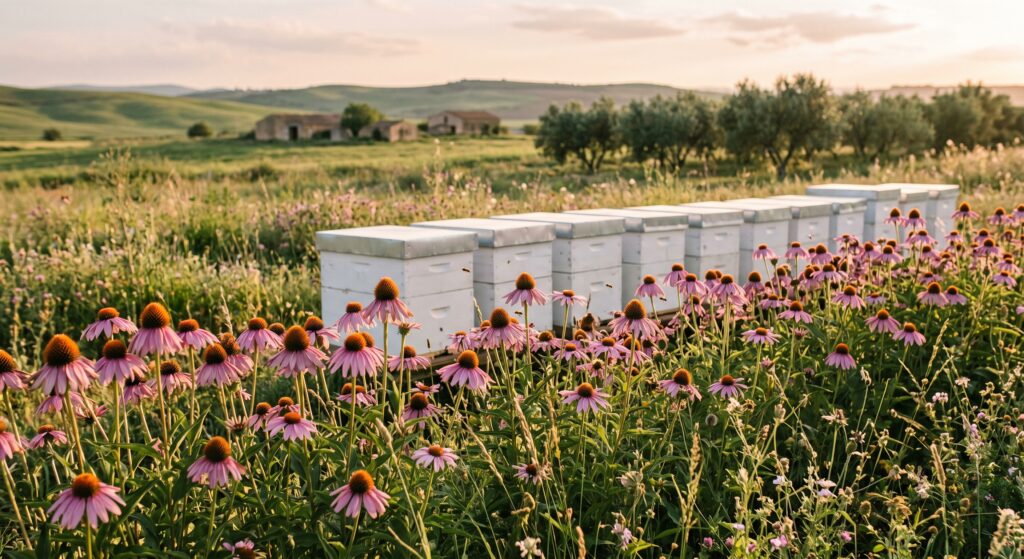
Also known as the Purple Coneflower, this striking herb is famous for its immune-boosting properties in human medicine—and it provides remarkably similar benefits for essential pollinators.
- Late-Season Forage: According to pollinator habitat guides from the Penn State Extension, integrating continuous-bloom plants like Echinacea is critical for sustaining native pollinators. It blooms late into the summer and early fall, providing a crucial nectar source during the “dearth” (when spring and summer floral sources dry up).
- Layout Tip: Echinacea grows tall on sturdy stalks. Position it at the back of your apiary layout to act as a visually stunning, mild windbreak.
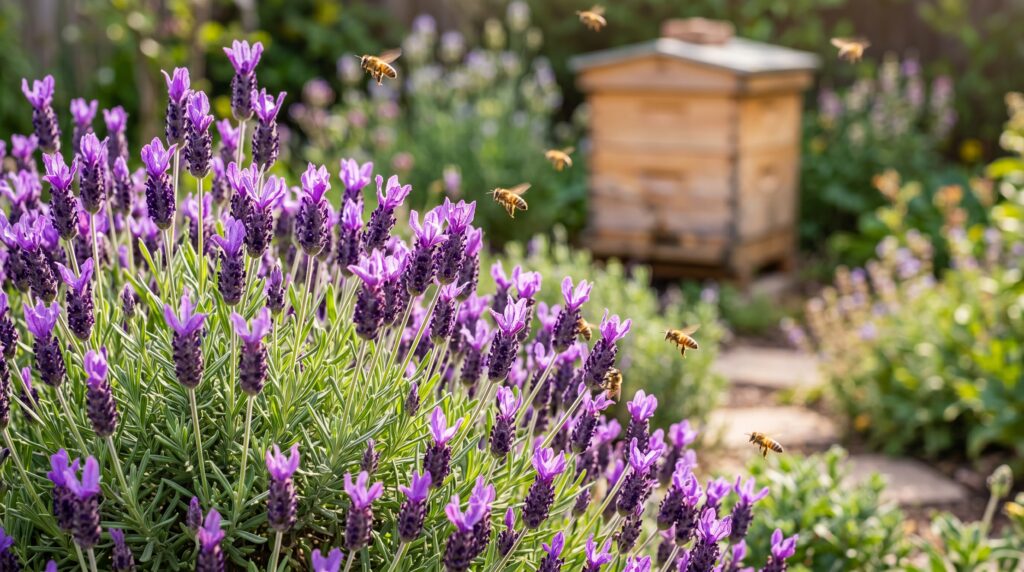
5. Lavender (Lavandula spp.)
Beyond its beautiful aesthetic and intoxicating scent, lavender is a heavy nectar producer that yields premium, light-tasting, highly sought-after honey.
- Antimicrobial Properties: The nectars and resins gathered from lavender are incredibly rich in essential oils that possess potent antibacterial and antifungal properties, strengthening the hive’s propolis envelope.
- Layout Tip: Lavender grows into bushy, medium-sized shrubs. Use it to create natural windbreaks behind your hives, shielding them from harsh winter winds while simultaneously masking the scent of the hive from opportunistic predators.
Strategic Apiary Layout: Where to Plant Your Herbs
Having the right medicinal herbs is only half the battle; knowing exactly where to place them in your apiary layout maximizes the health benefits while keeping your beekeeping workflow smooth and efficient.
Follow these fundamental layout rules:
- Protect the “Runway”: Bees launch out of the hive entrance and fly upwards at a 45-degree angle. Never plant tall herbs or thick shrubs directly within 5 to 10 feet of the hive entrance. This forces them to navigate a frustrating obstacle course just to leave home. Keep the immediate front clear by using low ground covers like creeping thyme.
- Create a Horseshoe Windbreak: Arrange your taller herbs (like mature Echinacea or large Lavender bushes) in a “U” or horseshoe shape around the back and sides of the hives. This architectural shape naturally deflects cold winds and helps bees navigate home safely on blustery days.
- Allow for Beekeeper Access: You need adequate space to maneuver safely. Always leave a clear, wide path behind and between the hives so you can easily perform routine inspections. When managing a fully planted, dense apiary, wearing high-quality ventilated beekeeping suits prevents you from getting snagged on tall herbs or painfully disrupting returning foragers.
- Install a Herbal Water Station: Bees desperately need water to cool the hive and dilute honey. Integrate a shallow birdbath filled with pebbles (to prevent drowning) amongst your herbs. The aromatic leaves will subtly scent the water, drawing the bees to a safe, local drinking source.

Maintaining Your Medicinal Bee Garden
To get the absolute most out of your apiary’s natural pharmacy, you must maintain the landscape using strict, bee-friendly practices.
- Maintain a Zero Pesticide Zone: An apiary must be a strict chemical-free zone. Never use synthetic herbicides or pesticides anywhere near your hives. Even organic-approved botanical pesticides can severely impact bee navigation, memory, and immunity if sprayed directly on active blooms.
- Practice Succession Planting: Choose a diverse mix of herbs that bloom at different times of the year. Borage is excellent for mid-summer, while echinacea provides critical late-season nectar.
- Harvest for the Smoker: Don’t hesitate to prune your plants! Dry bundles of lavender, thyme, and lemon balm stalks. When inspecting your hives, you can add a handful of these dried herbs to your smoker. The herbal smoke is highly calming to the bees and introduces mild antimicrobial vapors into the hive without leaving harmful chemical residues.
Conclusion
Designing a thoughtful apiary layout isn’t just about making sure your hive stands are perfectly level and facing the morning sun. By strategically surrounding your colonies with medicinal herbs like thyme, lemon balm, borage, echinacea, and lavender, you actively participate in your bees’ long-term health and survival. You provide them with the raw botanical materials they need to fight off mites, repel pests, and formulate highly potent, immune-boosting propolis. A thriving, holistically managed apiary ultimately leads to stronger bees, fewer winter colony losses, and far better honey harvests for you to enjoy.