
Privacy in a backyard is not a luxury. It is the difference between a space you actually use and one you step into briefly before retreating indoors because the neighbours can see every move you make from their kitchen window.
Most backyards have at least one privacy problem — a fence that is too low, a neighbour’s upper-storey windows that overlook the patio, a gap where two fences don’t quite meet, or simply a feeling of exposure that makes relaxing outside feel more like performing than unwinding. The good news is that every one of these problems is solvable, often with less money and effort than people expect.
These 35 approaches cover every budget, every garden style, and every type of privacy challenge — from quick weekend fixes to longer-term planted solutions that improve every year. Some work instantly. Some take a season to establish. The best ones do both jobs at once: creating privacy while making the garden more beautiful, more ecologically valuable, or more structurally interesting than it was before.
Browse through and save the approaches that match your specific situation — because the right privacy solution is always the one that fits your space honestly, not the one that looks best on paper.
1: The Living Fence
Replace a dead wooden fence with a planted boundary of mixed flowering shrubs, climbers, and structural plants that provides privacy, seasonal interest, wildlife habitat, and a windbreak that a wooden fence cannot match. A well-designed living fence reaches full screening height within two to three years and improves every season thereafter rather than deteriorating.
The most effective approach combines a structural rear layer of fast-establishing shrubs — elderberry, native viburnum, or hazel — with a mid-layer of flowering shrubs and a climbing front layer of honeysuckle or native roses. The result is a boundary that screens the garden completely while producing flowers, berries, and habitat that a panel fence never could. The complete plant palette, spacing, and three-season establishment plan is in The Living Fence: How to Build a Bee-Friendly Boundary That Doubles as Forage.
2: Bamboo in Trough Planters
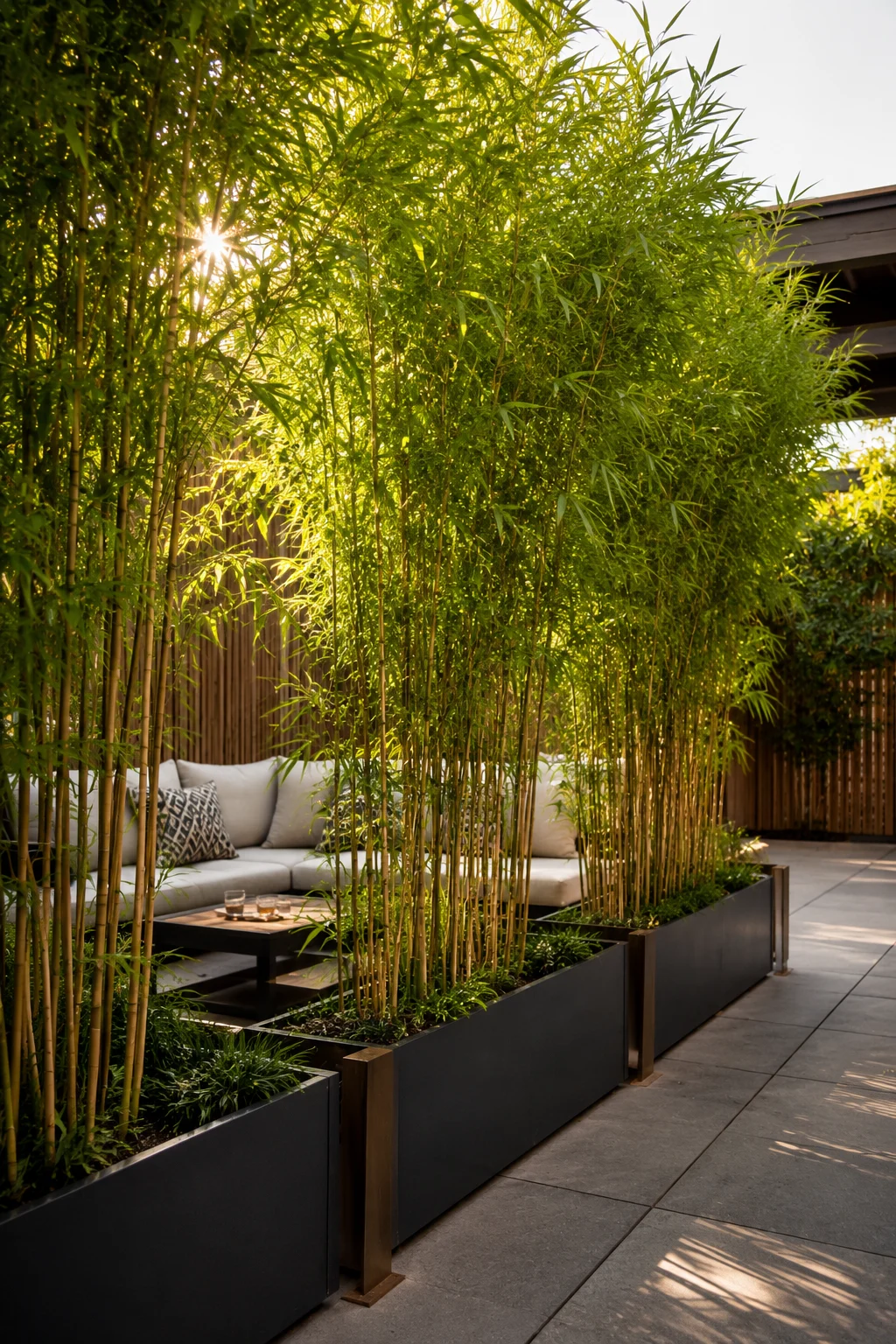
Tall bamboo planted in long narrow trough planters is the fastest-establishing privacy screen available for a patio or deck that is overlooked from above or to the sides. A single row of large-diameter planters — 60cm or longer — filled with a clump-forming bamboo species such as Fargesia murielae or Fargesia robusta creates a dense, moving green screen that reaches 2–3 metres in a single growing season.
Clump-forming species are essential — running bamboo spreads aggressively and becomes extremely difficult to remove from garden soil. In planters, both types are safely contained. Position the troughs along the patio edge that needs screening, not around the entire perimeter, so the garden does not feel enclosed from all sides simultaneously.
3: A Pergola With Climbing Plants
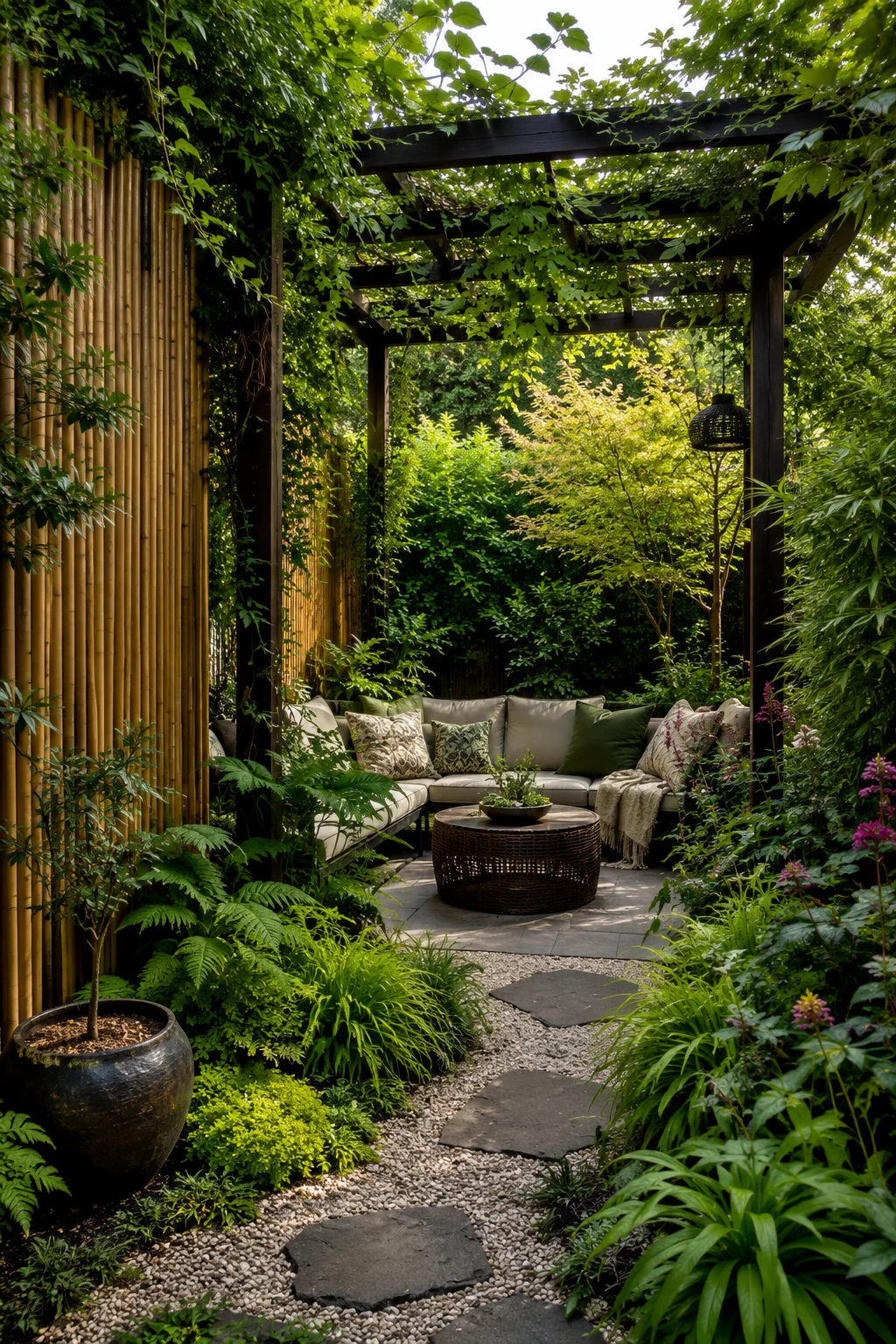
A pergola overhead creates privacy from above — the direction most backyards are overlooked from neighbouring upper-storey windows — while defining a clear outdoor room beneath. Even a simple timber pergola without plants provides some sense of enclosure. Train a climbing rose, wisteria, jasmine, grapevine, or native honeysuckle over it and within three seasons the overhead coverage becomes dense enough to screen from all angles above while filtering dappled light through the canopy.
For smaller spaces, a pergola attached to the house wall — a lean-to pergola — takes up less ground space while providing the same overhead coverage. Steel or powder-coated aluminium pergolas are more expensive upfront but require no maintenance and last indefinitely.
4: Tall Ornamental Grasses
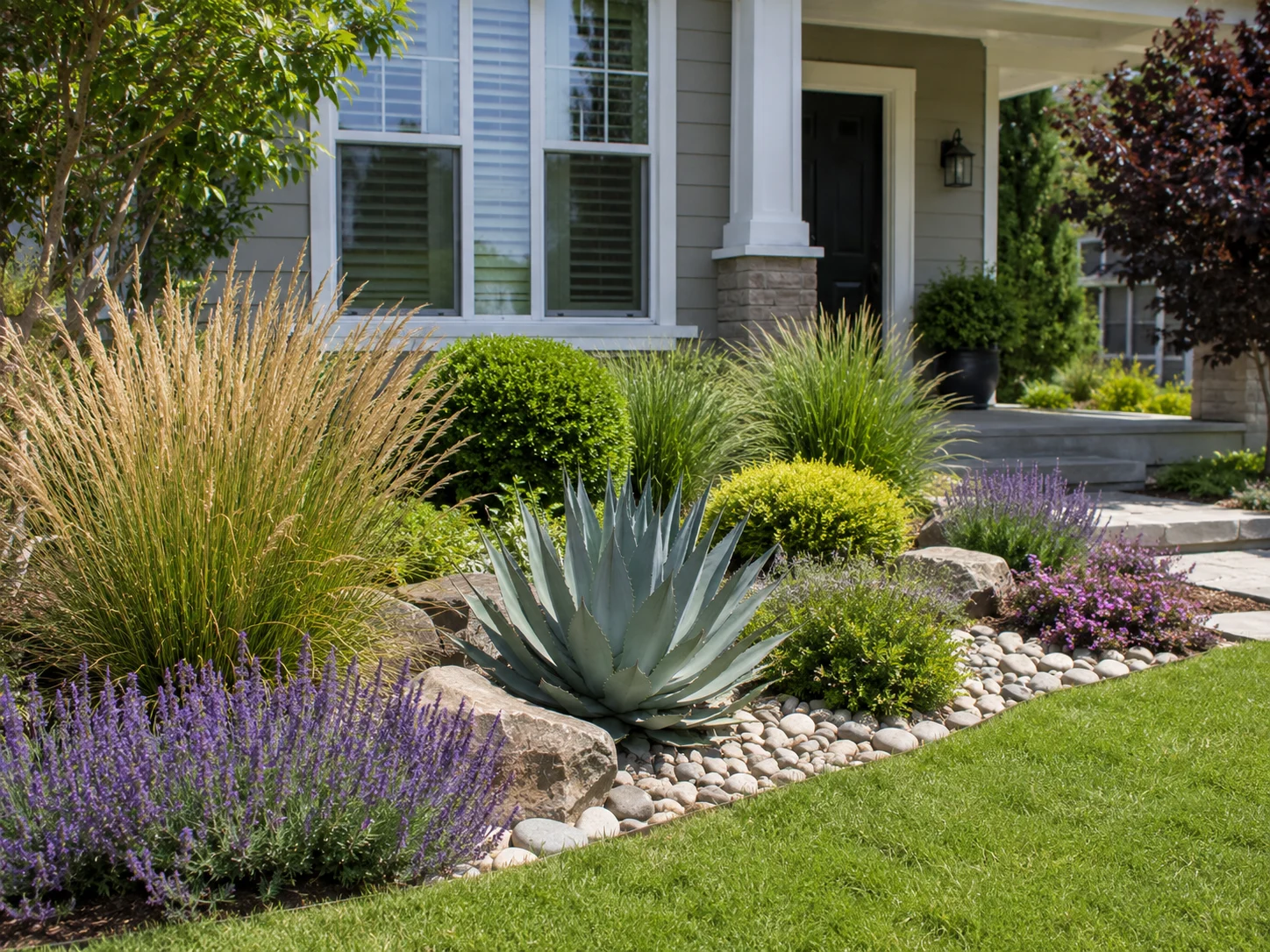
Ornamental grasses planted in generous groups — miscanthus, arundo, pennisetum, or native prairie grasses — create privacy screening that moves beautifully in the wind, looks spectacular in every season including winter when frosted, and costs a fraction of structural screening options. Miscanthus sinensis ‘Malepartus’ or ‘Zebrinus’ reaches 2 metres reliably. Arundo donax (giant reed) reaches 3–4 metres in warm climates.
Plant in groups of three to five for visual mass rather than isolated specimens, and position them where their movement — which is part of what makes them effective — can be appreciated from the main seating area.
5: Horizontal Timber Screen Panels
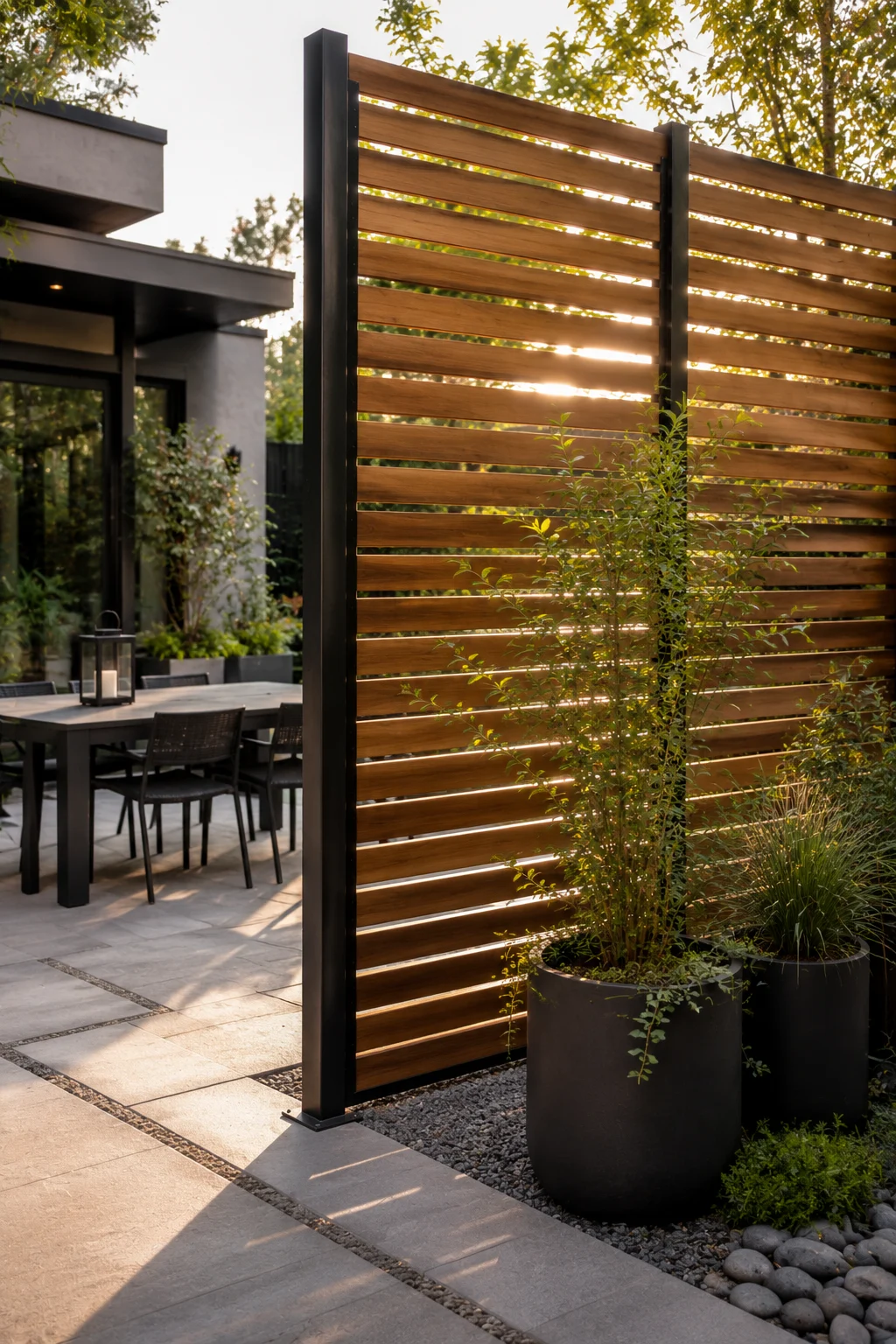
Horizontal timber slats — cedar, hardwood, or composite — fixed to a fence frame or freestanding posts create a modern, architectural privacy screen that is significantly more design-forward than standard vertical fence panels. The horizontal orientation makes spaces feel wider. Gaps between the slats allow air to pass through, reducing wind load on the structure, while the overlapping angles of the slats prevent direct sightlines into the garden from any position.
Hardwood or composite materials require minimal maintenance and last significantly longer than standard softwood panels. Cedar weathers to a natural silver-grey that looks excellent without treatment.
6: The Pleached Tree Screen
Pleached trees — lime (Tilia), hornbeam, beech, or photinia trained on a clear stem with a flat, hedge-like canopy at the top — create an elevated screen that blocks sightlines at the height of neighbouring windows without taking up the ground-level space of a full hedge. They are particularly effective against upper-storey overlooking because they provide screening at exactly the right height rather than growing a full hedge that eventually blocks light at ground level.
Established pleached trees are expensive and take a few seasons to fill fully, but they are the most elegant architectural solution to upper-window overlooking that the garden design palette offers.
7: Raised Planting Beds as Screens
Raise one or more planting beds to 90–120cm height along the boundary or patio edge that needs screening, and fill them with tall perennials, grasses, and flowering shrubs. The combination of raised bed height and plant height above it creates an effective screen from a standard neighbouring fence or lower-level window without requiring the full height of a separate fence or screen structure.
Raised beds also bring several benefits beyond privacy: improved soil drainage, easier access for planting and maintenance, and the visual interest of plants at eye level rather than at foot level.
8: Willow Hurdles and Living Willow
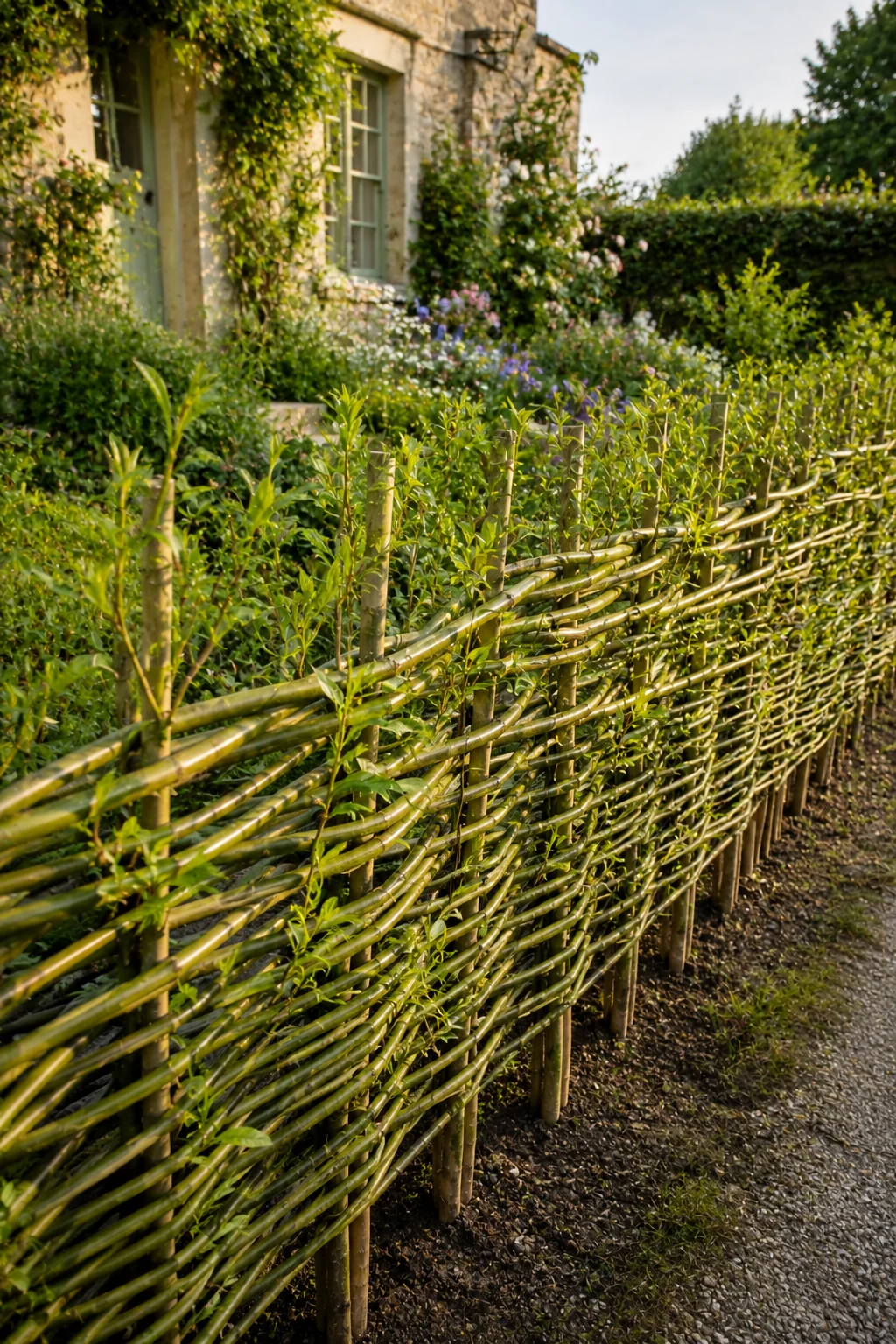
Woven willow hurdles — traditional basketwork panels of interlaced willow rods — provide immediate lightweight screening that is far more visually interesting than standard fence panels and works well in cottage, naturalistic, or contemporary settings. Purchased as finished panels and fixed to posts, they are quick to install and relatively inexpensive.
Living willow — freshly cut willow rods pushed directly into moist soil and woven into a fence or arch shape — roots spontaneously and grows into a living structure that leafs out in spring and provides dense screening through summer. It requires an annual trim to maintain its shape but costs almost nothing and can be created in a single weekend.
9: Evergreen Hedging
A properly selected and well-planted evergreen hedge provides the most permanent, self-renewing, and ecologically rich privacy screening available to any backyard — and improves every year rather than deteriorating. Taxus baccata (yew) is the finest formal hedging plant available: extremely long-lived, dense, precisely clippable, and more tolerant of shade and dry conditions than most alternatives. Ilex aquifolium (holly) provides evergreen privacy with berries for birds. Prunus laurocerasus (cherry laurel) establishes fast in most conditions.
The key mistake is choosing too-fast-growing species that then require expensive management — leylandii being the classic example. Match the eventual hedge height to what you actually need, not to the tallest option available.
10: Trellis Extension on Existing Fences
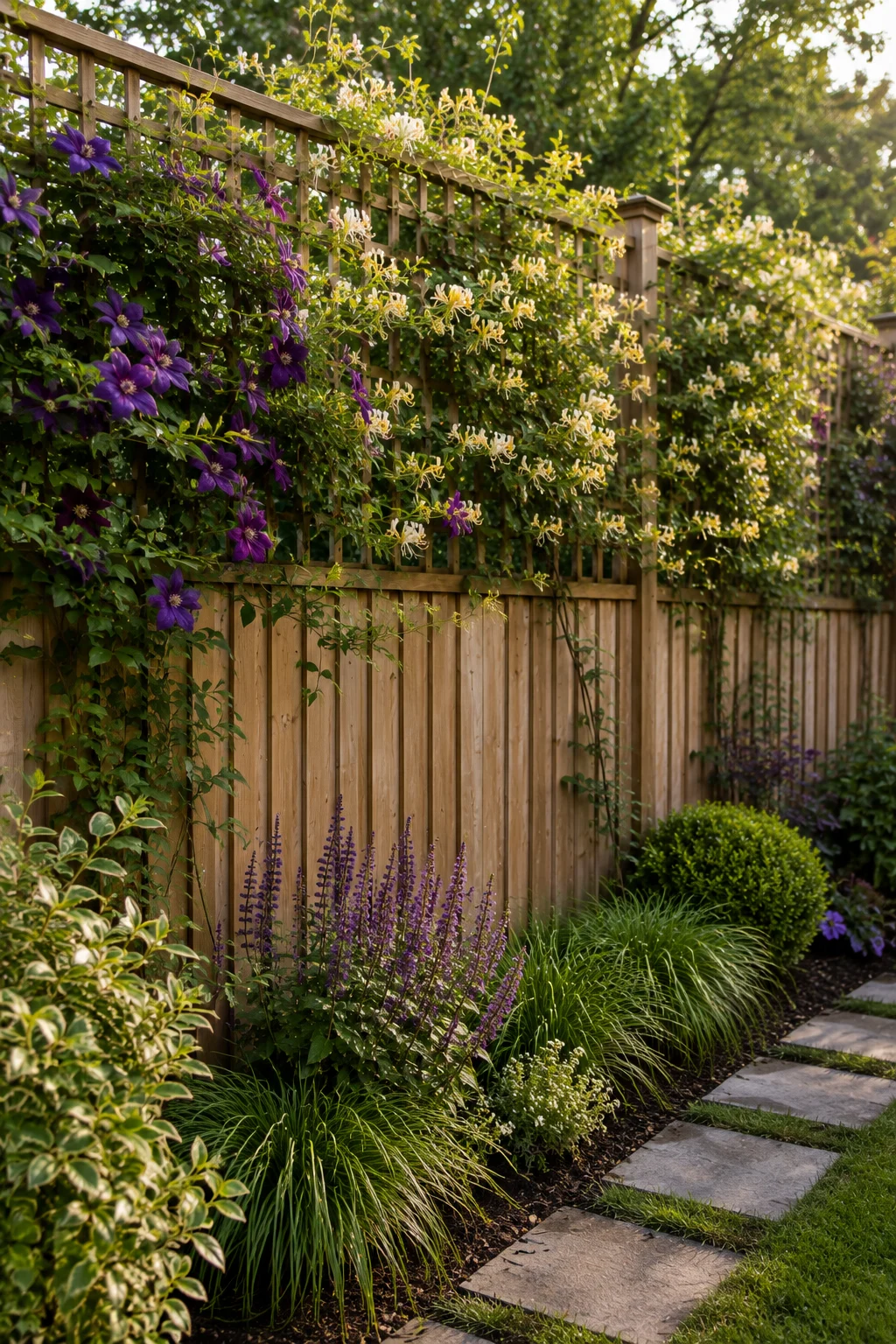
Adding a trellis extension — typically 30–60cm of open lattice trellis — to the top of an existing fence increases its effective screening height immediately and provides a support structure for climbing plants that add further height and density over time. Many local authority and planning regulations allow fence extensions with open trellis where a solid fence extension would require permission, making this a practical solution in regulated situations.
Fix the trellis securely to the fence posts rather than to the fence panels themselves, which may not be structurally adequate to support the additional leverage.
11: The Gabion Wall
Gabion walls — wire mesh cages filled with stone, slate, or recycled concrete — create structural, permanent privacy walls with an industrial-meets-natural aesthetic that suits contemporary gardens particularly well. They can be built to any height, require no maintenance, and improve visually as moss and small plants colonise the stone surfaces over time.
At 1.2–1.5 metres tall, a gabion wall provides complete privacy at seating height. Shorter gabions used as raised bed retaining walls or low boundary features add structural interest without full privacy screening.
12: Tall Hedging in Pots
For renters, those who cannot break ground for planting, or gardeners who need immediate moveable screening, large potted hedging plants — bay, photinia, pittosporum, or olive trees in 50-litre or larger containers — provide instant portable privacy that can be rearranged as needed. Position three to five large containers in a row to create a screen, or arrange them to define a seating zone within a larger patio.
The containers need to be genuinely large — at least 50 litres per plant — for the plants to establish well and survive summer heat without constant intervention.
13: The Green Wall Panel
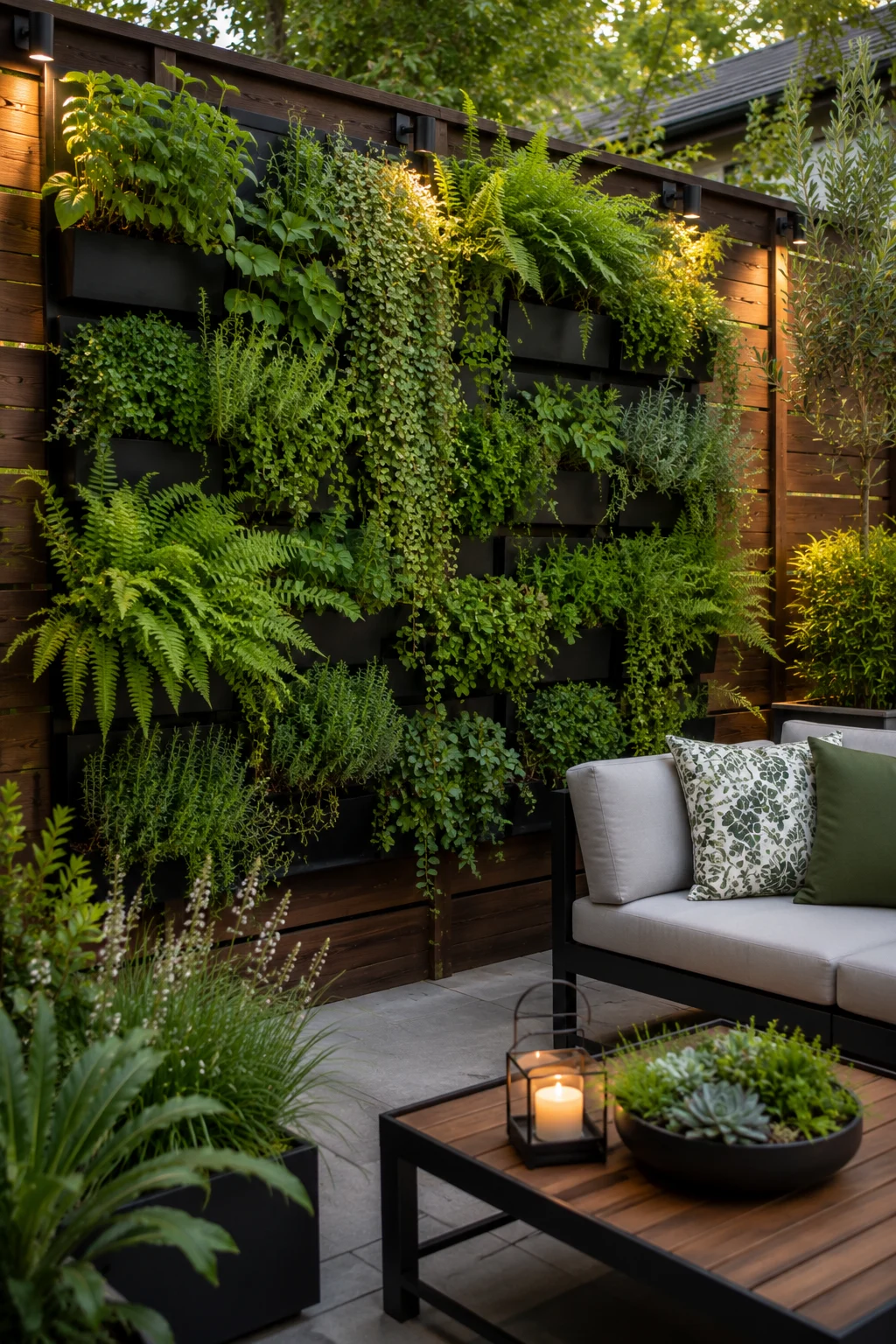
Modular green wall panels — pre-planted living wall systems in plastic or metal frames — can be fixed to a fence, wall, or freestanding frame to create immediate coverage and screening. Established panel systems arrive planted and ready to install. Maintenance requirements vary by system and plant selection.
For a lower-cost alternative, self-build pocket planters mounted on a timber frame achieve a similar effect with a wider plant choice and lower initial cost, though requiring more planting and establishment time.
14: Strategic Tree Planting
A single well-positioned tree — particularly a multi-stem specimen or a tree with a low branching habit — can screen a specific sightline, provide overhead cover, and create dappled shade over a seating area simultaneously. The key is positioning: assess exactly where the overlooking is coming from before planting, and position the tree so it intercepts that specific sightline at mature height rather than planting it where it looks good at nursery size.
Faster-establishing trees for backyard privacy include elder, silver birch, multi-stem amelanchier, and crab apple. All provide additional ecological value through flowers and fruit alongside their screening function.
15: The Slatted Pergola With Privacy Screens
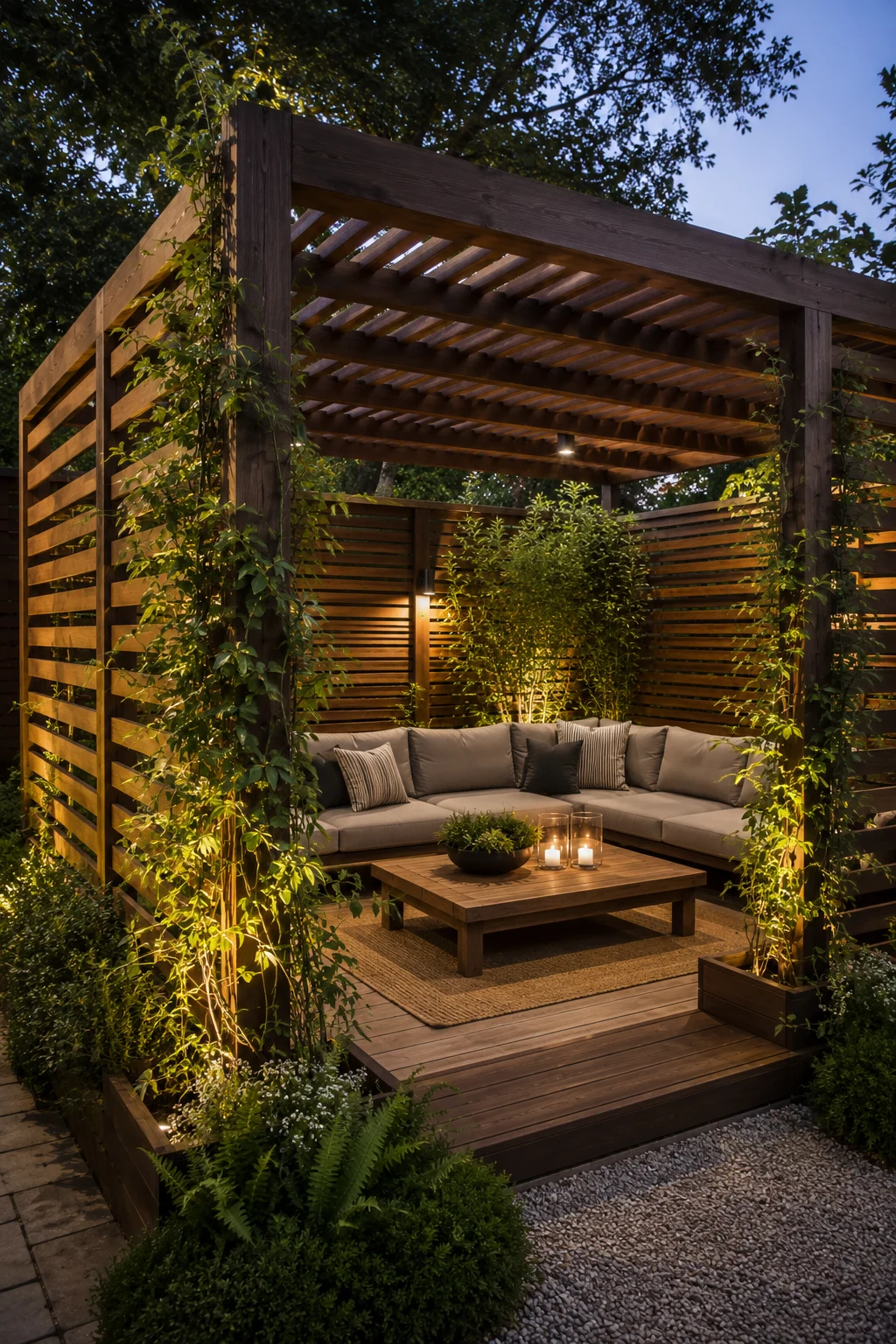
A pergola with slatted side screens — panels of horizontal timber, bamboo, or composite material fixed to the pergola uprights — creates an outdoor room that is enclosed on two or three sides as well as overhead. The combination of roof and partial side screening is the most effective approach for patios that are overlooked from multiple directions simultaneously.
For flexibility, fix the side panels with removable fixings so they can be taken down in winter to reduce wind load on the structure.
16: Raised Deck With Integrated Planters
Raise the main patio or deck level by 30–45cm and build integrated planter boxes into the deck edging — filled with tall grasses, bamboo, or flowering shrubs. The combination of the raised deck height and the plant height above the planters creates effective privacy screening without any separate fence or screen structure. The plants sit at approximately 1.5–2 metres above garden ground level, providing screening at exactly the height of neighbouring lower-storey windows.
17: Painted or Rendered Privacy Walls
A short section of rendered or brick garden wall — even at 1.2 metres — provides more visual privacy at seating height than a 1.8-metre open fence, because a solid opaque surface breaks the sightline completely rather than providing filtered screening. Paired with planting behind it and trailing or climbing plants against its face, a rendered wall becomes a design feature rather than simply a barrier.
Paint in a strong colour — deep sage, terracotta, navy, or warm ochre — and the wall becomes the defining design element of the outdoor space.
18: Shade Sails for Overhead Privacy
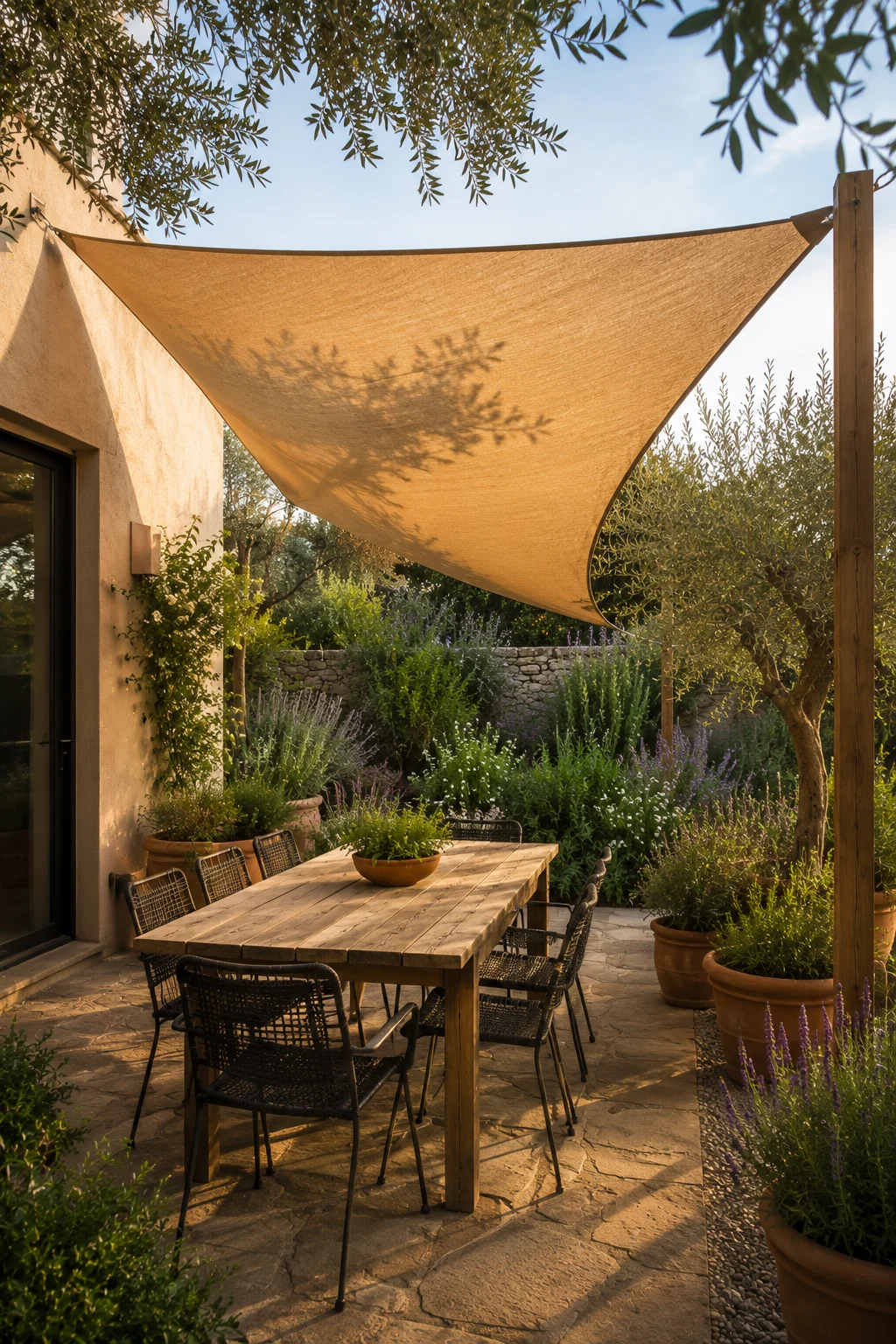
Tensioned shade sails — geometric panels of canvas, linen, or technical fabric — stretched diagonally above a patio create overhead screening from upper-floor windows that no fence or hedge can provide. A single large sail (4m × 4m or larger) positioned correctly can block sightlines from the specific upper windows that overlook the sitting area.
Shade sails require fixings into solid walls or freestanding posts, and should be removed or re-tensioned in high winds. Permeable technical fabric options allow rain to pass through rather than pooling.
19: Espalier Trees as Screens
Espalier trees — trained flat against a fence or wall with horizontal branches at regular intervals — create a screen that combines the density of a hedge with the beauty of a formal trained plant. An espalier apple, pear, or hornbeam along a fence adds 40–60cm of screening depth to an existing structure while producing flowers, fruit, and extraordinary architectural interest.
Unlike a full hedge, an espalier takes up almost no ground space — ideal for narrow borders where depth is limited.
20: Dense Climber Coverage
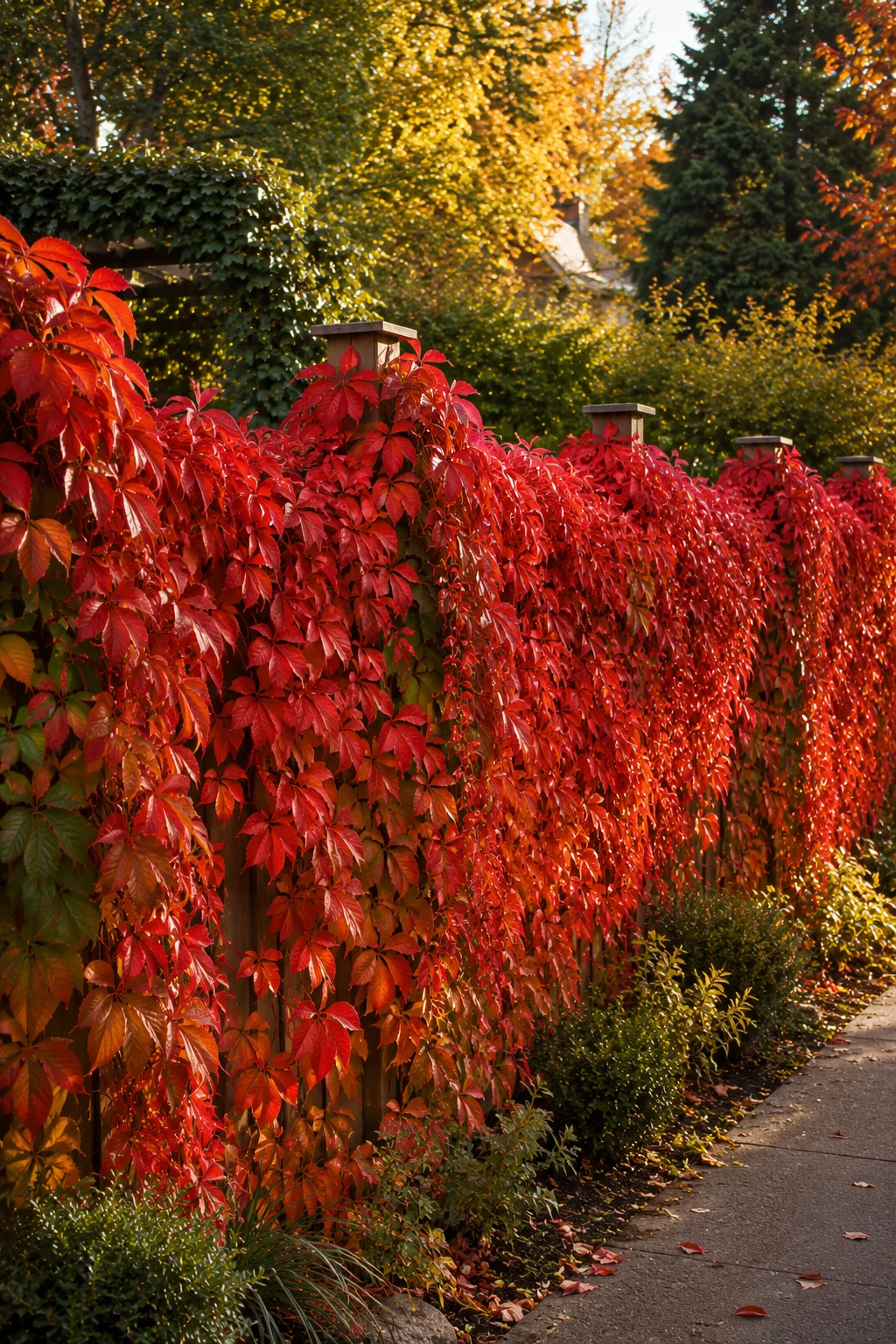
A fence or wall covered in a vigorous, dense climber — Parthenocissus quinquefolia (Virginia creeper), Hydrangea petiolaris (climbing hydrangea), or Trachelospermum jasminoides (star jasmine in mild climates) — transforms a bare vertical surface into a living screen within two to three seasons. The climber adds a further layer of visual privacy by covering the fence material itself and extending naturally above its top edge.
Virginia creeper provides spectacular autumn colour. Climbing hydrangea tolerates deep shade where other climbers struggle. Star jasmine is fragrant and evergreen in mild climates.
21: The Herb and Kitchen Garden Screen
A row of tall herb plants — rosemary clipped into a low hedge, fennel reaching 1.5 metres, Jerusalem artichoke at 2+ metres — planted in a line creates a fragrant, productive privacy screen along one boundary. Jerusalem artichoke in particular makes an extraordinarily effective tall annual screen: planted in April from tubers, it reaches 2–2.5 metres by July and creates a dense barrier across the entire growing season, producing tubers for eating in autumn and dying back cleanly in winter.
Combine with lower herbs in front — sage, lavender, chives — for a productive border that earns its position from multiple angles.
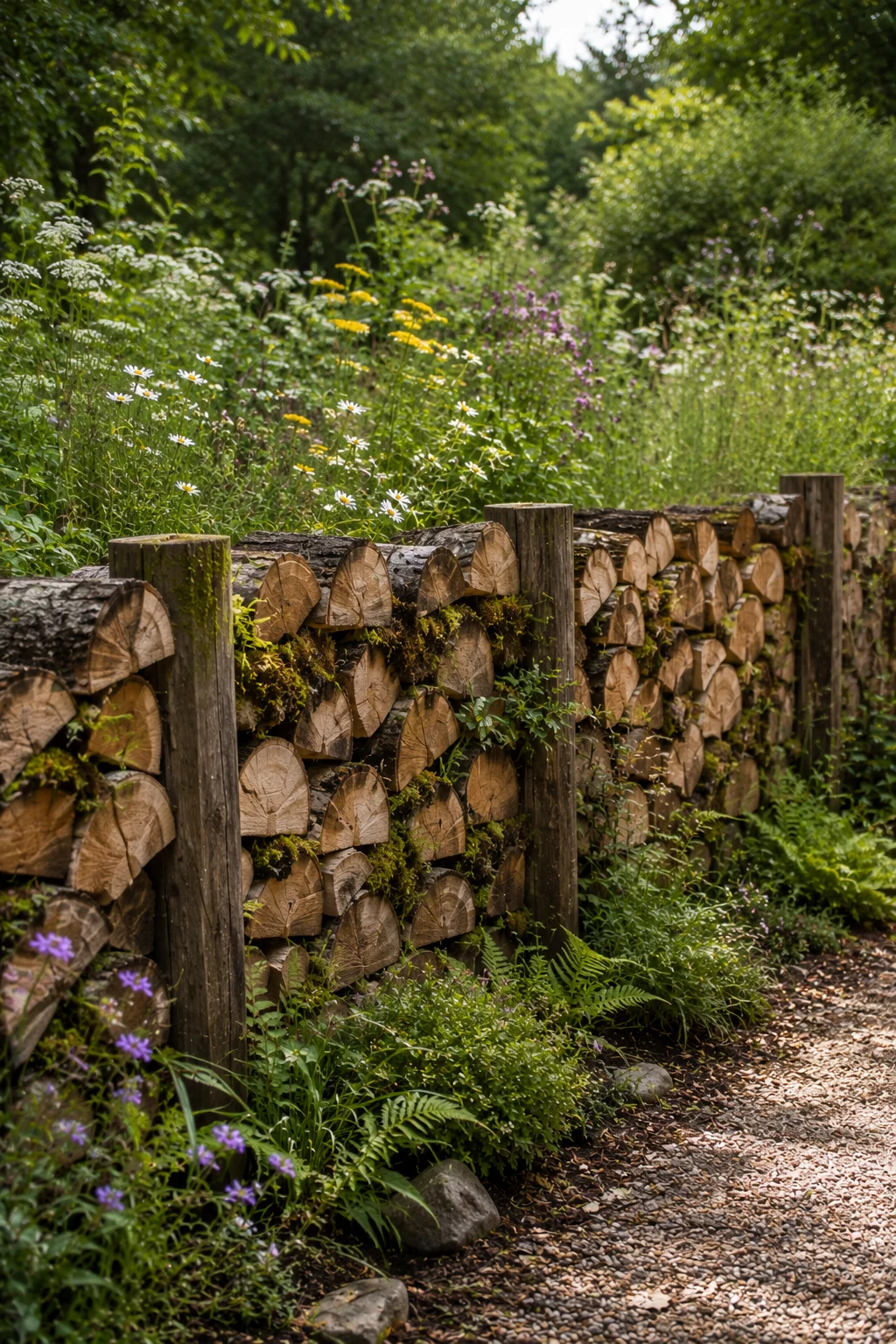
22: Stacked Log Walls
Low stacked log walls — timber rounds or split logs stacked between upright posts — create natural, rustic structural privacy features that cost almost nothing from a sawmill offcuts supplier and establish a character that no manufactured product can replicate. Mosses, ferns, and small wildflowers colonise the gaps naturally over time, adding ecological value and visual interest.
Effective as low boundary features, as retaining walls for raised beds, or as windbreak features that partially screen a seating area without fully enclosing it.
23: Courtyard Garden Design
Design the entire garden around the courtyard principle — enclosed space with high boundaries on multiple sides, planting that creates a sense of containment rather than openness, and furniture positioned away from exposed edges rather than at the perimeter. A garden designed as a courtyard, even with relatively low boundaries, feels private because the design intention is inward-looking rather than outward-facing.
The American Society of Landscape Architects design guidance consistently recommends spatial definition — the use of plants and structures to create enclosed zones — as the most effective approach to making a garden feel private regardless of its actual boundary height.
24: Outdoor Curtains on a Pergola
Exterior-grade curtains suspended from a pergola beam or ceiling track create instant, adjustable privacy that can be opened for sun and pulled closed for shade or screening when needed. Available in weatherproof acrylic canvas, natural linen treated for weather resistance, or technical outdoor fabrics, they add a sense of luxury and domesticity to an outdoor space that few other privacy solutions match.
Fix the track or rod to the pergola beam rather than the curtain hanging freely, which causes tangling in wind.
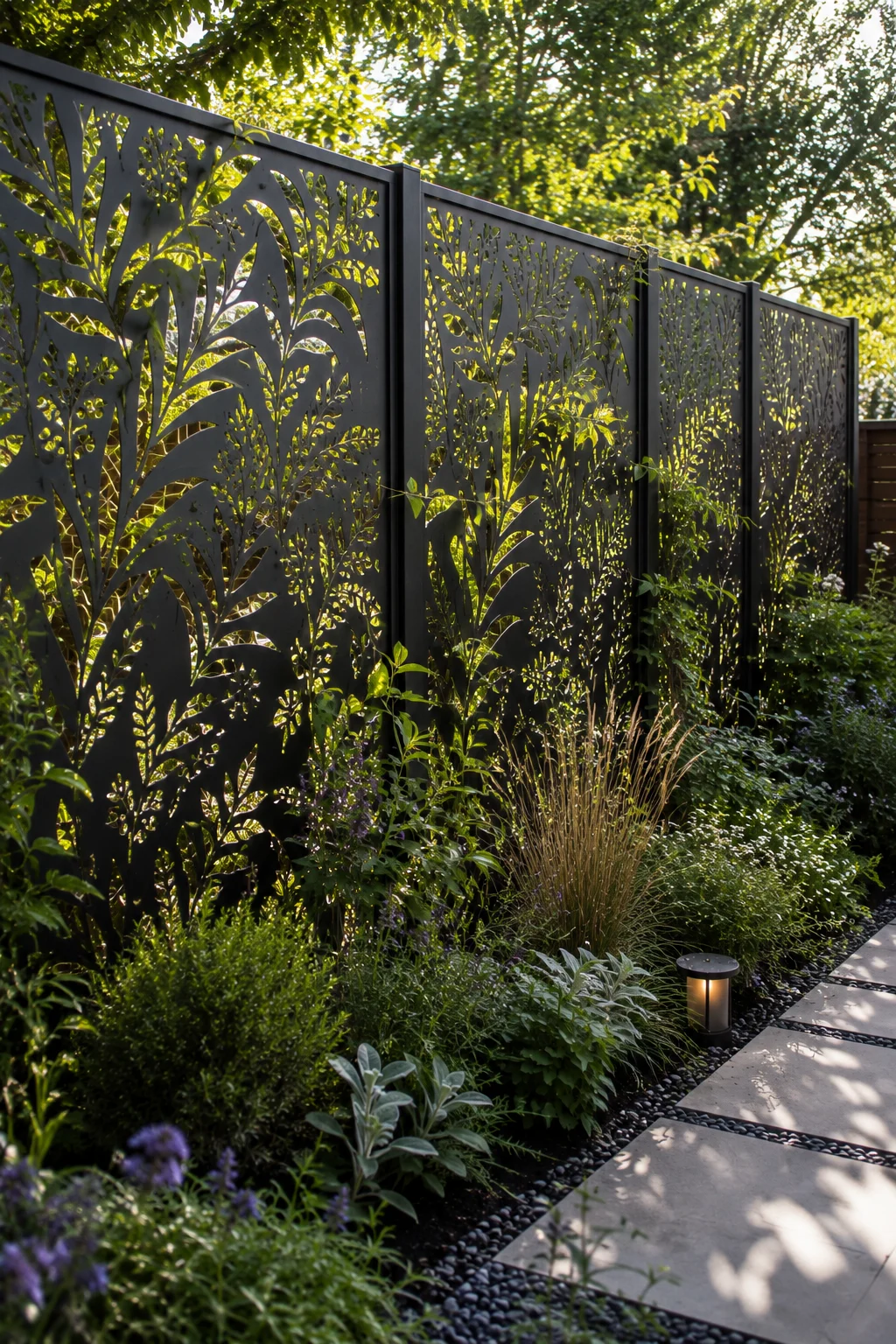
25: Raised Boundary Fencing With Art Panels
Replace standard fence panels with decorative metal, timber, or composite art panels — laser-cut geometric patterns, botanical designs, or abstract forms — that provide privacy while functioning as decorative features visible from both sides of the boundary. These panels allow filtered light and air through while blocking direct sightlines, and make the fence itself a design statement rather than a utilitarian barrier.
26: The Sunken Seating Area
Excavate a seating area 40–60cm below the surrounding garden level and line it with rendered walls, stone, or timber. The sunken level provides natural privacy — anyone sitting in the sunken area is below the sightline of neighbours even with a relatively low surrounding boundary — while creating the most sheltered, intimate outdoor seating space possible. Wind cannot reach a sunken seating area. Rain blows over the top. The contained space retains warmth long after the surrounding garden has cooled.
27: Hazel or Willow Coppice Screen
A row of hazel or willow grown as a multi-stem coppice — cut to ground level every three to five years, producing multiple fast-growing upright stems — creates a natural, wildlife-rich privacy screen that requires no fence posts, no panels, and almost no maintenance between cuttings. Hazel coppice supports an extraordinary range of insects including many specialist bee species that nest in hollow cut stems.
The cuttings from each coppicing cycle can be used for garden stakes, bean poles, or woven into hurdles and baskets, making the screen productive beyond its screening function.
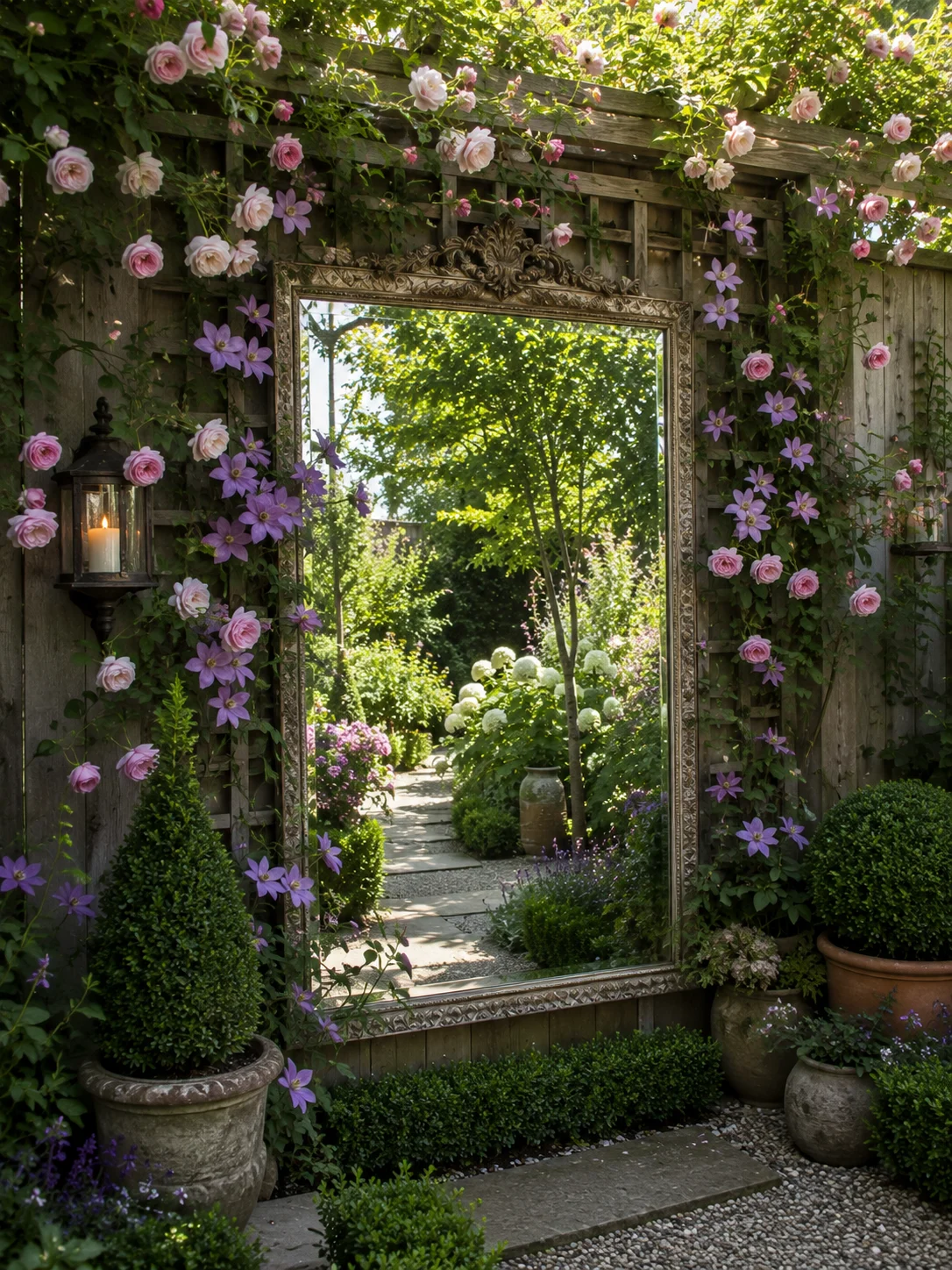
28: Mirror and Trellis Combination
A large outdoor mirror mounted on a fence or wall, framed by trellis with climbing plants growing around it, creates the optical illusion of a gap in the boundary — a window into another garden space — while actually doubling the apparent depth of the existing garden. The climbing plants growing around the mirror frame blur the boundary between real planting and reflected planting, creating a visual effect that is both beautiful and genuinely disorienting in the most pleasant way.
29: The Pleached Hornbeam Row
A row of pleached hornbeam — clear-stemmed standards with flat, clipped canopies at 2.5–3 metres — provides the most elegant elevated screen for overlooked gardens and is the approach most frequently used in professional landscape design for exactly this purpose. The trees take 3–4 years to fill completely but provide useful screening from the first season. They can be planted at 1.5–2 metre centres along a boundary, and their narrow footprint makes them suitable for gardens where a full hedge would consume too much space.
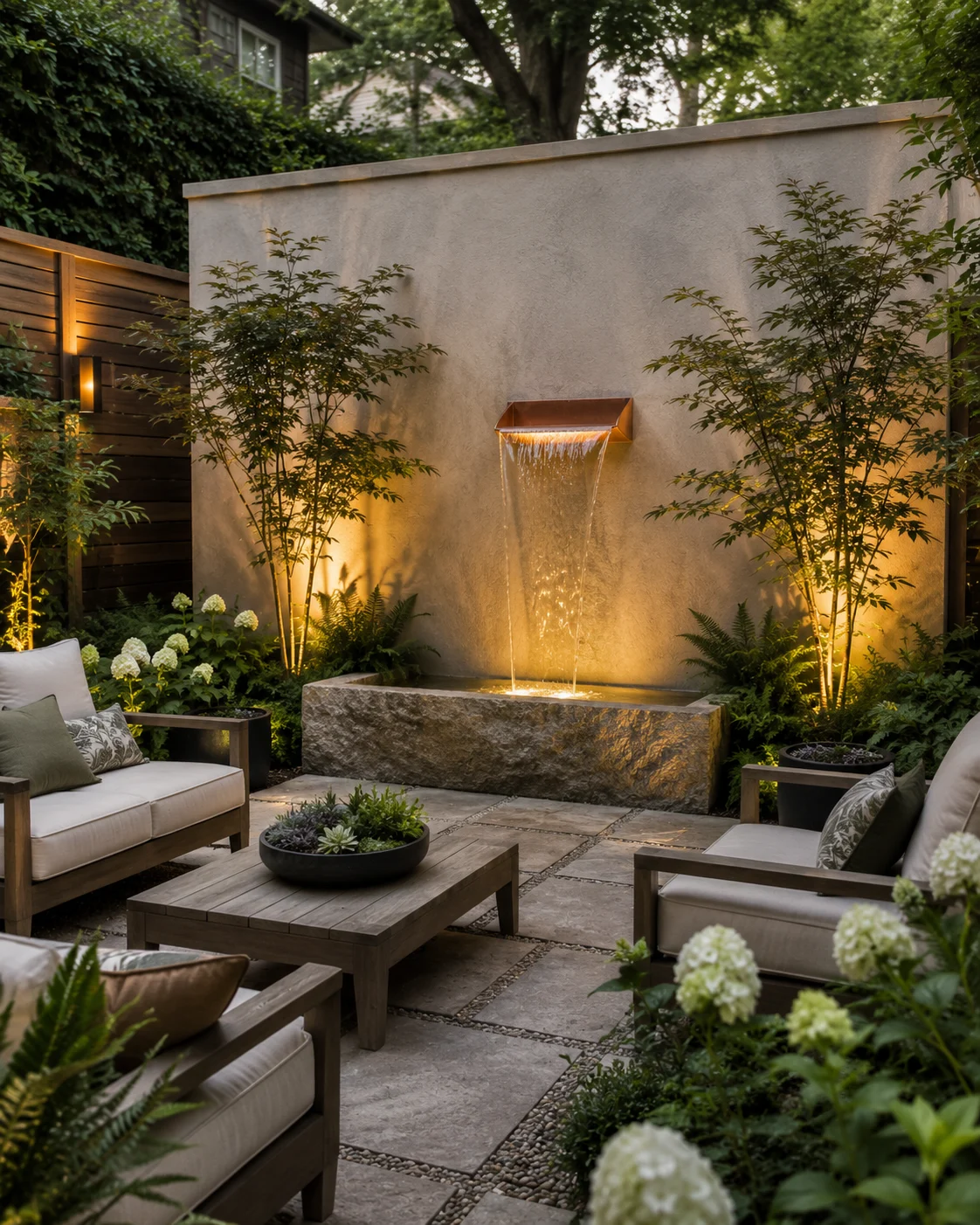
30: The Screen Wall With Water Feature
A short rendered screen wall — 1.2–1.5 metres tall — with a wall-mounted water spout running into a ground-level trough serves three purposes simultaneously: it creates privacy at seating height, it masks neighbouring noise with the sound of moving water, and it acts as a focal point around which the rest of the seating area is arranged. This combination of functions makes the screen wall feel like a deliberate design choice rather than a privacy afterthought.
31: Tall Annual Screen Plants
Sunflowers, runner beans on a tall structure, sweet corn, or sunflowers planted in a row create a fast, inexpensive summer privacy screen that reaches 1.5–2.5 metres from a May planting and lasts through September. These are not permanent solutions, but for a rented garden, a problem boundary that is being replaced, or a situation where permanent planting is not yet planned, a seasonal annual screen fills the gap effectively while adding colour and productivity.
32: The Garage or Shed Side Return
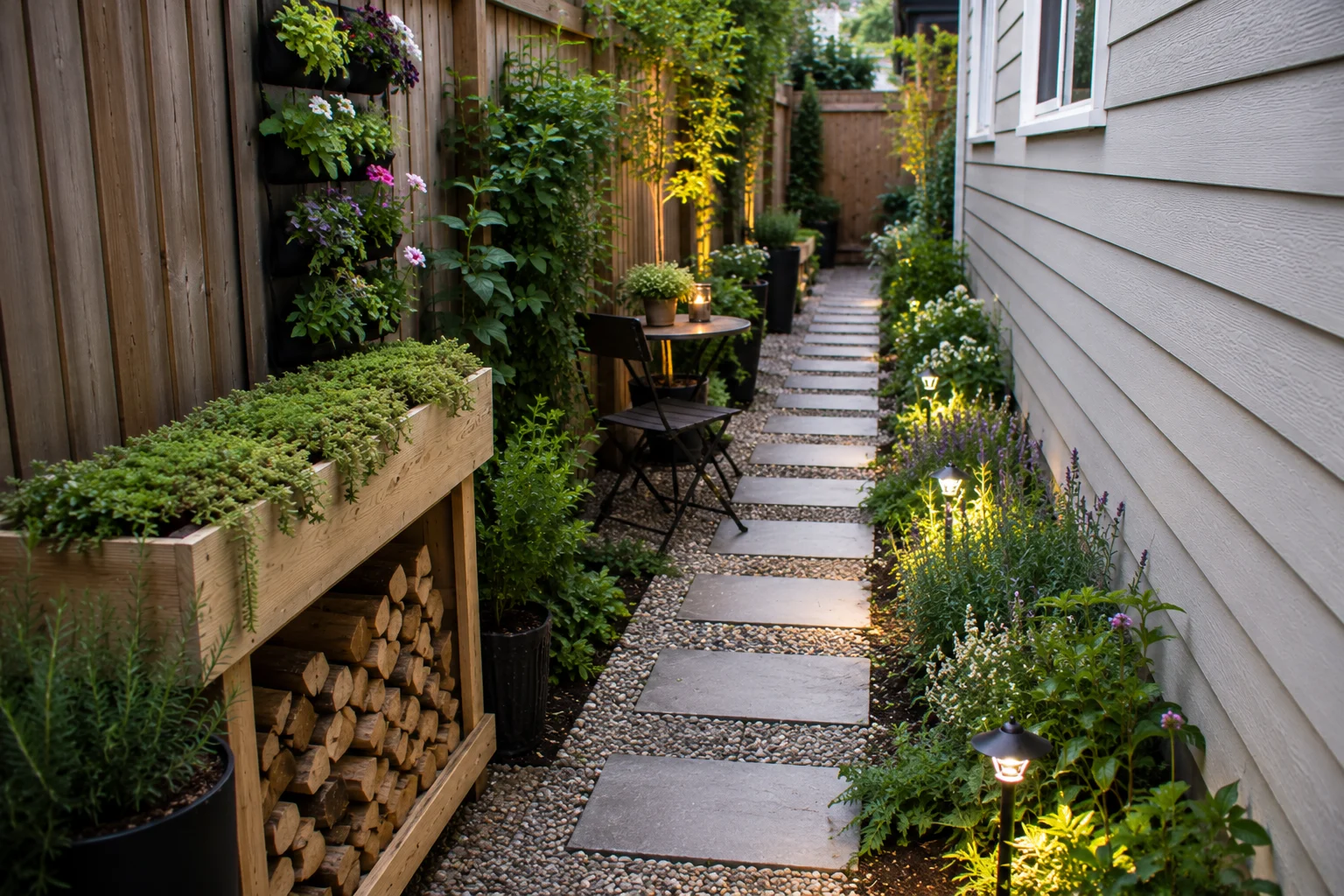
A narrow side return between a building and the boundary — often less than a metre wide — is one of the most overlooked privacy opportunities in any backyard. Even a simple trellis panel with a climber at the end of the side return blocks the view through the gap from the street or neighbouring property that is often the main source of exposure for the main garden.
33: Layered Planting Depth
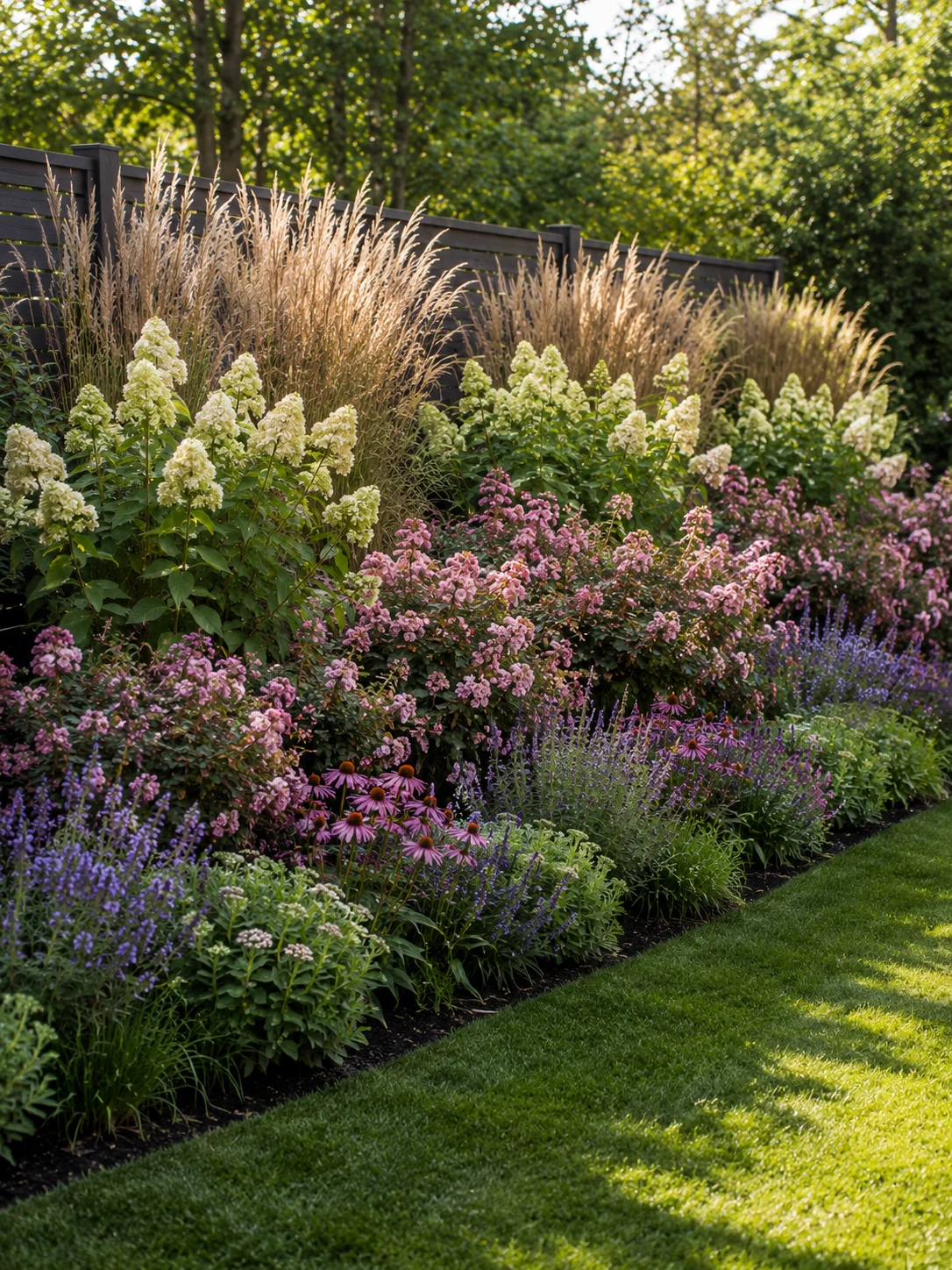
Create the impression of a complete visual barrier by planting in depth — three rows of different-height planting from the boundary inward — rather than relying on a single row of tall plants or a fence at full height. A row of tall ornamental grasses at the back, a row of medium shrubs in the middle, and a front row of shorter flowering perennials together create a visual screen that stops the eye at multiple levels simultaneously, producing a sense of privacy even when no individual row reaches screening height on its own.
This is exactly the principle behind the multi-layered hedgerow approach described in detail in Multi-Layered Boundary Hedgerows: The Garden Design Trick That Feeds Bees All Season — applied here specifically for its privacy function rather than its ecological one, though in practice the two benefits are inseparable.
34: The Privacy Pergola Gazebo
A freestanding gazebo — timber or powder-coated steel, with a solid or slatted roof — positioned over the main seating area provides overhead enclosure and, with the addition of side curtains, climbing plants on the uprights, or fixed side panels, creates the most complete outdoor room possible. Purpose-designed privacy gazebos with integrated louvred roof panels are increasingly available and allow overhead light management while blocking upper-storey sightlines entirely.
35: Design the Garden Inward
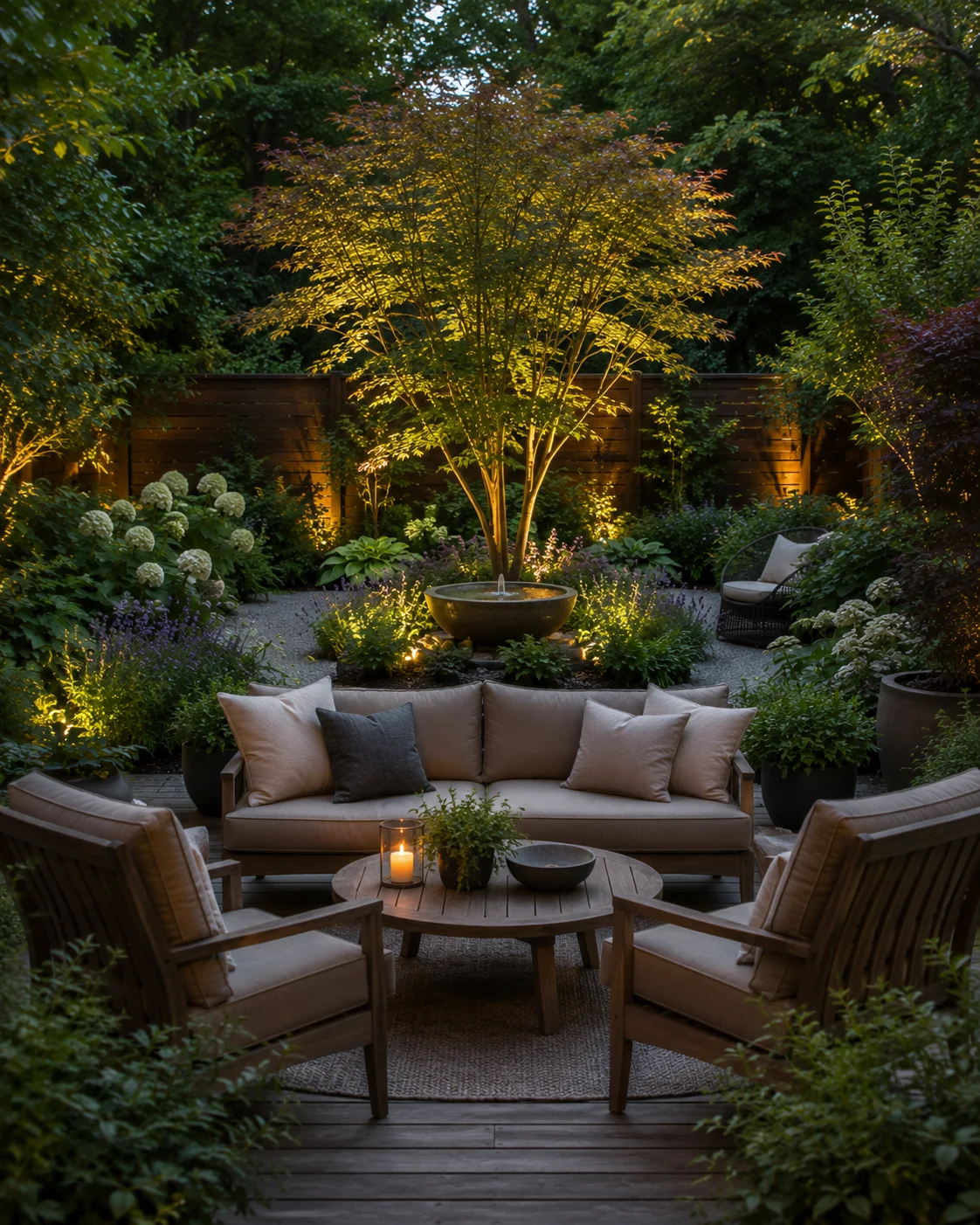
The most underrated privacy strategy of all costs nothing and changes everything: design the garden so the main seating area faces the interior of the garden rather than the boundary. Position chairs, tables, and fire pits so that when you sit in them you look across the garden toward a planted focal point rather than directly at a fence or boundary. This psychological reorientation — facing inward rather than outward — makes a garden feel private even without changing a single physical element of its boundaries.
The specific layout techniques for positioning furniture, planting focal points, and designing sight lines from the seating position are covered in 25 Small Backyard Layout Ideas You’ll Actually Want to Copy, which applies exactly this inward-facing design principle across multiple backyard scales and styles.
Making It Work: The Three Decisions That Matter Most
With 35 approaches to choose from, the temptation is to try several simultaneously and end up with a garden that has a bamboo screen here, a trellis extension there, a shade sail overhead, and a willow hurdle in the corner — each solving a slightly different problem and none of them connecting visually or structurally into a coherent design.
Before implementing anything, make three decisions clearly.
Where exactly is the exposure coming from? An upper-floor window needs an overhead solution or elevated screening. A gap in a fence needs filling at ground level. A road exposure needs a dense low boundary. Identify the specific sightline before choosing the solution.
How permanent do you want the solution to be? Bamboo in pots is moveable and immediate. A pleached tree row is permanent and takes years. A shade sail is seasonal and adjustable. Match the commitment level of the solution to your certainty about the space.
Do you want the solution to also do something else? A living fence provides privacy and wildlife habitat. A pergola with climbing plants provides privacy and shade. Layered planting provides privacy and beauty. The best privacy solutions almost always serve more than one function — choose approaches that work for your garden beyond just the screening they provide.
The American Institute of Landscape Architects residential design guidance recommends starting with the function — what the space needs to do — before selecting materials and plants. That principle applies directly here: the right privacy solution is the one that solves your specific exposure problem while making the garden better in at least one other way at the same time. 🌿