
A pollinator garden does not stop mattering when the flowers fade.
That is where many gardeners go wrong. They spend spring and summer planting for bees, butterflies, and beneficial insects, then destroy half the habitat in one aggressive fall cleanup. Every stem cut. Every leaf bagged. Every seedhead pulled. Beds scraped clean. Then they wonder why the garden feels lifeless the following spring.
Smart pollinator garden winter prep is not about doing nothing — it is about being selective. Some plants should come out. Some stems should stay standing. Some leaves belong in your beds rather than your yard-waste bags. And if you keep bees, there are specific things to clear and specific things to leave around the hive.
This guide gives you a clear, practical framework for all of it.
The Core Rule: Clean Less, Choose Better
The goal is not to abandon the garden. The goal is to stop treating every dead stem like garden waste.
Many native bees and beneficial insects spend winter inside hollow stems, under leaf litter, in loose soil, or sheltered in plant debris. The Xerces Society’s Leave the Leaves guidance explains that leaves, flower stalks, and other plant material provide critical overwintering habitat for pollinators and other invertebrates. That does not mean letting every bed collapse into a wet, rotting tangle. It means winter prep should be intentional rather than automatic.
Think in three categories before you reach for the pruners: cut what is diseased, invasive, or blocking access; leave healthy stems, seedheads, grasses, and leaf cover where they can do ecological work; save seeds, leaves, and useful plant material for next year. Everything else is detail.
What to Cut Before Winter
Some material genuinely needs to come out. Leaving everything is lazy advice when the garden has disease, rot, aggressive seeders, or blocked access routes.
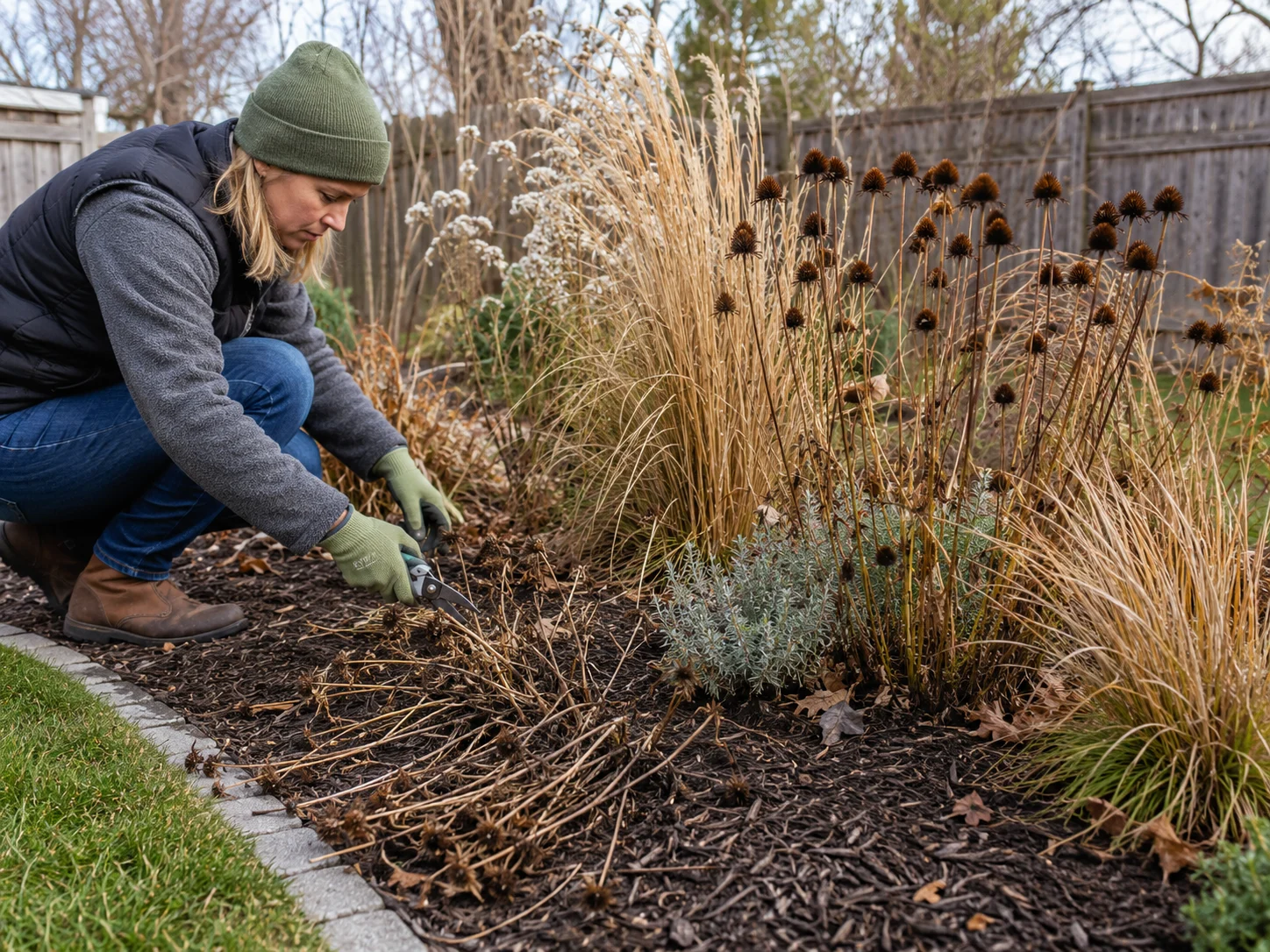
Cut diseased foliage first. If a plant had powdery mildew, rust, black spot, blight, or persistent fungal problems through the season, cut that material back and remove it from the garden entirely. Do not leave diseased foliage piled under the plant as a launching pad for next year’s problems. Mildewed bee balm, blackened phlox foliage, rotting stems, and pest-heavy leaves all belong in the trash or a hot compost pile — not left in situ because it sounds natural. If your compost does not get hot enough to kill pathogens, dispose of diseased material through your local green waste service.
Cut anything blocking paths and access. A pollinator garden still has to function. Cut whatever is falling across paths, blocking gates, smothering smaller plants, creating trip hazards, or leaning into seating areas. For beekeepers specifically, this matters more than most garden advice acknowledges — you still need safe, clear access to hives for winter checks even while leaving habitat elsewhere in the garden. The balance between habitat and access is exactly what the fall garden cleanup for bees guide covers in full — clearing the functional zone without clearing the ecological one.
Cut aggressive seedheads selectively. Some bee-friendly plants are too enthusiastic in smaller gardens. If goldenrod, verbena, fennel, or self-seeding asters are already taking over, cut some seedheads before they drop and multiply. “Bee-friendly” is not a reason to let one species colonize the entire border. The better approach is to leave some seedheads for birds and structure, cut the rest before they spread, and save seed only from plants you genuinely want more of.
What to Leave Standing
This is the section most gardeners get wrong — and where the most ecological damage from over-cleaning occurs.
A dead-looking stem is not useless. Many native bee species, including small carpenter bees, leafcutter bees, and mason bees, use hollow or pithy stems as overwintering sites. The University of Maryland Extension recommends leaving stems, leaf litter, and plant debris in the garden rather than clearing everything, specifically to support pollinators and beneficial insects through winter and into early spring. Stems cut in autumn remove those overwintering sites entirely. Stems left standing until late March give whatever is inside them time to complete their development and emerge.
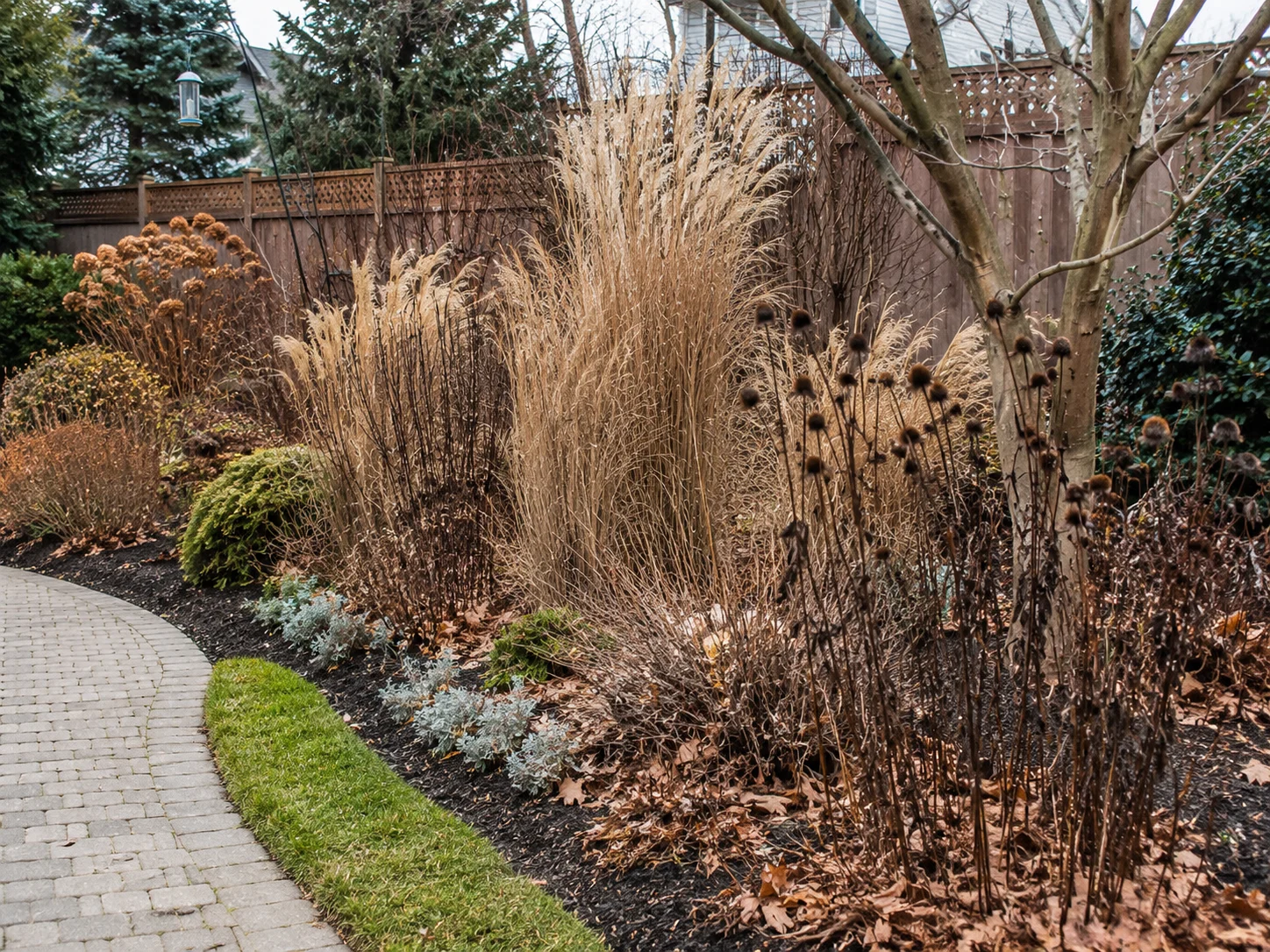
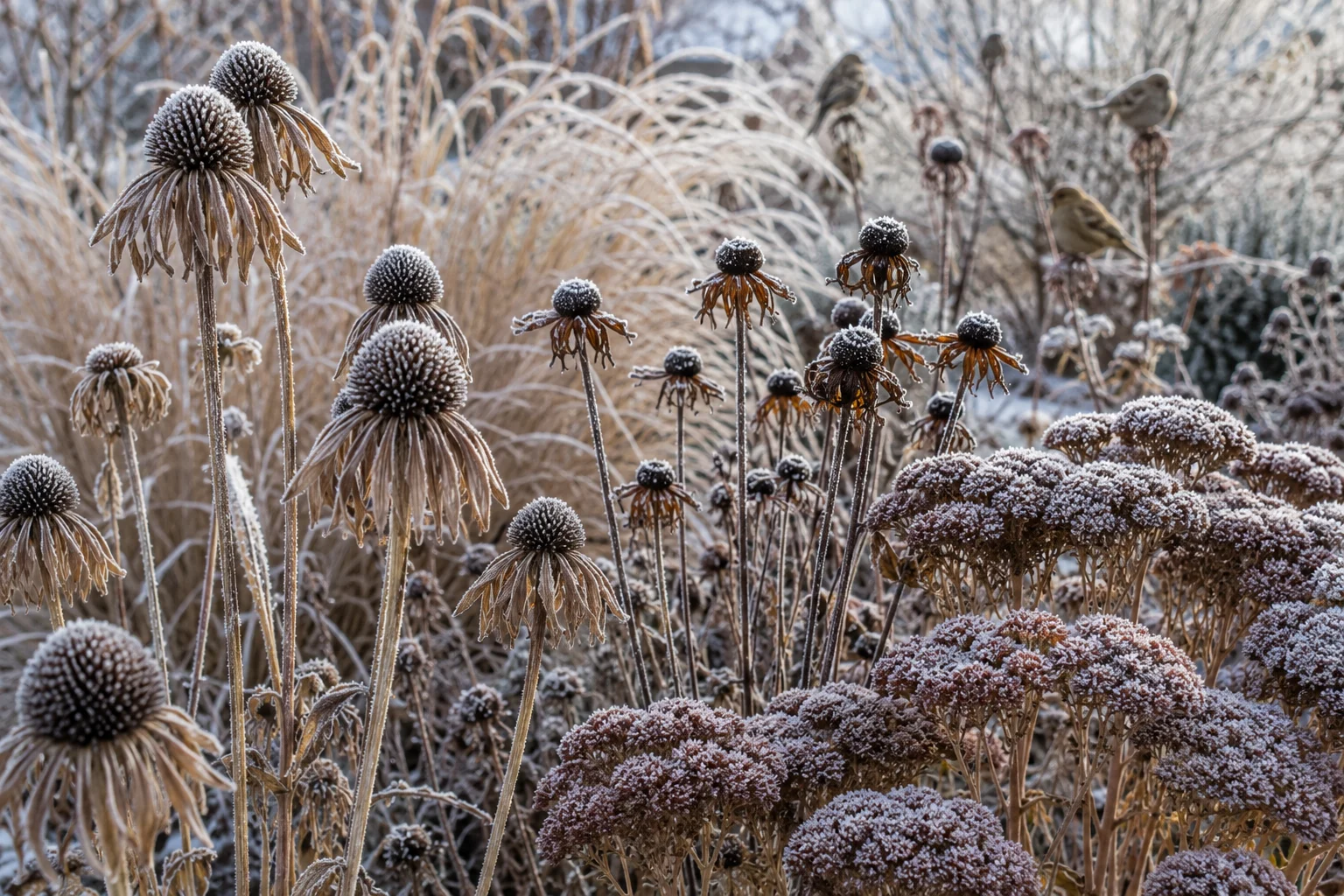
Leave strong, healthy seedheads. Coneflower (Echinacea), black-eyed Susan (Rudbeckia), sunflower, sedum, alliums, asters, goldenrod, and eryngium all produce seedheads that do two jobs simultaneously: they feed birds through winter and they keep the garden looking intentional rather than empty. A winter garden with standing structure reads as a deliberate choice. A garden with nothing standing reads as abandoned.
Leave hollow and pithy stems from healthy perennials — bee balm, Joe-Pye weed, coneflower, goldenrod, sunflowers, and native asters are the most valuable. If you cannot leave every stem, cut them to 12–18 inches rather than cutting to the ground. A range of stem heights is better than a flat haircut across the whole border. Stems cut high still provide shelter; stems cut to soil level provide none.
Leave ornamental and native grasses until late winter or early spring. Grasses provide movement, shelter, seed for birds, root protection for neighboring plants, and visual structure through the coldest months. They are among the most valuable winter garden plants ecologically and aesthetically, and cutting them in autumn gives you nothing except a slightly tidier-looking bed for three months before they regrow anyway.
What to Do With Fallen Leaves
Leaves are not garden waste. They are free mulch, winter insulation, soil food, and insect habitat — and most gardeners bag them and pay someone to take them away.
The problem is placement, not the leaves themselves. A thick wet mat of leaves smothering a lawn will damage the grass. Leaves blocking hive entrances trap moisture and cause problems. Leaves piled on paths are a slip hazard. But the same leaves moved into shrub beds, border edges, and under hedges become one of the most valuable things you can add to a garden in autumn.
Move leaves away from lawns, paths, driveways, hive entrances, and drainage areas. Move them into shrub beds, under hedges, around established perennials, along fence lines, and into quiet garden corners where they will decompose into the soil or provide shelter for overwintering invertebrates. Leaf mold bins — simple wire cages where leaves can break down over one to two years — produce one of the finest soil amendments available to any gardener, entirely for free.
If habitat is the goal, leave whole leaves rather than shredding everything. Shredded leaves make excellent mulch; whole leaves provide better physical shelter for some overwintering insects. Use both depending on where you are putting them.
What Seeds to Save
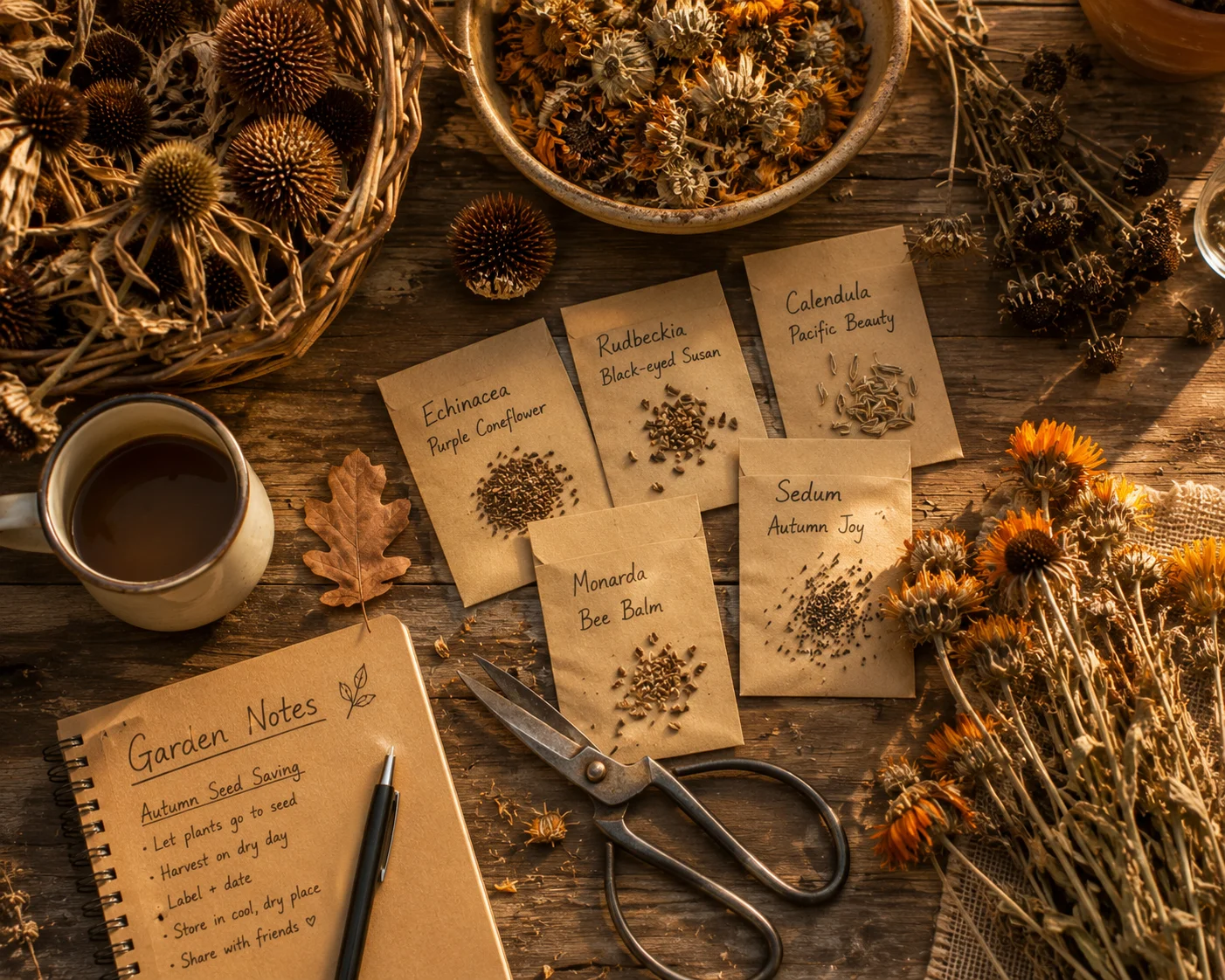
Winter prep is also the best time to collect next year’s plants for free. Seed saving is one of the most satisfying garden habits to develop, and autumn is when it happens.
Collect seeds from coneflower, rudbeckia, calendula, cosmos, sunflowers, native asters, milkweed, dill, fennel, and open-pollinated annuals that performed well in your conditions. Wait until seedheads are fully dry before cutting, do it on a dry day, place them in labeled paper bags, and let them finish drying somewhere airy and cool indoors. Store seeds in a cool, dry place and sow or share them next season.
Only save seed from healthy plants you actually want more of. Do not save from diseased plants, from aggressive species you already regret, or from named hybrid cultivars where the seedlings will not resemble the parent. And label everything immediately — “purple flower near the fence” is not a useful seed record in March.
Protecting Tender Plants and Containers
Not every pollinator-supporting plant is fully hardy in every garden, and autumn is when this matters.
Container plants are significantly more exposed to freeze-thaw temperature swings than plants in the ground, because their roots have no insulating soil mass around them. Before hard frosts arrive, move vulnerable pots against a sheltered wall, raise pots slightly for drainage, group containers together for mutual protection, and bring genuinely tender plants into a frost-free space. Terracotta pots left wet and exposed through freeze-thaw cycles will crack — often the most expensive pots in the most exposed positions. This is not bad luck; it is a predictable consequence of not moving them.
Depending on your climate, lift tender bulbs and tubers — dahlias, cannas, non-hardy gladiolus, and tender salvias — before sustained frost. In milder regions with good drainage, dahlias can overwinter in the ground under a thick layer of mulch. In cold, wet winters, lifting is safer. Know your local winter conditions and act accordingly rather than following generic advice.
Winter Prep Specifically for Backyard Beekeepers
If your pollinator garden sits near your hives, winter prep has one additional layer: protect habitat, but keep the apiary workable.
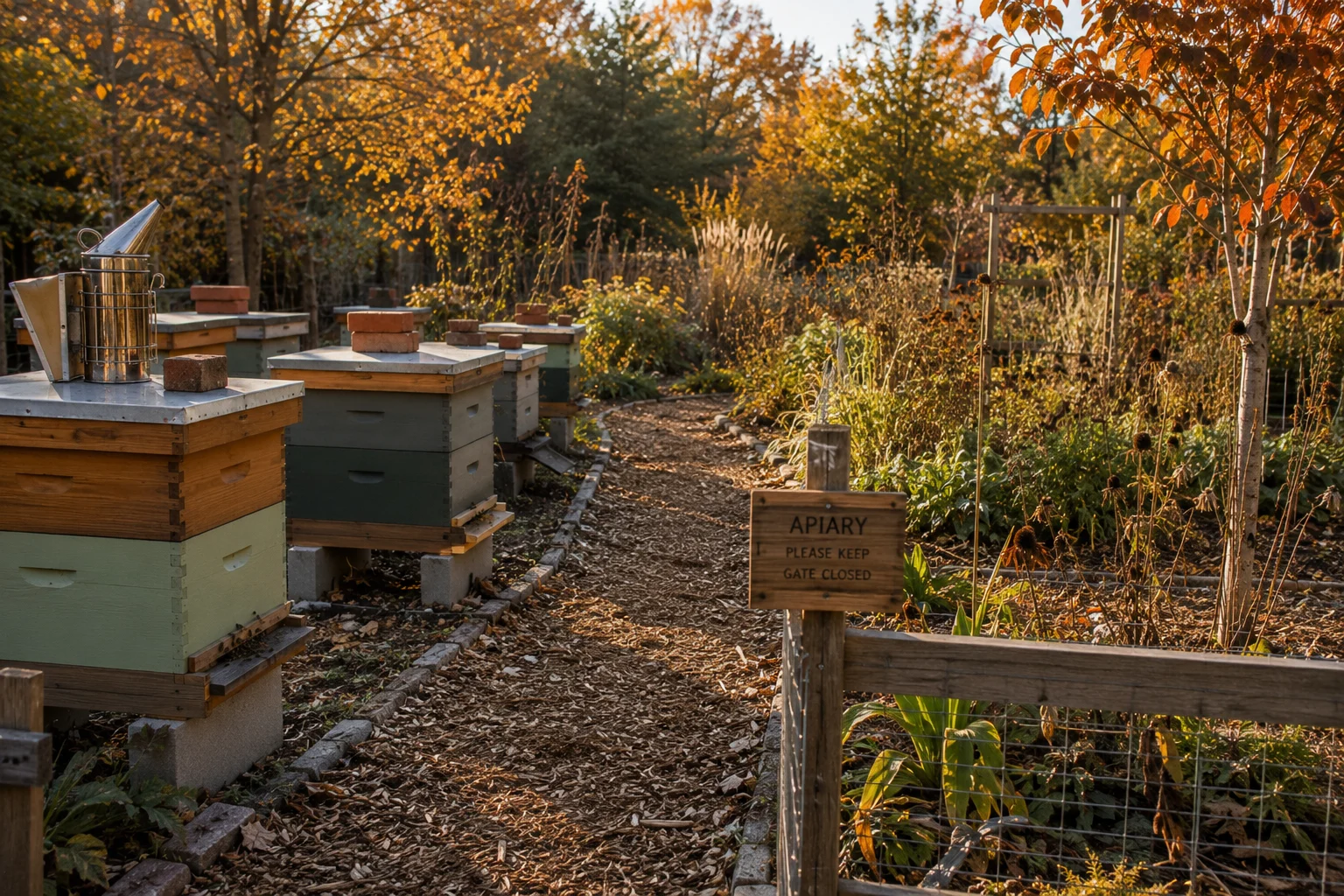
Around hives, clear the entrance areas, inspection paths, hive stands, and immediate access routes. Remove wet leaves touching hive equipment, cut tall grass directly in front of landing boards, and clear any fallen fruit or sticky debris that could attract robbing bees or wasps. Make sure you have safe, clear paths for winter checks and emergency access — you should be able to reach every hive easily in January, in the dark, in boots, without navigating around habitat piles.
Leave the wildlife habitat farther out in the garden where it does not interfere with beekeeping operations. A clean functional zone around the hives and a relaxed ecological zone through the rest of the garden is the right balance. If your apiary area needs better forage planting for next spring — so the bees have food as close to home as possible when they start flying again — the complete guide to the best plants to grow near a backyard beehive covers the planting setup in full.
The Weekend Winter Prep Checklist
Here is the complete action plan for a single focused weekend:
Cut: diseased foliage and rotten collapsed stems, aggressive seedheads before they drop, plants blocking paths or hive access, tender annuals after frost, invasive weeds before they set seed.
Leave: healthy hollow and pithy stems, strong seedheads from coneflower, rudbeckia, asters, goldenrod, and sedum, ornamental and native grasses, some leaf litter under shrubs and in bed edges, late flowers until pollinators visibly stop using them.
Save: dry seeds from healthy plants you want more of, fallen leaves for mulch and leaf mold, tender container plants, dahlia or canna tubers if your climate requires it, plant labels, notes on what worked, and photos of the garden layout while you can still see what grew where.
Protect: vulnerable containers from freeze-thaw damage, tender plants in frost-free storage, hive access routes, young shrubs with temporary windbreaks if needed, water features from cracking.
Conclusion: Prep the Garden Without Erasing the Habitat
A pollinator garden should not enter winter scraped clean. It should enter winter prepared.
The distinction is real and the consequences are measurable. Gardens that are over-cleaned in autumn are gardens where bees have nowhere to overwinter, where birds have nothing to eat in February, where the soil loses the insulation that protects early perennial growth, and where next year’s garden has to work harder to recover than it would have if the autumn cleanup had been more selective.
Cut what is diseased, invasive, rotting, or blocking access. Leave healthy structure where it can do ecological work through the cold months. Save what is worth saving. Protect what needs protection. Then step back and let the garden do the rest.
Your pollinators will be there in spring because of what you chose to leave in autumn. 🌿🐝