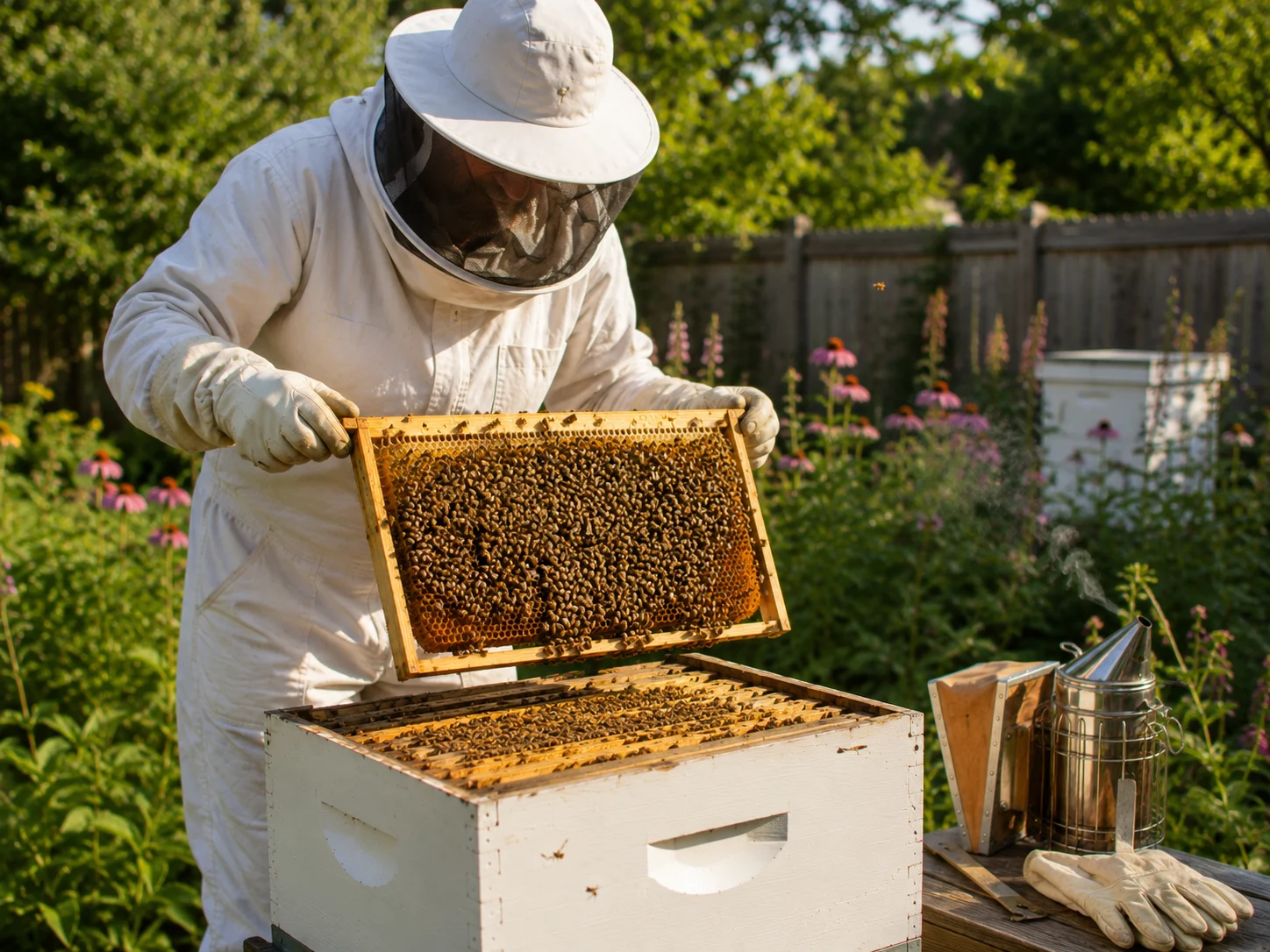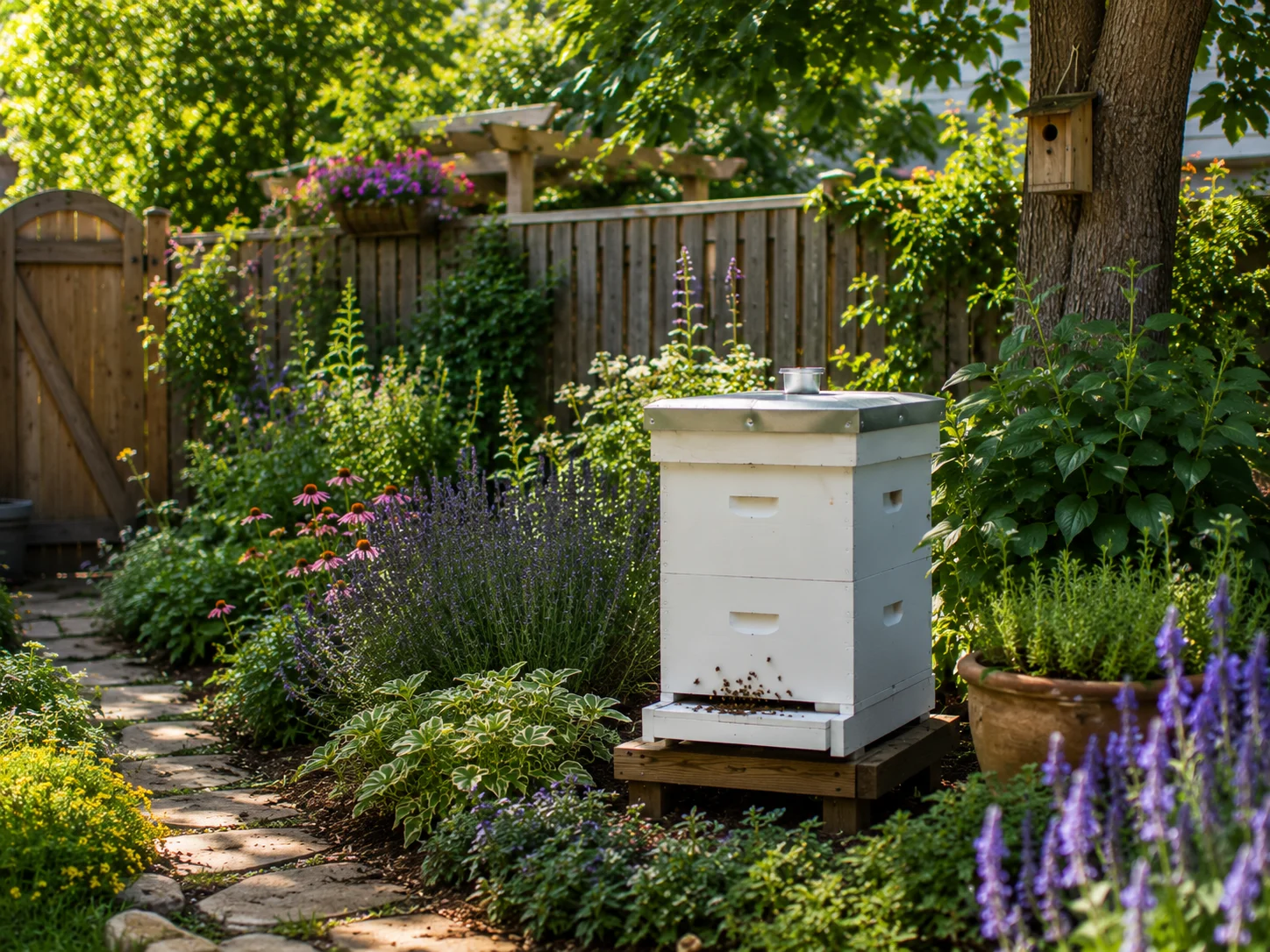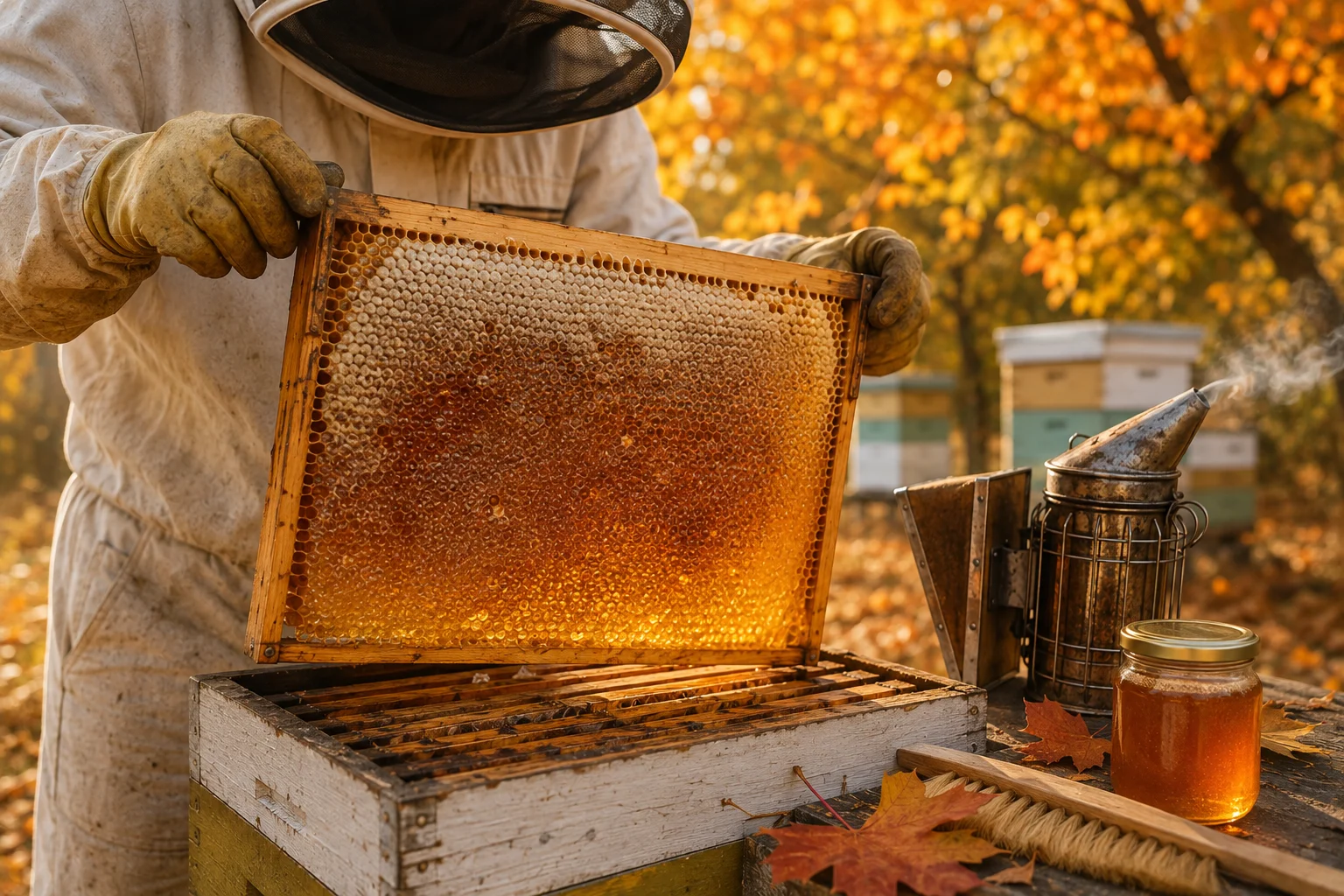

Your hive can look busy in July and still be under pressure.
That is the part new backyard beekeepers often miss. They see bees flying, bees landing, bees crowding the entrance, and bees working flowers in the yard — so they assume the colony is thriving. But midsummer activity can be misleading. A colony may be active because it is searching harder, defending harder, cooling harder, or robbing weaker colonies nearby.
The July nectar crash, often called the summer dearth, is the period when spring’s heavy nectar flow slows down, flowers dry out, and the colony suddenly has fewer natural carbohydrates coming in. In some regions, this happens in July. In others, it may arrive earlier, later, or barely happen at all depending on rainfall, crops, native plants, irrigation, and local bloom cycles. Mississippi State Extension notes that many areas experience reduced food availability from late June through August, and that this can affect colony growth. (MSU Extension Service)
For backyard beekeepers, this is one of the most dangerous parts of summer because the hive may still be large from spring buildup, but the landscape is no longer feeding it at the same level.
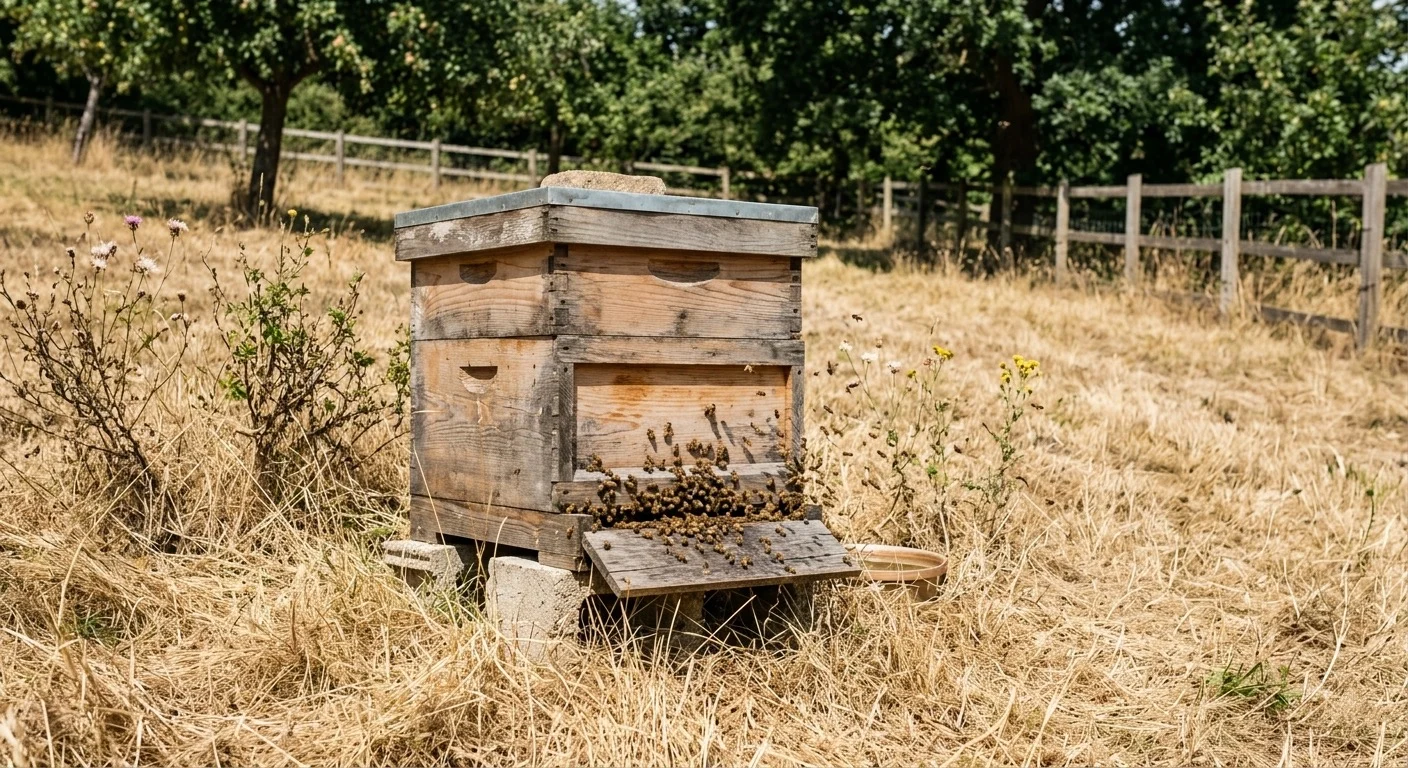
What Is the July Nectar Crash?
The July nectar crash is not a dramatic one-day event. It is usually a slow seasonal squeeze.
In spring, colonies expand quickly because nectar and pollen are widely available. Nectar fuels wax production and honey storage. Pollen supports brood rearing. When spring bloom is strong, bees build comb, raise brood, and fill supers.
Then midsummer arrives.
Hot weather, dry soil, mowed lawns, finished spring blooms, and gaps between major flowering periods can reduce available nectar. The hive may still have tens of thousands of bees, but the incoming food supply drops. Mississippi State Extension explains that honey bees need incoming nectar and pollen for brood growth and wax production, and that the best forage landscapes have sequential bloom periods where one plant begins blooming as another ends. (MSU Extension Service)
That is the core problem: your hive was built for spring abundance, but July may offer summer scarcity.
Why a Busy Hive Can Still Be Struggling
This is where beginners get fooled.
A struggling summer hive does not always look quiet. Sometimes it looks intensely active.
During a nectar dearth, bees may fly farther, search harder, investigate other hives, or become defensive around food odors. Mississippi State Extension warns that robbing becomes more frequent when incoming nectar and pollen are diminished, especially during summer dearth periods such as July to August. (MSU Extension Service)
So the question is not:
“Are my bees flying?”
The better question is:
“Are my bees bringing in food, protecting stores, and maintaining colony strength?”
Those are different things.
A hive can have heavy entrance traffic and still be losing weight. A hive can look crowded and still have a shrinking brood nest. A hive can appear aggressive not because it is “mean,” but because every colony in the area knows food is scarce.
Signs Your Hive May Be in a Summer Dearth
You do not need to panic at the first hot week. But you should watch for patterns.
Common signs of a midsummer nectar slowdown include:
- Less fresh white wax being built
- Little or no new nectar glistening in cells
- Reduced brood area
- Bees becoming more defensive during inspections
- More bees investigating cracks, lids, feeders, or neighboring hives
- Robbing attempts at weak colonies
- Bees showing intense interest in spilled honey or syrup
- Hive weight dropping instead of increasing
- Bees working unusual food sources, trash, compost, or fruit
One of the clearest warning signs is robbing behavior: bees fighting at entrances, bees trying to squeeze into cracks, dead bees near the landing board, and frantic zigzagging flight around a hive. During a dearth, even opening a hive can release enough food odor to attract robbers, which is why midsummer inspections should be short and purposeful. (MSU Extension Service)
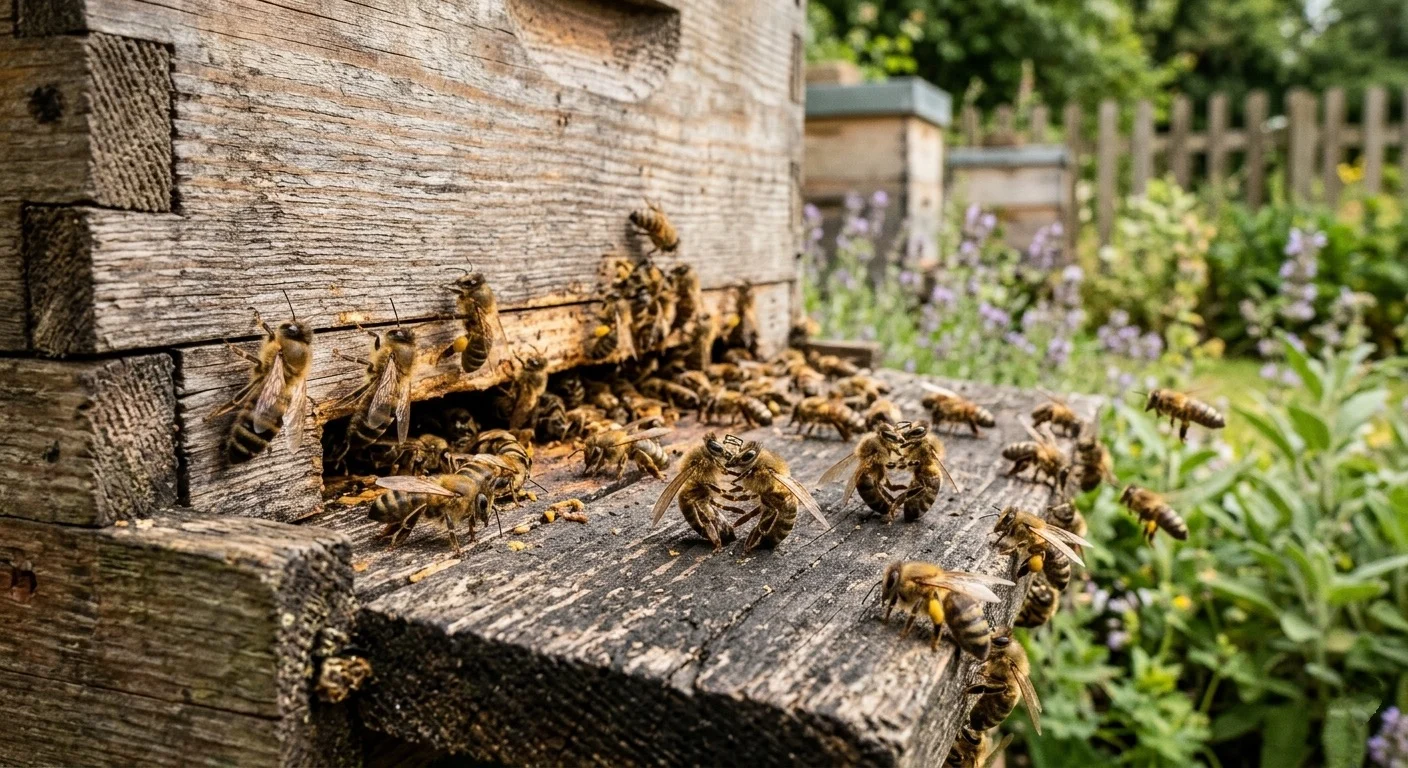
What Happens Inside the Hive
The colony responds to reduced nectar flow by changing priorities.
In early summer, the brood nest may be large and active. As nectar availability drops, queens may reduce egg laying, the brood area can shrink, and bees may backfill empty brood cells with nectar or honey. Mississippi State Extension describes this late-summer pattern: as honey flow slows, queen egg-laying decreases, the brood nest is reduced, and bees may backfill parts of the brood nest with honey. (MSU Extension Service)
That is not always a disaster. In fact, some seasonal contraction is normal.
The problem is when the colony enters this period without enough stored food, with too much empty comb to defend, too many pests, too much heat stress, or too much pressure from robbing bees.
A strong hive can handle midsummer scarcity. A weak hive can collapse quietly.
The Biggest Beginner Mistake: Adding Space at the Wrong Time
Spring teaches beginners one lesson:
“If the hive is crowded, add space.”
That advice can become dangerous in summer.
During a strong spring nectar flow, adding supers can help prevent congestion and give bees room to store incoming nectar. But during a summer dearth, extra empty boxes can become a liability. Mississippi State Extension warns that adding too much comb during a dearth can stress colonies because shrinking populations may not have enough bees to patrol and protect comb from pests such as small hive beetles and wax moths. (MSU Extension Service)
So do not blindly add boxes just because it is summer and bees are visible outside.
Ask first:
- Are they actually bringing in nectar?
- Are they filling existing comb?
- Are there enough bees to cover the frames?
- Is the colony gaining or losing weight?
- Is the added space needed, or am I just giving pests empty real estate?
A box full of empty comb above a stressed summer colony is not “room.” It is a burden.
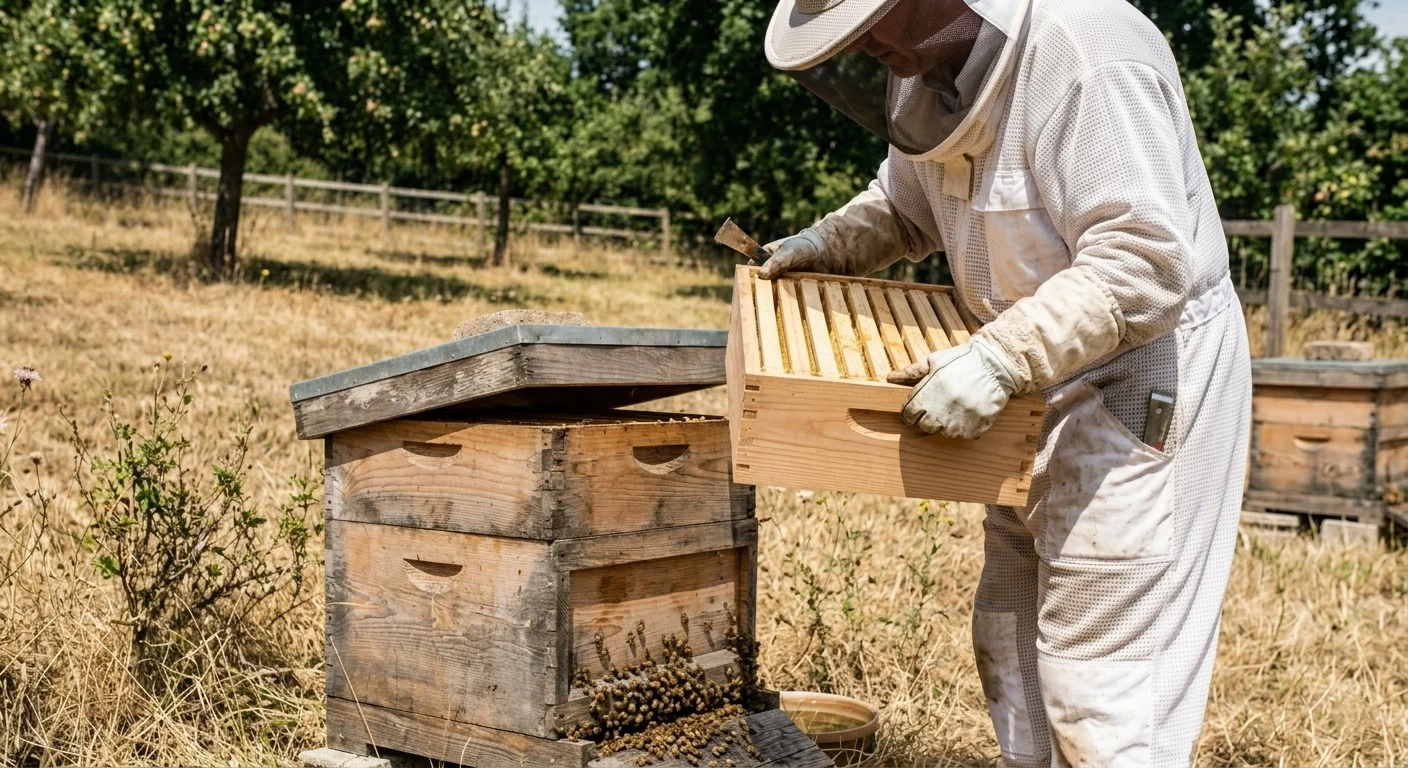
Why Robbing Gets Worse in July
Robbing is one of the ugliest parts of the summer dearth.
When nectar is abundant, bees usually focus on flowers. When nectar is scarce, every exposed drop of honey or syrup becomes a target. A careless inspection can trigger a robbing frenzy. Wet comb left outside can do the same. Leaky feeders are even worse.
Mississippi State Extension is blunt about this: spilled honey or syrup can stimulate scouting bees, and once recruited bees begin searching close to the apiary, neighboring hives may be attacked. (MSU Extension Service)
During midsummer, your rules should be stricter:
- Do not leave wet comb exposed.
- Do not spill syrup near the hives.
- Do not keep hives open longer than necessary.
- Do not inspect every hive if you see robbers investigating.
- Reduce entrances on weak colonies.
- Feed inside the hive, not in the open.
Open feeding in a backyard is usually a bad idea. It can train bees to search the area aggressively for food, and in a neighborhood setting, that is how your bees end up bothering people, pets, pools, and patios.
Should You Feed During the July Nectar Crash?
The honest answer: maybe.
Feeding is not automatic. If your colony has enough stores, is not raising much brood, and your local fall flow is reliable, feeding may not be needed. But if the hive is light, newly established, weak, or still drawing comb, you may need to feed.
New colonies are especially vulnerable. Colonies started late in spring may not have enough time to build comb and store food before midsummer scarcity arrives. Mississippi State Extension notes that colonies started after mid-May may need syrup to get through the summer dearth. (MSU Extension Service)
Use common sense:
- Feed if the colony is light and natural nectar is scarce.
- Feed if a new colony still needs to draw comb.
- Feed internally to reduce robbing risk.
- Do not feed honey supers intended for human harvest.
- Do not spill syrup.
- Do not overfeed until the brood nest is packed with syrup.
That last point matters. If every open cell gets filled with syrup, the queen may have nowhere to lay. Feeding should support the colony, not clog the brood nest.
Water Becomes More Important Than Beginners Think
Summer dearth is not only about nectar. It is also about heat.
On hot days, bees collect water to cool the hive. The Mid-Atlantic Apiculture Research and Extension Consortium explains that during hot summer weather, bees help hold colony temperature down by gathering water and spreading it inside the nest so evaporation can cool the cluster. (canr.udel.edu)
A backyard hive without a reliable water source is asking for trouble.
Your bees may choose:
- A neighbor’s pool
- A birdbath
- A dog bowl
- A dripping faucet
- Wet compost
- Irrigation puddles
Once bees lock onto a water source, they can be hard to redirect. That is why the water station should be in place before the hottest part of summer, not after the bees have already found the pool.
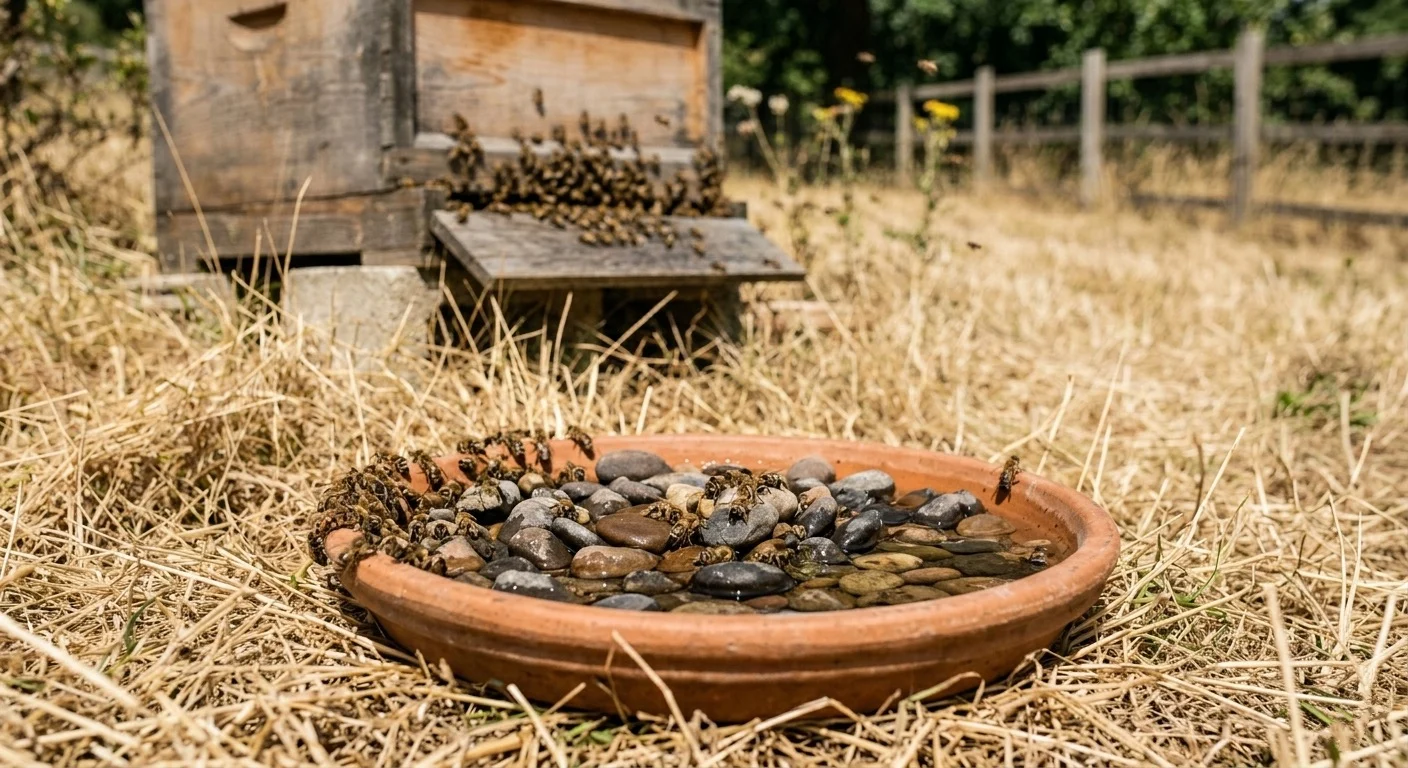
Good bee water setup:
- Shallow container
- Pebbles, marbles, corks, or sticks for landing
- Consistent refill schedule
- Slight minerals or scent to make it discoverable
- Placed near the hive but away from heavy foot traffic
- Started early enough for bees to learn it
How Garden Design Can Help the July Gap
This is where your blog can stand out from basic beekeeping content.
Most beekeeping articles say: “Feed if needed.” Fine. Useful. But incomplete.
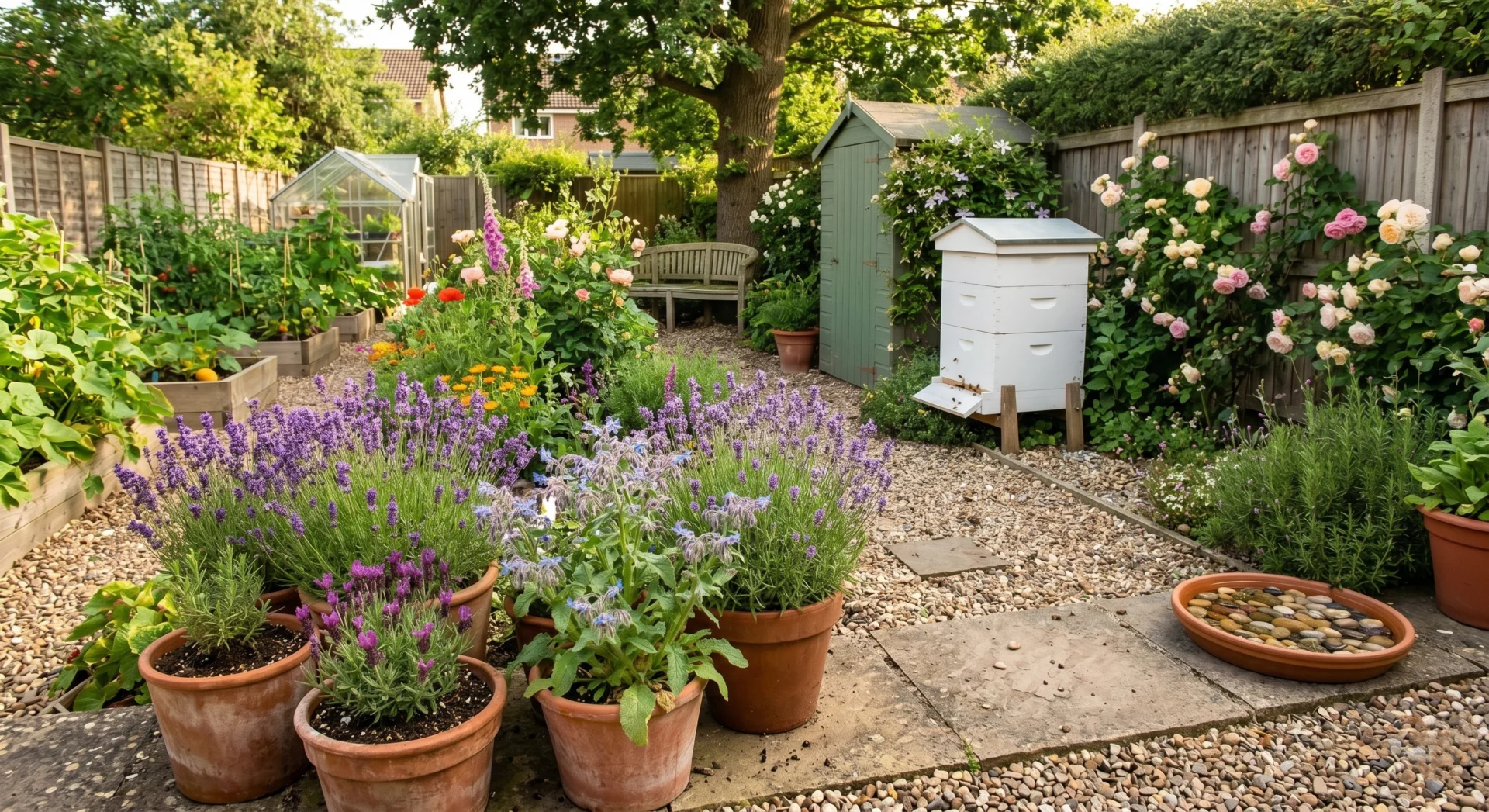
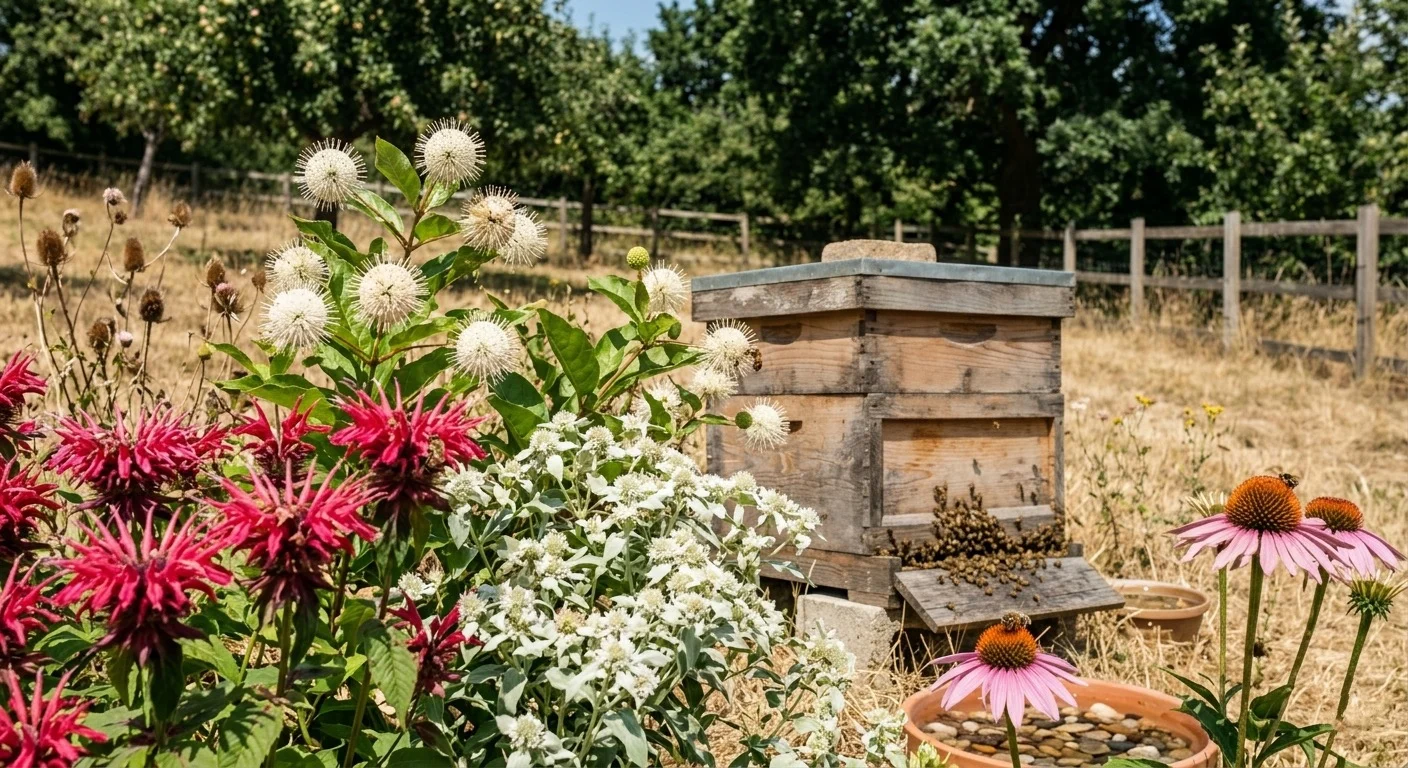
A backyard beekeeper can also reduce midsummer stress by planting bridge bloom — flowers and shrubs that bloom after spring abundance fades and before fall goldenrod/aster flow begins.
Good midsummer bee plants can include:
- Buttonbush
- Mountain mint
- Bee balm
- Anise hyssop
- Culver’s root
- Joe-Pye weed
- Milkweed
- Late-blooming clover
- Sunflowers
- Borage
- Cosmos
- Zinnias
- Goldenrod and asters for late-season transition
For a backyard hive, this does not mean planting one cute flower pot and pretending you solved dearth. That is decorative, not useful. Bees need mass. Plant in clumps, drifts, hedgerows, and repeated patches so the flowers are easy to find and worth revisiting.
This connects directly to The Living Fence: How to Build a Bee-Friendly Boundary That Doubles as Forage. A living fence with buttonbush, elderberry, rugosa rose, honeysuckle, goldenrod, and asters can become more than privacy. It can become a seasonal forage strip.
A Simple July Hive Check
Do not tear the hive apart every few days in midsummer. That is beginner anxiety dressed up as management.
Use a short, focused check:
1. Watch the entrance
Look for pollen coming in, fighting, robbing attempts, heavy bearding, or unusual agitation.
2. Check hive weight
Lift gently from the back or side. Compare the feel week to week. A hive that is getting lighter during midsummer may need attention.
3. Inspect quickly
Look for eggs or young brood, food stores, pest pressure, and enough bees covering the frames.
4. Reduce unnecessary space
If the colony cannot cover empty boxes, remove or consolidate equipment.
5. Protect weak colonies
Use entrance reducers or robbing screens when needed.
6. Confirm water
Make sure your water station is full and being used.
7. Plan forage, not just feeding
Feeding helps this week. Planting helps future summers.
What Not to Do During a Summer Dearth
Avoid these mistakes:
- Leaving wet supers outside
- Open feeding near the apiary
- Long inspections in the heat
- Adding empty boxes without nectar flow
- Ignoring hive weight
- Assuming bearding always means swarming
- Letting weak colonies defend wide entrances
- Waiting until bees find the neighbor’s pool
- Taking all honey without checking whether the colony has enough food
The worst beginner mindset is: “They’re bees, they’ll figure it out.”
Sometimes they will. Sometimes they will rob each other to death, starve quietly, or enter fall too weak to survive winter.
Conclusion: July Is When Spring Success Gets Tested
The July nectar crash is not just a shortage of flowers. It is a stress test.
Spring builds the colony. Midsummer reveals whether your setup is actually resilient.
A good backyard beekeeper watches for the shift: less nectar, more defensiveness, shrinking brood, increased water demand, and higher robbing risk. The goal is not to panic. The goal is to stop managing the hive like it is still April.
Keep inspections short. Avoid spills. Feed only when needed and do it inside the hive. Reduce extra space if the colony cannot defend it. Provide water before bees choose someone else’s. And plant the flowers that bridge the gap between spring bloom and fall flow.
Because a hive that survives midsummer cleanly is not just getting through July.
It is building the foundation for fall strength, winter survival, and next spring’s success.
Keep Reading 🐝
- How to Keep a Backyard Beehive Cool in Summer Without Stressing Your Bees — heat and water management for hot-weather hives.
- Backyard Beehive Water Setup: Stop Bees From Finding the Pool — the neighbor-safe water guide every backyard beekeeper needs.
- The Living Fence: How to Build a Bee-Friendly Boundary That Doubles as Forage — turn your property line into forage, windbreak, and fly-up barrier.
- Best Plants to Grow Near a Backyard Beehive — build a real forage plan, not random flower decoration.