
Most beginner beekeepers obsess over the hive box, the queen, the frames, the smoker, and the suit — then they dump the hive in the “available corner” of the yard and wonder why everything becomes annoying later.
That is backwards.
Backyard beehive placement is not decoration. It is risk control. Put the hive in the wrong spot and you create problems before the colony even grows: angry neighbors, awkward inspections, bees flying through walkways, overheating, damp equipment, drifting bees, and water-foraging chaos at the neighbor’s pool.
Put it in the right spot and the hive becomes quieter, easier to manage, safer to inspect, and less likely to become the backyard drama nobody asked for.
In this guide, you’ll learn exactly where to place a backyard beehive before problems start — with practical rules for beginners, small gardens, and suburban yards.
The First Rule: Do Not Place the Hive Where It “Looks Nice”
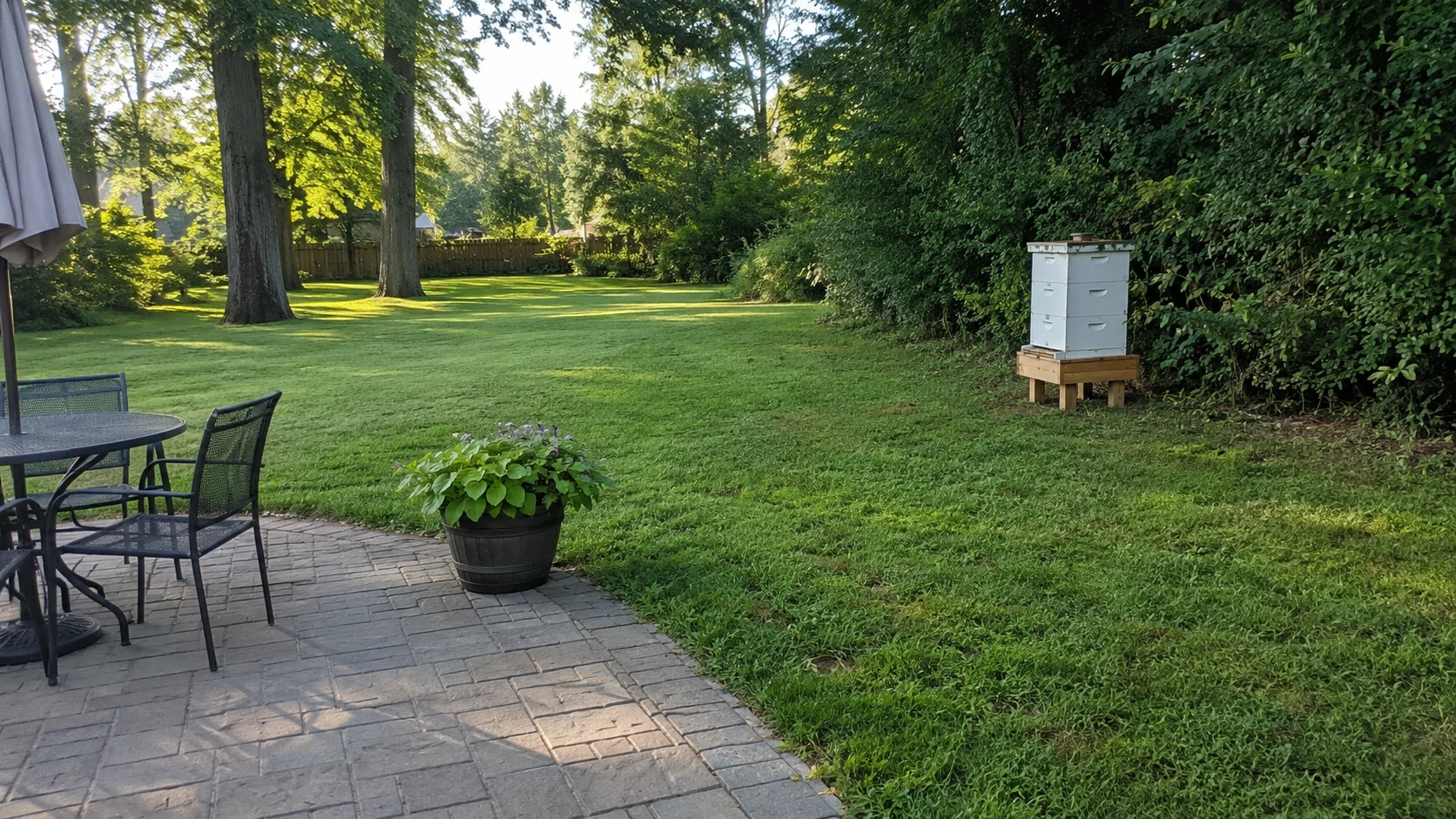
A beehive is not a planter. It is a living traffic system.
Thousands of bees will leave and return through the entrance every day. That entrance creates a flight path, and the flight path matters more than the Instagram angle.
Bad placement usually looks like this:
- Hive entrance facing a patio, deck, gate, or walkway
- Hive squeezed against a fence with no takeoff room
- Hive sitting directly on damp soil
- Hive in full afternoon heat with no airflow
- Hive hidden so far away that inspections become a chore
- Hive near a neighbor’s pool, pet area, or children’s play space
Cornell’s beekeeping guidance emphasizes placing apiaries in a way that minimizes complaints and keeping a reliable water source close to the hive, because bees will otherwise choose their own source — often somewhere inconvenient. (Cornell CALS)
That one point alone should scare you into planning properly.
Best Direction for a Backyard Beehive Entrance
In most backyard situations, the hive entrance should face east or southeast.
Why?
Morning sun wakes the colony earlier and helps dry moisture from the entrance area. It also gives bees a warm start without baking them in the worst afternoon heat.
A good entrance direction should:
- Catch morning light
- Avoid harsh prevailing wind
- Point away from heavy human traffic
- Give bees open airspace to leave and return
- Avoid directing bees toward neighbors
Do not get religious about compass direction. A southeast-facing hive aimed straight at your neighbor’s barbecue area is still trash placement. Human traffic matters more than theoretical perfection.
Simple Rule
Face the entrance toward the quietest part of your yard, then use morning sun and wind protection to refine the exact spot.
Give the Hive a Clear Flight Path
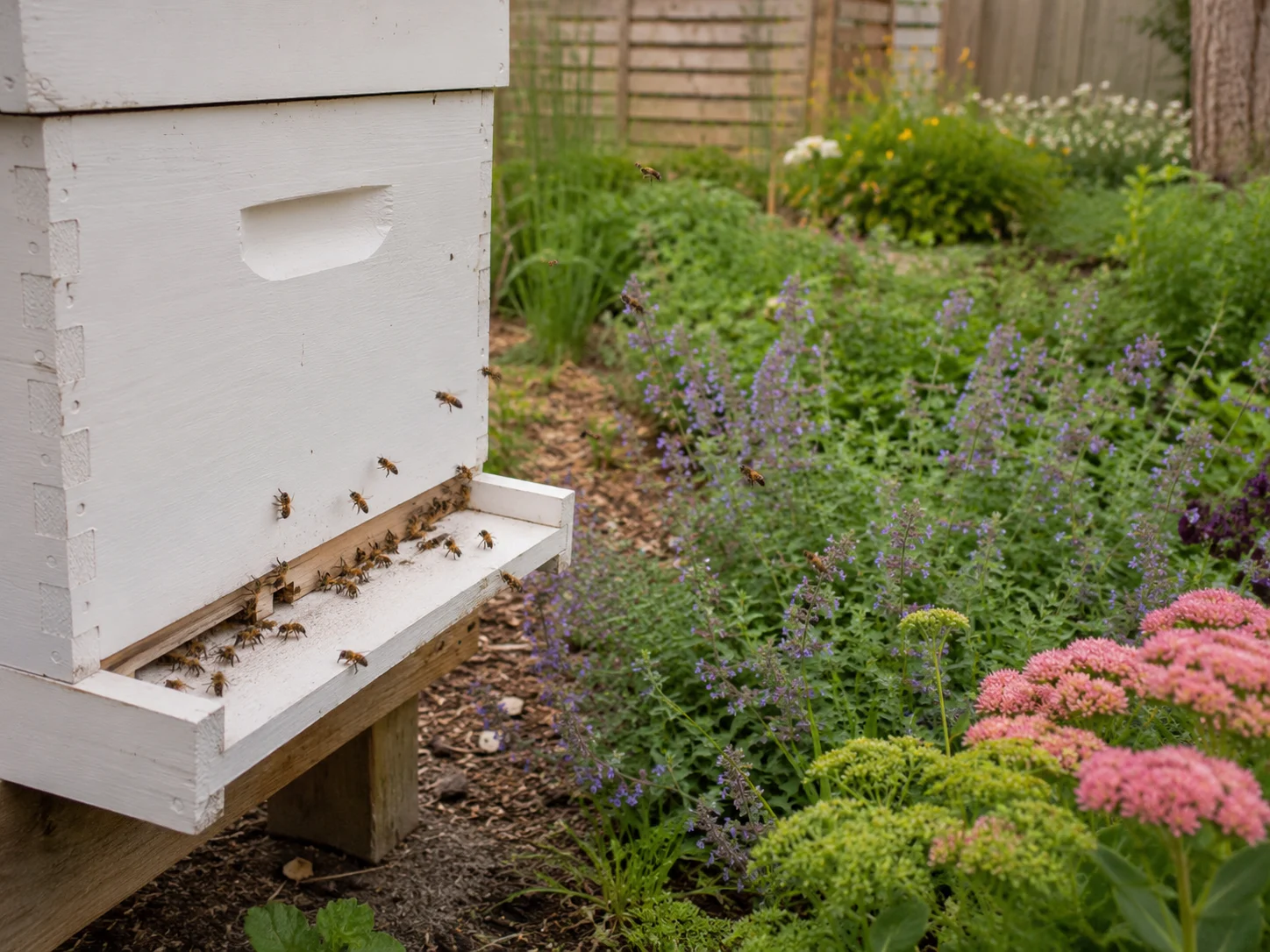
The front of the hive is the runway.
You want at least several feet of clear space in front of the entrance, with no chairs, paths, doors, compost bins, play areas, or narrow gates directly in the line of flight.
A clean flight path reduces accidental collisions between bees and people. That means fewer defensive reactions and fewer “your bees attacked me” complaints.
Good flight path placement:
- Entrance faces away from people
- Bees leave into open air
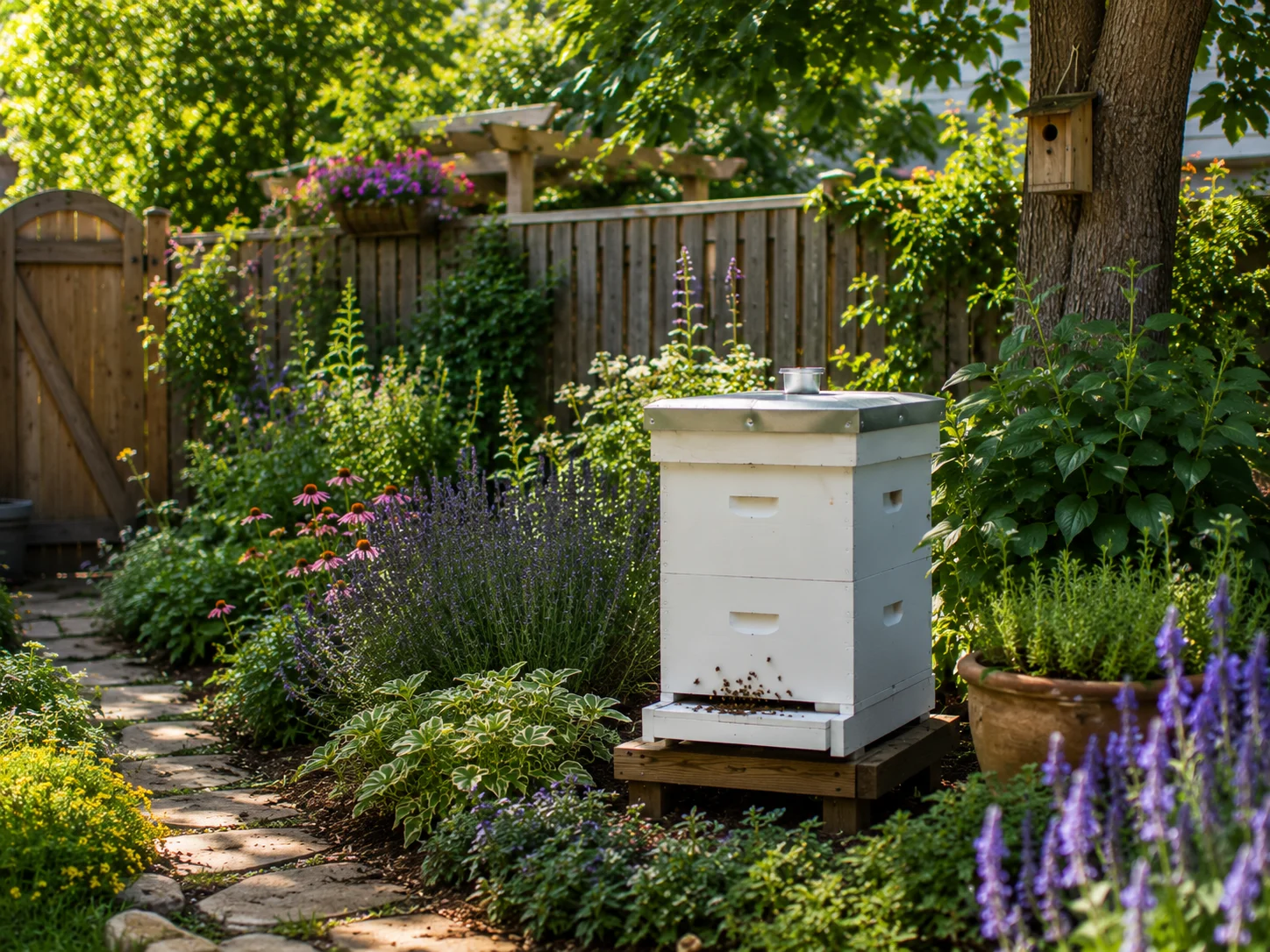
- Flight rises over a hedge, fence, or planted barrier
- People can walk behind or beside the hive without crossing the entrance
Bad flight path placement:
- Entrance faces the lawn seating area
- Bees cross the driveway
- Bees fly through a narrow side passage
- Bees leave straight toward the neighbor’s yard
This is where many beginners create avoidable problems. The hive may be calm, but the placement forces people and bees into the same airspace.
For small yards, read this alongside small garden beekeeping in under 50m². Small space is not the enemy. Lazy layout is.
Use a Fence, Hedge, or Screen as a Fly-Up Barrier
One of the smartest backyard beehive placement tricks is using a fly-up barrier.
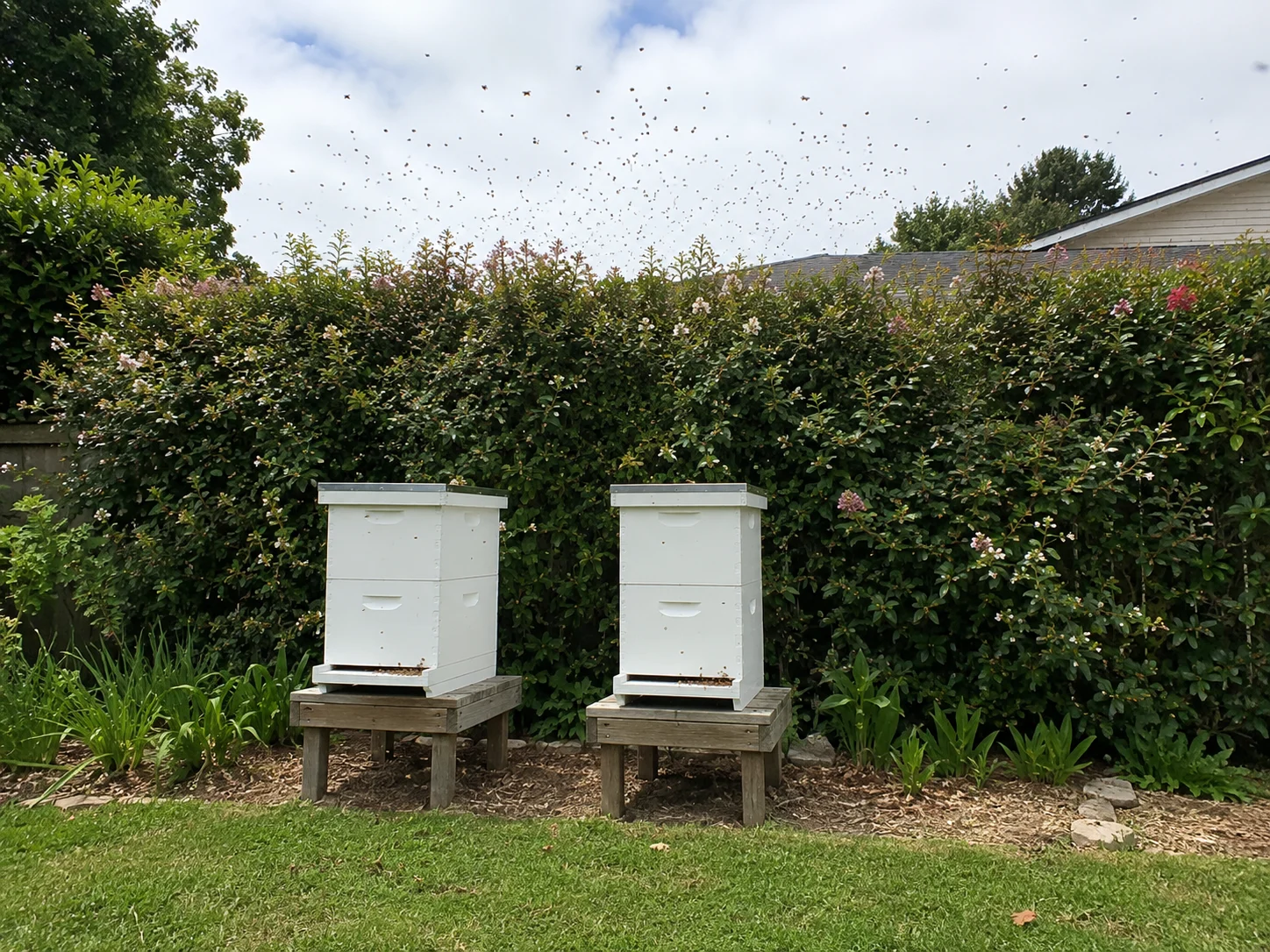
A fly-up barrier is a hedge, fence, trellis, shrub line, or screen placed near the hive entrance so bees rise quickly above head height when they leave.
This matters because bees usually fly in a direct line once they orient. If you force them upward early, you reduce low-level bee traffic through the yard.
Good fly-up barriers include:
- Mixed flowering hedge
- Wooden fence
- Trellis with climbing plants
- Dense shrubs
- Reed screen
- Living fence with pollinator plants
The best version is a living fence: it blocks sightlines, lifts the bees’ flight path, softens wind, and adds forage. That is not just pretty; it is functional.
Keep the Hive Close Enough to Inspect Comfortably
Here is a beginner mistake that sounds smart but is actually stupid: hiding the hive at the farthest, most awkward corner of the property.
You think you are keeping it “out of the way.” What you are really doing is making every inspection harder.
You need enough access to:
- Carry hive boxes
- Stand behind or beside the hive
- Use a smoker safely
- Remove frames without twisting your body
- Place equipment nearby during inspections
- Reach the hive in bad weather or early morning
A hive that is annoying to reach becomes a hive you inspect less. And a hive you inspect less becomes a hive where problems mature quietly.
Leave working space around the hive. Not decorative space. Working space.
Minimum practical setup:
- Space behind the hive for the beekeeper
- Flat ground for your feet
- Room to set down a roof, super, or toolbox
- No thorny plants grabbing your suit
- No slope that makes boxes unstable
For deeper layout mistakes, connect this section to common apiary layout mistakes. That article fits naturally because placement and layout are the same battle at different scales.
Put the Hive on a Proper Stand
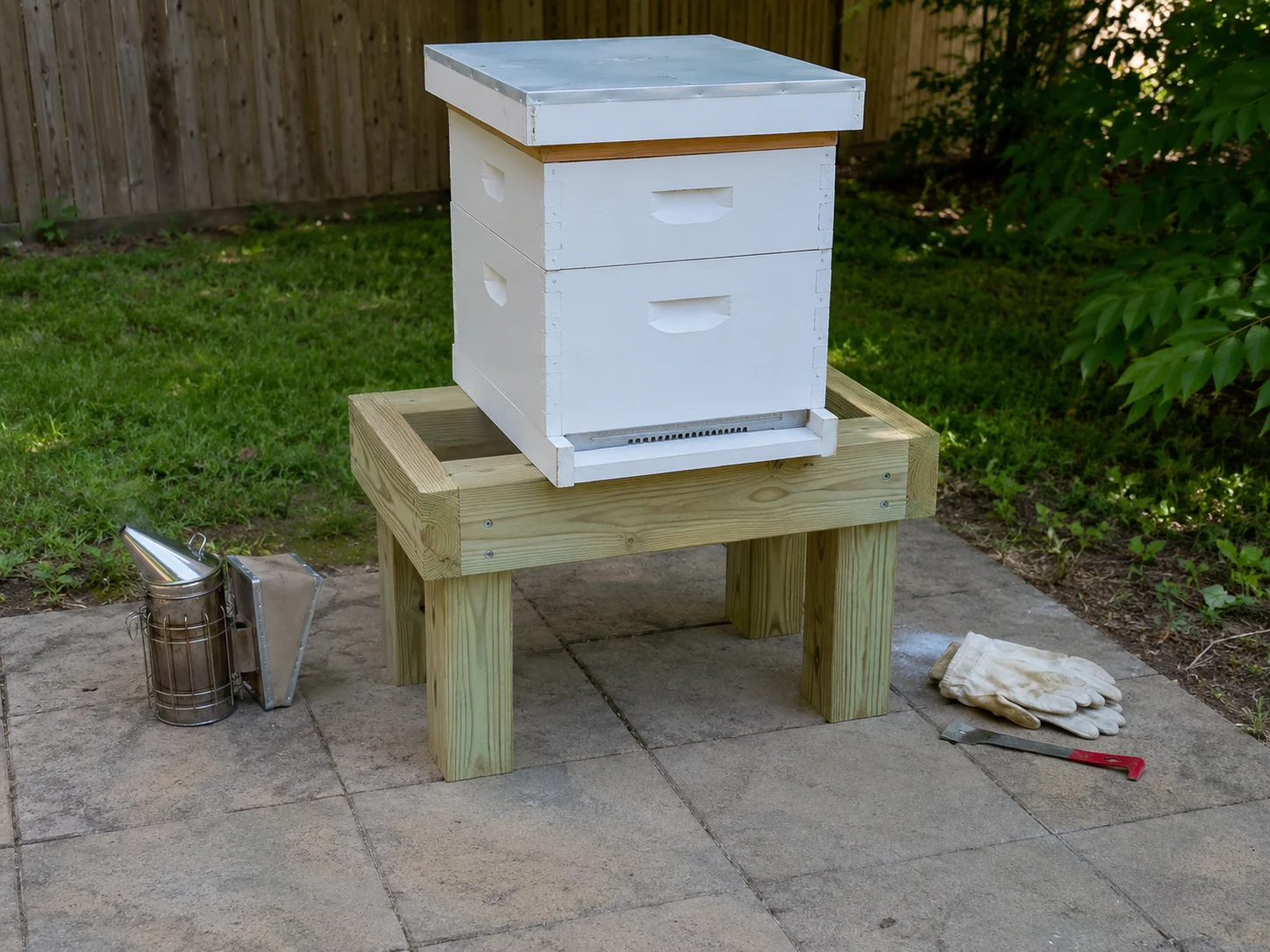
Do not place your beehive directly on the ground.
That is asking for moisture, pests, rotting wood, awkward inspections, and back pain.
A proper hive stand should:
- Raise the hive off wet soil
- Keep the entrance clear of grass
- Improve airflow under the hive
- Make inspections more comfortable
- Help deter some pests and small animals
- Keep equipment cleaner
A practical height is usually somewhere around knee height or slightly lower, depending on your equipment and strength. Too low is miserable. Too high becomes dangerous when honey supers get heavy.
The stand must be stable. A wobbly hive stand is not rustic. It is incompetent.
Level the Hive Correctly
Your hive should be stable and mostly level side-to-side. Many beekeepers give the hive a very slight forward tilt so rainwater does not sit inside or run backward.
The important part is simple: the hive must not rock, lean, sink, or shift.
Check the ground after rain. Soft soil can settle under the stand. Pavers, compacted gravel, concrete blocks, or a solid wooden platform can help create a more stable base.
A poorly leveled hive can cause:
- Frame misalignment
- Awkward inspections
- Water issues
- Uneven comb building
- Increased risk of tipping
This is boring stuff. But boring stuff is exactly what prevents expensive problems.
Sun, Shade, and Heat: Get the Balance Right
Backyard hives need sun, but they do not need to roast.
A good hive location usually has:
- Morning sun
- Some airflow
- Protection from extreme afternoon heat
- No deep damp shade all day
- No enclosed corner that traps heat
Full deep shade can encourage damp conditions and slow morning activity. But brutal afternoon sun in a heatwave can push colonies into stress, bearding, and water demand.
The smarter setup is morning sun plus afternoon relief.
This is especially important if your summers are hot. A hive beside a south-facing wall, on concrete, with no airflow, in full afternoon sun? That is not “warm.” That is a heat trap.
For summer-specific prevention, add preventing hive overheating in a heatwave. This is highly relevant because placement decides how much heat stress you have to manage later.
Wind Protection Matters More Than Beginners Think
Wind makes bees work harder.
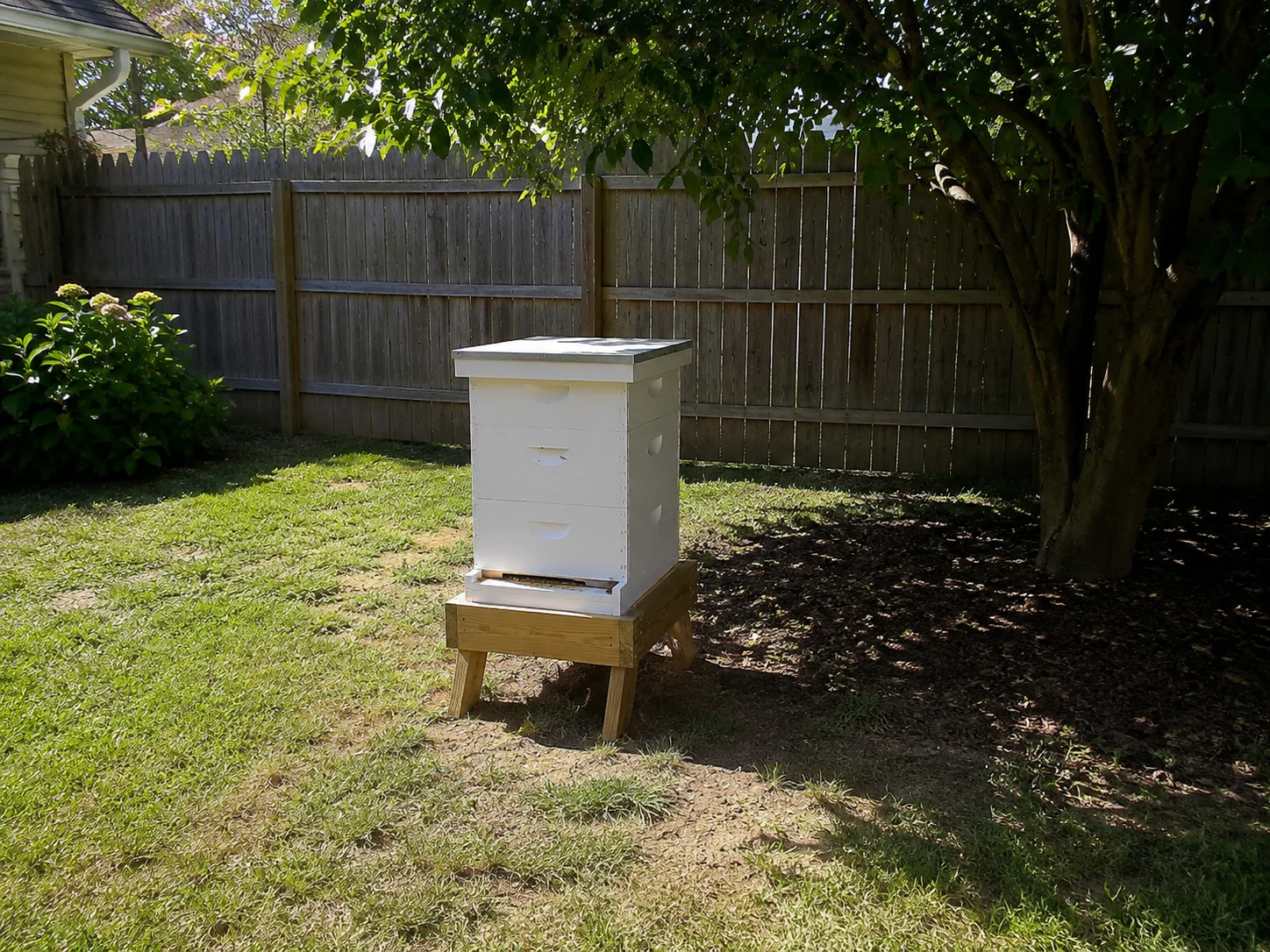
A hive exposed to strong wind can lose heat faster, become harder for returning foragers to enter, and suffer more weather stress. The Mid-Atlantic Apiculture Research and Extension Consortium notes that apiary locations should be selected carefully and should include nearby forage and natural wind protection where possible. (canr.udel.edu)
Good wind protection can be:
- A hedge
- A fence
- A shed wall at a safe distance
- A row of shrubs
- A natural slope
- A mixed living boundary
But do not block airflow completely. A hive jammed into a dead corner can become damp and stagnant. You want shelter, not suffocation.
The ideal backyard location has wind protection behind or beside the hive, while still allowing air to move.
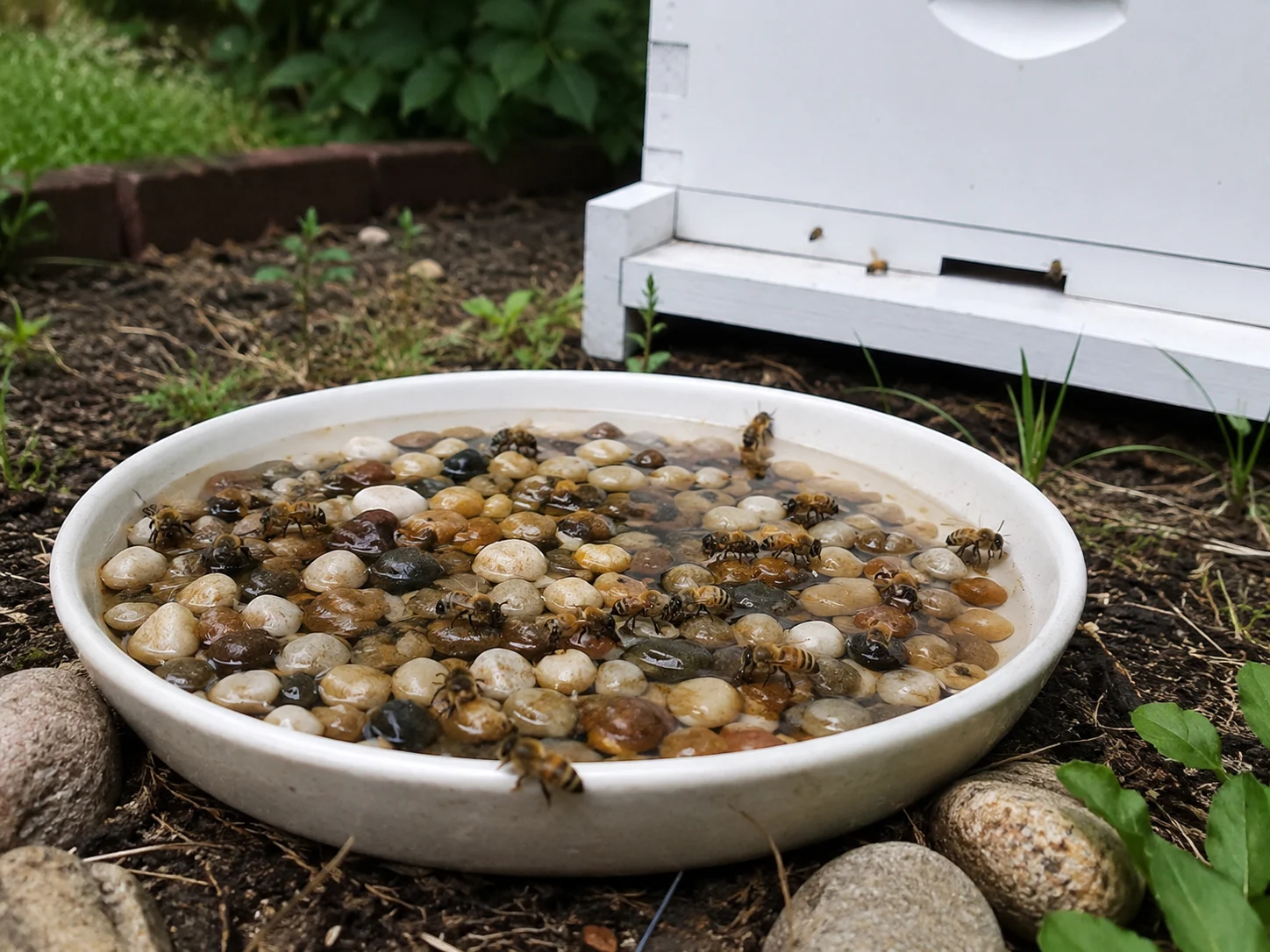
Water Placement: Control It Before the Bees Choose
Bees need water.
If you do not provide it, they will find it. And they have terrible taste from a human perspective.
They may choose:
- Neighbor’s pool
- Dog bowl
- Birdbath
- Leaky hose
- Wet compost
- Children’s water table
- Irrigation puddles
Once bees lock onto a water source, it can be difficult to redirect them. So set up water before or at the same time as the hive.
A good bee water source should be:
- Close to the hive
- Shallow
- Consistent
- Safe for landing
- Refilled before it dries out
Use pebbles, corks, floating wood, marbles, or rough stones so bees can land without drowning.
Do not wait until your neighbor complains that bees are drinking from their pool. By then, you are already playing defense.
Think About Neighbors Before They Think About You
Backyard beekeeping fails socially before it fails biologically.
Your bees may be gentle. Your neighbor may still hate the idea.
So place the hive in a way that reduces visibility, reduces flight overlap, and reduces excuses for conflict.
Smart neighbor-conscious placement:
- Hive not directly against shared seating areas
- Entrance not facing property lines
- Flight path lifted with hedge or fence
- Water source provided before bees find pools
- Hive screened from direct view
- Inspections done at considerate times
- Swarm control taken seriously
If your yard is tight, this is not optional. This is the difference between being a responsible beekeeper and being the neighborhood problem.
This section naturally pairs with whether a backyard beehive will bother your neighbors.
Avoid These Backyard Beehive Placement Mistakes
Here is the blunt version. These placements are trash:
1. Facing the Hive Toward a Door or Walkway
You are forcing humans through bee traffic. Do not do it.
2. Placing the Hive Under Dense Trees
Falling branches, damp shade, ants, poor airflow, and awkward access. Bad trade.
3. Putting the Hive Beside a Pool
Bees love water. Pools create conflict fast.
4. Hiding the Hive Somewhere You Hate Visiting
You will inspect less. Problems will grow.
5. Placing It on Uneven Ground
Heavy boxes plus unstable ground equals risk.
6. Ignoring Afternoon Heat
A hive in a heat pocket can struggle badly in summer.
7. Facing the Entrance at the Neighbor’s Fence
Even if it is legal, it is dumb diplomacy.
Quick Backyard Beehive Placement Checklist
Before installing your hive, check every item:
- Morning sun: yes
- Afternoon heat relief: ideally yes
- Entrance away from people: yes
- Clear flight path: yes
- Fly-up barrier available: preferably
- Stable hive stand: yes
- Dry ground: yes
- Water source nearby: yes
- Room to inspect: yes
- Neighbor conflict risk reduced: yes
- Local rules checked: yes
- Easy access for equipment: yes
If you cannot check most of these, do not place the hive yet. Fix the site first.
Final Thoughts: Placement Is Prevention
Backyard beehive placement is not about finding an empty patch of ground. It is about preventing predictable problems before they become expensive, stressful, or embarrassing.
The best hive location gives your bees:
- A dry, stable base
- Morning sun
- Wind protection
- A controlled flight path
- Nearby water
- Good airflow
- Safe access for inspections
- Distance from human traffic and neighbor conflict
Get this right before the bees arrive. Moving a hive later is possible, but it is annoying and avoidable.
A well-placed backyard hive feels calm because the layout is doing invisible work every day. A badly placed hive turns normal bee behavior into a constant problem.
So do not ask, “Where can I fit the hive?”
Ask the better question:
“Where will this hive cause the fewest problems six months from now?”