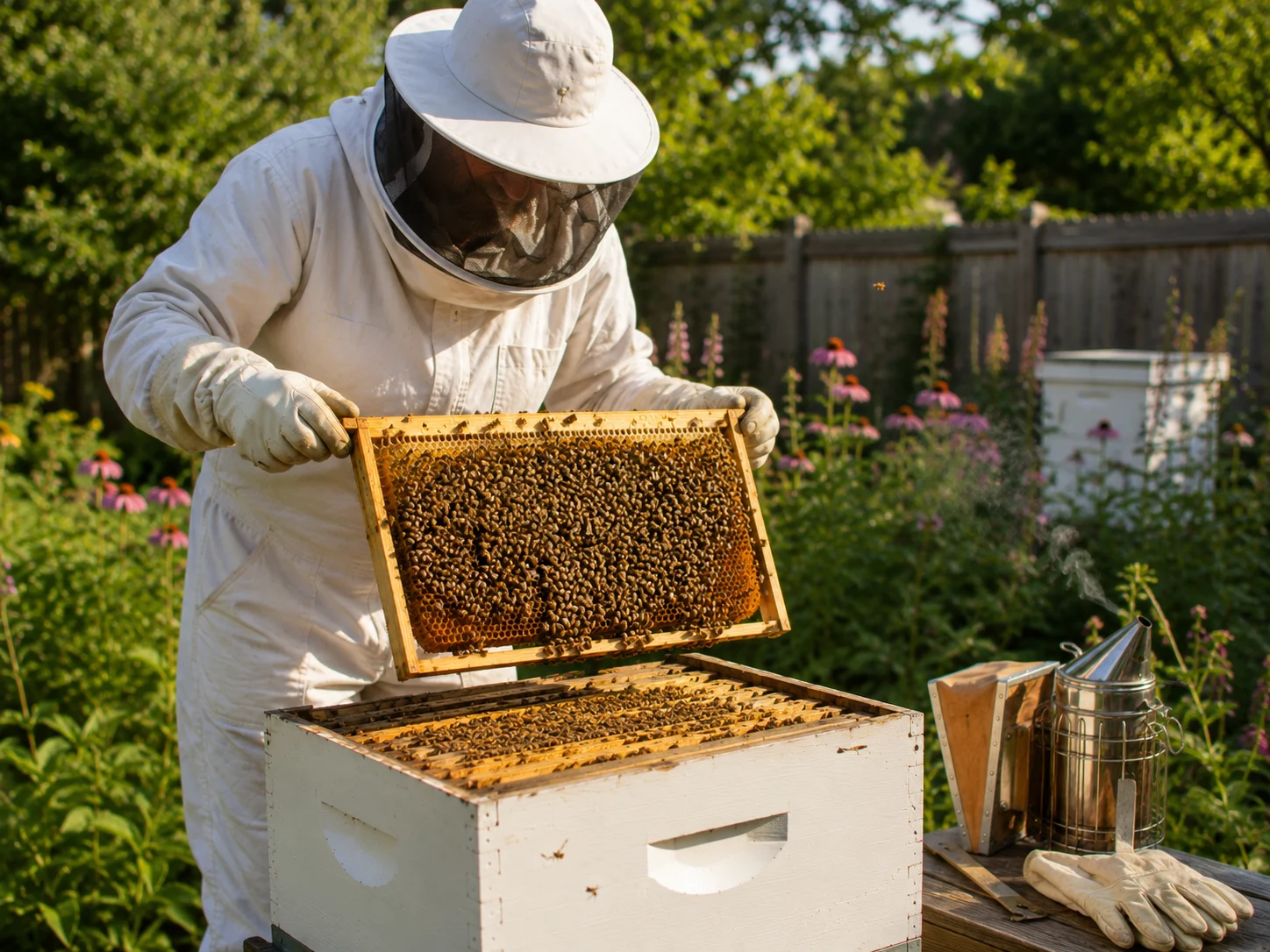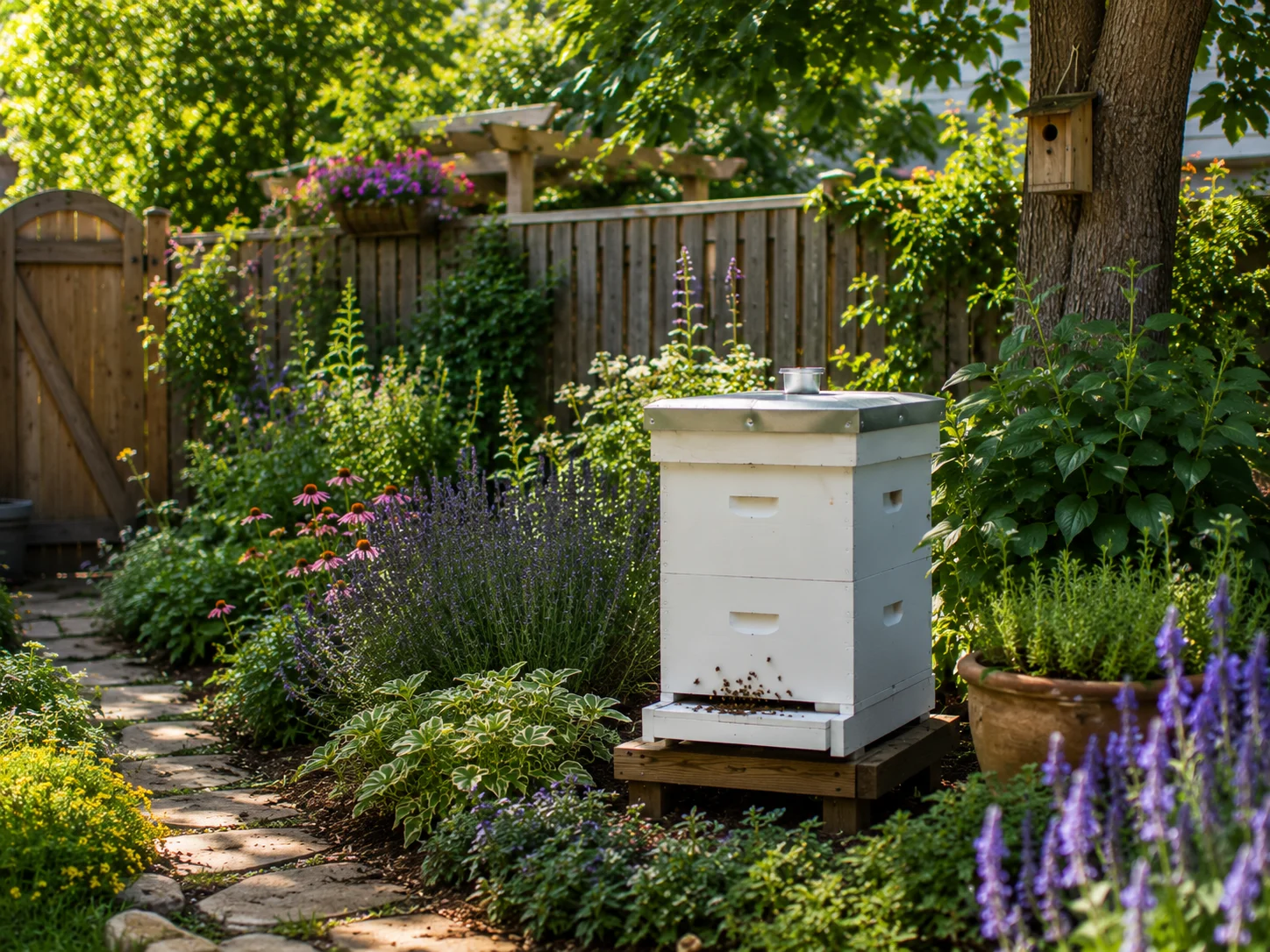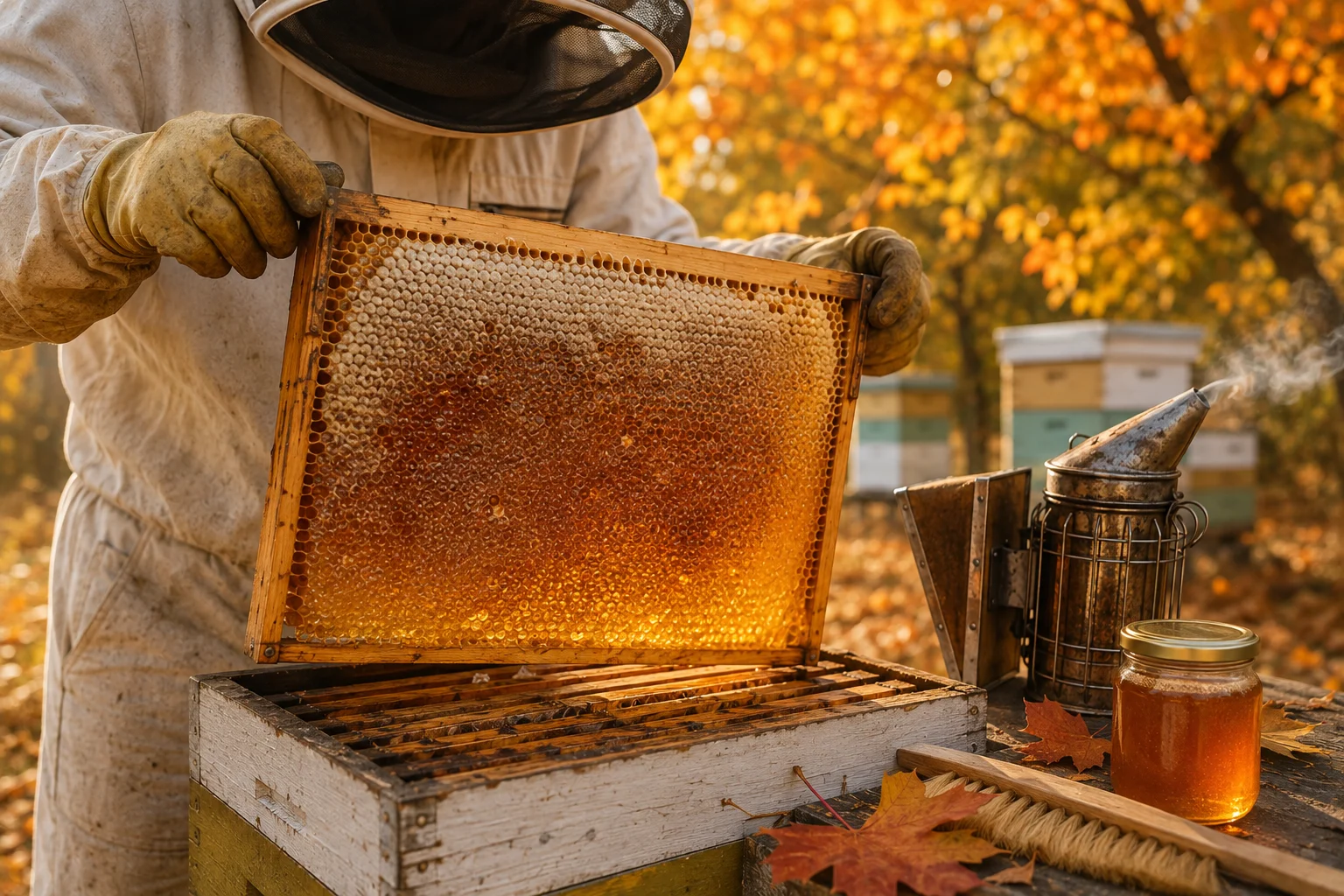

It is the question every aspiring backyard beekeeper carries quietly for months before they ever buy a single piece of equipment. Not “how do I extract honey” or “what does a queen cell look like” — but the quieter, more socially loaded question: what will my neighbors think?
The concern is completely understandable. Keeping tens of thousands of stinging insects in a shared residential space feels like something that requires a conversation, a negotiation, perhaps an apology in advance. Most people who want to keep bees genuinely care about their neighbors’ comfort and don’t want to impose. And so they hesitate, research, worry, and hesitate some more — while the bees they could be keeping go unhoused and the honey they could be harvesting stays in the flowers.
This post is the honest answer to that question — not the optimistic beekeeper’s “don’t worry, they’re totally harmless” dismissal, and not the anxious worst-case imagining of swarms over the fence and stings at the barbecue. The real answer, grounded in what research and urban beekeeping practice actually shows, is considerably more reassuring than most people expect — and it comes with specific, practical measures that reduce the impact of backyard beekeeping on neighbors to a level that is, in most cases, genuinely imperceptible.
What the Research Actually Shows About Urban Beekeeping and Neighbors
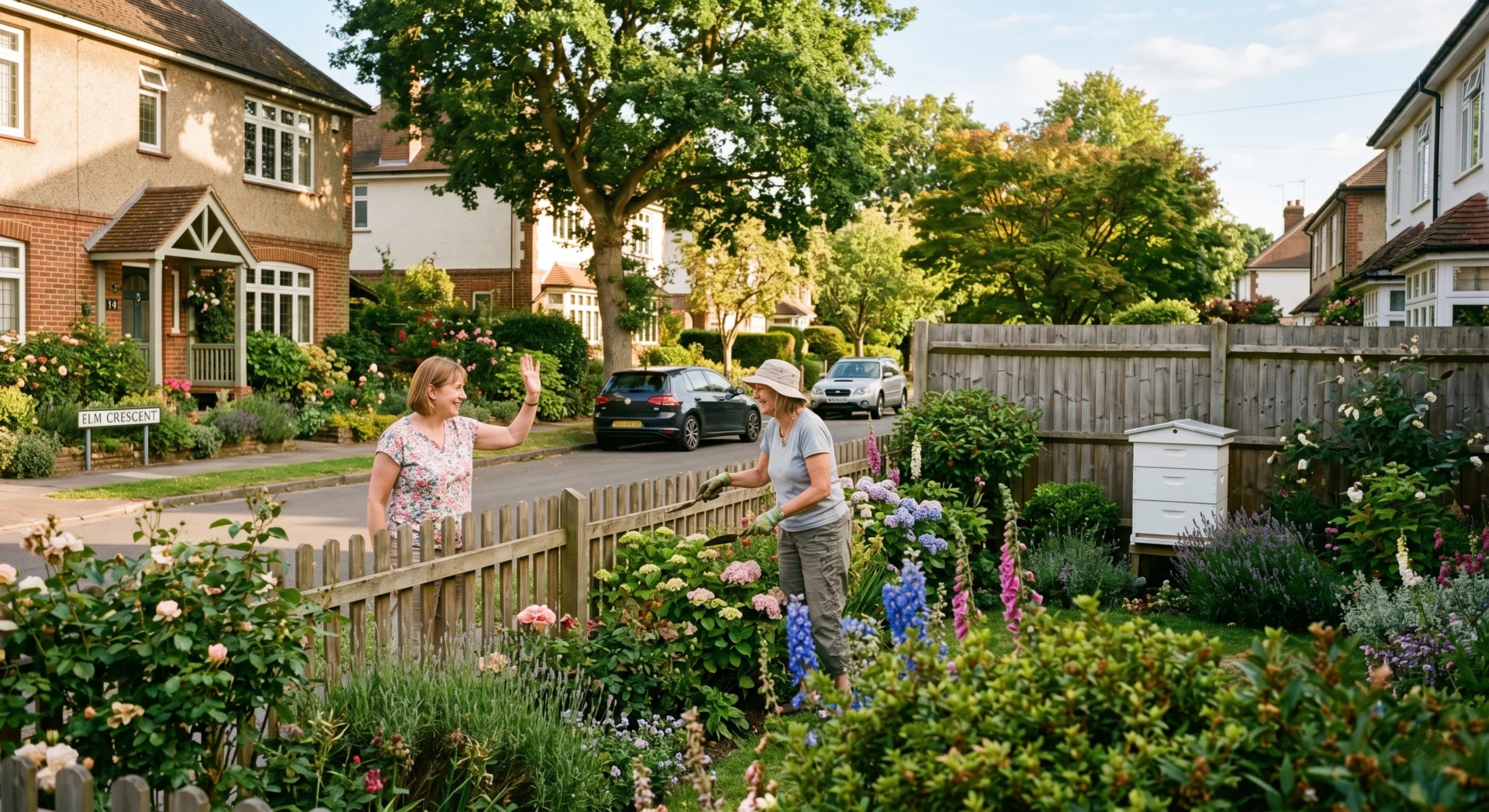
The fear of neighbor conflict around backyard beehives is almost universally larger than the reality. This isn’t wishful thinking — it is documented consistently across urban beekeeping studies and neighbor surveys conducted in cities that have legalized residential beekeeping over the past two decades.
A survey conducted by the Urban Beekeeping Research Project at UC Davis found that the overwhelming majority of neighbors living adjacent to registered urban beehives reported no awareness of the hive’s presence and no change in their experience of their own outdoor spaces. The most common response from neighbors who were told about an adjacent hive after the fact was surprise — they had not noticed the bees at all. This is not because beehives are invisible or bees are rare in urban environments — it is because foraging honeybees are behaviorally discreet in ways that most people don’t expect.
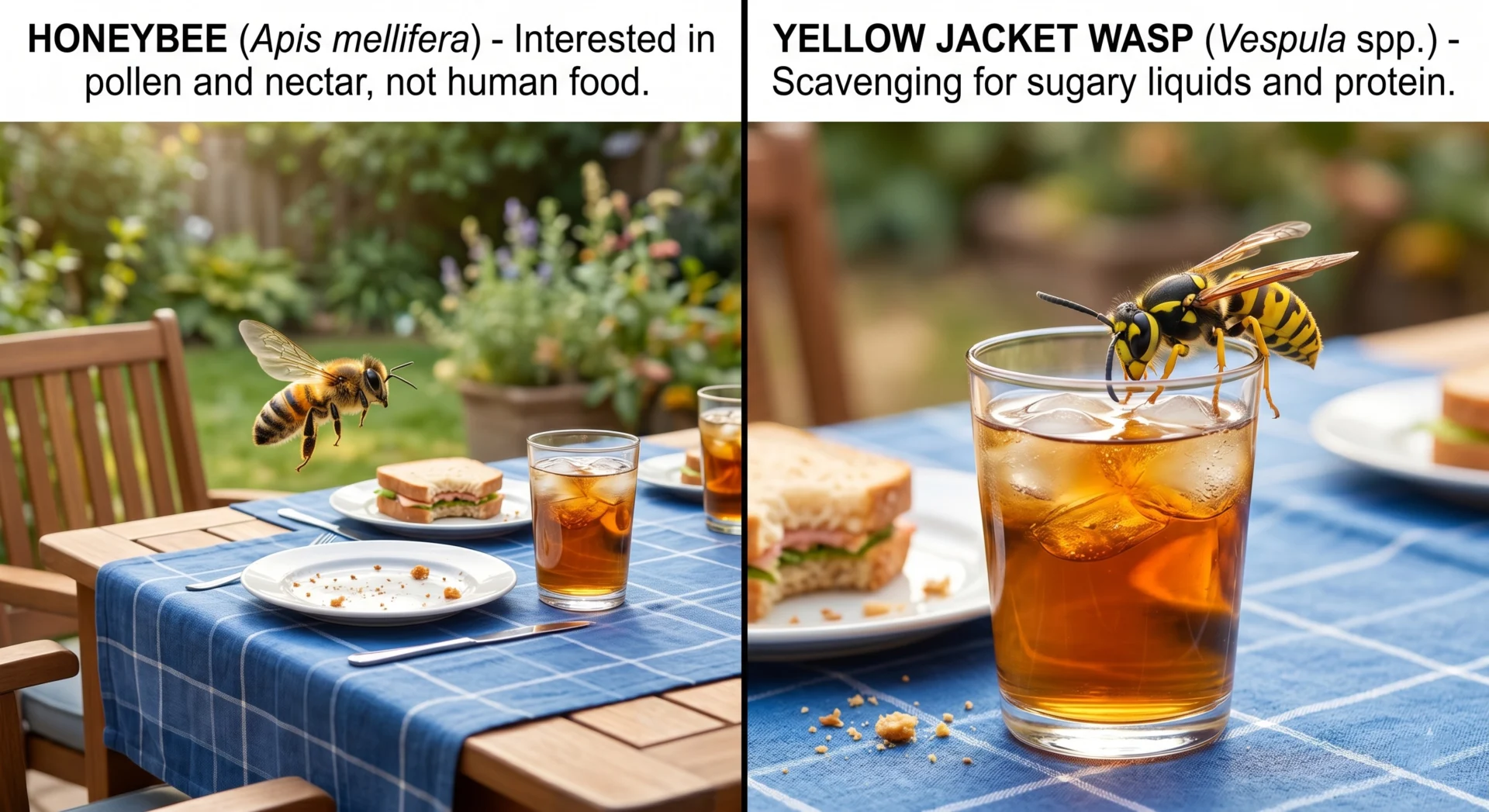
A foraging honeybee has one objective: find nectar or pollen and return it to the hive as efficiently as possible. She is not interested in people, food, drinks, or anything that isn’t a flower. The defensive behavior that most people associate with bee stings — the aggressive investigation of faces, the circling of food, the apparently unprovoked attack — is characteristic of wasps, particularly yellow jackets, not honeybees. A foraging honeybee will fly past a picnic, around a child playing, and over a barbecue without a second of interest in any of it. She has a job to do and it has nothing to do with you.
Understanding this behavioral distinction is the foundation of every reassuring conversation about backyard beekeeping, and we’ve covered the full science of why bees and wasps behave so differently in the complete guide to telling honeybees and wasps apart — including why wasps are responsible for most sting incidents, not bees. The short version: a honeybee away from her hive is among the most peaceable insects in the garden. The stinging insect at your neighbor’s barbecue is almost certainly not your bee.
The Sting Risk: What the Numbers Say
The most legitimate concern any neighbor can raise about an adjacent beehive is the risk of being stung. This concern deserves a direct, numerical answer rather than a vague reassurance.
The annual incidence of honeybee stings in residential neighborhoods with registered backyard hives is vanishingly small in the documented literature. The vast majority of bee sting incidents in the US involve yellow jackets and other wasps — species that nest in the ground, in wall voids, and under eaves of houses, entirely independently of whether anyone in the neighborhood keeps honeybees. The presence of a backyard hive does not meaningfully increase the yellow jacket population in a neighborhood, because yellow jackets and honeybees occupy different ecological niches and do not share colonies.
For a honeybee sting specifically to occur in a neighbor’s yard, a series of conditions must coincide: a foraging honeybee must leave her foraging route, land on or near a person, and be physically compressed or grabbed — the pressure on her body triggering the defensive sting reflex. This is not impossible, but it is genuinely rare in normal circumstances and requires a specific physical action (squeezing, stepping on, or grabbing the bee) rather than simply being in the same outdoor space.
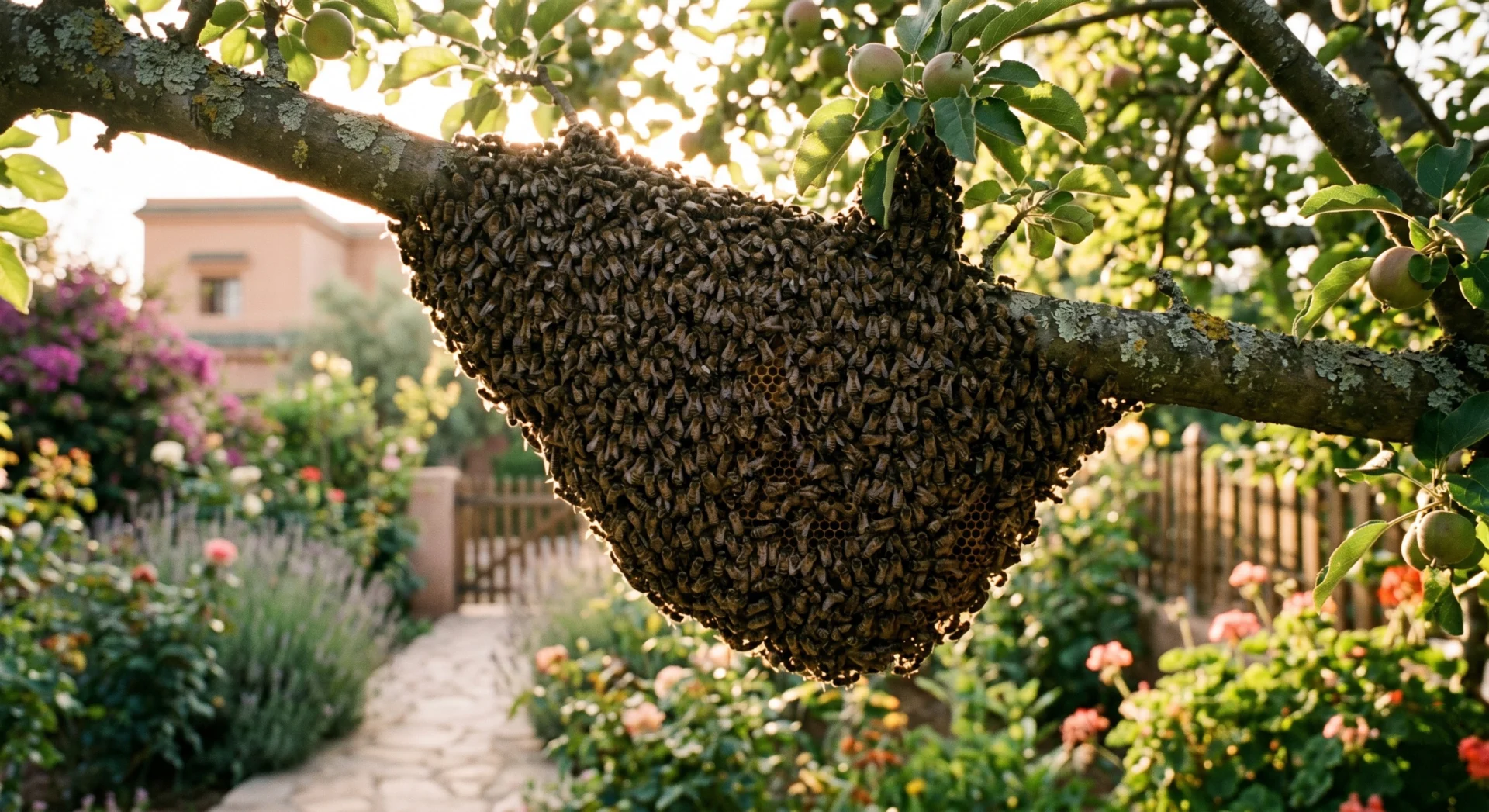
The one scenario that does carry meaningfully elevated sting risk is a swarm — a temporary event where a large cluster of bees leaves the hive and lands in the surrounding area while scouts search for a new home. This is the most emotionally alarming thing that can happen to a neighbor of a beekeeper. However, as we explain in detail in the complete swarm guide including why swarms are actually the safest and most docile state a bee colony can be in, a swarm is biologically the least dangerous bee event imaginable — swarming bees have gorged on honey, have no hive to defend, and almost never sting without direct physical provocation. And swarm prevention, covered in that same guide, is an entirely manageable practice for any attentive beekeeper.
A beekeeper who inspects their hive every 7–9 days during swarm season and responds promptly to queen cells is a beekeeper whose bees almost never swarm. And a beekeeper who has properly installed a fly-up barrier — covered in the section below — is a beekeeper whose swarm, if one does occur, almost always clusters on their own property rather than a neighbor’s.
The Fly-Up Barrier: The Single Most Effective Neighbor Protection Tool
Of all the practical measures a backyard beekeeper can take to make their hive genuinely invisible to neighbors, the fly-up barrier is the most impactful and the most consistently recommended by urban beekeeping associations across the US.
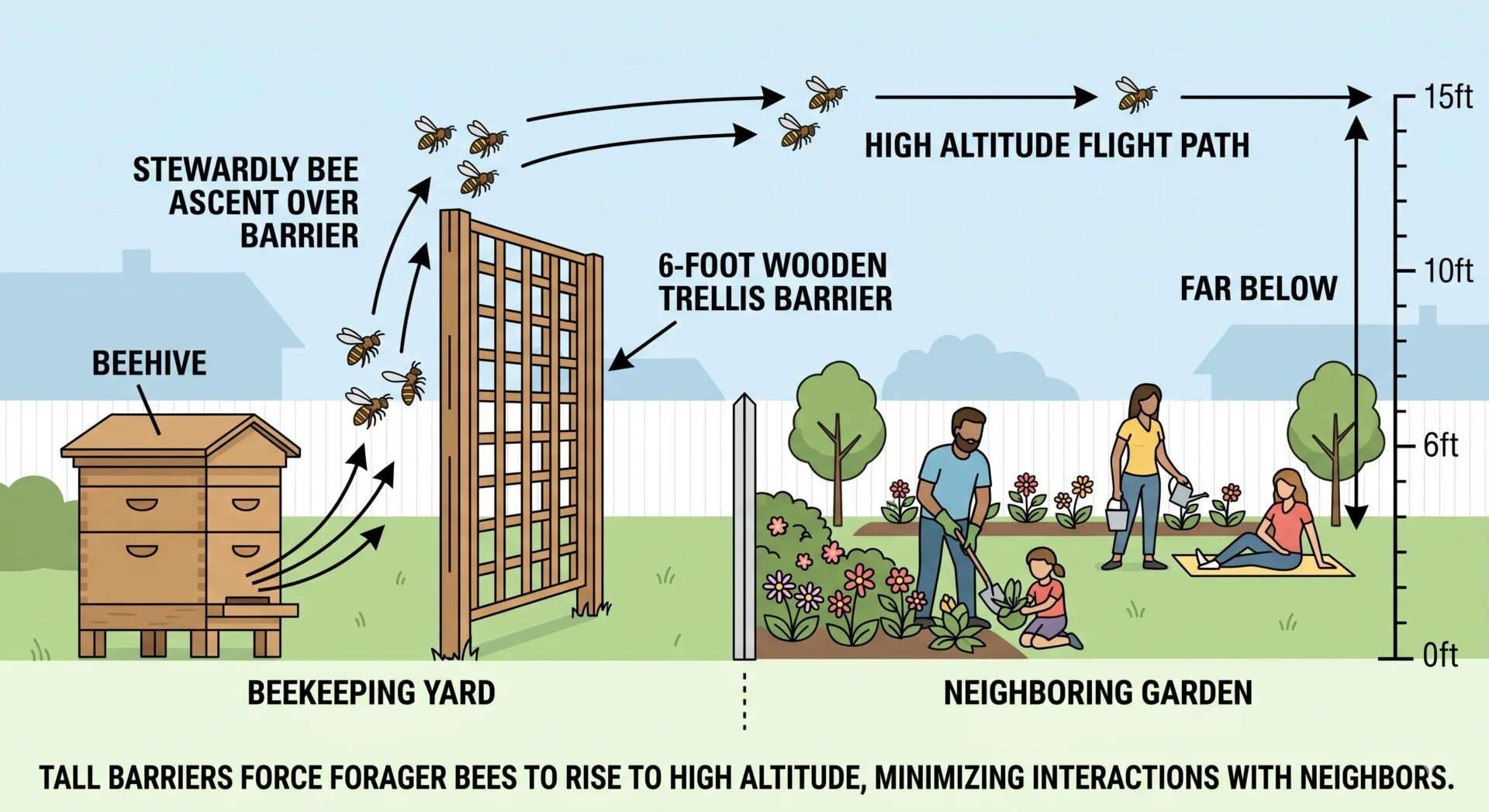
The principle is straightforward and rooted in bee flight behavior. When a foraging bee departs the hive entrance, she initially flies at a low trajectory — gaining altitude gradually as she orients and begins navigating toward forage. In an open garden, this low-level departure path takes bees through the shared airspace of adjacent gardens at face height — not because the bees are interested in the neighbors, but because they haven’t yet gained altitude. This low-level flight is what creates the impression of “my neighbor’s bees in my garden” even when the bees are simply passing through on their way to flowers a mile away.
A fly-up barrier — a solid vertical screen, fence panel, or dense hedge positioned 6 feet directly in front of the hive entrance — forces departing bees to turn sharply upward to navigate over the obstacle. By the time they clear the barrier, they are flying at 8 to 12 feet above ground — well above the head height of any person in any adjacent garden. From that altitude, they navigate directly to their foraging destination without passing through anyone’s personal space at low level.
The result, consistently reported by urban beekeepers who have installed fly-up barriers, is that neighbors on the other side of the barrier stop noticing the bees entirely. The bees don’t disappear — they are simply flying over rather than through the neighborhood’s shared airspace. The barrier needs to be a minimum of 6 feet tall and extend at least 3 feet beyond the hive on each side. A solid wooden fence panel, a trellis covered in climbing plants, a dense evergreen hedge, or a purpose-built privacy screen all achieve the same result. Many beekeepers choose a living barrier — climbing roses, honeysuckle, or jasmine — that simultaneously acts as a fly-up device, provides additional foraging for the bees, and looks beautiful from both sides of the fence.
The fly-up barrier also addresses the most common specific neighbor complaint about adjacent beehives: bees landing on washing hung out to dry, on outdoor furniture, or on children’s play equipment. These incidents — where bees land on surfaces rather than flowers — occur when bees are flying at low level through a garden. A fly-up barrier eliminates the low-level flight path and, with it, almost all incidental bee-human contact in neighboring properties.
Water, Forage, and Keeping Your Bees at Home
Beyond the fly-up barrier, two additional management decisions meaningfully reduce the footprint of your beekeeping on the surrounding neighborhood: providing a reliable water source and planting sufficient local forage.
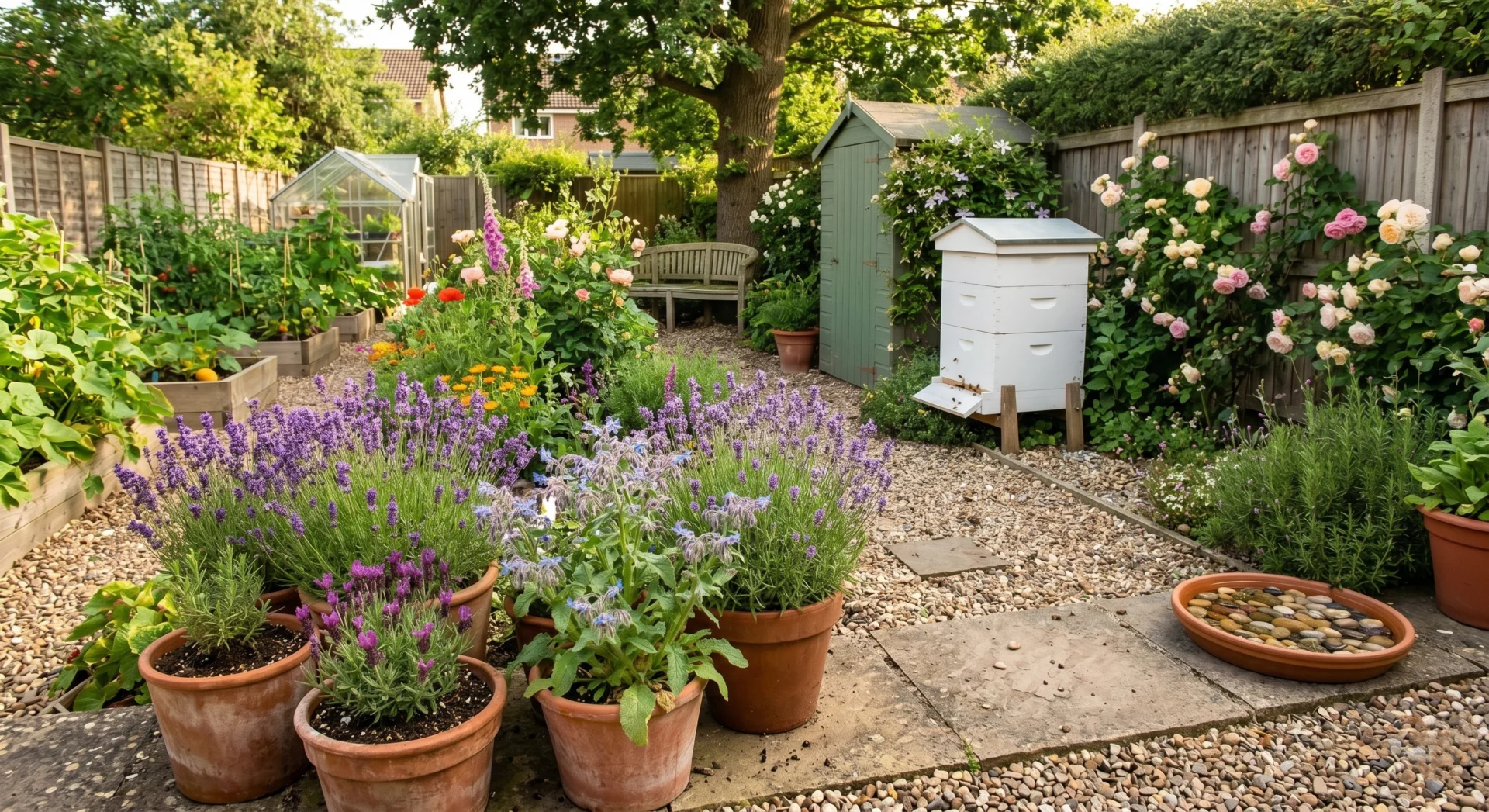
Water matters because bees that don’t have a reliable source within easy reach of the hive will find one — and the sources they find are not always convenient. A neighbor’s swimming pool, a bird bath, a leaking outdoor tap, or a child’s paddling pool can all become preferred water sources for a colony that has nothing better available. Once bees have established a water foraging habit at a particular location, they are extremely loyal to it and very difficult to redirect. The solution is entirely preventive: establish a dedicated water source within 30 feet of your hive entrance before the bees arrive or before warm weather triggers water foraging. A shallow dish with pebbles, a drip system on a stone, or a purpose-built bee waterer all work well. Bees established on their own water source at home have no reason to investigate a neighbor’s pool.
Forage matters for a similar reason. A colony with rich, varied forage within close range of the hive is a colony whose foragers spend their working day in your garden and the surrounding landscape — not in neighbors’ gardens searching for alternatives. Planting a generous selection of bee-attractive species immediately around the hive, in containers if necessary, reduces the colony’s need to range widely for basic nutrition. The drift planting method — how to design bee-attracting garden beds that keep foragers productively close to home — is the most efficient approach for creating a concentrated local forage zone that serves both the bees and the aesthetic of your garden simultaneously.
The Conversation That Makes Everything Easier
The most durable protection against neighbor conflict around backyard beekeeping is not a fence panel or a water dish. It is an honest, well-timed, generous conversation — and the timing is the part most people get wrong.
Tell your neighbors before you install the hive, not after. A proactive conversation positions you as a considerate person who is doing something interesting and is thinking about how it affects the people around them. A reactive conversation — triggered by a neighbor noticing something unexpected — positions you as someone who has already done something that requires explanation. The information in both conversations is identical. The relationship dynamics are completely different.
The conversation itself doesn’t need to be long or technical. A direct, warm, honest approach works best: you’re planning to keep a beehive, you’ve taken specific steps to make sure it won’t be noticed (fly-up barrier, water source, local forage), the bees will fly over rather than through shared spaces, and if they ever notice anything they’d like to talk about, they should come straight to you. Bring a jar of honey. Not as a bribe — as a genuine gesture of sharing something you’re excited about. Most people who feel included in something their neighbor is doing become supporters of it rather than opponents.
For neighbors who express genuine concern about bee stings — particularly those with family members who have severe allergies — take the concern seriously and respond concretely. An epipen-carrying neighbor within twenty feet of your hive is a situation that warrants a real conversation with your local beekeeping association about appropriate mitigation. In most cases, a properly positioned fly-up barrier and a calm Italian bee strain will satisfy any reasonable concern. In rare cases, a different hive location — or a different neighbor to start the conversation with — may be the right answer.

What Urban Beekeeping Has Actually Done for Neighborhoods
The evidence from cities with established urban beekeeping communities consistently points in one direction: backyard beehives improve neighborhoods rather than diminishing them.
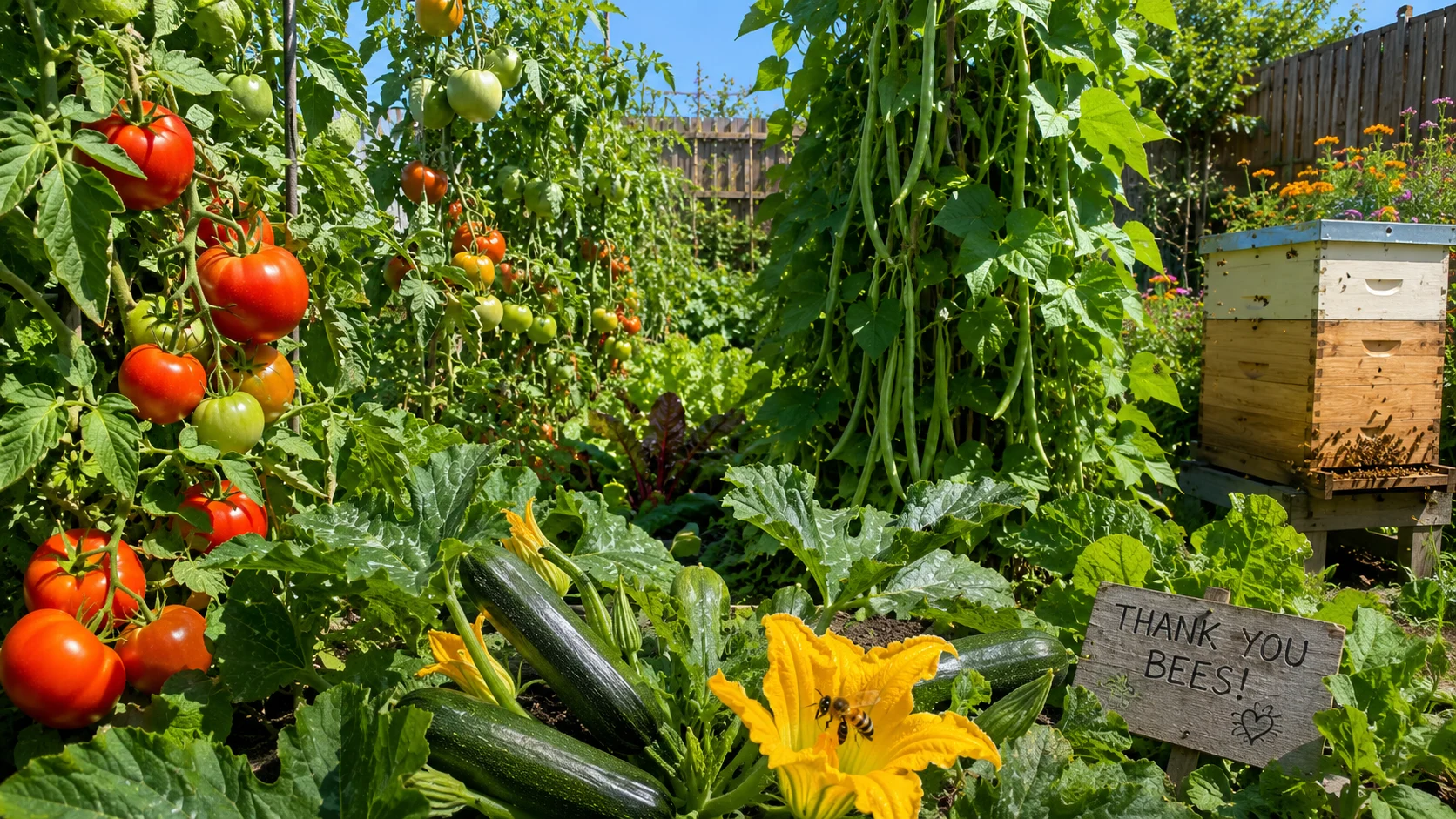
The most direct effect is on local garden productivity. Honeybees are extraordinarily efficient pollinators — a single well-populated colony can pollinate millions of flowers per day within its foraging radius. Neighbors of backyard beekeepers consistently report improved fruit and vegetable yields in their own gardens without having any idea why. Fruit trees that previously set light crops begin producing abundantly. Vegetable gardens become notably more productive. Window boxes and container gardens flower more richly. All of this happens silently and invisibly, attributable only to the presence of a neighbor’s hive that they may not even know is there.
The secondary effect is on neighborhood ecosystem richness. Urban landscapes with active honeybee colonies support broader pollinator diversity — the presence of a rich, well-foraged nectar and pollen landscape benefits bumblebees, solitary bees, butterflies, and other beneficial insects in the surrounding area. A neighborhood with one or two backyard beehives is measurably more biodiverse than an otherwise identical neighborhood without them.
For beekeepers who want to understand the full picture of what their colony contributes to the local landscape — and for those looking for arguments that will resonate with skeptical neighbors — the complete seasonal foraging calendar showing exactly what bees are doing in the neighborhood month by month provides the month-by-month picture of colony activity and its benefit to the surrounding environment.
The Practical Summary: What Good Backyard Beekeeping Looks Like From a Neighbor’s Perspective
A well-managed backyard hive with appropriate infrastructure in place is, from a neighbor’s perspective, essentially invisible. Here is what it looks like in practice:
From a neighbor’s garden, a properly installed backyard hive with a fly-up barrier produces no observable difference in their experience of their outdoor space. Bees fly overhead at altitude, not through the garden at face height. The water source keeps the colony’s foragers at home. The local forage planting gives bees what they need within the owner’s property. Inspections happen at dawn or dusk on weekdays, not at 2pm on Sunday when neighbors are most likely to be outside. The swarm prevention protocol means the colony almost never swarms, and if it does, a local beekeeper is called within the hour.
What the neighbor does notice — if they look closely — is that their own garden seems more productive. Their fruit trees set better crops. Their vegetable patch yields more generously. Their own flowers bloom more richly. These effects accumulate quietly across the whole neighborhood, entirely without drama, entirely without anyone ever noticing the source.
That is what good backyard beekeeping looks like from the outside. Not an imposition. Not a risk. A quiet, invisible benefit that improves the shared environment for everyone who lives in it — whether they know about it or not.
Keep Reading 🐝
These posts give you the practical tools to make your backyard hive as neighbor-friendly as possible from day one:
- 🏡 The complete small garden beekeeping guide — fly-up barriers, hive types, water sources, and neighbor conversations in full detail — The companion post to this one, covering the full setup for small spaces.
- 🌿 How to design a bee-attracting garden that keeps foragers productively close to home and away from neighboring properties — Forage planning that benefits both your bees and your neighborhood.
- 🐝The complete swarm prevention guide — because a swarm that never happens is a neighbor concern that never arises — The single most important management practice for neighbor-friendly urban beekeeping.
Your neighbors are going to be fine. Start with the conversation, install the barrier, plant the forage, and let the honey do the rest. 🍯