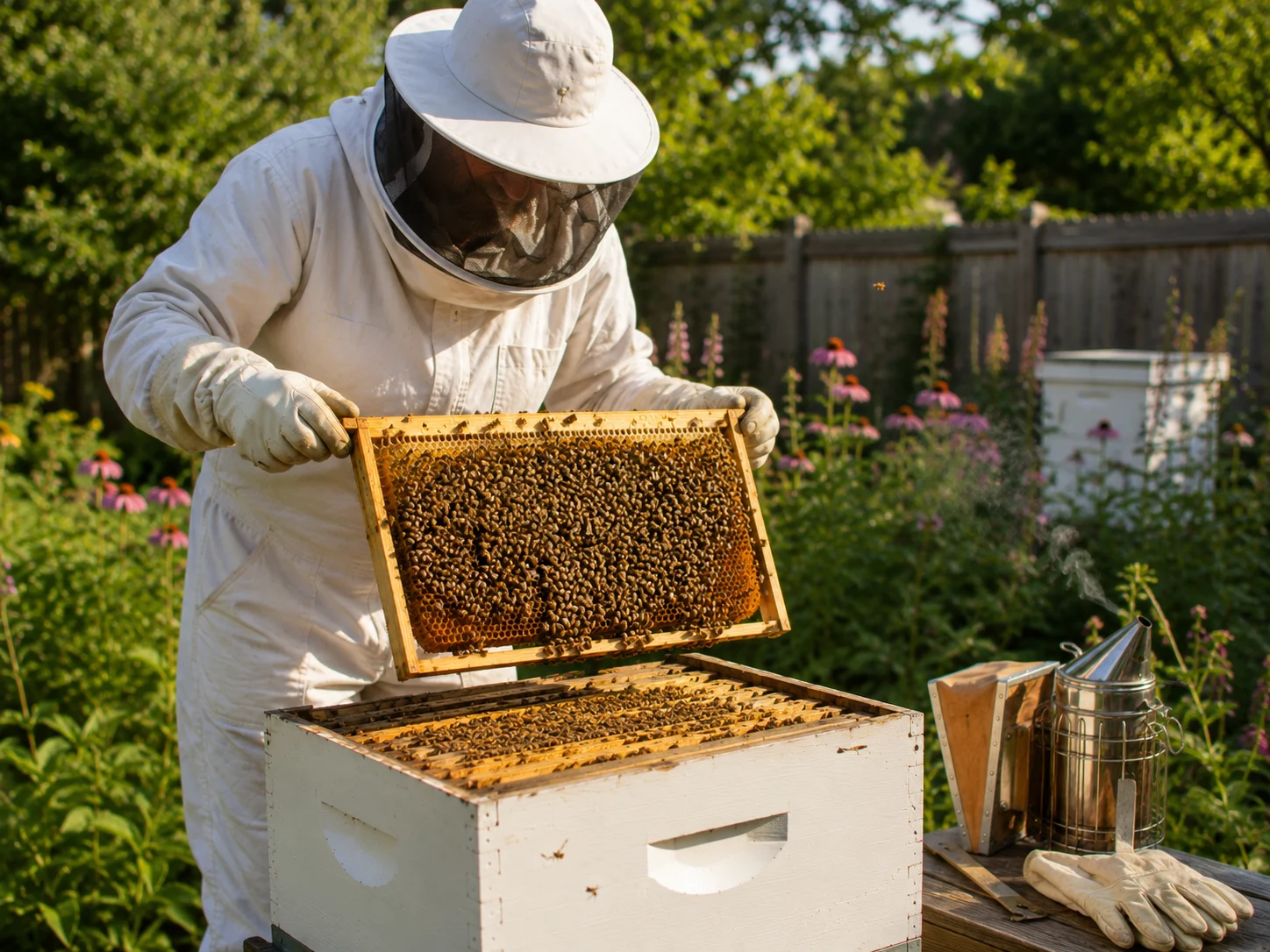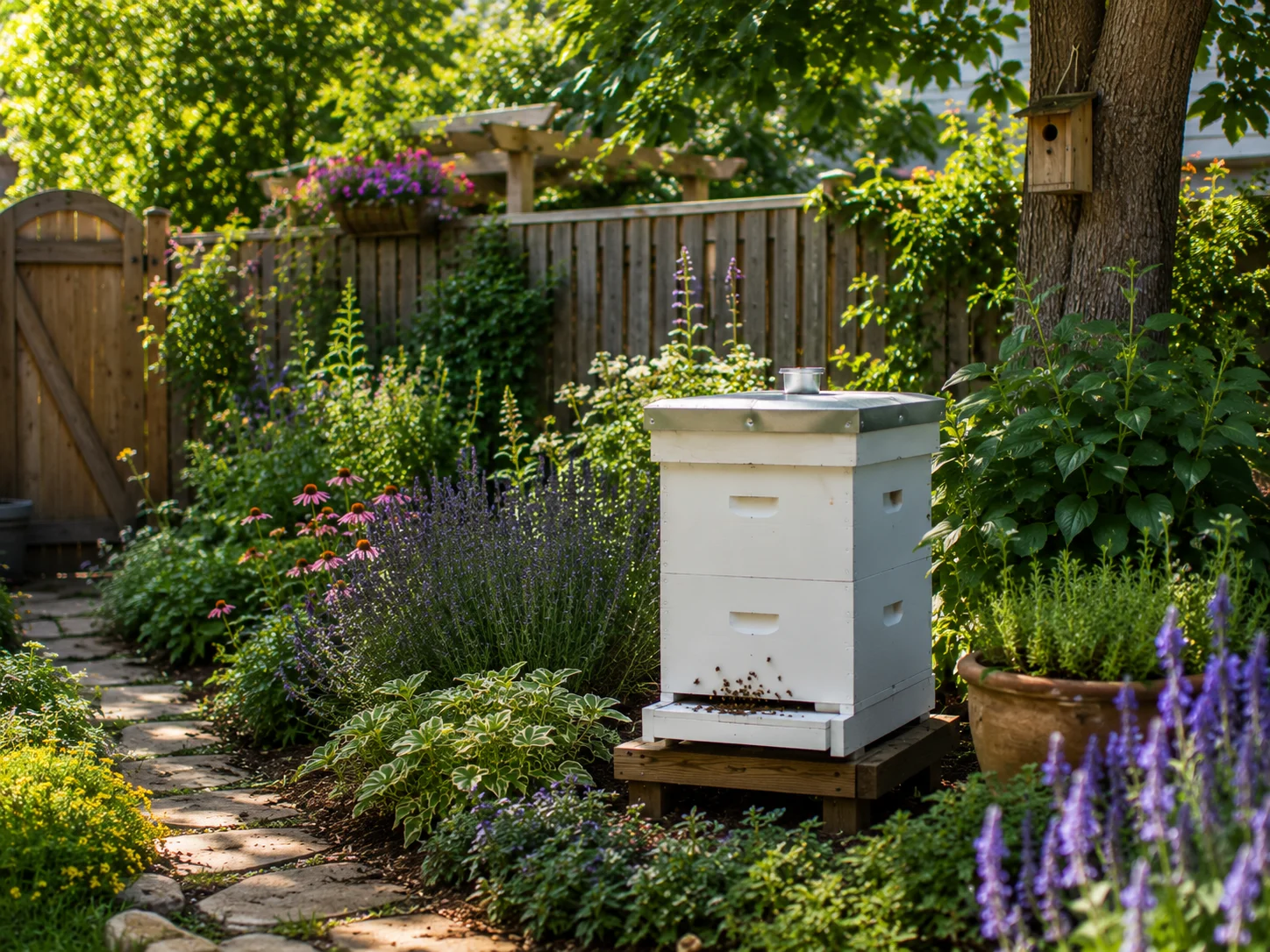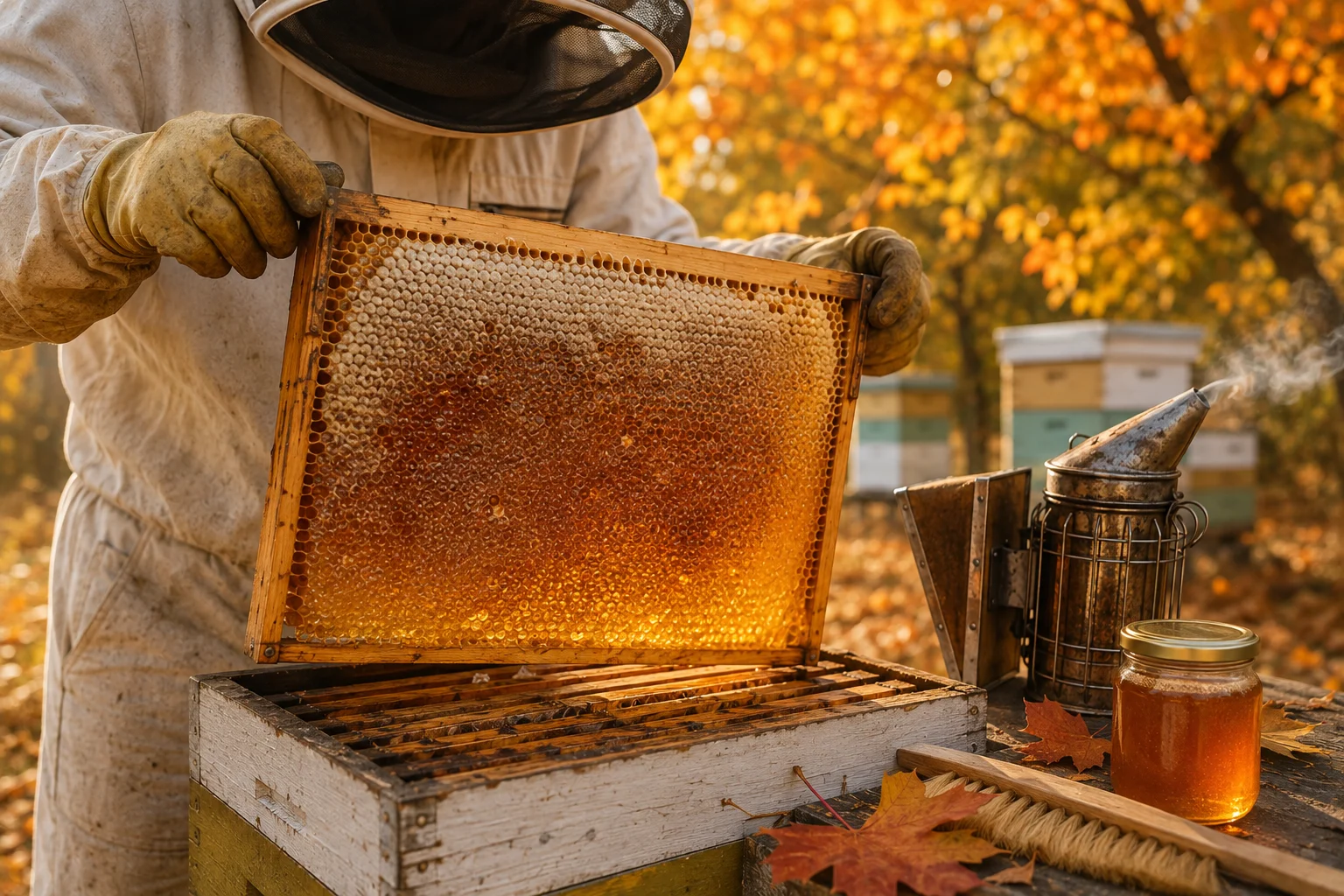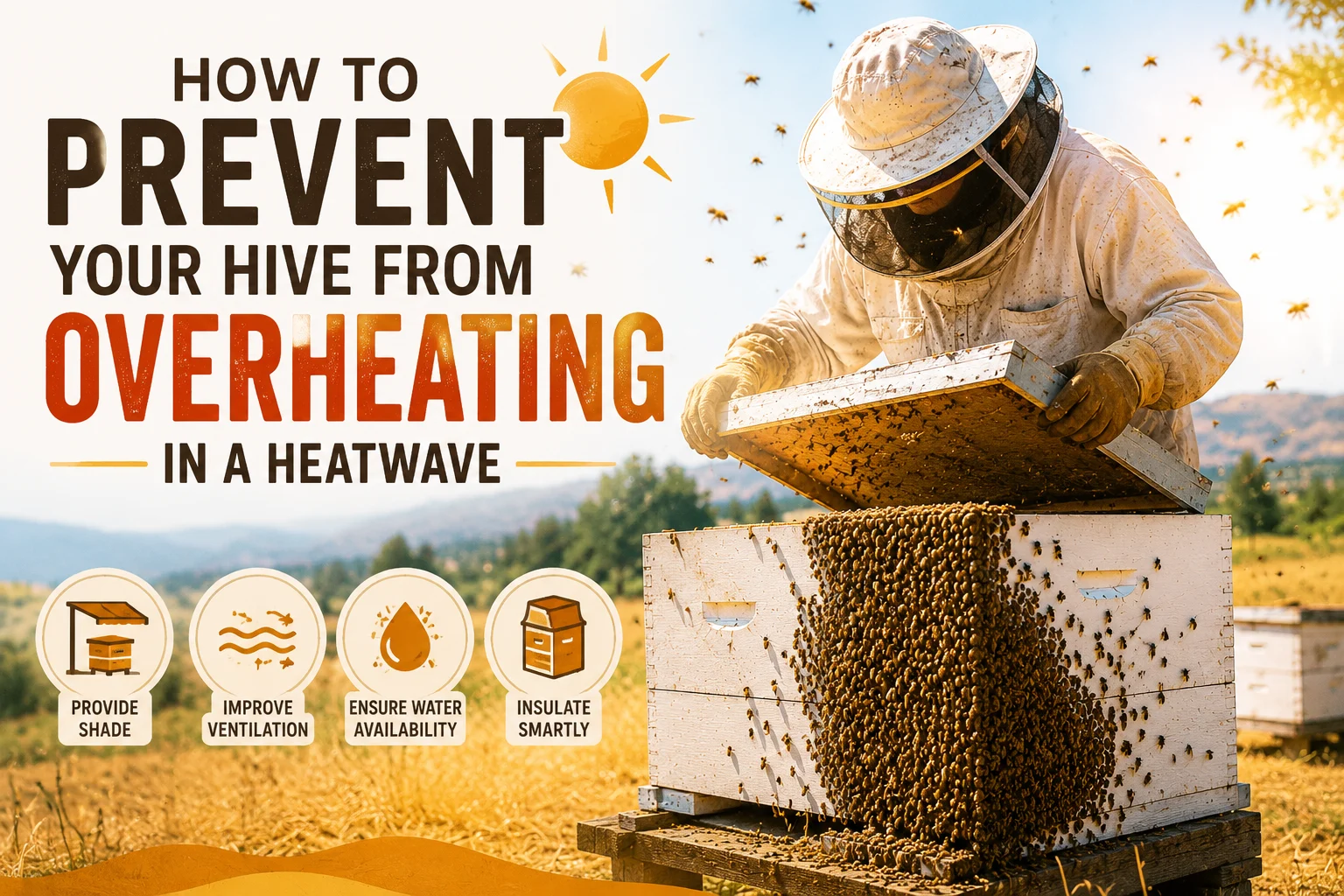

The external temperature reads 38°C. The hive is in partial shade. Inside the brood nest, 40,000 bees are maintaining a core temperature of 34.5°C — held to within half a degree of their target, continuously, without any central coordination, without a thermostat, and without a single bee in the colony that understands what temperature is.
This is one of the most remarkable feats of collective biological engineering on the planet. And for experienced beekeepers, understanding the precise mechanisms behind it — not just the broad strokes, but the actual physics and physiology — changes how you read your colonies, how you manage your apiaries, and how seriously you take the hive conditions you create.
This post is a full technical breakdown. We’ll cover the thermoregulation architecture of the honeybee colony, the mechanics of fanning chains and directed airflow, the thermodynamics of evaporative cooling, the metabolic costs of heat management, the cascade of failures that occur when the system is overwhelmed, and what the research tells us about colony-level thermal intelligence.
The Target: Why 34–35°C Is Non-Negotiable
Honeybee brood development is exquisitely temperature-sensitive. The larval and pupal stages of Apis mellifera require a narrow thermal window — 34.0–35.5°C — to complete development without deficit.
The consequences of deviation are well-documented and severe:
- Above 36°C sustained: Pupal mortality increases sharply. Bees that do emerge from heat-stressed pupae show measurable deficits in learning capacity, navigation performance, and foraging efficiency. Research published in the Journal of Experimental Biology by Tautz et al. (2003) demonstrated that pupae raised at 35°C vs. 34°C produced adults with significantly different long-term learning and memory performance — a difference traceable entirely to a single degree of temperature variation during development.
- Above 38°C: Acute pupal mortality. Brood dies in the cells.
- Below 32°C: Developmental retardation, increased susceptibility to pathogens, and similarly impaired adult cognition.
The colony doesn’t just aim for “warm enough.” It aims for a specific thermal target with precision that rivals laboratory incubators. What makes this extraordinary is that it’s achieved entirely through distributed, self-organizing behaviour — no single bee is managing the process, yet the outcome is tightly regulated.
The Architecture of Hive Thermoregulation
The colony maintains thermal homeostasis through three overlapping mechanisms, each dominant at different temperature ranges.
Mechanism 1: Metabolic Heat Generation (Cold Response — Not Relevant Today)
In winter and early spring, bees generate heat by decoupling the flight muscles from the wings and running them isometrically — essentially shivering. Individual bees can raise their thoracic temperature to 44°C through this mechanism, and clustered bees use it collectively to maintain brood nest temperatures through winter.
In a summer heatwave, this mechanism is entirely suppressed. The problem is excess heat, not deficit. Every metabolic process in the colony is already contributing to the thermal load that needs to be managed.
Mechanism 2: Fanning and Directed Airflow
This is the primary active cooling mechanism in summer and the one most beekeepers are familiar with — but the actual fluid dynamics of how it works are more sophisticated than they appear.
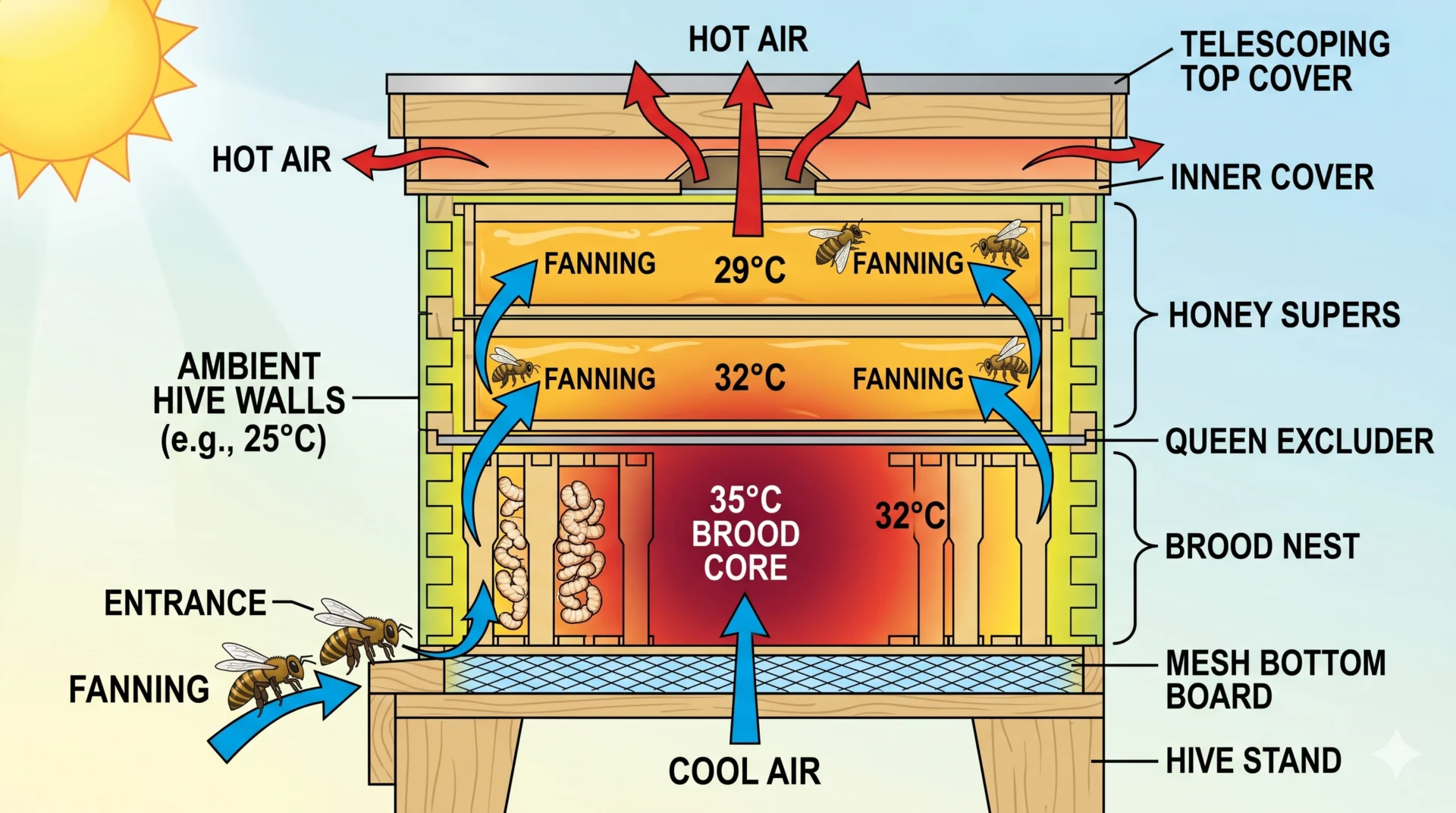
The fanning chain is not simply bees flapping wings randomly at the entrance. It is a structured, directional airflow system with distinct functional zones:
- Exhaust fanners position themselves at the entrance facing outward, beating their wings to push hot, humid air out of the hive. These bees are oriented with considerable consistency — studies using smoke tracer visualization have shown that airflow at the entrance of a fanning colony is directionally coherent, not turbulent.
- Interior fanners position themselves on comb faces and within the hive passages, creating pressure differentials that draw cooler external air in through gaps at the sides and top while hot air is expelled at the entrance.
- The chain effect: Fanning activity is highly contagious within the colony. A bee that detects elevated temperature or high humidity will begin fanning, and neighbouring bees respond to the airflow stimulus by joining — creating a self-amplifying response to thermal stress that can recruit large numbers of bees within minutes.
The energetic cost of sustained fanning is significant. A fanning bee consumes roughly 10x her resting metabolic rate in oxygen and carbohydrates. During a serious heatwave, a colony may have several thousand bees committed to fanning duty simultaneously — a measurable drain on honey stores and a meaningful reduction in the foraging workforce.
Mechanism 3: Evaporative Cooling via Water
This is the mechanism that most distinguishes severe heat management from moderate heat management, and it’s the one that has the most direct implications for beekeeper apiary management.
When ambient temperatures exceed the capacity of fanning alone to maintain brood nest temperature, the colony switches to active evaporative cooling — the bee equivalent of sweating.
Water foragers are recruited from the general foraging pool specifically to collect water rather than nectar or pollen. This reallocation is demand-driven: bees inside the hive that are fanning or tending hot brood release a specific set of chemical signals (including components of the Nasonov pheromone blend and other volatile compounds) that communicate thermal stress to the colony and trigger water forager recruitment.
The collected water is distributed inside the hive through a chain of mouth-to-mouth transfers (trophallaxis), then applied in one of two ways:
1. Film spreading on cell cappings and comb surfaces. Water carriers spread thin films of water across the cappings of capped brood. As the water evaporates, it draws latent heat from the underlying cells — the same thermodynamic principle as sweating or an evaporative cooler. The efficiency of this mechanism depends heavily on airflow: fanning bees actively accelerate evaporation by directing air across wetted surfaces.
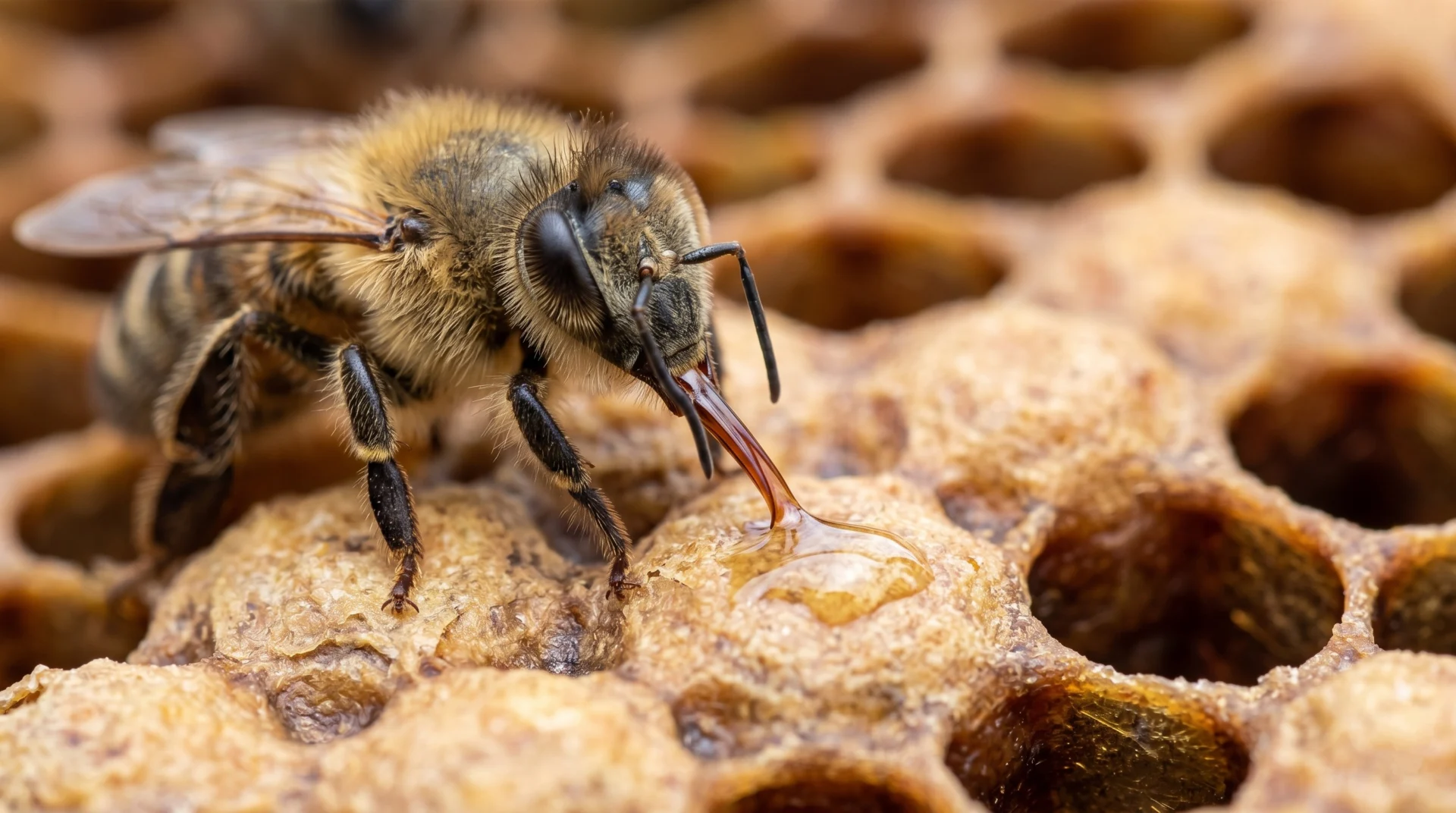
2. Droplet evaporation in the hive atmosphere. In extreme heat, bees have been observed regurgitating water droplets and holding them extended from the mouthparts — maximising surface area to volume ratio for rapid evaporation directly into the hive air.
The thermodynamic yield of evaporative cooling is substantial. The latent heat of vaporization of water is approximately 2,260 kJ/kg — meaning that evaporating one gram of water absorbs the same heat energy as warming that gram from 0°C to 100°C and beyond. A colony managing a serious heatwave event can process several hundred millilitres of water per day through this mechanism, representing a significant and measurable cooling load.
The Metabolic Cost of a Hot Day: Colony-Level Energy Budget
This is where the implications for colony management become concrete. A heatwave is not just a temperature event — it is a metabolic crisis with cascading effects on colony productivity.
Consider the energy budget of a typical colony on a 38°C day:
Fanning workforce: A colony with 40,000 adults might allocate 3,000–5,000 bees to active fanning during peak heat. Each fanning bee consumes roughly 1mg of honey per hour at elevated metabolic rate. At 4,000 fanners running for 8 hours of peak heat: ~32g of honey consumed in fanning alone — before accounting for any other colony functions.
Water foraging: Water foragers make significantly more trips per day than nectar foragers — water is heavy relative to its energetic value, and foragers are covering the same distances for zero caloric return. Each water foraging trip burns approximately the same energy as a nectar foraging trip. A colony deploying 500 dedicated water foragers burns the flight energy of 500 foragers who are producing no storable food value.
Foraging workforce reduction: Every bee on fanning or water duty is a bee not collecting nectar or pollen. During a sustained heatwave coinciding with a nectar flow, the opportunity cost is a meaningful reduction in honey production. During the summer dearth — which frequently coincides with peak heat — the colony is burning through stores while simultaneously being unable to replenish them from forage.
Brood nest disruption: Nurse bees managing thermally stressed brood work harder and more continuously than during normal conditions. The energetic cost of nursing — which is already the highest-cost role in the colony — increases under thermal stress conditions.
The net result: a colony managing a serious heatwave is a colony running an energy deficit, often during a period when external forage is already limited. This is why understanding the July nectar dearth is essential context for summer hive management — the timing of heat and dearth is not coincidental. The two stressors hit simultaneously and compound each other.
The Thermal Gradient: What the Inside of the Hive Actually Looks Like
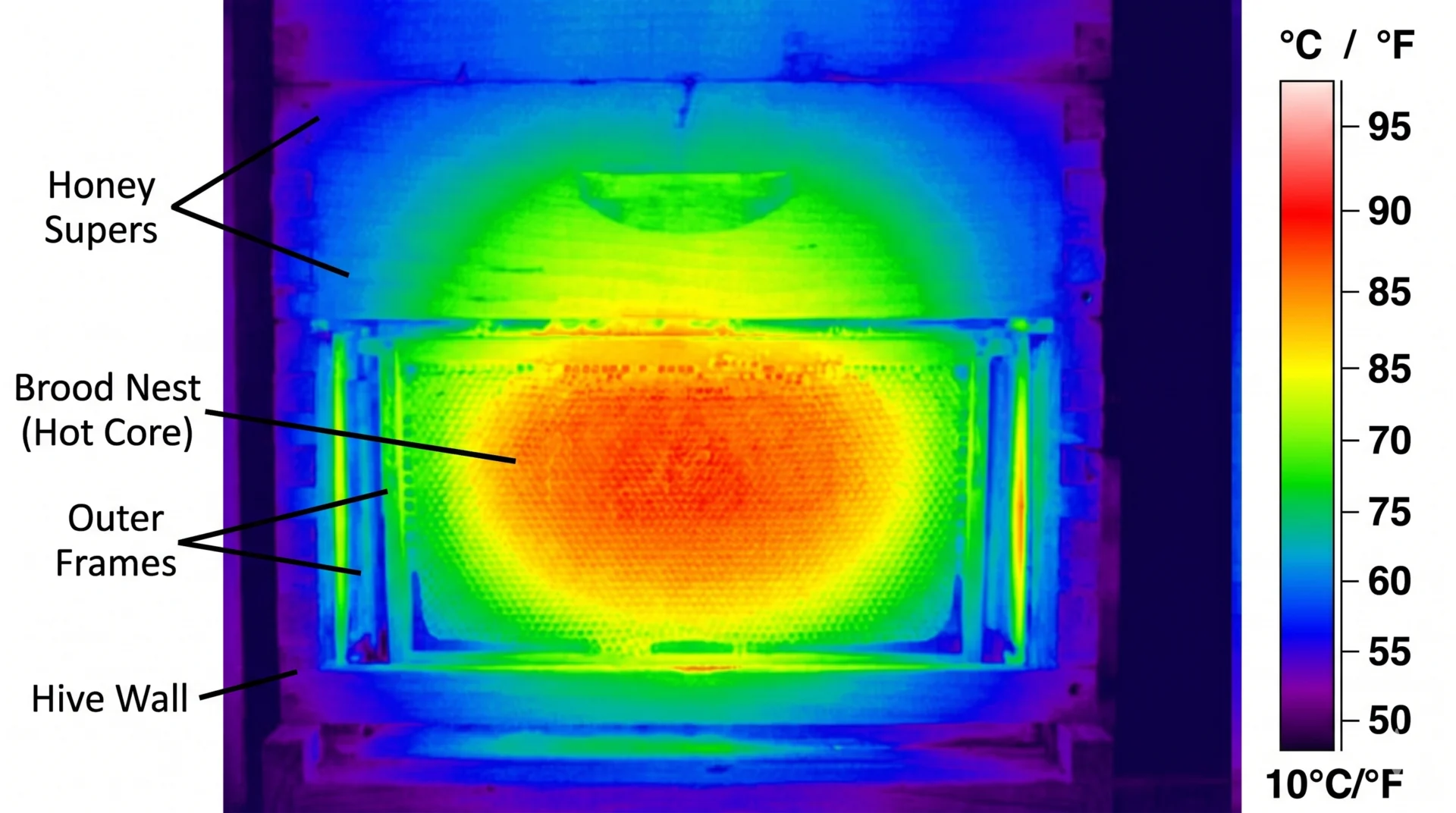
The hive is not uniformly hot or uniformly cool. It maintains a thermal gradient from core to periphery that is itself a managed feature of colony thermoregulation.
Using thermographic imaging, researchers have mapped the internal temperature distribution of active colonies during heat stress. The pattern is consistent:
- Brood nest core: 34.0–35.5°C — maintained with high precision regardless of external conditions up to the colony’s thermal capacity limit
- Brood nest periphery: 32–34°C — transition zone where nurse bee density and fanning activity creates a buffer
- Honey storage zone: 25–32°C — cooler, with significant variation; honey stores are not temperature-regulated in the same way as brood
- Hive walls and corners: Approaching ambient — these zones act as thermal buffer and are where fanning chains are most active
The colony effectively creates a thermal shell — a layer of cooler, lower-priority space surrounding the critical brood core. As thermal load increases, the shell is sacrificed first: peripheral brood may die or be removed before core brood temperature is compromised.
This has a practical implication for inspections during heatwave conditions: bees in the outer frames and honey super are working under very different thermal conditions than bees in the brood core. The surface temperature of a super frame during a heatwave can be 10°C higher than the brood nest beneath it.
When the System Fails: The Cascade of Heat Overload
Every thermoregulatory system has a capacity limit. For a honeybee colony, that limit is determined by:
- Colony population (more bees = more fanning and water-spreading capacity)
- Water availability (no water = no evaporative cooling)
- Hive ventilation (restricted airflow = fanning efficiency drops to near zero)
- Hive thermal properties (dark colour, thin walls, solid floor all increase thermal load)
- Ambient temperature and duration (a 40°C spike for two hours is manageable; sustained 38°C for four days is not)
When these factors combine adversely, the failure cascade follows a relatively predictable sequence:
Stage 1 — Workforce reallocation: Foraging collapses. The entire discretionary workforce is redirected to fanning and water collection. Honey production stops. Brood rearing slows as nurse bees are partially recruited to thermal management.
Stage 2 — Peripheral brood loss: Bees begin removing larvae and pupae from the outer edges of the brood nest — cells that can no longer be maintained within the developmental temperature window. This is an active, managed response: the colony sacrifices peripheral brood to concentrate thermal management resources on the core.
Stage 3 — Wax softening and structural compromise: Beeswax has a melting point of approximately 62–65°C, but it begins to lose structural rigidity at 40–45°C. Comb in direct sun through a hive wall or in a poorly ventilated upper box can approach these temperatures. Heavy combs laden with honey are particularly vulnerable — the combination of softened wax and the weight of honey can cause catastrophic comb collapse, crushing bees and destroying brood in a cascade of liquid wax and honey.
Stage 4 — Queen failure and absconding: At sustained extreme temperatures, queen laying may cease entirely. In the most severe cases — particularly with feral or Africanized colonies — the entire colony may abscond, abandoning the hive in favour of a new location with better thermal properties.
The Role of Hive Design in Thermal Performance
From a thermal engineering perspective, different hive designs perform very differently under heat stress — a consideration that experienced beekeepers in hot climates should factor into equipment choices.
Wall thickness and thermal mass: Thicker wooden walls (38mm+) have significantly higher thermal mass than thin plywood (9–12mm) — they absorb and release heat more slowly, buffering the internal temperature against rapid external swings. In hot climates, the thermal mass advantage of solid timber is measurable.
Colour and emissivity: A white-painted hive reflects approximately 80–90% of incident solar radiation. An unpainted dark wood hive absorbs 60–70%. In full afternoon sun, the internal temperature difference between a white and a dark hive can reach 8–12°C — more than enough to take a marginal colony from manageable to critically stressed.
Floor type: As covered in depth in [Internal Link: the complete guide to preventing hive overheating including mesh floor mechanics and installation -> Target: “How to Prevent Your Hive from Overheating in a Heatwave”], a mesh floor with open inspection board creates continuous passive convective airflow from below. The principle is straightforward thermodynamics: hot air rises, creating a low-pressure zone at the base of the hive that draws cooler external air upward through the mesh. This passive stack effect operates continuously without any energy expenditure by the bees.
Roof insulation: Counter-intuitively, an insulated roof performs better in summer as well as winter. The roof is the primary solar heat gain surface. A well-insulated roof (50mm rigid foam or equivalent) dramatically reduces the heat entering the hive from above compared to a thin sheet metal or uninsulated wooden roof.
Colony-Level Thermoregulation as Distributed Intelligence
The most intellectually striking aspect of honeybee thermoregulation is not any individual mechanism — it’s the absence of central control.
There is no “thermostat bee.” No individual in the colony has access to global temperature information. No single bee decides to recruit more water foragers or initiate a fanning chain. Yet the colony produces thermoregulatory responses that are precisely calibrated, rapidly adaptive, and robust across a wide range of conditions.
The mechanism is stigmergy — indirect coordination through environmental modification. A bee fanning at location X changes the airflow experienced by bees at location Y. Those bees respond to the changed airflow, not to any direct communication from bee X. The local responses of many individuals aggregate into a coherent colony-level behaviour without any individual understanding the global outcome.
This is the same organisational principle that produces termite mound architecture, army ant bridge-building, and the foraging trails of slime moulds. It is one of the most powerful and well-studied examples of emergent collective intelligence in biology, and the honeybee colony is among its most elegant demonstrations.
For beekeepers, the practical implication is this: the colony’s thermoregulatory capacity is a function of population size, workforce composition, and available resources. A large colony with an intact foraging workforce, reliable water access, and good ventilation can manage conditions that would kill a small, stressed, or water-deprived colony in the same location. Management decisions that affect any of these three variables — swarm control that depletes population, water source provision, hive ventilation — are directly affecting the colony’s thermal resilience.
Understanding the science doesn’t just satisfy intellectual curiosity. It makes you a more precise and effective beekeeper — one who can read a bearding colony, a reduced foraging rate, or an unusual aggression pattern and understand exactly what’s happening inside the hive and why. That’s what separates reactive management from genuinely informed stewardship of the colony.
Conclusion: The Hive as a Thermal Machine
On the hottest day of the year, your hive is running one of the most sophisticated and energetically costly operations in its annual cycle. The colony is:
- Maintaining a 34–35°C brood core through distributed, self-organizing behaviour
- Running fanning chains that create structured directional airflow through the hive body
- Deploying dedicated water foragers to supply the evaporative cooling system
- Managing a thermal gradient from brood core to hive periphery
- Operating all of this at a significant metabolic cost that compounds the summer dearth
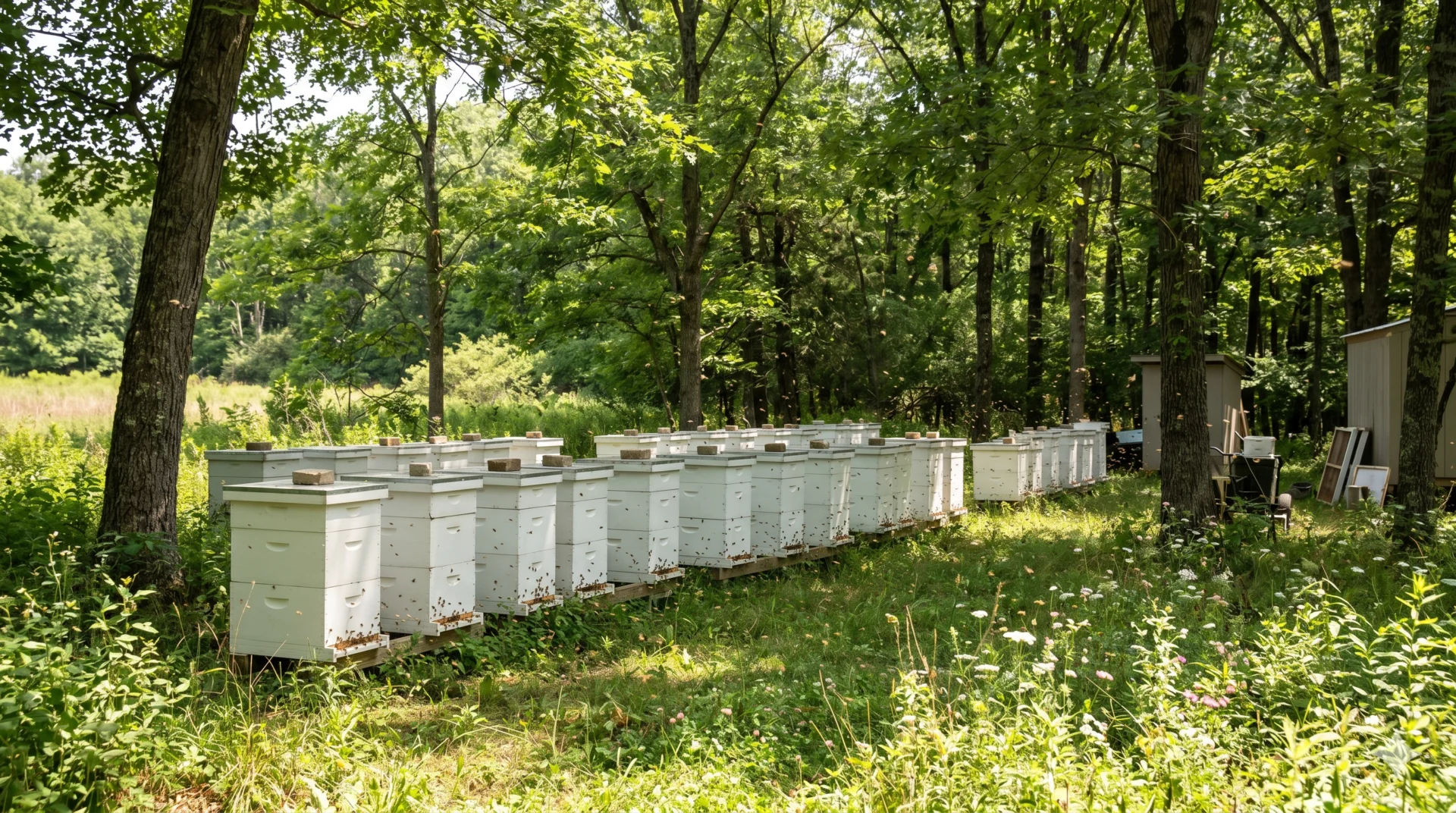
The key variables under beekeeper control — shade, ventilation, water, floor type, hive colour, colony population — are not peripheral comfort factors. They are the boundary conditions within which the colony’s thermoregulatory system either functions effectively or fails.
A colony that fails thermally in July is not a colony that was unlucky. It is almost always a colony whose boundary conditions were set by decisions made in April and May. The science makes that causal chain very clear.
Continue Reading 🐝
These posts provide the practical management context around the biology covered here:
- 🌡️ The complete practical guide to hive ventilation, shade, mesh floors, and water sources during a heatwave — The actionable companion to this post.
- 📅 Why the July nectar dearth and peak heat overlap — and what it means for colony energy reserves — The foraging context that makes the thermal energy cost even more significant.
- 🏡 How apiary layout, hive positioning, and site selection affect thermal performance across all seasons — Getting the site right from the start is the most impactful single intervention available.
The biology is fascinating. The management implications are immediate. Both matter. 🐝