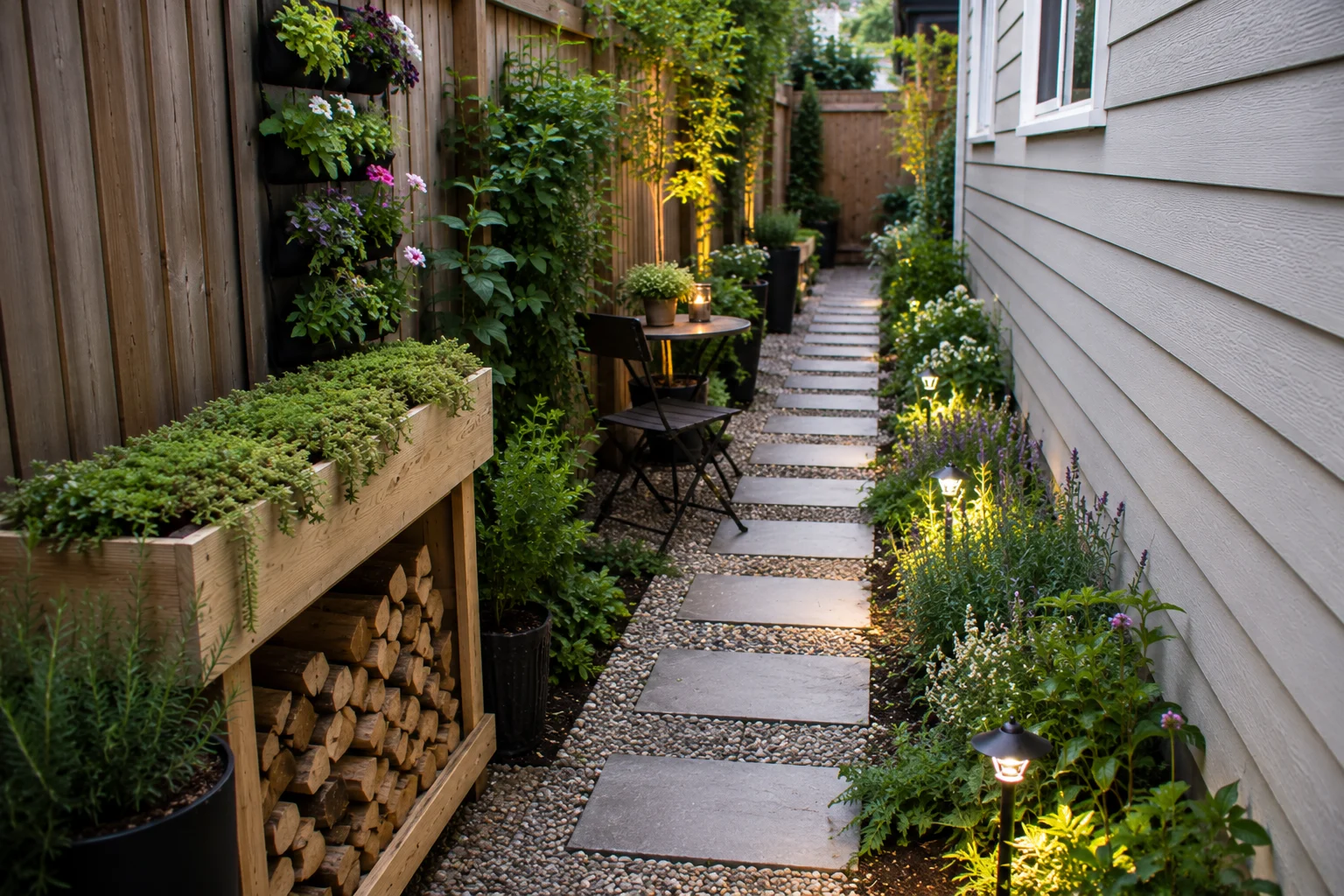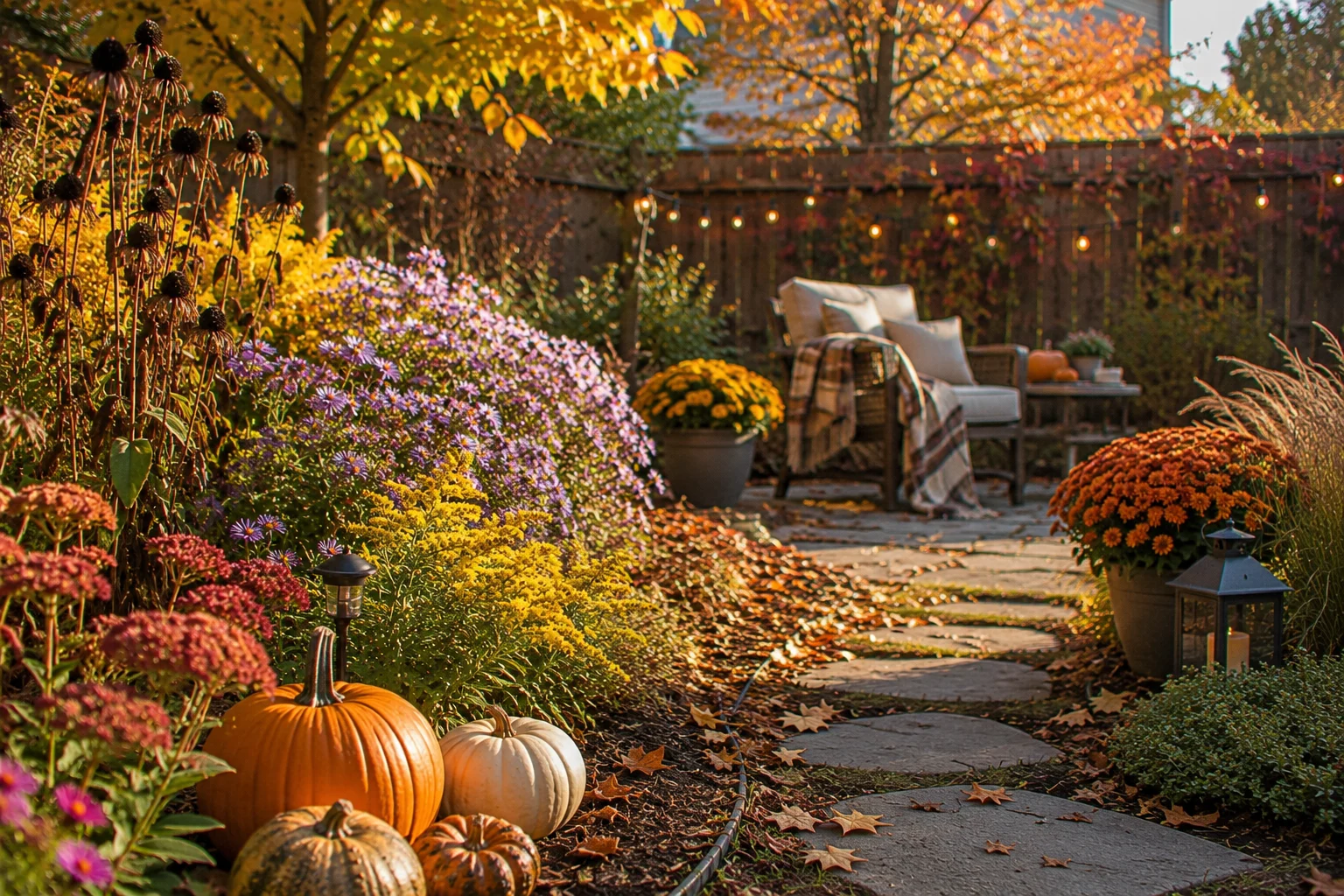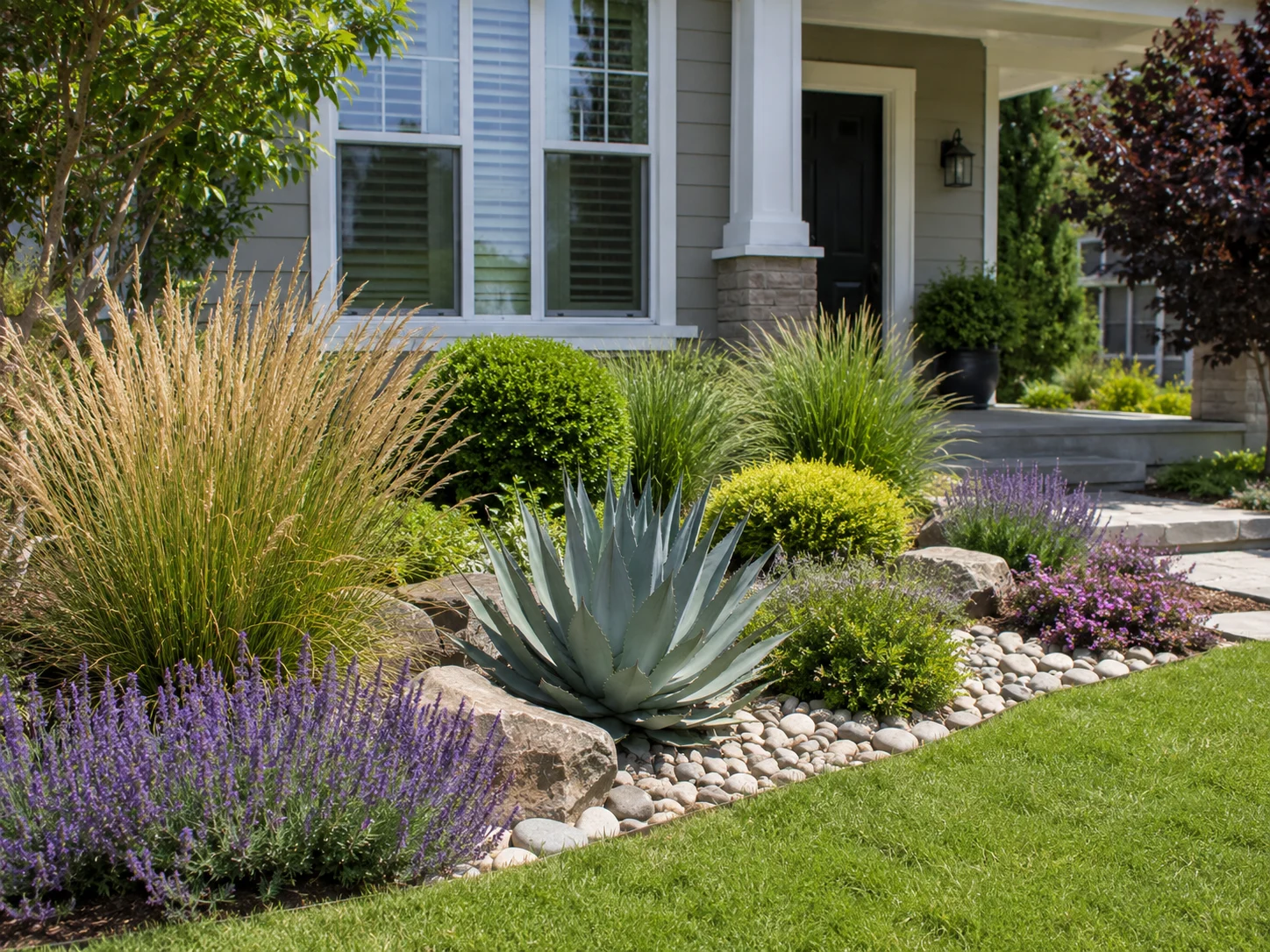

A patio full of the right planters can look just as finished as a professionally landscaped yard, without any digging involved. Patio planter ideas are popular because they let homeowners add color, texture, and structure to a hard surface that would otherwise stay bare. Containers also solve a real problem for renters, small yards, or anyone unsure about committing to a permanent garden bed.
What makes this approach so workable is that it scales to almost any space. A single large pot by the front door reads as intentional, while a cluster of a dozen containers can fill an entire patio corner. You do not need special soil, a sprinkler system, or a weekend of hardscaping to get started, just a few pots and a plan for what goes in them.
In this guide, you will find 30 realistic patio planter ideas grouped by material, design formula, season, edible use, space-saving function, and decorative finish. Each one includes a short explanation of why it works and how to recreate it, along with an image prompt so you can picture the finished look before you buy anything.
Read through the categories below, then focus on the two or three ideas that fit your patio size, your climate, and how much watering you are realistically willing to do each week.
Style & Material
1. Classic Terracotta Pots
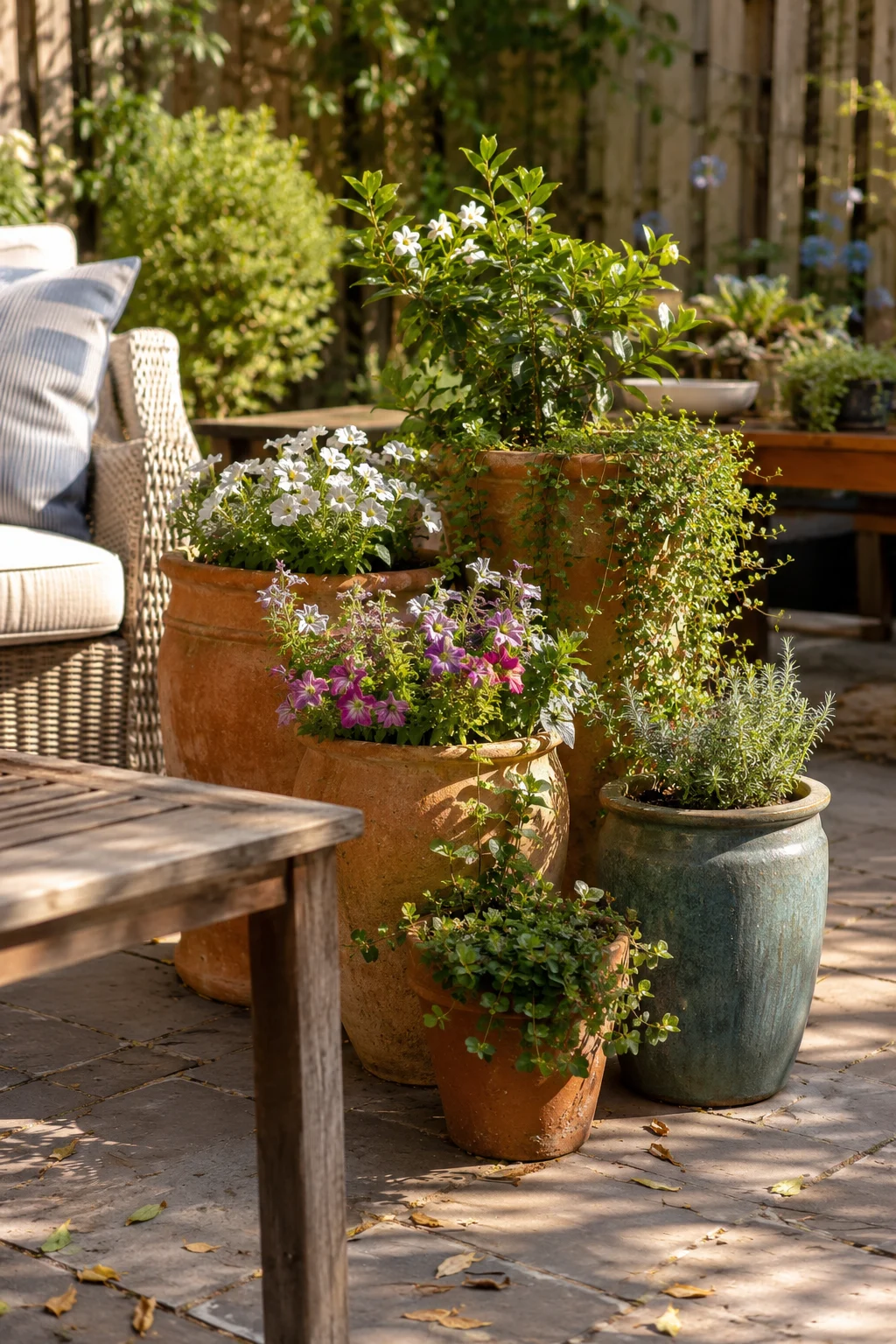
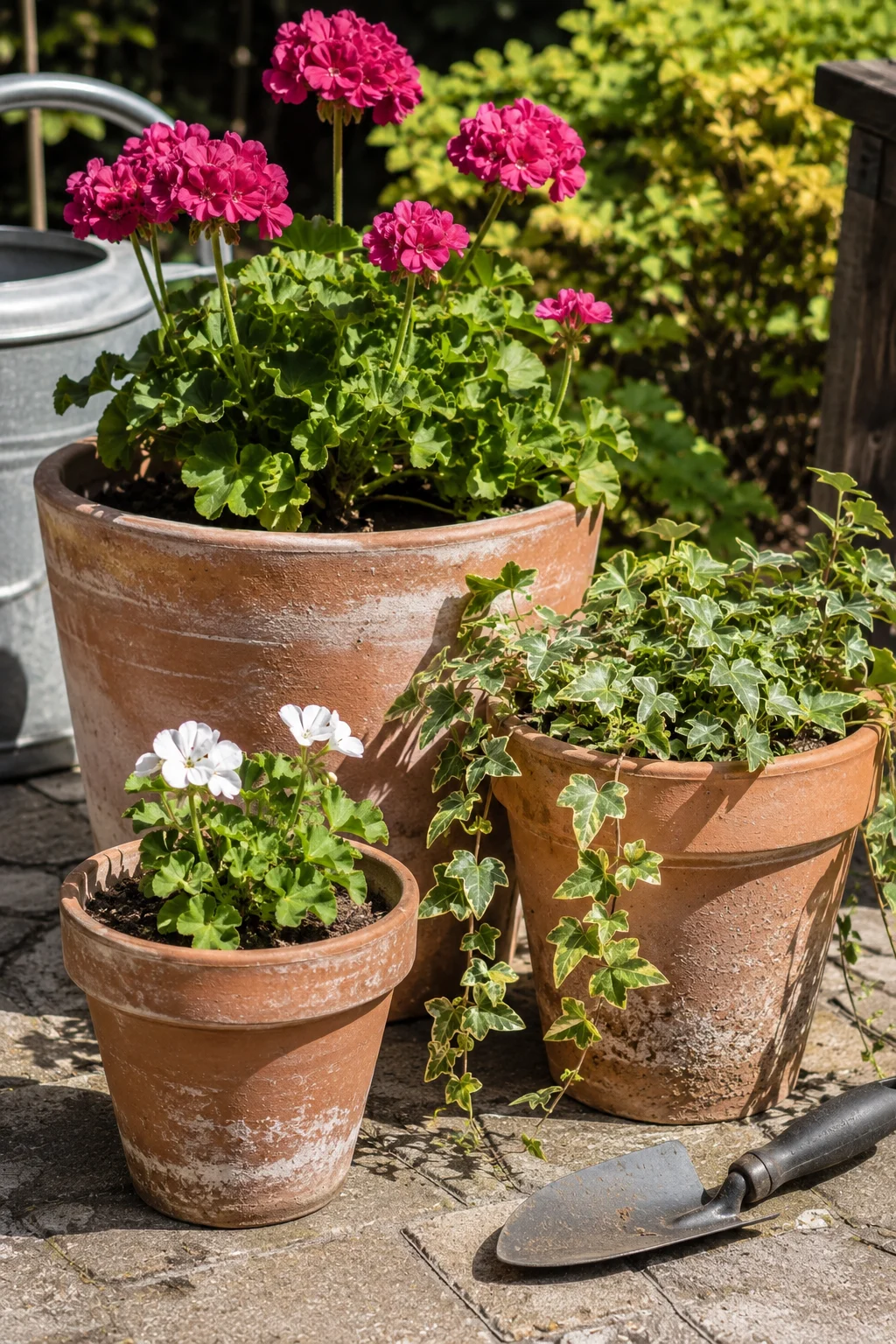
Unglazed terracotta is one of the most common patio planter materials because it is inexpensive, widely available, and pairs with almost any plant style. It works well because the porous clay allows excess moisture to evaporate, which helps prevent root rot in plants that dislike soggy soil. To recreate the look, choose a few different sizes of the same terracotta tone and group them rather than spacing them evenly apart. Keep in mind that terracotta dries out faster than glazed or plastic pots, so plants may need watering more often in hot weather.
2. Glazed Ceramic Statement Pots
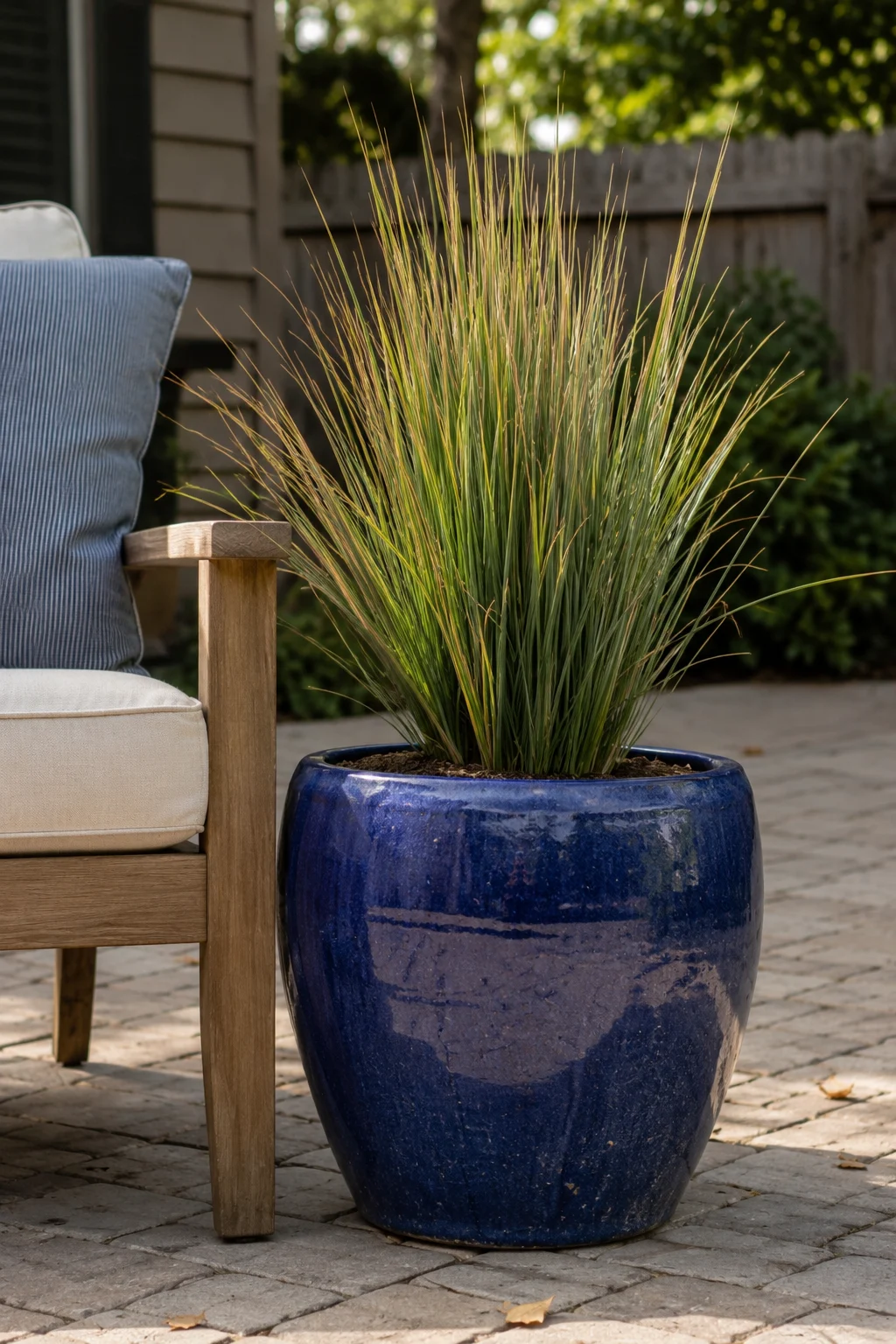
A single large glazed ceramic pot in a bold color, like cobalt blue or deep green, works as a focal point on a patio without needing a whole collection of containers. This works because the glossy finish reflects light differently than matte terracotta, which makes it stand out even from a distance. Choose one oversized pot per seating area, and keep the planting inside simple, one or two plant varieties, so the pot itself stays the star. Glazed pots hold moisture longer than terracotta, so they need slightly less frequent watering.
3. Galvanized Metal Buckets
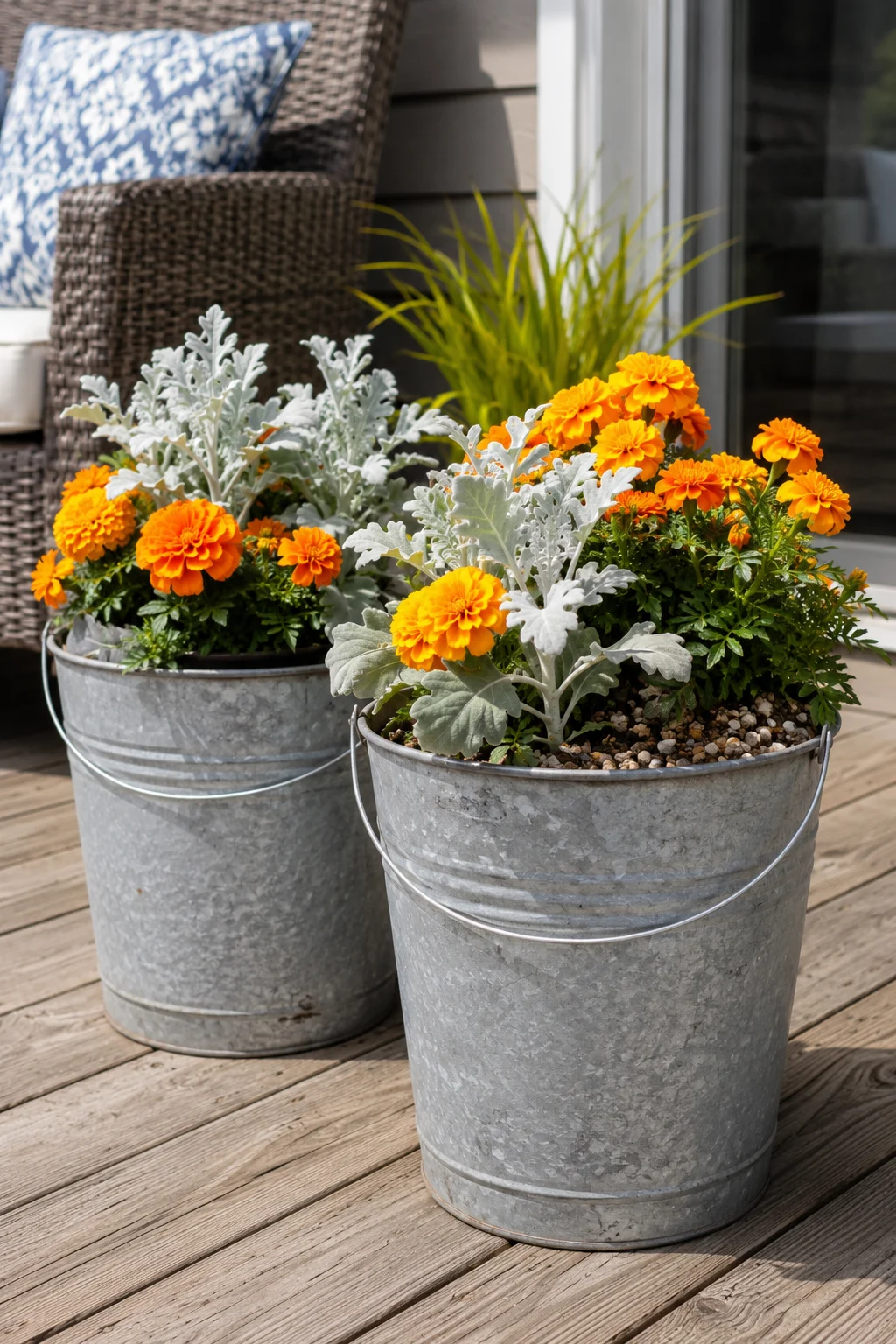
Galvanized steel buckets or tubs give a patio an industrial-farmhouse feel and hold up well outdoors since the zinc coating resists rust for years. This works because the metal reads as more casual and modern than traditional clay, which suits patios with a simpler, less formal furniture style. Drill a few drainage holes in the bottom before planting, since most galvanized containers are not sold with them, and add a layer of gravel to keep roots from sitting in standing water. These containers heat up faster in direct sun, so they suit partial-shade plantings better than full-sun exposure.
4. Reclaimed Wooden Crates
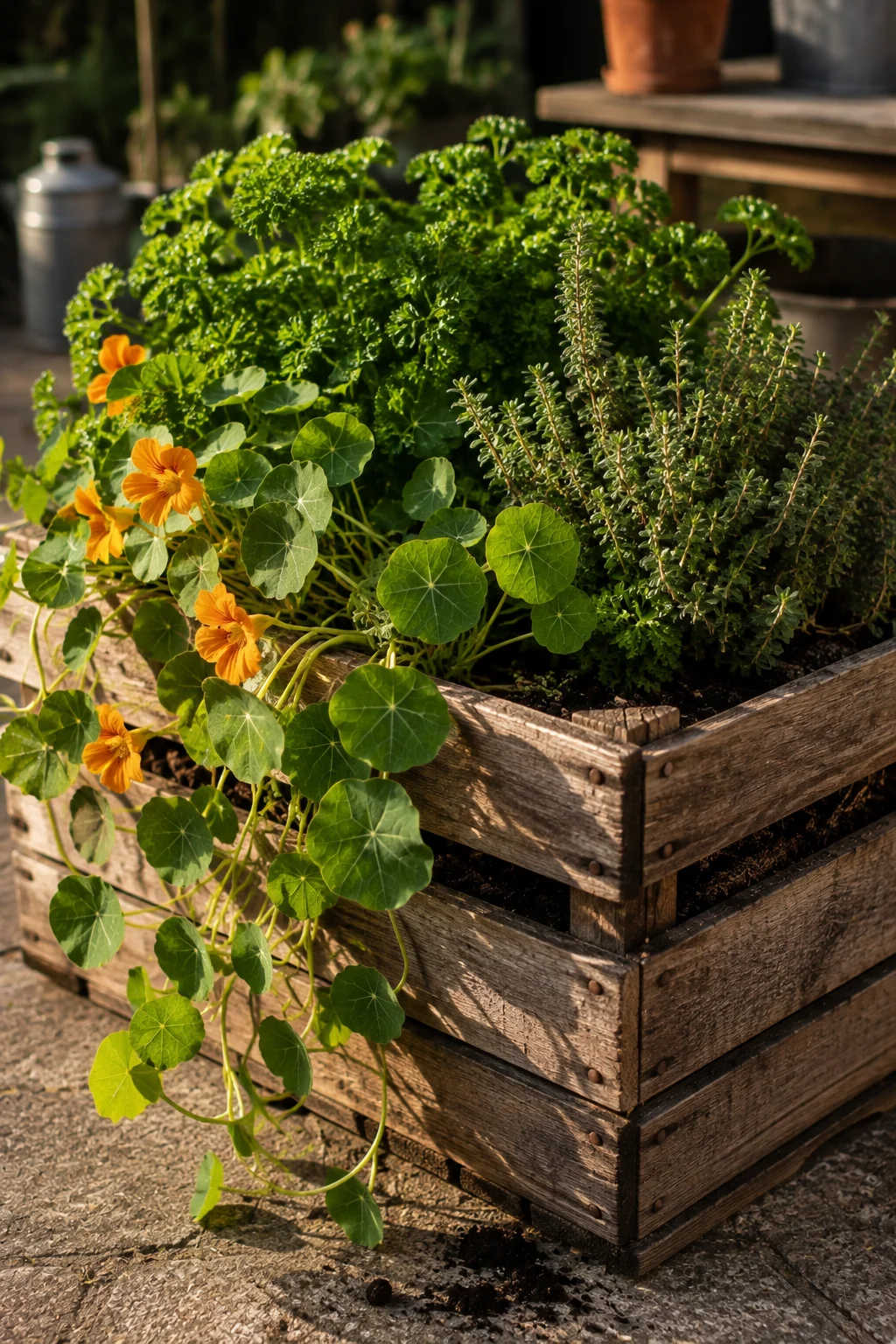
Old wooden crates, either found secondhand or built new to look weathered, add a rustic texture that pairs well with herb and vegetable plantings. This works because the rough, imperfect wood grain contrasts nicely with the smoother foliage of most patio plants, giving the arrangement more visual depth. Line the inside of the crate with landscape fabric or a plastic liner before adding soil, since untreated wood breaks down faster when it stays wet. Expect to replace or reseal the wood every couple of seasons depending on your climate.
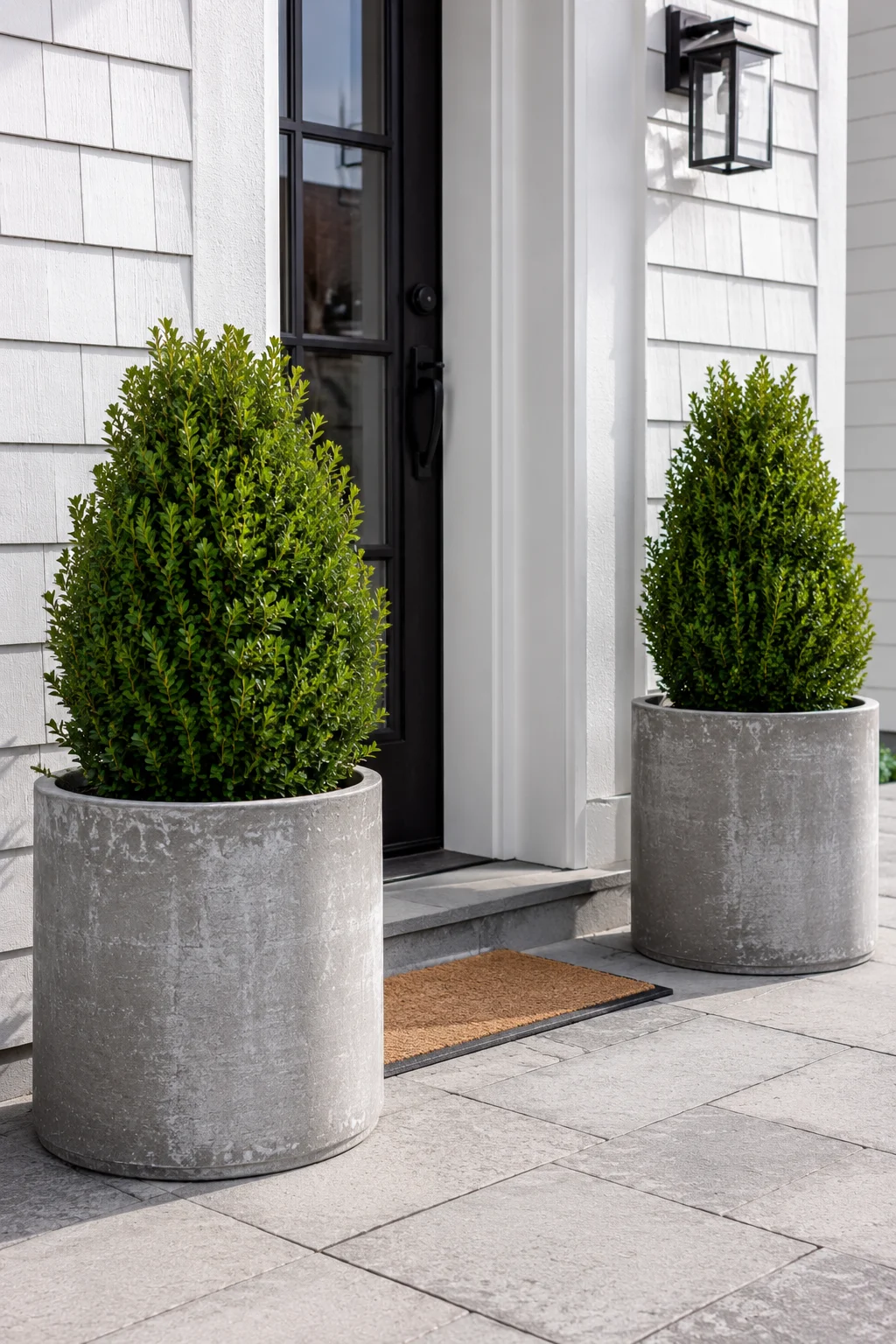
5. Concrete Cylinder Planters
Simple concrete cylinder planters give a patio a clean, modern look that works especially well with structured plants like boxwood or upright grasses. This works because the plain gray surface does not compete visually with the plant inside, letting the greenery do the work. Concrete is heavy, so it suits permanent placements rather than pots you plan to move around seasonally. Because concrete is porous, expect some minor efflorescence, a white mineral haze, to develop on the surface over time, which is normal and not a defect.
Design Formulas & Combos
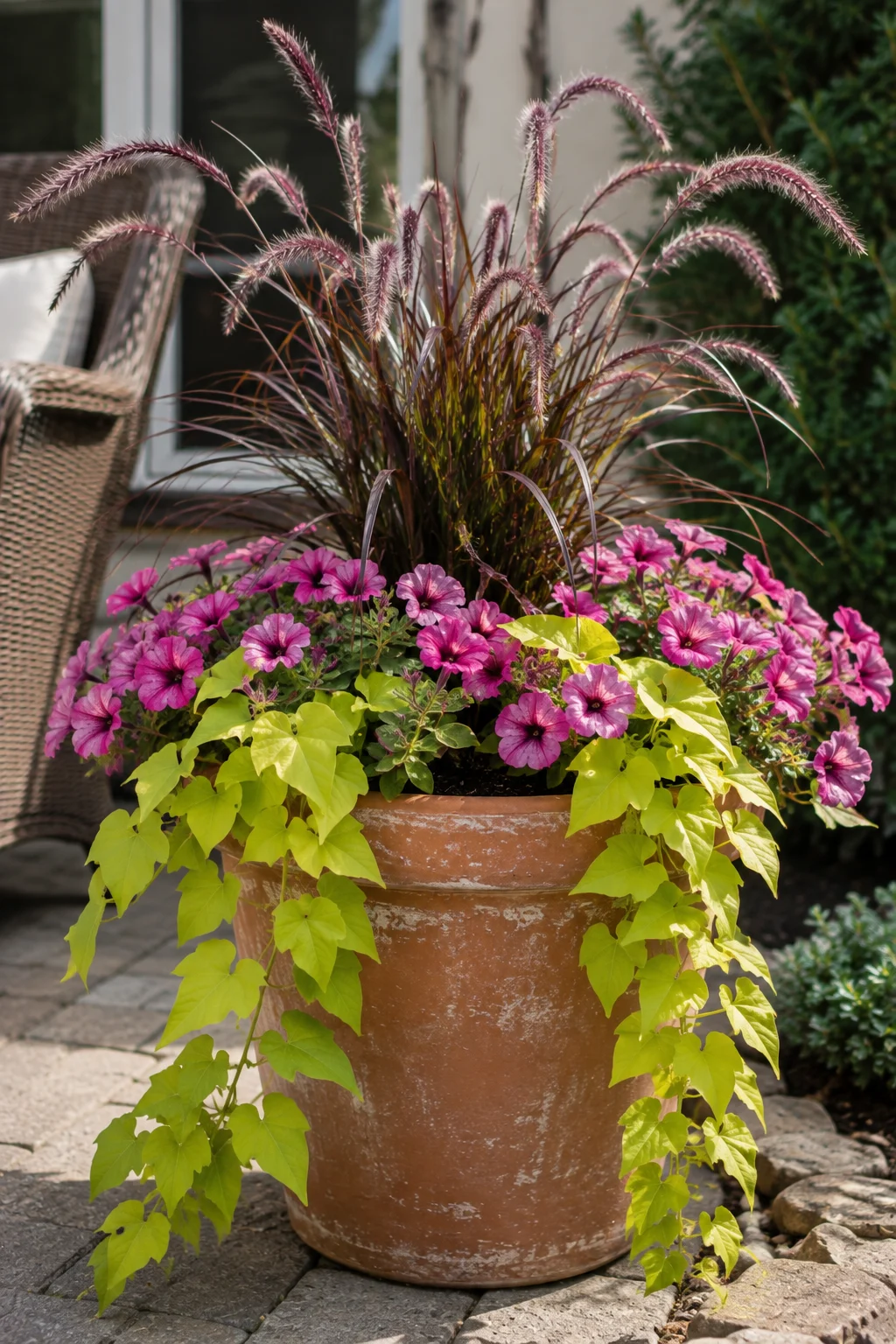
6. Thriller-Filler-Spiller Combo
This classic container gardening formula combines a tall upright plant, called the thriller, with a mounding filler plant and a trailing spiller that cascades over the pot’s edge. It works because it builds visual layers into a single container instead of leaving it flat or one-note, which is a technique widely recommended by garden centers and Fine Gardening’s container guide. To recreate it, plant an ornamental grass or spiky plant in the center or back, surround it with a rounded filler like petunias, and tuck a trailing plant like sweet potato vine along the rim. Keep all three plants matched to the same light and water needs so none of them struggle.
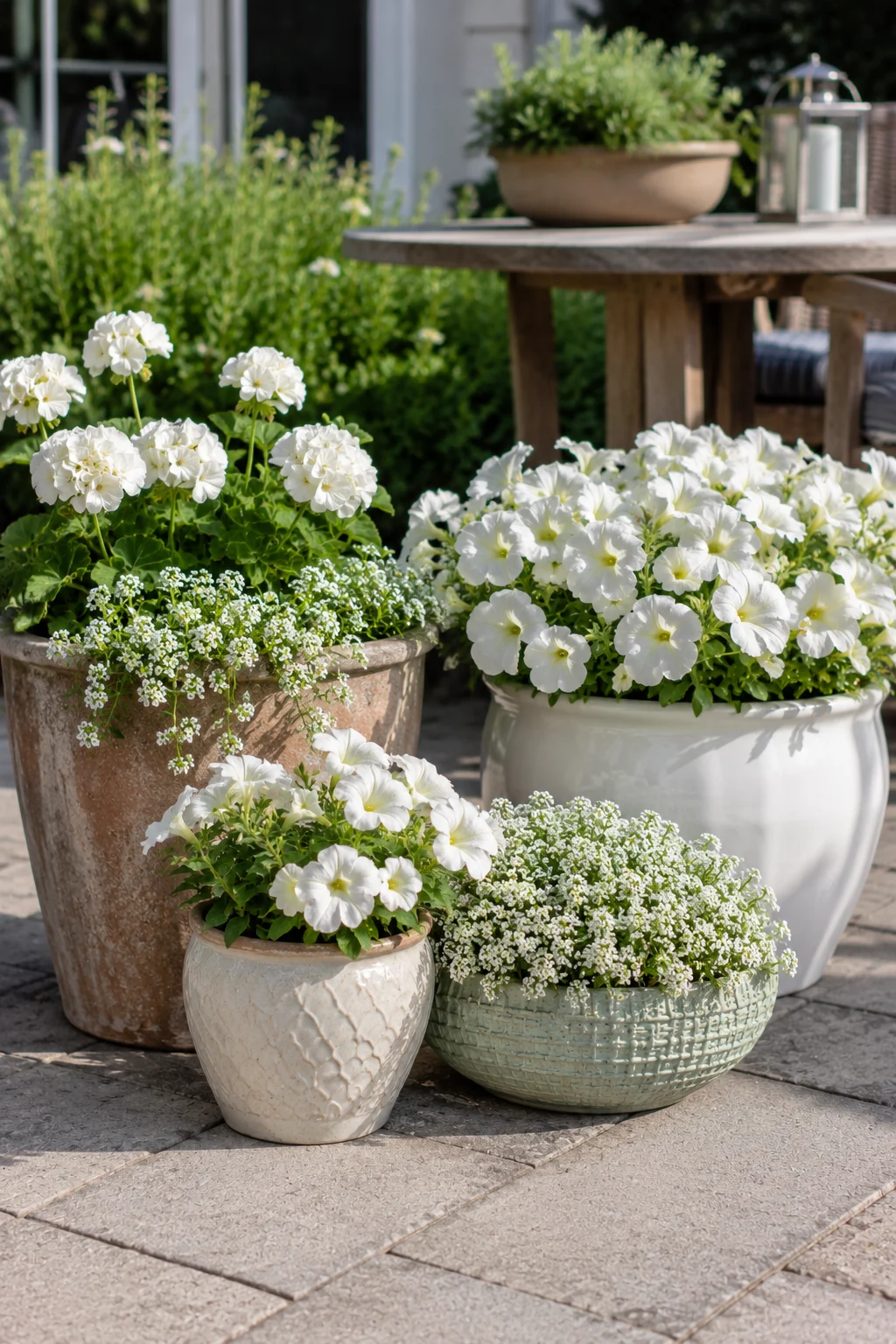
7. Monochromatic Color Palette Pots
Choosing a single flower color, like all white or all soft pink, across several containers creates a cohesive look even when the pot shapes and plant types vary. This works because a limited palette reads as intentional and calm, especially on a smaller patio where too many colors can feel busy. Pick two or three plant varieties within your chosen color and repeat that color across every container on the patio. This approach also makes it easier to swap plants seasonally without disrupting the overall look.
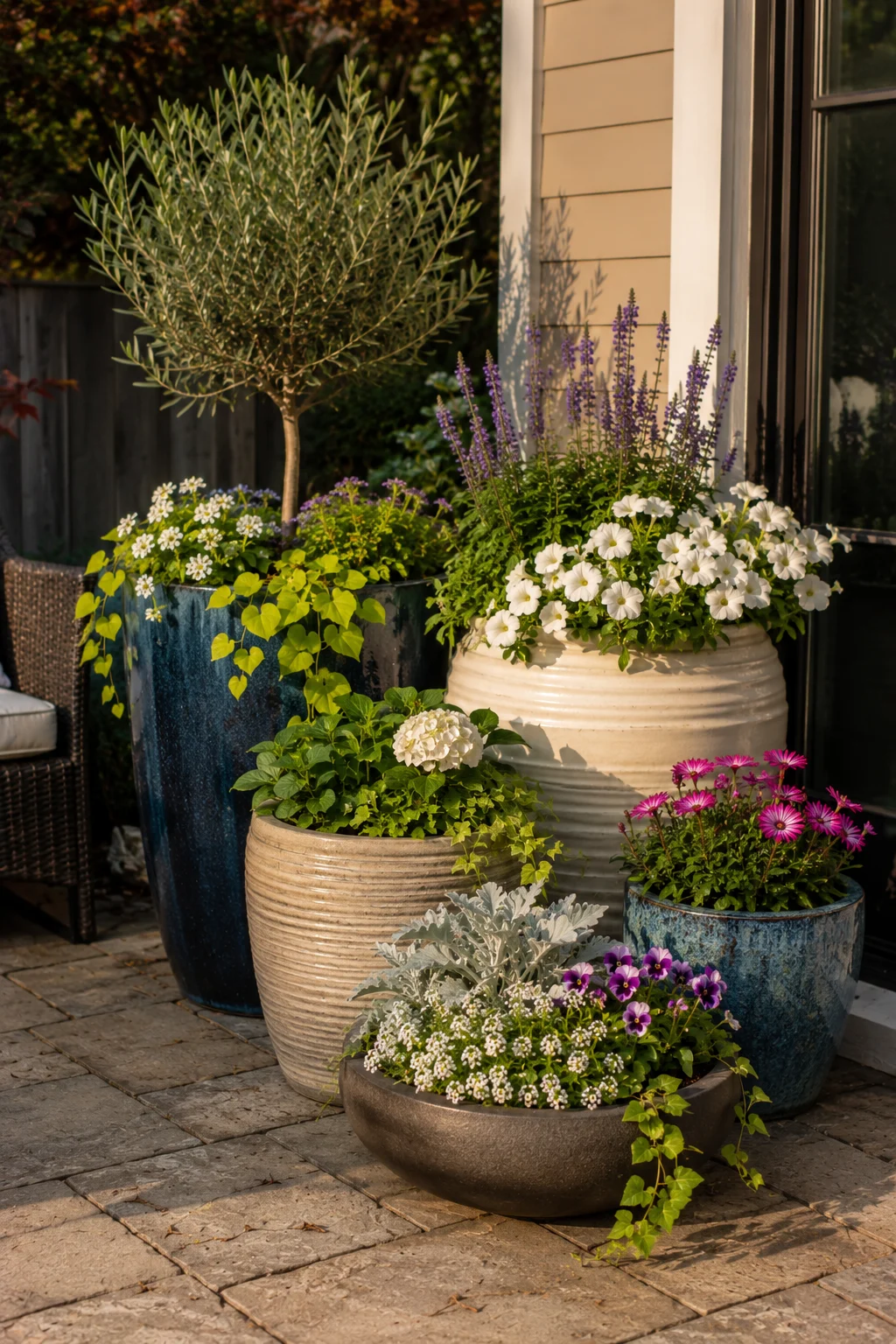
8. Grouped Odd-Number Clusters
Arranging planters in groups of three or five, rather than pairs, tends to look more natural and less rigid on a patio. This works because odd numbers avoid the visual symmetry of matched pairs, which reads as more organic to the eye, a principle borrowed from general design theory. Vary the height and width slightly within the cluster, placing the tallest pot toward the back or center, and keep at least a few inches of space between each container for airflow. This idea works well filling an empty patio corner without needing a single oversized pot.
9. Matching Pot Pairs Flanking a Door
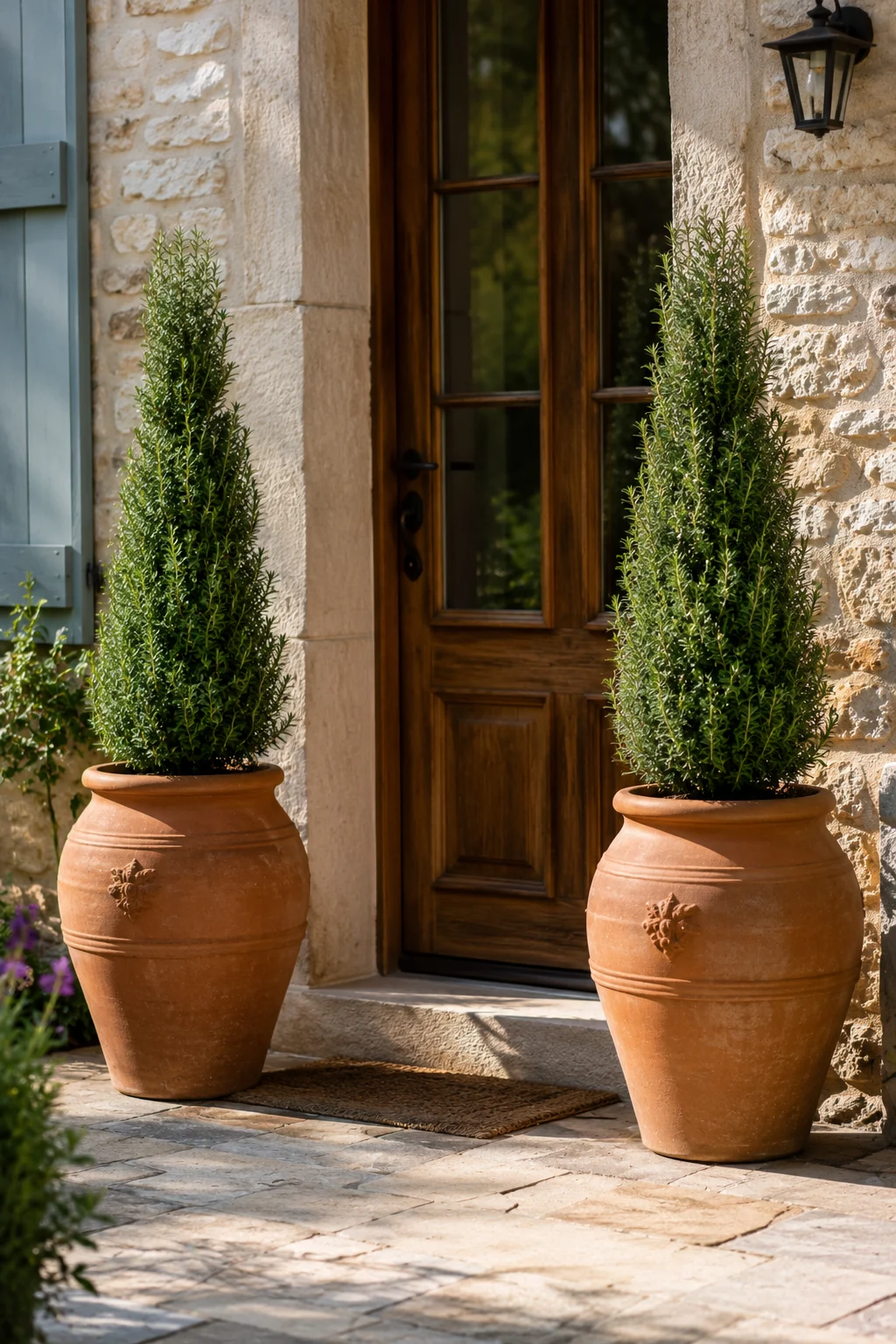
Two identical planters placed on either side of a patio door or gate create a formal, welcoming entrance without much design effort. This works because matched pairs draw the eye directly to the entryway, framing it the way an architectural detail would. Choose a pot size proportional to the door, generally at least sixteen inches tall for a standard-height entrance, and plant both containers identically for the symmetry to read clearly. Keep both pots on the same watering schedule so they stay visually even in size and fullness.
10. Tiered Plant Stand Display
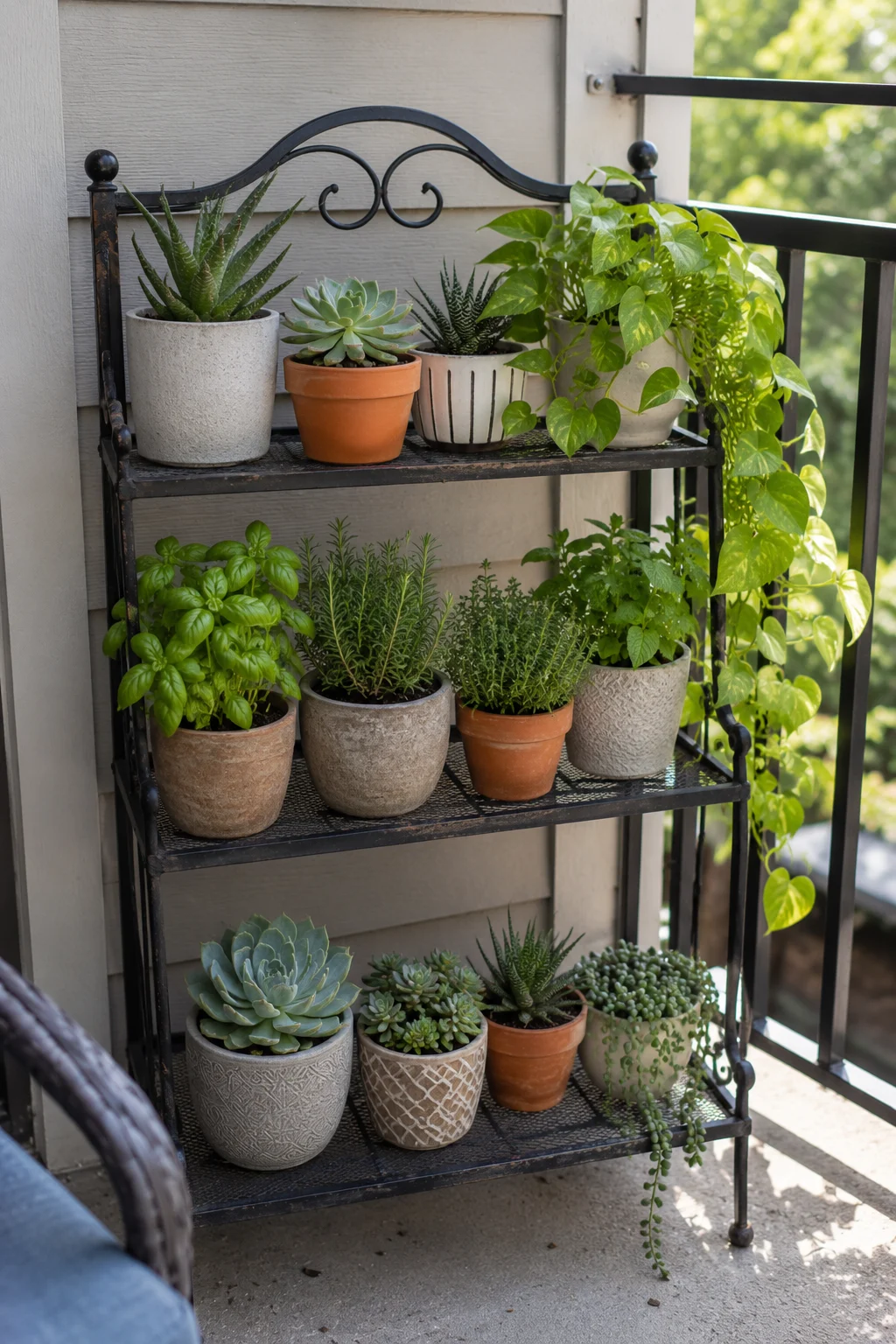
A tiered metal or wood plant stand lets you display several small pots vertically in the footprint of just one container. This works especially well on a narrow patio or balcony where floor space is limited but vertical space is not. Choose a stand rated for outdoor use and wet weight, then fill each tier with a different small plant so the display has variety without looking chaotic. Rotate pots occasionally so plants on lower, shadier tiers still get even light exposure.
Seasonal Planters
11. Spring Bulb Containers
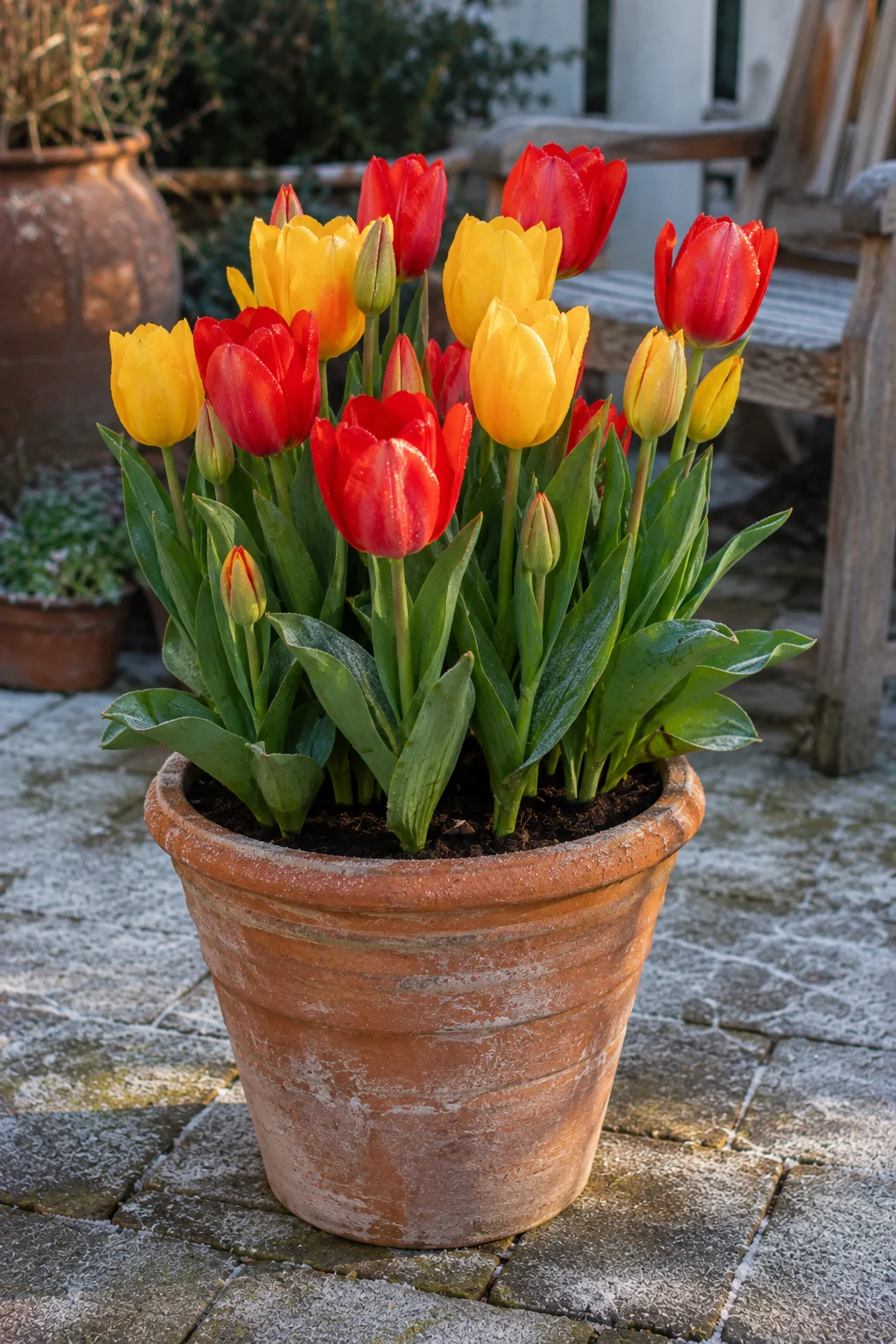
Planting spring bulbs like tulips or daffodils directly into a container gives a patio color weeks before most perennials wake up. This works because bulbs are planted the previous fall and require almost no maintenance over winter, then reward you with reliable, predictable blooms. Layer bulbs at different depths in the same pot, a technique sometimes called bulb lasagna, so several bloom times overlap as the season progresses. Once the flowers fade, let the foliage die back naturally before removing it, since the leaves feed the bulb for next year.
12. Summer Tropical Foliage Pots
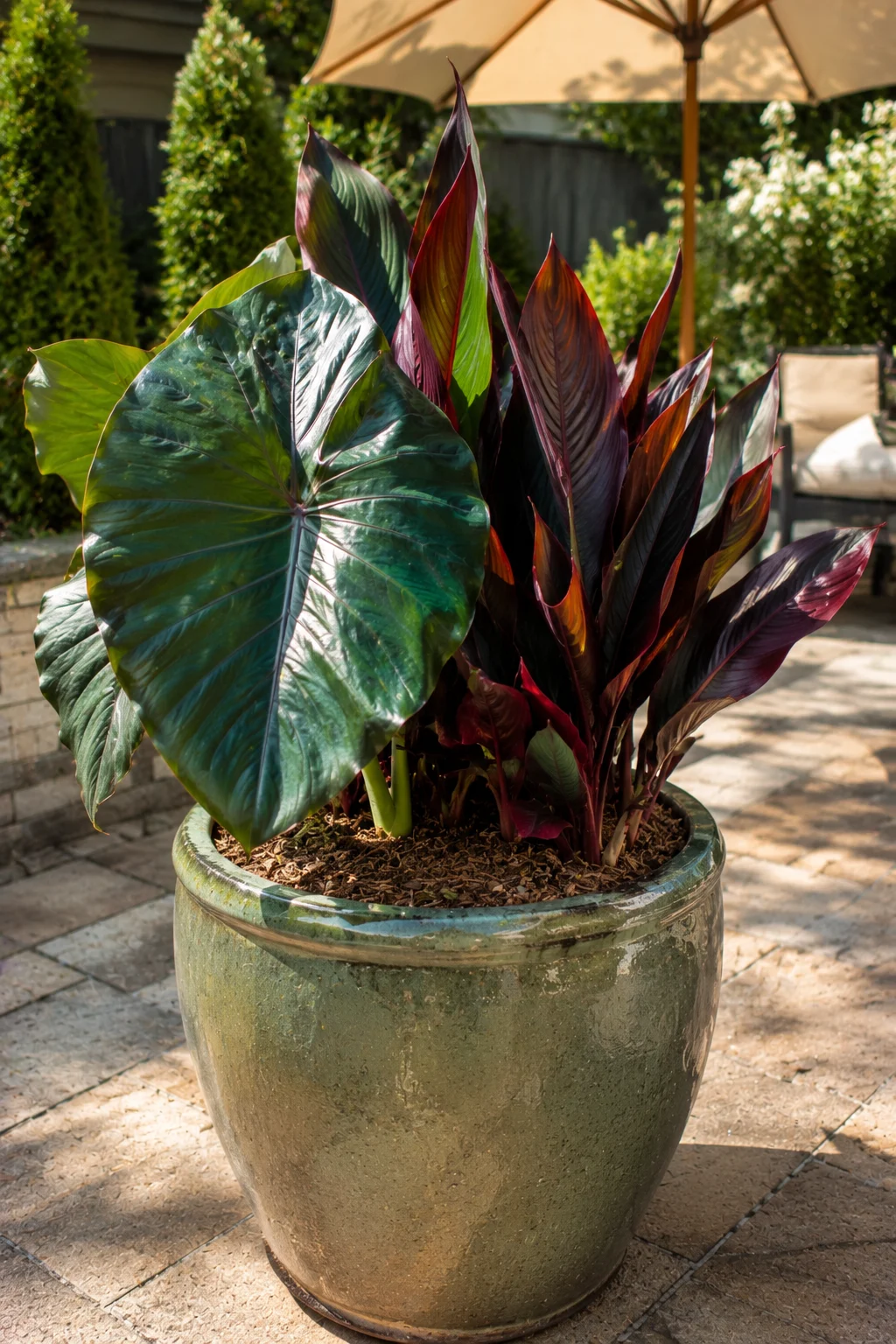
Large-leafed tropical plants like elephant ear or canna lily bring a lush, resort-style look to a patio during the hottest months. This works because bold foliage reads as dramatic even without flowers, and tropicals tend to thrive in the heat that many other plants struggle with. Choose a large pot with good drainage, since tropicals are typically heavy feeders and need consistent moisture through summer. Most of these plants are not cold hardy, so plan to treat them as annuals or bring them indoors before the first frost.
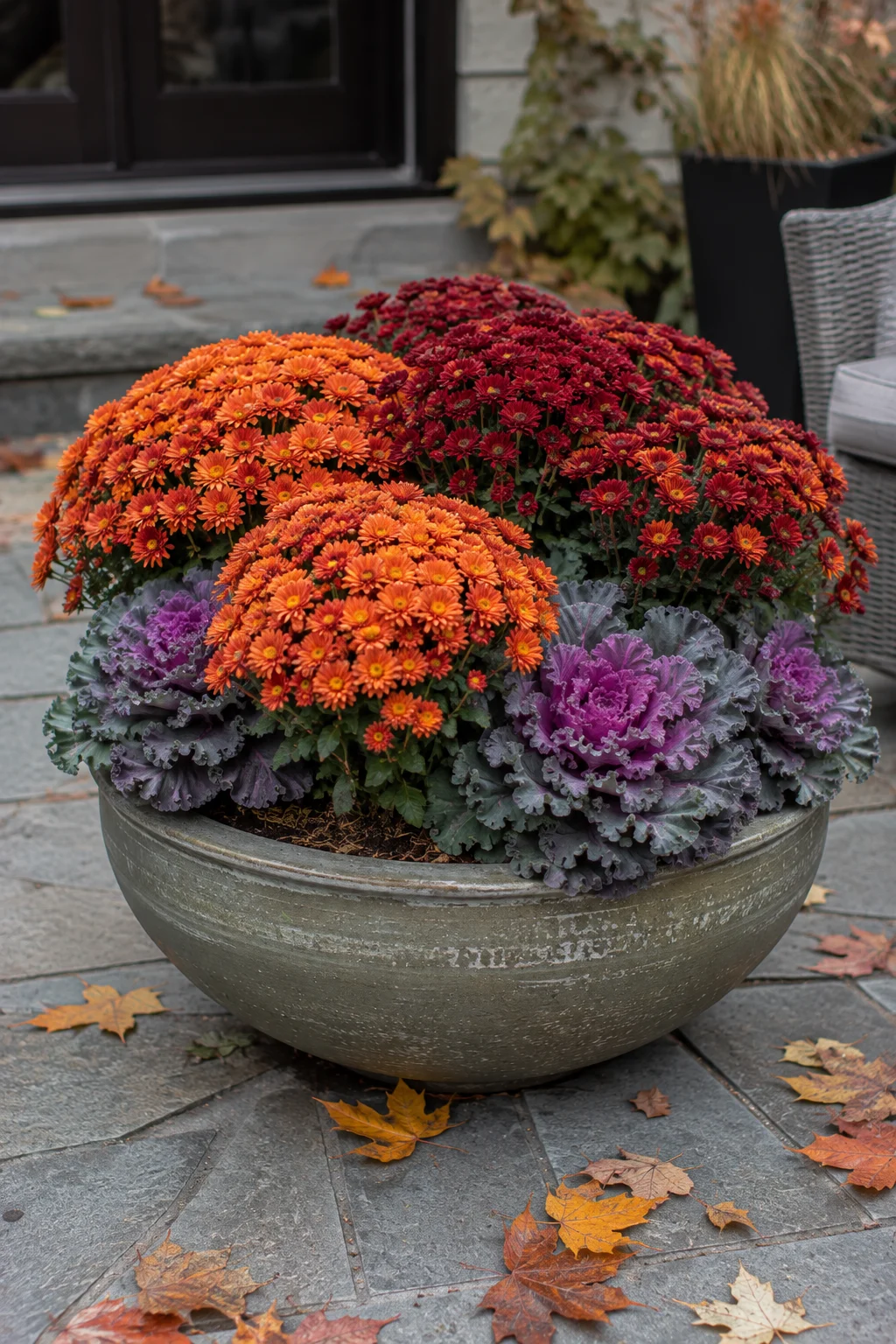
13. Fall Mums and Ornamental Kale
Chrysanthemums paired with ornamental kale are a classic fall container combination because both hold up well in cooler temperatures and light frost. This works because mums provide bold color while kale’s ruffled purple and green leaves add texture that lasts well into late autumn. Plant mums still in bud rather than fully bloomed for a longer display window, and combine with kale around the edges as a filler. Water less frequently than in summer, since cooler air and shorter days slow down how fast the soil dries out.
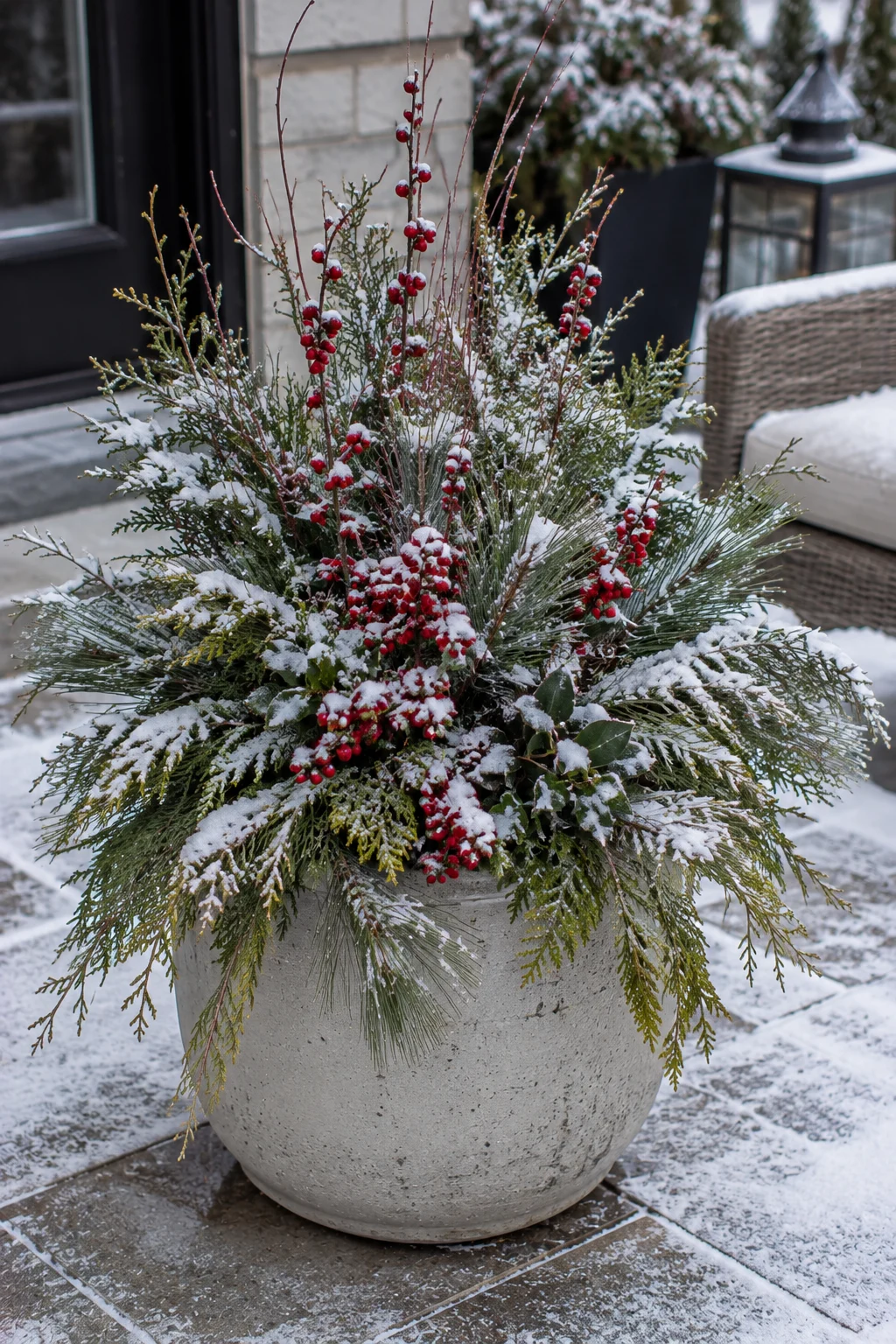
14. Winter Evergreen Arrangements
A container filled with cut evergreen branches, like cedar, pine, and holly, keeps a patio looking intentional through the coldest months when most plants are dormant. This works because evergreens hold their color and shape in freezing temperatures, unlike most flowering plants. Insert cut branches directly into moistened florist foam or damp sand inside the container, varying the heights and textures for visual interest. Because the greenery is cut rather than rooted, plan to refresh the arrangement every four to six weeks as it dries out.
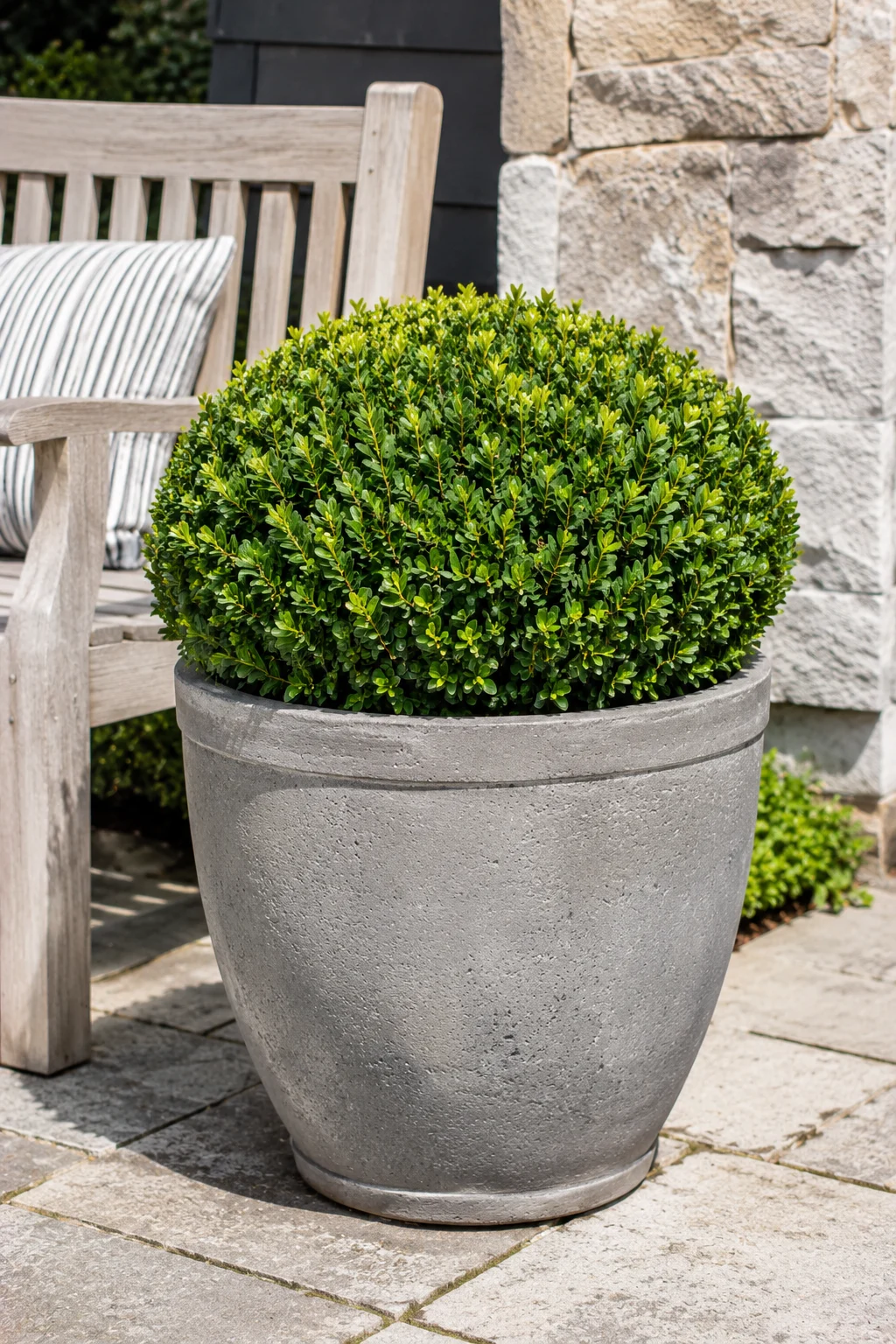
15. Year-Round Structural Planter
Planting a single evergreen shrub, like dwarf boxwood or holly, in a quality container gives a patio a consistent anchor point through every season without needing seasonal swaps at all. This works because structural plants hold their shape and color year-round, so the container always looks finished even without added color. Choose a pot large enough to accommodate root growth for several years, and refresh the top few inches of soil each spring rather than repotting annually. This is a good option for anyone who wants patio greenery without ongoing seasonal maintenance.
Herb & Edible Planters
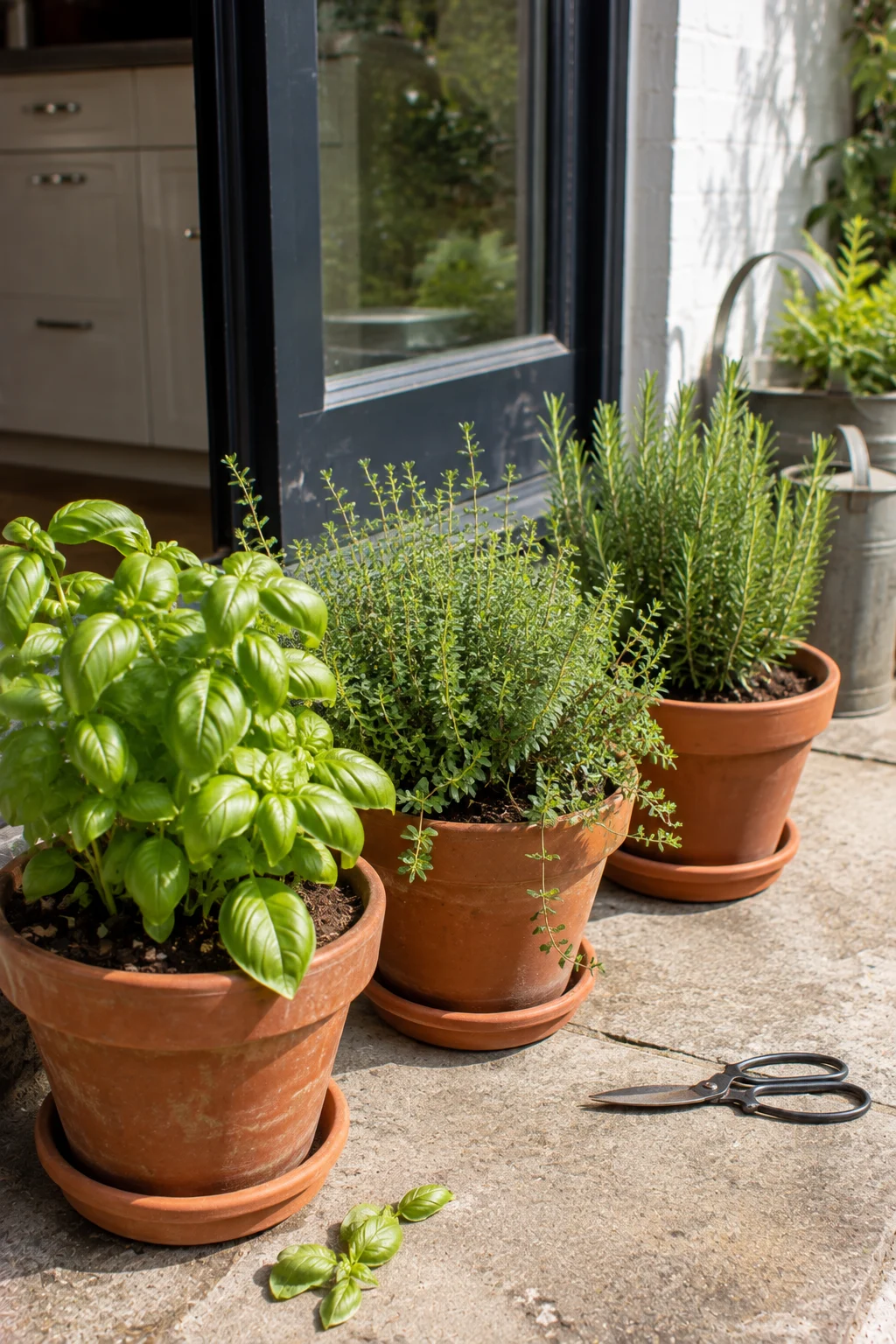
16. Kitchen Herb Container Garden
A grouped set of pots planted with cooking herbs near a kitchen door puts fresh basil, thyme, and rosemary within easy reach while cooking. This works because herbs generally thrive in containers and do not need much space, making them a practical starting point for anyone new to patio gardening. Choose pots with good drainage, since most herbs dislike sitting in wet soil, and place them where they get at least six hours of direct sun. Harvest regularly by pinching stems rather than letting plants flower, which keeps the leaves more flavorful.
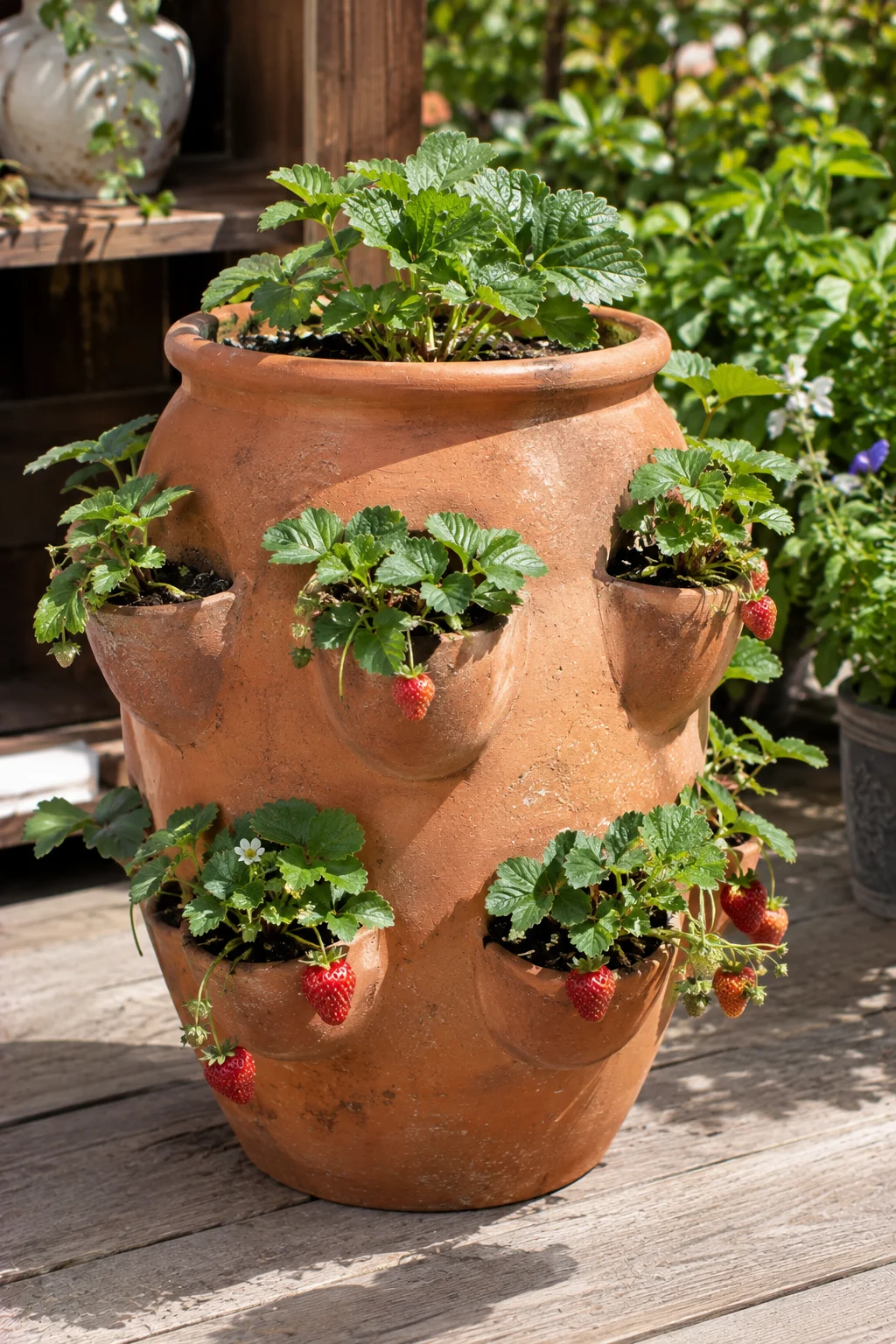
17. Strawberry Jar Planter
A tall ceramic strawberry jar, with pockets along its sides, lets you grow multiple strawberry plants in one vertical container instead of spreading them across a bed. This works because it maximizes a small footprint while keeping the fruit up off the ground, which also helps reduce slug damage. Plant through the top and each side pocket, working from the bottom up, and use a well-draining potting mix since these jars can be tricky to water evenly. Rotate the jar occasionally so pockets on all sides get similar sun exposure.
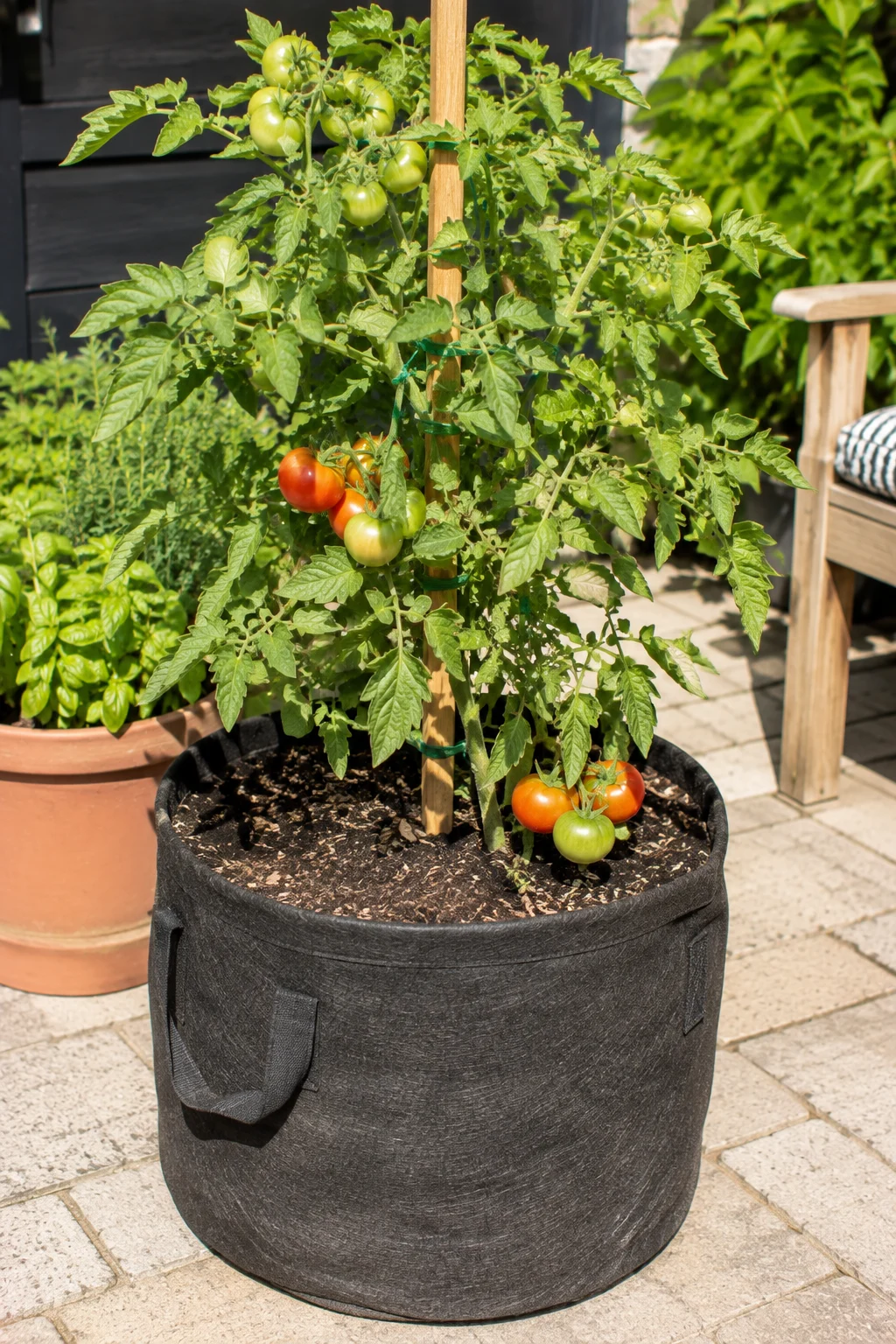
18. Patio Tomato Planter
Compact or determinate tomato varieties grow well in large containers, making it possible to harvest homegrown tomatoes without a dedicated garden bed. This works because container tomatoes are easier to manage for pests and soil quality, and they can be positioned wherever the patio gets the most sun. Use a pot at least eighteen inches wide, add a stake or small cage at planting time, and feed regularly since container soil depletes nutrients faster than ground soil. Water deeply and consistently, since inconsistent watering is the most common cause of cracked or split tomatoes.
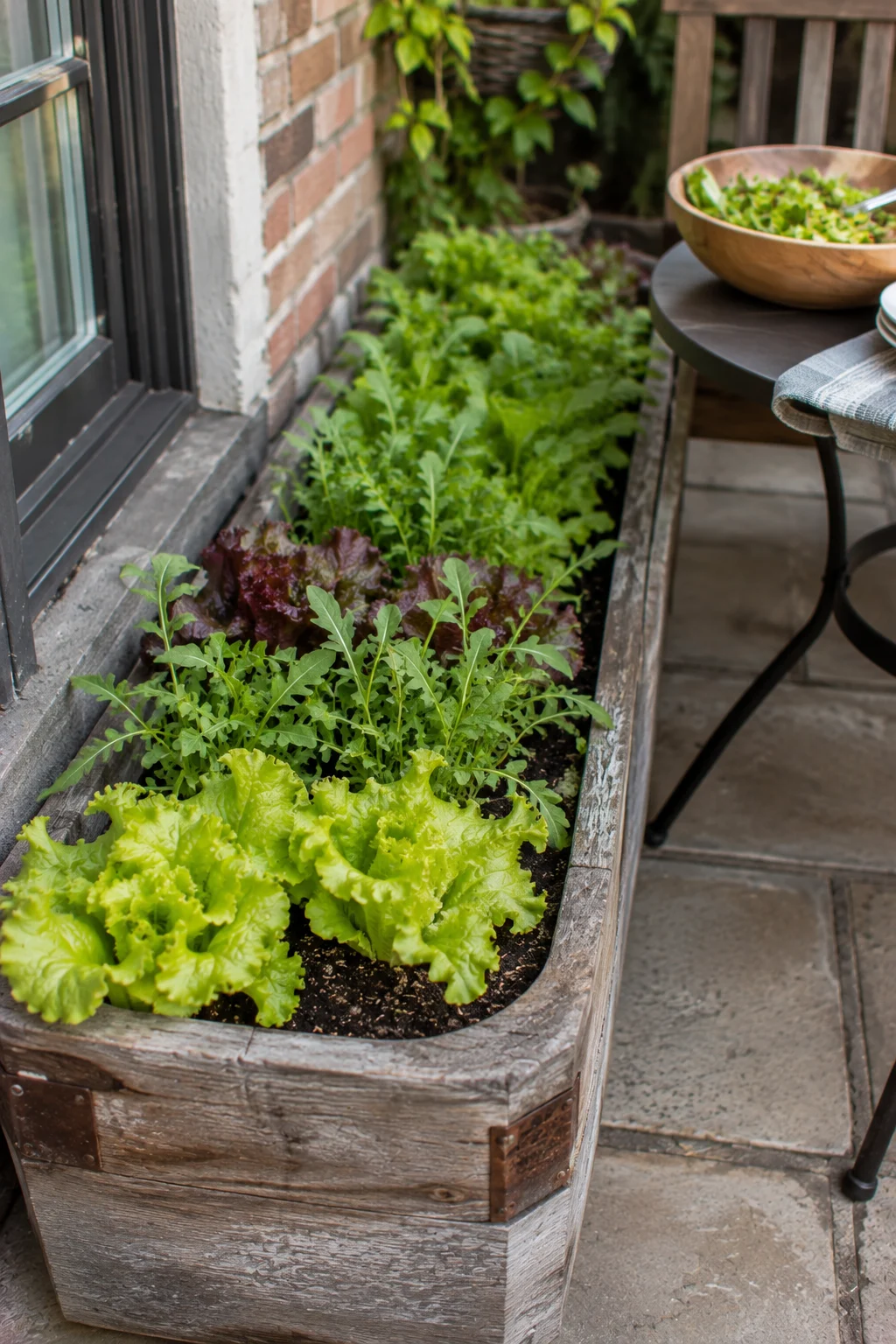
19. Salad Greens Trough
A long, shallow trough planter suits salad greens like lettuce, arugula, and spinach, since their roots stay relatively shallow compared to most vegetables. This works because you can succession plant, sowing a new row every couple of weeks, so the trough keeps producing instead of being harvested all at once. Position the trough somewhere with morning sun and afternoon shade, since most greens bolt, or go to seed early, in intense heat. Harvest outer leaves first and let the center continue growing for a longer overall yield.
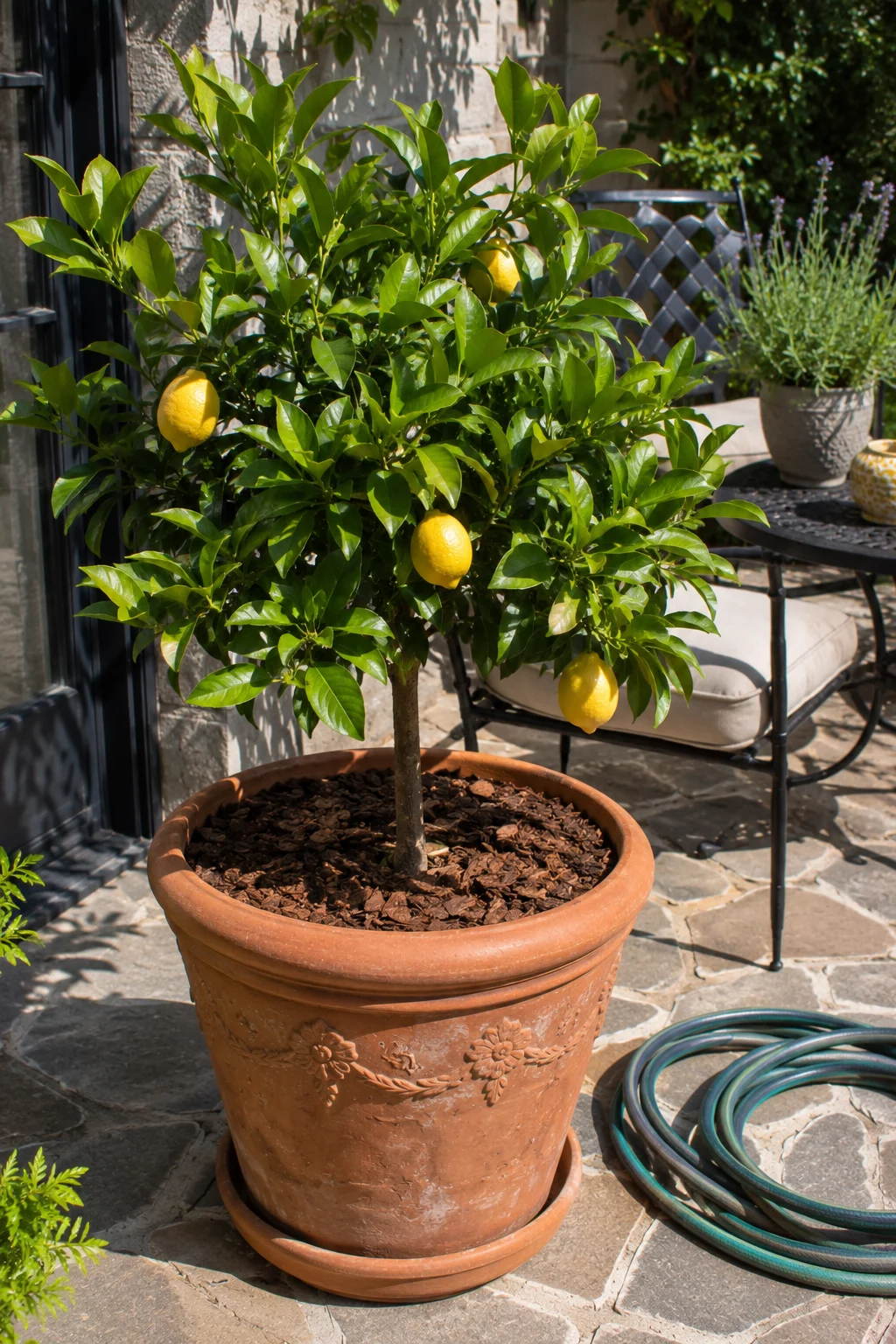
20. Citrus Tree in a Large Pot
A dwarf citrus tree, like Meyer lemon or calamondin orange, grown in a large container brings fragrant blooms and homegrown fruit to patios in almost any climate. This works because dwarf varieties stay a manageable size, and the pot allows the tree to be moved indoors in regions where winter temperatures drop below freezing. Use a well-draining citrus-specific potting mix, and feed with a citrus fertilizer during the growing season since container-grown trees exhaust nutrients faster than in-ground trees. Expect to repot every two to three years as the root system fills the container.
Space-Saving & Functional
21. Rail Planters for Small Balconies
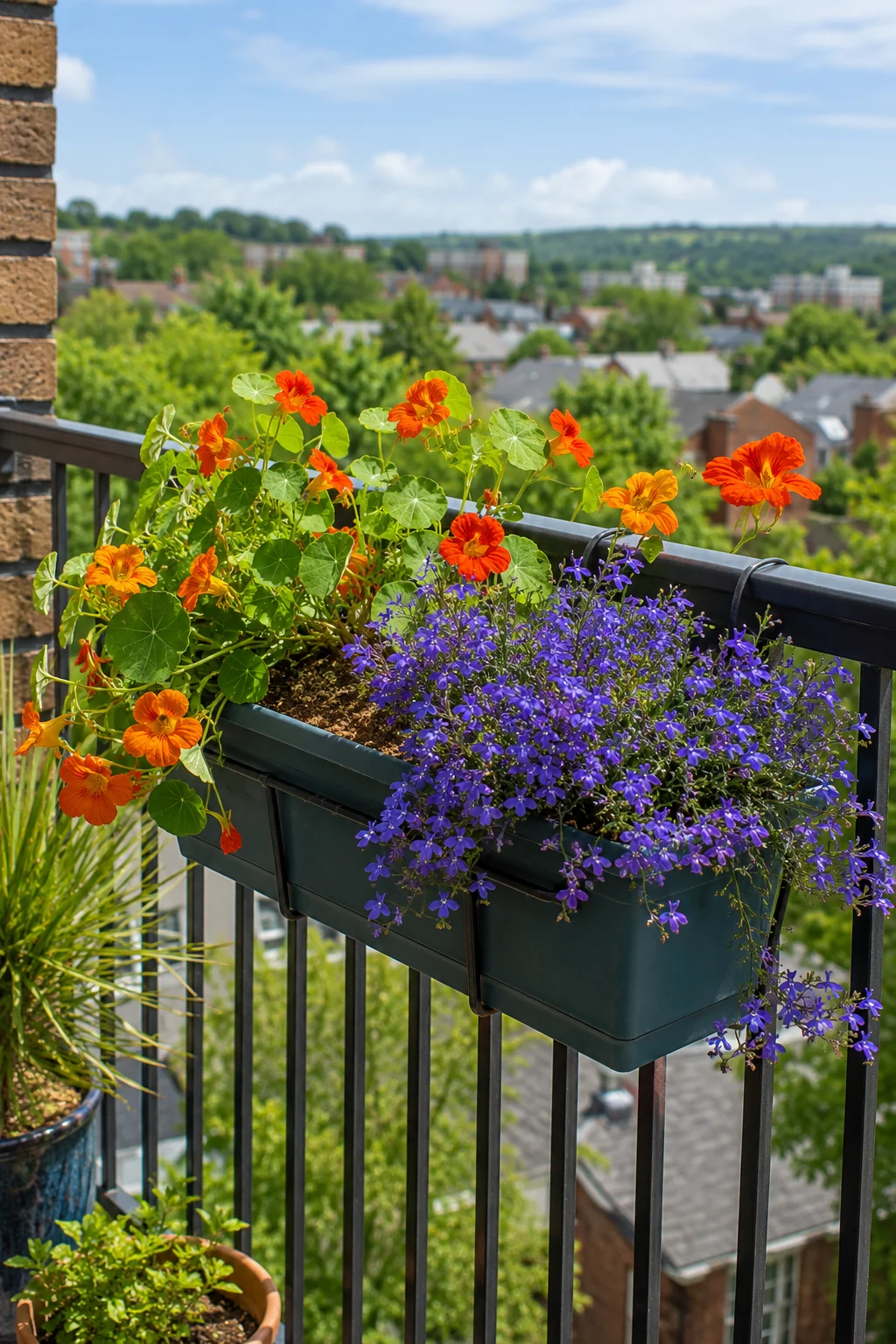
Rail-mounted planters clip directly onto a balcony or patio railing, adding growing space without using any floor area at all. This works especially well for apartment patios and small balconies where every square foot of ground space matters. Choose a rail planter rated for your specific railing width and material, and check the weight limit before filling it with wet soil, since a full planter is heavier than it looks. Trailing plants like lobelia or nasturtium work well here, since their growth cascades down rather than crowding the rail.
22. Hanging Planters for Vertical Space
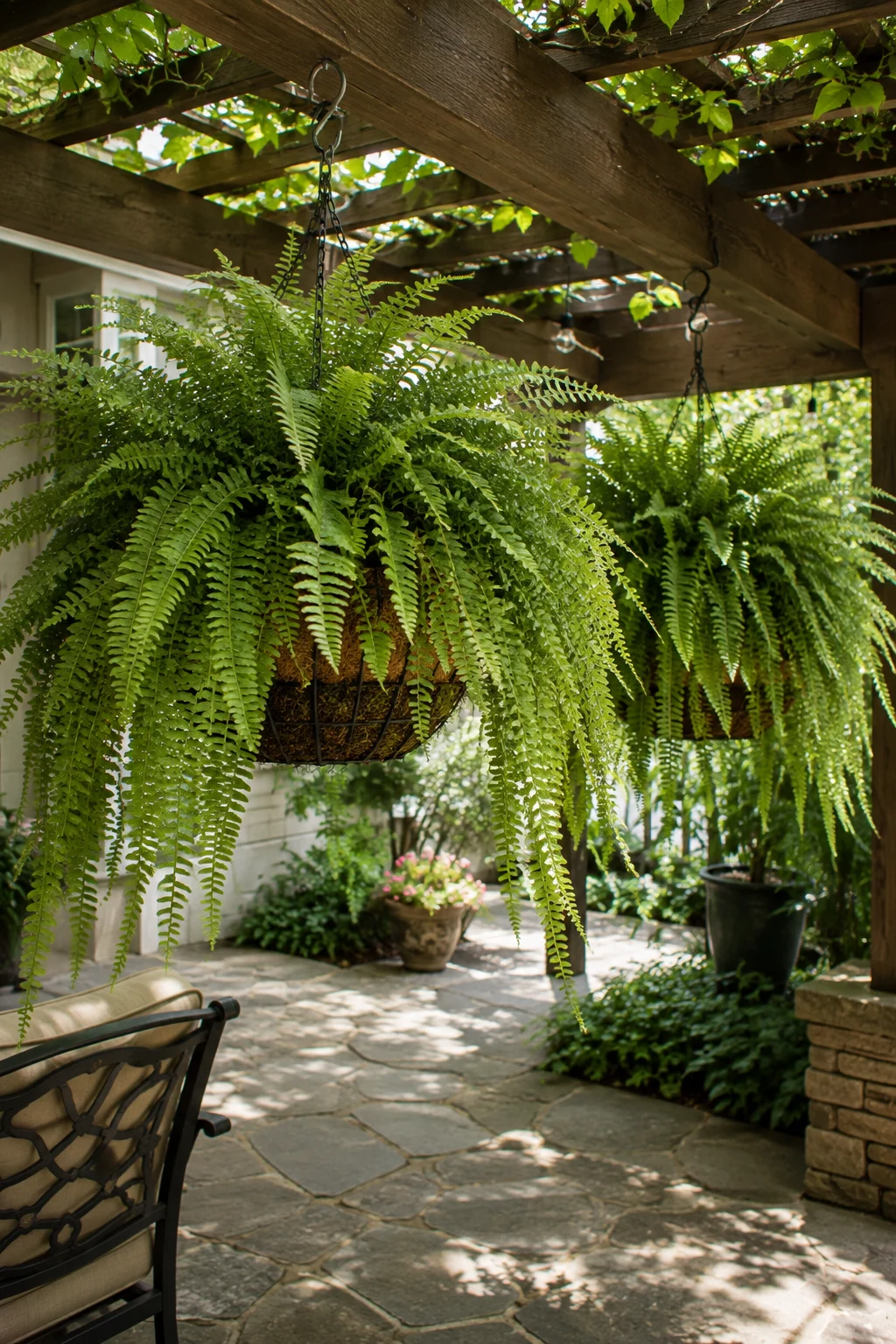
Hanging baskets suspended from a patio overhang or pergola beam add greenery at eye level and above, which is useful when floor space for pots is limited. This works because it uses vertical space that would otherwise go unused, and hanging plants like ferns or fuchsia have a natural cascading habit that suits the format. Use an S-hook rated for outdoor weight and check that the mounting point, whether a beam or bracket, can support the wet weight of a full basket. Water hanging baskets more frequently than ground-level pots, since they dry out faster with more air exposure.
23. Wheeled Planters for Mobility
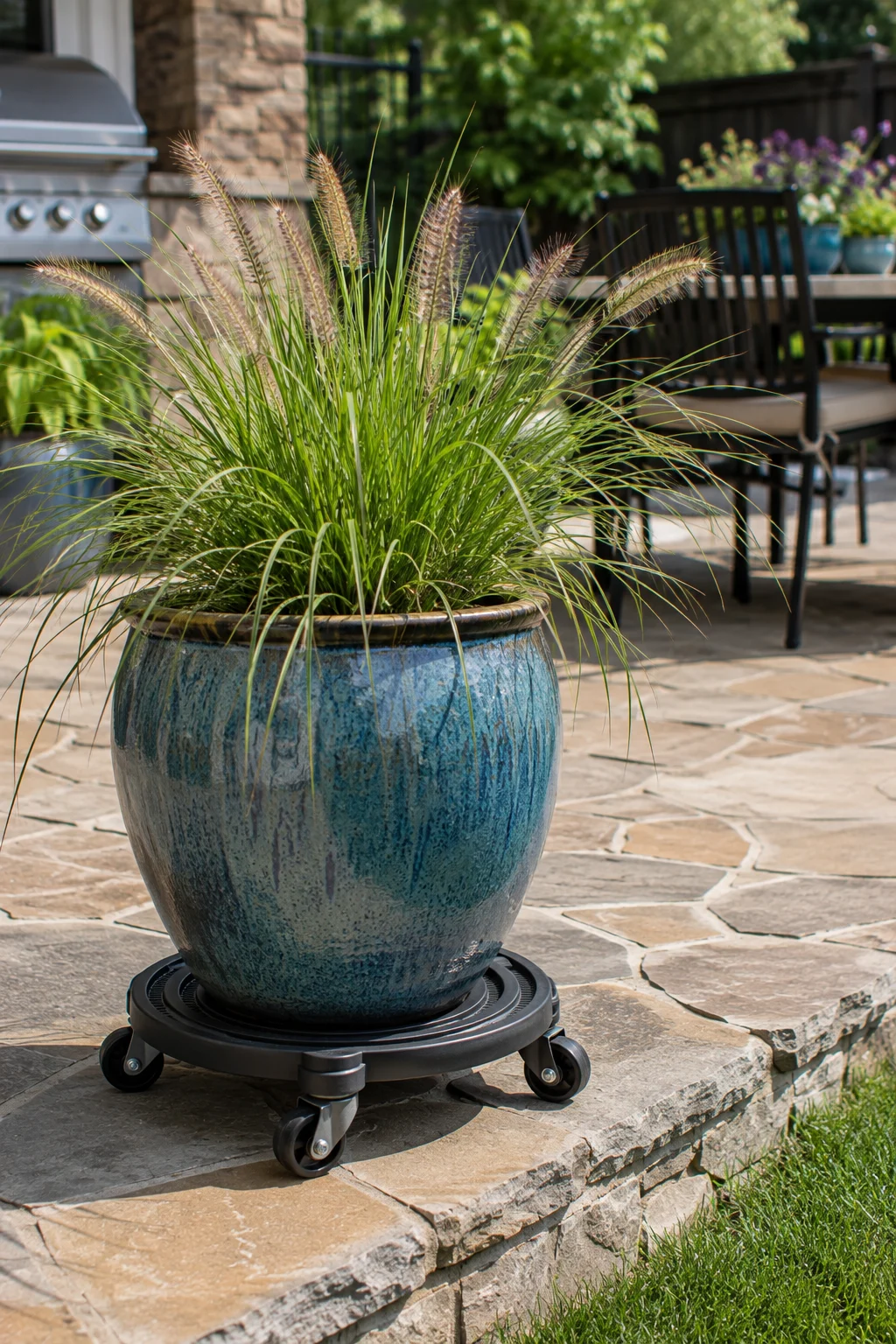
Large planters mounted on wheeled plant caddies can be repositioned easily to chase sunlight or make room for entertaining, which solves a common problem with heavy container gardens. This works because it removes the biggest downside of large pots, that they are difficult to move once filled with soil and water. Choose a caddy rated for the specific weight of your filled container, and check that the wheels lock in place so the pot stays put during regular use. This is especially useful for patios that double as entertaining space, since planters can be rolled aside temporarily.
24. Self-Watering Planter Inserts
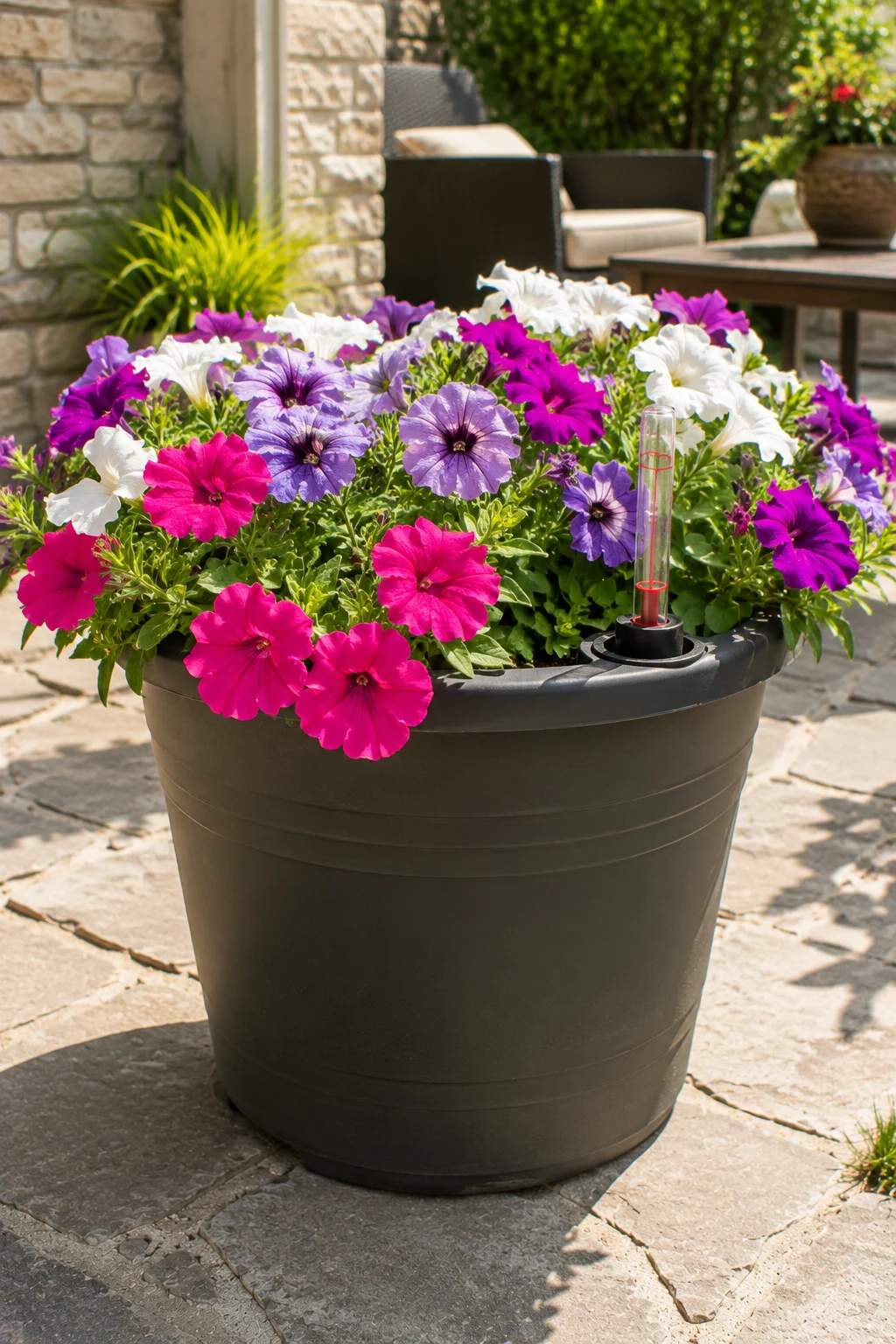
Self-watering inserts, which hold a water reservoir beneath the soil, reduce how often containers need attention, particularly useful for anyone who travels or tends to forget watering. This works because the reservoir wicks moisture up to the roots gradually, keeping soil consistently moist without daily watering. Fill the reservoir through the designated tube, and check the water level weekly rather than assuming it is full, since evaporation and consumption rates vary by plant and weather. These inserts work in most standard container sizes and can often be added to existing pots rather than requiring a full replacement.
25. Corner Planter for Tight Spaces
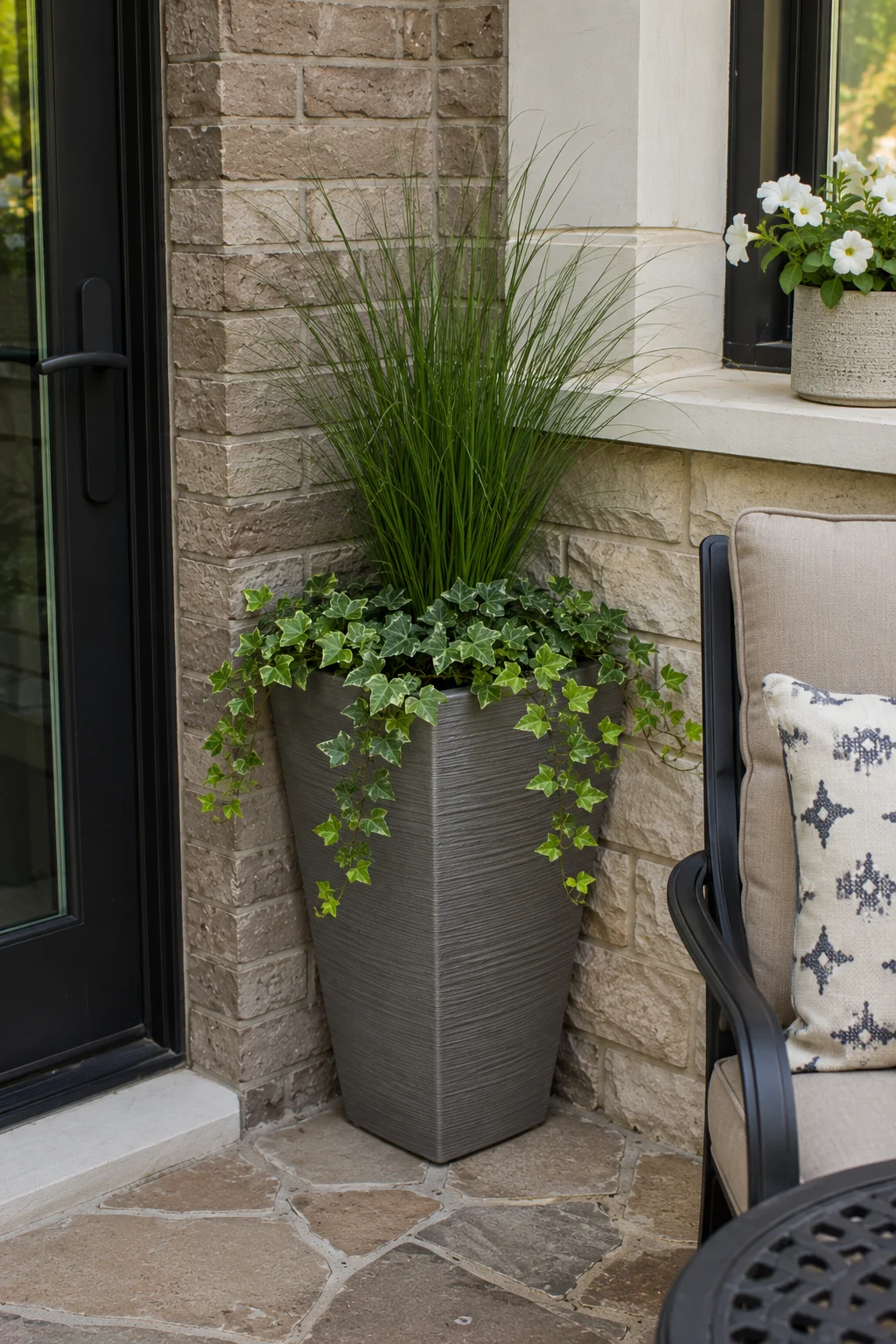
A pie-slice or L-shaped planter designed specifically for corners makes use of awkward patio angles that standard round or square pots waste. This works because most patios have at least one underused corner where furniture does not fit well but a plant could. Measure the corner space before buying, since these planters come in fixed shapes that need to match the angle fairly closely. Fill with a mix of upright and trailing plants so the corner reads as intentional rather than like leftover space.
Decorative & Pollinator Touches
26. Fairy Light-Wrapped Planter
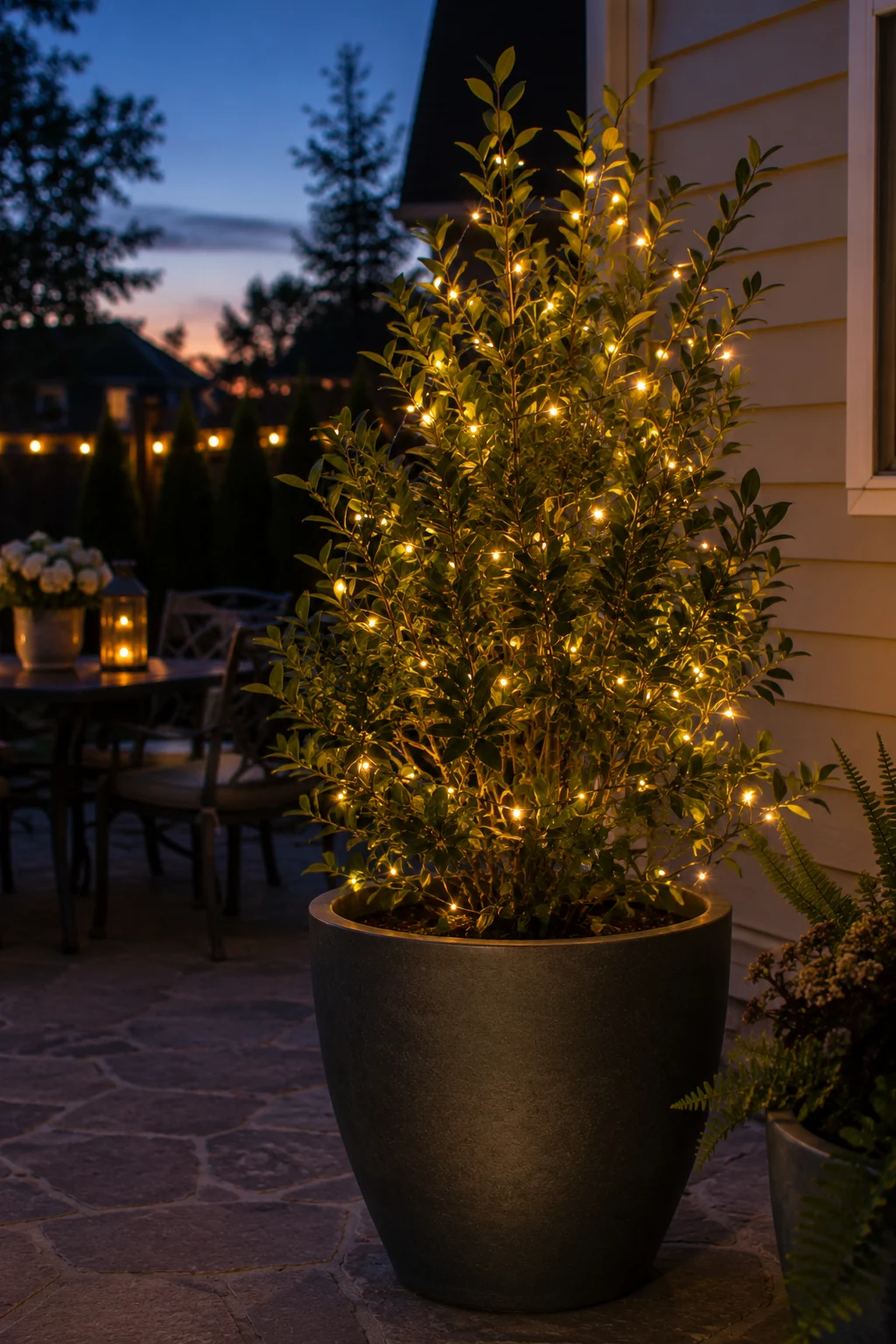
Wrapping a strand of small solar or battery-powered lights around a large planter’s foliage or rim adds a soft glow for evening use on the patio. This works because it extends how long the planter is enjoyed each day, since most container gardens only get appreciated in daylight. Wind the lights loosely through the plant’s branches or around the pot’s exterior, avoiding tight wrapping that could damage stems. Choose warm white lights rather than cool white or colored ones for a look that reads as ambient rather than decorative overload.
27. Painted Pot Accent Colors
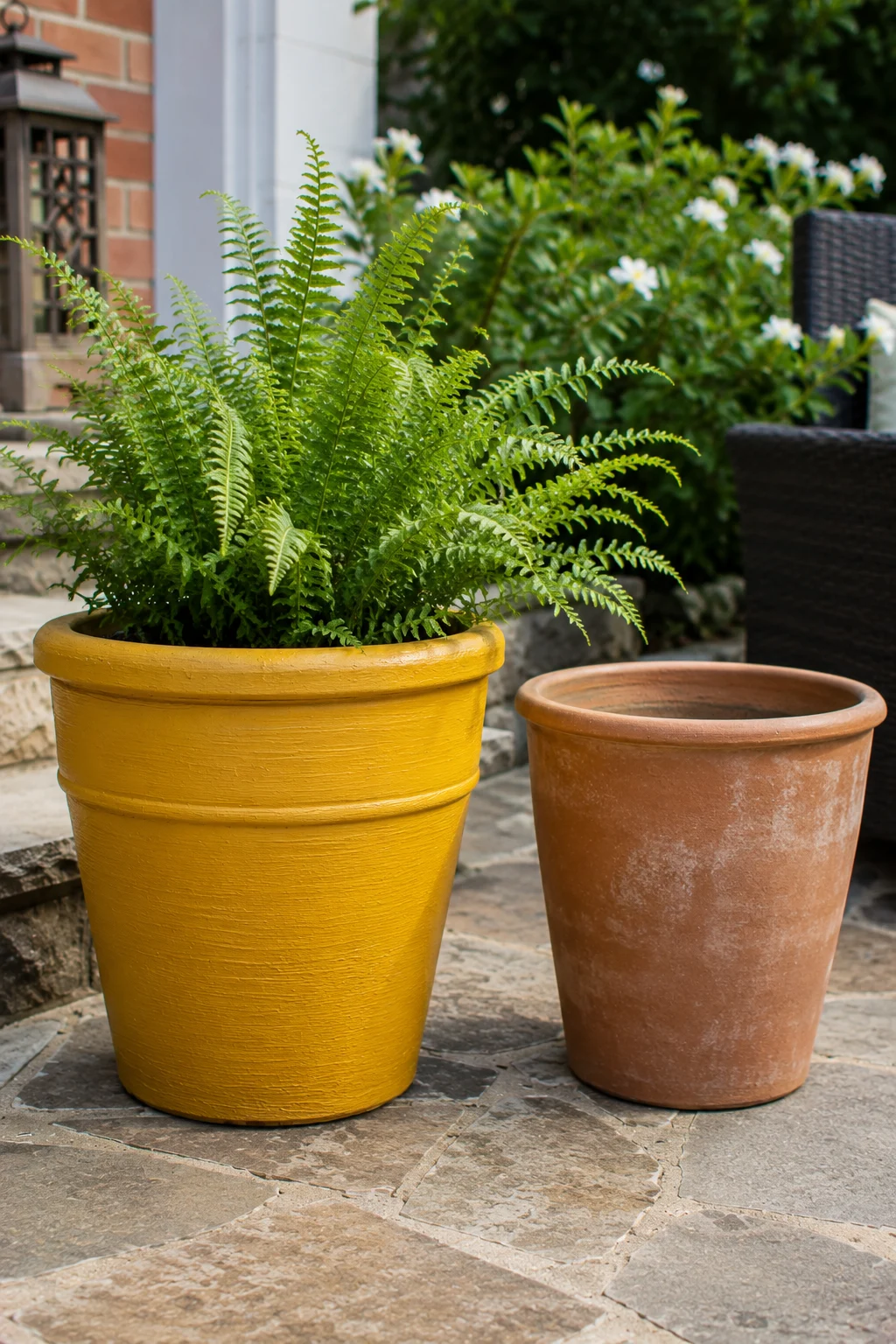
Painting a plain terracotta or plastic pot in a single bold accent color is one of the least expensive ways to update a patio’s look without buying new containers. This works because color changes the entire feel of a planter, even when the plant inside stays the same. Use exterior-rated spray paint or acrylic paint sealed with a clear topcoat, and apply in thin, even coats to avoid drips. Test the color on the pot’s underside first if you are unsure, since some porous materials absorb paint unevenly.
28. Mixed-Height Planter Vignette
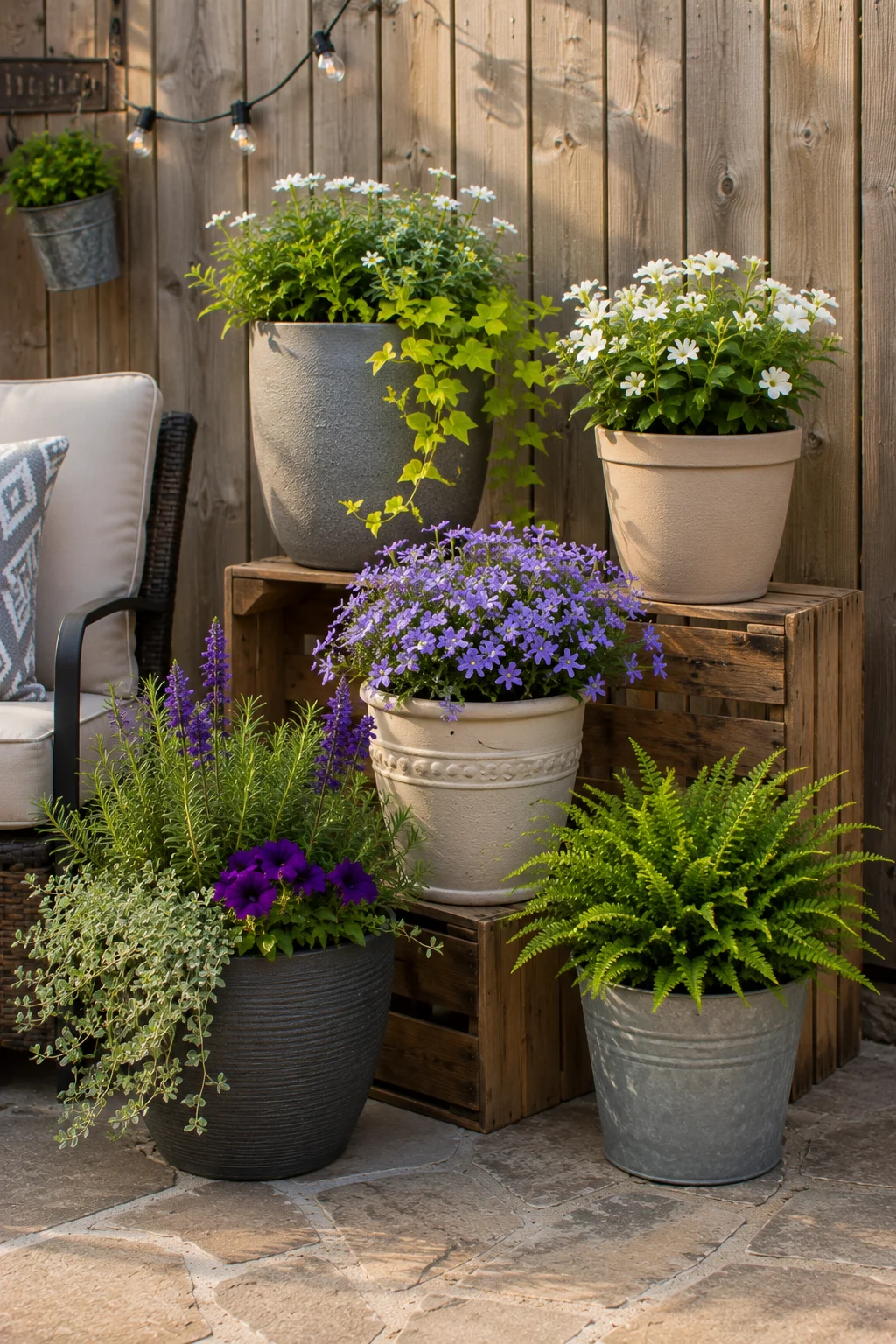
Grouping planters of deliberately different heights, using plant stands or overturned crates to boost some pots higher than others, creates a layered vignette rather than a flat row of containers. This works because varying heights mimic how plants naturally grow in a garden bed, with taller elements toward the back and shorter ones in front. Start with your tallest pot or stand and work forward, checking sightlines from your main patio seating area to make sure nothing blocks the view unintentionally. This idea is especially useful for patios that back up against a plain wall or fence needing visual softening.
29. Water-Wise Succulent Planter
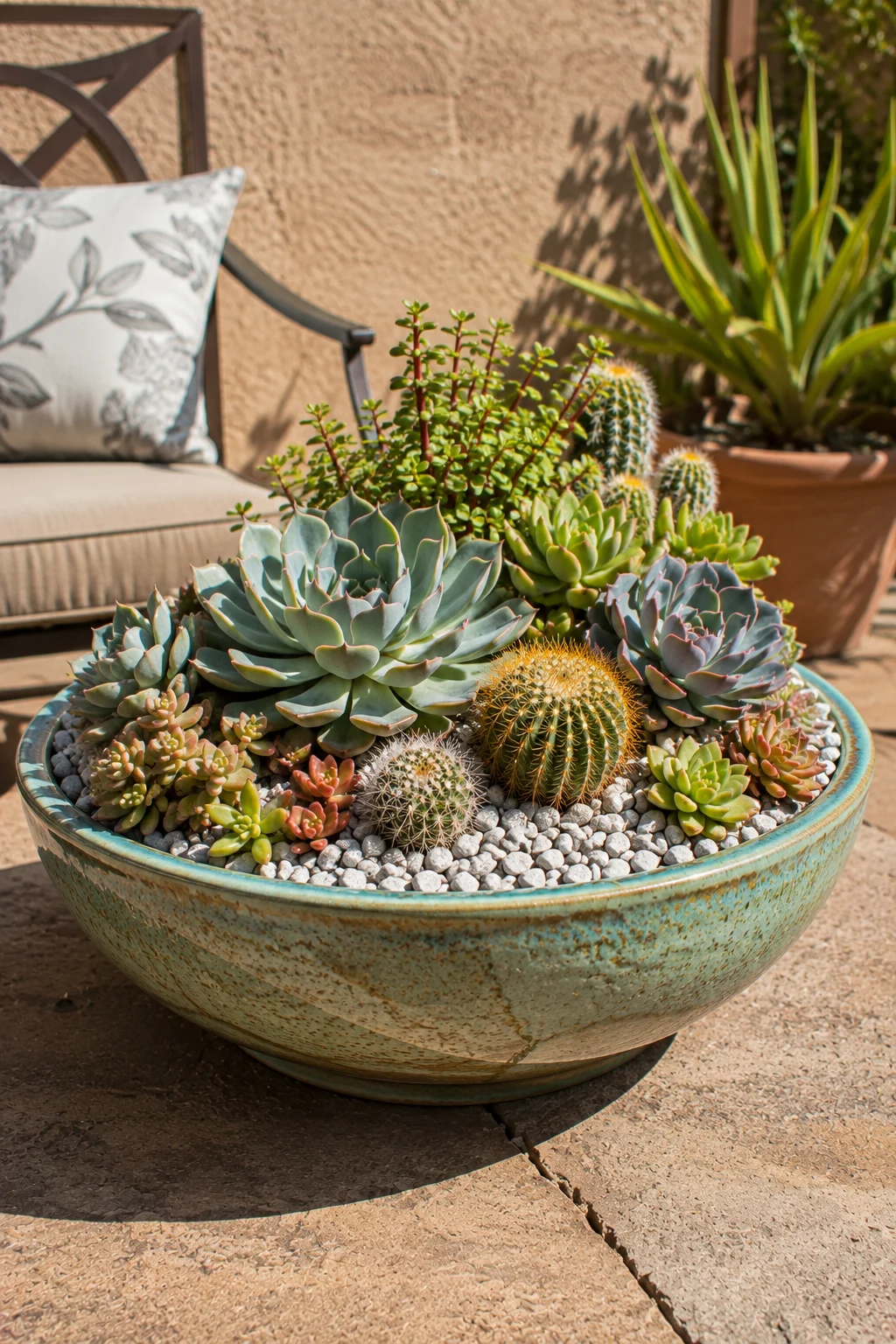
A shallow, wide container planted with a mix of succulents and hardy sedum suits patios in hot, dry climates or for anyone who wants a low-maintenance planting option. This works because succulents store water in their leaves, allowing them to go longer between waterings than most flowering annuals. Use a fast-draining cactus or succulent-specific potting mix, and top with a layer of decorative gravel to both improve drainage and reduce weed growth. Water only when the soil is completely dry to the touch, since overwatering is the most common cause of succulent failure in containers.
30. Pollinator-Friendly Planter Mix
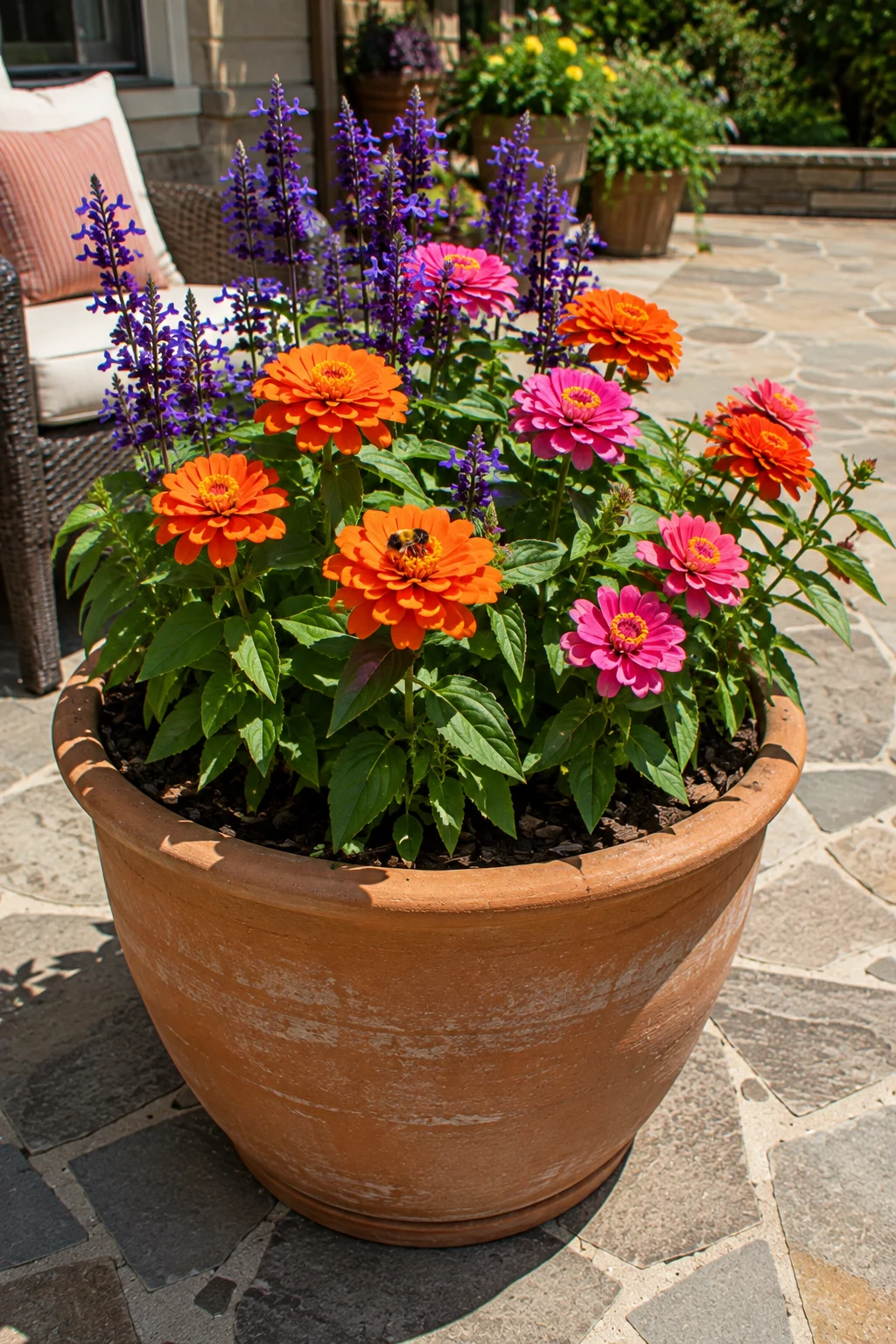
Filling a container with nectar-rich annuals like zinnias, salvia, and lantana turns a patio planter into a small but genuine food source for bees and butterflies. This works because pollinators will visit container plantings just as readily as garden beds, provided the flowers offer accessible nectar and pollen, an approach covered in more depth in the container pollinator garden guide for balconies and patios. Choose a mix of bloom times and flower shapes so something is always flowering through the season, and avoid pesticide use on or near the container. Position the pot in full sun, since most pollinator-friendly annuals need direct light to produce nectar consistently.
How to Choose From This List
With 30 patio planter ideas covering materials, formulas, seasons, and function, the best approach is to start with your patio’s constraints rather than trying to fit in every idea at once. If you have a small balcony, focus on the rail and hanging options before considering large statement pots, and if your patio doubles as an entertaining space, prioritize wheeled or self-watering containers that need less daily attention. For more layout inspiration beyond the planters themselves, see 42 small patio design ideas for ways to arrange furniture and containers together. Pick ideas that solve a real gap in your current setup rather than adding more pots simply because they look good in a photo.
Final Thoughts
Patio planters are one of the most forgiving ways to change how a home’s outdoor space looks and feels, since almost every idea here can be adjusted, replaced, or moved if it does not work out the way you hoped. There is no need to fill an entire patio at once. A single well-chosen pot by the door often makes more of a visual difference than a dozen mismatched containers scattered around.
Start with one or two ideas from this list that match your patio’s light, size, and how much upkeep you actually want to take on. Once those containers are established, you will have a much clearer sense of what the space is missing, whether that is more height, more color, or simply more plants that pollinators can actually use.