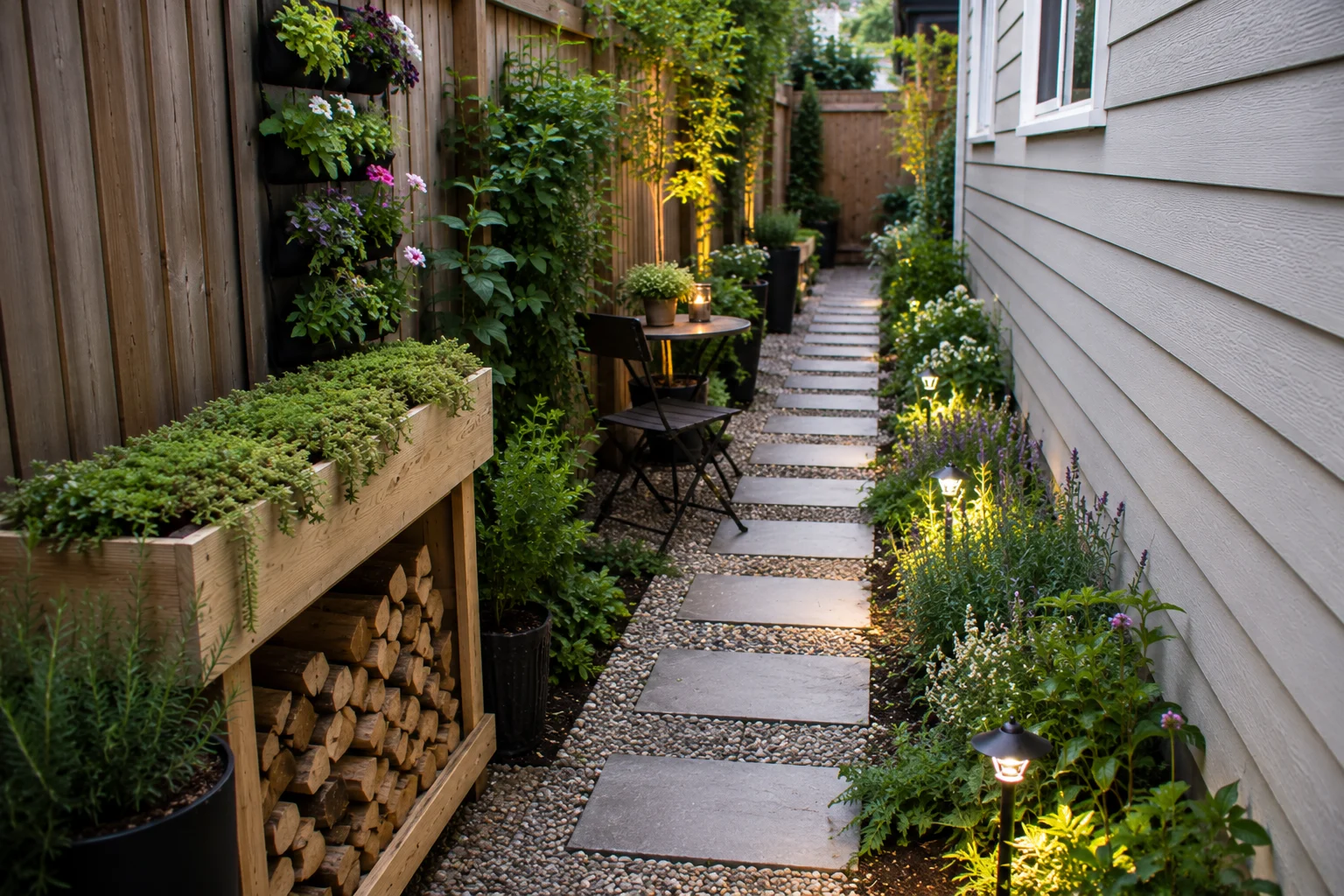

A plain fence is one of the most overlooked spaces in a backyard. It runs the entire perimeter of your property, yet most homeowners treat it as a backdrop instead of a feature. Fence decorating ideas change that by turning a flat, often weathered surface into something you actually notice when you step outside.
What homeowners like about decorating a fence is how low-risk it feels compared to a full landscaping overhaul. You are not tearing anything out or hiring a crew. Most of the projects on this list can be done in a weekend, with tools most people already own, and they can be undone or updated later without much trouble.
This kind of project is achievable because it does not depend on a specific fence material, climate, or budget. Whether you have a cedar privacy fence, a chain-link border, or a simple picket line, there is a version of these ideas that fits. In this guide, you will find realistic ways to add color, greenery, lighting, storage, and personality to your fence, along with image prompts so you can visualize each one before you commit.
Paint, Stain & Color
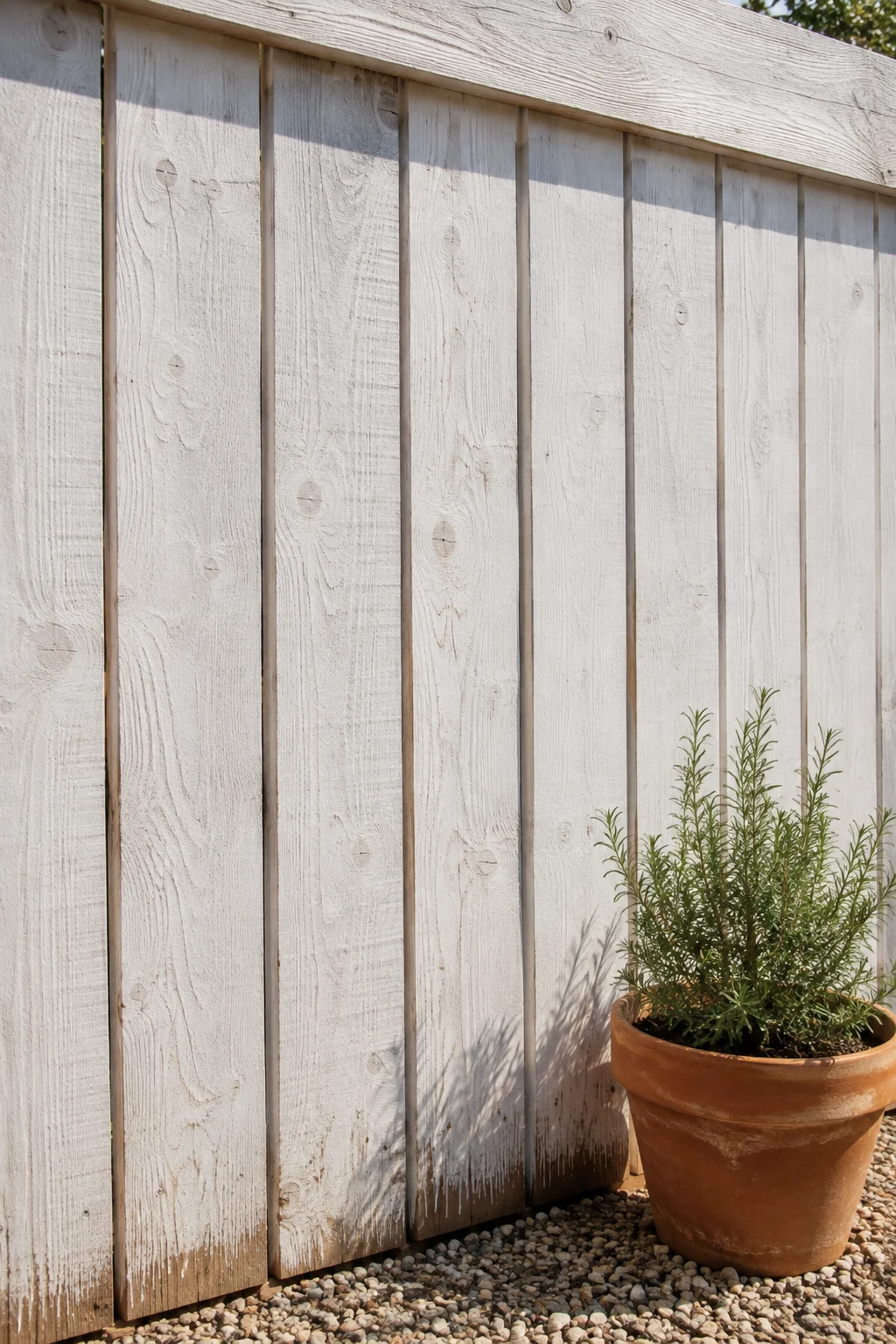
1. Whitewashed Wood for a Coastal Look
Whitewashing involves diluting white paint or stain so the wood grain still shows through instead of being fully covered. It works because it lightens a dark or sun-faded fence without hiding the natural texture of the boards. To recreate it, thin exterior latex paint with water at roughly a one-to-one ratio, brush it on in the direction of the grain, and wipe back any excess with a rag before it dries. It holds up best on cedar or pine fences that have not been previously sealed with a glossy finish.
2. Bold Accent Color on One Panel
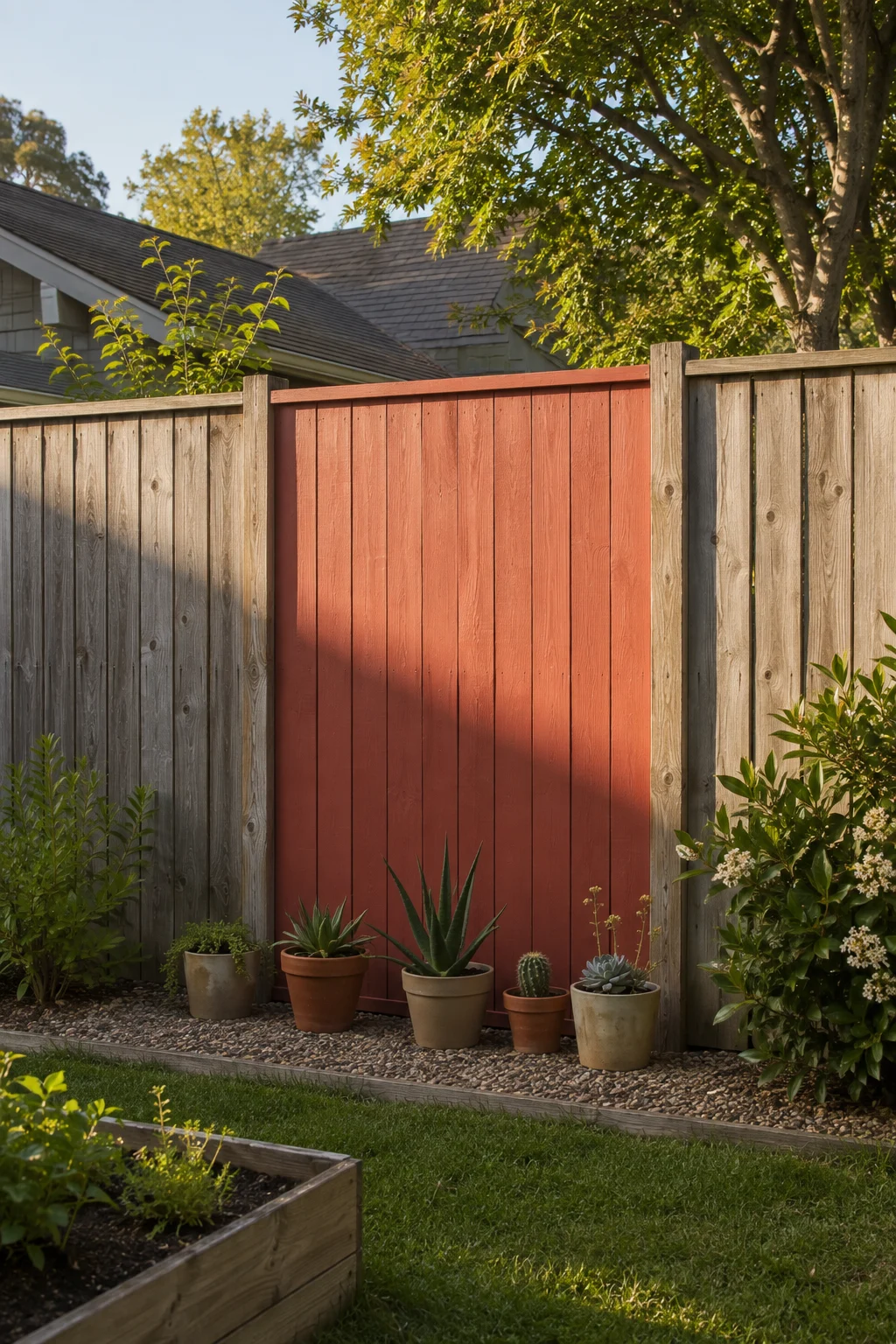
Painting just one or two fence panels a saturated color, like deep terracotta or navy, creates a focal point without repainting the whole fence. This works because it draws the eye to one spot, which is useful for framing a seating area or garden bed. Choose an exterior-grade paint rated for wood or vinyl, tape off the panel edges, and apply two coats for even coverage. Keep the surrounding fence neutral so the accent panel still reads as intentional rather than patchy.
3. Two-Tone Fence with Contrasting Trim
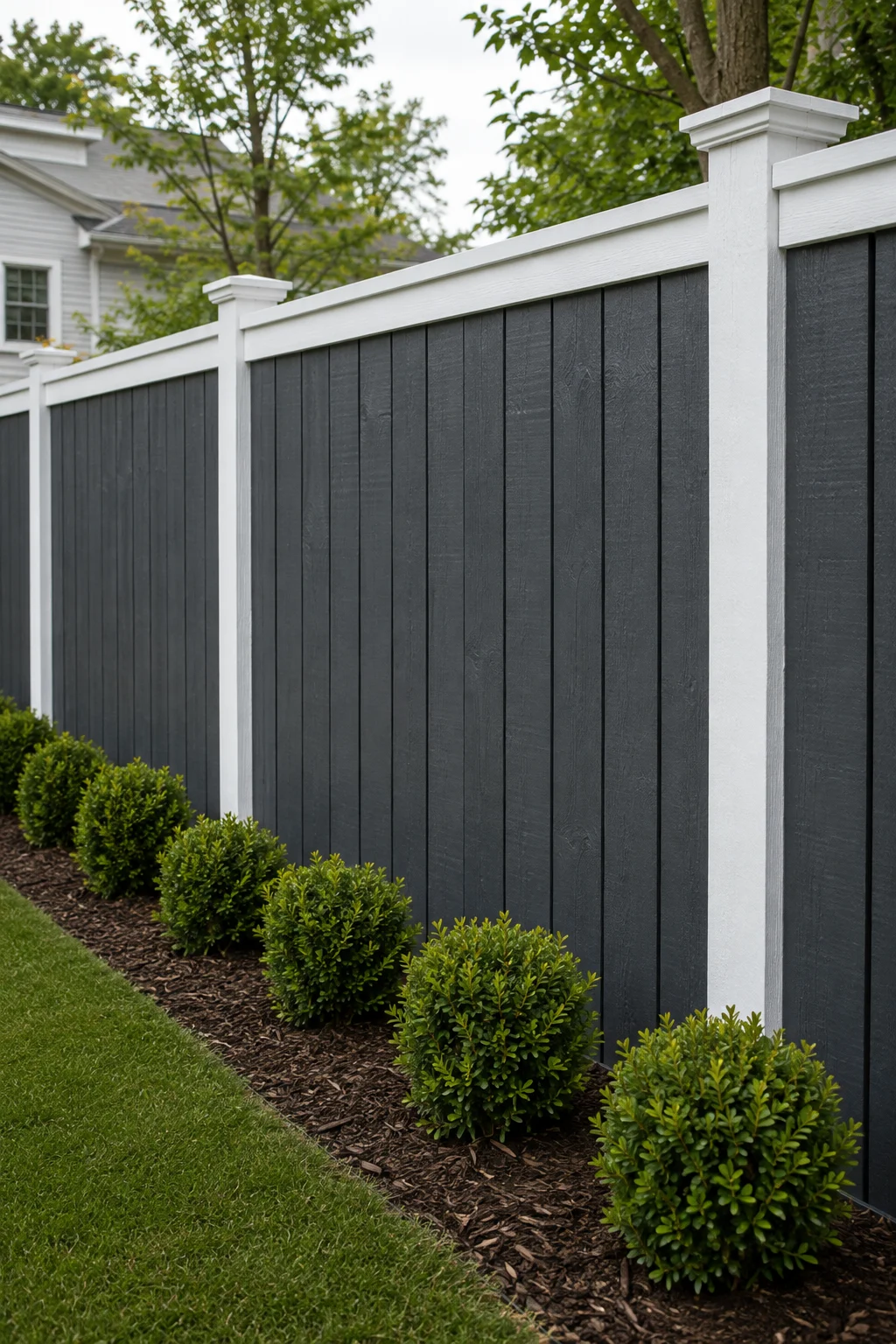
Pairing a darker fence body with lighter horizontal trim, or the reverse, gives a flat fence more architectural interest. It works because the contrast breaks up a long, uniform surface and makes the fence look more finished, almost like exterior trim on a house. Paint the main boards one color and the top rail or cap boards a contrasting shade, using painter’s tape along the seam for a clean line. This idea suits fences that already have a cap rail or post trim to work with.
4. Weathered Gray Stain for Natural Charm
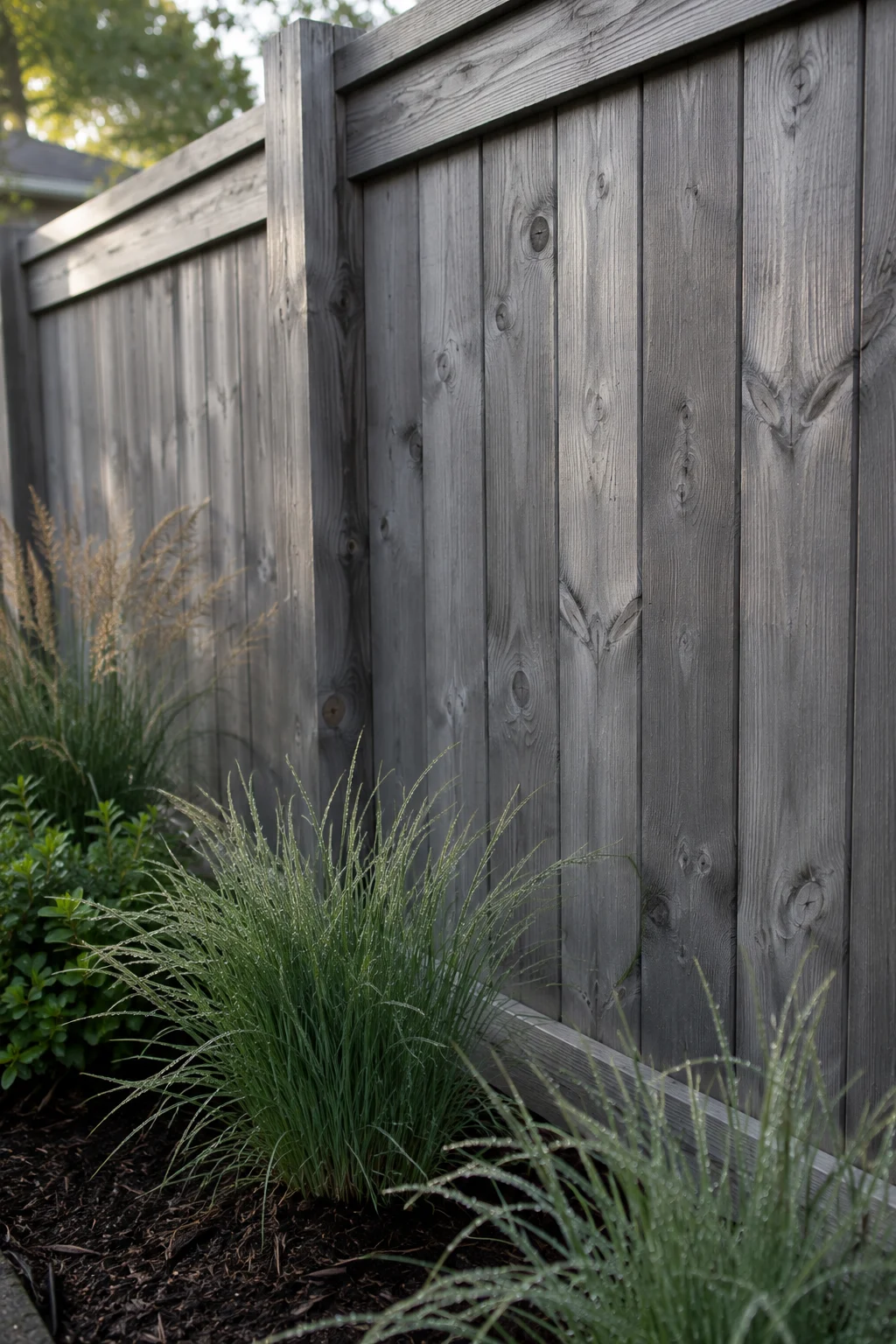
A gray-toned exterior stain mimics the look of naturally weathered driftwood without waiting years for the sun to do it. It works well because it feels understated and pairs with almost any planting style, from cottage gardens to modern minimalist yards. Apply a semi-transparent gray stain with a brush or sprayer, following the wood grain, and let it cure fully before touching. This finish also helps protect the wood from moisture, so it does double duty as maintenance.
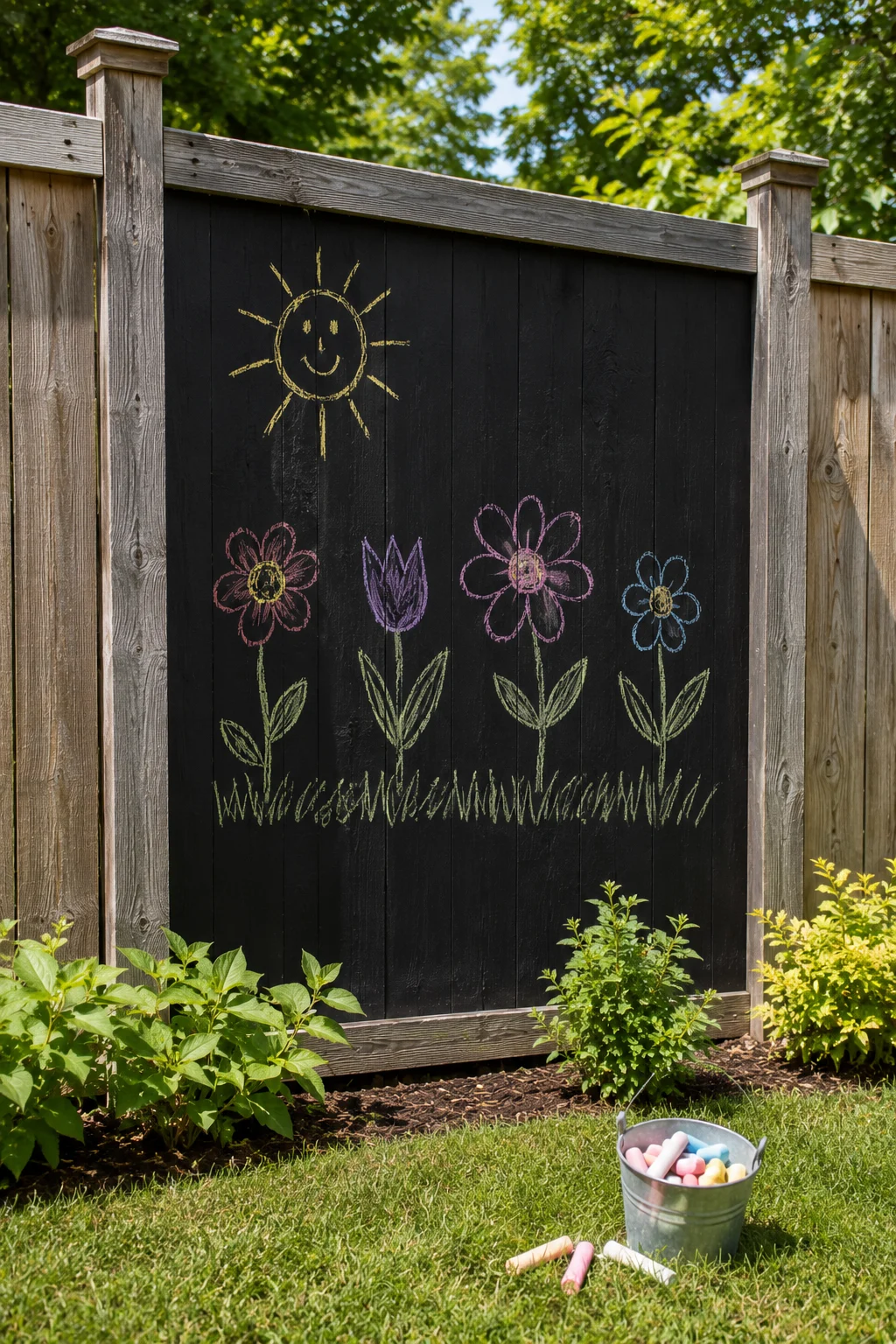
5. Chalk-Paint Mural Panel for Kids’ Zone
A single fence panel painted with chalkboard paint gives kids a spot to draw outdoors without marking up the patio or house. It works because it contains the mess to one clearly defined area and doubles as a fun, changeable feature instead of static decor. Use exterior chalkboard paint on a smooth, primed panel, apply two coats, and let it cure for a few days before use. Keep a bucket of sidewalk chalk nearby so it gets used rather than becoming another unused yard project.
Plants & Greenery
If you want your fence to double as habitat rather than just backdrop, pair any of the ideas below with a few bee-friendly bloomers — see how to turn a plain fence into a pollinator border for a planting plan built specifically for fence lines.
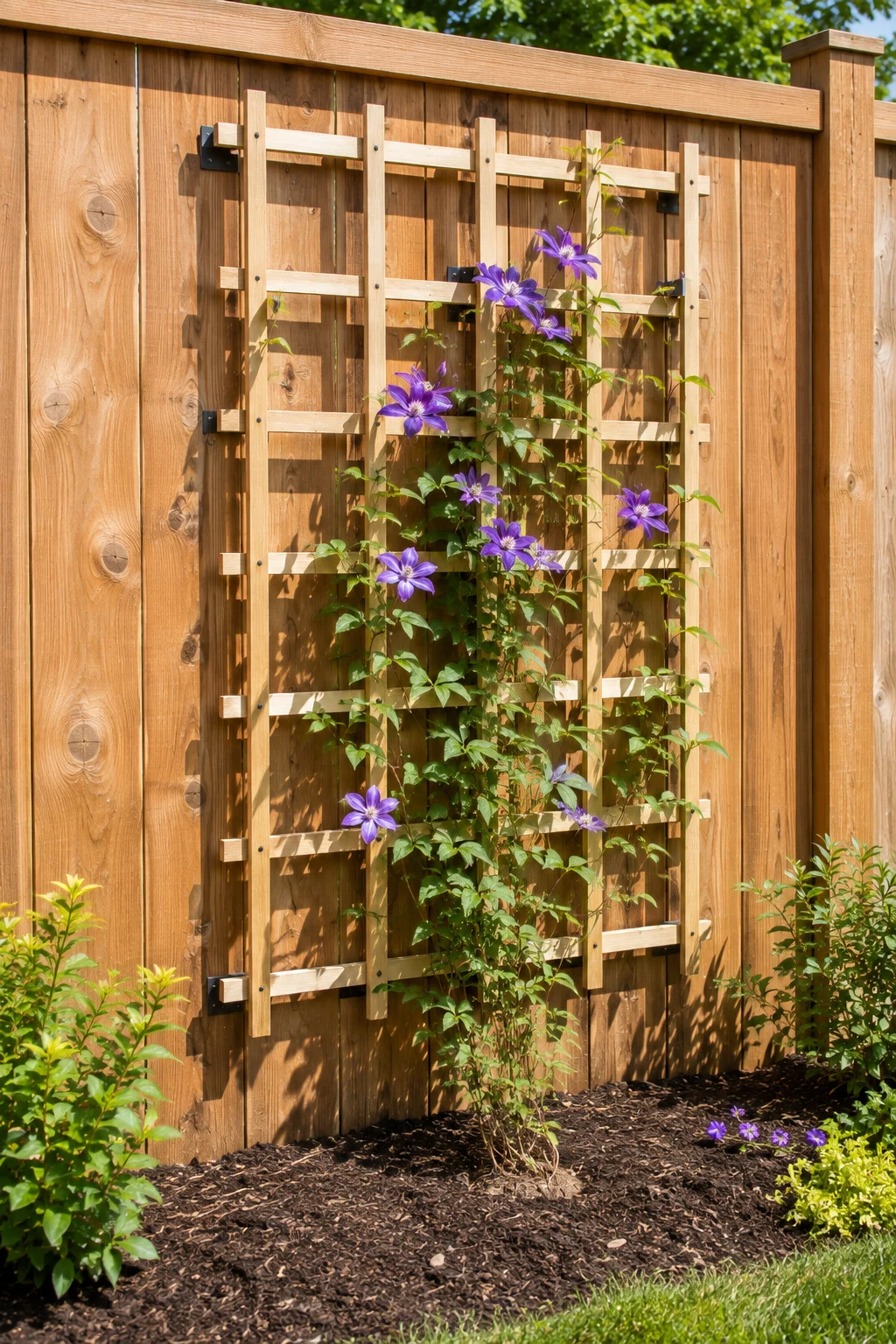
6. Trellis Panels for Climbing Vines
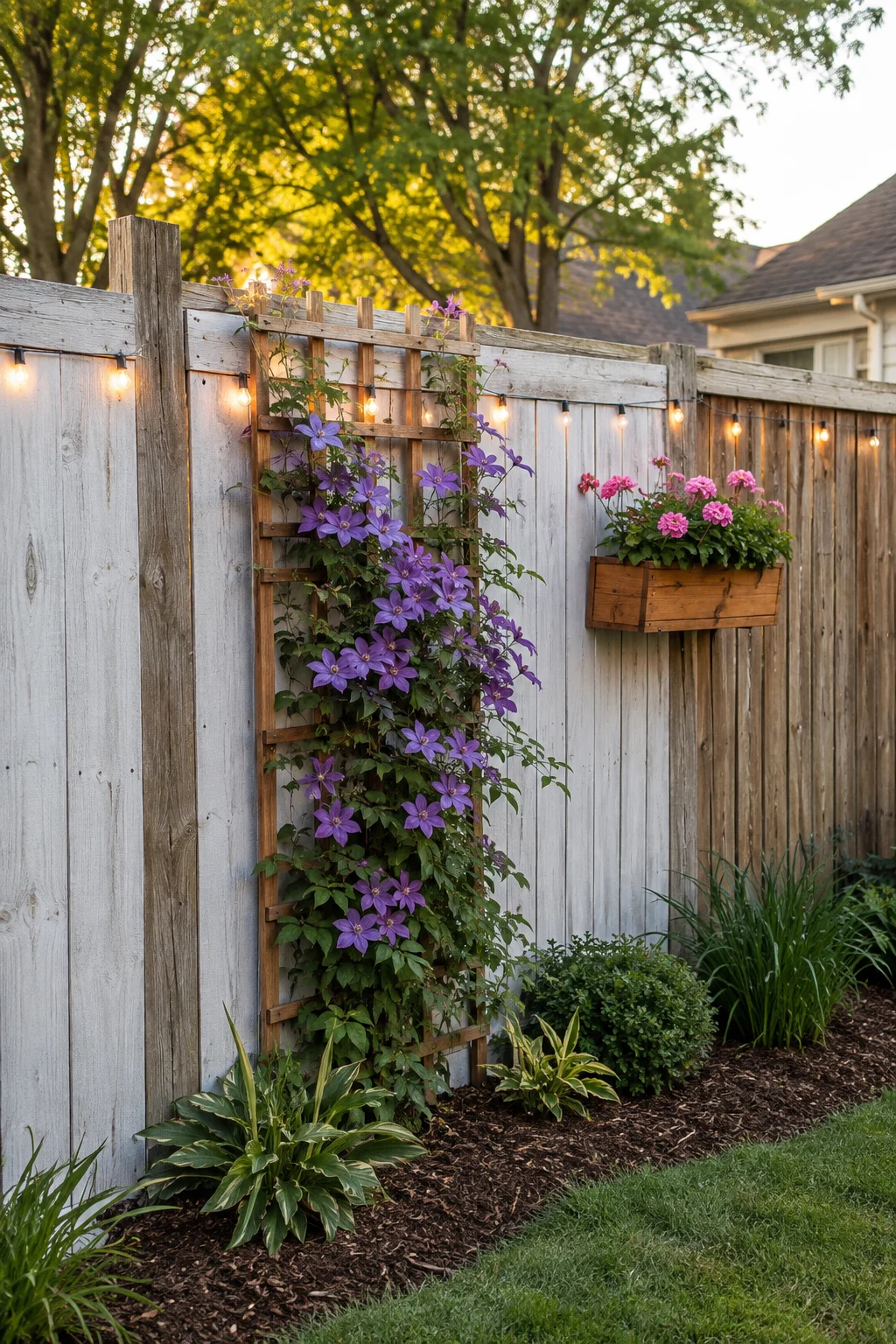
Attaching wood or metal trellis panels to a fence gives climbing plants something to grip that will not damage the fence boards themselves. This works because it lets you add height and greenery without waiting for a vine to figure out how to climb bare wood. Mount the trellis a few inches off the fence face using spacer blocks so air can circulate behind the foliage. Fast growers like clematis or trumpet vine will fill in a panel within one or two seasons if given full sun — for more options, see 7 climbing plants that add height, flowers, and bees to your garden.
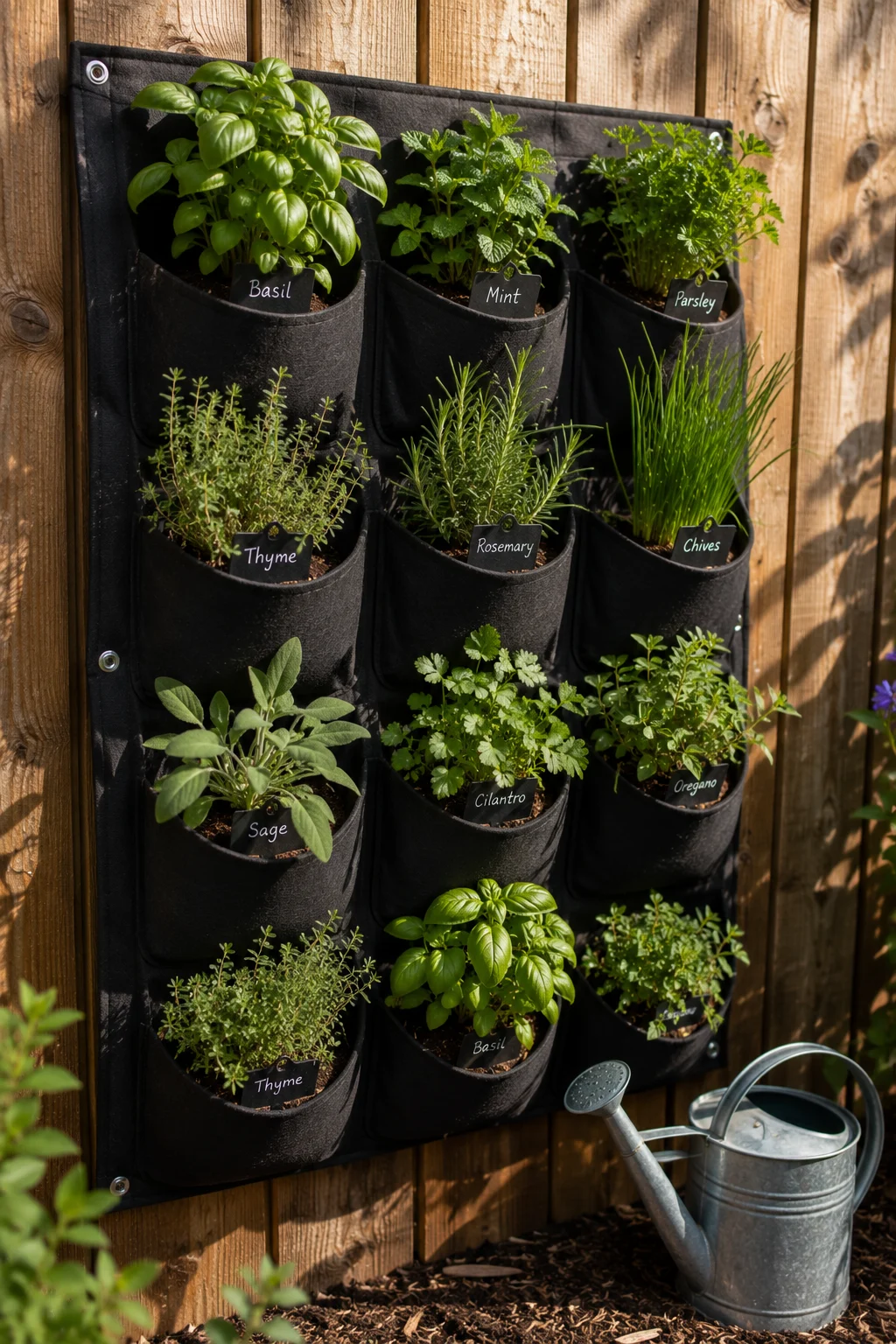
7. Vertical Herb Garden Pockets
Fabric or wooden pocket planters hung on a fence let you grow herbs vertically instead of dedicating ground space to them. This works well on sunny fences near a kitchen door, since it keeps basil, thyme, and mint within easy reach for cooking. Screw a mounting rail into the fence studs, hang the pocket planter system, and fill each pocket with well-draining potting mix. Herbs in pockets dry out faster than in-ground plantings, so plan on watering every day or two in warm weather.
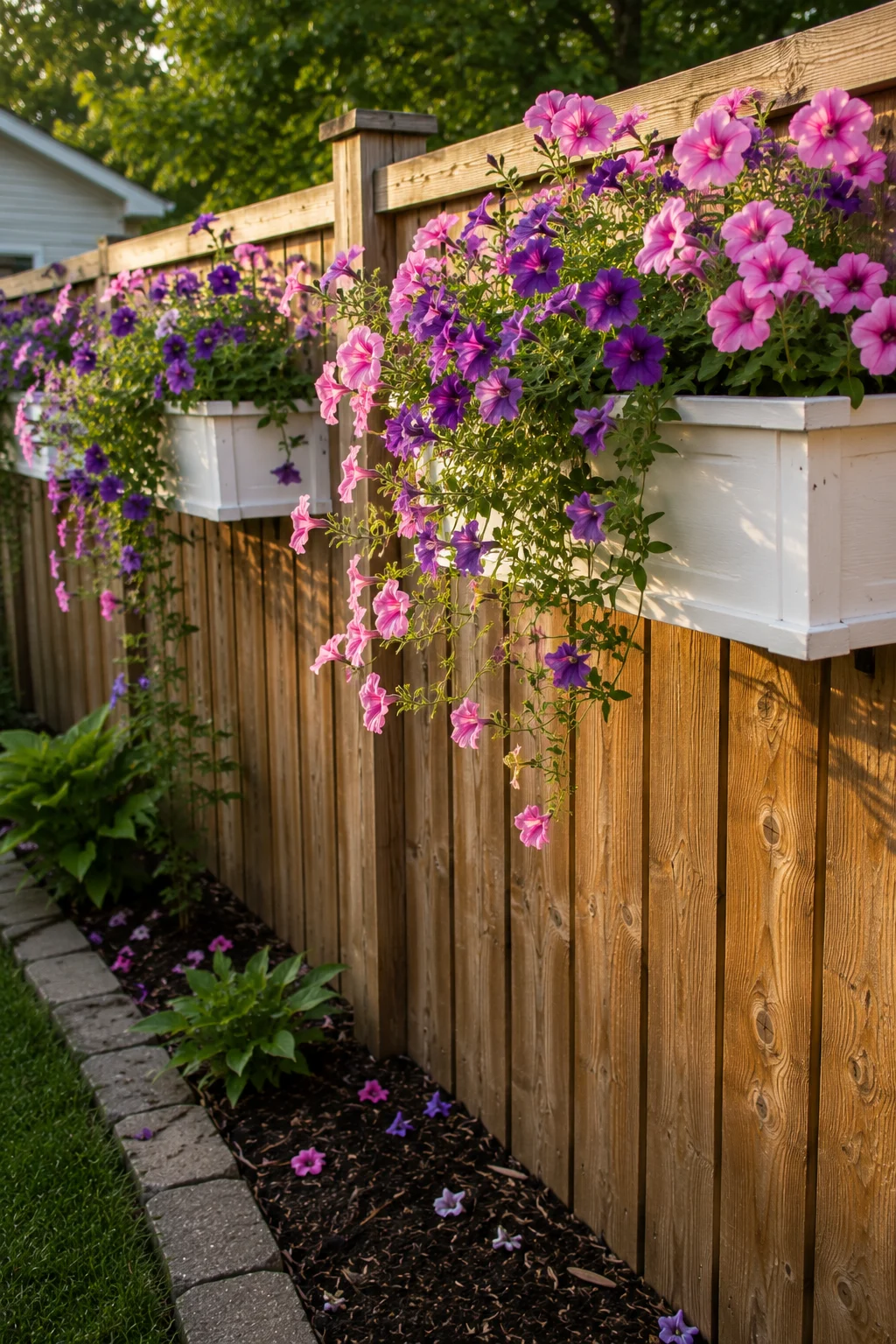
8. Hanging Planter Boxes Along the Rail
Rail-mounted planter boxes let you add a continuous line of flowers along the top of a fence without needing ground space at all. This works especially well on fences bordering a patio, where floor space is already limited. Choose boxes with hooks sized for your specific rail width, and fill them with trailing plants like petunias or sweet potato vine so growth spills over the edge. Check the hooks periodically, since wet soil makes the boxes heavier than they look when dry.
9. Espaliered Fruit Tree Against the Fence
Espalier training involves pruning a fruit tree, often apple or pear, so it grows flat against a fence in a structured pattern instead of a normal rounded shape. It works because it turns a narrow side yard fence into a productive, sculptural feature that takes up very little depth. Plant a young whip-style tree, attach horizontal wires to the fence posts, and tie new growth to the wires as it extends, pruning off anything growing forward or backward. This is a multi-year project, so it suits homeowners who enjoy a slower, hands-on kind of gardening.
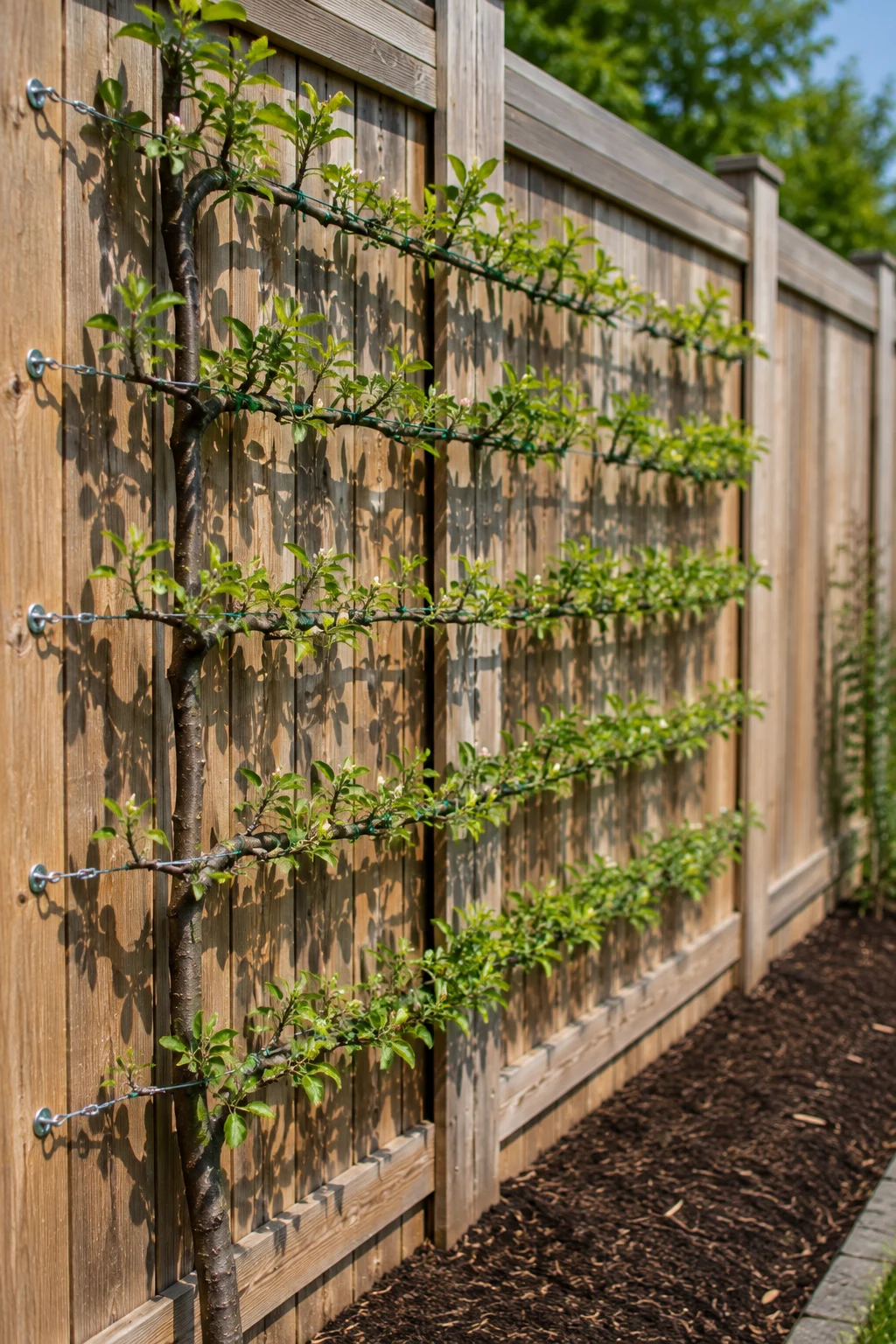
10. Living Wall with Modular Planters
Modular living wall panels, usually a grid of small individual planting cells, let you cover a fence section with dense, low-growing plants like succulents or sedum. This works well as a focal wall near a patio or outdoor dining area, since it reads more like art than a typical garden bed. Mount the panel frame to the fence studs, plant into the pre-formed cells, and lay the panel flat for two to three weeks so roots establish before hanging it vertically. Drought-tolerant plants make maintenance far easier once the wall is upright.
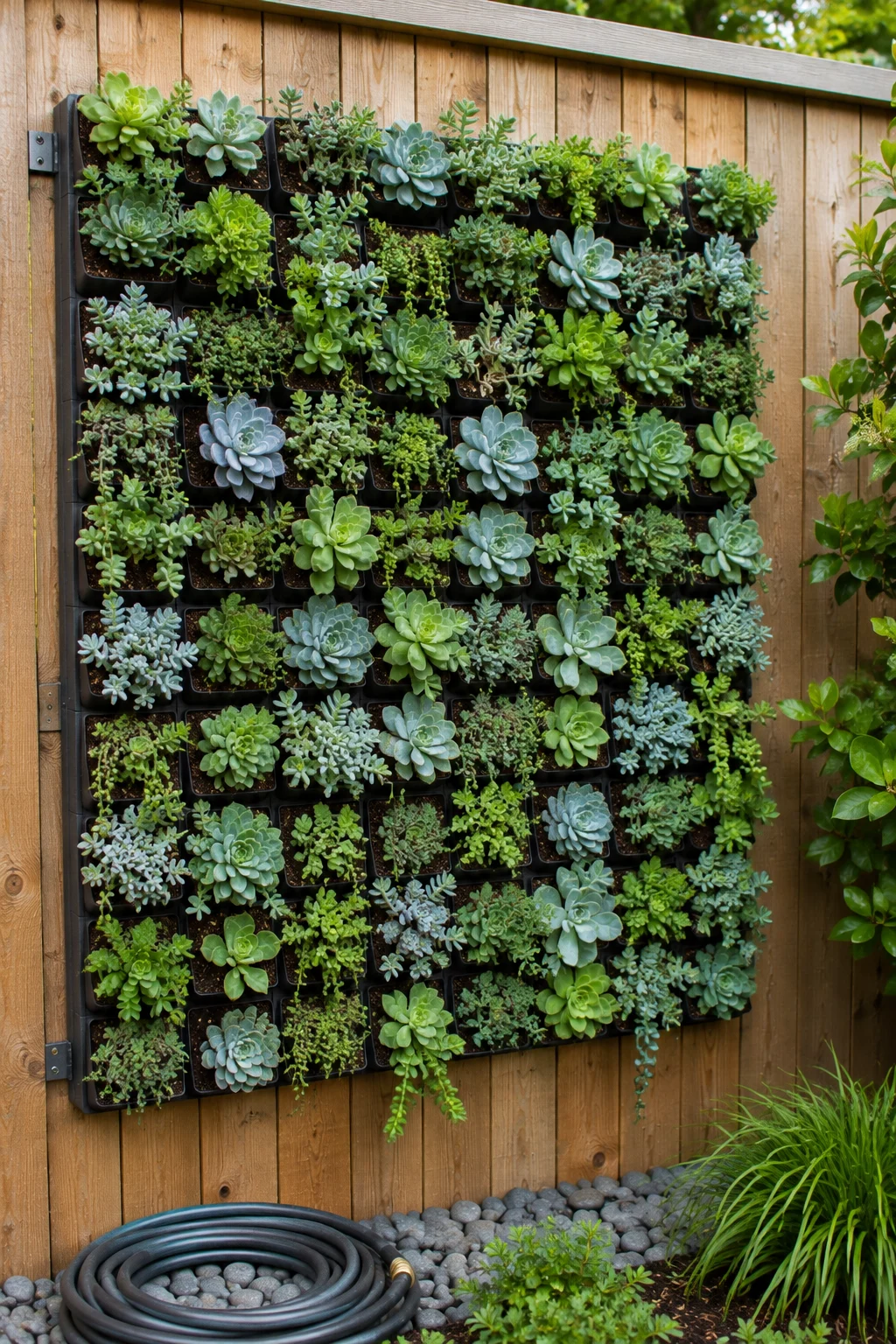
11. Flowering Vine Curtain for Privacy
A dense flowering vine like honeysuckle or wisteria trained along horizontal wires can soften a plain privacy fence and add seasonal bloom color at the same time. It works because it combines screening with fragrance and visual interest, rather than leaving a fence as a flat, silent backdrop. Install eye hooks and galvanized wire in horizontal rows every twelve to eighteen inches, then plant the vine at the base and guide new growth onto the wires. Some vines, like wisteria, grow aggressively and need yearly pruning to stay in bounds, so check the growth habit before planting.
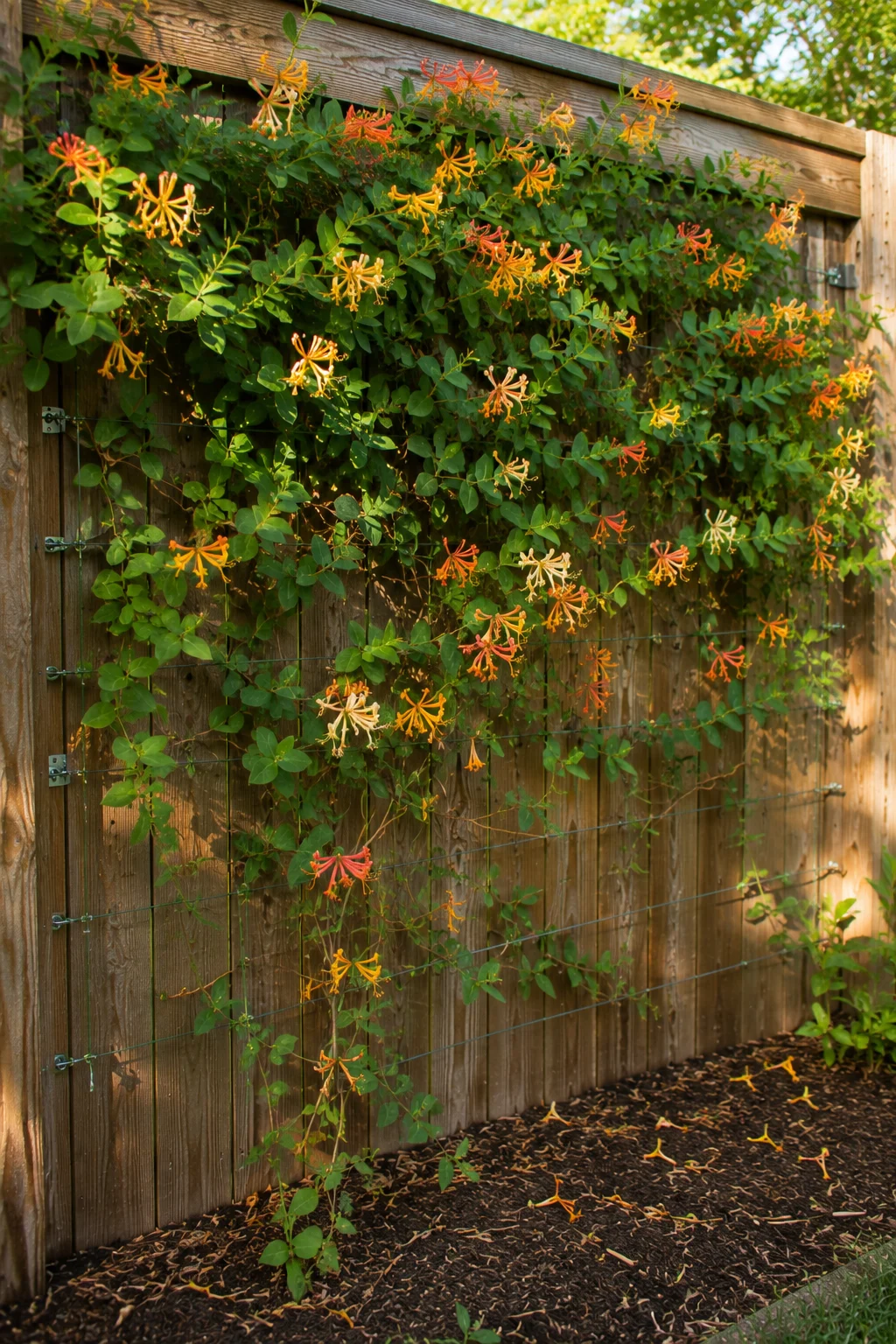
Lighting
12. Solar String Lights Along the Top Rail
Solar-powered string lights clipped or stapled along the top rail add ambient light without any wiring or electrician needed. This works because it is one of the easiest upgrades on this list, and most fences already have a small solar panel spot with enough sun exposure near the top. Attach the lights with cable clips spaced every foot or so, and position the small solar panel where it gets direct sun for at least four to six hours a day. Expect dimmer output on cloudy days and during winter months when daylight hours are shorter.
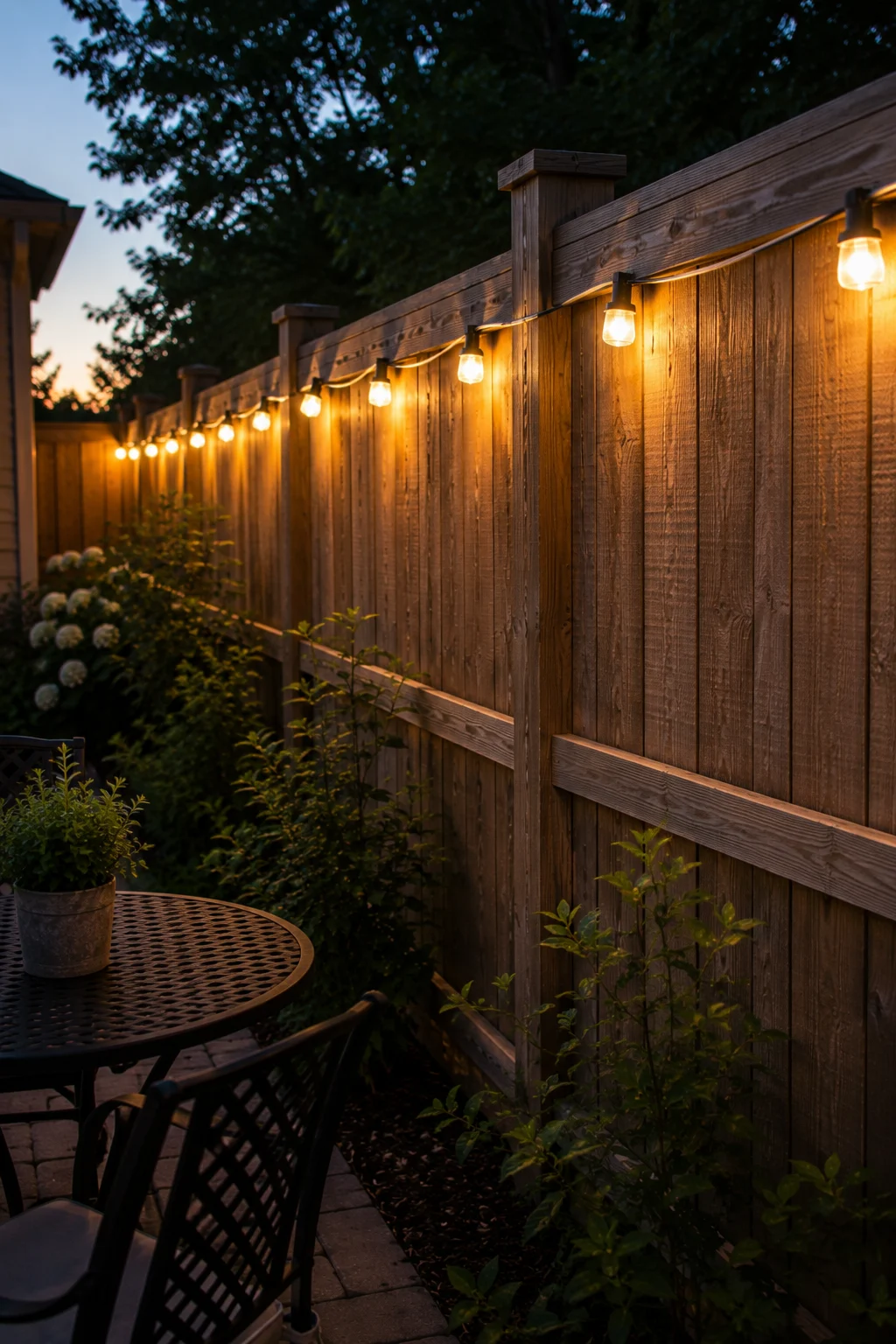
13. Uplighting for Texture and Shadow
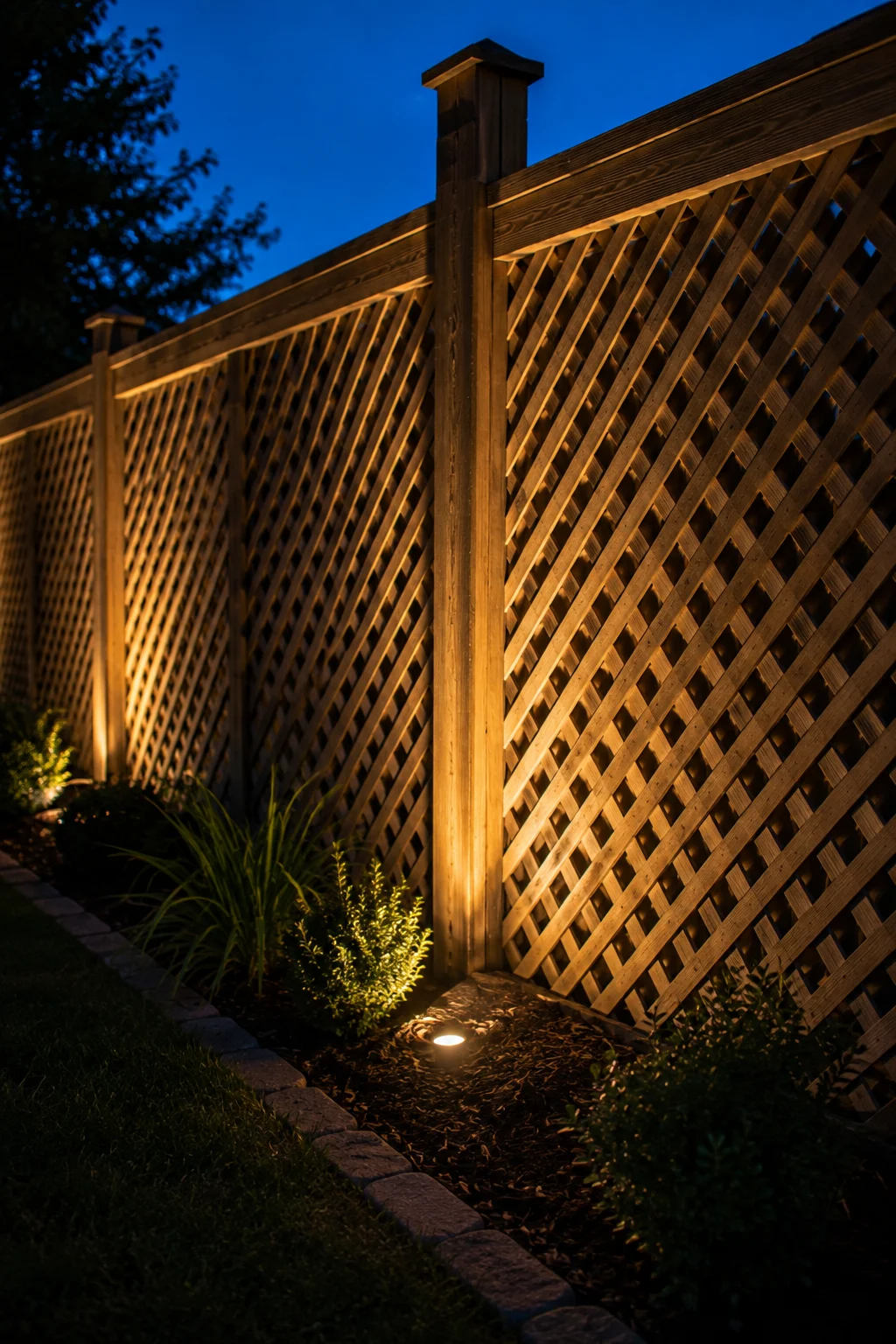
Small ground-mounted uplights aimed at the fence from below create dramatic shadow patterns, especially against textured wood or lattice. This works because it highlights the fence’s material and shape after dark, rather than lighting the whole yard evenly. Install low-voltage LED spike lights every six to eight feet, angled slightly toward the fence face, and run the cable along the fence line buried a few inches deep or hidden under mulch. This idea works best on fences with visible texture, like board-and-batten or lattice, since flat vinyl panels show less contrast.
14. Lanterns Hung from Hooks
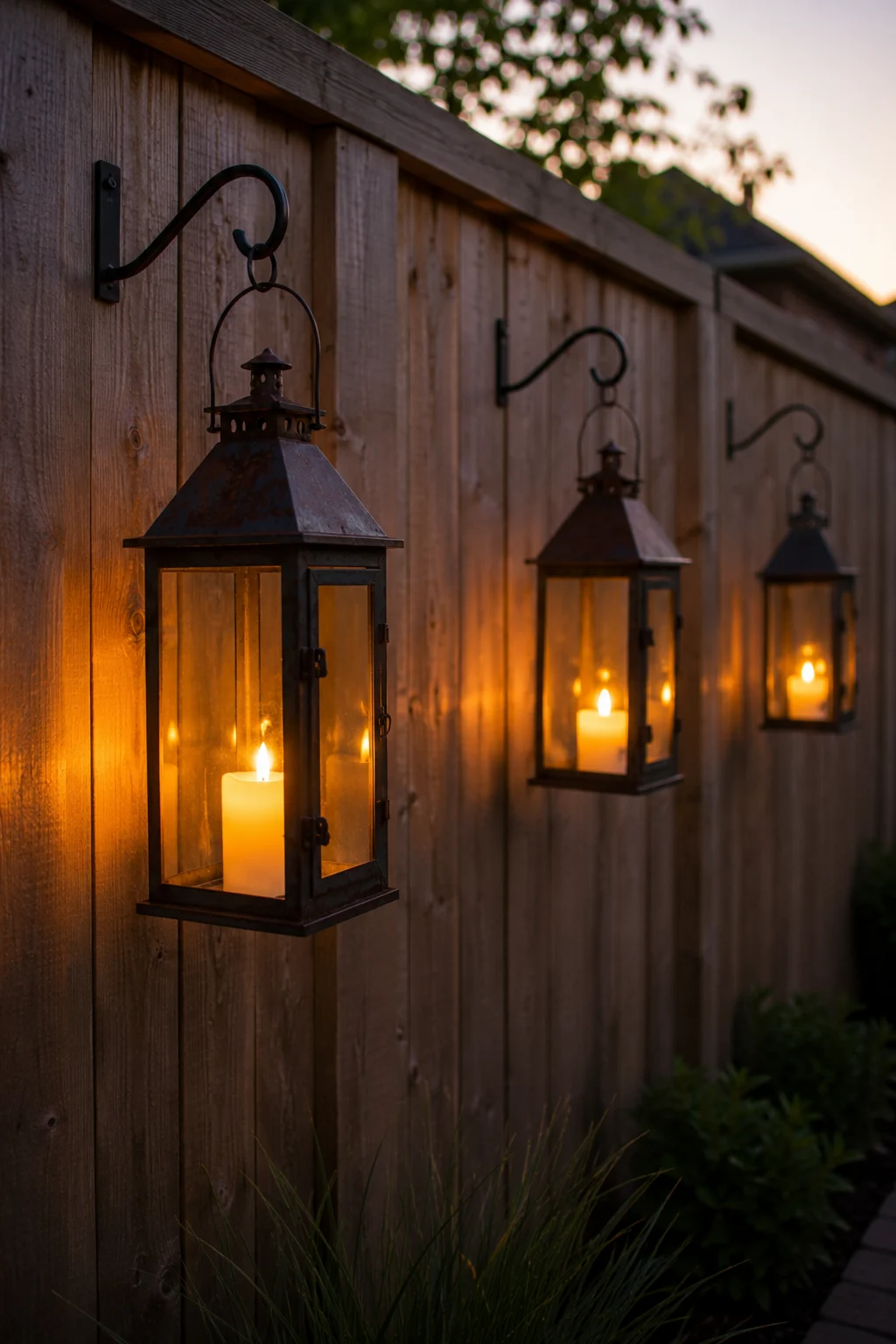
Hanging a row of battery or solar lanterns from simple screw hooks along the fence gives a softer, more decorative light source than string lights alone. This works well for outdoor dining areas, since the lanterns can be moved or added to gradually rather than installed as one fixed system. Screw evenly spaced hooks into the fence rail, hang lanterns of varying heights for visual interest, and use flameless LED candles inside for safety. Check battery levels seasonally, since lanterns left outdoors year-round tend to drain faster in cold weather.
15. Motion-Sensor Path Lights at the Base
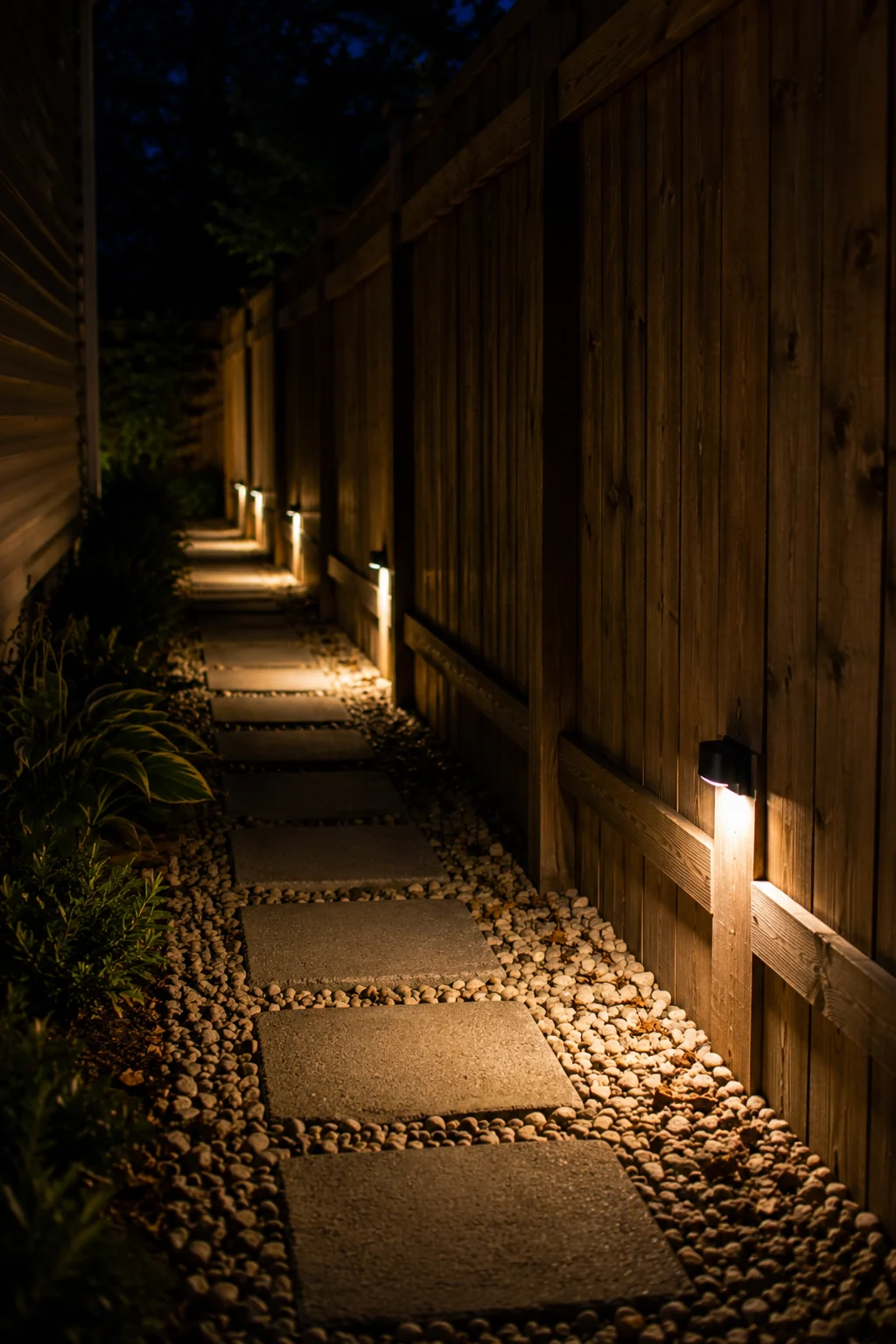
Installing motion-sensor lights along the base of a fence adds practical nighttime visibility for a side yard or gate path, not just decoration. This works because it solves a real problem, tripping hazards or dark corners, while still contributing to the overall look after dark. Mount the fixtures at ankle height every eight to ten feet, angled to wash light along the ground rather than into anyone’s eyes, and test the motion sensor range before finalizing placement. These are especially useful near trash cans, side gates, or any path used after sunset.
Wall Art & Decor
16. Weatherproof Metal Wall Art
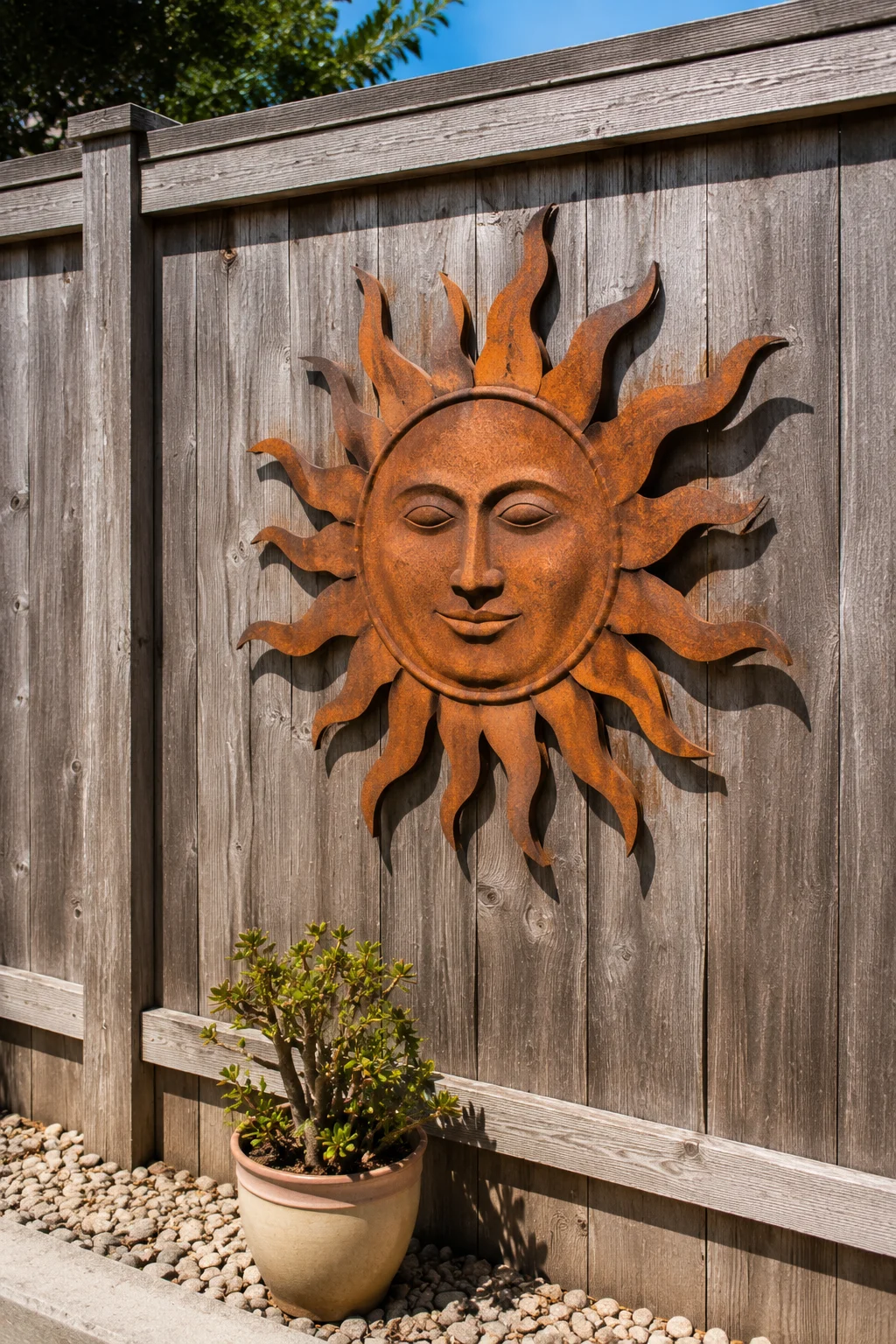
Large metal cutout art, like a sun, bird, or geometric pattern, gives a fence a focal point without needing any plant maintenance at all. This works well for homeowners who want visual interest but do not want to water or prune anything new. Choose powder-coated or galvanized steel pieces rated for outdoor use, and mount them with exterior-grade screws directly into the fence studs rather than just the boards. Position the piece at eye level or slightly above so it reads clearly from the patio or main sightline in the yard.
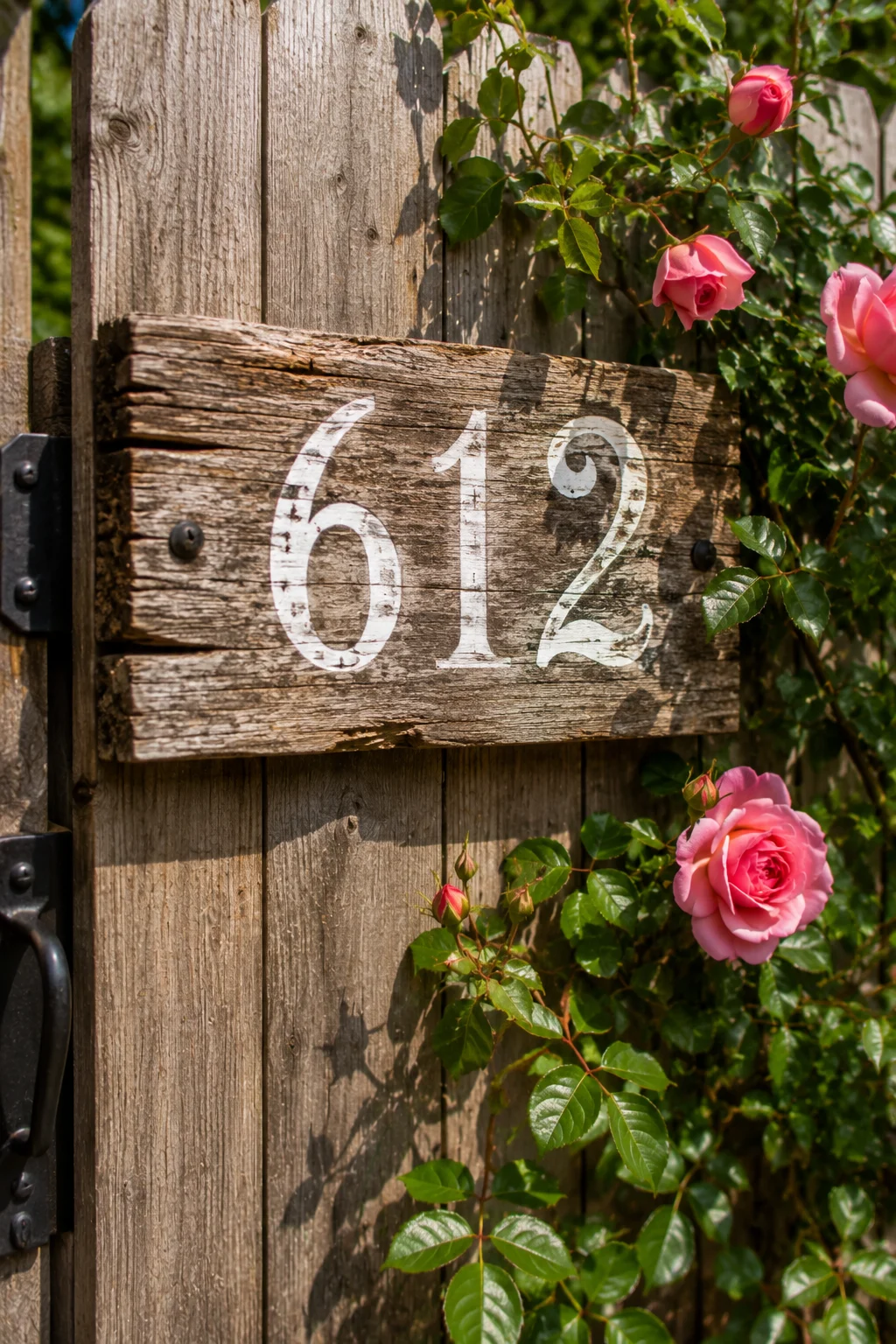
17. Reclaimed Wood Sign with House Number
A hand-lettered or stenciled sign made from reclaimed wood adds a personal, custom touch and can double as house numbering near a gate or driveway fence. This works because it is a low-cost project using scrap materials, and it gives visitors a clear visual landmark. Sand a piece of reclaimed board, stencil or paint the numbers, seal with exterior polyurethane, and mount with weatherproof screws or wire. Keep the color palette simple, two tones at most, so the sign stays legible from the street.
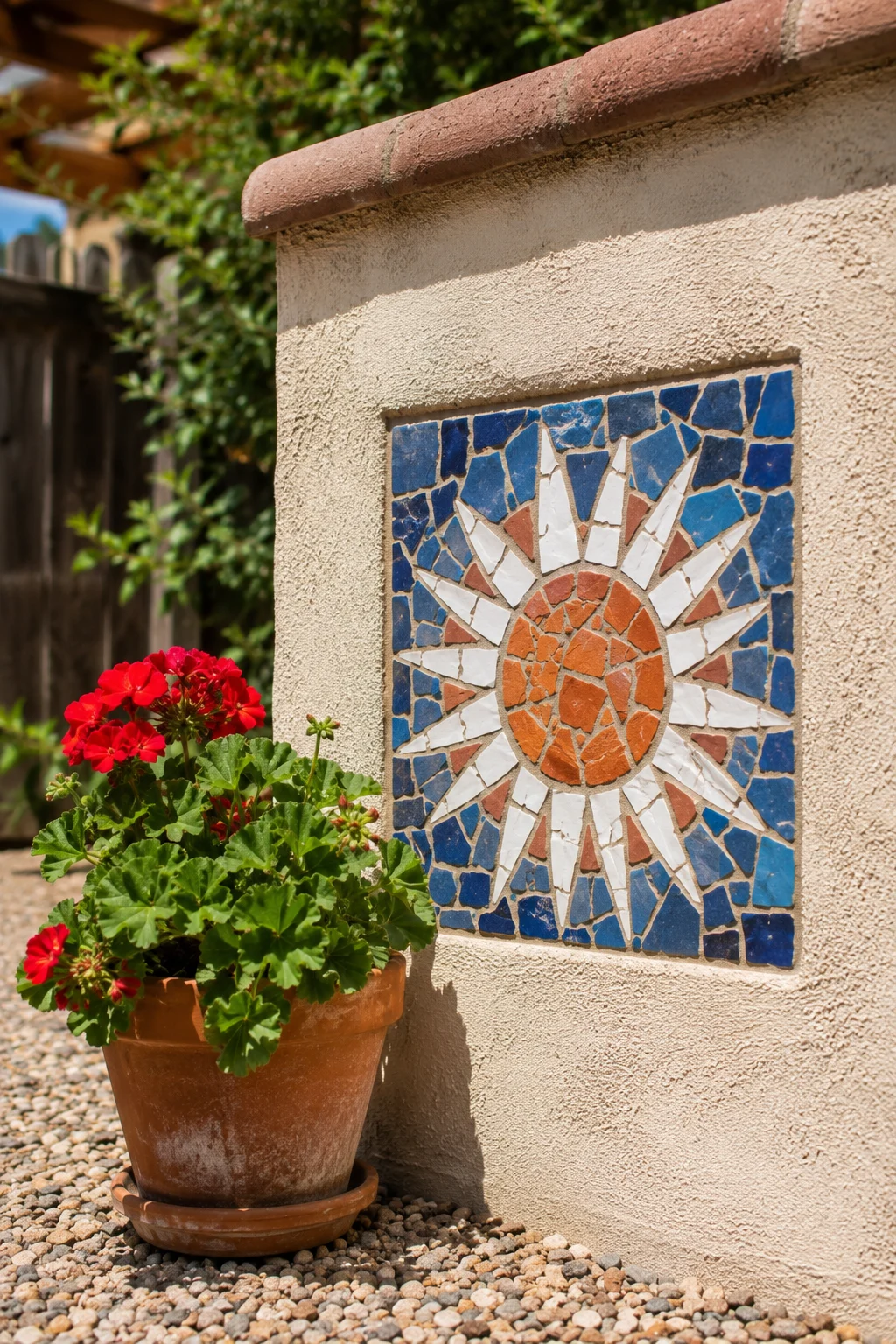
18. Mosaic Tile Accent Panel
A small mosaic made from broken tile or glass pieces set into a mortar bed adds color and texture to one section of fence, similar to a piece of built-in art. This works especially well on masonry or stucco fence walls, where tile adheres more easily than on wood. Sketch a simple pattern first, adhere the tile pieces with exterior tile adhesive, then grout once the adhesive has cured. Keep the design simple for a first attempt, since intricate patterns take significantly longer to plan and cut.
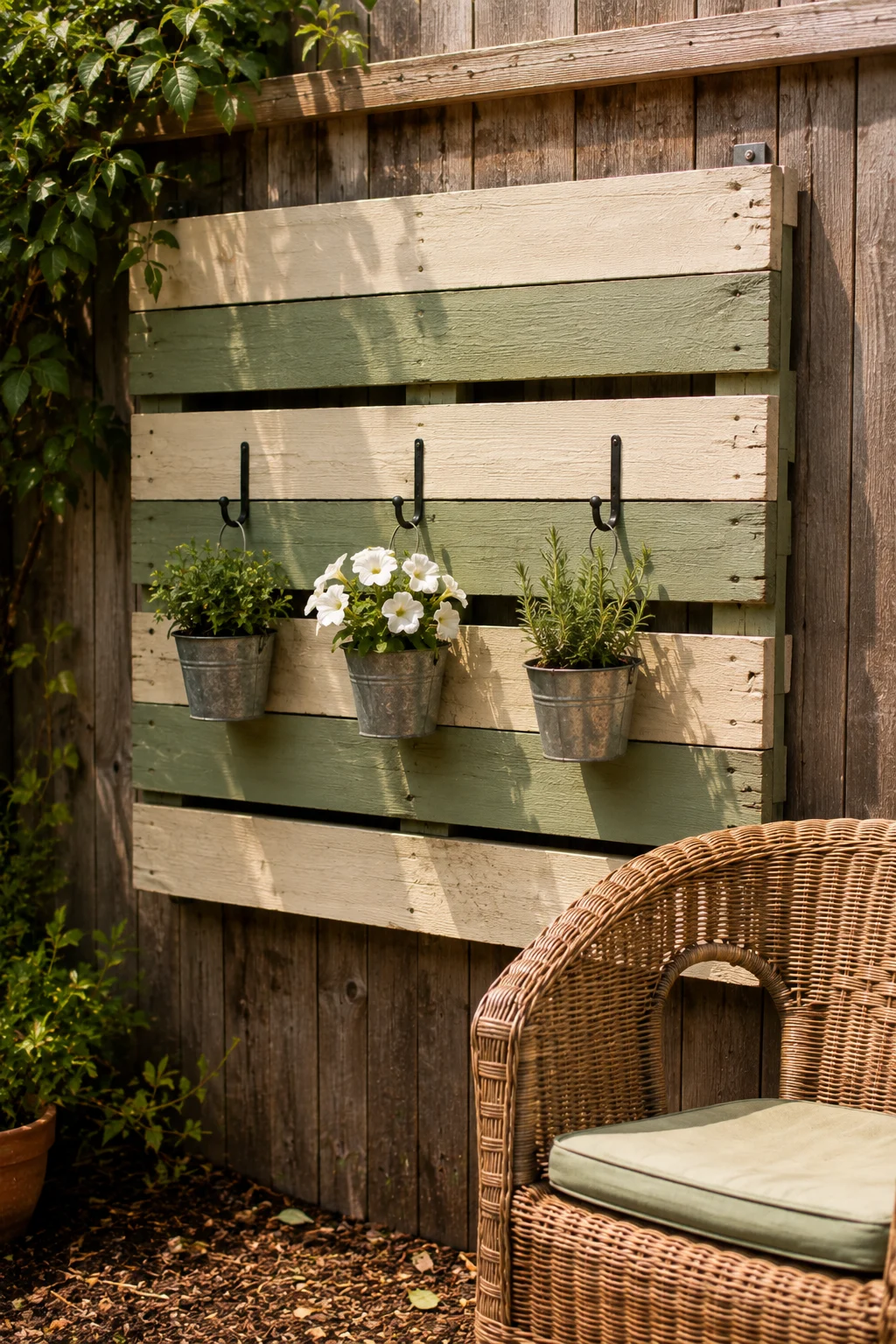
19. Painted Wooden Pallet Art
Repurposed pallet wood, sanded and painted with a simple design, gives a rustic, budget-friendly art piece that mounts directly onto a fence. This works because it recycles material many homeowners already have access to for free, and the rough plank texture suits an informal backyard look. Disassemble or leave the pallet intact depending on the design, sand any rough edges, paint the pattern, and seal with exterior varnish before mounting with brackets. Simple geometric or striped patterns tend to look more intentional than freehand designs for beginners.
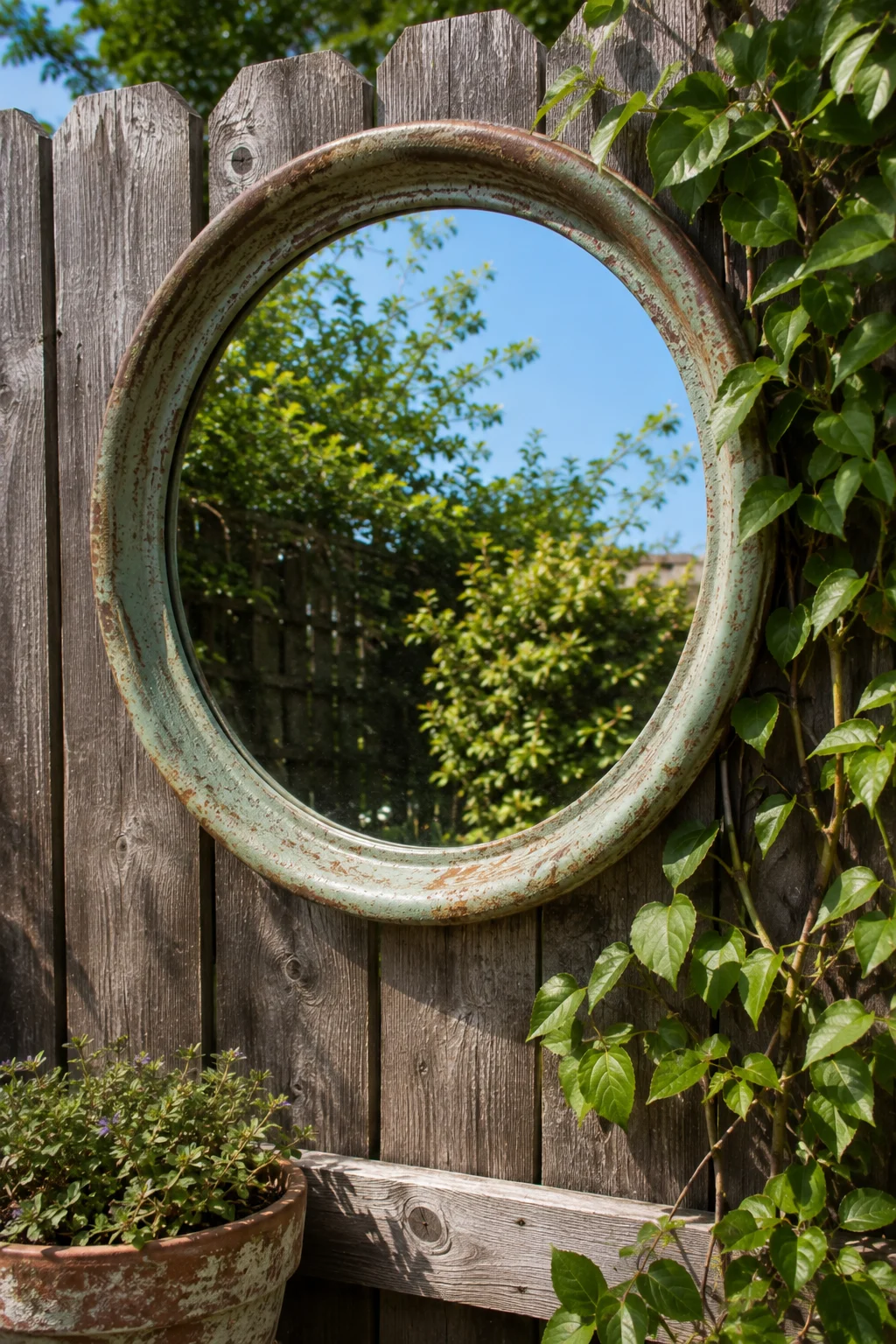
20. Vintage Mirror to Add Depth
Hanging an outdoor-rated mirror on a fence reflects nearby plants and sky, which can make a small backyard feel slightly larger and less enclosed. This works especially well in narrow side yards or courtyard-style spaces where the fence sits close to a seating area. Choose a mirror with a rust-resistant frame designed for exterior use, mount it securely with wall anchors, and angle it slightly downward so it reflects greenery rather than empty sky. Avoid placing mirrors where they would reflect direct afternoon sun into a window or seating area.
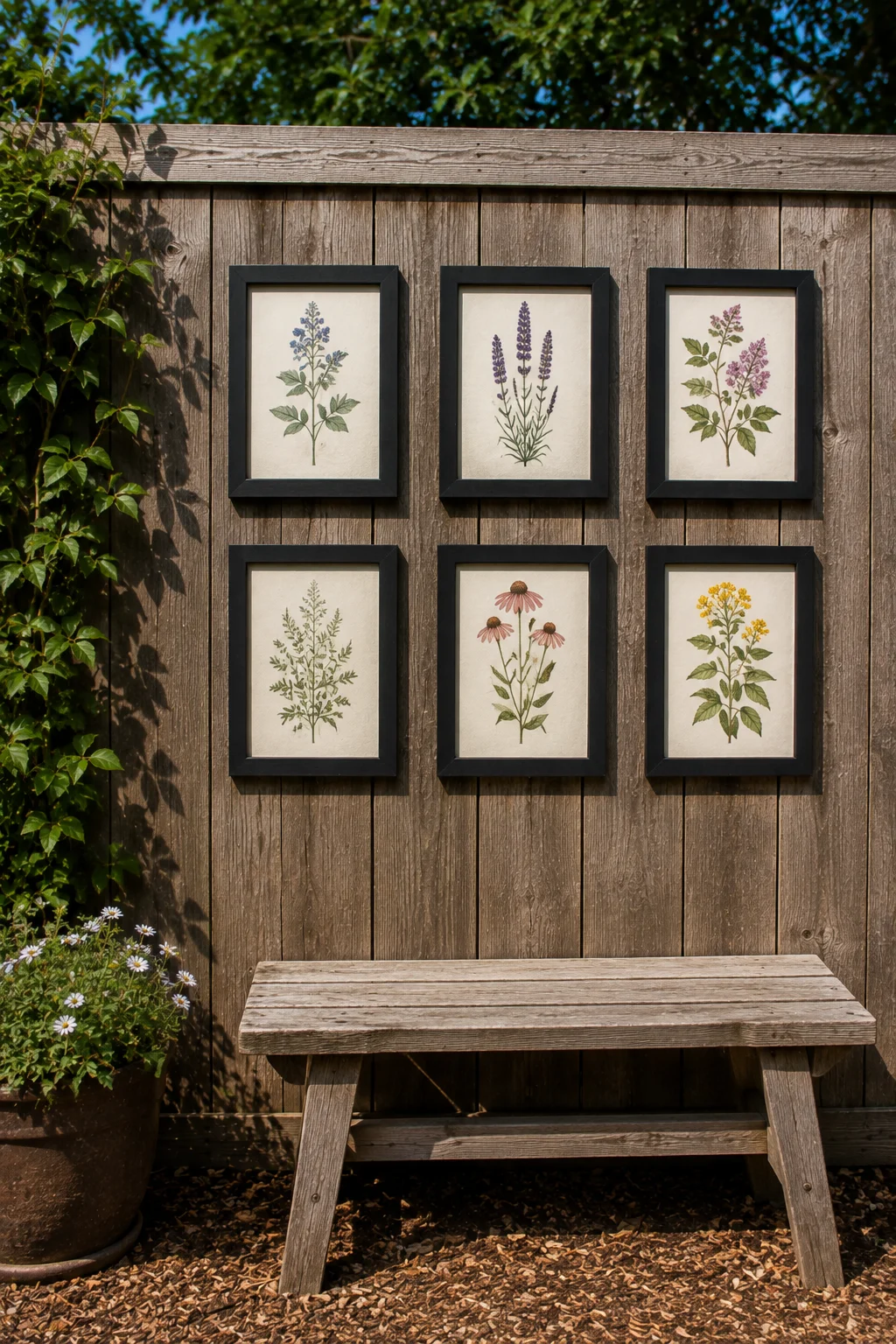
21. Gallery Wall of Outdoor-Rated Frames
Grouping several small outdoor-rated frames or plaques on one fence section creates a gallery-style display, similar to an indoor photo wall but weatherproofed for the yard. This works because it lets you rotate or add pieces over time instead of committing to one large art piece all at once. Use frames specifically rated for exterior use, arrange them in a simple grid with even spacing, and mount each one individually so pieces can be swapped later. Limit the color palette across the frames so the grouping reads as cohesive rather than cluttered.
Functional Additions
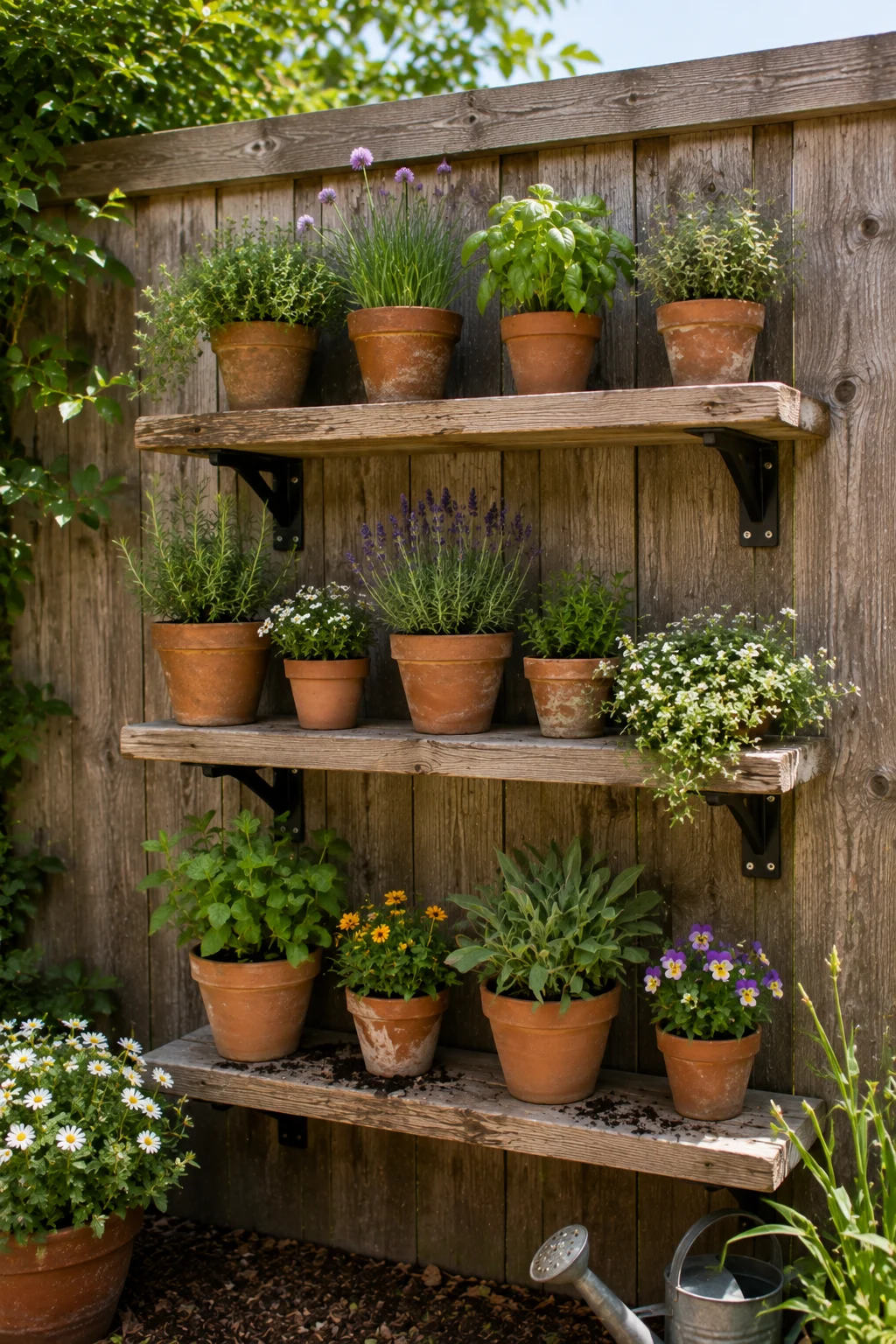
22. Built-In Shelving for Potted Plants
Simple wood shelf brackets mounted directly onto a fence create tiered display space for potted plants without taking up any ground area. This works well for homeowners with a lot of container plants and limited patio space, since it moves pots up and off the ground. Attach L-brackets into the fence studs at staggered heights, cut shelf boards to length, and seal them with exterior varnish before loading with pots. Keep heavier terra cotta pots on lower shelves and lighter plastic ones higher up to keep the structure stable.
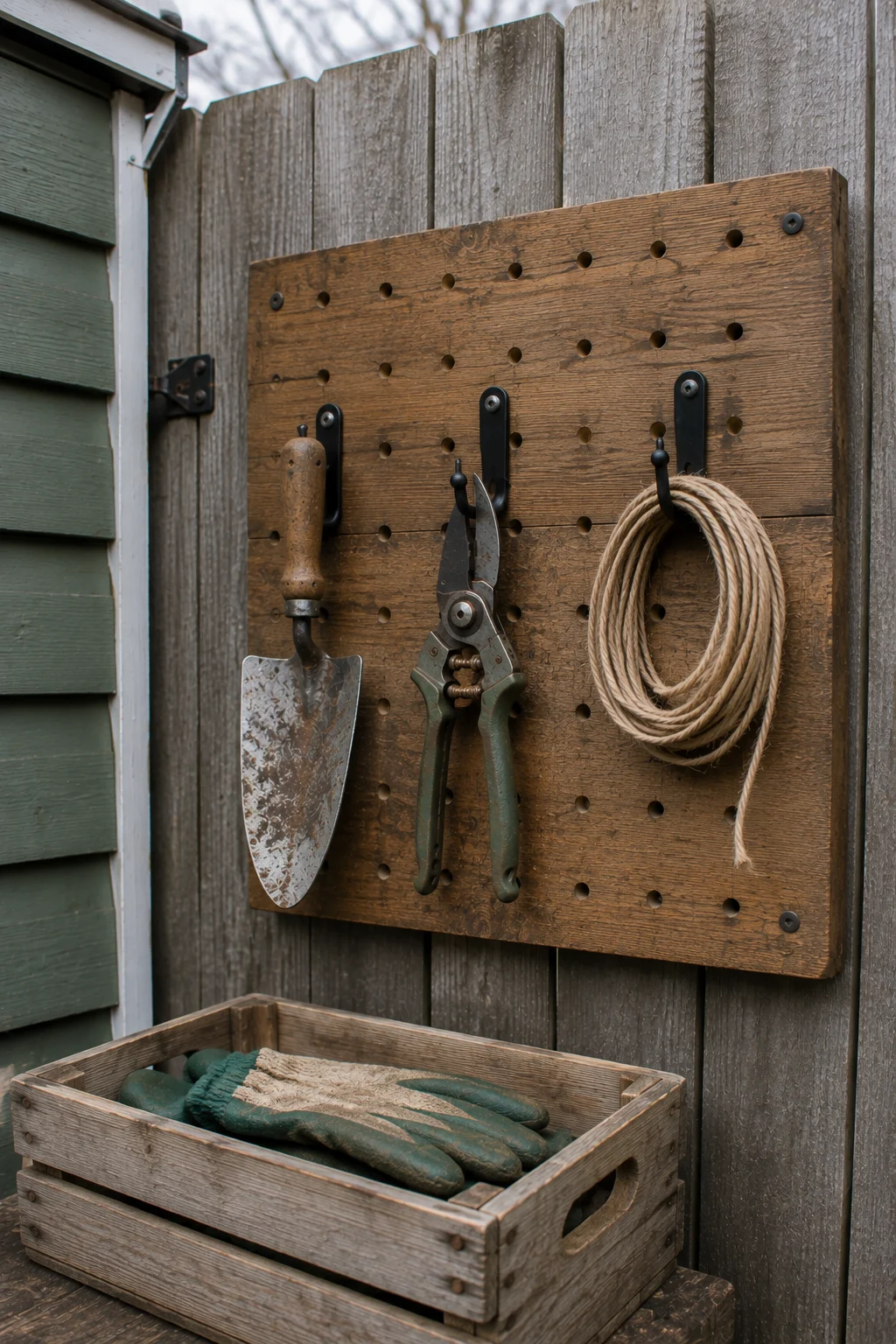
23. Hanging Tool Rack for the Garden Shed Wall
A pegboard or slatted tool rack mounted on a fence near a shed keeps gardening tools organized and off the ground, which also reduces rust from sitting in damp grass. This works because it turns dead fence space next to a shed into functional storage instead of leaving it bare. Mount an exterior-rated pegboard panel to the fence studs, add hooks for hand tools, and consider a small overhang or eave above it to keep rain off metal tools. Group tools by size or task so the layout stays easy to use rather than just decorative.
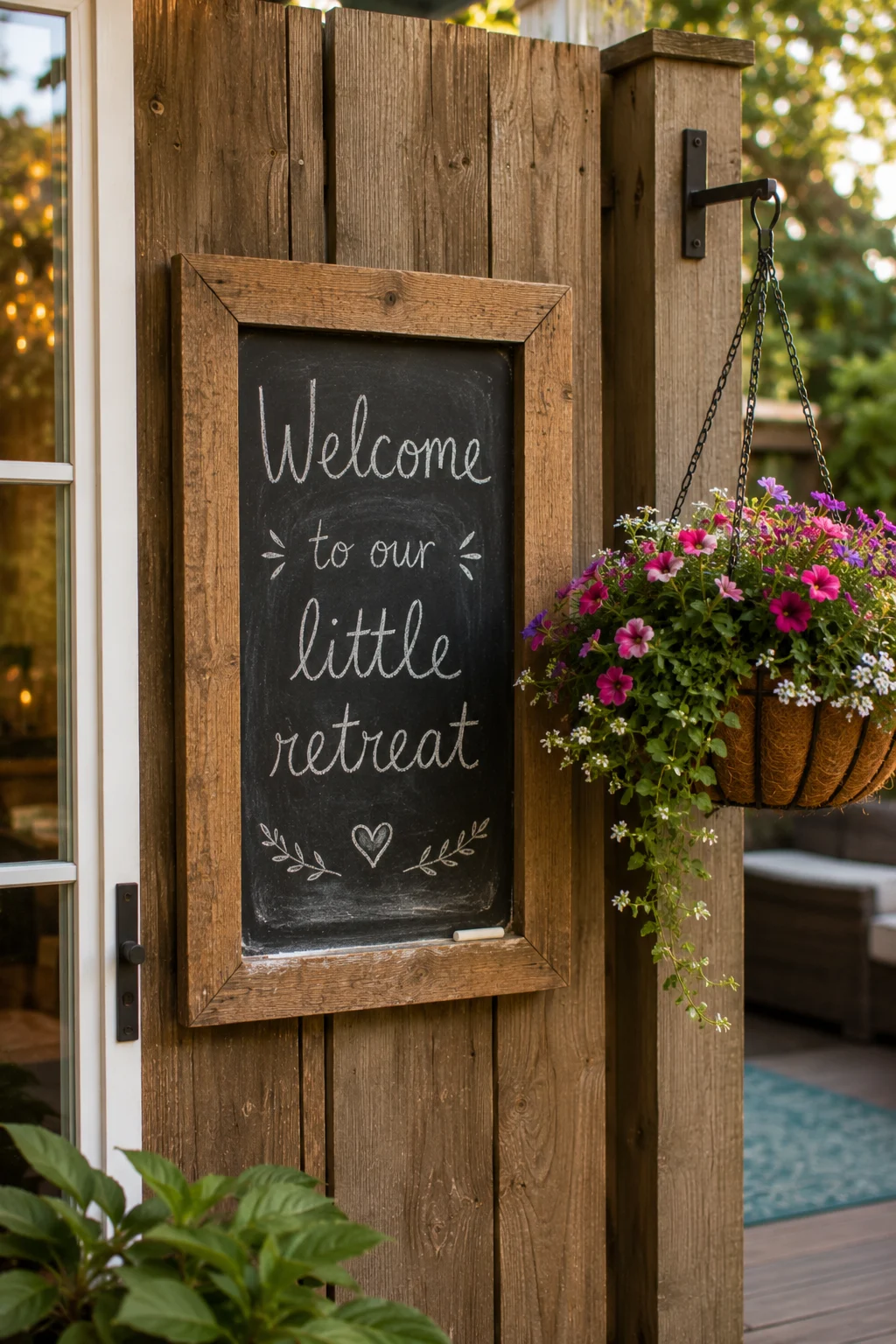
24. Chalkboard Panel for Notes and Doodles
Separate from the kids’ mural idea, a small framed chalkboard panel near a patio door can serve as a rotating message board for reminders, quotes, or a simple welcome message. This works because it adds a changeable, personal element to an otherwise static fence line. Build or buy a small framed chalkboard rated for outdoor use, mount it at eye level near a frequently used entry point, and refresh the message seasonally. Keep a small chalk holder attached nearby so it stays easy to update.
25. Fold-Down Bar Shelf for Entertaining
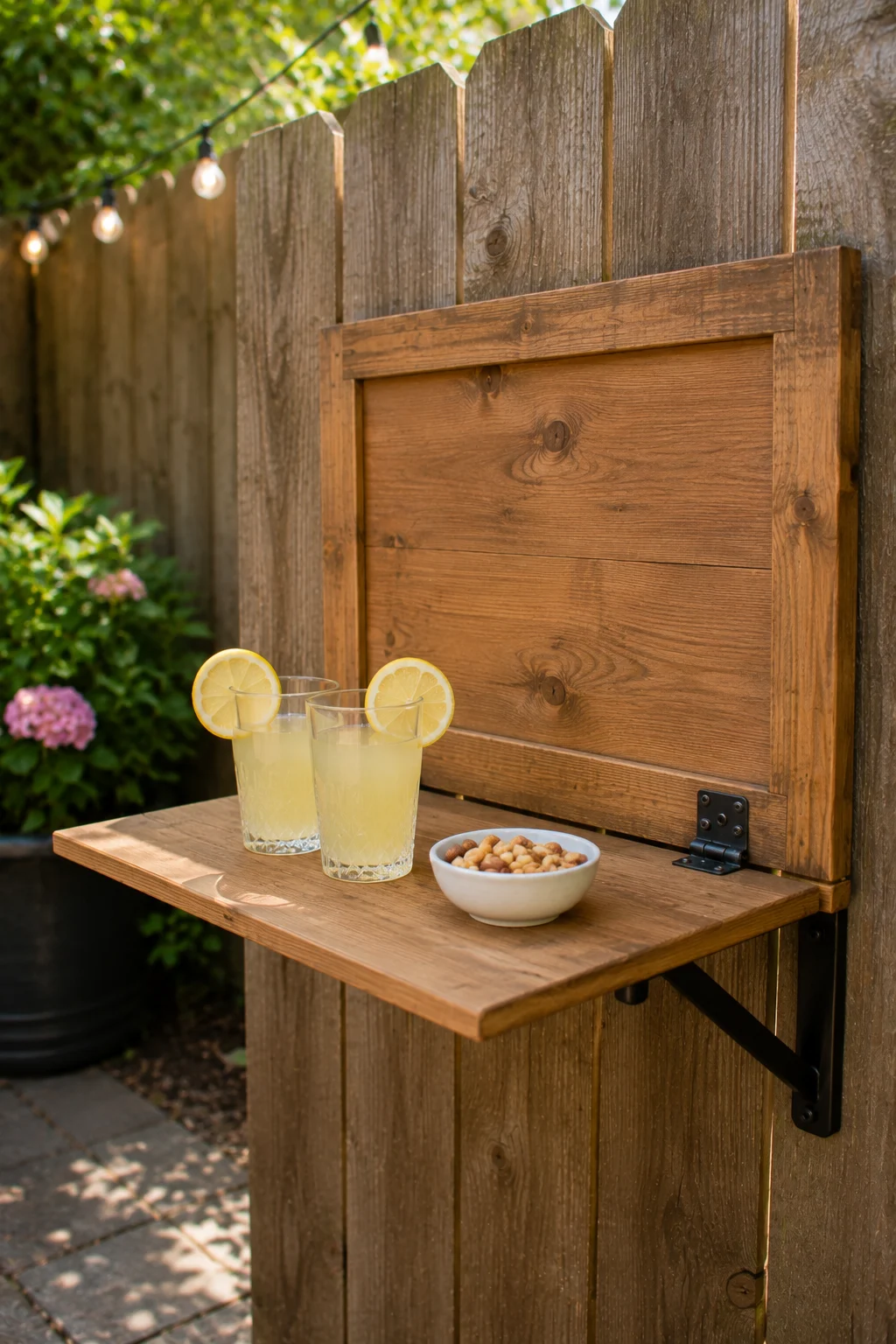
A hinged shelf that folds flat against the fence when not in use, and drops down to hold drinks or snacks during gatherings, adds function without permanently taking up patio space. This works well for smaller backyards where a full outdoor bar cart is not practical. Attach the shelf with a piano hinge along the top edge and a folding support bracket underneath, using exterior-grade plywood sealed against moisture. Add a small lip or raised edge around the shelf perimeter to keep glasses from sliding off on an uneven surface.
Seasonal & Privacy Touches
26. Bamboo Screening Rolls for Instant Texture
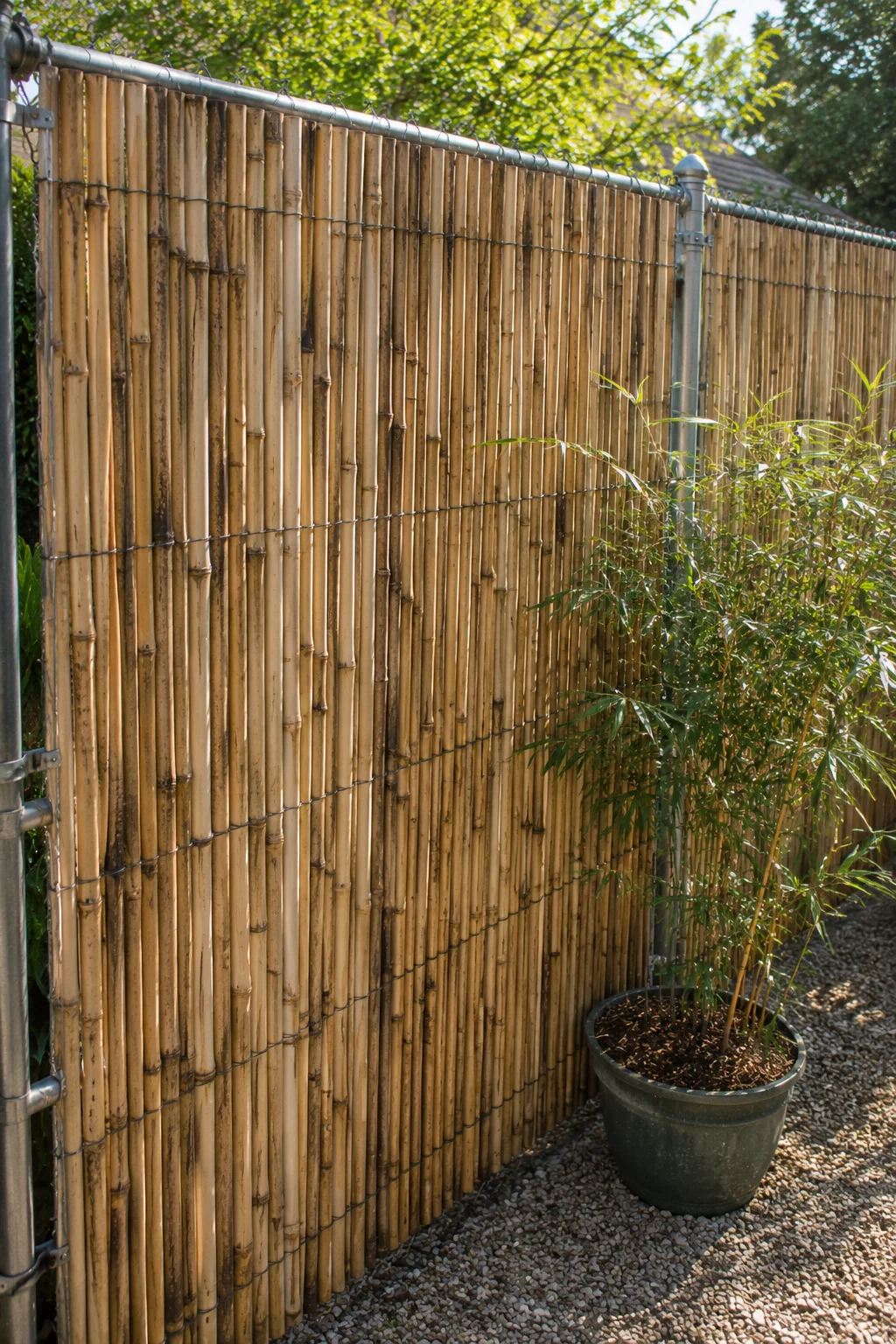
Rolled bamboo or reed screening attaches directly over an existing fence to add texture and a natural look without replacing the fence itself. This works well for covering up an older chain-link or plain wood fence quickly and affordably. Unroll the screening along the fence, secure it with zip ties or the included wire fasteners at regular intervals, and trim any excess length with garden shears. Bamboo screening typically lasts a few years outdoors before it needs replacing, depending on sun and rain exposure.
27. Seasonal Wreaths and Swag Hooks
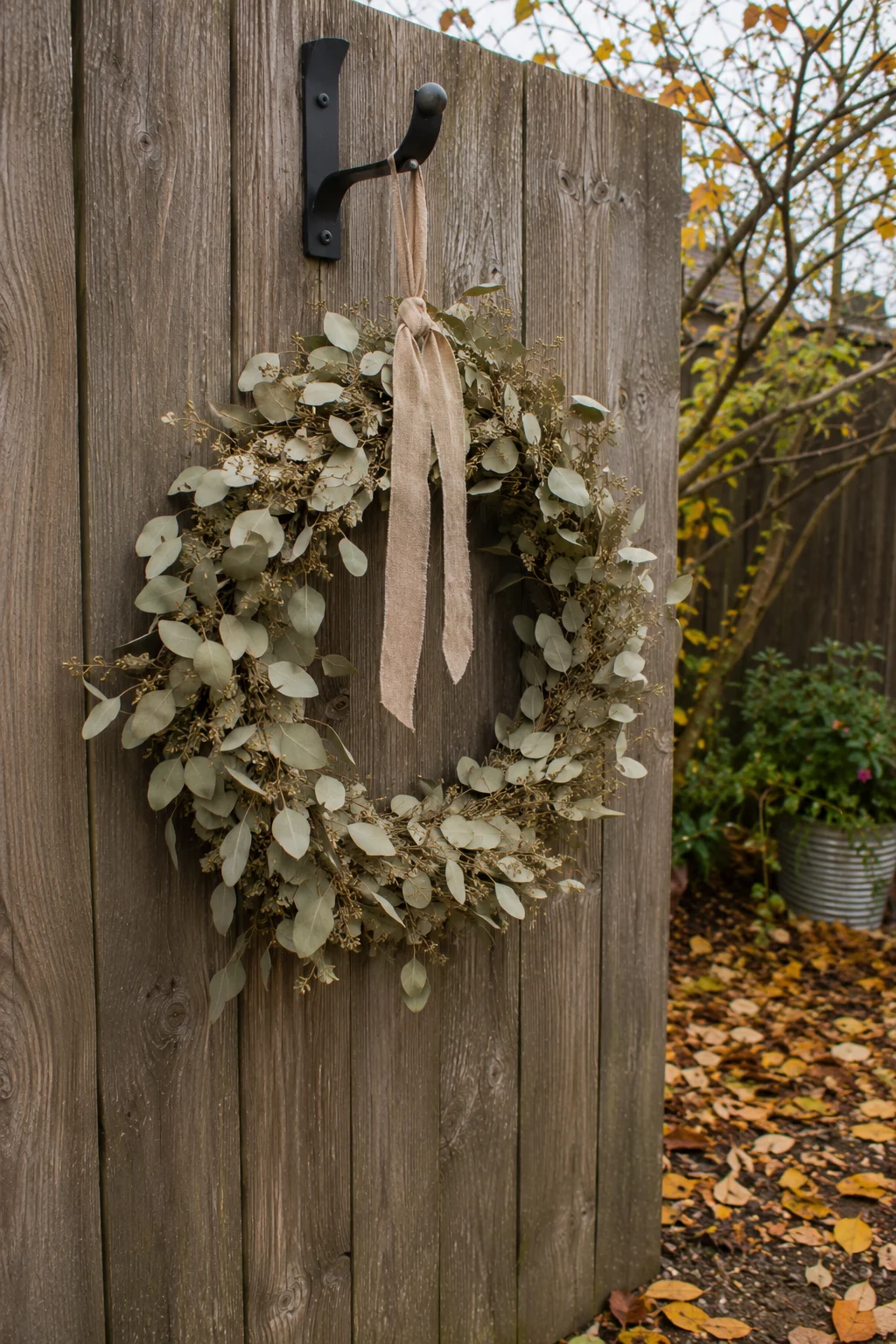
Installing a few simple hooks at consistent intervals lets you rotate wreaths, swags, or seasonal greenery on the fence throughout the year without repeating any permanent project. This works because it is the lowest-commitment idea on the list, and it gives you a reason to update the fence’s look every few months. Mount weather-resistant hooks at evenly spaced points along a visible section of fence, and use outdoor-rated wreaths or swags made from dried or artificial materials so they hold up in rain and sun. Rotate the display for major seasons, like a simple green wreath in summer and a dried wheat or pinecone version in fall.
How to Choose From This List
With 27 fence decorating ideas here, the goal is not to do all of them at once. Start by thinking about how your fence gets used, whether it borders a dining area, a side yard path, or a garden bed, and pick two or three ideas from different categories that solve an actual need there. A fence near a patio benefits from lighting and a shelf, while a bare privacy fence along the back property line might only need one strong plant feature, like a trellis or vine curtain, to feel finished. Mixing too many categories at once, like paint, mosaic tile, and a gallery wall all on the same panel, tends to look cluttered rather than curated.
Final Thoughts
A fence does not need a full renovation to feel like part of your yard instead of just its edge. Small, realistic updates, a coat of stain, a few hooks, one trellis, add up faster than most homeowners expect, and they cost far less than replacing the fence altogether.
If you are not sure where to start, pick one idea from the paint or plant categories first, since both make an immediate visual difference and are simple to reverse if you change your mind later. Once that piece is in place, you will have a better sense of what the fence actually needs next, whether that is lighting for evening use or a bit of storage near a shed.
Start small, live with it for a season, and keep building from there. A backyard fence decorated this way tends to feel more personal than one designed all at once, and it gives you room to keep adding ideas as your garden changes.
External sources referenced: The Spruce – climbing plants for fences and arbors, Martha Stewart Living – garden fence ideas