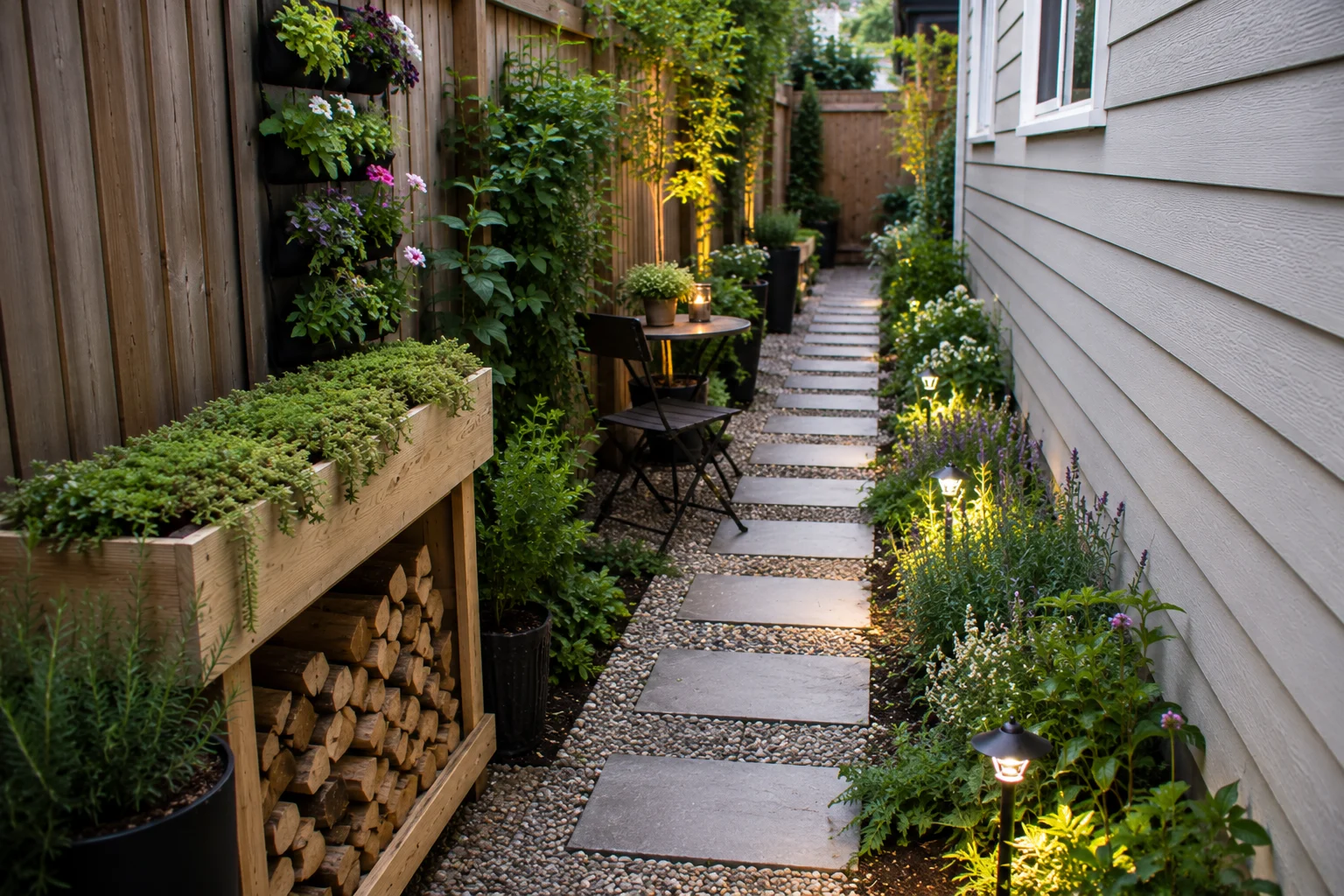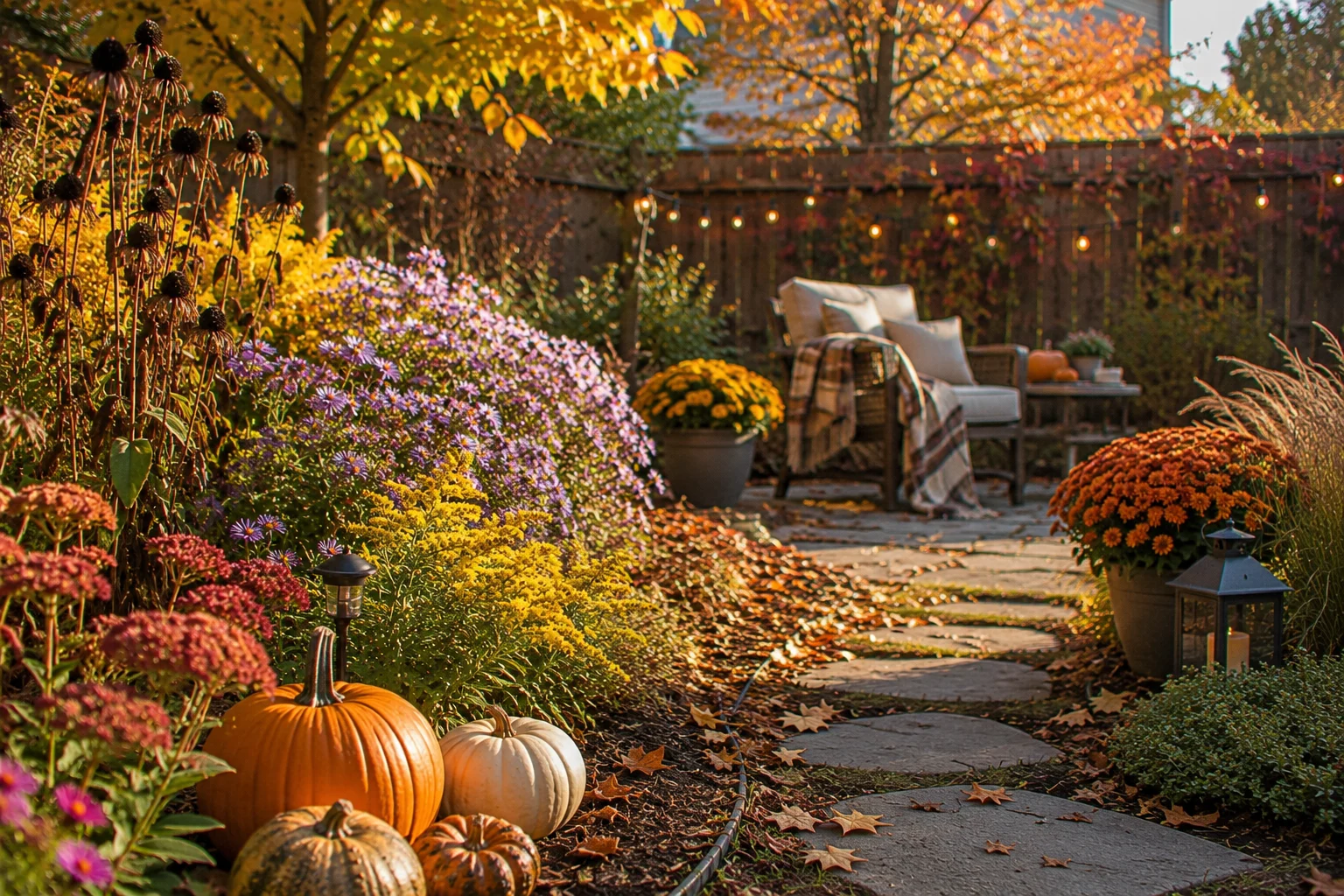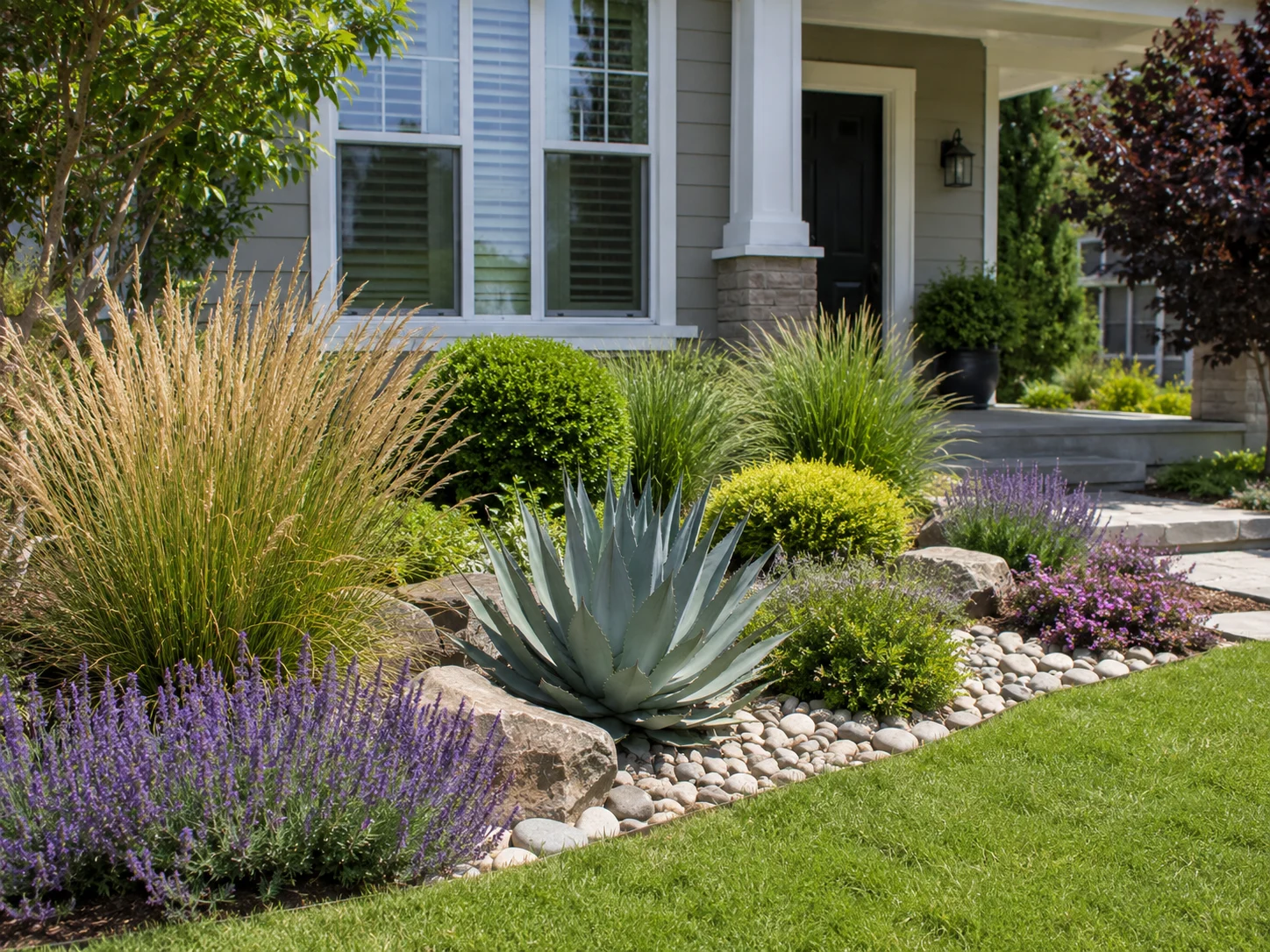

The border along a front path, driveway, or house foundation does more for curb appeal than almost any other single feature — it’s the part of the property most visible from the street and the first thing anyone walking to the door actually sees up close. A well-designed border doesn’t necessarily need to be wide or expensive; it needs a clear shape, a sense of layering, and a defined edge, which a lot of front gardens are missing even when the individual plants themselves are perfectly healthy.
This list covers 25 front garden border ideas across six categories — layout and shape, planting structure, edging materials, color and seasonal planning, foundation and house-line borders, and pathway and driveway borders — each aimed at genuinely improving how a front garden reads from the street.
Border Layout and Shape
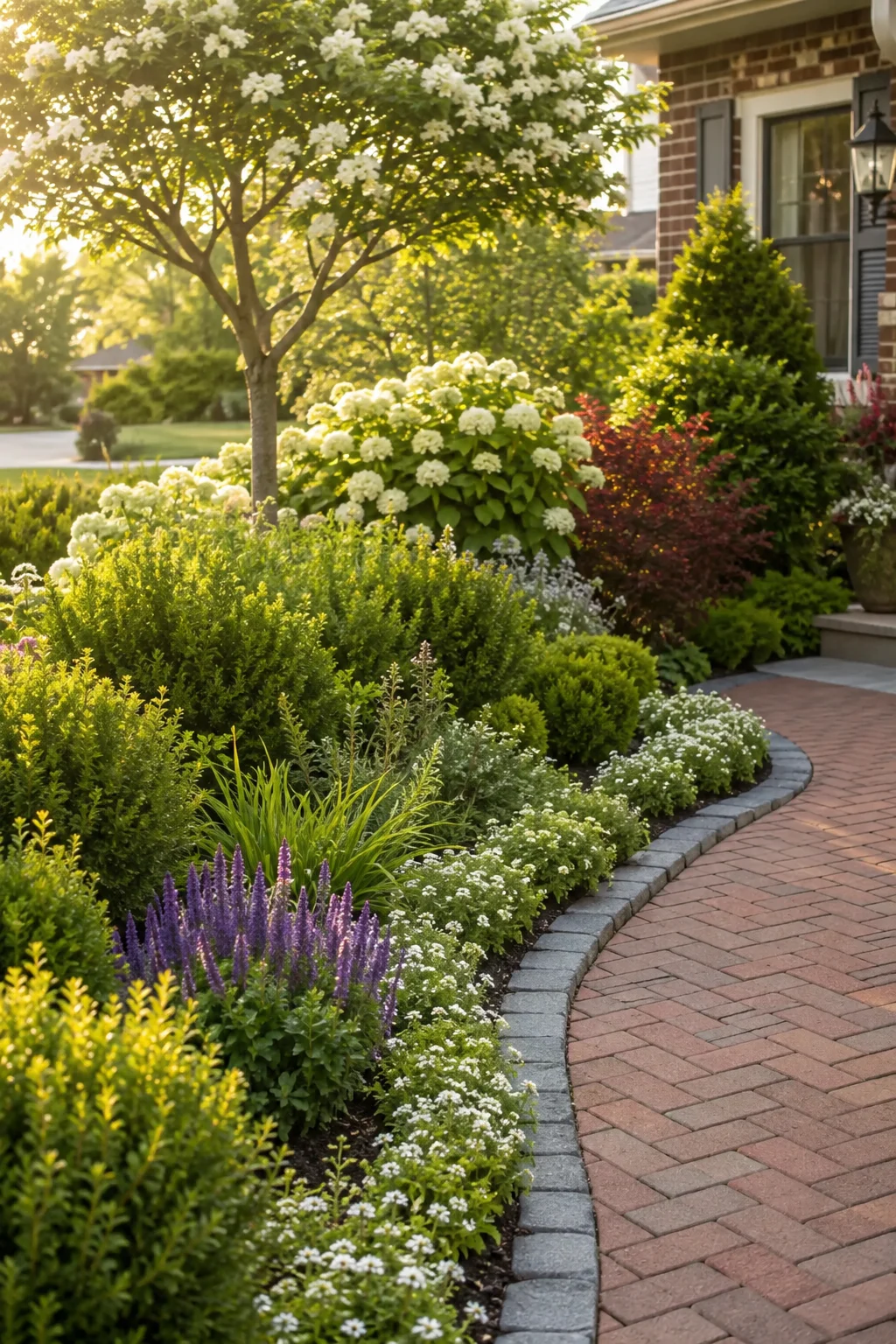
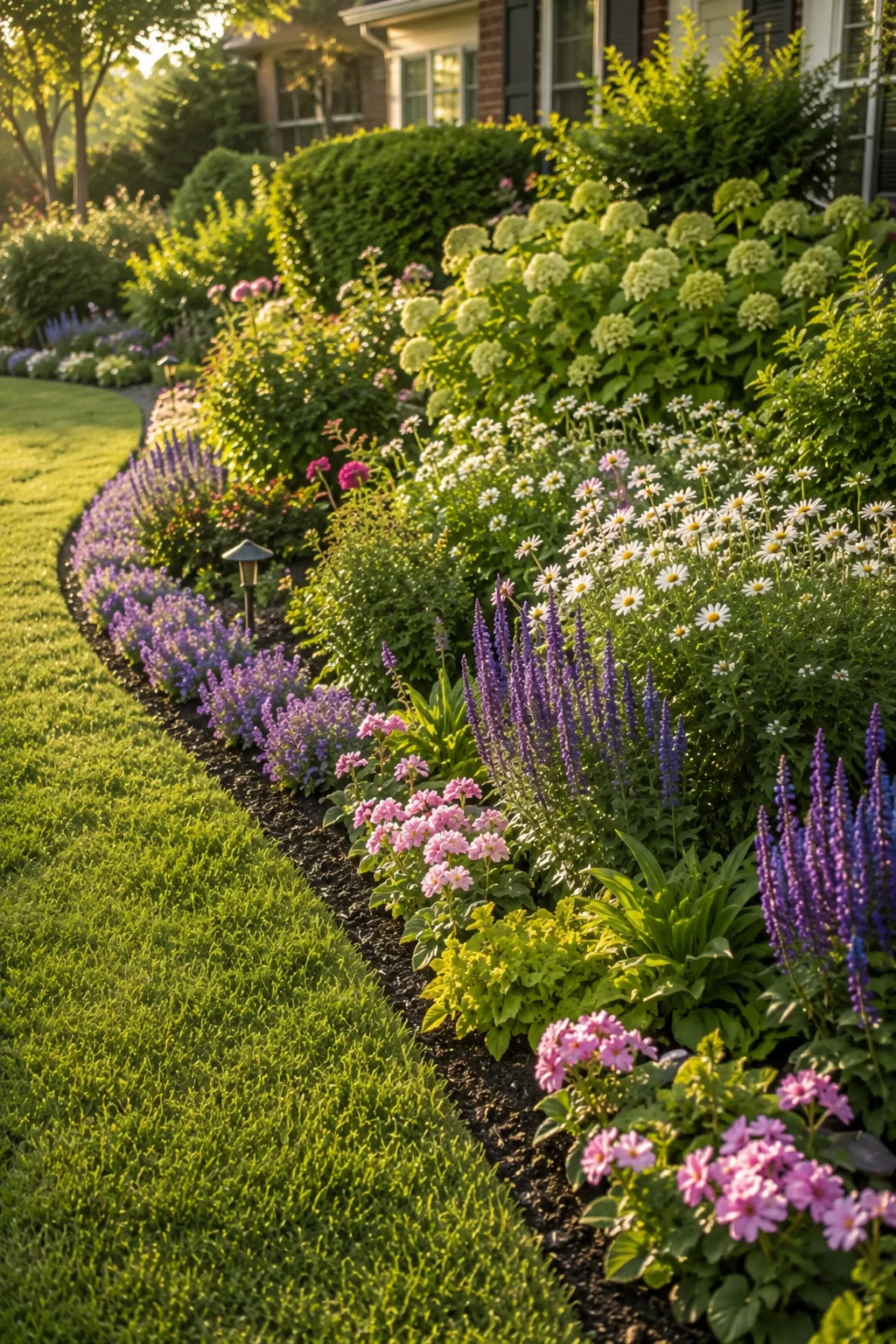
1. Curved Border Instead of a Straight Line
A gently curved border along a path or lawn edge reads as considerably more intentional than a straight line, and increases the actual planting area within the same overall footprint.
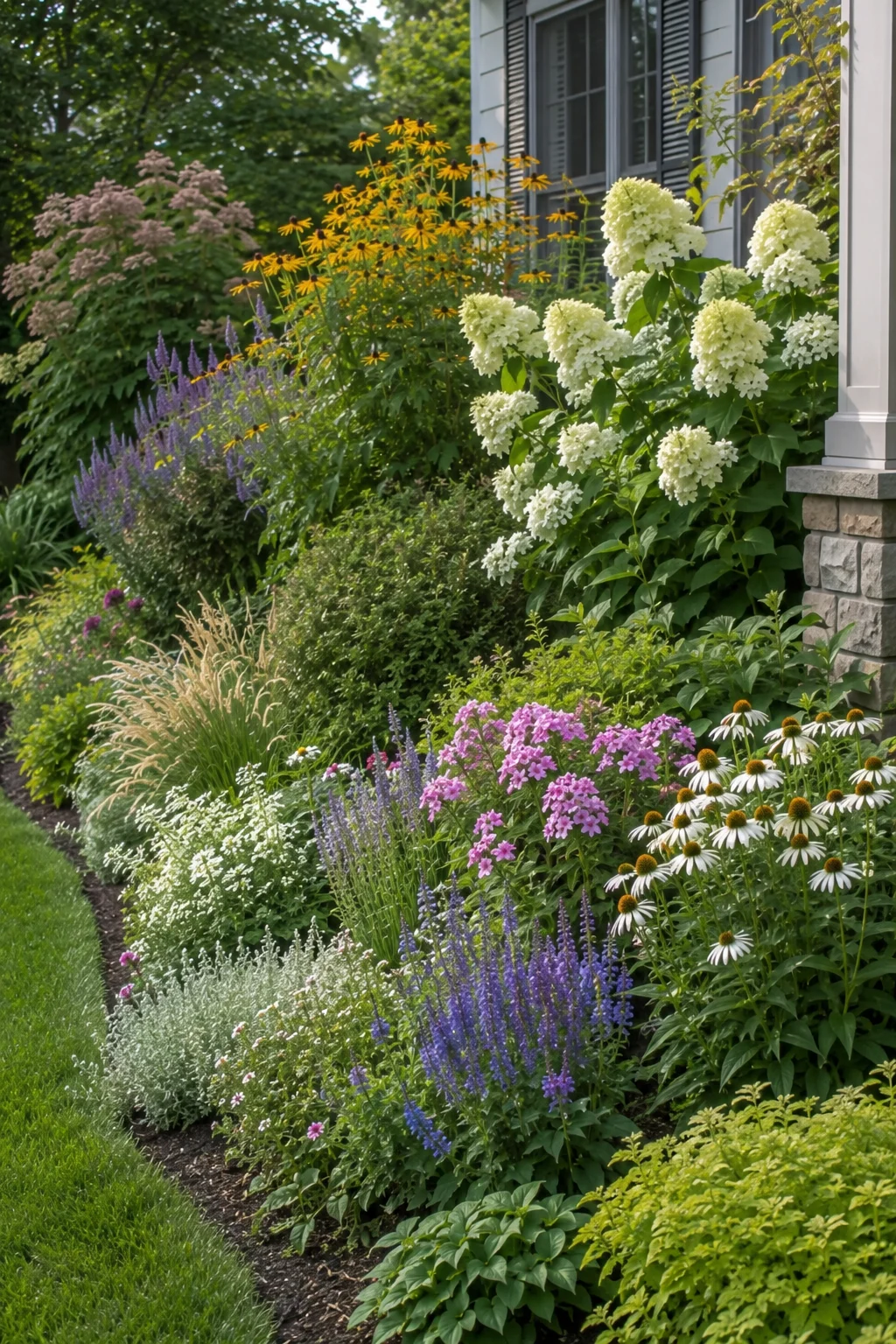
2. Deep Border for Real Layering
A border at least three feet deep allows for genuine height layering — tall plants at the back, shorter ones in front — which a narrow one-foot-deep strip along a path can never really achieve regardless of plant choice.
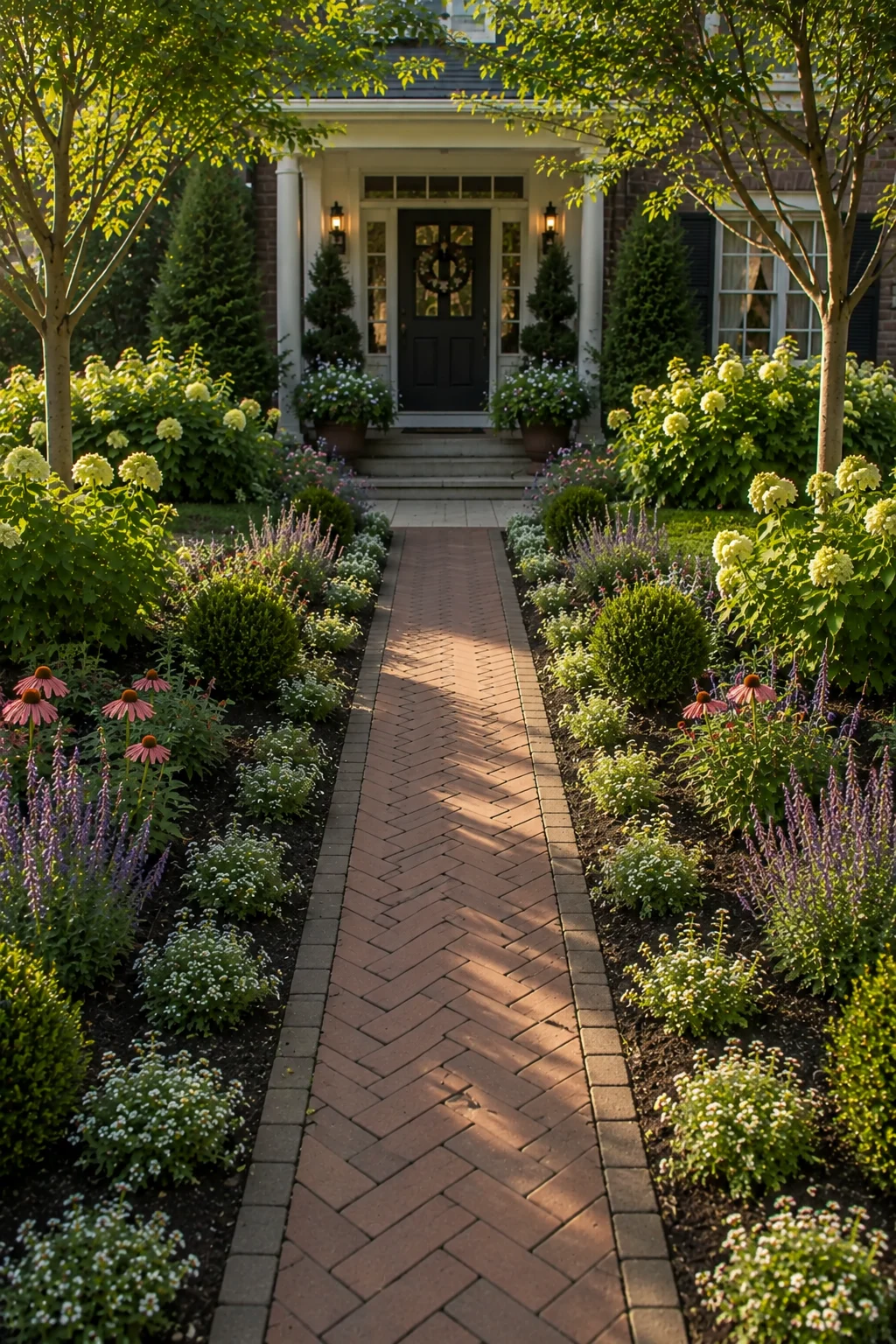
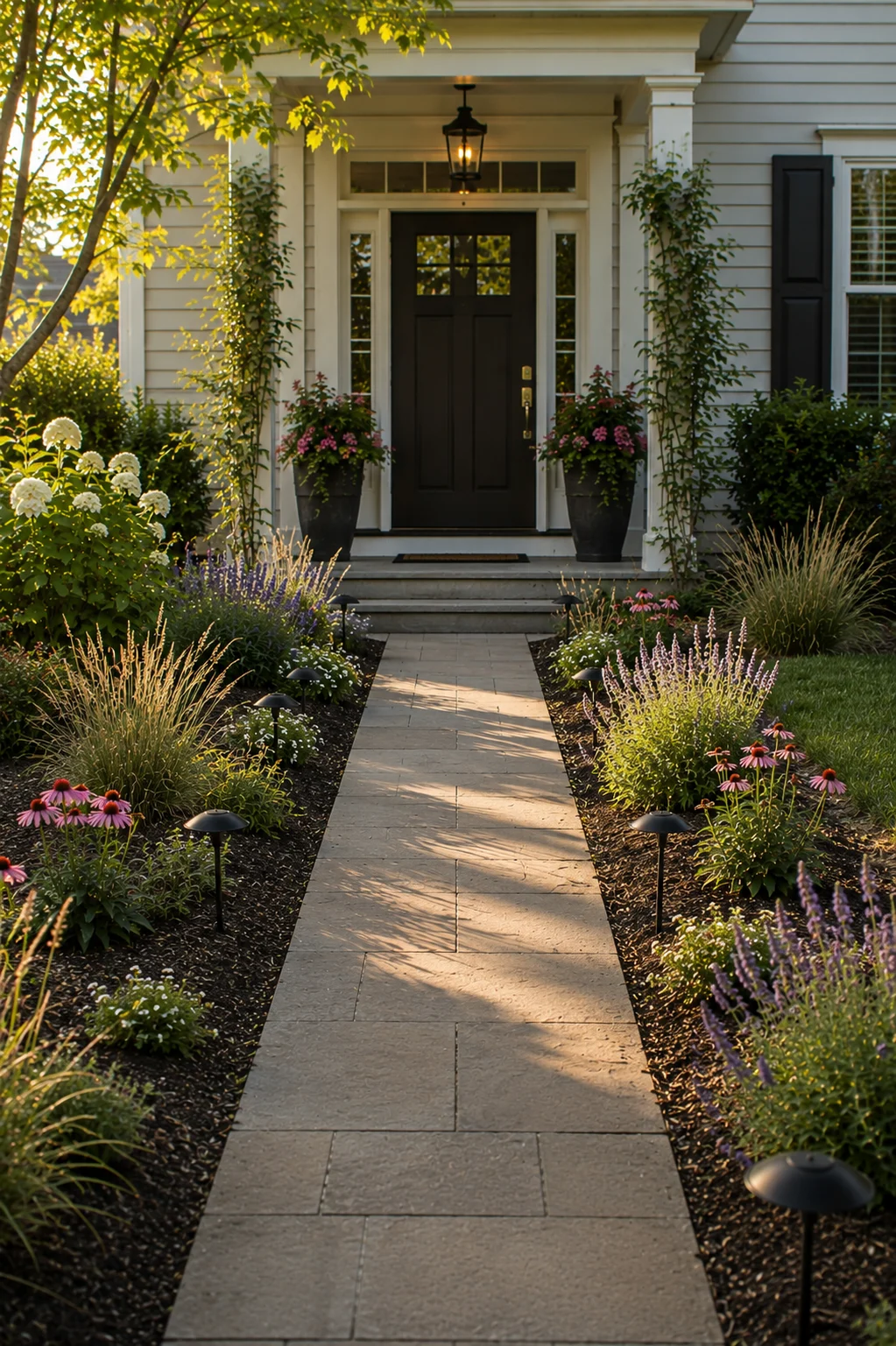
3. Mirrored Borders Flanking a Front Path
Matching border shapes and planting schemes on either side of a front walkway create instant symmetry and formality, particularly effective for a straight, centered path leading to the front door.
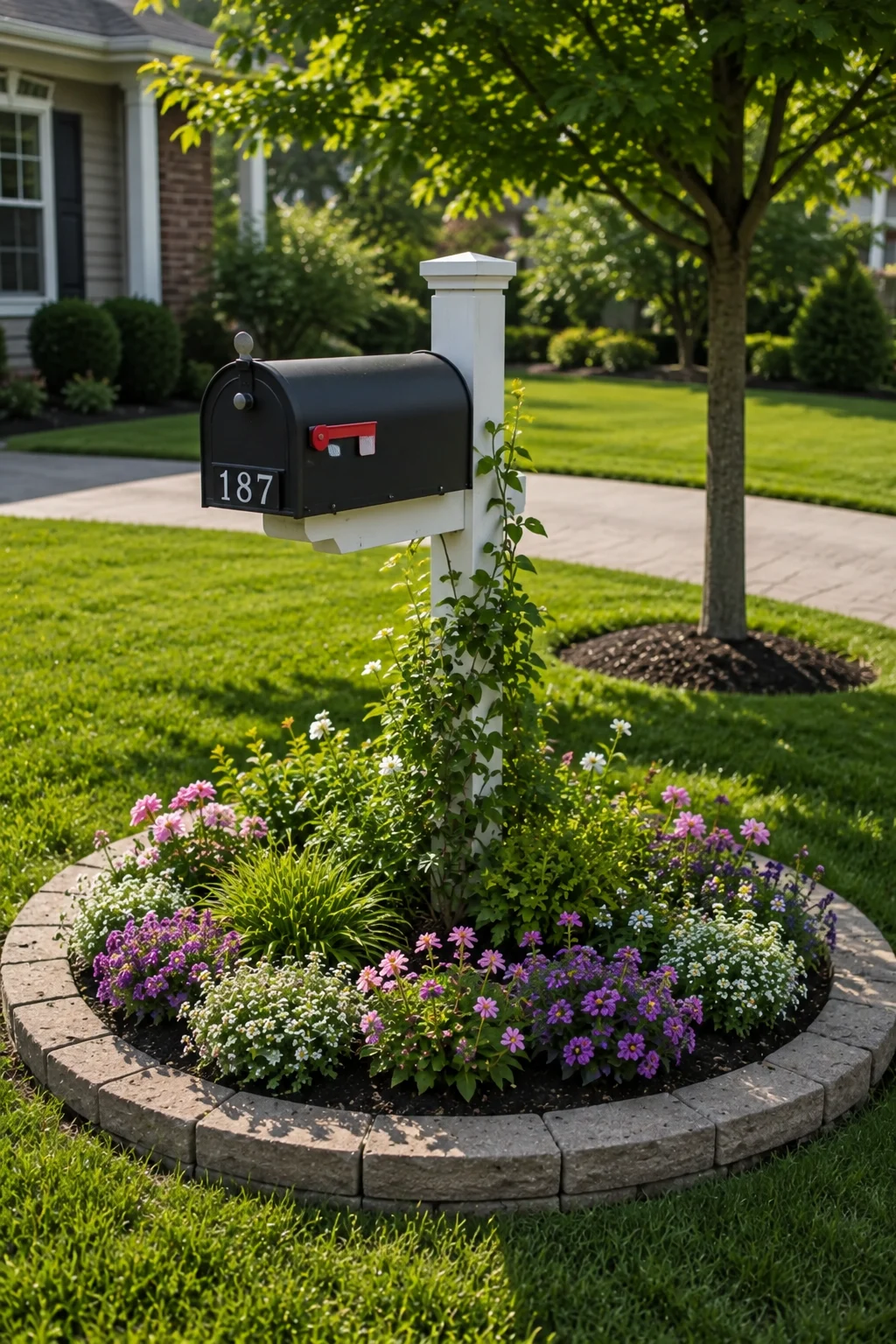
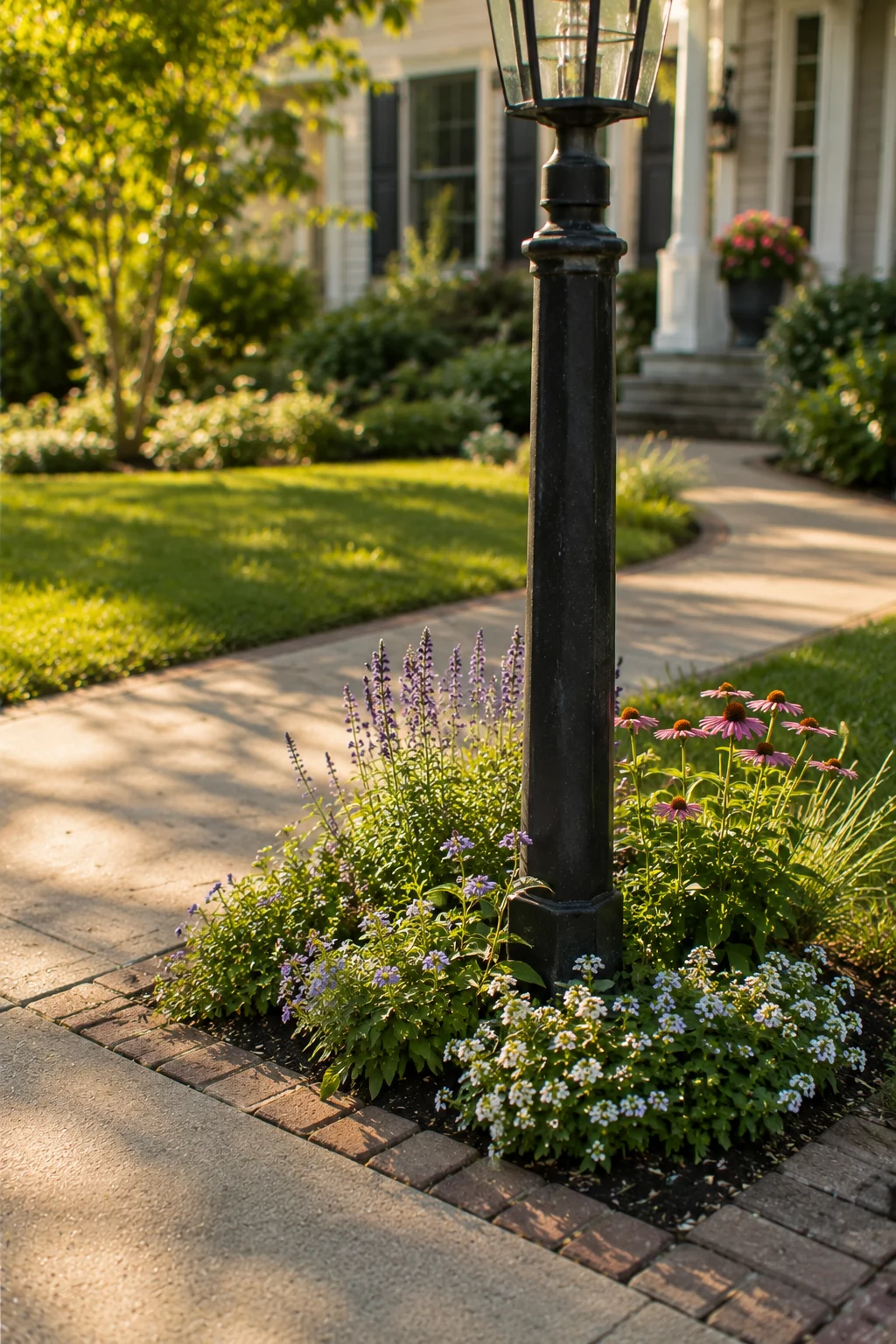
4. Island Bed Around a Mailbox or Lamp Post
A small, self-contained island border built around a mailbox or lamp post turns an isolated utilitarian object into a deliberate design feature rather than something planting simply avoids.
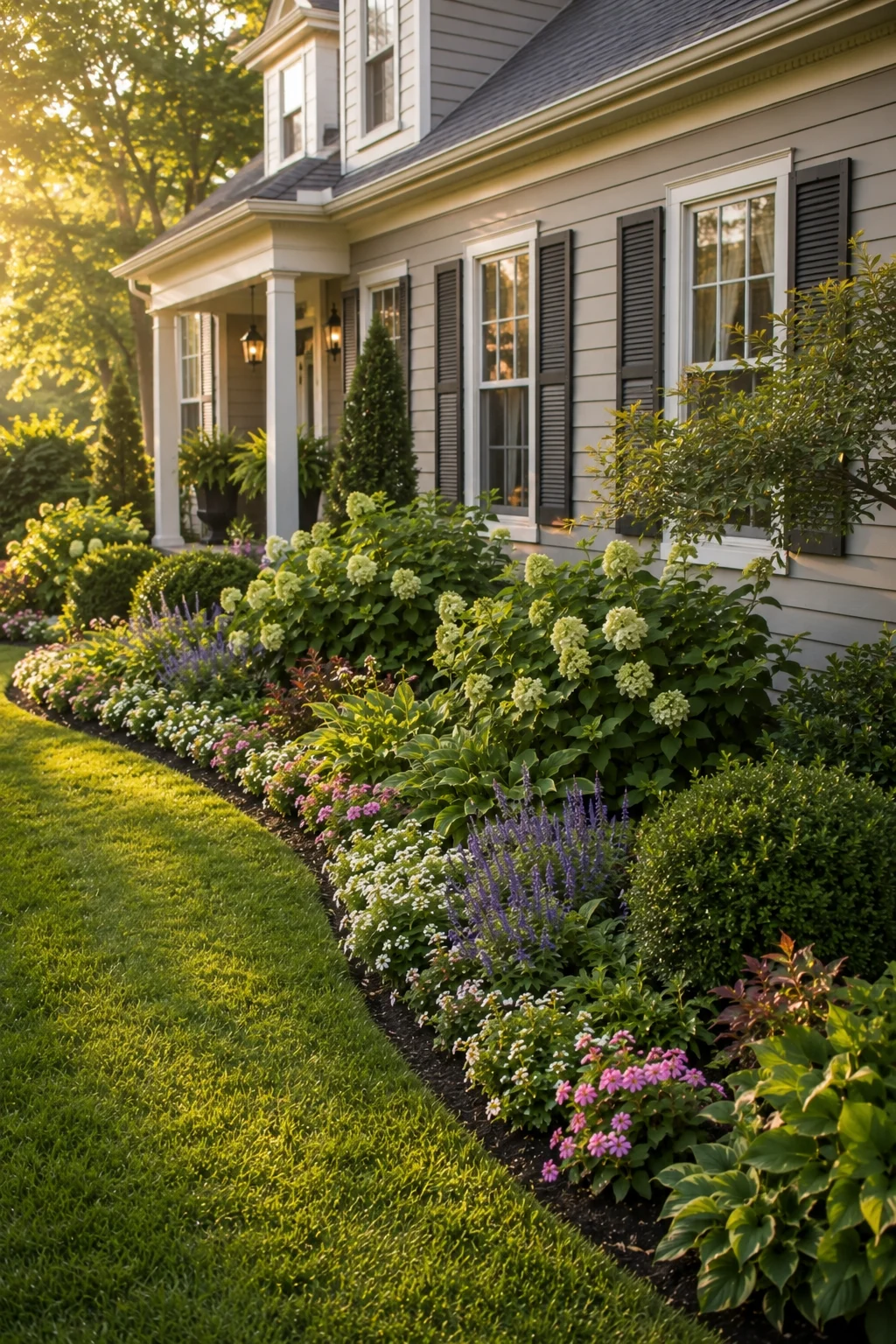
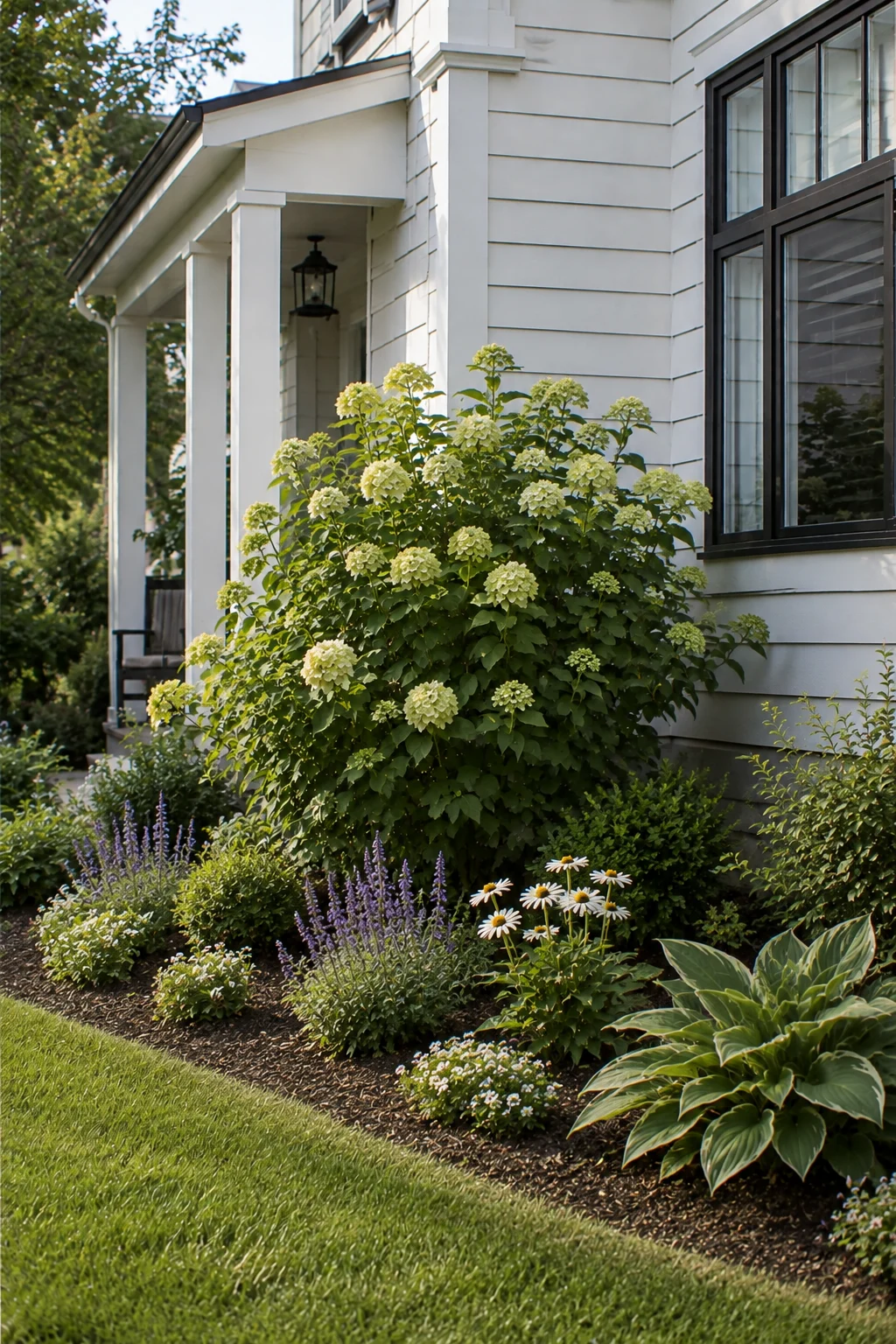
5. Wraparound Border Following the Foundation
A continuous border that follows the full length of a house’s front foundation, rather than stopping and starting in disconnected patches, gives the whole front elevation a cohesive, finished base line.
Planting Structure and Layering
6. Tiered Height Planting
Placing the tallest plants at the back of the border, mid-height shrubs and perennials through the middle, and low edging plants at the front gives even a modest border real visual depth and structure.
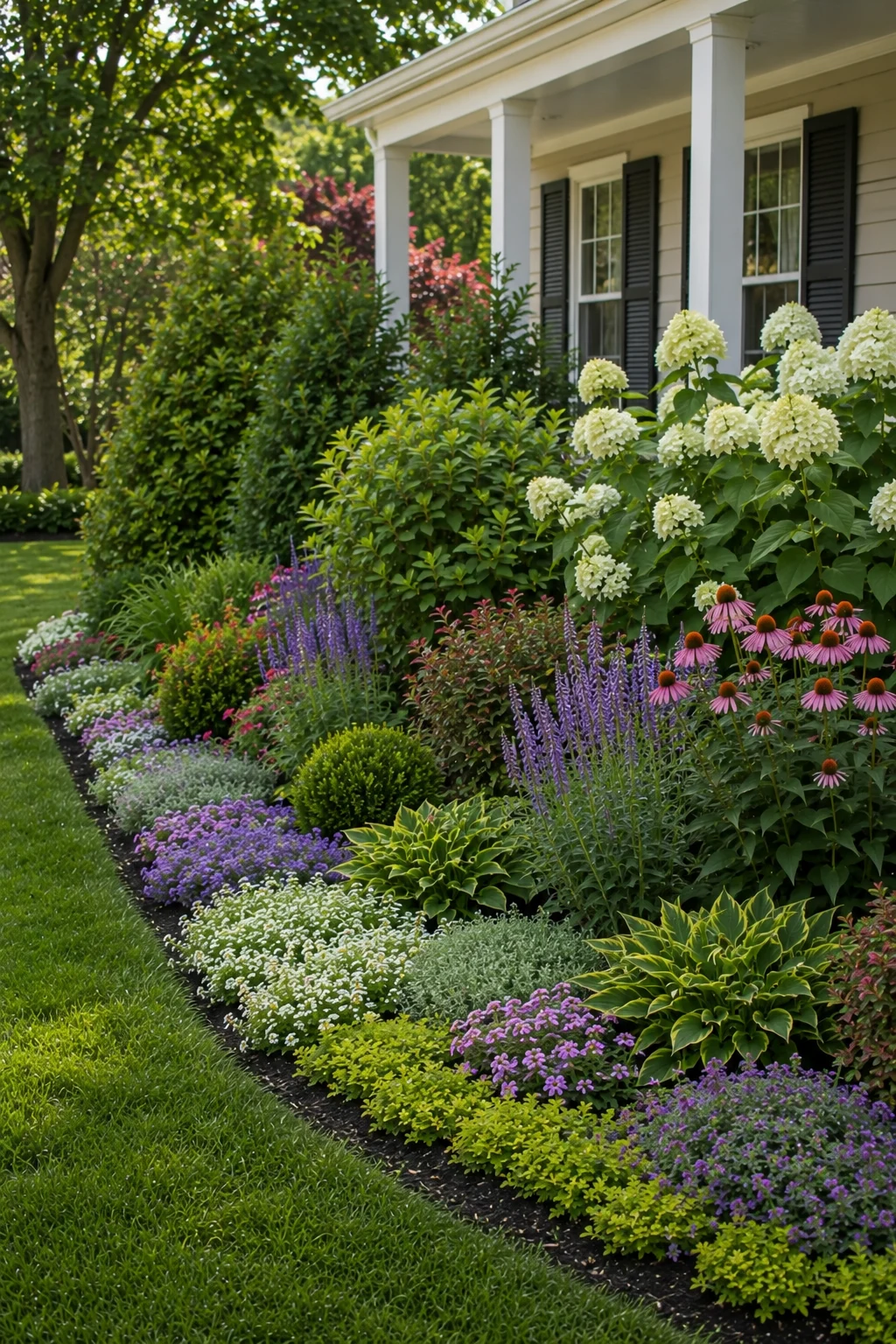
7. Repeated Drift Planting
Planting the same species in repeated groups of three or five throughout a border, rather than one of many different plants, gives the whole bed a cohesive rhythm that reads as considerably more designed.
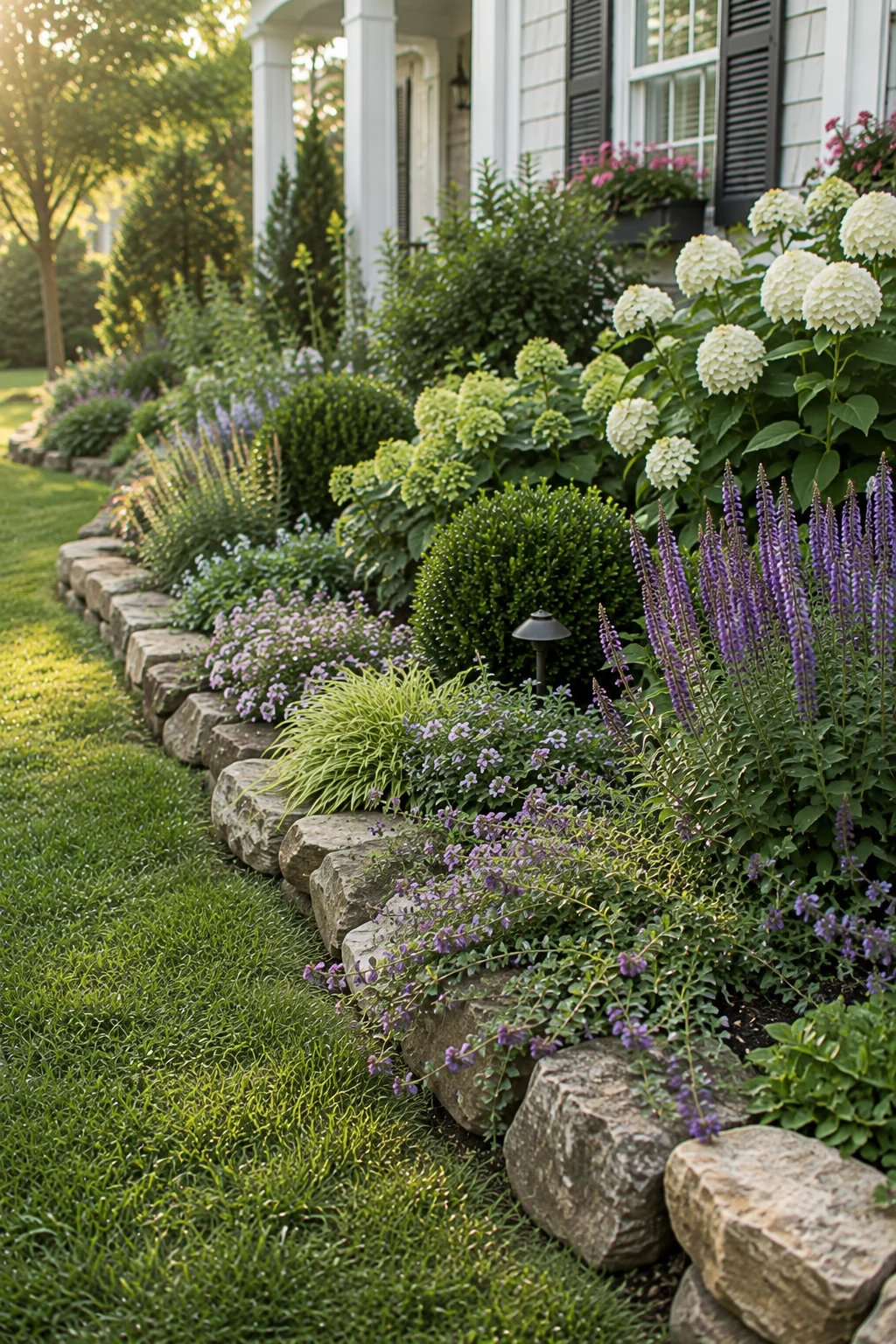
8. Anchor Shrub Every Few Feet
Spacing a consistent anchor shrub at regular intervals along a long border ties the whole planting scheme together visually, even when the perennials filling the gaps between anchors vary considerably.
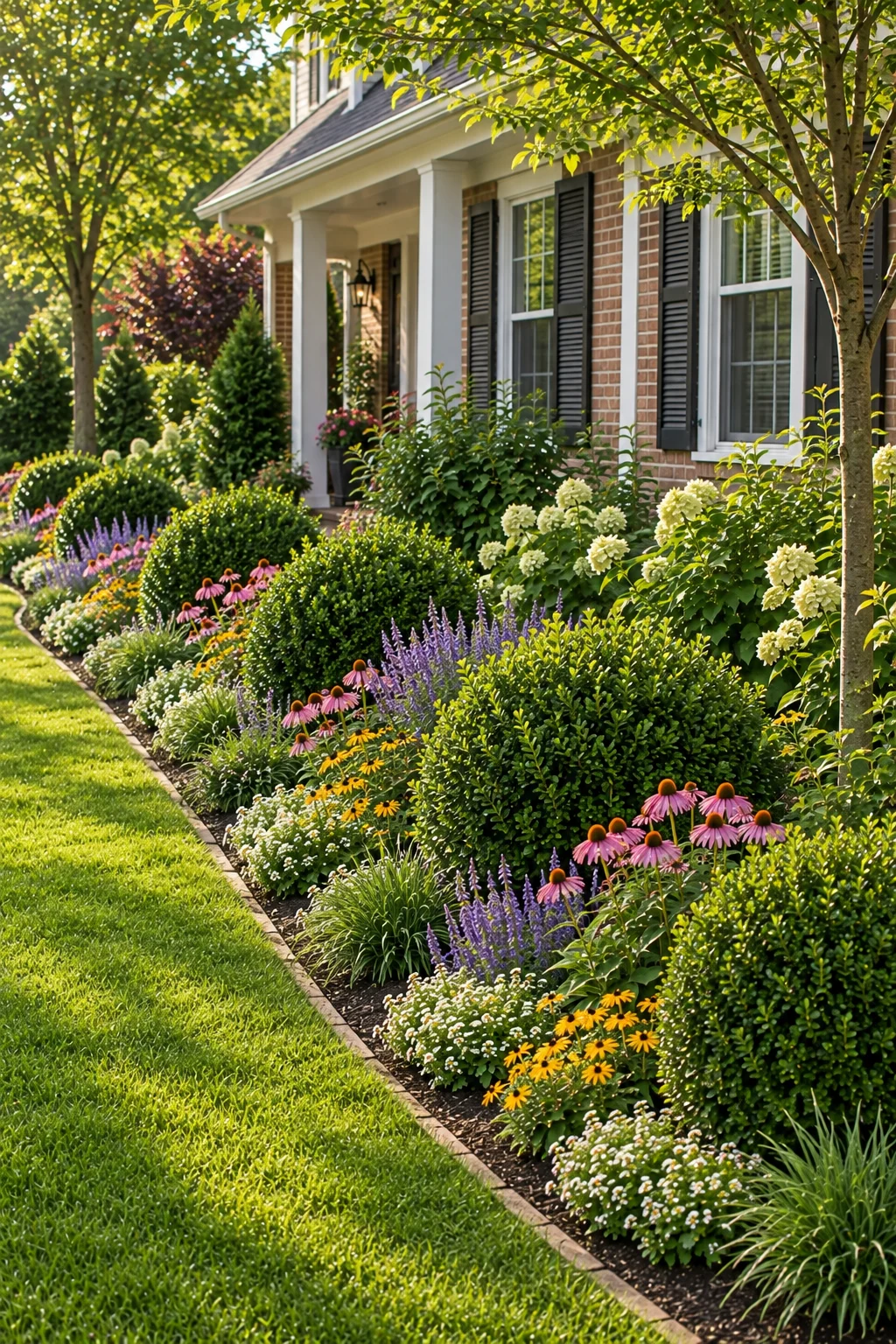
9. Evergreen Backbone With Seasonal Color
Building a border around a core of evergreen shrubs, then layering seasonal color in front with rotating annuals or perennials, keeps the bed from looking bare in winter while still allowing color to change through the year.
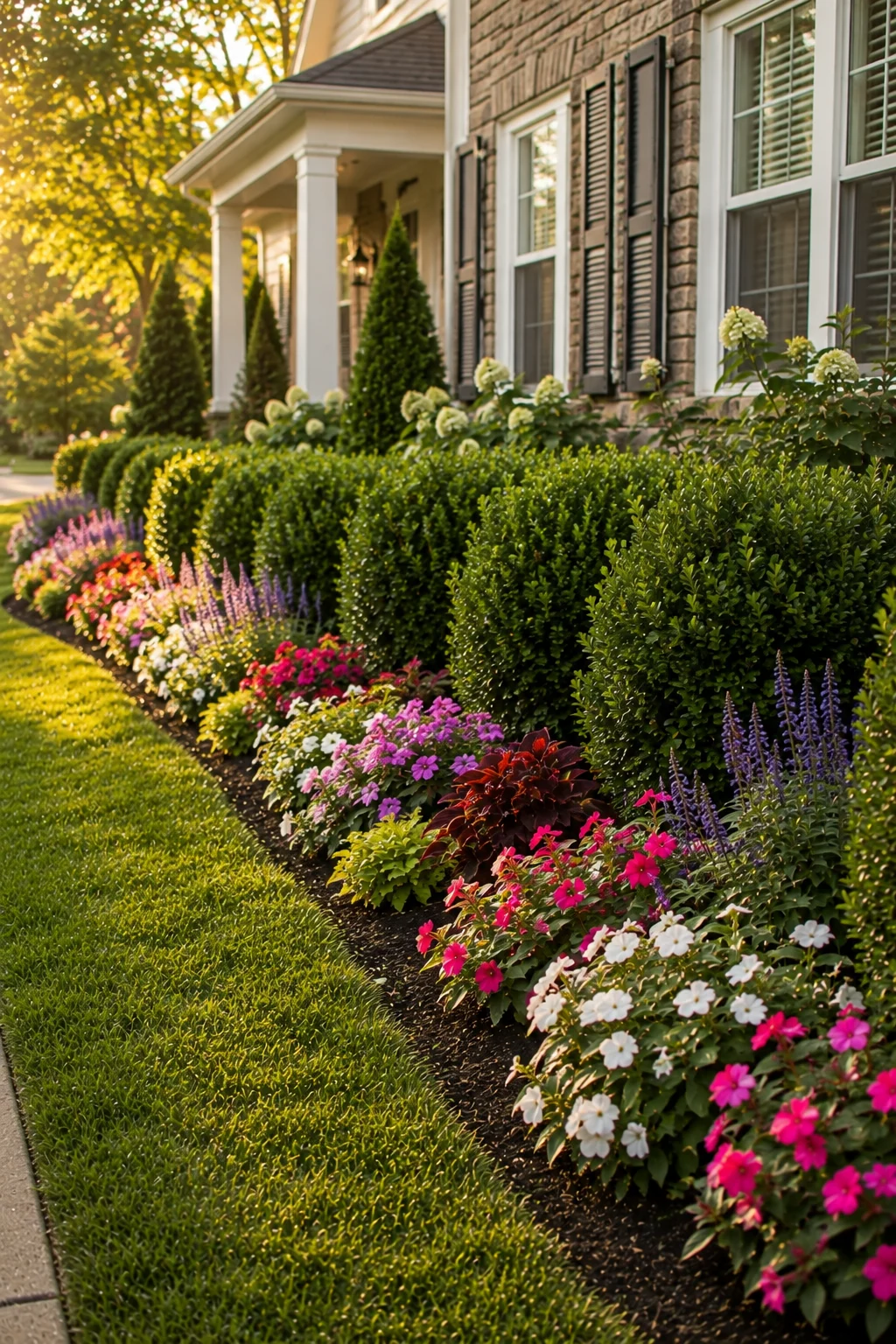
10. Single Dominant Color Scheme
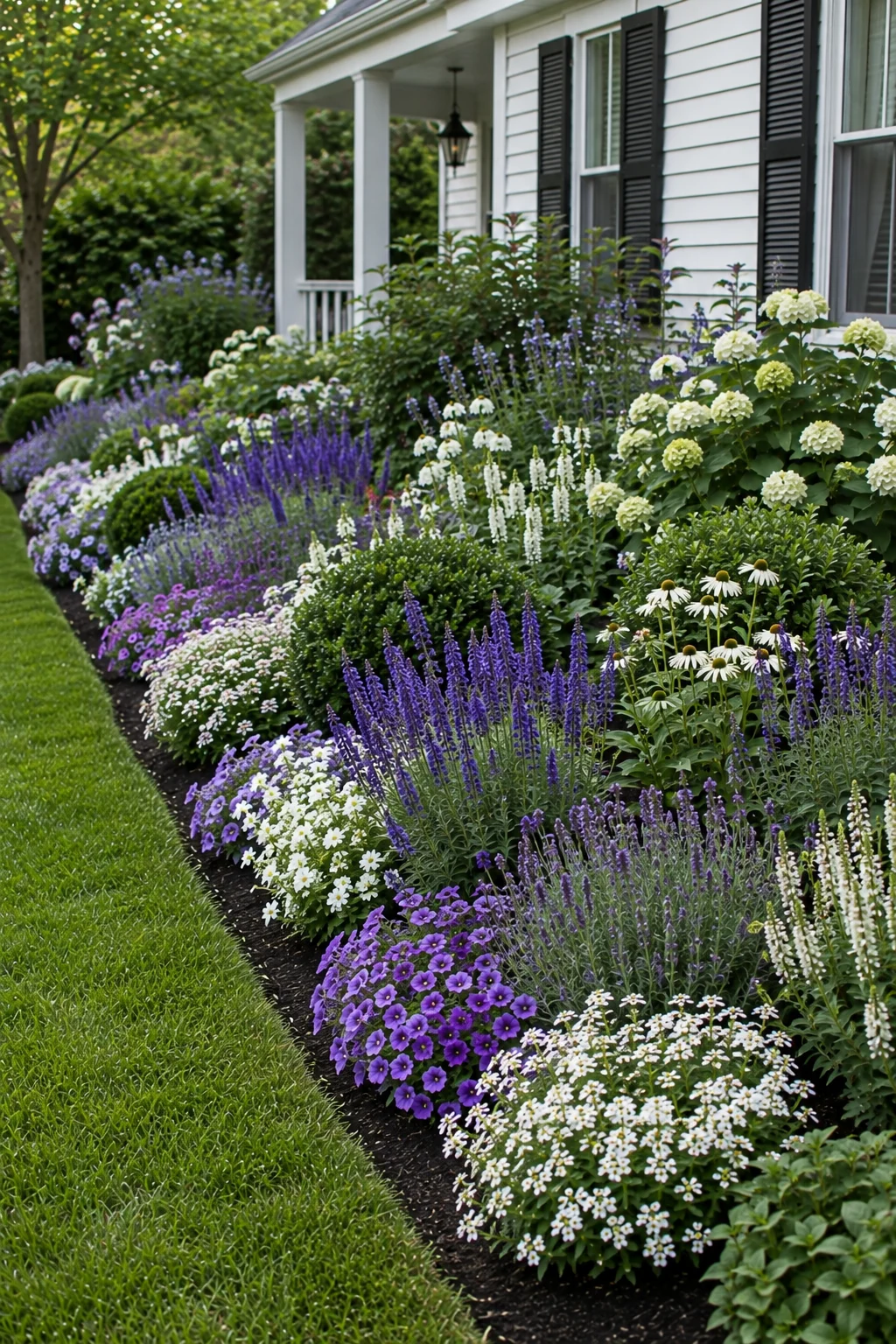
Limiting a border’s flower color to one or two tones, rather than a wide rainbow mix, gives a front garden a considerably more polished, high-end appearance for the same plant budget.
Edging Materials
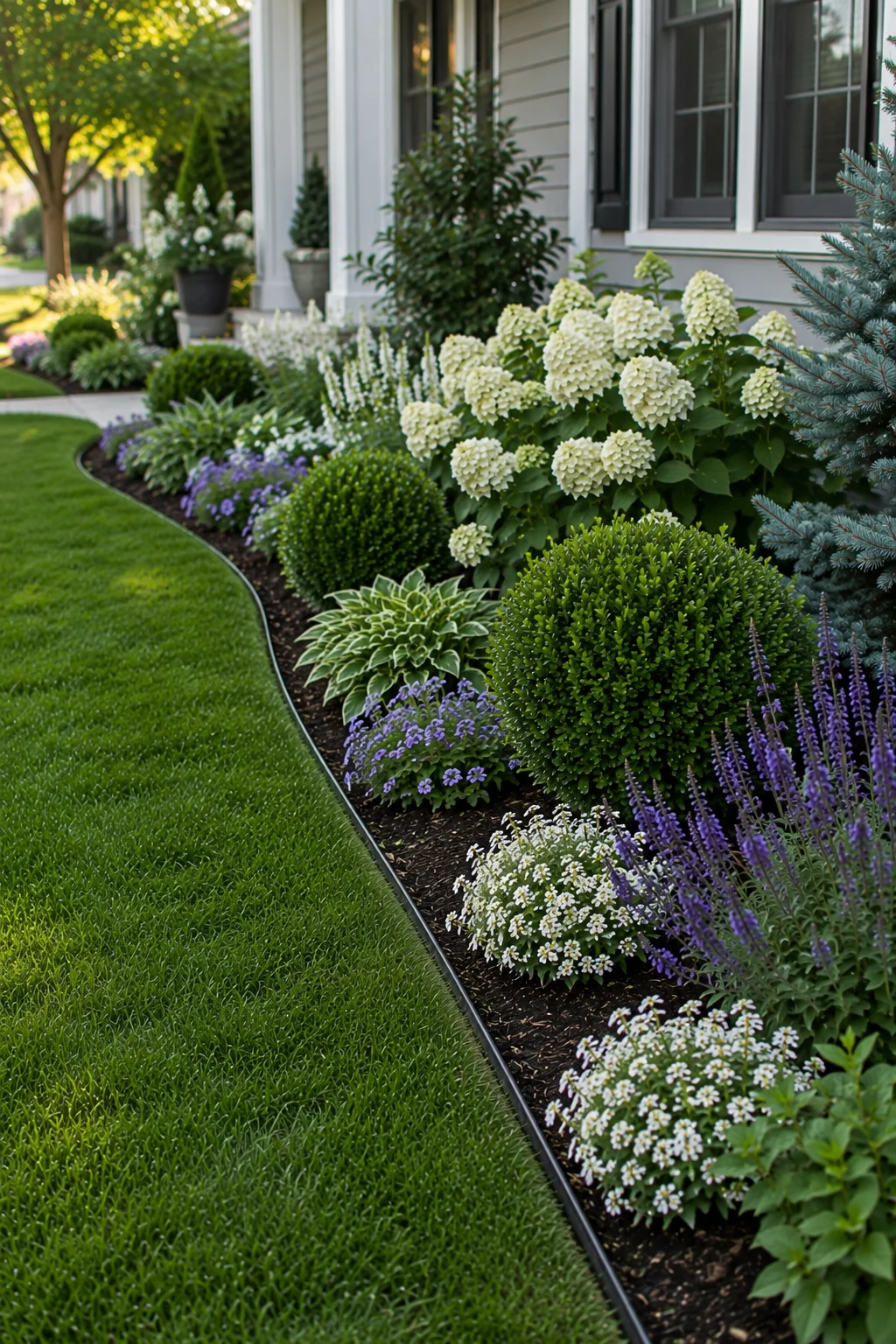
11. Clean Steel Edging
Thin steel edging, set flush with the surrounding grade, gives a border a crisp, nearly invisible line that suits a more modern front garden aesthetic without competing visually with the planting itself.
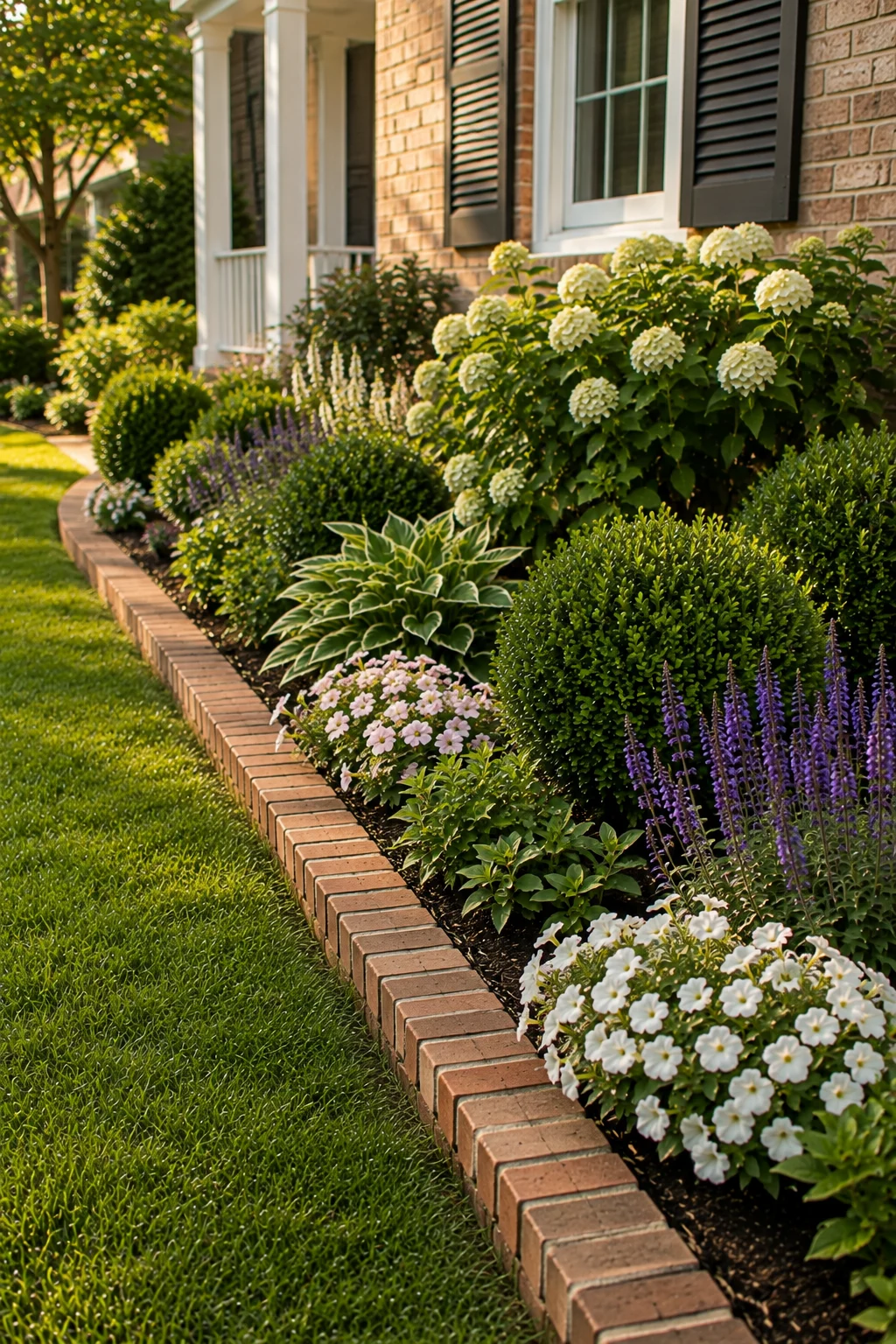
12. Brick Soldier Course Edge
A single row of bricks set on end along a border’s edge gives a traditional, slightly formal boundary that suits period homes and classic front garden styles particularly well.
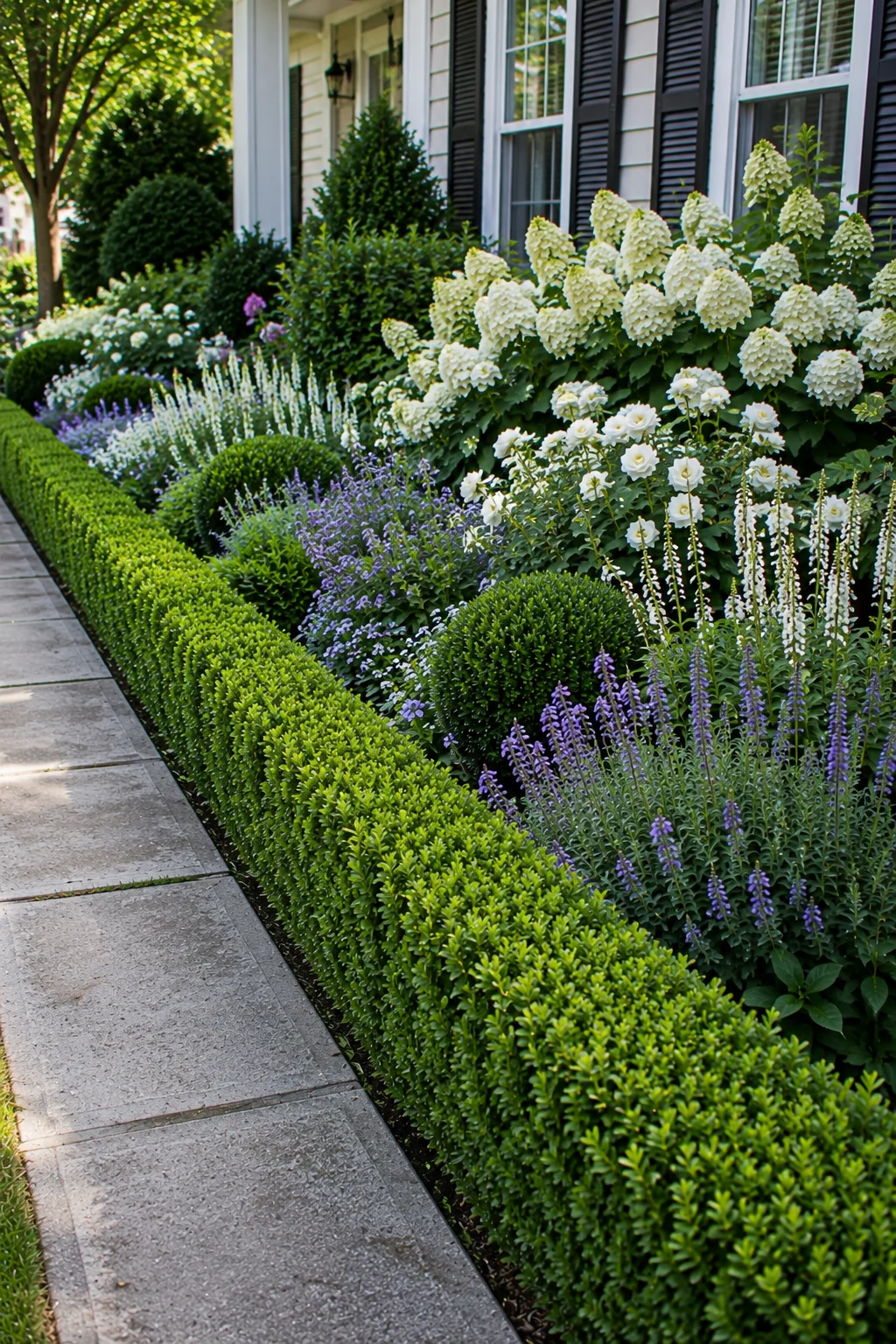
13. Low Boxwood Hedge as a Living Edge
A low, clipped boxwood hedge along a border’s front edge provides a year-round structural line that holds its shape even when the planting behind it is bare or between bloom cycles.
14. Natural Stone Edging
Irregular flat stones set along a border’s edge give a softer, more cottage-appropriate boundary than a straight manufactured edging material, and let plants spill slightly over the stones rather than stopping abruptly.
Color and Seasonal Planning
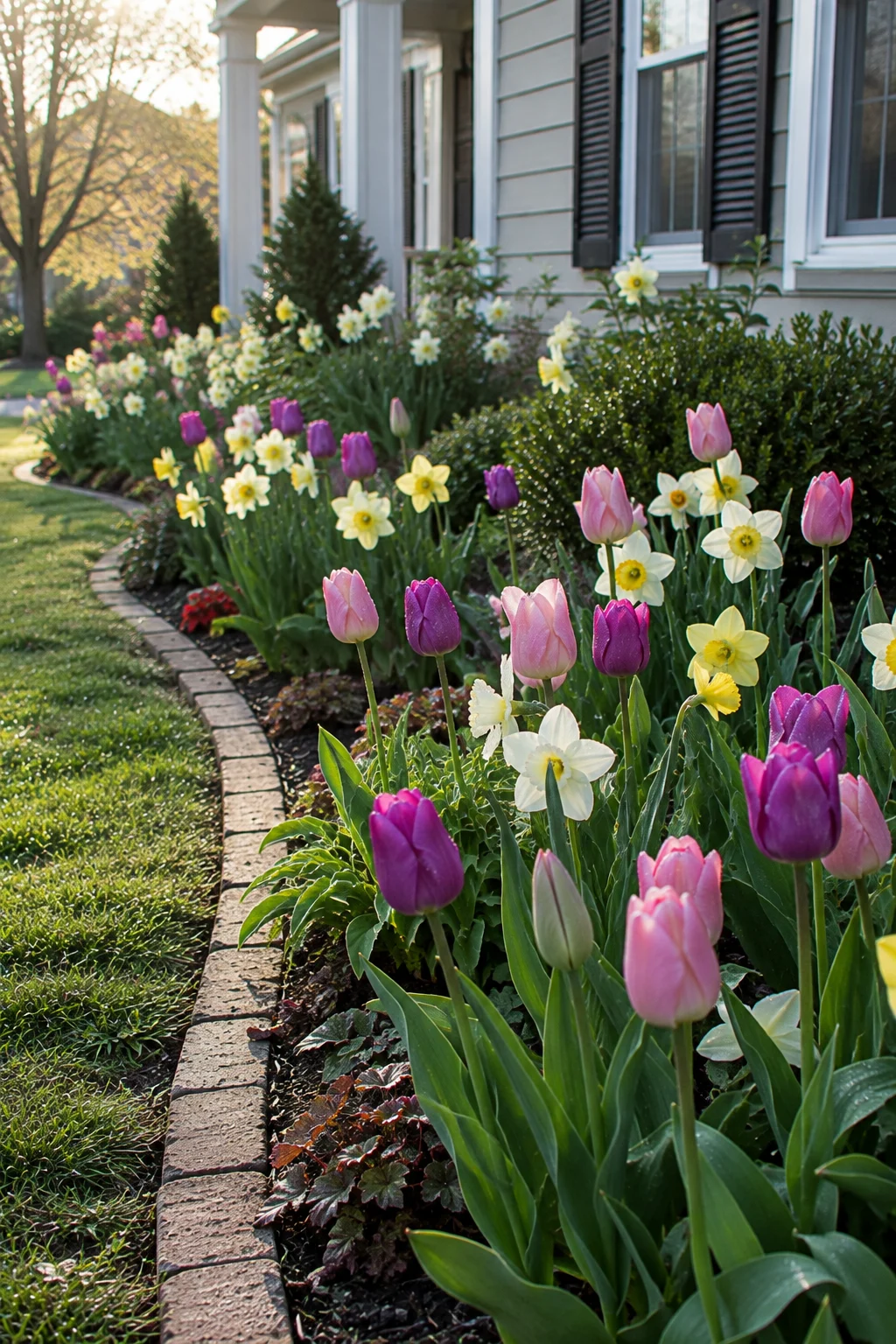
15. Spring Bulb Border
Tulips and daffodils planted in bold drifts along a front border give a property its first strong color of the year, right when the rest of the yard is still waking up from winter.
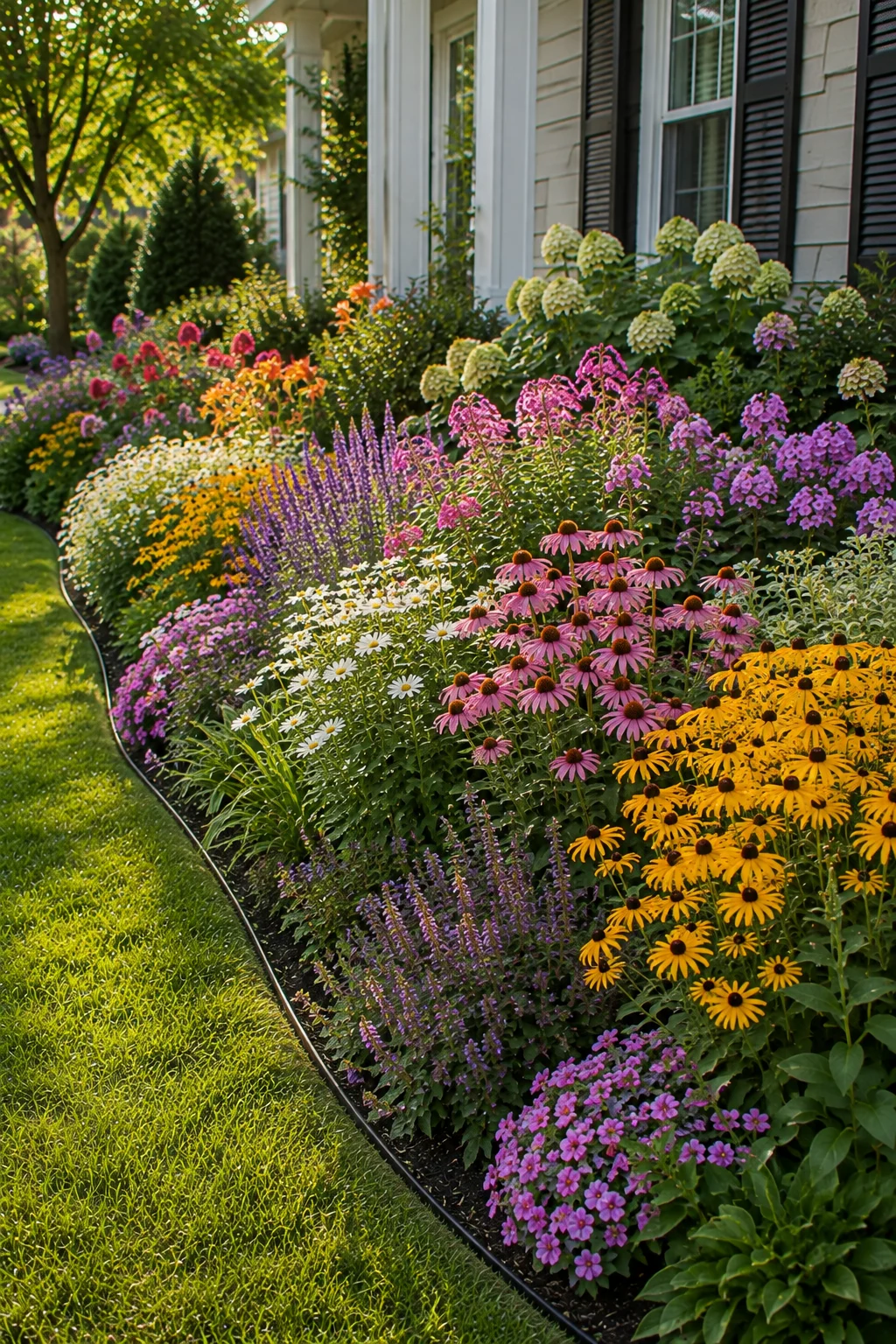
16. Summer-Long Blooming Perennial Border
Choosing perennials specifically known for a long summer bloom window — coneflower, catmint, black-eyed Susan — keeps a front border looking its best through the months a home gets the most street-facing attention.
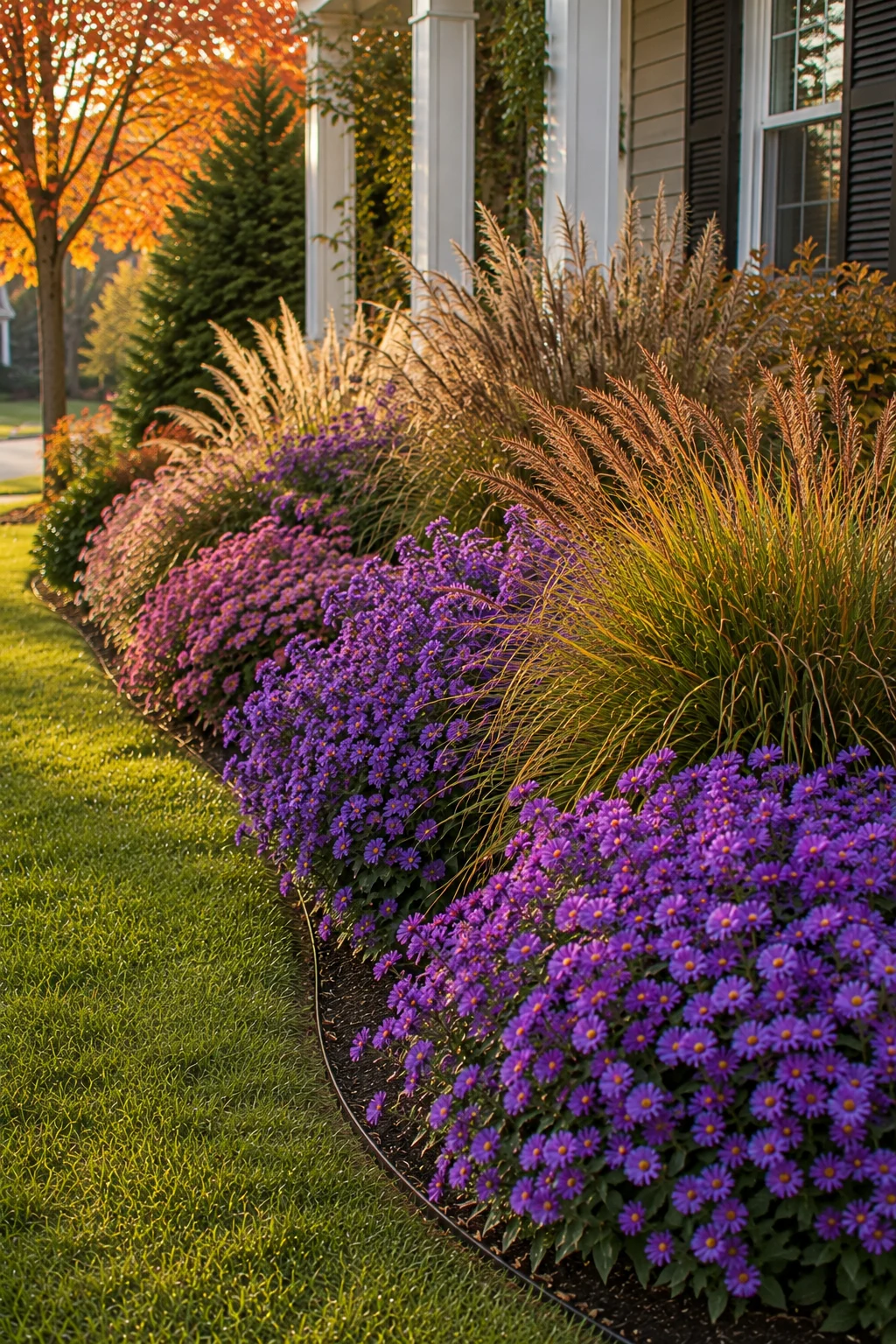
17. Fall Color Border
Asters, ornamental grasses, and mums extend a front border’s color and texture well into autumn, past the point most purely summer-focused plantings have already faded.
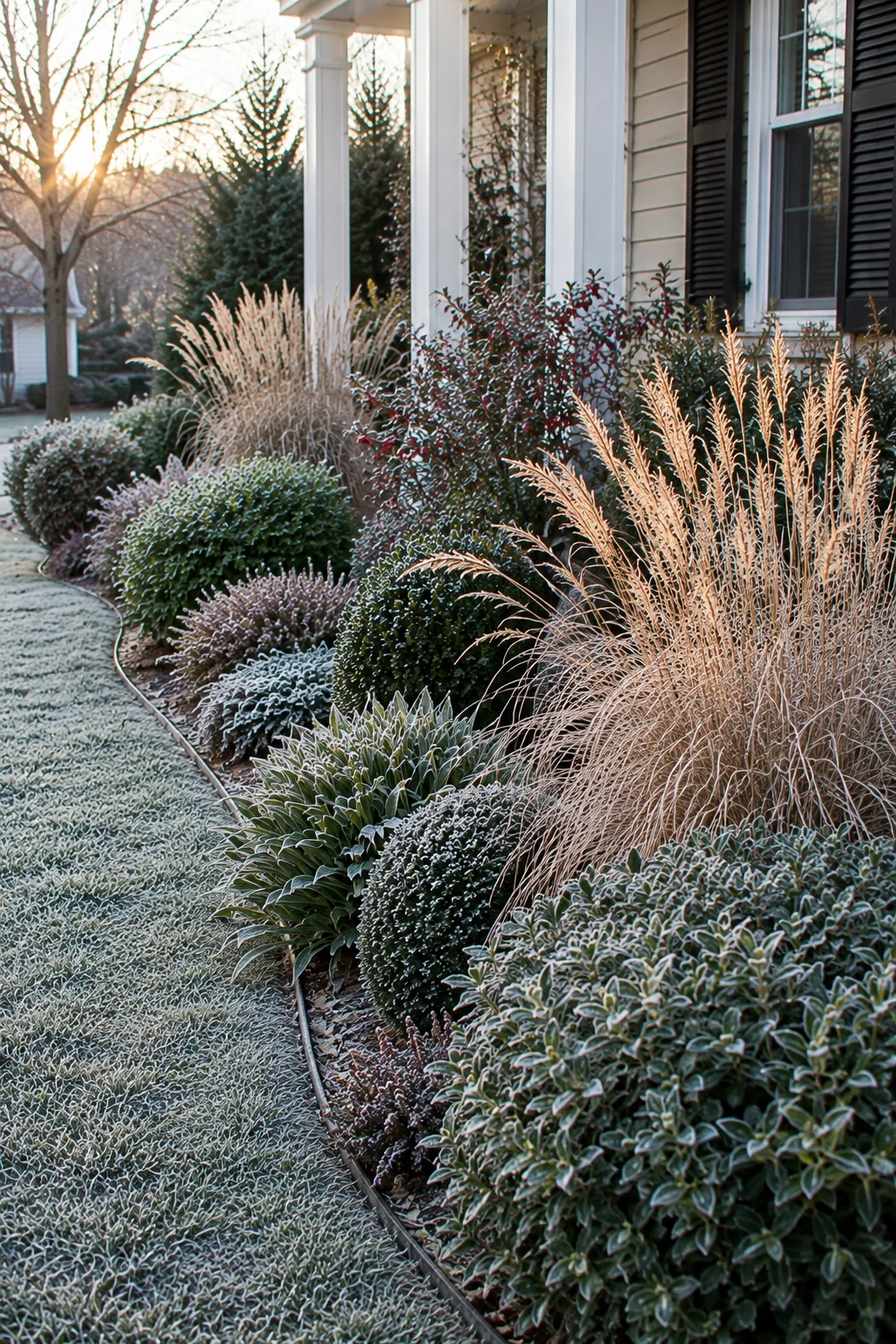
18. Evergreen Winter-Interest Border
A border planned specifically with winter in mind — evergreen shrubs, plants with colorful bark or seed heads left standing, ornamental grasses left uncut — keeps a front garden from looking completely bare during the months color naturally disappears.
Foundation and House-Line Borders
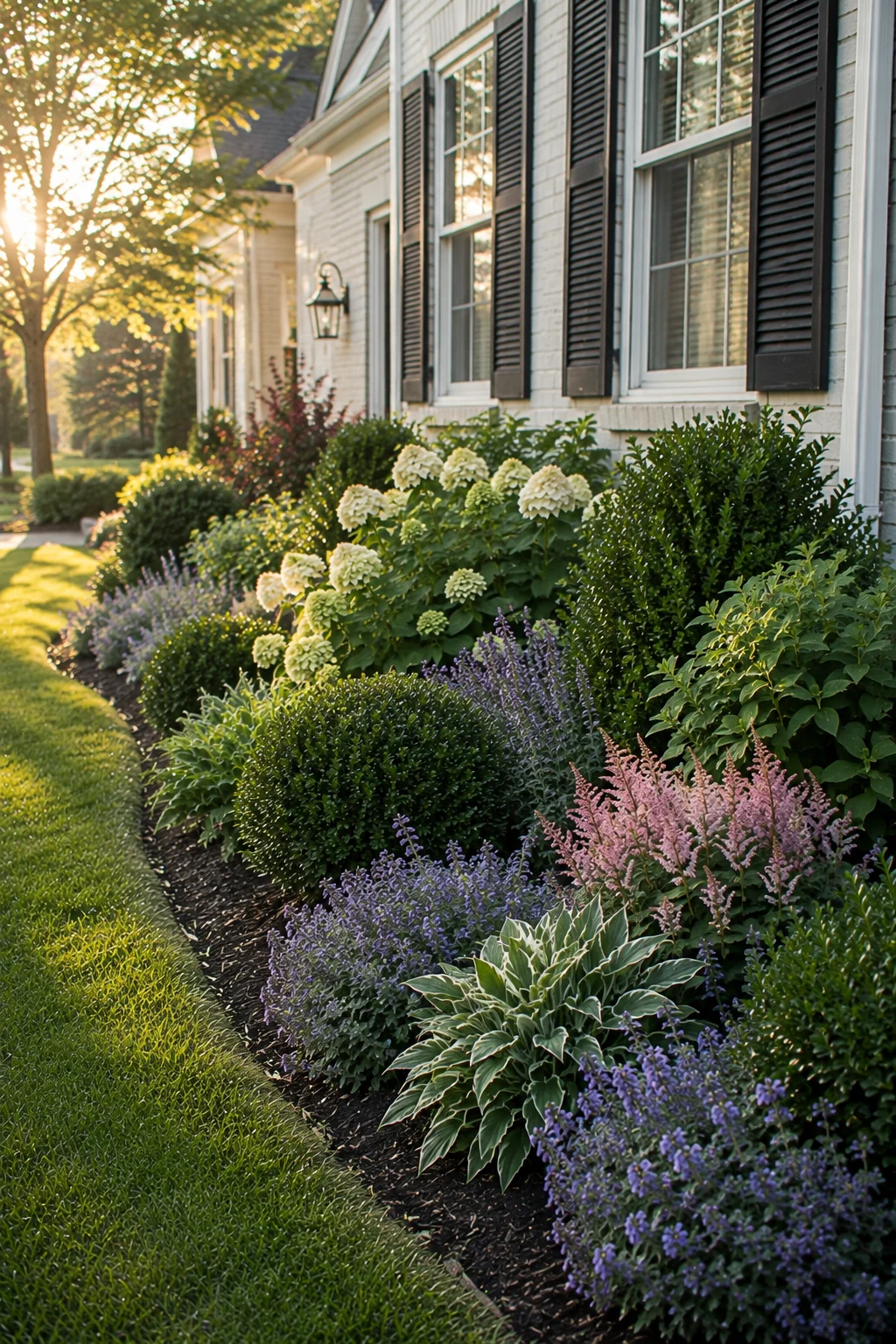
19. Foundation-Softening Border
A border planted directly along a home’s foundation softens the hard, often visually abrupt line where the house meets the ground, one of the single highest-impact curb appeal changes available on most properties.
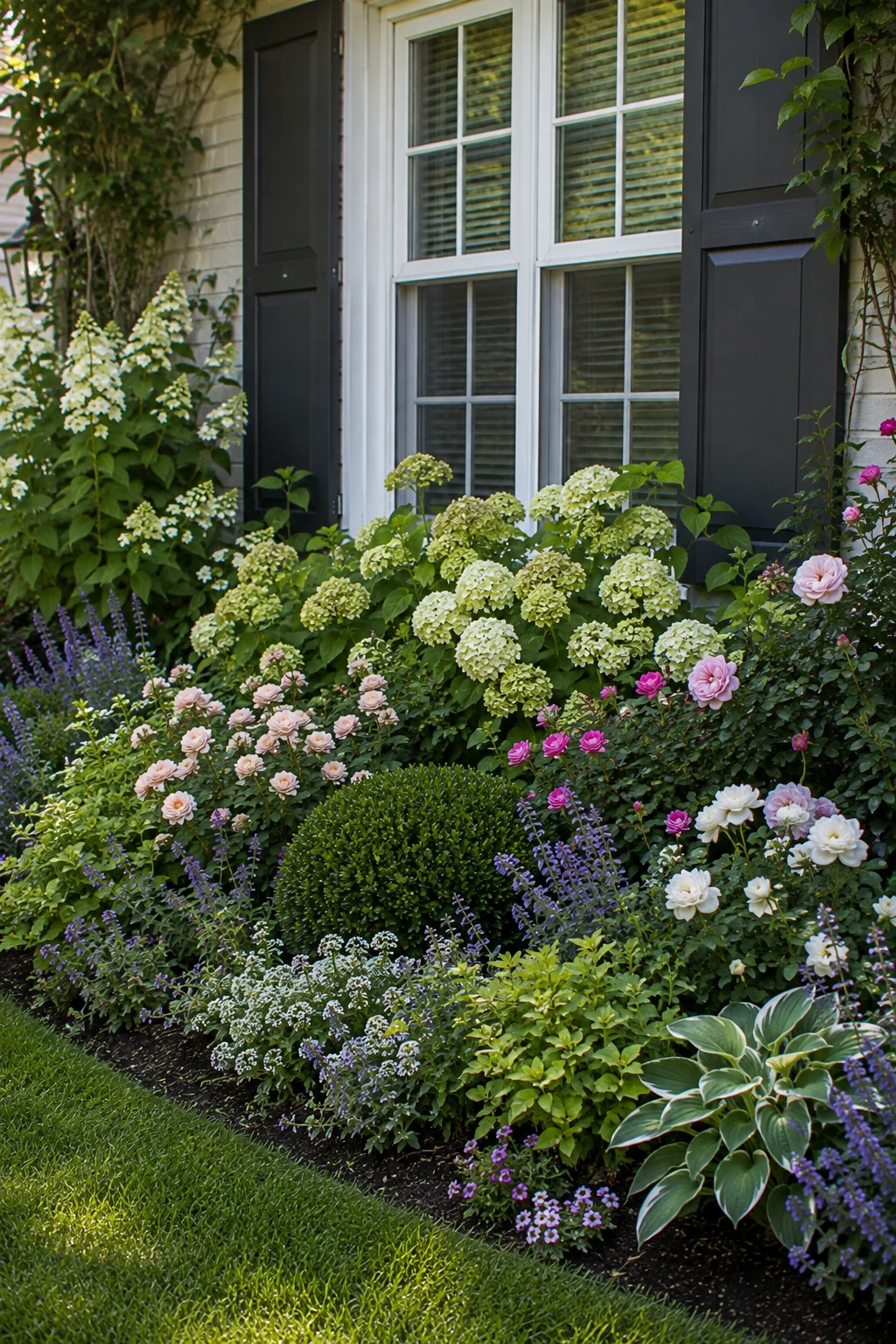
20. Window-Framing Border
Planting specifically beneath and slightly beyond the width of key front-facing windows frames them from the outside, drawing the eye toward the house’s architecture rather than away from it.
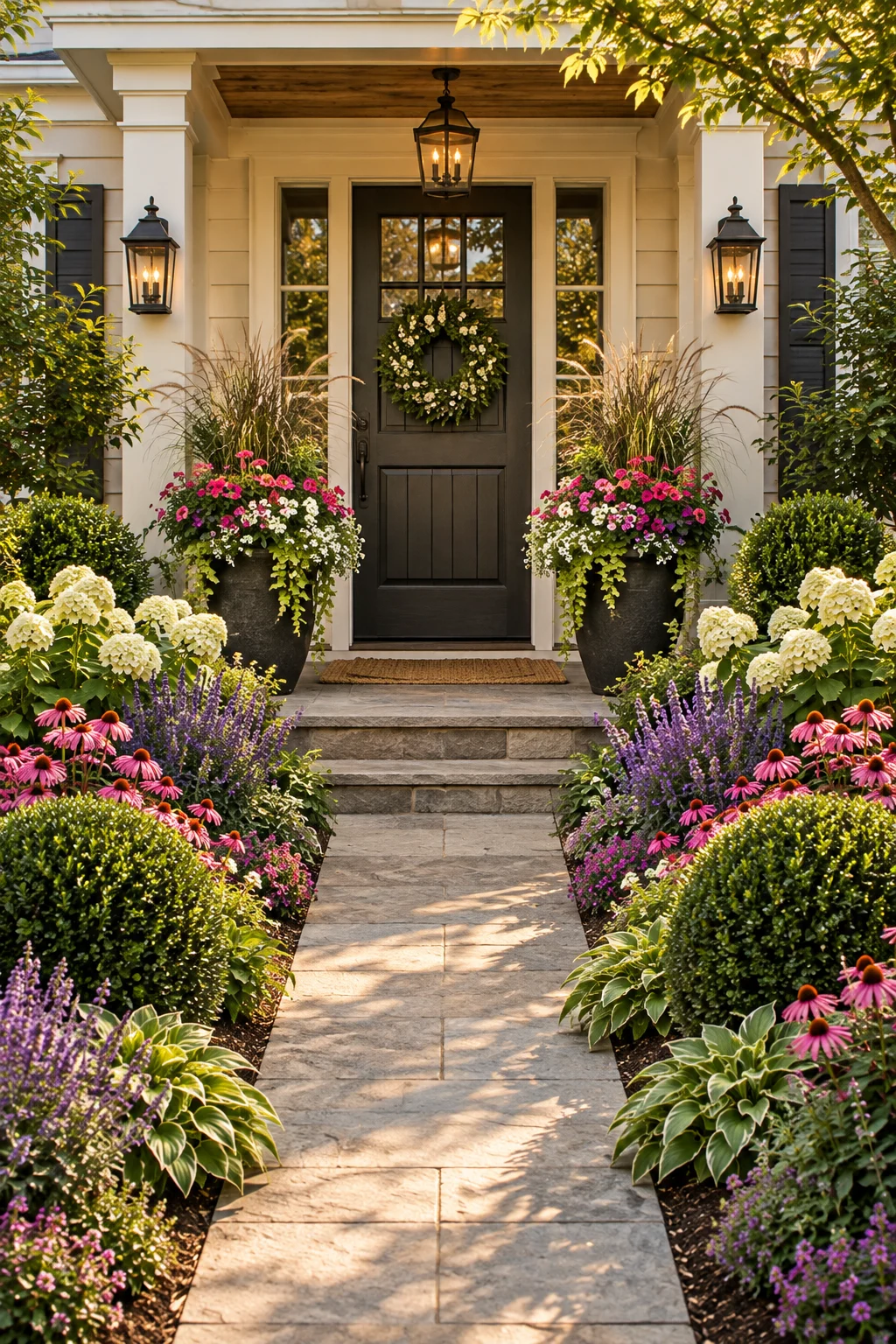
21. Entry-Flanking Symmetrical Border
A pair of matching borders directly flanking the front door itself, distinct from the broader foundation planting, draws attention to the entry specifically as the home’s most important sightline.
22. Corner-Anchoring Border
Planting slightly taller, more substantial shrubs at the front corners of the house softens its overall silhouette and keeps the eye from registering the building as a plain rectangular box.
Pathway and Driveway Borders
23. Path-Edging Border Guiding Visitors
A border planted along both sides of a front walkway visually guides visitors toward the door and gives the approach a considerably more finished, welcoming feel than bare lawn on either side of a bare path.
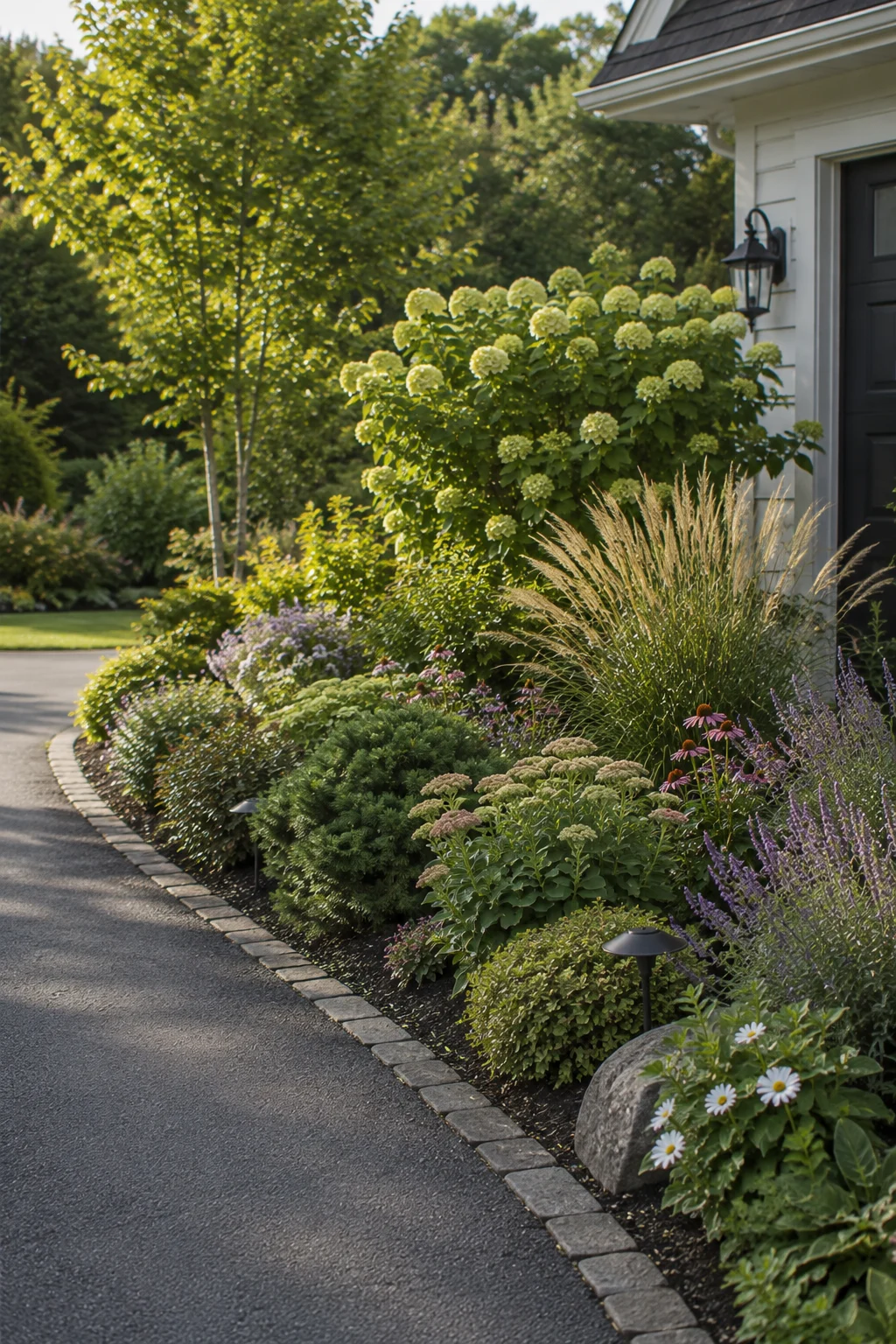
24. Driveway-Softening Border
A border running along one or both sides of a driveway breaks up what’s often the largest hard-paved surface on a residential lot, softening its visual impact from the street.
25. Mailbox or Lamp Post Focal Border
Beyond the island-bed treatment covered earlier, a smaller, simpler planting directly at the base of a mailbox or lamp post gives even the most minimal front yard one clearly finished, deliberate detail.
Getting the Proportions Right
Regardless of which ideas you combine, a front border generally reads best when it’s at least a third as deep as the height of the tallest plant within it, and when the border’s overall shape echoes the lines of the path, driveway, or house it runs alongside rather than fighting against them. According to residential landscape guidance published by the University of Maryland Extension, foundation borders in particular perform best when plant height at maturity is factored in from the start, since a border planted too close to a house or too tall at the windows often ends up needing corrective pruning or removal within just a few years (extension.umd.edu).
Choosing the Right Combination for Your Front Yard
Most successful front gardens combine just two or three ideas from this list rather than one of every category — a foundation border with tiered planting and consistent edging usually does more for curb appeal than five different border styles competing for attention across the same small yard. For the broader layout this fits into, our small front yard landscaping guide covers additional hardscape and layout ideas that pair with the border techniques above, and our garden on a budget guide covers how to sequence spending if you’re building these borders gradually rather than all at once.
Final Thoughts
A front garden border earns its curb appeal through structure and consistency more than plant variety — a clear shape, layered height, a defined edge, and a color or seasonal plan that holds together, rather than a wide, unplanned mix of whatever looked good at the garden center. Pick a border style that matches your home’s architecture, keep the edging material consistent throughout the front yard, and plan for at least two seasons of interest rather than a single summer peak. Those choices, more than the specific plants involved, are what separate a front garden that boosts a home’s curb appeal from one that just happens to have some flowers in it.