
A balcony has none of the ground space a yard takes for granted, which means every idea has to justify itself twice as hard — does it earn its footprint, and does it work within the weight and water limits an elevated space actually has. The upside is that balconies reward good planning more visibly than almost any other garden space; a handful of well-chosen ideas can genuinely transform a bare concrete slab into a usable outdoor room.
This list covers 27 balcony garden ideas across six categories — space-saving structures and layout, containers and planters, plant choices, privacy and shade, furniture and function, and lighting and finishing touches — each realistic enough to fit a genuinely small footprint.
Space-Saving Structures and Layout
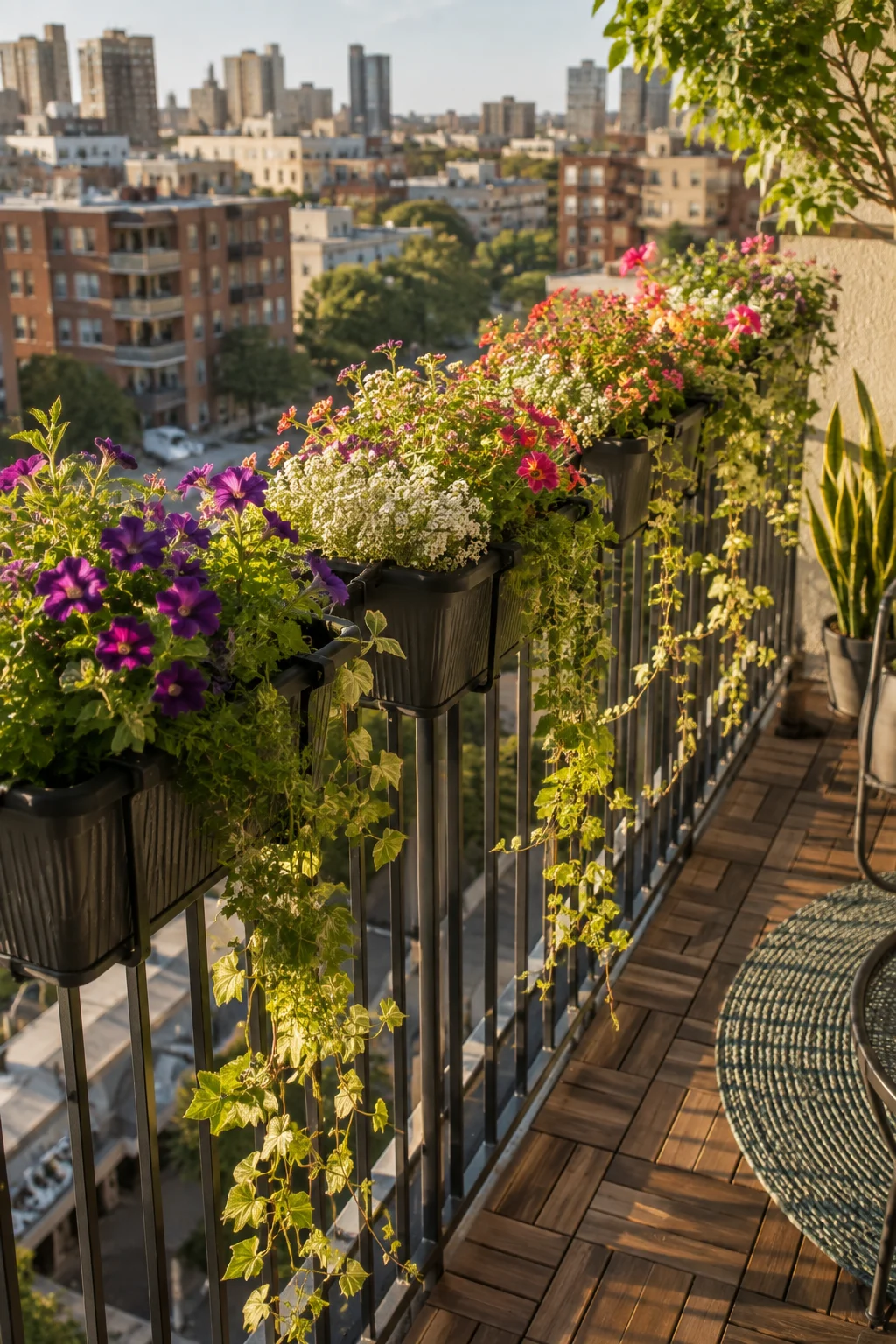
1. Railing-Mounted Planter Boxes
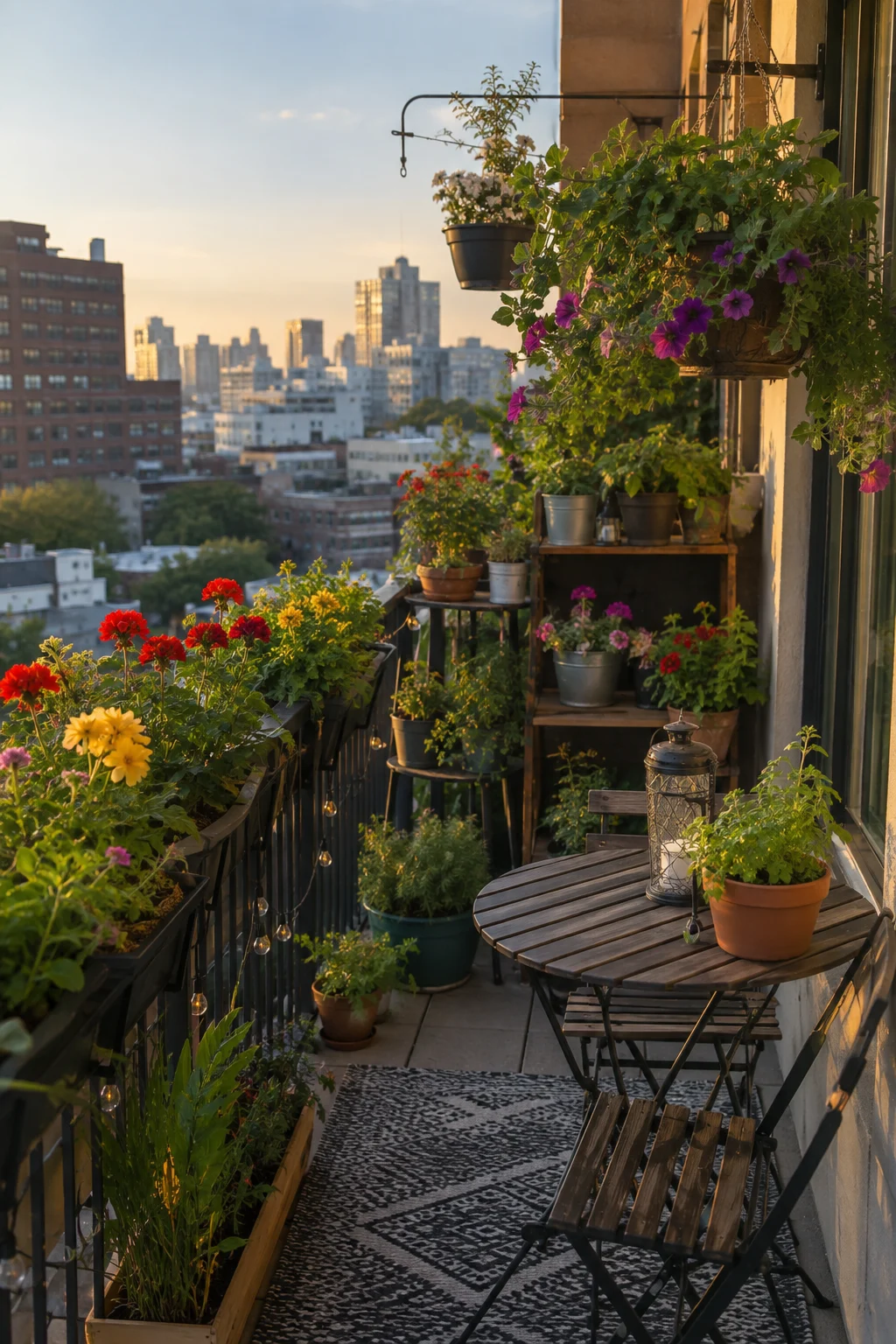
Planter boxes that clip or hook directly onto a balcony railing add growing space without using any floor area at all, making them one of the highest-value additions for a genuinely tight balcony.
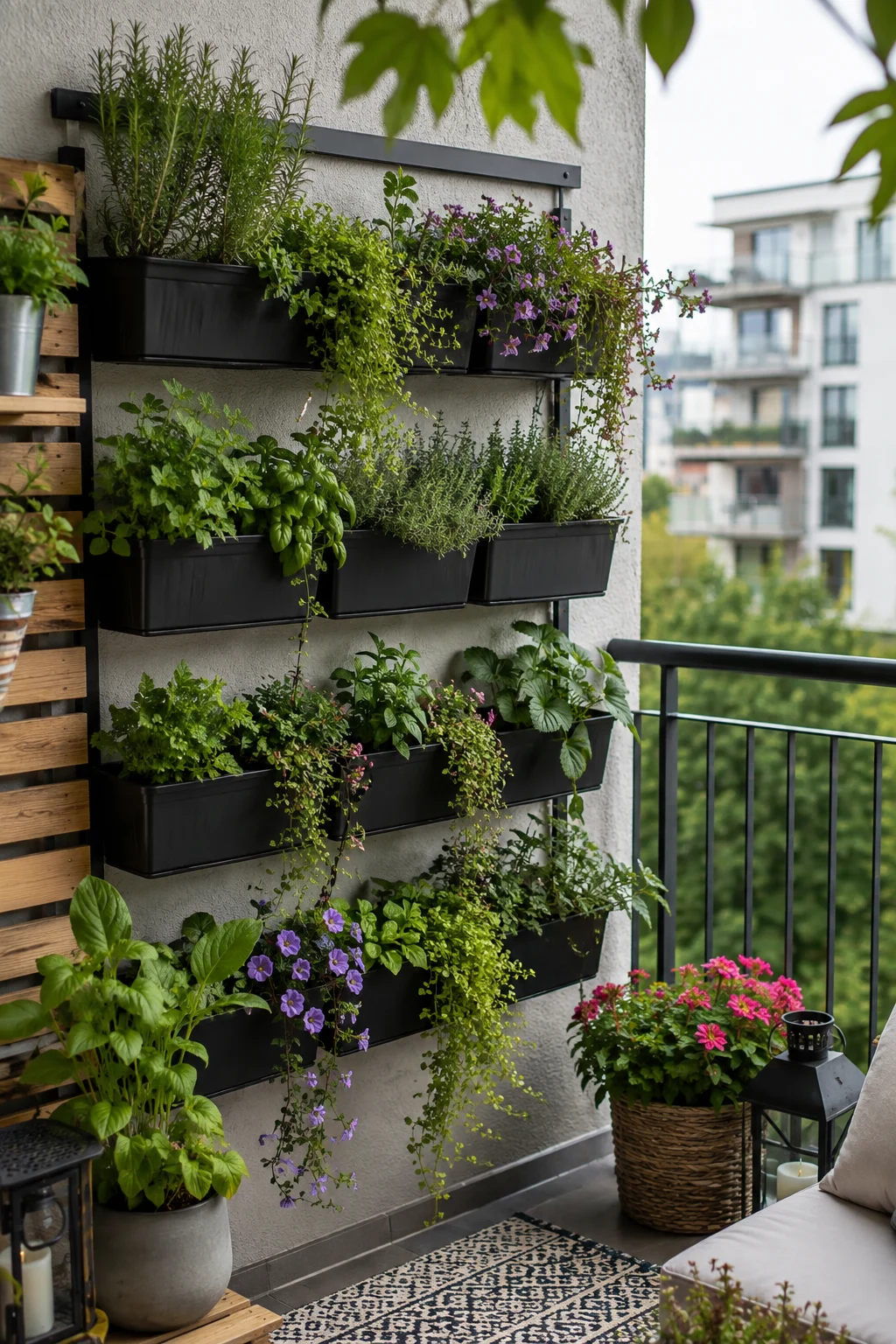
2. Vertical Wall-Mounted Planter System
A modular vertical planter, mounted on the balcony’s back wall, turns unused wall space into a full growing surface, working especially well for herbs or shallow-rooted flowers in a footprint of just a few inches deep.
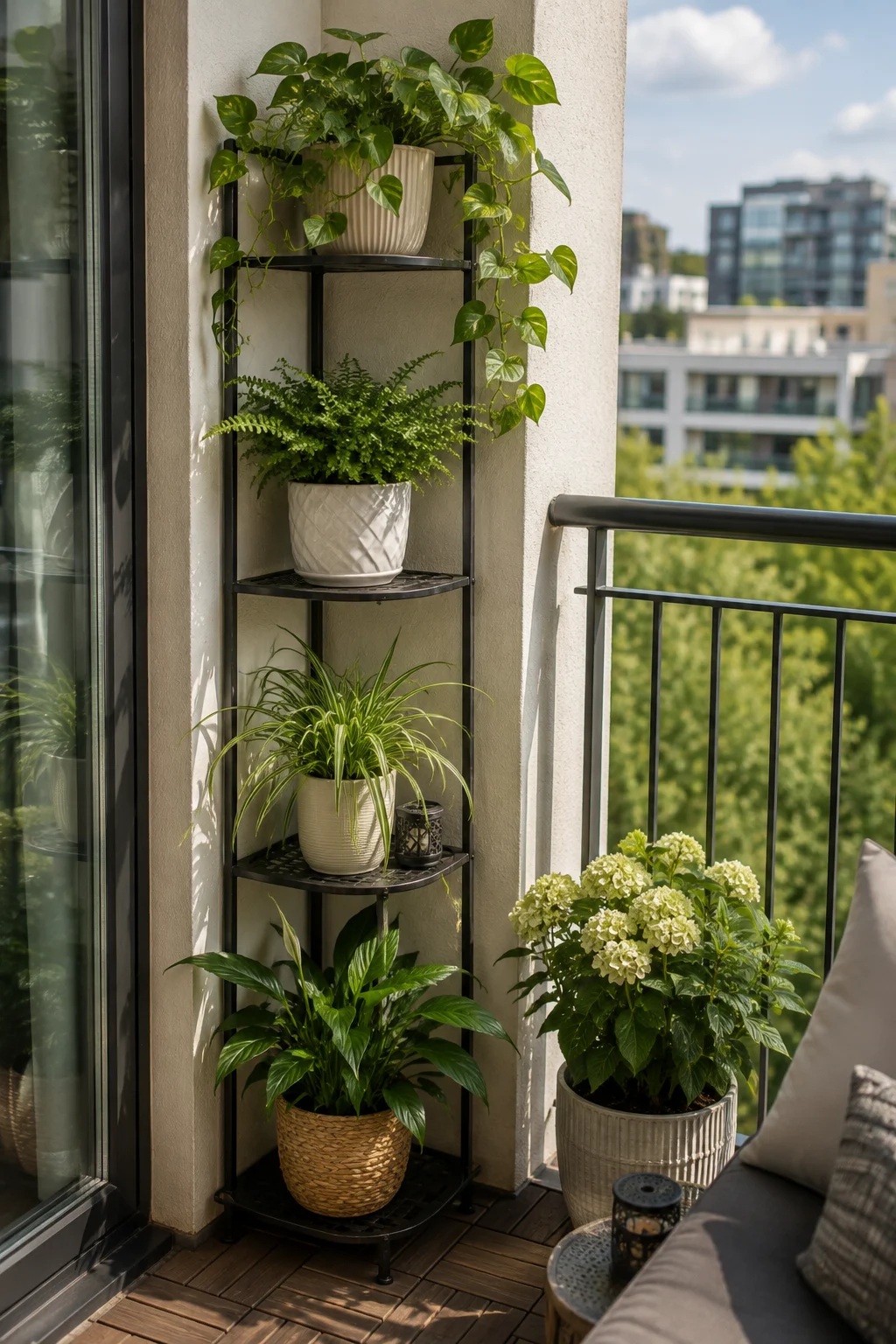
3. Corner Shelving Unit for Plants
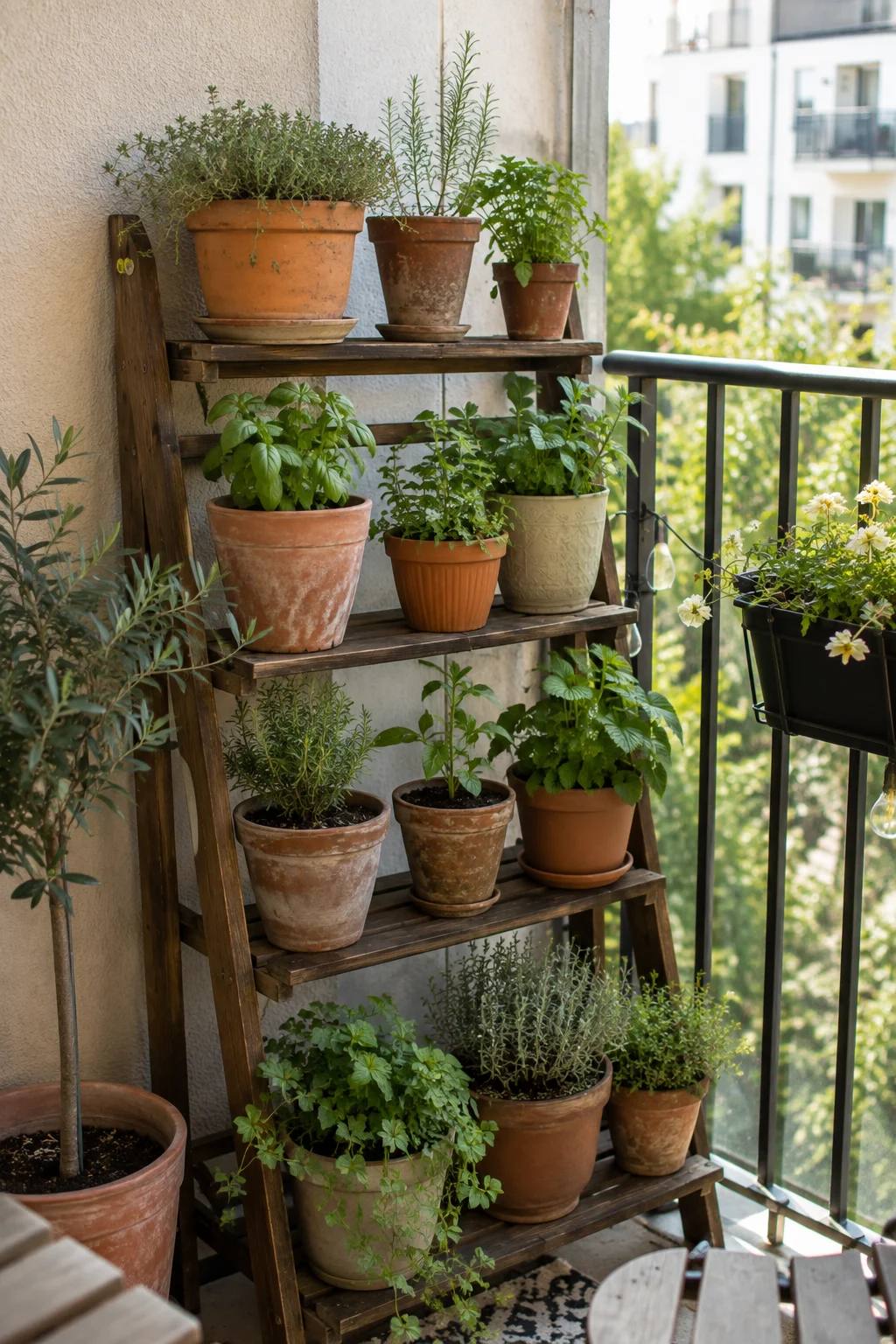
A slim tiered shelving unit tucked into an unused balcony corner holds several pots in a fraction of the footprint flat, ground-level placement would require.
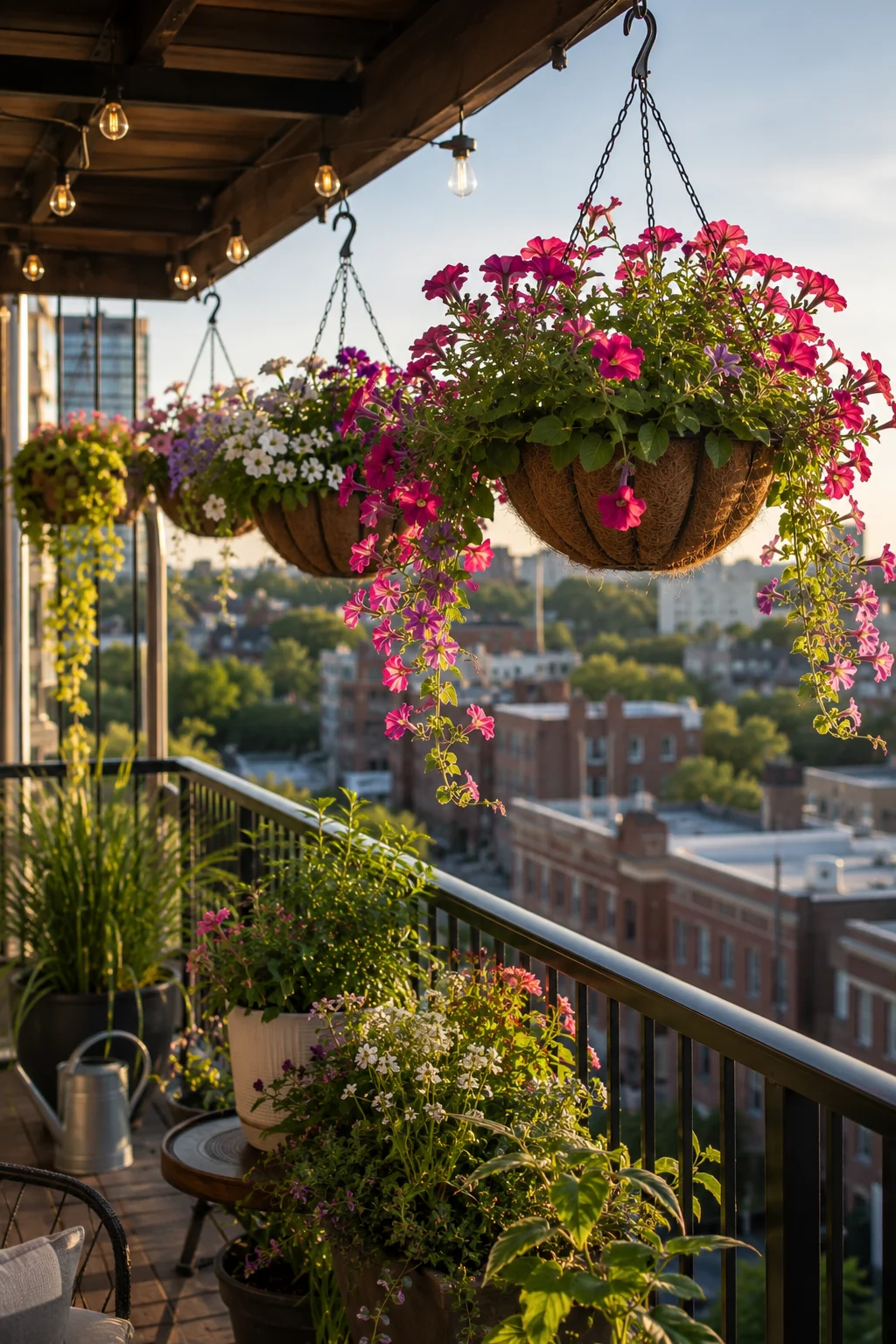
4. Hanging Baskets From an Overhead Structure
Hanging baskets suspended from a ceiling hook, an overhead beam, or a freestanding bracket use vertical air space above head height that a balcony otherwise leaves completely empty.
5. Tiered Plant Stand
A simple wooden or metal tiered stand displays several pots in staggered heights within the footprint of a single large planter, letting a balcony show considerably more plant variety than flat ground-level pots alone.
6. Foldable and Collapsible Furniture
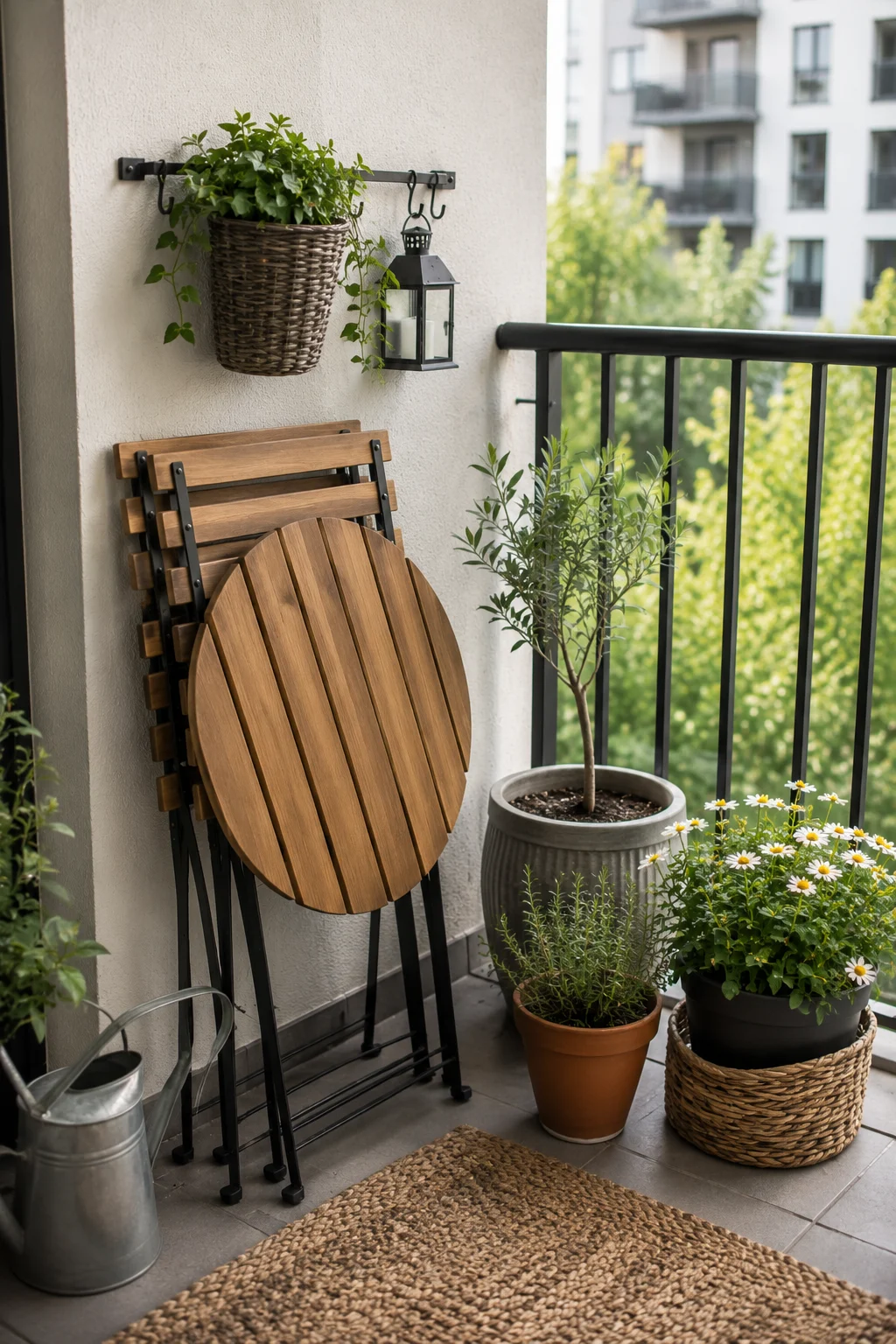
Furniture that folds flat or collapses for storage lets a small balcony switch between an open, empty floor and a full seating setup depending on the day, without permanently sacrificing floor space to furniture that sits unused most of the time.
Containers and Planters
7. Self-Watering Containers
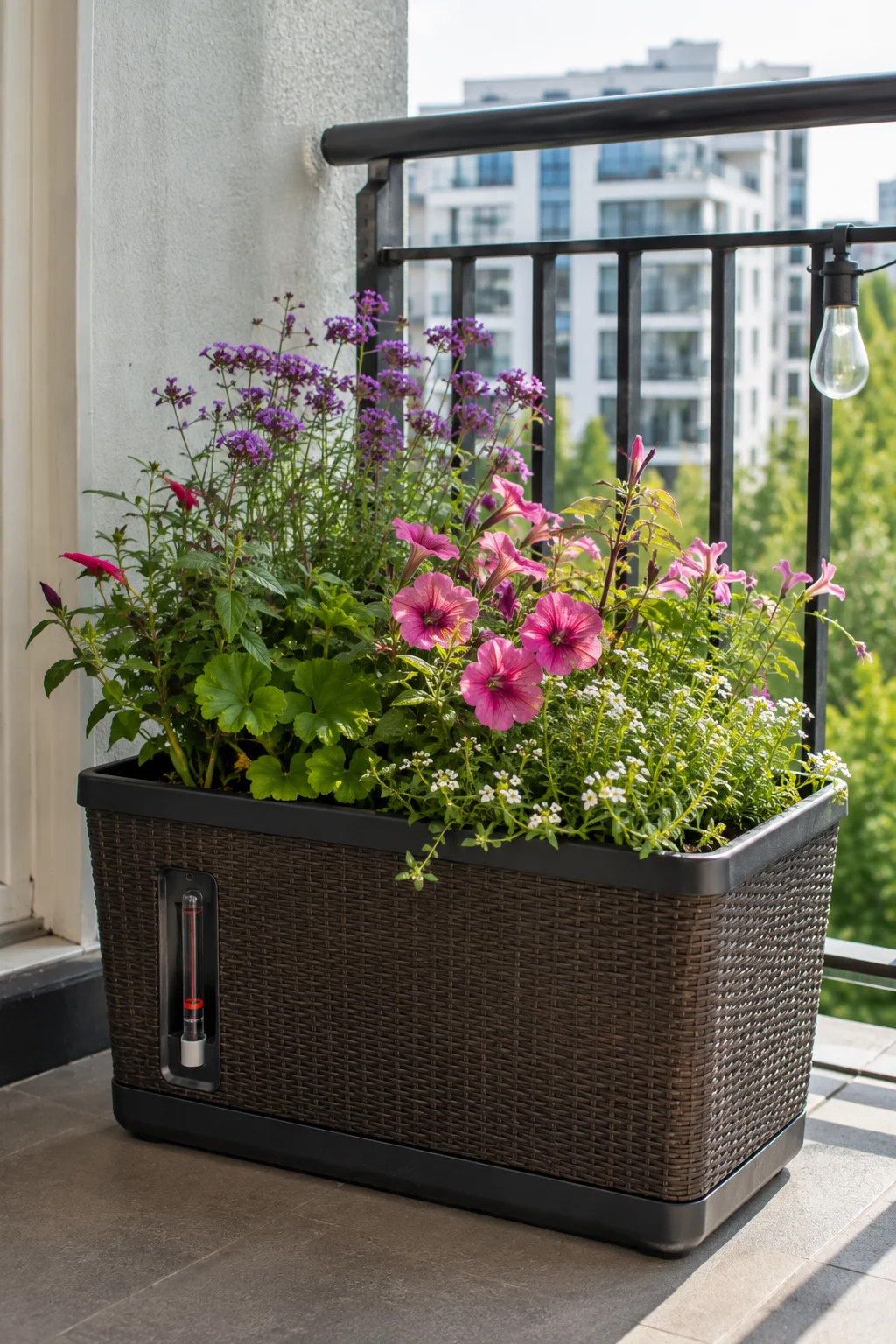
Self-watering planters with a built-in reservoir reduce how often a balcony garden needs attention, which matters more here than in a yard since balcony pots dry out faster from wind and reflected heat off surrounding buildings.
8. Lightweight Fiberglass Planters
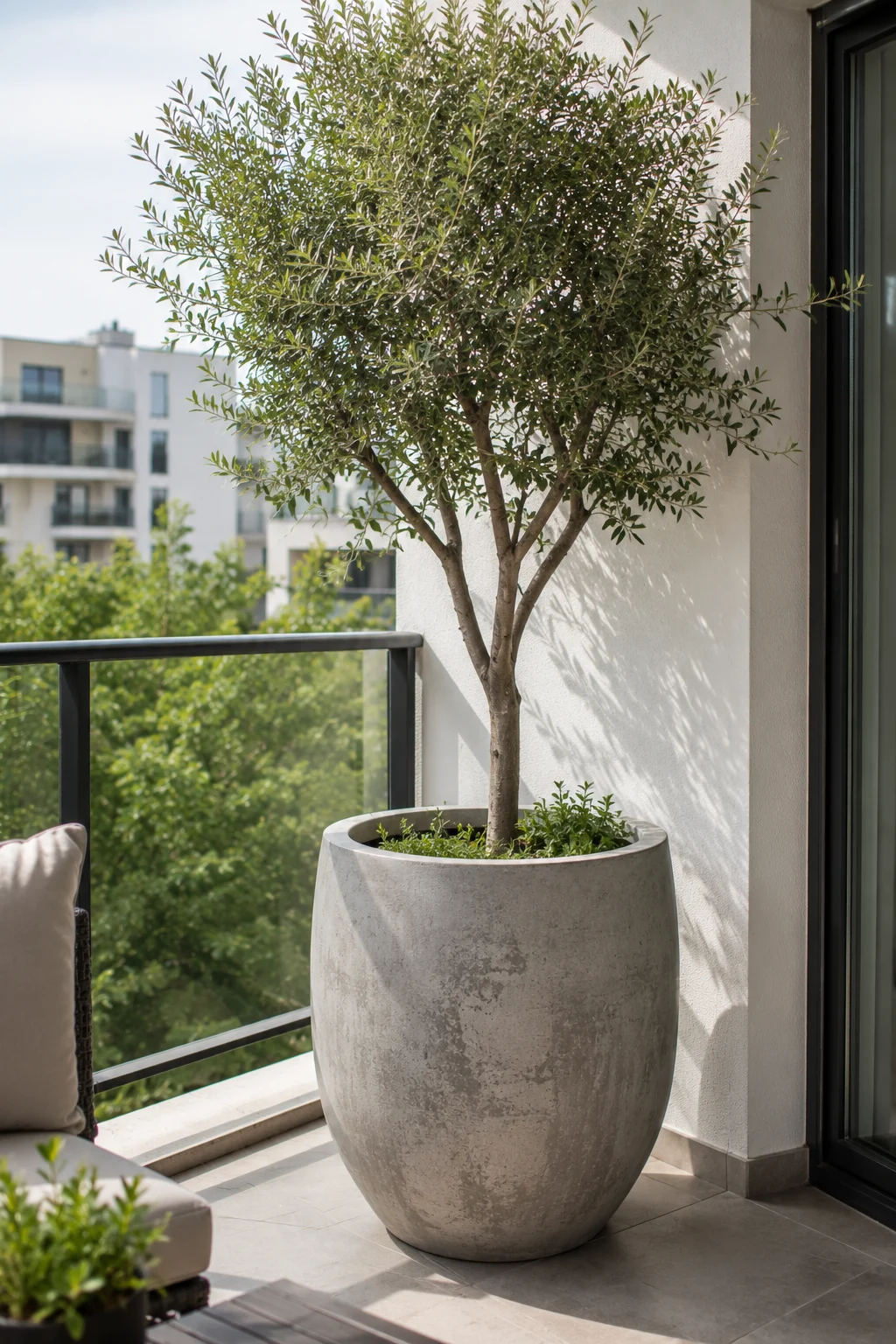
Fiberglass planters finished to look like stone or concrete weigh a fraction of the genuine material, an important consideration for balconies with a specific weight limit that heavy ceramic or real concrete pots could exceed.
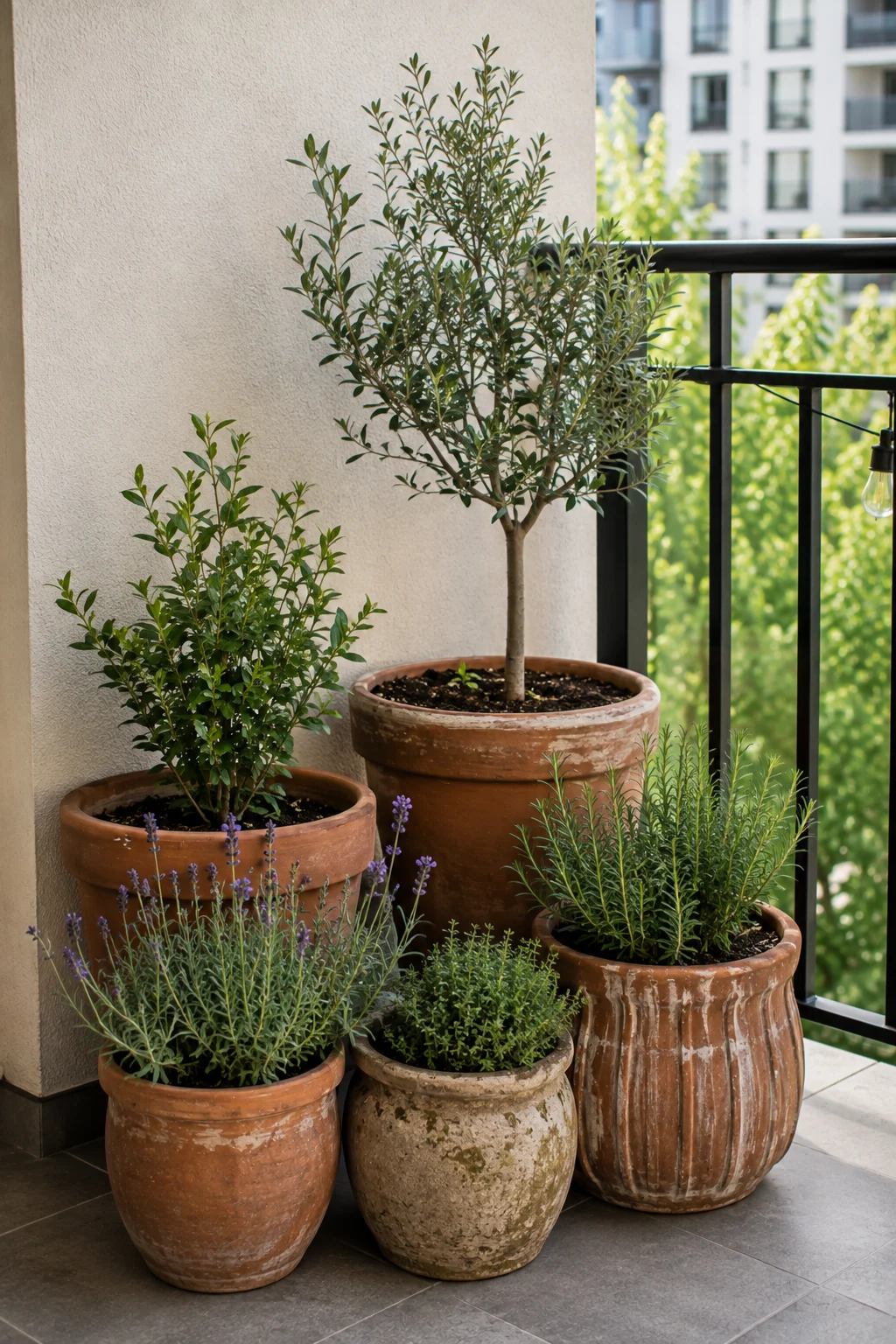
9. Grouped Odd-Numbered Pot Clusters
Clustering three or five pots of varying size together, rather than spacing single pots evenly apart, reads as a deliberate design choice and makes efficient use of a small floor footprint.
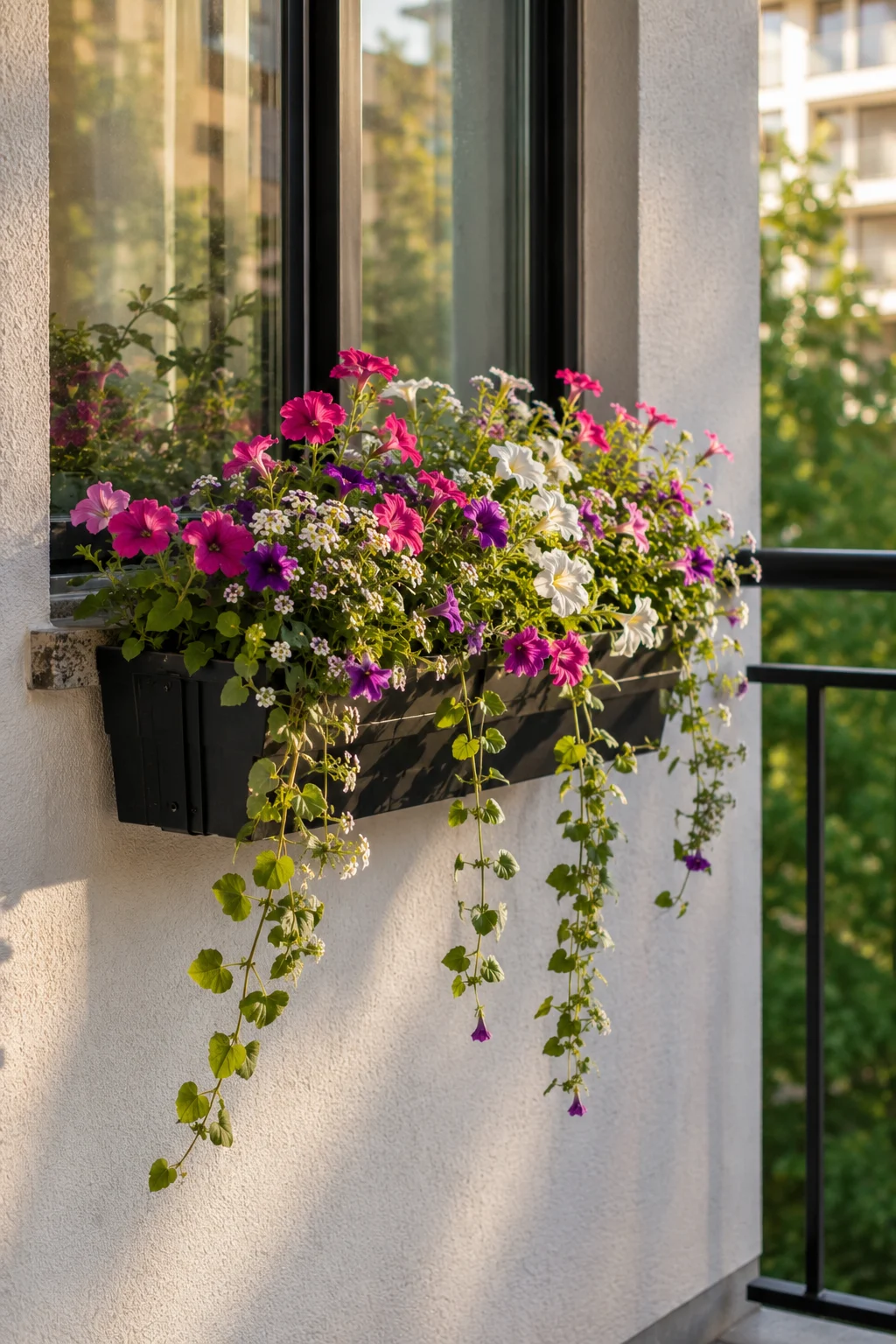
10. Window Box Planters
A window box mounted just below a balcony window adds a growing surface entirely separate from the floor and railing space already in use elsewhere on the balcony.
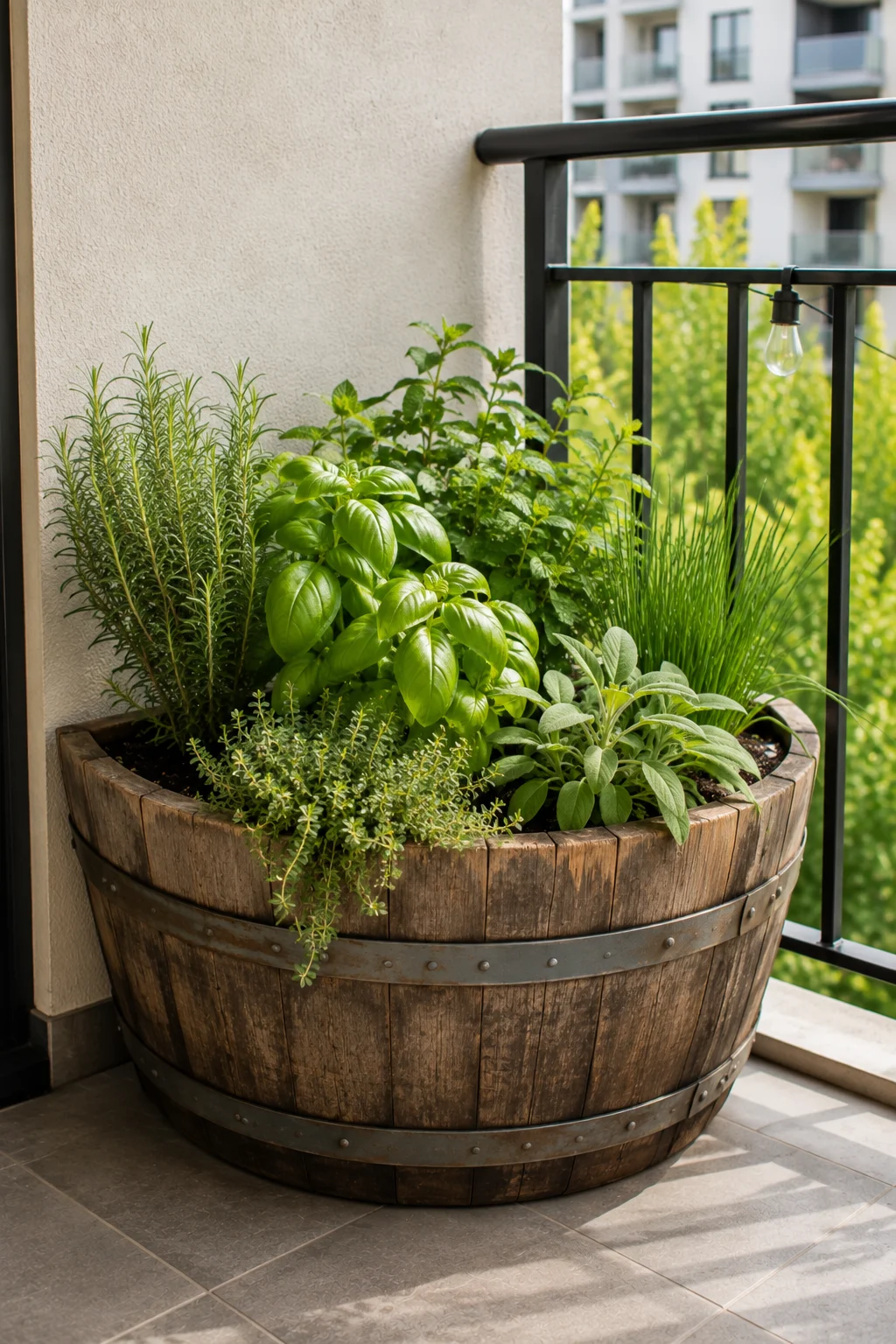
11. Repurposed Crates or Barrels
Wooden crates or half-barrels, repurposed as planters, bring rustic texture to a balcony at a lower cost than purpose-bought containers, and their stackable shape suits tight corners particularly well.
Plant Choices
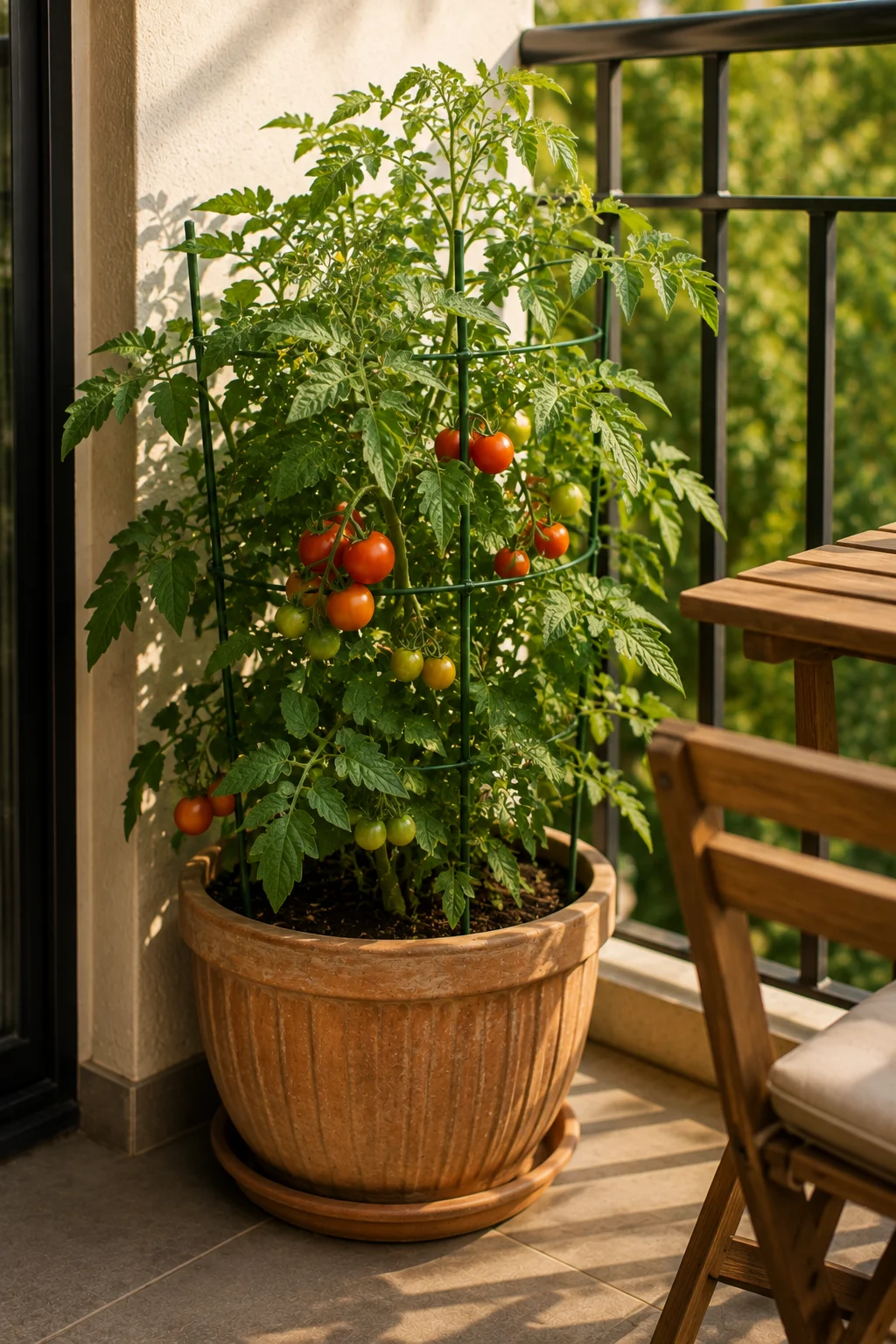
12. Compact Vegetable Varieties
Patio-bred tomato, pepper, and cucumber varieties, developed specifically for container growing, produce a genuine harvest in a fraction of the space a standard garden variety would need.
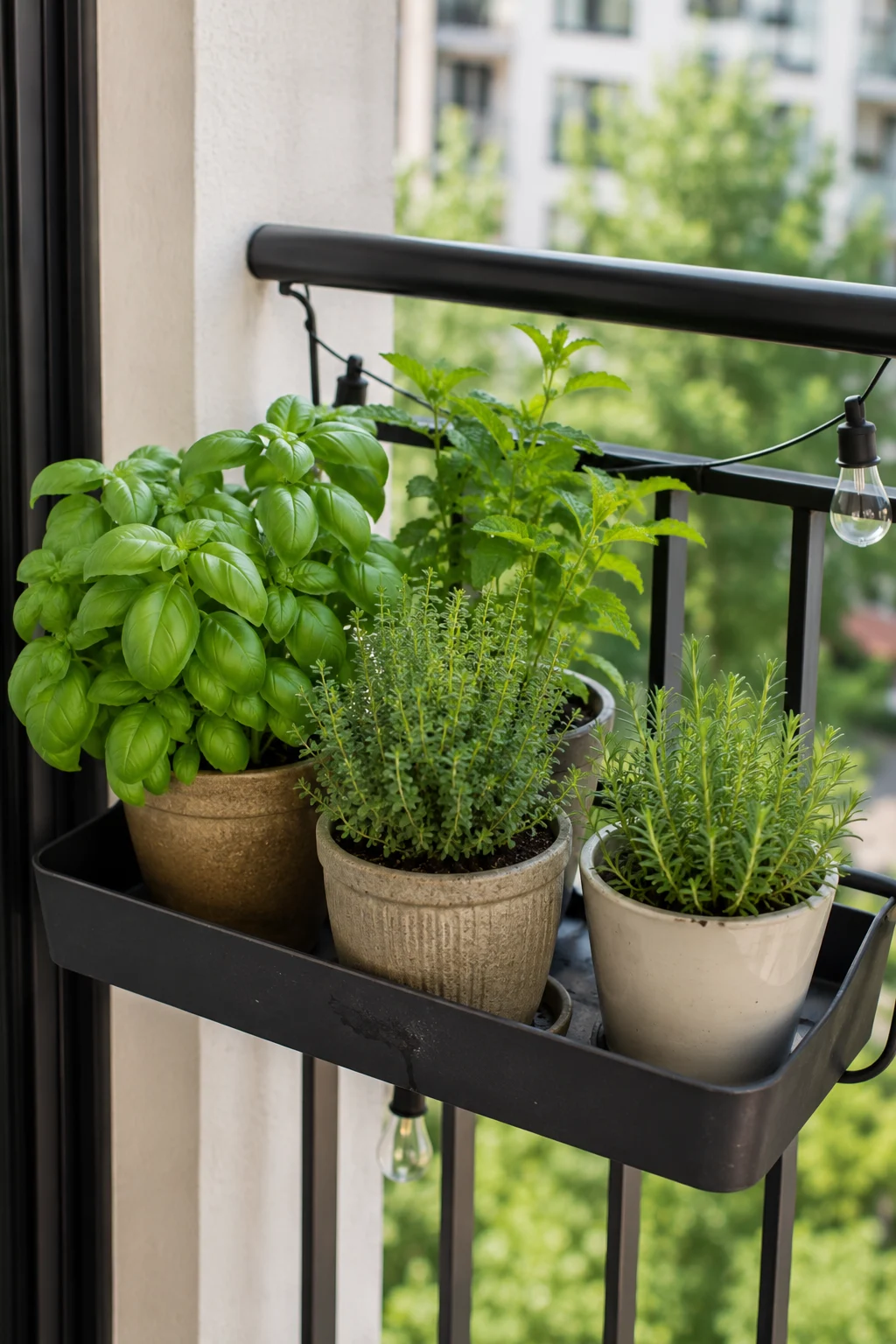
13. Small Herb Garden
A cluster of pots or a single vertical planter dedicated to kitchen herbs — basil, thyme, chives, mint — keeps cooking ingredients within arm’s reach of the kitchen and is one of the most consistently useful balcony plantings.
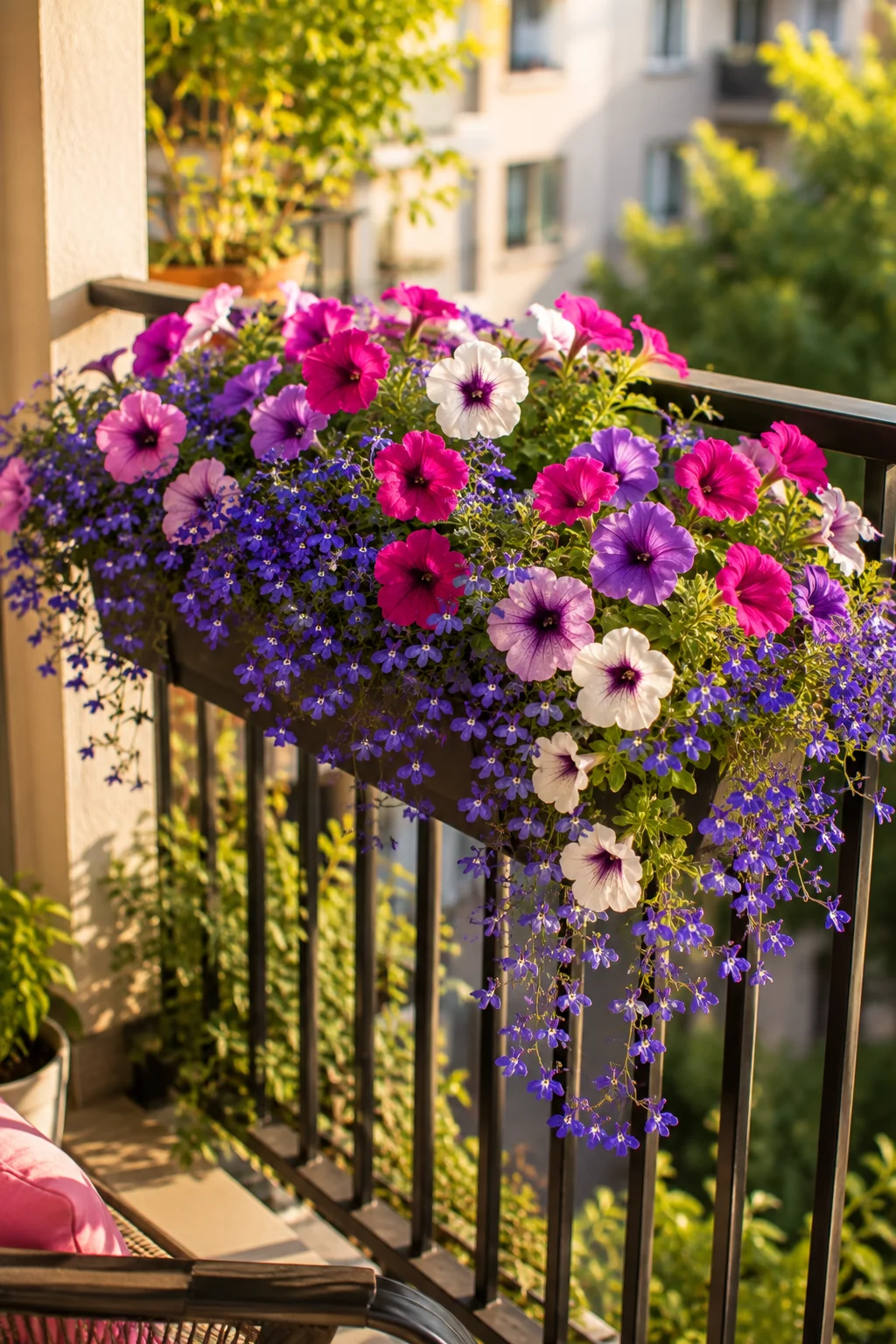
14. Trailing Flowers for Railing Boxes
Petunias, lobelia, and trailing verbena planted in railing boxes cascade downward rather than competing for the balcony’s limited floor space, giving color without eating into usable area.
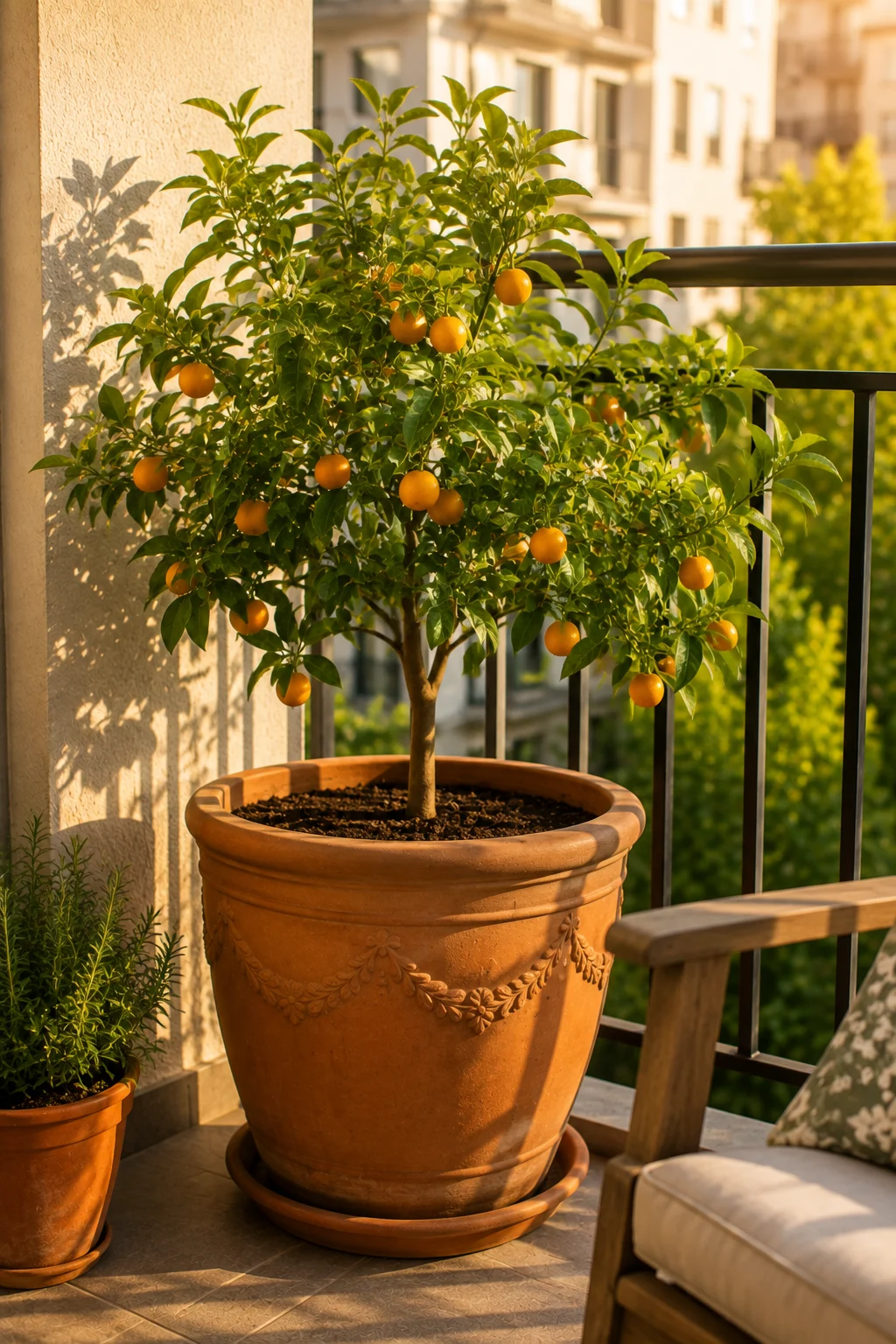
15. Small Ornamental Tree in a Large Pot
A dwarf citrus tree or a compact Japanese maple in a large, well-draining container gives a balcony genuine height and a focal point without needing in-ground planting space.
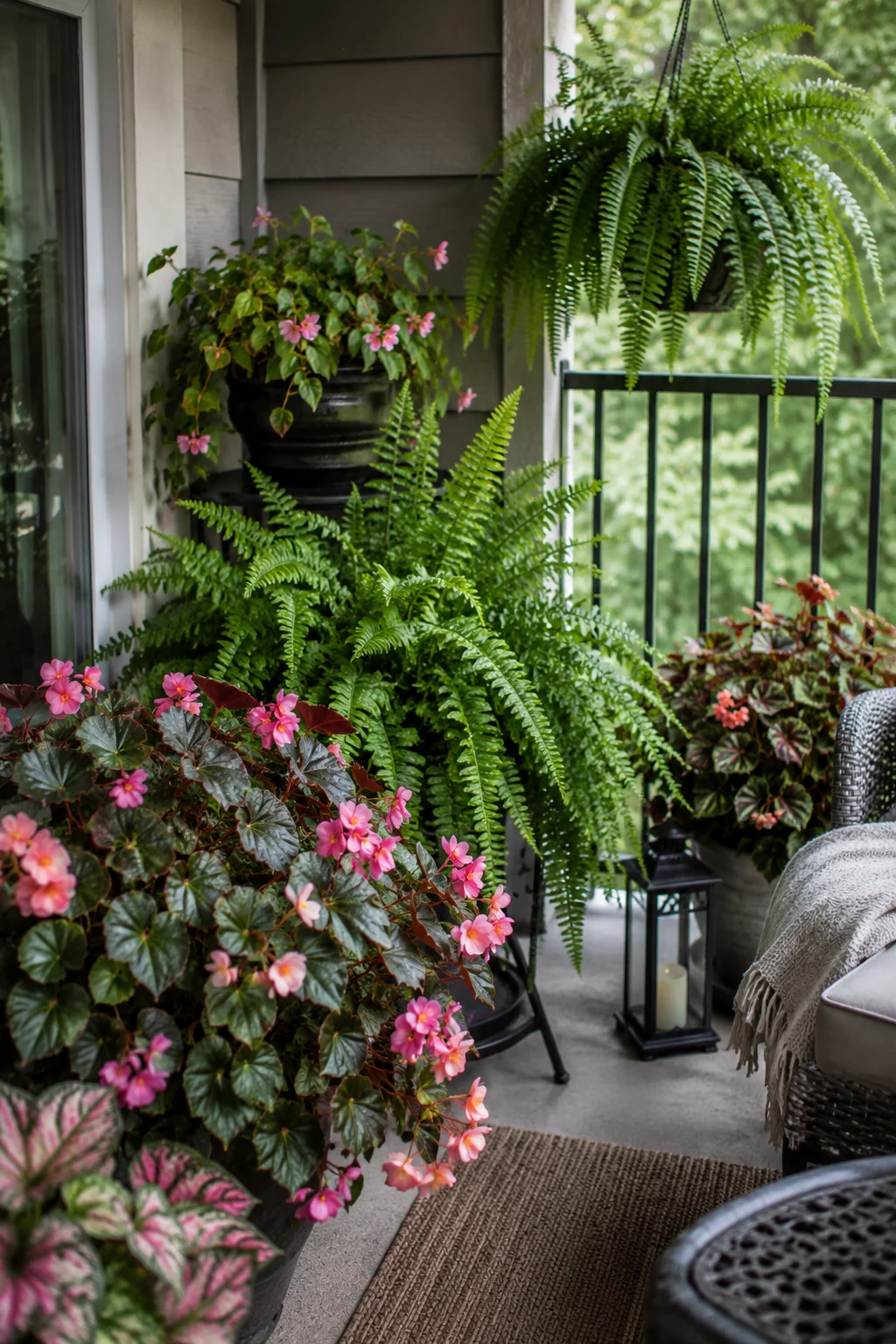
16. Shade-Tolerant Plants for Covered Balconies
Ferns, hostas, and shade-tolerant begonias thrive on a covered or north-facing balcony where sun-loving flowers would struggle, making an otherwise “difficult” shaded balcony genuinely plantable.
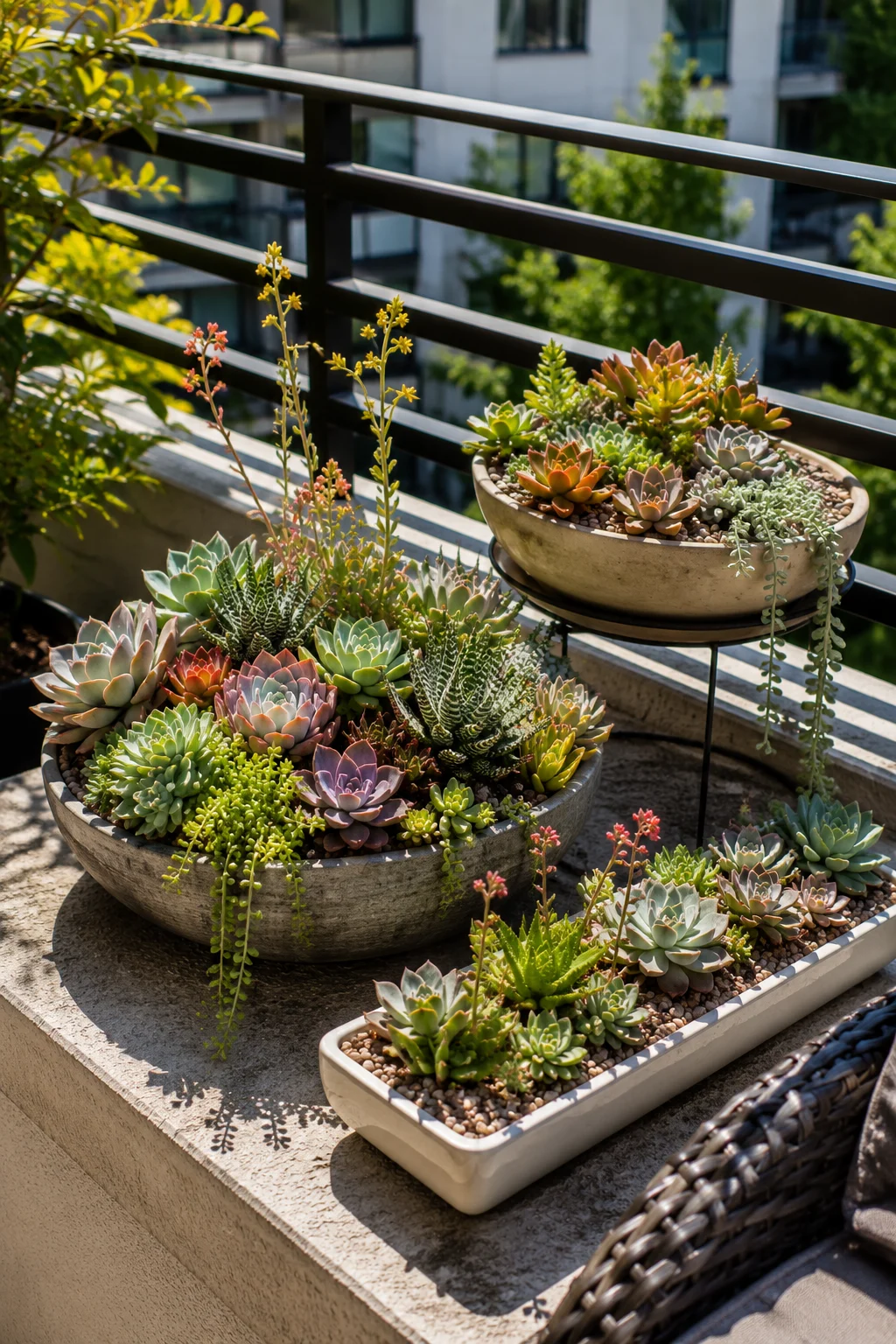
17. Drought-Tolerant Succulents for Sun and Wind
Sedum, echeveria, and other succulents handle the reflected heat and drying wind common on an exposed, sun-baked balcony far better than most flowering annuals, and need considerably less frequent watering.
Privacy and Shade
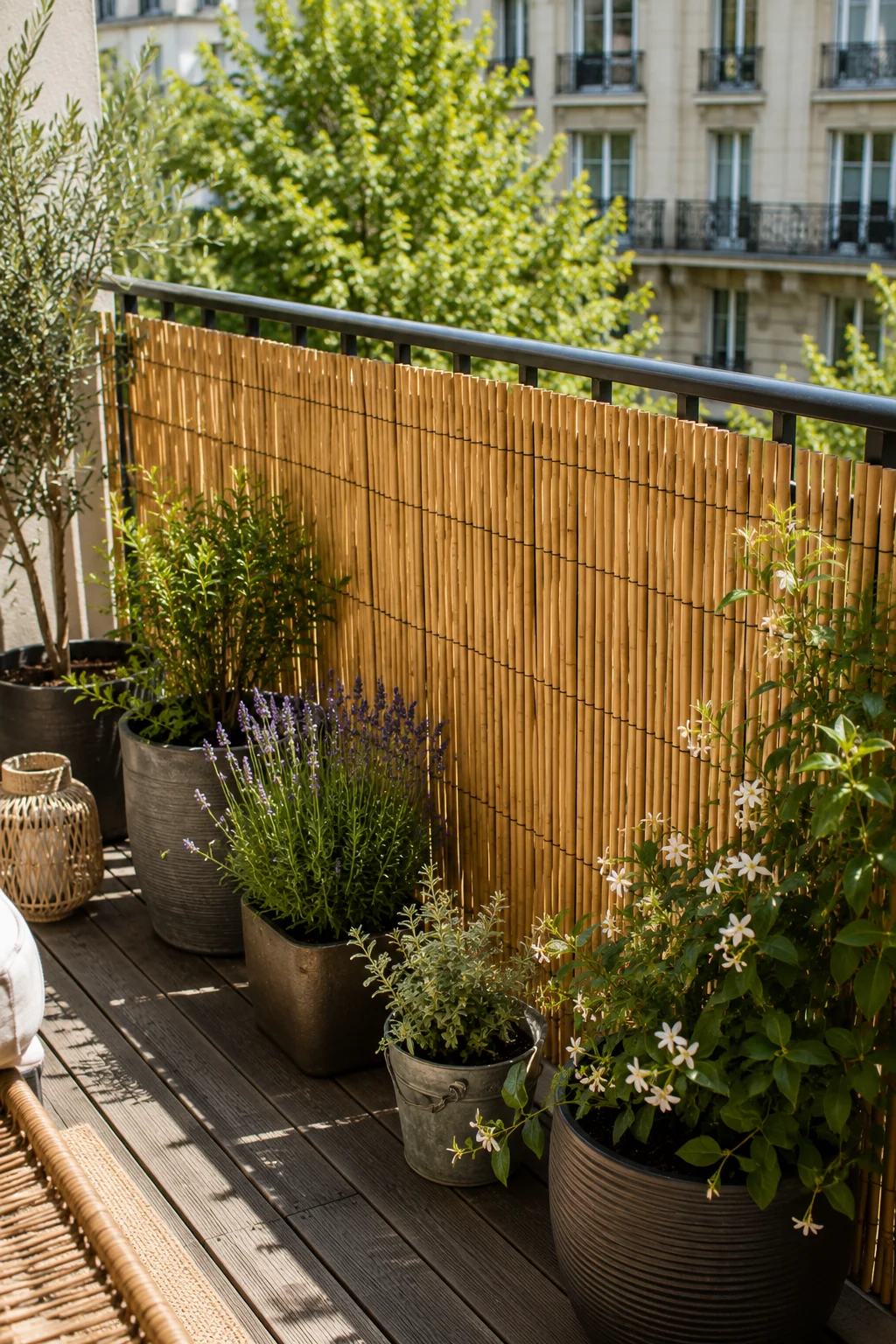
18. Bamboo or Reed Privacy Screen
A roll of natural bamboo or reed screening attached to a balcony railing blocks sightlines from neighboring units or the street below without requiring any permanent structural changes.
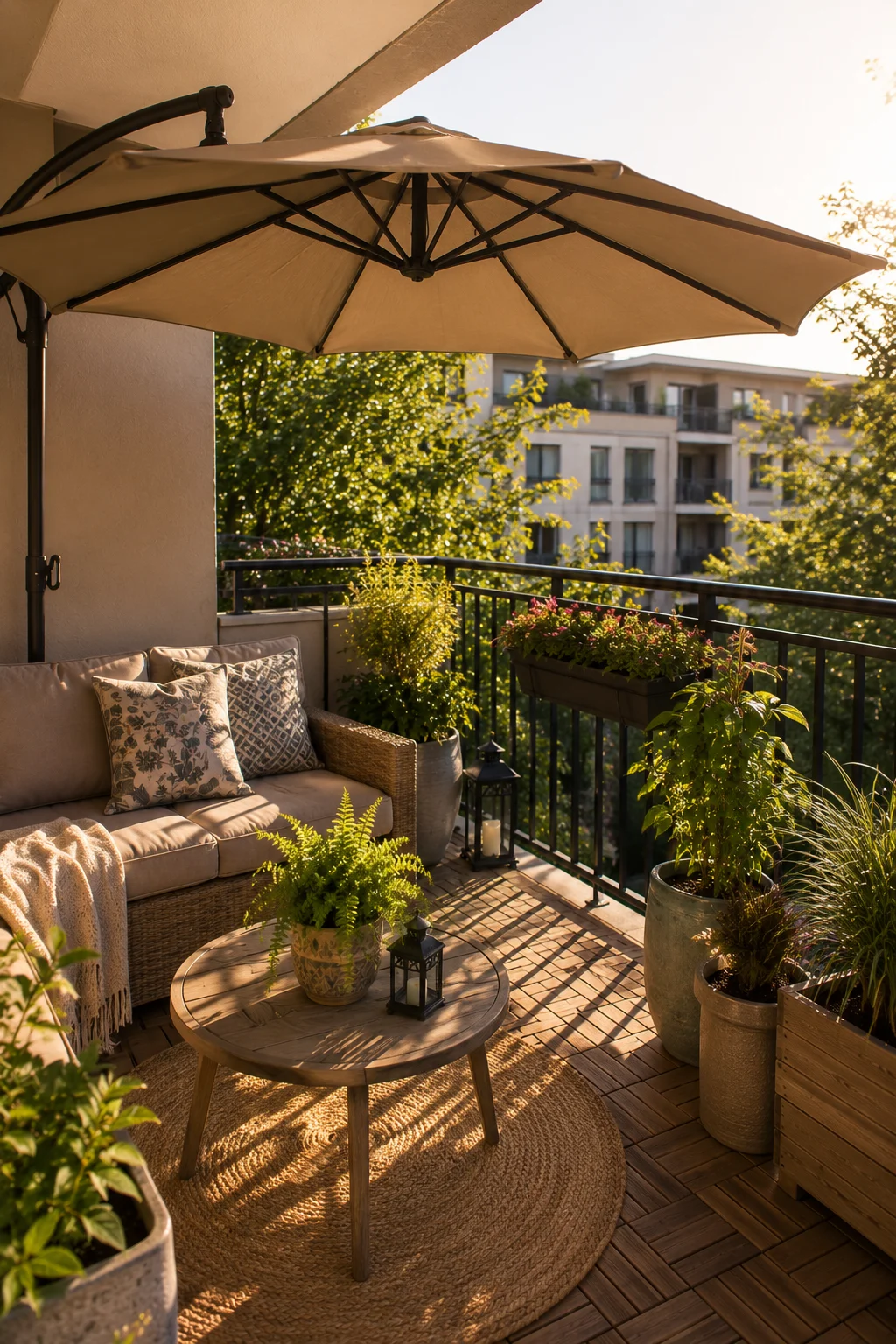
19. Retractable Shade Sail or Umbrella
A small retractable shade sail or a cantilevered umbrella provides relief from direct sun on an exposed balcony without a permanent overhead structure, and can be closed entirely on cooler or overcast days.
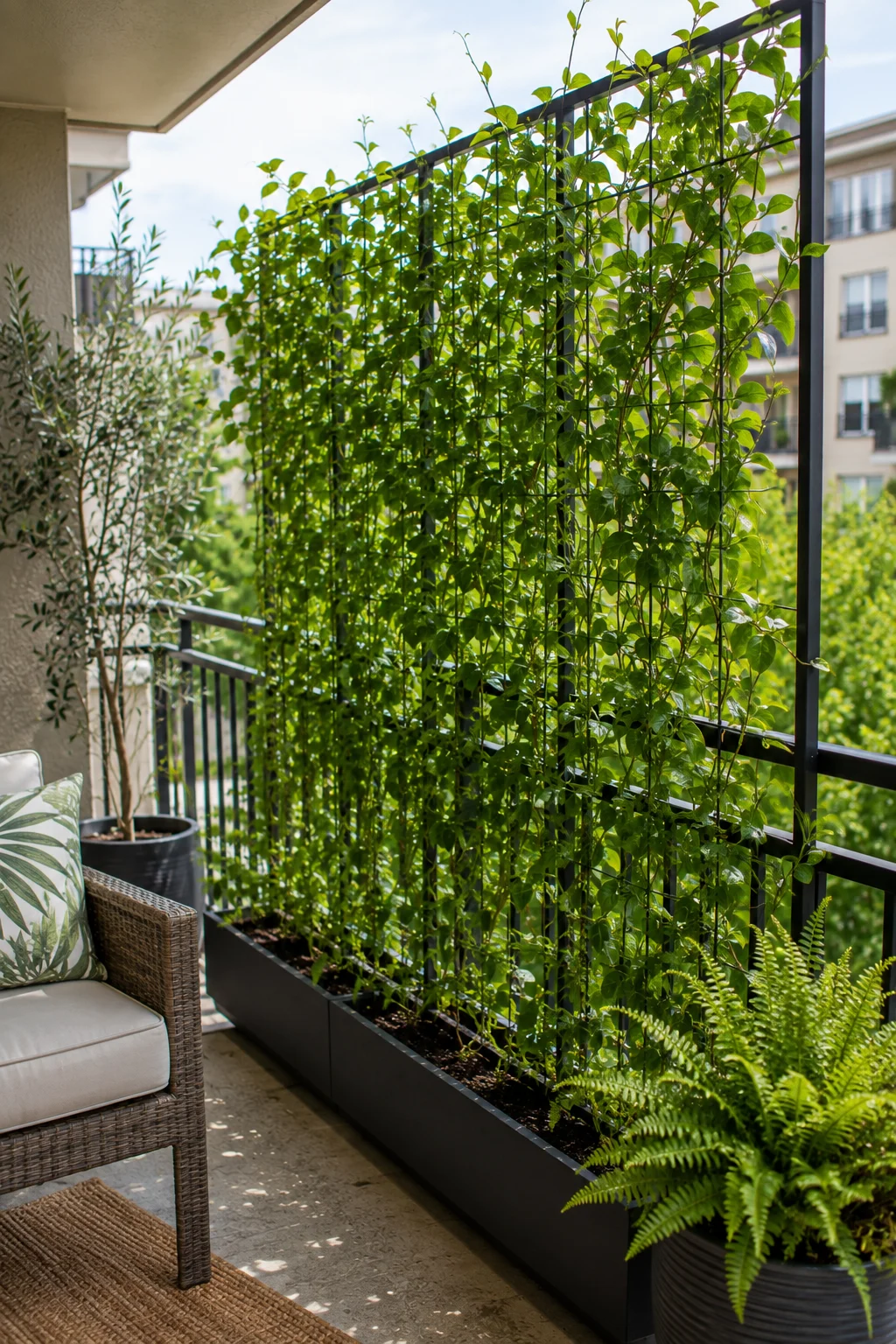
20. Climbing Vine on a Trellis
A fast-growing annual vine trained up a slim trellis attached to the railing adds privacy screening that grows in over a single season, doubling as a genuine planting feature rather than a purely functional barrier.
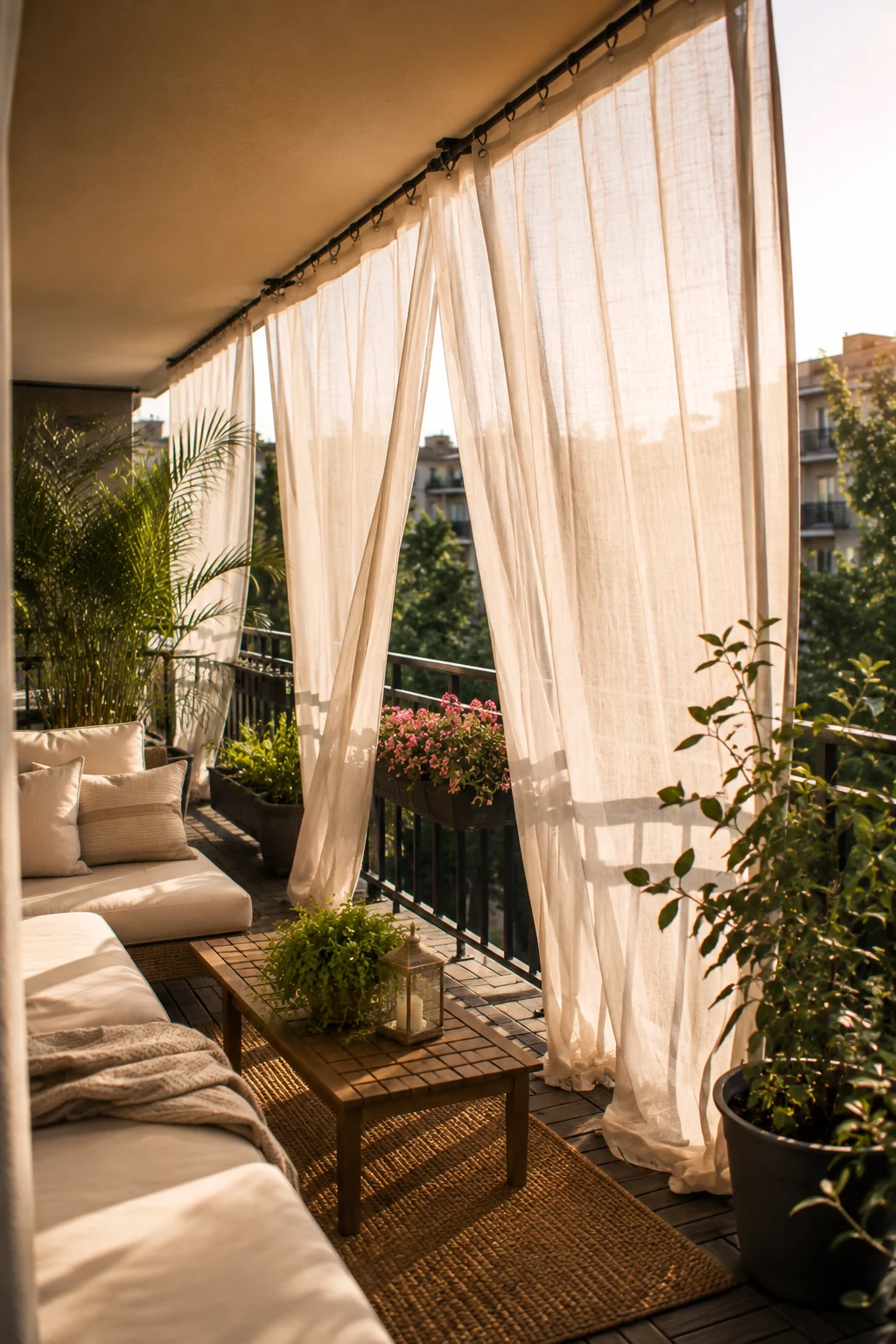
21. Outdoor Curtains
Lightweight, weather-resistant outdoor curtains hung along one side of a balcony soften the hard architectural lines typical of most balconies while providing flexible, adjustable shade and privacy.
Furniture and Function
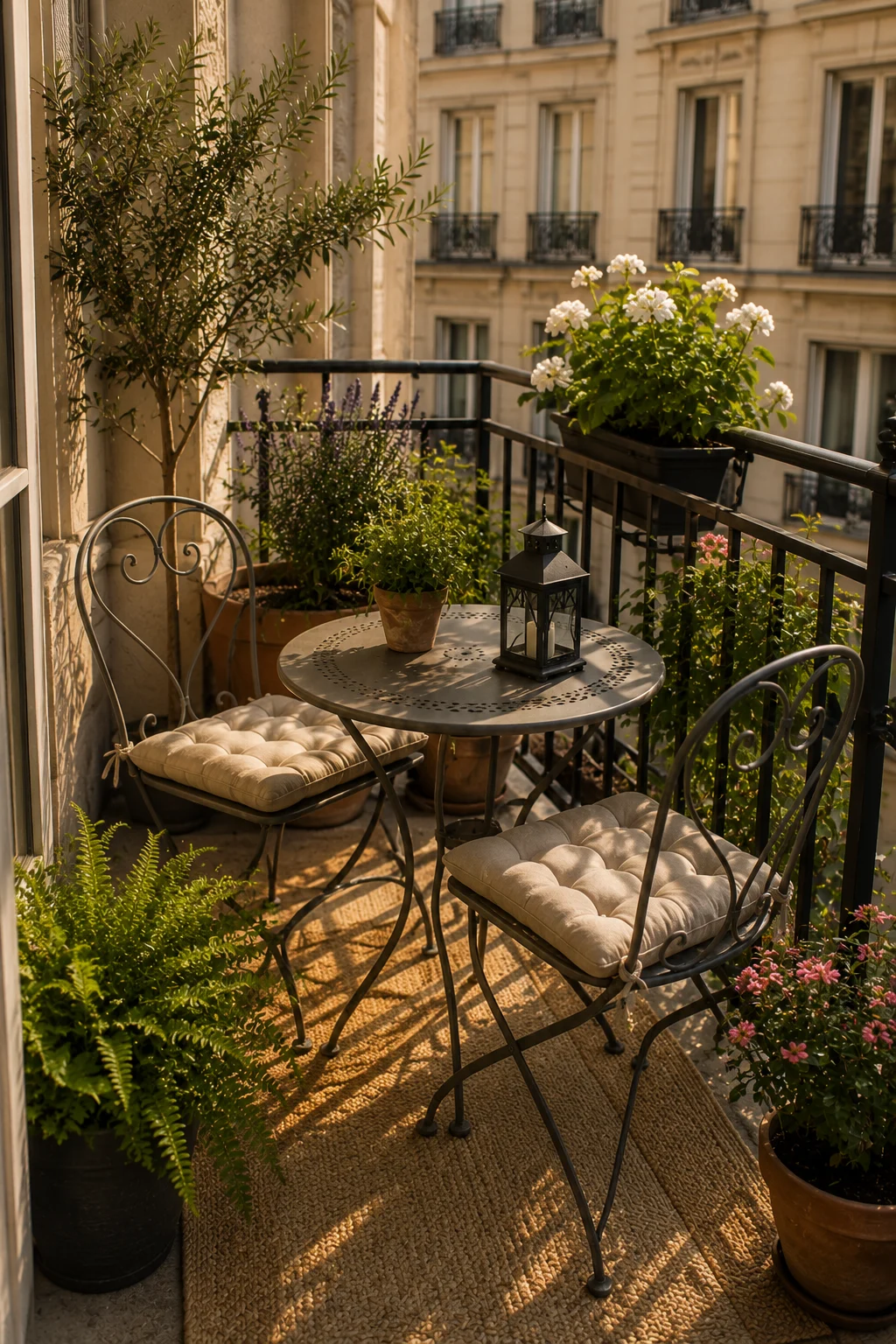
22. Small Bistro Table and Two Chairs
A compact two-person bistro set remains the most reliable way to fit genuine seating onto even a very small balcony without overwhelming the available floor space.
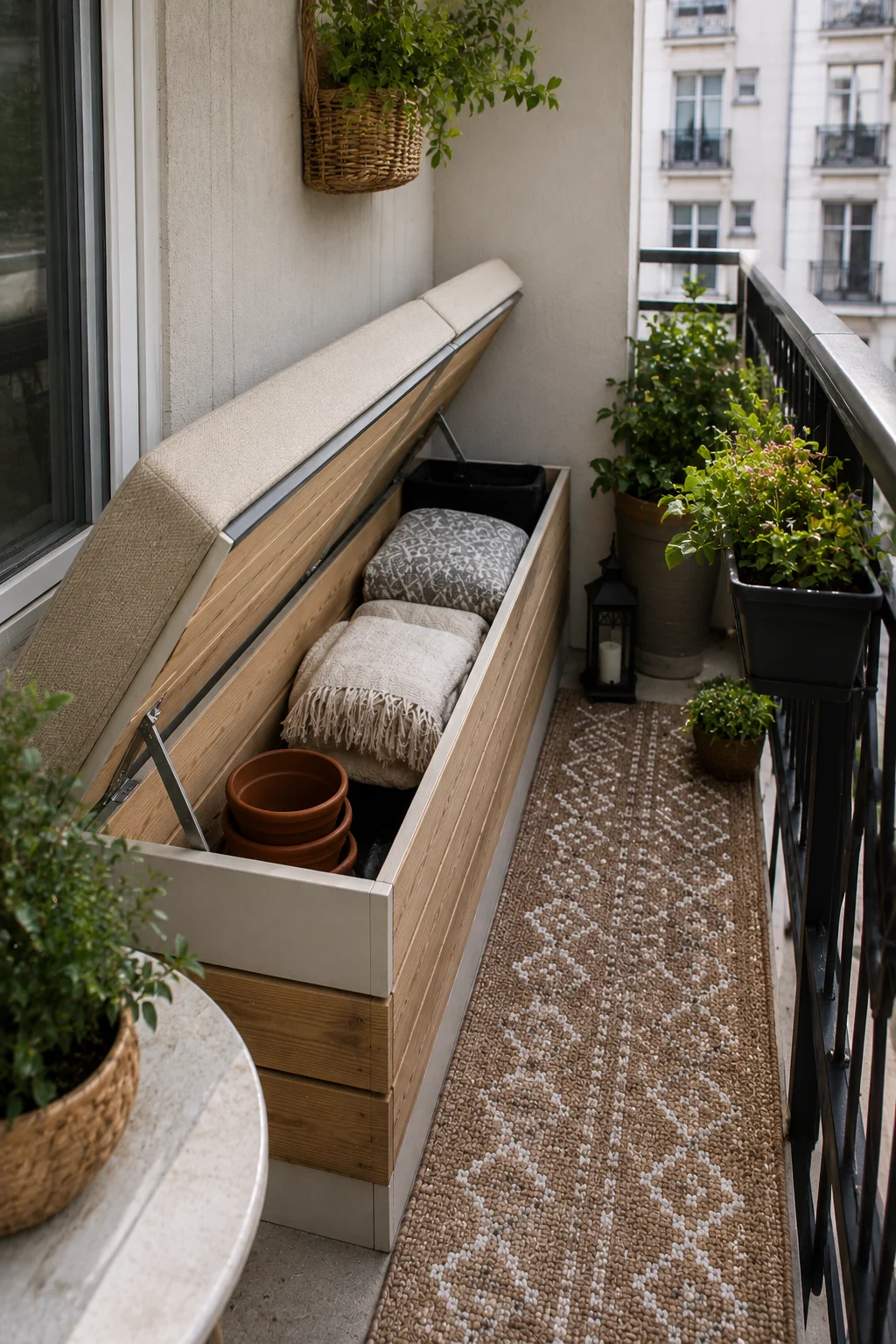
23. Built-In Bench With Storage
A narrow bench built along one balcony wall, with a lift-up seat concealing storage underneath, provides seating and a place to store cushions or gardening tools without needing separate furniture pieces.
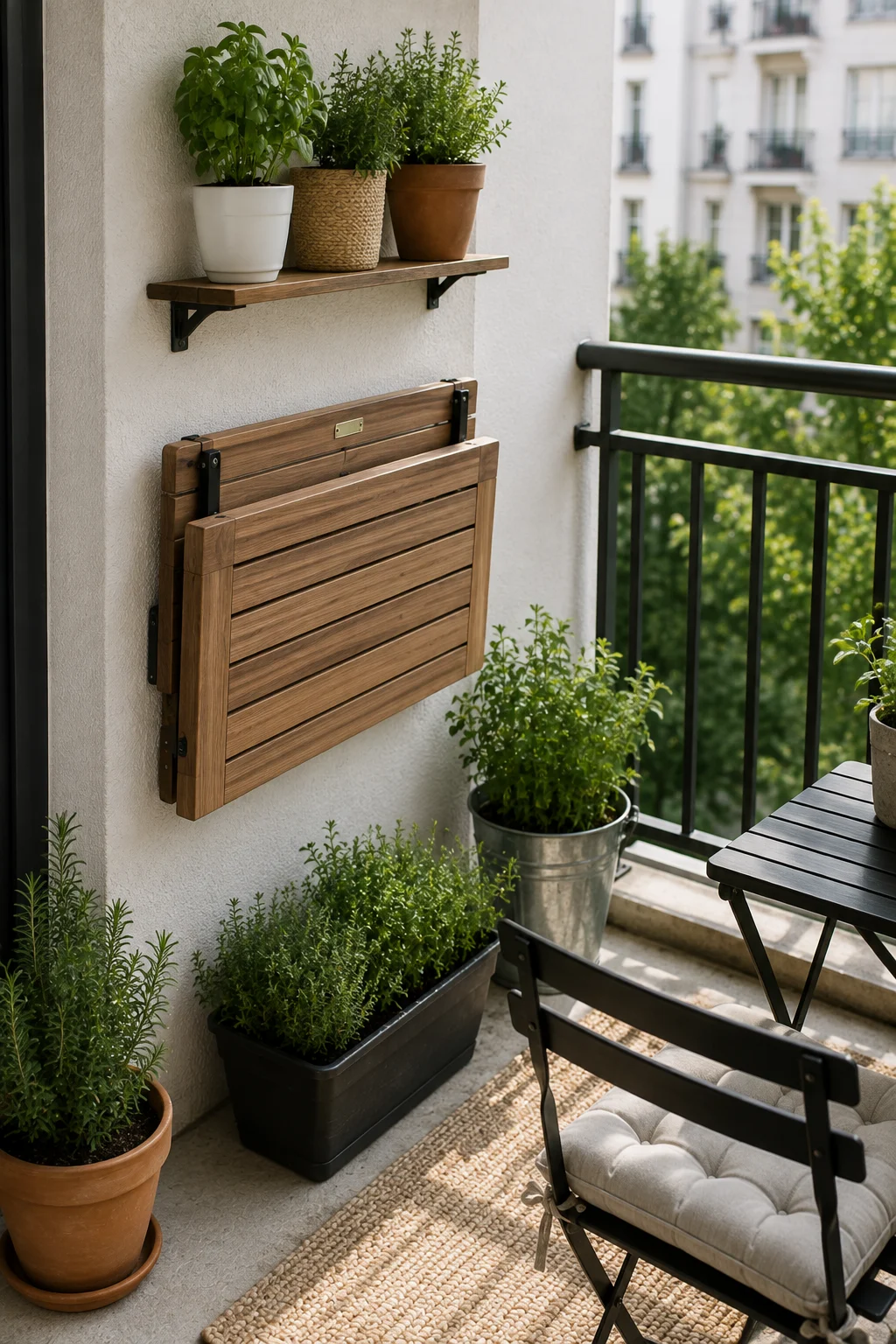
24. Wall-Mounted Fold-Down Table
A table that folds flat against the wall when not in use frees up the entire balcony floor between uses, unfolding only when actually needed for a meal or drink.
Lighting and Finishing Touches
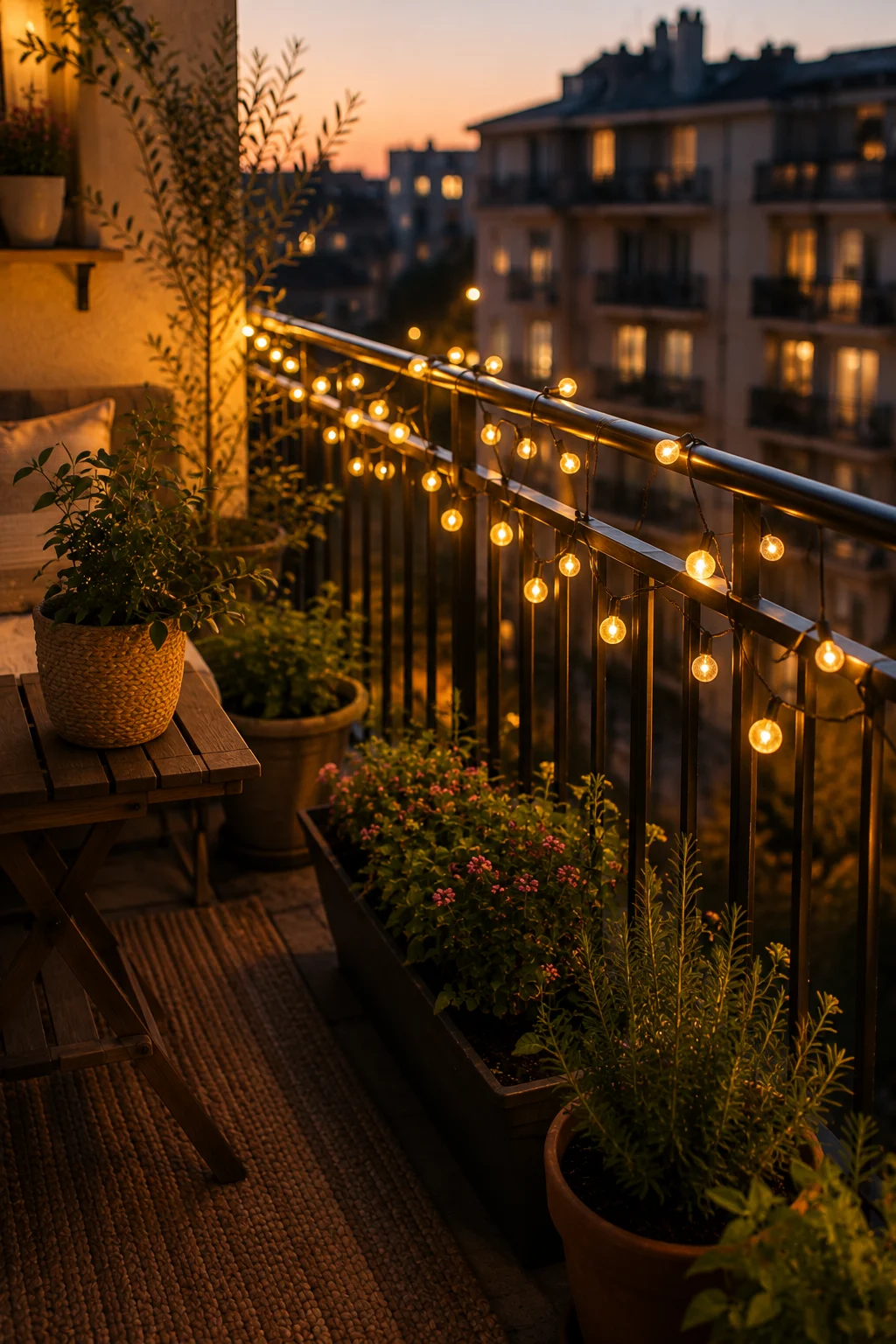
25. String Lights Along the Railing
Warm string lights woven along a balcony railing extend the space’s usable hours into the evening at very low cost and installation effort, and work whether or not the railing is otherwise planted.
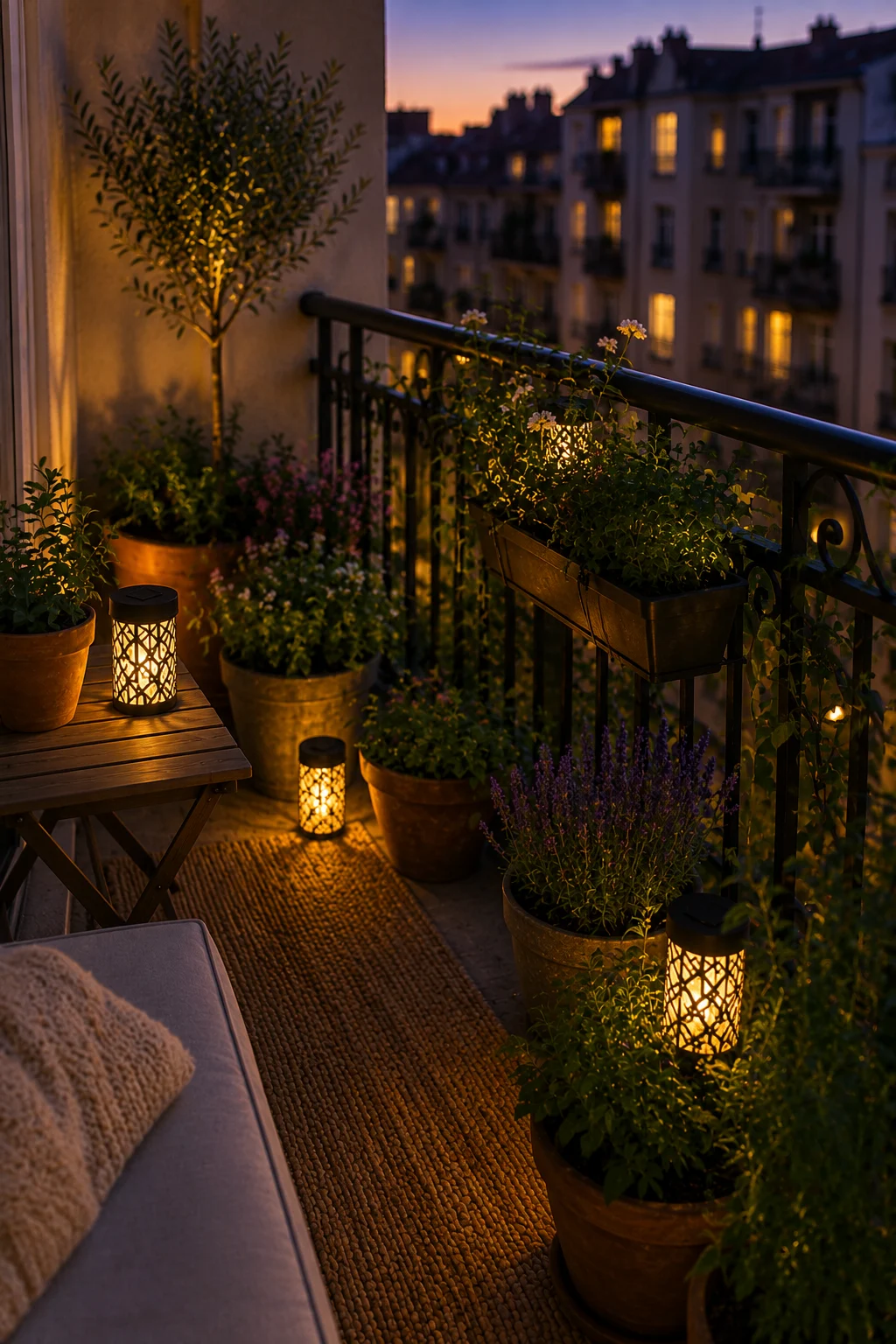
26. Solar Lanterns for Ambiance
Small solar-powered lanterns placed among balcony plants require no wiring at all and add a soft, warm glow after dark that charges automatically through the day.
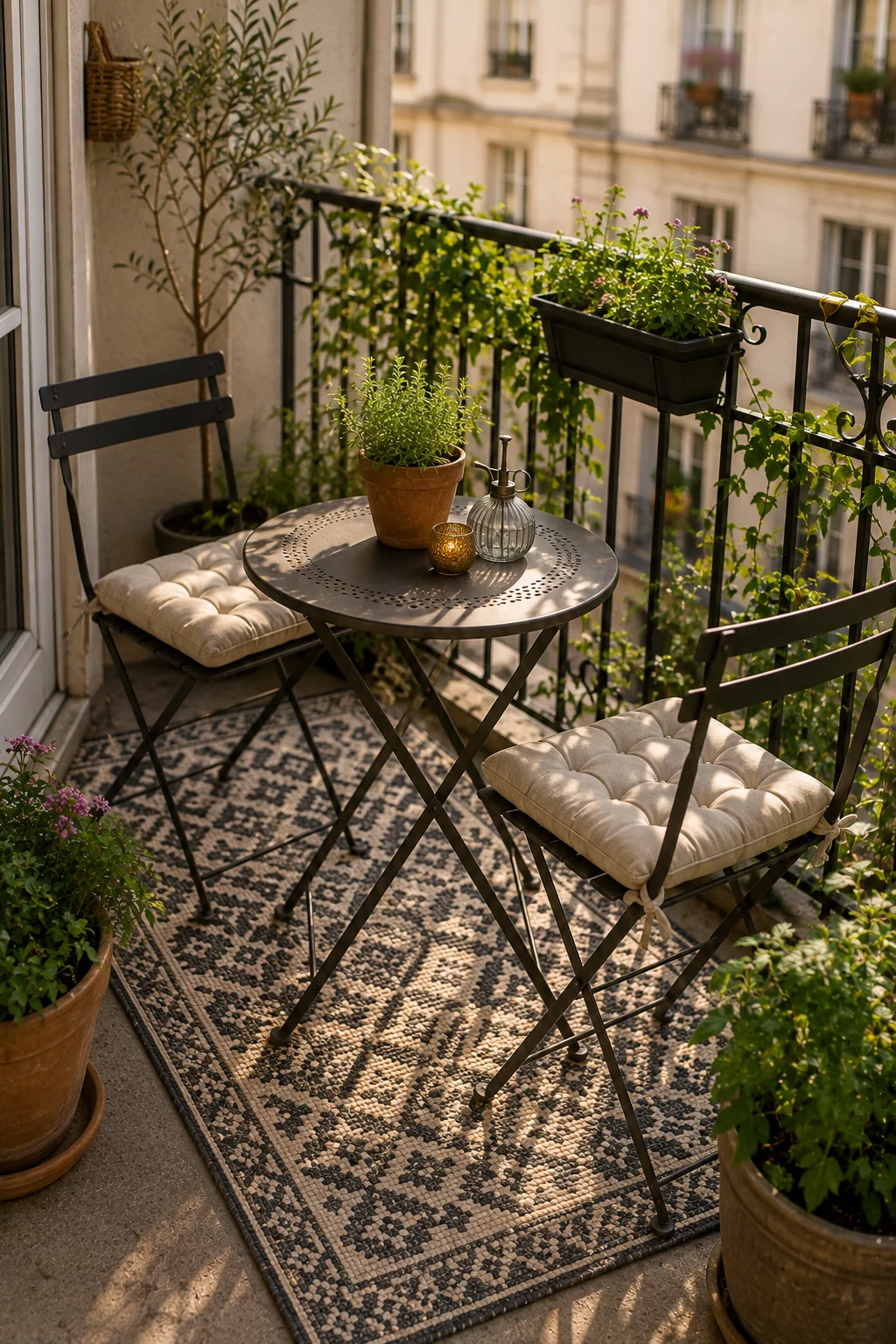
27. Outdoor Rug to Define the Space
A small weather-resistant outdoor rug visually anchors a balcony’s seating area and softens the bare concrete or composite decking underfoot, the same way a rug defines a room indoors.
Weight, Water, and Wind: The Balcony-Specific Basics
Before committing to a full layout, a few balcony-specific factors are worth checking that a ground-level garden never has to consider: most residential balconies have a specified weight limit that a collection of large, soil-filled containers can approach faster than expected, drainage needs to be managed carefully since balcony runoff often drains directly onto the unit below, and wind exposure at height is typically stronger and drier than at ground level, increasing how often containers need watering. According to container gardening guidance published by the University of Illinois Extension, grouping pots together rather than spreading them out reduces individual water loss to wind and reflected heat, while choosing lightweight potting mix over garden soil keeps the overall container weight lower without sacrificing plant health (extension.illinois.edu).
Choosing the Right Combination for Your Balcony
A small balcony works best built around two or three ideas executed well rather than one of everything from this list — a railing planter, one seating solution, and a privacy or shade element usually cover the essentials. For a broader look at feeding pollinators specifically from a balcony or patio setup, our container pollinator garden guide covers plant choices suited to attracting bees in exactly this kind of space, and our small patio design guide covers layout principles that scale up if you also have a ground-level patio to plan alongside the balcony.
Final Thoughts
A balcony garden succeeds by using every surface available — railing, wall, and vertical air space — rather than trying to fit a yard’s worth of ideas onto a floor plan a fraction of the size. Start with one vertical or railing-mounted growing solution, add a compact seating piece if space allows, and choose plants suited to your balcony’s actual sun, wind, and weight conditions rather than what happens to look good in a photo. A well-planned balcony, even a small one, can genuinely function as a second room rather than a leftover ledge outside a window.