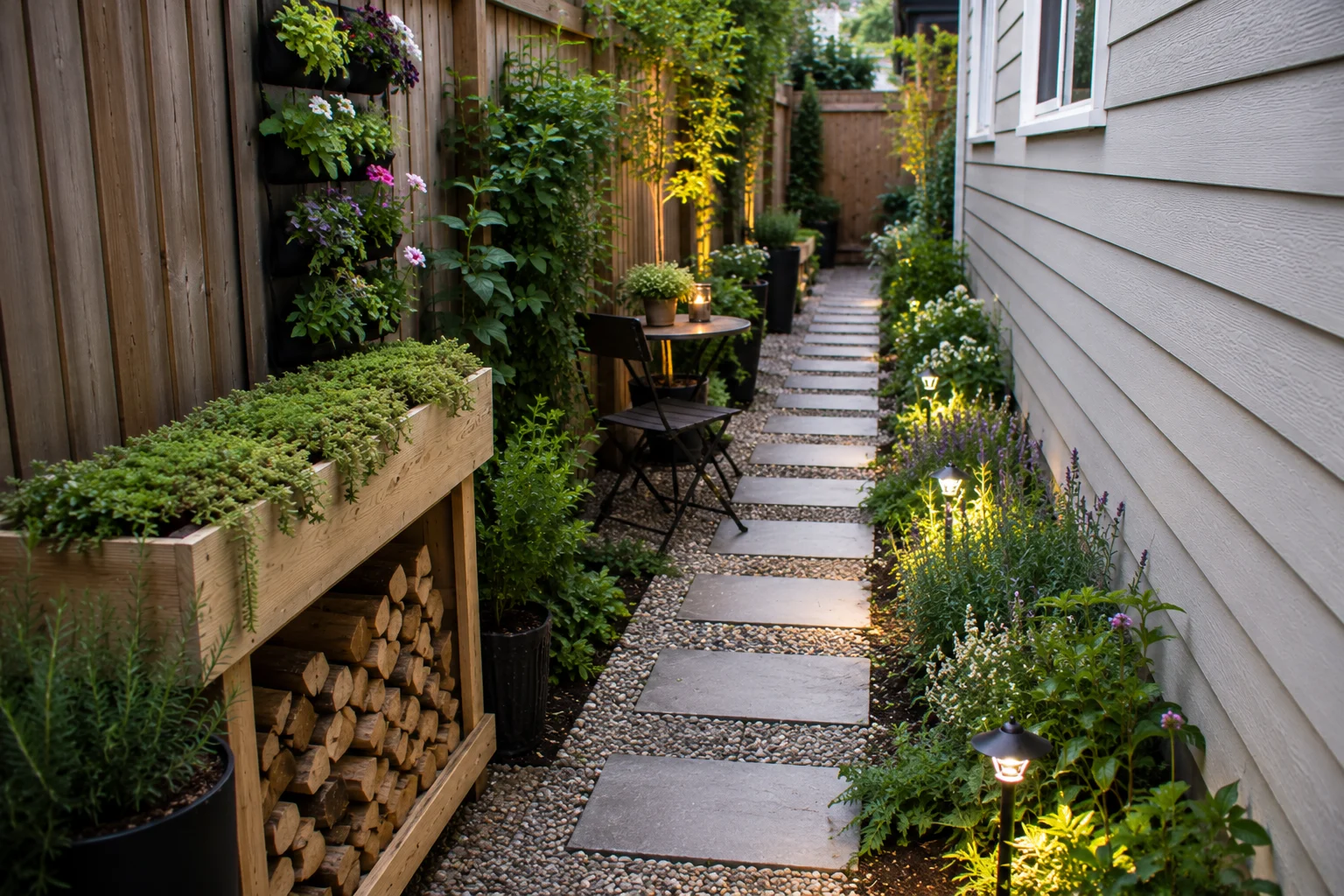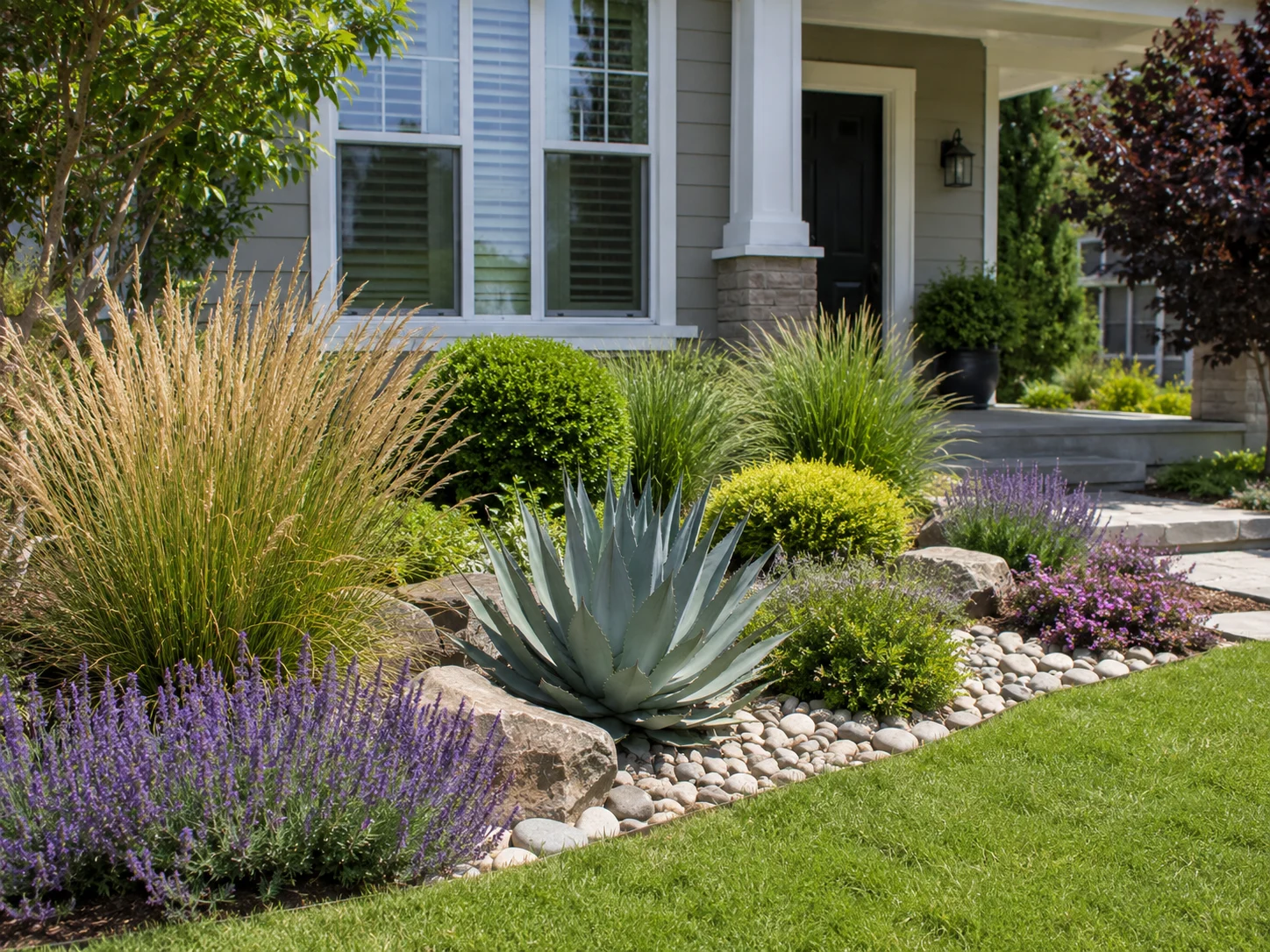

Modern garden design isn’t really about a specific plant list — it’s about restraint and repetition: clean geometric lines, a narrow material palette used consistently, and planting chosen for form and texture rather than a wide mix of color. That discipline is what separates a genuinely modern garden from one that’s simply minimal because nothing’s been planted yet.
This list covers 35 modern garden ideas across seven categories — structure and hardscape, materials and textures, planting, water and fire features, lighting, outdoor living, and finishing touches — each with enough detail to actually plan against.
Structure and Hardscape
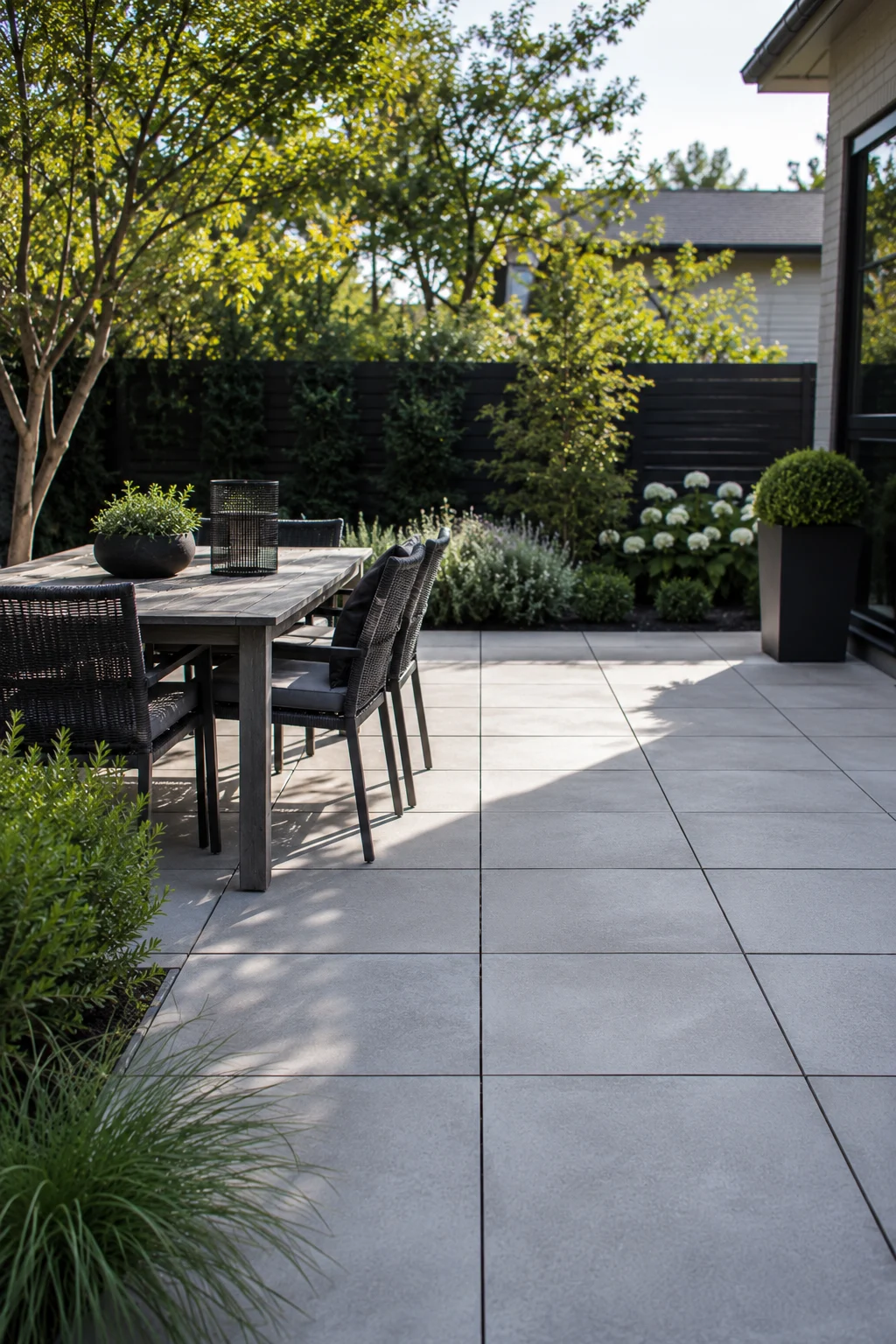
1. Large-Format Geometric Pavers
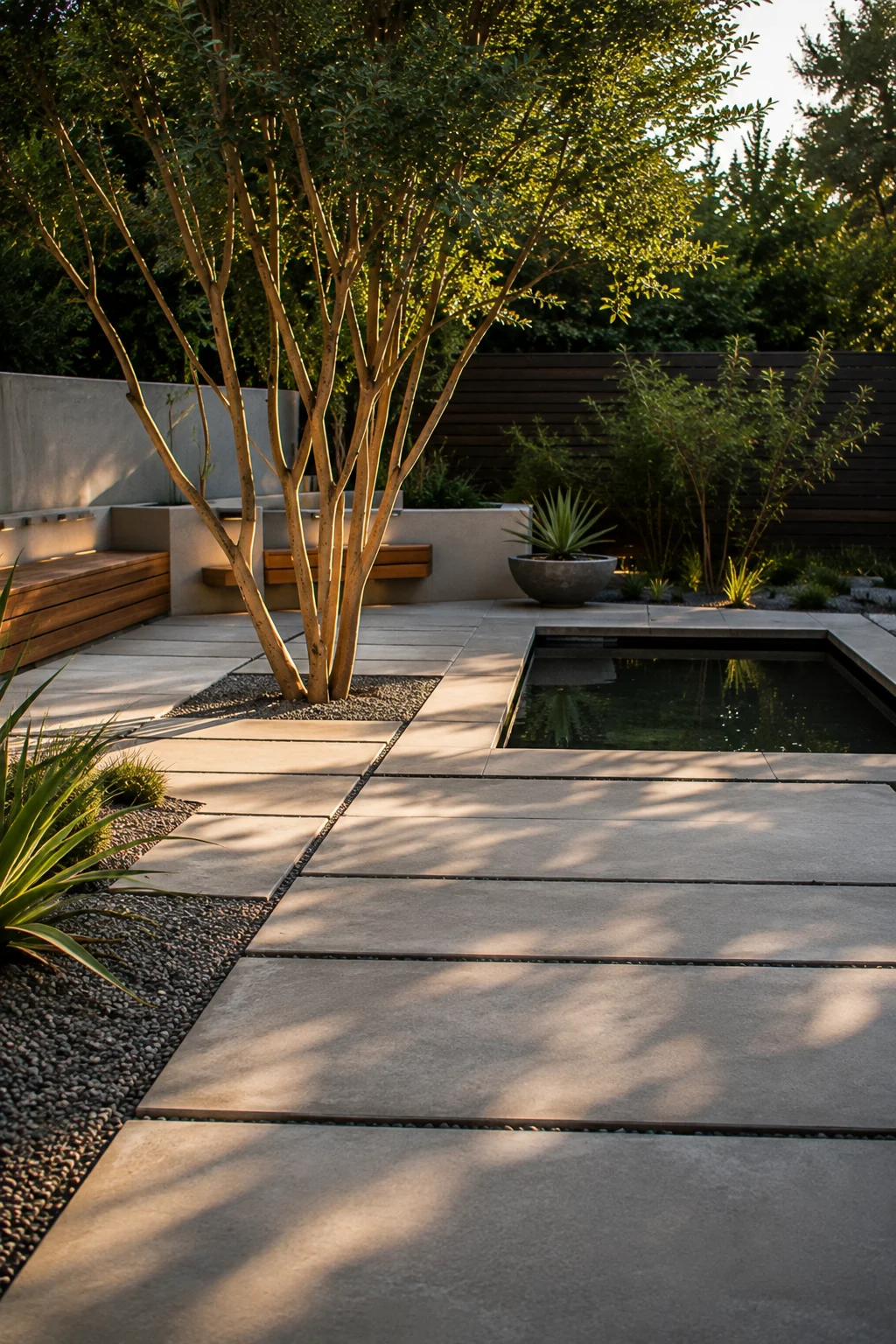
Oversized square or rectangular pavers, laid in a clean grid rather than a random pattern, minimize visible joints and give a modern garden its characteristic flat, uncluttered floor plane.
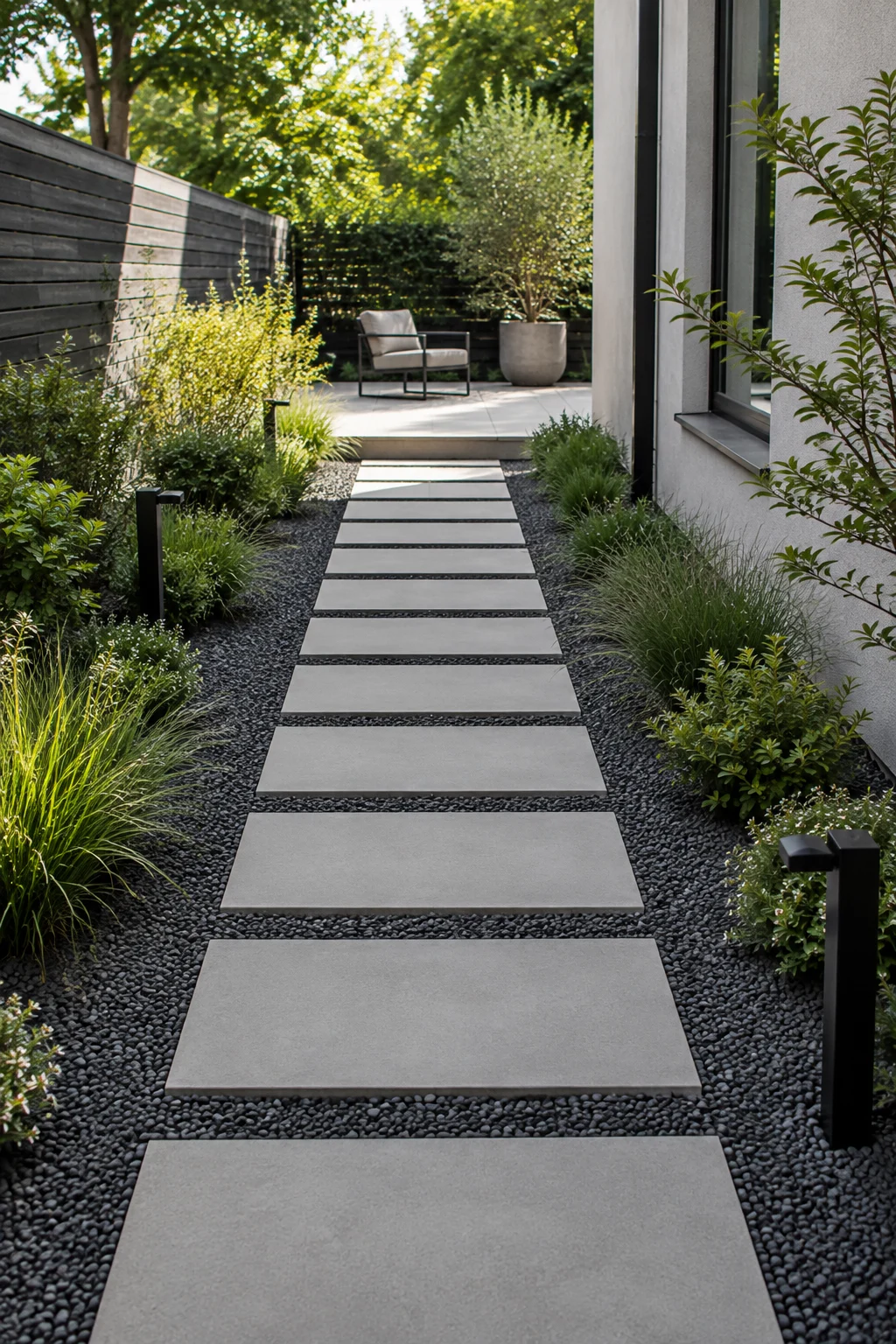
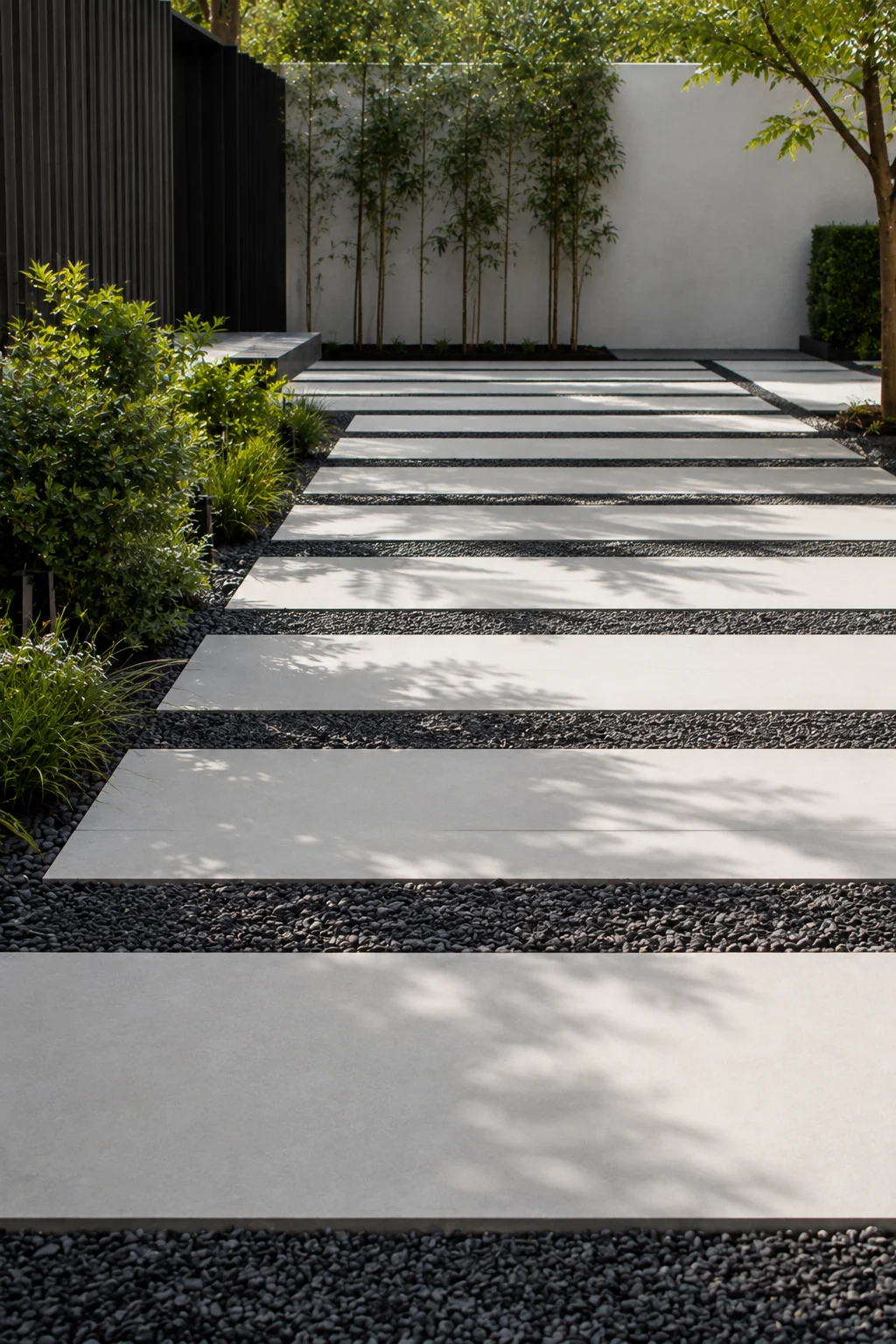
2. Floating Stepping Stone Path
Individual rectangular stone or concrete pads, spaced with visible gaps and set flush over gravel or a groundcover bed, create a path that reads as “floating” rather than a solid paved strip cutting through the yard.
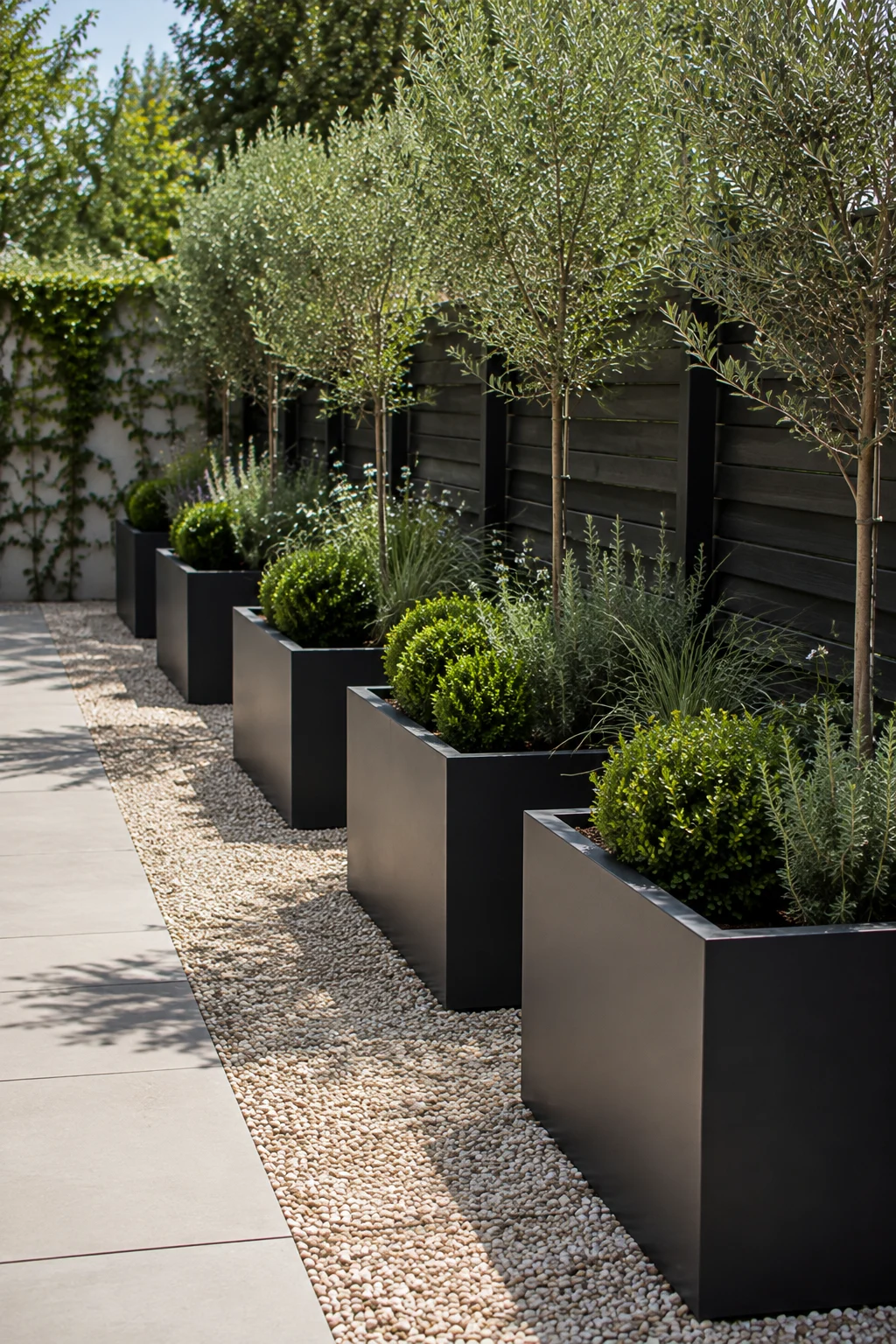
3. Clean-Lined Raised Planter Boxes
Simple rectangular planter boxes in a single material — powder-coated steel, board-formed concrete, or painted timber — repeated at consistent heights along a boundary give a modern garden its structured, architectural planting edge.
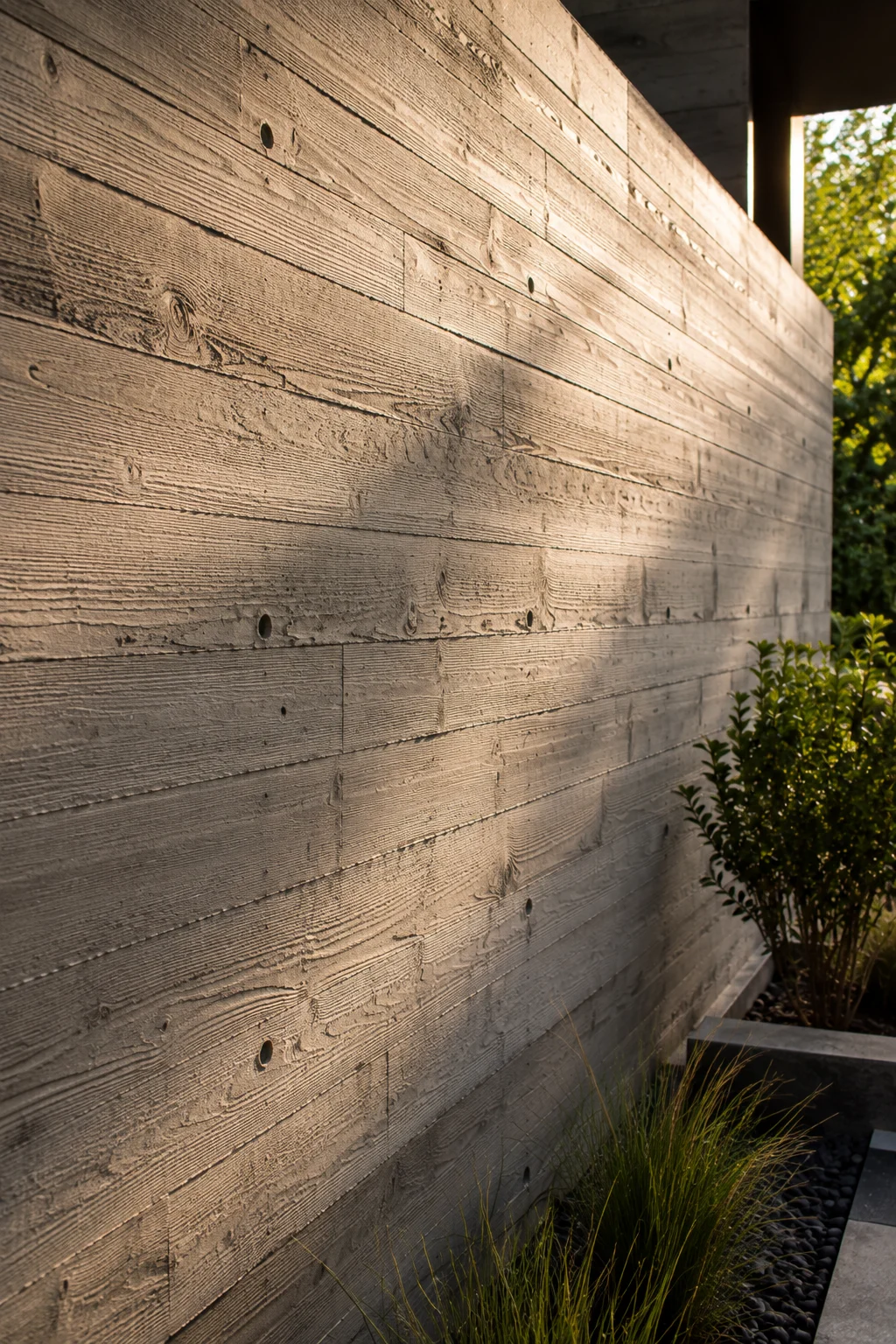
4. Board-Formed Concrete Walls
A concrete wall poured against wooden formwork retains a visible wood-grain texture once cured, giving an otherwise plain material genuine tactile interest without adding any additional decoration.
5. Linear Gravel and Paver Bands
Alternating bands of gravel and paving, run in parallel straight lines rather than an organic mix, keeps the practical benefits of a gravel-and-paver combination while reinforcing the strict geometry modern design depends on.
Materials and Textures
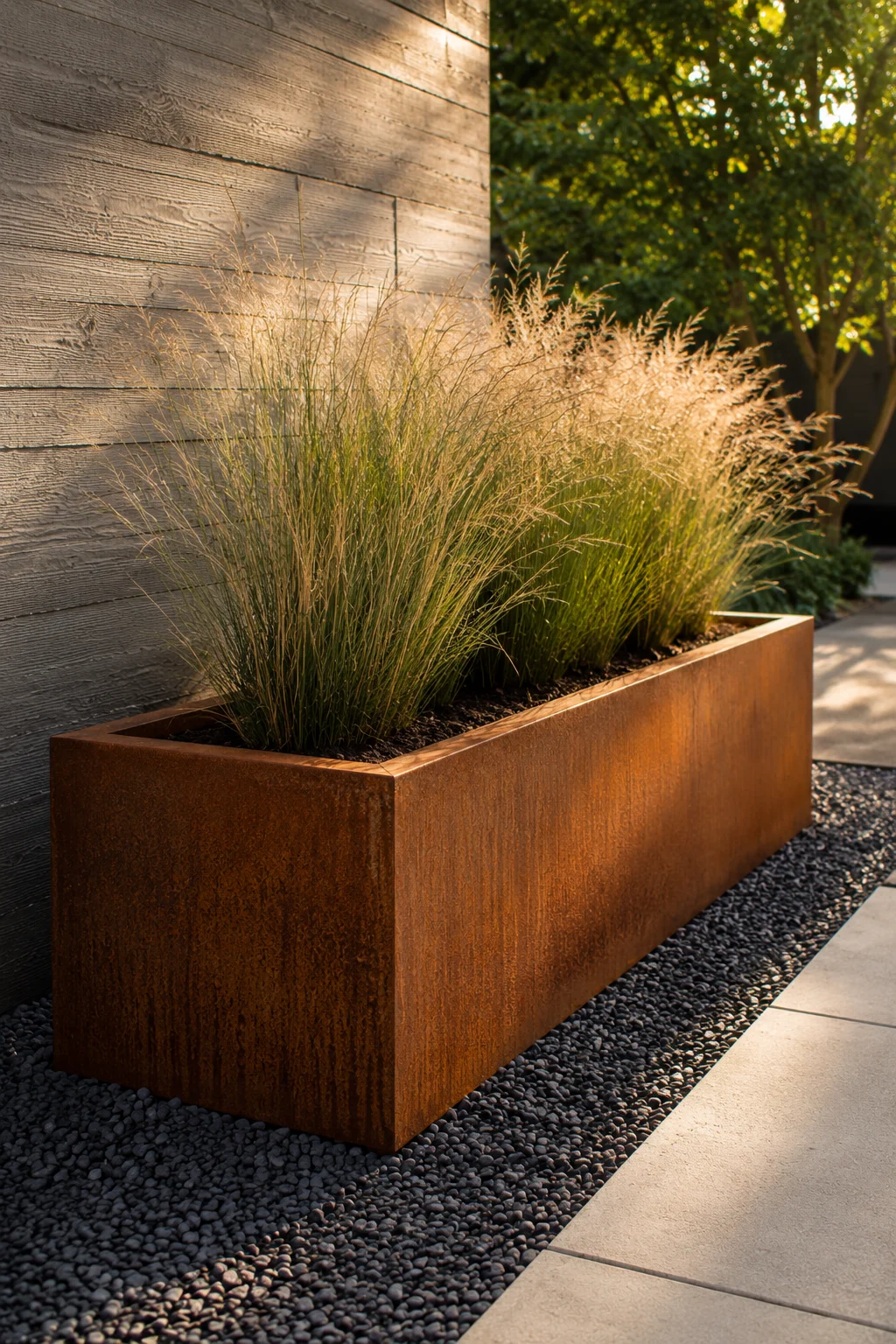
6. Corten Steel Planters and Edging
Corten steel, which weathers into a consistent rust-orange patina and then stops corroding further, gives a modern garden a warm material accent against otherwise cool concrete, stone, or greenery.
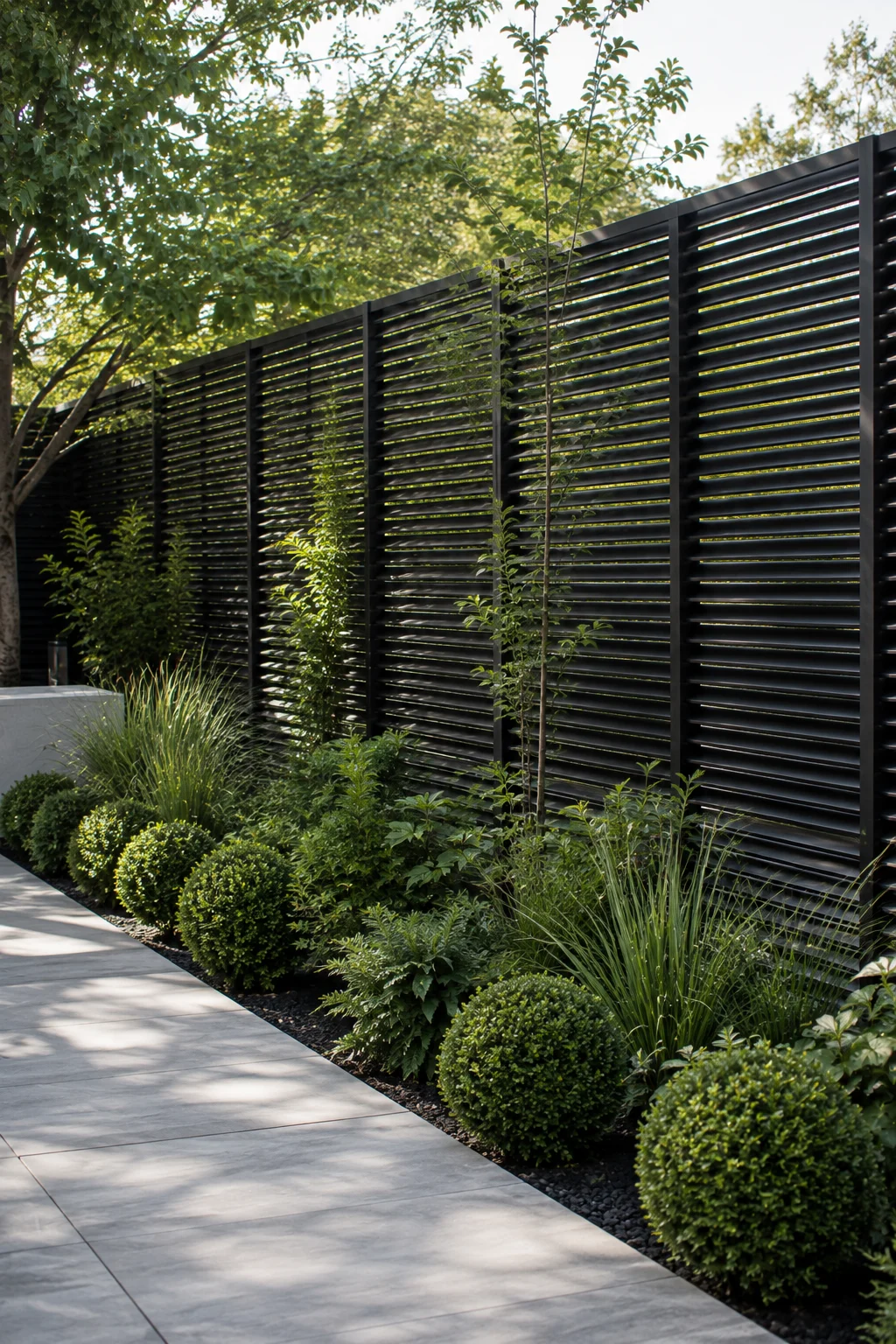
7. Black Metal Fencing or Screens
A simple black powder-coated metal fence or slatted screen reads as considerably more contemporary than timber, and provides a clean, low-maintenance backdrop that lets planting or lighting stand out against it.
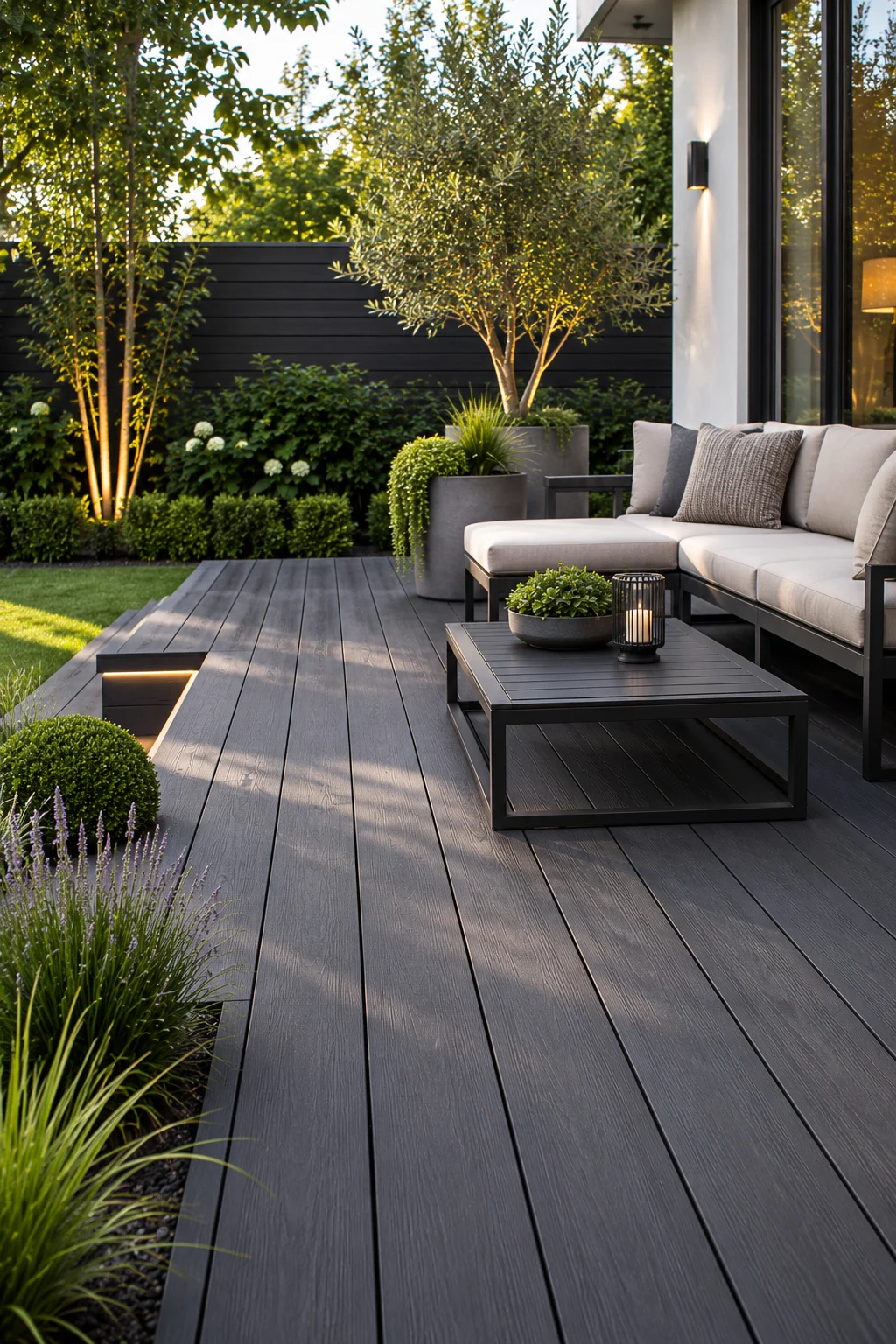
8. Dark-Toned Composite Decking
Composite decking boards in a deep charcoal or espresso tone, laid in a clean single direction, give a modern garden a warm but still restrained material underfoot compared to stone or concrete alone.
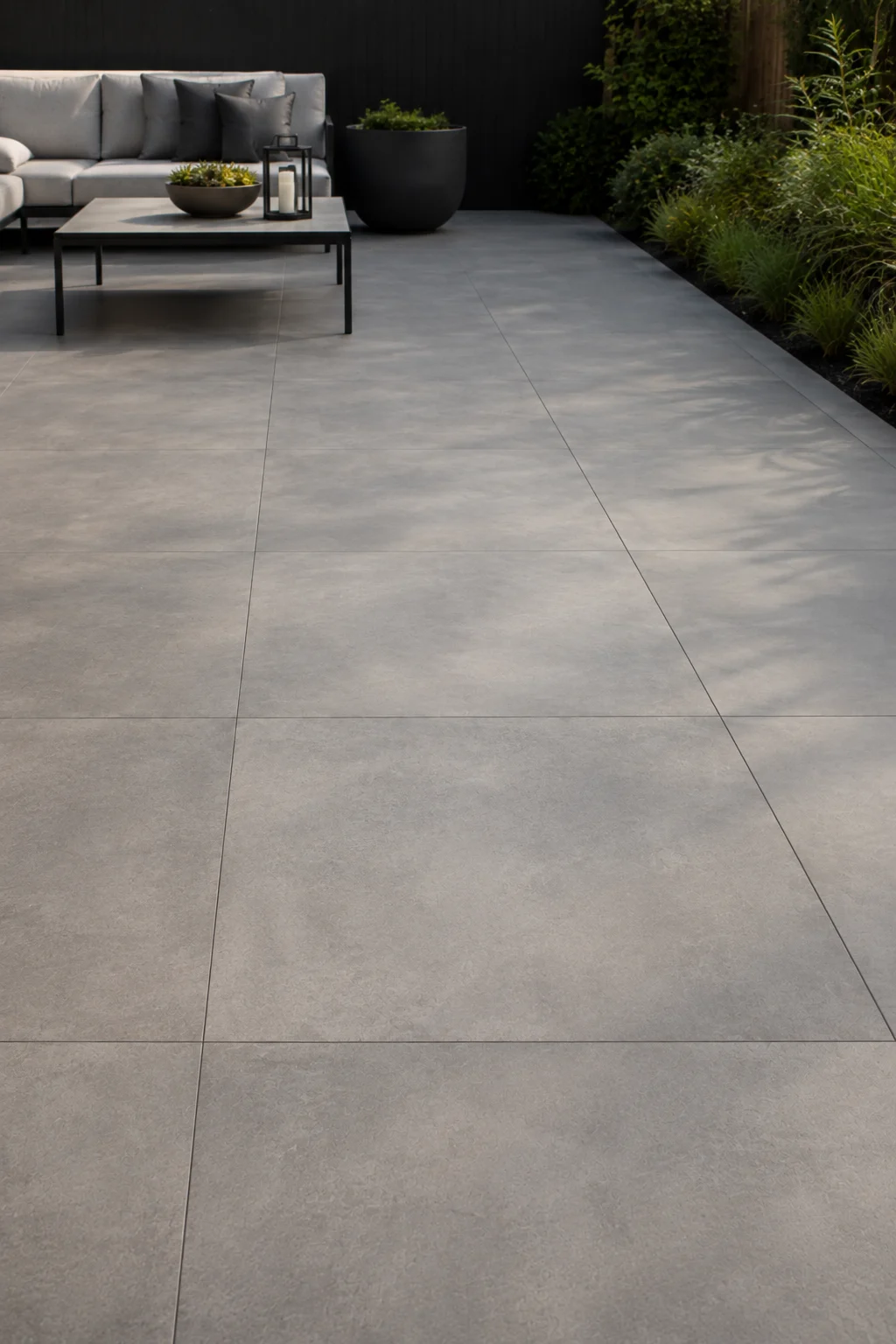
9. Large-Format Porcelain Tile Flooring
Outdoor porcelain tile in a large format and a matte concrete-look finish gives the durability and slip resistance of tile with a flatter, more monolithic appearance than natural stone.
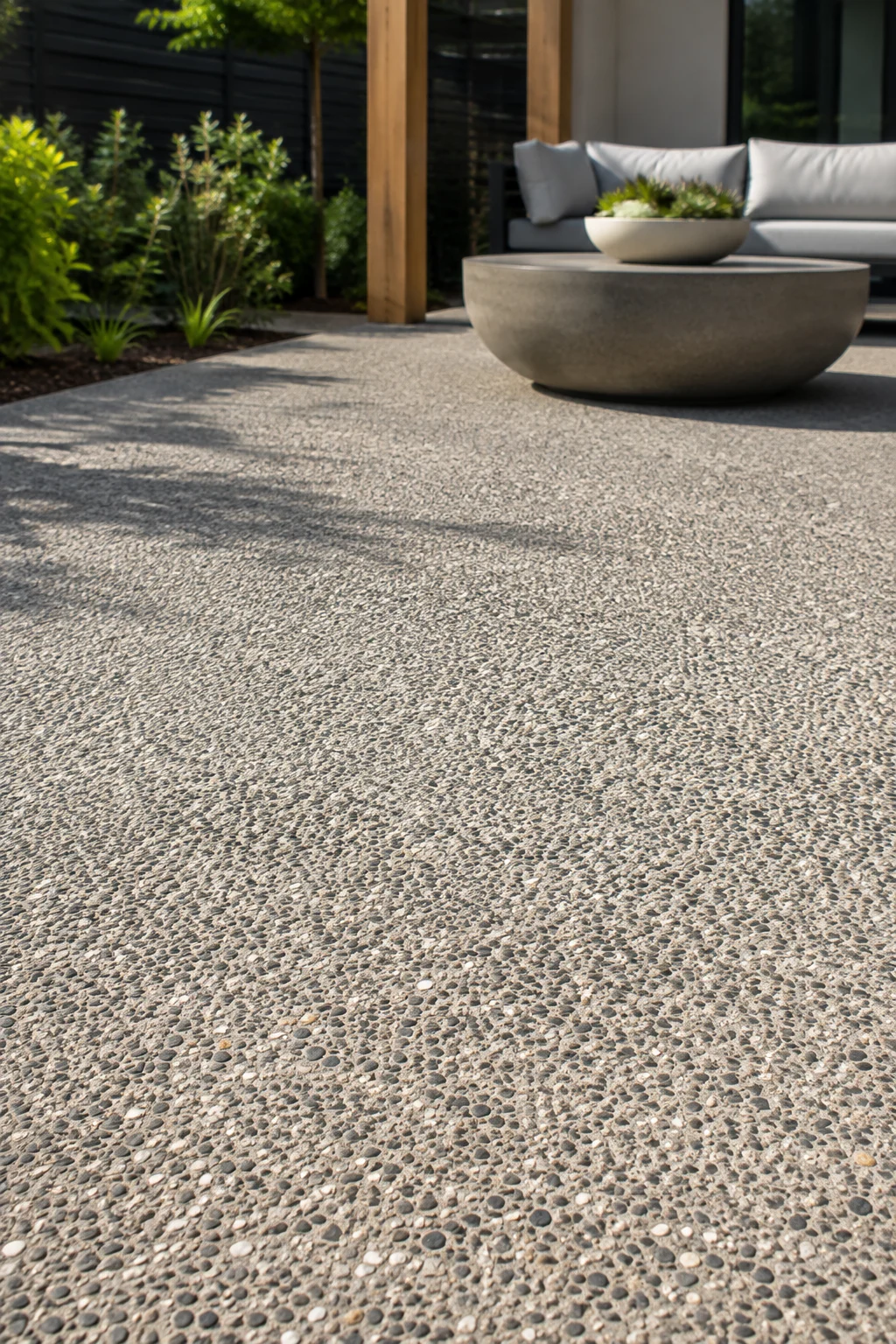
10. Exposed Aggregate Concrete
A concrete surface finished to expose the natural stone aggregate beneath gives a modern hardscape genuine texture and slip resistance without moving away from concrete as the primary material.
Planting for a Modern Look
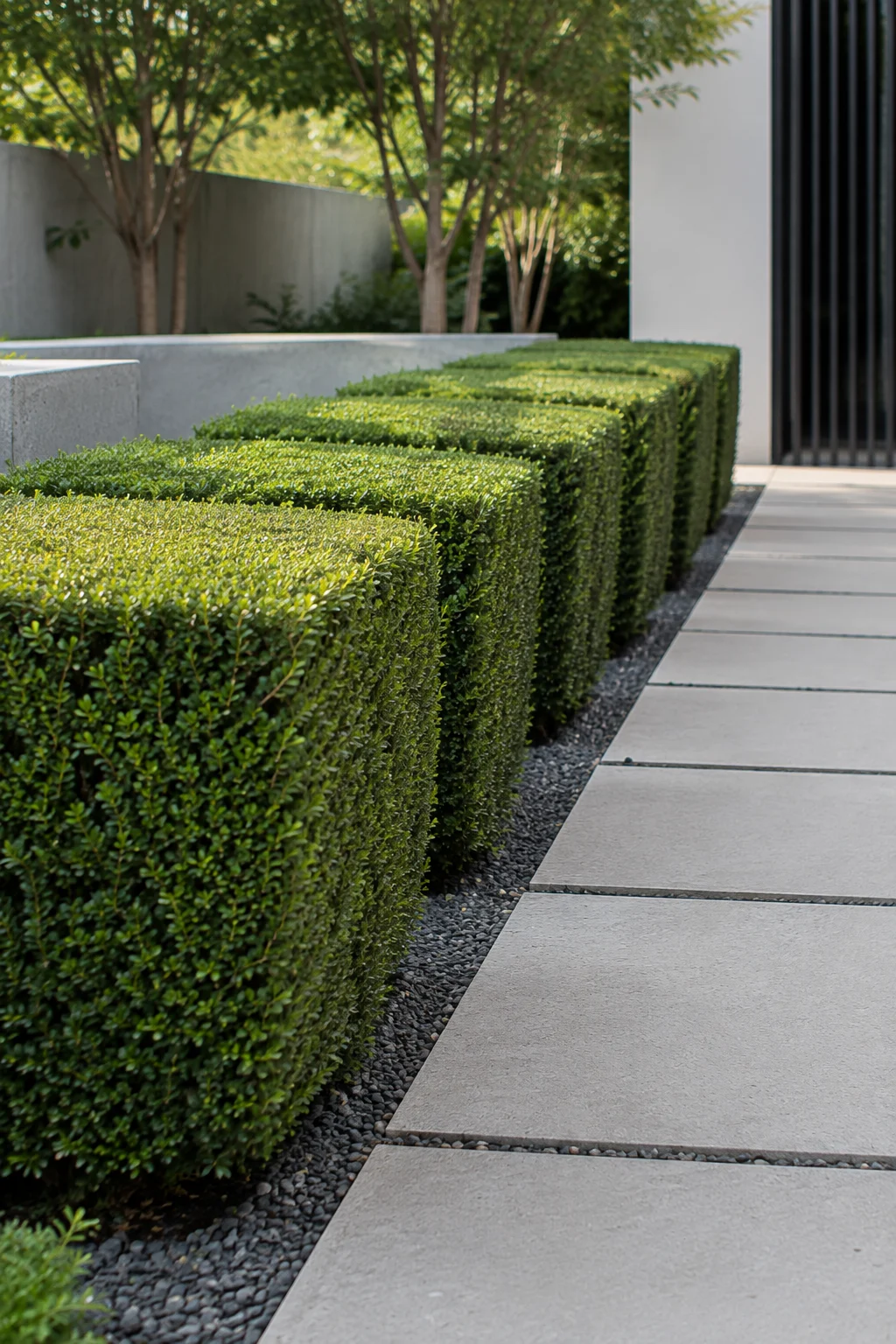
11. Structured Boxwood Blocks
Boxwood clipped into clean rectangular or cubic blocks, repeated at regular intervals, gives modern planting the same architectural quality as the hardscape around it rather than reading as loose, informal greenery.
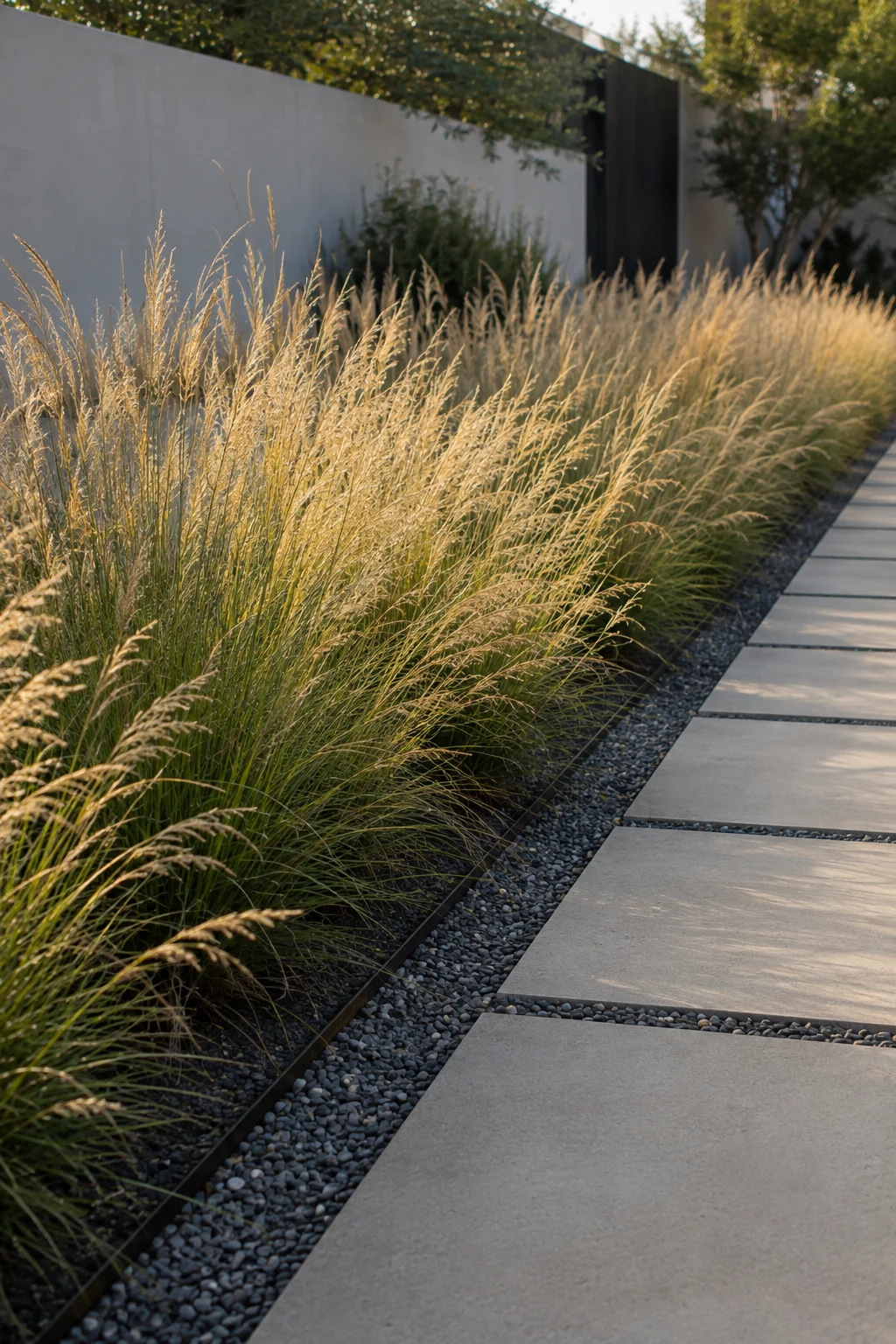
12. Linear Drifts of Ornamental Grasses
Ornamental grasses planted in a single, long, uninterrupted drift rather than scattered clumps reinforce the same straight-line discipline used throughout the hardscape, while adding the movement a purely hard-edged design can otherwise lack.
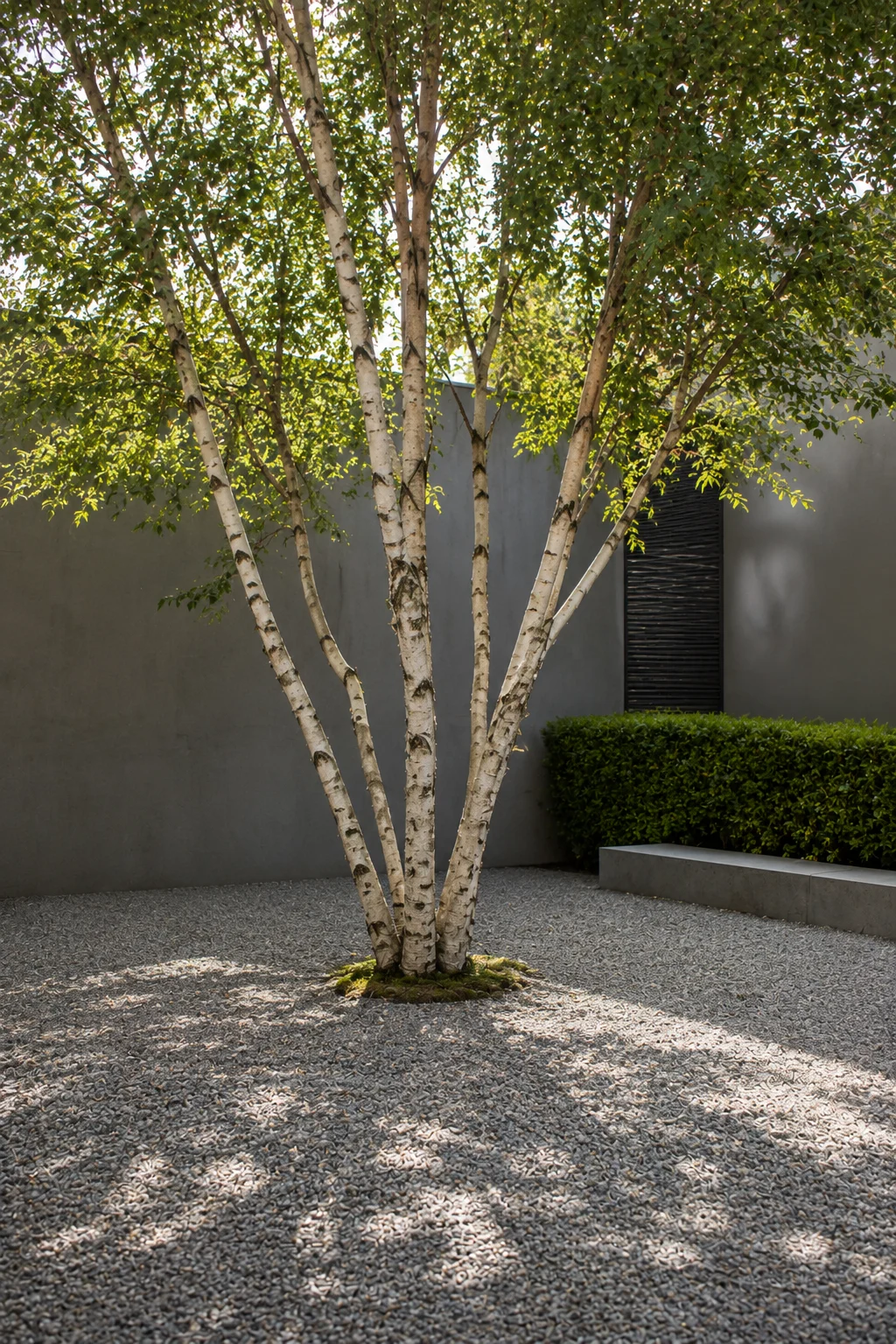
13. Single Sculptural Specimen Tree
A multi-stem tree with a distinctive branching form — a multi-stem birch, an olive, or a sculptural Japanese maple — planted alone rather than among other trees becomes the garden’s clear singular focal point.
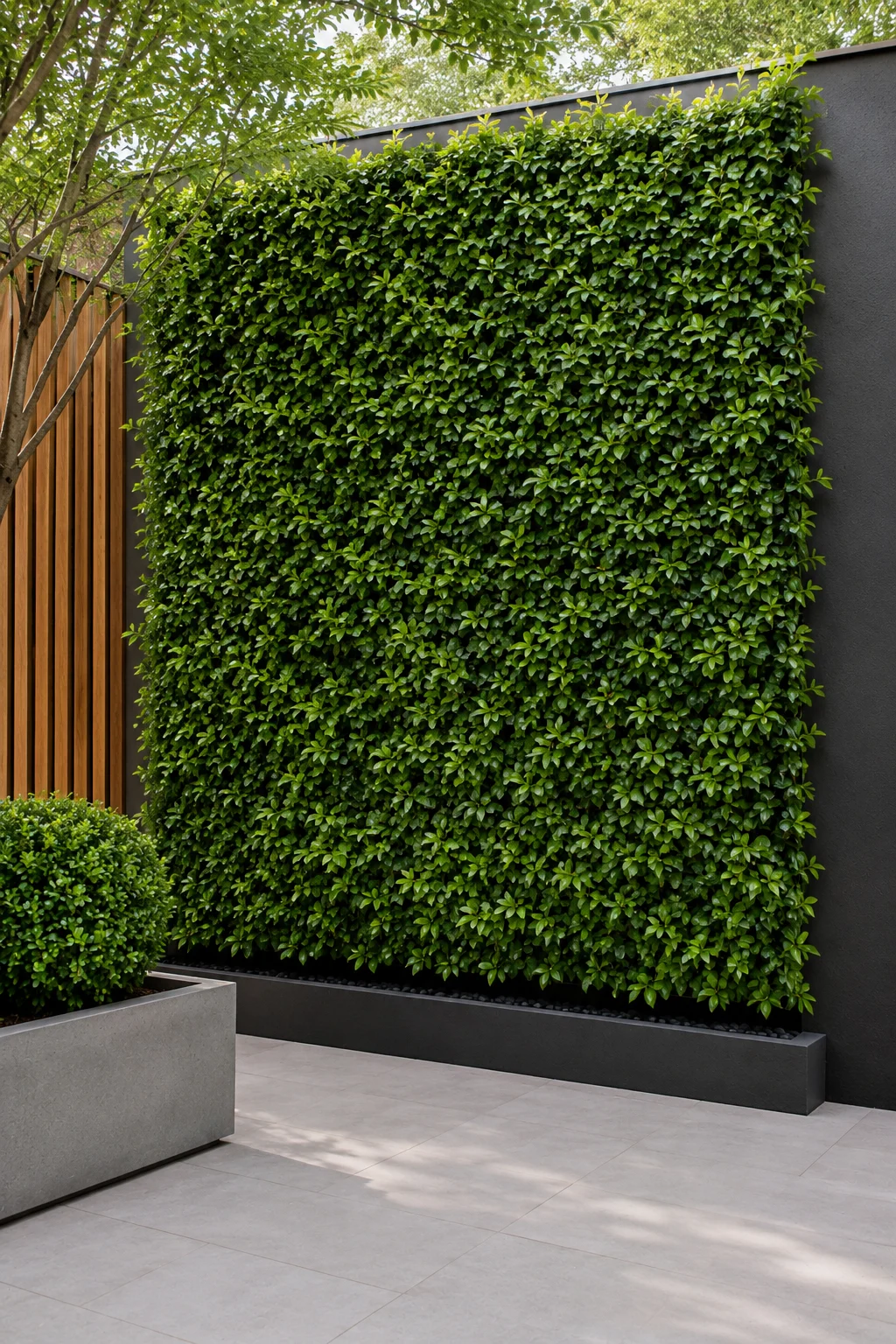
14. Vertical Green Wall Panel
A modular living wall panel, planted with a single repeated species rather than a mixed palette, gives a modern garden a clean vertical green surface that reads as intentional rather than randomly planted.
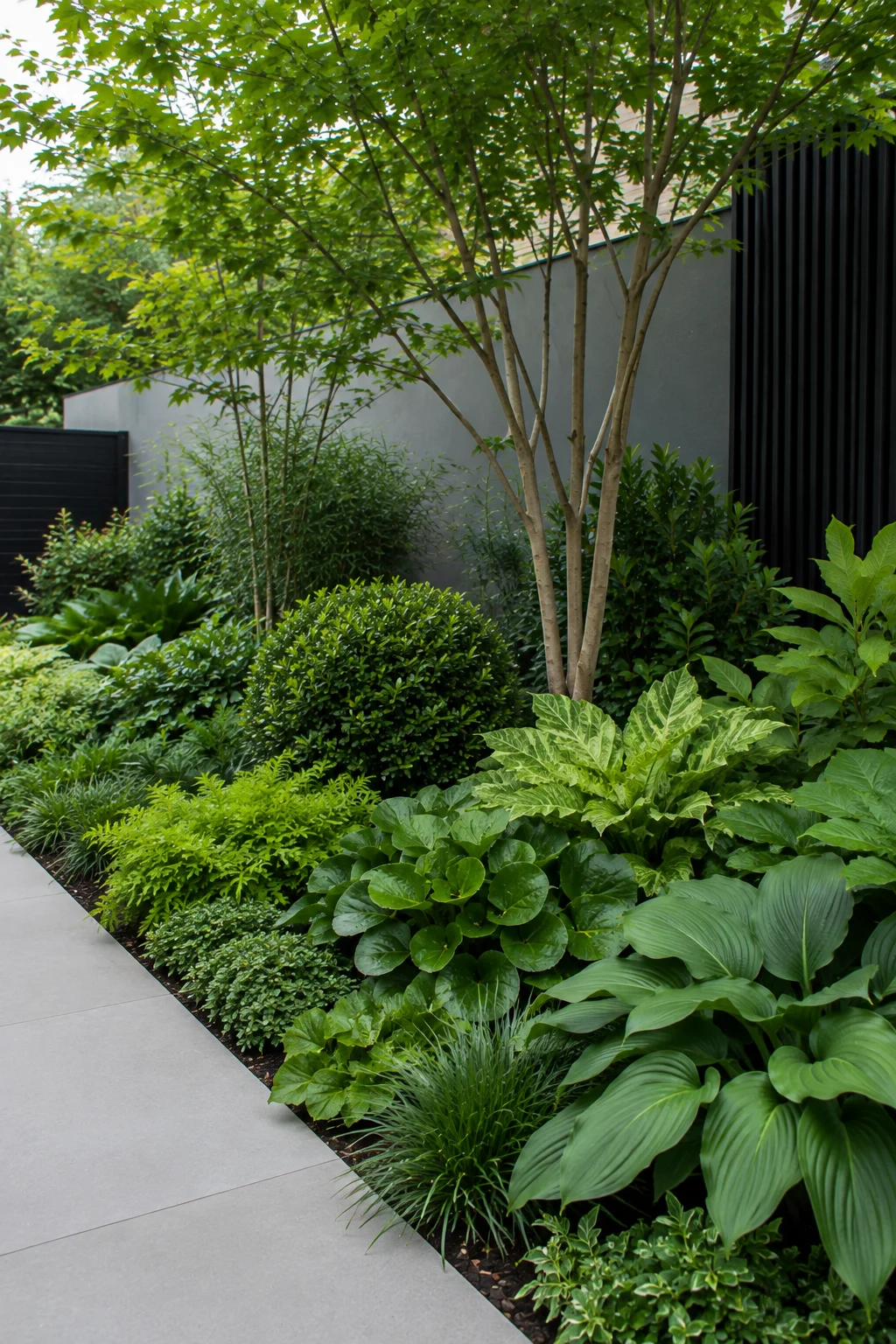
15. Monochromatic Green Palette
Limiting planting almost entirely to green foliage in varying textures and tones, rather than introducing multiple flower colors, is one of the most consistent traits of genuinely modern garden design, letting form and texture carry the visual interest instead of color.
Water and Fire Features
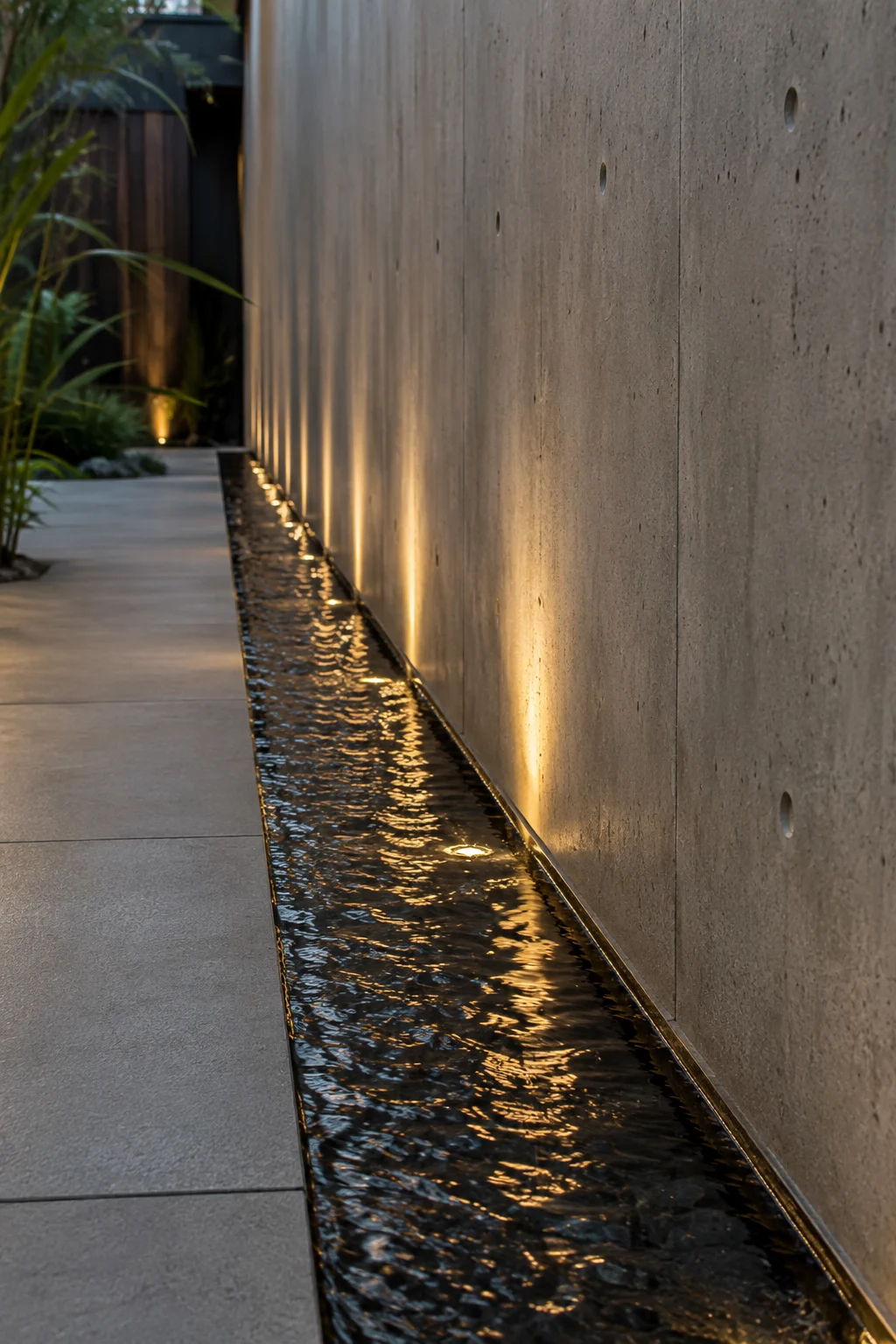
16. Linear Wall Rill
A narrow water channel running in a single straight line along a wall or through a paved area reinforces the same geometric discipline used in the hardscape, adding sound and movement without introducing a curved or organic shape.
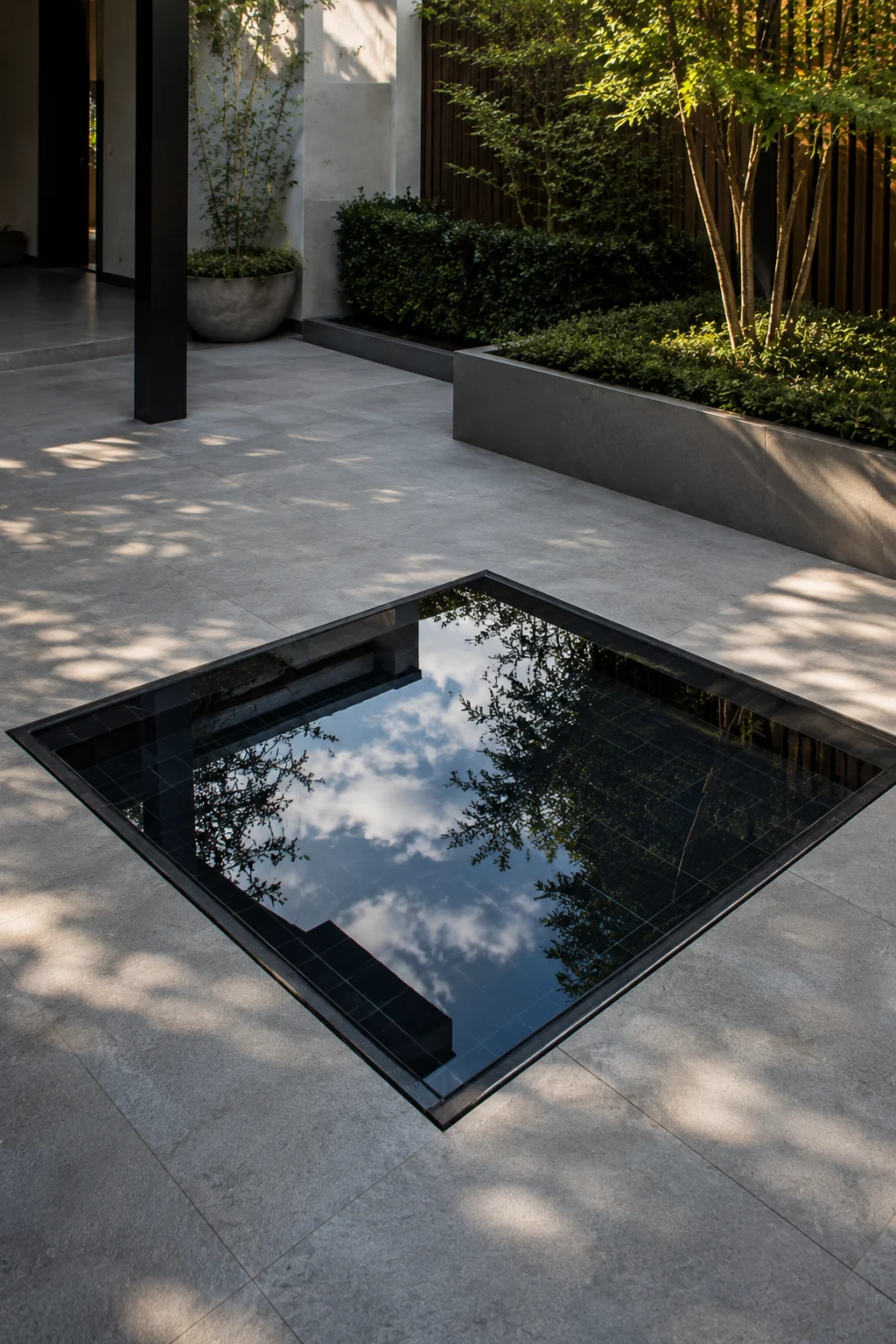
17. Minimalist Square Reflecting Pool
A perfectly square or rectangular reflecting pool, finished in dark tile with no visible coping edge, mirrors the sky and surrounding structure in a way that reinforces the garden’s geometric layout rather than softening it.
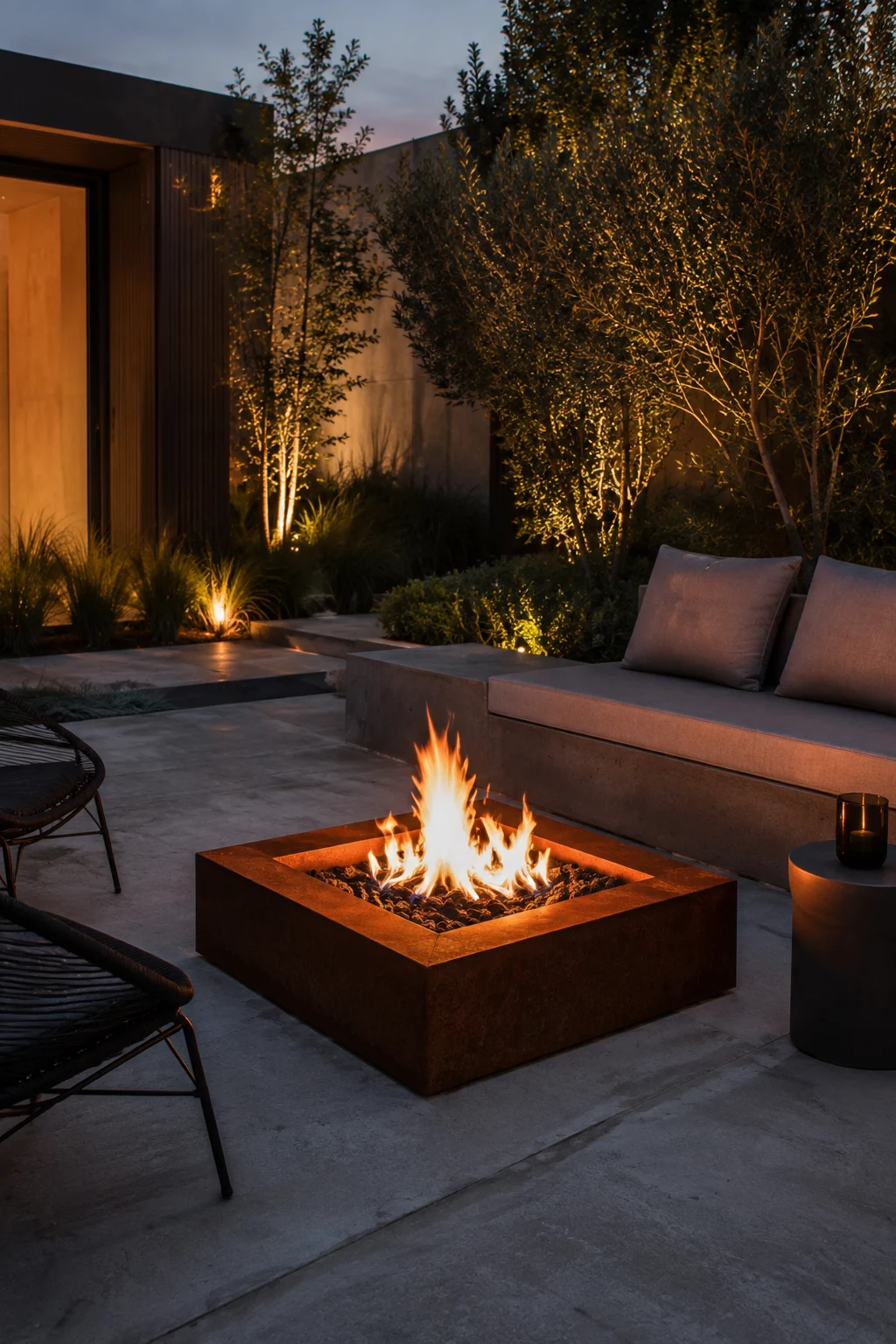
18. Geometric Fire Pit
A square or rectangular fire feature, built from the same concrete or corten steel used elsewhere in the garden, ties the fire element into the overall material palette rather than introducing a mismatched round fire bowl.
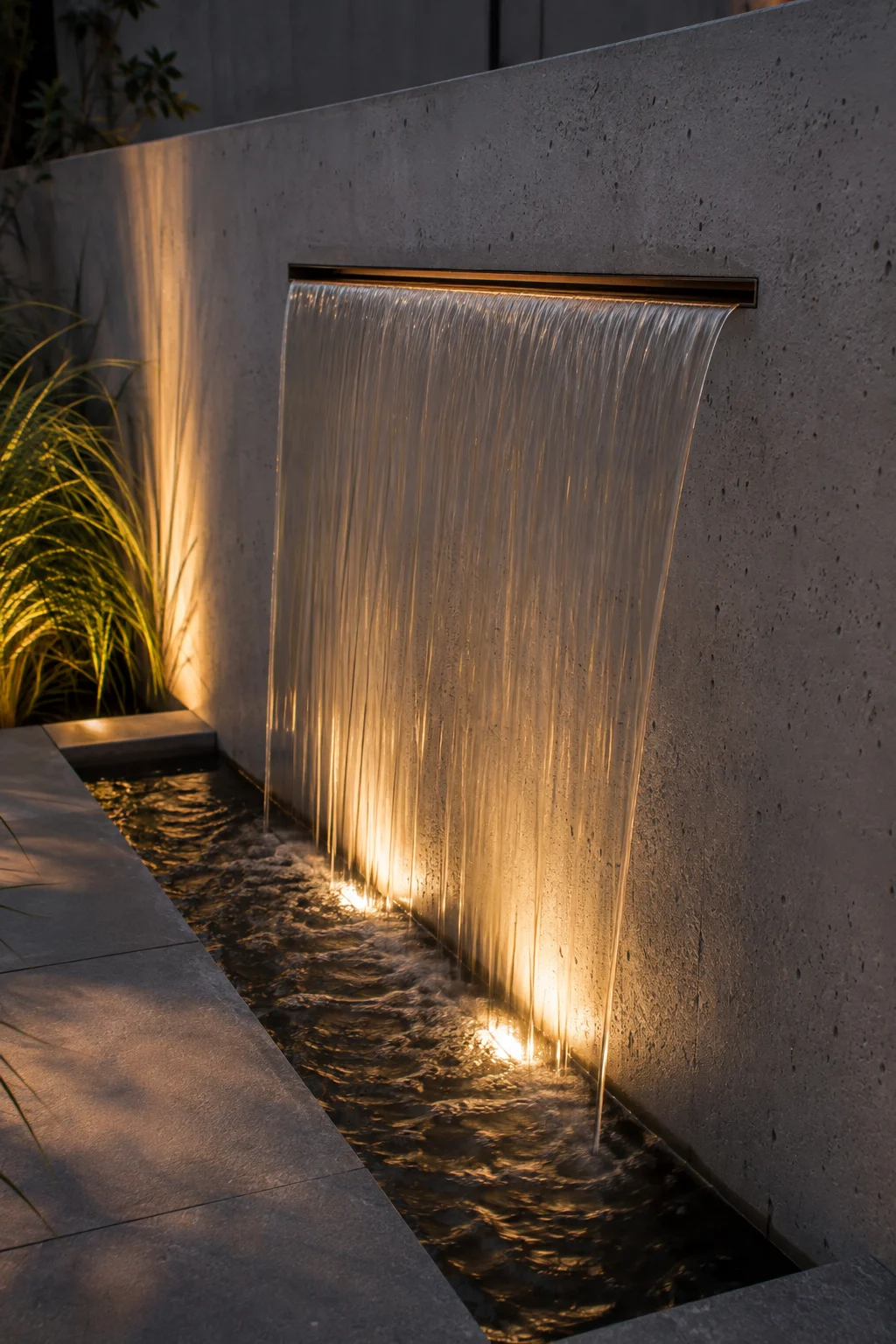
19. Wall-Mounted Water Blade
A precisely cut, thin sheet of water falling from a clean horizontal slot in a wall into a linear basin below gives a strong architectural water feature with a very small footprint.
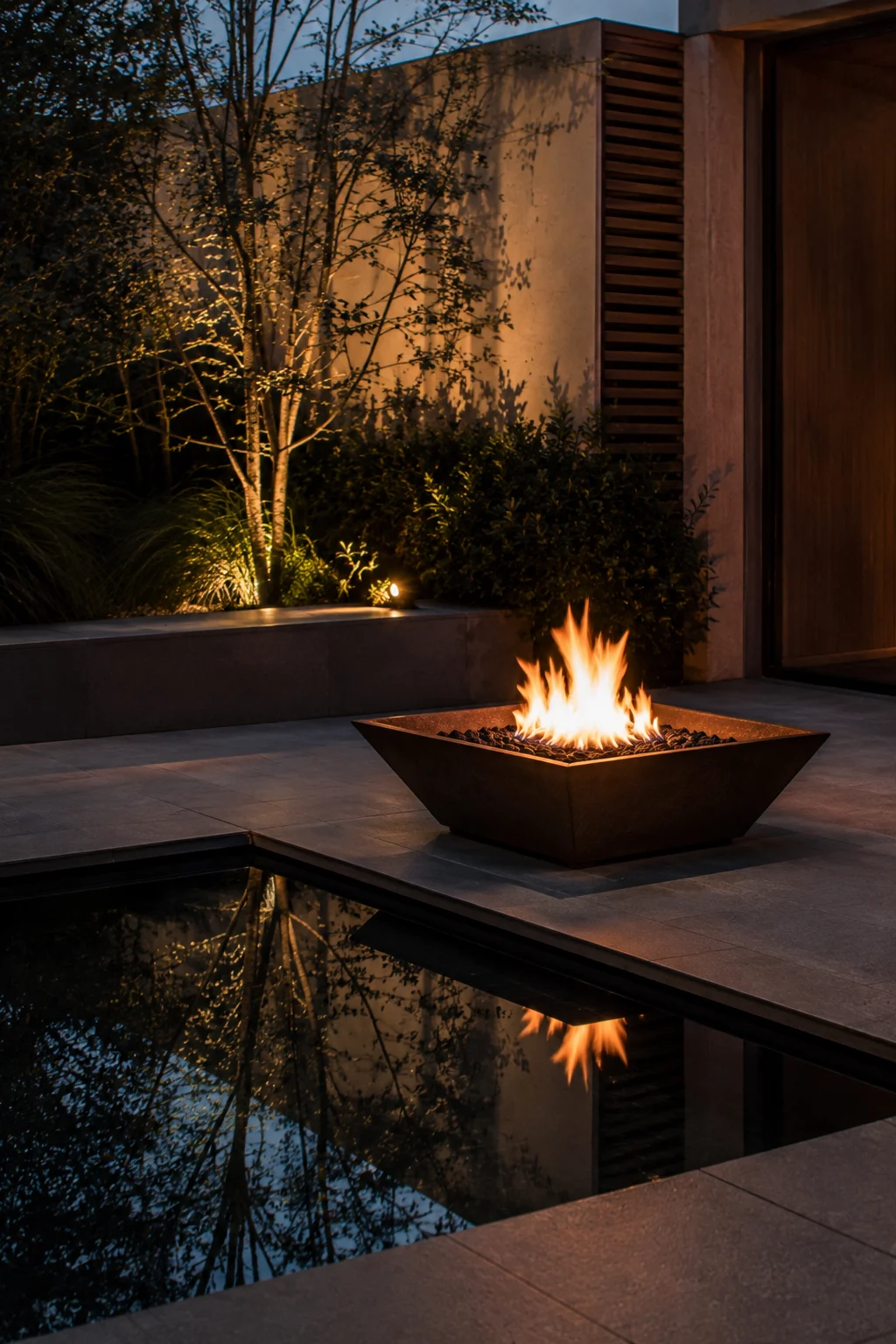
20. Combined Fire and Water Feature
Positioning a geometric fire bowl directly beside a still reflecting pool creates a striking contrast between the two elements, especially once lit at dusk, and works well as a shared centerpiece for both features.
Lighting
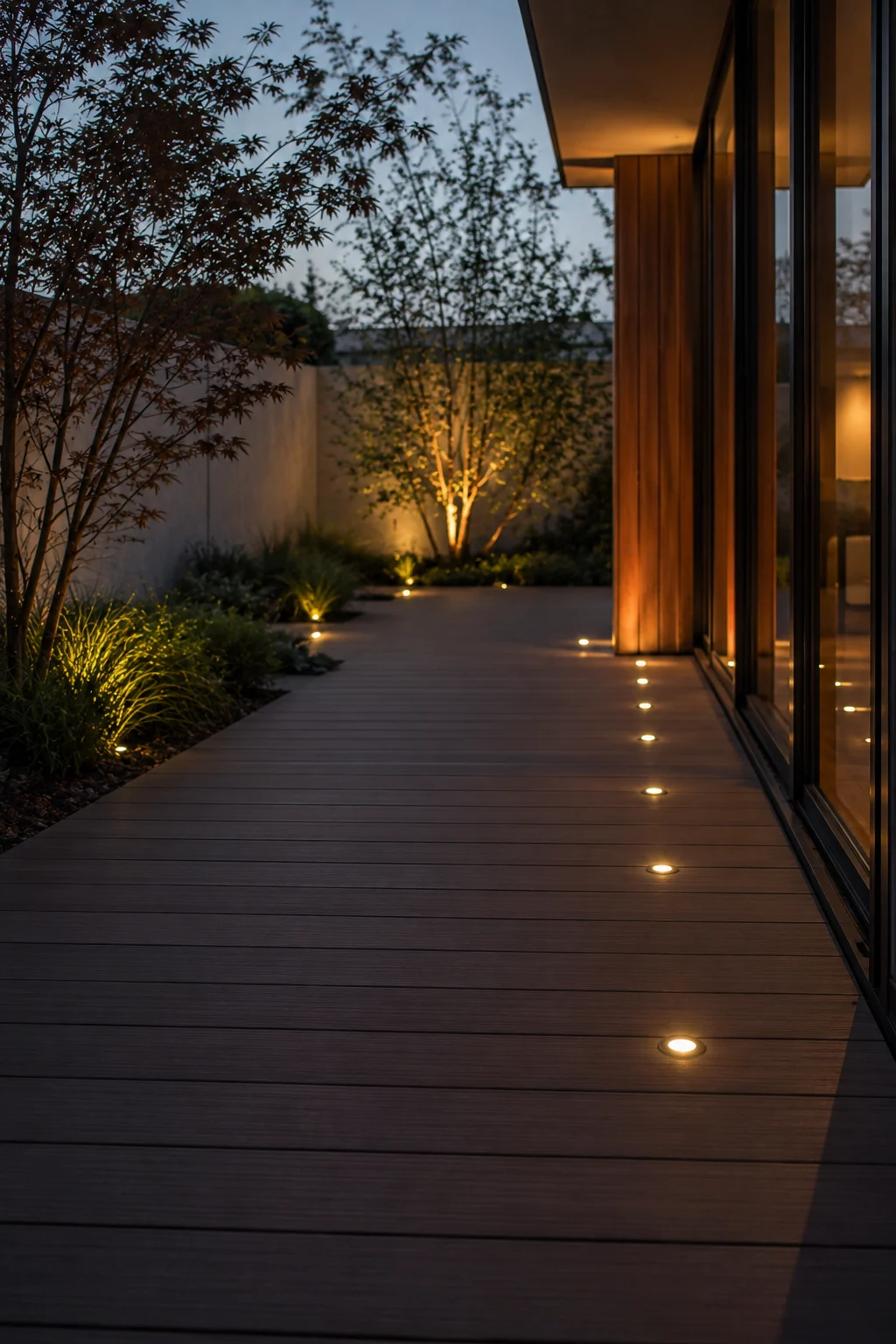
21. Recessed Deck and Paving Lighting
Low-profile LED fixtures recessed flush into decking boards or paving stones provide functional lighting without any visible fixture housing interrupting the clean surface during the day.
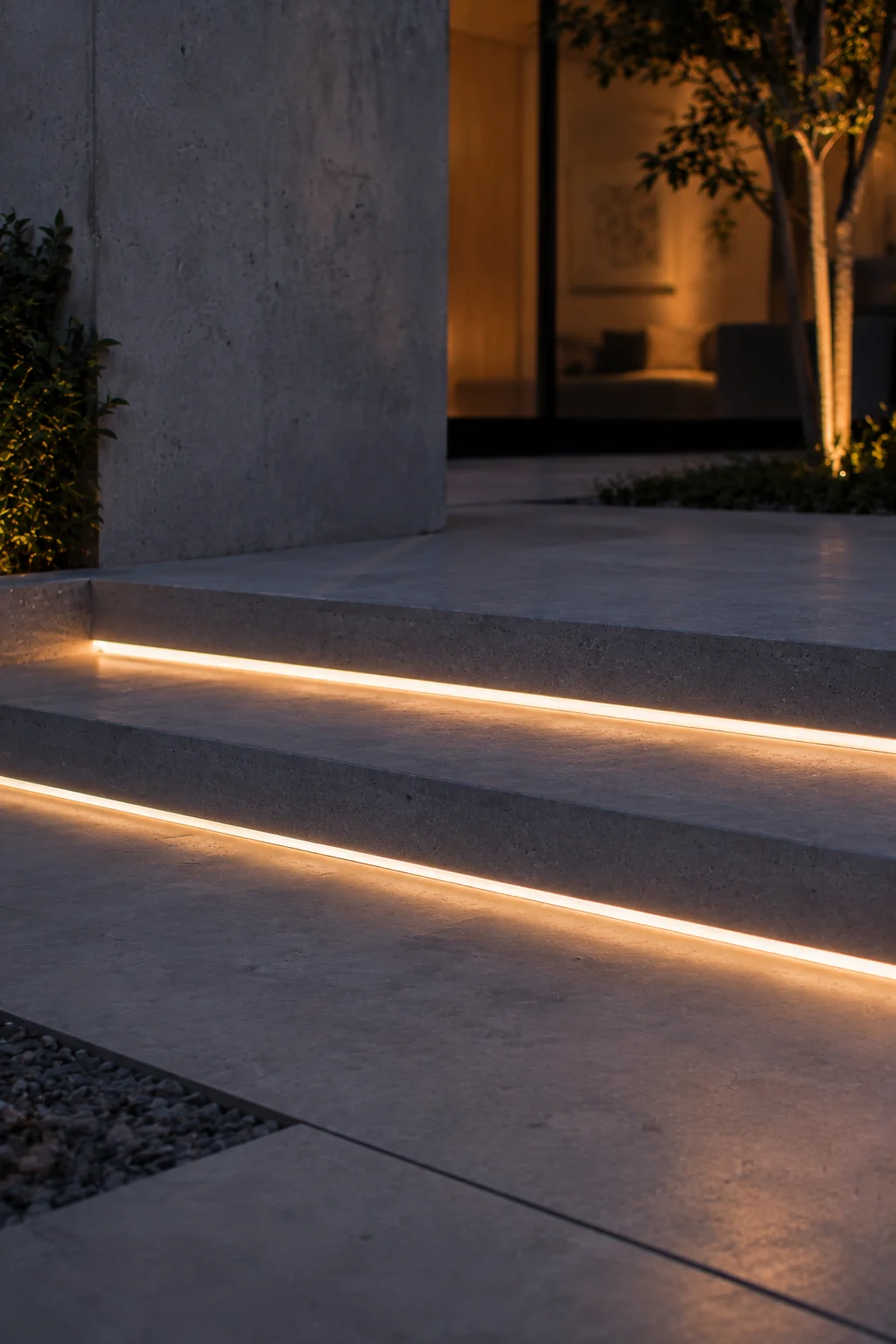
22. Linear LED Strip Lighting
A continuous thin LED strip run along a step edge, wall base, or planter rim reinforces the garden’s straight lines after dark in the same way the hardscape does during the day.
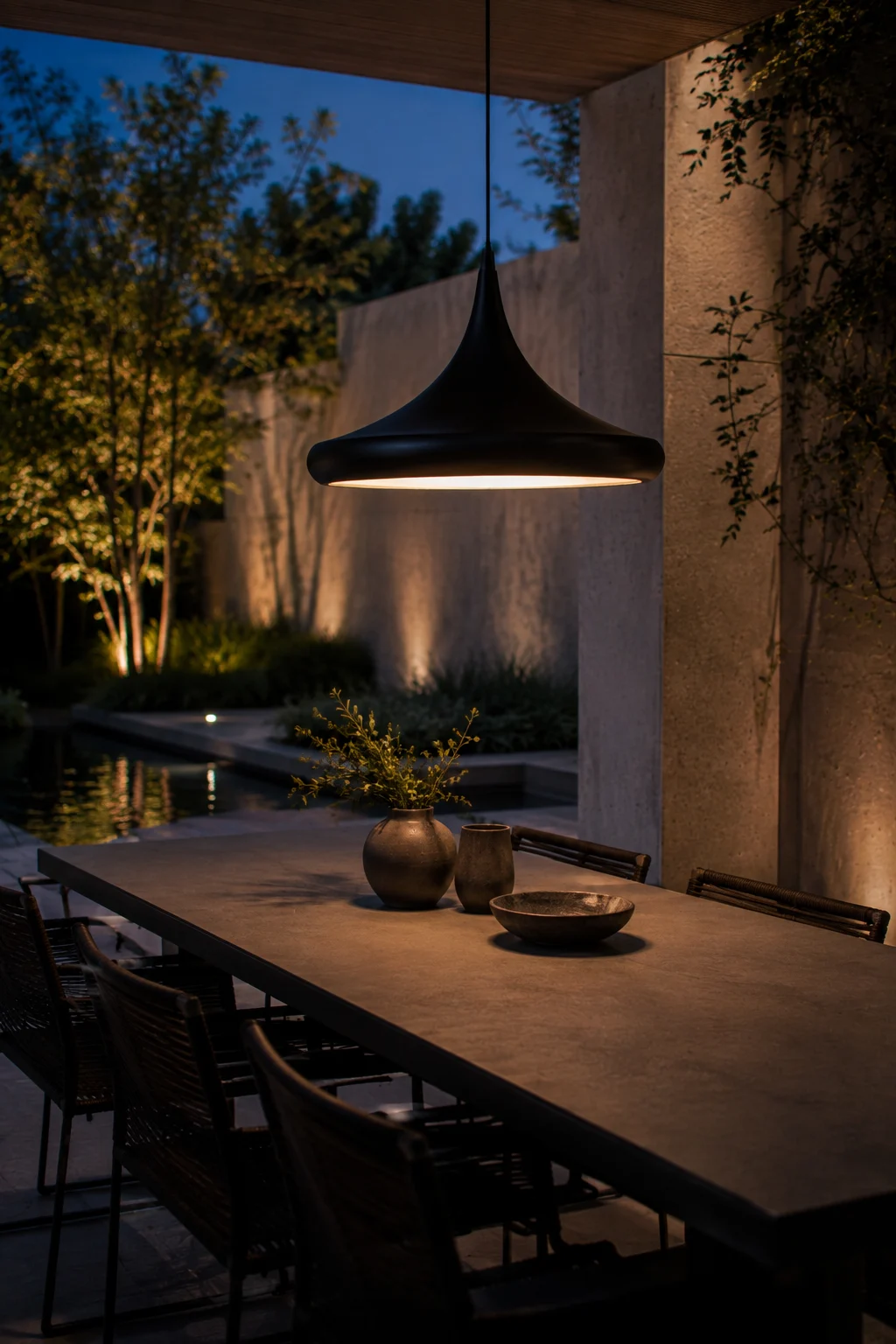
23. Sculptural Pendant Lighting Over Dining
A single, architectural pendant fixture suspended over an outdoor dining table gives the space a clear evening focal point, chosen for its sculptural form as much as its light output.
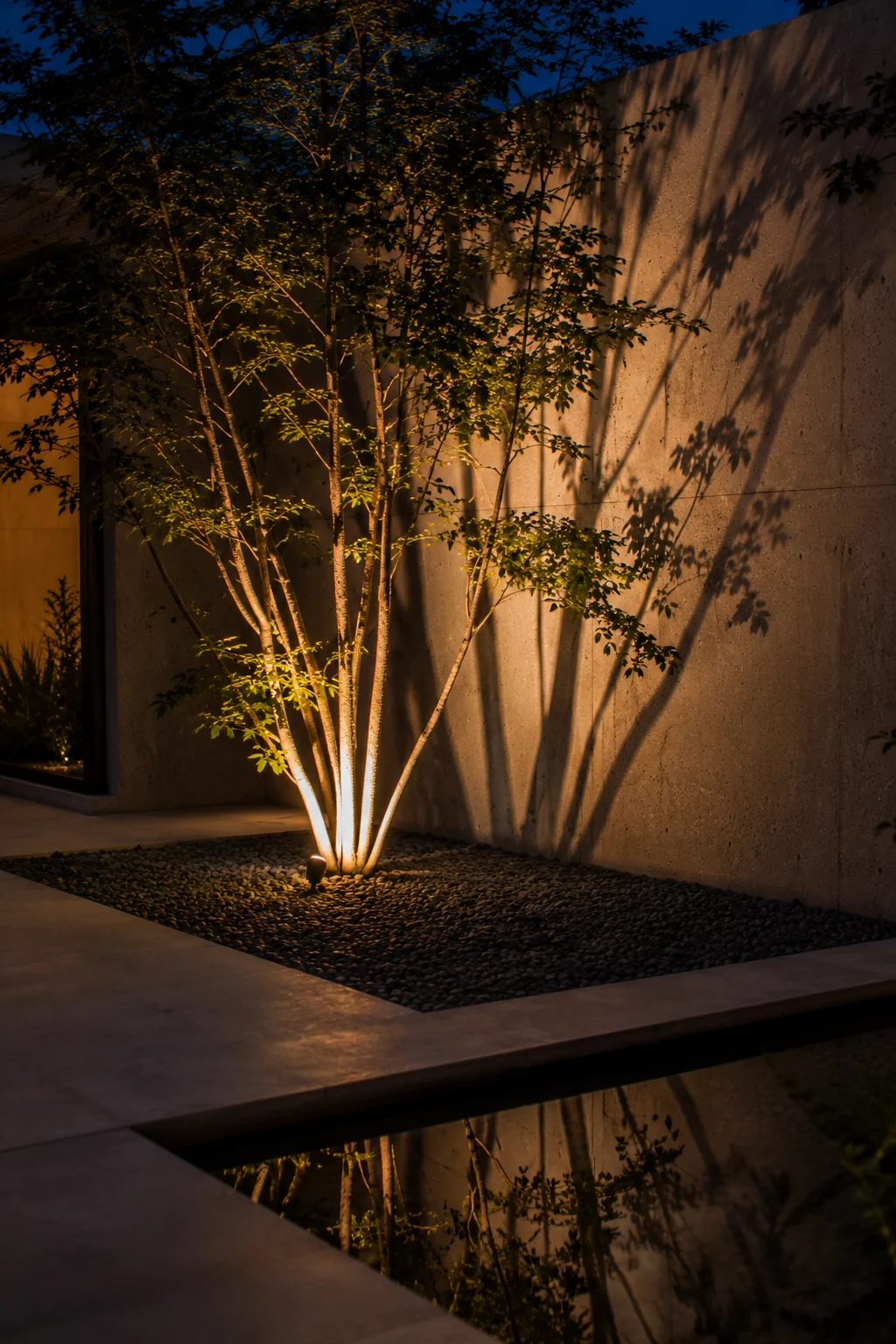
24. Uplighting on Sculptural Trees or Plants
A single well-placed uplight at the base of a specimen tree or sculptural plant casts dramatic shadows onto a nearby wall after dark, turning a daytime focal point into an equally strong nighttime one.
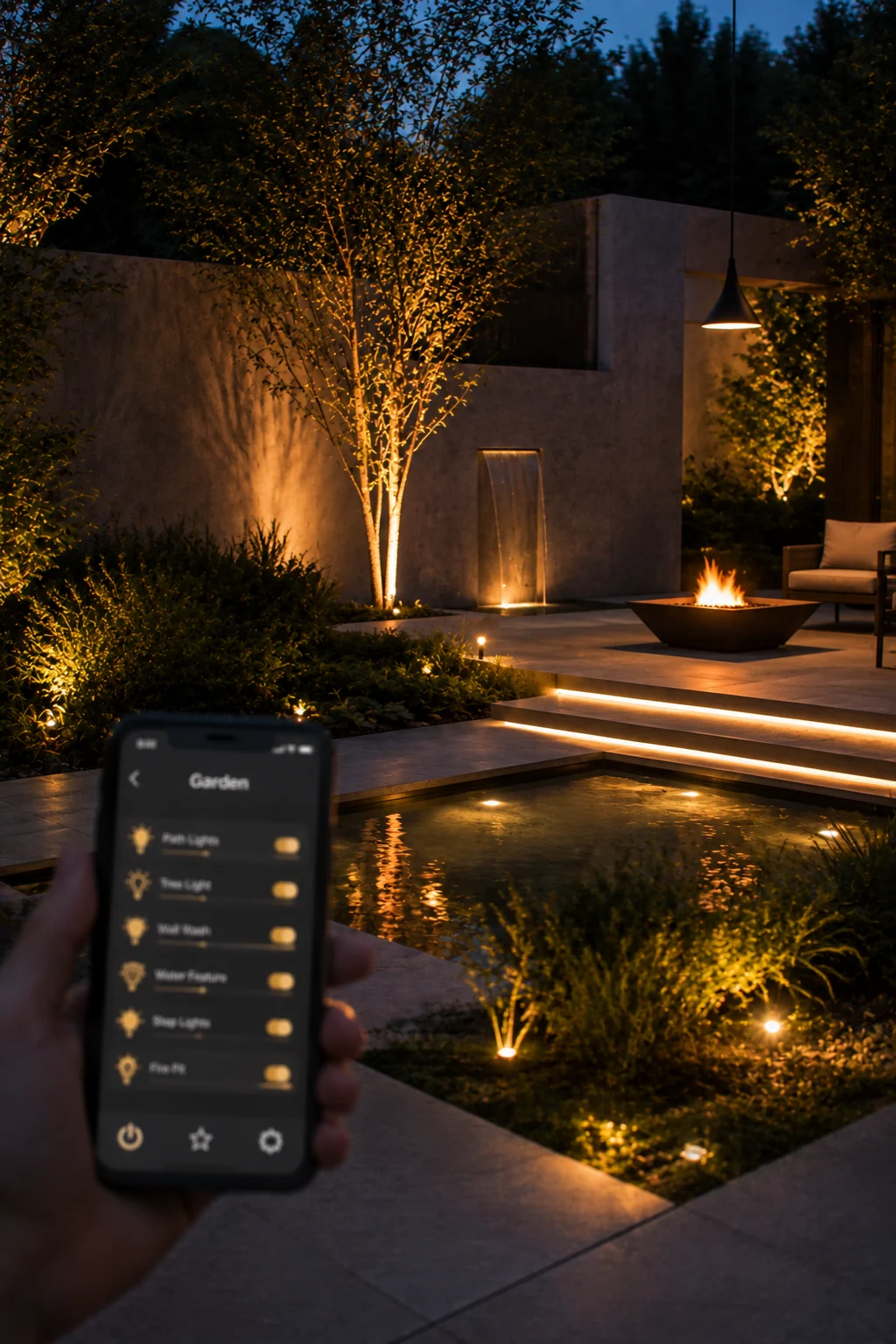
25. App-Controlled Lighting Scenes
Smart, dimmable lighting circuits controlled through a phone app let the same garden shift instantly between a bright entertaining setup and a low, moody evening scene without needing separate switches for every zone.
Outdoor Living
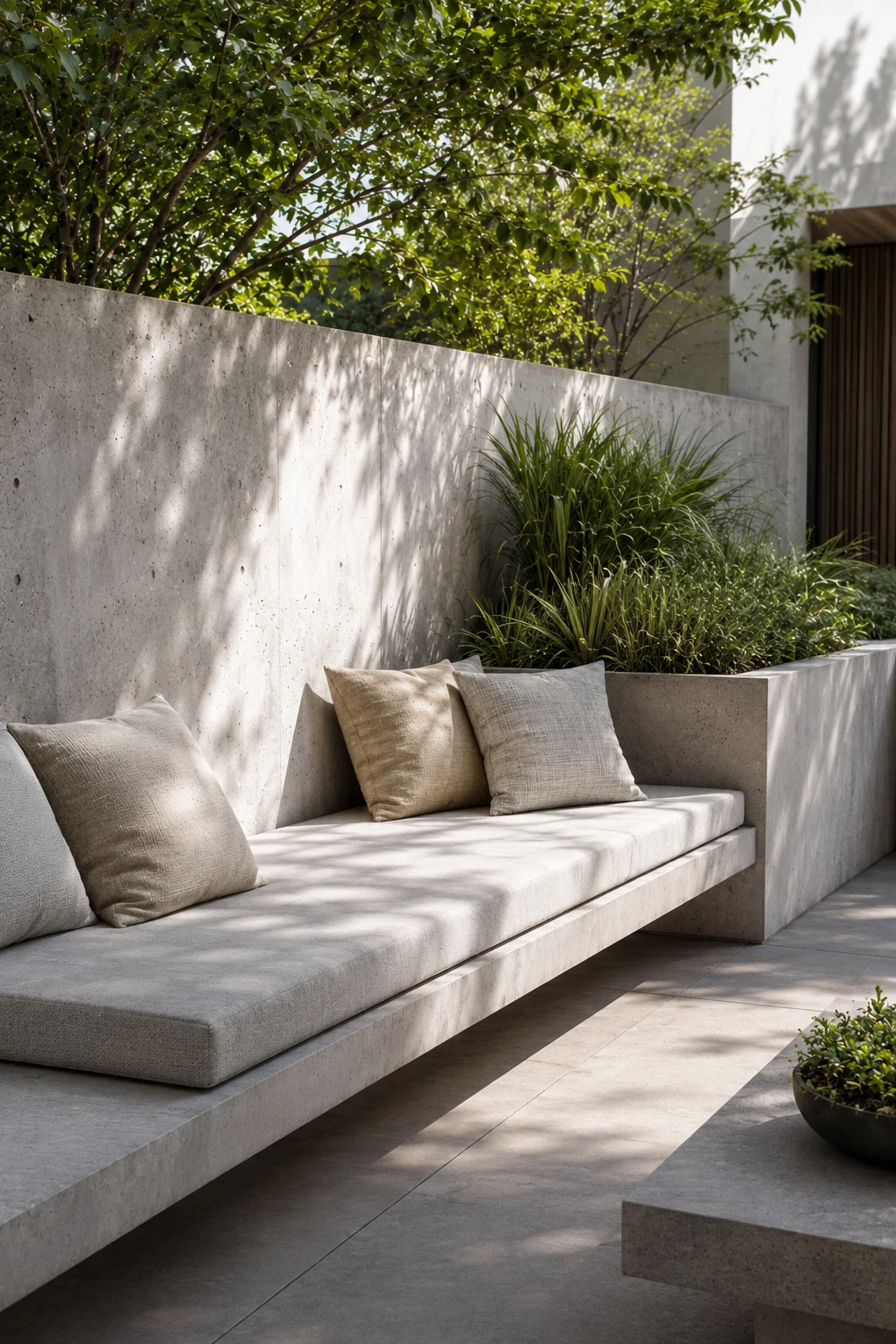
26. Built-In Concrete or Timber Bench
A bench built directly into a low wall or planter edge, finished in the same material as the surrounding hardscape, reads as permanent architecture rather than furniture that could just as easily be moved.
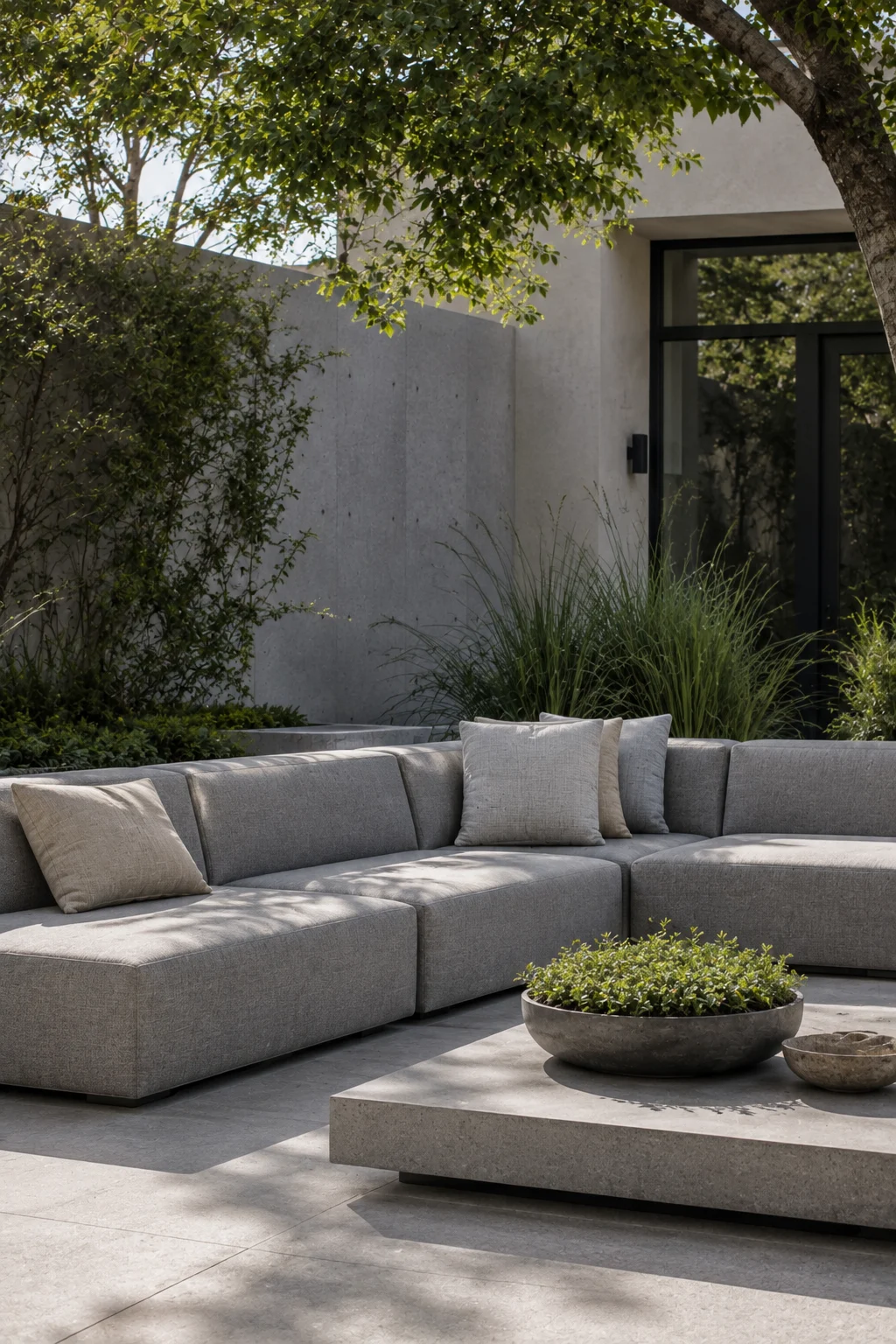
27. Modular Outdoor Sofa Sectional
A low-profile modular sectional, upholstered in a solid neutral performance fabric, gives a modern garden a genuine lounge zone that can be reconfigured depending on how the space is being used.
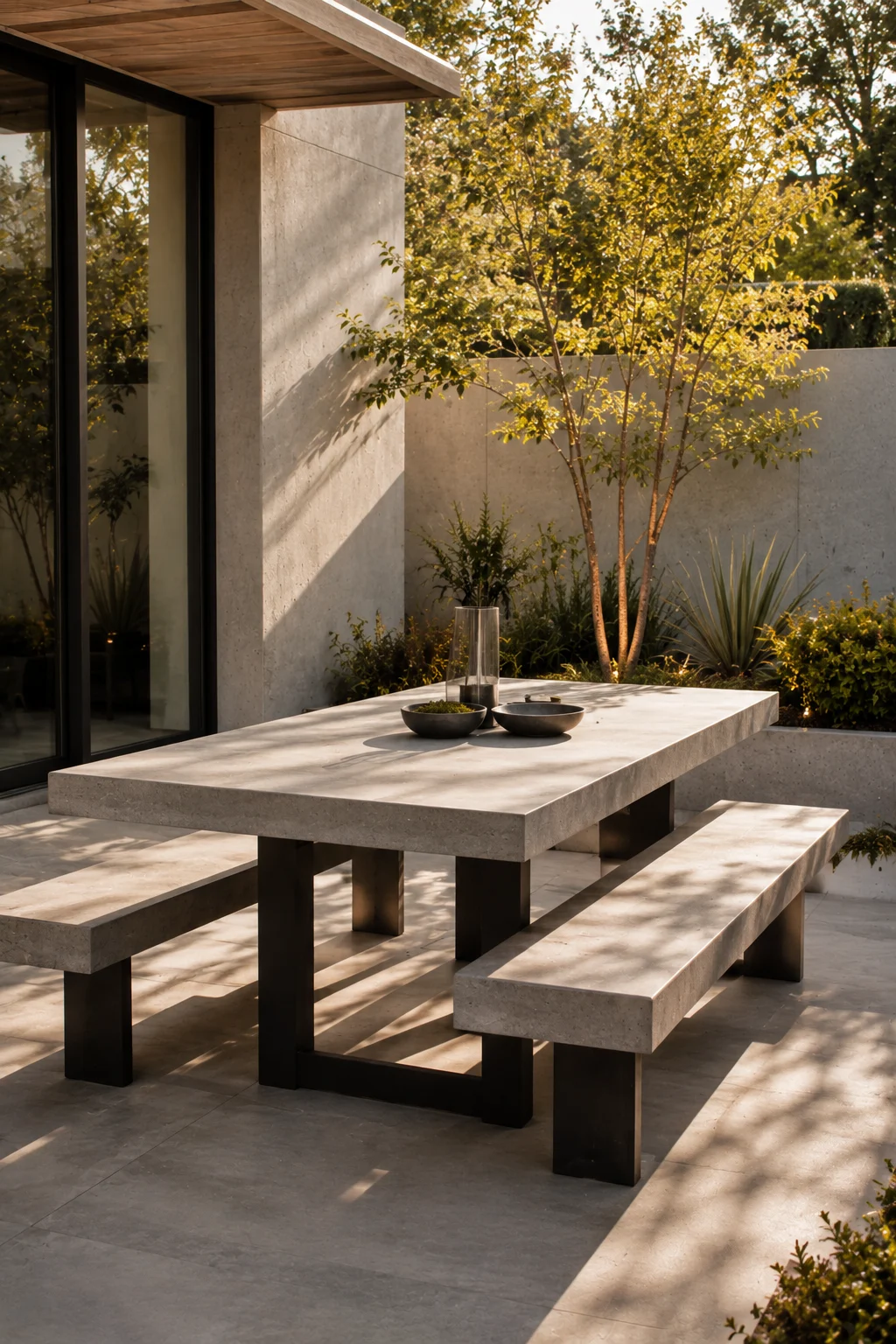
28. Minimalist Dining Table With Bench Seating
A simple rectangular table paired with backless bench seating, rather than individual chairs, keeps the overall silhouette cleaner and reinforces the straight lines used elsewhere in the design.
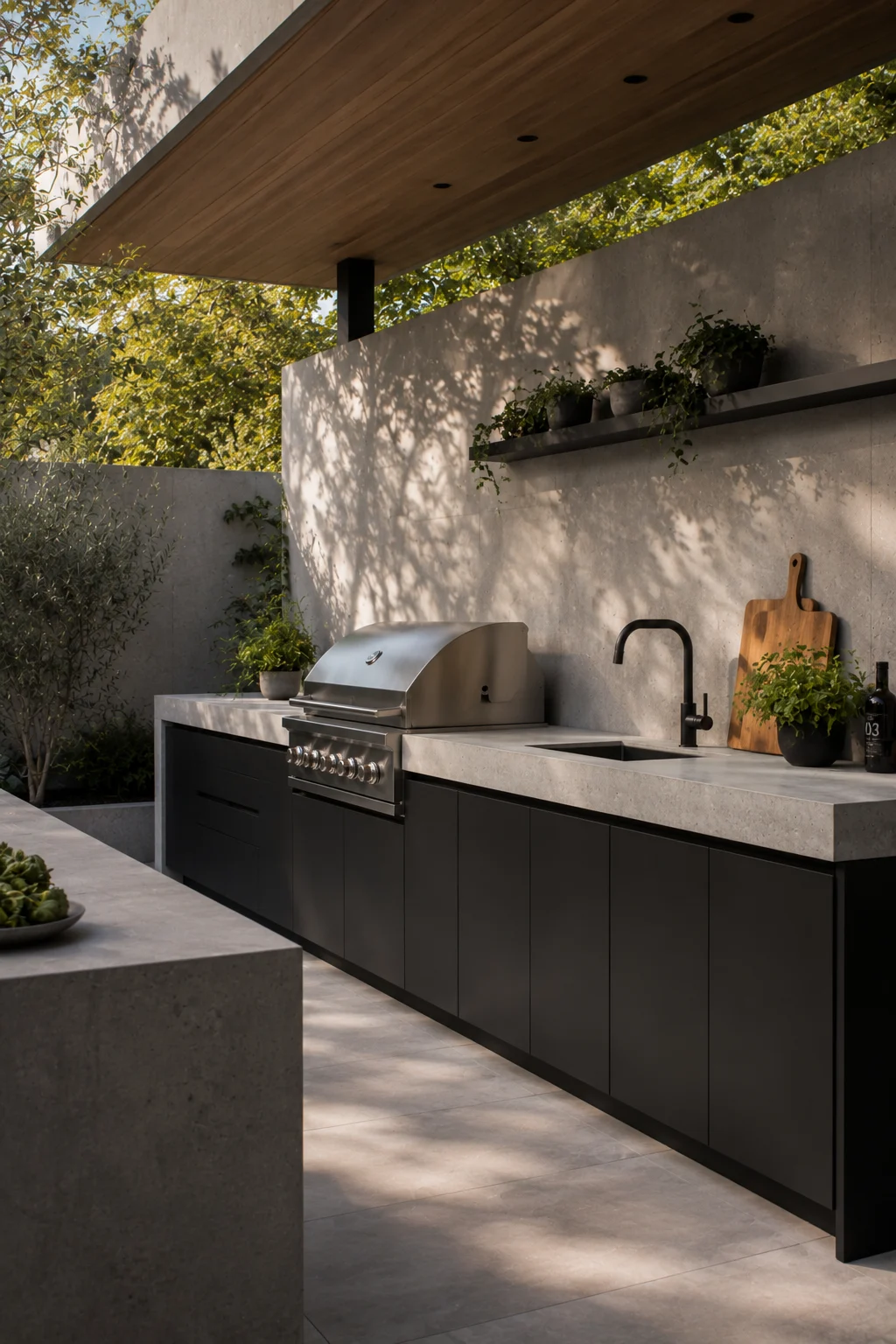
29. Outdoor Kitchen With Clean Cabinetry
An outdoor kitchen built with flat-front cabinetry and a single stone or concrete countertop material, rather than a mix of finishes, keeps a cooking and dining zone visually consistent with the rest of a modern garden.
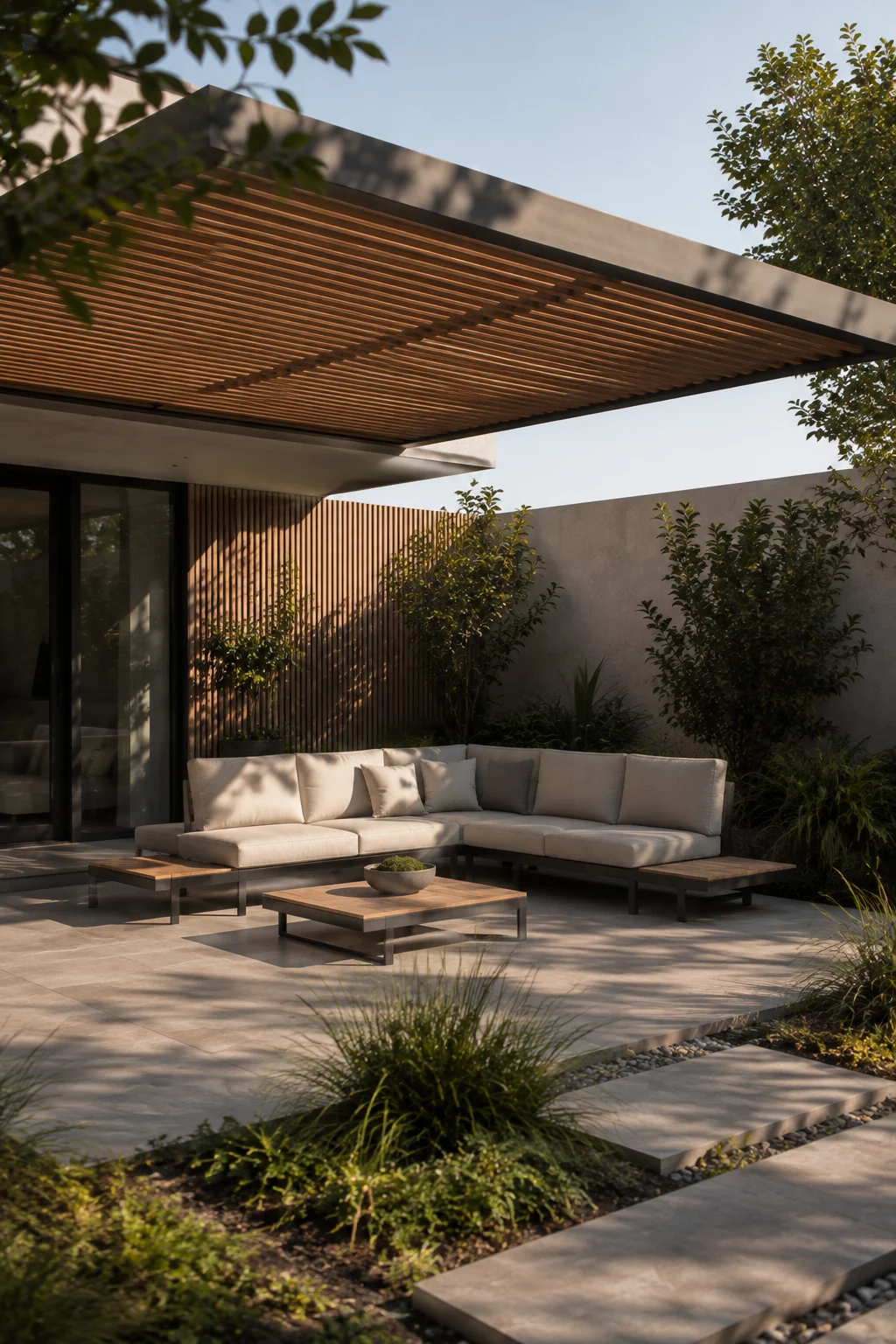
30. Cantilevered Shade Structure
A cantilevered pergola or shade canopy, supported from one side rather than four corner posts, keeps sightlines open beneath it and reinforces the clean, engineered look modern outdoor structures depend on.
Finishing Touches
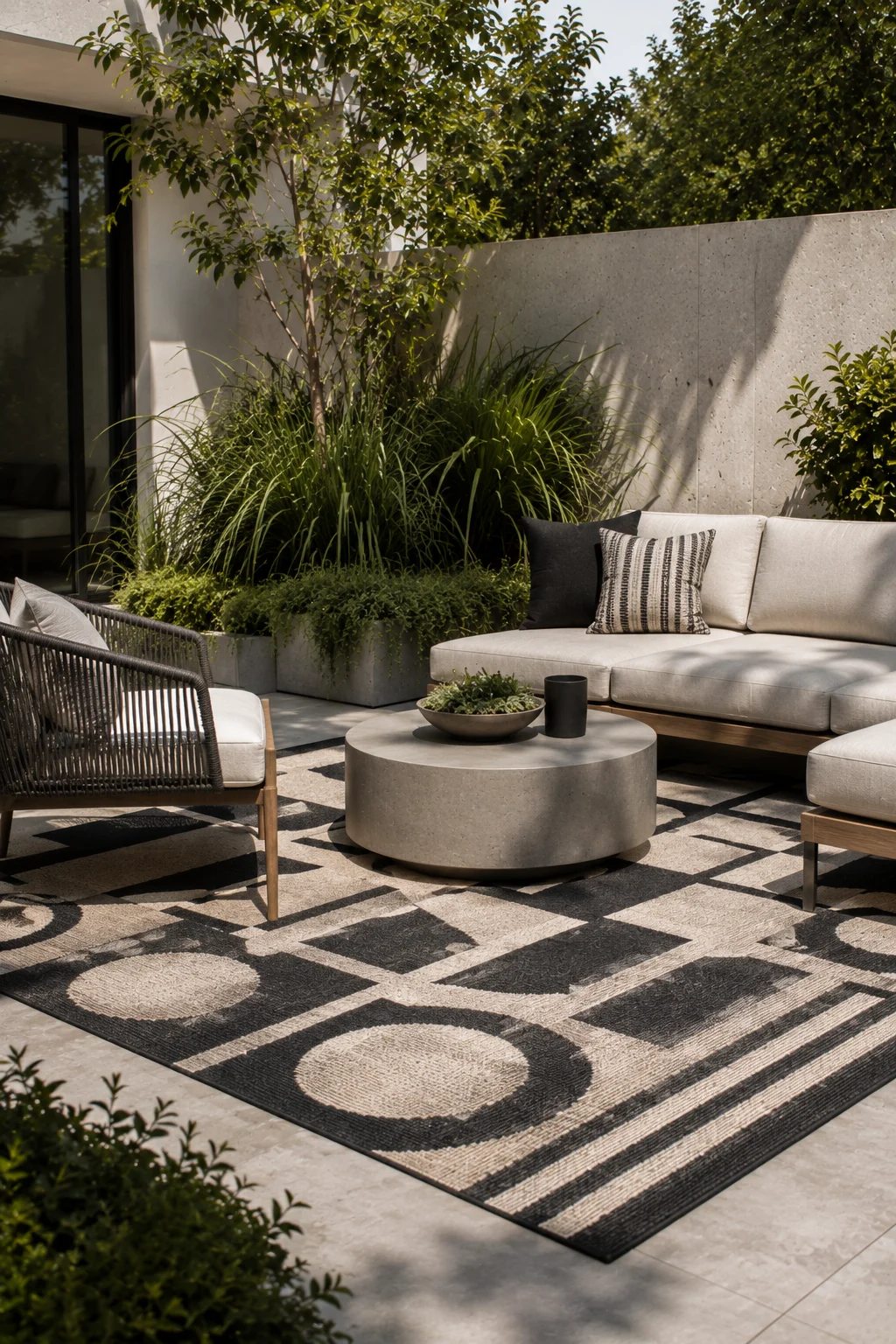
31. Bold Graphic Outdoor Rug
A weather-resistant outdoor rug in a strong graphic pattern or a single saturated color provides visual interest against an otherwise neutral material palette, anchoring a seating or dining zone the same way it would indoors.
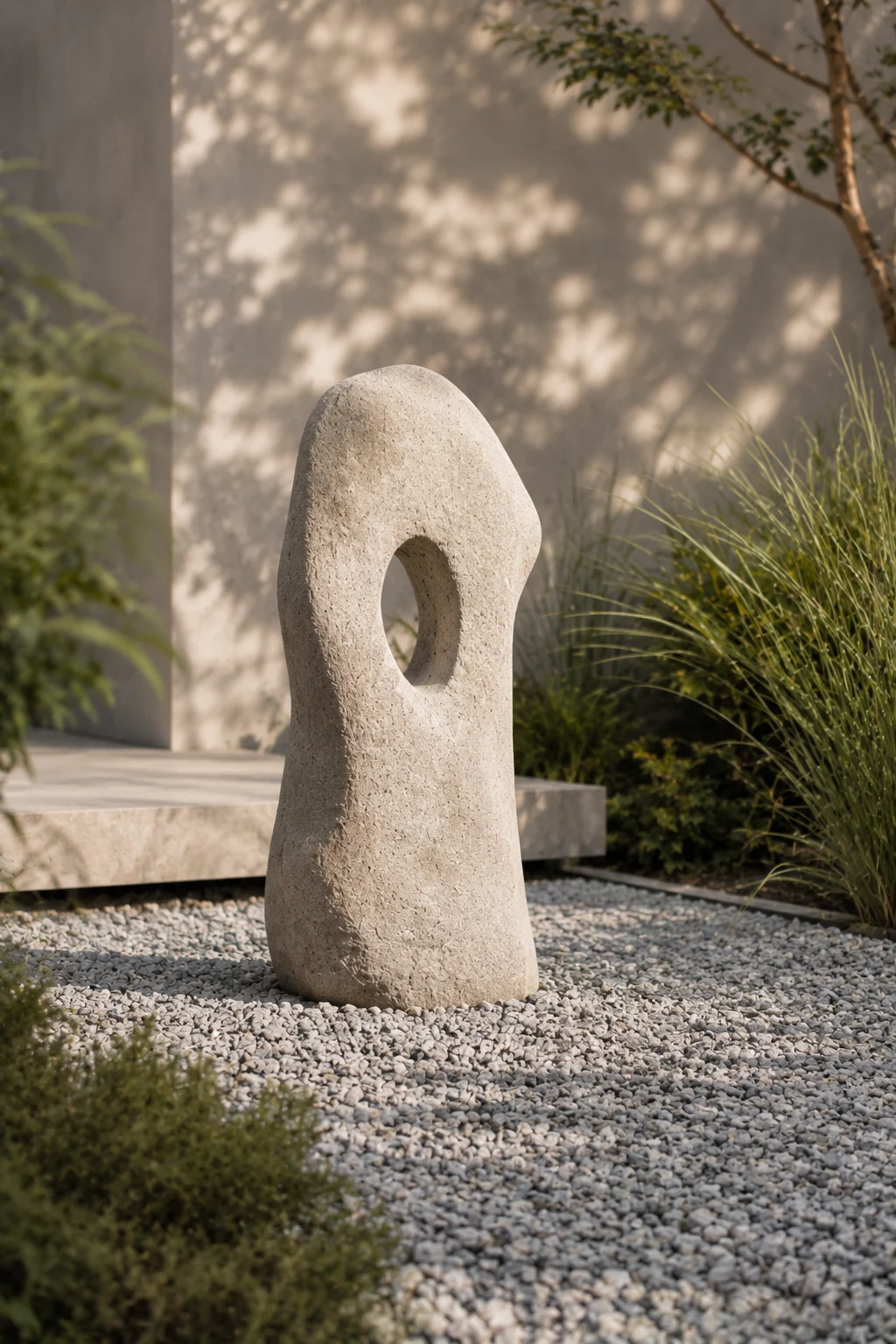
32. Minimalist Sculptural Garden Art
A single abstract sculpture, in stone, metal, or concrete, placed as a deliberate focal point within a planting bed or gravel area gives a modern garden a gallery-like quality without needing additional ornamentation elsewhere.
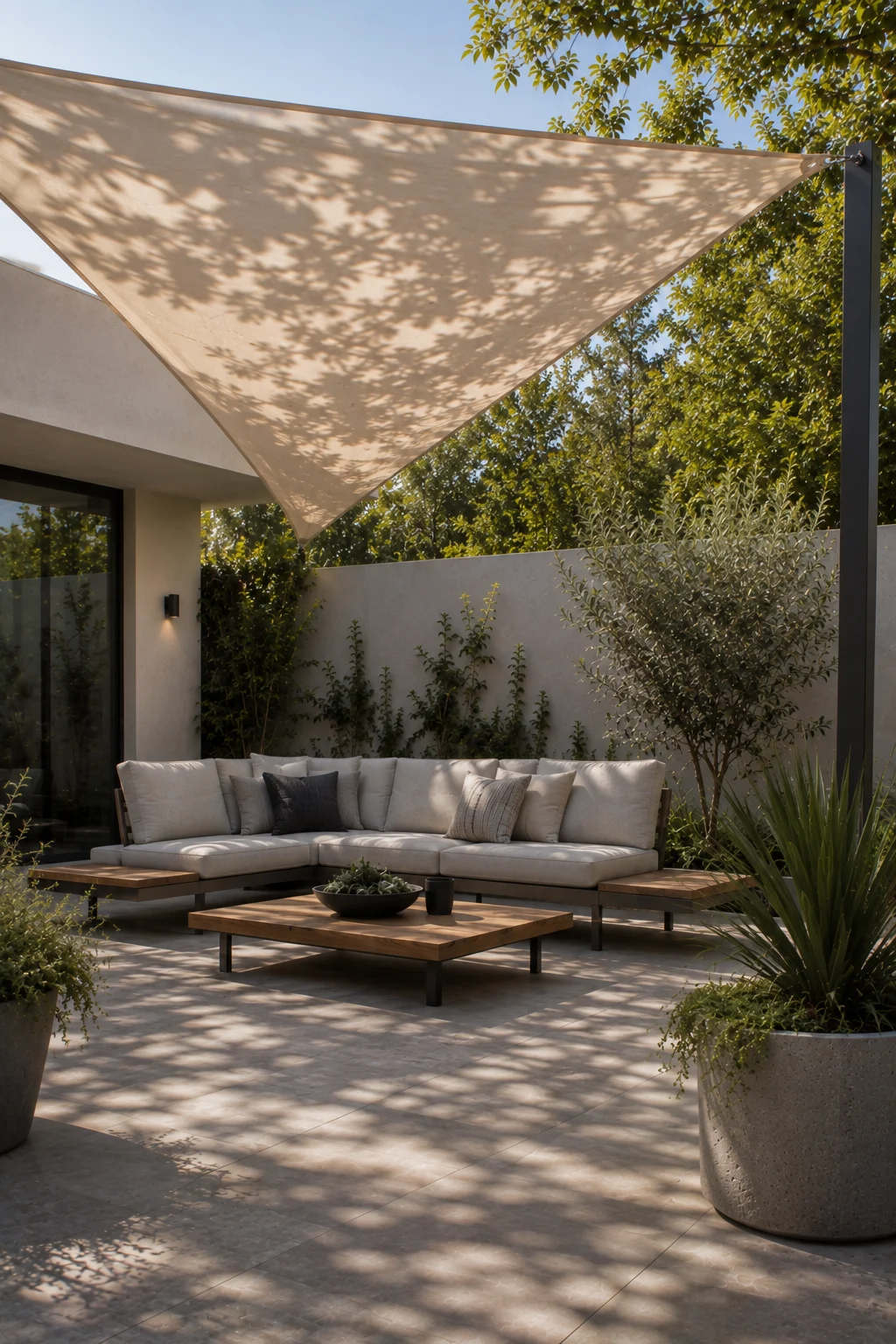
33. Retractable Shade Sail
A tensioned fabric shade sail, either fixed or retractable, provides clean geometric shade over a seating area without the visual bulk of a full roofed structure.
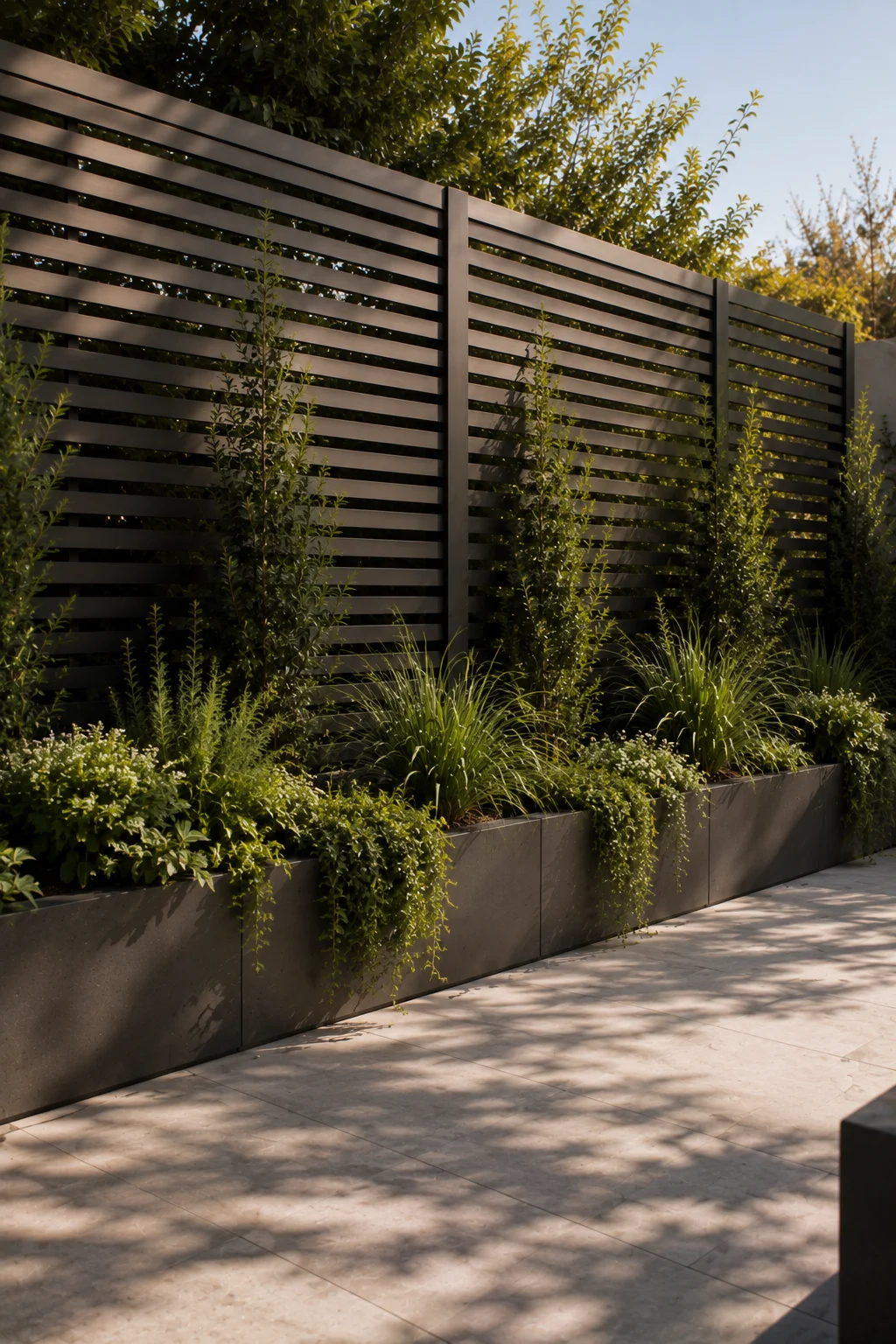
34. Privacy Screen With Integrated Planters
A slatted privacy screen built with integrated planter boxes along its base combines screening and planting into a single structural element rather than treating them as two separate additions.
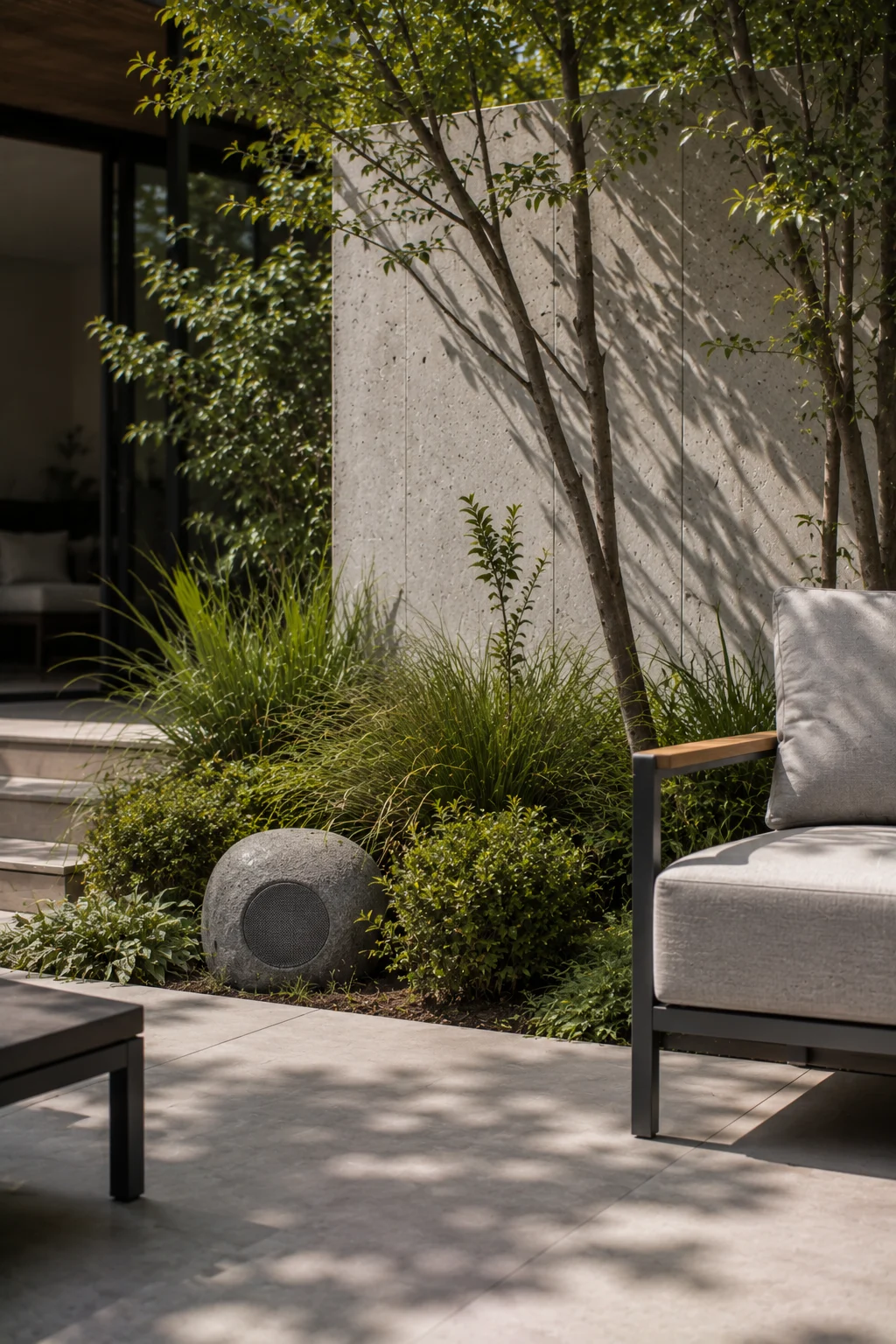
35. Discreetly Integrated Outdoor Speakers
Weatherproof speakers built into planters, walls, or rock-form housings keep audio equipment fully hidden from view, preserving the clean lines a modern garden depends on rather than leaving visible speaker units on display.
Choosing a Consistent Material and Plant Palette
The single biggest factor separating a genuinely modern garden from a yard that just happens to have some clean furniture is consistency — one primary hardscape material, one accent material (steel, timber, or stone), and a planting palette built around form and foliage rather than a wide mix of flower color. Combining ideas from several categories above works well as long as the underlying material choices stay limited rather than expanding with every new addition. For the broader spatial planning a modern garden like this fits into, our small backyard layout guide and small patio design guide both cover zoning principles that pair well with the structured approach modern design depends on, and our gravel garden ideas guide covers the linear gravel and paver techniques referenced above in more depth.
According to design guidance published by the American Society of Landscape Architects, restraint in material selection is one of the most consistent traits separating professionally designed contemporary landscapes from ad hoc ones, since a narrow, well-executed palette reads as considerably more intentional than a wider mix of materials used at a smaller scale each (asla.org).
Final Thoughts
A modern garden succeeds through discipline more than any single dramatic feature — clean geometric hardscape, a genuinely narrow material palette, planting chosen for form rather than flower color, and lighting layered specifically for how the space reads after dark. Pick one hardscape material, one accent material, and a monochromatic planting approach, then layer in water, fire, or lighting features that repeat those same lines and materials rather than introducing new ones. That consistency, more than any individual idea on this list, is what actually reads as modern.