
Front door planters do more visual work per square foot than almost anything else on a house’s exterior. They are the first thing people notice before they even reach the doorbell, and the right pair or grouping can make an ordinary entryway look far more finished without changing the door, paint, or porch itself.
This list covers 17 front door planter ideas across five categories: modern and minimalist, classic and formal, seasonal colour, texture and material-led choices, and simple design formulas. Every idea here is grounded in real, achievable combinations you could actually source, plant, and maintain.
Modern and Minimalist Front Door Planters
A restrained, textural approach often works best for contemporary homes and modern farmhouse entries. In many cases, one or two plant varieties in substantial, well-textured pots will look more deliberate than a busy arrangement.
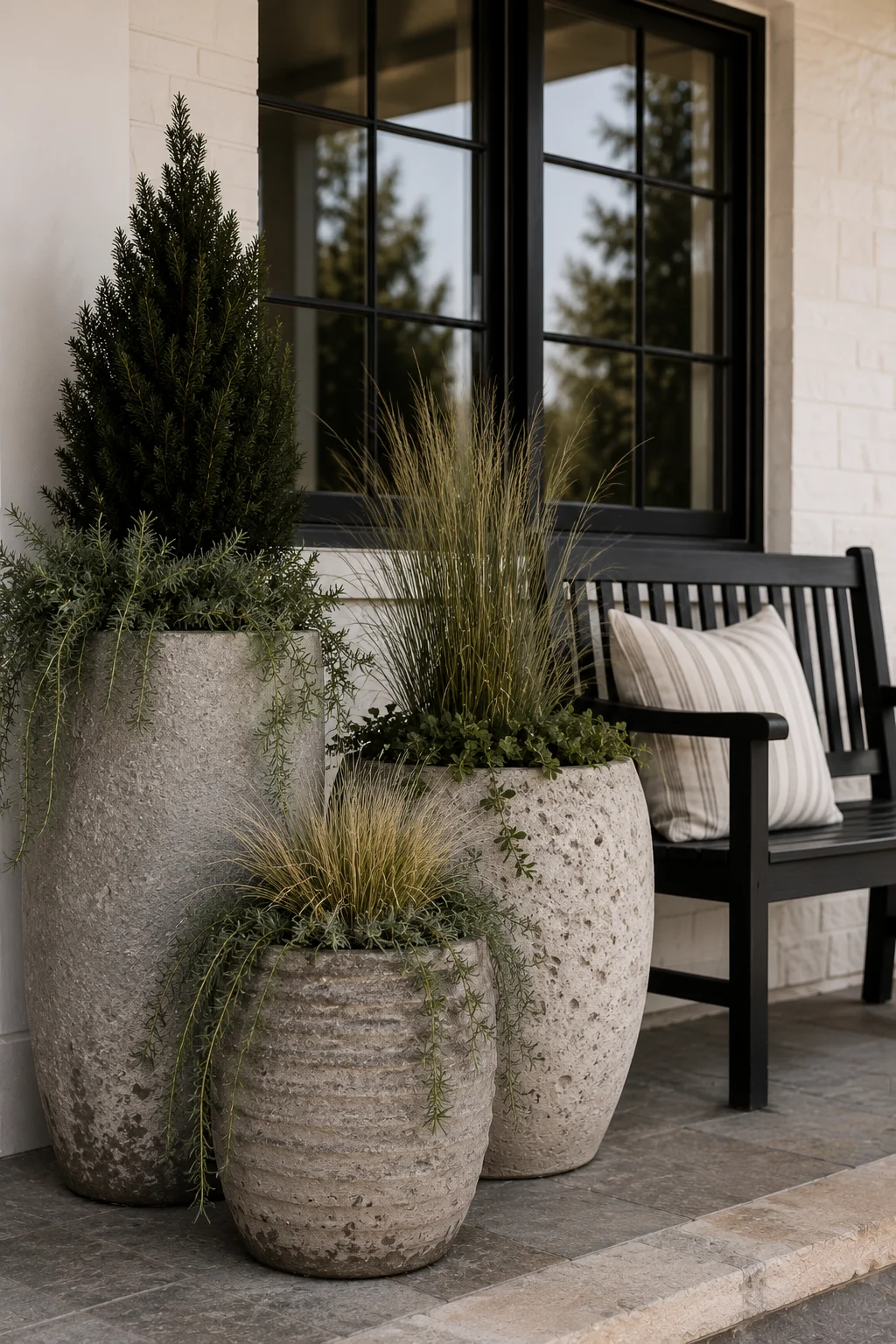
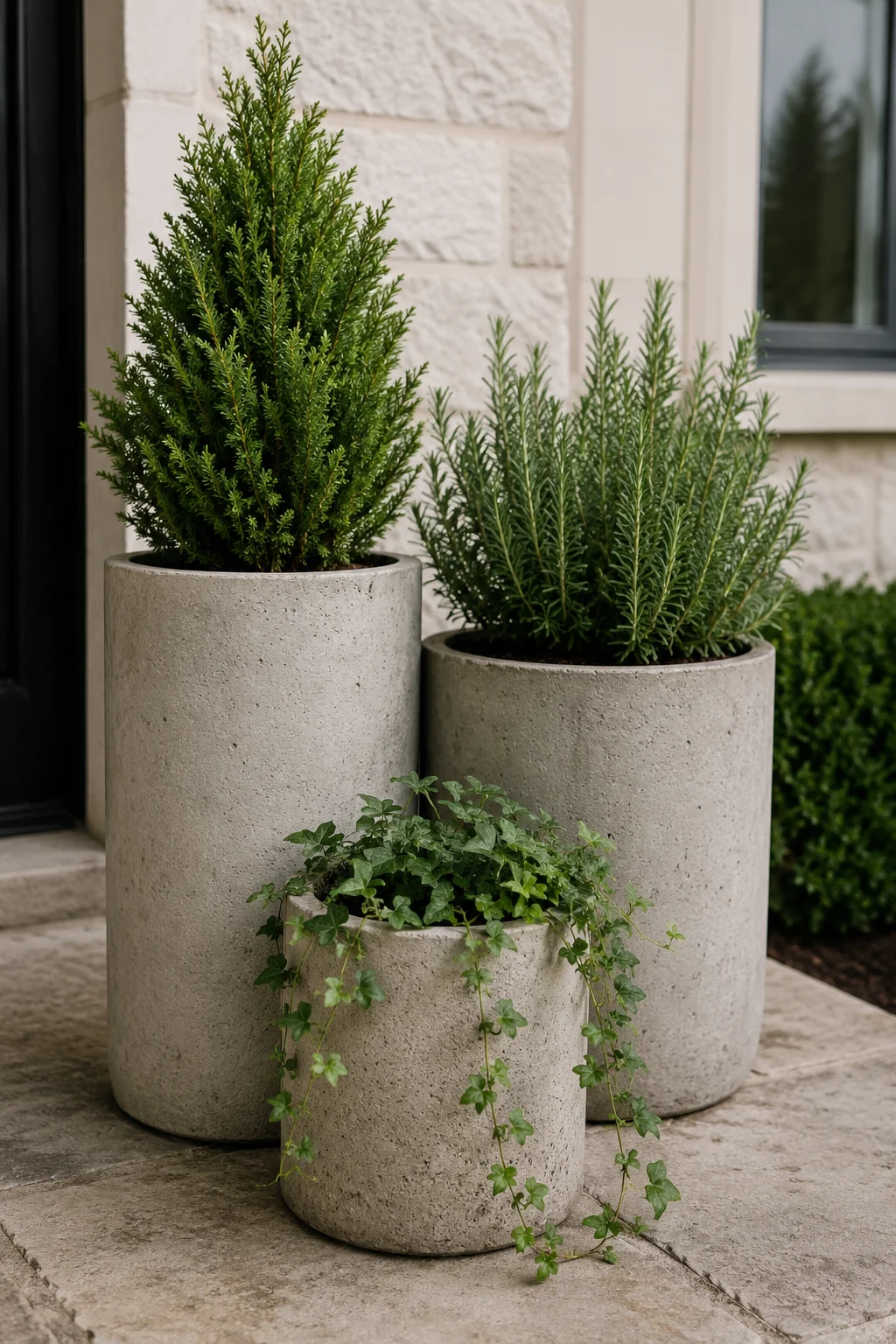
1. Grouped Odd-Numbered Stone Planters
Three textured concrete or stone planters in graduating heights, clustered just to one side of the door rather than centred, read as far more designed than a single matched pair. Fill the tallest pot with a small upright evergreen, the middle with a mounding herb like rosemary, and the shortest with trailing greenery to create natural visual rhythm without needing matching plants in every container.
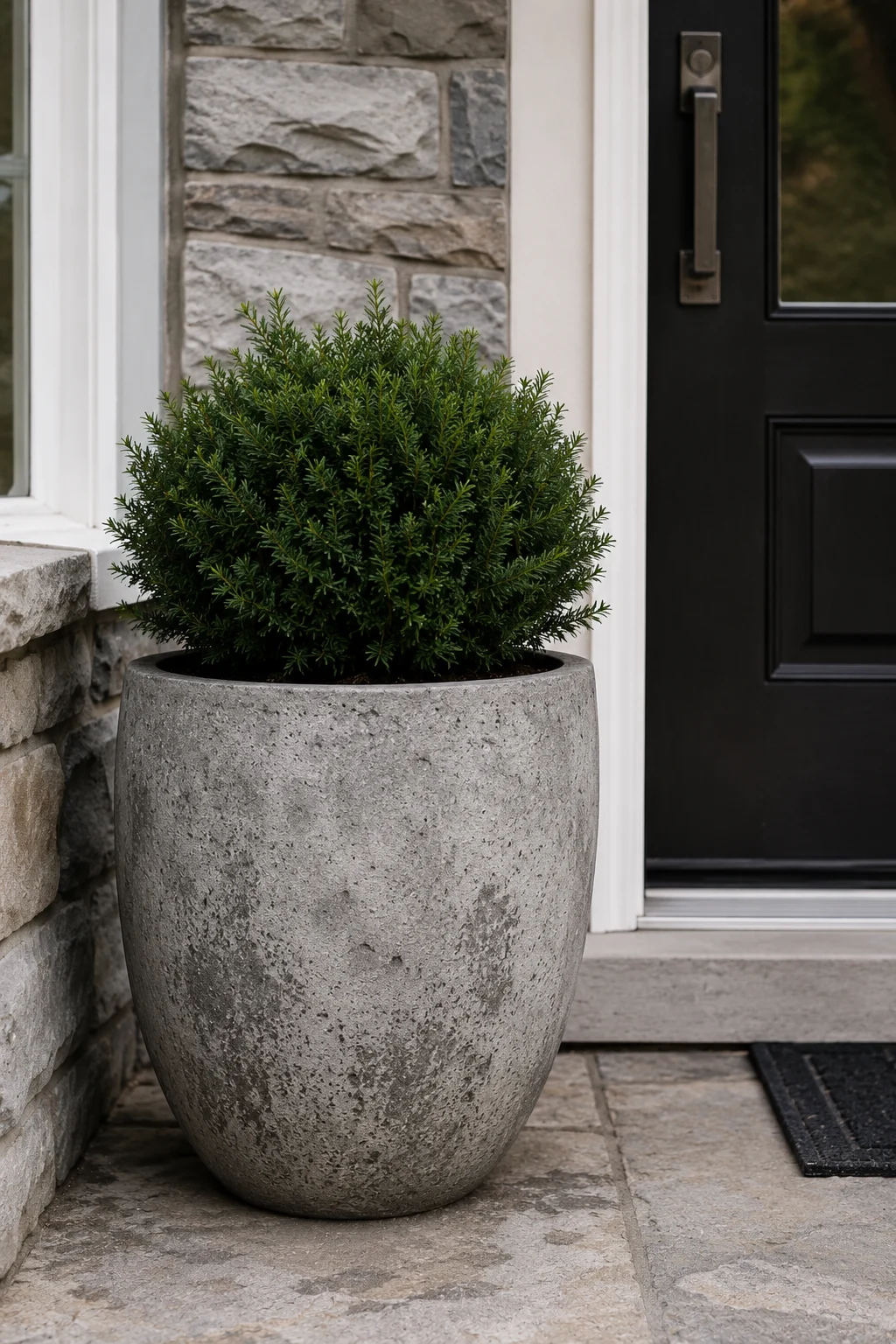
2. Single Oversized Concrete Planter With a Dwarf Evergreen
One substantial, textured concrete planter positioned to one side of the door, holding a single dwarf evergreen such as a compact spruce or cypress, makes a strong minimalist statement without requiring a matching pair. The oversized scale relative to the plant is intentional. A slightly undersized plant in a large pot often looks more architectural than a plant that fills its container completely.
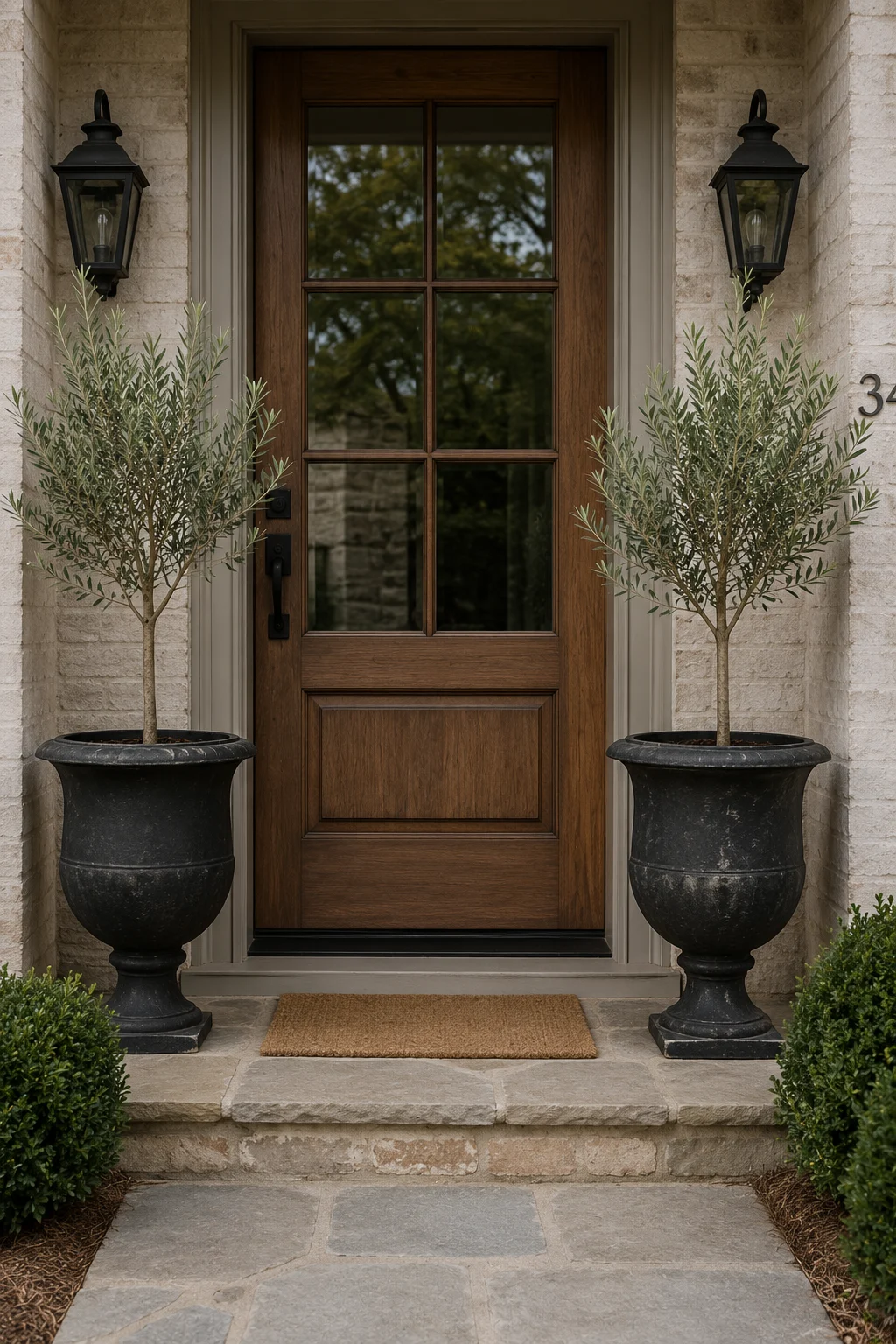
3. Matching Black Urn Pair Flanking the Door
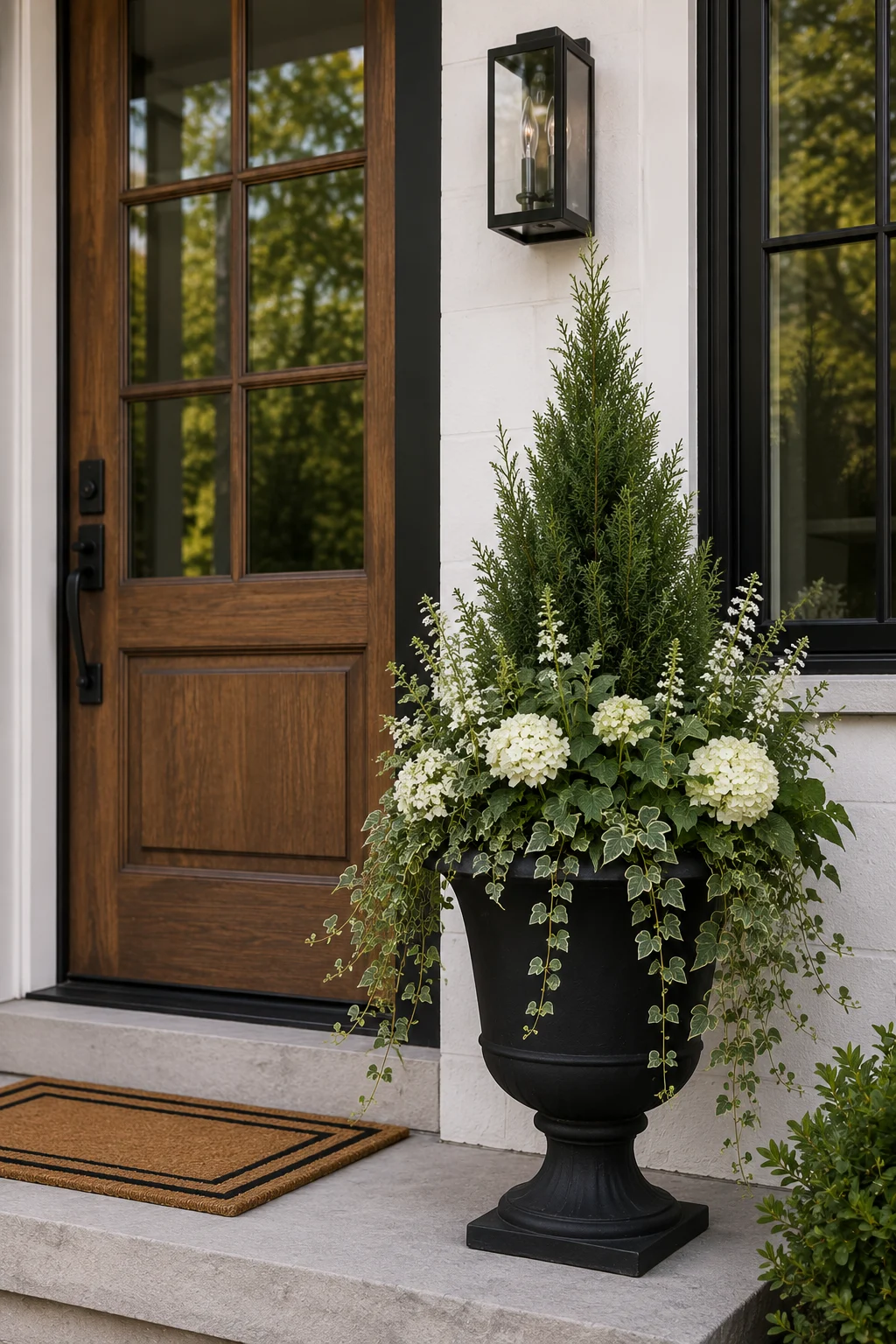
A symmetrical pair of black or charcoal urn-shaped planters, one on either side of the door, gives an entry immediate formality and works with almost any door colour, particularly wood-toned or deep green doors. Keep the planting simple: a single olive tree or upright grass in each urn lets the urn itself remain the visual anchor rather than competing with a busy planting scheme.
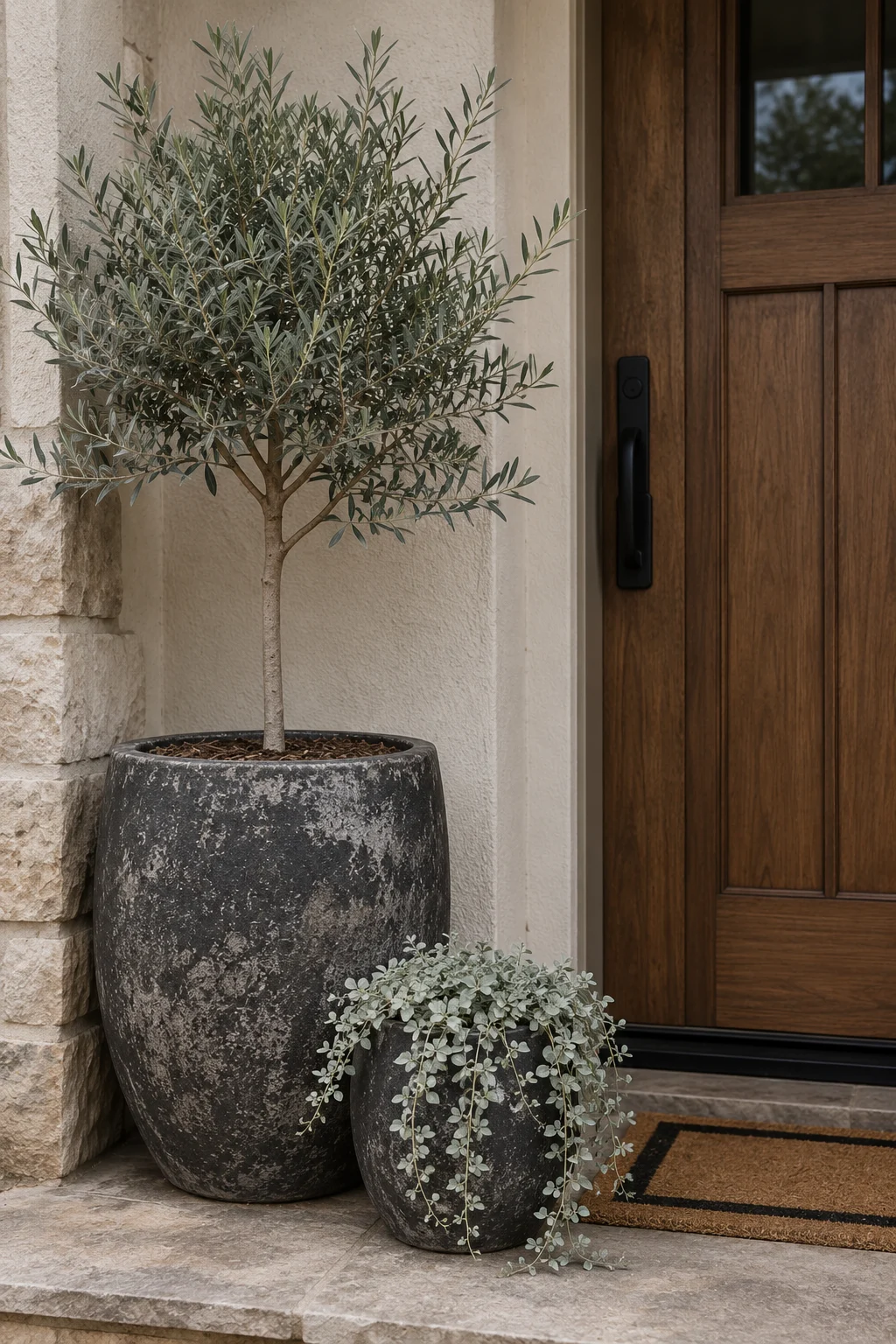
4. Textured Ceramic Planter With an Olive Tree
A single weathered grey or charcoal ceramic planter holding a young olive tree, paired with a smaller matching pot of trailing olive or rosemary at its base, creates a relaxed Mediterranean-modern look that feels especially suited to wood and black-framed entries. Olive trees tolerate being slightly root-bound in a container for years, which makes this a genuinely low-maintenance choice rather than only a photogenic one.
Classic and Formal Front Door Planters
Symmetry, clipped shapes, and traditional materials suit period homes, painted front doors, and entries with existing formal architectural detail. These combinations lean timeless rather than trendy.
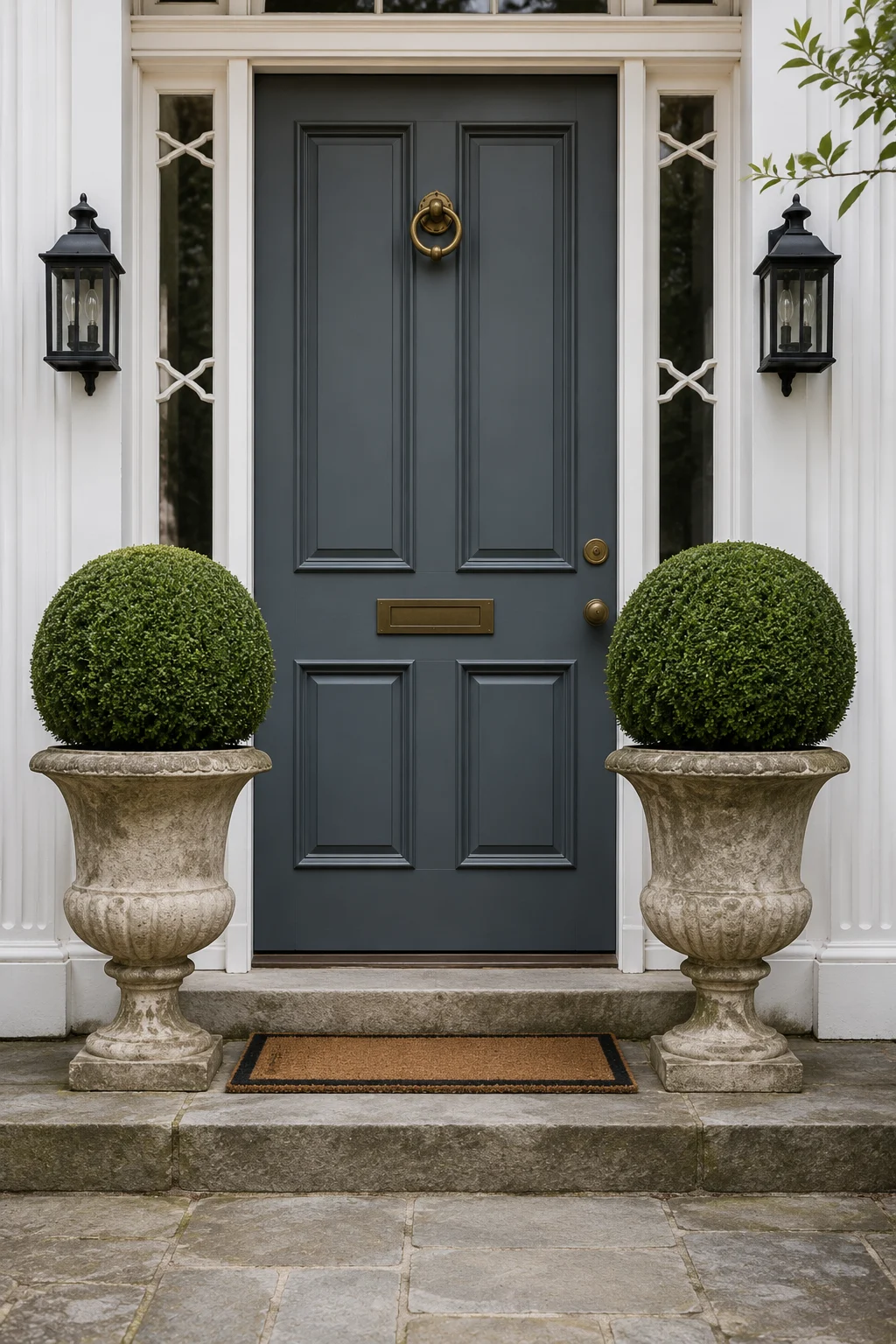
5. Boxwood Ball Topiary in Aged Stone Urns
A matched pair of clipped boxwood balls in weathered stone or faux-lead urns is one of the most enduring front-door planter combinations. It reads as tidy and traditional through every season because the foliage stays evergreen year-round. Trimming two or three times during the growing season keeps the paired shapes crisp rather than letting them drift apart in size.
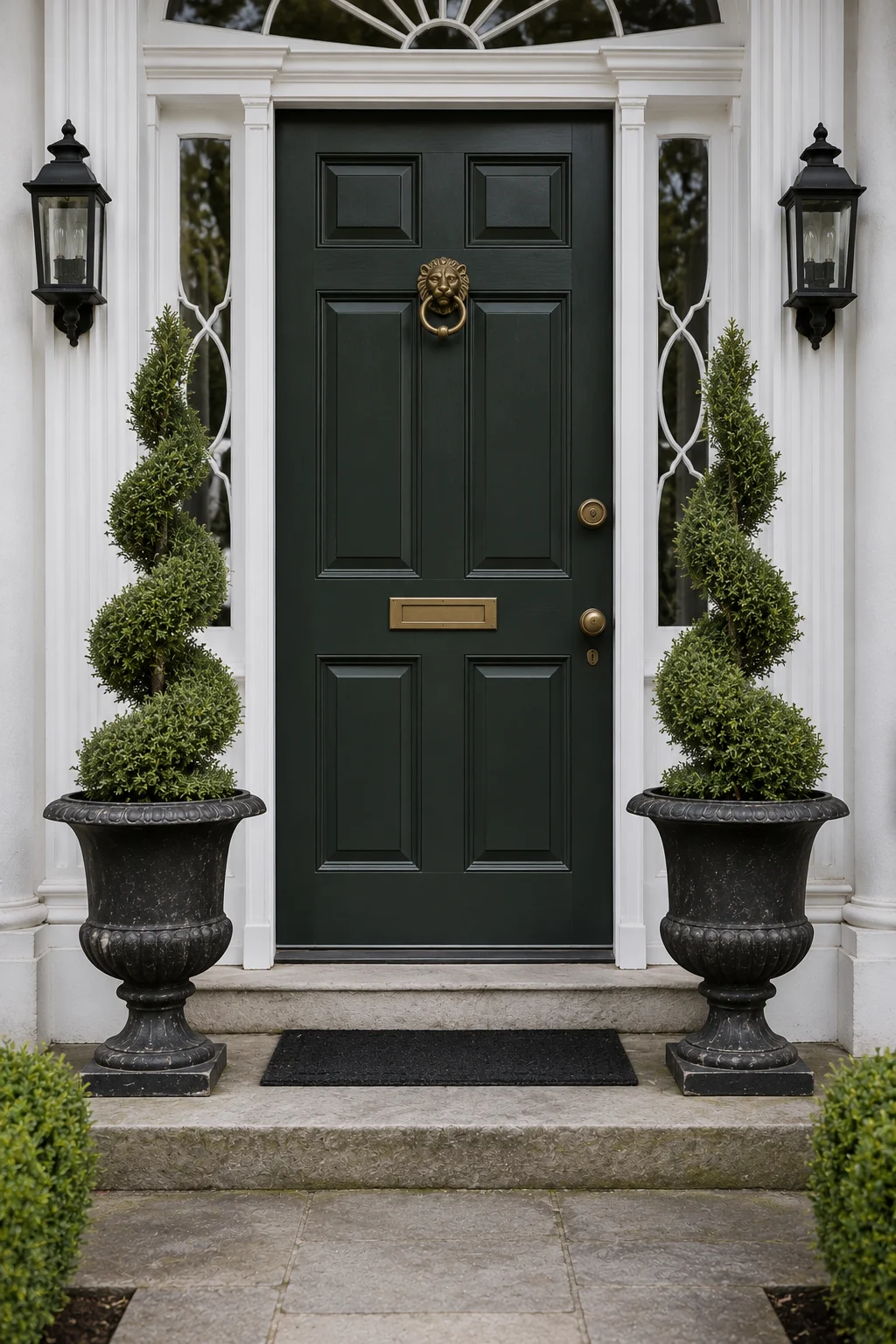
6. Spiral Juniper Topiary Pair
A pair of spiral-trained junipers in black cast urns brings height and formal structure to a taller entry, particularly one with an arched doorway or existing ironwork detail nearby. Junipers tolerate more sun and drought than boxwood, making this a sturdier choice for south-facing entries that receive strong afternoon light.
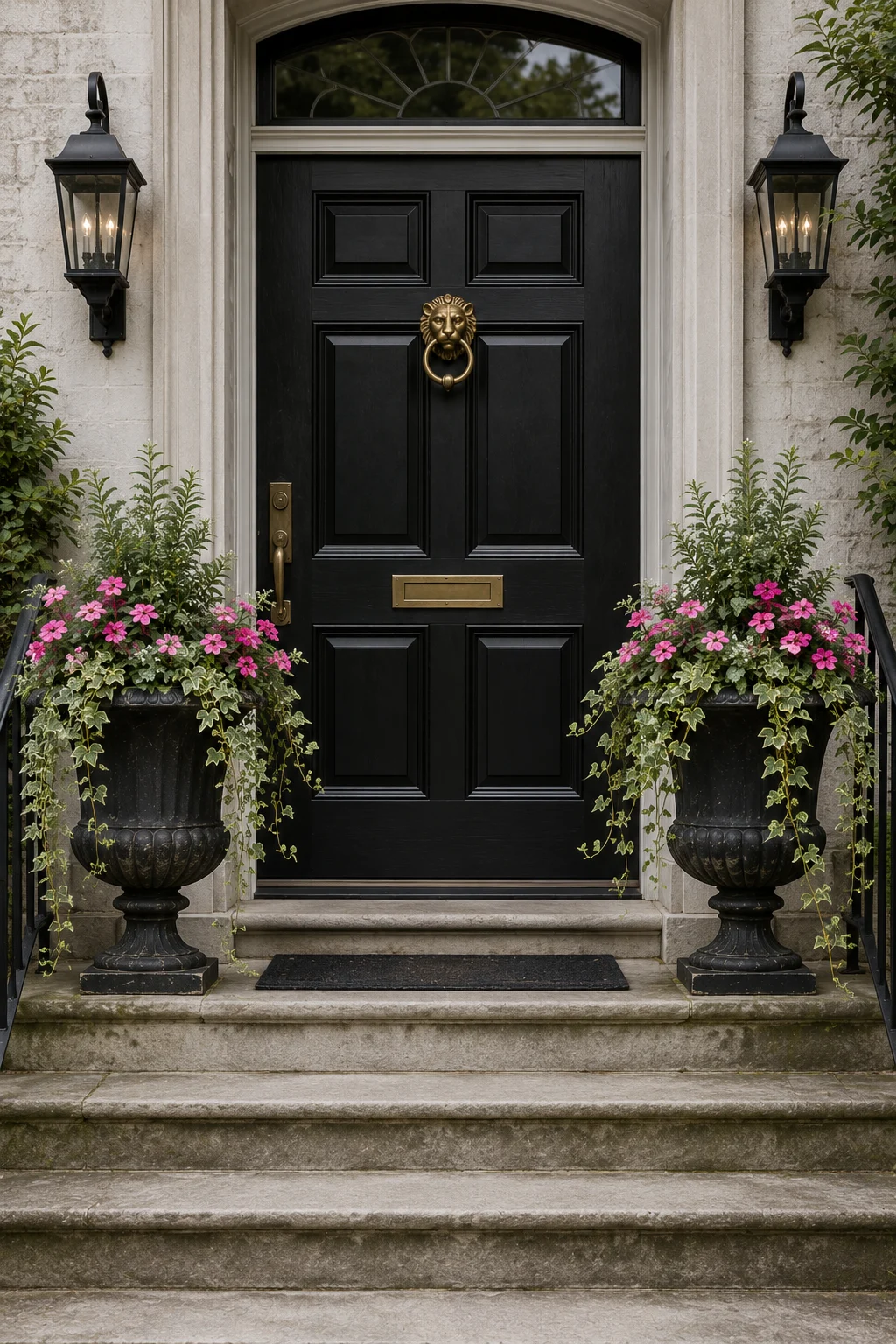
7. Cast Urns With Trailing Ivy and Seasonal Flowers
Classic black or bronze cast-iron urns, filled with a centre planting of ivy or a small evergreen and surrounded by trailing seasonal flowers such as ivy geranium or sweet potato vine, give an entry a lush, layered look without needing constant replanting. You can swap just the seasonal flower layer while keeping the structural planting in place, which keeps the arrangement fresh through the year.
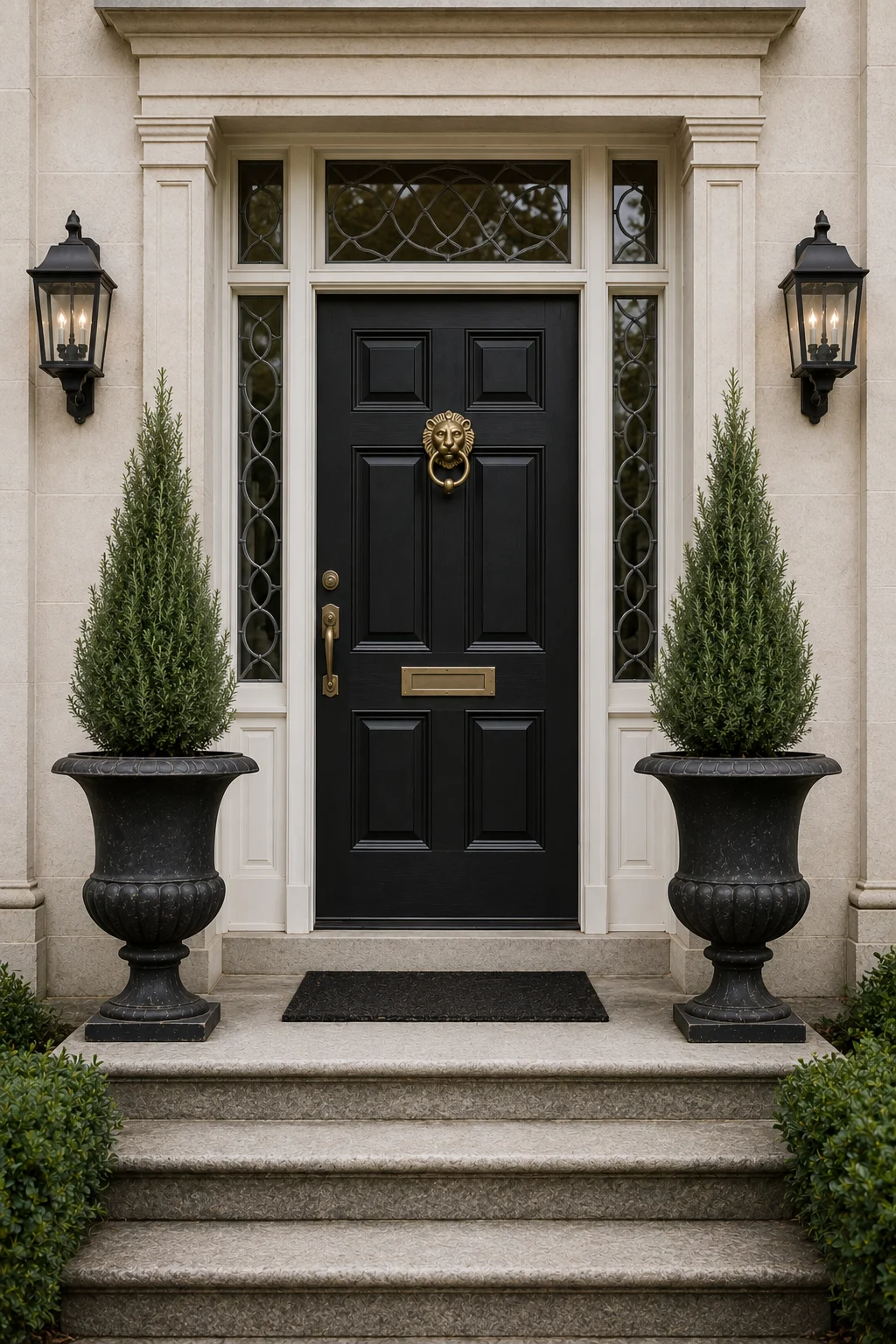
8. Formal Symmetrical Pair With Matching Finials
Urns topped with a matching finial-style plant, such as a single upright rosemary standard or a slim conical evergreen, reinforce strict symmetry at the entry’s most important sightline. This approach suits colonial and Georgian-style entries especially well, where the architecture already leans formal.
Seasonal Colour Planters
Rotating the planting through the year keeps an entry from looking static. A few reliable seasonal combinations do most of the work, and you do not need to reinvent the whole display every time the weather changes.
9. Rotating Four-Season Annual Planter
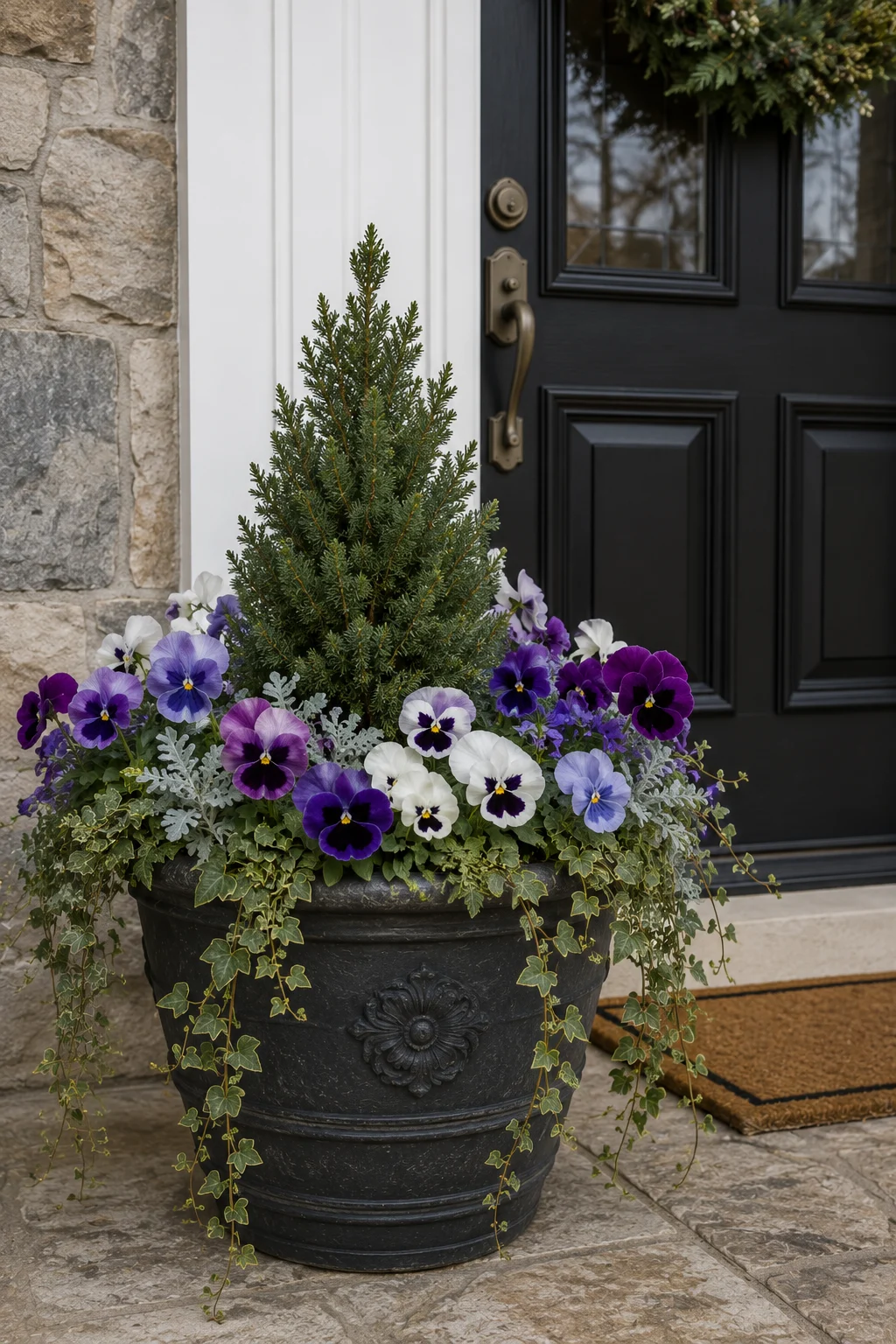
Build one planter around a permanent structural piece, such as a small evergreen or grass, and swap only the surrounding annual flowers each season. Spring bulbs and pansies, summer petunias or sweet potato vine, autumn mums, and winter greens with berries keep the entry looking current without replacing the whole arrangement four times a year.
10. Winter Evergreen and Berry Arrangement
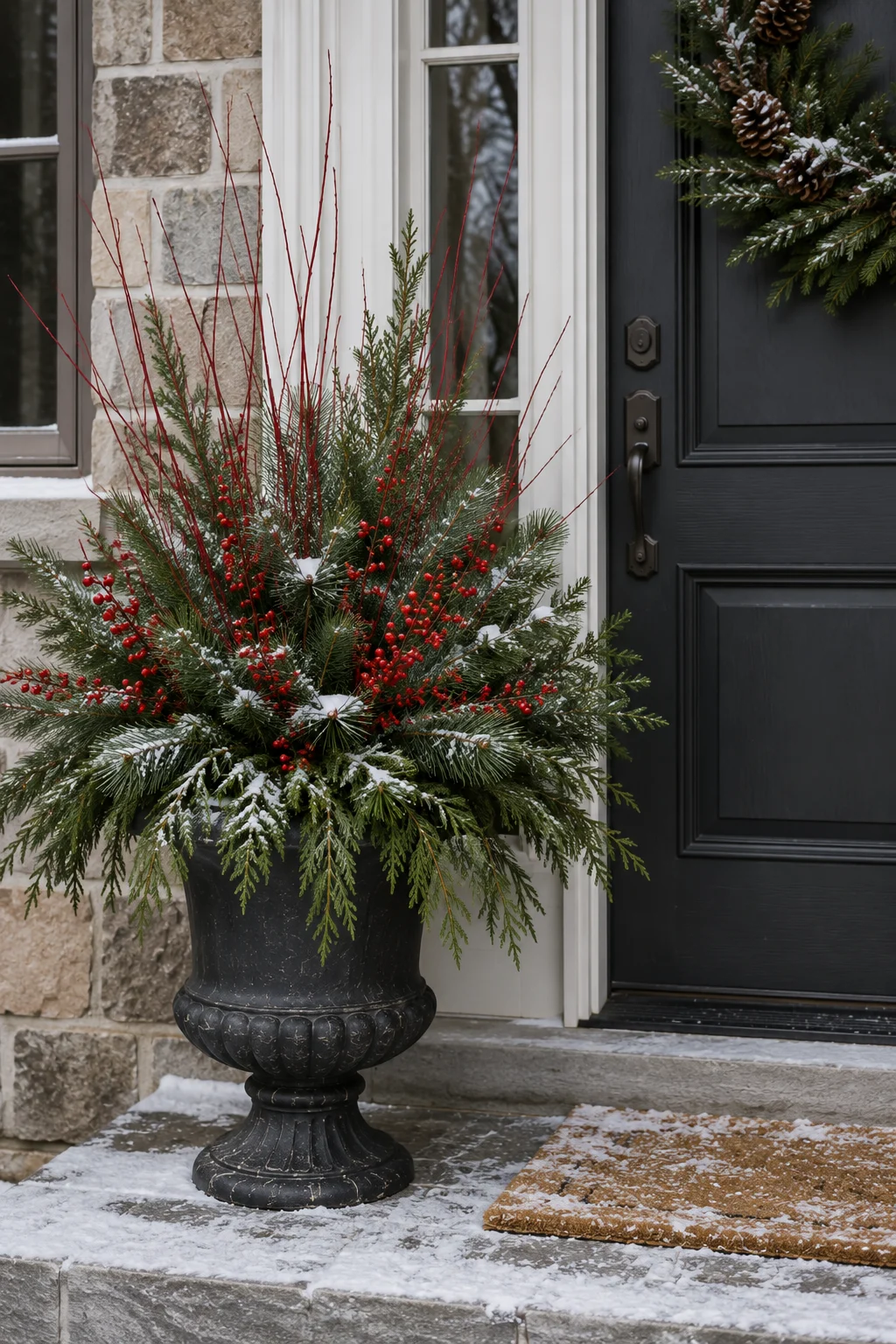
A mix of fresh-cut evergreen boughs, red-twig dogwood stems, and a few clusters of faux or real winterberry, arranged in an urn rather than a live planting, keeps front door planters looking full and intentional through the coldest months when most live plants are not an option.
11. Fall Planter With Ornamental Kale and Mini Pumpkins
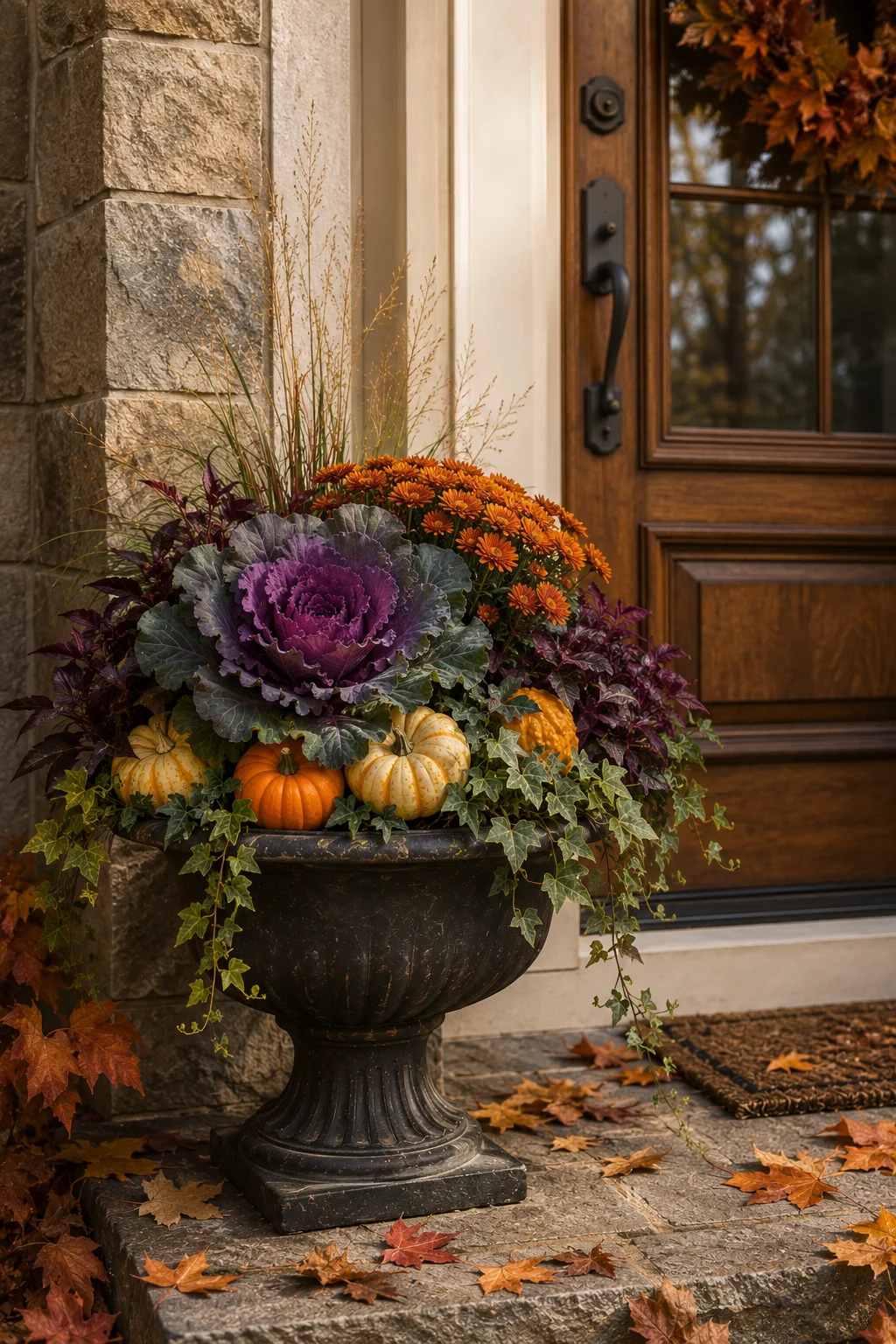
Ornamental kale, mums, and a few small pumpkins or gourds tucked around the base give a front door planter genuine autumn character without tipping into full Halloween décor. This look works especially well from early September through Thanksgiving in most climates.
12. Bright Summer Trailing Flower Planter
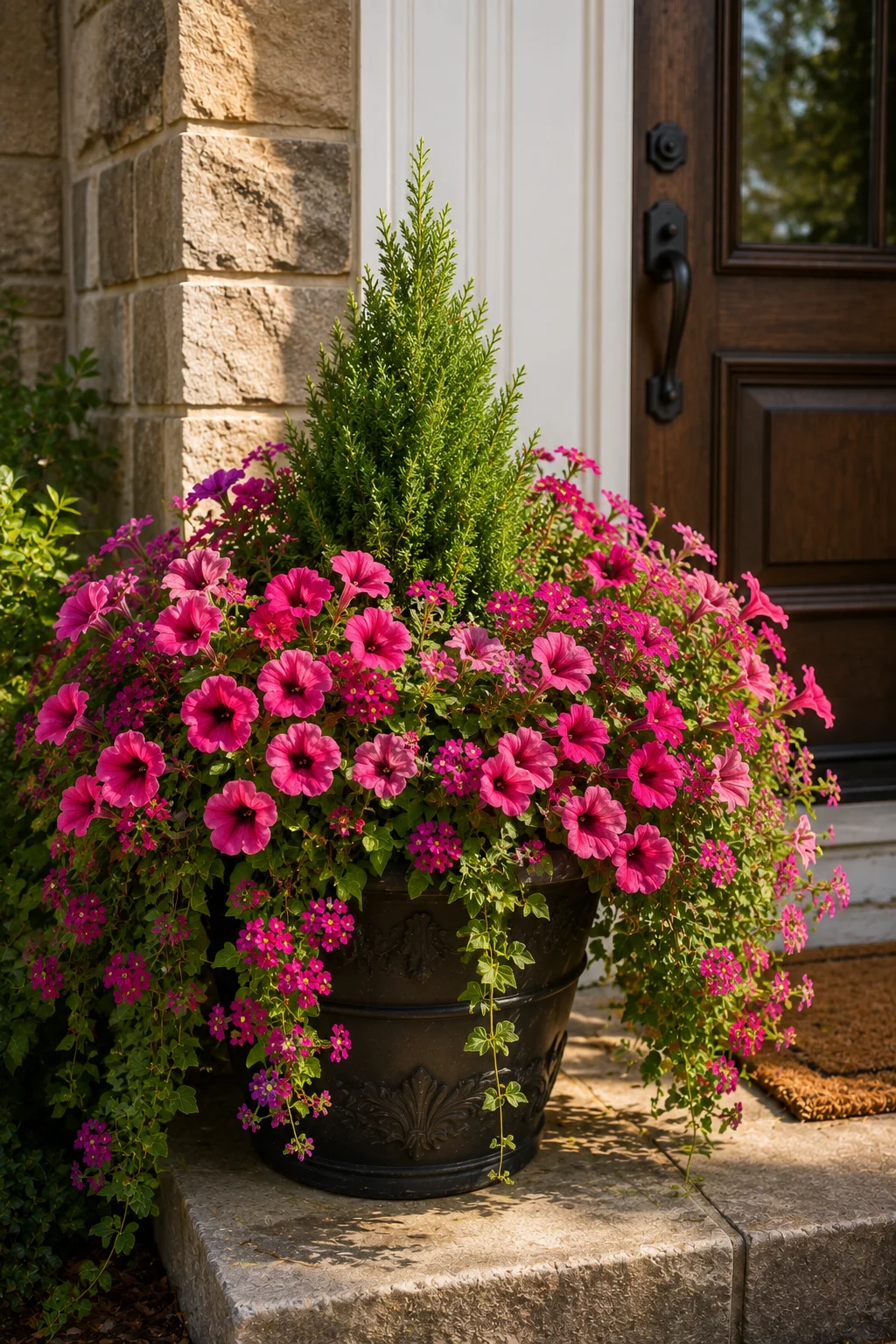
A dense mix of bright annual flowers, such as petunias, verbena, and calibrachoa, spilling generously over the pot’s edge, paired with a single upright element like a small evergreen cone in the centre, gives an entry its fullest, most saturated look of the year during peak summer bloom.
Texture and Material-Led Planters
Sometimes the pot itself, more than the planting inside it, sets the tone for the entire entry. Material choice can make a simple planting scheme feel much more intentional.
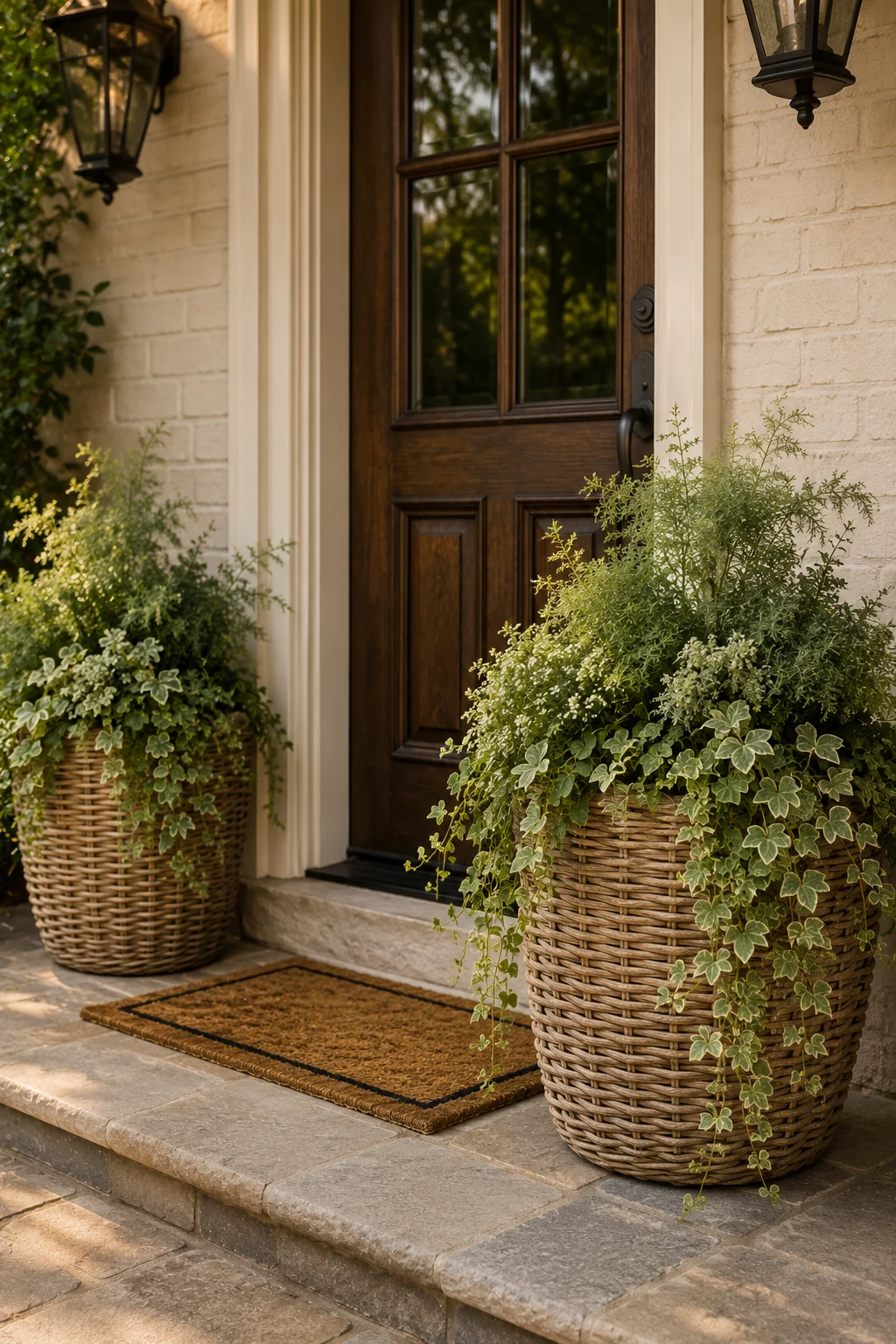
13. Woven Rattan or Basket-Style Planters
Natural woven planters, either genuine rattan or a weatherproof synthetic version, bring warmth and texture to an entry and suit coastal, cottage, or relaxed farmhouse-style homes better than smooth ceramic or stone would.
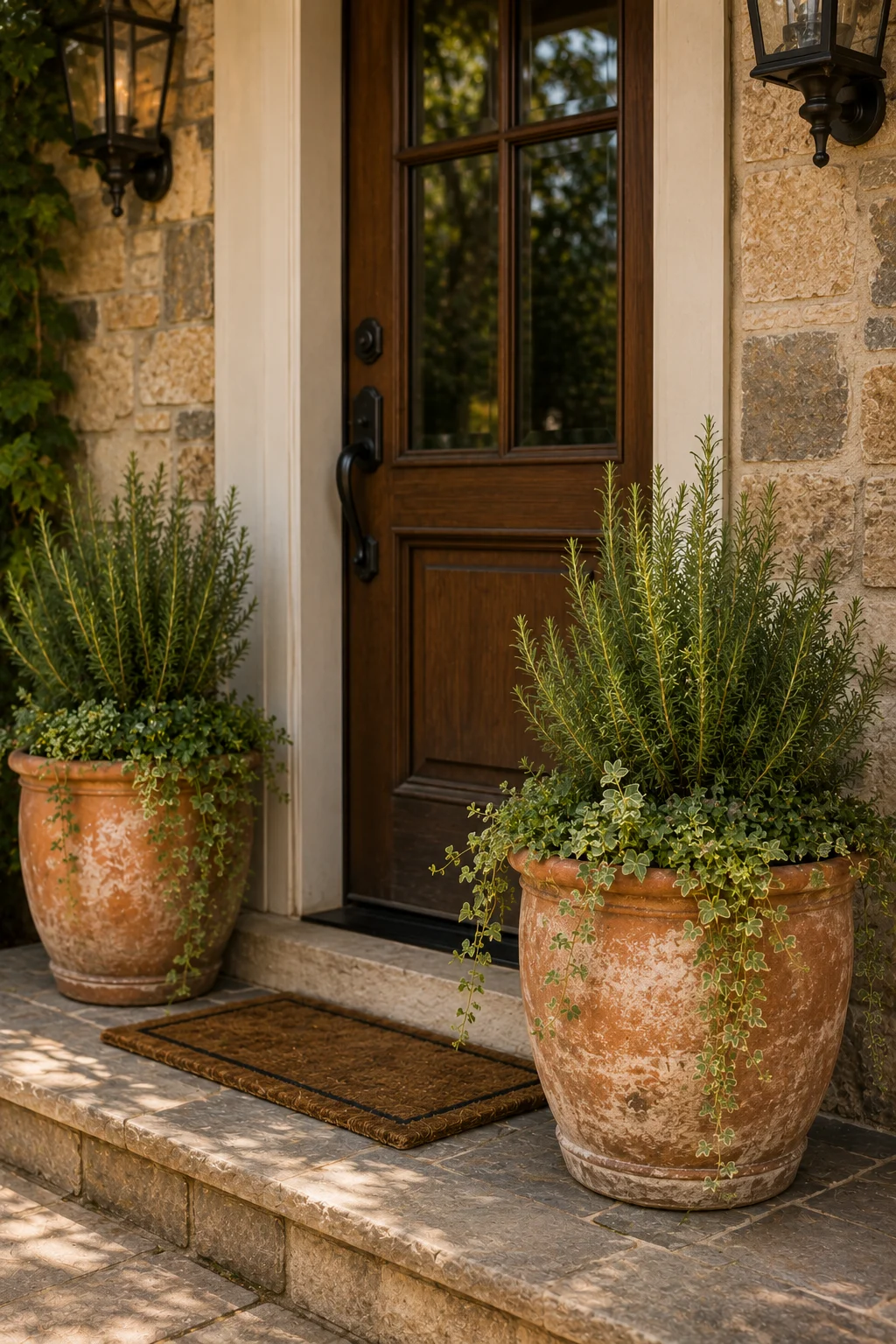
14. Aged Terracotta Pots for a Mediterranean Look
Classic terracotta pots, ideally ones already showing some natural weathering and mineral staining rather than freshly glazed, suit Mediterranean, Spanish, and Italianate-style entries especially well. They also pair naturally with olive, rosemary, or citrus plantings.
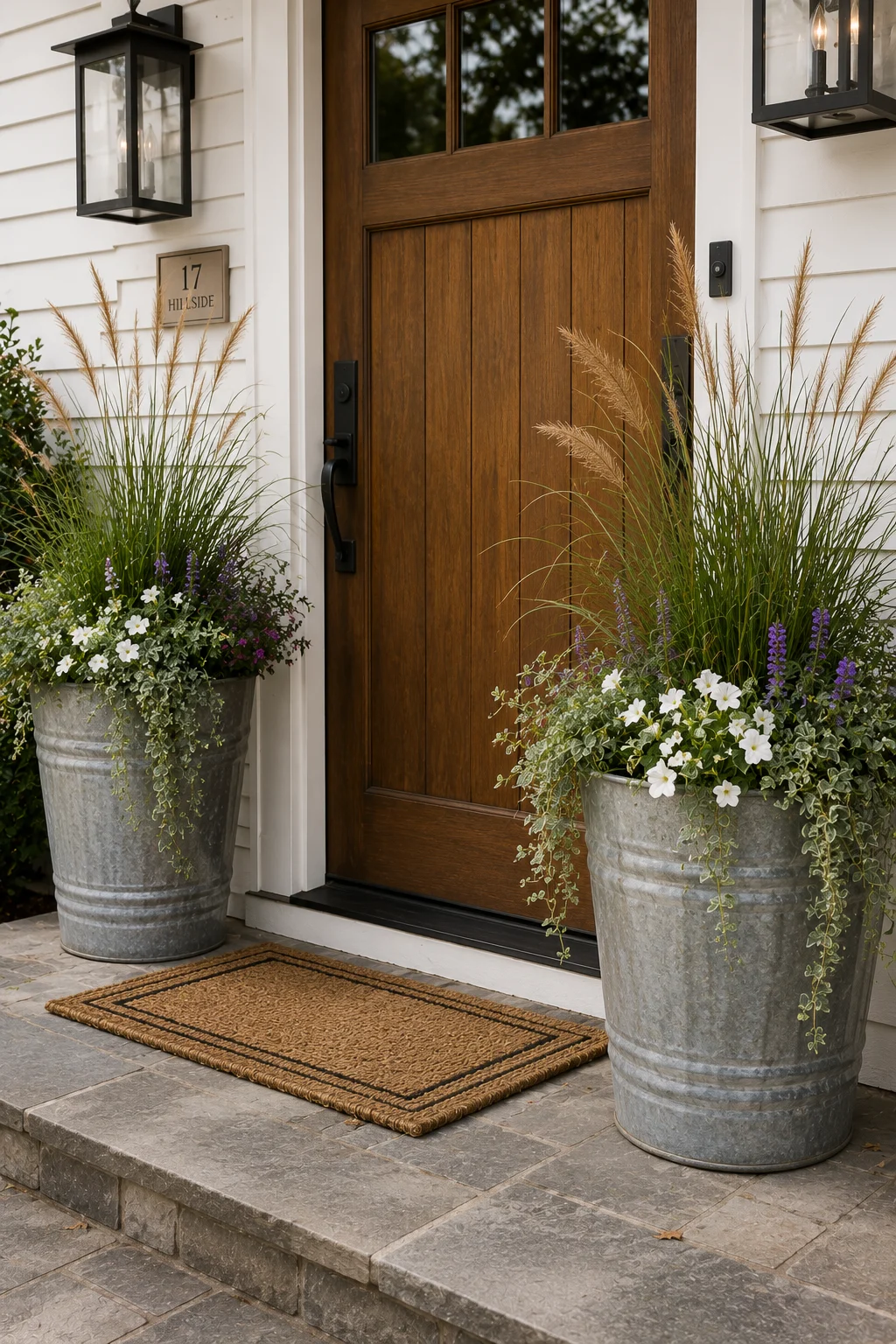
15. Galvanised Metal Planters for a Farmhouse Look
Galvanised steel buckets or troughs, whether purpose-bought planters or genuinely repurposed containers, bring a working-farm texture to an entry. They suit modern farmhouse exteriors particularly well when paired with simple, unfussy plantings like ornamental grasses or geraniums.
Design Formulas Anyone Can Copy
A couple of simple planting principles can make almost any pot pairing look more finished, regardless of the specific style chosen. These formulas are reliable because they use proportion and structure rather than guesswork.
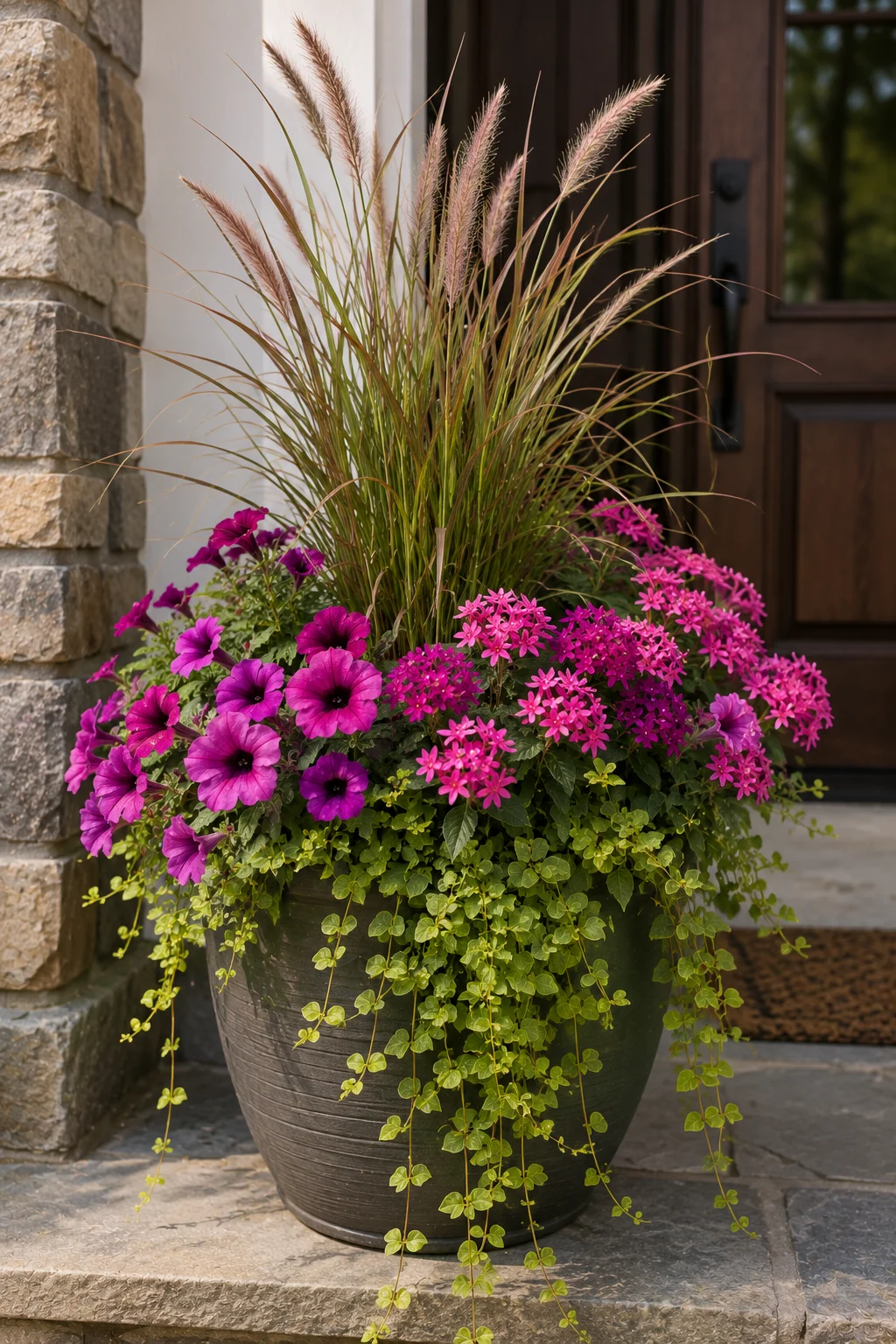
16. The Thriller, Filler, Spiller Formula
Fill a single planter with one upright “thriller” plant, such as a small evergreen or ornamental grass, a rounded “filler” plant around its base, such as geranium or petunia, and a “spiller” trailing over the edge, such as sweet potato vine or ivy. This is one of the most adaptable planter formulas you can use, and it works in nearly any pot style or season.
17. Matching Planters to Your Door’s Hardware and Colour
Choosing a planter finish that echoes an existing detail, such as black urns with black door hardware and window frames, or warm terracotta pots that pick up the wood tone of the door itself, ties the whole entry together in a way that a random planter colour rarely achieves. Even when the plants inside are identical, coordinated materials make the entire frontage feel more deliberate.
How to Choose From This List
The most successful front door planter setups usually come down to one pot style, one or two plant varieties, and a clear sense of whether the goal is symmetry or asymmetry. Trying to combine both approaches at once, or mixing too many pot materials in the same view, is one of the quickest ways to make the display feel cluttered.
Start by choosing a style category that matches your door’s existing colour and architecture. Then decide whether you want a matching pair, a grouped cluster, or a single statement planter. Once that is clear, the planting itself becomes much easier.
Final Thoughts
A front door planter earns its visual weight through repetition, scale, and restraint far more than through sheer variety. One well-chosen pot style, planted simply and kept full, will almost always outperform a mismatched collection of whatever happened to be on sale.
Match the planter material to your door’s tone and hardware, choose a planting scheme suited to your light and climate, and keep the plant palette in each pot to two or three varieties at most. Do that, and your entryway will look finished without looking overdone.