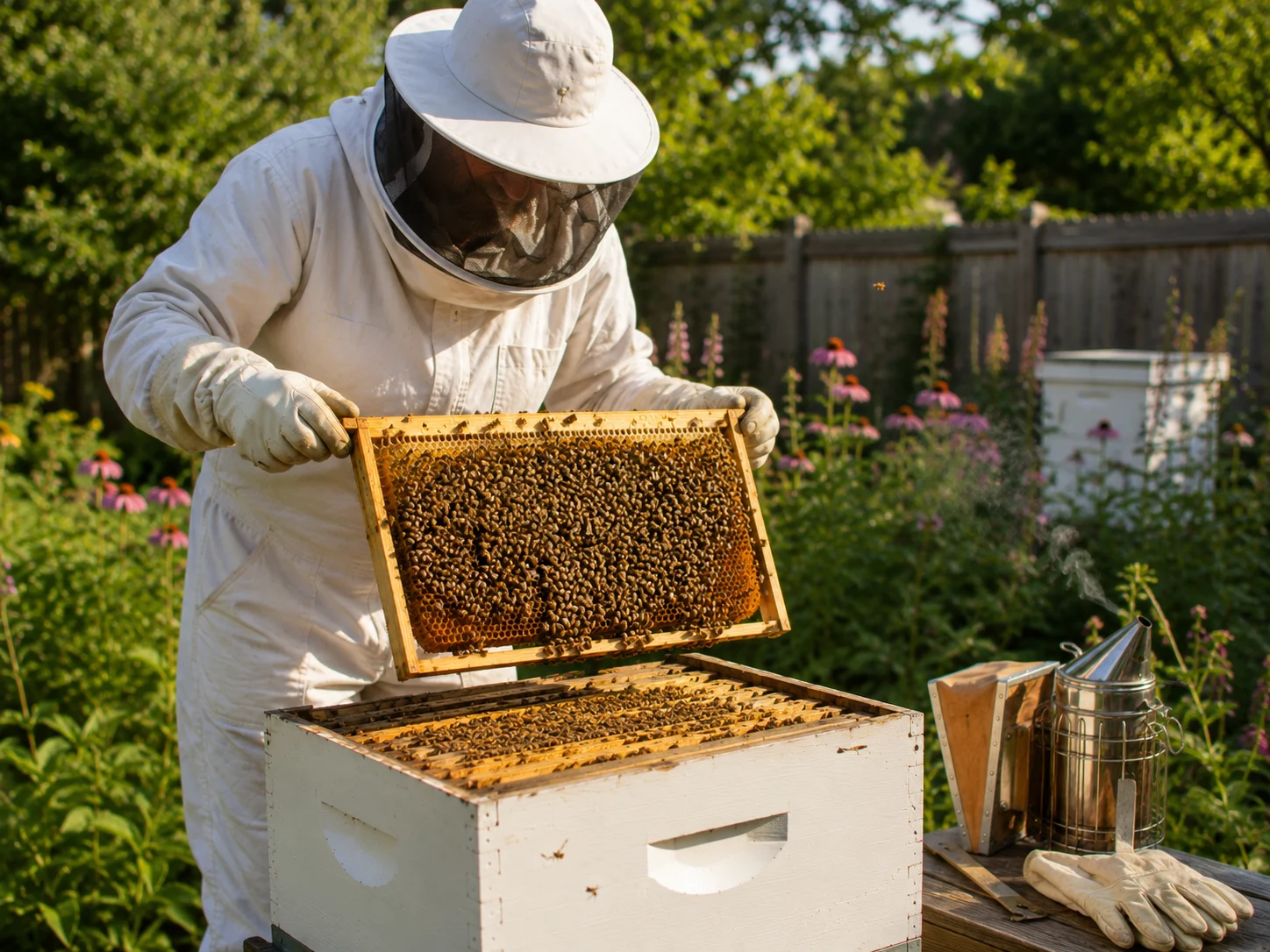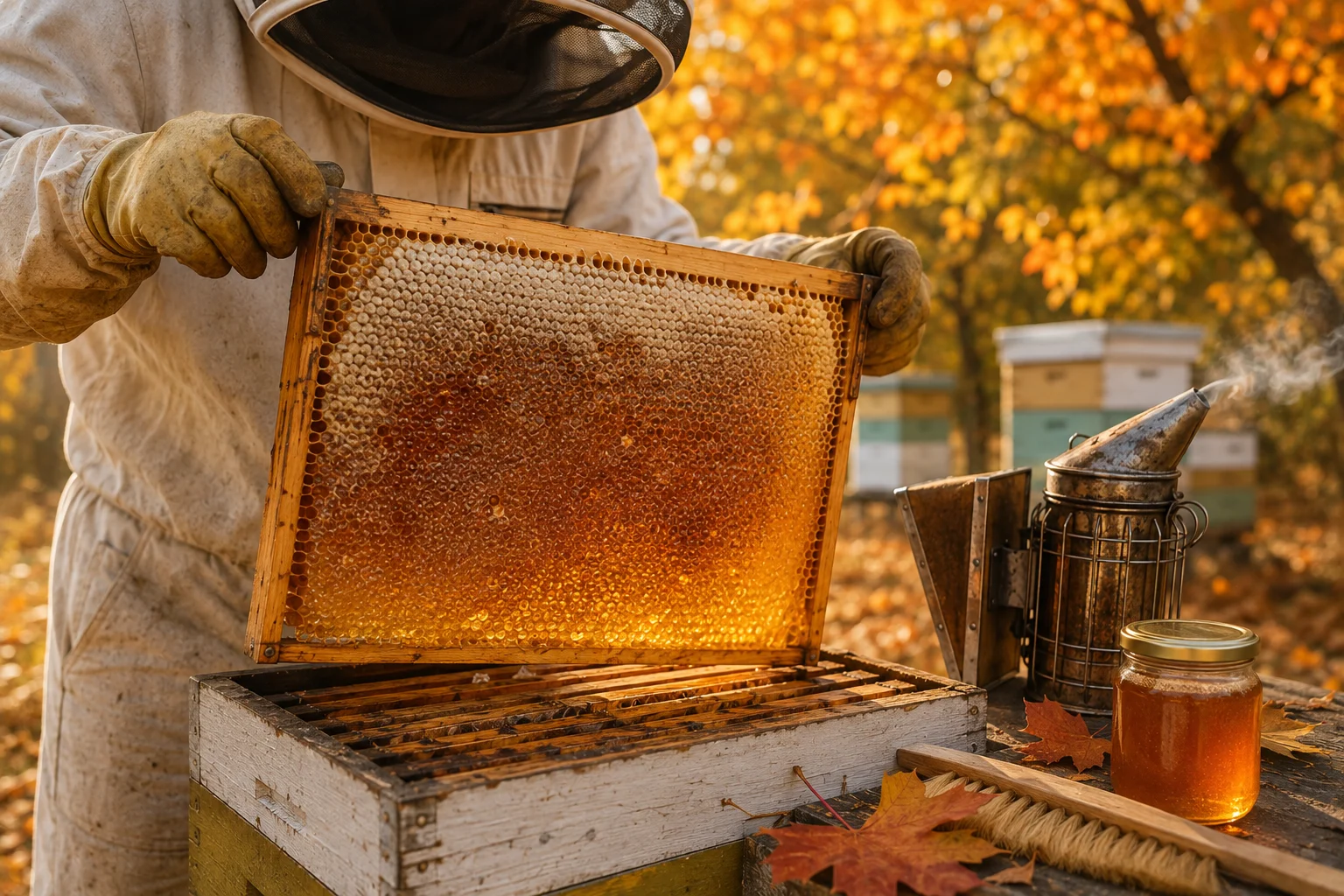

We like to think of a beehive as a golden, buzzing utopia full of sweetness and teamwork. But a beehive is actually a highly crowded, fiercely guarded fortress. And in a fortress of 50,000 bodies, death is a daily occurrence.
If you just watched our short video about the “Undertaker Bees,” you saw how a dead body is quickly disposed of. But the short video didn’t explain why they do this, how they know who is dead in the pitch black, or the brutal truth of what happens to bees who are sick but still breathing.
☣️ The Ticking Time Bomb
A beehive is maintained at a constant, balmy temperature of about 93°F to 95°F (34°C to 35°C). While this is perfect for raising baby bees, it is also the absolute perfect environment for bacteria, fungus, and disease to spread rapidly.
If a dead bee is left inside this warm incubator, it will quickly decay. A single rotting corpse can release pathogens that could infect and kill the entire 50,000-bee colony in a matter of days. To survive, the hive must remain surgically sterile.
🕵️♀️ The Genetic Sanitation Crew
Enter the Undertaker Bees. Not just any bee can move a body. Only about 1% to 2% of the hive’s workforce works as undertakers. These are older, stronger bees who possess a specific genetic trait: they are highly sensitive to the chemical smell of oleic acid—the scent of death.
Within an hour of a bee dying, it begins to emit this chemical. The Undertakers immediately smell it, drop whatever they are doing, and rush to the “crime scene.”
⚰️ The Graveyard Drop
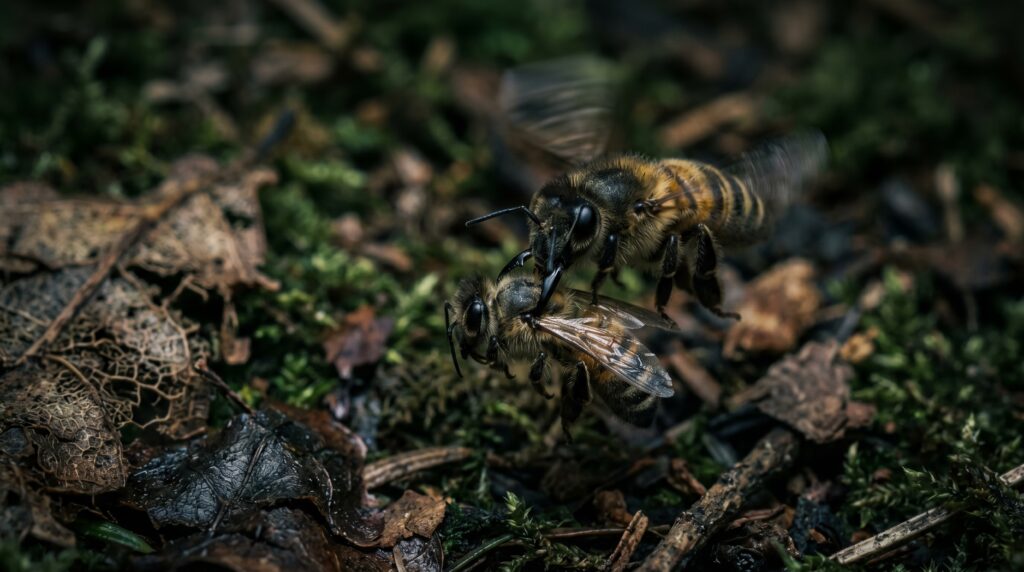
A dead bee is heavy. It takes immense strength for an Undertaker to clamp her jaws onto the corpse, drag it through the crowded hive, and haul it out the front door.
But they don’t just drop the body on the porch. That would attract wasps, ants, and other predators looking for a free meal. Instead, the Undertaker takes flight, carrying the dead weight up to 300 feet (100 meters) away from the hive before dropping it into a designated “bee graveyard” on the forest floor.
🛑 The Brutal Truth: What If They Are Just Sick?
If you clicked the link in our video, here is the brutal answer you were looking for. Nature has no room for hospitals.
If a worker bee becomes infected with a virus or a parasite (like the deadly Varroa mite), she will begin to emit a “sick” chemical scent. The Undertakers and Guard bees will immediately smell it. They do not try to heal her. Instead, they will aggressively bite her, tear at her wings, and physically drag her out of the hive while she is still alive.
She is tossed off the landing board into the grass below, exiled from the only home she has ever known, left to starve or be eaten by predators so that the rest of the colony can live.
In the honeybee empire, the survival of the many will always outweigh the survival of the one.
📺 Watch The Undertakers in Action!
Watch the eerie, continuous zoom of the Undertaker’s flight right here: